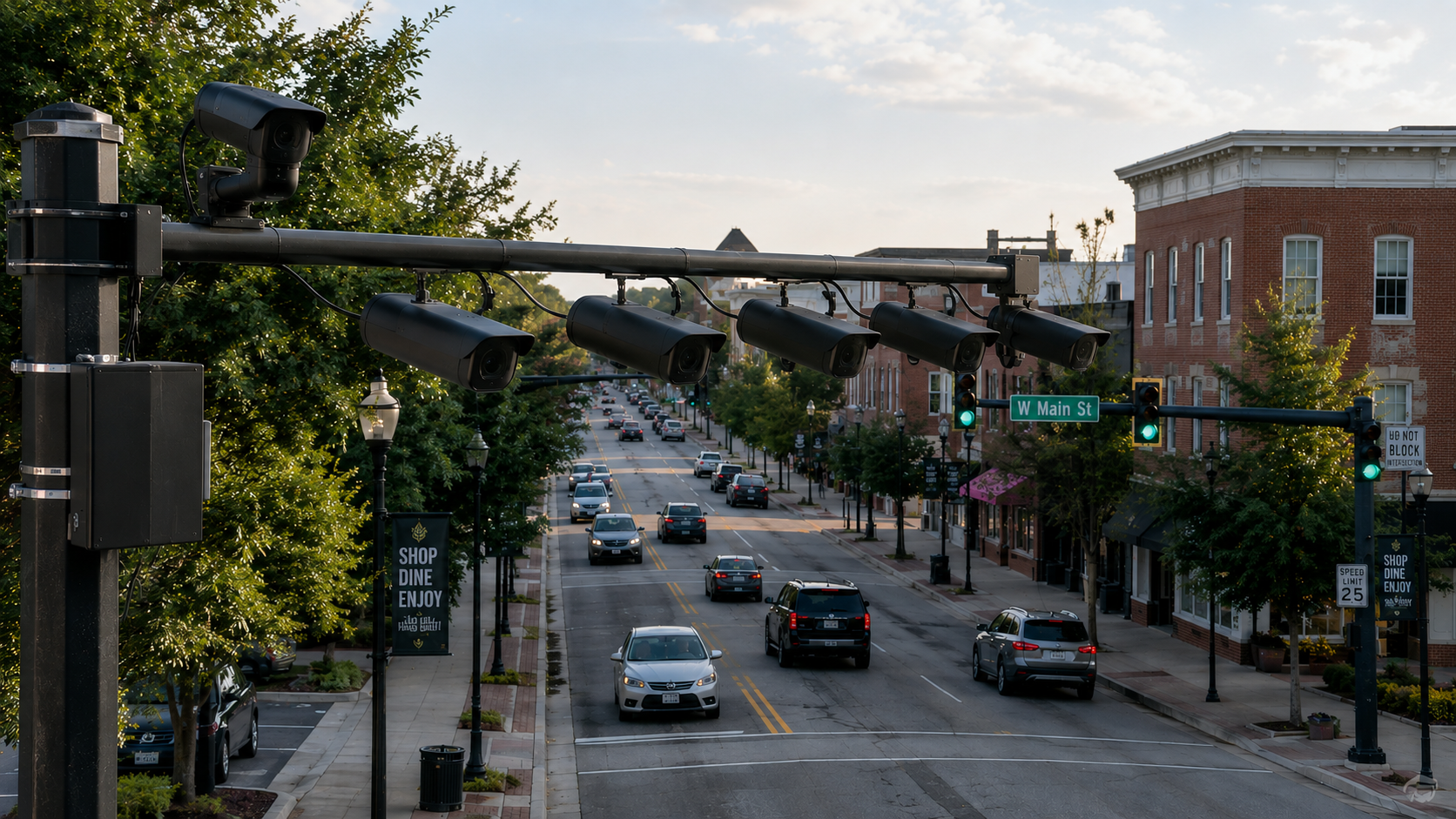
Flock Safety, the license plate reader company at the center of a spreading privacy controversy, unveiled new privacy guardrails Thursday in response to months of backlash over allegations its technology enables mass surveillance. CEO Garrett Langley addressed the criticism directly, stating the company is not Big Brother and is focused on protecting people.
The changes are specific. Flock is cutting its default data retention window from 30 days down to seven, giving customers control over which offense types can be searched, and making case codes mandatory rather than optional for every search. The company is also adding mandatory audit logs and a feature that automatically blocks users when the system detects abnormal search patterns, pending review. Flock says these changes exceed what most states currently require by law.
Why Flock Is Making These Changes Now
The backlash has been building for months. A Washington Post investigation published earlier this month found at least 50 law enforcement officers had been charged with or accused of misusing license plate reader systems, including using the technology to stalk women without their knowledge or consent, with 46 of those cases involving Flock’s system specifically. The EFF and ACLU have both raised formal concerns, with EFF describing the technology as susceptible to grave abuses, including tracking protesters and targeting people by immigration status. Some communities have cancelled contracts outright, and in more extreme cases, citizens have covered or destroyed cameras. Last month, Flock removed a feature that detected human screaming following a nine-month EFF pressure campaign.
The Business Is Growing Despite the Controversy
Here is what makes this genuinely relevant for investors. Flock’s revenue is accelerating even as the backlash intensifies. Langley disclosed the company’s annual revenue run rate climbed to $500 million in June, up from $300 million in January, more than 65% growth in six months. More than half of that growth is coming from newer product lines beyond license plate cameras, including surveillance drones, mobile security trailers, and audio detection systems for gunshots and crashes.
Langley was candid about the strategy. The core license plate reader market is largely fixed, since Flock does not add new cities very often once a market matures. Growth going forward depends on drones, trailers, and software, not the camera network itself. Flock, backed by more than $1 billion from Andreessen Horowitz and other venture investors, recently raised $200 million in equity and $300 million in venture debt at an $8.3 billion valuation.
A Public Company in the Same Space Just Had a Rough Day
Flock has no public ticker, but Cellebrite (Nasdaq: CLBT), which makes digital forensics software for law enforcement, saw its stock plunge nearly 32% Thursday after missing revenue estimates, cutting guidance, and announcing an abrupt CEO change. That drop was driven by company-specific factors rather than the Flock controversy directly. Still, Cellebrite’s management cited new procurement and data-sovereignty requirements as a factor delaying deals, echoing the broader regulatory scrutiny now facing government surveillance technology generally.
What It Means for Investors
Together, these stories show the same dynamic from different angles. Flock is proactively building governance guardrails to get ahead of political backlash before it costs more contracts. Cellebrite’s guidance cut shows how quickly new compliance requirements can delay revenue even for an established public player. For investors evaluating companies in this space, contract renewal risk and public trust are becoming financially material factors, not separate from growth metrics.