Amazon Trainium2 Takes Aim at Nvidia’s AI Chip Dominance

As artificial intelligence continues its seemingly unstoppable rise, tech giants are racing to power the next generation of AI applications. This week, Amazon Web Services unveiled its latest salvo directed squarely at sector leader Nvidia – the new Trainium2 AI training chip. Promising up to quadruple the performance of its predecessor, Trainium2 represents Amazon’s most aggressive move yet to challenge Nvidia’s dominance in the white-hot AI chip space.

Nvidia’s GPUs Fuel Explosive Growth of AI

Over the past decade, Nvidia has capitalized on the AI boom more than any other company. Its graphics processing units, or GPUs, first designed for video gaming proved remarkably adept at accelerating machine learning. Aggressive investments in its Tensor Core GPU architecture tailored specifically for AI workloads cemented Nvidia’s status as the chipmaker of choice for everything from natural language AI like ChatGPT to computer vision, robotics and self-driving vehicles.

Demand for Nvidia chips now far outstrips supply, as businesses of all stripes rush to infuse AI capabilities into their operations. The company’s data center revenue expanded sharply in its most recent quarter, overtaking its gaming segment for the first time, demonstrating the commercial appetite for its AI offerings. Nvidia also boasts partnerships expanding its reach, including an alliance with Microsoft to power Azure’s AI cloud infrastructure.

Can Trainium2 Take on Nvidia’s AI Dominance?

This is the competitive landscape now facing Trainium2 as Amazon seeks to grow its 7% share of the nearly $61 billion AI chip market. Boasting 58 billion transistors, far greater than Nvidia’s offerings, and advanced compression technology minimizing data movement, the second-generation Trainium aims to match or beat Nvidia’s training performance at lower cost.

Crucially for Amazon Web Services customers, Trainium2 optimizes TensorFlow, PyTorch and MXNet, among the most popular open-source AI frameworks. It can also handle multi-framework workloads simultaneously. Amazon is counting on these features combined with integrated tools for scaling model training to convince AI developers and businesses to give Trainium2 a look over Nvidia’s ubiquitous GPUs.

Still, Nvidia isn’t standing still. Its latest H100 GPU packs 80 billion transistors enabling an order of magnitude performance leap over previous generations. Plus, Nvidia’s CUDA programming framework and expansive software ecosystem powering over 2.3 million AI developers globally cannot be easily dismissed.

The AI Chip Wars Have Only Just Begun

While Trainium2 faces stiff competition, its arrival underscores how vital the AI chip space has become. Amazon is also expanding collaboration with Nvidia, incorporating H200 GPUs into AWS infrastructure so customers can access Nvidia’s most advanced AI hardware. With AI poised to unleash a new industrial revolution, expect the battle for chip supremacy powering everything from intelligent search to autonomous robotaxis to keep heating up.


Nvidia Out to Prove AI Means (Even More) Business

Chipmaker Nvidia (NVDA) is slated to report fiscal third quarter financial results after Tuesday’s closing bell, with major implications for tech stocks as investors parse the numbers for clues about the artificial intelligence boom.

Heading into the print, Nvidia shares closed at an all-time record high of $504.09 on Monday, capping a momentous run over the last year. Bolstered by explosive growth in data center revenue tied to AI applications, the stock has doubled since November 2022.

Now, Wall Street awaits Nvidia’s latest earnings and guidance with bated breath, eager to gauge the pace of expansion in the company’s most promising segments serving AI needs.

Consensus estimates call for dramatic sales and profit surges versus last year’s third quarter results. But in 2022, Nvidia has made beating expectations look easy.

This time, another strong showing could validate nosebleed valuations across tech stocks and reinforce the bid under mega-cap names like Microsoft and Alphabet that have ridden AI fervor to their own historic highs this month.

By contrast, any signs of weakness threatening Nvidia’s narrative as an AI juggernaut could prompt the momentum-driven sector to stumble. An upside surprise remains the base case for most analysts. But with tech trading at elevated multiples, the stakes are undoubtedly high heading into Tuesday’s report.

AI Arms Race Boosting Data Center Sales

Nvidia’s data center segment, which produces graphics chips for AI computing and data analytics, has turbocharged overall company growth in recent quarters. Third quarter data center revenue is expected to eclipse $12.8 billion, up 235% year-over-year.

Strength is being driven by demand from hyperscale customers like Amazon Web Services, Microsoft Azure, and Alphabet Cloud racing to build out AI-optimized infrastructure. The intense competition has fueled a powerful upgrade cycle benefiting Nvidia.

Now, hopes are high that Nvidia’s next-generation H100 processor, unveiled in late 2021 and ramping production through 2024, will drive another leg higher for data center sales.

Management’s commentary around H100 adoption and trajectory will help investors gauge expectations moving forward. An increase to the long-term target for overall company revenue, last quantified between $50 billion and $60 billion, could also catalyze more upside.

What’s Next for Gaming and Auto?

Beyond data center, Nvidia’s gaming segment remains closely monitored after a pandemic-era boom went bust in 2022 amid fading consumer demand. The crypto mining crash also slammed graphics card orders.

Gaming revenue is expected to grow 73% annually in the quarter to $2.7 billion, signaling a possible bottom but well below 2021’s peak near $3.5 billion. Investors will watch for reassurance that the inventory correction is complete and gaming sales have stabilized.

Meanwhile, Nvidia’s exposure to AI extends across emerging autonomous driving initiatives in the auto sector. Design wins and partnerships with electric vehicle makers could open another massive opportunity. Updates on traction here have the potential to pique further interest.

Evercore ISI analyst Julian Emanuel summed up the situation: “It’s still NVDA’s world when it comes to [fourth quarter] reports – we’ll all just be living in it.”

In other words, Nvidia remains the pace-setter steering tech sector sentiment to kick off 2024. And while AI adoption appears inevitable in the long run, the market remains keenly sensitive to indications that roadmap is progressing as quickly as hoped.

Microsoft Makes Waves with New AI and ARM Chips

Microsoft made waves this week by unveiling its first ever custom-designed chips at the Ignite conference. The tech giant introduced two new processors: the Maia 100 chip for artificial intelligence workloads and the Cobalt 100 chip for general computing purposes. These new silicon offerings have the potential to shake up the chip industry and cloud computing markets.

The Maia 100 is Microsoft’s answer to the AI accelerators from rivals like Nvidia and Amazon. It is tailored to boost performance for AI tasks like natural language processing. During Ignite, Microsoft demonstrated Maia handling queries for its Bing search engine, powering the Copilot coding assistant, and running large OpenAI language models.

Microsoft has been collaborating closely with OpenAI and is a major investor in the AI research company. OpenAI’s popular ChatGPT was trained on Azure using Nvidia GPUs. By designing its own chip, Microsoft aims to reduce reliance on third-party silicon for AI workloads.

Though performance details remain unclear, Microsoft stated that Maia handles AI tasks with high throughput and low latency. It emphasized efficiency as a key design goal. The chip was engineered in close consultation with Microsoft’s internal AI teams to ensure it fits their requirements.

Microsoft has created novel liquid cooling technology called Sidekicks to work alongside Maia server racks. This advanced thermal management unlocks Maia’s full processing capacity while avoiding the overheating issues that often plague GPU-powered data centers.

When available on Azure, Maia will provide customers access to specialized AI hardware on demand instead of buying dedicated GPUs. Microsoft did not provide a timeline for Maia’s availability or pricing. But offering it as a cloud service instead of a physical product sets Maia apart from AI chips from Intel, Nvidia and others.

The second new chip announced at Ignite was the Cobalt 100 ARM-based processor for general computing. It is expected to deliver a 40% performance boost over existing Azure ARM chips from Ampere.

Microsoft believes Cobalt will provide a compelling alternative to Intel’s server CPUs for cloud workloads. Companies like Amazon have already demonstrated success in cloud data centers by transitioning from Intel to custom ARM chips.

Virtual machines powered by Cobalt will become available on Azure in 2024. Microsoft is currently testing it for key services like Teams and Azure SQL database. More efficient ARM servers can translate to lower costs for cloud customers.

The Cobalt announcement highlights Microsoft’s growing reliance on ARM architecture across its cloud infrastructure. ARM chips are known for power efficiency in mobile devices, but companies like Amazon, Microsoft and Apple now recognize their benefits for data centers too.

By designing its own server-class ARM processor, Microsoft can optimize performance and features specifically for its cloud services. With both Maia and Cobalt, Microsoft aims to give Azure a competitive edge over rivals like AWS and Google Cloud.

Microsoft has lagged behind in cloud infrastructure market share, but introducing unique silicon could help close the gap. Its vertically integrated approach produces chips tailor-made for AI and its cloud platform. With demand for AI compute and cloud services booming, Microsoft’s gambit on custom chips could soon pay dividends.

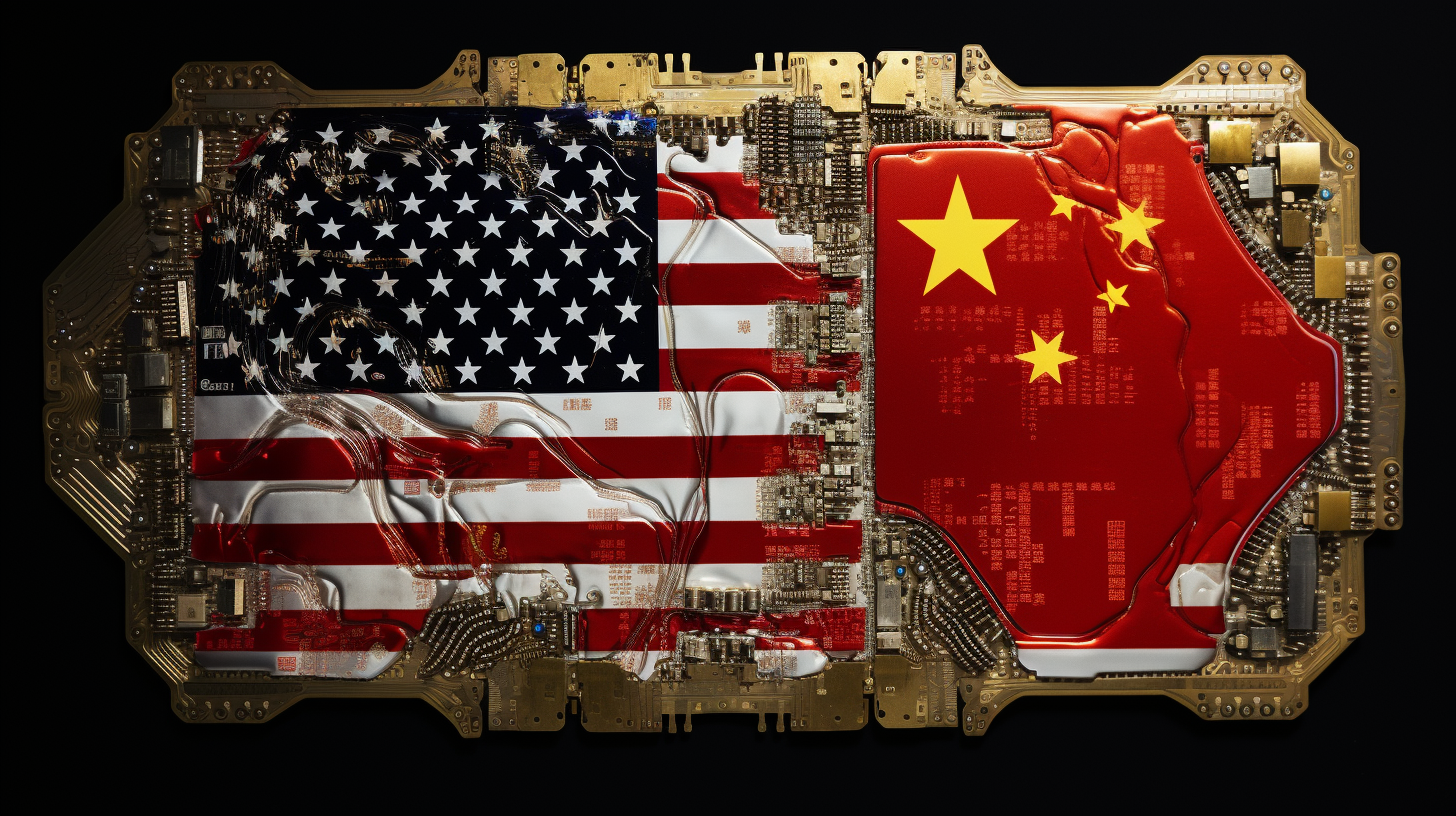
Nvidia and Chip Stocks Tumble Amid Escalating China-U.S. AI Chip Export Tensions

Shares of Nvidia and other semiconductor firms tumbled Tuesday morning after the U.S. announced stringent new curbs on exports of artificial intelligence chips to China. The restrictions spooked investors already on edge about the economic fallout from deteriorating U.S.-China relations.

Advanced AI chips like Nvidia’s flagship A100 and H100 models are now barred from shipment to China, even in downgraded versions permitted under prior rules. Nvidia stock plunged nearly 7% on the news, while chip stocks like Marvell, AMD and Intel sank 3-4%. The Philadelphia Semiconductor Index lost over 5%.

The export crackdown aims to hamper China’s progress in developing cutting-edge AI, which relies on massive computing power from state-of-the-art chips. U.S. officials warned China could use next-generation AI to threaten national security.

“We have specific concern with respect to how China could use semiconductor technologies to further its military modernization efforts,” said Alan Estevez, an under secretary at the Commerce Department.

But hampering China’s AI industry could substantially dent revenues for Nvidia, the dominant player in advanced AI chips. China is estimated to account for billions in annual sales.

While Nvidia said the financial impact is not immediate, it warned of reduced revenues over the long-term from tighter China controls. Investors are concerned these export curbs could be just the beginning if tensions continue to escalate between the global superpowers.

The escalating trade barriers also threaten to disrupt global semiconductor supply chains. Many chips contain components sourced from the U.S., Japan, Taiwan and other countries before final manufacturing and assembly occurs in China. The complex web of cross-border production could quickly seize up if trade restrictions proliferate.

Nvidia and its peers sank Tuesday amid fears of being caught in the crossfire of a technology cold war between the U.S. and China. Investors dumped chip stocks on worries that shrinking access to the massive Chinese market will severely depress earnings.

AI chips are essential to powering everything from data centers, autonomous vehicles, and smart devices to facial recognition, language processing, and machine learning. As AI spreads across the economy, demand for specialized semiconductors is surging.

But rivalries between the U.S. and China now threaten to put a ceiling on that growth. Both nations are aggressively competing to dominate AI research and set the global standards for integrating these transformative technologies. Access to the most powerful AI chips is crucial to these efforts.

By curbing China’s chip supply, the U.S. administration aims to safeguard America’s edge in AI development. But tech companies may pay the price through lost revenues if China restricts access to its own market in retaliation.

For the broader stock market already on edge about resurgent inflation, wars in Ukraine and the Middle East, and rising interest rates, the intensifying technology cold war represents yet another worrying threat to global economic growth. While a severe downturn may ultimately be avoided, the rising risk level underscores why investors are growing more anxious.