DoorDash (NASDAQ: DASH) is reportedly in advanced negotiations to acquire grocery delivery platform Instacart (NASDAQ: CART) in a deal that could value the company at approximately $17 billion, potentially creating one of the largest combined food and grocery delivery platforms in the United States.
According to reports from The Wall Street Journal and Reuters, an agreement could be announced as soon as this week, although negotiations remain ongoing and there is no guarantee a transaction will be completed. The potential acquisition would represent a significant expansion of DoorDash’s business beyond restaurant delivery as competition intensifies across the online grocery and retail markets.
Investors responded sharply to news of the negotiations. Instacart shares climbed approximately 8% on Monday, while DoorDash stock declined roughly 6%, reflecting enthusiasm about a potential takeover premium alongside concerns about the cost and complexity of the acquisition.
Before reports of a possible sale emerged, Instacart had a market capitalization of approximately $12 billion. A transaction valued at $17 billion would represent a substantial premium and mark one of the more significant technology acquisitions of 2026.
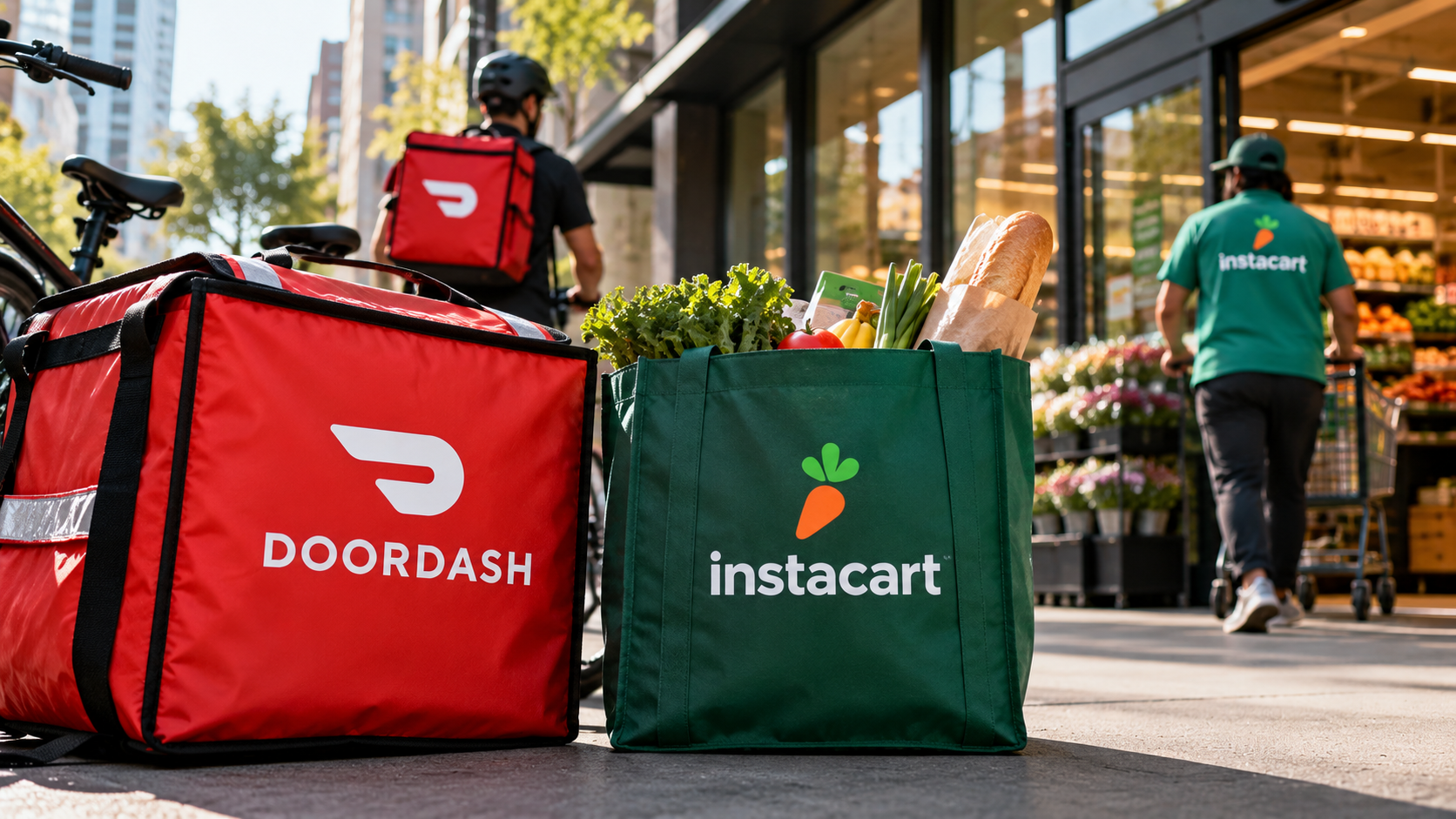
The proposed combination would bring together two major players with complementary strengths. DoorDash has established an extensive delivery network through its restaurant business and expanded into convenience stores, grocery chains, and general merchandise retailers. Instacart, meanwhile, specializes in grocery shopping and delivery, maintaining established relationships with supermarket operators and providing technology that supports online ordering and retail advertising.
Together, the companies could offer consumers a broader range of delivery options while creating opportunities to consolidate logistics, improve delivery efficiency, and expand advertising services.
The strategic motivation comes as traditional delivery platforms face increasing competition from Amazon and Walmart, both of which have invested heavily in grocery fulfillment, same-day delivery, and customer loyalty programs.
DoorDash already works with retailers including Kroger, Safeway, Aldi, CVS, Macy’s, and Target. Acquiring Instacart could deepen its relationships with grocery chains and accelerate its efforts to become a comprehensive local commerce platform rather than primarily a restaurant delivery service.
For Instacart, the potential transaction comes after several years of adjusting to slower growth following the pandemic-driven surge in online grocery shopping. The company went public in 2023 but has faced mounting competitive pressure from larger technology platforms and retailers developing their own digital ordering capabilities.
Instacart has also expanded beyond delivery into advertising and software services for retailers, businesses that could become important components of DoorDash’s longer-term growth strategy.
However, the financial implications of a potential acquisition remain uncertain. The companies have not disclosed a proposed transaction structure, including whether the purchase would be financed through cash, stock, or a combination of both.
Analysts have also raised questions about whether the potential cost savings and additional revenue opportunities would justify the reported acquisition price. Integrating two large delivery networks could create efficiencies, but overlapping operations, technology systems, and retail partnerships may present challenges.
Regulatory scrutiny represents another consideration. Because DoorDash and Instacart compete in portions of the grocery delivery market, a combination could attract attention from antitrust regulators evaluating its potential impact on competition, merchants, and consumers.
The reported negotiations follow an earlier attempt by DoorDash to acquire Instacart in 2021, when the grocery delivery company’s private-market valuation was considerably higher. Those discussions ultimately failed to produce an agreement.
Uber Technologies (NYSE: UBER) also reportedly explored acquiring Instacart, although those discussions are no longer active.
The potential deal underscores a broader shift in the delivery industry, where companies are increasingly pursuing acquisitions, operational efficiencies, and diversified revenue streams as growth becomes more competitive.
For investors, the key questions will be whether DoorDash can translate greater scale into improved profitability, how much it must pay to secure Instacart, and whether regulators would approve the combination.
If completed, the acquisition could significantly reshape the competitive landscape for online grocery delivery, creating a larger challenger to Amazon and Walmart while accelerating consolidation across the digital commerce industry.