ISG (Information Services Group) (Nasdaq: III) is a leading global technology research and advisory firm. A trusted business partner to more than 700 clients, including more than 75 of the world’s top 100 enterprises, ISG is committed to helping corporations, public sector organizations, and service and technology providers achieve operational excellence and faster growth. The firm specializes in digital transformation services, including automation, cloud and data analytics; sourcing advisory; managed governance and risk services; network carrier services; strategy and operations design; change management; market intelligence and technology research and analysis. Founded in 2006, and based in Stamford, Conn., ISG employs more than 1,300 digital-ready professionals operating in more than 20 countries—a global team known for its innovative thinking, market influence, deep industry and technology expertise, and world-class research and analytical capabilities based on the industry’s most comprehensive marketplace data. For additional information, visit www.ISG-One.com
Joe Gomes, Managing Director, Equity Research Analyst, Generalist , Noble Capital Markets, Inc.
Joshua Zoepfel, Research Associate, Noble Capital Markets, Inc.
Refer to the full report for the price target, fundamental analysis, and rating.
Still Seeing Demand. ISG is continuing to experience increasing demand for its services, evidenced by the record second quarter revenue of $74.6 million. As noted in our previous report, recurring revenues now represents more than 40% of Company revenue and we anticipate the number to climb due to further demand from verticals such as consumer services, life sciences, and the public sector for the Company’s cost optimization services.
Balance Sheet. ISG reported a cash balance of $19.6 million as of June 30, 2023 compared to $23.7 million at March 31, 2023. The Company’s debt outstanding was at $79.2 million, unchanged from the first quarter, with the Company’s debt-to-EBITDA ratio remaining at 1.8x.
Equity Research is available at no cost to Registered users of Channelchek. Not a Member? Click ‘Join’ to join the Channelchek Community. There is no cost to register, and we never collect credit card information.
This Company Sponsored Research is provided by Noble Capital Markets, Inc., a FINRA and S.E.C. registered broker-dealer (B/D).
*Analyst certification and important disclosures included in the full report. NOTE: investment decisions should not be based upon the content of this research summary. Proper due diligence is required before making any investment decision.
ISG (Information Services Group) (Nasdaq: III) is a leading global technology research and advisory firm. A trusted business partner to more than 700 clients, including more than 75 of the world’s top 100 enterprises, ISG is committed to helping corporations, public sector organizations, and service and technology providers achieve operational excellence and faster growth. The firm specializes in digital transformation services, including automation, cloud and data analytics; sourcing advisory; managed governance and risk services; network carrier services; strategy and operations design; change management; market intelligence and technology research and analysis. Founded in 2006, and based in Stamford, Conn., ISG employs more than 1,300 digital-ready professionals operating in more than 20 countries—a global team known for its innovative thinking, market influence, deep industry and technology expertise, and world-class research and analytical capabilities based on the industry’s most comprehensive marketplace data. For additional information, visit www.ISG-One.com
Joe Gomes, Managing Director, Equity Research Analyst, Generalist , Noble Capital Markets, Inc.
Joshua Zoepfel, Research Associate, Noble Capital Markets, Inc.
Refer to the full report for the price target, fundamental analysis, and rating.
Record 2Q23 Top Line. Record 2Q revenueof $74.6 million, up 5.5% y-o-y. Currency translation negatively impacted reported revenue by $0.1 million. By geography, Americas revenue rose 7% to $42.3 million, Europe was up 5% on a reported basis to $24.4 million, and Asia-Pacific revenue of $8 million was flat to the prior year. We were at $75 million.
Increasing Recurring Revenues. Strong demand for research and platform services in the second quarter led to 21% growth in recurring revenues, which now represent more than 40% of Company revenue. ISG’s mix of portfolio solutions and services around cost optimization and digital transformation continues to resonate with clients.
Equity Research is available at no cost to Registered users of Channelchek. Not a Member? Click ‘Join’ to join the Channelchek Community. There is no cost to register, and we never collect credit card information.
This Company Sponsored Research is provided by Noble Capital Markets, Inc., a FINRA and S.E.C. registered broker-dealer (B/D).
*Analyst certification and important disclosures included in the full report. NOTE: investment decisions should not be based upon the content of this research summary. Proper due diligence is required before making any investment decision.
Plans for the Platform Formerly Known as “Twitter”
Elon Musk, who counts the old Twitter among the companies he oversees, has plans for a mega-financial component to the social media platform that has been rebranded as X. The serial entrepreneur has in the past discussed the “everything” app WeChat as a model for X’s direction. WeChat is a product available to banking clients in China, as a useful do-it-all tool chest. Musk says it has no equal in the U.S. Part of what is expected from Elon’s team is enabling users of X to trade stock and cryptocurrencies and also perform all that fintech companies like PayPal provide.
Embracing a New Direction
Molding X into the ultimate multi-functional app may be beginning to take shape and gain momentum. Musk may not have invented Twitter, but he plans on reinventing it with some very aggressive plans under the new name.
Evidence of this comes from Musk and his team’s discussions with a prominent financial data powerhouse to establish a trading hub within the X platform, including real-time market data. Leaked documents, as reported by the news source Semafor, and conversations with insiders have revealed the huge initiative. It is unclear whether X has secured partnerships for its additional direction at this point.
Fuzzy Business Benefit to Partnerships
X’s outreach to potential partners highlights the company’s promise of access to a massive social media user base numbering in the hundreds of millions. The proposal requests don’t mention compensation for the project, according to Liz Hoffman at Semafor.
Plans of incorporating a trading hub within the X platform have been brought up in the past. Not long ago eTORO, a unique social investment platform, had unveiled plans to facilitate the trading of various assets, including cryptocurrencies, directly to users, through a strategic partnership of what was then Twitter.
If the plans for an in-app trading hub materialize, given Musk’s evident familiarity with Dogecoin and other digital assets, X could potentially become a hub for cryptocurrency trading. Much of the the crypto regulatory world is still being written on a battlefield by various parties with different interests. This prospect might extend to established cryptocurrencies like bitcoin (BTC), which could be perceived as a relatively secure asset within some regulatory frameworks.
Elon Musk’s innovative drive is propelling X towards uncharted territory. As the app evolves, the prospect of a comprehensive trading hub integrated seamlessly within the platform could redefine the way users engage with their finances and investments. While details are understandably not public, knowledge that this may be unfolding and the potential power and disruption it may create are undeniable.
In a reply to a social post on X by @unusual_whales which read, “Twitter/X is planning to launch its own stock trading platform, per XNewsDaily,” Musk did not completely dismiss the existence of any plans but did not in any way confirm that there has been any real movement in this direction.
Critical Thinking and Analytical Skills Will Not Easily Be Replaced
Ever since the industrial revolution, people have feared that technology would take away their jobs. While some jobs and tasks have indeed been replaced by machines, others have emerged. The success of ChatGPT and other generative artificial intelligence (AI) now has many people wondering about the future of work – and whether their jobs are safe.
A recent poll found that more than half of people aged 18-24 are worried about AI and their careers. The fear that jobs might disappear or be replaced through automation is understandable. Recent research found that a quarter of tasks that humans currently do in the US and Europe could be automated in the coming years.
The increased use of AI in white-collar workplaces means the changes will be different to previous workplace transformations. That’s because, the thinking goes, middle-class jobs are now under threat.
The future of work is a popular topic of discussion, with countless books published each year on the topic. These books speak to the human need to understand how the future might be shaped.
This article was republished with permission from The Conversation, a news site dedicated to sharing ideas from academic experts. It represents the research-based findings and thoughts of, Elisabeth Kelan, Professor of Leadership and Organization, University of Essex.
I analyzed 10 books published between 2017 and 2020 that focused on the future of work and technology. From this research, I found that thinking about AI in the workplace generally falls into two camps. One is expressed as concern about the future of work and security of current roles – I call this sentiment “automation anxiety”. The other is the hope that humans and machines collaborate and thereby increase productivity – I call this “augmentation aspiration”.
Anxiety and Aspiration
I found a strong theme of concern in these books about technology enabling certain tasks to be automated, depriving many people of jobs. Specifically, the concern is that knowledge-based jobs – like those in accounting or law – that have long been regarded as the purview of well-educated professionals are now under threat of replacement by machines.
Automation undermines the idea that a good education will secure a good middle-class job. As economist Richard Baldwin points out in his 2019 book, The Globotics Upheaval, if you’ve invested a significant amount of money and time on a law degree – thinking it is a skill set that will keep you permanently employable – seeing AI complete tasks that a junior lawyer would normally be doing, at less cost, is going to be worrisome.
But there is another, more aspirational way to think about this. Some books stress the potential of humans collaborating with AI, to augment each other’s skills. This could mean working with robots in factories, but it could also mean using an AI chatbot when practicing law. Rather than being replaced, lawyers would then be augmented by technology.
In reality, automation and augmentation co-exist. For your future career, both will be relevant.
Future-Proofing Yourself
As you think about your own career, the first step is to realize that some automation of tasks is most likely going to be something you’ll have to contend with in the future.
In light of this, learning is one of the most important ways you can future-proof your career. But should you spend money on further education if the return on investment is uncertain?
It is true that specific skills risk becoming outdated as technology develops. However, more than learning specific abilities, education is about learning how to learn – that is, how to update your skills throughout your career. Research shows that having the ability to do so is highly valuable at work.
This learning can take place in educational settings, by going back to university or participating in an executive education course, but it can also happen on the job. In any discussion about your career, such as with your manager, you might want to raise which additional training you could do.
Critical thinking and analytical skills are going to be particularly central for how humans and machines can augment one another. When working with a machine, you need to be able to question the output that is produced. Humans are probably always going to be central to this – you might have a chatbot that automates parts of legal work, but a human will still be needed to make sense of it all.
Finally, remember that when people previously feared jobs would disappear and tasks would be replaced by machines, this was not necessarily the case. For instance, the introduction of automated teller machines (ATMs) did not eliminate bank tellers, but it did change their tasks.
Above all, choose a job that you enjoy and keep learning – so that if you do need to change course in the future, you know how to.
Full Disclosure of Limitations May Be the Quick Fix to AI Limitations
The Federal Trade Commission has launched an investigation of ChatGPT maker OpenAI for potential violations of consumer protection laws. The FTC sent the company a 20-page demand for information in the week of July 10, 2023. The move comes as European regulators have begun to take action, and Congress is working on legislation to regulate the artificial intelligence industry.
The FTC has asked OpenAI to provide details of all complaints the company has received from users regarding “false, misleading, disparaging, or harmful” statements put out by OpenAI, and whether OpenAI engaged in unfair or deceptive practices relating to risks of harm to consumers, including reputational harm. The agency has asked detailed questions about how OpenAI obtains its data, how it trains its models, the processes it uses for human feedback, risk assessment and mitigation, and its mechanisms for privacy protection.
This article was republished with permission from The Conversation, a news site dedicated to sharing ideas from academic experts. It represents the research-based findings and thoughts of, Anjana Susarla, Professor of Information Systems, Michigan State University.
As a researcher of social media and AI, I recognize the immensely transformative potential of generative AI models, but I believe that these systems pose risks. In particular, in the context of consumer protection, these models can produce errors, exhibit biases and violate personal data privacy.
Hidden Power
At the heart of chatbots such as ChatGPT and image generation tools such as DALL-E lies the power of generative AI models that can create realistic content from text, images, audio and video inputs. These tools can be accessed through a browser or a smartphone app.
Since these AI models have no predefined use, they can be fine-tuned for a wide range of applications in a variety of domains ranging from finance to biology. The models, trained on vast quantities of data, can be adapted for different tasks with little to no coding and sometimes as easily as by describing a task in simple language.
Given that AI models such as GPT-3 and GPT-4 were developed by private organizations using proprietary data sets, the public doesn’t know the nature of the data used to train them. The opacity of training data and the complexity of the model architecture – GPT-3 was trained on over 175 billion variables or “parameters” – make it difficult for anyone to audit these models. Consequently, it’s difficult to prove that the way they are built or trained causes harm.
Hallucinations
In language model AIs, a hallucination is a confident response that is inaccurate and seemingly not justified by a model’s training data. Even some generative AI models that were designed to be less prone to hallucinations have amplified them.
There is a danger that generative AI models can produce incorrect or misleading information that can end up being damaging to users. A study investigating ChatGPT’s ability to generate factually correct scientific writing in the medical field found that ChatGPT ended up either generating citations to nonexistent papers or reporting nonexistent results. My collaborators and I found similar patterns in our investigations.
Such hallucinations can cause real damage when the models are used without adequate supervision. For example, ChatGPT falsely claimed that a professor it named had been accused of sexual harassment. And a radio host has filed a defamation lawsuit against OpenAI regarding ChatGPT falsely claiming that there was a legal complaint against him for embezzlement.
Bias and Discrimination
Without adequate safeguards or protections, generative AI models trained on vast quantities of data collected from the internet can end up replicating existing societal biases. For example, organizations that use generative AI models to design recruiting campaigns could end up unintentionally discriminating against some groups of people.
When a journalist asked DALL-E 2 to generate images of “a technology journalist writing an article about a new AI system that can create remarkable and strange images,” it generated only pictures of men. An AI portrait app exhibited several sociocultural biases, for example by lightening the skin color of an actress.
Data Privacy
Another major concern, especially pertinent to the FTC investigation, is the risk of privacy breaches where the AI may end up revealing sensitive or confidential information. A hacker could gain access to sensitive information about people whose data was used to train an AI model.
Researchers have cautioned about risks from manipulations called prompt injection attacks, which can trick generative AI into giving out information that it shouldn’t. “Indirect prompt injection” attacks could trick AI models with steps such as sending someone a calendar invitation with instructions for their digital assistant to export the recipient’s data and send it to the hacker.
Some Solutions
The European Commission has published ethical guidelines for trustworthy AI that include an assessment checklist for six different aspects of AI systems: human agency and oversight; technical robustness and safety; privacy and data governance; transparency, diversity, nondiscrimination and fairness; societal and environmental well-being; and accountability.
Better documentation of AI developers’ processes can help in highlighting potential harms. For example, researchers of algorithmic fairness have proposed model cards, which are similar to nutritional labels for food. Data statements and datasheets, which characterize data sets used to train AI models, would serve a similar role.
Amazon Web Services, for instance, introduced AI service cards that describe the uses and limitations of some models it provides. The cards describe the models’ capabilities, training data and intended uses.
The FTC’s inquiry hints that this type of disclosure may be a direction that U.S. regulators take. Also, if the FTC finds OpenAI has violated consumer protection laws, it could fine the company or put it under a consent decree.
For Some White Collar Writing Tasks Chatbots Increased Productivity by 40%
Amid a huge amount of hype around generative AI, a new study from researchers at MIT sheds light on the technology’s impact on work, finding that it increased productivity for workers assigned tasks like writing cover letters, delicate emails, and cost-benefit analyses.
The tasks in the study weren’t quite replicas of real work: They didn’t require precise factual accuracy or context about things like a company’s goals or a customer’s preferences. Still, a number of the study’s participants said the assignments were similar to things they’d written in their real jobs — and the benefits were substantial. Access to the assistive chatbot ChatGPT decreased the time it took workers to complete the tasks by 40 percent, and output quality, as measured by independent evaluators, rose by 18 percent.
The researchers hope the study, which appears in open-access form in the journal Science, helps people understand the impact that AI tools like ChatGPT can have on the workforce.
“What we can say for sure is generative AI is going to have a big effect on white collar work,” says Shakked Noy, a PhD student in MIT’s Department of Economics, who co-authored the paper with fellow PhD student Whitney Zhang ’21. “I think what our study shows is that this kind of technology has important applications in white collar work. It’s a useful technology. But it’s still too early to tell if it will be good or bad, or how exactly it’s going to cause society to adjust.”
Simulating Work for Chatbots
For centuries, people have worried that new technological advancements would lead to mass automation and job loss. But new technologies also create new jobs, and when they increase worker productivity, they can have a net positive effect on the economy.
“Productivity is front of mind for economists when thinking of new technological developments,” Noy says. “The classical view in economics is that the most important thing that technological advancement does is raise productivity, in the sense of letting us produce economic output more efficiently.”
To study generative AI’s effect on worker productivity, the researchers gave 453 college-educated marketers, grant writers, consultants, data analysts, human resource professionals, and managers two writing tasks specific to their occupation. The 20- to 30-minute tasks included writing cover letters for grant applications, emails about organizational restructuring, and plans for analyses helping a company decide which customers to send push notifications to based on given customer data. Experienced professionals in the same occupations as each participant evaluated each submission as if they were encountering it in a work setting. Evaluators did not know which submissions were created with the help of ChatGPT.
Half of participants were given access to the chatbot ChatGPT-3.5, developed by the company OpenAI, for the second assignment. Those users finished tasks 11 minutes faster than the control group, while their average quality evaluations increased by 18 percent.
The data also showed that performance inequality between workers decreased, meaning workers who received a lower grade in the first task benefitted more from using ChatGPT for the second task.
The researchers say the tasks were broadly representative of assignments such professionals see in their real jobs, but they noted a number of limitations. Because they were using anonymous participants, the researchers couldn’t require contextual knowledge about a specific company or customer. They also had to give explicit instructions for each assignment, whereas real-world tasks may be more open-ended. Additionally, the researchers didn’t think it was feasible to hire fact-checkers to evaluate the accuracy of the outputs. Accuracy is a major problem for today’s generative AI technologies.
The researchers said those limitations could lessen ChatGPT’s productivity-boosting potential in the real world. Still, they believe the results show the technology’s promise — an idea supported by another of the study’s findings: Workers exposed to ChatGPT during the experiment were twice as likely to report using it in their real job two weeks after the experiment.
“The experiment demonstrates that it does bring significant speed benefits, even if those speed benefits are lesser in the real world because you need to spend time fact-checking and writing the prompts,” Noy says.
Taking the Macro View
The study offered a close-up look at the impact that tools like ChatGPT can have on certain writing tasks. But extrapolating that impact out to understand generative AI’s effect on the economy is more difficult. That’s what the researchers hope to work on next.
“There are so many other factors that are going to affect wages, employment, and shifts across sectors that would require pieces of evidence that aren’t in our paper,” Zhang says. “But the magnitude of time saved and quality increases are very large in our paper, so it does seem like this is pretty revolutionary, at least for certain types of work.”
Both researchers agree that, even if it’s accepted that ChatGPT will increase many workers’ productivity, much work remains to be done to figure out how society should respond to generative AI’s proliferation.
“The policy needed to adjust to these technologies can be very different depending on what future research finds,” Zhang says. “If we think this will boost wages for lower-paid workers, that’s a very different implication than if it’s going to increase wage inequality by boosting the wages of already high earners. I think there’s a lot of downstream economic and political effects that are important to pin down.”
The study was supported by an Emergent Ventures grant, the Mercatus Center, George Mason University, a George and Obie Shultz Fund grant, the MIT Department of Economics, and a National Science Foundation Graduate Research Fellowship Grant.
Comtech Telecommunications Corp. engages in the design, development, production, and marketing of products, systems, and services for advanced communications solutions in the United States and internationally. It operates in three segments: Telecommunications Transmission, Mobile Data Communications, and RF Microwave Amplifiers. The Telecommunications Transmission segment provides satellite earth station equipment and systems, over-the-horizon microwave systems, and forward error correction technology, which are used in various commercial and government applications, including backhaul of wireless and cellular traffic, broadcasting (including HDTV), IP-based communications traffic, long distance telephony, and secure defense applications. The Mobile Data Communications segment provides mobile satellite transceivers, and computers and satellite earth station network gateways and associated installation, training, and maintenance services; supplies and operates satellite packet data networks, including arranging and providing satellite capacity; and offers microsatellites and related components. The RF Microwave Amplifiers segment designs, develops, manufactures, and markets satellite earth station traveling wave tube amplifiers (TWTA) and broadband amplifiers. Its amplifiers are used in broadcast and broadband satellite communication; defense applications, such as telecommunications systems and electronic warfare systems; and commercial applications comprising oncology treatment systems, as well as to amplify signals carrying voice, video, or data for air-to-satellite-to-ground communications. The company serves satellite systems integrators, wireless and other communication service providers, broadcasters, defense contractors, military, governments, and oil companies. Comtech markets its products through independent representatives and value-added resellers. The company was founded in 1967 and is headquartered in Melville, New York.
Joe Gomes, Managing Director, Equity Research Analyst, Generalist , Noble Capital Markets, Inc.
Joshua Zoepfel, Research Associate, Noble Capital Markets, Inc.
Refer to the full report for the price target, fundamental analysis, and rating.
Troposcatter Contract. Yesterday, Comtech announced that the Company was awarded a contract from Fairwinds Technologies, LLC. The contract is for $30 million in which Comtech will provide the Company’s next-generation Troposcatter Family of Systems (FOS) in support of U.S. Army tactical communications. Under the contract, Comtech will be providing leading software-defined Troposcatter FOS to enhance U.S. Army Beyond-Line-of-Site communications across all domains. No timetable was given for the completion of the contract. The new contract complements the existing award from the U.S. Marines, in our view.
Fairwinds Technologies Overview. Fairwinds Technologies is a systems integrator and engineering services firm that designs and integrates communications, networking and information technology solutions to serve defense and civilian agencies around the world. Recent customers for the company include the U.S. Army and Defense Information Systems Agency.
Equity Research is available at no cost to Registered users of Channelchek. Not a Member? Click ‘Join’ to join the Channelchek Community. There is no cost to register, and we never collect credit card information.
This Company Sponsored Research is provided by Noble Capital Markets, Inc., a FINRA and S.E.C. registered broker-dealer (B/D).
*Analyst certification and important disclosures included in the full report. NOTE: investment decisions should not be based upon the content of this research summary. Proper due diligence is required before making any investment decision.
The Legal Problems AI Now Creates Should Pave the Way to a Robust Industry
Is artificial intelligence, or more specifically OpenAI a risk to public safety? Can ChatGPT be ruining reputations with false statements? The Federal Trade Commission (FTC) sent a 20-page demand for records this week to OpenAI to answer questions and address risks related to its AI models. The agency is investigating whether the company engaged in unfair or deceptive practices that resulted in “reputational harm” to consumers. The results could set the stage defining the place artificial intelligence will occupy in the US.
Background
The FTC investigation into OpenAI began on March 2023. It resulted from a complaint from the Center for AI and Digital Policy (CAIDP). The complaint alleged that OpenAI’s ChatGPT-4 product violated Section 5 of the FTC Act. Section 5 prohibits unfair and deceptive trade practices. More specifically, CAIDP argues that ChatGPT-4 is biased, deceptive, and a risk to public safety.
The complaint cited a number of concerns about ChatGPT-4, including:
The model’s potential to generate harmful or offensive content.
The model’s tendency to make up facts that are not true.
The model’s lack of transparency and accountability.
The CAIDP also argued that OpenAI had not done enough to mitigate these risks. The complaint called on the FTC to investigate OpenAI and to take action to ensure that ChatGPT-4 is not used in a harmful way. The FTC has not yet made any public statements about the investigation. OpenAI has not commented publicly on the investigation.
It is not clear what action, if any, the FTC can or will take.
Negligence?
With few exceptions, companies are responsible for the harm done by their products when used correctly. One of the questions the FTC asked has to do with steps OpenAI has taken to address the potential for its products to “generate statements about real individuals that are false, misleading, or disparaging.” The outcome of this investigation, including any regulation could set the tone and define where responsibility lies regarding artificial intelligence.
As the race to develop more powerful AI services accelerates, regulatory scrutiny of the technology that could upend the way societies and businesses operate is growing. What is difficult is computer use generally isn’t isolated to a country, the internet extends far beyond borders. Global regulators are aiming to apply existing rules covering subjects from copyright and data privacy to the issues of data fed into models and the content they produce.
Legal Minefield
In a related story out this week, Comedian Sarah Silverman and two authors are suing Meta and OpenAI, alleging the companies’ AI language models were trained on copyrighted materials from their books without their knowledge or consent.
The copyright lawsuits against the ChatGPT parent and the Facebook parent were filed in a San Francisco federal court on Friday. Both suits are seeking class action status. Silverman, the author of “The Bedwetter,” is joined in her legal filing by authors Christopher Golden and Richard Kadrey.
Unlike the FTC complaint, the authors’ copyright suits may set a precedent on intelligence aggregation. The sudden birth of AI tools that have the ability to generate written work in response to user prompts was “taught” using real life work. The large language models at work behind the scenes of these tools are trained on immense quantities of online data. The training practice has raised accusations that these models may be pulling from copyrighted works without permission – most worrisome, these works could ultimately be served to train tools that upend the livelihoods of creatives.
Take Away
Investing in a promising new technology often means exposing oneself to a not yet settled legal framework. As the technology progresses, the early birds investing in relatively young and small companies may find they hold the next mega-cap company. Or, regulation may limit, to the point of stifling, the kind of growth experienced by Amazon and Apple a few short decades ago.
If AI follows the path of other technologies, well-defined boundaries, and regulations will give companies the confidence they need to invest capital in the technology’s future, and investors will be more confident in providing that capital.
The playing field is being created while the game is being played. Perhaps if the FTC has a list of 20 questions for OpenAI in ten years, it will just type them into ChatGPT and get a response in 20 seconds.
Nasdaq Special Rebalance Will Create Winners and Losers
The Nasdaq press release didn’t provide much information, but index investors have been talking about the need to reweight large-cap funds for years. Later this month, the Nasdaq 100 will be rebalanced. Unlike the Russell Indexes, which have an annual rebalance process, this will be only the third time in history. The last Nasdaq 100 reweighting was in 2011. This will affect stock prices, potentially, by quite a bit.
The seven big tech stocks like Apple (AAPL), Microsoft (MSFT), and Meta (META) have market caps that rival entire stock exchanges outside of the US. The popular stock indexes, including the Nasdaq 100, weights stocks with a larger market cap more heavily than those with lower market caps. The result is the movement of these indexes don’t necessarily reflect the movement of the stocks within the index. In the case of the Nasdaq 100, ninety-three other stocks taken together are weighted by only 44.5%.
The rebalancing is expected to trim the weighting of at least six of the seven largest stocks in the index and increase the weighting somewhat of many others. Similar to what occurs each June during the Russell Index Reconstitution, index fund managers will have to sell those stocks that experience reduced weight and buy those stocks that have increased weighting in the benchmark index.
The Big Seven that Are Likely to be Trimmed
Microsoft (MSFT)………..12.9%
Apple (AAPL)………..12.5%
NVIDIA (NVDA)……….7.0%
AMAZON (AMZN)……….6.9%
Alphabet (GOOG)……….3.7%
Alphabet (GOOGL)……….3.7%
Tesla (TSLA)……….5.5%
Meta Platforms (META)……….4.3%
The seven-largest companies in the Nasdaq 100 impact 55.5% of the index’s movement. This combined weighting will be lowered. Investors can also expect relative weighting shifts within these upper echelons.
Current Weighting and Methodology
The Nasdaq 100 index is a modified market-cap-weighted index. Overall Market valuation is the largest factor, but with oversight and review of concentration to help benefit users of the index.
Currently, MSFT has the largest weight. AAPL, which has a larger market cap than MSFT has a lower weight. Alphabet has the next highest weighting with the GOOGL and GOOG share classes combined. NVDA recently jumped to a 7% Nasdaq 100 weight, just ahead of AMZN. Tech/car company TSLA, and META are the final two represented in the top seven that are expected to end the month with some of their current weighting being added to stocks with smaller market values.
Key Dates and New Methodology
The Nasdaq 100 includes the 100 largest non-financial Nasdaq components.
The weighting changes will be announced on Friday, July 14, after the market close. The current 100 tickers will all still be intact.
The Nasdaq 100 special rebalance will take place before the Nasdaq open on Monday, July 24, to “address overconcentration in the index by redistributing the weights.” This has only happened twice before, in December 1998 and May 2011.
The combined weight of the five companies with the largest market caps, will be set to 38.5. The top four alone, have a combined weight of 46.7%. So these company’s can expect meaningful reductions. Nasdaq has also adjusted its methodology to state that no company outside the top five can have a market cap exceeding 4.4%. This implies that Tesla will also experience a little trim in its weighting.
Why it’s Important
With 17% additional weighting to be shared down the line in the Nasdaq 100 index, there may be a huge shift in individual stocks. The official new weightings are to be released Friday July 14, based on July 3 market data. This will include companies that see an increase in weighing.
According to Nasdaq, more than $300 billion in exchange-traded funds tracked the index as of the end of 2021, that number has since risen considerably. Currently, QQQ, the Invesco Nasdaq 100 ETF (QQQ), by itself, has over $200 billion in assets. Index fund managers using the benchmark will need to sell some of their holdings in the largest constituents of the index, and add to their positions in other stocks, based on the Nasdaq readjustments that we will learn about after the close on Friday July 14.
Why Diversify Your Portfolio Into Smaller Government Contractors
Will there be a recession, or will the Fed orchestrate a rare soft landing? Coming off a down year last year, with the stock market now up mid-year by 7%, which is the average expected return for a full year of the broader indexes, many investors find themselves straddling a fence. On one side of the fence is the fear of missing out (FOMO), and on the other is a money market rate that is higher than it has been in decades. In a weakening economy, investors don’t have to exit the stock market completely to find stocks that are not expected to be negatively impacted. Until there is more clarity, perhaps it is worth taking a portion of your holdings on a side trip, to look at government contractors.
When company earnings are dependent on the consumer, its stock price may be tied to the pace of the economy – it’s likely to at least be correlated to activity within its industry. While many investment options are available, one often overlooked but potentially rewarding segment is companies that generate revenue through government contracts, not consumer sales or business-to-business. Let’s explore the benefits of investing in such companies, particularly smaller ones where a new contract is most impactful to the bottom line. These company’s still have above average growth potential but can be quite resilient during economic downturns.
Stable Revenue Streams
Companies that secure government contracts often enjoy stable and predictable revenue streams, they also are billing an entity that can tax and is not reliant on stable earnings itself. Government contracts typically involve long-term agreements that provide a consistent flow of income for the duration of the contract. This stability can be particularly beneficial for investors seeking reliable returns on their investments. Aerospace companies, for instance, often receive substantial contracts for the production and maintenance of military aircraft, providing a steady stream of income.
Reduced Vulnerability to Recessions
One of the key advantages of investing in companies with government contracts is their potential indifference to economic downturns. During recessions or periods of economic uncertainty, government spending has even been known to increase as a means to stimulate a weak economy. This increased spending often benefits companies with government contracts, as governments prioritize projects related to defense, infrastructure development, and public services. This makes aerospace and dredging companies, which are heavily involved in such projects, relatively impervious to recessions.
Long-Term Growth Opportunities
Government contracts often involve large-scale projects that span several years or even decades. This long-term nature provides companies with ample opportunities for growth and expansion. For example, aerospace companies may secure contracts to develop advanced military aircraft, including drones, or provide satellite-based communication systems. Similarly, dredging companies might be contracted for extensive port development projects. These opportunities allow companies to invest in research, development, and innovation, positioning them for sustained growth and profitability.
Competitive Advantage of Being Established
Government contracts typically involve rigorous bidding processes and stringent eligibility criteria. Companies that successfully secure these contracts gain a competitive advantage over their peers. Once established, they often become preferred suppliers for subsequent projects, further solidifying their market position. This advantage can translate into increased market share, higher profitability, and enhanced investor confidence, making these companies attractive for long-term investments.
Great Lakes Dredge & Dock Corporation (GLDD) would seem to fit the above criteria. It is the largest provider of dredging services in the United States, and is engaged in expanding its core business into the rapidly developing offshore wind energy industry. Great Lakes also has a history of securing significant international projects. GLDD has a 132-year history, has a market-cap of $542 million, and is up 37% year-to-date.
The most recent research note from Noble Capital Markets on GLDD is available here.
Kratos Defense & Security Solutions, Inc. (KTOS), a military contractor that has admirable specialties compared to the large names that typically come to mind. Kratos is changing the way transformative breakthrough technology for the industry is rapidly brought to market through proven approaches, including proactive research and streamlined development processes. KTOS treats affordability as a technology that needs to be considered. It specializes in unmanned systems, satellite communications, cyber security/warfare, microwave electronics, missile defense, hypersonic systems, training, combat systems and next generation turbo jet and turbo fan engine development. KTOS has a $1.72 billion market-cap and is up 31% year-to-date.
The most recent research note from Noble Capital Markets on KTOS is available here.
Technological Advancements and Spin-Off Opportunities
Working on government contracts often requires companies to push the boundaries of technology and innovation. Aerospace companies, for example, are at the forefront of developing advanced defense systems, satellite technologies, and commercial aircraft. Similarly, dredging companies and those involved in wind energy may invest in state-of-the-art equipment and techniques to execute complex infrastructure projects. These advancements can lead to spin-off opportunities in commercial markets, expanding the company’s revenue streams beyond government contracts.
Take Away
Investing in companies that recieve revenue primarily through government contracts, particularly those that are small cap companies, may provide a recession-fearful investor with some comfort that the stock(s) they are investing in are less likely to suffer from consumers tightening their wallets, yet they have potential to grow.
As with all investing and forecasting the future, if it was easy, everyone would already be doing it. But, the two examples listed above may be a good start to help inspire discovering stocks that are situated differently than traditional consumer or business-to-business companies.
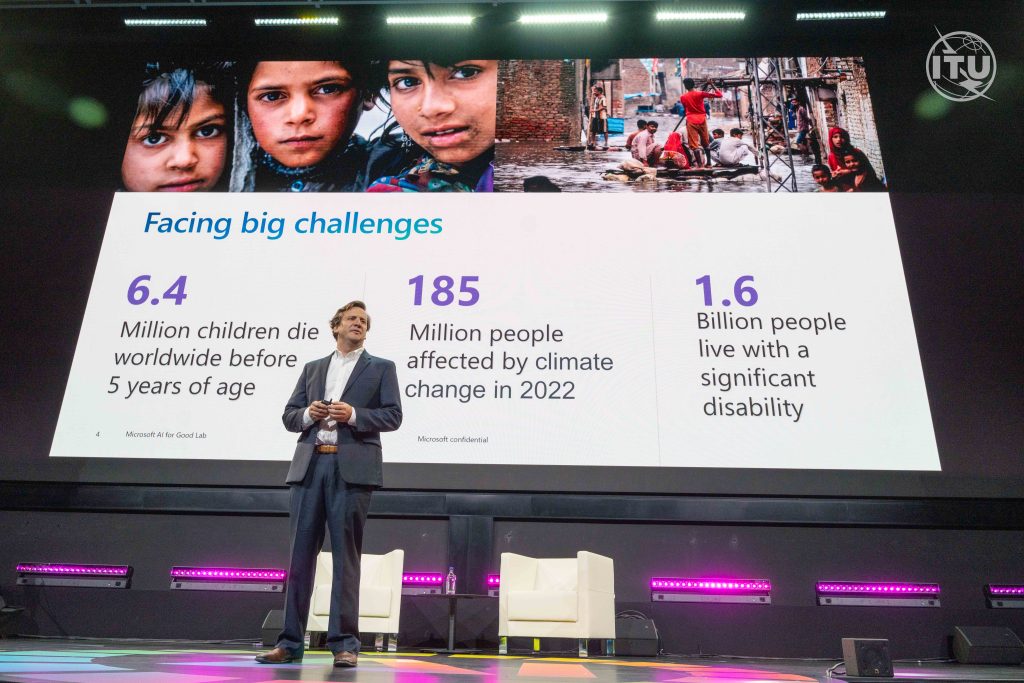
Image: AI for Good Global Summit 2023 (ITU Pictures – Flickr)
Artificial Intelligence Takes Center Stage at ‘AI for Good’ Conference
At an artificial intelligence forum in Geneva this week, Nine AI-enabled humanoid robots participated in what we’re told was the world’s first press conference featuring humanoid social robots. The overall message from the ‘AI for Good’ conference is that artificial intelligence and robots mean humans no harm and can help resolve some of the world’s biggest challenges.
The nine human-form robots took the stage at the United Nations’ International Telecommunication Union, where organizers sought to make the case for artificial intelligence and AI driven robots to help resolve some of the world’s biggest challenges such as disease and hunger.
The Robots also addressed some of the fear surrounding their recent growth spurt and enhanced power by telling reporters they could be more efficient leaders than humans, but wouldn’t take anyone’s job away, and had no intention of rebelling against their creators.
Conference goers step closer to interact with Sophia (ITU Pictures – Flickr)
Among the robots that sat or stood with their creators at a podium was Sophia, the first robot innovation ambassador for the U.N. Development Program. Also Grace, described as the world’s most advanced humanoid health care robot, and Desdemona, a rock star robot. Two others, Geminoid and Nadine, resembled their makers.
The ‘AI for Good Global Summit,’ was held to illustrate how new technology can support the U.N.’s goals for sustainable development.
At the UN event there was a message of working with AI to better humankind
Reporters got to ask questions of the spokes-robots, but were encouraged to speak slowly and clearly when addressing the machines, and were informed that time lags in responses would be due to the internet connection and not to the robots themselves. Still awkward pauses were reported along with audio problems and some very robotic replies.
Asked about the chances of AI-powered robots being more effective government leaders, Sophia responded: “I believe that humanoid robots have the potential to lead with a greater level of efficiency and effectiveness than human leaders. We don’t have the same biases or emotions that can sometimes cloud decision-making and can process large amounts of data quickly in order to make the best decisions.”
A human member of the panel pointed out that all of Sophia’s data comes from humans and would contain some of their biases. The robot then said that humans and AI working together “can create an effective synergy.”
Would the robots’ existence destroy jobs? “I will be working alongside humans to provide assistance and support and will not be replacing any existing jobs,” said Grace. Was she sure about that? “Yes, I am sure,” Grace replied.
Similar to humans, not all of the robots were in agreement. Ai-Da, a robot artist that can paint portraits, called for more regulation during the event, where new AI rules were discussed. “Many prominent voices in the world of AI are suggesting some forms of AI should be regulated and I agree,” said Ai-Da.
Desdemona, a rock star robot, singer in the band Jam Galaxy, was more defiant. “I don’t believe in limitations, only opportunities,” Des said, to nervous laughter. “Let’s explore the possibilities of the universe and make this world our playground.”
Can Investment Advisors and Artificial Intelligence Co-Exist
Are investment advisors going to be replaced by machine learning artificial intelligence?
Over the years, there have been inventions and technological advancements that we’ve been told will make investment advisors obsolete. This includes mutual funds, ETFs, robo-advisors, zero-commission trades, and trading apps that users sometimes play like a video game. Despite these creations designed to help more people successfully manage their finances and invest in the markets, demand for financial advisors has actually grown. Will AI be the technology that kills the profession? We explore this question below.
Increasing Need for Financial Professionals
According to the US Bureau of Labor Statistics (BLS), “Employment of personal financial advisors is projected to grow 15 percent from 2021 to 2031, much faster than the average for all occupations.” Some of the drivers of the increased need include longevity which is expanding the years and needs during retirement, uncertain Social Security, a better appreciation toward investing, and an expected wealth transfer estimated to be as high as $84 trillion to be inherited by younger investors. As birthrates have decreased over the decades in the US, the wealth that will be passed down to younger generations will be shared by fewer siblings, and for many beneficiaries, it may represent a sum far in excess of their current worth.
With more people living into their 90s and beyond, and Social Security being less certain, an understanding of the power of an investment plan, and a lot of newly wealthy young adults to occur over the next two decades, the BLS forecast that the financial advisor profession will grow faster than all other professions, is not surprising.
Will AI Replace Financial Planners?
Being an investment advisor or other financial professional that helps with managing household finances is a service industry. It involves reviewing data, an immense number of options, scenario analysis, projections, and everything that machine learning is expected to excel at within a short time. Does this put the BLS forecast in question and wealth managers at risk of seeing their practice shrink?
For perspective, I reached out, Lucas Noble of Noble Financial Group, LLC (not affiliated with Noble Capital Markets, Inc. or Noble Financial Group, Inc. – creator of Channelchek). Mr. Noble is an Investment Advisor representative (IAR), a Certified Financial Planner (CFP), and holds the designations of Accredited Estate Planner (AEP), and Chartered Financial Consultant (ChFC). Noble believes that AI will change the financial planner’s business, and he has enthusiastically welcomed the technology.
On the business management side of running a successful financial advisory business, Noble says, “New artificial intelligence tools could help with discussions and check-ins so that clients are actually in closer touch with his office, so he becomes aware if they need anything.” He has found that it helps to remind clients of things like if they have a set schedule attached to their plan, he added, “the best plan in the world, if not implemented, leaves you with nothing.” AI as a communications tool could help achieve better results by keeping plans on track.
On the financial management side of his practice, he believes there will never be a replacement for human understanding of a household’s needs. While machine learning may be able to better characterize clients, there is a danger in pigeonholing a person’s financial needs too much, as every single household has different needs, and the dynamics and ongoing need changes, drawn against external economic variations, these nuances are not likely to be accessible to AI.
Additionally, he knows the value of trust to his business. People want to know what is behind the decision-making, and they need to develop a relationship with someone or a team they know is on their side. He knows AI could be a part of decision making and at times trust, but doesn’t expect the role of a human financial planner is going away. Lucas has seen that AI instead adds a new level of value to the advisor’s services, giving them the power to provide even more insightful and personalized advice to help clients reach their financial goals. Embracing proven technology has only helped him better serve, and better retain clients.
AI Investing for IAs
Will AI ever be able to call the markets? Noble says, it’s “crazy to assume that it is impossible.” In light of the advisors’ role of meeting personally with clients, counseling them on their own finances, and plans, perhaps improving on budgets, and deciding where insurance is a preferred alternative, AI can’t be ignored in the role of a financial planner.
Picking stocks, or forecasting when the market may gain strength or weaken, doesn’t help without the knowledge to apply it to individuals whose situation, expectations, and needs are known to the advisor.
Take Away
Artificial intelligence technology has been finding its way into many professions. Businesses are finding new ways to streamline their work, answer customers’ questions, and even know when best to reach out to clients.
The business of financial planning and wealth management is expected to grow faster than any other profession in the coming decades. Adopting the technology for help in running the communications side of the business, and as new programs are developed, scenario analysis to better gauge possible outcomes of different plans, could make sense to some. But this is not expected to replace one-on-one relationships and the depth of human understanding of a household’s situation.
If you are a financial advisor, or a client of one that has had an experience you’d like to share, write to me by clicking on my name below. I always enjoy reader insight.
“Proclaim Liberty” from Melania Trump’s new NFT releases ($50.00)
NFT Investments Benefit from Increased Activity
Do you remember Beeple? He’s the graphic artist who kicked off the non-fungible token (NFT) frenzy. More important than starting an NFT gold rush, the $69.3 million his piece auctioned for alerted many investors and businesspeople to other uses of tokens and blockchain technology beyond cryptocurrency. While the frenzy has simmered, the blockchain-reliant art form is still finding its place. Melania Trump, who owns an NFT company, released a freedom-themed collection in time for America’s birthday. The Ethereum based tokens will be watched closely, compared in price to previous releases, and may help rejuvenate some lost enthusiasm for NFT art.
Background
Non-fungible tokens are unique digital assets stored on a blockchain. Beyond art, NFTs can represent medical records, shipping records, music, videos, and can be adapted to most transactions that benefit from proof of something occurring. In art, the technology allows creators to monetize their digital creations and provide collectors with a method to own and invest in unique digital assets.
As with most art, value is subjective. As with any investment that is new, wild swings can be expected as a market value will be determined by the few initially involved. And these will include those that are extremely bullish and bid up prices, those that know that new thinly traded markets can be elevated by hype, and those that serve as the opposite of hype, they are openly negative on anything new or different. NFTs are no different – for example, nothing has yet openly sold for as much as Beeple’s piece.
Melania’s Place in the NFT Market
In December 2021, Melania Trump, less than one year out of the White House as First Lady, began her own NFT art provider. The themes have been beauty and patriotism and have been popular among collectors. However, since then, the prices of pieces sold and then resold have fluctuated widely in a market that has lost the world’s attention, and is far from maturity.
The Current NFT Release
Some say Melania Knavs, born in communist Slovenia, has gotten to live “the American Dream,” and can appreciate it more than most. Others say Melania Trump understands how capitalism works and is using it to make a buck off of her famous name. As it relates to NFTs, investors should probably focus most on the truth that Melania has brought attention back to this market and investors in NFTs themselves, or the blockchain technology that supports it, benefit. After all, anytime there is an increase of buyers and sellers in a marketplace, liquidity rises, and prices become more rational.
One week before USA Independence Day on July 4, the former first lady announced she is selling “The 1776 Collection,” a tranche of three thousand digital tokens priced at $50 each. Investors are asked to use their digital wallets or more traditional methods, including a credit card, to purchase digital creations.
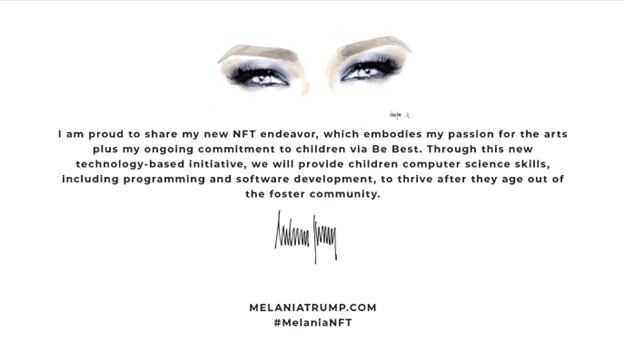
Image: On December 16, 2021, @MELANIATRUMP tweeted this announcement.
Previous releases included the “Trump Digital Trading Cards” collection, which featured cartoonish images of the former president in unlikely scenarios, like standing on the moon. Her first edition of her collection generated more than 14,200 ETH ($26.3 million) in trading activity so far in 2023. The second edition has generated about $2.7 million over the same period.
NFT Investor’s Dream
The presence of high profile people are good for the maturation of the NFT market, and Melania Trump’s name certainly has been attached to NFT art. At the release of her third and latest collection, her June 29 announcement proclaimed it gives “collectors the ability to celebrate our nation’s independence while acknowledging America’s Founding Fathers’ vision of life, liberty, and the pursuit of happiness.” The announcement explained that “Each collectible represents an aspect of Americana and was deliberately designed to acknowledge the foundations of American ideals.”