Alvopetro Energy (ALVOF) – Company update shows execution of game plan

Friday, August 05, 2022

Alvopetro Energy (ALVOF)
Company update shows execution of game plan

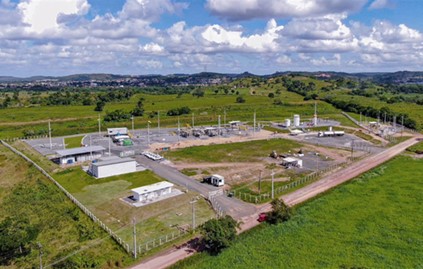
Alvopetro Energy Ltd.’s vision is to become a leading independent upstream and midstream operator in Brazil. Our strategy is to unlock the on-shore natural gas potential in the state of Bahia in Brazil, building off the development of our Caburé natural gas field and our strategic midstream infrastructure.

Michael Heim, CFA, Senior Research Analyst, Noble Capital Markets, Inc.

Refer to the full report for the price target, fundamental analysis, and rating.

Management reported an update on production, drilling, and price adjustments. July sales volume averaged 2,514 boe/d. This is an increase over June sales of 2,480 and May sales of 2,111 (includes 5 day processing plant shutdown). June-quarter volumes were up 7% year over year. Production for the month of June equates to roughly 15 mmcf/d gas equivalent. Production is expected to increase beginning in August with the Cabure gas processing facility expanding to 18 mmcf/d capacity. 

Additional statistical interval data on recently-drilled wells looks favorable. The 183-B1 and 182-C1 wells both discovered potential net natural gas pay in multiple formations. Both wells are subject to testing. Both wells lie west of existing production in the Murucututu/Gomo project. The new field could be a critical component of Alvopetro’s long-term growth plans. On the Mururcututu project, the company is close to bringing a new well (183-1) to production and is extending pipeline to tie in another well (197-1) in the fourth quarter. New wells will help expand total production to the processing plant’s new capacity of 18 mmcf/d….

This Company Sponsored Research is provided by Noble Capital Markets, Inc., a FINRA and S.E.C. registered broker-dealer (B/D).

*Analyst certification and important disclosures included in the full report. NOTE: investment decisions should not be based upon the content of this research summary. Proper due diligence is required before making any investment decision. 

Release – Alvopetro Announces Inaugural Sustainability Report, July 2022 Sales Volumes, & Operational Update


Alvopetro Announces Inaugural Sustainability Report, July 2022 Sales Volumes, & Operational Update

Research, News, and Market Data on Alvopetro Energy

Aug 04, 2022

CALGARY, AB, Aug. 4, 2022 /CNW/ – Alvopetro Energy Ltd. (TSXV: ALV) (OTCQX: ALVOF) announces our inaugural sustainability report for the year-ended December 31, 2021, July sales volumes and an operational update.

Inaugural Sustainability Report

We are pleased to present our inaugural 2021 Sustainability Report (the “Report”), highlighting the operational milestones achieved through the development of our Caburé project and outlining Alvopetro’s approach to environmental, social and governance (“ESG”) practices. The Report was approved by the Company’s Board of Directors and provides stakeholders insight into our environmental stewardship, community involvement and corporate governance practices. A full copy of the Report can be found on our website at https://alvopetro.com/Sustainability.

Corey Ruttan, President and Chief Executive Officer, commented: “Our goal while developing this sustainability report was to create transparency on how we manage our business objectives focused on innovation, business strength and our approach to sustainability by; responsibly supplying energy, strengthening communities and our workforce, and minimizing our impact.”

2021 ESG highlights included:

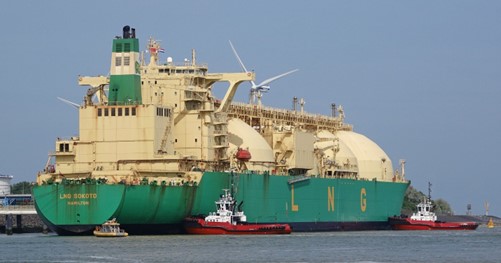
  • Alvopetro’s locally produced natural gas resulted in average savings of 48% for consumers relative to imported LNG and 53% lower GHG emissions relative to fuel oil;
  • 100% of produced water reinjected;
  • Scope 1 & 2 emissions intensity of 4.7 kg CO2e per boe;
  • 65% less vegetation removed than allowed in our permit during the construction of our Murucututu pipeline extension;
  • 75 jobs created during Murucututu pipeline construction;
  • Zero lost-time safety incidents; and
  • Budgeting $0.20/boe to voluntary social programs.

July Sales Volumes and Facility Expansion

Our July sales volumes averaged 2,514 boepd based on field estimates, including natural gas sales of 14.4 MMcfpd, associated natural gas liquids sales from condensate of 108 bopd and oil sales of 6 bopd, a 7% increase from our Q2 average of 2,359 boepd. Our Caburé gas processing facility expansion was commissioned and completed in late July. We now have available processing capacity of up to 500,000 cubic metres per day (18 MMcfpd).  Prior to the expansion our sales volumes were limited by the gas processing facility capacity. With the expanded capacity, our production is expected to be driven by Alvopetro’s share of available Caburé unit production and production additions from new projects. 

Operational Update

In April, we completed drilling our 182-C1 well on Block 182 and, based on open-hole wireline logs, the well discovered 25 metres of potential net natural gas pay in the Agua Grande formation with an average 34% water saturation and average porosity of 8.2%, using a 6% porosity cut-off, 50% Vshale cut-off and 50% water saturation cut-off.  We have commenced completion and testing operations using the drilling rig.  After perforating and cleaning up the well we will complete a 72-hour formation test.  We then plan to move the drilling rig on the same drilling location to drill a follow up well further east from the bounding fault to further assess the Agua Grande potential and to target the Sergi Formation.

In July, we completed drilling our second 2022 exploration well (183-B1) on the fault block immediately east to our 182-C1 discovery.  The 183-B1 location was also a multi-zone pre-rift prospect targeting both the Agua Grande and Sergi Formations.  Based on open-hole logs and collected fluid samples, the 183-B1 well encountered multiple zones of interest with an aggregate 34.3 metres of potential net hydrocarbon pay, using a 6% porosity cut-off, 50% Vshale cut-off and 50% water saturation cut-off.  Subject to equipment availability we expect to commence multi-zone formation tests later in the third quarter. 

On our Murucututu project, we commenced commissioning of our field production facility at our 183-1 location in July and subject to final ANP inspection we expect to have our 183-1 well on production near the end of the month. We also commenced field installation of the pipeline extension to tie-in our 197-1 well in June and expect construction to be completed later in the third quarter. Subject to receipt of regulatory approvals, we plan to complete and tie-in the 197-1 well in the fourth quarter.

At the Caburé Unit, the unit operator has commenced drilling the Unit C well (49.1% Alvopetro) targeting development and exploration potential in the Pojuca, Marfim and Caruaçu formations. Drilling is expected to be completed near the end of August.

Semi-Annual Natural Gas Price Redetermination

Pursuant to the terms of our long-term gas sales agreement with Bahiagás, our natural gas price effective August 1, 2022 is BRL1.94/m3 or $11.28/Mcf (based on our average heat content to date of 107% and the July 31, 2022 BRL/USD foreign exchange rate of 5.19).  The adjusted price is based on the ceiling price in the contract, which was adjusted to $10.22/MMBtu effective August 1, 2022. While the ceiling price increased by 6% from the February 1, 2022 ceiling price, due to the appreciation of the BRL relative to the USD in the first half of 2022 compared to the latter half of 2021, the BRL denominated contractual price remained consistent.  This price will be effective for all natural gas sales from August 1, 2022 to January 31, 2023.

Corporate Presentation

Alvopetro’s updated corporate presentation is available on our website at:http://www.alvopetro.com/corporate-presentation

Social Media

Follow Alvopetro on our social media channels at the following links:Twitter – https://twitter.com/AlvopetroEnergyInstagram – 
https://www.instagram.com/alvopetro/LinkedIn – 
https://www.linkedin.com/company/alvopetro-energy-ltdYouTube: https://www.youtube.com/channel/UCgDn_igrQgdlj-maR6fWB0w

Alvopetro Energy Ltd.’s vision is to become a
leading independent upstream and midstream operator in 
Brazil. Our
strategy is to unlock the on-shore natural gas potential in the state of Bahia
in 
Brazil,
building off the development of our Caburé natural gas field and our strategic
midstream infrastructure.

Neither the TSX Venture Exchange nor its Regulation Services
Provider (as that term is defined in the policies of the TSX Venture Exchange)
accepts responsibility for the adequacy or accuracy of this news release.

All amounts contained in this new release are in United States dollars,
unless otherwise stated and all tabular amounts are in thousands of 
United States dollars,
except as otherwise noted.

Abbreviations:

boepd                    
=             
barrels of oil equivalent (“boe”) per
daybopd                      
=             
barrels of oil and/or natural gas liquids (condensate) per
dayMMcf                     
=             
million cubic feetMMcfpd               
 
=             
million cubic feet per day

BOE Disclosure. The term barrels of oil
equivalent (“boe”) may be misleading, particularly if used in
isolation. A boe conversion ratio of six thousand cubic feet per barrel
(6Mcf/bbl) of natural gas to barrels of oil equivalence is based on an energy equivalency
conversion method primarily applicable at the burner tip and does not represent
a value equivalency at the wellhead. All boe conversions in this news release
are derived from converting gas to oil in the ratio mix of six thousand cubic
feet of gas to one barrel of oil.

Testing and Well Results.  Data obtained
from the 183-B1 and 182-C1 wells identified in this press release, including
hydrocarbon shows, open-hole logging, net pay and porosities, should be
considered to be preliminary until testing, detailed analysis and
interpretation has been completed. Hydrocarbon shows can be seen during the
drilling of a well in numerous circumstances and do not necessarily indicate a
commercial discovery or the presence of commercial hydrocarbons in a well.
There is no representation by Alvopetro that the data relating to the 183-B1
well nor the 182-C1 well contained in this press release is necessarily
indicative of long-term performance or ultimate recovery. The reader is
cautioned not to unduly rely on such data as such data may not be indicative of
future performance of the well or of expected production or operational results
for Alvopetro in the future.

Forward-Looking Statements and Cautionary Language. This
news release contains “forward-looking information” within the
meaning of applicable securities laws. The use of any of the words
“will”, “expect”, “intend” and other similar
words or expressions are intended to identify forward-looking information.
Forward
?looking
statements involve significant risks and uncertainties, should not be read as
guarantees of future performance or results, and will not necessarily be
accurate indications of whether or not such results will be achieved. A number
of factors could cause actual results to vary significantly from the expectations
discussed in the forward-looking statements. These forward-looking statements
reflect current assumptions and expectations regarding future events.
Accordingly, when relying on forward-looking statements to make decisions,
Alvopetro cautions readers not to place undue reliance on these statements, as
forward-looking statements involve significant risks and uncertainties. More
particularly and without limitation, this news release contains forward-looking
information concerning potential hydrocarbon pay in the 183-B1 and the 182-C1
wells, exploration and development prospects of Alvopetro and the expected
timing of certain of Alvopetro’s testing and operational activities. The
forward
?looking
statements are based on certain key expectations and assumptions made by
Alvopetro, including but not limited to expectations and assumptions concerning
testing results of the 183-B1 well and the 182-C1 well, equipment availability,
the timing of regulatory licenses and approvals, the success of future
drilling, completion, testing, recompletion and development activities, the
outlook for commodity markets and ability to access capital markets, the impact
of the COVID-19 pandemic, the performance of producing wells and reservoirs,
well development and operating performance, foreign exchange rates, general
economic and business conditions, weather and access to drilling locations, the
availability and cost of labour and services, environmental regulation,
including regulation relating to hydraulic fracturing and stimulation, the
ability to monetize hydrocarbons discovered, the regulatory and legal
environment and other risks associated with oil and gas operations. The reader
is cautioned that assumptions used in the preparation of such information,
although considered reasonable at the time of preparation, may prove to be
incorrect. Actual results achieved during the forecast period will vary from
the information provided herein as a result of numerous known and unknown risks
and uncertainties and other factors.  Although Alvopetro believes that the
expectations and assumptions on which such forward-looking information is based
are reasonable, undue reliance should not be placed on the forward-looking
information because Alvopetro can give no assurance that it will prove to be
correct. Readers are cautioned that the foregoing list of factors is not
exhaustive. Additional information on factors that could affect the operations
or financial results of Alvopetro are included in our annual information form
which may be accessed on Alvopetro’s SEDAR profile at 
www.sedar.com.
The forward-looking information contained in this news release is made as of
the date hereof and Alvopetro undertakes no obligation to update publicly or
revise any forward-looking information, whether as a result of new information,
future events or otherwise, unless so required by applicable securities laws.

SOURCE Alvopetro Energy Ltd.
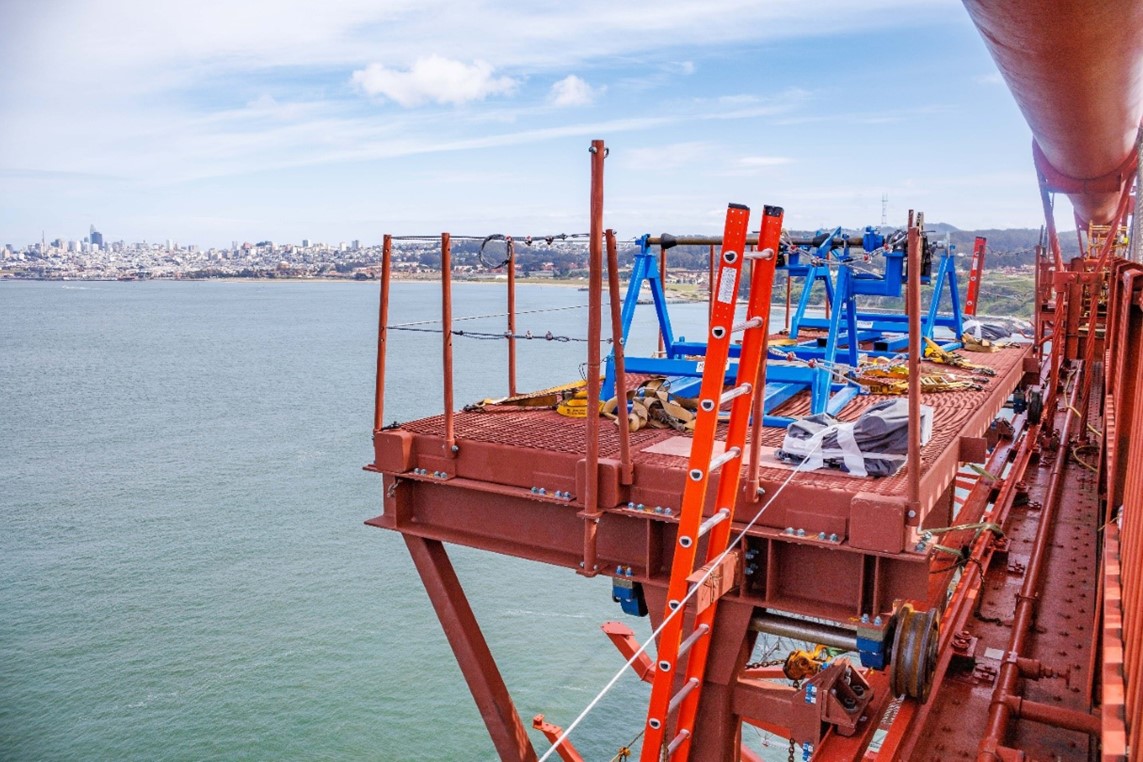


NRC Certifying the First Nuclear Power Plant Since 1978


Image Credit: Oregon State University


Investment Opportunities in Uranium and U.S. Nuclear Generation are Blossoming

The last time a nuclear reactor was certified in the U.S., Apple Computer had just introduced its first operating system, DOS 3.1.

Last week, nuclear power history was made as the Nuclear Regulatory Commission directed staff to issue a final rule certifying a small modular nuclear reactor. NuScale ($SMR) had submitted its application to the NRC back in 2016 to certify the company’s small modular reactor. The NRC staff met its goals and completed its technical review, and will be certifying its first commercial nuclear reactor in the U.S. since 1978.


About NuScale

NuScale was founded based on research funded by the United States Department of Energy (DOE). As funding for the research ended, scientists involved in the project obtained the necessary patents to develop the idea into a functioning product and company. Now, the NRC is about to fully certify NuScale’s first nuclear reactor. This reactor could be the first of a coming wave of advanced reactors, all riding a wave created by advanced technology and policies to move away from fossil fuels.


Source: Koyfin


The Future of Nuclear

The compact and modular design of NuScale’s nuclear generating system is a dramatic change from the large site-specific nuclear plants that utilities have been in service for over 40 years. NuScale’s light water reactor modules are roughly 65 feet tall. The company plans to build them in a factory and can distribute the pre-fab reactors globally. The first commercial reactor was a project that began in the early 2000s and could be a major step in changing how nuclear power is implemented.
The fact that so much time has elapsed since the NRC has approved a reactor, and this is the first advanced reactor design, had left enough uncertainty to make attracting investors difficult. Especially with such a long approval timeline. A new certification could foretell what the future of energy generation will include. Other companies that have SMR designs underway in the U.S. include Holtec and GE Hitachi, though none have yet submitted a design to the NRC.

The final certification to approve NuScale’s application filed in 2016 is expected soon. This first SMR power plant is expected to begin generating power in 2029, with all six of its modules due to come online by 2030. Located at the Idaho National Laboratory, the Carbon Free Power Project will generate some 462 MW, much of which is already contracted to be sold to power distribution companies for a 40-year period.

Paul Hoffman

Managing Editor, Channelchek

Suggested Content


Is the Future of Nuclear Power Small Modular Reactors?


Core Understanding of Nuclear Energy


How does the Gates Buffett Natrium Reactor Work?


The Increasing Popularity of Uranium Investments


Sources

https://www.nrc.gov/reactors/new-reactors/smr/nuscale.html

https://www.nrc.gov/reading-rm/doc-collections/news/2022/22-029.pdf

https://www.scientificamerican.com/article/first-new-nuclear-reactor-in-us-since-1978-approved/

https://www.computerhope.com/history/1978.htm#major-events

Stay up to date. Follow us:


Release – Alaska Airlines and Gevo Enter into Sustainable Aviation Fuel Sales Agreement for 37 Million Gallons Per Year for Five Years


Alaska Airlines and Gevo Enter into Sustainable Aviation Fuel Sales Agreement for 37 Million Gallons Per Year for Five Years

Research, News, and Market Data on Gevo

ENGLEWOOD, Colo., Aug. 03, 2022 (GLOBE NEWSWIRE) — Gevo, Inc. (NASDAQ: GEVO) is pleased to announce a new fuel sales agreement with Alaska Airlines (NYSE: ALK). The Agreement provides for Alaska Airlines to purchase 37 million gallons per year of sustainable aviation fuel (SAF) for five years through Gevo’s future commercial operations. Gevo’s SAF deliveries are expected to begin in 2026.

Alaska Airlines is a member of oneworld® global alliance (oneworld), and this agreement falls under the purview of a memorandum of understanding (MoU) that Alaska Airlines and Gevo signed in March 2022, laying the groundwork for the 14 world-class airlines in the alliance to potentially purchase 200 million gallons of SAF per year, from Gevo’s future commercial production operations. Gevo and Alaska Airlines previously partnered in 2016 to demonstrate the use of the first cellulosic renewable jet fuel specified for use on a commercial airline flight, produced from the sugars of wood waste. This Agreement with Alaska Airlines expands the list of committed airline partners and supports Gevo’s pursuit of its stated goal of producing and commercializing a billion gallons of SAF by 2030.

“As we continue to grow our partnerships with oneworld airlines, I’m personally gratified to see that Alaska Airlines has joined our list of partners,” said Gevo CEO Dr. Patrick Gruber. “Alaska was the first airline to fly on a Gevo experimental fuel that we made from the cellulosic fiber of wood waste, providing a pathway and proof that waste woods can be used to make sustainable aviation fuel. When Alaska Airlines receives fuel from one of our Net-Zero facilities, they will do so having been a part of some of our very important initial testing and delivery of sustainable aviation fuel.”

Alaska Airlines is committed to alternatives that assist in its goal of reducing emissions, including the use of greener alternatives and the prioritization of programs that help them safely burn less fuel. They have committed to pathways that will help them achieve net-zero carbon emissions by 2040, with the stated goal of being “the most sustainable and fuel-efficient U.S. airline.”

“Using sustainable aviation fuel is a significant part of Alaska’s five-part path to reach net zero carbon emissions, and we are excited about this agreement with Gevo – alongside our partners American Airlines and others in the oneworld alliance.” said Diana Birkett Rakow, senior vice president of public affairs and sustainability at Alaska Airlines. “We also recognize that there is significant work required ahead – including public policy action – to make SAF a viable, affordable option at scale.”

To make renewable jet fuel, Gevo utilizes waste starch (or sugars) from field corn that has been utilized in the production of high protein animal feed. These non-edible waste products are fermented into alcohol and then chemically converted to a renewable jet fuel through proprietary processes. This fuel is an ASTM tested and approved drop-in replacement for fossil-based jet fuel.

The Agreement with Alaska Airlines is subject to certain conditions, including Gevo developing, financing, and constructing one or more production facilities to produce the SAF contemplated by the Agreement.

About Gevo
Gevo’s mission is to transform renewable energy and carbon into energy-dense liquid hydrocarbons. These liquid hydrocarbons can be used for drop-in transportation fuels such as gasoline, jet fuel and diesel fuel, that when burned have potential to yield net-zero greenhouse gas emissions when measured across the full life cycle of the products. Gevo uses low-carbon renewable resource-based carbohydrates as raw materials, and is in an advanced state of developing renewable electricity and renewable natural gas for use in production processes, resulting in low-carbon fuels with substantially reduced carbon intensity (the level of greenhouse gas emissions compared to standard petroleum fossil-based fuels across their life cycle). Gevo’s products perform as well or better than traditional fossil-based fuels in infrastructure and engines, but with substantially reduced greenhouse gas emissions. In addition to addressing the problems of fuels, Gevo’s technology also enables certain plastics, such as polyester, to be made with more sustainable ingredients. Gevo’s ability to penetrate the growing low-carbon fuels market depends on the price of oil and the value of abating carbon emissions that would otherwise increase greenhouse gas emissions. Gevo believes that it possesses the technology and know-how to convert various carbohydrate feedstocks through a fermentation process into alcohols and then transform the alcohols into renewable fuels and materials, through a combination of its own technology, know-how, engineering, and licensing of technology and engineering from Axens North America, Inc., which yields the potential to generate project and corporate returns that justify the build-out of a multi-billion-dollar business.

Gevo believes that the Argonne National Laboratory GREET model is the best available standard of scientific-based measurement for life cycle inventory or LCI.

Learn more at Gevo’s website: www.gevo.com

About
Alaska Airlines

Alaska Airlines and its regional partners serve more than 120 destinations across the United States, Belize, Canada, Costa Rica and Mexico. It emphasizes Next-Level Care for its guests, along with providing low fares, award-winning customer service and sustainability efforts. Alaska is a member of the oneworld® global alliance. With the alliance and its additional airline partners, guests can travel to more than 1,000 destinations on more than 20 airlines while earning and redeeming miles on flights to locations around the world. Alaska Airlines and Horizon Air are subsidiaries of Alaska Air Group.

Learn more about Alaska Airlines here: alaskaair.com

Forward-Looking
Statements

Certain statements in this press release may constitute “forward-looking statements” within the meaning of the Private Securities Litigation Reform Act of 1995. These forward-looking statements relate to a variety of matters, without limitation, including Gevo’s technology, the Agreement with Alaska Airlines, Gevo’s ability to develop, finance and construct one or more production facilities to produce the SAF contemplated by the Agreement with Alaska Airlines, the timing of Gevo producing the SAF for Alaska Airlines, the oneworld® Alliance, Gevo’s ability to produce SAF, the attributes of Gevo’s products, Gevo’s ability to create net-zero carbon intensity products, and other statements that are not purely statements of historical fact. These forward-looking statements are made on the basis of the current beliefs, expectations and assumptions of the management of Gevo and are subject to significant risks and uncertainty. Investors are cautioned not to place undue reliance on any such forward-looking statements. All such forward-looking statements speak only as of the date they are made, and Gevo undertakes no obligation to update or revise these statements, whether as a result of new information, future events or otherwise. Although Gevo believes that the expectations reflected in these forward-looking statements are reasonable, these statements involve many risks and uncertainties that may cause actual results to differ materially from what may be expressed or implied in these forward-looking statements. For a further discussion of risks and uncertainties that could cause actual results to differ from those expressed in these forward-looking statements, as well as risks relating to the business of Gevo in general, see the risk disclosures in the Annual Report on Form 10-K of Gevo for the year ended December 31, 2021, and in subsequent reports on Forms 10-Q and 8-K and other filings made with the U.S. Securities and Exchange Commission by Gevo.

Media
Contact

Heather L. Manuel
+1 303-883-1114
[email protected]


Release – InPlay Oil Corp. Announces Renewal of Credit Facility and Provides Operations Update


InPlay Oil Corp. Announces Renewal of Credit Facility and Provides Operations Update

News and Market Data on InPlay Oil Corp

CALGARY, Alberta, July 26, 2022 (GLOBE NEWSWIRE) — InPlay Oil Corp. (TSX: IPO) (OTCQX: IPOOF) (“InPlay” or the “Company”) is pleased to provide an operations update and announce the completion of the annual renewal of its syndicated Senior Credit Facility.

Senior Credit Facility Renewal

InPlay’s Senior Credit Facility remains unchanged in lending capacity and has been renewed at $79 million comprised of a $65 million revolving facility(1) and the remaining $14 million term facility. The borrowing base of the revolving facility has been reconfirmed at the same amount of $65 million and the term out date extended to November 30, 2022. In addition to the Senior Credit Facility, the Company’s $25 million four year term facility with the Business Development Bank of Canada remains in place, providing InPlay with $104 million of total lending capacity.

Operations Update

During the second quarter, InPlay drilled three (3.0 net) 1.5 mile Extended Reach Horizontal (“ERH”) wells in Pembina which came on production at the end of May. The average combined initial production (“IP”) rates of these wells over the first thirty and sixty days of production was 1,501 boe/d(2) (89% light crude oil and NGLs) and 1,441 boe/d(2) (88% light crude oil and NGLs) respectively, based on field estimates. The Company also completed the drilling operations of an additional two (1.9 net) 2 mile ERH wells in Willesden Green which have currently been completed and are in the early cleanup period. Construction of a modular multi-well facility in Willesden Green began during the quarter to accommodate current and future drilling in the area.

Extreme wet weather in late June delayed the start of our third quarter capital program. The program has now started with drilling operations underway on the second well of a three (2.9 net) ERH well pad in Willesden Green which is expected to be on production in late August.

The Company’s released 2022 guidance(3) is reiterated with field estimated average corporate production for the second quarter of 2022 of approximately 9,150 boe/d(2) (59% light crude oil and NGLs) which includes over 5,000 bbls of a light crude oil inventory build due to difficulty trucking oil at the end of June.  This is 11% higher than production in the first quarter of 2022. Current corporate production is approximately 9,550 boe/d(2) (60% light crude oil and NGLs) based on field estimates, which is 16% above our average production during the first quarter of 2022.

As a result of using a consistent drill crew since the beginning of the year and exceptional project execution, the two 2 mile ERH wells in Willesden Green were drilled in 10.3 and 10.7 days respectively, which were among the fastest drilling operations for 2 mile wells in the area. In comparison to the last 2 mile wells drilled by the Company in Willesden Green in 2018 drilling times improved by approximately 20% which is a positive result for the Company and is an example of InPlay’s continuous drive to achieve operational efficiencies.

We are extremely excited about the excellent financial position of the Company with our strong balance sheet, a strong portfolio of assets that are providing top-tier growth and our ability to generate long-term, direct returns to shareholders. Management would like to thank our employees, board members and lenders for their ongoing support as the Company progresses forward. The Company looks forward to announcing further corporate and operational updates including the upcoming release of our record second quarter results before markets on August 11, 2022.

For further information please contact:

Doug Bartole
President and Chief Executive Officer
InPlay Oil Corp.
Telephone: (587) 955-0632


Darren Dittmer
Chief Financial Officer
InPlay Oil Corp.
Telephone: (587) 955-0634

Notes:

  • The
    revolving facility consists of a $10 million operating line of credit and $55
    million revolving line of credit.
  • See “Reader
    Advisories – Production Breakdown by Product Type”.
  • Refer to
    InPlay’s press release dated May 11, 2022 for full details of our 2022 capital
    program, associated guidance and key budget and underlying assumptions related
    thereto.


Reader Advisories

Forward-looking Information and Statements

This news release contains certain forward–looking information and statements within the meaning of applicable securities laws. The use of any of the words “expect”, “anticipate”, “continue”, “estimate”, “may”, “will”, “project”, “should”, “believe”, “plans”, “intends”, “forecast”, “targets”, “framework” and similar expressions are intended to identify forward-looking information or statements. In particular, but without limiting the foregoing, this news release contains forward looking information and statements pertaining to the following: expectations regarding future commodity prices; future oil and natural gas prices; future liquidity and financial capacity; future results from operations and operating metrics; future costs, expenses and royalty rates; future interest costs; the exchange rate between the $US and $Cdn; future development, exploration, acquisition, development and infrastructure activities and related capital expenditures, including our planned 2022 capital program and associated guidance.

Forward-looking statements or information are based on a number of material factors, expectations or assumptions of InPlay which have been used to develop such statements and information but which may prove to be incorrect. Although InPlay believes that the expectations reflected in such forward looking statements or information are reasonable, undue reliance should not be placed on forward-looking statements because InPlay can give no assurance that such expectations will prove to be correct. In addition to other factors and assumptions which may be identified herein, assumptions have been made regarding, among other things: the impact of increasing competition; the general stability of the economic and political environment in which InPlay operates; the timely receipt of any required regulatory approvals; the ability of InPlay to obtain qualified staff, equipment and services in a timely and cost efficient manner; drilling results; the ability of the operator of the projects in which InPlay has an interest in to operate the field in a safe, efficient and effective manner; the ability of InPlay to obtain debt financing on acceptable terms; field production rates and decline rates; the ability to replace and expand oil and natural gas reserves through acquisition, development and exploration; the timing and cost of pipeline, storage and facility construction and the ability of InPlay to secure adequate product transportation; future commodity prices; expectations regarding the potential impact of COVID-19 and the Russia/Ukraine conflict; currency, exchange and interest rates; regulatory framework regarding royalties, taxes and environmental matters in the jurisdictions in which InPlay operates; and the ability of InPlay to successfully market its oil and natural gas products. The forward-looking information and statements included herein are not guarantees of future performance and should not be unduly relied upon. Such information and statements, including the assumptions made in respect thereof, involve known and unknown risks, uncertainties and other factors that may cause actual results or events to defer materially from those anticipated in such forward-looking information or statements including, without limitation: the continuing impact of the COVID-19 pandemic and the Russia/Ukraine conflict; changes in our planned 2022 capital program; changes in commodity prices and other assumptions outlined herein; the potential for variation in the quality of the reservoirs in which we operate; changes in the demand for or supply of our products; unanticipated operating results or production declines; changes in tax or environmental laws, royalty rates or other regulatory matters; changes in development plans or strategies of InPlay or by third party operators of our properties; changes in our credit structure, increased debt levels or debt service requirements; inaccurate estimation of our light crude oil and natural gas reserve and resource volumes; limited, unfavorable or a lack of access to capital markets; increased costs; a lack of adequate insurance coverage; the impact of competitors; and certain other risks detailed from time-to-time in InPlay’s continuous disclosure documents filed on SEDAR including our Annual Information Form and our MD&A.

This press release contains future-oriented financial information and financial outlook information (collectively, “FOFI”) about InPlay’s prospective capital expenditures, all of which are subject to the same assumptions, risk factors, limitations, and qualifications as set forth in the above paragraphs. The actual results of operations of InPlay and the resulting financial results will likely vary from the amounts set forth in this press release and such variation may be material. InPlay and its management believe that the FOFI has been prepared on a reasonable basis, reflecting management’s best estimates and judgments. However, because this information is subjective and subject to numerous risks, it should not be relied on as necessarily indicative of future results. Except as required by applicable securities laws, InPlay undertakes no obligation to update such FOFI. FOFI contained in this press release was made as of the date of this press release and was provided for the purpose of providing further information about InPlay’s anticipated future business operations. Readers are cautioned that the FOFI contained in this press release should not be used for purposes other than for which it is disclosed herein.

The forward-looking information and statements contained in this news release speak only as of the date hereof and InPlay does not assume any obligation to publicly update or revise any of the included forward-looking statements or information, whether as a result of new information, future events or otherwise, except as may be required by applicable securities laws.

Production Breakdown by Product Type

Disclosure of production on a per boe basis in this press release consists of the constituent product types as defined in NI 51-101 and their respective quantities disclosed in the table below:


Light and Medium
Crude oil
(bbls/d)


NGLS
(boe/d)


Conventional Natural gas
(Mcf/d)


Total
(boe/d)

Corporate production

3,775


1,599


25,059


9,550

Q1 2022 Average Production

3,571


1,307


20,054


8,221

Q2 2022 Forecasted Average Production

3,872


1,419


23,154


9,150

Combined IP 30 – 3.0 net Q2/22 Pembina wells

793


163


3,270


1,501

Combined IP 60 – 3.0 net Q2/22 Pembina wells

681


175


3,510


1,441

Note:

  • With respect
    to forward-looking production guidance, product type breakdown is based upon
    management’s expectations based on reasonable assumptions but are subject to
    variability based on actual well results.

References to crude oil, NGLs or natural gas production in this press release refer to the light and medium crude oil, natural gas liquids and conventional natural gas product types, respectively, as defined in National Instrument 51-101, Standards of Disclosure for Oil and Gas Activities (“Nl 51-101”).

BOE Equivalent
Barrel of oil equivalents or BOEs may be misleading, particularly if used in isolation. A BOE conversion ratio of 6 mcf: 1 bbl is based on an energy equivalency conversion method primarily applicable at the burner tip and does not represent a value equivalency at the wellhead. Given that the value ratio based on the current price of crude oil as compared to natural gas is significantly different than the energy equivalency of 6:1, utilizing a 6:1 conversion basis may be misleading as an indication of value.


Release – Gevo Closes on Net-Zero 1 Production Facility Land in Lake Preston, SD, Plans Fall Groundbreaking


Gevo Closes on Net-Zero 1 Production Facility Land in Lake Preston, SD, Plans Fall Groundbreaking

Research, News, and Market Data on Gevo

ENGLEWOOD, Colo., July 25, 2022 (GLOBE NEWSWIRE) — Gevo, Inc. (NASDAQ: GEVO) is pleased to announce closing on the purchase of approximately 245 acres near Lake Preston, South Dakota for its first commercial scale sustainable aviation fuel (SAF) facility, Net-Zero 1. The site initially optioned for purchase by Gevo in December of 2020, is very favorable for producing low-carbon SAF.

“After just over eighteen months of due diligence at the site, we are excited to commit and move forward. The potential of what we are creating here is, I think, immense. We are working to bring sustainable agriculture into the solution to capture carbon and catalyze the build-out of wind, renewable hydrogen, and biogas, combined with new paradigms for managing energy. I expect that Lake Preston and South Dakota will showcase what works well when all the parts unite. I want to get on with it and show people what is possible,” said Dr. Patrick Gruber, Gevo’s Chief Executive Officer. “Capturing renewable energy and transforming it into SAF and other liquid hydrocarbon fuels is game changing. It enables the transformation of renewable energy and carbon, in the form of liquids, to anywhere it is needed, and it can be done on a net-zero GHG lifecycle basis when all of the parts of the business system are accounted for. We expect that Middle America will continue to lead the energy transition.”

“The local availability of low-carbon corn as a feedstock for our process makes Lake Preston a favorable location for this operation,” said Tony Wells, Gevo’s Site Leader and General Manager. “Additionally, the local wind conditions are ideal for the wind power that will provide electricity to our plant, and there is a good local market for the high-protein animal feed product that we will be selling.”

Gevo expects to break ground on the project in September of 2022, with the formal announcement of a groundbreaking event for state and local representatives, and select members of the media, coming next month. The associated wind energy project that will provide electricity to the facility is in development. This project schedule should allow Gevo to begin delivery of initial volumes of SAF in 2025 to fulfill a portion of existing supply agreements. Net-Zero 1 is expected to produce 55 MGPY of SAF, or 62 MGPY of total hydrocarbon volumes.

About Gevo
Gevo’s mission is to transform renewable energy and carbon into energy-dense liquid hydrocarbons. These liquid hydrocarbons can be used for drop-in transportation fuels such as gasoline, jet fuel and diesel fuel, that when burned have potential to yield net-zero greenhouse gas emissions when measured across the full life cycle of the products. Gevo uses low-carbon renewable resource-based carbohydrates as raw materials, and is in an advanced state of developing renewable electricity and renewable natural gas for use in production processes, resulting in low-carbon fuels with substantially reduced carbon intensity (the level of greenhouse gas emissions compared to standard petroleum fossil-based fuels across their life cycle). Gevo’s products perform as well or better than traditional fossil-based fuels in infrastructure and engines, but with substantially reduced greenhouse gas emissions. In addition to addressing the problems of fuels, Gevo’s technology also enables certain plastics, such as polyester, to be made with more sustainable ingredients. Gevo’s ability to penetrate the growing low-carbon fuels market depends on the price of oil and the value of abating carbon emissions that would otherwise increase greenhouse gas emissions. Gevo believes that its proven, patented technology enabling the use of a variety of low-carbon sustainable feedstocks to produce price-competitive low-carbon products such as gasoline components, jet fuel and diesel fuel yields the potential to generate project and corporate returns that justify the build-out of a multi-billion-dollar business.

Gevo believes that the Argonne National Laboratory GREET model is the best available standard of scientific-based measurement for life cycle inventory or LCI.

Learn more at Gevo’s website: www.gevo.com

Forward-Looking
Statements

Certain statements in this press release may constitute “forward-looking statements” within the meaning of the Private Securities Litigation Reform Act of 1995. These forward-looking statements relate to a variety of matters, without limitation, including Gevo’s ability to develop, finance, construct and operate commercial production facilities to produce the SAF, including Net-Zero 1 in Lake Preston, financial projections, the attributes of Gevo’s products, and other statements that are not purely statements of historical fact. These forward-looking statements are made on the basis of the current beliefs, expectations and assumptions of the management of Gevo and are subject to significant risks and uncertainty. Investors are cautioned not to place undue reliance on any such forward-looking statements. All such forward-looking statements speak only as of the date they are made, and Gevo undertakes no obligation to update or revise these statements, whether as a result of new information, future events or otherwise. Although Gevo believes that the expectations reflected in these forward-looking statements are reasonable, these statements involve many risks and uncertainties that may cause actual results to differ materially from what may be expressed or implied in these forward-looking statements. For a further discussion of risks and uncertainties that could cause actual results to differ from those expressed in these forward-looking statements, as well as risks relating to the business of Gevo in general, see the risk disclosures in the Annual Report on Form 10-K of Gevo for the year ended December 31, 2021, and in subsequent reports on Forms 10-Q and 8-K and other filings made with the U.S. Securities and Exchange Commission by Gevo.

Media
Contact

Heather L. Manuel
+1 303-883-1114
[email protected]


Release – Gevo Signs Sustainable Aviation Fuel Sales Agreement with American Airlines for 100 Million Gallons Per Year for Five Years


Gevo Signs Sustainable Aviation Fuel Sales Agreement with American Airlines for 100 Million Gallons Per Year for Five Years

Research, News, and Market Data on Gevo

AGREEMENT
VALUED AT APPROXIMATELY $2.75 BILLION OVER FIVE YEARS

ENGLEWOOD, Colo., July 22, 2022 (GLOBE NEWSWIRE) — Gevo, Inc. (NASDAQ: GEVO) is pleased to announce a new fuel sales agreement with American Airlines, Inc. (NASDAQ: AAL). The agreement sets forth the terms for the sale of 100 million gallons per year of sustainable aviation fuel (SAF) for five years from Gevo’s future commercial operations. Gevo’s delivery of SAF under this agreement is expected to begin in 2026. Gevo estimates that the agreement should generate approximately $2.75 billion of revenue over the five-year term, inclusive of the value of environmental benefits. The Agreement with American Airlines is the single, largest fuel sales agreement ever entered into by Gevo with a customer.

American Airlines is a member of oneworld® global alliance (oneworld), and this agreement falls under the purview of memoranda of understanding (MoU) that oneworld members and Gevo signed earlier in 2022, laying the groundwork for the 14 world-class airlines in the alliance to purchase 200 million gallons of SAF per year, from Gevo’s future commercial operations. This SAF purchase agreement expands the list of committed airline partners and supports Gevo’s pursuit of its stated goal of producing and commercializing a billion gallons of SAF by 2030.

“The expansion of the global development of the SAF marketplace has reached an exciting point,” said Dr. Patrick R. Gruber, Gevo’s Chief Executive Officer. “While there is a tremendous amount of work to complete to bring all the critical elements of net-zero carbon SAF to the marketplace, our memoranda of understanding with oneworld alliance members and this subsequent commitment from American Airlines demonstrates the important momentum that is building for these types of products. I’m thrilled that Gevo is poised to continue to provide leadership for this product development.”

In September 2020, oneworld became the first global airline alliance to announce a target of carbon neutrality by 2050, establishing its commitment to long-term sustainability for the industry. The alliance followed up that commitment with an intermediate goal to achieve 10% SAF use across the member airlines by 2030.

“Today’s announcement is a historic step forward for American and our industry as we work to reduce our carbon footprint,” said Jill Blickstein, American’s Vice President of Sustainability. “The use of SAF is a cornerstone of our strategy to decarbonize air travel. While this landmark investment represents meaningful action by American Airlines, driving progress at the scale and pace we need requires critical policy action in Washington and at the State level. Alongside our 
oneworld partners, we’re proud to lead the way in the shift to SAF and make progress toward our shared climate goals.”

Further commenting on the agreement, Dr. Patrick R. Gruber, Chief Executive Officer of Gevo, said, “We are on a mission to drive greenhouse gasses out of the fuel supply chain with practical technology that can be scaled. In order to drive the GHG gasses out, we need renewable carbon and de-fossilized energy to power our production facilities. We know how to produce SAF. We know that by replacing fossil-based grid electricity with green electricity, replacing fossil-based natural gas with biogas, producing and using green hydrogen, and by working with farmers to improve the production of food while generating raw materials for SAF, we have a business system where incentives are aligned to improve sustainability and drive change. These take-or-pay SAF contracts help us show investors and lenders that this market is real, and merits investment to build plants for SAF. We are creating a new business system, one that can generate revenue for Gevo and attractive investment returns while also solving problems that impact all of us. By working together, we really can change the world. With these contracts in place, we hope to accelerate the journey.”

The agreement with American Airlines is subject to certain conditions precedent, including Gevo developing, financing, constructing and operating one or more production facilities to produce the SAF contemplated by the agreement. A copy of the agreement between American Airlines and Gevo will be filed with the U.S. Securities and Exchange Commission on Form 8-K no later than Friday, July 22, 2022.

About Gevo
Gevo’s mission is to transform renewable energy and carbon into energy-dense liquid hydrocarbons. These liquid hydrocarbons can be used for drop-in transportation fuels such as gasoline, jet fuel and diesel fuel, that when burned have potential to yield net-zero greenhouse gas emissions when measured across the full life cycle of the products. Gevo uses low-carbon renewable resource-based carbohydrates as raw materials, and is in an advanced state of developing renewable electricity and renewable natural gas for use in production processes, resulting in low-carbon fuels with substantially reduced carbon intensity (the level of greenhouse gas emissions compared to standard petroleum fossil-based fuels across their life cycle). Gevo’s products perform as well or better than traditional fossil-based fuels in infrastructure and engines, but with substantially reduced greenhouse gas emissions. In addition to addressing the problems of fuels, Gevo’s technology also enables certain plastics, such as polyester, to be made with more sustainable ingredients. Gevo’s ability to penetrate the growing low-carbon fuels market depends on the price of oil and the value of abating carbon emissions that would otherwise increase greenhouse gas emissions. Gevo believes that its proven, patented technology enabling the use of a variety of low-carbon sustainable feedstocks to produce price-competitive low-carbon products such as gasoline components, jet fuel and diesel fuel yields the potential to generate project and corporate returns that justify the build-out of a multi-billion-dollar business. Gevo believes that the Argonne National Laboratory GREET model is the best available standard of scientific-based measurement for life cycle inventory or LCI. Learn more at Gevo’s website: www.gevo.com

About
American Airlines Group

To Care for People on Life’s Journey®. Shares of American Airlines Group Inc. trade on Nasdaq under the ticker symbol AAL and the company’s stock is included in the S&P 500. Learn more about what’s happening at American by visiting news.aa.com and connect with American on Twitter @AmericanAir and at Facebook.com/AmericanAirlines.

Forward-Looking
Statements

Certain statements in this press release may constitute “forward-looking statements” within the meaning of the Private Securities Litigation Reform Act of 1995. These forward-looking statements relate to a variety of matters, without limitation, including the agreement with American Airlines, Gevo’s ability to produce SAF, Gevo’s estimate of the revenue that might be generated from the agreement with American Airlines, the assumptions used to estimate potential revenue from the agreement, including, but not limited to future pricing of commodities and the future values of certain environmental benefits, Gevo’s technology, Gevo’s ability to develop, finance, construct and operate production facilities to produce SAF, the attributes of Gevo’s products, and other statements that are not purely statements of historical fact. These forward-looking statements are made on the basis of the current beliefs, expectations, and assumptions of the management of Gevo and are subject to significant risks and uncertainty. Investors are cautioned not to place undue reliance on any such forward-looking statements. All such forward-looking statements speak only as of the date they are made, and Gevo undertakes no obligation to update or revise these statements, whether as a result of new information, future events or otherwise. Although Gevo believes that the expectations reflected in these forward-looking statements are reasonable, these statements involve many risks and uncertainties that may cause actual results to differ materially from what may be expressed or implied in these forward-looking statements. For a further discussion of risks and uncertainties that could cause actual results to differ from those expressed in these forward-looking statements, as well as risks relating to the business of Gevo in general, see the risk disclosures in the Annual Report on Form 10-K of Gevo for the year ended December 31, 2021, and in subsequent reports on Forms 10-Q and 8-K and other filings made with the U.S. Securities and Exchange Commission by Gevo.

Media
Contact

Heather L. Manuel
+1 303-883-1114
[email protected]


Understanding Power Grid Blackouts, Brownouts, and Solutions


Image Credit: Andrew Gustar (Flickr)


What is Curtailment? An Electricity Market Expert Explains

Curtailment has a special meaning in electric power systems. It describes any action that reduces the amount of electricity generated to maintain the balance between supply and demand – which is critical for avoiding blackouts.

Recently, curtailment has made news in states like California and Texas that are adding a lot of wind and solar power. On very windy or sunny days, these sources may produce more electricity than the grid can take. So grid managers reduce production to manage that oversupply.

This can be a lost opportunity. Electricity from solar and wind, as well as existing nuclear plants, is inexpensive and emits less greenhouse gases than fossil fuels, so it may be in society’s interest to keep these generators running.

A Special Kind of Surplus

Consumers know about shortages and surpluses in the goods they buy. Shortages mean that shoppers can’t get that PlayStation 5 for Christmas – or, more critically, the bread, water or baby formula they need.

Surpluses look different, like unsold books classified as remainders or Easter candy discounted 80% at local drug stores on Monday morning.

But electricity is not like these goods. On today’s electric grid, shortages and surpluses can both result in the exact same thing – a blackout.

The North American grid transmits electricity as alternating current that changes direction back and forth, like water ebbing and flowing from a vintage hand pump as the handle is pushed up and down. Modern electricity grids require precise levels of frequency – the back-and-forth motion of power – to function properly.

The grid is designed to function at 60 hertz, which means that the flow of electric current shifts back and forth 60 times per second. This is achieved, in part, by ensuring that the amount of electricity produced at any given time is equal to the amount of electricity being used. If too little electricity is produced, frequency on the system drops. If too much electricity is produced, then frequency increases.

Modern power plants are designed to operate within a relatively narrow range around 60 hertz. If the actual frequency on the grid is outside that range, the plant can disconnect itself from the system. If enough plants do that, it causes a blackout.

As the U.S. electric power industry shifts increasingly to renewable sources, the national power grid will require major updates.

Managing the Flow

In some parts of the U.S., mostly the Southeast and the West, the same companies generate electricity and deliver it to customers. When power plants in a utility’s territory generate more electricity than customers are using, the company will simply produce less electricity from its most expensive power plant, or temporarily shut it off altogether.

But other states have restructured their electricity markets so that some companies produce power and others deliver it to customers. In these competitive markets, curtailment raises complex issues. Power generators stay in business by generating and selling power, so when demand drops, grid operators need a system to ensure that they make curtailment decisions fairly.

Often the first tool for choosing which plants to curtail is the prices that generators are paid. When supply grows or demand falls, the price of electricity falls. Some generators may decide that they are unwilling to produce electricity below a certain price and drop off if it hits that level.

If there’s still a power surplus, the organization that operates the grid steps in to manually curtail generators. They can either do this through signals in the grid’s data system or by contacting generators directly through phone calls. Power may be curtailed for five minutes or five hours, depending on how quickly the system returns to normal.

Overall, the U.S. needs more low-emissions electricity to help reduce air pollution and slow climate change. So curtailment isn’t a sound long-term strategy for managing power surpluses. It’s somewhat comparable to the early days of the COVID-19 pandemic when supply chain disruptions forced producers to throw away huge quantities of food even as grocery stores struggled to fill their shelves.

One solution is to expand energy storage so that generators can save excess power for a few hours instead of sending it straight into the grid. Another option is building more transmission to carry power to areas that need it. Both types of investments can reduce the need to curtail generation and forgo making clean, affordable electricity.

This article was republished with permission permission from  The Conversation, a news site dedicated to sharing ideas from academic
experts. It represents the research-based findings and thoughts of Theodore J. Kury, Director of Energy Studies, University of Florida.


Suggested Content


Clean vs Dirty Electrons on Power Grid


High Food and High Real Estate Prices Should Cause a Shift in Investors’ Watch-Lists


How does the Gates Buffett Natrium Reactor Work?


This Firm Facilitates Direct Investment in Physical Uranium

Stay up to date. Follow us:


Why Oil Prices Dropped to Pre-Ukraine War Levels


Image Credit: Maureen (Flickr)


The Expected Slower Economy is Bringing Oil Prices Down

Oil is now below the level it was trading at on February 24 when Russia announced it would launch a “special military operation” within Ukraine. The price of oil dropped below $100 Bbl this week as an economic slowdown is built into the price models of commodity traders. Global growth forecasts were cut again on Wednesday (July 13) by the International Monetary Fund (IMF). This is the second growth forecast cut since April as the world’s economies face a myriad of risk factors. 


Source: Koyfin

One factor impacting IMF forecasts is the extreme pace of inflation in the US. A report of a Year-over-year pace of consumer inflation released this week shows prices have risen by 9.1% from June of last year. The actual pace of inflation has steepened in the past several months. Lower fuel prices, should they hold, may serve to temper the headline CPI number over the coming months.

However, the  Federal Reserve has indicated its resolve to stave off inflation by not taking half measures that prolong the problem. The acceleration of consumer prices has some economists and the futures market indicating some expect a full 100bp increase in overnight rates after the next meeting.

One of the advocates of a more aggressive Fed is Mohamed El-Erian, the Chief Economic Advisor at Allianz. El-Erian forecasted Wednesday that the Fed could raise interest rates by 100 basis points to stem historically high prices.

“The Fed now has no choice but to respond aggressively,” El-Erian wrote in a column for the Financial Times. “It is sure to increase interest rates by 0.75 percentage points later this month and could well consider a 1 percentage point rise.”

Meanwhile, those who wish to reduce Russian cash flow from petroleum sanctions may find the expected reduced demand due to a global recession a cause to rejoice. In 2021 Russia accounted for 13% of the world’s production of petroleum, the US produced 17%.

Drivers should find the price at the pumps level off some under the current conditions. If, however, the economic pace accelerates, the demand for oil may outstrip any spare production capacity they may have. This would push oil upward and could lead other prices even higher.

Take Away

Some self-correcting mechanisms in the world’s markets are creating an environment where slowing economies and forecasts for further slowing have caused commodities traders to reduce the prices they are willing to pay for oil. The lower prices and reduced demand could put a crimp on cash flow into the Russian economy.

Prices have dropped below the level they had been trading at before the war started. This could help slow the pace of inflation.

Paul Hoffman

Managing Editor, Channelchek

Suggested Content


US Inflation is a Big Ship to Steer


Another Case for Natural Gas Investing


Michael Burry Uses Burgernomic’s logic to Evaluate the US Dollar


What Sectors Do Best With a Strong Dollar?


Suggested Reading

https://www.reuters.com/markets/commodities/recession-would-make-tough-oil-sanctions-russia-more-likely-kemp-2022-07-14/

https://www.ft.com/content/f8185c63-72c0-479d-80e9-e9c0bf8eb8c5

https://markets.businessinsider.com/news/commodities/oil-price-today-crude-preinvasion-levels-100-recession-fears-economy-2022-7

Stay up to date. Follow us:


Release – Gevo to Report Second Quarter 2022 Financial Results on August 8, 2022


Gevo to Report Second Quarter 2022 Financial Results on August 8, 2022

Research, News, and Market Data on Gevo

ENGLEWOOD, Colo., July 14, 2022 (GLOBE NEWSWIRE) — Gevo, Inc. (NASDAQ: GEVO) announced today that it will host a conference call on Monday, August 8, 2022, at 4:30 p.m. EDT (2:30 p.m. MDT) to report its financial results for the second quarter ended June 30, 2022 and provide an update on recent corporate highlights.

To participate in the live call, please register through the following event weblink: 
https://register.vevent.com/register/BI82c9f363e71c46baa4a8d5e9764fcdbd. After registering, participants will be provided with a dial-in number and pin.

To listen to the conference call (audio only), please register through the following event weblink: https://edge.media-server.com/mmc/p/65vvqgmx.

A webcast replay will be available two hours after the conference call ends on August 8, 2022. The archived webcast will be available in the Investor Relations section of Gevo’s website at www.gevo.com.

About Gevo

Gevo’s mission is to transform renewable energy and carbon into energy-dense liquid hydrocarbons. These liquid hydrocarbons can be used for drop-in transportation fuels such as gasoline, jet fuel and diesel fuel, that when burned have the potential to yield net-zero greenhouse gas emissions when measured across the full life cycle of the products. Gevo uses low-carbon renewable resource-based carbohydrates as raw materials, and is in an advanced state of developing renewable electricity and renewable natural gas for use in production processes, resulting in low-carbon fuels with substantially reduced carbon intensity (the level of greenhouse gas emissions compared to standard petroleum fossil-based fuels across their life cycle). Gevo’s products perform as well or better than traditional fossil-based fuels in infrastructure and engines, but with substantially reduced greenhouse gas emissions. In addition to addressing the problems of fuels, Gevo’s technology also enables certain plastics, such as polyester, to be made with more sustainable ingredients. Gevo’s ability to penetrate the growing low-carbon fuels market depends on the price of oil and the value of abating carbon emissions that would otherwise increase greenhouse gas emissions. Gevo believes that its proven, patented technology enabling the use of a variety of low-carbon sustainable feedstocks to produce price-competitive low-carbon products such as gasoline components, jet fuel and diesel fuel yields the potential to generate project and corporate returns that justify the build-out of a multi-billion-dollar business.

Gevo believes that the Argonne National Laboratory GREET model is the best available standard of scientific-based measurement for life cycle inventory or LCI.

Learn more at Gevo’s website: www.gevo.com

Media Contact
Heather Manuel
+1 720-418-0085
[email protected]


Release – Gevo – Aer Lingus Enters into New Fuel Sales Agreement with Gevo for 6.3 Million Gallons of Sustainable Aviation Fuel Per Year Over Five Years


Aer Lingus Enters into New Fuel Sales Agreement with Gevo for 6.3 Million Gallons of Sustainable Aviation Fuel Per Year Over Five Years

ENGLEWOOD, Colo., July 13, 2022 (GLOBE NEWSWIRE) — Gevo, Inc. (NASDAQ: GEVO) is pleased to announce a new fuel sales agreement with Aer Lingus, which is owned by International Airlines Group (IAG). The Agreement provides for Aer Lingus to purchase 6.3 million gallons per year of sustainable aviation fuel (SAF) for five years from Gevo’s future commercial operations. Aer Lingus expects to commence fuelling its aircraft with SAF from Gevo in 2026. The expected value for the Agreement is deemed to be $173 million, inclusive of the value from environmental benefits for Gevo.

Aer Lingus, the Irish flag carrier is committed to a lower-carbon future. As part of International Airlines Group (IAG), Aer Lingus has pledged to achieve net-zero carbon emissions by 2050 and has committed to powering 10% of its flights using sustainable aviation fuel (SAF) by 2030. The introduction of SAF as a renewable fuel source is instrumental for the airline in realizing its ambitions.

Gevo expects to continue to pursue its stated goal of producing and commercializing one billion gallons of SAF by 2030. By using the Argonne GREET model to provide a lifecycle inventory of carbon, Gevo has a business model designed to reduce greenhouse-gas emissions to net-zero over the entire lifecycle of each gallon of advanced renewable fuel, including its SAF, and that includes the emissions resulting from burning the fuel in engines to power transportation. The agreement with Aer Lingus further increases Gevo’s global impact by adding to its range of airline partners.

“Gevo’s sustainable aviation fuel delivers renewable energy to a transportation sector that is actively seeking to reduce its carbon intensity,” said Dr. Patrick R. Gruber, Gevo’s Chief Executive Officer. “Because our fuel is fungible and drop-in ready, it’s expected to have an immediate impact to help our partner airlines achieve their sustainability targets ahead of schedule.”

In addition to its investment in SAF, a critical focus of Aer Lingus’ sustainability program is the modernization of its fleet. In recent years the Irish flag carrier has invested in new generation, more fuel-efficient, aircraft such as Airbus A321neo. Aer Lingus plans to modernize further with A32neo aircraft and A321neo XLR.

Speaking about fuel supply deal, Aer Lingus Chief Executive Officer, Lynne Embleton said, “This agreement with Gevo marks an exciting and critical step on our journey to net-zero carbon emissions and underlines our commitment to powering 10% of flights using sustainable aviation fuel by 2030. The sustainable aviation fuel produced by Gevo will be used to power our flights from Los Angeles and San Francisco and, from 2026, 50% of fuel purchased by Aer Lingus from California will be sustainable aviation fuel.”

The Agreement with Aer Lingus is subject to certain conditions precedent, including Gevo developing, financing, and constructing one or more production facilities to produce the SAF contemplated by the Agreement.

About Gevo
Gevo’s mission is to transform renewable energy and carbon into energy-dense liquid hydrocarbons. These liquid hydrocarbons can be used for drop-in transportation fuels such as gasoline, jet fuel and diesel fuel, that when burned have potential to yield net-zero greenhouse gas emissions when measured across the full life cycle of the products. Gevo uses low-carbon renewable resource-based carbohydrates as raw materials, and is in an advanced state of developing renewable electricity and renewable natural gas for use in production processes, resulting in low-carbon fuels with substantially reduced carbon intensity (the level of greenhouse gas emissions compared to standard petroleum fossil-based fuels across their life cycle). Gevo’s products perform as well or better than traditional fossil-based fuels in infrastructure and engines, but with substantially reduced greenhouse gas emissions. In addition to addressing the problems of fuels, Gevo’s technology also enables certain plastics, such as polyester, to be made with more sustainable ingredients. Gevo’s ability to penetrate the growing low-carbon fuels market depends on the price of oil and the value of abating carbon emissions that would otherwise increase greenhouse gas emissions. Gevo believes that its proven, patented technology enabling the use of a variety of low-carbon sustainable feedstocks to produce price-competitive low-carbon products such as gasoline components, jet fuel and diesel fuel yields the potential to generate project and corporate returns that justify the build-out of a multi-billion-dollar business.

Gevo believes that the Argonne National Laboratory GREET model is the best available standard of scientific-based measurement for life cycle inventory or LCI.

Learn more at Gevo’s website: www.gevo.com

About Aer Lingus
Aer Lingus is the Irish flag carrier, founded in 1936. In summer 2022, Aer Lingus will operate over 100 routes, flying to over 71 direct routes and to 62 destinations from Ireland to the UK and Europe. The airline operates 16 transatlantic routes from Dublin, Shannon and Manchester UK to North America and the Caribbean. Aer Lingus is a 4-Star airline, awarded by Skytrax, the international air transport rating organisation. Aer Lingus is a member of International Airlines Group (IAG), one of the world’s largest airline groups.

Aer Lingus was awarded Stage 1 IEnvA certification in June 2021. This is an environmental management and evaluation system designed to independently assess and improve the environmental performance of an airline. Aer Lingus has begun its journey to achieving IEnvA Stage 2.

For more info, visit www.aerlingus.com.

Forward-Looking Statements
Certain statements in this press release may constitute “forward-looking statements” within the meaning of the Private Securities Litigation Reform Act of 1995. These forward-looking statements relate to a variety of matters, without limitation, including Gevo’s technology, Aer Lingus, the International Airlines Group, IAG, Gevo’s ability to develop, finance, construct and operate commercial production facilities to produce the SAF for Aer Lingus, financial projections, the attributes of Gevo’s products, and other statements that are not purely statements of historical fact. These forward-looking statements are made on the basis of the current beliefs, expectations and assumptions of the management of Gevo and are subject to significant risks and uncertainty. Investors are cautioned not to place undue reliance on any such forward-looking statements. All such forward-looking statements speak only as of the date they are made, and Gevo undertakes no obligation to update or revise these statements, whether as a result of new information, future events or otherwise. Although Gevo believes that the expectations reflected in these forward-looking statements are reasonable, these statements involve many risks and uncertainties that may cause actual results to differ materially from what may be expressed or implied in these forward-looking statements. For a further discussion of risks and uncertainties that could cause actual results to differ from those expressed in these forward-looking statements, as well as risks relating to the business of Gevo in general, see the risk disclosures in the Annual Report on Form 10-K of Gevo for the year ended December 31, 2021, and in subsequent reports on Forms 10-Q and 8-K and other filings made with the U.S. Securities and Exchange Commission by Gevo.

Another Case for Natural Gas Investing


Image Courtesy of Alvopetro Energy


Why Natural Gas Opportunities Should Not Always be Lumped in With the Oil Sector

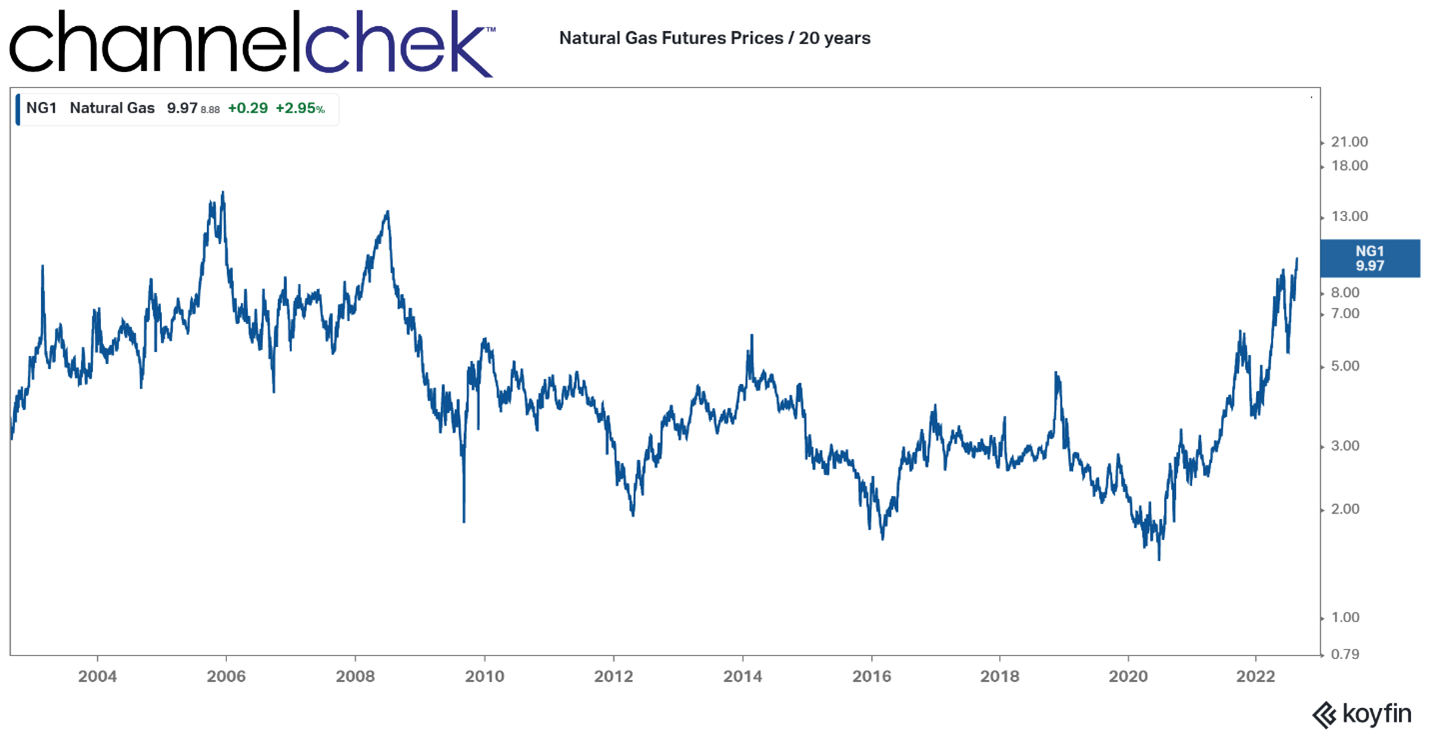
Oil and gas companies were the all-stars in 2021, and so far, in 2022, it is the only group in the green. The category’s performance during June was met with some deflated exuberance and has dipped, but is showing a return of 30.5% YTD. The reason for this is the rising demand for oil and the rising demand for natural gas that began long before Russia’s invasion of Ukraine. What is more compelling is if you look at the prices of oil and natural gas separately, you find natural gas prices are up an additional 18% over the price of oil. These are North American prices, but the trend is the same or more dramatic in other parts of the globe.


Source: Koyfin

The demand for natural gas began before the European war and is expected to outlast it. In fact, the rise in gas prices began in October 2020. So the upward trajectory is 20 months old and has included large dips and spikes as part of its climb. For investors on the fence about committing more to the energy sector, looking at the prices of the underlying commodity is critical to judge entry points. For those considering the only sector that is green this year, they may wish to further refine their selection and look at pure-play producers of natural gas. 

Natural gas is now viewed as a bridge source of energy. It has become clear that if more of our energy is to come from wind and solar, there will be a very long period where we will still require reliable, high-output energy from traditional sources. One of the reasons there are rising prices among all fossil fuels is because of the abrupt way many countries changed their energy policies. Most oil companies still don’t know where the country they operate in stands from quarter to quarter on oil acceptance. This is a problem, especially for the larger less nimble companies that are torn between using resources to build out biofuels or to lease and develop a production facility.

A clearer understanding of the benefits of natural gas allows it to be listed in the European sustainability classification as “Transitional
Activities
” beginning in 2023. The category includes those not considered fully sustainable but have emissions below the industry average, and do not lock in polluting assets or crowd out greener alternatives.

Natural gas has quickly become the “must-have” ingredient for countries transitioning to alternative fuels.

There are many companies involved in the production of natural gas, most are part of a larger oil producer. If you wish to benefit from the increased demand of the “greener ” natural gas, a Google search of “pure play natural gas producers” will provide you with many companies to review. At the top of the list, assuming it’s alphabetized, is a unique company with a situation you may find quite compelling, Alvopetro Energy (ALVOF, ALV:CA) .


Alvopetro

Two years ago, Canadian independent Alvopetro managed to get approved to become Brazil’s first, and still only, non-government-owned producer of natural gas. Location sometimes is everything, and Brazil is the ninth-largest economy in the world.

Aside from current earnings that exceed expectations and a unique sharing policy with investors, Alvopetro has tremendous profitability per unit of production. In accounting, it’s called “netback,” it is the cash left after subtracting from revenues all costs associated with bringing the gas from the ground to market, including transportation, royalties, and production expenses. In this category, ALVOF is at the top of the industry.

The reasons Alvopetro has such a high netback are many, involving both costs and pricing. They have a low cost structure, including enviable operating costs, a low 15% tax rate, and transportation costs are minimal because an industrial area located fewer than 10 miles away has a demand for natural gas that exceeds supply. The pricing structure would also seem ideal for the company and shareholders as it assures prices move with what is happening internationally, yet it doesn’t subject the company to the daily ups and downs of the natural gas market. Alvopetro has negotiated a price formula that resets every six months on a price basket of the most common oil and gas benchmarks. This creates a natural hedge for the company and its customers.

Unique to ALVOF is its policy of reinvesting and distributing earnings. The company last paid a dividend that equates to a yield of 6.42% at today’s share price of $4.99. I spoke with CEO Corey Ruttan and he explained to me that “they follow a balanced approach taking roughly half of cashflows to reinvest in organic growth and return the other half to stakeholders.” On the organic growth front, Alvopetro has already announced discoveries at both their 2022 exploration prospects. On the return part of the model, they have paid down nearly all debt. The stakeholders include debt providers and shareholders and with the former being nearly repaid it paves the way for potential increases in returns to shareholders. 

Channelchek just did a C-Suite interview with Corey Ruttan the President and CEO of Alvopetro. In the discussion, you’ll learn in much greater detail the nuances that make this natural gas provider extremely unique for investors. Additional research reports on the company can be found here.


Take Away

Oil and gas producers have been the outperformers for over a year. They track the prices of the commodities they produce fairly closely. When one looks at the price of natural gas compared to oil, it has been pulling more than its share of the price increases. Because it is a very clean-burning fossil fuel it is now being viewed as “green energy” and more importantly recognized as critical to any global energy transformation.

There are many pure-play natural gas producers, Channelchek outlined the one above with a higher than average netback margin and a generous policy toward shareholders. Sign-up here for Channelchek and gain access to all equity research and receive news and ideas in your inbox each day. 

Paul Hoffman

Managing Editor, Channelchek

Suggested Content

Uranium and Natural Gas Investments Turn Green in 2023

Elon Musk Talks About Tesla Bots, Birth Rates, and Federal Incentives


Using Current Dollar Strength to Refine Your Watch List

Interview with Alovpetro Energy (ALVOF)(ALV.V) President & CEO Corey Ruttan


Sources

https://www.ft.com/content/3488236e-ff3b-47ad-9482-296c2f64a1f1

https://news.alphastreet.com/alvopetro-energy-ltd-alv-q1-2022-earnings-call-transcript/

https://www.argusmedia.com/en/news/2119344-alvopetro-breaks-petrobras-gas-monopoly-in-bahia

Corey Ruttan
President and CEO Alvopetro Energy

Stay up to date. Follow us:


Alvopetro Energy (ALVOF) – Drilling success paves the way for future growth

Monday, July 11, 2022

Alvopetro Energy (ALVOF)
Drilling success paves the way for future growth

Alvopetro Energy Ltd.’s vision is to become a leading independent upstream and midstream operator in Brazil. Our strategy is to unlock the on-shore natural gas potential in the state of Bahia in Brazil, building off the development of our Caburé natural gas field and our strategic midstream infrastructure.

Michael Heim, CFA, Senior Research Analyst, Noble Capital Markets, Inc.

Refer to the full report for the price target, fundamental analysis, and rating.

Alvopetro announced multizone discovery at exploratory well. Management announced that it has discovered 34.3 meters of potential net hydrocarbon pay on well 183-B1. The discovery follows similar results at sister well 182-C1 as announced in April. Both wells will begin production testing shortly, which will help determine well economics. The discovery of hydrocarbons in the wells is not unexpected but an important step in the company’s growth plans.

The wells are more exploratory in nature and represent a step out of current production. Alvopetro’s drilling program can be described as a two-pronged approach that includes both developmental drilling in the Murucututu/Gomo Project and exploratory drilling  in the block west of Gomo. Developmental drilling is needed to maintain production and fill out this summer’s gas plant expansion to 18 MMcf/day. Exploratory drilling success is needed to justify future gas plant expansions in order to meet management’s long-term goal of reaching 35 MMcf/day….

This Company Sponsored Research is provided by Noble Capital Markets, Inc., a FINRA and S.E.C. registered broker-dealer (B/D).

*Analyst certification and important disclosures included in the full report. NOTE: investment decisions should not be based upon the content of this research summary. Proper due diligence is required before making any investment decision.