
Mark Reichman, Managing Director, Equity Research Analyst, Natural Resources, Noble Capital Markets, Inc.
Hans Baldau, Associate Analyst, Noble Capital Markets, Inc.
Refer to the full report for the price target, fundamental analysis, and rating.
Private Placement Financing. Kuya Silver Corporation (OTCQB: KUYAF, CSE: KUYA) announced a brokered private placement pursuant to the listed issuer financing exemption of up to 15.0 million units of the company at a price of C$1.00 per unit for aggregate gross proceeds of up to C$15.0 million. Each unit will consist of one common share and one half of one common share purchase warrant. Each warrant entitles the holder to purchase one common share at an exercise price of C$1.30 per common share for a period of 36 months from the date of issuance.
Use of Proceeds. Kuya intends to use the net proceeds of the offering to advance the company’s Bethania project with the acquisition of and/or development of concentrate processing capacity. Kuya is evaluating several options, each of which is fully permitted and will allow the company to vertically integrate its production capabilities. Funds may also be used to explore the Silver Kings Project in Ontario, discretionary growth capital, and for general corporate purposes.
Equity Research is available at no cost to Registered users of Channelchek. Not a Member? Click ‘Join’ to join the Channelchek Community. There is no cost to register, and we never collect credit card information.
This Company Sponsored Research is provided by Noble Capital Markets, Inc., a FINRA and S.E.C. registered broker-dealer (B/D).
*Analyst certification and important disclosures included in the full report. NOTE: investment decisions should not be based upon the content of this research summary. Proper due diligence is required before making any investment decision.
Mark Reichman, Managing Director, Equity Research Analyst, Natural Resources, Noble Capital Markets, Inc.
Hans Baldau, Associate Analyst, Noble Capital Markets, Inc.
Refer to the full report for the price target, fundamental analysis, and rating.
Offtake agreement. First Phosphate recently amended an offtake agreement that includes a US$0.53 million upfront pre-payment during the fourth quarter of FY 2026. The funds will be used to advance the Begin-Lamarche project towards a feasibility study and later, production. The prepayment is subject to refund should First Phosphate decide not to pursue a feasibility study or production, neither of which we anticipate. In our view, the prepayment validates downstream interest and reinforces the strategic relevance of the Company’s integrated phosphate platform.
Final tranches of private placement. The Company closed the third and fourth tranches of its oversubscribed non-brokered private placement in December, raising approximately $9.6 million in gross proceeds and bringing total capital raised since June 2022 to approximately $49.7 million. Following recent warrant exercises and the offtake pre-payment, management indicates cash on hand of approximately $24 million, which we believe is sufficient to fund planned activities through 2026 and into 2027.
Equity Research is available at no cost to Registered users of Channelchek. Not a Member? Click ‘Join’ to join the Channelchek Community. There is no cost to register, and we never collect credit card information.
This Research is provided by Noble Capital Markets, Inc., a FINRA and S.E.C. registered broker-dealer (B/D).
*Analyst certification and important disclosures included in the full report. NOTE: investment decisions should not be based upon the content of this research summary. Proper due diligence is required before making any investment decision.
After an extraordinary rally that saw copper prices surge more than 40% in 2025, the industrial metal has tumbled from record highs as traders rush to lock in profits from what many analysts are calling an overheated market. The sharp reversal underscores the volatility gripping global commodity markets and raises questions about whether the recent bull run in metals can sustain its momentum.
Copper futures dropped 2.6% to close at $12,899.50 per ton on the London Metal Exchange, part of a broader selloff that saw nickel plunge 3.4% and zinc fall by similar margins. The decline marks a dramatic shift from the frenzied buying that characterized recent weeks, driven largely by speculative capital flooding into China’s domestic metals markets.
The rapid ascent had left many market participants nervous. Ed Meir, an analyst at Marex, noted that the markets are experiencing a broad retreat typical of situations where price movements become oversized. Base metals analysts have been scrambling to justify valuations that climbed faster than underlying fundamentals could support, and the correction appears to be the market’s way of restoring equilibrium.
Copper’s remarkable 40% gain in 2025 represented its strongest annual performance since the recovery year of 2009. The rally was fueled by a perfect storm of supply disruptions at major mines and strategic stockpiling by traders anticipating potential US tariffs on metal imports. This combination of tight supply and precautionary demand pushed prices to levels that, in hindsight, may have been unsustainable in the short term.
Nickel’s trajectory proved even more dramatic. The battery and stainless steel component notched its biggest single-day gain in over three years on Tuesday, surging as much as 10.5% intraday before reaching a fresh 19-month high Wednesday morning. However, the euphoria was short-lived as profit-taking quickly reversed those gains.
The nickel rally had been propelled by genuine supply concerns in top producer Indonesia, where government plans to reduce production and impose punitive fines on miners violating forestry permits threatened to disrupt output significantly. Chinese traders also contributed to the buying frenzy, stocking up ahead of the Lunar New Year holiday when industrial activity traditionally slows.
Yet beneath the speculative fervor lies a more sobering reality. As Fan Jianyuan, an analyst at Mysteel Global, pointed out, the rally was largely driven by financial capital inflows rather than fundamental supply-demand dynamics. The nickel market remains in surplus, with years of surging Indonesian production having driven global inventories sharply higher. Evidence of continued oversupply emerged Wednesday when London Metal Exchange stockpiles jumped by the most in six years.
This disconnect between speculative enthusiasm and fundamental realities highlights the challenge facing metals markets. While many traders maintain bullish long-term views on copper and other industrial metals—driven by electrification, renewable energy infrastructure, and the green transition—the speed and magnitude of recent price movements have created conditions ripe for volatile corrections.
For investors and industry participants, the lesson is clear: even markets with strong structural tailwinds can experience sharp reversals when prices outpace fundamentals. As the dust settles from this latest selloff, the focus will return to whether underlying demand can justify the elevated price levels that remain despite the recent pullback.
Saguenay, Quebec–(Newsfile Corp. – January 6, 2026) – First Phosphate Corp. (CSE: PHOS) (OTCQX: FRSPF) (FSE: KD0) (“First Phosphate” or the “Company“) is pleased to announce an initial payment under an amendment made to its existing, long-term phosphate concentrate offtake agreement in the form of letter of intent (the “LOI”) with an existing partner (the “Purchaser”).
The Purchaser has agreed to provide a lump-sum pre-payment (the “Lump-sum pre-payment”) equivalent to US $530,000 to First Phosphate to assist the Company in advancing the Bégin-Lamarche phosphate mining project to a feasibility study and an eventual production decision.
First Phosphate completed a Preliminary Economic Assessment on its Bégin-Lamarche phosphate project on December 4, 2024, which recommended, among other things, additional drilling and exploration work to convert certain inferred mineral resources to indicated mineral resources and certain indicated mineral resources into measured mineral resources. First Phosphate is currently in the process of completing a 30,000-metre drill program, which is expected to be completed by April 2026, to finalize the geological model relative to its mineral resources upon which a decision will be made with respect to proceeding with a feasibility study. If First Phosphate decides not to advance to a feasibility study or makes a negative production decision, the Lump-sum pre-payment shall be refundable to the Purchaser.
In other news, Under the collaboration agreement signed on April 9, 2024, the Company has issued 240,132 shares to Pekuakamiulnuatsh First Nation for the exploration and development expenditures undertaken by the Company on the First Nation’s lands in calendar 2025.
Qualified Person
The scientific and technical disclosure for First Phosphate included in this news release has been reviewed and approved by Gilles Laverdière, P.Geo. Mr. Laverdière is Chief Geologist of First Phosphate and a Qualified Person under National Instrument 43-101 – Standards of Disclosure of Mineral Projects (“NI 43-101”).
About First Phosphate Corp.
First Phosphate (CSE: PHOS) (OTCQX: FRSPF) (FSE: KD0) is a mineral exploration, development and cleantech company dedicated to examining and ultimately building and onshoring a vertically integrated mine-to-market lithium iron phosphate (LFP) battery supply chain for North America. Target markets include energy storage, data centers, robotics, mobility and national security.
First Phosphate’s flagship Bégin-Lamarche Property in Saguenay-Lac-Saint-Jean, Quebec, Canada is a North American rare igneous phosphate resource yielding high-purity phosphate with minimal impurities.
Forward-Looking Information and Cautionary Statements
This release includes certain statements that may be deemed “forward-looking information.” Any statement that discusses predictions, expectations, beliefs, plans, projections, objectives, assumptions, future events or performance (often but not always using phrases such as “expects”, or “does not expect”, “is expected”, “anticipates” or “does not anticipate”, “plans”, “budget”, “scheduled”, “forecasts”, “estimates”, “believes” or “intends” or variations of such words and phrases or stating that certain actions, events or results “may” or “could”, “would”, “might” or “will” be taken to occur or be achieved) are not statements of historical fact and may be forward-looking information. In particular, this press release contains forward-looking information relating to, among other things: receipt by the Company of the lump-sum pre-payment and the use of the lump-sum pre-payment proceeds; the timeline for completion of, and results from the current drill program; the parties entering into a definitive agreement and the terms of such agreement; and the Company’s plans for building and onshoring a vertically integrated mine-to-market LFP battery supply chain for North America. Although the Company believes the expectations expressed in such forward-looking statements are based on reasonable assumptions, such statements are not guarantees of future performance and actual results or developments may differ materially from those forward-looking statements. Factors that could cause actual results to differ materially from those in forward-looking statements include development and exploration successes, continued availability of capital and financing, and general economic, market or business conditions. These statements are based on a number of assumptions including, among other things, assumptions regarding general business and economic conditions; there being no significant disruptions affecting the activities of the Company or inability to access required project inputs; permitting and development of the projects being consistent with the Company’s expectations; the accuracy of the current mineral resource estimates for the Company and results of metallurgical testing; certain price assumptions for P2O5 and Fe2O3; inflation and prices for Company project inputs being approximately consistent with anticipated levels; the Company’s relationship with First Nations and other Indigenous parties remaining consistent with the Company’s expectations; the Company’s relationship with other third party partners and suppliers remaining consistent with the Company’s expectations; and government relations and actions being consistent with Company expectations. Investors are cautioned that any such statements are not guarantees of future performance and actual results or developments may differ materially from those projected in the forward-looking statements. Accordingly, readers should not place undue reliance on the forward-looking information contained in this press release. The Company does not assume any obligation to update or revise its forward-looking statements, whether because of new information, future events or otherwise, except as required by applicable law. All forward-looking information contained in this release is qualified by these cautionary statements.
When Michael Burry makes a move, investors pay attention. The man who famously predicted the 2008 housing crisis has been quietly holding a position since 2020 that suddenly looks prescient following this weekend’s dramatic events in Venezuela. In a Monday blog post on Substack, Burry revealed he’s owned Valero Energy for five years, describing himself as “more resolved to holding it even longer” after President Trump’s pledge to rebuild Venezuela’s oil sector.
Burry’s thesis is straightforward but powerful. Many Gulf Coast refineries were specifically designed to process Venezuelan heavy crude, meaning they’ve been operating with suboptimal feedstock for years due to sanctions and Venezuela’s production collapse. As Venezuelan oil flows return, these refineries should see improved margins across jet fuel, asphalt, and diesel. Valero shares surged nearly 10% on Monday, vindicating Burry’s patience. The refiner’s capability to efficiently process heavy, high-sulfur crude creates a natural moat that Burry clearly recognized back in 2020, long before this political inflection point.
But Burry isn’t just focused on the obvious large-cap play. He specifically mentioned that smaller refiners like PBF Energy and HF Sinclair could also benefit, even if Venezuelan oil returns only gradually. This acknowledgment of opportunity across the market cap spectrum is noteworthy and particularly relevant for small-cap investors looking beyond the headlines. While any meaningful recovery in Venezuelan exports will likely take years, Burry’s willingness to highlight mid-sized players suggests he sees value throughout the sector.
The investor’s analysis extends beyond refining. Venezuela’s oil infrastructure has suffered from decades of underinvestment, creating substantial demand for oilfield services companies if large-scale rehabilitation begins. Burry disclosed he owns Halliburton and sees potential upside for Schlumberger and Baker Hughes, companies that could be contracted to rebuild deteriorated pipelines and refineries. His comment about potentially buying more Halliburton shares or LEAPs—long-term options contracts—reveals his conviction level and provides a template for how investors might gain leveraged exposure while managing risk.
The timing of Burry’s revelation is significant. He’s held Valero since 2020, a period when Venezuela remained under heavy sanctions and most investors dismissed Venezuelan oil as a dead opportunity. This patience reflects his contrarian nature and willingness to endure extended periods where the market disagrees with his thesis. Wall Street analysts are now rushing to validate what Burry saw years ago, with multiple firms highlighting Valero as a top beneficiary of increased Venezuelan supply.
For small-cap investors, Burry’s framework offers valuable lessons. His mention of PBF Energy and HF Sinclair demonstrates that opportunities exist throughout the market cap structure for companies with the right capabilities. His focus on oilfield services points to second-order effects many investors overlook while fixated on the obvious refining story. And his use of LEAPs shows how options strategies can create leveraged exposure to multi-year themes.
Several key themes emerge from Burry’s playbook. He identified a structural advantage that created long-term value regardless of short-term volatility. He took a multi-year view, holding through uncertainty when the thesis wasn’t working. He’s thinking beyond the obvious, considering services companies and smaller refiners alongside his flagship position. And he’s using options to potentially leverage conviction while managing downside.
The Venezuela oil story is just beginning, and meaningful recovery will take years. But Burry has never been deterred by uncertainty—he’s built his fortune by being right when conventional wisdom said he was wrong. His five-year bet is now in the spotlight, and for those willing to think in multi-year timeframes and look beyond the headlines, his framework offers a roadmap for finding similar asymmetric opportunities.
VANCOUVER, B.C, January 5, 2026 – Nicola Mining Inc. TSX:V: NIM (the “Company” or “Nicola Mining”) is pleased to announce that it and Blue Lagoon Resources (CSE: BLLG) (“Blue Lagoon”) have sold US$1.0 million gold and silver to Ocean Partners UK Limited[1] (“Ocean Partners”). The Company is also pleased to announce that Blue Lagoon continues to provide steady shipments since the commencing of gold and silver mill feed hauling, as announced on December 1, 2025[2]. The two parties had previously announced[3]a commitment to a long term partnership[4].
Peter Espig, CEO of Nicola, commented, “Nicola is very excited to work closely with Blue Lagoon as the two companies mutually ramp up production and revenues, amidst strong precious metal prices. Blue Lagoon’s management has done an incredible job in spearheading the project through permitting and mine development to becoming a producer”.
Qualified Person
Cameron Lilly, P. Eng., the Company’s Mill Manager, is the Qualified Person as defined by National Instrument 43-101 – Standards of Disclosure for Mineral Projects and supervised the preparation of, and has reviewed and approved, the technical information in this release.
About Nicola Mining
Nicola Mining Inc. is a junior mining company listed on the Exchange and Frankfurt Exchange that maintains a 100% owned mill and tailings facility, located near Merritt, British Columbia It has signed Mining and Milling Profit Share Agreements with high grade gold projects. Nicola’s fully permitted mill can process both gold and silver mill feed via gravity and flotation processes.
The Company owns 100% of the New Craigmont Project, a high-grade copper property, which covers an area of over 10,800 hectares along the southern end of the Guichon Batholith and is adjacent to Highland Valley Copper, Canada’s largest copper mine. The Company also owns 100% of the Treasure Mountain Property, which is a fully-permitted high grade silver mine and includes 30 mineral claims and a mineral lease, spanning an area exceeding 2,200 hectares.
Neither the TSX Venture Exchange nor its Regulation Services Provider (as that term is defined in the policies of the TSX Venture Exchange) accepts responsibility for the adequacy or accuracy of this release.
[1] Ocean Partners operates in several countries throughout the world. Ocean Partners maintains a strong global network of relationships and contacts in the base metal mining and smelting sector.
Vancouver, British Columbia–(Newsfile Corp. – December 29, 2025) – Nicola Mining Inc. (TSXV: NIM) (the “Company” or “Nicola Mining“) is pleased to announce an additional investment from Ocean Partners UK Limited[1] (“Ocean Partners“), which has agreed to participate in a strategic non-brokered private investment of $1,000,000 to strengthen the Company’s balance sheet as it prepares to uplist onto NASDAQ in Q1 of 2026.
The Company will issue 1,111,112 units (each a “Unit“) at a price of $0.90 per Unit for gross proceeds of up to $1,000,000 (the “Offering“).
Each Unit will consist of one common share of the Company (each, a “Share“) and one transferable common share purchase warrant (each, a “Warrant“). Each Warrant will entitle the holder to purchase one additional Share at a price of $1.10 per Share for a period of three years following the closing of the Offering (the “Closing“). The expiry of the Warrants may be accelerated if the closing price of the Company’s common shares on the TSX Venture Exchange (the “Exchange”) is $1.70 or greater for a minimum of ten consecutive trading days, provided that a notice of acceleration is issued in accordance with the terms of the Warrants.
All securities issued in connection with the Offering will be subject to a statutory holding period expiring four months and one day after closing of the Offering. Completion of the Offering is subject to the approval of the Exchange. Any participation by insiders in the Offering will constitute a related party transaction under Multilateral Instrument 61-101 – Protection of Minority Security Holders in Special Transactions (“MI 61-101”) but is expected to be exempt from the formal valuation and minority shareholder approval requirements of MI 61-101.
The aggregate gross proceeds from the sale of the Offering will be used for general working capital.
None of the securities sold in connection with the Offering will be registered under the United States Securities Act of 1933, as amended, and no such securities may be offered or sold in the United States absent registration or an applicable exemption from the registration requirements. This news release shall not constitute an offer to sell or the solicitation of an offer to buy nor shall there be any sale of the securities in any jurisdiction in which such offer, solicitation or sale would be unlawful.
Strategic Advisor – Mr. Rahim Kassim-Lakha of Blue Sail Capital
Nicola is also pleased to announce the appointment of Rahim Kassim-Lakha, founder and CEO of Blue Sail Capital, as Strategic Advisor. With nearly 30 years of investing in global i capital markets and M&A experience, Mr. Kassim-Lakha has a proven track record in raising capital and structuring transactions. He has held senior roles at Fidelity Capital and U.S. Global Investors, where he managed over US$1 billion across three award-winning funds. As Strategic Advisor he will provide guidance on capital markets strategy and corporate development opportunities as Nicola advances its projects.
About Nicola Mining
Nicola Mining Inc. is a junior mining company listed on the Exchange and Frankfurt Exchange that maintains a 100% owned mill and tailings facility, located near Merritt, British Columbia It has signed Mining and Milling Profit Share Agreements with high grade gold projects. Nicola’s fully permitted mill can process both gold and silver mill feed via gravity and flotation processes.
The Company owns 100% of the New Craigmont Project, a high-grade copper property, which covers an area of over 10,800 hectares along the southern end of the Guichon Batholith and is adjacent to Highland Valley Copper, Canada’s largest copper mine. The Company also owns 100% of the Treasure Mountain Property, which is a fully-permitted high grade silver mine and includes 30 mineral claims and a mineral lease, spanning an area exceeding 2,200 hectares.
Neither the TSX Venture Exchange nor its Regulation Services Provider (as that term is defined in the policies of the TSX Venture Exchange) accepts responsibility for the adequacy or accuracy of this release.
[1] Ocean Partners operates in several countries throughout the world. Ocean Partners maintains a strong global network of relationships and contacts in the base metal mining and smelting sector.
Precious metals are closing out the year with extraordinary momentum, underscoring a broader shift in global investment sentiment toward safety, scarcity, and real assets. Gold, silver, and platinum all surged to fresh all-time highs this week, extending one of the strongest rallies in modern market history and signaling growing unease beneath the surface of global financial markets.
Spot gold climbed above $4,530 an ounce, capping a year in which the metal has gained roughly 70%. Silver has been even more explosive, soaring more than 150% year-to-date and briefly crossing the $75 mark. Platinum, often overshadowed by its peers, has joined the rally with force, jumping more than 40% in December alone as supply deficits tighten and industrial demand rebounds.
At its core, the rally reflects a powerful shift in investor psychology. Heightened geopolitical tensions—from US actions in Venezuela to military operations in Africa—have revived gold’s traditional role as a safe-haven asset. At the same time, a weakening US dollar has amplified gains, making dollar-priced commodities more attractive to global investors. The Bloomberg Dollar Spot Index’s sharp weekly decline has provided fresh fuel for metals already in motion.
Monetary policy has played an equally important role. Three interest rate cuts by the US Federal Reserve this year have reduced the opportunity cost of holding non-yielding assets like gold and silver. With markets increasingly pricing in further easing in 2026, investors are positioning ahead of a prolonged low-rate environment. The result has been strong inflows into exchange-traded funds, particularly gold-backed vehicles, signaling institutional conviction rather than short-term speculation.
Beyond macro policy, deeper structural concerns are driving what many analysts describe as the “debasement trade.” Rising government debt levels, persistent fiscal deficits, and political pressure on central bank independence have eroded confidence in fiat currencies and sovereign bonds. In response, investors are reallocating toward tangible assets perceived as stores of value in an era of monetary experimentation.
Silver’s rally highlights another critical theme: supply constraints meeting financial leverage. Following a historic short squeeze earlier in the year, physical silver availability remains tight across key global hubs. While speculative positions continue to grow on paper, the limited supply of deliverable metal has intensified price pressures. Potential US trade restrictions on critical mineral imports have only added to the uncertainty, reinforcing silver’s dual appeal as both a monetary and industrial asset.
Platinum’s surge reflects similar dynamics. Persistent supply disruptions in South Africa, combined with strong demand from automotive and jewelry sectors, have pushed the market into its third consecutive annual deficit. As investors broaden their exposure beyond gold, platinum is increasingly viewed as an undervalued hedge with asymmetric upside.
Taken together, the record-breaking rally in precious metals is not an isolated phenomenon—it is a mirror of today’s investment landscape. While equity markets remain resilient, the surge in hard assets suggests investors are quietly hedging against volatility, policy risk, and currency erosion. As the year draws to a close, gold and silver’s ascent sends a clear message: confidence may be high on the surface, but caution is deeply embedded in global portfolios.
Comstock (NYSE: LODE) innovates technologies that contribute to global decarbonization and circularity by efficiently converting under-utilized natural resources into renewable fuels and electrification products that contribute to balancing global uses and emissions of carbon. The Company intends to achieve exponential growth and extraordinary financial, natural, and social gains by building, owning, and operating a fleet of advanced carbon neutral extraction and refining facilities, by selling an array of complimentary process solutions and related services, and by licensing selected technologies to qualified strategic partners. To learn more, please visit www.comstock.inc.
Mark Reichman, Managing Director, Equity Research Analyst, Natural Resources, Noble Capital Markets, Inc.
Hans Baldau, Associate Analyst, Noble Capital Markets, Inc.
Refer to the full report for the price target, fundamental analysis, and rating.
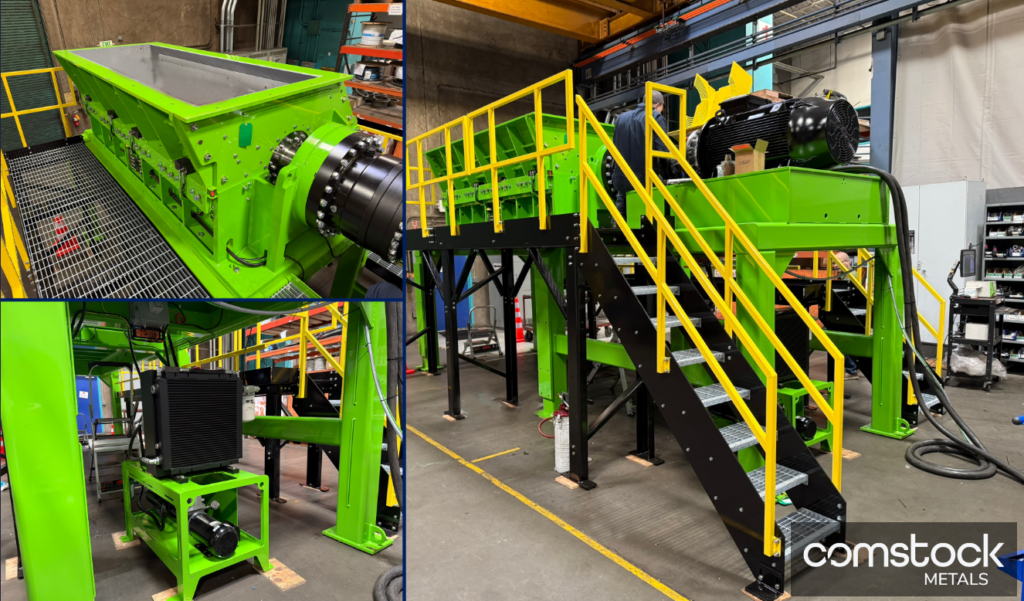
Rating Lowered to Market Perform. While we had upgraded Comstock Inc. to Outperform on November 4, we have concluded our rating upgrade may have been too early, despite the share price appreciating ~33% from the date of our upgrade. It appears the company’s near-term capital needs remain significant, and we will reassess the value of the company’s businesses, once Comstock’s commercial scale recycling facility is operational and plans for the company’s mining assets are more fully realized. Moreover, we have been frustrated by the company’s promises to monetize non-core assets, including properties in Silver Springs, Nevada, without following through on its commitment. At this stage, we consider Comstock’s investment in Bioleum Corporation as a call option on its growth and success, which is subject to significant risk factors.
At the market offering. Comstock Inc. recently executed an At-the-Market Offering Agreement with Titan Partners Group LLC to offer and sell shares of common stock from time to time totaling up to $100.0 million. Titan Partners will be compensated at a commission rate equal to 3.0% of the gross sales price per share. Net proceeds will be used for general corporate purposes, including capital expenditures associated with commercializing subsequent industry scale and storage facilities for Comstock Metals, in addition to acquisitions, and technical, operational and human resource development expenses for supporting growth. Beyond acting as a headwind for capital appreciation, the ATM equity issuance could promote shareholder dilution.
Equity Research is available at no cost to Registered users of Channelchek. Not a Member? Click ‘Join’ to join the Channelchek Community. There is no cost to register, and we never collect credit card information.
This Company Sponsored Research is provided by Noble Capital Markets, Inc., a FINRA and S.E.C. registered broker-dealer (B/D).
*Analyst certification and important disclosures included in the full report. NOTE: investment decisions should not be based upon the content of this research summary. Proper due diligence is required before making any investment decision.
Mark Reichman, Managing Director, Equity Research Analyst, Natural Resources, Noble Capital Markets, Inc.
Hans Baldau, Associate Analyst, Noble Capital Markets, Inc.
Refer to the full report for the price target, fundamental analysis, and rating.
High-grade silver-gold system confirmed. Kuya Silver reported strong initial exploration results from the Umm Hadid Project in Saudi Arabia, confirming high-grade silver-gold mineralization over a large area measuring approximately 6.0 km by 2.5 km. In our view, the scale of the mineralized footprint and grade tenor materially de-risks the project at an early stage. Umm Hadid is operated by Silver Mining LLC, a joint venture between Sumou Holding and Kuya Silver.
Maiden drilling validates surface results. The first drill program comprised 29 diamond drill holes totaling roughly 5,000 meters across three target areas defined by surface sampling. Drilling returned high-grade intercepts of up to 1,483.9 g/t silver equivalent over two meters, with several additional intersections grading several hundred grams per tonne. Surface sampling of 460 grab samples averaged 86.1 g/t silver equivalent, with peak values reaching 1,359.8 g/t. We believe a strong gold-silver correlation supports the presence of a large hydrothermal system.
Equity Research is available at no cost to Registered users of Channelchek. Not a Member? Click ‘Join’ to join the Channelchek Community. There is no cost to register, and we never collect credit card information.
This Company Sponsored Research is provided by Noble Capital Markets, Inc., a FINRA and S.E.C. registered broker-dealer (B/D).
*Analyst certification and important disclosures included in the full report. NOTE: investment decisions should not be based upon the content of this research summary. Proper due diligence is required before making any investment decision.
December 22, 2025 – Vancouver, Canada – Century Lithium Corp. (TSXV: LCE) (OTCQX: CYDVF) (Frankfurt: C1Z) (“Century Lithium” or “the Company is pleased to announce that Mr. Matthew Tompkins has been appointed Chief Financial Officer of the Company, effective immediately.
Mr. Tompkins has served as Century Lithium’s Interim Chief Financial Officer since September 2025. During this period, he has provided continuity in financial leadership and supported the Company’s strategic and corporate objectives. Following a review by the Board of Directors, the Company has confirmed his appointment as Chief Financial Officer on a permanent basis.
“Matthew has demonstrated strong financial leadership and a clear understanding of Century Lithium’s business and strategic priorities,” said Bill Willoughby, President and Chief Executive Officer of Century Lithium. “The Board is confident that his experience and disciplined approach will continue to support the Company as it advances its Angel Island Lithium Project and executes its long-term strategy.”
Mr. Tompkins brings extensive experience in financial management, public company reporting, and corporate governance, with a background supporting resource and development-stage companies.
ABOUT CENTURY LITHIUM CORP.
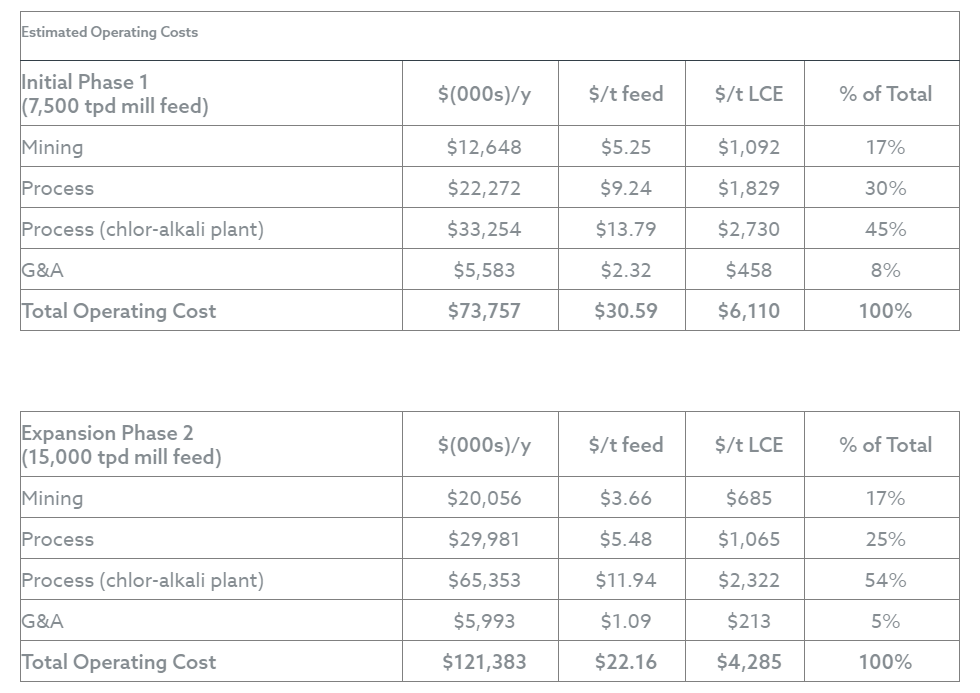
Century Lithium Corp. is an advanced-stage lithium company, focused on developing its 100%-owned lithium project Angel Island in Esmeralda County, Nevada, which hosts one of the largest sedimentary lithium deposits in the United States. The Company has utilized its patent-pending process for chloride leaching combined with direct lithium extraction to make battery-grade lithium carbonate. As part of the Company’s chlor-alkali process, the planned sale of surplus sodium hydroxide produced at Angel Island is expected to contribute meaningfully to maintaining competitive operating costs for lithium carbonate production.
Angel Island is one of the few advanced lithium projects in development in the United States to provide an end-to-end process to produce battery-grade lithium carbonate for the growing electric vehicle and battery storage market. Angel Island is currently in the permitting stage for a three-phase feasibility-level production plan, expected to yield an estimated life-of-mine average of 34,000 tonnes per year of lithium carbonate over a 40-year mine-life.
Century Lithium trades on both the TSX Venture Exchange under the symbol “LCE” and the OTCQX under the symbol “CYDVF”, and on the Frankfurt Stock Exchange under the symbol “C1Z”.
Gold and silver have surged to historic highs, underscoring a powerful shift in global investor sentiment as geopolitical tensions intensify and confidence in traditional financial systems continues to erode. The rally marks one of the strongest performances for precious metals in more than four decades, driven by a potent mix of political uncertainty, monetary policy expectations, and structural demand.
Gold briefly climbed above $4,400 per ounce, eclipsing its previous record set earlier this year, while silver pushed toward the $70 level, a price not seen in modern trading history. These moves are not isolated technical breakouts; they reflect a broader re-pricing of risk across global markets as investors seek safety amid escalating international conflicts and economic uncertainty.
Geopolitical flashpoints have multiplied in recent months. The United States has intensified economic and energy pressure on Venezuela, while the conflict between Russia and Ukraine has expanded beyond traditional battlefields into global shipping lanes. Meanwhile, rising tensions between major world powers — including strained U.S.–China relations and growing unease in parts of Asia — have added to a climate of persistent instability. Historically, such environments have favored hard assets, and this cycle is proving no different.
At the same time, expectations for looser monetary policy have reinforced the rally. Markets are increasingly pricing in multiple U.S. interest rate cuts in 2026 as economic data shows signs of cooling inflation and slower job growth. Lower interest rates tend to weaken the opportunity cost of holding non-yielding assets like gold and silver, making them more attractive relative to bonds and cash.
Central banks have played a critical role in underpinning gold’s rise. Official sector purchases remain elevated as nations diversify reserves away from the U.S. dollar and reduce exposure to sovereign debt. This trend has been amplified by political rhetoric that has raised concerns about the long-term independence of central banks and the sustainability of ballooning government deficits.
Investor demand has followed suit. Gold-backed exchange-traded funds have recorded steady inflows, while silver has benefited from speculative activity and lingering supply disruptions following a historic short squeeze earlier in the year. Industrial demand — particularly for silver and platinum in energy, technology, and manufacturing — has added another layer of support.
Beyond traditional investors, new participants are entering the precious metals market. Corporate treasuries, alternative asset managers, and even stablecoin issuers are increasingly using physical metals as balance-sheet hedges, broadening the capital base supporting prices and making demand more resilient.
Looking ahead, major financial institutions remain bullish. Several banks project gold prices continuing higher into 2026, citing constrained physical supply, sustained central-bank buying, and ongoing geopolitical risk. While short-term volatility is inevitable, the underlying drivers of the rally appear firmly intact.
In an era defined by geopolitical fragmentation, monetary uncertainty, and rising systemic risk, gold and silver are once again fulfilling their historical role: not just as commodities, but as financial insurance in an increasingly unpredictable world.
Crude oil prices sank to their lowest levels in nearly four years this week, underscoring how deeply oversupplied the global energy market has become. Both major benchmarks—Brent and West Texas Intermediate (WTI)—fell below key psychological thresholds, with WTI briefly dipping under $55 a barrel and Brent sliding into the high $50s. The move marks a dramatic reversal from the tight energy markets of recent years and signals mounting pressure across the oil industry.
The selloff reflects what many analysts have been warning about for months: supply has simply outpaced demand. Production growth from OPEC+ and non-OPEC producers alike has overwhelmed consumption, even as global demand remains relatively steady. Since the spring, OPEC+ members have steadily unwound earlier production cuts, adding millions of barrels per day back into the market. Saudi Arabia, in particular, has prioritized regaining market share, even at the expense of lower prices.
Outside the cartel, output has also continued to climb. Producers across parts of the Middle East, Africa, and Asia have increased exports, while U.S. inventories are projected to keep building well into 2026. According to international energy agencies, the imbalance could widen further next year, with excess supply potentially approaching four million barrels per day—an extraordinary figure by historical standards.
One of the clearest signs of the glut is happening offshore. Oil tankers holding crude at sea have surpassed one billion barrels, as sellers struggle to find buyers willing to take delivery at current prices. Storage economics are also shifting, with parts of the oil futures curve slipping into contango. This market structure, where future prices trade above spot prices, typically signals oversupply and encourages traders to store oil rather than sell it immediately.
Pressure is spreading beyond crude itself. Refining margins have narrowed as prices for gasoline, diesel, and jet fuel soften alongside oil. Crack spreads—which measure the profitability of turning crude into refined products—have tightened, removing one of the last pillars of support for energy prices earlier this year.
Wall Street remains firmly bearish. Several major banks now expect oil prices to remain under pressure through 2026, with forecasts clustering in the low-to-mid $50 range and downside risks extending even further. Some analysts warn that if producers fail to curb output, prices could fall into the $40s, levels that would strain balance sheets across the exploration and production sector.
Geopolitics adds another layer of complexity. Sanctions on Russian producers could limit some supply, but discounted barrels often find their way to buyers willing to navigate restrictions. Meanwhile, any breakthrough in peace talks between Russia and Ukraine could ultimately bring more oil back onto the global market, worsening the surplus. Tensions involving Venezuela and U.S. policy decisions also remain wild cards, though none appear strong enough to offset the sheer volume of excess supply.
For energy companies, the implications are sobering. Lower prices threaten drilling activity, investment, and employment, particularly in high-cost regions. While central bank rate cuts and a weaker dollar typically support commodities, oil’s current trajectory is being driven less by macro policy and more by fundamentals. For now, the message from the market is clear: until supply comes back into balance, oil prices are likely to stay under pressure.