Soleno Therapeutics Stock Skyrockets 505% on Hunger Pill Promise

Shares of Soleno Therapeutics (SLNO) catapulted an astonishing 505% higher last week after positive late-stage clinical results for the company’s experimental obesity and hunger control pill. The massive stock surge demonstrates investor enthusiasm around Soleno’s DCCR pill as a potential new medicine for Prader-Willi syndrome (PWS).

DCCR aims to treat hyperphagia, or abnormally increased hunger and food drive, in patients with PWS. The rare genetic disorder can lead to excessive eating, obesity, and other complications. Soleno’s pill showed promising ability to control hunger signals in PWS patients during a 4-month placebo-controlled withdrawal study.

The trial enrolled 77 PWS patients who had been taking DCCR for 2-4 years. Half the participants continued their DCCR regimen, while the other half were switched to placebo. After just one month, the placebo group showed a rapid return of hyperphagia symptoms. On a 9-point clinical scale, their hunger scores increased by a significant 5 points on average.

In contrast, PWS patients who remained on DCCR maintained stable, controlled hunger levels throughout the 4-month trial. The results provide strong evidence that DCCR specifically curbs abnormal hunger drive in PWS, rather than just having a placebo effect.

Beyond hunger control, PWS patients taking placebo also showed worsening in overall PWS symptoms and severity. No new safety issues emerged during the 4 months on placebo, indicating the hunger control benefits of DCCR remained after stopping treatment.

Armed with the successful phase 3 results, Soleno now plans to submit a New Drug Application for DCCR to the FDA in mid-2024. The company is seeking an initial approval in PWS, which would make DCCR the first ever pharmacotherapy for hyperphagia associated with the condition.

The FDA previously designated DCCR an Orphan Drug for treating PWS. This status provides incentives to develop medicines for rare diseases, since PWS affects only about 15,000-16,000 individuals in the U.S. The new trial results could support approval based on the FDA’s prior guidance.

If greenlighted, analysts project DCCR peak sales could reach $500 million – $1 billion annually. The pill would provide a novel, non-surgical therapeutic option to manage hyperphagia and obesity in PWS. DCCR’s unique clinical benefits could command premium pricing above $100,000 per patient annually.

Soleno still has work ahead to realize commercialization, including securing FDA approval and payer coverage. But the company now has a de-risked late stage asset and clear regulatory path forward. The 505% share price spike last week reflects renewed investor confidence in DCCR’s commercial potential.

Despite the rally, Soleno still trades 70% below its 2018 highs. The stock has suffered from past clinical setbacks that stoked skepticism around DCCR. But with a successful phase 3 trial now completed, the tide may be turning.

Soleno could seek to expand DCCR’s use into additional patient populations with uncontrolled hunger and obesity issues beyond PWS. The pill works by modulating metabolic pathways that drive hyperphagia symptoms.

While gains may moderate going forward, last week’s huge rally kicks off a new chapter for Soleno stock. Look for the company to shift focus from pivotal trial execution to commercial planning. Investors cheered the pivotal data, signaling confidence in DCCR’s prospects. Soleno still has work left to turn its hunger-controlling pill into an FDA-approved medicine, but the 505% surge shows just how much upside investors anticipate.


Senate Poised to Advance Landmark Marijuana Banking Reform

A long-awaited bill that could unlock banking access for the marijuana industry is slated for a historic Senate vote this week. The Secure and Fair Enforcement (SAFE) Banking Act aims to allow financial institutions to work with state-legal cannabis businesses without facing federal punishment.

The Senate Banking Committee will vote Wednesday on whether to advance the bill to the full chamber floor. If approved as expected, it would mark the first time the SAFE Banking Act has ever cleared the Senate.

The bill takes aim at a major hurdle facing the growing marijuana industry – lack of access to basic banking and financial services. Currently, most banks and credit unions refuse to handle cannabis company accounts due to marijuana’s federal prohibition as an illegal Schedule 1 drug.

That forces many marijuana firms to operate entirely in cash, creating public safety issues and barriers to business expansion. The SAFE Banking Act provides legal cover for financial institutions to work with state-approved cannabis companies.

The bipartisan bill is sponsored by Senators from both parties representing states with legal marijuana markets. It previously passed the Democrat-led House seven times, but stalled each time in the Senate. Wednesday’s vote would break the logjam.

If enacted into law, industry analysts project the SAFE Banking Act could catalyze billions in new capital investment into the marijuana sector. Cannabis companies would gain access to basic banking and credit services to help fuel their growth.

Take a moment to look at Schwazze, a leading vertically integrated cannabis holding company with a portfolio spanning cultivation, extraction, infused-product manufacturing, dispensary operations, consulting, and a nutrient line.

However, the bill still faces an uphill path to final passage. It must clear both the full Senate and the Republican-controlled House, where some members remain opposed to marijuana reform. But the historic committee vote marks a major milestone after years of lobbying from cannabis businesses.

The SAFE Banking Act underscores marijuana’s transition from the black market to a legitimate, multibillion-dollar American industry. Medical and recreational cannabis is now legal in 39 states, but lack of banking access continues to hinder the sector’s expansion and safety.

Wednesday’s vote is a significant step toward providing financial access and security for state-compliant marijuana companies. Passage would enable the cannabis industry to further emerge from the shadows.

President Biden Makes History by Joining UAW Picket Line

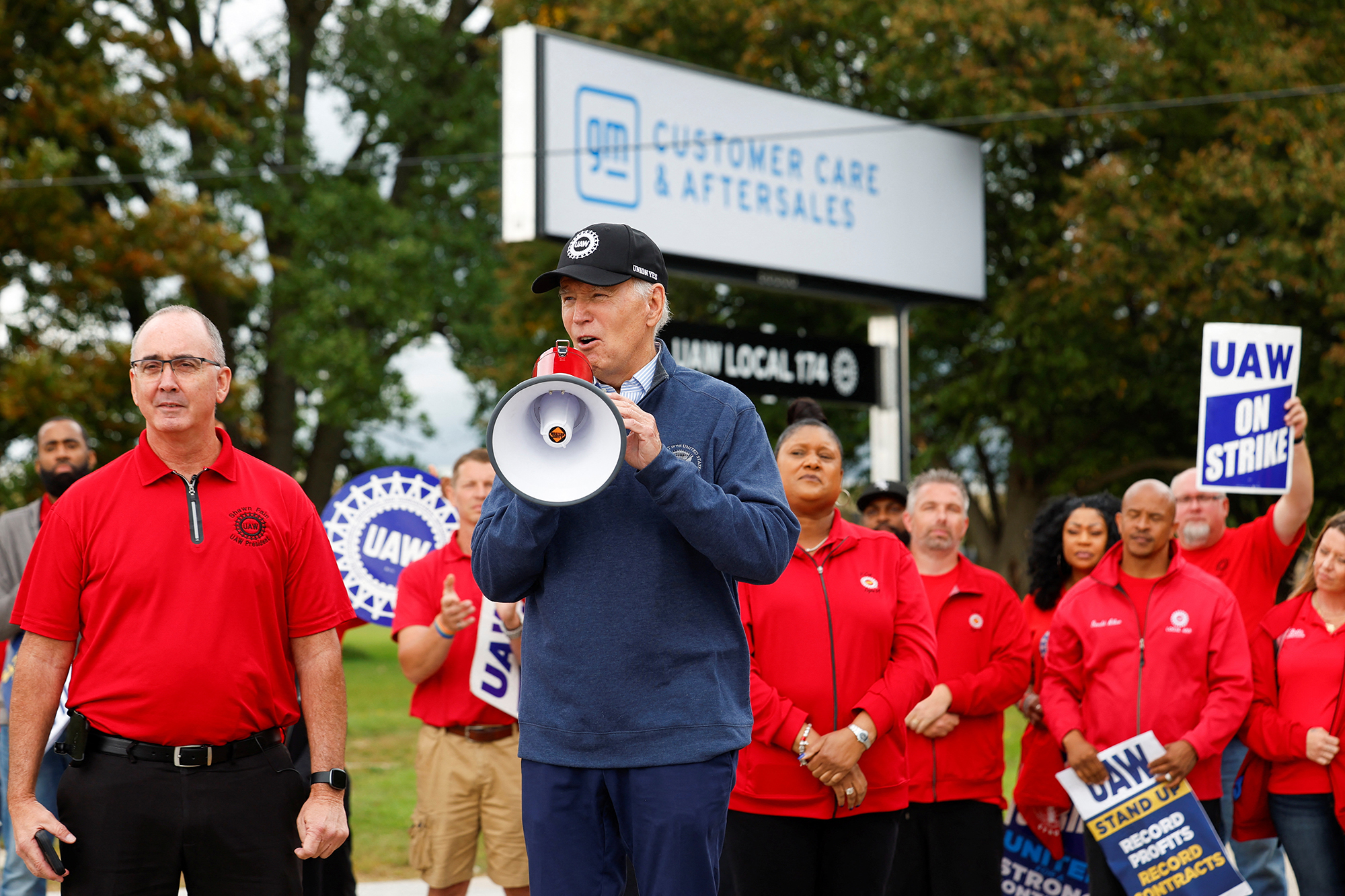
On Tuesday, September 26, 2023, President Joe Biden made history by joining striking United Auto Workers (UAW) members on the picket line in Wayne County, Michigan. It was the first time a sitting president had ever joined an ongoing strike.

Biden’s visit came as the UAW was in its 12th day of a strike against General Motors, Ford, and Stellantis, demanding better wages, benefits, and job security. The strike had caused significant disruptions to the auto industry and had put thousands of workers out of work.

Despite the risks, Biden was determined to show his support for the UAW and for working families. He arrived at the picket line early in the morning and was greeted by cheers and applause from the strikers.

“It’s an honor to be here with you today,” Biden said to the strikers. “You are fighting for the middle class. You are fighting for the soul of this nation.”

Biden went on to praise the UAW for its long history of fighting for the rights of workers and their families. He also pledged his support for the union and said that he would continue to work to create an economy that works for everyone.

“I want to be clear: I stand with the UAW,” Biden said. “I will always stand with workers who are fighting for a fair deal.”

Biden’s visit to the picket line was a significant show of support for the UAW and for labor unions in general. It came at a time when unions are facing increasing attacks from corporations and anti-union politicians.

Biden’s visit was also a reminder of his commitment to working families. He has repeatedly said that he will fight to create an economy that works for everyone, not just the wealthy few.

Biden’s visit to the picket line could have a number of positive consequences for the UAW and for labor unions in general.

First, it could help to raise public awareness of the strike and the union’s demands. This could put pressure on the auto companies to settle the strike on the union’s terms.

Second, Biden’s visit could help to boost morale among the strikers. It could show them that they have the support of the president and that they are not alone in their fight.

Third, Biden’s visit could help to strengthen the labor movement as a whole. It could show that unions are still a powerful force and that they can win when they stand together.

Biden’s visit to the picket line was also significant for its historical implications. It was the first time a sitting president had ever joined an ongoing strike. This sent a powerful message that the president stands with working families and that he supports the right of workers to organize and bargain collectively.

Biden’s visit to the picket line was a courageous and important act. It showed that he is a president who is not afraid to stand up for working families, even when it is politically difficult.

The UAW strike is a critical test for Biden’s presidency. If the union is able to win a fair contract, it will be a victory for working families and for the labor movement as a whole. It will also be a sign that Biden is delivering on his promise to create an economy that works for everyone.

The strike is also a test for the Biden administration’s commitment to industrial policy. Biden has repeatedly said that he wants to revitalize the American manufacturing sector. The UAW strike is an opportunity for Biden to show that he is serious about this commitment.

The Biden administration can support the UAW strike in a number of ways. First, it can put pressure on the auto companies to settle the strike on the union’s terms. Second, it can provide financial assistance to the strikers and their families. Third, it can use its regulatory authority to make it easier for workers to organize and bargain collectively.

The UAW strike is a critical moment for working families and for the labor movement. The outcome of the strike will have a major impact on the future of the American economy. Biden’s visit to the picket line was a significant show of support for the UAW and for working families. It is now up to the Biden administration to follow through on its promises and to ensure that the UAW strike is a victory for working families.

Looming Government Shutdown Tests McCarthy’s Leadership

Washington braces for its first potential government shutdown under House Speaker Kevin McCarthy’s speakership as the fiscal year-end nears on September 30. The high-stakes funding clash represents an early test of McCarthy’s ability to lead a fractious Republican majority.

The face-off caps months of growing friction between McCarthy and the hardline House Freedom Caucus that helped install him as Speaker in January. To gain their votes, McCarthy pledged he would not advance spending bills without “majority of the majority” Republican backing.

That concession has now put McCarthy in a bind as the shutdown deadline approaches without a funding agreement in place. The Freedom Caucus is demanding McCarthy leverage the must-pass spending legislation to cut budgets and advance conservative policies, like defunding the FBI.

However, McCarthy knows Senate Democrats would never accept such ideological provisions. And a prolonged government shutdown could batter the fragile economy while eroding public faith in governance competence.

With only days remaining, McCarthy weighs risky options without easy solutions. Scheduling a vote on a stripped-down continuing resolution to temporarily extend current funding would break his promise to the Freedom Caucus.

Yet refusing to hold a vote risks blame for an unpopular shutdown. McCarthy also considers putting a Senate-passed funding bill to a House floor vote, prompting Freedom Caucus warnings that doing so would incite calls for his ouster.

The Speaker urgently needs to unify Republicans behind a way forward. But McCarthy must balance the Freedom Caucus’ demands against the consequences of failing to avert a shutdown.

Navigating these pressures will test McCarthy’s ability to govern a narrow 222-seat majority. It will also gauge whether he can effectively steer the party into the 2024 elections amid internal divisions.

With only 18% of Americans supporting shutdowns over policy disputes according to polls, McCarthy likely wants to avoid a disruptive funding lapse. A 2013 closure lasting 16 days is estimated to have shaved 0.2-0.6% from economic growth that quarter.

From furloughing 800,000 federal workers to suspending services, even a short shutdown could batter public trust in leadership. The military’s over 1.3 million active duty members would see pay disrupted. National Parks could close, impacting over 297 million annual visitors.

The high-risk brinkmanship highlights the difficulty McCarthy faces satisfying the party’s warring moderate and Freedom Caucus wings. Finding a solution that keeps government open while saving face with hardliners will prove a true test of McCarthy’s political dexterity.

Past shutdowns under divided government have tended to end once public pressure mounted on the blamed party. While Republicans control the House, most fault would land on them for manufacturing a crisis.

Yet McCarthy cannot disregard the Freedom Caucus, whose backing enabled his ascension to power. The days ahead will reveal whether McCarthy has the savvy to extricate the GOP from a crisis partly of its own making.

McCarthy’s handling of the funding impasse will set the tone for his entire speakership. At stake is nothing less than his ability to govern, deliver on promises, and prevent self-inflicted wounds entering 2024.

Precision Motion Company Allient Acquires Design Firm Sierramotion

Allient Inc. (Nasdaq: ALNT), a designer and manufacturer of specialty motion control products, has acquired Sierramotion Inc., a private company specializing in precision motion solutions. The deal expands Allient’s capabilities in highly-engineered motion components for robotic, medical, industrial and other applications.

California-based Sierramotion brings decades of experience designing customized electro-mechanical systems. Their expertise spans rotary, linear and arc motion applications. Sierramotion provides rapid prototyping, testing and low volume manufacturing for customers across industries like semiconductor, defense and robotics.

The acquisition aligns with Allient’s strategy of adding new technologies through M&A. Sierramotion’s engineering talent and nimble product development will aid Allient’s push into integrated motion systems. Combined with Allient’s larger scale manufacturing footprint, the deal creates opportunities to commercialize Sierramotion’s innovations.

Allient sees motion control as a high-growth market driven by automation and electrification trends. Their targeted sectors include factory automation, surgical robotics, last-mile delivery, drones and electric vehicles. Allient aims to leverage acquisitions to expand capabilities across this diverse customer base.

The addition of Sierramotion also boosts Allient’s new product development capacity, speeding time-to-market. Quick turn prototyping and close customer collaboration helps Sierramotion rapidly refine motion components. Integrating these strengths with Allient’s global manufacturing creates a competitive advantage.

Founded in 2019, Sierramotion has worked previously with Allient to co-develop motion solutions. The existing relationship and complementary capabilities make for a seamless integration of the two companies per management. Expect the deal to be immediately accretive.

Allient continues executing on a well-defined acquisition strategy aimed at shareholder value creation. The company looks for targets that expand its motion technology portfolio and bring specialized engineering talent. Disciplined capital deployment and operating excellence remain priorities for the Buffalo, NY-based firm.

Sierramotion also offers entry into growing West Coast technology hubs. The acquisition provides a footprint near potential customers across tech sectors. Overall, the deal enhances Allient’s competitive positioning within precision motion control, a key focus area for the company.

Keep an eye out for new motion control products as Allient leverages Sierramotion’s unique capabilities. The merger kicks Allient’s acquisition-driven expansion into higher gear as management vows to seize opportunities and lead innovation.

Regeneron Strengthens Gene Therapy Pipeline Through Acquisition of Decibel Therapeutics

Regeneron Pharmaceuticals has expanded its gene therapy programs by acquiring Decibel Therapeutics, a biotech company focused on developing treatments for hearing loss. The $1.1 billion deal provides Regeneron with three promising gene therapy candidates that use adeno-associated virus (AAV) vectors to restore hearing.

The most advanced asset is DB-OTO, an AAV-based gene therapy designed to provide long-term hearing to individuals with profound congenital hearing loss caused by otoferlin gene mutations. DB-OTO is currently being evaluated in a Phase 1/2 clinical trial known as CHORD. The gene therapy aims to deliver a functional copy of the otoferlin gene to inner ear hair cells, potentially enabling hearing restoration.

The acquisition also includes two earlier-stage gene therapies, AAV.103 and AAV.104, targeting other genetic forms of hearing loss – GJB2 and STRC respectively. Both utilize a similar AAV gene delivery approach to DB-OTO.

According to Regeneron, the addition of Decibel’s pipeline and capabilities will strengthen its genetic medicines portfolio. Gene therapy has become a major focus for Regeneron beyond its foundational expertise in antibodies. The company is exploring gene silencing, gene editing and gene therapy technologies across a range of therapeutic areas.

Take a look at Ocugen Inc., a biotechnology company focused on discovering, developing and commercializing novel gene and cell therapies and vaccines.

Hearing loss represents a new area for Regeneron, building on an existing collaboration with Decibel. Integration of Decibel’s team and experience in inner ear biology and AAV gene therapy for hearing disorders will be invaluable as Regeneron advances the acquired programs.

Gene therapy aims to address disease at its genetic root cause by introducing functional genes into cells. The goal is to durably restore protein expression and correct the downstream impacts of gene mutations. Gene therapy has shown promise for treating rare monogenic disorders like certain forms of inherited hearing loss.

Both Regeneron and Decibel have utilized AAV vectors to deliver gene therapy payloads. AAV is considered one of the most effective vehicles for gene delivery and has an established safety profile. The viruses can be engineered to target specific cell types following injection into the body.

For DB-OTO, the AAV vector carries a functional copy of the otoferlin gene. Inner ear hair cells are the targets for gene transduction. Otoferlin protein is critical for hearing signal transduction, but mutations in the encoding gene cause profound congenital deafness. Gene therapy aims to restore otoferlin expression and regain hearing function.

Regeneron’s push into gene therapy aligns with its mission of tackling serious diseases with novel technologies. Gene-based treatments have potential for one-time curative therapies. The acquisition of Decibel’s pipeline further diversifies Regeneron’s genetic medicine capabilities as it aims to help patients worldwide.

The $68.7B Blockbuster Microsoft-Activision Deal

Microsoft’s proposed $68.7 billion acquisition of Activision Blizzard has the potential to completely transform the gaming landscape. While regulators have scrutinized the deal over competition concerns, the merger could bring tremendous benefits to Microsoft, Activision, and the broader video game industry.

For Microsoft, owning Activision Blizzard will expand its catalog of exclusive titles and strengthen its position in the rapidly growing cloud and mobile gaming markets. Activision’s stable of popular franchises, including Call of Duty, World of Warcraft, and Overwatch, will give Microsoft’s Xbox platform exclusive access to some of the most iconic brands in gaming.

The deal also bolsters Microsoft’s Game Pass subscription service. By adding Activision games into the Game Pass library, Microsoft could attract millions of new subscribers. Game Pass now has over 25 million subscribers, and Activision’s titles provide strong incentive for even more gamers to sign up.

Microsoft also aims to leverage Activision’s titles to boost its cloud gaming efforts. Cloud gaming allows players to stream games over the internet, without needing expensive hardware. Microsoft’s Project xCloud trails behind competitors, but owning rights to Activision’s diverse lineup of games could help close the gap with rivals.

For Activision Blizzard, the deal provides much-needed stability after a rocky couple of years. The company faced intense backlash over allegations of sexual harassment and discrimination against female employees. Activision also lost favor with gamers over accusations of declining game quality. Joining forces with Microsoft gives Activision renewed focus along with the resources to potentially revitalize its culture and game development efforts.

Take a moment to take a look at Motorsport Games Inc., an award-winning esports video game developer and publisher for racing fans and gamers around the globe.

The merger can also reinvigorate Activision’s floundering esports leagues. Microsoft brings immense expertise in managing leagues like the NBA 2K League. With dedicated support, Activision’s Overwatch League and Call of Duty League can get back on track to engage fans.

More broadly, the deal validates the tremendous growth potential of the $200 billion gaming market. Investors originally balked at the $68.7 billion price tag, which was nearly a 50% premium over Activision’s market value. However, Microsoft likely sees this as a long-term investment, as analysts forecast the gaming sector to expand to over $300 billion by 2027.

While there are understandable concerns about one company gaining so much influence, Microsoft has committed to keeping Activision games available across multiple platforms. The tech giant also faces strong incentives to continue investing in blockbuster franchises like Call of Duty rather than making them Xbox exclusives.

After months in limbo, the deal now appears to be back on track for completion in late 2023 or early 2024. Assuming it passes the final regulatory hurdles, this acquisition has the scope to reshape gaming for players and developers alike. By bringing together two titans of the industry, the new Microsoft-Activision partnership could help unlock gaming’s true potential.

Amazon Bets Big on AI Startup to Advance Generative Tech

E-commerce titan Amazon is making a huge investment into artificial intelligence startup Anthropic, injecting up to $4 billion into the budding firm. The massive funding underscores Amazon’s ambitions to be a leader in next-generation AI capabilities.

Anthropic is a two-year old startup launched by former executives from AI lab OpenAI. The company recently introduced its new chatbot called Claude, designed to converse naturally with humans on a range of topics.

While Claude has similarities to OpenAI’s popular ChatGPT, Anthropic aims to take natural language AI to the next level. Amazon’s investment signals its belief in Anthropic’s potential to pioneer groundbreaking generative AI.

Generative AI refers to AI systems that can generate new content like text, images, or video based on data they are trained on. The technology has exploded in popularity thanks to ChatGPT and image generator DALL-E 2, sparking immense interest from Big Tech.

Amazon is positioning itself to capitalize on this surging interest in generative AI. As part of the deal, Amazon Web Services will become Anthropic’s primary cloud platform for developing and delivering its AI services.

The startup will also let AWS customers access exclusive features to customize and fine-tune its AI models. This tight integration gives Amazon a competitive edge by baking Anthropic’s leading AI into its cloud offerings.

Additionally, Amazon will provide custom semiconductors to turbocharge training for Anthropic’s foundational AI models. These chips aim to challenged Nvidia’s dominance in supplying GPUs for AI workloads.

With its end-to-end AI capabilities across hardware, cloud services and applications, Amazon aims to be the go-to AI provider. The Anthropic investment caps off a flurry of activity from Amazon to own the AI future.

Recently, Amazon unveiled Alexa Voice, AI-generated voice assistant. The company also launched Amazon Bedrock, a service enabling companies to easily build custom AI tools using Amazon’s machine learning models.

And Amazon Web Services already offers robust AI services like image recognition, language processing, and data analytics to business clients. Anthropic’s generative smarts will augment these solutions.

The race to lead in AI accelerated after Microsoft’s multi-billion investment into ChatGPT creator OpenAI in January. Google, Meta and others have since poured billions into AI startups to not get left behind.

Anthropic has already raised funding from top tier backers like Google’s VC arm and Salesforce Ventures. But Amazon’s monster investment catapults the startup into an elite group of AI startups tapping into Big Tech’s cash reserves.

The deal grants Amazon a minority stake in the startup, suggesting further collaborations ahead. With Claude 2 generating buzz, Anthropic’s next-gen AI technology and Amazon’s vast resources could be a potent combination.

For Amazon, owning a piece of a promising AI startup hedges its bets should generative AI disrupt major industries. And if advanced chatbots like Claude reshape how customers interact with businesses, Amazon is making sure it has skin in the game.

The e-commerce behemoth’s latest Silicon Valley splash cements its position as an aggressive AI player not content following others. If Amazon’s bet on Anthropic pays off, it may pay dividends in making Amazon a go-to enterprise AI powerhouse.

Biotech Company Abpro Poised for Growth Through Merger with SPAC

Abpro, an emerging biotechnology company developing novel antibody therapies, has entered into a definitive agreement to go public via a merger with Atlantic Coastal Acquisition Corp. II, a special purpose acquisition company (SPAC). The deal values Abpro at $725 million and will provide capital to advance its drug pipeline.

Abpro specializes in leveraging its proprietary technology platform to create next-generation antibody treatments for cancer, eye diseases, and viral infections. The company aims to develop breakthrough immunotherapies to help patients facing life-threatening conditions.

Though Abpro is still in the preclinical phase, it has made significant progress with its pipeline of antibody therapies. Its lead candidates target HER2+ cancers, which include aggressive forms of breast, gastric, and colorectal cancer. Abpro is also pursuing antibodies for COVID-19 treatment and ophthalmic conditions like wet AMD and DME.

Last year, Abpro announced a partnership with South Korea’s Celltrion to further develop ABP 102, an antibody-based treatment for HER2+ cancers. Under the deal, Abpro received a direct equity investment from Celltrion along with eligibility for up to $1.75 billion in milestone payments.

Abpro leverages its DiversImmune platform to design diverse antibody libraries and identify optimal drug candidates. The technology enables more precise targeting compared to conventional antibodies.

Take a look at Noble Capital Markets Senior Biotechnology Research Analyst Robert LeBoyer’s coverage list.

The merger with Atlantic Coastal will provide capital for Abpro to advance its most promising therapies into clinical studies. Abpro also plans to use the funds for business development activities and expanding its pipeline.

Atlantic Coastal is a SPAC focused on finding and merging with high-potential healthcare companies. The transaction is expected to close in Q2 2024, at which point the combined company will trade publicly.

Commenting on the merger, Abpro CEO Ian Chan stated: “This milestone will accelerate getting our therapies to patients needing life-changing treatments.”

Abpro represents an attractive investment opportunity within biotech. Analysts project the global antibody technology market to reach $272 billion by 2030, driven by rising demand for targeted immunotherapies. With its next-generation platform and infusion of growth capital, Abpro is well-positioned to compete in this thriving sector.

The transaction comes amidst a wave of biotech SPAC deals, as pre-revenue companies aim to access public growth financing. With its proprietary technology and strategic partnership in place, Abpro seems poised to leverage this deal to evolve from an R&D startup into a fully integrated biopharma company.

Explore other SPAC Mergers via Spactrac reports from Noble Capital Markets

FG Merger Corp. (FGMC) – Asymmetric Return Profile Acquisition To Unlock iCoreConnect Saas Potential

Heritage Distilling Co.: Liquor With A Kicker

What Investors Should Know About the Growing Disparity Between Large and Small Cap Returns

Over the past year, large cap stocks have vastly outperformed their small cap counterparts. This widening rift between the biggest and smallest public companies has reached extremes not seen in over 20 years. While large caps continue charging ahead, small caps face mounting challenges that threaten their role in a balanced investment portfolio.

The stark contrast is evident in the returns of two major indices. The S&P 500, comprised of 500 of the largest U.S. companies, has delivered over -15% returns over the past 12 months. Meanwhile the Russell 2000 small cap index plunged over -25% over the same period.

This nearly 10 percentage point gap represents the highest divergence between large and small caps since 2001. The lopsided returns conjure memories of the late 1990s dot-com bubble, when mega cap tech stocks left smaller companies in the dust.

However, the current environment contains even stronger headwinds against small caps. Rampant inflation has battered small companies, which lack the pricing power of large cap brands. Ongoing supply chain difficulties and labor shortages have also taken a heavier toll on small business.

Moreover, the Federal Reserve’s aggressive interest rate hikes to combat inflation have disproportionately impacted small caps. Not only are borrowing costs up, but higher rates dampen economic growth forecasts which small caps rely upon. With the Fed signaling even more hikes ahead, the path ahead looks rocky.

Large caps have also benefitted from a flight to quality. Investors have piled into mega cap stocks like Apple, Microsoft, and Procter & Gamble as safe havens amid volatile markets. These stalwarts deliver steady revenues and dividends that provide shelter from broader economic storms.

The growth versus value dynamic has also disadvantaged small caps. With recession fears looming, investors have favored large cap stocks of mature companies over risky, high-growth small caps. Additionally, large tech names like Amazon and Nvidia dominate future-facing themes like cloud computing, AI, and the metaverse.

Some analysts argue this gap has created a bubble, with popular large caps trading at overextended valuations. However, until inflation shows meaningful declines, small caps will likely continue struggling against their mega cap peers.

For investors, the uneven returns underscore the importance of diversification between company sizes. While small caps carry higher risks today, they historically deliver long-term outperformance. Once the economy stabilizes, the pendulum could swing back in favor of smaller dynamos. For those with the risk tolerance, small caps trading at multi-year discounts could offer an opportunity.

Looking ahead, economic uncertainty persists. But maintaining exposure across the market cap spectrum remains imperative. Having allocation to both large and small caps allows investors to weather various market cycles. With patience and prudence, this lopsided period will eventually balance out.

Greenfire Shares Drop After SPAC Merger Completes

Greenfire Resources, a Calgary-based oil sands company, began public trading on the New York Stock Exchange on Thursday through a merger with a special purpose acquisition company (SPAC). However, shares of Greenfire fell sharply on its debut, dropping around 11% in morning trading.

Greenfire combined with M3-Brigade Acquisition III Corp, a SPAC sponsored by New York-based private investment firm Brigade Capital Management. The deal, first announced in December 2022, valued Greenfire at $950 million.

The new company, Greenfire Resources Ltd, is now listed on the NYSE under the ticker “GFR”. But investors reacted negatively to the stock early on. After opening at $9.80 per share, GFR declined over 37% to around $6.10 by Friday morning.

SPAC deals have faced increased skepticism from investors amid high market volatility this year. Many companies that went public via SPACs have seen their share prices sink below initial trading levels. This broader SPAC downturn could be contributing to the weak debut for Greenfire.

Greenfire operates steam-assisted gravity drainage (SAGD) facilities in Alberta’s prolific oil sands region. It has a 75% stake in the Hangingstone expansion project, which came online in 2017, and 100% ownership of the adjacent Hangingstone demonstration facility. Both produce bitumen using steam injection to mobilize viscous oil sands deposits.

The company raised approximately $42 million through a private placement that closed concurrently with the SPAC merger on September 20. It also put in place $300 million in new senior secured notes and a $50 million senior secured credit facility to boost liquidity.

According to Greenfire’s management, the company will prioritize debt reduction in the near-term to strengthen its financial position. It also plans to increase production at its existing facilities through techniques like infill drilling and debottlenecking.

For example, Greenfire is currently drilling extended reach “refill” wells at the Hangingstone expansion site. These wells are intended to produce incremental volumes from between existing well pairs. No new drilling has occurred at the project since its commissioning in 2017.

In the long-term, Greenfire aims to generate free cash flow thanks to controlled capex spending and its high quality oil sands reservoirs. The company believes it has a structural cost advantage compared to some other SAGD operators in the Athabasca region.

Greenfire says its assets have long-life reserves and relatively low decline rates versus conventional oil and gas resources. For instance, the Hangingstone demonstration project has maintained steady production for nearly 20 years without new wells. This could support continued output for decades.

The company intends to initiate a shareholder returns policy over time once it has made sufficient progress on debt reduction. It also plans to evaluate potential acquisition opportunities to drive further growth down the line.

But in the short-term, investors seem cautious on the newly public company as oil prices waver. Energy stocks have seen significant volatility in 2022. Greenfire traded down double-digits in its NYSE debut as traders reacted hesitantly.

Its success at boosting production from existing assets through relatively low-cost techniques like infill drilling may dictate whether shares can rebound over the coming months. For now, the market is taking a wait-and-see approach with the SPAC-backed oil sands operator.

Explore other SPAC Mergers via SPACtrac reports from Noble Capital markets

FG Merger Corp. (FGMC) – Asymmetric Return Profile Acquisition To Unlock iCoreConnect Saas Potential

Heritage Distilling Co.: Liquor With A Kicker

Brightline Connects Florida’s Finance Hubs with New Train Line

Brightline, the private passenger rail service in Florida, has began operating its high speed train lines to connect South Florida to Orlando today. This new route will link two major finance hubs in the state and make travel between them faster and easier.

Brightline’s trains have currently been running between Miami, Fort Lauderdale, and West Palm Beach. The expansion to Orlando, which opened on September 22, 2023, stretches the service across the state and connects it to one of Florida’s largest business and tourism centers.

According to Brightline’s president Patrick Goddard, the new route “will transform Central Florida into a connected region” and link its economy even closer with South Florida’s. This enhanced connectivity between the region’s financial sectors will likely lead to increased business deals, partnerships, and investment.

In particular, the new Brightline connection will simplify travel between Palm Beach County and Orlando. Palm Beach is home to a cluster of hedge funds, private equity firms, and other financial companies. Orlando similarly has a thriving financial industry, with investment firms, banks, and financial technology companies based in the metro area.

With a Brightline station at Orlando International Airport, it is now easier than ever for finance professionals to commute between the two cities for meetings and conferences. This will allow greater collaboration within Florida’s finance community.

One major finance event that will benefit is NobleCon19, an investor conference focusing on emerging growth companies. NobleCon19 is scheduled for December 3-5, 2023 in Boca Raton, located in Palm Beach County. The conference attracts finance experts from across the country, including professionals based in the Orlando area.

Once the new Brightline route opened, Orlando-based investors, analysts, and executives interested in attending NobleCon now have a convenient 3.5 hour train trip directly from Orlando International Airport to Boca Raton. This is faster than driving, which takes over 4.5 hours in traffic. It is also quicker than Amtrak’s routes connecting the two cities, which take 5-7 hours.

Brightline’s president Patrick Goddard noted that the train service will “make it easier for all Floridians and visitors to experience the best our state has to offer.” This will certainly include connecting finance pros between hubs like Orlando and Palm Beach County.

Overall, Brightline’s expansion to Orlando has linked key financial centers across Florida. For financial companies and professionals, it will facilitate easier networking, stronger partnerships, and more dealmaking. The launch of the new route in September 2023 is a major plus for Florida’s finance sector.

Russian Export Ban May Push Crude Oil Higher

Oil prices climbed over 1% Friday after Russia banned diesel and gasoil exports. The move aims to increase Russia’s domestic supply but reduces the global oil market.

West Texas Intermediate crude climbed back above $90 per barrel following the news. Brent futures also gained, topping $94. Energy analysts say the Russian ban will likely sustain upward pressure on oil prices near-term.

Russia is a leading diesel producer globally. How much the export halt affects US fuel prices depends on how long it remains in place, says Angie Gildea, KPMG’s head of energy. But any drop in total global oil supply without lower demand will lift prices.

The ban comes as US gas prices retreat from 2022 highs, now averaging $3.86 nationally. Diesel is around $4.58 per gallon. Diesel powers key transport like trucks and ships. The loss of Russian exports could spur further diesel spikes.

However, gas prices may keep easing for most of the US, says Tom Kloza of OPIS. Western states could see increases.

Kloza believes crude may rise $2 to $3 per barrel in the near-term. But gasoline margins are poised to shrink even if oil nears $100 again. The US transition to cheaper winter fuel could also limit price hikes.

Oil has increased steadily since summer as OPEC+ cuts output. Saudi Arabia and Russia also reduced production. More Wall Street analysts now predict $100 oil in 2023.

Goldman Sachs sees Brent potentially hitting $100 per barrel in the next 12 months. Sharper inventory declines are likely as OPEC supply falls but demand rises, says Goldman’s head of oil research.

The White House has criticized OPEC+ for the production cuts. US gasoline demand recently hit a seasonal record high over 9.5 million barrels per day. Jet fuel use is also rebounding towards pre-pandemic levels.

Strong demand, paired with reduced Russian oil exports, leaves the market more exposed to supply disruptions. Hurricane Ian showed how quickly price spikes can occur.

Take a moment to take a look at other energy companies covered by Noble Capital Markets Senior Research Analyst Michael Heim.

The Biden Administration plans to keep tapping the Strategic Petroleum Reserve into 2023 to restrain cost increases. But further export bans or output reductions could overwhelm these efforts.

While tighter global fuel supplies might not directly translate to the US, Russia’s latest move signals volatility will persist. Energy prices remain sensitive to supply and demand shifts.

More export cuts could accelerate oil’s return to triple-digits. But for US drivers, the road ahead on gas costs seems mixed. Falling margins and seasonal shifts could limit prices, but risks linger.