Capitalism Versus Coronavirus

Current Efforts to Combat Coronavirus Pandemic

(Note: companies that
could be impacted by the content of this article are listed at the base of the
story [desktop version]. This article uses third-party references to provide a
bullish, bearish, and balanced point of view; sources are listed after the
Balanced section.)

Current Efforts to Combat Coronavirus Pandemic

As the outbreak of the novel coronavirus disease COVID-19, caused by the SARS-CoV-2 virus, rapidly spreads around the globe, scientists and physicians have been racing to understand this new virus and the pathophysiology of this disease to uncover possible treatment regimens and discover effective therapeutic agents and vaccines.

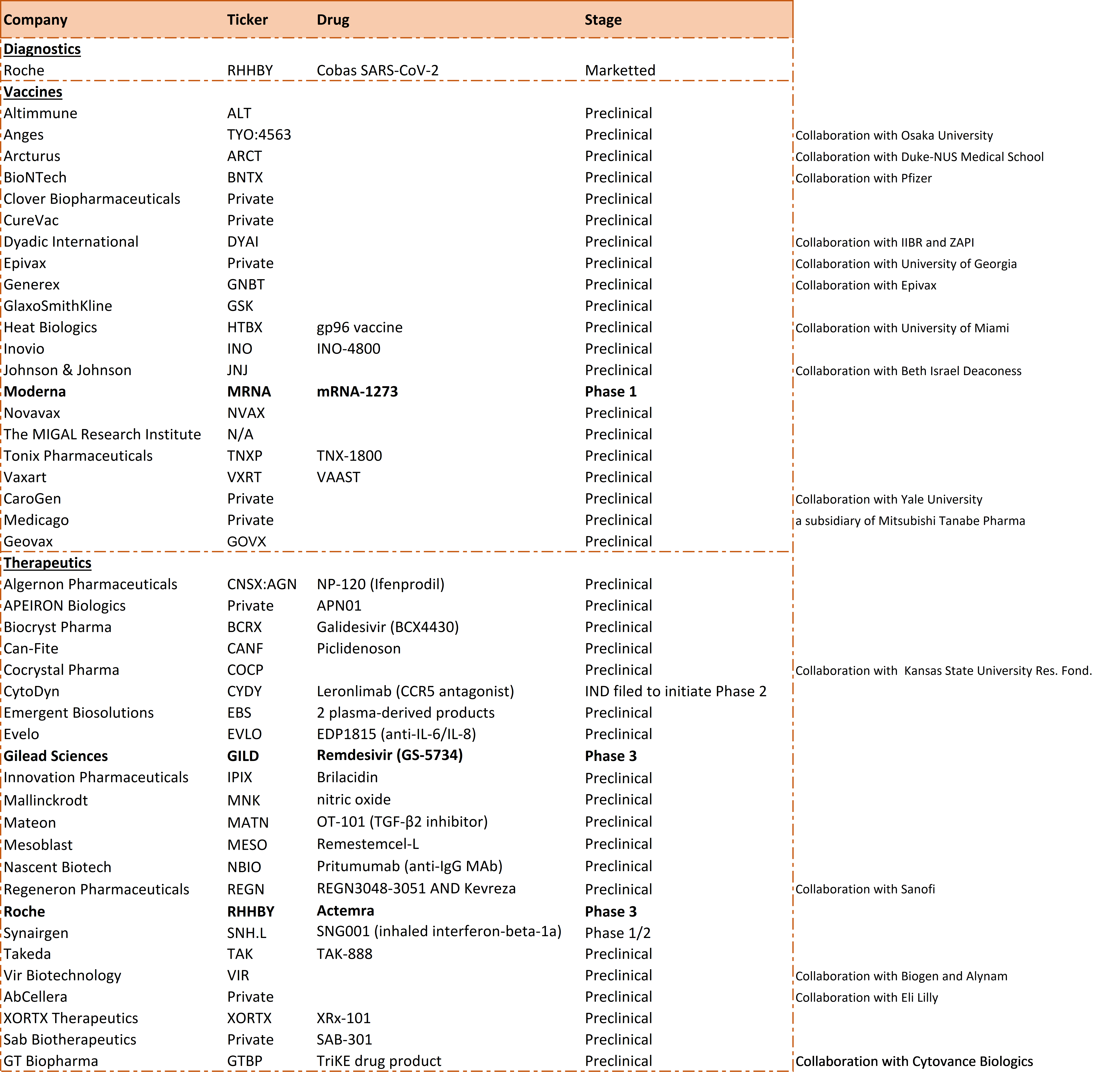
Exhibit 7. Selected Companies Combatting Coronavirus
Unsupported image type.

Source: Noble Capital

The outbreak gave rise to an active business development environment for deal-making to create join ventures and collaborations focused on the development of an effective therapy. In addition to multiple academic collaborations, recent industry deals include:

  • Abcellera with Eli Lilly
  • BioNtech with Pfizer
  • Generex with Epivax
  • Vaxart with Emergent BioSolutions
  • Vir collaborating with Biogen and Alynam

On the therapeutic side, Gilead’s remdesivir was the first drug to enter the clinic against coronavirus. Remdesivir was initially tested in humans with Ebola virus disease and has shown promise in animal models for MERS and SARS. Two ongoing Phase 3 studies are assessing Remdesivir (that blocks RNA polymerase) for the treatment of COVID-19 in the United States and China.  These randomized, open-label, multicenter studies will have readouts anticipated in April 2020.

Sanofi and Regeneron Pharmaceuticals have started a clinical program evaluating Kevzara (sarilumab) in patients hospitalized with severe COVID-19. Kevzara is an interleukin-6 (IL-6) receptor antagonist approved by the U.S. Food and Drug Administration (FDA) in 2017 to treat adults with moderately to severely active rheumatoid arthritis. The U.S.-based trial is expected to begin in New York, to assess the safety and efficacy of adding Kevzara to usual supportive care, compared to supportive care plus placebo. The multi-center, double-blind, Phase 2/3 trial has an adaptive design. The data is anticipated to readout in April 2020.

Roche and Genentech also initiated a Phase 3 trial of Actemra in hospitalized patients with severe COVID-19 pneumonia in China and Italy. The primary and secondary endpoints of the trial include clinical status, mortality, mechanical ventilation, and ICU variables. Actemra, an interleukin-6 (IL-6) receptor antagonist, was approved by the FDA in 2010 for the treatment of moderately to severely active rheumatoid arthritis (RA) patients.

Can-Fite BioPharma (CANF) is also exploring piclidenoson (A3 adenosine receptor agonist (A3AR) small molecule) on Coronaviruses viral load in a mammalian cell model system in collaboration with the Lewis Katz School of Medicine at Temple University, Philadelphia. Piclidenoson is currently in Phase 3 clinical stage for the treatment of patients with rheumatoid arthritis and it has anti-viral effects against single stranded RNA viruses.

Cocrystal is collaborating with Kansas State University Research Foundation (KSURF) to further develop proprietary broad-spectrum antiviral compounds for the treatment of Norovirus and Coronavirus infections. Cocrystal uses structure-based technologies to identify antiviral drugs. 

CytoDyn (CYDY) is developing leronlimab (PRO 140), a CCR5 antagonist with the potential for multiple therapeutic indications. The company submitted an investigational new drug (IND) application to the FDA to conduct a Phase 2 clinical trial with leronlimab (PRO 140) as a therapy for patients who experience respiratory complications as a result of contracting COVID-19.

On the vaccine front, among over 40 vaccines are in development, Moderna’s mRNA-1273 is the only one currently in the clinic. Moderna generates vaccines that contain nucleic acids with genetic codes (mRNA sequence). These codes instruct the body’s cells to synthesize certain proteins from the virus that don’t infect a person but activate an immune response. On March 16, the first patient was dosed with mRNA-1273 and Moderna became the second company to enter the clinic to combat coronavirus following Gilead. The open-label trial will be tested on 45 healthy volunteers between the ages of 18 and 55, according to ClinicalTrials.gov over approximately six weeks. The volunteers will be divided into three groups, each of which will receive a different dosage. Results from the Phase 1 trial are expected in June.

Dyadic is collaborating with The Israel Institute for Biological Research (IIBR) to develop therapeutics against Covid-19. As per the collaboration, IIBR will develop potential candidates and Dyadic will use their C1 technology to manufacture vaccines and monoclonal antibodies. C1 expression system is at the discovery stage to manufacture large volumes of low-cost biologic products such as enzymes and proteins.

Generex Biotechnology (GNBT) has signed a contract with EpiVax to use their computational tools to predict epitopes that can be used to generate peptide vaccines against the Covid-19 using the patented NuGenerex Immuno-Oncology (NGIO – Formerly Antigen Express) Ii-Key technology. EpiVax has identified a number of “hotspots” in the amino acid sequences of the nCOV-2019 coronavirus proteins. Using the epitopes predicted by EpiVax, Generex will manufacture a series of synthetic amino acid peptides that mimic the epitopes of the virus and send them to China for testing. EpiVax is collaborating with University of Georgia to develop a novel coronavirus SARS-CoV -2 (COVID-19) vaccine.

Heat Biologics (HTBX) is developing therapeutic vaccines in collaboration with the University of Miami to support the development of a vaccine leveraging Heat’s proprietary gp96 platform designed to target the SARS-CoV-2 coronavirus that causes COVID-19.

Tonix Pharmaceuticals announced a collaboration with Southern Research to develop a vaccine TNX-1800 against Covid-19. The company is using its proprietary horsepox virus vector platform for the development of TNX-1800. Tonix has previously reported that horsepox has efficacy as a vaccine and good tolerability in mice and cynomolgus macaques. 

Vaxart uses a specific virus called adenovirus type 5 (Ad5) as part of its novel technology platform to help train the immune system to recognize and defeat dangerous invading pathogens. The Ad5 virus serves as a vector to deliver the antigen and booster molecules to stimulate immune responses. The antigen is the pathogen protein designed to trigger the targeted immune response and the booster molecule is an adjuvant that stimulates and adds to the immune response. Vaxart can use the same vector with different antigens to provide an effective standardized and scalable approach for vaccine development. Vaxart’s approach to develop a vaccine for Covid-19 involves generating potential vaccine candidates based on the published genome of the 2019 Novel Coronavirus (2019-nCoV).

Suggested Reading:

Everything You Always Wanted to Know About Coronavirus

COVID-19, Where we are Right Now

Everything You Always Wanted to Know About Coronavirus (but didn’t know who to ask)

(Note: companies that
could be impacted by the content of this article are listed at the base of the
story [desktop version]. This article uses third-party references to provide a
bullish, bearish, and balanced point of view; sources are listed after the
Balanced section.)

The Coronavirus Outbreak

As of March 24th, there were 427,663 people infected with Covid-19 worldwide, and 18,605 have died from the disease. Although the epidemic started in China, the total number of cases is higher outside of China. More countries (Italy, Spain, Germany, and others) are taking extreme measures by closing borders to prevent the spread of the infection. The International Health Regulations Emergency Committee of the World Health Organization (WHO) declared the outbreak a pandemic. On March 13, the President of the United States declared the COVID-19 outbreak a national emergency. Today, there are 44,183 confirmed cases and 544 people have died from the disease (March 24h, 2020).

At present, there is no specific antiviral treatment for COVID-19, and no vaccine is currently available. The treatment is only symptomatic, oxygen therapy represents the primary intervention for patients with pneumonia due to severe infection. Mechanical ventilation may be necessary in cases of respiratory failure refractory to oxygen therapy, whereas hemodynamic support is essential for managing septic shock. 

Exhibit 1: Fact sheet for SARS-CoV-2

Source: CDC, WHO, and WSJ

Exhibit 2: Epidemiological Comparison
of Respiratory Infections

Coronaviruses are single-stranded RNA, enveloped viruses with spike glycoproteins on the envelope. That means the viral genome consists of a strand of RNA (instead of DNA) and each viral particle is wrapped in a protein called envelope. The virus’s genome consists of 30,000 genetic letters (relatively large for a virus). Four structural proteins make up a coronavirus particle: the nucleocapsid, envelope, membrane, and spike (Exhibit 3). The nucleocapsid makes the genetic core, encapsulated in a sphere formed by the envelope and membrane proteins.

Exhibit
3. Coronavirus


Source:
Liu C. et al. “Research and Development on Therapeutic Agents and Vaccines for
COVID-19 and Related Human Coronavirus Diseases”, ACS Cent. Sci., March 2020

The virus enters the body through the nose, mouth or eyes by attaching to cells that produce a protein called ACE2. The spike proteins bind to receptors (ACE) on host cells and invade a cell. Similar to other viruses, coronaviruses release the genetic material (RNA) after invading a host cell. The genetic material gets incorporated into the host cell, hijacking its replication machinery to make many copies, which are released infecting other cells. Millions of copies of the virus can be produced from each infected cell. Most Covid-19 infections cause a fever as the immune system fights to clear the virus from the body. In severe cases, the immune system can overreact and begin to attack lung cells. In some cases, Covid-19 infection can lead to acute respiratory dysfunction, and possibly death.

Coughing and sneezing can expel virus droplets onto nearby people and surfaces, where the virus can remain infectious for several hours to several days. Coronavirus has a long half-life on various surfaces as listed in Exhibit 4. The C.D.C. recommends that people diagnosed with Covid-19 wear masks to reduce the release of viruses.  

Exhibit
4. Stability of Coronavirus Infection

Source: This week in virology

An overview of published scientific information was gathered by ACS Cent. Sci. March 2020 (Liu C. et al. “Research and Development on Therapeutic Agents
and Vaccines for COVID-19 and Related Human Coronavirus Diseases”.
The article highlights antiviral strategies to target complex molecular interactions involved in coronavirus infection and replication. Some of agents known to be effective against other RNA viruses including SARS-CoV, MERS-CoV, influenza, HCV, and Ebola as well as anti-inflammatory drugs are or can be repurposed to target coronavirus (Exhibit 5).

Exhibit
5.
Existing Drugs with Therapeutic Potentials for COVID-19 (Drug Repurposing)

a)
Drugs under clinical trials for treating COVID-19 (repurposing). b) Drugs under
clinical trials for other virus-induced diseases. c) Ritonavir is a
pharmacokinetic profile enhancer that may potentiate the effects of other
protease inhibitors due to its ability to attenuate the degradation of those
drugs by the liver enzyme CYP3A4 and thus is used in combination with antiviral
Lopinavir.37 d) An inhibitor of viral entry to host cells. Its direct action on
S protein and ACE2 is yet to be confirmed.

Source:
Liu C. et al. “Research and Development on Therapeutic Agents and Vaccines for
COVID-19 and Related Human Coronavirus Diseases”, ACS Cent. Sci., March 2020

Chloroquine, an antimalarial drug, was shown to be effective in treating coronavirus in China. Chloroquine phosphate, which has been used for more than 70 years, was selected from tens of thousands of existing drugs after drug screening. The medicine has been under clinical trials in China. A fixed dose of the anti-HIV combination, lopinavir?ritonavir, is currently in clinical trials with Arbidol or ribavirin.

Some potential targets, their roles in viral infection, and representative existing drugs or drug candidates that act on the corresponding targets in similar viruses are also summarized in Exhibit 6.

Exhibit
6. Key Proteins and Their Roles during the Viral Infection Process

Source:
Liu C. et al. “Research and Development on Therapeutic Agents and Vaccines for
COVID-19 and Related Human Coronavirus Diseases”, ACS Cent. Sci., March 2020

Identification of potential targets is important for the development of efficacious drugs with high target specificity and/or uncovering existing drugs that could be repurposed to treat SARS-CoV-2 infection. 3CLpro and PLpro are two viral proteases responsible for the cleavage of viral peptides into functional units, this process is essential for virus replication and packaging within the host cells. Thus, drugs that target these proteases in other viruses such as HIV drugs, lopinavir and ritonavir, are currently marketed. RdRp is the RNA polymerase responsible for viral RNA synthesis (another crucial process for viral infections).  Conceivably, the interaction of viral S protein with its receptor ACE2 on host cells, and subsequent viral entry into the cells, may also be a viable drug target. The broad spectrum antiviral drug Arbidol, which functions as a virus-host cell fusion inhibitor to prevent viral entry into host cells against the influenza virus, is also being tested in a clinical trial for the treatment of SARS-CoV-2. The protease TMPRSS2 produced by the host cells plays an important role in proteolytic processing of S protein priming to the receptor ACE2 binding in human cells. Camostat mesylate, a clinically approved TMPRSS2 inhibitor, was shown to block SARS-CoV-2 entry to human cells, indicating its potential as a drug for COVID-19. ACE2 is a potent negative regulator restraining overactivation of the renin-angiotensin system (RAS) that may be involved in the elicitation of inflammatory lung disease. The notion that ACE2 mediates coronavirus invasion is largely accepted; however, it remains unclear how the levels or activities of ACE2, AT1 receptors, and AT2 receptors are altered in coronavirus-induced diseases due to the limited number of studies. It is yet to be determined whether some drugs or compounds that target any of these proteins (e.g., L-163491 as a partial antagonist of AT1 receptor and partial agonist of AT2 receptor) may alleviate coronavirus induced lung injury.

Current Clinical Activities

Rising Pharmaceuticals’s chloroquine phosphate (anti-malarial drug) had demonstrated marked efficacy and acceptable safety in treating COVID-19 associated pneumonia in multicenter clinical trials conducted in China, as stated by the State Council of China news briefing on February 17, 2020. It was claimed that the patients treated with the medicine have shown better indicators than their control groups, fever, improvement of CT images of lungs, and the percentage of patients with negative in viral nucleic acid tests.

Gilead’s
remdesivir
was the first drug to enter the clinic against coronavirus. Remdesivir was initially tested in humans with Ebola virus disease and has shown promise in animal models for MERS and SARS. Two ongoing Phase 3 studies are assessing Remdesivir (that blocks RNA polymerase) for the treatment of COVID-19 in the United States and China.  These randomized, open-label, multicenter studies will have readouts anticipated in April 2020.

Moderna became the second company to enter the clinic to combat coronavirus following Gilead. Moderna is developing an mRNA-based vaccine mRNA-1273 to protect against coronavirus infection. The mRNA codes instruct the body’s cells to synthesize certain proteins from the virus that don’t infect a person but activate an immune response. On March 16, the first patient was dosed with mRNA-1273. The open-label trial will be tested on 45 healthy volunteers between the ages of 18 and 55, according to clinicaltrials.gov over approximately six weeks. The volunteers will be divided into three groups, each of which will receive a different dosage. Results from the Phase 1 trial are expected in June.

Sanofi and Regeneron Pharmaceuticals have started a clinical program evaluating Kevzara (sarilumab) in patients hospitalized with severe COVID-19. Kevzara is an interleukin-6 (IL-6) receptor antagonist approved by the U.S. Food and Drug Administration (FDA) in 2017 to treat adults with moderately to severely active rheumatoid arthritis. The U.S.-based trial is expected to begin in New York, to assess the safety and efficacy of adding Kevzara to usual supportive care, compared to supportive care plus placebo. The multi-center, double-blind, Phase 2/3 trial has an adaptive design. The data is anticipated to readout in April 2020.

Roche and Genentech also initiated a Phase 3 trial of Actemra in hospitalized patients with severe COVID-19 pneumonia in China and Italy. The primary and secondary endpoints of the trial include clinical status, mortality, mechanical ventilation, and ICU variables. Actemra, an interleukin-6 (IL-6) receptor antagonist, was approved by the FDA in 2010 for the treatment of moderately to severely active rheumatoid arthritis (RA) patients.


Suggested
Reading:

Exposure to these
Sectors Could Enhance Risk-Adjusted Return During the Recovery

Do Market Scares
Provide Uncommon Opportunity?

Capitalism Versus
Coronavirus

Factors to Consider when Setting a New Investment Course

Deciding on the Best Course for when the Storm Clears

Investors must be able to trust the aids on which they rely when navigating financial markets. If they can’t, they’re putting a lot at risk, themselves, and all who are depending on the performance of the assets. When market squalls arise, there must be confidence in decision methods and surety in your own ability to carry them out. A feeling of being way off course, for some, can cause clouded decisions and perhaps lead to the wrong actions. Complete confidence in where you are and how to proceed is required. To act or even not to act is a decision. Market storms cause us to lose trust in our strategies and question ourselves. People often freeze, some just start panic buying or selling. If you feel your methods and aids for navigating the market have taken you far off course, it’s hard to trust them. But, without having something to rely on, deciding what to do next is a shot in the dark.

There is nothing in this educational piece about deadly viruses, quarantines, or business closures. That’s intentional. The suggestions you’ll find as you scroll down are things I’ve learned over three-plus decades of all types of market storms. There is no need to point to a specific disruption; because there is one thing that is constant through all of them, human behavior. I will, however, warn you that the next section may be uncomfortable for some.  Uncomfortable because it has you looking a bit into your reaction to adverse events. We’ll quickly move past that and provide some positive ideas for you or the accounts you manage, information that will make for better conversation during quarterly performance quarterly reviews. 

Correct
for Deviation

Before checking on the accuracy of your decision-making tools, check on the fitness of the decider. You. Your aids for navigating the market may be in working order and just as useful as ever, but your ability to read them may be skewed.

There’s a fear center in our brains called the amygdala (/e’migdele/). The processing speed of the amygdala is 12 milliseconds (twelve-thousands of a second) if I convert this to a unit of measure to make it easier to understand, it equates to instantly. For example, if a bug lands on us (or if we see the words “market crash”) this fear center reacts and can instantly cause tense muscles, increased pulse rate, released hormones, and heightened sensitivity to anything else around that can be perceived as risk or danger. Have you ever experienced someone sneak up on you and cause you to jump? Your heart, breathing, and the rest of your body are instantly revved up. It takes a while to “recover” even after you know you’re okay. Your reaction processes changed in 12 milliseconds or instantly.

Think about all the information about health, markets, and economic collapse that has been heaped on us recently – within a short span of time. There are many reasons to expect our fear centers are doing what they were designed to do to serve our cave-dwelling ancestors. It’s taking over or, at the very least, weighing in on our decision making. When our amygdala is our co-pilot, we tend to question everything. The problem with this as an investor is it may not be measuring the next course of action rationally. It may be overriding our ability to measure one possible outcome over another. Prior to being hit with recent shocks, there may have been gloom and doomsayers that we could easily dismiss. This could have been TV News or other media that we knew was just trying to keep viewers’ attention, so we ignored any hype. We may have more easily accepted that there is always disease present in our lives, yet mankind has survived and thrived. We probably weren’t spending every day thinking, I better do something and I better do it now.

If you believe you are in the heightened fear mode and you’re concerned about the risk of your next move, try this: Turn off your TV and do these four things to help your mind reappraise the situation.

  1. Remove the personal side. Pretend you’re advising someone else. What advice would you give them? Then weigh the advice for yourself.
  2. Look at other times you or others were in similar positions. For the most recent stock market moves I brought myself back to the October 2002 plunge. This market event is the least talked about because it is the least remembered. It felt devastating at the time. I thrived afterward.
  3. Write down the three most upsetting things you feel about the future. Now mentally write a story, using actual acts available, that now develop into a bright future.
  4. Don’t immerse yourself in triggers. The most important quarantine for investors right now may be from others who are afraid. Fear is contagious and can fire up your amygdala.

Intelligent investors act out of patience and courage, not panic. If you are temporarily questioning your ability to act using your trusted tools and strategy, the focus should be on regaining that confidence, not acting despite it.

Move Forward Before it’s Completely Clear

I had read a New York Times article with the headline: Stock Market
ends its Worst Quarter Since 1987 Crash
.  The date on top of the newspaper was September 30, 2002. After the paper printed, over a couple of weeks, the market went even lower. Flash forward to this week, I have taken a lot of calls from investment advisors and even some big firm money managers. These are all veterans in the business, yet when I mentioned the Fall of 2002, very few had a recollection of those brutal few months. Storms pass.

The least popular advice anyone, especially with an activated amygdala, wants to hear is common sense.  Investment axioms like: “Stay the course,” “The best time to buy is when there’s blood in the streets,” “if you liked it at $40 you should love it twice as much at $20,” are hard to swallow when you want quantitative reasons for your next move. Investors should base their decisions on hard data, not people just repeating what sounds good. 

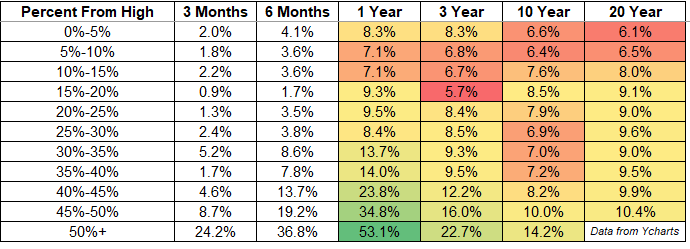
Here is hard data for you to review, not fluffy sayings: Statistically, as stocks decline, they become more dangerous. But, only in the short run. In the long-run, every leg lower equates to a higher probability of high returns later. On the surface, anecdotally, this makes sense, but it’s easier to get comfortable with if you see the data.  

S&P Avg. Performance Since 1950 After Market Decline

The first column of the above table lists the stock market declines from their highs broken down into 5% increments. The next column shows where the market bounced to after three months; the next column lists 6-month results; this is then followed by average annualized returns for one, three, ten, and 20-year average annual return. Periods highlighted in green are above average; those in red indicate some decline from the previous period.

At the 20%-25% market decline level, and all further declines from there, there is a significant improvement in returns after one year. The average annual returns for all periods afterward are inline or better than returns expected by investors in the overall market. Based on this information, if you are in the market today, stay in. If you have cash, a better argument can be made for you to commit some of it than to stay away.

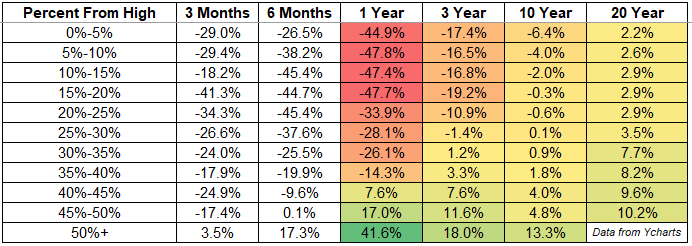
The above data is encouraging. It is important that I remind you that these are averages. Probabilities are nice, but what has happened in the absolute worst case is largely hidden in the data. The worst that has happened to any of these investors is information I would also want to review before committing capital.

S&P Worst-Case Since 1950 After Market Decline

This new table is the same as the one above except it’s showing the single worst case of return as time went on. One take-away is stocks can go a lot lower over the short-term, but over the long-term, the situation starts to improve dramatically. With this as a guide, the worst-case scenarios have investors increasingly more at risk if they entered the market after only a small decline. In other words, since 1950, even in the worst-case scenario, investors have been better off when they have invested after substantial selloffs.

Checking the S&P level this Friday (3/20/20) I see the broader market is down 29.41% from its February 10th high. A Return to that level will require a mathematical increase of 41.70%.  In the past, when we have been in this situation, the market has returned 8.5%-9.5% to investors after just one year. There is, however, the risk that history teaches us that we may have to wait longer than a year just to break even.


Paul Hoffman

Managing Editor


Suggested
Reading:

Exposure to these Sectors Could Enhance Risk-Adjusted Return
During the Recovery

Will Interest Rates Test Negative for Coronavirus

Bear Market Cycles, is it “Different” this Time


Sources:

 Amygdala

Expressing
fear enhances sensory acquisition

Perception of
Risk

Effects of
stress on decisions under uncertainty: A meta-analysis.

Stock
Market ends its Worst Quarter Since 1987 Crash

The bulls have their day

Research – 1-800-Flowers.com (FLWS) – Every Problem Is A Gift

Friday, March 20, 2020

1-800-Flowers.com (FLWS)

Every Problem Is A Gift

1-800-FLOWERS.COM, Inc. is the leading provider of gourmet and floral gifts for all occasions. For nearly 40 years, 1-800-FLOWERS® has been helping deliver smiles for customers with gifts for every occasion, including fresh flowers, premium, gift-quality fruits, and other gourmet items from Harry & David®, popcorn and specialty treats from The Popcorn Factory®; cookies and baked gifts from Cheryl’s®; premium chocolates and confections from Fannie May®; gift baskets and towers from 1-800-Baskets.com®; premium English muffins and other breakfast treats from Wolferman’s; carved fresh fruit arrangements from FruitBouquets.com; and top quality steaks and chops from Stock Yards®. The Company’s BloomNet® international floral wire service provides a broad range of quality products and value-added services designed to help professional florists grow their businesses profitably.

Michael Kupinski, Director of Research, Noble Capital Markets, Inc.

Refer to the full report for the price target, fundamental analysis, and rating.

    Marketing highlights. This report highlights a recent market trip to Chicago two weeks ago with William Shea, CFO, and Joe Pittito, IR. We believe that the message to investors is that the company is geared up for its recent acquisition and capable of weathering the current economic uncertainty.

    Adds A Personal Touch. The company is nearing the closing (early April) of PersonalizationMall.com for $252 million. We view the acquisition favorably as it expands its everyday gifting platform, further distances itself from its peers that have a…


    Click here to get the full report.

This Company Sponsored Research is provided by Noble Capital Markets, Inc., a FINRA and S.E.C. registered broker-dealer (B/D).

*Analyst
certification and important disclosures included in the full report. 
NOTE: investment decisions should not be based upon the content of
this research summary.  Proper due diligence is required before
making any investment decision.
 

Research gevo inc- gevo supply agreements bolster financing discussions

Thursday, March 19, 2020

Gevo, Inc. (GEVO)

Supply Agreements Bolster Financing Discussions.

Gevo Inc is a renewable chemicals and biofuels company engaged in the development and commercialization of alternatives to petroleum-based products based on isobutanol produced from renewable feedstocks. Its operating segments are the Gevo segment and the Gevo Development/Agri-Energy segment. By its segments, it is involved in research and development activities related to the future production of isobutanol, including the development of its biocatalysts, the production and sale of biojet fuel, its Retrofit process and the next generation of chemicals and biofuels that will be based on its isobutanol technology. Gevo Development/Agri-Energy is the key revenue generating segment which involves the operation of the Luverne Facility and production of ethanol, isobutanol and related products.

Poe Fratt, Senior Research Analyst, Noble Capital Markets, Inc.

Refer to the full report for the price target, fundamental analysis, and rating.

    Narrower 4Q2019 loss in line with expectations. No change in 2020 estimates. Adjusted EBITDA of $(4.0) million was down from $(4.9) million in 4Q2018 as higher hydrocarbon more than offset lower ethanol production.

    Solid progress on Phase 1 goal to lower carbon intensity. The startup of wind energy and the upcoming move to renewable natural gas (RNG) use are signs of progress on Phase 1. Contracts with three dairies support RNG buildout to lower carbon intensity. Added hydrocarbon production is…

    >


    Click here to Get the full report.

This Company Sponsored Research is provided by Noble Capital Markets, Inc., a FINRA and S.E.C. registered broker-dealer (B/D).

*Analyst
certification and important disclosures included in the full report. 
NOTE: investment decisions should not be based upon the content of
this research summary.  Proper due diligence is required before
making any investment decision.
 

Research inplay oil ipoof results in line but dark clouds growing

Thursday, March 19, 2020

InPlay Oil (IPOOF)

Results in line but dark clouds growing

InPlay Oil is a junior oil and gas exploration and production company with operations in Alberta focused on light oil production. The company operates long-lived, low-decline properties with drilling development and enhanced oil recovery potential as well as undeveloped lands with exploration possibilities. The common shares of InPlay trade on the Toronto Stock Exchange under the symbol IPO and the OTCQZ Exchange under the symbol IPOOF.

Michael Heim, Senior Research Analyst, Noble Capital Markets, Inc.

Refer to the full report for the price target, fundamental analysis, and rating.

    Operational results strong. The company met production guidance with 7% year over year growth. Operating costs continue to decline (2019 LOE of $14.36/BBL vs $16.02). Reserves are being replaced (120% reserve replacement) even as the company limits cap exp to a level below operating cash flow. All in all, this was a good year for the company on an operational side as positive trends that have developed in recent years continued.

    Financial results slightly below expectations. Realized oil and gas prices were near expectations (oil slightly below and gas above) leading to revenues being near expectations. Operating netbacks (sales less royalties, transportation and operating costs) were generally in line for the quarter and year. The same can be said for adjusted fund flow for the quarter and year which came in at $7.9 and $32.5 million versus our $8.2 and $34.2 million estimates. EPS of $(0.28) and $(0.39) were well below our $(0.01) and $(0.12) estimates. We speculate that interest expense and income taxes were greater than expected. Indeed, net debt levels…


    Click here to get the full report.

This Company Sponsored Research is provided by Noble Capital Markets, Inc., a FINRA and S.E.C. registered broker-dealer (B/D).

*Analyst
certification and important disclosures included in the full report. 
NOTE: investment decisions should not be based upon the content of
this research summary.  Proper due diligence is required before
making any investment decision.
 

Research – Gevo, Inc. (GEVO) – Supply Agreements Bolster Financing Discussions.

Thursday, March 19, 2020

Gevo, Inc. (GEVO)

Supply Agreements Bolster Financing Discussions.

Gevo Inc is a renewable chemicals and biofuels company engaged in the development and commercialization of alternatives to petroleum-based products based on isobutanol produced from renewable feedstocks. Its operating segments are the Gevo segment and the Gevo Development/Agri-Energy segment. By its segments, it is involved in research and development activities related to the future production of isobutanol, including the development of its biocatalysts, the production and sale of biojet fuel, its Retrofit process and the next generation of chemicals and biofuels that will be based on its isobutanol technology. Gevo Development/Agri-Energy is the key revenue generating segment which involves the operation of the Luverne Facility and production of ethanol, isobutanol and related products.

Poe Fratt, Senior Research Analyst, Noble Capital Markets, Inc.

Refer to the full report for the price target, fundamental analysis, and rating.

    Narrower 4Q2019 loss in line with expectations. No change in 2020 estimates. Adjusted EBITDA of $(4.0) million was down from $(4.9) million in 4Q2018 as higher hydrocarbon more than offset lower ethanol production.

    Solid progress on Phase 1 goal to lower carbon intensity. The startup of wind energy and the upcoming move to renewable natural gas (RNG) use are signs of progress on Phase 1. Contracts with three dairies support RNG buildout to lower carbon intensity. Added hydrocarbon production is…

    >


    Click here to Get the full report.

This Company Sponsored Research is provided by Noble Capital Markets, Inc., a FINRA and S.E.C. registered broker-dealer (B/D).

*Analyst
certification and important disclosures included in the full report. 
NOTE: investment decisions should not be based upon the content of
this research summary.  Proper due diligence is required before
making any investment decision.
 

Research – InPlay Oil (IPOOF) – Results in line but dark clouds growing

Thursday, March 19, 2020

InPlay Oil (IPOOF)

Results in line but dark clouds growing

InPlay Oil is a junior oil and gas exploration and production company with operations in Alberta focused on light oil production. The company operates long-lived, low-decline properties with drilling development and enhanced oil recovery potential as well as undeveloped lands with exploration possibilities. The common shares of InPlay trade on the Toronto Stock Exchange under the symbol IPO and the OTCQZ Exchange under the symbol IPOOF.

Michael Heim, Senior Research Analyst, Noble Capital Markets, Inc.

Refer to the full report for the price target, fundamental analysis, and rating.

    Operational results strong. The company met production guidance with 7% year over year growth. Operating costs continue to decline (2019 LOE of $14.36/BBL vs $16.02). Reserves are being replaced (120% reserve replacement) even as the company limits cap exp to a level below operating cash flow. All in all, this was a good year for the company on an operational side as positive trends that have developed in recent years continued.

    Financial results slightly below expectations. Realized oil and gas prices were near expectations (oil slightly below and gas above) leading to revenues being near expectations. Operating netbacks (sales less royalties, transportation and operating costs) were generally in line for the quarter and year. The same can be said for adjusted fund flow for the quarter and year which came in at $7.9 and $32.5 million versus our $8.2 and $34.2 million estimates. EPS of $(0.28) and $(0.39) were well below our $(0.01) and $(0.12) estimates. We speculate that interest expense and income taxes were greater than expected. Indeed, net debt levels…


    Click here to get the full report.

This Company Sponsored Research is provided by Noble Capital Markets, Inc., a FINRA and S.E.C. registered broker-dealer (B/D).

*Analyst
certification and important disclosures included in the full report. 
NOTE: investment decisions should not be based upon the content of
this research summary.  Proper due diligence is required before
making any investment decision.
 

Here’s Your Stimulus Check, Now What?

The ”Coronavirus Economy,” will Washington “Go Big?”

The health of the U.S. economy depends on in-person interactions among its citizens. Additionally, as a major global trading partner, it also relies on overseas economies with which to transact. At an increasing pace, over the last month, our trading partners have brought the pace of commerce down significantly. Both internally and externally, all “non-essential” transactions are at a crawl. In just the past two weeks, the subject of the coronavirus has gone from the punchline of jokes at the office watercooler to the reason people no longer use the office water cooler.  There is now a semi-mandatory freeze on interacting with our co-workers, friends, neighbors, and service industry workers. We have brought the U.S. economy from its “90 mph pace” in February to a mid-March standstill. Unlike other slowdowns, we’re not out of gas. So, what can be done?

Sedate or
Stimulate?

The lack of transactions (economic activity) has been orchestrated and to one degree or another required. We are now in the midst of economic malaise. In the past, the tools for fighting economic malaise was lead by a targeted approach to cause banks to lend more, companies to hire more, or people to spend more. In the current situation it would seem that stimulus while forcing people and businesses to be less than simulative, is a lost cause.

The two opposing forces could turn out to be more costly than effective. The Federal Reserve Bank has slashed overnight bank lending rates to near zero over just a few weeks. Lower rates is their tool used to accelerate lending and the accompanying economic activity as it promotes increased spending and investment. It also helps, at least initially, banks who improve their profitability because they now have access to a cheaper cost of money against higher interest rate loans. The likelihood that slashing Fed funds to near zero will have the same impact as in the past seems very low. We are being incentivized to spend while urged to hunker down.

At the same time that the Fed announced its second rate cut of the year (only nine days after a very strong employment report), they also announced additional actions, which included buying $500 billion or more of U.S. Treasuries. Along with the Treasuries, they said they would purchase Federal agency mortgaged back securities totaling over $200 billion or more. The positive effect of the Fed buying securities in the open market on a wholesale level is twofold. First, it adds cash, in this case, over $700 billion, into the economy. Putting cash into the market in this way is the simulative practice dubbed quantitative easing during the 2008 financial crisis. Secondly, it lowers interest rates even further in that it dramatically increases demand on longer-term securities. The lower rates are intended to reduce the cost of money, allowing individuals and companies to borrow (and therefore spend) at a lower rate. Not unlike cutting Fed Funds, it is to promote activity — Activity that we are restricted or discouraged from taking part in. At the same time, it creates another problem, senior citizens, the age group expected to be most at risk to the coronavirus, depend on income generated from CDs and fixed income securities. The impact of the health crisis, especially to older people, and the reaction, has created another cause for problems to older people, income.

Old
Habits

Reason suggests that trying to sedate activity while at the same time stimulating it is like washing melatonin down with Red Bull to get a good night of rest. Both seem to work against each other. The government reaction to economic headwinds has always been to stimulate using the methods described above. This new problem has a completely different set of circumstances. The economy was breaking records in many categories just weeks ago. Yet now, the likelihood of a recession (two or more consecutive quarters of negative GDP) seems unavoidable. Under most predictions related to the guidance to minimize interacting with others, we will be crawling into mid-Summer.

The latest plans being discussed in Washington are also being called stimulus plans. Using “stimulus” to describe them may be out of habit, or to try to get them passed, but they are not intended to fire up the economy. Instead, the intention is to help bridge the needs of households until we can all get back to work. If government help is needed, bridging the gap and tending to the health issue until people can begin consuming again is a useful response.

Going Big
on a Bridge Plan

 President Trump is determined to lead the country out of the health crisis while minimizing damage to citizens and the businesses that employ them. He had been discussing the idea of a payroll tax cut with his advisors. The payroll tax cut would help small businesses and individuals as long as the businesses remained open. This doesn’t help businesses that are not open. The people and businesses that will be most hurt by the dramatic downshift of the economy will be those without pay or payroll because they’re idle. Even companies that are open, with reduced business and workers with reduced wages, would have a long wait for the benefit of any payroll tax cut.

It was just announced that taxpayers have been given the flexibility of delaying 90 days to pay their taxes to the IRS. The White House has also asked for legislation to include support for small businesses and aid to the airline industry, and other measures for industries hurt by the slowdown. As it relates directly to households, U.S. Treasury Secretary Steven Mnuchin said they plan to put money in people’s hands now. His exact words are: “And when I say now, I mean in the next two weeks, not six to eight months under tax relief.”

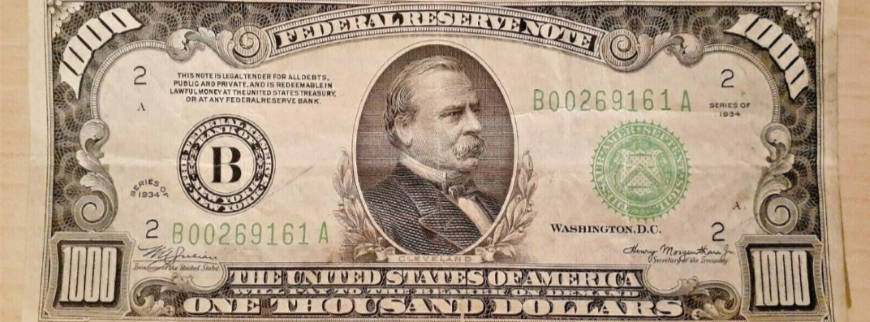
The most recent plan being discussed in the Senate and the Administration is a package from $1 trillion to $1.2 trillion which would include cash payments, loan guarantees, and a host of “kitchen sink” items designed to bridge business and their workers to the other side of this crisis. One of the most talked-about items on that list is a one-time payment of $1,000 to workers directly from the U.S. Treasury.

While we
Wait

Anyone in Washington delaying a plan that will help relieve people who are rightfully concerned for their financial security risks losing the next election. This is a time of national crisis, and there seems to be more of an air of unity, with only mild positioning.  With this, we should begin to see “bridging” actions put into play.

For those stuck at home, finding your own way to bridge the gap before returning to your normal work environment, being as productive as possible will help. Strengthening your own infrastructure, whether that means Spring cleaning, or setting up an efficient home office will help your productivity now, and on the other side of the crisis.

If you own or are with a company that is still open but not at capacity, this may be the time to build on your own infrastructure. Look at the improvements that you can make to slingshot back up to speed when we are passed this. Depending on your business, a marketing plan may be in order to stay in front of customers and investors throughout. Your competition may be distracted by news events; this could be the best time to move forward and come out ahead

Suggested
Reading:

Bear Market Cycles, is it Different
this Time?

ZIRP and QE5


Sources: https://www.washingtonpost.com/us-policy/2020/03/17/trump-coronavirus-stimulus-package/

https://www.bloomberg.com/news/articles/2020-03-17/mnuchin-says-trump-wants-money-sent-to-americans-in-two-weeks

Research helix biopharma hbpcf improved cash position bodes well for future prospects

Wednesday, March 18, 2020

Helix Biopharma (HBPCF)

Improved Cash Position Bodes Well for Future Prospects

Helix BioPharma Corp is a Canada-based clinical-stage biopharmaceutical company focused on cancer drug development. It develops therapies in the field of immuno-oncology based on its proprietary technology mainly in the areas of cancer prevention and treatment. The company has Tumor Defense Breakers (L-DOS47), and Tumor Attackers (CAR-T) product candidates in the pipeline.

Cosme Ordonez, Senior Research Analyst, Noble Capital Markets, Inc.

Refer to the full report for the price target, fundamental analysis, and rating.

    Unique Technology Targeting Tumor Microenvironment (TME). We view Helix Biopharma as a pioneer in the cancer area as the company is developing a platform technology targeting the tumor microenvironment. Helix’s technology is designed to reduce tumor acidity, an escape mechanism which cancer cells utilize to evade the anti-tumor immune response. Tumor acidity has been shown to correlate with resistance to anti-cancer treatment and poor prognosis for cancer patients.

    Lead drug L-DOS47 for the Treatment of Cancer. Helix Biopharma’s lead drug, L-DOS47, is in Phase II clinical trials for the treatment of non-small cell lung cancer (NSCLC) and pancreatic cancer. In a clinical trial using L-DOS47 as a mono-therapy for the treatment of NSCLC, treated patients showed reductions in tumor size and…


    Get the full report on Channelchek desktop.

This Company Sponsored Research is provided by Noble Capital Markets, Inc., a FINRA and S.E.C. registered broker-dealer (B/D).

*Analyst
certification and important disclosures included in the full report. 
NOTE: investment decisions should not be based upon the content of
this research summary.  Proper due diligence is required before
making any investment decision.
 

Research orion group holdings orn new marine awards support current outlook

Wednesday, March 18, 2020

Orion Group Holdings (ORN)

New Marine Awards Support Current Outlook.

Orion Group Holdings, based in Houston, Texas, is a specialty construction company within the Marine and Industrial Construction sectors, with operations focused in the continental United States and Caribbean. Revenue is split roughly 50/50 between a Marine Construction segment that provides marine facility, pipeline and structural construction services and a Commercial Concrete segment that provides turnkey concrete services in the light commercial and structural construction markets.

Poe Fratt, Senior Research Analyst, Noble Capital Markets, Inc.

Refer to the full report for the price target, fundamental analysis, and rating.

    Two Marine jobs awarded for total of $24 million. Energy infrastructure related work along the Gulf Coast begins shortly and should finish by year-end 2020. Positive sign given the sharp drop in crude oil prices.

    New work moves total announced YTD 2020 awards to $111 million. Marine awards total $71 million and Concrete awards total $40 million. Additional awards seem likely since other low bids pending awards from…


    Get the full report on Channelchek desktop.

This Company Sponsored Research is provided by Noble Capital Markets, Inc., a FINRA and S.E.C. registered broker-dealer (B/D).

*Analyst
certification and important disclosures included in the full report. 
NOTE: investment decisions should not be based upon the content of
this research summary.  Proper due diligence is required before
making any investment decision.
 

Research – Energy Fuels Inc. (UUUU) – Full Year Loss Greater than Expected Due to Inventory Impairment

Wednesday, March 18, 2020

Energy Fuels Inc. (UUUU)

Full Year Loss Greater than Expected Due to Inventory Impairment

Energy Fuels Inc together with its subsidiary is engaged in the extraction and recovery of uranium properties in the United States. The company operates in two segments, ISR Uranium and Conventional Uranium. It conducts its ISR activities through its Nichols Ranch Project, located in northeast Wyoming. It conducts its conventional uranium extraction and recovery activities through its White Mesa Mill. In addition, the group also owns uranium and uranium, vanadium properties and projects in various stages of exploration, permitting, and evaluation. Energy Fuels derives most of the income through the sale of Uranium.

Mark Reichman, Senior Research Analyst, Noble Capital Markets, Inc.

Refer to the full report for the price target, fundamental analysis, and rating.

    Full year 2019 results. Energy Fuels reported fourth quarter and full year 2019 losses per share of ($0.10) and ($0.40), respectively. We had predicted fourth quarter and full year losses of ($0.06) and ($0.36) per share. The variance to our estimate was due, in part, to an inventory impairment charge that was partially offset by higher revenues and lower expense.

    Government purchase program.  President Trump’s 2021 budget proposal includes $150 million to fund a strategic uranium reserve to provide assurance of uranium supplies and to support U.S. nuclear fuel cycle capabilities through the domestic production and conversion of uranium. Assuming no changes by the time an appropriations bill is signed into law by September 30, purchases could begin in fiscal year 2021 which begins October 1. Industry participants are awaiting more details on the program and…


    Get the full report on Channelchek desktop.

This research is provided by Noble Capital Markets, Inc., a FINRA and S.E.C. registered broker-dealer (B/D).

*Analyst
certification and important disclosures included in the full report. 
NOTE: investment decisions should not be based upon the content of
this research summary.  Proper due diligence is required before
making any investment decision.
 

Research – Helix Biopharma (HBPCF) – Improved Cash Position Bodes Well for Future Prospects

Wednesday, March 18, 2020

Helix Biopharma (HBPCF)

Improved Cash Position Bodes Well for Future Prospects

Helix BioPharma Corp is a Canada-based clinical-stage biopharmaceutical company focused on cancer drug development. It develops therapies in the field of immuno-oncology based on its proprietary technology mainly in the areas of cancer prevention and treatment. The company has Tumor Defense Breakers (L-DOS47), and Tumor Attackers (CAR-T) product candidates in the pipeline.

Cosme Ordonez, Senior Research Analyst, Noble Capital Markets, Inc.

Refer to the full report for the price target, fundamental analysis, and rating.

    Unique Technology Targeting Tumor Microenvironment (TME). We view Helix Biopharma as a pioneer in the cancer area as the company is developing a platform technology targeting the tumor microenvironment. Helix’s technology is designed to reduce tumor acidity, an escape mechanism which cancer cells utilize to evade the anti-tumor immune response. Tumor acidity has been shown to correlate with resistance to anti-cancer treatment and poor prognosis for cancer patients.

    Lead drug L-DOS47 for the Treatment of Cancer. Helix Biopharma’s lead drug, L-DOS47, is in Phase II clinical trials for the treatment of non-small cell lung cancer (NSCLC) and pancreatic cancer. In a clinical trial using L-DOS47 as a mono-therapy for the treatment of NSCLC, treated patients showed reductions in tumor size and…


    Get the full report on Channelchek desktop.

This Company Sponsored Research is provided by Noble Capital Markets, Inc., a FINRA and S.E.C. registered broker-dealer (B/D).

*Analyst
certification and important disclosures included in the full report. 
NOTE: investment decisions should not be based upon the content of
this research summary.  Proper due diligence is required before
making any investment decision.