Research pangaea logistics solutions ltd- panl unique business model positive for uncertainty ahead

Wednesday, March 25, 2020

Pangaea Logistics Solutions Ltd. (PANL)

Unique Business Model Positive for Uncertainty Ahead

Pangaea Logistics Solutions Ltd and its subsidiaries provide seaborne drybulk transportation services. It transports drybulk cargos including grains, coal, iron, ore, pig, iron, hot briquetted iron, bauxite, alumina, cement clinker, dolomite and limestone. The firm’s services include cargo loading, cargo discharge, vessel chartering, voyage planning and technical vessel management. The company derives all of its revenues from contracts of affreightment, voyage charters and time charters. Its strategy depends on focusing on increasing strategic contracts of affreightment, expanding capacity and flexibility by increasing its owned fleet and increasing backhaul focus and fleet efficiency.

Poe Fratt, Senior Research Analyst, Noble Capital Markets, Inc.

Refer to the full report for the price target, fundamental analysis, and rating.

    Consistent business model delivered solid 4Q2019 results, but adjusting 2020 EBITDA estimate to reflect near-term uncertainty. While China is slowly returning to work and returning to normal, the near-term outlook is uncertain. As a result, our EBITDA estimate moves down to $47.1 million from $54.6 million, based on TCE rates of $13,423 and and 16,760 shipping days.

    Fleet renewal intact with new build new program and sale of older assets. Acquisitions are possible if market…


    Click here to get the full report.

This Company Sponsored Research is provided by Noble Capital Markets, Inc., a FINRA and S.E.C. registered broker-dealer (B/D).

*Analyst
certification and important disclosures included in the full report. 
NOTE: investment decisions should not be based upon the content of
this research summary.  Proper due diligence is required before
making any investment decision.
 

Research – electroCore (ECOR) – Q4 2019 Results: Lagged Commercial Success

Wednesday, March 25, 2020

electroCore (ECOR)

Q4 2019 Results: Lagged Commercial Success

electrocore Inc is a commercial-stage bioelectronic medicine company with a platform for non-invasive vagus nerve stimulation therapy initially focused on neurology and rheumatology. Its product gammaCore is FDA-cleared for the acute treatment of pain associated with migraine and episodic cluster headache in adults.

Ahu Demir, Ph.D., Biotechnology Research Analyst, Noble Capital Markets, Inc.

Refer to the full report for the price target, fundamental analysis, and rating.

    Fourth quarter 2019 financial results. The company focuses on two channels to commercialize gammaCore: i) the Federal Supply Schedule eligible entities and ii) the United Kingdom’s National Health Service. The net sales in Q4 were $675,000 compared to $683,000 in Q3 2019. There was a 24% sequential growth in paid months of therapy, that was not reflected on sales driven by the timing of revenue recognition and currency exchange fluctuations.

    Did it meet our expectations? The company reported total revenue of $2.4 million, operating expenses of $47.3 million, and EPS of ($1.54) for the full year of 2019 compared to our estimates of $3.0 million in revenue, $46.1 in operating expenses and…


    Click here to get the full report.

This Company Sponsored Research is provided by Noble Capital Markets, Inc., a FINRA and S.E.C. registered broker-dealer (B/D).

*Analyst
certification and important disclosures included in the full report. 
NOTE: investment decisions should not be based upon the content of
this research summary.  Proper due diligence is required before
making any investment decision.
 

Research – Pangaea Logistics Solutions Ltd. (PANL) – Unique Business Model Positive for Uncertainty Ahead

Wednesday, March 25, 2020

Pangaea Logistics Solutions Ltd. (PANL)

Unique Business Model Positive for Uncertainty Ahead

Pangaea Logistics Solutions Ltd and its subsidiaries provide seaborne drybulk transportation services. It transports drybulk cargos including grains, coal, iron, ore, pig, iron, hot briquetted iron, bauxite, alumina, cement clinker, dolomite and limestone. The firm’s services include cargo loading, cargo discharge, vessel chartering, voyage planning and technical vessel management. The company derives all of its revenues from contracts of affreightment, voyage charters and time charters. Its strategy depends on focusing on increasing strategic contracts of affreightment, expanding capacity and flexibility by increasing its owned fleet and increasing backhaul focus and fleet efficiency.

Poe Fratt, Senior Research Analyst, Noble Capital Markets, Inc.

Refer to the full report for the price target, fundamental analysis, and rating.

    Consistent business model delivered solid 4Q2019 results, but adjusting 2020 EBITDA estimate to reflect near-term uncertainty. While China is slowly returning to work and returning to normal, the near-term outlook is uncertain. As a result, our EBITDA estimate moves down to $47.1 million from $54.6 million, based on TCE rates of $13,423 and and 16,760 shipping days.

    Fleet renewal intact with new build new program and sale of older assets. Acquisitions are possible if market…


    Click here to get the full report.

This Company Sponsored Research is provided by Noble Capital Markets, Inc., a FINRA and S.E.C. registered broker-dealer (B/D).

*Analyst
certification and important disclosures included in the full report. 
NOTE: investment decisions should not be based upon the content of
this research summary.  Proper due diligence is required before
making any investment decision.
 

Industry report what is going on with gold

Tuesday, March 24, 2020

Minerals Industry Report

What Is Going on With Gold?

Mark Reichman, Senior Research Analyst, Noble Capital Markets, Inc.

Listen To The Analyst

Refer to end of report for Analyst Certification & Disclosures

  • Year-to-date gold returns have been lackluster.   Year-to-date through March 23, the gold futures price increased 3.0% from $1,529.30 per ounce at year-end 2019 to finish at $1,575.55. During the same period, the Van Eck Vectors Gold Miners ETF (GDX) and Junior Gold Miners ETF (GDXJ) were down 25.1% and 35.9%, respectively, while the S&P 500 index was down 30.8%. On March 9, gold reached a high of $1,704.30 before reaching a low of $1,450.90 on March 16.
  • Institutional investors seek liquidity. While gold had performed reasonably well up until the recent market meltdown, the recent weakness in the gold price has been attributed to institutional investors selling positions to raise cash, deleverage and/or to offset other losses. This seems supported by March data from the Commodity Futures Trading Commission. Interestingly, physical demand for gold has increased. Total U.S. Mint gold sales in March 2020 increased to 120,500 ounces compared with 7,000 ounces in February and 60,000 ounces in January.
  • Deficits, debt and interest rates. In our view, a combination of rising U.S. government deficits, debt and lower interest rates are supportive of gold prices. Investors typically buy gold as a store of value and with interest rates expected to remain low for the foreseeable future and negative-yielding debt in some countries, investors may increase their exposure to precious metals. Additionally, while stimulus is required to mitigate the coronavirus’ negative economic impact, it could lead to inflationary pressures down the road which are generally supportive of gold prices.
  • Outlook for gold prices remains favorable. While gold prices and precious metal mining equities have not escaped volatility, we think the outlook for gold prices and precious metals equities remain favorable. While cash is king now, we believe institutional interest in gold may increase as dislocations in the markets stabilize and both retail and institutional investors seek exposure to gold for diversification.

Despite a Rough Start, Outlook for Gold Prices Remains Constructive

Year-to-date through March 23, the gold futures price increased 3.0% from $1,529.30 per ounce at year-end 2019 to finish at $1,575.55.  During the same period, the Van Eck Vectors Gold Miners ETF (GDX) and Junior Gold Miners ETF (GDXJ) were down 25.1% and 35.9%, respectively, while the S&P 500 index was down 30.8%.  On March 9, gold reached a high of $1,704.30 before reaching a low of $1,450.90 on March 16. 

While Institutional Traders Seek Liquidity, Retail Demand for Physical Bullion is Strengthening

While gold had performed reasonably well up until the recent market meltdown, the recent weakness in the gold price has been attributed to institutional investors selling positions to raise cash, deleverage and/or to offset other losses.  This seems supported by March data from the Commodity Futures Trading Commission.  Interestingly, physical demand for gold has increased.  Total U.S. Mint gold sales in March 2020 increased to 120,500 ounces compared with 7,000 ounces in February and 60,000 ounces in January.  In 2019, gold sales amounted to 65,000 ounces in January, 13,000 ounces in February and 11,500 ounces in March.

Rising Deficits, Debt and Lower for Longer Interest Rates

In our view, a combination of rising U.S. government deficits, debt and lower for longer interest rates are supportive of gold prices.  Investors typically buy gold as a store of value and with interest rates expected to remain low for the foreseeable future and negative-yielding debt in some countries, investors may increase their exposure to precious metals.  Additionally, while stimulus is required to mitigate the coronavirus’ negative impact on global economies, it could lead to inflationary pressures down the road.

As of March 20, the U.S. government’s public debt approximated $23.5 trillion.  According to the U.S. Treasury Department, the deficit amounted to $624.5 million through February of fiscal year 2020, compared to $544.2 million during the prior year period.  Recall the government’s fiscal year begins in October.  Increasing government deficits and debt could act as a drag on economic growth, support lower interest rates and weaken the U.S. dollar.  To mitigate the economic impact of the coronavirus, Congress continues to hammer out a $2 trillion stimulus bill.

On March 23, the Federal Reserve Open Market Committee announced plans to undertake open market operations as necessary to maintain the federal funds rate in a target range of 0 to ¼ percent.  The Fed will use its “full range of authorities to provide powerful support for the flow of credit to American families and businesses.â€?  These include purchasing Treasury securities and agency mortgage-backed securities, establishing new programs to provide up to $300 billion in new financing to support the flow of credit to businesses and consumers, expanding money market mutual fund liquidity and commercial paper funding facilities to facilitate credit to municipalities and a potential Main Street Business Lending Program to support lending to eligible small-and-medium sized businesses. 

Bottom Line

While gold prices and precious metal mining equities have not escaped volatility, we think the outlook for gold prices and precious metals equities remain constructive.  While cash is king now, we believe institutional interest in gold may increase as dislocations in the markets stabilize and both retail and institutional investors begin to focus on gold’s favorable long-term fundamental drivers and seek exposure to gold for diversification.  In our opinion, mining stocks may be an attractive way to gain exposure to precious metals given the disproportionate percentage impact higher commodity prices may have on a company’s bottom line and valuation for a given percentage increase in the commodity itself.  While the virus may have varying degrees of impact on mining operations, any near-term disruption to production would be supportive of gold prices.  In our view, the fallout from the coronavirus has only intensified many of the factors that are already supportive of gold prices, including lower interest rates, worries about global economic growth and increased government spending.


GENERAL DISCLAIMERS

All statements or opinions contained herein that include the words “we”, “us”, or “our” are solely the responsibility of Noble Capital Markets, Inc.(“Noble”) and do not necessarily reflect statements or opinions expressed by any person or party affiliated with the company mentioned in this report. Any opinions expressed herein are subject to change without notice. All information provided herein is based on public and non-public information believed to be accurate and reliable, but is not necessarily complete and cannot be guaranteed. No judgment is hereby expressed or should be implied as to the suitability of any security described herein for any specific investor or any specific investment portfolio. The decision to undertake any investment regarding the security mentioned herein should be made by each reader of this publication based on its own appraisal of the implications and risks of such decision.

This publication is intended for information purposes only and shall not constitute an offer to buy/sell or the solicitation of an offer to buy/sell any security mentioned in this report, nor shall there be any sale of the security herein in any state or domicile in which said offer, solicitation or sale would be unlawful prior to registration or qualification under the securities laws of any such state or domicile. This publication and all information, comments, statements or opinions contained or expressed herein are applicable only as of the date of this publication and subject to change without prior notice. Past performance is not indicative of future results. Noble accepts no liability for loss arising from the use of the material in this report, except that this exclusion of liability does not apply to the extent that such liability arises under specific statutes or regulations applicable to Noble. This report is not to be relied upon as a substitute for the exercising of independent judgement. Noble may have published, and may in the future publish, other research reports that are inconsistent with, and reach different conclusions from, the information provided in this report. Noble is under no obligation to bring to the attention of any recipient of this report, any past or future reports. Investors should only consider this report as single factor in making an investment decision.

IMPORTANT DISCLOSURES

This publication is confidential for the information of the addressee only and may not be reproduced in whole or in part, copies circulated, or discussed to another party, without the written consent of Noble Capital Markets, Inc. (“Noble”). Noble seeks to update its research as appropriate, but may be unable to do so based upon various regulatory constraints. Research reports are not published at regular intervals; publication times and dates are based upon the analyst’s judgement. Noble professionals including traders, salespeople and investment bankers may provide written or oral market commentary, or discuss trading strategies to Noble clients and the Noble proprietary trading desk that reflect opinions that are contrary to the opinions expressed in this research report.
The majority of companies that Noble follows are emerging growth companies. Securities in these companies involve a higher degree of risk and more volatility than the securities of more established companies. The securities discussed in Noble research reports may not be suitable for some investors and as such, investors must take extra care and make their own determination of the appropriateness of an investment based upon risk tolerance, investment objectives and financial status.

Company Specific Disclosures

The following disclosures relate to relationships between Noble and the company (the “Company”) covered by the Noble Research Division and referred to in this research report.
Noble is not a market maker in any of the companies mentioned in this report. Noble intends to seek compensation for investment banking services and non-investment banking services (securities and non-securities related) with any or all of the companies mentioned in this report within the next 3 months

ANALYST CREDENTIALS, PROFESSIONAL DESIGNATIONS, AND EXPERIENCE

Senior Equity Analyst focusing on Basic Materials & Mining. 20 years of experience in equity research. BA in Business Administration from Westminster College. MBA with a Finance concentration from the University of Missouri. MA in International Affairs from Washington University in St. Louis.
Named WSJ ‘Best on the Street’ Analyst and Forbes/StarMine’s “Best Brokerage Analyst.”
FINRA licenses 7, 24, 63, 87

WARNING

This report is intended to provide general securities advice, and does not purport to make any recommendation that any securities transaction is appropriate for any recipient particular investment objectives, financial situation or particular needs. Prior to making any investment decision, recipients should assess, or seek advice from their advisors, on whether any relevant part of this report is appropriate to their individual circumstances. If a recipient was referred to Noble Capital Markets, Inc. by an investment advisor, that advisor may receive a benefit in respect of
transactions effected on the recipients behalf, details of which will be available on request in regard to a transaction that involves a personalized securities recommendation. Additional risks associated with the security mentioned in this report that might impede achievement of the target can be found in its initial report issued by Noble Capital Markets, Inc.. This report may not be reproduced, distributed or published for any purpose unless authorized by Noble Capital Markets, Inc..

RESEARCH ANALYST CERTIFICATION

Independence Of View
All views expressed in this report accurately reflect my personal views about the subject securities or issuers.

Receipt of Compensation
No part of my compensation was, is, or will be directly or indirectly related to any specific recommendations or views expressed in the public
appearance and/or research report.

Ownership and Material Conflicts of Interest
Neither I nor anybody in my household has a financial interest in the securities of the subject company or any other company mentioned in this report.

NOBLE RATINGS DEFINITIONS % OF SECURITIES COVERED % IB CLIENTS
Outperform: potential return is >15% above the current price 86% 25%
Market Perform: potential return is -15% to 15% of the current price 14% 2%
Underperform: potential return is >15% below the current price 0% 0%

NOTE: On August 20, 2018, Noble Capital Markets, Inc. changed the terminology of its ratings (as shown above) from “Buy” to “Outperform”, from “Hold” to “Market Perform” and from “Sell” to “Underperform.” The percentage relationships, as compared to current price (definitions), have remained the same. Additional information is available upon request. Any recipient of this report that wishes further information regarding the subject company or the disclosure information mentioned herein, should contact Noble Capital Markets, Inc. by mail or phone.

Noble Capital Markets, Inc.
225 NE Mizner Blvd. Suite 150
Boca Raton, FL 33432
561-994-1191

Noble Capital Markets, Inc. is a FINRA (Financial Industry Regulatory Authority) registered broker/dealer.
Noble Capital Markets, Inc. is an MSRB (Municipal Securities Rulemaking Board) registered broker/dealer.
Member – SIPC (Securities Investor Protection Corporation)
Report ID: 11342

Research pangaea logistics solutions ltd- panl a strong quarter- unique business model helps offset uncertainty

Tuesday, March 24, 2020

Pangaea Logistics Solutions Ltd. (PANL)

A Strong Quarter. Unique Business Model Helps Offset Uncertainty.

Pangaea Logistics Solutions Ltd and its subsidiaries provide seaborne drybulk transportation services. It transports drybulk cargos including grains, coal, iron, ore, pig, iron, hot briquetted iron, bauxite, alumina, cement clinker, dolomite and limestone. The firm’s services include cargo loading, cargo discharge, vessel chartering, voyage planning and technical vessel management. The company derives all of its revenues from contracts of affreightment, voyage charters and time charters. Its strategy depends on focusing on increasing strategic contracts of affreightment, expanding capacity and flexibility by increasing its owned fleet and increasing backhaul focus and fleet efficiency.

Poe Fratt, Senior Research Analyst, Noble Capital Markets, Inc.

Refer to the full report for the price target, fundamental analysis, and rating.

    Unique business model delivers solid results. 4Q2019 EBITDA of $13.5 million beat our $12.8 million estimate and was above $12.2 million in 4Q2018. Shipping days of 5,240, TCE rates of $15.2k/day and lower opex were positives.

    Call today at 8 am EST to discuss results.  Number is 888-895-3561 and code is 9578734. Look for added details on: 1) Dry bulk market outlook; 2) Charter in activity; 3) Volume and/or pricing changes in cargo book; 4) Progress on the four new builds under way in China; and 5) Capital allocation strategy given apparent shift toward…


    Click here to get the full report.

This Company Sponsored Research is provided by Noble Capital Markets, Inc., a FINRA and S.E.C. registered broker-dealer (B/D).

*Analyst
certification and important disclosures included in the full report. 
NOTE: investment decisions should not be based upon the content of
this research summary.  Proper due diligence is required before
making any investment decision.
 

How Your Business Can Satisfying the Current Need for Content

Helping Your Business by Helping Others Understand the CoVID-19 Impact

The world, including your customers, prospects, and investors have become hyper-needy for information. Many businesses have slowed or are doing what they can from remote offices, their contact with the thoughts of others is much lower than it had been. At the same time, their wanting to understand is high. One way you can firm your relationships with those you most want to continue to engage when this is over is through filling their need for content.

Here are three thoughts for finding the best topics to develop meaningful content and build readership that will want what you offer them next time.

Meaningful

Your readers don’t need to be told what they just heard or read at a news source with journalists and deep resources. What they can benefit from is that information distilled through the lens of your expertise. Before writing on a topic, ask:

  1. Who am I trying to inform?
  2. What do they already know?
  3. What piece, using my in-house expertise or knowledge, makes what they know more pertinent?

Then proceed in writing from the angle of how what is going on impacts or is impacted by a piece the journalist would not have covered. Your business has its own niche. There is no reason to wander far from that niche to attract who you want to.

Brevity

If you’re writing about the Novel Coronavirus and you are certain 99.99% of your audience doesn’t need an explanation what it is, don’t spend a paragraph defining the situation. Ten years from now someone may come across your content and benefit from the explanation, today’s readers are who you are writing for.

Keep in mind the person reading your blog post, article, or email update wants to skip to the meat. Readers aren’t returning to you because you give them the obvious, they are there because you are provide uncommon insight.

Brevity, as used here does not necessarily mean brief. if you can go beyond what is readily available. If you have particular expertise in an area that is not otherwise being covered, make that information known. Just be as concise as possible, no one has time to waste on “common knowledge.”

Take-Away

Self-promotion during times of national crisis is a turn-off to readers. However, strengthening your relationship with certain people is important to your company. If the piece is useful and holds your firm out as having expertise in the subject, if the reader develops a hunger for something else from your company, you’ve satisfied your content goal. Don’t ruin it by trying to “close the deal.” At the end of your posting, remind them what they need to remember about what they read. This shows you care that they have understood the salient points. 

Developing or firming relationships with those that may have never heard of your company is easier when we’re surrounded by turmoil. The bright side of turmoil is it provides opportunities to “meet” those that may not have heard of your business before. During periods of “business as usual” your target is doing what they usually do and not looking beyond that. This difficult business period we are all pushing through. As readers get to know you better through content, being genuine in helping fill a void and connecting what is going on a different, useful way, will cause them to open their door to you later on.


Suggested Reading:

How Americans Research and What it Means for Your Business

Introduction to channelchek


Looking for the next apple? This is the orchard.

The leading investor platform for public small & microcap companies.

6,000+ companies with market caps from $10MM to $2B. Advanced market data. Institutional-quality equity and industry research. Balanced news. IPO Podcast series. HD webcasts.

Free to sign up on all levels.

Who should sign up?

Family Offices
Hedge Funds
Self-Directed Investors
Angel Investors
Institutional Investors
Wealth Advisors & Independent Registered Reps
Money Managers
VC & Private Equity Funds

Register Now

Industry Report – What Is Going On With Gold?

Tuesday, March 24, 2020

Minerals Industry Report

What Is Going on With Gold?

Mark Reichman, Senior Research Analyst, Noble Capital Markets, Inc.

Listen To The Analyst

Refer to end of report for Analyst Certification & Disclosures

  • Year-to-date gold returns have been lackluster.   Year-to-date through March 23, the gold futures price increased 3.0% from $1,529.30 per ounce at year-end 2019 to finish at $1,575.55. During the same period, the Van Eck Vectors Gold Miners ETF (GDX) and Junior Gold Miners ETF (GDXJ) were down 25.1% and 35.9%, respectively, while the S&P 500 index was down 30.8%. On March 9, gold reached a high of $1,704.30 before reaching a low of $1,450.90 on March 16.
  • Institutional investors seek liquidity. While gold had performed reasonably well up until the recent market meltdown, the recent weakness in the gold price has been attributed to institutional investors selling positions to raise cash, deleverage and/or to offset other losses. This seems supported by March data from the Commodity Futures Trading Commission. Interestingly, physical demand for gold has increased. Total U.S. Mint gold sales in March 2020 increased to 120,500 ounces compared with 7,000 ounces in February and 60,000 ounces in January.
  • Deficits, debt and interest rates. In our view, a combination of rising U.S. government deficits, debt and lower interest rates are supportive of gold prices. Investors typically buy gold as a store of value and with interest rates expected to remain low for the foreseeable future and negative-yielding debt in some countries, investors may increase their exposure to precious metals. Additionally, while stimulus is required to mitigate the coronavirus’ negative economic impact, it could lead to inflationary pressures down the road which are generally supportive of gold prices.
  • Outlook for gold prices remains favorable. While gold prices and precious metal mining equities have not escaped volatility, we think the outlook for gold prices and precious metals equities remain favorable. While cash is king now, we believe institutional interest in gold may increase as dislocations in the markets stabilize and both retail and institutional investors seek exposure to gold for diversification.

Despite a Rough Start, Outlook for Gold Prices Remains Constructive

Year-to-date through March 23, the gold futures price increased 3.0% from $1,529.30 per ounce at year-end 2019 to finish at $1,575.55.  During the same period, the Van Eck Vectors Gold Miners ETF (GDX) and Junior Gold Miners ETF (GDXJ) were down 25.1% and 35.9%, respectively, while the S&P 500 index was down 30.8%.  On March 9, gold reached a high of $1,704.30 before reaching a low of $1,450.90 on March 16. 

While Institutional Traders Seek Liquidity, Retail Demand for Physical Bullion is Strengthening

While gold had performed reasonably well up until the recent market meltdown, the recent weakness in the gold price has been attributed to institutional investors selling positions to raise cash, deleverage and/or to offset other losses.  This seems supported by March data from the Commodity Futures Trading Commission.  Interestingly, physical demand for gold has increased.  Total U.S. Mint gold sales in March 2020 increased to 120,500 ounces compared with 7,000 ounces in February and 60,000 ounces in January.  In 2019, gold sales amounted to 65,000 ounces in January, 13,000 ounces in February and 11,500 ounces in March.

Rising Deficits, Debt and Lower for Longer Interest Rates

In our view, a combination of rising U.S. government deficits, debt and lower for longer interest rates are supportive of gold prices.  Investors typically buy gold as a store of value and with interest rates expected to remain low for the foreseeable future and negative-yielding debt in some countries, investors may increase their exposure to precious metals.  Additionally, while stimulus is required to mitigate the coronavirus’ negative impact on global economies, it could lead to inflationary pressures down the road.

As of March 20, the U.S. government’s public debt approximated $23.5 trillion.  According to the U.S. Treasury Department, the deficit amounted to $624.5 million through February of fiscal year 2020, compared to $544.2 million during the prior year period.  Recall the government’s fiscal year begins in October.  Increasing government deficits and debt could act as a drag on economic growth, support lower interest rates and weaken the U.S. dollar.  To mitigate the economic impact of the coronavirus, Congress continues to hammer out a $2 trillion stimulus bill.

On March 23, the Federal Reserve Open Market Committee announced plans to undertake open market operations as necessary to maintain the federal funds rate in a target range of 0 to ¼ percent.  The Fed will use its “full range of authorities to provide powerful support for the flow of credit to American families and businesses.â€?  These include purchasing Treasury securities and agency mortgage-backed securities, establishing new programs to provide up to $300 billion in new financing to support the flow of credit to businesses and consumers, expanding money market mutual fund liquidity and commercial paper funding facilities to facilitate credit to municipalities and a potential Main Street Business Lending Program to support lending to eligible small-and-medium sized businesses. 

Bottom Line

While gold prices and precious metal mining equities have not escaped volatility, we think the outlook for gold prices and precious metals equities remain constructive.  While cash is king now, we believe institutional interest in gold may increase as dislocations in the markets stabilize and both retail and institutional investors begin to focus on gold’s favorable long-term fundamental drivers and seek exposure to gold for diversification.  In our opinion, mining stocks may be an attractive way to gain exposure to precious metals given the disproportionate percentage impact higher commodity prices may have on a company’s bottom line and valuation for a given percentage increase in the commodity itself.  While the virus may have varying degrees of impact on mining operations, any near-term disruption to production would be supportive of gold prices.  In our view, the fallout from the coronavirus has only intensified many of the factors that are already supportive of gold prices, including lower interest rates, worries about global economic growth and increased government spending.


GENERAL DISCLAIMERS

All statements or opinions contained herein that include the words “we”, “us”, or “our” are solely the responsibility of Noble Capital Markets, Inc.(“Noble”) and do not necessarily reflect statements or opinions expressed by any person or party affiliated with the company mentioned in this report. Any opinions expressed herein are subject to change without notice. All information provided herein is based on public and non-public information believed to be accurate and reliable, but is not necessarily complete and cannot be guaranteed. No judgment is hereby expressed or should be implied as to the suitability of any security described herein for any specific investor or any specific investment portfolio. The decision to undertake any investment regarding the security mentioned herein should be made by each reader of this publication based on its own appraisal of the implications and risks of such decision.

This publication is intended for information purposes only and shall not constitute an offer to buy/sell or the solicitation of an offer to buy/sell any security mentioned in this report, nor shall there be any sale of the security herein in any state or domicile in which said offer, solicitation or sale would be unlawful prior to registration or qualification under the securities laws of any such state or domicile. This publication and all information, comments, statements or opinions contained or expressed herein are applicable only as of the date of this publication and subject to change without prior notice. Past performance is not indicative of future results. Noble accepts no liability for loss arising from the use of the material in this report, except that this exclusion of liability does not apply to the extent that such liability arises under specific statutes or regulations applicable to Noble. This report is not to be relied upon as a substitute for the exercising of independent judgement. Noble may have published, and may in the future publish, other research reports that are inconsistent with, and reach different conclusions from, the information provided in this report. Noble is under no obligation to bring to the attention of any recipient of this report, any past or future reports. Investors should only consider this report as single factor in making an investment decision.

IMPORTANT DISCLOSURES

This publication is confidential for the information of the addressee only and may not be reproduced in whole or in part, copies circulated, or discussed to another party, without the written consent of Noble Capital Markets, Inc. (“Noble”). Noble seeks to update its research as appropriate, but may be unable to do so based upon various regulatory constraints. Research reports are not published at regular intervals; publication times and dates are based upon the analyst’s judgement. Noble professionals including traders, salespeople and investment bankers may provide written or oral market commentary, or discuss trading strategies to Noble clients and the Noble proprietary trading desk that reflect opinions that are contrary to the opinions expressed in this research report.
The majority of companies that Noble follows are emerging growth companies. Securities in these companies involve a higher degree of risk and more volatility than the securities of more established companies. The securities discussed in Noble research reports may not be suitable for some investors and as such, investors must take extra care and make their own determination of the appropriateness of an investment based upon risk tolerance, investment objectives and financial status.

Company Specific Disclosures

The following disclosures relate to relationships between Noble and the company (the “Company”) covered by the Noble Research Division and referred to in this research report.
Noble is not a market maker in any of the companies mentioned in this report. Noble intends to seek compensation for investment banking services and non-investment banking services (securities and non-securities related) with any or all of the companies mentioned in this report within the next 3 months

ANALYST CREDENTIALS, PROFESSIONAL DESIGNATIONS, AND EXPERIENCE

Senior Equity Analyst focusing on Basic Materials & Mining. 20 years of experience in equity research. BA in Business Administration from Westminster College. MBA with a Finance concentration from the University of Missouri. MA in International Affairs from Washington University in St. Louis.
Named WSJ ‘Best on the Street’ Analyst and Forbes/StarMine’s “Best Brokerage Analyst.”
FINRA licenses 7, 24, 63, 87

WARNING

This report is intended to provide general securities advice, and does not purport to make any recommendation that any securities transaction is appropriate for any recipient particular investment objectives, financial situation or particular needs. Prior to making any investment decision, recipients should assess, or seek advice from their advisors, on whether any relevant part of this report is appropriate to their individual circumstances. If a recipient was referred to Noble Capital Markets, Inc. by an investment advisor, that advisor may receive a benefit in respect of
transactions effected on the recipients behalf, details of which will be available on request in regard to a transaction that involves a personalized securities recommendation. Additional risks associated with the security mentioned in this report that might impede achievement of the target can be found in its initial report issued by Noble Capital Markets, Inc.. This report may not be reproduced, distributed or published for any purpose unless authorized by Noble Capital Markets, Inc..

RESEARCH ANALYST CERTIFICATION

Independence Of View
All views expressed in this report accurately reflect my personal views about the subject securities or issuers.

Receipt of Compensation
No part of my compensation was, is, or will be directly or indirectly related to any specific recommendations or views expressed in the public
appearance and/or research report.

Ownership and Material Conflicts of Interest
Neither I nor anybody in my household has a financial interest in the securities of the subject company or any other company mentioned in this report.

NOBLE RATINGS DEFINITIONS % OF SECURITIES COVERED % IB CLIENTS
Outperform: potential return is >15% above the current price 86% 25%
Market Perform: potential return is -15% to 15% of the current price 14% 2%
Underperform: potential return is >15% below the current price 0% 0%

NOTE: On August 20, 2018, Noble Capital Markets, Inc. changed the terminology of its ratings (as shown above) from “Buy” to “Outperform”, from “Hold” to “Market Perform” and from “Sell” to “Underperform.” The percentage relationships, as compared to current price (definitions), have remained the same. Additional information is available upon request. Any recipient of this report that wishes further information regarding the subject company or the disclosure information mentioned herein, should contact Noble Capital Markets, Inc. by mail or phone.

Noble Capital Markets, Inc.
225 NE Mizner Blvd. Suite 150
Boca Raton, FL 33432
561-994-1191

Noble Capital Markets, Inc. is a FINRA (Financial Industry Regulatory Authority) registered broker/dealer.
Noble Capital Markets, Inc. is an MSRB (Municipal Securities Rulemaking Board) registered broker/dealer.
Member – SIPC (Securities Investor Protection Corporation)
Report ID: 11342

Research – Pangaea Logistics Solutions Ltd. (PANL) – A Strong Quarter. Unique Business Model Helps Offset Uncertainty.

Tuesday, March 24, 2020

Pangaea Logistics Solutions Ltd. (PANL)

A Strong Quarter. Unique Business Model Helps Offset Uncertainty.

Pangaea Logistics Solutions Ltd and its subsidiaries provide seaborne drybulk transportation services. It transports drybulk cargos including grains, coal, iron, ore, pig, iron, hot briquetted iron, bauxite, alumina, cement clinker, dolomite and limestone. The firm’s services include cargo loading, cargo discharge, vessel chartering, voyage planning and technical vessel management. The company derives all of its revenues from contracts of affreightment, voyage charters and time charters. Its strategy depends on focusing on increasing strategic contracts of affreightment, expanding capacity and flexibility by increasing its owned fleet and increasing backhaul focus and fleet efficiency.

Poe Fratt, Senior Research Analyst, Noble Capital Markets, Inc.

Refer to the full report for the price target, fundamental analysis, and rating.

    Unique business model delivers solid results. 4Q2019 EBITDA of $13.5 million beat our $12.8 million estimate and was above $12.2 million in 4Q2018. Shipping days of 5,240, TCE rates of $15.2k/day and lower opex were positives.

    Call today at 8 am EST to discuss results.  Number is 888-895-3561 and code is 9578734. Look for added details on: 1) Dry bulk market outlook; 2) Charter in activity; 3) Volume and/or pricing changes in cargo book; 4) Progress on the four new builds under way in China; and 5) Capital allocation strategy given apparent shift toward…


    Click here to get the full report.

This Company Sponsored Research is provided by Noble Capital Markets, Inc., a FINRA and S.E.C. registered broker-dealer (B/D).

*Analyst
certification and important disclosures included in the full report. 
NOTE: investment decisions should not be based upon the content of
this research summary.  Proper due diligence is required before
making any investment decision.
 

Research pyxis tankers inc- pxs solid quarter and refined product tanker outlook promising once uncertainty passes

Monday, March 23, 2020

Pyxis Tankers Inc. (PXS)

Solid Quarter and Refined Product Tanker Outlook Promising Once Uncertainty Passes.

Pyxis Tankers Inc is a United States-based international maritime transportation company which focuses on the product tanker sector. It owns a fleet which comprises of double hull product tankers employed under a mix of short- and medium-term time charters and spot charters. The fleet owned by the company includes Pyxis Epsilon, Pyxis Theta, Pyxis Malou, Pyxis Delta, Northsea Alpha, and Northsea Beta. Each of the vessels in the fleet is capable of transporting refined petroleum products, such as naphtha, gasoline, jet fuel, kerosene, diesel, fuel oil, and other liquid bulk items, such as vegetable oils and organic chemicals.

Poe Fratt, Senior Research Analyst, Noble Capital Markets, Inc.

Refer to the full report for the price target, fundamental analysis, and rating.

    Solid Quarter, but 4Q2019 EBITDA Slightly Below Expectations. Adjusted 4Q2019 EBITDA of $1.9 million was slightly below our estimate of $2.3 million due to a combination of lower TCE revenue ($0.3 million) and higher opex ($0.1 million).

    Adjusting 2020 EBITDA estimate. We are fine-tuning our 2020 EBITDA estimate and moving to $6.9 million based on TCE rates of $13,532/day and 1,589 operating days due to the timing of dry dockings on the Epsilon and…


    Click here to get the full report.

This research is provided by Noble Capital Markets, Inc., a FINRA and S.E.C. registered broker-dealer (B/D).

*Analyst
certification and important disclosures included in the full report. 
NOTE: investment decisions should not be based upon the content of
this research summary.  Proper due diligence is required before
making any investment decision.
 

COVID-19 Spread and Threat

Could a Natural Mutation Slowdown COVID-19?

(Note: companies that
could be impacted by the content of this article are listed at the base of the
story [desktop version]. This article uses third-party references to provide a
bullish, bearish, and balanced point of view; sources are listed after the
Balanced section.)

“The
single biggest threat to man’s continued dominance on the planet is the virus”,

quote
by Joshua Lederberg (see photograph below).

The best medical scientists, physicians, epidemiologists, microbiologists, and infectious disease experts are currently joining forces worldwide to find a way to stop the spreading of SARS-CoV-2, the coronavirus causing “Coronavirus Disease of 2019” (Covid-19), which has become a global pandemic. As of March 22, 2020, there are more than 335,400 people infected with SARS-CoV-2 worldwide, and more than 14,610 people have died from the disease.

Figure
1
– Structure of the new coronavirus, SARS-CoV-2, images by transmission electron microscopy. The virus resembles an sphere with spikes. The S-protein or Spike protein is critical for virus entry into human cells.

A picture containing indoor, sitting, old, photo

Description automatically generated

Source
– Science 2020, 367 (6483) p1260-1263

As the biotechnology/pharmaceutical industry collaborates with medical academic institutions in the search for a treatment/vaccine or cure for Covid-19, it is difficult to predict the evolution of the current pandemic and virus behavior in coming weeks, months. As the world waits for the outcome of ongoing clinical trials evaluating potential treatments for Covid-19, it is important keeping aware of what medical science has taught us from previous epidemics such as SARS in 2002, middle east respiratory outbreak (MERS) in 2012 and Spanish flu (1918). Despite of the relatively short history of Covid-19, which started in China in December 2019, knowledge of the biology of the new coronavirus, SARSCoV-2, have grown very quickly.

New
Discoveries Could Speed up Vaccine Development

Recently, scientists at the University of Texas, Austin, discovered the mechanism of entry of SARS-CoV-2 into human cells (Science 2020, 367 (6483) p1260-1263). The Spike protein, or S-protein, is critical for viral entry. Another group of researchers led by Qiang Zhou, a research fellow at Westlake University in Hangzhou, China, have revealed how the new virus attaches to a receptor on respiratory cells called “angiotensin-converting enzyme 2”, or ACE2 (
Science March 4th, 2020: eabb2762 DOI: 10.1126/science.abb2762). Zhou and his team have now discovered the second part of the puzzle by describing how S-protein binds to ACE2 receptor on the surface of respiratory cells. This knowledge could be critical for the success of ongoing efforts to find a treatment or cure.

Figure
2
– Mechanism of entry of SARS-CoV-2 into human cells. The virus mechanism of entry is similar to the one utilized by the virus SARS-CoV, which caused the SARS outbreak of 2002. Panel A depicts “Spike protein” or “S-protein” on the surface of the coronavirus binding to “angiotensin-converting enzyme 2” (ACE-2) receptors on the surface of a human cell. Panel B shows the “type II transmembrane serine protease” (TMPRSS2) binding to and cleaving ACE-2 receptor, which activates the Spike protein of the coronavirus. Panel C shows viral entry. 

Source
– Pathogens 2020, 9(3) 231; https://doi.org/10.3390/pathogens9030231

As the medical community races to find a treatment/cure for Covid-19, experts ponder on the probability that nature might help mankind by slowing down the virus spread. Among many potential mechanisms and strategies, there are three primary events which could curtail viral spreading:

  • Natural Mutations of SARS-CoV-2
  • Increasing Population Immunity
  • Potential anti-viral treatments and Vaccines

The development of a drug treatment and/or effective vaccine will be a medical breakthrough which could save many lives worldwide. However, most experts believe testing of these candidate therapies will take time. As the SARS-CoV-2 virus continues to infect people across the globe, the number of patients with partial immunity could rise, which could eventually curtail viral spreading. However, the virus will probably has to infect many people worldwide before population immunity changes.

Could
a Mutation Reduce SARS-CoV-2 virulence?

(“Maybe
yes, Maybe not, Scientists say”)

The answer to this very important question is not that simple. Experts opinions are divided on this subject. According to Dr. Michael Farzan, a biologist from the Scripps Research Institute in Jupiter, Florida, who identified the structure of the Spike protein of SARS-CoV (Science 2005, 309(5742) p1864-8), SARS-CoV-2 will probably mutate to lose rather than gain virulence. There is the possibility that SARS-CoV-2 could become a seasonal endemic virus such as the influenza virus. Some scientists, including Dr. Farzan, believe the natural evolution of a virus selects for less virulent variants as they will transmit more efficiently. Their belief is that very sick patients are not very good at transmitting the disease, and dead people cannot do it at all. Thus a virus which kills quickly does not transmit infection very efficiently, and does not get naturally selected. In contrast, less virulent viruses transmit very well, as less sick patients act as a very efficient source of infection. In colloquial terms, “the virus wants to live, last longer in the infected population”.

Mutation
Allowing SARS-CoV-2 Jump from Bats to Humans
– It is hypothesized that SARS-CoV-2 evolved through a mutation in the Spike protein allowing the virus to jump from bats to humans causing a zoonotic infection known as Covid-19. The Spike (S) protein of SARS-CoV-2 contains a “variable receptor-binding domain” (RBD), which binds to ACE-2 receptor in human cells facilitating viral cell entry (Figure 2). Using genomic DNA sequencing, scientists have identified a related virus, RaTG13, from bats (http://virological.org/t.the-proximal-origin-of-sars-cov-2/398). The hypothesis is that SARS-CoV-2 originated from bats, mutated, becoming able to infect human cells. A critical mutation of the virus allows human proteases to cut and activate the Spike protein of the virus, which facilitates viral entry and infection of human cells (Figure 2).

Mutations
Might Decrease Virulence
– Some experts believe that in the same fashion the virus experienced this gain of function mutation, allowing cut and activation of Spike protein (Figure 2), increasing virulence, SARS-CoV-2 could also incur mutations causing a decrease in virulence. This was the case for the Spanish flu influenza virus, and for the coronavirus SARS-CoV which caused severe acute respiratory syndrome (SARS) in 2002 (Scientific Reports 2018, volume 8, article number: 15177). Mutated viruses became less virulent, viral spreading stopped, and the epidemics were halted as the viruses fizzle out. In theory, this could happen again with the virus causing Covid-19. Although infection with SARS-CoV-2 has shown a lower fatality rate than SARS-CoV, the new coronavirus SARS-CoV-2 is significantly more contagious. Differences aside, it is theoretically possible that the evolution of the current SARS-CoV-2 pandemic might end up in the same fashion as the SARS epidemic of 2002. In 2018, Dr. Christian Drosten, currently at German Center for Infectious Research in Berlin, published scientific work demonstrating that a variant of SARS-CoV lost part of its genome (29 nucleotides) during the SARS outbreak of 2002-2003, which made the SARS-CoV virus less virulent. The authors demonstrated this hypothesis by testing the SARS-CoV variant in cellular models in the laboratory (Scientific Reports 2018, volume 8, article number: 15177).

Other
Scientists Believe Mutations Will not Matter
– Other experts are not too optimistic. Nature does not always help us, they think. Their belief is that natural mutations do very little to change the outcome of a pandemic. Most viral mutations do not elicit a new biological trait, which could be selected by natural selection. Indeed, most mutations are silent and do not change the outcome of a pandemic. All coronaviruses have shown high mutation rates. There is no reason to believe that SARS-CoV-2 will be any different in terms of mutation rate, despite of being more contagious than other viruses in the coronavirus family. Like SARS-CoV and MERS-CoV, the SARS-CoV-2 originated from an ancestor coronavirus harbored by bats. However, the intermediary host between bats and humans for SARS-CoV-2 has not been identified yet. Given the high mutation rates of these viruses, there is no certainty that a new mutation could cause loss of virulence as the opposite could also occur. Since the start of the pandemic, scientists have been sequencing strains of SARS-CoV-2 isolated from infected patients, and not a single mutation has shown to have an effect on virulence. The virus is very contagious as it is, and it might not need further mutations to be naturally selected. Dr. Andrew Rambaut, a molecular evolutionary biologist at the University of Edinburg, believes that mutations will not help to change virulence or alter the outcome of the current SARS-CoV-2 pandemic. Dr. Rambaut has been studying the genomes of SARS-CoV-2 isolates from patients. SARS-CoV-2 has 30,000 nucleotides. Dr. Rambaut mentioned that SARS-CoV-2 accumulates an average of one to two mutations per month, which although relatively high, it is still a slower mutation rate than what has been seen for the influenza virus. He believes most mutations do not affect the virus behavior.

Monitoring
SARS-CoV-2 Evolution

Monitoring the evolution of SARS-CoV-2 for mutations which could increase or decrease virulence is important (Pathogens 2020, 9, 186; doi:10.3390/pathogens9030186). Mutations in the gene encoding the Spike (S) protein do affect the virulence of SARS-CoV (New England Journal of Medicine 2003, 348 (20) p1948-1951). A very important statistic to monitor during the SARS-CoV-2 pandemic will be the “Basic Reproduction Number”, or “R0”, which measures the average number of people who will catch the disease from one infected person in a population who has never before being exposed to the disease (Emerg Infect Dis 2019, 25, 1-4). Thus far, the R0 for SARS-CoV-2 is estimated between 2 to 3 (Int J
Infect Dis
2020, 92, p214-217; New England Journal of Medicine 2020, doi:10.1056/NEJMoa2001316; Lancet 2020, doi:10.1016/S0140-6736(20)30260-9), which is relatively high. The goal is to reduce R0 to a number below 1.

Racing
to Develop a Vaccine

Moderna (Nasdaq:MRNA), in collaboration with the National Institute of Allergy and Infectious Diseases (NIH, NIAID), is developing mRNA-1273, a candidate vaccine targeting SARS-CoV-2. mRNA-1273 is designed to target the Spike (S) protein of the virus. mRNA vaccines function by encoding proteins, which once made by the cell stimulate the immune system to destroy infected cells. Development of mRNA vaccines is much faster than with traditional vaccines. mRNA-1273 encodes the “prefusion-stabilized” (Science 2020, 367 (6483) p1260-1263, DOI:10.1126/science.abb2507) form of Spike (S) protein of SARS-CoV-2. The candidate vaccine is currently in Phase I human clinical trials, which means it will take months before the effectiveness of this vaccine is known. Repurposing of existing anti-viral medicines is not an ideal strategy, but it could be a short term solution before an effective vaccine becomes available. For a full review of the pipeline of candidate medicines being developed by the biotechnology/pharmaceutical industry for SARS-CoV-2, see the journal Nature
Biotechnology
published on March 20, 2020.

The
Singapore Story – Could a Mutation Partially Explain The City’s Success?

Although SARS-CoV2 genome seems to be more stable than the genomes of SARS-CoV and MERS-CoV, scientists have detected a SARS-CoV-2 variant containing a deletion of 382 nucleotides. This genetic variant of SARS-CoV-2 was isolated from eight infected patients in Singapore (“Discovery of a 382-nt deletion during the
early evolution of SARS-CoV-2
” – bioRxiv preprint doi: https://doi.org/10.1101/2020.03.11.987222). The authors think the SARS-CoV-2 variant is less virulent, which may lead to a more attenuated phenotype of the virus, and less severe Covid-19 disease. A similar genetic deletion mutation, with attenuated phenotype, was observed in SARS-CoV during the SARS outbreak of 2002-2003. At present, the views on the relative success of Singapore dealing with Covid-19 (Singapore was one of the first cities with Covid-19 cases, but statistics are far better than other cities and countries around the world) is attributed to the government’s speed and efficiency dealing with the crisis. However, it is also plausible that Singapore was dealing with a less virulent variant of SARS-CoV-2.

Mankind definitely needs its biggest minds to focus on Covid-19 pandemic. Governments worldwide are working in concert to establish proper quarantine rules and other strict measures to slow the spreading of the disease. We hope new treatments and vaccines will be developed by the biotechnology/pharmaceutical industry. Patients are waiting, many lives could be saved by these efforts.

“The
single biggest threat to man’s continued dominance on the planet is the virus”,

quote
by Joshua Lederberg.

Joshua Lederberg (1925-2008) was an American molecular biologist known for his work in microbial genetics, artificial intelligence, and the United States space program. He was 33 years old when he won the 1958 Nobel Prize in Physiology or Medicine for contributions to the science of genetics.

Dr.
Joshua Lederberg (right) receiving the National Medal of Science from George
H.W. Bush

We need our heroes now, physicians and medical scientists who have dedicated their entire lives to save mankind from the threat of a virus.


Research – Pyxis Tankers Inc. (PXS) – Solid Quarter and Refined Product Tanker Outlook Promising Once Uncertainty Passes.

Monday, March 23, 2020

Pyxis Tankers Inc. (PXS)

Solid Quarter and Refined Product Tanker Outlook Promising Once Uncertainty Passes.

Pyxis Tankers Inc is a United States-based international maritime transportation company which focuses on the product tanker sector. It owns a fleet which comprises of double hull product tankers employed under a mix of short- and medium-term time charters and spot charters. The fleet owned by the company includes Pyxis Epsilon, Pyxis Theta, Pyxis Malou, Pyxis Delta, Northsea Alpha, and Northsea Beta. Each of the vessels in the fleet is capable of transporting refined petroleum products, such as naphtha, gasoline, jet fuel, kerosene, diesel, fuel oil, and other liquid bulk items, such as vegetable oils and organic chemicals.

Poe Fratt, Senior Research Analyst, Noble Capital Markets, Inc.

Refer to the full report for the price target, fundamental analysis, and rating.

    Solid Quarter, but 4Q2019 EBITDA Slightly Below Expectations. Adjusted 4Q2019 EBITDA of $1.9 million was slightly below our estimate of $2.3 million due to a combination of lower TCE revenue ($0.3 million) and higher opex ($0.1 million).

    Adjusting 2020 EBITDA estimate. We are fine-tuning our 2020 EBITDA estimate and moving to $6.9 million based on TCE rates of $13,532/day and 1,589 operating days due to the timing of dry dockings on the Epsilon and…


    Click here to get the full report.

This research is provided by Noble Capital Markets, Inc., a FINRA and S.E.C. registered broker-dealer (B/D).

*Analyst
certification and important disclosures included in the full report. 
NOTE: investment decisions should not be based upon the content of
this research summary.  Proper due diligence is required before
making any investment decision.
 

Factors to Consider when Setting a New Investment Course

Deciding on the Best Course for when the Storm Clears

Investors must be able to trust the aids on which they rely when navigating financial markets. If they can’t, they’re putting a lot at risk, themselves, and all who are depending on the performance of the assets. When market squalls arise, there must be confidence in decision methods and surety in your own ability to carry them out. A feeling of being way off course, for some, can cause clouded decisions and perhaps lead to the wrong actions. Complete confidence in where you are and how to proceed is required. To act or even not to act is a decision. Market storms cause us to lose trust in our strategies and question ourselves. People often freeze, some just start panic buying or selling. If you feel your methods and aids for navigating the market have taken you far off course, it’s hard to trust them. But, without having something to rely on, deciding what to do next is a shot in the dark.

There is nothing in this educational piece about deadly viruses, quarantines, or business closures. That’s intentional. The suggestions you’ll find as you scroll down are things I’ve learned over three-plus decades of all types of market storms. There is no need to point to a specific disruption; because there is one thing that is constant through all of them, human behavior. I will, however, warn you that the next section may be uncomfortable for some.  Uncomfortable because it has you looking a bit into your reaction to adverse events. We’ll quickly move past that and provide some positive ideas for you or the accounts you manage, information that will make for better conversation during quarterly performance quarterly reviews. 

Correct
for Deviation

Before checking on the accuracy of your decision-making tools, check on the fitness of the decider. You. Your aids for navigating the market may be in working order and just as useful as ever, but your ability to read them may be skewed.

There’s a fear center in our brains called the amygdala (/e’migdele/). The processing speed of the amygdala is 12 milliseconds (twelve-thousands of a second) if I convert this to a unit of measure to make it easier to understand, it equates to instantly. For example, if a bug lands on us (or if we see the words “market crash”) this fear center reacts and can instantly cause tense muscles, increased pulse rate, released hormones, and heightened sensitivity to anything else around that can be perceived as risk or danger. Have you ever experienced someone sneak up on you and cause you to jump? Your heart, breathing, and the rest of your body are instantly revved up. It takes a while to “recover” even after you know you’re okay. Your reaction processes changed in 12 milliseconds or instantly.

Think about all the information about health, markets, and economic collapse that has been heaped on us recently – within a short span of time. There are many reasons to expect our fear centers are doing what they were designed to do to serve our cave-dwelling ancestors. It’s taking over or, at the very least, weighing in on our decision making. When our amygdala is our co-pilot, we tend to question everything. The problem with this as an investor is it may not be measuring the next course of action rationally. It may be overriding our ability to measure one possible outcome over another. Prior to being hit with recent shocks, there may have been gloom and doomsayers that we could easily dismiss. This could have been TV News or other media that we knew was just trying to keep viewers’ attention, so we ignored any hype. We may have more easily accepted that there is always disease present in our lives, yet mankind has survived and thrived. We probably weren’t spending every day thinking, I better do something and I better do it now.

If you believe you are in the heightened fear mode and you’re concerned about the risk of your next move, try this: Turn off your TV and do these four things to help your mind reappraise the situation.

  1. Remove the personal side. Pretend you’re advising someone else. What advice would you give them? Then weigh the advice for yourself.
  2. Look at other times you or others were in similar positions. For the most recent stock market moves I brought myself back to the October 2002 plunge. This market event is the least talked about because it is the least remembered. It felt devastating at the time. I thrived afterward.
  3. Write down the three most upsetting things you feel about the future. Now mentally write a story, using actual acts available, that now develop into a bright future.
  4. Don’t immerse yourself in triggers. The most important quarantine for investors right now may be from others who are afraid. Fear is contagious and can fire up your amygdala.

Intelligent investors act out of patience and courage, not panic. If you are temporarily questioning your ability to act using your trusted tools and strategy, the focus should be on regaining that confidence, not acting despite it.

Move Forward Before it’s Completely Clear

I had read a New York Times article with the headline: Stock Market
ends its Worst Quarter Since 1987 Crash
.  The date on top of the newspaper was September 30, 2002. After the paper printed, over a couple of weeks, the market went even lower. Flash forward to this week, I have taken a lot of calls from investment advisors and even some big firm money managers. These are all veterans in the business, yet when I mentioned the Fall of 2002, very few had a recollection of those brutal few months. Storms pass.

The least popular advice anyone, especially with an activated amygdala, wants to hear is common sense.  Investment axioms like: “Stay the course,” “The best time to buy is when there’s blood in the streets,” “if you liked it at $40 you should love it twice as much at $20,” are hard to swallow when you want quantitative reasons for your next move. Investors should base their decisions on hard data, not people just repeating what sounds good. 

Here is hard data for you to review, not fluffy sayings: Statistically, as stocks decline, they become more dangerous. But, only in the short run. In the long-run, every leg lower equates to a higher probability of high returns later. On the surface, anecdotally, this makes sense, but it’s easier to get comfortable with if you see the data.  

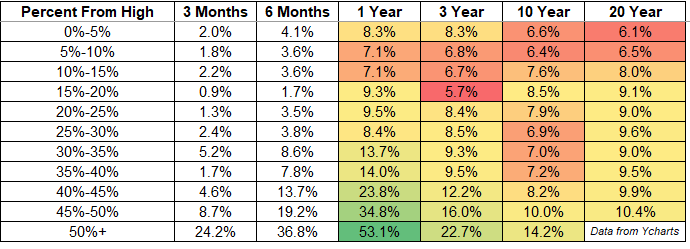
S&P Avg. Performance Since 1950 After Market Decline

The first column of the above table lists the stock market declines from their highs broken down into 5% increments. The next column shows where the market bounced to after three months; the next column lists 6-month results; this is then followed by average annualized returns for one, three, ten, and 20-year average annual return. Periods highlighted in green are above average; those in red indicate some decline from the previous period.

At the 20%-25% market decline level, and all further declines from there, there is a significant improvement in returns after one year. The average annual returns for all periods afterward are inline or better than returns expected by investors in the overall market. Based on this information, if you are in the market today, stay in. If you have cash, a better argument can be made for you to commit some of it than to stay away.

The above data is encouraging. It is important that I remind you that these are averages. Probabilities are nice, but what has happened in the absolute worst case is largely hidden in the data. The worst that has happened to any of these investors is information I would also want to review before committing capital.

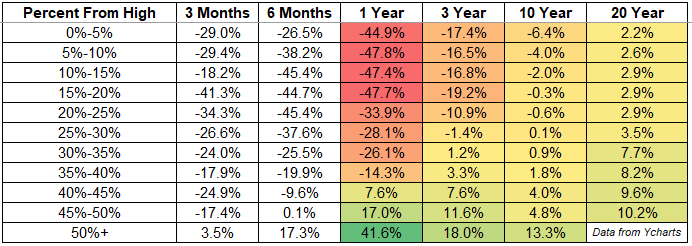
S&P Worst-Case Since 1950 After Market Decline

This new table is the same as the one above except it’s showing the single worst case of return as time went on. One take-away is stocks can go a lot lower over the short-term, but over the long-term, the situation starts to improve dramatically. With this as a guide, the worst-case scenarios have investors increasingly more at risk if they entered the market after only a small decline. In other words, since 1950, even in the worst-case scenario, investors have been better off when they have invested after substantial selloffs.

Checking the S&P level this Friday (3/20/20) I see the broader market is down 29.41% from its February 10th high. A Return to that level will require a mathematical increase of 41.70%.  In the past, when we have been in this situation, the market has returned 8.5%-9.5% to investors after just one year. There is, however, the risk that history teaches us that we may have to wait longer than a year just to break even.


Paul Hoffman

Managing Editor


Suggested
Reading:

Exposure to these Sectors Could Enhance Risk-Adjusted Return
During the Recovery

Will Interest Rates Test Negative for Coronavirus

Bear Market Cycles, is it “Different” this Time


Sources:

 Amygdala

Expressing
fear enhances sensory acquisition

Perception of
Risk

Effects of
stress on decisions under uncertainty: A meta-analysis.

Stock
Market ends its Worst Quarter Since 1987 Crash

The bulls have their day