The Role of Microcap in Tech Future Should Not be Forgotten

The FAANG Stocks Are Converging and Cracks Are Showing


The so-called FAANG stocks have dominated the technology sector in recent years. FAANG stocks refer to the stocks of Facebook, Apple, Amazon, Netflix, and Google.  Each company has its origin in and is known for, a different component of the technology industry.  Facebook is known for social media. Apple is known for hardware. Amazon is known for retail. Netflix is known for content streaming. Google is known for its search engine.

A funny thing has been happening in recent years; the FAANG companies have begun to converge and act like competitors, often copying each other.  Amazon began making smart speakers (Alexa), so Apple (Homepod) and Google (Home) followed suit.  Netflix began producing original movies and shows, and so did Apple (Apple TV+), Amazon (Prime Video), and Google (Google Play).  Facebook expanded into other social media sites (Instagram) and messaging sites (Messenger), so Google purchased YouTube and Apple expanded iTunes. Apple began making smartphone accessories, so Google purchased Fitbit. All five companies have moved into cloud services.

The Overbite of the Companies

Today all FAANG companies have at least a foot in all aspects of technology, whether it be hardware, software, social media, media distribution, original content, search engines, or retail. In many ways, these founding fathers of modern technology are becoming more and more similar.  And at the heart of all operations are advertisement dollars.  In essence, they all want to control how a person accesses information and to sell visiting “eyeballs” to advertisers.  That includes controlling the hardware devices (phones, computers, smart speakers, televisions), the social apps (Facebook, Instagram, YouTube, TikTok, iTunes), help apps (Google Maps, Uber, Weather apps), and original content (Netflix, Apple TV+, Amazon Prime).



The company that controls the eyeballs controls the advertising dollar.  That’s why smart home speakers were sold so cheaply when they came out.  That’s why companies are investing large dollars in speech recognition software. That’s why FAANG companies sell devices to connect televisions to the internet. That’s why companies are paying up to acquire the latest, hottest technology companies. The battle to acquire TikTok’s U.S. operations between Oracle and Microsoft/Walmart may have well been those company’s attempts to join the inner circle of technology giants.  And, before you say “what was Walmart doing trying to buy a tech company,” remember that Amazon has been eating into Walmart’s retail operations.

Out for Blood

So, if these tech giants are headed for an all-out war for the advertisement dollar, how can we handicap their odds?  Facebook and Netflix seem to be the odd men out, checking off the fewest categories to attract eyeballs. Facebook is strong in social media, but behind the game in other areas of technology.  Netflix seems especially vulnerable given steps taken by the other tech giants and other media companies (Disney, Viacom, Universal, Fox).  In fact, if AAG wasn’t such a bad acronym, Facebook and Netflix would probably not be included in the grouping.  Not that Facebook and Netflix won’t do fine on its own in its sectors, but it’s hard to envision them as major technology companies involved in all aspects of technology unless they were to merge with a company like Oracle, Microsoft, or IBM.

New-FAANGled Opportunity?

On the other hand, there is one other component that we have not talked about yet – automobiles.  If computers, phones, televisions, and smart speakers are important access points to the advertising dollar, what about cars? Perhaps the car manufacturers of the future will be paid for product placement when drivers make requests for the nearest restaurant, gas station, etc.  Automobile computers could become especially important in the age of driverless vehicles. And who is the most innovative car manufacturer?  Perhaps the FAANG group will become the TAAG group someday. 

The technology industry moves fast.  IBM dominated the space in the 1950s and 1960s and is now an also-ran.  Microsoft dominated the 1970s and 1980s and is on the outside looking in.  The next great tech company may not have even been formed yet.  All it takes is a great idea.  That’s where small microcap companies come into play.  The investment environment has never been riper for new companies to develop and hit it big.  At worse, a successful small company may be bought out by a giant looking to maintain their position, rewarding early investors for their foresight.


Suggested Reading:

Fear of Missing Out on Owning the Next Apple

Investors Should Pay More Attention to ATM Offerings

Ecommerce Adapts While in-Person Retail Struggles


Enjoy Premium Channelchek Content at No Cost

 

Each event in our popular Virtual Road Shows Series has a maximum capacity of 100 online investors. To take part, listen to and perhaps get your questions answered, see which virtual investor meeting intrigues you here.

Sources:

https://www.cnbc.com/2020/09/22/apple-amazon-and-google-will-emerge-as-winners-gene-munster.html, Stephanie Landsman, CNBC, September 22, 2020

https://towardsdatascience.com/who-is-winning-google-amazon-facebook-or-apple-45728660473, Rodrigo Salvaterra, Towards Data Science, February 10, 2020

https://www.marketwatch.com/story/the-faang-companies-are-starting-to-turn-against-one-another-2017-09-18, Jeff Reeves, MarketWatch, September 18, 2019


Great Lakes Dredge & Dock (GLDD) – Impressive Quarter. 3Q2020 Awards to Date Total $428 million

Friday, September 25, 2020

Great Lakes Dredge & Dock (GLDD)

Impressive Quarter. 3Q2020 Awards to Date Total $428 million.

Great Lakes Dredge & Dock Corp is a provider of dredging services in the United States. The company only’s operating segments is Dredging. Dredging involves the enhancement or preservation of navigability of waterways or the protection of shorelines through the removal or replenishment of soil, sand or rock. Its projects portfolio includes Coastal Restoration, Coastal Protection, Port expansion, and others.

Poe Fratt, Senior Research Analyst, Noble Capital Markets, Inc.

Refer to the full report for the price target, fundamental analysis, and rating.

    3Q2020 awards now total $427.7 million. The scope of work is broad and it includes a total of 20 projects, including four capital awards for $180.6 million, seven coastal protection awards for $130.8 million and nine maintenance awards for $116.3 million. A coastal protection award for $10.6 million was posted yesterday and we had overlooked the awards announced in July in our last research note. Also, the 3Q2020 award number is even higher since there was an unquantified award in July from Bechtel for work on a LNG project.

    July awards Awards for $51.1 million were announced on July 6th, including two coastal protection projects for $44.0 million and two maintenance projects for $7.1 million.  August awards. Awards for $117.8 million were announced on August 20th, including two coastal protection projects for $39.2 million and four maintenance project for …


This Company Sponsored Research is provided by Noble Capital Markets, Inc., a FINRA and S.E.C. registered broker-dealer (B/D).

*Analyst certification and important disclosures included in the full report. NOTE: investment decisions should not be based upon the content of this research summary.  Proper due diligence is required before making any investment decision. 

E.W. Scripps Company (SSP) – Ion Media Acquisition; Positively Viewed

Friday, September 25, 2020

E.W. Scripps Company (SSP)

Ion Media Acquisition; Positively Viewed

The E.W. Scripps Co. (www.scripps.com) serves audiences and businesses through a growing portfolio of television, print and digital media brands. After approval of its acquisition of two Granite Broadcasting stations later this year, Scripps will own 21 local television stations as well as daily newspapers in 13 markets across the United States. It also runs an expanding collection of local and national digital journalism and information businesses including digital video news service Newsy. Scripps also produces television programming, runs an award-winning investigative reporting newsroom in Washington, D.C., and serves as the longtime steward of one of the nation’s largest, most successful and longest-running educational programs, Scripps National Spelling Bee. Founded in 1879, Scripps is focused on the stories of tomorrow.

Michael Kupinski, Director of Research, Noble Capital Markets, Inc.

Refer to the full report for the price target, fundamental analysis, and rating.

    Plans to acquire Ion Media for $2.65 billion. The acquisition will double the company’s current size in both revenues and cash flow and position it as among the top broadcast groups. The purchase price at 8.2 times cash flow, or 5.9 times post synergies, appears attractive. The company agreed to sell 23 ION stations for regulatory fast track. The transaction is expected to close in Q1 2021.

    Berkshire lends a hand.  Berkshire Hathaway is helping to fund the deal with $600 million in preferred equity that carries an 8% dividend rate, redeemable after five years. In addition, Berkshire will receive warrants to purchase up to 23.1 million Class A shares, exercisable at $13. We believe that this move …


This research is provided by Noble Capital Markets, Inc., a FINRA and S.E.C. registered broker-dealer (B/D).

*Analyst certification and important disclosures included in the full report. NOTE: investment decisions should not be based upon the content of this research summary.  Proper due diligence is required before making any investment decision. 

Great Lakes Dredge & Dock (GLDD) – A Victory on Jacksonville C

Thursday, September 24, 2020

Great Lakes Dredge & Dock (GLDD)

A Victory on Jacksonville C!

Great Lakes Dredge & Dock Corp is a provider of dredging services in the United States. The company only’s operating segments is Dredging. Dredging involves the enhancement or preservation of navigability of waterways or the protection of shorelines through the removal or replenishment of soil, sand or rock. Its projects portfolio includes Coastal Restoration, Coastal Protection, Port expansion, and others.

Poe Fratt, Senior Research Analyst, Noble Capital Markets, Inc.

Refer to the full report for the price target, fundamental analysis, and rating.

    Jacksonville C award of $104.98 million posted. The US Army Corp of Engineers (USACE) posted the award, which does not include options, on the DoD and government services web sites. Bids were solicited via the internet and there was only one other bidder. The project was on a Request for Proposal (RFP) basis so we don’t know the identity of other bidder nor the bid amount. The award is positive for the intermediate term outlook since the majority of the work will be completed in 2021 and 2022 given the estimated completion date is October 15, 2022.

    Two smaller awards totaling $24.4 million also posted.  The larger award named South Atlantic Regional work in four harbors (including Brunswick, Morehead City, Savannah, and Wilmington) for $16.4 million has been highlighted as a low bid pending award in several past research notes, and the smaller award of $8.0 million involves maintenance dredging on the Morehead City Harbor …


This Company Sponsored Research is provided by Noble Capital Markets, Inc., a FINRA and S.E.C. registered broker-dealer (B/D).

*Analyst certification and important disclosures included in the full report. NOTE: investment decisions should not be based upon the content of this research summary.  Proper due diligence is required before making any investment decision. 

Can Tesla Beat Lithium Miners at Their Own Game?


Tesla Is Planning to Mine Lithium to Supply Its Own Cathode Facility


Tesla hosted its annual shareholder meeting and “Battery Day” on September 22. The company announced plans to build its own cathode plant in North America and announced rights to a 10,000+ acre lithium clay deposit in Nevada from which it could source lithium using a proprietary extraction and processing technology that could result in a 33% reduction in lithium cost. Elon Musk, CEO, opined that lithium is abundant and every vehicle in the United States could be converted to electric using only lithium that is available in the United States, or Nevada for that matter.

Driving Down Costs

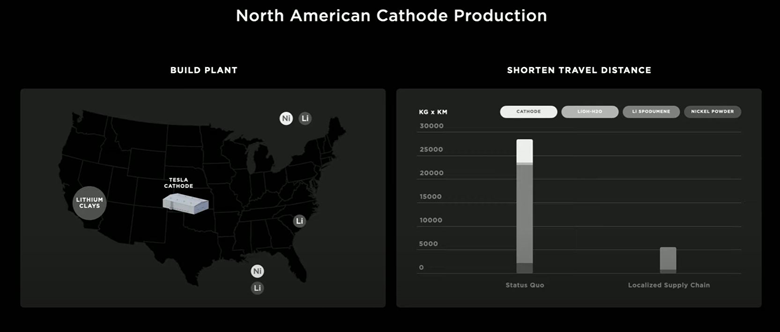
Tesla management indicated that it would build its own cathode plant in North America to leverage North American resources for nickel and lithium. Cathode production would be a part of the Tesla battery cell production plant.


Source: 2020 Annual Shareholder Meeting and Battery Day Presentation, Tesla, Inc., September 22, 2020


Management explained that the way lithium ends up in the battery cell is through the cathode and the company would conduct on-site lithium conversion using a new sulphate-free process resulting in a 33% reduction in lithium cost using a 100% electric facility that is co-located with the cathode plant. By localizing the cathode supply chain and production, miles traveled by all the materials that end up in the cathode can be reduced by up to 80%.


Source: 2020 Annual Shareholder Meeting and Battery Day Presentation, Tesla, Inc., September 22, 2020

However, details were scant regarding the cost of the process and when it could be commercialized. The potential lithium mine and cathode facility, both to be located in North America, are part of the company’s plan to tighten its supply chain to create a less expensive and more efficient battery resulting in a lower price point ($25,000 within three years) for Tesla’s vehicles.

Environmentally Friendly Lithium Extraction Process

Lithium is commonly extracted from brine reservoirs where salt water brine is pumped to the surface and left to evaporate in ponds leaving lithium salts and other minerals which are filtered until the lithium can be extracted. The process is water intensive. Tesla’s new process entails extracting lithium from clay ores in Nevada using sodium chloride, or table salt. Musk stated that the process involves taking a chunk of dirt in the ground, extracting the lithium, and replacing the chunk of dirt so it looks pretty much the same as before. Management claimed that it is as simple as: 1) mix clay with salt, 2) put it in water, and 3) the salt comes out with the lithium. Future recycling of batteries is expected to gradually reduce the need for mining new ore. While it sounds straightforward, the proof will be in the pudding as they say.

Reducing Dependence on Cobalt

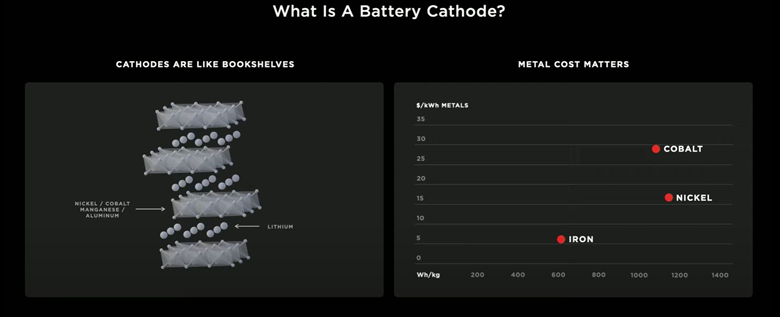
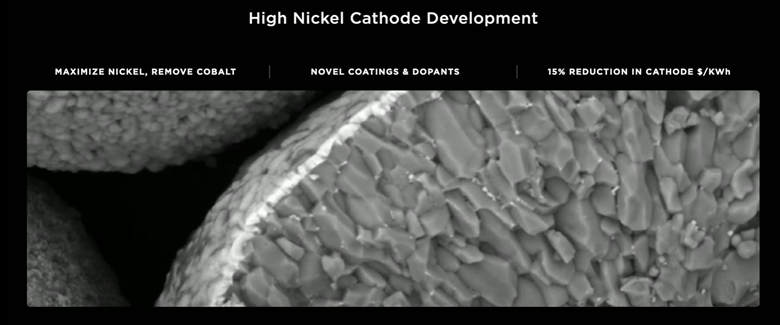
Most electric vehicle batteries are lithium-based and include a mix of cobalt, manganese, nickel, graphite, and other components. Companies are researching different battery chemistries to optimize battery technology using components that are the most widely available and at the lowest cost. Tesla’s announcement demonstrates that it is thinking hard about the importance of securing future supplies of raw materials and how their supply chains are configured. During its Battery Day presentation, Tesla management indicated that nickel is the cheapest and the highest energy density metal, and it expects to increase nickel content and eliminate expensive cobalt over time.


Source: 2020 Annual Shareholder Meeting and Battery Day Presentation, Tesla, Inc., September 22, 2020

Changes in the design of Tesla batteries are expected to increase the range and power of the vehicle, while at the same time reducing the amount of material used.

Take-Away

Tesla’s battery day may have provided some good news for nickel producers, while creating some uncertainty for lithium producers who might have counted on Tesla as a prospective customer. While the devil will be in the details, Tesla’s plans are conceptually innovative and ambitious.   


Suggested Reading:

Cobalt and Rare Earth Metals from the Ocean Floor Eyed to Meet Growing Battery Demand

Expect Today’s Nuclear Technologies to Provide an Important Role in the Future of Energy

This Is What Could Slam the Brakes on EV Growth


Enjoy Premium Channelchek Content at No Cost

Each event in our popular Virtual Road Shows Series has a maximum capacity of 100 online investors. To take part, listen to and perhaps get your questions answered, see which virtual investor meeting intrigues you here.


Sources:

2020 Annual Shareholder Meeting and Battery Day Presentation, Tesla, Inc., September 22, 2020

Tesla Bets on Mining with Nevada Lithium Claim, Mining.com, Mining.com Editor, September 23, 2020.

The 3 Biggest Things Elon Musk Announced at Tesla’s Big Outdoor Event, Business Insider, Graham Rapier, September 23, 2020.

Tesla Says It Wants to Be a Lithium Miner. That Could Be a Problem for Extractor Stocks, Barron’s, Al Root, September 23, 2020.

Tesla Is Getting into the Mining Business, Buys Lithium Claim on 10,000 Acres in Nevada, Electrek, Fred Lambert, September 23, 2020.

Tesla Plans to Build a Cathode Plant and Get into the Lithium Mining Business, Techcrunch, Kirsten Korosec, September 22, 2020.

An Overview of Commercial Lithium Production, ThoughtCo., Terence Bell, August 21, 2020.


Release – Dyadic and VTT Are Developing an Efficient New Production Method for Covid-19 Vaccines

Dyadic and VTT Are Developing an Efficient New Production Method for Covid-19 Vaccines


September 24, 2020 During the last three years Dyadic (Dyadic International, Inc.; NASDAQ: DYAI) and VTT have developed a more efficient and lower cost alternative to produce therapeutic proteins, vaccines and valuable metabolites. The method is based on exploiting the Thermothelomyces heterothallica C1 fungal strain. The partners are now developing a new production method for a number of SARS-CoV-2 coronavirus vaccines.

Currently, the BioPharmaceutical industry is producing therapeutic proteins mainly in the CHO (Chinese hamster ovary) cell system with the current production processes are both time consuming and expensive. In the Dyadic-VTT collaboration, rapid progress and significant advances have been made to develop a new production platform in the industrialized C1 host cell. The C1 gene expression platform provides the possibility to bring affordable medicines to patients sooner and at a lower cost.

“We are at the right time in history to disrupt the biological production of healthcare for vaccine and drugs and it couldn’t have come at a better time because COVID19 came. We are doing our best to work with as many players around the globe to make sure we can help to eradicate this horrific disease and prolong life and reduce pain and suffering in the process”, says Dyadic’s CEO Mark A. Emalfarb. Click here to listen to his thoughts of drug and vaccine development in VTT’s new video.

Dyadic’s industrially proven filamentous fungal strain of Thermothelomyces heterothallica, nicknamed C1 is known as an extremely robust and efficient protein production organism. In addition to being able to produce high levels of enzymes and other proteins, C1 produces glycan structures similar to the human glycan forms making the glycoengineering work quicker and easier.

In the C1 development program, VTT is utilizing its strong competence in fungal molecular biology and bioprocesses that has been accumulated during more than 30 years of research on a variety of fungi. This collaboration has shown that the C1 system has excellent prospects for becoming a game changing platform for therapeutic protein production. See also press release, 25 November, 2019: Dyadic Int. announces achieving human like glycan structures from its engineered C1 cell line

Further information:

VTT Technical Research Centre of Finland Ltd

Christopher Landowski, Research Team Leader, tel. +358 40 482 0856, [email protected]

Markku Saloheimo, Senior Principal Scientist, tel. +358 405760892, [email protected]

Dyadic International, Inc.

Mark A. Emalfarb, Chief Executive Officer, Tel. +1 (561) 743-8333, [email protected]

Have Wind and Solar Energy Made Hydro Irrelevant?


Hydroelectricity is Losing its Status as the King of Renewable Energy


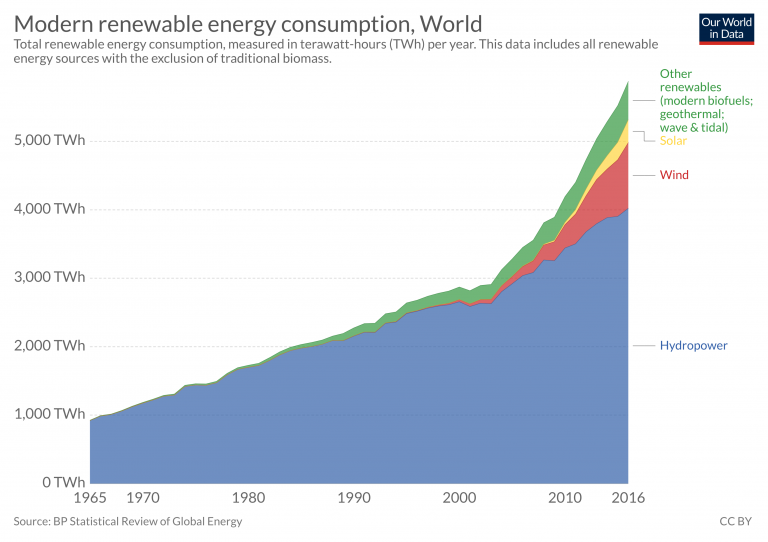
Hydroelectricity has long been the dominant renewable energy source in the world. In total, 1,292 gigawatts of capacity have been installed in the world, an amount larger than the total generating capacity of the United States. The Brookings Institute reports that 35 countries in the world receive more than 50% of their electricity from hydropower. The chart below shows that hydroelectricity represented approximately 75% of global renewable energy.


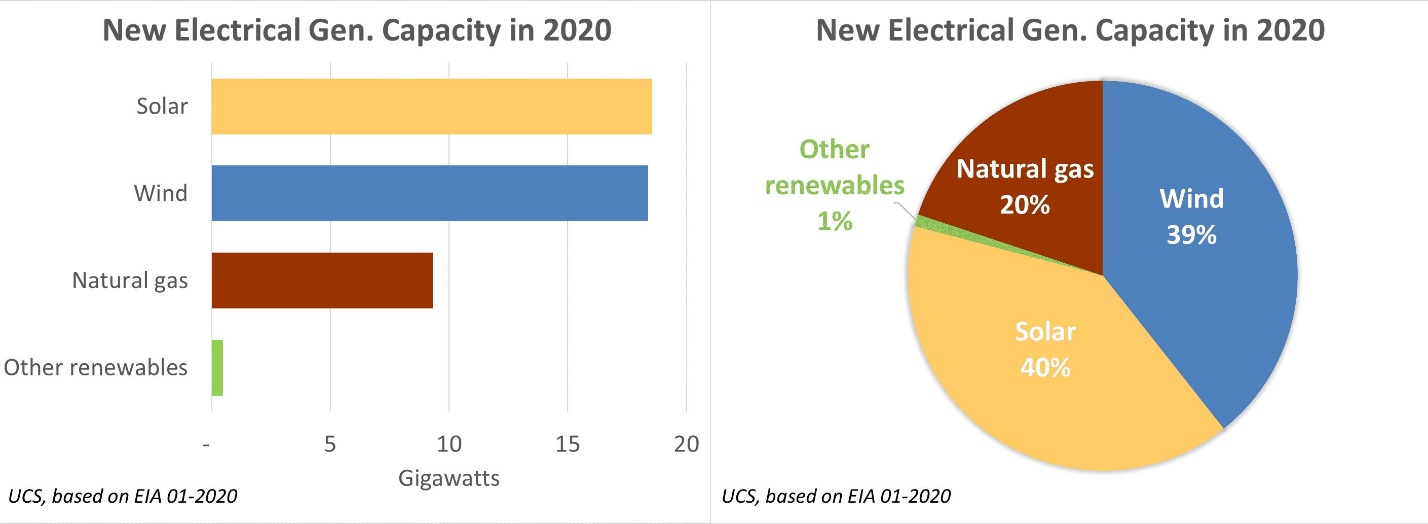
In recent years, solar and wind energy has become more affordable, so much so that almost all new proposed renewable generation is solar or wind. The second chart shows that solar and wind represent 79% of proposed generation in the United States in 2020. Other renewable energy such as hydro, biofuel, wave and tidal, and geothermal represent less than 1%.


So how did hydroelectricity lose its status as the king of renewable energy? And, more importantly, does hydroelctricity still have a role to play in a rapidly changing generation environment?


The Case for Hydroelectricity

  • Large generation plants are capital intensive but the investment has already been made. Hydro power plants are expensive to build. The U.S. Energy Information Administration in 2016 estimated that Hydro costs $5,312 per kilowatt, more than double the cost of solar and five times that of natural gas. However, once built, operating costs are low. The average hydro power plant production expense is half that of a nuclear power plant and only 25% of that of a natural gas turbine. It would not make sense to shut down hydro generators, at least not for economic reasons. Existing plants will continue to provide inexpensive power for many more decades.
  • Smaller hydro projects may still make sense. In recent years, engineers have begun to look at adding turbines to existing dam structures that do not generate electricity. These include dams built to create lakes for recreation or flood control. These turbines would be smaller in scale than those used in previous hydroelectric projects. The costs of the project would be more economical since the dams would have already been built. They will also be less disruptive to the environment than projects involving new dam construction. Giulio Boccaletti, who runs the water program at the Nature Conservancy, expects the world to double its hydropower capacity over the next twenty years.
  • It is important to maintain a diversified generation portfolio. Generations plants are expensive and meant to last for decades. The economics of plants can change dramatically over the life of a plant. Currently economics favor wind and solar. However, these economics can change. Technological changes could, in theory, make hydroelectricity more efficient in the future. Therefore, maintaining a hydroelectric presence is important.
  • Hydroelectricity compliments other renewable fuels. Hydroelectricity has one large advantage over other renewable fuels. It provides a steady stream of power regardless of day-to-day changes in weather conditions. Solar power requires sunshine and wind power requires wind. Those conditions may not match up with times of peak power demand. Hydropower runs steadily night or day, in good weather or bad. It can provide a steady based of power until advances are made to allow power to be stored. In fact, plants can even control the amount of power generated by regulating the flow of water through the system


The Case Against Hydroelectricity

  • Hydroelectricity disrupts animal migration patterns. Dams interfere with animal migration patterns. Expensive fish ladders can only partially mitigate the interference of fish migration patterns. In addition, dams create reservoirs of water that are more stagnant than normal river water. As a result, the reservoir will have higher amounts of sediment and nutrients that cultivate algae and crowd out other river animal and plant-life.
  • Hydroelectricity disrupts water oxygen levels. Studies have shown that dams can deprive water of oxygen levels that leave oxygen-free dead zones that can’t support fish and plant life deeper than a few feet below the surface. New turbines are being built to address oxygen levels in water but would be expensive to replace.
  • Risk of damage and flooding. Dams are frequently located upstream from major population centers. Although the risk of failure is low, there have been almost 50 incidents of major dam failure since the modern era of hydropower.
  • Hydropower depends on seasonal weather conditions. Although immune from daily weather patterns, hydroelectric power is somewhat dependent upon rainfall and snow buildup. Electric pricing in the Northwest can fluctuate from year to year depending on the winter’s snowpack making it difficult for manufacturing companies to make investment decisions.


Conclusions

Existing hydroelectric power plants will continue to run and provide reliable, cheap electricity for the foreseeable future. New large hydro projects are unlikely to be built in the United States due to environmental and economic reasons. Eventually, hydro’s reign as the king of renewable fuels may come to an end.


Don’t Miss This Free Event Today, September 23rd:

Virtual Road Show Series – Wednesday September 23 1:00PM EDT

Join Energy Fuels CEO & President, Mark Chalmers for this exclusive corporate presentation, followed by a Q & A session moderated by Mark Reichman, Noble’s Senior Research Analyst, featuring questions taken from the audience. Registration is free, but attendance is limited to 100.
Register Now  |  View All Upcoming Road Shows


Sources:

https://www.ge.com/news/reports/breath-of-life-these-water-turbines-help-revive-dead-zones-in-rivers, Brendan Coffey, October 16, 2019

https://www.ucsusa.org/resources/environmental-impacts-hydroelectric-power, Union of Concerned Scientists, March 5, 2013

https://time.com/3978215/hydropower-us-growth/, Justin Worland, Time, July 31, 2015

http://zebu.uoregon.edu/1998/ph162/l14.html,

https://www.brookings.edu/blog/future-development/2019/05/01/managing-financial-risks-from-hydropower/, Luciano Canale, Gazmend Daci, Hilda Shijaku, and Christoph Ungerer, Brooking Institute, MaY 1, 2009

http://www.wvic.com/Content/Facts_About_Hydropower.cfm, Wisconsin Valley Improvement Company

Townsquare Media Inc (TSQ) – Revenues Trending Better Than Expected

Wednesday, September 23, 2020

Townsquare Media Inc (TSQ)

Revenues Trending Better Than Expected

Townsquare Media Inc is an entertainment and media company offering digital marketing solutions in the United States and Canada. It owns and operates radio stations, social media properties focusing the small and mid-cap companies. Services offered to the clients include live events, local advertising, digital advertising, e-commerce offerings, few others. The segments through which the company operates its businesses are classified into Local marketing solutions and Entertainment segments. Revenues are generated from commercials through broadcasts and sale of internet based advertisements.

Michael Kupinski, Director of Research, Noble Capital Markets, Inc.

Refer to the full report for the price target, fundamental analysis, and rating.

    Q3 Update. Management filed an 8K yesterday that highlighted July and August total company revenues are trending better than our expectations. July and August revenues were down 21% and 16%, respectively. We believe that September is sequentially better than August, and, as such, Q3 revenues are trending better than our down 21% estimate.

    Strong Political.  We believe that a portion of the upside is due to stronger-than-expected Political advertising, which we estimated to be $2.1 million for the quarter. This is high-margin advertising, and higher Political revenue should lead to a positive upside Q3 cash flow surprise …


This Company Sponsored Research is provided by Noble Capital Markets, Inc., a FINRA and S.E.C. registered broker-dealer (B/D).

*Analyst certification and important disclosures included in the full report. NOTE: investment decisions should not be based upon the content of this research summary.  Proper due diligence is required before making any investment decision. 

Energy Fuels (UUUU)(EFR:CA) – UUUU to Participate in Government Funded Rare Earths Initiative

Tuesday, September 22, 2020

Energy Fuels (UUUU)(EFR:CA)

UUUU to Participate in Government Funded Rare Earths Initiative

As of April 24, 2020, Noble Capital Markets research on Energy Fuels is published under ticker symbols (UUUU and EFR:CA). The price target is in USD and based on ticker symbol UUUU. Research reports dated prior to April 24, 2020 may not follow these guidelines and could account for a variance in the price target.

Energy Fuels is the largest uranium producer in the U.S. and holds more production capacity and uranium resources than any other U.S. producer. The Company also produces vanadium. Headquartered in Colorado, Energy Fuels holds three of America’s key uranium production centers: the White Mesa Mill in Utah, the Nichols Ranch ISR Facility in Wyoming, and the Alta Mesa ISR Facility in Texas. The producing White Mesa Mill is the only conventional uranium mill in the U.S. and has a licensed capacity of 8 million pounds of U3O8 per year. Nichols Ranch is in production and has a licensed capacity of 2 million pounds of U3O8 per year. Alta Mesa is currently on standby. Energy Fuels also owns several licensed and developed uranium and vanadium mines on standby and other projects in development.

Mark Reichman, Senior Research Analyst of Natural Resources, Noble Capital Markets, Inc.

Refer to the full report for the price target, fundamental analysis, and rating.

    Evaluating rare earth oxides from coal-based resources. Energy Fuels is expected to receive a grant, for which it applied in June 2020, from the U.S. Department of Energy’s Office of Fossil Energy and the National Energy Technology Laboratory to collaborate with Pennsylvania State University to evaluate and develop a conceptual design to commercially produce mixed rare earth oxides from coal-based resources. Depending on the outcome, the Department of Energy has an option to award a contract funding the development of a feasibility study.

    Advancing the company’s rare earth strategy.  In our view, the initiative offers an exceptional opportunity for Energy Fuels to advance its rare earth strategy and, if successful, the potential for future collaboration with the U.S. government, including other agencies such as the Department of Defense. Additionally, producing rare earth oxides from coal-based resources would expand the available …


This Company Sponsored Research is provided by Noble Capital Markets, Inc., a FINRA and S.E.C. registered broker-dealer (B/D).

*Analyst certification and important disclosures included in the full report. NOTE: investment decisions should not be based upon the content of this research summary.  Proper due diligence is required before making any investment decision. 

Euroseas Ltd. (ESEA) – Higher Rates on New Charter and Scrapping Announced

Tuesday, September 22, 2020

Euroseas Ltd. (ESEA)

Higher Rates on New Charter and Scrapping Announced

Euroseas Ltd. provides ocean-going transportation services worldwide. The company owns and operates containerships that transport dry and refrigerated containerized cargoes, including manufactured products and perishables; and drybulk carriers that transport iron ore, coal, grains, bauxite, phosphate, and fertilizers. As of March 31, 2017, it had a fleet of seven containerships; and six drybulk carriers, including three Panamax drybulk carriers, one Handymax drybulk carrier, one Kamsarmax drybulk carrier, and one Ultramax drybulk carrier. The company was founded in 2005 and is based in Maroussi, Greece.

Poe Fratt, Senior Research Analyst, Noble Capital Markets, Inc.

Refer to the full report for the price target, fundamental analysis, and rating.

    New container contracts improve late 2020 outlook and extend into next year. Two intermediate feeders have been contracted at higher-than-expected charter rates. The Akinada Bridge was extended for a minimum of 12 months (and maximum of 13 months) at $17,250/day. The charterer was granted an option to extend for an additional 10-12 months at $20,000/day. In addition, the Synergy Oakland was extended for an additional 8-12 months through the exercise of an option. The rate is based on the CONTEX-4,250 index minus 10% (the index adjusts twice weekly, but the rate will be adjusted every three months). The new fixture will begin on October 23rd, and the current CONTEX-4,250 index is $15,369.

    Adjusting 2020 EBITDA estimate to reflect new contracts and scrapping of an older feeder.  To reflect the positive 2Q2020 variance and current container market fundamentals, we are forecasting 2020 EBITDA of $13.7 million based on TCE rates of $9,240/day and operating days of 5,941, up from our previous estimate of $13.1 million based on TCE rates of $9,220/day. Also, the retirement of the Ninos …


This research is provided by Noble Capital Markets, Inc., a FINRA and S.E.C. registered broker-dealer (B/D).

*Analyst certification and important disclosures included in the full report. NOTE: investment decisions should not be based upon the content of this research summary.  Proper due diligence is required before making any investment decision. 

Newrange Gold (NRGOF)(NRG:CA) – Moving Up the Learning Curve

Tuesday, September 22, 2020

Newrange Gold (NRGOF)(NRG:CA)

Moving Up the Learning Curve

As of April 24, 2020, Noble Capital Markets research on Newrange Gold is published under ticker symbols (NRGOF and NRG:CA). The price target is in USD and based on ticker symbol NRGOF. Research reports dated prior to April 24, 2020 may not follow these guidelines and could account for a variance in the price target.

Newrange Gold Corp is an exploration stage company focused on acquiring and exploring exploration and evaluation assets in Colombia and the United States. The Company operates in a single reportable operating segment-the acquisition, exploration, and development of mineral properties. Some of the projects acquired by the company are Pamlico gold project in Nevada and Rocky mountain project in Colorado. The company also holds an interest in the Yarumalito property, El Dovio property and Anori property in Colombia.

Mark Reichman, Senior Research Analyst of Natural Resources, Noble Capital Markets, Inc.

Refer to the full report for the price target, fundamental analysis, and rating.

    Second set of drill results. To date, the company has drilled 34 holes for a total of 3,462 meters of drilling along Pamlico Ridge between an area of high-grade mineralization drilled at the Merritt Decline in 2017 and the historic Gold Bar Mine. Initial results from the first 14 holes, announced on July 30, revealed higher grade structures, up to 9.5 grams of gold per tonne, surrounded by lower grade material. Results from the remaining 20 holes further confirmed gold mineralization on the Pamlico property receptive to heap leach mining. However, based on recent drilling, management realized that the drill rig used was unsuitable for the terrain and many of management’s higher priority targets were not able to be accessed.

    Initial results inform the next phase of drilling.  Newrange hired a new contractor with more suitable equipment and drilling resumed on September 19. An additional 35 holes are planned, including diamond drilling later in the program to test targets at depth. With the new drill rig, management expects to be able to drill at the Good Hope Mine at the south end of Pamlico Ridge where Newrange …


This Company Sponsored Research is provided by Noble Capital Markets, Inc., a FINRA and S.E.C. registered broker-dealer (B/D).

*Analyst certification and important disclosures included in the full report. NOTE: investment decisions should not be based upon the content of this research summary.  Proper due diligence is required before making any investment decision. 

Release – Comstock Mining Launches Geophysical Surveys of the Southern Comstock District


Comstock Mining Launches Geophysical Surveys of the Southern Comstock District, Dayton Resource Area and Spring Valley Exploration Targets


Virginia City, NV (September 22, 2020) Comstock Mining Inc. (the “Company”) (NYSE American: LODE) announced today that Geotech Ltd. (“Geotech”) of Aurora, Canada, began conducting the previously announced airborne geophysical surveys last weekend, including the Dayton resource area, adjacent to Silver City, NV and the contiguous Spring Valley exploration targets all the way to Hwy 50.

Geotech launched its proprietary Versatile Time-Domain Electromagnetic (“VTEM”) geophysical system on Saturday, September 19, 2020, once visibility improved as smoke from the California fires cleared, and plans to complete the survey, by the end of September. The Company expects preliminary scans becoming available by mid-October, and extensive three-dimensional interpreted results later in the fourth quarter.

The results will greatly increase the Company’s understanding of the Dayton resource area and Spring Valley resource expansion potential, along with the Company’s other exploration targets in Lyon County.

Mr. Corrado De Gasperis, Executive Chairman and CEO stated, “Geotech’s proprietary surveys will provide invaluable data, to both corroborate and expand our knowledge of the potential mineralization, in the safest, least disruptive manner, and at depths not previously explored, enabling us to, among other things, refine and finalize a most effective and efficient exploration and development drill program.”

The entire press release can be read HERE


Contact information

Corrado De Gasperis
Executive Chairman & CEO
Tel (775) 847-4755
[email protected]

Comstock Mining Inc.
1200 American Flat Rd
PO Box 1118
Virginia City, NV 89440
http://www.comstockmining.com

Zach Spencer
Director of External Relations
Tel (775) 847-5272 ext.151
[email protected]

Forty-Year Tax History vs. Current Campaign Promises


A Deep Dive into Candidate Biden’s Tax Proposals


Democrat Presidential nominee Joe Biden has proposed a number of changes to the tax code, including substantial reversals of reductions under the Tax Cuts and Jobs Act of 2017. Among the key proposals, Biden has included increasing the top marginal income tax rate to 39.6% from a current 37%, taxing capital gains at ordinary income tax rates, up from a top rate of 23.8% today, for those earning over $1 million, elimination of stepped-up basis for inherited assets with capital gains, applying the 12.4% Social Security tax on wages above $400,000 (currently the limit is $137,700, although the wage limit increases annually), and raising the corporate income tax to 28% from 21%. We would note that under the 2017 Act, nearly all the individual and estate tax rollbacks were to expire after 2025, although most of the corporate tax reductions were to be permanent.

On a historical basis, Biden’s tax proposals would be the fifth-largest tax increase, as a percent of GDP, since 1940, based on figures from the Treasury Department. Notably, the four larger tax hikes-during 1942, 1941, 1968, and 1951-all occurred during periods when the country was financing wars. Biden’s proposals would increase federal revenue as a percentage of GDP to a peak of 19.3% in 2027 and 18.9% in 2030 versus 17.8% under current law. This would bring the U.S. back up to the high point of revenue collection levels seen from 1998 to 2000 when the level peaked at 20% in 2000.

While Biden promises not to increase taxes on those earning less than $400,000, his tax proposals fall far short of his announced spending plan. Various organizations estimate Biden’s tax proposals would raise between $3.4 trillion to $3.7 trillion over the 2021-2030 time frame. But Biden’s announced spending plans are in excess of $6 trillion over the same period. As usual, the deficit would have to be financed either through additional tax increases, reductions in other federal spending, or increased government debt.

Ultimately, however, how do tax changes actually impact tax-paying individuals? Since 1980, there have been 60 major tax reforms enacted at the federal level, according to the Tax Policy Center. Over that time frame, Republicans controlled the White House for 24 years and Democrats for 16. If we look at data from 1980-2017 (the most recent data released by the IRS), we can see some interesting trends. Just looking at the top 1% of earners (and note due to changes in IRS definitions and methodologies, the historical numbers are not strictly comparable), the percent of Adjusted Gross Income (AGI) earned by the top 1% went from a low of 8.3% in 1981 to as high as 22.9% in 2007 to 21.0% in 2017. The percent of income tax paid by the top 1% rose from a low of 17.58% in 1981 to a high of 39.81% in 2007 to 38.47% in 2017. The average tax rate of the top 1% was 34.47% in 1980, hit a low of 22.46% in 2007, and was 26.76% in 2017. If we expand the analysis to the top 5% of income earners, AGI share was a low of 20.78% in 1981, hit a high of 37.39% in 2007, and was 36.53% in 2017. The group’s percent of federal taxes paid rose from a low of 35.06% in 1981 to a high of 59.9% in 2007 and was 59.14% in 2017. The average tax rate rose from 26.86% in 1980 to a low of 20.46% in 1990 to 23.7% in 2017. It will be interesting to see how these percentages changed as a result of the 2017 Act.

Of more importance may be Biden’s proposal to raise corporate income tax rates. Currently, the U.S. has the 84th highest combined statutory corporate income tax rate at 25.9%. Raising the corporate tax rate to 28% would result in a combined rate of 32.9%, raising the U.S. to the 20th highest corporate tax rate worldwide and well above the G7 average of 28% and the OCED average of 26.4%. The substantially higher corporate tax rate may put U.S. corporations at a competitive disadvantage. While increased corporate tax rates are not a direct tax increase on individuals, most economists agree the corporate tax burden is shared in some combination by shareholders, owners of capital, and workers, according to the Committee for a Responsible Budget, so individuals would see some type of indirect tax increase, although the size of the increase is debatable.


Suggested Reading:

JOLTS Report Suggests More Risk-Taking

Think You Know Who Will Win the Next Election? Want to Bet?

Virtual Conferences are Suddenly Mainstream


Each event in our popular Virtual Road Shows Series has a maximum capacity of 100 online investors. To take part, listen to and perhaps get your questions answered, see which virtual investor meeting intrigues you here.


Sources:

https://www.kiplinger.com/slideshow/taxes/t055-s001-2020-election-joe-biden-s-tax-plans/index.html

http://www.crfb.org/blogs/would-joe-biden-significantly-raise-taxes-middle-class-americans

http://www.crfb.org/sites/default/files/CRFB%20USBW%20Biden%20Tax%20Plan%20Analysis_FINAL%20DRAFT_07302020.pdf

https://taxfoundation.org/joe-biden-tax-increases-historical-context/

https://www.wsj.com/articles/where-trump-and-biden-stand-on-tax-policy-11600335001

https://www.taxpolicycenter.org/publications/analysis-former-vice-president-bidens-tax-proposals/full

https://www.taxpolicycenter.org/laws-proposals/major-enacted-tax-legislation-1980-1989


Photo Credit:  www.cafecredit.com