Release – Comstock (LODE) – Announces Notice of Third Quarter 2020 Results and Business Update Conference Call


Comstock Mining Announces Notice of Third Quarter 2020 Results and Business Update Conference Call


Virginia City, NV (October 27, 2020) Comstock Mining Inc. (the “Company”) (NYSE American: LODE) announced today the Company will host a conference call on Tuesday, November 17, 2020 at 8:00 a.m. Pacific Standard Time/11:00 a.m. Eastern Standard Time to report its Third Quarter financial results and provide a business update. The live call will include a moderated Q&A, after the prepared remarks. Please join the event 5-10 minutes prior to scheduled start time. When prompted, provide the confirmation code. The dial-in telephone numbers for the live audio are as follows:

Toll Free: 1-800-367-2403
Direct: 1-334-777-6978
Confirmation Code: 2739116
The audio will be available, usually within 24 hours of the call,
at the Investor’s tab of the Company’s website:
www.comstockmining.com/investors/investor-library

About Comstock Mining Inc.

Comstock Mining Inc. is a Nevada-based, gold and silver mining company with extensive, contiguous property in the Comstock District and is an emerging leader in sustainable, responsible mining that is currently commercializing environment-enhancing, precious-metal-based technologies, products and processes for precious metal recovery. The Company began acquiring properties in the Comstock District in 2003. Since then, the Company has consolidated a significant portion of the Comstock District, amassed the single largest known repository of historical and current geological data on the Comstock region, secured permits, built an infrastructure and completed its first phase of production. The Company continues evaluating and acquiring properties inside and outside the district expanding its footprint and exploring all of our existing and prospective opportunities for further exploration, development and mining. The Company’s goal is to grow per-share value by commercializing environment-enhancing, precious-metal-based products and processes that generate predictable cash flow (throughput) and increase the long-term enterprise value of our northern Nevada based platform.

Forward-Looking Statements

This press release and any related calls or discussions may include forward-looking statements within the meaning of Section 27A of the Securities Act of 1933, as amended, and Section 21E of the Securities Exchange Act of 1934, as amended. All statements, other than statements of historical facts, are forward-looking statements. The words “believe,” “expect,” “anticipate,” “estimate,” “project,” “plan,” “should,” “intend,” “may,” “will,” “would,” “potential” and similar expressions identify forward-looking statements, but are not the exclusive means of doing so. Forward-looking statements include statements about matters such as: consummation of all pending transactions; project, asset or Company valuations; future industry market conditions; future explorations, acquisitions, investments and asset sales; future performance of and closings under various agreements; future changes in our exploration activities; future estimated mineral resources; future prices and sales of, and demand for, our products; future impacts of land entitlements and uses; future permitting activities and needs therefor; future production capacity and operations; future operating and overhead costs; future capital expenditures and their impact on us; future impacts of operational and management changes (including changes in the board of directors); future changes in business strategies, planning and tactics and impacts of recent or future changes; future employment and contributions of personnel, including consultants; future land sales, investments, acquisitions, joint ventures, strategic alliances, business combinations, operational, tax, financial and restructuring initiatives; the nature and timing of and accounting for restructuring charges and derivative liabilities and the impact thereof; contingencies; future environmental compliance and changes in the regulatory environment; future offerings of equity or debt securities; the possible redemption of debentures and associated costs; future working capital, costs, revenues, business opportunities, debt levels, cash flows, margins, earnings and growth.

These statements are based on assumptions and assessments made by our management in light of their experience and their perception of historical and current trends, current conditions, possible future developments and other factors they believe to be appropriate. Forward-looking statements are not guarantees, representations or warranties and are subject to risks and uncertainties, many of which are unforeseeable and beyond our control and could cause actual results, developments and business decisions to differ materially from those contemplated by such forward-looking statements. Some of those risks and uncertainties include the risk factors set forth in our filings with the SEC and the following: counterparty risks; capital markets’ valuation and pricing risks; adverse effects of climate changes or natural disasters; global economic and capital market uncertainties; the speculative nature of gold or mineral exploration, including risks of diminishing quantities or grades of qualified resources; operational or technical difficulties in connection with exploration or mining activities; contests over title to properties; potential dilution to our stockholders from our stock issuances and recapitalization and balance sheet restructuring activities; potential inability to comply with applicable government regulations or law; adoption of or changes in legislation or regulations adversely affecting businesses; permitting constraints or delays; decisions regarding business opportunities that may be presented to, or pursued by, us or others; the impact of, or the non-performance by parties under agreements relating to, acquisitions, joint ventures, strategic alliances, business combinations, asset sales, leases, options and investments to which we may be party; changes in the United States or other monetary or fiscal policies or regulations; interruptions in production capabilities due to capital constraints; equipment failures; fluctuation of prices for gold or certain other commodities (such as silver, zinc, cyanide, water, diesel fuel and electricity); changes in generally accepted accounting principles; adverse effects of terrorism and geopolitical events; potential inability to implement business strategies; potential inability to grow revenues; potential inability to attract and retain key personnel; interruptions in delivery of critical supplies, equipment and raw materials due to credit or other limitations imposed by vendors or others; assertion of claims, lawsuits and proceedings; potential inability to satisfy debt and lease obligations; potential inability to maintain an effective system of internal controls over financial reporting; potential inability or failure to timely file periodic reports with the SEC; potential inability to list our securities on any securities exchange or market; inability to maintain the listing of our securities; and work stoppages or other labor difficulties. Occurrence of such events or circumstances could have a material adverse effect on our business, financial condition, results of operations or cash flows or the market price of our securities. All subsequent written and oral forward-looking statements by or attributable to us or persons acting on our behalf are expressly qualified in their entirety by these factors. Except as may be required by securities or other law, we undertake no obligation to publicly update or revise any forward-looking statements, whether as a result of new information, future events, or otherwise.

Neither this press release nor any related calls or discussions constitutes an offer to sell, the solicitation of an offer to buy or a recommendation with respect to any securities of the Company, the fund or any other issuer.


Contact information

Comstock Mining Inc.
1200 American Flat Rd
PO Box 1118
Virginia City, NV 89440
http://www.comstockmining.com

Corrado De Gasperis
Executive Chairman & CEO
Tel (775) 847-4755
[email protected]

Zach Spencer
Director of External Relations
Tel (775) 847-5272 ext.151
[email protected]

Energy M&A Activity Spreads to Canada


The Latest Marriage Between Two Oil Giants


Mergers and acquisitions in the energy industry are on the rise, and they’re beginning to pick up among Canadian oil companies. Cenovus Energy Inc. agreed to acquire Husky Energy Inc. in a C$3.8 billion all-stock deal that will create the third-largest energy company in Canada. The merger combines two of the largest oil producers in Canada’s oil-sands industry. The acquisition follows the completion of Canadian Natural Resource’s acquisition of Painted Poney Energy Ltd earlier in the month and the recent merger announcements by Whitecap Resources and Manulife Financial NAL Resources.  Waterous Energy Fund acquired Pengrowth Energy Corp in November 2019 and a 45% stake in Osum Production Corp in August.

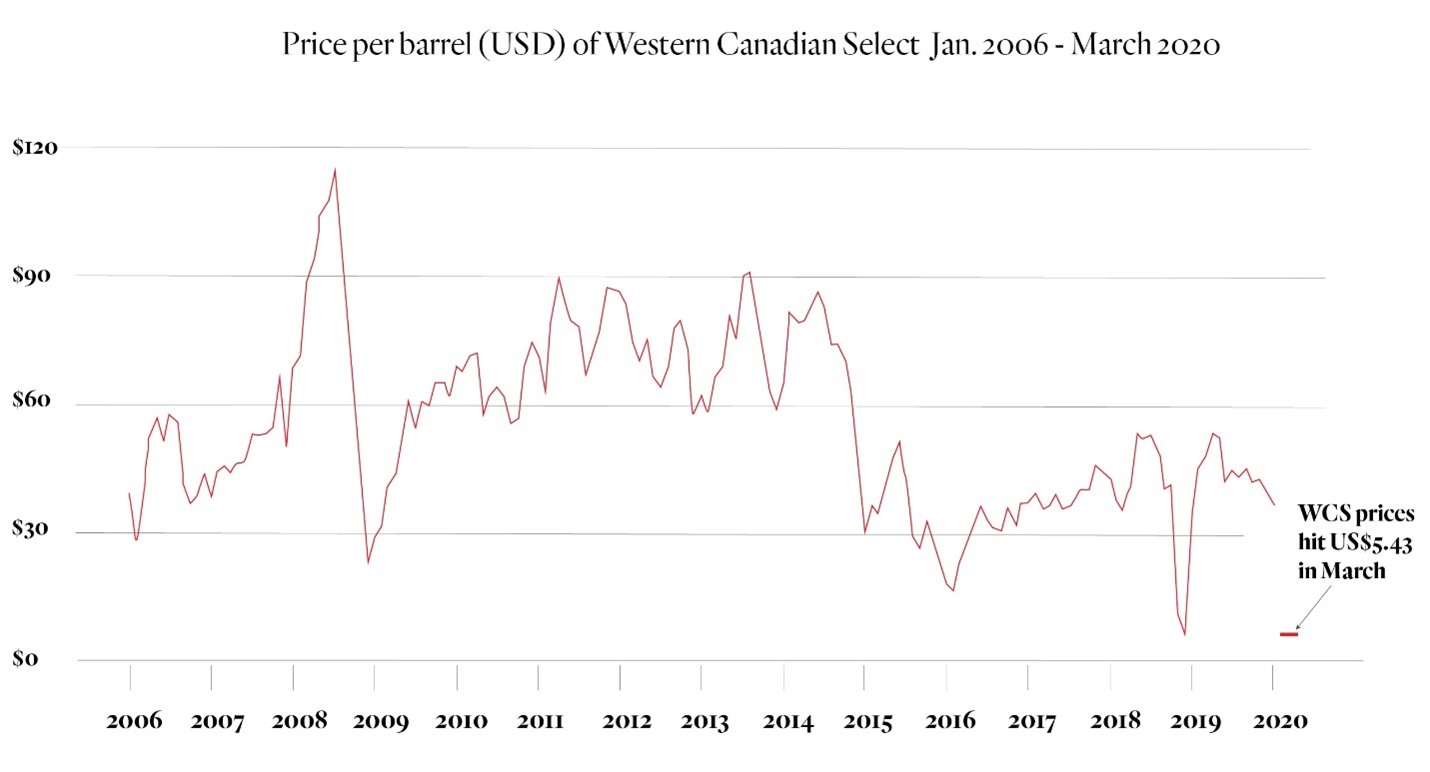
The announcement follows several recent merger announcements involving companies active in the Permian Basin.  These include ConocoPhillips buying Concho Resources, Chevron buying Noble Energy, and Devon Energy buying WPX Energy. In previous reports, we have discussed the need for energy companies to adapt to a lower oil price environment by cutting costs. Western Canadian oil prices have been depressed since 2014. Combining operations is one of the quickest and easiest ways to cut costs. As companies lower costs through mergers, other companies are forced to follow suit to remain competitive. Cenovus CEO Alex Pourbaix indicated, “I think we’re going to see more continued consolidation.” 


Source: The Narwhal, Alberta Government

The Cenovus-Husky merger will greatly enhance Cenovus’s downstream refining capability and lead to C$1.2 billion in savings, according to company management. Cenovus and Husky management claim they will be able to break-even at $36 a barrel for WTI crude, with that number falling to $33 by 2023.  The current WTI oil price is near $38 per barrel. Management believes the combined company will be cash-flow positive.


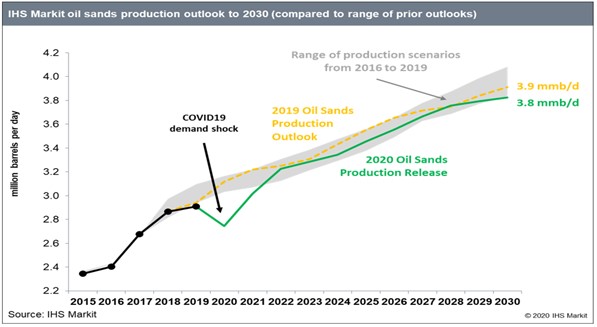
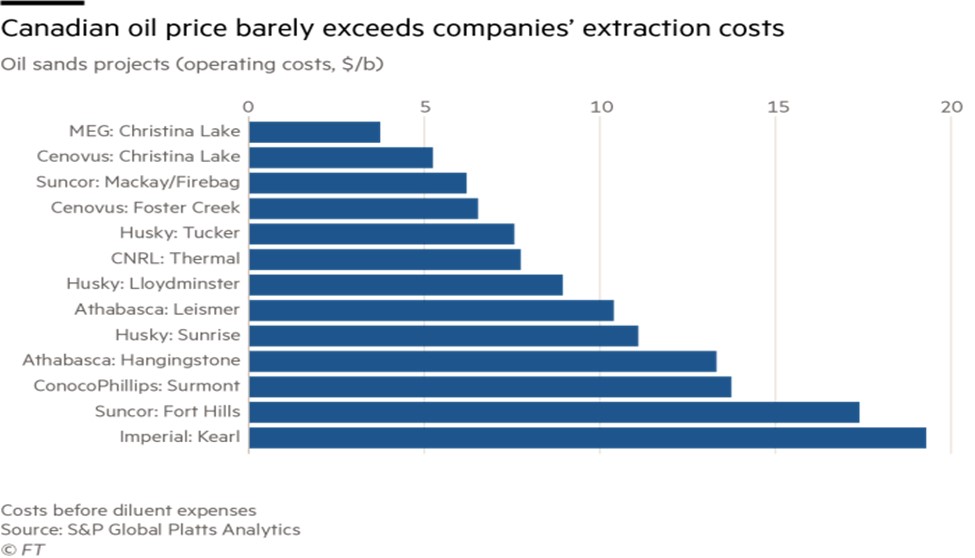
The impact of COVID-19 was significant for oil sand producers. However, the future remains positive. HIS Mankit expects oil-sand production to rebound sharply when the pandemic eases and to grow 33% over the next ten years. The optimism for production growth comes from the area’s low extraction costs.  Many drilling projects cost well below $20 per barrel to extract.


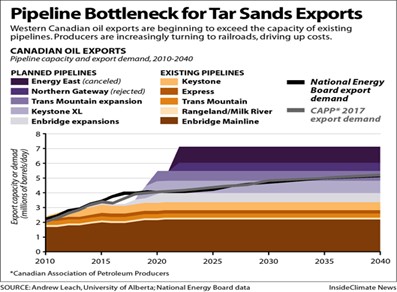
Analysts are also encouraged that prices will improve.  Several oil pipelines are scheduled to be completed in the next few years that could ease transmission bottlenecks that have hampered oil prices at the wellhead.


The list of oil-sand companies is long. The largest companies include Suncor Energy, Canadian Natural Resources, Cenovus Energy, ConocoPhillips, ExxonMobil, Shell, and PetroChina. These companies have the financial strength and backing of creditors to withstand temporary dips in oil prices.  It is the smaller oil producers that are coming under pressure. Smaller producers include Athabasca Oil, MEG Energy, OSUM, Laricina Energy, Sunshine Oilsands, and Imperial Oil. Adam Waterous, CEO of the Waterous Energy Fund, believes, “the 20,000-barrel-day producer in Western Canada is an endangered species.”


Suggested Reading:

Mergers Within the
energy Industry are Heating Up

Mergers Within the Permian Basin are Heating up

Energy Stock Prices Have Led to Higher Dividend Yields


Each event in our popular Virtual Road Shows Series has a maximum capacity of 100 investors online. To take part, listen to and perhaps get your questions answered, see which virtual investor meeting intrigues you here.

 

Sources:

https://finance.yahoo.com/news/cenovus-energy-combine-husky-23-115745760.html, Simon Casey and Robert Tuttle, Bloomberg, October 26, 2020

https://www.cbc.ca/news/canada/calgary/cenovus-husky-energy-deal-1.5776221, Tony Seskus, CBC News, October 25, 2020

http://paramount.mediaroom.com/2020-10-01-Paramount-Resources-Ltd-Acquires-Common-Shares-of-NuVista-Energy-Ltd, Paramount Resources, September 30, 2020

https://www.ft.com/content/9042d463-db0e-4dc8-8c46-c71cce98e7b9, Derek Brower, Financial Times, April 7, 2020

https://insideclimatenews.org/news/12042018/tar-sands-oil-pipeline-protests-canada-first-nations-kinder-morgan-trans-mountain-economics, Nicholas Kusnetz, Inside Climate News, April 13, 2018

https://www.ran.org/list-tar-sands-companies/, Banking on Climate Change: Fossil Fuel Finance Report Card 2017

https://financialpost.com/commodities/energy/endangered-species-canadian-small-oil-and-gas-companies-under-pressure-from-impatient-bankers-to-find-partners-or-sell-out, Geoffrey Morgan, Financial Post, September 4, 2020

Release – Chakana (CHKKF) Reports At Paloma East Soledad Project Peru


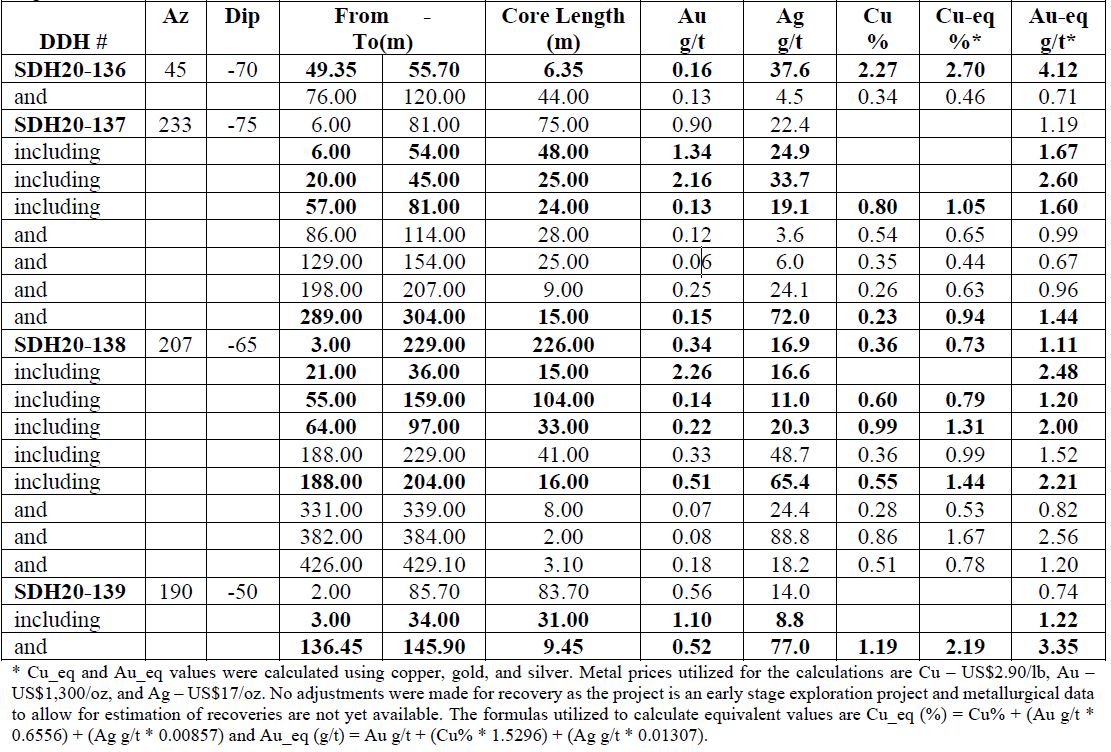
Chakana Reports 226 Metres Of 0.34 G/T Gold, 0.36% Copper, And 16.9 G/T Silver (1.11 G/T Au-Eq) From 3 Metres At Paloma East – Soledad Project, Peru


Including 15 Metres of 2.26 g/t Gold and 16.6 g/t Silver (2.48 Au-eq) from 21 Metres


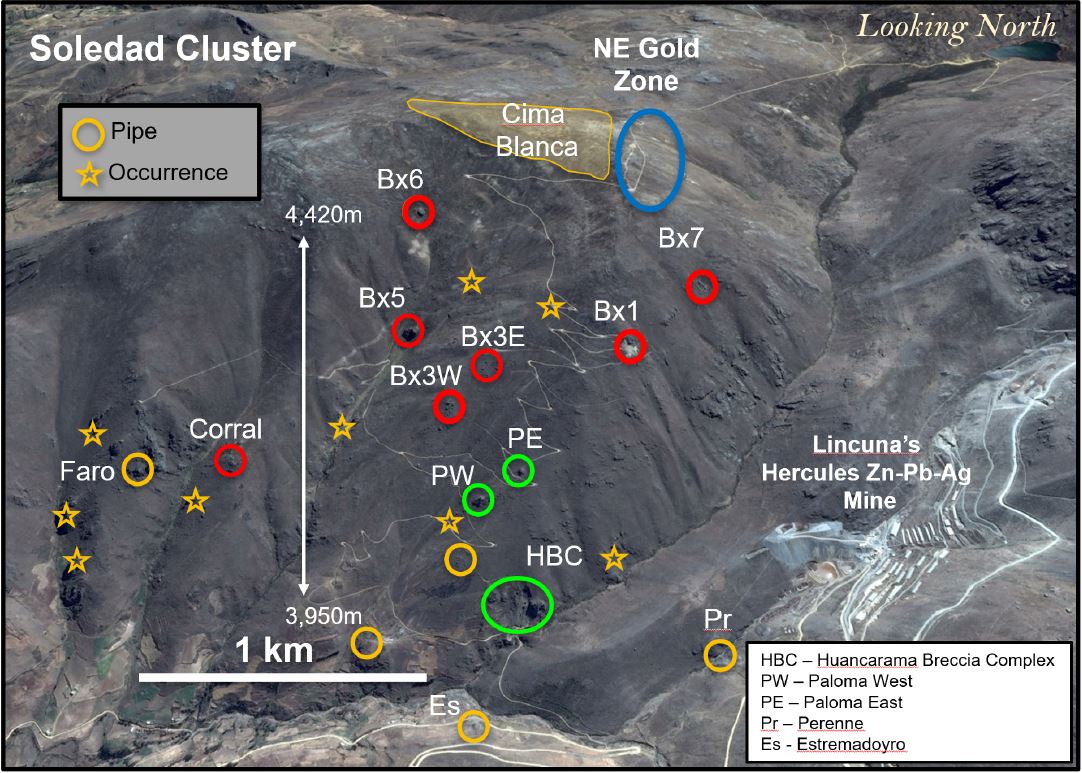
Vancouver, B.C., October 26, 2020 – Chakana Copper Corp. (TSX-V: PERU; OTCQB: CHKKF; FRA: 1ZX) (the “Company” or “Chakana”), is pleased to provide drill results from four additional holes completed at the Paloma East target at the expanded Soledad Project in Ancash, Peru. These results are part of the Phase 3 drill program, a fully funded 15,000 metre drill program that started August 15, 2020. Phase 3 is testing a tight cluster of high-grade, goldenriched tourmaline breccia pipe targets within the high-priority Paloma area and will then continue onto the Huancarama breccia complex (Fig. 1). Drilling is currently underway at Paloma West where eleven holes have been completed thus far.

Significant mineralized intervals from these four holes at Paloma East include:

Significant intervals of mineralization were encountered in all four holes.

  • Elevated gold occurs in the top of holes SDH20-137, SDH20-138, and SDH20-139 with intercepts of 51.0 metres with 1.27 g/t gold and 23.9 g/t silver starting from 6.0 metres depth; 15.0 metres with 2.26 g/t gold and 16.6 g/t silver beginning at 21.0 metres depth; and 31.0 metres with 1.10 g/t gold and 8.8 g/t silver from 3.0 metres depth, respectively.
  • In SDH20-138 – a long interval of moderate grade mineralization was intersected with 226.0 metres with 0.34 g/t gold, 0.36 % copper and 16.9 g/t silver (1.11 g/t gold equivalent) from 3.0 metres.
  • Higher grade copper intercepts occur in each hole with 6.35 metres of 2.27% copper in SDH20-136 from 49.35 metres; 24.00 metres with 0.80% copper in SDH20-137 from 57.00 metres; 33.00 metres of 0.99% copper in SDH20-138 from 64.00 metres; and 9.45 metres of 1.19% copper in SDH20-139 from 136.45 metres.

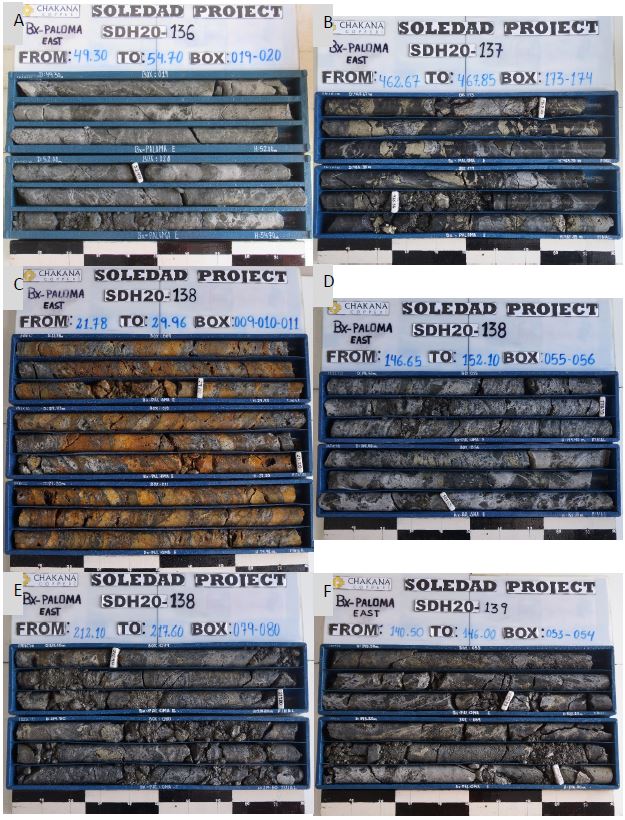
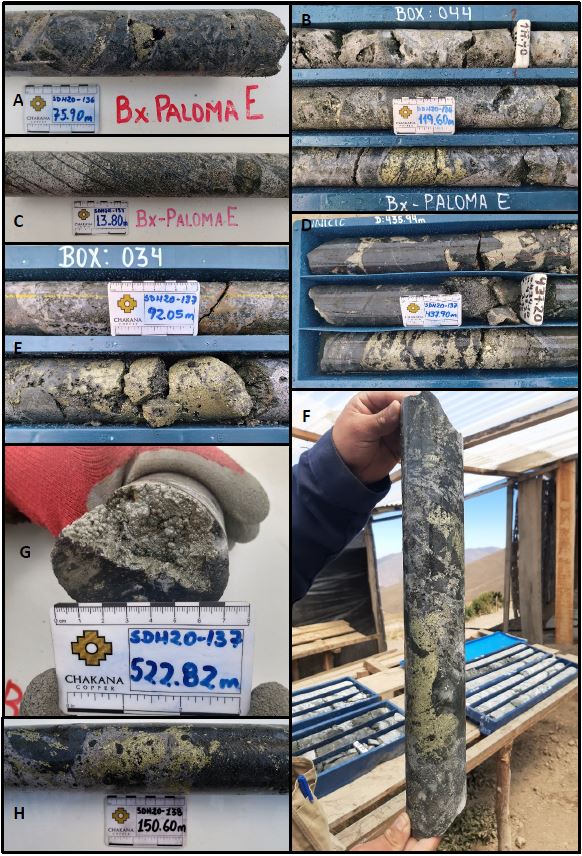
Examples of drill core from these holes are shown in Figures 5 and 6.

David Kelley, President and CEO commented, “these four scout drill holes provide additional support for an extensive mineralized breccia system at Paloma. The long runs of mineralized breccia starting near surface and extending to approximately 200 metres depth is encouraging, particularly with indications of high-grade zones within the breccia. The shape of the breccia expands at depth, similar to what we have seen in several other breccia pipes.”

Phase 3 Drill Program Update – Paloma Target Area

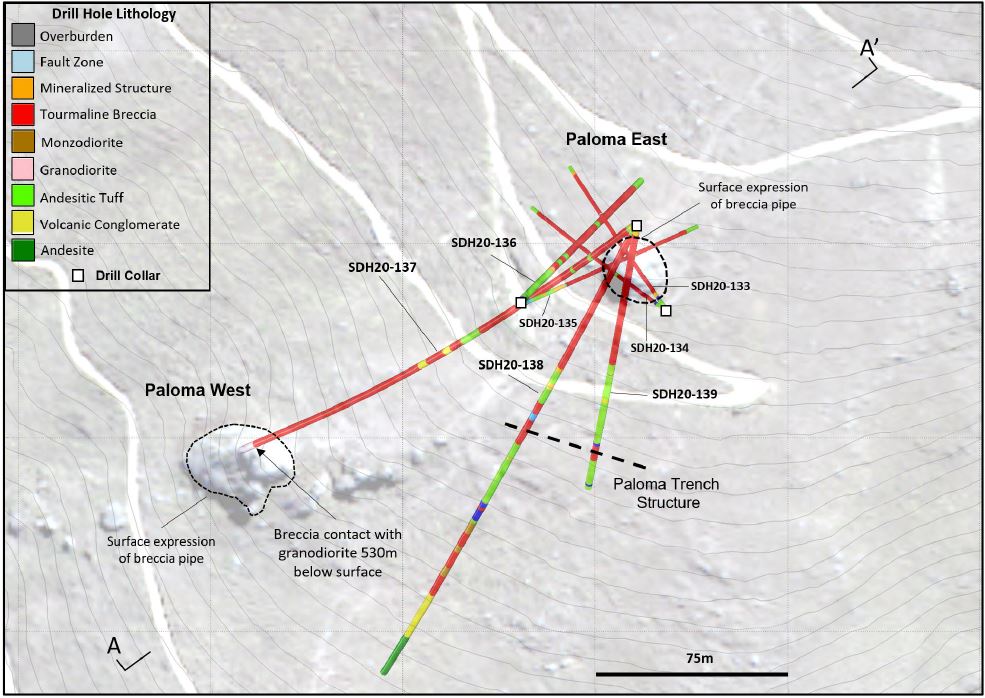
The Paloma target area consists of two mapped outcropping breccia pipes, Paloma East and Paloma West (Fig. 2) and at least one breccia dike. Previous surface rock sampling confirmed strong anomalous gold concentrations in both the targeted breccia pipes as well as within several scattered small exposures of breccia and vein-like structures in the Paloma area. The Paloma East target is interpreted as the very top of a breccia pipe with a surface footprint of 25 metres in diameter. All seven holes completed at the Paloma East target (totaling 2,038 metres) have encountered mineralized tourmaline breccia (see news release dated September 17, 2020 for the first three holes).

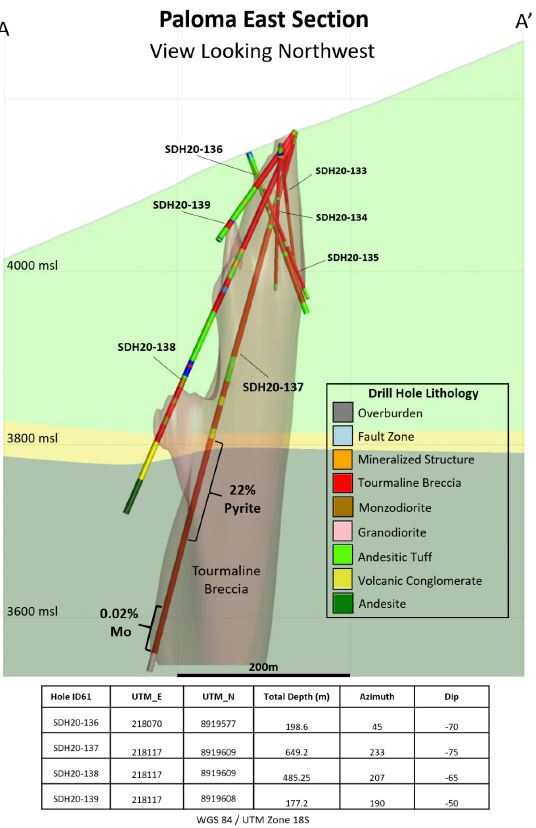
Based on modeling, the breccia pipe increases from a diameter of 25 metres at surface to approximately 90 metres by 65 metres at a level 160 metres below surface where there is sufficient drill density to assess the geometry (Fig. 3). The main zone of gold-copper-silver mineralization starts at surface and extends to approximately 200 metres depth and is open in several directions. South of the main breccia pipe, two drill holes intersected a related mineralized breccia dike that is below and coincident with the PT Structure (Paloma Trench, Fig. 2), defining a vertical feature with a westnorthwest strike. At surface, nine rock chip breccia samples collected in the trench average 1.96 g/t gold, and 16.3 g/t silver. Directly beneath the trench at 72 metres depth, hole SDH20-139 intersected 9.45 metres with 0.52 g/t gold, 1.19% copper, and 77.0 g/t silver. These two zones correlate with the intercept in SDH20-138, 90 metres to the westnorthwest, of 16.00 metres 0.51 g/t gold, 0.55% copper, and 65.4 g/t silver.

As reported on September 17, 2020, hole SDG20-137, drilled to the southwest from Paloma East toward Paloma West, intersected tourmaline breccia from 14.75 metres to 627 metres depth, excluding a few internal intervals of wallrock interpreted to be large blocks within the breccia. This hole has several mineralized intervals down to 304 metres. Below this point the breccia contains high concentrations of pyrite, calculated to average 22% pyrite from 380 to 498 metres (Fig. 5d). This increase in pyrite occurs within and below the unconformable contact with the volcanic conglomerate and into the lower andesite unit (Fig. 3). Pyrite-rich breccia within the lower andesite seen in Bx 5 and Bx 6 hosts high grade copper zones where late copper fluids have replaced the pyrite (see news releases dated April 2, 2019 and September 10, 2019). This style of replacement mineralization is also noted elsewhere at Paloma East reported here (Fig. 5b, 5f, 5h). The last 53 metres of breccia in this hole, from 574.0-627.0m, has elevated molybdenum, reaching 1,430 ppm and averaging 204 ppm (0.02% Mo) over this interval (Fig. 3). This is interpreted to be related to proximity to an underlying intrusion. The significance of hole SDH20-137 is a significantly expanded breccia system, high concentrations of pyrite where copper replacement may occur, association with a large late-time TDEM anomaly (see below), and evidence of proximity to an underlying intrusion.

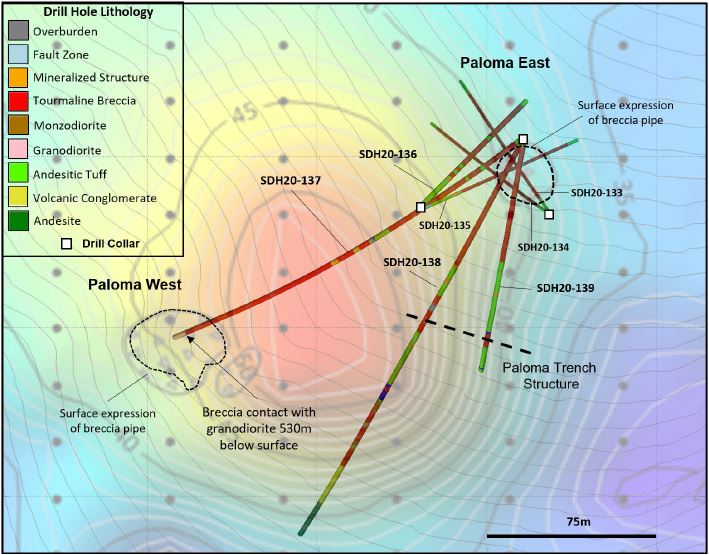
Chakana completed a program of time-domain electromagnetic (TDEM) surveys during 2018 based upon an orientation survey from late 2017. This program involved 37 ground loops mostly situated over known pipes. Readings were taken within the loop, a design intended to provide an optimal configuration to identify conductive bodies with “flat” upper surfaces that were 30 to 60 metres in diameter. This work identified several high priority anomalies and many lesscertain features. In the Paloma area both shallow and deep anomalies were detected, one of which was modelled to occur at the depth and position of the pyrite body beginning at 308 metres (Fig. 4). The anomaly extends beyond the limits of the survey grid and the Paloma area, representing a potential target for future exploration.

Kelley added “The deeper mineralization represented by strong pyrite concentrations expands the footprint of the breccia that is open at depth. Pyrite is commonly zoned outward and away from copper mineralization, which forms in the direction of the heat source. The increase in molybdenum in the last 53 metres of breccia supports this zonation towards higher temperatures. We also know from deeper drilling on Bx 1, Bx 5, and Bx 6, that the pyrite zones can be replaced by chalcopyrite, resulting in very high grades. We see this same replacement process within the shallow Paloma East mineralization and the fluids that cause the high-grade copper emanate from depth, increasing the potential for copper replacement within the pyrite zone. We are excited about the potential of this very large breccia system and look forward to seeing continuing results from the Paloma West drilling.”

About Chakana Copper

Chakana Copper Corp is a Canadian-based minerals exploration company that is currently advancing the high-grade gold-copper-silver Soledad Project located in the Ancash region of Peru, a highly favorable mining jurisdiction with supportive communities. The Soledad Project consists of high-grade gold-copper-silver mineralization hosted in tourmaline breccia pipes. A total of 31,641 metres of drilling has been completed to-date, testing eight (8) of twentythree (23) confirmed breccia pipes with more than 92 total targets. Chakana’s investors are uniquely positioned as the Soledad Project provides exposure to several metals including copper, gold, and silver. For more information on the Soledad project, please visit the website at www.chakanacopper.com.

Sampling and Analytical Procedures

Chakana follows rigorous sampling and analytical protocols that meet or exceed industry standards. Core samples are stored in a secured area until transport in batches to the ALS facility in Callao, Lima, Peru. Sample batches include certified reference materials, blank, and duplicate samples that are then processed under the control of ALS. All samples are analyzed using the ME-MS41 (ICP technique that provides a comprehensive multi-element overview of the rock geochemistry), while gold is analyzed by AA24 and GRA22 when values exceed 10 g/t by AA24. Over limit silver, copper, lead and zinc are analyzed using the OG-46 procedure. Soil samples are analyzed by 4-acid (ME-MS61) and for gold by Fire Assay on a 30g sample (Au-ICP21).

Results of previous drilling and additional information concerning the Project, including a technical report prepared in accordance with National Instrument 43-101, are made available on Chakana’s SEDAR profile at www.sedar.com.

Qualified Person

David Kelley, an officer and a director of Chakana, and a Qualified Person as defined by NI 43-101, reviewed and approved the technical information in this news release.

ON BEHALF OF THE BOARD
(signed) “David Kelley”
David Kelley
President and CEO

For further information contact:
Joanne Jobin, Investor Relations Officer
Phone: 647 964 0292
Email: [email protected]

Neither TSX Venture Exchange nor its Regulation Services Provider (as that term is defined in the policies of the Exchange) accepts responsibility for the adequacy or accuracy of this release.

Forward-looking Statement Advisory: This release may contain forward-looking statements. Forward-looking statements involve known and unknown risks, uncertainties, and other factors which may cause the actual results, performance, or achievements of Chakana to be materially different from any future results, performance, or achievements expressed or implied by the forward looking statements. Forward looking statements or information relates to, among other things, the interpretation of the nature of the mineralization at the Soledad copper-gold-silver project (the “Project”), the potential to expand the mineralization, and to develop and grow a resource within the Project, the planning for further exploration work, the ability to de-risk the potential exploration targets, and our belief in the potential for mineralization within unexplored parts of the Project. These forward-looking statements are based on management’s current expectations and beliefs but given the uncertainties, assumptions and risks, readers are cautioned not to place undue reliance on such forward- looking statements or information. The Company disclaims any obligation to update, or to publicly announce, any such statements, events or developments except as required by law.

Figure 1 – View looking north showing breccia pipes and occurrences within the northern Soledad cluster. Pipes that have been drilled in previous campaigns are shown in red. Targets shown in green are the focus on this 15,000m drill campaign. Other pipes and occurrences remain to be tested by drilling. Additional breccia pipes occur on the south half of the property and are not shown here.

Figure 2 – Map showing location of outcropping Paloma East and Paloma West breccia pipes and drill hole lithology in holes completed to date. Red represents tourmaline breccia. Note: shape of breccia not shown in plan view due to the need for additional drilling. Location of section line for Figure 3 indicated.

Figure 3 – Section looking northwest showing the modeled breccia pipe for Paloma East. Light red 3D shape is based on Leapfrog model of breccia from all holes drilled to date.

Figure 4 – Map showing 2-D late-time conductivity response from time-domain electromagnetics survey at Paloma (Channel 15 z component, contour units in ohm-m).

Figure 5 – Examples of mineralized core from drill holes reported in this release showing different styles of mineralization found in Paloma East: A) SDH20-136 – mosaic breccia; the interval 49.35-55.70m assays 0.16 g/t Au, 2.27% Cu, and 37.6 g/t Ag; B) SDH20-137 – tourmaline mosaic breccia with pyrite matrix; C) SDH20-138 – oxidized shingle breccia; the interval 21.00-30.00m assays 2.50 g/t Au and 18.0 g/t Ag; D) SDH20-138 – shingle and mosaic breccia; the interval 147.0-153.0m assays 0.15 g/t Au, 1.15% Cu, and 17.0 g/t Ag; E) SDH20-138 – mosaic breccia; the interval 212.0-217.0m assays 0.33 g/t Au, 0.64% Cu, and 139.5 g/t Ag; F) SDH20-139 – mosaic breccia; the interval 140.0-145.9m assays 0.53 g/t Au, 1.28% Cu, and 107.3 g/t Ag.

Figure 6 – Detailed core photos from Paloma East: A) SDH20-136 (75.9m) chaotic shingle breccia with chalcopyrite filling vug; B) SDH20-136 (119.6m) silicified mosaic breccia with clast replaced by chalcopyrite; C) SDH20-137 (13.8m) sheeted veining in andesitic tuff wallrock adjacent to breccia; D) SDH20-137 (437.9m) pyrite-cemented tourmaline mosaic breccia; E) SDH20-137 (92.05m) chalcopyrite replacement in silicified mosaic breccia; F) SDH20-137 (149.8m) mosaic breccia with late chalcopyrite replacement; G) SDH20-137 (522.82m) botryoidal pyrite; H) SDH20-138 (150.6) mosaic breccia with late chalcopyrite replacement.


Which Media Companies Will Profit From Election Ad Spending?


The Industry that Benefits from a Close Election


Front-running the market by predicting election results and then further speculating on the industries that would benefit from those results, is valid. However, this strategy has many moving parts, and there is much uncertainty. Investors may want to alternatively look at what is going on right now and instead ask: Is there an industry that benefits more from an election that is too-close-to-call? Is there an industry prospering from the election contest itself?

Throwing Money Around

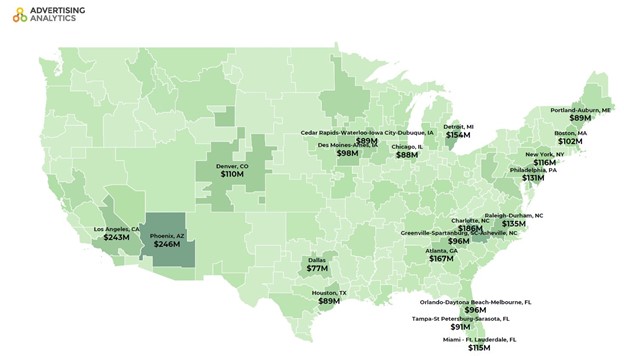
Over $7 billion has been spent on political advertising so far this cycle. This is equivalent to handing $21.50 to every man, woman, and child in the United States. Relative to past elections, $7 billion represents an 80% increase over the previous record-breaking cycle of 2018.  Most of the spending is on local TV spots (60%).  The data company Advertising Analytics provides real-time media intelligence in the advertising space. They’ve broken down where and how the campaigns are spending their money throughout the country.


Markets With the Most Political Ad Spending 2019-2020


It’s no surprise that a bulk of the spending is in the so-called battleground or swing states where the race outcomes are more difficult to predict as political leanings are relatively balanced.

These are some of the most noteworthy statistics that have been reported:

  • Political TV advertisement spending is primarily local. Currently, there has been $247 million spent on national TV ads (including cable). This is a drop in the bucket of the $5.1 billion spent locally ($4.1b broadcast and $1b cable).
  • Presidential advertising this cycle, as compared to other offices, is three times what it had been. $2.63B compared to $855M in the previous cycle.
  • Senate advertising this cycle tallies to $1.67B as compared to $989M in the previous cycle.
  • House seat election advertising is a bit lower than the previous cycle at $950M as compared to $1.03B.
  • Local broadcast TV still makes up most of the political advertising. Including other mediums, it is at 60%.
  • The second and third largest categories are digital and cable at a combined 18%.
  • As far as Digital spending, direct response advertising (fundraising and list-building) made up 73%, television-style digital persuasion ads made up 23%


The stakes are high. Between a very emotional presidential race, an effort by the Democrats to win a majority in the Senate along with the Presidency, and the Republicans’ desire for more seats in the House, it seems likely the pace of spending will remain well above average.

Is There Opportunity?

There is an enormous amount of money being spent on these contests. The stakes are high. And perhaps should be paid attention to. Many investors are closing out 2020, looking to see which pharmaceutical company will come through with a viable entrant in the battle against COVID, and others are benefitting from positions in tech companies. Other investors are placing their bets with infrastructure stocks, green energy, and other so-called “Biden-stocks.” On the “Trump-stock” side, investors may be looking at finance companies or industries that compete directly with China. However, the entire contest itself may be worth consideration.  In an industry report dated October 12, 2020, Noble Capital Markets Senior Media Analyst Michael Kupinski wrote: “Some companies have provided positive updated revenues/guidance, but the stocks have had little reaction. We ponder if investors are focused on the outcome of the upcoming elections and not on the positive, current fundamental developments.”  With so much distracting investors, it may be that the media and broadcast stocks have been largely overlooked.

Using conjecture on what the future will bring to a sector is risky and can provide more rewards than going with the known. Investing in media companies that had a rough time at the beginning of 2020 is not as “sexy” as buying a breakthrough drug company or owning high flying tech stocks, but we already know that we have a gangbuster election cycle. Those companies with markets concentrated in swing states and hotly contested House and Senate races have done well and may bring in much more revenue in the coming week leading to election day.

Take-Away

For most media companies, additional revenue is very impactful to the bottom line; compared to other industries, the variable costs to earn an extra dollar is minimal. It has been an exceedingly long election cycle. Early voting may have caused campaigns to turn up the spending early; they are likely to stay turned up all the way. By the time the last vote is cast, almost $8 billion dollars will have been spent trying to buy a single pull of the lever from each of us.

Paul Hoffman

Managing Editor, Channelchek


Suggested Reading:

Quarterly Review: Has The Market Already Factored In The Elections?

Is the TV Rollup Strategy Over?

Do Analysts Price Targets Matter?


Each event in our popular Virtual Road Shows Series has a maximum capacity of 100 investors online. To take part, listen to and perhaps get your questions answered, see which virtual investor meeting intrigues you here.
 

 Sources:

Kantar Estimates 2020 Election Ads Will Cost $7 Billion

https://www.mediapost.com/publications/article/357135/us-ad-spending-lags-gdp-heading-in-coming-out-o.html

https://www.kiplinger.com/investing/stocks/stocks-to-buy/601170/best-stocks-to-buy-president-donald-trump

https://www.forbes.com/sites/kenrapoza/2020/07/29/where-to-invest-ahead-of-a-trump-2020-win-or-a-biden-victory/#6673d47e19b0

Financials, industrials, and oil and gas all outperformed the S&P 500 after Trump won in November 2016. 

Ceapro (CRPOF)(CZO:CA) – NRC Grant to Produce Coronavirus Therapeutic Candidates by PGX Technology

Friday, October 23, 2020

Ceapro (CRPOF)(CZO:CA)

NRC Grant to Produce Coronavirus Therapeutic Candidates by PGX Technology

Noble Capital Markets research on Ceapro is published under ticker symbols (CRPOF and CZO:CA). The price target is in USD and based on ticker symbol CRPOF. Ceapro Inc is engaged in the development and application of proprietary extraction technology to produce extracts and active ingredients from oats and other renewable plant sources. Its operating segments are the Active ingredient product technology industry and the Cosmeceutical industry. The company derives a majority of the revenue from the Active ingredient product technology industry segment which involves the development of proprietary extraction technologies and the application of these technologies to the production and development and commercialization of active ingredients derived from oats and other renewable plant resources for healthcare and cosmetic industries. Geographically, the company has business operations in the U.S, Germany, China, Canada and other countries.

Ahu Demir, Ph. D., Biotechnology Research Analyst, Noble Capital Markets, Inc.

Refer to the full report for the price target, fundamental analysis, and rating.

    NRC grants financial support to Ceapro’s PGX platform technology. The National Research Council of Canada (NRC) has approved an amendment to Ceapro’s project contributing financial support up to $590,000 for large scale manufacturing of PGX yeast beta-glucan (PGX-YBG) to use in the clinical trials to treat COVID-19 patients.

    PGX technology is versatile.  We think this grant validates the versatility of Ceapro’s PGX platform technology and capability to produce novel products not only in nutraceutical and cosmeceutical but also in the biopharmaceutical market …


This Company Sponsored Research is provided by Noble Capital Markets, Inc., a FINRA and S.E.C. registered broker-dealer (B/D).

*Analyst certification and important disclosures included in the full report. NOTE: investment decisions should not be based upon the content of this research summary.  Proper due diligence is required before making any investment decision. 

Smart Money Followers May Have to Work With Less Data


SEC May Limit Individual Investors Knowing What Some Money Managers are Doing


In mid-July, the Securities & Exchange Commission proposed to amend Form 13F to update the reporting threshold for institutional money managers. Adopted in 1978, Form 13F requires money managers who manage in excess of $100 million to submit a list of their long equity holdings each quarter within 45 days of the end of the quarter. The purpose of the original rule was to provide the SEC with data from larger money managers about their investment activities and holdings so that their influence and impact could be considered in maintaining fair and orderly securities markets. The $100 million reporting threshold has not been adjusted in over 40 years.

Big Changes in SEC Proposal

The SEC proposal would lift the threshold to $3.5 billion, reflecting proportionately the same market value of U.S. equities that $100 million represented in 1978. The new threshold would retain disclosure of over 90% of the dollar value of the holdings data currently reported while eliminating the 13F filing requirement for nearly 90% of the filers that are smaller money managers, or some 4,500 investment managers, overseeing $2.3 trillion in assets, according to the National Investor Relations Institute. The SEC estimates the elimination of 13F filing requirements for smaller money managers could cut direct compliance costs some $15,000 to $30,000 annually per manager or $68.1 million to $136 million annually in aggregate.

Opposition Almost 100:1

What’s not to like about reducing “paperwork” while saving investors money? Sounds good, right? Well, in the first few days following the Proposal, 179 comment letters had been filed with the SEC in response to the Proposal – and 177 of those letters are opposed to it. Comments continue to trickle in, with the most recent from October 16th, and each of the last ten were opposed to the proposed rule changes, although some expressed interest in some type of change to the existing rules, just not the one’s the SEC has proposed. An article in the Harvard Law School Forum for Corporate Governance commented, “It is difficult to see how eliminating the limited transparency into ownership by activist and other hedge funds, and instead of increasing the percentage of 13(f) information provided by “price-taking” index funds rather than smaller active funds that set prices, will further” the goals of data gathering and increasing investor confidence in the integrity of the securities markets.

Why the seeming outpouring of opposition to the SEC proposal? According to the CFA Institute, “The resulting loss of holdings information would harm market participants such as, among others, investors, issuers, researchers, and the affected institutional investment managers themselves.” The CFA goes on to say, “We also believe the Proposal would run counter to other statutory objectives, such as the need to build investor confidence, enable issuers to identify their beneficial owners, afford an understanding of the effect of institutional investor activities on individual securities, and serve as a single centralized repository of certain holdings data. And finally, we believe the economic analysis falls short in establishing a baseline of current practices and assessing the costs and benefits of the proposed rulemaking in a thorough and impartial manner.”

Small Investors Have a Beef

An especially galling aspect to small and individual investors is the significant reduction in the ability to “follow the smart money.” A Forbes article noted that “Goldman Sachs estimates that the number of funds tracked, that would continue filing 13Fs, would plunge from 815 to just 65 if the filing threshold increased to $3.5 billion, which highlights only how much less transparency there would be if the proposal were implemented.” And in an article for Columbia Law School, Eduardo Gallardo pointed out that some of the most prolific activist funds would no longer have to file 13Fs, including Jana Partners, Starboard Value, Greenlight Capital, along with many others. In fact, of FactSet’s SharkWatch 50 list of the top activist funds, just ten would still have to file 13Fs. While following the “smart money” isn’t a panacea, many investors track these investors to get additional insights not only into individual stocks but industries and the overall stock market.

Where There is Agreement

Despite the opposition to the SEC proposals, many stakeholders and market observers agree that the rules and regulations need modernizing. Such potential changes include shortening the reporting window so that shares held updates are available as soon as two business days following the quarter end, rather than 45 days, and to change the reporting period from quarterly to monthly to match the short?sale reporting period. A number of proposals also have commented on increasing the reporting threshold, though none as high as the SEC proposal.


Suggested Reading:

Financial Markets Lifted Household Wealth to Record Levels

JOLTS Report Suggests More Risk Taking

U.S. Debt as a Percentage of GDP is Skyrocketing


Each event in our popular Virtual Road Shows Series has a maximum capacity of 100 investors online. To take part, listen to and perhaps get your questions answered, see which virtual investor meeting intrigues you here.
 

Sources:

https://secsearch.sec.gov/search?utf8=%E2%9C%93&affiliate=secsearch&sort_by=&query=Pictures+13F

https://clsbluesky.law.columbia.edu/author/eduardo-gallardo/

https://www.forbes.com/sites/jacobwolinsky/2020/09/16/sec-13f-proposal-bad-for-investors-and-companies/#114477594b25

Merger Activity in the Permian is Heating Up – Part Two


ConocoPhillips Buys Concho and Pioneer Buys Parsley – What’s Next?


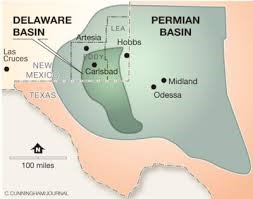
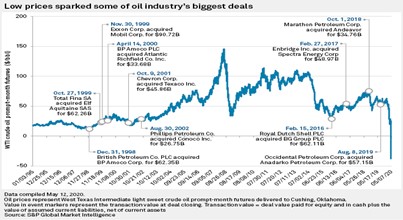
A month ago, we wrote that merger activity among energy players in the Permian Basin was beginning to heat up. The report followed the July announcement by Chevron to acquire Noble Energy for $4.2 billion and the September announcement by Devon Energy to acquire WPX Energy for $2.6 billion.


https://channelchek.vercel.app/news-channel/Mergers_Within_the_Energy_Industry_are_Heating_Up

In the article, we discussed how mergers could happen in either boom or bust cycles.  In boom cycles, acquiring energy companies seek to add property to expand production.  In bust cycles, like the one we are currently facing, companies seek to merge to work to lower operating costs. In our article, we also discussed how larger energy companies, who were outbid in their acquisition attempts, turn their attention to other candidates, and smaller companies that were passed over become more amenable to an acquisition.


It didn’t take long for us to be proven right on both accounts.  Over the weekend, ConocoPhillips agreed to buy Concho Resources in an all-stock deal valued at $9.7 billion, the largest energy deal so far this year. The combined company will add 800,000 Permian Basin gross acres to ConocoPhillips’ portfolio and make it one of the largest players in the area alongside ExxonMobil, Chevron, and Occidental Petroleum. Not to be outdone, Pioneer Natural Resources announced a $4.5 billion buyout of Parsley Energy Inc. the very next day. The Pioneer-Parsley deal, which involved a low premium price, might be described as a merger of equals designed to protect each company from being taken over by a larger player.

Mergers can reduce operating costs in several ways. Contiguous acreage allows operators to drill longer lateral length, meaning fewer well pads. Fewer players mean less drilling crews.  It also means increased use of pipelines to dispose of water instead of tanker trucks. And, of course, it means less overhead costs as administrative costs are spread out across increased production.

Phil Flynn, a senior market analyst for the Price Group, described the situation by saying, “it’s a fight for survival right now with these low oil prices.” Larger players like Marathon Oil, Apache Corp, and EOG Resources will feel left by the wayside if they do not merge to reduce costs. Michael Heim, the senior energy analyst for Noble Capital Markets, believes the increase in merger activity reflects a growing recognition by management that oil prices could remain at depressed levels for the foreseeable future.  “Oil demand had decreased due to the pandemic, lower renewable energy costs, and an increase in electric vehicles.  Low demand, combined with an increased willingness by OPEC to increase supply to control the growth of domestic production, does not bode well for future oil prices.”

At the same time, the number of potential targets in the Permian Basin is getting smaller. Matthew Portillo, managing director at Tudor, Pickering, Holt & Co., said it best, “the universe of companies with which you can combine is shrinking by the day.” Smaller players active in the Permian Basin include Callon Petroleum, Centennial Resources, Cimarex Energy, Diamondback Energy, Earthstone Energy, Laredo Petroleum, Matador Resources, PDC Energy, and Ring Energy. These companies are facing increasing pressure to merge to obtain the economies of scale needed to survive.

Increased pressure to merge, combined with lower oil prices, has meant a decrease in acquisition valuation multiples.  Whereas previous acquisitions typically valued Permian properties at $20,000 an acre or $90,000 per daily barrel of oil production, recent acquisitions are well below historical metrics.


Suggested Reading:

Mergers Within the energy Industry are Heating Up

Energy
Stock Prices Have Led to Higher Dividend Yields

Dividends and the Appeal of Energy Stocks


Virtual Road Show – Tuesday October 27 1:00PM EDT

Register Now and join InPlay Oil President & CEO, Douglas Bartole for this exclusive corporate presentation, followed by a Q & A session moderated by Michael Heim, Noble’s Senior Analyst, featuring questions taken from the audience. Registration is free, but attendance is limited to 100.  
View All Upcoming Road Shows


Sources:

https://www.investors.com/news/conocophillips-buy-concho-resources-permian-basin-expansion/?src=A00220, Gillian Rich, Investor’s Business Daily, October 19, 2020

https://finance.yahoo.com/news/u-shale-mergers-accelerate-pioneer-200951793.html, Jennifer Hiller and David French, Reuters, October 20, 2020

https://mercercapital.com/energyvaluationinsights/ma-in-the-permian-big-deals-and-bigger-opportunities/, Mercer Capital, June 18, 2019

https://btuanalytics.com/shale-production/acreage-value-in-decline/, BTU Analytics, November 20, 2019

Neovasc (NVCN)(NVCN:CA) – The FDA Panel to Decide on Reducer Commercialization in the US

Thursday, October 22, 2020

Neovasc (NVCN)(NVCN:CA)

The FDA Panel to Decide on Reducer Commercialization in the US

As of April 24, 2020, Noble Capital Markets research on Neovasc is published under ticker symbols (NVCN and NVCN:CA). The price target is in USD and based on ticker symbol NVCN. Research reports dated prior to April 24, 2020 may not follow these guidelines and could account for a variance in the price target.

Neovasc Inc is a specialty medical device company. The company develops, manufactures and markets products for the rapidly growing cardiovascular marketplace. Its products include the Tiara for the transcatheter treatment of mitral valve disease and the Neovasc Reducer for the treatment of refractory angina. Neovasc is developing the Tiara for the treatment of mitral valve disease. Neovasc operates its business in one segment.

Ahu Demir, Ph. D., Biotechnology Research Analyst, Noble Capital Markets, Inc.

Refer to the full report for the price target, fundamental analysis, and rating.

    The FDA panel is scheduled for October 27, 2020. Neovasc submitted a premarket approval application (PMA) for the Reducer device in December 2019 seeking approval for Reducer in the U.S. for the treatment of patients suffering from refractory angina. The FDA’s Circulatory System Devices Panel of the Medical Devices Advisory Committee will review the PMA for the Neovasc Reduce device on October 27, 2020.

    What do we expect? We believe the decision from the FDA’s panel will be positive.  In our view, Reducer represents a solid case based on the benefit demonstrated in patients in the clinical trials (COSIRA and REDUCER-1), the post-market studies demonstrating similar results to the clinical studies, and the strong unmet need in the refractory angina landscape …


This Company Sponsored Research is provided by Noble Capital Markets, Inc., a FINRA and S.E.C. registered broker-dealer (B/D).

*Analyst certification and important disclosures included in the full report. NOTE: investment decisions should not be based upon the content of this research summary.  Proper due diligence is required before making any investment decision. 

Travelzoo (TZOO) – Moving Along The Road To Recovery

Thursday, October 22, 2020

Travelzoo (TZOO)

Moving Along The Road To Recovery

Travelzoo is a US-based company which acts as a publisher of travel and entertainment offers. The company informs a varied number of members in Asia Pacific, Europe, and North America, as well as millions of website users, about the best travel, entertainment and local deals available from various companies. It provides travel, entertainment, and local businesses in a flexible manner to the various customer. The company operates in three geographic segments namely Asia Pacific, Europe, and North America. Travelzoo derives its revenue through advertising fees including listing fees paid by travel, entertainment, and local businesses to advertise their offers on company’s media properties. Most of the company’s revenue is derived from the North America.

Michael Kupinski, Director of Research, Noble Capital Markets, Inc.

Refer to the full report for the price target, fundamental analysis, and rating.

    Exceeds Q3 expectations. We believe that the company posted one of the best Q3 results in the travel industry, with revenues up a strong 96% from Q2 revenues and a swing toward positive cash flow. Q3 revenues of $10.9 million was above our $9.9 million estimate. In addition, Q3 cash flow from continuing operations, or adjusted EBITDA, was better than expected at a positive $1.17 million versus our loss estimate of $1.53 million.

    Strong voucher sales.  The company’s cash position increased to a significant $51.7 million as of Sept. 30, nearly double the $26.7 million as of June 30, 2020, reflecting strong voucher sales. While redemptions of vouchers are likely to step up in coming quarters, we believe that the company’s cash position could increase to $60 million or even $70 million by the end of the fourth quarter based on …


This Company Sponsored Research is provided by Noble Capital Markets, Inc., a FINRA and S.E.C. registered broker-dealer (B/D).

*Analyst certification and important disclosures included in the full report. NOTE: investment decisions should not be based upon the content of this research summary.  Proper due diligence is required before making any investment decision. 

Release – Ceapro Inc. (CRPOF) – Announces Increased Financial Contribution from National Research Council of Canada for Innovative PGX Technology Project


Ceapro Inc. Announces Increased Financial Contribution from National Research Council of Canada for Innovative PGX Technology Project


Amendment Includes Additional Task To Develop Yeast Beta Glucan As An Inhalable Therapeutic For Covid-19


EDMONTON, Alberta, Oct. 22, 2020 (GLOBE NEWSWIRE) — Ceapro Inc. (TSX-V: CZO; OTCQX: CRPOF) (“Ceapro” or the “Company”), a growth-stage biotechnology company focused on the development and commercialization of active ingredients for healthcare and cosmetic industries, today announced that the National Research Council of Canada (NRC) has approved an amendment to Ceapro’s project entitled, “Positioning Canadian Innovation on a Global Stage Using Ceapro’s Disruptive PGX Platform Technology,” announced on August 15, 2019. The amended contribution will now provide a non-reimbursable financial contribution up to $590,000 through the Industrial Research Assistance Program (IRAP).

“We are pleased with the additional support from the NRC IRAP for this important project. While one of the key objectives for this project was to fine tune the PGX Demo Plant to optimize the impregnation process of bioactives involved in the production of several new chemical complexes targeting oral and dermal delivery systems, this enlarged project now includes an additional task related to the development of PGX yeast beta glucan (PGX-YBG) as an inhalable therapeutic for COVID-19 patients. More specifically, our team is looking at establishing the feedstock for mass production of PGX-YBG, optimizing the process for large scale industrial manufacturing of PGX-YBG and to modify the PGX Demo Plant to generate PGX-YBG for a human clinical trial,” commented Gilles Gagnon, M.Sc., MBA, President and CEO of Ceapro.

About Pressurized Gas eXpanded Liquid Technology (PGX)

Ceapro’s patented Pressurized Gas eXpanded (PGX) technology is a unique and disruptive technology with several key advantages over conventional drying and purification technologies that can be used to process biopolymers into high-value, fine-structured, open-porous polymer structures and novel biocomposites. PGX is ideally suited for processing challenging high-molecular-weight, water-soluble biopolymers. It has the ability to make ultra-light, highly porous polymer structures on a continuous basis, which is not possible using today’s conventional technologies. PGX was invented by Dr. Feral Temelli from the Department of Agricultural, Food & Nutritional Science of the University of Alberta (U of A) along with Dr. Bernhard Seifried, now Senior Director of Engineering Research and Technology at Ceapro. The license from U of A provides Ceapro with exclusive worldwide rights in all industrial applications.

About Ceapro Inc.

Ceapro Inc. is a Canadian biotechnology company involved in the development of proprietary extraction technology and the application of this technology to the production of extracts and “active ingredients” from oats and other renewable plant resources. Ceapro adds further value to its extracts by supporting their use in cosmeceutical, nutraceutical, and therapeutics products for humans and animals. The Company has a broad range of expertise in natural product chemistry, microbiology, biochemistry, immunology and process engineering. These skills merge in the fields of active ingredients, biopharmaceuticals and drug-delivery solutions.

For more information on Ceapro, please visit the Company’s website at www.ceapro.com.

For more information contact:

Jenene Thomas
JTC Team, LLC
Investor Relations and Corporate Communications Advisor
T (US): +1 (833) 475-8247
E: [email protected]

Issuer:

Gilles R. Gagnon, M.Sc., MBA
President & CEO
T: 780-421-4555

This press release does not express or imply that the Company claims its product has the ability to eliminate, cure or contain the SARS-2-CoV-2 (COVID-19) at this time.

Neither TSX Venture Exchange nor its Regulation Services Provider (as that term is defined in the policies of the TSX Venture Exchange) accepts responsibility for the adequacy or accuracy of this release.

Source: Ceapro Inc.

Release – Palladium One (NKORF) – Step Out Hole Yields Highest Grades Yet at Kaukua South


Palladium One Step Out Hole Yields Highest Grades Yet at Kaukua South


October 22, 2020 – Toronto, Ontario – Hole LK20-016 has the best combination of grade and width of all the results from the LK Project to date, said Palladium One Mining Inc. (“Palladium One” or the “Company”) (TSXV: PDM, FRA: 7N11, OTC: NKORF) today.

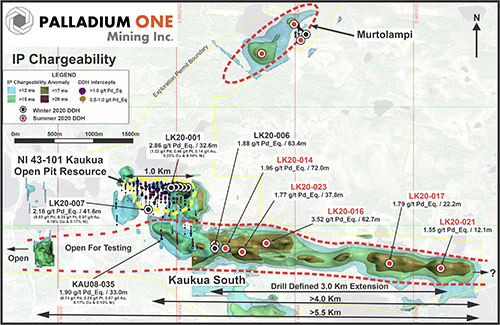
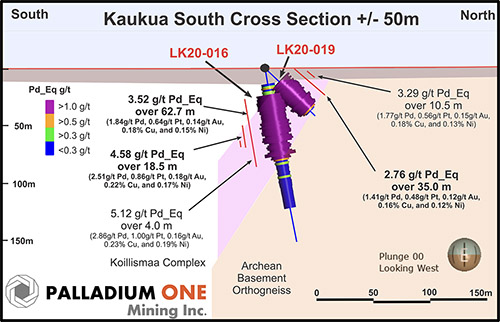
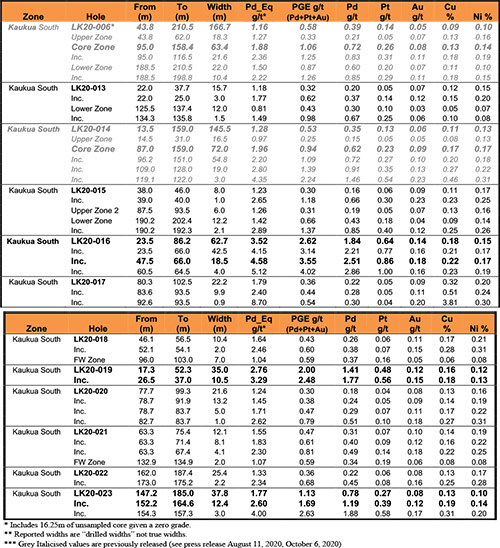
Located 1,350 m east of the most westerly hole in Kaukua South, LK20-016 starting at only 23.5 m down hole, returned 62.7 m at 3.52 g/t of palladium equivalent (Pd_Eq)*, including 18.5 m at 4.58 g/t Pd_Eq (Figure 1).

Key highlights

  • In Hole LK20-016, the core interval of 18.5 m at 4.58 g/t Pd_Eq starts near surface at 47.5 m down hole.
  • Hole LK20-019 started in mineralization and hit 35.0 m at 2.76 g/t Pd_Eq and also started near surface after 17.3 m of overburden.
  • Holes LK20-016 and LK20-019 are located 750 m east of hole LK20-006 (see news release dated August 11, 2020), which returned 166.7 m at 1.16 g/t Pd_Eq, including a core zone of 63.4 m at 1.88 g/t Pd_Eq.
  • Holes LK20-016 and LK20-019 are 1,350 m east of hole KAU-08-035, which returned a core zone of 33.0 m at 1.90 g/t Pd_Eq.
  • Continuity between holes LK20-006 and LK20-016 demonstrates potential to rapidly add ounces, providing the opportunity to significantly increase the existing NI 43-101 Kaukua open pit resource.
  • All holes drilled in the Kaukua South Extension have returned PGE-Ni-Cu mineralization and are open along strike and at depth.

“Of the 11 discovery holes drilled at Kaukua South, hole LK20-016 is the highest-grade drilled to date. The robust intercepts strengthen our belief that there are many more ounces than initially thought at our LK Project in Finland. We look forward to receiving assay results for the remaining three exploration holes drilled at Murtolampi, only 2 kilometers north of Kaukua.” said Derrick Weyrauch, President and Chief Executive Officer. “Each additional impressive drill result brings us closer to realizing our belief that the Kaukua area hosts a large-scale, shallow, mineralized system with significant continuity.”

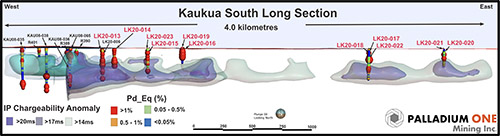
Palladium One has now confirmed PGE-Ni-Cu mineralization over 4 km of strike length at the Kaukua South zone and the zone remains open laterally for expansion both to the east and west, as well as depth (Figure 1 and 2).

As the size of the Kaukua South zone has grown so has its complexity. Holes in the western half of the zone have very high PGEs and lower Cu-Ni grades similar to the Kaukua deposit, whereas the eastern half have lower PGEs and higher Cu-Ni grades, more similar to the Haukiaho trend (see news releases on May 26, 2020 and September 15, 2020). This change in PGE tenor occurs within a 1.5 km gap in the drilling between holes LK20-016 and LK20-017 (Figure 1, 2 and 3). More drilling is required to define exactly where this change in PGE tenor occurs. Additionally, regional magnetic data indicate there is over 2 km of strike length to Kaukua South beyond LK20-021, the further east hole. This area remains to be drill tested.

Phase II Infill Drill Program

Based on the positive results to date from the Phase I Exploration Drill Program, planning is under way to determine if it is feasible to restart drilling before year end.

Figure 1

This figure shows the greater Kaukua Area, the NI 43-101 compliant Kaukua Open Pit resource, Murtolampi and Kaukua South zones. The new drill defined three-kilometer eastern extension of the Kaukua South zone is shown with select resumed Phase I drill holes labelled in red.

Figure 2

Kaukua South Long section looking north, showing IP Chargeability isoshells and Pd_Eq grade for resumed Phase I drill holes labelled in red.

Figure 3

Kaukua South cross section, looking west showing hole LK20-016 and 019.

Table 1: Resumed Phase 1 Drill Results from Kaukua South Zone

*Palladium Equivalent

Palladium equivalent is calculated using US$1,100 per ounce for palladium, US$950 per ounce for platinum, US$1,300 per ounce for gold, US$6,614 per tonne for copper, and US$15,4332 per tonne for nickel. This calculation is consistent with the calculation in the Company’s September 2019 NI 43-101 Kaukua resource estimate.

QA/QC

The Phase I drilling program was carried out under the supervision of Neil Pettigrew, M.Sc., P. Geo., Vice President of Exploration and a director of the Company.

Drill core samples were split using a rock saw by Company staff, with half retained in the core box and stored indoors in a secure facility, in Taivalkoski, Finland. The drill core samples were transported by courier from the Company’s core handling facility in Taivalkoski, Finland, to ALS Global (“ALS”) laboratory in Outokumpu, Finland. ALS, is an accredited lab and are ISO compliant (ISO 9001:2008, ISO/IEC 17025:2005). PGE analysis was performed using a 30 grams fire assay with an ICP-MS or ICP-AES finish. Multi-element analyses, including copper and nickel were analysed by four acid digestion using 0.25 grams with an ICP-AES finish.

Certified standards, blanks and crushed duplicates are placed in the sample stream at a rate of one QA/QC sample per 10 core samples. Results are analyzed for acceptance at the time of import. All standards associated with the results in this press release were determined to be acceptable within the defined limits of the standard used.

Qualified Person

The technical information in this release has been reviewed and verified by Neil Pettigrew, M.Sc., P. Geo., Vice President of Exploration and a director of the Company and the Qualified Person as defined by National Instrument 43-101.

About Palladium One

Palladium One Mining Inc. is an exploration company targeting district scale, platinum-group-element-copper-nickel deposits in Finland and Canada. Its flagship project is the Läntinen Koillismaa or LK Project, a palladium-dominant platinum group element-copper-nickel project in north central Finland, ranked by the Fraser Institute as one of the world’s top countries for mineral exploration and development. Exploration at LK is focused on targeting disseminated sulfides along 38 kilometers of favorable basal contact and building on an established NI 43-101 open pit resource.

ON BEHALF OF THE BOARD
“Derrick Weyrauch”
President & CEO, Director

For further information contact:
Derrick Weyrauch, President & CEO
Email:
[email protected]

Neither the TSX Venture Exchange nor its Market Regulator (as that term is defined in the policies of the TSX Venture Exchange) accepts responsibility for the adequacy or accuracy of this release.

This press release is not an offer or a solicitation of an offer of securities for sale in the United States of America. The common shares of Palladium One Mining Inc. have not been and will not be registered under the U.S. Securities Act of 1933, as amended, and may not be offered or sold in the United States absent registration or an applicable exemption from registration.

Information set forth in this press release may contain forward-looking statements. Forward-looking statements are statements that relate to future, not past events. In this context, forward-looking statements often address a company’s expected future business and financial performance, and often contain words such as “anticipate”, “believe”, “plan”, “estimate”, “expect”, and “intend”, statements that an action or event “may”, “might”, “could”, “should”, or “will” be taken or occur, or other similar expressions. By their nature, forward-looking statements involve known and unknown risks, uncertainties and other factors which may cause our actual results, performance or achievements, or other future events, to be materially different from any future results, performance or achievements expressed or implied by such forward-looking statements. Such factors include, among others, risks associated with project development; the need for additional financing; operational risks associated with mining and mineral processing; fluctuations in palladium and other commodity prices; title matters; environmental liability claims and insurance; reliance on key personnel; the absence of dividends; competition; dilution; the volatility of our common share price and volume; and tax consequences to Canadian and U.S. Shareholders. Forward-looking statements are made based on management’s beliefs, estimates and opinions on the date that statements are made and the Company undertakes no obligation to update forward-looking statements if these beliefs, estimates and opinions or other circumstances should change. Investors are cautioned against attributing undue certainty to forward-looking statements.

Release – Canada Nickel – Announces Significant Mineral Resource Update at Crawford Nickel-Cobalt Sulphide Project

Canada Nickel Company Announces Significant Mineral Resource Update at Crawford Nickel-Cobalt Sulphide Project


Highlights

  • Resource update more than doubles Measured and Inferred resources

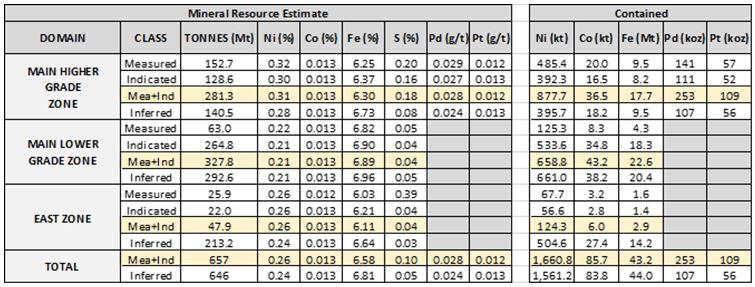
    • Main Higher Grade Zone Measured resource increased by 162% to 153 Mt at 0.32% nickel (485 kt nickel). Total M&I resource increased by 9% to 657 Mt at 0.26% nickel (1.7 Mt nickel).
    • Total Inferred resource increased by 121% to 646 Mt at 0.24% nickel (1.6 Mt nickel) including an increase of 50% in Main Zone (433 Mt @ 0.23% nickel) and an initial resource from East Zone of 213 Mt at 0.24% nickel (505 kt nickel).
  • Significant exploration potential remains with approximately 50% of Crawford structure untested and is now actively being explored. The Main Zone remains open to the west and the East Zone has more than 2.8 kilometres of strike length (40%) remaining to be drilled.


TORONTO, October 21, 2020 – Canada Nickel Company Inc. (TSX-V:CNC) (“Canada Nickel” or the “Company“) today announced an updated mineral resource for its 100% owned Crawford Nickel-Cobalt Sulphide Project (“Crawford”) near Timmins, Ontario which more than doubles mineral resources in both Measured and Inferred resource categories. This report includes a resource update for its previously reported Main Zone and an initial resource for its East Zone.

Mark Selby, Chair and CEO of Canada Nickel commented, “This latest drilling phase did an outstanding job of delivering on both of its key objectives – better defining and increasing the Main-Higher Grade Zone and establishing an initial resource in the East Zone. With a 162% increase in the Measured High Grade Zone nickel content, a 121% increase in total inferred resources, and an initial East Zone resource, this resource update puts us in excellent position for the delivery of a Preliminary Economic Analysis (“PEA”) by year-end. I look forward to continued drilling results as we explore several highly prospective nickel and PGM targets at Crawford, and to completing the remaining metallurgical and engineering testing for the PEA. With the recently completed financing, the Company is well-positioned to aggressively advance Crawford towards a Feasibility Study expected by year-end 2021.”

The Crawford Nickel-Cobalt Sulphide Project is located in the heart of the prolific Timmins-Cochrane mining camp in Ontario, Canada, and is adjacent to well-established, major infrastructure associated with over 100 years of regional mining activity. Canada Nickel has launched wholly-owned NetZero Metals Inc. with the aim to develop zero-carbon production of nickel, cobalt, and iron at the Crawford Project.

Crawford Mineral Resource Estimate Update

For the update to the initial Mineral Resource Estimate, a total of 30,519 metres of core drilling in 62 drill holes was utilized to calculate the Mineral Resources in the three categories as provided in Table 1 below, and specifically Measured + Indicated Resources of 657 million tonnes grading 0.26% Ni and Inferred Resources of 646 million tonnes grading 0.24% Ni. A cut-off grade of 0.15% Ni was used for the low-grade domain and 0.25% Ni for the higher-grade domain (Higher Grade Core) of the Mineral Resource Estimate. Example cross-section and block model views of the resource estimate are provided in Figures 1 through 5 below.

The drilling program was launched in the fourth quarter of 2019, continued through 2020, and achieved the objectives of finding extensions around the initial resource and new areas of mineralization, as well as proving up the extension and the continuity of the mineralization.

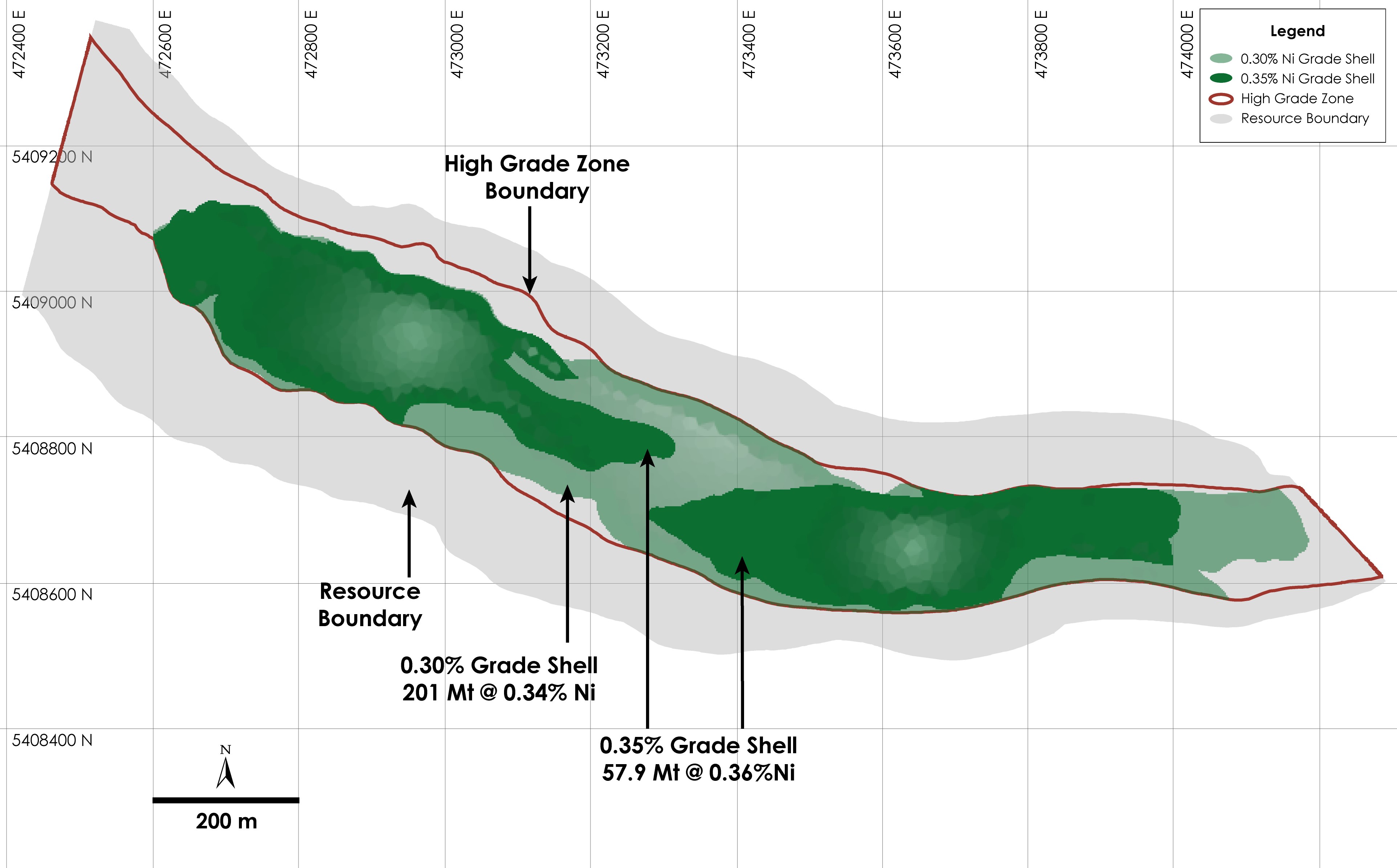
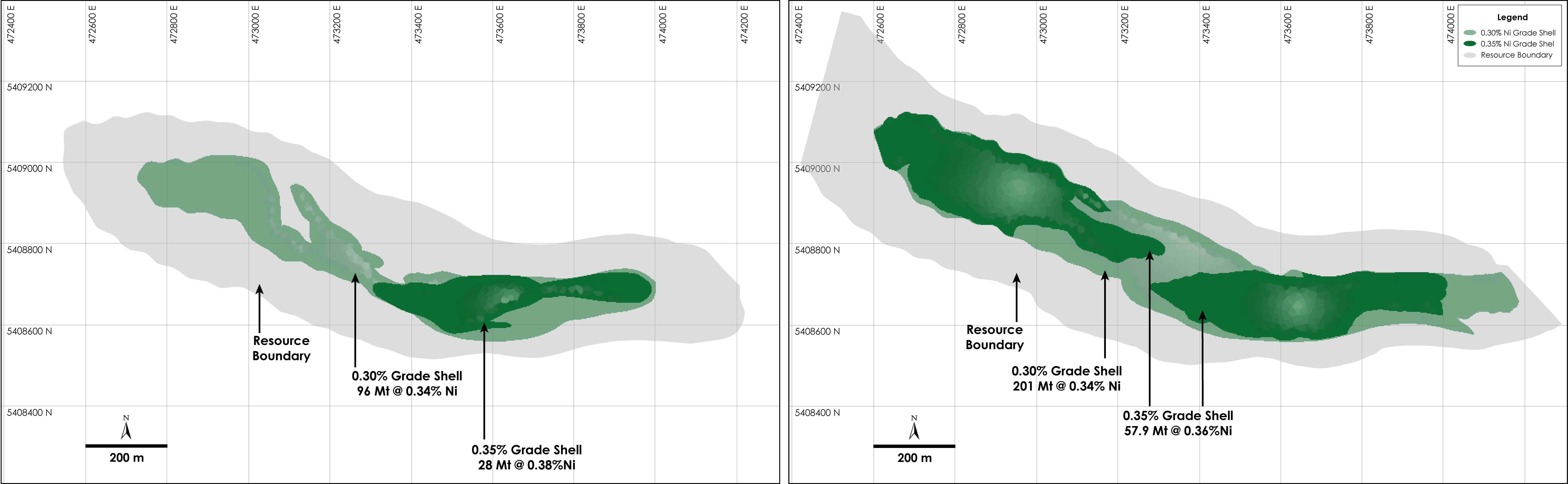
The higher grade mineralization at Crawford has been significantly expanded. This resource update increased the contained nickel in the 0.35% grade shell by 96% to 208kt (58 Mt at 0.36% nickel) and in the 0.30% grade shell by 109% to 683kt (201 Mt at 0.34% nickel).

Canada Nickel announced on May 19, 2020 the discovery of the East Zone. After an 11-hole, 5,328-metres drilling campaign, Canada Nickel is pleased to declare an initial Measured + Indicated Resources on the East Zone of 47.9 million tonnes grading 0.26% Ni and Inferred Resources of 213.2 million tonnes grading 0.24% Ni. A cut-off grade of 0.15% Ni was used.

This Mineral Resource Estimate was prepared by Caracle Creek International Consulting Inc. in accordance with CIM Definition Standards on Mineral Resources and Reserves. A Technical Report in support of the Mineral Resource Estimate will be filed on SEDAR (https://www.sedar.com) within 45 days. The Mineral Resource Estimate is effective as of October 18, 2020.

Table 1 – Updated Total Mineral Resource Estimate for the Crawford Nickel-Cobalt Sulphide Project, Ontario

  1. The independent Qualified Person for the Mineral Resource Estimate, as defined by NI 43-101, is Mr. Luis Oviedo, P.Geo. (Chilean Mining Commission: RM, CMC #013), of Caracle Creek International Consulting Inc. and Atticus Chile S.A. The effective date of the Mineral Resource Estimate is October 18, 2020.
  2. These Mineral Resources are not Mineral Reserves as they do not have demonstrated economic viability. The quantity and grade of reported Inferred Resources in this Mineral Resource Estimate are uncertain in nature and there has been insufficient exploration to define these Inferred Resources as Indicated or Measured, however it is reasonably expected that the majority of Inferred Mineral Resources could be upgraded to Indicated Mineral Resources with continued exploration.
  3. A cut-off grade of 0.15% Ni was used for the low-grade domains (Main and East zones) and cut-off grades of 0.25% Ni (Main Zone) and 0.21% Ni (East Zone) were used for the high-grade domains. Cut-offs were determined on the basis of core assay geostatistics and drill core lithologies for the deposit, and by comparison to analogous deposit types. Given the current stage of the Project, the mineral resources contained within the Main and East zone deposits have not been constrained by open pit optimization. The Company is planning to complete open pit optimization and present pit-constrained mineral resources as part of its Preliminary Economic Assessment (“PEA”) scheduled to be completed by year-end 2020.
  4. Geological and block models for the Mineral Resource Estimate used data from a total of 62 surface drill holes (51 in the Main Zone and 11 in the East Zone), completed by Spruce Ridge Resources (4 holes in 2018) and Noble Mineral Exploration and Canada Nickel Company (58 holes in 2019-2020). The drill database was validated prior to resource estimation and QA/QC checks were made using industry-standard control charts for blanks, core duplicates and commercial certified reference material inserted into assay batches by CNC and by comparison of umpire assays performed at a second laboratory.
  5. Estimates in Table 1 have been rounded to two significant figures.
  6. The Mineral Resource Estimate was prepared following the CIM Estimation of Mineral Resources & Mineral Reserves Best Practice Guidelines (November 29, 2019).

MAIN ZONE

  1. The geological model as applied to the Mineral Resource Estimate for the Main Zone comprises three mineralized domains hosted by variably serpentinized ultramafic rocks: a relatively high-grade core (largely dunite) and two northern and southern lower grade envelopes (combination of dunite and peridotite). Individual wireframes were created for each domain.
  2. The block model was prepared using Micromine 2020. A 12 m x 12 m x 9 m block model was created and samples were composited at 4.5 m intervals. Grade estimation from drill hole data was carried out for Ni, Co, Fe, S, Pd and Pt using the Ordinary Kriging interpolation method.
  3. Grade estimation was validated by comparison of input and output statistics (nearest neighbour and inverse distance cubed), swath plot analysis, and by visual inspection of the assay data, block model, and grade shells in cross-sections.
  4. Density estimation was carried out for the mineralized domains using the Ordinary Kriging interpolation method, on the basis of 3,270 specific gravity measurements collected during the core logging process, using the same block model parameters of the grade estimation. As a reference, the average estimated density value within the high-grade is 2.64 g/cm3 (t/m3), while low-grade domains of the resource model yielded averages of 2.63 g/cm3 (t/m3) in the north and 2.71 g/cm3 (t/m3) in the south.

EAST ZONE

  1. The geological model as applied to the Mineral Resource Estimate for the East Zone comprises three mineralized domains hosted by variably serpentinized ultramafic rocks: a relatively high-grade core (largely dunite) and two northern and southern lower grade envelopes (largely peridotite). Individual wireframes were created for each domain.
  2. The block model was prepared using Micromine 2020. A 20 m x 20 m x 15 m block model was created and samples were composited at 3 m intervals. Grade estimation from drill hole data was carried out for Ni, Co, Fe and S using the Inverse Distance Squared method.
  3. Grade estimation was validated by comparison of input and output statistics (nearest neighbour), swath plot analysis, and by visual inspection of the assay data, block model, and grade shells in cross-sections.
  4. An average bulk density value for each mineralized domain was calculated on the basis of 244 specific gravity measurements collected during the core logging process. Blocks within the high-grade were assigned a single bulk density value of 2.62 g/cm3 (t/m3), while low-grade domains of the resource model were assigned single bulk density values of 2.66 g/cm3 (t/m3) in the north and 2.72 g/cm3 (t/m3) in the south.

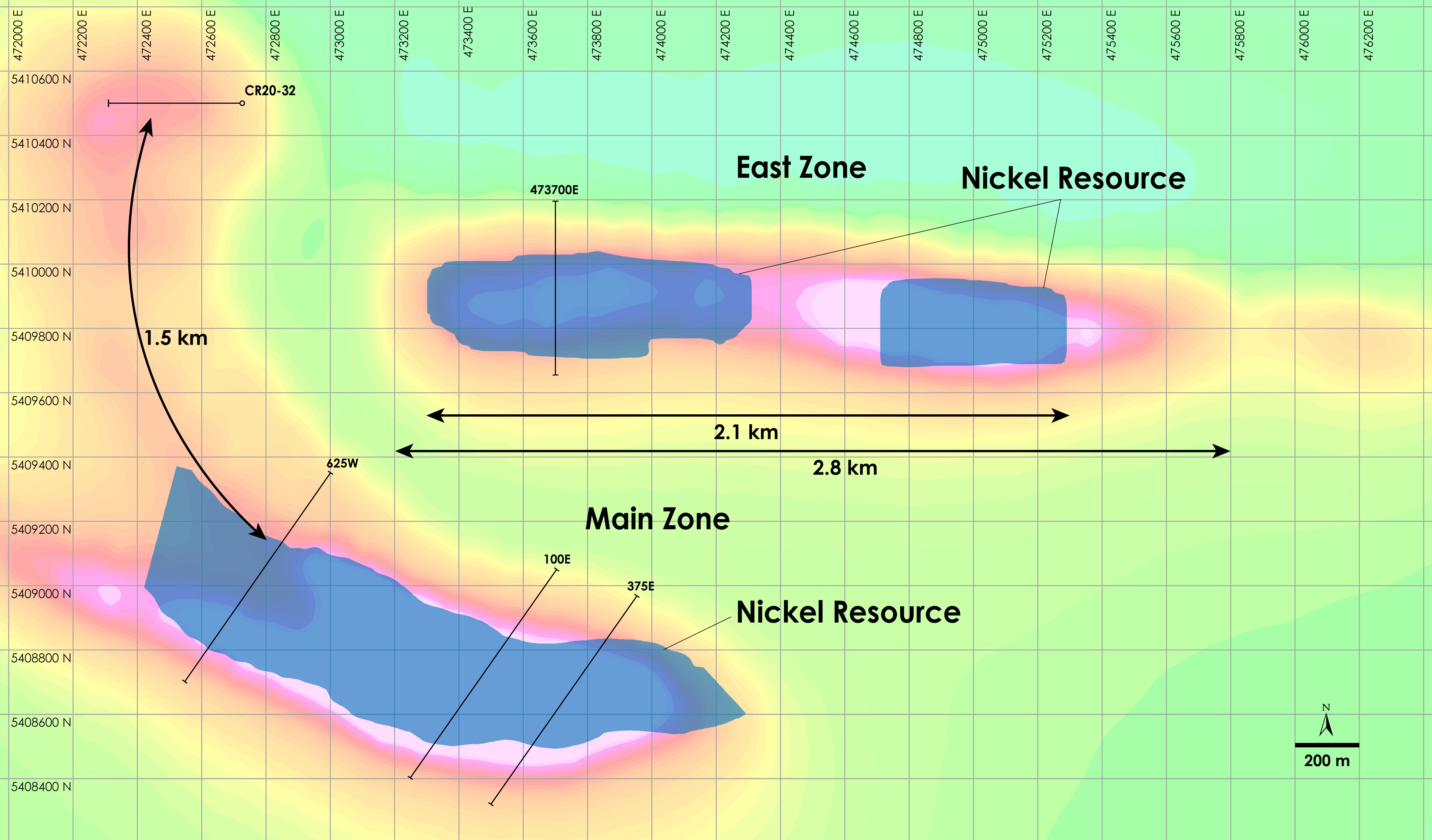
Figure 1 – Plan view of Main Zone & East Zone Nickel Resources, Crawford Nickel-Cobalt Sulphide Project, Ontario.

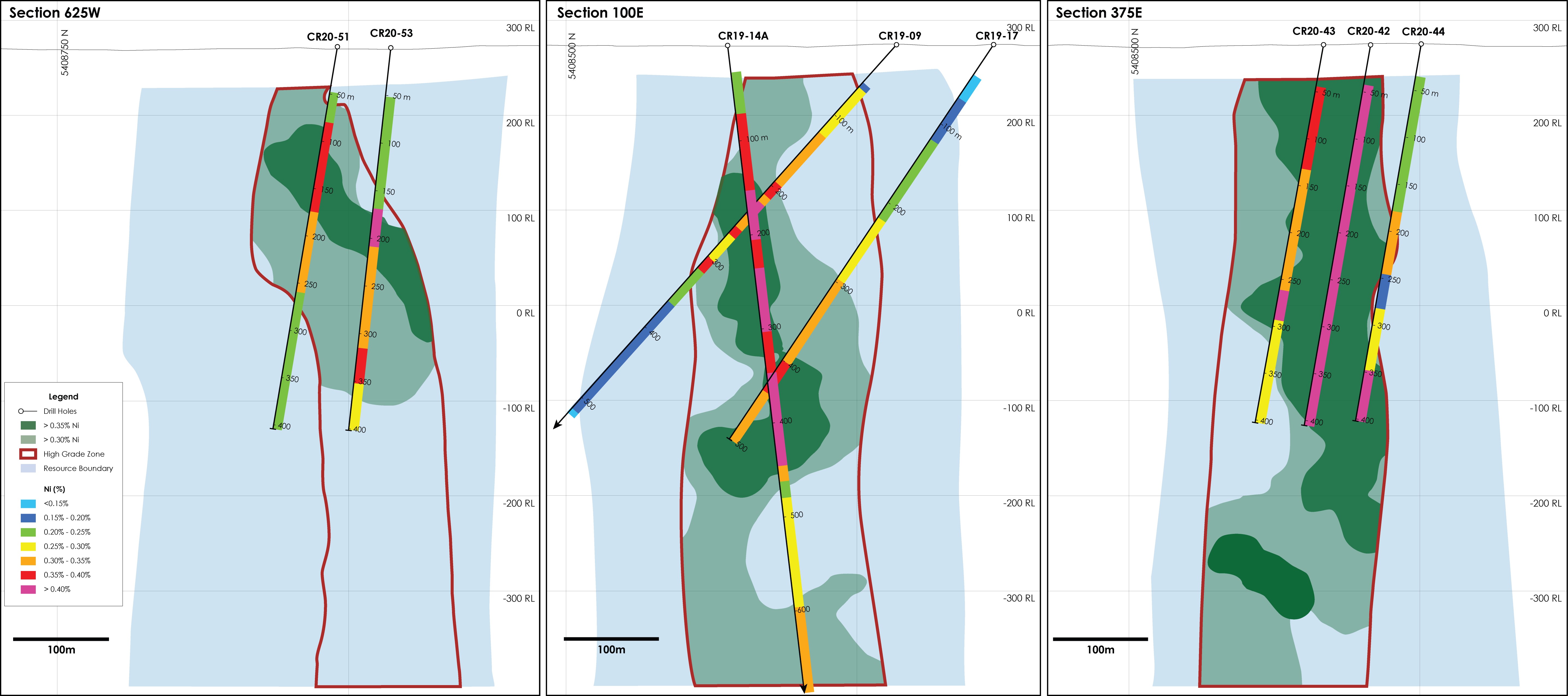
Figure 2 – Crawford Nickel-Cobalt Sulphide Project – Main Zone Sections (625E, 175E, 375E) With Resource Boundaries & 0.3% and 0.35% Grade Shells

Figure 3 – Plan View of Main Zone Resource at the Crawford Nickel-Cobalt Sulphide Project, Ontario.

Figure 4 – Plan View of Main Zone – Comparison of Current and Prior Mineral Resource and Grade Shells at the Crawford Nickel-Cobalt Sulphide Project, Ontario.

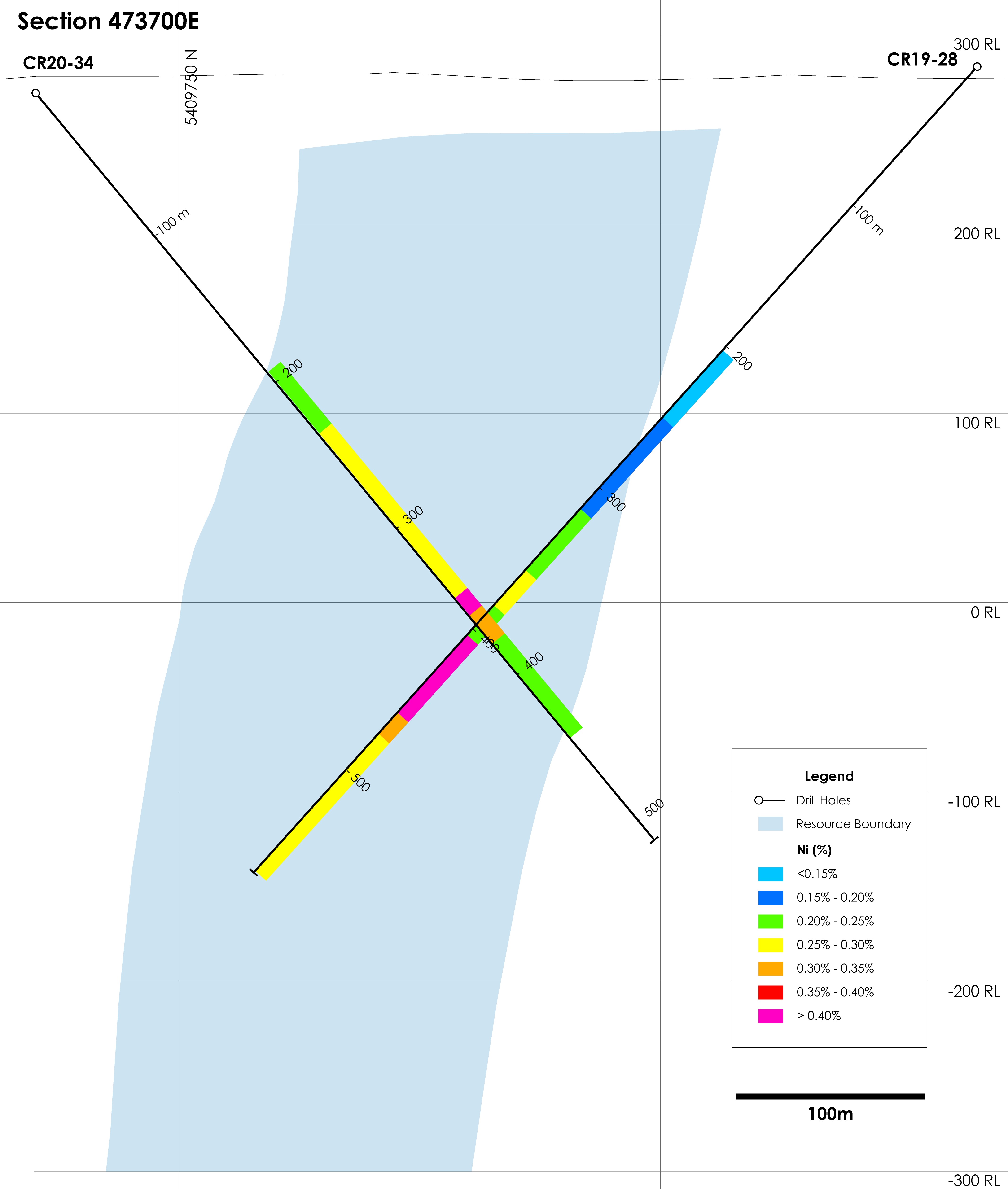
Figure 5 – Cross-section of the East Zone Mineral Resource, Crawford Nickel-Cobalt Sulphide Project, Ontario.

Next Steps

  • A technical report with respect to the Mineral Resource Estimate Update disclosed today will be filed within 45 days as required by The National Instrument 43-101.
  • Mineralogical studies and metallurgical testwork will continue through the fourth quarter of 2020, and will be incorporated into the PEA expected to be completed by the end of 2020.
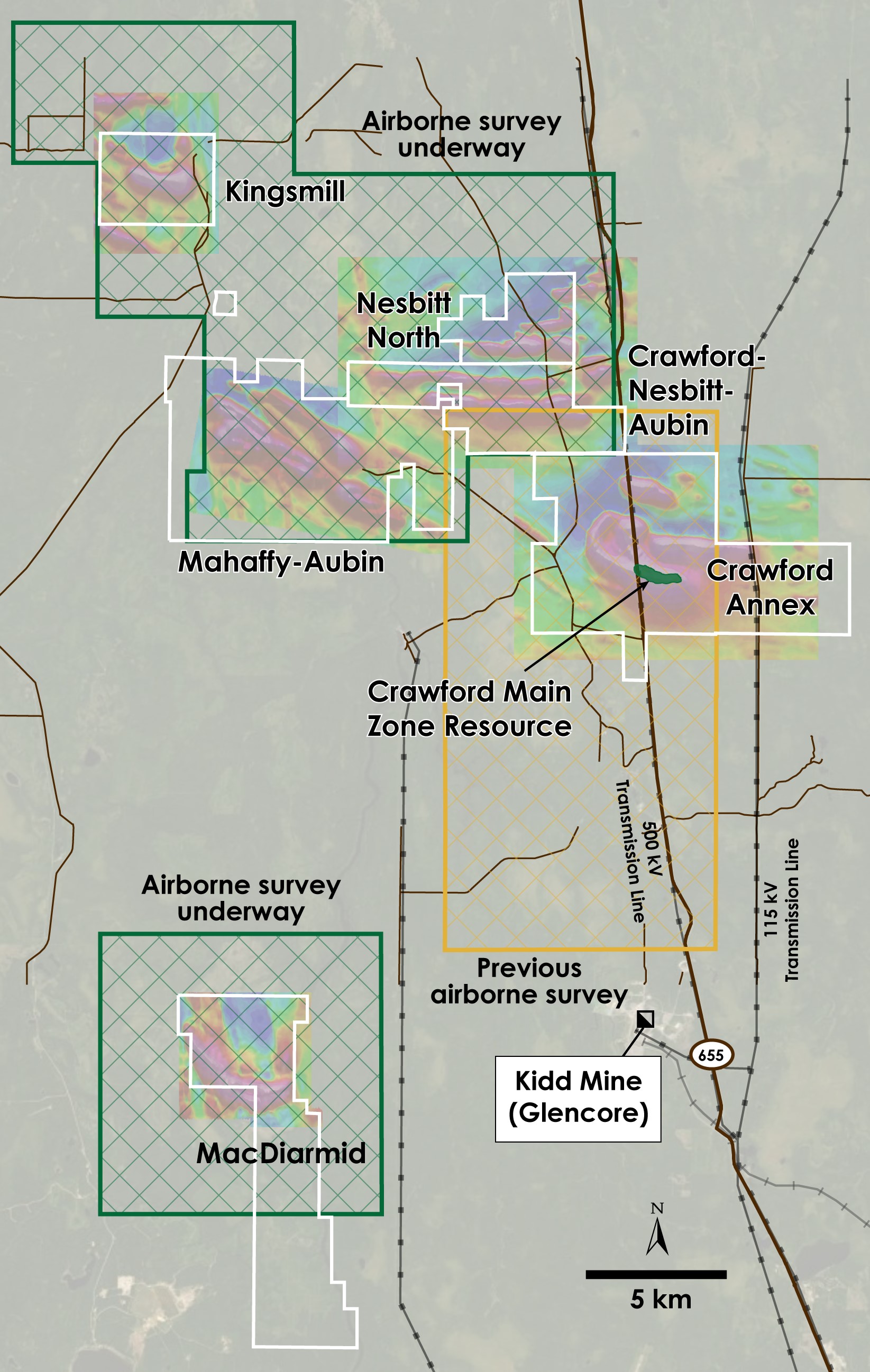
  • Drilling has begun on other prospective geophysical targets on the several kilometres of the Crawford structure, including those which were previously untested on the west side of the highway. An airborne geophysical survey on regional option properties has been completed and interpretation work now underway will inform a regional drilling program expected to be completed this winter. See Figure 6.

Figure 6 – Planned and Previous Airborne Geophysical Survey Areas over Crawford, Kingsmill, Nesbitt-Aubin, Nesbit North, MacDiarmid and Mahaffy-Aubin Properties, Ontario.

Issuance of Shares

The Company also announced today that it will be issuing a total of 200,000 of its common shares to third parties in satisfaction of certain contractual obligations. The shares will be subject to a four-month hold period under applicable securities laws.

Conference Call Details

Canada Nickel is hosting a live Q&A conference call on October 22 at 10:00 a.m. Eastern time (7:00 a.m. Pacific time). Participants may join the call by dialing:
Local: Toronto: 416-764-8688
North American Toll Free: 888-390-0546
Webcast URL: https://produceredition.webcasts.com/starthere.jsp?ei=1389471&tp_key=79c1b4fb17

A playback version will be available for two weeks after the call at +1-416-764-8677 (local or international) or toll free at +1-888-390-0541 (passcode 442999#).

Assays, Quality Assurance/Quality Control and Drilling and Assay Procedures

William E. MacRae, MSc, P.Geo., a Qualified Person as defined by NI 43-101, is responsible for the on-going drilling and sampling program, including quality assurance (QA) and quality control (QC). The core is collected from the drill in sealed core trays and transported to the core logging facility. The core is marked and sampled at 1.5 metre lengths and cut with a diamond blade saw. Samples are bagged with QA/QC samples inserted in batches of 35 samples per lot. Samples are transported in secure bags directly from the Canada Nickel core shack to Actlabs Timmins, an ISO/IEC 17025 accredited lab. Analysis for precious metals (gold, platinum and palladium) are completed by Fire Assay while analysis for nickel, cobalt, sulphur and 17 other elements are performed using a peroxide fusion and ICP-OES analysis. Certified standards and blanks are inserted at a rate of one QA/QC sample per 32 core samples making a batch of 35 samples that are submitted for analysis.

Qualified Person and Data Verification

Dr. Scott Jobin-Bevans (P.Geo., APGO #0183), independent of the Company and a Qualified Person as defined by NI 43-101, has reviewed and approved the scientific and technical content of this news release. The independent Qualified Person for the Mineral Resource Estimate, as defined by NI 43-101, is Mr. Luis Oviedo (P.Geo., Chilean Mining Commission: RM, CMC #013), of Caracle Creek International Consulting Inc. and Atticus Chile S.A. The Quality Control-Quality Assurance review was conducted by independent engineer Mr. John Siriunas (P.Eng., APEO #42706010), a Qualified Person as defined by NI 43-101.

About Canada Nickel Company

Canada Nickel Company Inc. is advancing the next generation of nickel-cobalt sulphide projects to deliver nickel and cobalt required to feed the high growth electric vehicle and stainless steel markets. Canada Nickel Company has applied in multiple jurisdictions to trademark the terms NetZero NickelTM, NetZero CobaltTM, NetZero IronTM and is pursuing the development of processes to allow the production of net zero carbon nickel, cobalt, and iron products. Canada Nickel provides investors with leverage to nickel and cobalt in low political risk jurisdictions. Canada Nickel is currently anchored by its 100% owned flagship Crawford Nickel-Cobalt Sulphide Project in the heart of the prolific Timmins-Cochrane mining camp.

Cautionary Statement Concerning Forward-Looking Statements

This press release contains certain information that may constitute “forward-looking information” under applicable Canadian securities legislation. Forward looking information includes, but is not limited to, drill results relating to the Crawford Nickel-Cobalt Sulphide Project, the potential of the Crawford Nickel-Cobalt Sulphide Project, timing of economic studies and resource estimates, strategic plans, including future exploration and development results, and corporate and technical objectives. Forward-looking information is necessarily based upon a number of assumptions that, while considered reasonable, are subject to known and unknown risks, uncertainties, and other factors which may cause the actual results and future events to differ materially from those expressed or implied by such forward-looking information. Factors that could affect the outcome include, among others: future prices and the supply of metals, the future demand for metals, the results of drilling, inability to raise the money necessary to incur the expenditures required to retain and advance the property, environmental liabilities (known and unknown), general business, economic, competitive, political and social uncertainties, results of exploration programs, timing of the updated resource estimate, risks of the mining industry, delays in obtaining governmental approvals, and failure to obtain regulatory or shareholder approvals. There can be no assurance that such information will prove to be accurate, as actual results and future events could differ materially from those anticipated in such information. Accordingly, readers should not place undue reliance on forward-looking information. All forward-looking information contained in this press release is given as of the date hereof and is based upon the opinions and estimates of management and information available to management as at the date hereof. Canada Nickel disclaims any intention or obligation to update or revise any forward-looking information, whether as a result of new information, future events or otherwise, except as required by law.

For further information, please contact:

Mark Selby, Chair and CEO
Phone: 647-256-1954
Email: [email protected]


Release – CoreCivic (CXW) – Announces Support for Pell Grant Restoration, Voting Rights Restoration and Licensure Reform Policies

CoreCivic Announces Support for Pell Grant Restoration, Voting Rights Restoration and Licensure Reform Policies


Expands Multi-Year Initiative Already Resulting in Nearly 2,000 Letters of Support for 66 Federal and State Laws Aimed at Reducing Recidivism


Brentwood, Tenn. – October 21, 2020 – CoreCivic (NYSE: CXW) today announced that it would publicly advocate at the federal and state levels for a slate of new policies that will help people succeed in their communities after being released from prison. Specifically, the company pledged its support for the restoration of Pell Grants for incarcerated individuals, the restoration of voting rights for the formerly incarcerated, and licensure reform to remove punitive measures that make it harder for the formerly incarcerated to find and keep jobs.

“With the legislative progress of the past couple of years, we believe now is the time to step up – not slow down – our commitment to programs and policies that reduce recidivism,” said Damon T. Hininger, CoreCivic’s president and chief executive officer. “Nothing motivates our professionals more than treating those in our care with human dignity and helping them succeed with the next step in their lives. Our company is playing a positive role that extends beyond our everyday work into pressing for broader changes that will make a difference in society.”

Detailed information about CoreCivic’s position on each new policy, as well as those the company has supported since first announcing its advocacy initiative, are available here.

Three years ago, CoreCivic launched an unprecedented effort to advocate for state and federal legislation aimed at reducing the rate at which formerly incarcerated individuals return to prison. This included support for Ban the Box, protections for employers who hire incarcerated individuals, boosting government funding for reentry programs, and social impact bonds. The company also pledged to disclose activities related to the effort, which it has done as part of formal ESG reporting. To date, CoreCivic has sent over 1,930 letters to federal and state officials in support of 66 bills that fit the criteria for the initiative. The company has even advocated for legislation in several states where it does not operate, demonstrating the depth of CoreCivic’s commitment to these issues.

“With only 8 percent of incarcerated individuals cared for in contractor-operated correctional facilities, it’s clear that companies like ours are not the driver of the serious and complex challenges facing our criminal justice system,” said Anthony L. Grande, CoreCivic’s executive vice president and chief development officer. “What our company is saying through our words, commitments and actions is that we are proving to be part of the solution. Now more than ever, it’s time to set aside politics, take advantage of the consensus around these issues, and show the American people that there are areas where we can all work together to make economic and social progress.”

As the company has repeatedly stated and made clear in public lobbying disclosures, CoreCivic has a long-standing corporate policy not to advocate for or against any policy that serves as the basis for – or determines the duration of – an individual’s incarceration or detention. The company’s government relations activities have historically involved educating officials about the value of partnership corrections, supporting partner agency budget and appropriations requests, and serving as an expert resource on various corrections and detention issues.

About CoreCivic

CoreCivic is a diversified, government-solutions company with the scale and experience needed to solve tough government challenges in cost-effective ways. We provide a broad range of solutions to government partners that serve the public good through high-quality corrections and detention management, innovative and cost-saving government real estate solutions, and a growing network of residential and non-residential alternatives to incarceration that are helping to address America’s recidivism crisis. We are a publicly traded real estate investment trust (REIT) and the nation’s largest owner of partnership correctional, detention and residential reentry facilities. The company has been a flexible and dependable partner for government for more than 35 years. Our employees are driven by a deep sense of service, high standards of professionalism and a responsibility to help government better the public good. Learn more at http://www.corecivic.com/.