Schwazze (SHWZ) – Adds Two More Star Buds Locations Five To Go

Monday, February 08, 2021

Schwazze (SHWZ)
Adds Two More Star Buds Locations; Five To Go

Medicine Man Technologies, Inc. is now operating under its new trade name, Schwazze. Schwazze is executing its strategy to become a leading vertically integrated cannabis holding company with a portfolio consisting of top-tier licensed brands spanning cultivation, extraction, infused-product manufacturing, dispensary operations, consulting, and a nutrient line. Schwazze leadership includes Colorado cannabis leaders with proven expertise in product and business development as well as top-tier executives from Fortune 500 companies. As a leading platform for vertical integration, Schwazze is strengthening the operational efficiency of the cannabis industry in Colorado and beyond, promoting sustainable growth and increased access to capital, while delivering best-quality service and products to the end consumer. The corporate entity continues to be named Medicine Man Technologies, Inc.

Joe Gomes, Senior Research Analyst, Noble Capital Markets, Inc.

Refer to the full report for the price target, fundamental analysis, and rating.

    Two More Star Buds Locations. Schwazze has completed the acquisition of two more Star Buds locations, leaving five more locations to be acquired, which we continue to expect to occur in the first quarter. The two new locations are in Denver, Colorado’s largest cannabis market. Significantly, Star Buds is just the beginning as Schwazze continues to have aggressive expansion plans in other areas of the state.

    Terms.  Schwazze paid $9.3 million for the two locations, consisting of $3.5 million in cash, $3.5 million in seller’s notes, and $2.3 million of preferred stock. The acquisition was funded by $6.1 million in proceeds from a private placement with Dye Capital and unaffiliated investors. We are particularly pleased to see Schwazze was able to include unaffiliated investors in this round of capital …


This Company Sponsored Research is provided by Noble Capital Markets, Inc., a FINRA and S.E.C. registered broker-dealer (B/D).

*Analyst certification and important disclosures included in the full report. NOTE: investment decisions should not be based upon the content of this research summary.  Proper due diligence is required before making any investment decision. 

Release – Lineage Cell Therapeutics (LCTX) – Enters Into Exclusive Agreement With Neurgain Technologies To Evaluate Novel Delivery System For OPC1


Lineage Enters Into Exclusive Agreement With Neurgain Technologies To Evaluate Novel Delivery System For OPC1 To Treat Spinal Cord Injury


Use of the Neurgain PDI system could support later-stage trials of OPC1 in cervical injury patients
OPC1 Investor & Analyst Day planned for February 22, 2021

CARLSBAD, Calif.–(BUSINESS WIRE)–Feb. 8, 2021– Lineage Cell Therapeutics, Inc. (NYSE American and TASE: LCTX), a clinical-stage biotechnology company developing allogeneic cell therapies for unmet medical needs, today announced that it has entered into an exclusive option and license agreement with Neurgain Technologies, Inc. (“Neurgain”), a medical device company that is commercializing technology developed by neurosurgeons at the University of California San Diego (“UC San Diego”). Under the terms of the agreement, Lineage and Neurgain will collaborate on the clinical testing of Neurgain’s novel Parenchymal Delivery Injection (“PDI”) system, which is designed to allow for the administration of cells to the spinal cord without stopping the patient’s respiration. Elimination of the need to stop respiration during surgery is expected to reduce the complexity, risk, and variability of administering cells to the area of injury. Lineage also will be hosting an OPC1 Investor and Analyst Day on February 22, 2021 to provide details on recent OPC1 milestones and plans for 2021.

Lineage will evaluate the Neurgain PDI system’s ability to safely and effectively deliver OPC1, Lineage’s allogeneic oligodendrocyte progenitor cell (OPC) transplant, to the spinal cord in both preclinical and clinical studies beginning this year. If results from the PDI system are positive, then Lineage may exercise its option to enter into a pre-negotiated license and commercialization agreement with Neurgain. Pursuant to that agreement, Lineage may integrate the PDI system into a later-stage clinical trial and if approved, commercial use of OPC1 for the treatment of patients with a cervical spinal cord injury. There currently are no U.S. Food and Drug Administration (“FDA”) approved treatments for spinal cord injury.

Brian M. Culley, Lineage CEO stated, “Several months ago, we announced we had significantly improved the process for manufacturing OPC1, leading to large increases in purity and scale. More recently, we successfully developed a new ‘thaw-and-inject’ formulation, eliminating the commercially undesirable steps of handling and preparing cells one day prior to their use. Today, we are announcing another valuable improvement to the OPC1 program: access to a novel and convenient delivery system, which reduces a significant technical hurdle of conducting a larger-scale clinical trial. The Neurgain PDI offers an easier, potentially safer, and commercially more attractive option to treat SCI patients and is preferable to the complicated gantry utilized in an earlier study. It also will allow us to incorporate our new ‘thaw-and-inject’ formulation of OPC1, thereby enabling faster patient enrollment via access to a larger number of clinical trial sites. Most importantly, the PDI can eliminate the need for a patient’s respirator to be turned off during the procedure, facilitating a measured and targeted transplantation of cells to the affected area.”

“We look forward to collaborating with Lineage on their novel OPC1 program and demonstrating the value that Neurgain’s PDI system can provide for the effective delivery of cell therapies in general and for the treatment of spinal cord injury in particular,” stated Michael Krupp, Neurgain CEO.

Brian Culley added, “Similar to our alliance with Gyroscope Therapeutics for the Orbit Subretinal Delivery System, this new partnership with Neurgain delivers on our stated commitment to identifying and deploying optimal combinations of allogeneic cell therapies, modern manufacturing techniques, and superior delivery solutions in pursuit of our goal of becoming the pre-eminent allogeneic cell transplant company.”

The Neurgain PDI System has been designed to provide specific, on-target delivery of cells with accurate dosing. The PDI system is more compact than existing devices and it is attached directly to the patient during the procedure. It is comprised of a platform and manipulator with a disposable magnetic needle assembly. This novel delivery system is expected to provide a significant improvement in usability and precision when compared to the methods and tools utilized to deliver OPC1 cells in the completed phase 1/2a SCiStar study of OPC1 for the treatment of acute cervical SCI.

About Spinal Cord Injuries

A spinal cord injury (SCI) occurs when the spinal cord is subjected to a severe crush or contusion and frequently results in severe functional impairment, including limb paralysis, aberrant pain signaling, and loss of bladder control and other body functions. There are approximately 18,000 new spinal cord injuries annually in the U.S. There are no FDA-approved drugs specifically for the treatment of SCI. The cost of a lifetime of care for a severe spinal cord injury can be as high as $5 million.

About OPC1

OPC1 is an oligodendrocyte progenitor cell (OPC) transplant therapy designed to provide clinically meaningful improvements in motor recovery in individuals with acute spinal cord injuries (SCI). OPCs are naturally occurring precursors to the cells which provide electrical insulation for nerve axons in the form of a myelin sheath. The OPC1 program has been partially funded by a $14.3 million grant from the California Institute for Regenerative Medicine (CIRM). OPC1 has received Regenerative Medicine Advanced Therapy (RMAT) designation and Orphan Drug designation from the FDA.

About the OPC1 Clinical Study

The “SCiStar” Study of OPC1 is an open-label, 25-patient, single-arm trial testing three sequential escalating doses of OPC1 administered 21 to 42 days post-injury in patients with subacute motor complete (AIS-A or AIS-B) cervical (C-4 to C-7) acute spinal cord injuries (SCI). Patient enrollment in this study is complete; 96% of patients reported one level of improved motor function and 33% of patients reported two levels of improved motor function. Patients continue to be evaluated on a long-term basis. Patients enrolled in the study had experienced severe paralysis of the upper and lower limbs. The primary endpoint in the study was safety. Secondary outcome measures included neurological function measured by upper extremity motor scores (UEMS) and motor level on International Standards for Neurological Classification of Spinal Cord Injury (ISNCSCI) examinations through 365 days post-treatment.

About Neurgain Technologies, Inc.

Neurgain Technologies (NGT) was founded in 2013 to develop technologies focused on the treatment of neurodegenerative diseases and neuropathic pain. Neurgain is developing a novel gene therapy technology and delivery devices to treat chronic neuropathic pain and spinal spasticity. 7-8% of the population suffers from Neuropathic Pain. Current therapeutic management is not working: Drugs in use have poor efficacy, and cause undesirable side effects such as resistance, addiction, and other disorders. NGT’s mission is to positively impact this problem by means of our patented innovation to provide a therapy that works and improves the patient’s quality of life. The Company is developing two assets: 1. Spinal subpial gene delivery platform (device), 2. Pre-clinical gene therapy for severe neuropathic pain. NGT plans to license the platform delivery technologies to multiple pharma/biotech which are developing gene or cell therapies in CNS. Neurgain’s business strategy involves the out-licensing of spinal cord delivery technology and clinical development of a gene therapy for neuropathic pain and chronic spasticity. For more information, please visit https://neurgaintech.com/.

About Lineage Cell Therapeutics, Inc.

Lineage Cell Therapeutics is a clinical-stage biotechnology company developing novel cell therapies for unmet medical needs. Lineage’s programs are based on its robust proprietary cell-based therapy platform and associated in-house development and manufacturing capabilities. With this platform Lineage develops and manufactures specialized, terminally differentiated human cells from its pluripotent and progenitor cell starting materials. These differentiated cells are developed to either replace or support cells that are dysfunctional or absent due to degenerative disease or traumatic injury or administered as a means of helping the body mount an effective immune response to cancer. Lineage’s clinical programs are in markets with billion dollar opportunities and include three allogeneic (“off-the-shelf”) product candidates: (i) OpRegen®, a retinal pigment epithelium transplant therapy in Phase 1/2a development for the treatment of dry age-related macular degeneration, a leading cause of blindness in the developed world; (ii) OPC1, an oligodendrocyte progenitor cell therapy in Phase 1/2a development for the treatment of acute spinal cord injuries; and (iii) VAC, an allogeneic dendritic cell therapy platform for immuno-oncology and infectious disease, currently in clinical development for the treatment of non-small cell lung cancer. For more information, please visit www.lineagecell.com or follow the Company on Twitter @LineageCell.

Forward-Looking Statements

Lineage cautions you that all statements, other than statements of historical facts, contained in this press release, are forward-looking statements. Forward-looking statements, in some cases, can be identified by terms such as “believe,” “may,” “will,” “estimate,” “continue,” “anticipate,” “design,” “intend,” “expect,” “could,” “plan,” “potential,” “predict,” “seek,” “should,” “would,” “contemplate,” project,” “target,” “tend to,” or the negative version of these words and similar expressions. Such statements include, but are not limited to, statements relating to Lineage’s expected eligibility for grants. Forward-looking statements involve known and unknown risks, uncertainties and other factors that may cause Lineage’s actual results, performance or achievements to be materially different from future results, performance or achievements expressed or implied by the forward-looking statements in this press release, including risks and uncertainties inherent in Lineage’s business and other risks in Lineage’s filings with the Securities and Exchange Commission (the SEC). Lineage’s forward-looking statements are based upon its current expectations and involve assumptions that may never materialize or may prove to be incorrect. All forward-looking statements are expressly qualified in their entirety by these cautionary statements. Further information regarding these and other risks is included under the heading “Risk Factors” in Lineage’s periodic reports with the SEC, including Lineage’s Annual Report on Form 10-K filed with the SEC on March 12, 2020 and its other reports, which are available from the SEC’s website. You are cautioned not to place undue reliance on forward-looking statements, which speak only as of the date on which they were made. Lineage undertakes no obligation to update such statements to reflect events that occur or circumstances that exist after the date on which they were made, except as required by law.

Lineage Cell Therapeutics, Inc. IR
Ioana C. Hone
([email protected])
(442) 287-8963

Solebury Trout IR
Gitanjali Jain Ogawa
([email protected])
(646) 378-2949

Russo Partners – Media Relations
Nic Johnson or David Schull
[email protected]
[email protected]
(212) 845-4242

Source: Lineage Cell Therapeutics, Inc.
Technology Confounds Wall Street Pros, But Never for Long


Young Traders Confounding Wall Street Pros is Cyclical


Before there was WallStreetBets (WSB), before there was Robinhood, and even before Davey Day Trader, there were the SOES Bandits. This was the name given to the mostly 25 to 30-year-olds capitalizing on technology to make a few bucks. Twenty-five years ago the new styled day trader confounded the Wall Street establishment as a rise of individuals trading electronically for the first time took root. There was a perfect storm of ingredients that led to online trading rooms opening around the country offering a seat to anyone with money to trade and the desire to learn. The setup unfolded and the business of individuals trading stocks from office space with high-speed internet (not dial-up) had explosive growth. It was a huge disruptor to Nasdaq market makers among others. The old guard on Wall Street and business news scoffed at the profession, what else could they do, the new styled trader was costing firms money.

Technology Has Always Shifted Market Conditions

The setup in this case included three factors. The Small Order Execution System (SOES) was enhanced after the 1987 market crash to make sure the “little guy” had a better chance of their orders being executed. The internet had just become high speed in office buildings and shopping centers, and tech and dot-com stocks were continuing to rally.

What SOES did for smaller investors is automatically match up small trade orders if the order was at the best bid or offer and next up to be filled. There was no human accepting the order on the market-makers side. The stipulation required for a transaction to be auto-filled is it first had to be entered through the Small Order Entry System. The transaction was required to be for 1000 or fewer shares and the price per share, below $250. Institutions could not use SOES; licensed brokers transacting for themselves were also excluded. The system and the rules were intended to fix the problem that occurred in October 1987 when sell orders were left unfilled for small accounts. Market makers ignored the smaller transactions and worked to fill the larger orders first. This caused many smaller investors to not be able to get out of positions to prevent further losses. The limit as to how many times per day a SOES trader was permitted to place an order on the same ticker is five minutes. This prevented them from executing more than 1000 shares by sending them in quick succession. Once a trader places an order through SOES, they must wait at least five minutes to place another trade on the same stock through SOES. This did not prevent any trader from, on a good day with many setups that fit their plan, to not place hundreds of trades.

The Markets themselves generally run in cycles, and there is evidence in their being cyclicality to disruption of the established players every generation or so. The ingredients are the same, technology leading to better access, access inspiring creative ways to profit, established players flexing their muscle.


1867: Day Trading and the New Ticker Tape

Instances of taking full advantage of technology for Day trading go back 150 years or more. Soon after the telegraph was invented, stock markets used the telegraph’s communication technology to create the first ticker tape. Ticker tape made it easy to communicate information about transactions occurring on the exchange floor with brokers. Before the internet and other global communication platforms were invented, brokers would try to live in close proximity to exchanges like the New York Stock Exchange, as it meant they were getting a steady supply of ticker tape with the most up-to-date information.


Young, informed, computer-savvy individuals working on Wall Street figured out how to take money out of the market using the SOES system and the growing access to high-speed internet connections. These SOES traders, soon dubbed the SOES Bandits quickly became responsible for 13% of the Nasdaq volume. Their main advantage was speed. SOES traders were placing trades electronically and receiving instant executions while their counterparties were using open outcry, in a trading pit.

The small guys had an edge with the technology they were using. These so-called Bandits became vilified by Wall Street, regulators, and the financial media as market destroyers. What they were really doing is preventing some of the profit that they were taking from going to where it would have gone before, the major Wall Street firms. Successful SOES traders were pulling thousands of dollars a day from the market. Although not everyone was successful, there were enough making 8 figure incomes to inspire masses to try the new career. Franchises and chains such as ALL-Tech Investments and Datek Online sprung up and there were rooms filled with casually dressed traders across the country in dimly lit rooms staring at CRT screens and placing trades online. Their presence annoyed the old guard.


An Advertisement for DATEK ONLINE from 1998


Blame, Ridicule, and Reality

SOES trading’s success was the result of how it interacted with fragmented order flow. They were essentially getting between the wall and the wallpaper for as low as a sixteenth or an eighth (decimalization began in 2001). The bandits’ speed advantage is what provided their edge. While market makers were yelling in a trading pit and discussing transactions over the phone, a bandit had the novel ability to get in and out of a stock with the click of a button.

SOES bandits were blamed by Wall Street, the financial media, and regulators for reducing liquidity, widening spreads, and increasing market volatility. The day traders were mostly short-term momentum players that tried to go home with no positions at the close.  They would jump in long as prices were rising and wrestle with the uptick rule when placing a trade to go short while prices were falling. The narrative in the news and expressed anxiety that SOES traders were contributing to ‘unnatural’ market trends that weren’t based on fundamental factors.

Studies since have found the opposite may be true. Instead of increasing market volatility, they concentrated price changes into shorter time periods. Instead of a trend taking an hour to unfold, it might have taken 15 minutes with the SOES traders behind it. Prices adjusted faster, and their activity enhanced market efficiency.

There was also another reason; the stock markets price discovery system is considered to have improved, market makers weren’t trading their own accounts, therefore they weren’t as highly incentivized to produce price discovery in the way an individual, trading their own assets are.


Take-Away

On Jan. 25, 1915, telephone service from coast to coast was opened up to the public for the first time. Imagine the advantage the traders had that originally thought to use this technology to capitalize on the discrepancies between the New York Stock Exchange and the Los Angeles Exchange. An online search did not uncover any groups complaining about anyone in 1915 using the phone to make money trading stocks. The search did not uncover any laws written to prevent the use of the new technology in this way. Instead, what occurred is efficiencies sprang from it and the markets traded tighter.

The SOES system coupled with the technology of high-speed internet availability changed the markets during the 90s allowing many more people to transact directly and at a reduced cost. Markets have since produced more pronounced drops and longer trends. Market participants needed to adapt to this change and others or go out of business. That’s the case with all businesses. The Small Order Execution System methods became less profitable for each trader as competition grew with the swelling ranks of newer Bandits. Market-makers, to their chagrin, tightened up their orders and were more diligent all-around. As computers became more common throughout Wall Street, the Nasdaq removed the SOES system advantage (2000).  

Discovering ways to use technology to pull money from the market is 150+ years old. The most recent incarnation of confounding and upsetting the Wall Street old guard is online communities including Reddit, StockTwits, and the Robinhood traders. With increased intensity, they have been following their own rules and using technology to exploit situations. This is part of the ongoing cycle of change in the business. The subreddit group WallStreetBets (r/wallstreetbets), is doing what has been done before. They are taking improved communication and more robust trading technology, combining the two and trying to place winning trades. Everyone involved, with money on the line, will adapt and soon lower the success rate of the current novel trading methods.

It’s a cycle; technology happens, younger more tech adept then adopt and find their spot, establishment adapts and adjusts to the new activity, the more powerful flex their muscles and again gain the upper hand.

Paul Hoffman

Managing Editor, Channelchek


Suggested Reading:

Emotions, Markets, and Mayhem (Faith in Cycles)

Contango, ETFs, and Alligators

How Good are Experts at Predicting the Market

Sources:

Father of Day-Trading Sought To Be Investors’ Advocate

Datek Advertisements

Bad Boys of Capitalism

Watch Out Stock Market Here Come the SOES Bandits

The Trading Profits of SOES Bandits

Stay up to date. Follow us:


Stay up to date. Follow us:

Seeking Alpha Paywall Causes Frustration


Seeking Alpha Subscribers are Seeking Answers About Their New Paywall Policy


It’s been one month since Seeking Alpha suddenly began charging users to see more than a “certain number” of articles each month. Seeking Alpha’s abrupt policy change at the turn of the year was a surprise to some of the long-time readers of their crowd-sourced articles and discussion boards.

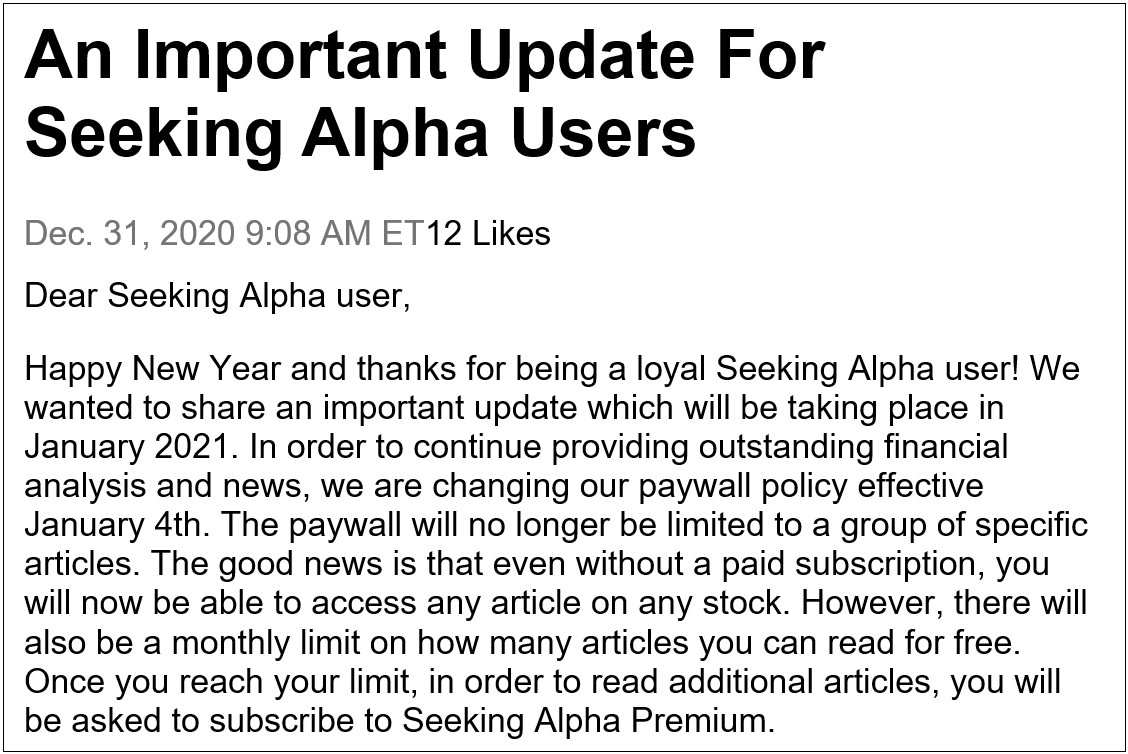
In a post that was made available to their 15.2 million readers on December 31st, Seeking Alpha told their free subscribers about a dramatic change that would take effect four days later. The notification informed that as of January 4th, all non-paid users would have “limited access to in-depth news and analysis.” There’s some confusion over how “limited” to some long-time readers (how many free articles wasn’t defined). More than a month later the announcement has received just 12 likes, and hundreds of insults, humorous jabs, and negative comments. Comments for the original post have been turned off, but commenting sprung up across other forums and is one of the most discussed topics on the investment website.


  Seeking Alpha Note to Subscribers, Full Text Here


Freemium to Paywall

Unlike mainstream news and market research providers such as Barron’s and The Wall Street Journal, the insight gained by Seeking Alpha visitors is provided by contributors that are primarily investors and buy-side industry professionals. This is an important differentiator over mainstream investment news which is largely funded by sell-side advertisers. This is thought to skew their reporting. 

Seeking Alpha had been based on a freemium model. The site and most articles were free to all who wanted access. A paid subscription “Pro” level of service was added in 2018.  This level allowed access to a full library of content on each ticker including a small selection of articles by their most popular contributors. These articles were only available free for a few days after published, then behind the Pro paywall.  Today, what was once available to all at no cost, is $29.99 per month. Seeking Alpha still has a very stripped down bare bones “Basic” level. And their Pro level service now boasts VIP service and no ads for $199.99 per year.

Comparisons

Well researched ideas that investors can use, especially if they are insights a little ahead of the mainstream can be invaluable. It is up to each investor to determine their needs, their trust level, and to what extent they will find enough ideas over time to make paying for any provider worthwhile. The jump from $0.00 to $29.99 is still tough to swallow. For many readers the subscription may be worth every penny, for most of the 15-17 million unique visitors each month, they will likely find other providers of insight for their needs. Visitors to Channelchek spiked in January and still continue the well-above-average pace. As a free equity research platform, it may have been one of the beneficiaries.

It’s hard to calculate the ROI of an investment tool or information provider. But the costs are clear and measurable.  By comparison, the Wall Street Journal charges $19.49 per month, more than 10 dollars less. Barron’s, without any discounts, will cost readers about the same as Seeking Alpha’s $30.  Neither of these well-respected sources has monitoring tools and available data similar to Seeking Alpha.  The average visitor spends 6 minutes on the crowd-sourced articles, which is higher than Barron’s, The Wall Street Journal, or The Economist.


Take-Away

If the goal of Seeking-Alpha is to seek additional revenue, this change may very well accomplish that for them.  With 15-17 million visitors, they can retain a small fraction paying for the same service and become more profitable. If the goal is to serve their long-time loyal visitors and advertisers, the change in their business model will make this more difficult.

Suggested
Reading:

Will Janet Yellen be Good for Investors

Why is Bitcoin Plummeting

Will the US Continue to Subsidize Alternative Energy?

Sources:

New Paywall Feedback SA

Seeking Alpha Contributor Change 2018

Important Update for Seeking Alpha
Users December 2020

Seeking Alpha Wikipedia

Seeking Alpha Why do we Have to Pay

Seeking Alpha Subscription Info

Stay up to date. Follow us:


Stay up to date. Follow us:

Comtech (CMTL) – New Awards Piling Up Encouraging Signs of Positive Business Momentum

Thursday, February 04, 2021

Comtech (CMTL)
New Awards Piling Up; Encouraging Signs of Positive Business Momentum

Comtech Telecommunications Corp. engages in the design, development, production, and marketing of products, systems, and services for advanced communications solutions in the United States and internationally. It operates in three segments: Telecommunications Transmission, Mobile Data Communications, and RF Microwave Amplifiers. The Telecommunications Transmission segment provides satellite earth station equipment and systems, over-the-horizon microwave systems, and forward error correction technology, which are used in various commercial and government applications, including backhaul of wireless and cellular traffic, broadcasting (including HDTV), IP-based communications traffic, long distance telephony, and secure defense applications. The Mobile Data Communications segment provides mobile satellite transceivers, and computers and satellite earth station network gateways and associated installation, training, and maintenance services; supplies and operates satellite packet data networks, including arranging and providing satellite capacity; and offers microsatellites and related components. The RF Microwave Amplifiers segment designs, develops, manufactures, and markets satellite earth station traveling wave tube amplifiers (TWTA) and broadband amplifiers. Its amplifiers are used in broadcast and broadband satellite communication; defense applications, such as telecommunications systems and electronic warfare systems; and commercial applications comprising oncology treatment systems, as well as to amplify signals carrying voice, video, or data for air-to-satellite-to-ground communications. The company serves satellite systems integrators, wireless and other communication service providers, broadcasters, defense contractors, military, governments, and oil companies. Comtech markets its products through independent representatives and value-added resellers. The company was founded in 1967 and is headquartered in Melville, New York.

Joe Gomes, Senior Research Analyst, Noble Capital Markets, Inc.

Refer to the full report for the price target, fundamental analysis, and rating.

    Positive Award Momentum Continuing. Comtech Telecommunications continues to pile up the awards. Since the first quarter fiscal 2021 call, we estimate Comtech has booked some $144.1 million of contracts, including $111.6 million from the Pennsylvania NG-911 award. The positive business momentum should continue as COVID-related restrictions begin to ease.

    Government Solutions.  Comtech’s Government Solutions business has been particularly active so far during the quarter, including a $10.4 million award from a U.S. military service branch representing the first phase of a multi antenna program that consists of multiple full-motion large aperture antenna tracking systems, an $11.4 million delivery order in support of a previously announced $58.8 …


This research is provided by Noble Capital Markets, Inc., a FINRA and S.E.C. registered broker-dealer (B/D).

*Analyst certification and important disclosures included in the full report. NOTE: investment decisions should not be based upon the content of this research summary.  Proper due diligence is required before making any investment decision. 

DLH Holdings Corp. (DLHC) – Post Call Commentary

Thursday, February 04, 2021

DLH Holdings Corp. (DLHC)
Post Call Commentary

DLH Holdings Corp is a provider of technology-enabled business process outsourcing and program management solutions in the United States. The company offers services to several government agencies which include the Department of veteran affairs, Department of health and human services, Department of Defense and other government agencies. It operates primarily through prime contracts and also derives its revenue from agencies of the federal government, primarily as a prime contractor but also as a subcontractor to other Federal prime contractors.

Joe Gomes, Senior Research Analyst, Noble Capital Markets, Inc.

Refer to the full report for the price target, fundamental analysis, and rating.

    Post Call Commentary. Management continues to see significant opportunities going forward. The enacted Federal budget stabilized key DLH customer funding. COVID continues to present near and long-term program opportunities. With the IBA acquisition, in our view, DLH is now well positioned to compete in a much broader category of opportunities, including such key focus areas to the new administration such as digital infrastructure, AI, telemedicine, and the move to the cloud.

    Organic Growth.  First quarter organic growth was stunted by COVID restrictions, which reduced pass-through travel expenses as well as certain compliance programs. Management is seeking ways to accomplish its compliance responsibilities under various methodologies without necessitating significant numbers of people on location. If successful, a significant portion of the reduced revenues will …


This Company Sponsored Research is provided by Noble Capital Markets, Inc., a FINRA and S.E.C. registered broker-dealer (B/D).

*Analyst certification and important disclosures included in the full report. NOTE: investment decisions should not be based upon the content of this research summary.  Proper due diligence is required before making any investment decision. 

Esports Entertainment Group, Inc. (GMBL) – Raising Price Target; Closes In On Acquisitions

Thursday, February 04, 2021

Esports Entertainment Group, Inc. (GMBL)
Raising Price Target; Closes In On Acquisitions

Esports Entertainment Group Inc is a development-stage online gambling company focused purely on esports. The company’s principal business operations include design, develop and test wagering systems.

Michael Kupinski, Director of Research, Noble Capital Markets, Inc.

Refer to the full report for the price target, fundamental analysis, and rating.

    NobleCon 17 highlights. This report highlights a presentation and Q&A at NobleCon 17 with CEO Grant Johnson. A rebroadcast may be obtained by clicking here. Topics that were discussed included the company’s strategy to create a vertically integrated approach to the esports market, updates on the acquisition timeline, anticipated revenue in fiscal 2022, and future acquisition prospects.

    Acquisition timeline.  The EGL acquisition closed the day after the presentation. Lucky Dino is expected to close within the month of February. The bigger transaction, ggCircuit/Helix transaction should close late March or early April, and will be a debt and equity transaction …


This Company Sponsored Research is provided by Noble Capital Markets, Inc., a FINRA and S.E.C. registered broker-dealer (B/D).

*Analyst certification and important disclosures included in the full report. NOTE: investment decisions should not be based upon the content of this research summary.  Proper due diligence is required before making any investment decision. 

PDS Biotechnology Corp (PDSB) – NCI-sponsored Phase 2 Study will Progress to Full Enrollment

Thursday, February 04, 2021

PDS Biotechnology Corp (PDSB)
NCI-sponsored Phase 2 Study will Progress to Full Enrollment

PDS Biotechnology Corp operates as a clinical stage biotechnology company, principally involved in drug discovery in the United States. It is primarily engaged in the treatment of various early-stage and late-stage cancers, including head and neck cancer, prostate cancer, breast cancer, cervical cancer, anal cancer, and other cancers. Its products are based on the proprietary Versamune platform technology, which activates and directs the human immune system to unleash a powerful and targeted attack against cancer cells.

Ahu Demir, Ph. D., Biotechnology Research Analyst, Noble Capital Markets, Inc.

Refer to the full report for the price target, fundamental analysis, and rating.

    Moving towards full enrollment based on preliminary efficacy. Yesterday, PDS Biotechnology announced achievement of preliminary efficacy leading to progression of Phase 2 study to full enrollment. The National Cancer Institute’s (NCI) sponsored Phase 2 trial is evaluating PDS0101 in combination with two investigational immune-modulating agents bintrafusp alfa (M7824, a TGF-b / anti-PD-L1 bifunctional fusion protein) and NHS-IL12 (M9241, a DNA-targeted immunocytokine) for the treatment of advanced human papillomavirus (HPV)-associated cancers. Trial progression was decided initially based on the safety profile of the triple combination. Then on the efficacy front, the triple combination was expected to exceed (~40%) the single-agent M7824 clinical efficacy (30.5% objective response rate, ORR, published on J ImmunoTher Cancer 2020 October). As the objective response was observed in 3 out of 8 patients (37.5% ORR), the Phase 2 study will progress to full enrollment.

    Phase 2 study details.  The Phase 2 clinical study (NCT04287868) evaluating triple combination (M7824, M9241, and PDS0101 in a total of 40 subjects who are checkpoint inhibitor naïve and refractory patients with HPV-associated cancers. We anticipate more mature data in Q2/Q3 2021 …


This Company Sponsored Research is provided by Noble Capital Markets, Inc., a FINRA and S.E.C. registered broker-dealer (B/D).

*Analyst certification and important disclosures included in the full report. NOTE: investment decisions should not be based upon the content of this research summary.  Proper due diligence is required before making any investment decision. 

Release – Comstock Mining (LODE) – Focuses on Climate Smart Mining


Comstock Focuses on Climate Smart Mining; Develops Existing and New Precious and Strategic Metals Projects to Fuel Clean Energy Transition


Virginia City, NV (February 4, 2021) Comstock Mining Inc. (“Comstock” and the “Company”) (NYSE American: LODE), a diversified precious and strategic metals production and processing company, today updated its plans for meeting the escalating demand for clean energy technologies. The Company and our partners, including Mercury Clean-Up, LLC (“MCU”) started with the deployment of new metals extraction and processing technologies that remediate soils and more efficiently extract and process gold at the Company’s existing facilities and abroad and we have targeted new development projects that efficiently reprocess and renew silver and other strategic metals.

Comstock’s shift to climate-smart mining started with technologies that target tailings, leach pads, and other mining wastes, in order to capture residual precious metals. The Company’s partnerships, projects and technologies, involve proprietary processes for remediating mercury and other metals from abandoned and leached mining sites and the surrounding eco-systems, while more efficiently extracting silver, gold and other strategic metals.

Corrado De Gasperis, Comstock’s Executive Chairman and Chief Executive Officer stated, “Our ongoing work with remote mercury recovery and gold extraction provides an immediate example of our approach. MCU’s mercury remediation equipment is currently deployed in the Philippines, with processing operations commencing this month. We have coordinated with the community, landed the equipment, assembled the team, and prepped for start-up. Our joint venture partners are collaborating to begin removing toxic mercury contamination from U.S. and international eco-systems, while efficiently extracting gold from contaminated and abandoned mining sites.”

The Company plans to build and improve on these mineral and metal developments by introducing additional technologies that maximize recoveries from the Company’s existing gold and silver resources in Nevada, as well as other conservation-based projects that the Company and its partners plan on introducing in the coming months.

Quantum Surge in Global Demand for Metals

Comstock believes that its approach is especially timely and important. A recent report from the World Bank, entitled Mineral Intensity of the Clean Energy Transition, reported that the production of graphite, cobalt, lithium and many other strategic minerals and metals are expected to increase dramatically by 2050, as an estimated 3 billion tons of minerals and metals are used to deploy energy storage and renewable energy production projects.

“The world is becoming increasingly aware of the current risks and realities presented by climate change,” concluded Mr. De Gasperis. “A quantum surge of investment is expected in conservation-based energy storage and renewable energy projects worldwide. We cannot rely on conventional mining methods to meet critical mineral and metal needs and we are energized by these new opportunities, and the prospect of deploying these technologies to build shareholder value by meeting the increasing higher demand for these strategic, critical and precious metals.”

About Comstock Mining Inc.

Comstock Mining Inc. is a Nevada-based, precious and strategic metal-based exploration, economic resource development, mineral production and metal processing business with a strategic focus on high-value, cash-generating, environmentally friendly, and economically enhancing mining and processing technologies and businesses. The Company has extensive, contiguous property in the historic Comstock and Silver City mining districts (collectively, the “Comstock District”), is an emerging leader in sustainable, responsible mining and processing, and is currently commercializing environment-enhancing, metal-based technologies, products, and processes for precious and strategic metals recovery.

Forward-Looking Statements

This press release and any related calls or discussions may include forward-looking statements within the meaning of Section 27A of the Securities Act of 1933, as amended, and Section 21E of the Securities Exchange Act of 1934, as amended. All statements, other than statements of historical facts, are forward-looking statements. The words “believe,” “expect,” “anticipate,” “estimate,” “project,” “plan,” “should,” “intend,” “may,” “will,” “would,” “potential” and similar expressions identify forward-looking statements, but are not the exclusive means of doing so. Forward-looking statements include statements about matters such as: consummation of all pending transactions; project, asset or Company valuations; future industry market conditions; future explorations, acquisitions, investments and asset sales; future performance of and closings under various agreements; future changes in our exploration activities; future estimated mineral resources; future prices and sales of, and demand for, our products; future impacts of land entitlements and uses; future permitting activities and needs therefor; future production capacity and operations; future operating and overhead costs; future capital expenditures and their impact on us; future impacts of operational and management changes (including changes in the board of directors); future changes in business strategies, planning and tactics and impacts of recent or future changes; future employment and contributions of personnel, including consultants; future land sales, investments, acquisitions, joint ventures, strategic alliances, business combinations, operational, tax, financial and restructuring initiatives; the nature and timing of and accounting for restructuring charges and derivative liabilities and the impact thereof; contingencies; future environmental compliance and changes in the regulatory environment; future offerings of equity or debt securities; asset sales and associated costs; future working capital, costs, revenues, business opportunities, debt levels, cash flows, margins, earnings and growth.

These statements are based on assumptions and assessments made by our management in light of their experience and their perception of historical and current trends, current conditions, possible future developments and other factors they believe to be appropriate. Forward-looking statements are not guarantees, representations or warranties and are subject to risks and uncertainties, many of which are unforeseeable and beyond our control and could cause actual results, developments and business decisions to differ materially from those contemplated by such forward-looking statements. Some of those risks and uncertainties include the risk factors set forth in our filings with the SEC and the following: counterparty risks; capital markets’ valuation and pricing risks; adverse effects of climate changes or natural disasters; global economic and capital market uncertainties; the speculative nature of gold or mineral exploration, including risks of diminishing quantities or grades of qualified resources; operational or technical difficulties in connection with exploration or mining activities; contests over title to properties; potential dilution to our stockholders from our stock issuances and recapitalization and balance sheet restructuring activities; potential inability to comply with applicable government regulations or law; adoption of or changes in legislation or regulations adversely affecting businesses; permitting constraints or delays; decisions regarding business opportunities that may be presented to, or pursued by, us or others; the impact of, or the non-performance by parties under agreements relating to, acquisitions, joint ventures, strategic alliances, business combinations, asset sales, leases, options and investments to which we may be party; changes in the United States or other monetary or fiscal policies or regulations; interruptions in production capabilities due to capital constraints; equipment failures; fluctuation of prices for gold or certain other commodities (such as silver, zinc, cyanide, water, diesel fuel and electricity); changes in generally accepted accounting principles; adverse effects of terrorism and geopolitical events; potential inability to implement business strategies; potential inability to grow revenues; potential inability to attract and retain key personnel; interruptions in delivery of critical supplies, equipment and raw materials due to credit or other limitations imposed by vendors or others; assertion of claims, lawsuits and proceedings; potential inability to satisfy debt and lease obligations; potential inability to maintain an effective system of internal controls over financial reporting; potential inability or failure to timely file periodic reports with the SEC; potential inability to list our securities on any securities exchange or market; inability to maintain the listing of our securities; and work stoppages or other labor difficulties. Occurrence of such events or circumstances could have a material adverse effect on our business, financial condition, results of operations or cash flows or the market price of our securities. All subsequent written and oral forward-looking statements by or attributable to us or persons acting on our behalf are expressly qualified in their entirety by these factors. Except as may be required by securities or other law, we undertake no obligation to publicly update or revise any forward-looking statements, whether as a result of new information, future events, or otherwise.

Neither this press release nor any related calls or discussions constitutes an offer to sell, the solicitation of an offer to buy or a recommendation with respect to any securities of the Company, the fund or any other issuer.

Contact information for

Comstock Mining Inc.
117 American Flat Rd
PO Box 1118
Virginia City, NV 89440
http://www.comstockmining.com

Corrado De Gasperis
Executive Chairman & CEO
Tel (775) 847-4755
[email protected]

Zach Spencer
Director of External Relations
Tel (775) 847-5272 ext.151
[email protected]

Source: Comstock Mining

Bassett Furniture (BSET) – Furniture on Sale Initiating Coverage on Bassett Furniture

Wednesday, February 03, 2021

Bassett Furniture (BSET)
Furniture on Sale, Initiating Coverage on Bassett Furniture

Bassett Furniture Industries Inc is a manufacturer, importer, and retailer of home furnishings products in the United States. It operates through the following segments: The Wholesale segment focuses on the design, manufacture, sourcing, sale, and distribution of furniture products. The Retail segment consists of company-owned stores. The Logistical Services segment offers shipping, delivery, and warehousing services.

Joe Gomes, Senior Research Analyst, Noble Capital Markets, Inc.

Refer to the full report for the price target, fundamental analysis, and rating.

    Initiating coverage of Bassett Furniture Industries. We believe Bassett provides attractive upside from the current price with a very favorable furniture environment, lowered costs due to a 2020 restructuring, and growth initiatives focused around a “Made in America” strategy and expanding e-commerce opportunities.

    Leading Custom Furniture Manufacturer and Retailer.  Bassett is one of the largest integrated furniture manufacturers and retailers in the U.S. The Company currently manufactures product in five domestic facilities, producing about 75% of its furniture in the U.S. Bassett operates a 97 store retail network, consisting of 63 corporate owned stores and 34 licensed stores, and sells to over 700 …


This Company Sponsored Research is provided by Noble Capital Markets, Inc., a FINRA and S.E.C. registered broker-dealer (B/D).

*Analyst certification and important disclosures included in the full report. NOTE: investment decisions should not be based upon the content of this research summary.  Proper due diligence is required before making any investment decision. 

DLH Holdings Corp. (DLHC) – Solid 1Q21 Results But COVID Still Impacting

Wednesday, February 03, 2021

DLH Holdings Corp. (DLHC)
Solid 1Q21 Results, But COVID Still Impacting

DLH Holdings Corp is a provider of technology-enabled business process outsourcing and program management solutions in the United States. The company offers services to several government agencies which include the Department of veteran affairs, Department of health and human services, Department of Defense and other government agencies. It operates primarily through prime contracts and also derives its revenue from agencies of the federal government, primarily as a prime contractor but also as a subcontractor to other Federal prime contractors.

Joe Gomes, Senior Research Analyst, Noble Capital Markets, Inc.

Refer to the full report for the price target, fundamental analysis, and rating.

    1Q21 Results. DLH reported 1Q21 revenue of $57.9 million, EBITDA of $5.7 million, and EPS of $0.13. The comparable numbers for last year were $52.2 million, $5.0 million, and $0.12 respectively. We were at $57.5 million, $5.5 million, and $0.14, respectively. IBA contributed nearly $7 million of revenue in the quarter, but the absence of pass-through travel revenue hit organic growth. Such revenue generates approximately $2.5 million per quarter in a normal environment.

    Improving Operating Metrics.  DLH posted improving operating metrics, even with COVID impacted revenue. For example, EBITDA margin improved to 9.8% from 9.5% in the year ago period. Operating margin rose to 6.3% versus 6.0% in 1Q20. Net margin was 3.1% in the first quarter of fiscal 2021, up from 3.0% in the first quarter of fiscal 2020. G&A costs, as a percent of revenue, declined to 10.6% from …


This Company Sponsored Research is provided by Noble Capital Markets, Inc., a FINRA and S.E.C. registered broker-dealer (B/D).

*Analyst certification and important disclosures included in the full report. NOTE: investment decisions should not be based upon the content of this research summary.  Proper due diligence is required before making any investment decision. 

Release – Ocugen (OCGN) – Announces Execution of Definitive Agreement for the Commercialization of COVAXIN


Ocugen and Bharat Biotech Announce Execution of Definitive Agreement for the Commercialization of COVAXIN™ in the US Market


  • Definitive Agreement provides details of the previously announced intent to co-develop COVAXIN™ for the US market
  • Ocugen and Bharat Biotech to share US commercialization profits
  • Ocugen to receive initial supply of COVAXIN™ doses from Bharat Biotech upon authorization from US regulatory authorities while it ramps up manufacturing in the US
  • COVAXIN™ received EUA (Emergency Use Authorization) in India in January and is currently in a fully enrolled Phase 3 clinical trial involving 25,800 patients
  • COVAXIN™ (whole-virion inactivated COVID-19 vaccine candidate) effectively neutralizes UK variant of SARS-Cov-2 reducing the possibility of mutant virus escape

MALVERN, Pa. and HYDERABAD, India, Feb. 02, 2021 — Ocugen, Inc., (NASDAQ: OCGN), a biopharmaceutical company focused on discovering, developing, and commercializing gene therapies to cure blindness diseases and developing a vaccine to fight COVID-19, and Bharat Biotech, a global leader in vaccine innovation, today announced they have entered into a definitive agreement to co-develop, supply, and commercialize Bharat Biotech’s COVAXIN™, an advanced stage whole-virion inactivated COVID-19 vaccine candidate, for the United States market.

Under the terms of the agreement, Ocugen will have US rights to the vaccine candidate and will be responsible for clinical development, regulatory approval (including EUA) and commercialization for the US market. Bharat Biotech will supply initial doses to be used in the US upon Ocugen’s receipt of an EUA. In addition, Bharat Biotech will support the technology transfer for manufacturing in the US. In consideration for the exclusive license to the US market, Ocugen will share the profits from the sale of COVAXIN™ in the US market with Bharat Biotech, with Ocugen retaining 45% of the profits.

The collaboration will leverage the vaccine expertise of Ocugen’s leadership team. In preparation for the development of COVAXIN™ in the US, Ocugen’s Vaccine Scientific Advisory Board and Ocugen management have initiated discussions with the U.S. Food & Drug Administration (FDA) and the Biomedical Advanced Research and Development Authority (BARDA) to develop a regulatory path to EUA and, eventually, biologics license application (BLA) approval in the US market for COVAXIN™. Ocugen is also in active discussions with manufacturers in the US to produce a significant number of doses of COVAXIN™ to support its US immunization program.

“The evaluation of COVAXIN™ has resulted in several unique product characteristics including long-term persistence of immune responses to multiple viral proteins, as opposed to only the spike protein, and has demonstrated broad spectrum neutralizing capability with heterologous SARS-CoV-2 strains, thus potentially reducing or eliminating escape mutants. Requiring only a standard vaccine storage temperature of 2-8oC and with the potential to treat all age-groups, COVAXIN™ may offer an important option to protect lives across America,” said Dr. Shankar Musunuri, Chairman, CEO, and Co-Founder of Ocugen.

The Central Licensing Authority in India has granted permission for the sale or distribution of COVAXIN™ for restricted use in emergency situations in the public interest, in clinical trial mode. With the kickoff of what is likely to become the biggest national vaccination campaign in India’s history, COVAXIN™ is being administered as one of the two COVID-19 shots available under emergency authorization with the first batch of 30 million doses being administered to health professionals and front-line workers.

About COVAXIN™

COVAXIN™, India’s COVID-19 vaccine by Bharat Biotech is developed in collaboration with the Indian Council of Medical Research (ICMR) – National Institute of Virology (NIV). COVAXIN is a highly purified and inactivated vaccine that is manufactured using a vero cell manufacturing platform with an excellent safety track record of more than 300 million doses supplied.

In addition to generating strong immune response against multiple antigens, COVAXIN™ is shown to generate memory T cell responses, for its multiple epitopes, indicating longevity and a rapid antibody response to future infections. With published data demonstrating a safety profile superior to several other vaccines, COVAXIN™ is packaged in multi-dose vials that can be stored at 2-8oC.

About Ocugen, Inc.

Ocugen, Inc. is a biopharmaceutical company focused on discovering, developing, and commercializing gene therapies to cure blindness diseases and developing a vaccine to fight COVID-19. Our breakthrough modifier gene therapy platform has the potential to treat multiple retinal diseases with one drug – “one to many” and our novel biologic product candidate aims to offer better therapy to patients with underserved diseases such as wet age-related macular degeneration, diabetic macular edema, and diabetic retinopathy. We are co-developing Bharat Biotech’s COVAXIN™ vaccine candidate for COVID-19 in the US market. For more information, please visit www.ocugen.com.

About Bharat Biotech:

Bharat Biotech has established an excellent track record of innovation with more than 140 global patents, a wide product portfolio of more than 16 vaccines, 4 bio-therapeutics, registrations in more than 116 countries, and World Health Organization (WHO) Pre-qualifications. Located in Genome Valley in Hyderabad, India, a hub for the global biotech industry, Bharat Biotech has built a world-class vaccine & bio-therapeutics, research & product development, Bio-Safety Level 3 manufacturing, and vaccine supply and distribution.

Having delivered more than 6 billion doses of vaccines worldwide, Bharat Biotech continues to lead innovation and has developed vaccines for influenza H1N1, Rotavirus, Japanese Encephalitis, Rabies, Chikungunya, Zika and the world’s first tetanus-toxoid conjugated vaccine for Typhoid.

Bharat’s commitment to global social innovation programs and public private partnerships resulted in the introduction of path breaking WHO pre-qualified vaccines BIOPOLIO®, ROTAVAC® and Typbar TCV® combatting polio, rotavirus, typhoid infections, respectively. The recent acquisition of the rabies vaccine facility, Chiron Behring, from GlaxoSmithKline (GSK) has positioned Bharat Biotech as the largest rabies vaccine manufacturer in the world. To learn more about Bharat Biotech visit www.bharatbiotech.com

Cautionary Note on Forward-Looking Statements

This press release contains forward-looking statements within the meaning of The Private Securities Litigation Reform Act of 1995, which are subject to risks and uncertainties. We may, in some cases, use terms such as “predicts,” “believes,” “potential,” “proposed,” “continue,” “estimates,” “anticipates,” “expects,” “plans,” “intends,” “may,” “could,” “might,” “will,” “should” or other words that convey uncertainty of future events or outcomes to identify these forward-looking statements. Such statements are subject to numerous important factors, risks and uncertainties that may cause actual events or results to differ materially from our current expectations. These and other risks and uncertainties are more fully described in our periodic filings with the Securities and Exchange Commission (the “SEC”), including the risk factors described in the section entitled “Risk Factors” in the quarterly and annual reports that we file with the SEC. Any forward-looking statements that we make in this press release speak only as of the date of this press release. Except as required by law, we assume no obligation to update forward-looking statements contained in this press release whether as a result of new information, future events or otherwise, after the date of this press release.

Ocugen Contact:

Ocugen, Inc.
Sanjay Subramanian
Chief Financial Officer
[email protected]

Media Contact:

For Ocugen:
LaVoieHealthScience

Lisa DeScenza
[email protected]

+1 978-395-5970

For Bharat Biotech:
Sheela Panicker
[email protected]

+91 984-980-9594

SOURCE: Ocugen

Release – Stem Holdings (STMH) – Announces All Common Shares of DRVD will Trade Under symbol STMH on February 4 2021


Stem Holdings Announces All Common Shares of ‘DRVD’ will Trade Under symbol ‘STMH’ on February 4, 2021


Consolidated Market Capitalization of US$112 Million Post-Acquisition

BOCA RATON, FL, Feb. 02, 2021 (GLOBE NEWSWIRE) — Stem Holdings, Inc. DBA Driven by Stem (the “Company” or “Stem”) (OTCQX: STMH CSE: STEM), a leading omnichannel, vertically-integrated cannabis branded products and technology company with an integrated Delivery-as-a-Service (DaaS) platform, today announced the timeline and process for the exchange of all common shares of Driven Deliveries, Inc. (“Driven” or “Driven Deliveries”) (OTCQB: DRVD) for shares of Stem. The shares of Stem trade under the symbol, STMH, on the OTCQX and, STEM, on the CSE.

The exchange of the Driven Deliveries common stock for Stem common stock follows the Company’s previously announced acquisition (the “Acquisition”) of Driven Deliveries, which closed December 29, 2020. All Driven Deliveries Shareholders will receive one share of Stem’s common stock for each share held.

On February 4, 2021 FINRA will halt and remove the DRVD symbol (CUSIP NO: 26209D105). Driven shares in brokerage accounts will automatically be converted to shares of Stem (CUSIP NO: 85858U107) by Depository Trust Company (“DTC”) and the brokerage firms. There is no additional action required from investors with deposited DRVD shares or DRVD investors who have purchased in the open market.

Pursuant to Stem’s S-4 deemed effective by the SEC on February 2, 2021, Driven shareholders with undeposited shares held in certificate form or in book entry form with Driven’s transfer agent will have shares of Stem issued, in the same amount and with the same restrictions, by Odyssey Trust Company, Stem’s transfer agent. Following such issuance, current DRVD stock certificates (CUSIP NO: 26209D105) will be declared void and should be destroyed by the shareholder.

Driven & Stem shareholders needing to contact the transfer agent should submit and online ticket at https://odysseycontact.com/ for service.

About Stem

Stem is a leading omnichannel, vertically-integrated cannabis branded products and technology company with state-of-the-art cultivation, processing, extraction, retail, distribution, and delivery-as-a-service (DaaS) operations throughout the United States. Stem’s family of award-winning brands includes TJ’s Gardens™, TravisxJames™, and Yerba Buena™ flower and extracts; Cannavore™ edible confections; Doseology™, a CBD mass-market brand launching in 2021; as well as DaaS brands Budee™ and Ganjarunner™ through the acquisition of Driven Deliveries. Budee™ and Ganjarunner™ e-commerce platforms provide direct-to-consumer proprietary logistics and an omnichannel UX (user experience) / CX (customer experience).

Cautionary Note Regarding Forward-Looking Information

This press release contains statements that constitute “forward-looking information” within the meaning of applicable securities laws, including statements regarding the plans, intentions, beliefs and current expectations of the management of Stem with respect to future business activities. Forward-looking information is often identified by the words “may,” “would,” “could,” “should,” “will,” “intend,” “plan,” “anticipate,” “believe,” “estimate,” “expect” or similar expressions and includes information regarding the exchange of Driven and Stem shares and the timing thereof. Investors are cautioned that forward-looking information is not based on historical facts but instead reflects the management of Stem expectations, estimates or projections concerning future results or events based on the opinions, assumptions and estimates of management considered reasonable at the date the statements are made. Although Stem believes that the expectations reflected in such forward-looking information are reasonable, such information involves risks and uncertainties, and undue reliance should not be placed on such information, as unknown or unpredictable factors could have material adverse effects on future results, performance or achievements of the Company. Among the key factors that could cause actual results to differ materially from those projected in the forward-looking information are the following: changes in general economic, business and political conditions, including changes in the financial markets; adverse changes in applicable laws; adverse changes in the application or enforcement of current laws, including those related to taxation; and changes or delays resulting from third-parties and regulators which are outside of the Company’s control. This forward-looking information may be affected by risks and uncertainties in the business of Stem and market conditions.

Should one or more of these risks or uncertainties materialize, or should assumptions underlying the forward-looking information prove incorrect, actual results may vary materially from those described herein as intended, planned, anticipated, believed, estimated or expected. Although Stem has attempted to identify important risks, uncertainties and factors which could cause actual results to differ materially, there may be others that cause results not to be as anticipated, estimated or intended. Stem does not assume any obligation to update this forward-looking information except as otherwise required by applicable law.

No securities regulatory authority has in any way passed upon the merits of the proposed transactions described in this news release or has approved or disapproved of the contents of this news release.

For further information, please contact:

Media Contact:
Mauria Betts
Stem Holdings, Inc.
[email protected]
971-319-0303

Investor Contact:
KCSA Strategic Communications
Valter Pinto or Elizabeth Barker
+1 212-896-1254 or +1 212-896-1203
[email protected]

SOURCE: Driven By Stem