Release – Unicycive Therapeutics Announces Resubmission of New Drug Application (NDA) for Oxylanthanum Carbonate (OLC)

Research News and Market Data on UNCY

December 29, 2025 7:05am EST Download as PDF

New PDUFA date expected in 1H 2026 within 30 days of NDA resubmission

LOS ALTOS, Calif., Dec. 29, 2025 (GLOBE NEWSWIRE) — Unicycive Therapeutics, Inc. (“Unicycive” or the “Company”) (Nasdaq: UNCY), a clinical-stage biotechnology company developing therapies for patients with kidney disease, today announced that it has resubmitted its 505(b)(2) New Drug Application (NDA) to the U.S. Food and Drug Administration (FDA) for oxylanthanum carbonate (OLC), the Company’s investigational oral phosphate binder for the treatment of hyperphosphatemia in patients with chronic kidney disease (CKD) on dialysis.

“Our original third-party manufacturing vendor has made significant progress toward regaining FDA compliance, allowing us to resubmit the OLC NDA as planned,” said Shalabh Gupta, M.D., Chief Executive Officer of Unicycive. “With a cash runway into 2027, we are well-positioned to complete the regulatory approval process for OLC so we can prepare to bring this important treatment option to dialysis patients with hyperphosphatemia as soon as possible.”

The NDA for OLC was resubmitted based on continued progress by the original third-party manufacturing vendor in resolving FDA-cited deficiencies and demonstrating inspection readiness. Unicycive previously discussed these milestones during a Type A meeting with the FDA in September 2025, which was held to obtain feedback and alignment on resolving the single deficiency identified in the Company’s Complete Response Letter (CRL) related to the compliance status of the vendor. No additional issues were raised by the FDA. Following receipt of the CRL in June 2025, European Union regulatory authorities inspected the original third-party manufacturing vendor and identified no deficiencies.

The Prescription Drug User Fee Act target guidelines for NDA resubmissions include acknowledgment of acceptance for review within 30 days of submission, and completion of submission review within 6 months.

About Oxylanthanum Carbonate (OLC)
OLC is an investigational oral phosphate binder that leverages proprietary nanoparticle technology to deliver high phosphate binding potency, reducing the number and size of pills that patients must take to treat hyperphosphatemia in patients with chronic kidney disease (CKD) on dialysis. Its potential best-in-class profile may have meaningful patient adherence benefits over currently available treatment options as it requires a lower pill burden.

Unicycive is seeking FDA approval of OLC via the 505(b)(2) regulatory pathway. The NDA submission package is based on data from three clinical studies (a Phase 1 study in healthy volunteers, a bioequivalence study in healthy volunteers, and a tolerability study of OLC in CKD patients on dialysis), multiple preclinical studies, and the chemistry, manufacturing and controls (CMC) data. OLC is protected by a strong global patent portfolio including issued patents on composition of matter with exclusivity until 2031, and with the potential for patent term extension until 2035.

About Hyperphosphatemia
Hyperphosphatemia is a serious medical condition that occurs in nearly all patients with End Stage Renal Disease (ESRD). Annually there are over 450,000 individuals in the U.S. that require medication to control their phosphate levels.1 Uncontrolled hyperphosphatemia is strongly associated with increased death and hospitalization for CKD patients on dialysis. Treatment of hyperphosphatemia is aimed at lowering serum phosphate levels via two means: (1) restricting dietary phosphorus intake; and (2) using, on a daily basis, and with each meal, oral phosphate binding drugs that facilitate fecal elimination of dietary phosphate rather than its absorption from the gastrointestinal tract into the bloodstream.

1Flythe JE. Dialysis-Past, Present, and Future: A Kidney360 Perspectives Series. Kidney360. 2023 May 1;4(5):567-568. doi: 10.34067/KID.0000000000000145.

About Unicycive Therapeutics
Unicycive Therapeutics is a biotechnology company developing novel treatments for kidney diseases. Unicycive’s lead investigational treatment is oxylanthanum carbonate, a novel phosphate binding agent for the treatment of hyperphosphatemia in patients with chronic kidney disease who are on dialysis. Unicycive’s second investigational treatment UNI-494 is intended for the treatment of conditions related to acute kidney injury. It has been granted orphan drug designation (ODD) by the FDA for the prevention of Delayed Graft Function (DGF) in kidney transplant patients and has completed a Phase 1 dose-ranging safety study in healthy volunteers. For more information about Unicycive, visit Unicycive.com and follow us on LinkedIn and X.

Forward-looking statements
Certain statements in this press release are forward-looking within the meaning of the Private Securities Litigation Reform Act of 1995. These statements may be identified using words such as “anticipate,” “believe,” “forecast,” “estimated” and “intend” or other similar terms or expressions that concern Unicycive’s expectations, strategy, plans or intentions. These forward-looking statements are based on Unicycive’s current expectations and actual results could differ materially. There are several factors that could cause actual events to differ materially from those indicated by such forward-looking statements. These factors include, but are not limited to, clinical trials involve a lengthy and expensive process with an uncertain outcome, and results of earlier studies and trials may not be predictive of future trial results; our clinical trials may be suspended or discontinued due to unexpected side effects or other safety risks that could preclude approval of our product candidates; risks related to business interruptions, which could seriously harm our financial condition and increase our costs and expenses; our need to raise substantial additional capital in the future to fund our continuing operations and the development and commercialization of our current product candidates and future product candidates; dependence on key personnel; substantial competition; uncertainties of patent protection and litigation; dependence upon third parties; risks related to delays in obtaining or failure to obtain FDA clearances or approvals and noncompliance with FDA regulations; and our failure, or the failure of our third-party manufacturers, or their subcontractors, to comply with cGMPs or other applicable regulations, which could result in sanctions being imposed on us or the manufacturers, including fines, injunctions, civil penalties, delays, suspension or withdrawal of approvals, license revocation, seizures or recalls of product candidates, operating restrictions and criminal prosecutions, any of which could adversely affect supplies of our product candidates and harm our business and results of operations. Actual results may differ materially from those indicated by such forward-looking statements as a result of various important factors, including: the uncertainties related to market conditions and other factors described more fully in the section entitled ‘Risk Factors’ in Unicycive’s Annual Report on Form 10-K for the year ended December 31, 2024, and other periodic reports filed with the Securities and Exchange Commission. Any forward-looking statements contained in this press release speak only as of the date hereof, and Unicycive specifically disclaims any obligation to update any forward-looking statement, whether as a result of new information, future events or otherwise.

Investor Contacts:

Kevin Gardner
LifeSci Advisors
kgardner@lifesciadvisors.com

Media Contact:

Layne Litsinger
Real Chemistry
llitsinger@realchemistry.com

SOURCE: Unicycive Therapeutics, Inc.
Primary Logo

Source: Unicycive Therapeutics, Inc.

Released December 29, 2025
Release – Twin Hospitality Group Announces Leadership Updates

Research News and Market Data on TWNP

December 29, 2025

PDF Version

Andy Wiederhorn Appointed Chief Executive Officer; Roger Gondek to Assume Twin Peaks President Role

DALLAS, Dec. 29, 2025 (GLOBE NEWSWIRE) — Twin Hospitality Group Inc. (Nasdaq: TWNP), the parent company of Twin Peaks Restaurant, today announced the appointment of Andy Wiederhorn as Chief Executive Officer, effective immediately, following the termination of Chief Executive Officer Kim Boerema. Additionally, Roger Gondek, currently Chief Operating Officer of Twin Peaks Restaurant, will also assume the role of President of Twin Peaks Restaurant while continuing in his COO responsibilities.

Wiederhorn, who was integral in spinning out Twin Peaks and Smokey Bones into Twin Hospitality Group Inc., has served as Chairman of the Board since August 2025. In this role, he has worked closely with the leadership team to position the company for sustained growth and operational excellence. Gondek has served as Chief Operating Officer of Twin Peaks since 2017 and brings approximately 15 years of experience with the brand, including previous operations leadership roles with Twin Peaks’ largest franchisee.

“I’m pleased to take on the Chief Executive Officer role and continue to collaborate with Roger in his expanded capacity as President,” said Andy Wiederhorn, Chairman and Chief Executive Officer of Twin Hospitality Group. “We remain focused on driving key business initiatives forward, including streamlining operations and enhancing the guest experience. This leadership restructuring optimizes our resources while minimizing overhead, providing additional value as we work to restructure our debt and strengthen the company for long-term success.”

Twin Hospitality Group Inc.
Twin Hospitality Group Inc. is a restaurant company that strategically develops and operates specialty casual dining restaurant concepts with a goal to redefine the casual dining category with its experiential driven brands. For more information, visit https://ir.twinpeaksrestaurant.com/.

About Twin Peaks
Founded in 2005 in the Dallas suburb of Lewisville, Twin Peaks has 114 locations in the U.S. and Mexico. Twin Peaks is the ultimate sports lodge featuring made-from-scratch food and the coldest beer in the business, surrounded by scenic views and wall-to-wall TVs. At every Twin Peaks, guests are immediately welcomed by a friendly Twin Peaks Girl and served up a menu made for MVPs. From its smashed and seared-to-order burgers to its in-house smoked brisket and wings, guests can expect menu items that satisfy every appetite. To learn more about franchise opportunities, visit twinpeaksfranchise.com. For more information, visit twinpeaksrestaurant.com.

Forward-Looking Statements
This press release contains forward-looking statements within the meaning of the Private Securities Litigation Reform Act of 1995, including statements relating to the company’s future operating performance. Forward-looking statements reflect the expectations of management concerning the future and are subject to significant business, economic and competitive risks, uncertainties, and contingencies. These factors are difficult to predict and beyond our control and could cause our actual results to differ materially from those expressed or implied in such forward-looking statements. We refer you to the documents that are filed from time to time by Twin Hospitality Group Inc. with the Securities and Exchange Commission, such as its reports on Form 10-K, Form 10-Q and Form 8-K, for a discussion of these and other factors. We undertake no obligation to update any forward-looking statement to reflect events or circumstances occurring after the date of this press release.

Investor Relations:
ICR
Michelle Michalski
ir@twinpeaksrestaurant.com

Media Relations:
Erin Mandzik
emandzik@fatbrands.com
860-212-6509

Release – Greenwich LifeSciences Extends Lock-up of Directors and Officers to September 30, 2026

Research News and Market Data on GLSI

 Download as PDF December 29, 2025 6:00am EST

STAFFORD, Texas, Dec. 29, 2025 (GLOBE NEWSWIRE) — Greenwich LifeSciences, Inc. (Nasdaq: GLSI) (the “Company”), a clinical-stage biopharmaceutical company focused on its Phase III clinical trial, FLAMINGO-01, which is evaluating Fast Track designated GLSI-100, an immunotherapy to prevent breast cancer recurrences, today announced that its Board of Directors has extended the lock-up of the shares owned by the Company’s directors, officers, and existing pre-IPO investors to September 30, 2026 which is approximately 72 months from the date of the Company’s IPO. During this period, current officers, directors and certain shareholders will not be able to sell their shares of the Company’s common stock unless otherwise modified by the Board of Directors. After September 30, 2026, the quantity of these locked-up shares that can be sold daily and over various periods of time will be restricted under a leak-out plan unless otherwise modified by the Board of Directors.

CEO Snehal Patel commented, “This unprecedented 6 years lock-up is controlled by the Board and is designed to align the locked-up shareholders with the Company’s long term investors and to support the FLAMINGO-01 Phase III trial. The Board could choose to end the 100% lock-up at any time and could then implement a pre-determined leak-out plan and/or a 10b5-1 trading plan that allows for the organized independent selling of some of the locked-up shares by a third party over a specified period of time. One example of how the Board could proceed in the future might be to continue to keep 95% or 99% or a higher or lower percentage of the locked-up shares locked up for longer periods of time after September 30, 2026, while allowing 5% or 1% or a lower or higher percentage of the locked-up shares to be sold within a 10b5-1 trading plan over a specified period of time. Any interim analyses or strategic transactions, such as an acquisition or partnership, which could occur at any time, could also affect the Board’s lock-up and leak-out plans.”

About FLAMINGO-01 Open Label Phase III Data

More than 1,000 patients have been screened with a current screen rate of approximately 600 patients per year. The 250 patient non-HLA-A*02 arm is now fully enrolled, where all patients received GLSI-100, which is 5 times more treated patients and recurrence rate data than the approximately 50 patients treated in the Phase IIb trial. The Primary Immunization Series (PIS), which includes the first 6 GLSI-100 injections over the first 6 months and is required to reach peak protection, is followed by 5 booster injections given every 6 months to prolong the immune response, thereby providing longer-term protection.

  • In the non-HLA-A*02 arm, a preliminary analysis of recurrence rates after the PIS is completed shows an approximately 80% reduction in recurrence rate.
  • This observation is trending similarly to the Phase IIb trial results and hazard ratio where HLA-A*02 patients were treated and where breast cancer recurrences were reduced up to 80% compared to a 20-50% reduction in recurrence rate by other approved products.
  • The immune response at baseline prior to any GLSI-100 treatment, the increasing immune response during the PIS, and the safety profile of non-HLA-A*02 patients is trending similarly to the HLA-A*02 arms of FLAMINGO-01 and to the Phase IIb study.

Analysis of the open label data from FLAMINGO-01 has been conducted in a manner that maintains the study blind. The open label recurrence rate, immune response, and safety data is based on the patients enrolled to date in FLAMINGO-01 and the data provided by the clinical sites so far, which is not completed or fully reviewed, and is thus preliminary. While comparing any preliminary FLAMINGO-01 data to the Phase IIb clinical trial data may be possible, these preliminary results are not a prediction of future results, and the results at the end of the study may differ.

About GLSI-100 Phase IIb Study

In the prospective, randomized, single-blinded, placebo-controlled, multi-center (16 sites led by MD Anderson Cancer Center) Phase IIb clinical trial of HLA-A*02 breast cancer patients, 46 HER2/neu 3+ over-expressor patients were treated with GLSI-100, and 50 placebo patients were treated with GM-CSF alone. After 5 years of follow-up, there was an 80% or greater reduction in cancer recurrences in the HER2/neu 3+ patients who were treated with GLSI-100, followed, and remained disease free over the first 6 months, which we believe is the time required to reach peak immunity and thus maximum efficacy and protection. The Phase IIb results can be summarized as follows:

  • 80% or greater reduction in metastatic breast cancer recurrence rate over 5 years of follow-up with a peak immune response at 6 months and well-tolerated safety profile.
  • The PIS elicited a potent immune response as measured by local skin tests and immunological assays.

About FLAMINGO-01 and GLSI-100

FLAMINGO-01 (NCT05232916) is a Phase III clinical trial designed to evaluate the safety and efficacy of Fast Track designated GLSI-100 (GP2 + GM-CSF) in HER2 positive breast cancer patients who had residual disease or high-risk pathologic complete response at surgery and who have completed both neoadjuvant and postoperative adjuvant trastuzumab based treatment. The trial is led by Baylor College of Medicine and currently includes US and European clinical sites from university-based hospitals and academic and cooperative networks with plans to open up to 150 sites globally. In the double-blinded arms of the Phase III trial, approximately 500 HLA-A*02 patients are planned to be randomized to GLSI-100 or placebo, and up to 250 patients of other HLA types are planned to be treated with GLSI-100 in a third arm. The trial has been designed to detect a hazard ratio of 0.3 in invasive breast cancer-free survival, where 28 events will be required. An interim analysis for superiority and futility will be conducted when at least half of those events, 14, have occurred. This sample size provides 80% power if the annual rate of events in placebo-treated subjects is 2.4% or greater.

For more information on FLAMINGO-01, please visit the Company’s website here and clinicaltrials.gov here. Contact information and an interactive map of the majority of participating clinical sites can be viewed under the “Contacts and Locations” section. Please note that the interactive map is not viewable on mobile screens. Related questions and participation interest can be emailed to: flamingo-01@greenwichlifesciences.com

About Breast Cancer and HER2/neu Positivity

One in eight U.S. women will develop invasive breast cancer over her lifetime, with approximately 300,000 new breast cancer patients and 4 million breast cancer survivors. HER2 (human epidermal growth factor receptor 2) protein is a cell surface receptor protein that is expressed in a variety of common cancers, including in 75% of breast cancers at low (1+), intermediate (2+), and high (3+ or over-expressor) levels.

About Greenwich LifeSciences, Inc.

Greenwich LifeSciences is a clinical-stage biopharmaceutical company focused on the development of GP2, an immunotherapy to prevent breast cancer recurrences in patients who have previously undergone surgery. GP2 is a 9 amino acid transmembrane peptide of the HER2 protein, a cell surface receptor protein that is expressed in a variety of common cancers, including expression in 75% of breast cancers at low (1+), intermediate (2+), and high (3+ or over-expressor) levels. Greenwich LifeSciences has commenced a Phase III clinical trial, FLAMINGO-01. For more information on Greenwich LifeSciences, please visit the Company’s website at www.greenwichlifesciences.com and follow the Company’s Twitter at https://twitter.com/GreenwichLS.

Forward-Looking Statement Disclaimer

Statements in this press release contain “forward-looking statements” that are subject to substantial risks and uncertainties. All statements, other than statements of historical fact, contained in this press release are forward-looking statements. Forward-looking statements contained in this press release may be identified by the use of words such as “anticipate,” “believe,” “contemplate,” “could,” “estimate,” “expect,” “intend,” “seek,” “may,” “might,” “plan,” “potential,” “predict,” “project,” “target,” “aim,” “should,” “will,” “would,” or the negative of these words or other similar expressions, although not all forward-looking statements contain these words. Forward-looking statements are based on Greenwich LifeSciences Inc.’s current expectations and are subject to inherent uncertainties, risks and assumptions that are difficult to predict, including statements regarding the intended use of net proceeds from the public offering; consequently, actual results may differ materially from those expressed or implied by such forward-looking statements. Further, certain forward-looking statements are based on assumptions as to future events that may not prove to be accurate. These and other risks and uncertainties are described more fully in the section entitled “Risk Factors” in Greenwich LifeSciences’ Annual Report on the most recent Form 10-K for the year ended December 31, 2024, and other periodic reports filed with the Securities and Exchange Commission. Forward-looking statements contained in this announcement are made as of this date, and Greenwich LifeSciences, Inc. undertakes no duty to update such information except as required under applicable law.

Company Contact
Snehal Patel
Investor Relations
Office: (832) 819-3232
Email: info@greenwichlifesciences.com

Investor & Public Relations Contact for Greenwich LifeSciences
Dave Gentry
RedChip Companies Inc.
Office: 1-800-RED CHIP (733 2447)
Email: dave@redchip.com

Primary Logo

Source: Greenwich LifeSciences, Inc.

Released December 29, 2025

Homebuyer Momentum Builds as Pending Home Sales Record Biggest Monthly Jump Since Early 2023

The U.S. housing market showed renewed signs of life in November as pending home sales posted their strongest monthly increase in nearly two years. New data from the National Association of Realtors reveals that contract signings rose 3.3% compared with October, far exceeding expectations and signaling that buyer activity may be stabilizing after a prolonged slowdown.

Pending home sales are considered a leading indicator for the housing market because homes typically go under contract one to two months before a sale is finalized. The November increase pushed the Pending Home Sales Index up to 79.2, a notable improvement even though the reading remains below the long-term benchmark of 100, which reflects average activity levels in 2001. Compared with November of last year, pending sales increased 2.6%, suggesting demand is gradually recovering.

One of the most important drivers behind the uptick in housing activity has been improving affordability. Mortgage rates have eased from their recent highs, providing relief to buyers who had been priced out of the market. The average rate on a 30-year fixed mortgage has hovered near 6.2% in recent months, down from approximately 7% earlier in 2025 and well below levels seen during the summer. Even modest declines in interest rates can significantly reduce monthly mortgage payments, encouraging more buyers to re-enter the market.

Slower home price growth has also contributed to rising buyer confidence. After years of rapid appreciation, price gains have moderated across much of the country, helping incomes catch up with housing costs. At the same time, wage growth has remained relatively strong, further supporting affordability and boosting purchasing power.

Regionally, pending home sales rose across all parts of the United States in November. The West recorded the largest month-over-month increase at 9.2%, reflecting strong pent-up demand in markets that were previously among the most constrained by affordability challenges. Gains in the Midwest, South, and Northeast suggest the recovery is becoming more evenly distributed rather than concentrated in isolated markets.

Inventory levels, while still tight by historical standards, have improved compared with last year. More homes available for sale have given buyers greater flexibility and reduced competitive pressures that previously discouraged many from making offers. This gradual improvement in supply has helped support the rise in contract activity without reigniting runaway price growth.

Despite the positive momentum, the housing market remains in a fragile recovery phase. Overall home sales in 2025 are still expected to rank near three-decade lows, underscoring how deeply elevated interest rates disrupted activity over the past several years. Many homeowners remain reluctant to sell because doing so would mean giving up ultra-low mortgage rates secured before 2022.

Looking ahead, housing market forecasts suggest a slow and uneven normalization rather than a sharp rebound. Continued declines in mortgage rates, steady wage growth, and incremental improvements in inventory will be critical to sustaining buyer demand. November’s surge in pending home sales does not mark a full recovery, but it does indicate that homebuyer momentum is building and that the long housing slowdown may be starting to ease.

This combination of improving affordability, stabilizing prices, and renewed buyer interest positions the housing market for a potentially stronger 2026 if current trends continue.

SoftBank to Pay $4 Billion for Data Center Firm DigitalBridge

SoftBank Group Corp. has agreed to acquire DigitalBridge Group Inc. in a cash deal valuing the digital infrastructure investor at approximately $4 billion, including debt. The transaction underscores SoftBank founder Masayoshi Son’s renewed push to dominate the backbone of the artificial intelligence economy: data centers, computing power, and the infrastructure required to scale AI globally.

Under the terms of the agreement, SoftBank will pay $16 per share for New York–listed DigitalBridge, representing a roughly 15% premium to the firm’s closing price on December 26. Shares of DigitalBridge jumped nearly 10% following the announcement, trading just below the offer price. The deal is expected to close in the second half of 2026, subject to regulatory approvals.

DigitalBridge is one of the largest global investors dedicated exclusively to digital infrastructure, managing roughly $108 billion in assets as of September. Its portfolio includes a roster of major data center and connectivity platforms such as Vantage Data Centers, Switch Inc., AtlasEdge, DataBank, Yondr Group, and AIMS. By acquiring DigitalBridge, SoftBank gains not only physical infrastructure exposure but also deep relationships with institutional investors actively deploying capital into data center development worldwide.

The acquisition comes amid an unprecedented surge in demand for data centers, driven by the rapid adoption of generative AI and cloud computing. Major players across finance and technology have poured capital into the sector. BlackRock’s $40 billion purchase of Aligned Data Centers and Oracle’s multiyear agreement to provide OpenAI with up to 4.5 gigawatts of computing power highlight the scale of investment reshaping the industry.

For SoftBank, the deal fits squarely into Son’s long-term vision of building an AI-centric ecosystem. Earlier this year, SoftBank announced the $500 billion “Stargate” initiative alongside OpenAI, Oracle, and Abu Dhabi-backed MGX, aiming to develop large-scale data centers across the United States. While the project’s rollout has been slower than initially promised due to financing challenges and site selection disputes, the DigitalBridge acquisition strengthens SoftBank’s strategic positioning in the infrastructure layer of AI.

The deal may also pave the way for further consolidation. SoftBank has reportedly held discussions about acquiring Switch Inc., one of DigitalBridge’s portfolio companies, at a valuation approaching $50 billion including debt. If pursued, such a move would further cement SoftBank’s influence over critical AI infrastructure assets.

Despite its reputation for high-profile technology bets—such as Alibaba, Arm Holdings, and the ill-fated WeWork investment—SoftBank has prior experience in asset management. Its 2017 acquisition of Fortress Investment Group, later sold in 2024, demonstrated Son’s willingness to operate across both technology and investment platforms.

Funding the AI push has required difficult trade-offs. Son recently disclosed that SoftBank sold a $5.8 billion stake in Nvidia to reallocate capital toward broader AI investments. The DigitalBridge acquisition signals that SoftBank is betting heavily that control of digital infrastructure—not just software or chips—will define the next phase of the AI revolution.

Nvidia’s $20 Billion Groq Deal Signals a New Phase in the AI Chip Arms Race

Nvidia is making its boldest strategic move yet in the artificial intelligence boom, agreeing to acquire key assets from AI chip startup Groq for roughly $20 billion in cash. The transaction, Nvidia’s largest deal on record, underscores how fiercely competitive the race to dominate AI infrastructure has become—and how much capital market leaders are willing to deploy to stay ahead.

Founded in 2016 by former Google engineers, including TPU co-creator Jonathan Ross, Groq has carved out a reputation for designing ultra-low-latency AI accelerator chips optimized for inference workloads. These are the chips that power real-time AI responses, an area of exploding demand as large language models move from experimentation into production across enterprises. While Groq was most recently valued at $6.9 billion in a September funding round, Nvidia’s willingness to pay nearly three times that figure for its assets highlights the strategic value of the technology rather than the startup’s current financials.

Structurally, the deal is notable. Nvidia is not acquiring Groq outright but instead purchasing its assets and entering into a non-exclusive licensing agreement for Groq’s inference technology. Groq will technically remain an independent company, with its cloud business continuing separately, while Ross and other senior leaders join Nvidia. This mirrors a growing trend among Big Tech firms: acquiring talent and intellectual property without the regulatory complexity of a full corporate takeover.

For Nvidia, the rationale is clear. CEO Jensen Huang has said the assets will be integrated into Nvidia’s AI factory architecture, expanding its platform to serve a broader range of inference and real-time workloads. As AI adoption matures, inference—not training—may become the dominant cost driver, and Groq’s low-latency processors directly address that bottleneck. The move also neutralizes a potential competitor founded by engineers who helped build one of Nvidia’s main alternatives: Google’s TPU.

From an investment perspective, the deal reinforces Nvidia’s commanding position in the AI ecosystem. The company ended October with more than $60 billion in cash and short-term investments, giving it unmatched flexibility to shape the market through acquisitions, licensing deals, and strategic investments. In recent months alone, Nvidia has struck similar agreements with Enfabrica, expanded its stake in CoreWeave, announced intentions to invest heavily in OpenAI, and even partnered with Intel. The Groq transaction fits neatly into this pattern of ecosystem consolidation.

Broader market sentiment also plays a role. Investors have rewarded Nvidia’s aggressive strategy, viewing it as a signal that AI spending is far from peaking. Rather than slowing, capital is concentrating around proven winners with scale, distribution, and cash. Smaller chip startups may still innovate, but exits increasingly appear to be strategic partnerships or asset sales rather than standalone IPOs—evidenced by Cerebras Systems shelving its public offering plans.

Ultimately, Nvidia’s Groq deal is less about one startup and more about the trajectory of the AI economy. It reflects a market where speed, efficiency, and control over the full AI stack are paramount. For investors, the message is clear: AI is entering a consolidation phase, and Nvidia intends not just to participate, but to dictate its direction.

Gold and Silver Shatter Records as Investors Flock to Hard Assets Amid Global Uncertainty

Precious metals are closing out the year with extraordinary momentum, underscoring a broader shift in global investment sentiment toward safety, scarcity, and real assets. Gold, silver, and platinum all surged to fresh all-time highs this week, extending one of the strongest rallies in modern market history and signaling growing unease beneath the surface of global financial markets.

Spot gold climbed above $4,530 an ounce, capping a year in which the metal has gained roughly 70%. Silver has been even more explosive, soaring more than 150% year-to-date and briefly crossing the $75 mark. Platinum, often overshadowed by its peers, has joined the rally with force, jumping more than 40% in December alone as supply deficits tighten and industrial demand rebounds.

At its core, the rally reflects a powerful shift in investor psychology. Heightened geopolitical tensions—from US actions in Venezuela to military operations in Africa—have revived gold’s traditional role as a safe-haven asset. At the same time, a weakening US dollar has amplified gains, making dollar-priced commodities more attractive to global investors. The Bloomberg Dollar Spot Index’s sharp weekly decline has provided fresh fuel for metals already in motion.

Monetary policy has played an equally important role. Three interest rate cuts by the US Federal Reserve this year have reduced the opportunity cost of holding non-yielding assets like gold and silver. With markets increasingly pricing in further easing in 2026, investors are positioning ahead of a prolonged low-rate environment. The result has been strong inflows into exchange-traded funds, particularly gold-backed vehicles, signaling institutional conviction rather than short-term speculation.

Beyond macro policy, deeper structural concerns are driving what many analysts describe as the “debasement trade.” Rising government debt levels, persistent fiscal deficits, and political pressure on central bank independence have eroded confidence in fiat currencies and sovereign bonds. In response, investors are reallocating toward tangible assets perceived as stores of value in an era of monetary experimentation.

Silver’s rally highlights another critical theme: supply constraints meeting financial leverage. Following a historic short squeeze earlier in the year, physical silver availability remains tight across key global hubs. While speculative positions continue to grow on paper, the limited supply of deliverable metal has intensified price pressures. Potential US trade restrictions on critical mineral imports have only added to the uncertainty, reinforcing silver’s dual appeal as both a monetary and industrial asset.

Platinum’s surge reflects similar dynamics. Persistent supply disruptions in South Africa, combined with strong demand from automotive and jewelry sectors, have pushed the market into its third consecutive annual deficit. As investors broaden their exposure beyond gold, platinum is increasingly viewed as an undervalued hedge with asymmetric upside.

Taken together, the record-breaking rally in precious metals is not an isolated phenomenon—it is a mirror of today’s investment landscape. While equity markets remain resilient, the surge in hard assets suggests investors are quietly hedging against volatility, policy risk, and currency erosion. As the year draws to a close, gold and silver’s ascent sends a clear message: confidence may be high on the surface, but caution is deeply embedded in global portfolios.

Release MAIA Biotechnology Board Members Continue to Participate in Private Placement Financings

Research News and Market Data on MAIA

December 24, 2025 8:01am EST Download as PDF

Purchases reflect strong confidence in the scientific differentiation and commercial potential of ateganosine

CHICAGO, Dec. 24, 2025 (GLOBE NEWSWIRE) — MAIA Biotechnology, Inc. (NYSE American: MAIA) (“MAIA”, the “Company”), a clinical-stage biopharmaceutical company focused on developing targeted immunotherapies for cancer, today announced that independent directors including Adelina Louie Ngar Yee and Stan V. Smith, Ph.D. purchased common stock and warrants in the recent private placement offering which closed on December 22, 2025.

Three directors purchased a total of 179,737 shares and 179,737 warrants with an average purchase price of $1.224. Dr. Smith has invested in all of MAIA’s funding rounds since the Company’s inception in 2018, and Ms. Adelina Louie is a top investor in MAIA. Gross proceeds from the offering totaled approximately $1.51 million.

To date, directors and officers hold 5,019,857 shares or 13.43% of MAIA.

“Ongoing support from our directors reflects their strong conviction in the commercial potential of ateganosine, our first-in-class anticancer treatment for advanced non-small cell lung cancer (NSCLC),” said Vlad Vitoc, M.D., founder and CEO of MAIA. “Consistent insider participation in our 2025 financings strengthens our ability to execute as we advance our pivotal Phase 3 international trial launched this month with first patient dosing.”

Dr. Smith commented, “Our continued support reflects our strong confidence in the scientific differentiation and commercial promise of ateganosine. The initiation of the pivotal Phase 3 trial marks an important value-creation milestone for MAIA.”

Ms. Adelina Louie stated, “I believe MAIA has reached a pivotal stage in advancing life-changing therapies to broad populations of patients with cancer, and I am proud continue to support the Company in my capacity as both an investor and a member of the Board.”

The U.S. Food and Drug Administration (FDA) has granted Fast Track designation for ateganosine for the treatment of NSCLC. Statistical assessments of the Phase 3 trial point to a very high probability of technical success for regulatory approval of ateganosine.

About Ateganosine

Ateganosine (THIO, 6-thio-dG or 6-thio-2’-deoxyguanosine) is a first-in-class investigational telomere-targeting agent currently in clinical development to evaluate its activity in non-small cell lung cancer (NSCLC). Telomeres, along with the enzyme telomerase, play a fundamental role in the survival of cancer cells and their resistance to current therapies. The modified nucleotide 6-thio-2’-deoxyguanosine induces telomerase-dependent telomeric DNA modification, DNA damage responses, and selective cancer cell death. Ateganosine-damaged telomeric fragments accumulate in cytosolic micronuclei and activates both innate (cGAS/STING) and adaptive (T-cell) immune responses. The sequential treatment of ateganosine followed by PD-(L)1 inhibitors resulted in profound and persistent tumor regression in advanced, in vivo cancer models by induction of cancer type–specific immune memory. Ateganosine is presently developed as a second or later line of treatment for NSCLC for patients that have progressed beyond the standard-of-care regimen of existing checkpoint inhibitors.

About MAIA Biotechnology, Inc.

MAIA is a targeted therapy, immuno-oncology company focused on the development and commercialization of potential first-in-class drugs with novel mechanisms of action that are intended to meaningfully improve and extend the lives of people with cancer. Our lead program is ateganosine (THIO), a potential first-in-class cancer telomere targeting agent in clinical development for the treatment of NSCLC patients with telomerase-positive cancer cells. For more information, please visit www.maiabiotech.com.

Forward Looking Statements

MAIA cautions that all statements, other than statements of historical facts contained in this press release, are forward-looking statements. Forward-looking statements are subject to known and unknown risks, uncertainties, and other factors that may cause our or our industry’s actual results, levels or activity, performance or achievements to be materially different from those anticipated by such statements. The use of words such as “may,” “might,” “will,” “should,” “could,” “expect,” “plan,” “anticipate,” “believe,” “estimate,” “project,” “intend,” “future,” “potential,” or “continue,” and other similar expressions are intended to identify forward looking statements. However, the absence of these words does not mean that statements are not forward-looking. For example, all statements we make regarding (i) the initiation, timing, cost, progress and results of our preclinical and clinical studies and our research and development programs, (ii) our ability to advance product candidates into, and successfully complete, clinical studies, (iii) the timing or likelihood of regulatory filings and approvals, (iv) our ability to develop, manufacture and commercialize our product candidates and to improve the manufacturing process, (v) the rate and degree of market acceptance of our product candidates, (vi) the size and growth potential of the markets for our product candidates and our ability to serve those markets, and (vii) our expectations regarding our ability to obtain and maintain intellectual property protection for our product candidates, are forward looking. All forward-looking statements are based on current estimates, assumptions and expectations by our management that, although we believe to be reasonable, are inherently uncertain. Any forward-looking statement expressing an expectation or belief as to future events is expressed in good faith and believed to be reasonable at the time such forward-looking statement is made. However, these statements are not guarantees of future events and are subject to risks and uncertainties and other factors beyond our control that may cause actual results to differ materially from those expressed in any forward-looking statement. Any forward-looking statement speaks only as of the date on which it was made. We undertake no obligation to publicly update or revise any forward-looking statement, whether as a result of new information, future events or otherwise, except as required by law. In this release, unless the context requires otherwise, “MAIA,” “Company,” “we,” “our,” and “us” refers to MAIA Biotechnology, Inc. and its subsidiaries.

Investor Relations Contact
+1 (872) 270-3518
ir@maiabiotech.com

Primary Logo

Source: MAIA Biotechnology, Inc.

Released December 24, 2025

MariMed Inc (MRMD) – Rescheduling A Positive


Wednesday, December 24, 2025

Joe Gomes, CFA, Managing Director, Equity Research Analyst, Generalist , Noble Capital Markets, Inc.

Refer to the full report for the price target, fundamental analysis, and rating.

Rescheduling. In what many are calling the single greatest cannabis reform in U.S. history with far-reaching benefits for years to come, President Trump signed an Executive Order to speed up the rescheduling of marijuana from Schedule I to the less severe Schedule III by directing the Attorney General to “complete the rulemaking process” around rescheduling marijuana to Schedule III “in the most expeditious manner in accordance with Federal law.”

Benefits. From a broad perspective, reclassification means the Federal government officially acknowledges that cannabis has widely accepted medical uses and low abuse potential. Rescheduling will accelerate accredited medical research into medications derived from cannabis.


Get the Full Report

Equity Research is available at no cost to Registered users of Channelchek. Not a Member? Click ‘Join’ to join the Channelchek Community. There is no cost to register, and we never collect credit card information.

This Company Sponsored Research is provided by Noble Capital Markets, Inc., a FINRA and S.E.C. registered broker-dealer (B/D).

*Analyst certification and important disclosures included in the full report. NOTE: investment decisions should not be based upon the content of this research summary. Proper due diligence is required before making any investment decision. 

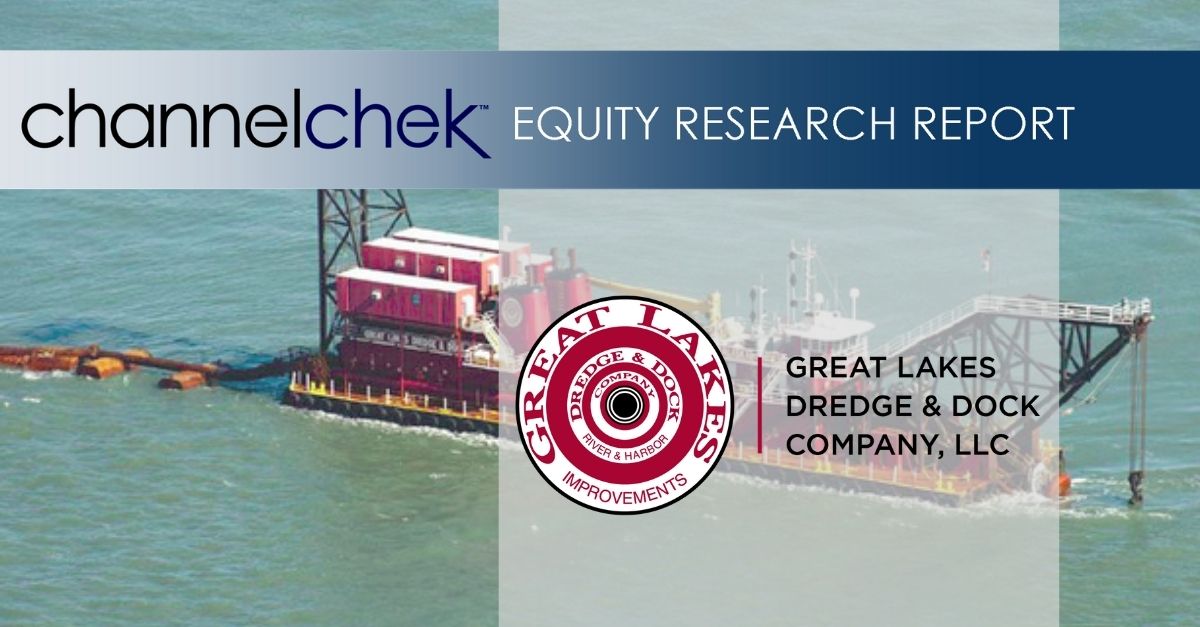
Great Lakes Dredge & Dock (GLDD) – Another Pause for Offshore Wind


Wednesday, December 24, 2025

Great Lakes Dredge & Dock Corporation is the largest provider of dredging services in the United States. In addition, Great Lakes is fully engaged in expanding its core business into the rapidly developing offshore wind energy industry. The Company has a long history of performing significant international projects. The Company employs experienced civil, ocean and mechanical engineering staff in its estimating, production and project management functions. In its over 131-year history, the Company has never failed to complete a marine project. Great Lakes owns and operates the largest and most diverse fleet in the U.S. dredging industry, comprised of approximately 200 specialized vessels. Great Lakes has a disciplined training program for engineers that ensures experienced-based performance as they advance through Company operations. The Company’s Incident-and Injury-Free® (IIF®) safety management program is integrated into all aspects of the Company’s culture. The Company’s commitment to the IIF® culture promotes a work environment where employee safety is paramount.

Joe Gomes, CFA, Managing Director, Equity Research Analyst, Generalist , Noble Capital Markets, Inc.

Refer to the full report for the price target, fundamental analysis, and rating.

Another Pause. The Trump Administration is pausing leases for five offshore wind projects, including the Sunrise Wind and Empire Wind 1 projects, both of which Great Lakes’ soon to be delivered Acadia vessel is contracted to provide subsea rock services. Described as due to national security risks identified by the Pentagon, the pause is currently not expected to exceed 90 days. If accurate, the pause should not have a significant impact on Great Lakes, in our opinion.

Details. The administration said the pause will give the Interior Department, which oversees offshore wind, time to work with the Department of War and other agencies to assess the possible ways to mitigate any security risks posed by the projects. In past research, the U.S. government has found that the movement of turbine blades and the highly reflective towers can create radar interference called “clutter.” The clutter caused by offshore wind projects obscures legitimate moving targets and generates false targets in the vicinity of wind projects. However, these risks were already considered in the permitting process.


Get the Full Report

Equity Research is available at no cost to Registered users of Channelchek. Not a Member? Click ‘Join’ to join the Channelchek Community. There is no cost to register, and we never collect credit card information.

This Company Sponsored Research is provided by Noble Capital Markets, Inc., a FINRA and S.E.C. registered broker-dealer (B/D).

*Analyst certification and important disclosures included in the full report. NOTE: investment decisions should not be based upon the content of this research summary. Proper due diligence is required before making any investment decision. 

Comstock (LODE) – Rating Lowered to Market Perform from Outperform


Wednesday, December 24, 2025

Comstock (NYSE: LODE) innovates technologies that contribute to global decarbonization and circularity by efficiently converting under-utilized natural resources into renewable fuels and electrification products that contribute to balancing global uses and emissions of carbon. The Company intends to achieve exponential growth and extraordinary financial, natural, and social gains by building, owning, and operating a fleet of advanced carbon neutral extraction and refining facilities, by selling an array of complimentary process solutions and related services, and by licensing selected technologies to qualified strategic partners. To learn more, please visit www.comstock.inc.

Mark Reichman, Managing Director, Equity Research Analyst, Natural Resources, Noble Capital Markets, Inc.

Hans Baldau, Associate Analyst, Noble Capital Markets, Inc.

Refer to the full report for the price target, fundamental analysis, and rating.

Rating Lowered to Market Perform. While we had upgraded Comstock Inc. to Outperform on November 4, we have concluded our rating upgrade may have been too early, despite the share price appreciating ~33% from the date of our upgrade. It appears the company’s near-term capital needs remain significant, and we will reassess the value of the company’s businesses, once Comstock’s commercial scale recycling facility is operational and plans for the company’s mining assets are more fully realized. Moreover, we have been frustrated by the company’s promises to monetize non-core assets, including properties in Silver Springs, Nevada, without following through on its commitment. At this stage, we consider Comstock’s investment in Bioleum Corporation as a call option on its growth and success, which is subject to significant risk factors.

At the market offering. Comstock Inc. recently executed an At-the-Market Offering Agreement with Titan Partners Group LLC to offer and sell shares of common stock from time to time totaling up to $100.0 million. Titan Partners will be compensated at a commission rate equal to 3.0% of the gross sales price per share. Net proceeds will be used for general corporate purposes, including capital expenditures associated with commercializing subsequent industry scale and storage facilities for Comstock Metals, in addition to acquisitions, and technical, operational and human resource development expenses for supporting growth. Beyond acting as a headwind for capital appreciation, the ATM equity issuance could promote shareholder dilution.


Get the Full Report


Equity Research is available at no cost to Registered users of Channelchek. Not a Member? Click ‘Join’ to join the Channelchek Community. There is no cost to register, and we never collect credit card information.

This Company Sponsored Research is provided by Noble Capital Markets, Inc., a FINRA and S.E.C. registered broker-dealer (B/D).

*Analyst certification and important disclosures included in the full report. NOTE: investment decisions should not be based upon the content of this research summary. Proper due diligence is required before making any investment decision. 

Stock Market Today: S&P 500 Sets New 2025 Record as Wall Street Extends Winning Streak

U.S. stocks closed higher on Tuesday, pushing the S&P 500 to a fresh all-time high and extending Wall Street’s winning streak to four consecutive sessions, as investors looked past stronger-than-expected economic data and adjusted expectations around interest rate cuts.

The S&P 500 rose 0.46% to a record close of 6,909.79, marking its latest milestone in 2025. The tech-heavy Nasdaq Composite added 0.57%, while the Dow Jones Industrial Average gained a more modest 0.16%. The steady advance comes as equities rebound from recent volatility, with markets finding renewed momentum heading into the final trading days before the Christmas holiday.

Tuesday’s rally unfolded despite data showing the U.S. economy grew at a surprisingly robust pace over the summer. According to the first read on third-quarter gross domestic product, the economy expanded at a 4.3% annualized rate—well above the 3.3% economists had expected. The report, delayed earlier by government shutdown disruptions, also highlighted resilient consumer spending, reinforcing the view that economic activity remains strong even as borrowing costs stay elevated.

That strength prompted traders to dial back expectations for near-term interest rate cuts. Markets are now pricing in more than an 85% probability that the Federal Reserve will leave rates unchanged at its January meeting, up from roughly 75% just a week ago. While investors still anticipate two rate cuts by the end of next year, the timing appears less certain as economic data continues to show resilience.

Adding nuance to the outlook, December consumer confidence data from the Conference Board showed sentiment falling for a fifth straight month. The decline underscores a disconnect between hard economic data and consumer perceptions, suggesting households remain uneasy about inflation, interest rates, and the broader cost of living despite strong growth figures.

Beyond equities, commodities were a major highlight. Gold and silver prices continued their powerful rally, putting both precious metals on track for their strongest annual performance in more than 40 years. Copper also surged to a new record above $12,000 per ton, reflecting ongoing demand tied to infrastructure spending, electrification, and global supply constraints.

Corporate news added to the bullish tone. Shares of Novo Nordisk jumped after the Danish pharmaceutical giant received official U.S. approval to market its Wegovy weight-loss drug, reinforcing investor enthusiasm around the booming obesity treatment market. In the technology sector, megacap names led gains, with semiconductor stocks climbing and artificial intelligence heavyweight Nvidia helping lift the broader Nasdaq. Alphabet shares also advanced, contributing to the tech sector’s leadership.

Looking ahead, trading volumes are expected to thin as markets head into the holiday break. U.S. stock markets will close early on Wednesday and remain shut on Thursday for Christmas. Still, with the S&P 500 at record highs and investor optimism returning, attention is turning to whether a traditional “Santa Claus rally” could carry stocks into the new year, even as questions around interest rates and economic momentum remain firmly in focus.

Sanofi to Acquire Dynavax in $2.2 Billion Deal, Strengthening Its Adult Vaccine Portfolio

Sanofi has agreed to acquire Dynavax Technologies Corporation in an all-cash transaction valued at approximately $2.2 billion, a move that significantly bolsters the French drugmaker’s position in the adult vaccines market. Under the terms of the deal, Dynavax shareholders will receive $15.50 per share in cash, representing a 39% premium to the company’s closing share price on December 23, 2025.

The acquisition brings Sanofi a marketed adult hepatitis B vaccine, HEPLISAV-B®, along with a differentiated shingles vaccine candidate currently in Phase 1/2 development. Together, the assets enhance Sanofi’s immunization portfolio at a time when adult vaccination is increasingly viewed as a major growth opportunity within global healthcare.

HEPLISAV-B is Dynavax’s flagship product and is already approved and marketed in the United States, the European Union, and the United Kingdom. The vaccine stands out due to its two-dose regimen administered over one month, compared with traditional hepatitis B vaccines that require three doses over six months. This shorter schedule enables faster and higher rates of seroprotection, addressing a key barrier to adult vaccination adherence.

Sanofi executives emphasized that the transaction aligns with the company’s long-term vaccines strategy. Thomas Triomphe, Executive Vice President of Vaccines at Sanofi, said the deal adds “differentiated vaccines that complement Sanofi’s expertise” while reinforcing the company’s commitment to vaccine protection across the lifespan. With Sanofi’s global commercial infrastructure, HEPLISAV-B could see expanded adoption beyond its current markets.

In addition to its hepatitis B franchise, Dynavax brings a shingles vaccine candidate, Z-1018, which is currently in early-stage clinical development. Shingles represents a sizable and growing market, with the World Health Organization estimating that one in three adults will develop the condition during their lifetime. While Sanofi already has experience in vaccines, the addition of an early-stage shingles program provides optionality and long-term pipeline upside.

From a public health perspective, the acquisition targets areas of substantial unmet need. In the United States alone, nearly 100 million adults born before 1991 remain unvaccinated against hepatitis B, leaving them vulnerable to chronic infection that can lead to cirrhosis and liver cancer. Adult immunization has historically lagged childhood vaccination rates, creating a meaningful opportunity for growth and impact.

Financially, Sanofi plans to fund the acquisition using existing cash resources. The transaction has been unanimously approved by Dynavax’s board of directors and will proceed via a tender offer for all outstanding shares. Completion is subject to customary closing conditions, including regulatory approvals, and is expected in the first quarter of 2026.

Dynavax CEO Ryan Spencer said joining Sanofi will provide the scale and expertise needed to maximize the impact of the company’s vaccines. He described the transaction as delivering compelling value to shareholders while advancing Dynavax’s mission to protect against infectious diseases.

Overall, the deal underscores continued consolidation in the biotech and pharmaceutical sectors, particularly around vaccines and infectious disease prevention. For Sanofi, the acquisition of Dynavax represents both a near-term revenue opportunity through HEPLISAV-B and a longer-term pipeline investment as it looks to strengthen its leadership in adult immunization.