Intel Breaks Its Dot-Com Ceiling: What a 26-Year Breakout Means for the Chip Sector

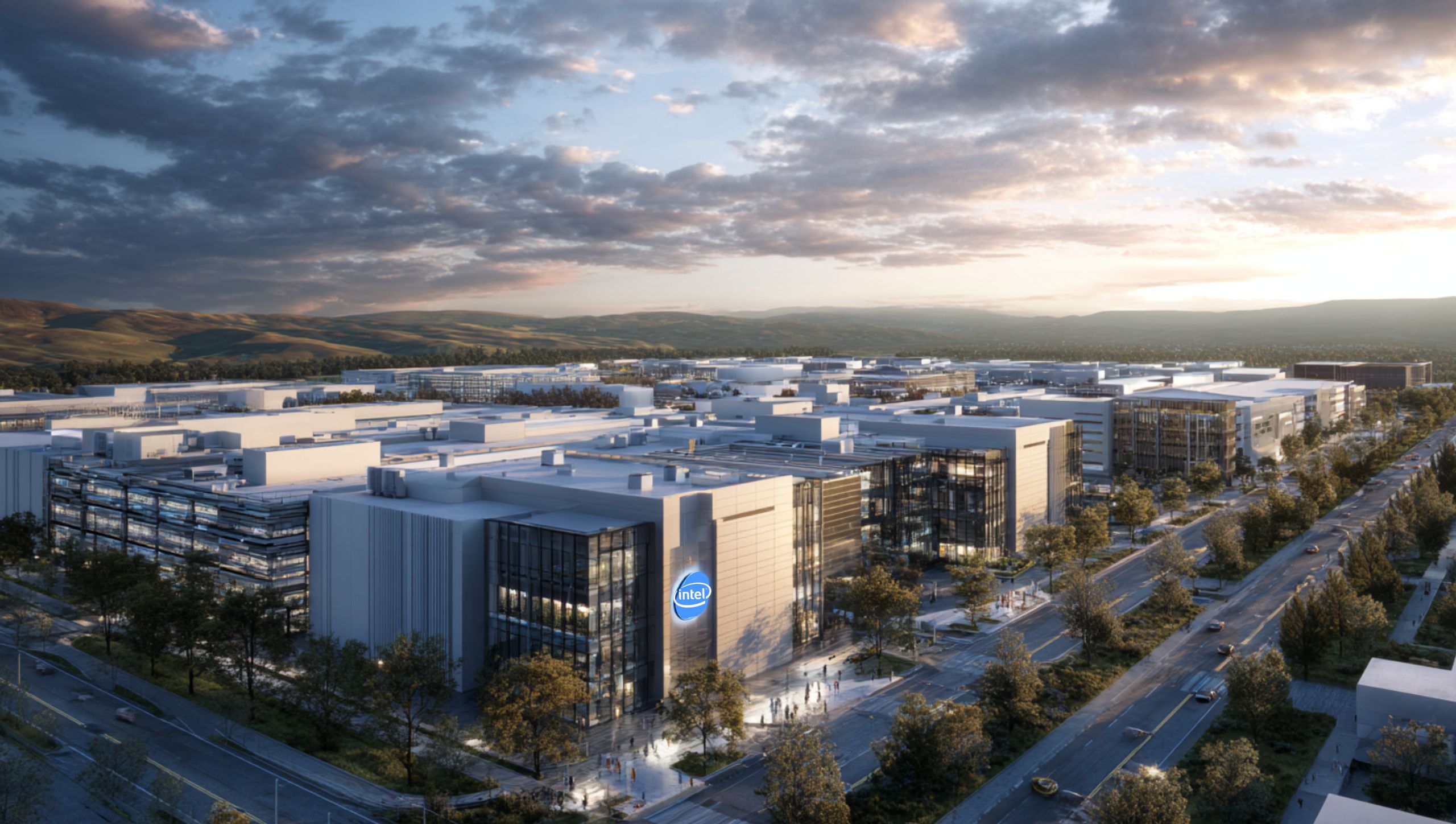
Intel (NASDAQ: INTC) did something Friday that took 26 years to accomplish — it traded above its dot-com-era peak set in the year 2000. With shares surging more than 22% on the heels of a blowout first-quarter earnings report, the stock cleared a ceiling that had capped rallies multiple times over the past two decades and is now trading in price discovery territory for the first time since the internet bubble.

The catalyst was a Q1 2026 earnings print that demolished Wall Street expectations across every key metric. Intel posted revenue of $13.6 billion, up 7% year-over-year, against analyst consensus that had penciled in closer to $12.4 billion. Non-GAAP earnings per share came in at $0.29, crushing the $0.01 estimate. For context, that’s a 28-cent beat on the bottom line — a number that tells you just how badly the Street had underestimated Intel’s momentum heading into the quarter.

The segment doing the heavy lifting is Data Center and AI. That division posted revenue growth of 22% year-over-year, making it Intel’s fastest-growing area. More telling: AI-driven business revenue surged 40% year-over-year, marking the sixth consecutive quarter in which the company exceeded its own guidance. Intel Foundry — its contract manufacturing arm — also contributed meaningfully, bringing in $5.4 billion, up 20% sequentially.

It’s worth noting that Intel did report a GAAP net loss of $3.7 billion for the quarter, driven primarily by $4.1 billion in restructuring and other charges, including a Mobileye goodwill impairment. That number is real and matters, but the market’s reaction tells you investors are focused on the operating trajectory — not the one-time write-downs.

The technical story is just as significant as the fundamental one. Intel had been trapped below its 2000 peak for over two decades, with failed breakout attempts in both 2020 and 2021. The stock had already staged a remarkable recovery before earnings, rising more than 60% off its March 30 low and adding roughly $130 billion in market value in that stretch. Friday’s move didn’t just extend that rally — it changed the long-term chart structure entirely.

Intel isn’t alone in its momentum. The PHLX Semiconductor Index is currently on a 17-consecutive-day winning streak, one of the longest runs in the index’s history. The entire chip complex has been repriced higher as AI infrastructure buildout accelerates and demand for advanced silicon continues to outstrip supply.

Management guided Q2 2026 revenue to a range of $13.8 to $14.8 billion, with non-GAAP EPS of $0.20 and a non-GAAP gross margin of 39% — forward guidance that signals the company expects its momentum to hold.

The key watch now is whether Intel can close at a record high above $75.83 by the end of Friday’s session. A confirmed close above that level would be a landmark moment for one of the most watched charts in technology. A retreat back below $65, however, would reframe this move as a failed breakout — and signal the stock needs more time before it can sustain new all-time highs.

Either way, Intel’s earnings don’t just matter for INTC shareholders. They’re a read-through for semiconductor capital spending, AI chip demand, and the broader thesis that the CPU — not just the GPU — has a critical role in the next wave of AI infrastructure.

NN (NNBR) – Moving Into Higher Return Verticals


Friday, March 20, 2026

Joe Gomes, CFA, Managing Director, Equity Research Analyst, Generalist , Noble Capital Markets, Inc.

Refer to the full report for the price target, fundamental analysis, and rating.

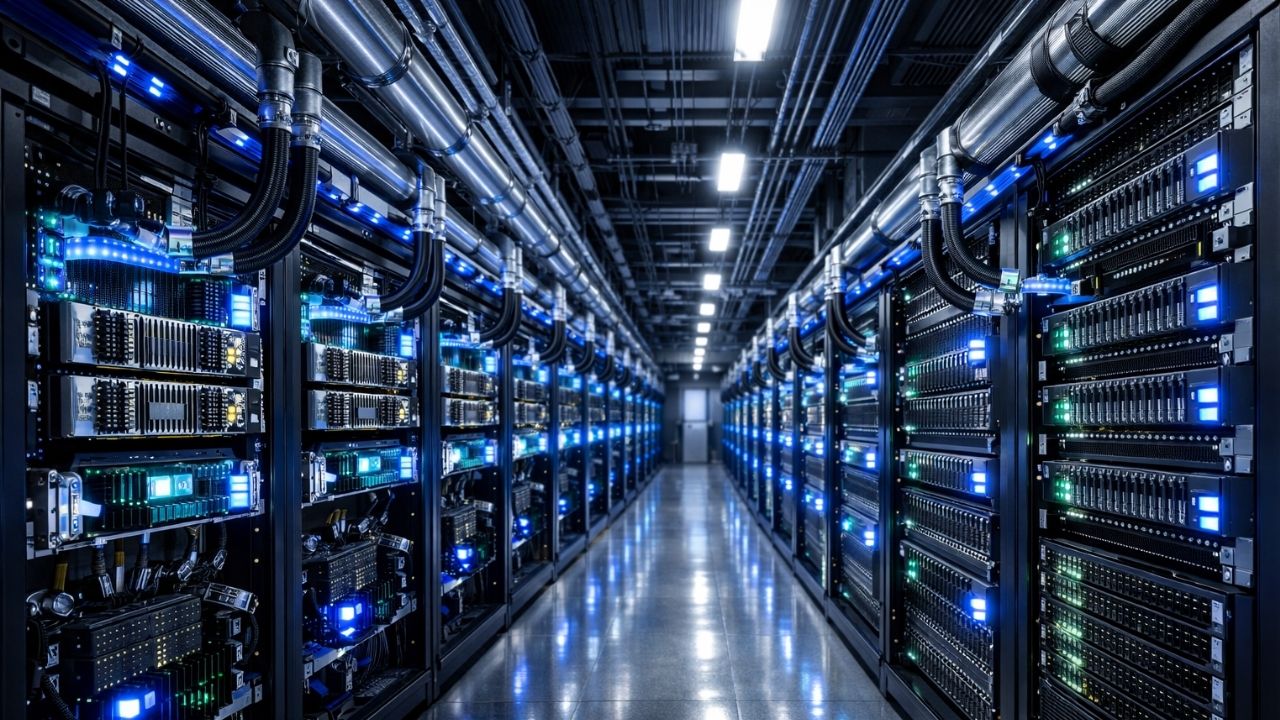
Data Centers. NN continues to grow its presence in the data center market, a key targeted growth market for the Company. The AI data center market fits precisely into NN’s decades of know-how in fluid management and Six Sigma quality levels. For NN, it is a strategic and straightforward application of existing know-how with managing gas, diesel, and hydraulic fluids and applying that know-how to managing cooling fluids.

Opportunity. NN has secured multiple new awards with a leading global provider of AI infrastructure and data center computing equipment. In response, NN is investing in a large installation of 17 next-generation high-speed, high-precision CNC machines that will meet and exceed requirements. This expansion and ramp-up is happening now across 2026. These machines will add to NN’s portfolio of over 100 of these similar machines already in-house.


Get the Full Report

Equity Research is available at no cost to Registered users of Channelchek. Not a Member? Click ‘Join’ to join the Channelchek Community. There is no cost to register, and we never collect credit card information.

This Company Sponsored Research is provided by Noble Capital Markets, Inc., a FINRA and S.E.C. registered broker-dealer (B/D).

*Analyst certification and important disclosures included in the full report. NOTE: investment decisions should not be based upon the content of this research summary. Proper due diligence is required before making any investment decision. 

Nvidia Stock Drops Despite Strong Earnings as AI Spending Questions Grow

Nvidia delivered another quarter of eye-catching growth. Investors still found reasons to sell. Shares of the AI chip leader fell as much as 5.6% Thursday after its fiscal first-quarter revenue forecast, while ahead of average Wall Street estimates, failed to ease mounting concerns about how long the artificial intelligence spending boom can last. The decline marked the stock’s sharpest intraday drop in three months.

On paper, the results were hard to fault. Nvidia projected fiscal first-quarter revenue of about $78 billion, topping the average analyst estimate of $72.8 billion, though some forecasts had climbed closer to $80 billion in recent weeks. For the fiscal fourth quarter, revenue surged 73% to $68.1 billion, beating expectations. Adjusted earnings of $1.62 per share and gross margins of 75.2% also edged past consensus estimates.

The company’s data center division — which includes its AI accelerators and networking products — generated $62.3 billion in quarterly revenue, above projections. That business has become the centerpiece of Nvidia’s growth story as hyperscale cloud providers and enterprises race to build AI infrastructure.

Other segments were softer. Gaming revenue of $3.73 billion and automotive revenue of $604 million both trailed analyst expectations. Ongoing memory supply constraints have weighed on certain product lines, highlighting that even Nvidia is not immune to broader semiconductor supply dynamics.

The market reaction underscores a key shift: Expectations are now extraordinarily high. After explosive gains over the past two years tied to generative AI demand, investors are increasingly focused on sustainability rather than acceleration.

CEO Jensen Huang pushed back against fears of an AI bubble during the earnings call, arguing that customers are already generating returns from their AI investments. According to Huang, expanding compute capacity directly supports revenue growth for Nvidia’s clients, reinforcing the case for continued infrastructure buildouts.

Still, questions remain. Nvidia disclosed $95.2 billion in purchase obligations, up sharply from $16.1 billion a year earlier. While those commitments reflect efforts to secure supply and meet anticipated demand — with shipments extending into calendar 2027 — they also raise the stakes if capital spending slows.

Geopolitical uncertainty adds another layer. The company has received limited U.S. government licenses to ship certain processors to China, but data center revenue from the country remains excluded from guidance. Tariffs and inspection requirements create additional friction in an already complex global supply chain.

At the same time, Nvidia and its competitors are announcing large, long-term agreements with major customers to lock in computing capacity. Nvidia recently disclosed that Meta Platforms plans to deploy “millions” of its processors in the coming years, while Advanced Micro Devices announced its own multibillion-dollar AI infrastructure deal. These agreements are designed to demonstrate durable demand, though some observers caution that increasingly intertwined supplier-customer relationships can complicate traditional demand signals.

For investors, Nvidia’s quarter reflects a broader capital markets dynamic heading into 2026. Growth is still robust, but markets are scrutinizing visibility, balance sheet commitments, and the durability of capital expenditures more closely.

The AI buildout remains one of the most significant investment cycles in technology history. Nvidia’s latest results suggest momentum is intact. The stock’s reaction shows that confidence in how long it lasts is now the real debate.

SoftBank to Pay $4 Billion for Data Center Firm DigitalBridge

SoftBank Group Corp. has agreed to acquire DigitalBridge Group Inc. in a cash deal valuing the digital infrastructure investor at approximately $4 billion, including debt. The transaction underscores SoftBank founder Masayoshi Son’s renewed push to dominate the backbone of the artificial intelligence economy: data centers, computing power, and the infrastructure required to scale AI globally.

Under the terms of the agreement, SoftBank will pay $16 per share for New York–listed DigitalBridge, representing a roughly 15% premium to the firm’s closing price on December 26. Shares of DigitalBridge jumped nearly 10% following the announcement, trading just below the offer price. The deal is expected to close in the second half of 2026, subject to regulatory approvals.

DigitalBridge is one of the largest global investors dedicated exclusively to digital infrastructure, managing roughly $108 billion in assets as of September. Its portfolio includes a roster of major data center and connectivity platforms such as Vantage Data Centers, Switch Inc., AtlasEdge, DataBank, Yondr Group, and AIMS. By acquiring DigitalBridge, SoftBank gains not only physical infrastructure exposure but also deep relationships with institutional investors actively deploying capital into data center development worldwide.

The acquisition comes amid an unprecedented surge in demand for data centers, driven by the rapid adoption of generative AI and cloud computing. Major players across finance and technology have poured capital into the sector. BlackRock’s $40 billion purchase of Aligned Data Centers and Oracle’s multiyear agreement to provide OpenAI with up to 4.5 gigawatts of computing power highlight the scale of investment reshaping the industry.

For SoftBank, the deal fits squarely into Son’s long-term vision of building an AI-centric ecosystem. Earlier this year, SoftBank announced the $500 billion “Stargate” initiative alongside OpenAI, Oracle, and Abu Dhabi-backed MGX, aiming to develop large-scale data centers across the United States. While the project’s rollout has been slower than initially promised due to financing challenges and site selection disputes, the DigitalBridge acquisition strengthens SoftBank’s strategic positioning in the infrastructure layer of AI.

The deal may also pave the way for further consolidation. SoftBank has reportedly held discussions about acquiring Switch Inc., one of DigitalBridge’s portfolio companies, at a valuation approaching $50 billion including debt. If pursued, such a move would further cement SoftBank’s influence over critical AI infrastructure assets.

Despite its reputation for high-profile technology bets—such as Alibaba, Arm Holdings, and the ill-fated WeWork investment—SoftBank has prior experience in asset management. Its 2017 acquisition of Fortress Investment Group, later sold in 2024, demonstrated Son’s willingness to operate across both technology and investment platforms.

Funding the AI push has required difficult trade-offs. Son recently disclosed that SoftBank sold a $5.8 billion stake in Nvidia to reallocate capital toward broader AI investments. The DigitalBridge acquisition signals that SoftBank is betting heavily that control of digital infrastructure—not just software or chips—will define the next phase of the AI revolution.