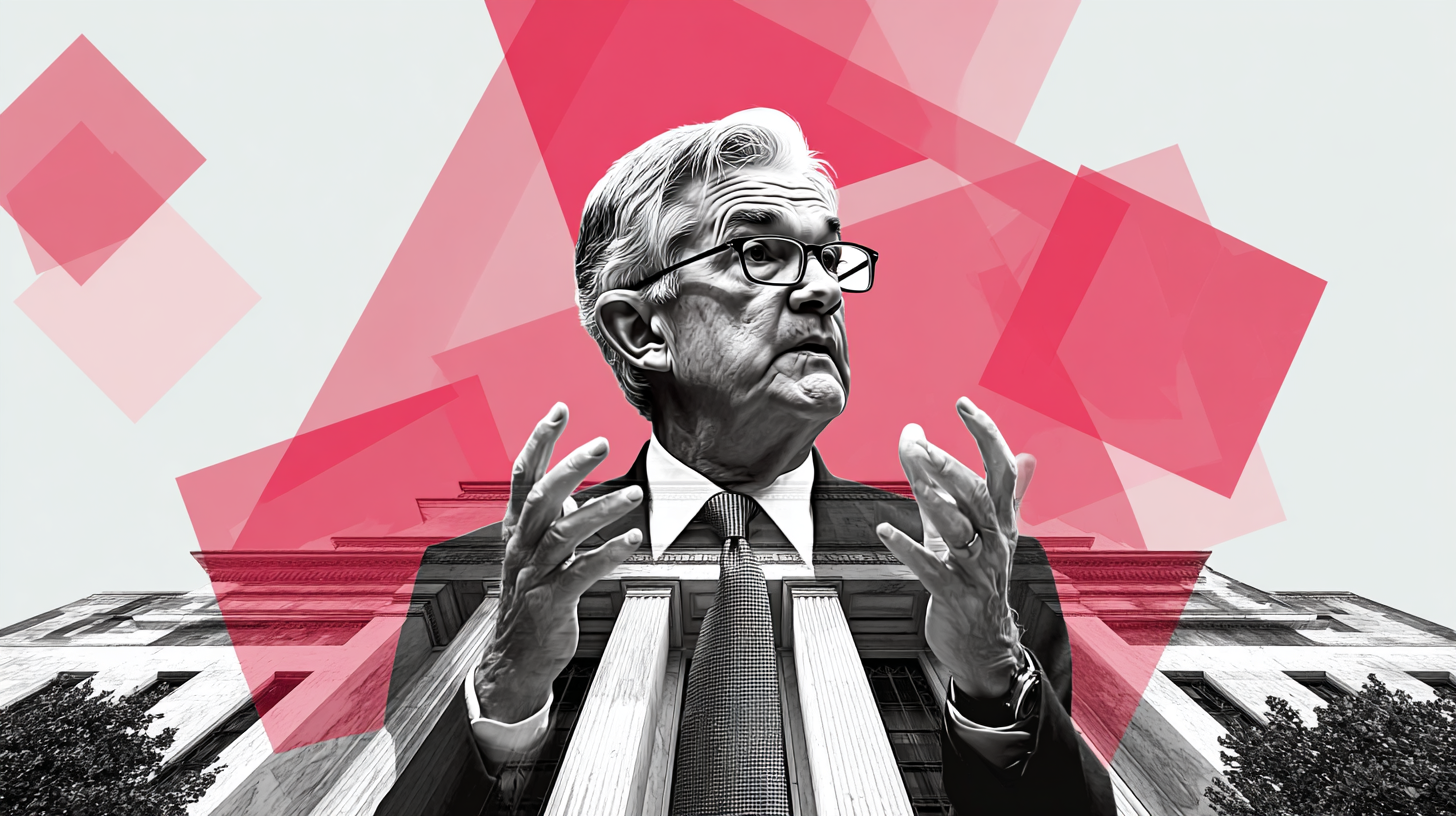
Wednesday marks what is widely expected to be Federal Reserve Chair Jerome Powell’s final policy meeting and press conference at the helm of the central bank — and while the transition has been months in the making, the full implications for markets, particularly small and microcap stocks, are only beginning to come into focus.
Powell’s term as chair officially concludes on May 15, though a lingering question remains: will he stay on as a Fed governor, a role he could hold until 2028? The answer may hinge less on politics and more on unfinished business.
The Department of Justice launched a probe earlier this year into whether Powell misled Congress about cost overruns on renovations to the Fed’s Washington headquarters — a project that has ballooned from an initial $1.9 billion estimate in 2021 to nearly $2.5 billion. Last Friday, the DOJ closed its investigation and transferred the matter to the Fed’s own inspector general. That move cleared the path for Powell’s intended successor, Kevin Warsh, whose Senate confirmation had been blocked by Republican Sen. Thom Tillis of North Carolina until the probe was resolved. Tillis quickly reversed course over the weekend, signaling his support for Warsh’s nomination.
Even so, analysts expect Powell to remain on the Fed’s board until the inspector general’s review reaches a definitive conclusion — a process that could take months. The reasoning is straightforward: Powell has publicly stated he has no intention of stepping down from the board until the investigation is fully and transparently resolved. Some economists argue his continued presence could serve as an institutional anchor during what promises to be a significant shift in how the central bank operates.
That shift is the bigger story — and the one with direct consequences for small and microcap investors.
Warsh, a former Fed governor with Wall Street credentials, has been explicit about his desire for what he calls “regime change” at the Fed. His priorities include reverting to a strict 2% inflation target, abandoning the forward guidance framework that markets have relied on for years, scaling back the Fed’s $6.7 trillion balance sheet, and reducing how frequently Fed officials communicate publicly about policy. He has also declined to commit to holding a press conference after every FOMC meeting — a practice Powell institutionalized.
For the small and microcap universe, this matters enormously. Rate policy is not a distant abstraction for smaller companies — it is a direct line item. Nearly 70% of small-cap companies generate more than 90% of their revenue domestically, making them acutely sensitive to U.S. borrowing costs. Variable rate debt, which is disproportionately common among smaller companies, becomes a margin problem when rate cuts fail to materialize.
Markets had been pricing in multiple cuts through 2026. The CME FedWatch tool now reflects expectations of no more than one cut for the year, and a majority of economists surveyed by Reuters expect rates to remain unchanged through September. If Warsh’s hawkish posture holds after confirmation — and there is little reason to believe it won’t — companies carrying heavy debt loads with near-term refinancing needs face real pressure.
The transition also introduces something arguably more dangerous than high rates: ambiguity. Less frequent communication, no forward guidance, and a new inflation framework all mean investors will be navigating without the signposts they’ve grown accustomed to. For small-cap allocators, that uncertainty translates directly into tighter positioning and a renewed premium on balance sheet quality.
Powell’s exit ends one era. What comes next is still being written — and small-cap investors would be wise to pay close attention