Research – Onconova Therapeutics (ONTX): Partnership dissolves – Greater China is Added Back to Onconova’s Territories

Friday, January 24, 2020

Onconova Therapeutics Inc. (ONTX)

Partnership dissolves – Greater China is Added Back to Onconova’s Territories

Onconova Therapeutics Inc is a clinical-stage biopharmaceutical company operating in the US. It focuses on discovering and developing novel small molecule product candidates primarily to treat cancer. The company has created a library of targeted agents designed to work against cellular pathways important to cancer cells. Its product candidates are Single-agent IV rigosertib, Oral rigosertib + azacitidine, IV Briciclib, Recilisib, and ON 123300. The key product candidate Rigosertib is a small molecule which blocks cellular signaling by targeting RAS effector pathways.

Ahu Demir, Ph.D., Biotechnology Research Analyst, Noble Capital Markets, Inc.

Refer to the full report for the price target, fundamental analysis, and rating.

Regained rights of rigosertib in greater China. On January 23, 2020, Onconova announced the termination of HanX license partnership due to HanX failing to make required payments under the terms of the agreement. The company has multiple other partnerships for rigosertib in various parts of the world including Knight Therapeutics for Canada, Specialised Therapeutics for Australia and New Zealand, Pint Pharma for Latin America and SymBio Pharmaceuticals for Japan and Korea. Given rigosertib prospects, we believe Onconova should be able to sign another partner in China.

Key Value Driving Catalysts in 2020. Although the INSPIRE study remains the company’s main focus, multiple inflection points are anticipated to generate value this year: i) presentation at the RAS-Targeted Drug Discovery Summit Europe on 25-27 February 2020 in Vienna, Austria; ii) submission of…



Get the full report on Channelchek desktop.

This Company Sponsored Research is provided by Noble Capital Markets, Inc., a FINRA and S.E.C. registered broker-dealer (B/D).

*Analyst
certification and important disclosures included in the full report. 
NOTE: investment decisions should not be based upon the content of
this research summary.  Proper due diligence is required before
making any investment decision.

 

Research onconova therapeutics ontx partnership dissolves greater china is added back to onconovas territories

Friday, January 24, 2020

Onconova Therapeutics Inc. (ONTX)

Partnership dissolves – Greater China is Added Back to Onconova’s Territories

Onconova Therapeutics Inc is a clinical-stage biopharmaceutical company operating in the US. It focuses on discovering and developing novel small molecule product candidates primarily to treat cancer. The company has created a library of targeted agents designed to work against cellular pathways important to cancer cells. Its product candidates are Single-agent IV rigosertib, Oral rigosertib + azacitidine, IV Briciclib, Recilisib, and ON 123300. The key product candidate Rigosertib is a small molecule which blocks cellular signaling by targeting RAS effector pathways.

Ahu Demir, Ph.D., Biotechnology Research Analyst, Noble Capital Markets, Inc.

Refer to the full report for the price target, fundamental analysis, and rating.

Regained rights of rigosertib in greater China. On January 23, 2020, Onconova announced the termination of HanX license partnership due to HanX failing to make required payments under the terms of the agreement. The company has multiple other partnerships for rigosertib in various parts of the world including Knight Therapeutics for Canada, Specialised Therapeutics for Australia and New Zealand, Pint Pharma for Latin America and SymBio Pharmaceuticals for Japan and Korea. Given rigosertib prospects, we believe Onconova should be able to sign another partner in China.

Key Value Driving Catalysts in 2020. Although the INSPIRE study remains the company’s main focus, multiple inflection points are anticipated to generate value this year: i) presentation at the RAS-Targeted Drug Discovery Summit Europe on 25-27 February 2020 in Vienna, Austria; ii) submission of…


Get the full report on Channelchek desktop.

This Company Sponsored Research is provided by Noble Capital Markets, Inc., a FINRA and S.E.C. registered broker-dealer (B/D).

*Analyst
certification and important disclosures included in the full report. 
NOTE: investment decisions should not be based upon the content of
this research summary.  Proper due diligence is required before
making any investment decision.

 

Is a Cure for Type 1 Diabetes Imminent?

NobleCon16 Panelists to Discuss if a Cure for Type 1 Diabetes is Imminent

(Note: companies that
could be impacted by the content of this article are listed at the base of the
story [desktop version]. This article uses third-party references to provide a
bullish, bearish, and balanced point of view; sources are listed after the
Balanced section.)

Is the day when we have a functional cure for Type 1 Diabetes approaching?  There are 1.25 million people in the U.S. alone afflicted with T1D. Noble Capital Markets has assembled a panel from among the world’s top medical researchers in this field to discuss advancements and therapies toward curing Type 1.  The panel discussion will take place at NobleCon16 being held from February 16 – 18 at the Hard Rock Guitar Hotel in Fort Lauderdale.

A medical cure, not a new or improved treatment, for T1D, will be the primary discussion. Advancements toward this goal began to accelerate after an unplanned meeting by two of this year’s panelists a couple of years ago during NobleCon14. It was during that NobleCon conference that an idea came together that is now leading to promising clinical study results. The panel will also include a famous advocate and T1D sufferer who is elevating the voice of those with diabetes through his national podcast. The panel discussion is titled: Type
1 Diabetes: A Functional Cure Could Be Imminent.

 The panelists are:

     Dr. Camillo Ricordi, Director of the Diabetes Research Institute at the University of Miami School of Medicine

     Dr. Matthias von Herrah, MD, Founder of the Type 1 Diabetes Center
at La Jolla Institute for Immunology

     Dr. Bastiano Sanna, President, and COO of Semma Therapeutics

     Dr. Steven Perrin, CEO, and co-Founder of Anelixis Therapeutics. 

     Eric Paslay, Platinum-selling
songwriter/performer
, Owner of Apple Podcast Level With Me

The organizers of this year’s NobleCon have again assembled exciting company presentations and addresses that are of interest to anyone seeking to discover still small companies that could make a big difference with what is now going on inside their doors.

NobleCon conferences experience 70% repeat attendance by investors who want to build on their understanding of opportunities and perhaps meet privately with company management to best understand their company’s potential.  Money managers, family office finance professionals, investment advisors, independent brokers, and equity analysts go to NobleCon each year to learn of companies, products, and breakthroughs that could easily be overlooked in a world where larger well-known companies get the majority of the spotlight. Some of tomorrow’s household names are companies that benefit from more light being shed on them today. That’s what NobleCon and ChannelChek are about — Shedding more light on small and micro-cap opportunities in order to unearth actionable ideas.

More Information:

www.NobleConference.com

Pictured: Eric Paslay with his wife Natalie Harker, November 2017

Research – Dyadic International Inc. (DYAI) – Confidence in 2020 Outlook

Wednesday, January 8, 2020

Dyadic International Inc. (DYAI)

Confidence in 2020 Outlook

Dyadic International, Inc. is a global biotechnology company which is developing what it believes will be a potentially significant biopharmaceutical gene expression platform based on the industrially proven hyper productive engineered fungus Thermothelomyces heterothallica (formerly Myceliophthora thermophila), named C1.
The C1 microorganism, which enables the development and large scale manufacture of low cost proteins, has the potential to be further developed into a safe and efficient expression system that may help speed up the development, lower production costs and improve the performance of biologic vaccines and drugs at flexible commercial scales. Dyadic is using the C1 technology and other technologies to conduct research, development and commercial activities for the development and manufacturing of human and animal vaccines and drugs, such as virus like particles (VLPs) and antigens, monoclonal antibodies, Fab antibody fragments, Fc-Fusion proteins, biosimilars and/or biobetters, and other therapeutic proteins. Dyadic pursues research and development collaborations, licensing arrangements and other commercial opportunities with its partners and collaborators to leverage the value and benefits of these technologies in development and manufacture of biopharmaceuticals. In particular, as the aging population grows in developed and undeveloped countries, Dyadic believes the C1 technology may help bring biologic vaccines, drugs and other biologic products to market faster, in greater volumes, at lower cost, and with new properties to drug developers and manufacturers, and improve access and cost to patients and the healthcare system, but most importantly save lives.

Ahu Demir, Ph.D., Biotechnology Research Analyst, Noble Capital Markets, Inc.

Refer to the full report for the price target, fundamental analysis, and rating.

Expanded research collaborations in Q4 2019. Dyadic expanded research collaboration with Zoonoses Anticipation and Preparedness Initiative (ZAPI) to express two additional proteins based on the preliminary results from animal studies. In addition, Dyadic entered into a new collaboration with a pharmaceutical company (in the top ten) expanding its portfolio to six proof of concept research collaborations. Lastly, a research license agreement was established with an affiliate of a current research collaborator (a top 25 pharmaceutical company) to further evaluate C1 technology with the objective of broadening and accelerating the adoption and use of C1 globally.

Presentations during the JPM healthcare conference. Dyadic’s management team continues to be proactive and open to meet with collaborators and investors. There will be few presentations by the management during JP Morgan including i) BFC Global Healthcare Investment Conference at 2:30 p.m. PST on January 12, Sunday, ii) China Focus at 10:50 a.m. PST on January 12, Sunday, and iii) Biotech Showcase at…


Get the full report on Channelchek desktop.

This Company Sponsored Research is provided by Noble Capital Markets, Inc., a FINRA and S.E.C. registered broker-dealer (B/D).

*Analyst
certification and important disclosures included in the full report. 
NOTE: investment decisions should not be based upon the content of
this research summary.  Proper due diligence is required before
making any investment decision.

 

Research dyadic international inc- dyai confidence in 2020 outlook

Wednesday, January 8, 2020

Dyadic International Inc. (DYAI)

Confidence in 2020 Outlook

Dyadic International, Inc. is a global biotechnology company which is developing what it believes will be a potentially significant biopharmaceutical gene expression platform based on the industrially proven hyper productive engineered fungus Thermothelomyces heterothallica (formerly Myceliophthora thermophila), named C1.
The C1 microorganism, which enables the development and large scale manufacture of low cost proteins, has the potential to be further developed into a safe and efficient expression system that may help speed up the development, lower production costs and improve the performance of biologic vaccines and drugs at flexible commercial scales. Dyadic is using the C1 technology and other technologies to conduct research, development and commercial activities for the development and manufacturing of human and animal vaccines and drugs, such as virus like particles (VLPs) and antigens, monoclonal antibodies, Fab antibody fragments, Fc-Fusion proteins, biosimilars and/or biobetters, and other therapeutic proteins. Dyadic pursues research and development collaborations, licensing arrangements and other commercial opportunities with its partners and collaborators to leverage the value and benefits of these technologies in development and manufacture of biopharmaceuticals. In particular, as the aging population grows in developed and undeveloped countries, Dyadic believes the C1 technology may help bring biologic vaccines, drugs and other biologic products to market faster, in greater volumes, at lower cost, and with new properties to drug developers and manufacturers, and improve access and cost to patients and the healthcare system, but most importantly save lives.

Ahu Demir, Ph.D., Biotechnology Research Analyst, Noble Capital Markets, Inc.

Refer to the full report for the price target, fundamental analysis, and rating.

Expanded research collaborations in Q4 2019. Dyadic expanded research collaboration with Zoonoses Anticipation and Preparedness Initiative (ZAPI) to express two additional proteins based on the preliminary results from animal studies. In addition, Dyadic entered into a new collaboration with a pharmaceutical company (in the top ten) expanding its portfolio to six proof of concept research collaborations. Lastly, a research license agreement was established with an affiliate of a current research collaborator (a top 25 pharmaceutical company) to further evaluate C1 technology with the objective of broadening and accelerating the adoption and use of C1 globally.

Presentations during the JPM healthcare conference. Dyadic’s management team continues to be proactive and open to meet with collaborators and investors. There will be few presentations by the management during JP Morgan including i) BFC Global Healthcare Investment Conference at 2:30 p.m. PST on January 12, Sunday, ii) China Focus at 10:50 a.m. PST on January 12, Sunday, and iii) Biotech Showcase at…


Get the full report on Channelchek desktop.

This Company Sponsored Research is provided by Noble Capital Markets, Inc., a FINRA and S.E.C. registered broker-dealer (B/D).

*Analyst
certification and important disclosures included in the full report. 
NOTE: investment decisions should not be based upon the content of
this research summary.  Proper due diligence is required before
making any investment decision.
 

Research – Onconova Therapeutics (ONTX) – Recent MDS data and what it means for Onconova

Friday, December 27, 2019

Onconova Therapeutics Inc. (ONTX)

Recent MDS data and what it means for Onconova

Onconova Therapeutics Inc is a clinical-stage biopharmaceutical company operating in the US. It focuses on discovering and developing novel small molecule product candidates primarily to treat cancer. The company has created a library of targeted agents designed to work against cellular pathways important to cancer cells. Its product candidates are Single-agent IV rigosertib, Oral rigosertib + azacitidine, IV Briciclib, Recilisib, and ON 123300. The key product candidate Rigosertib is a small molecule which blocks cellular signaling by targeting RAS effector pathways.

Ahu Demir, Ph.D., Biotechnology Research Analyst, Noble Capital Markets, Inc.

Refer to full report for price target, fundamental analysis and rating.

New data in MDS.  Onconova presented data at the American Society of Hematology (ASH) annual meeting in December. The data update included genomic profiling from INSPIRE study patients, who suffer from higher risk myelodysplastic syndrome (HR-MDS). We don’t expect any value generating data until topline readout from INSPIRE study in 2020. In this report, we have highlighted recent data readouts in MDS landscape.

What’s new in MDS and what it means for rigosertib.  Forty Seven (FTSV, Not covered)’s magrolimab and Abbvie (ABBV, Not covered)’s venetoclax made the most impact in HR-MDS field. Onconova’s rigosertib has shown similar ORR to magrolimab (92%), but superior ORR to venetoclax (90% versus 70%). Magrolimab showed the highest CR rates with…


Get full report on Channelchek desktop.

This Company Sponsored Research is provided by Noble Capital Markets, Inc., a FINRA and S.E.C. registered broker-dealer (B/D).

*Analyst
certification and important disclosures included in full report. 
NOTE: investment decisions should not be based upon the content of
this research summary.  Proper due diligence is required before
making any investment decision.

 

Can KLK7 be used to treat skin inflammation?

Can KLK7 be used to treat skin inflammation?

(Note: companies that
could be impacted by the content of this article are listed at the base of the
story [desktop version]. This article uses third-party references to provide a
bullish, bearish, and balanced point of view; sources are listed after the
Balanced section.)

Source: L. Furio and A. Hovnanian: Loss of kallikrein
inhibition in Netherton syndrome, Biol. Chem. 2014; 395(9): 945–958

Multiple publications show the importance of controlling KLK7, a serine protease, in healthy skin tissues. Notably, there are multiple products targeting KLK7 for the treatment of dermatological disorders.

Research – ProMis Neuroscience (PMN:CA) – What Does Biogen’s Progress Mean for ProMIS?

Wednesday, December 18, 2019

ProMIS Neurosciences Inc. (PMN:CA)

What Does Biogen’s Progress Mean for ProMIS?

ProMIS Neurosciences, Inc., a development stage biotech company, discovers and develops precision medicine therapeutics for the treatment of neurodegenerative diseases, primarily Alzheimer’s disease (AD) and amyotrophic lateral sclerosis (ALS). Its proprietary target discovery engine is based on the use of two complementary techniques. The company applies its thermodynamic, computational discovery platform—ProMIS and Collective Coordinates to predict novel targets known as Disease Specific Epitopes (DSEs) on the molecular surface of misfolded proteins. Its lead product candidates include PMN310, a monoclonal antibody for AD; PMN350, a monoclonal antibody for AD; and PMN330, a monoclonal antibody targeting toxic prionlike forms of AßO for AD. The company is also developing prospect therapies targeting the neurotoxic form of the tau protein in AD; and superoxide dismutase 1 and TAR-DNA binding protein 43 in ALS and frontotemporal dementia, as well as alpha synuclein in Parkinson’s disease and Lewy body dementia. The company was formerly known as Amorfix Life Sciences Ltd. and changed its name to ProMIS Neurosciences, Inc. in July 2015. ProMIS Neurosciences, Inc. was incorporated in 2004 and is headquartered in Toronto, Canada.

Cosme Ordonez, MD, Ph.D., Senior Life Sciences Analyst, Noble Capital Markets, Inc.

Refer to the full report for the price target, fundamental analysis, and rating.

ProMIS issues White Paper. ProMIS Neurosciences issued a white paper discussing data released by Biogen (a competitor in the field) from two Phase III clinical trials on the use of aducanumab for the treatment of Alzheimer’s disease.

Impact of Biogen’s recent developments. Going into the new year, all eyes will be on Biogen, which is the leader competitor in Alzheimer’s. In a recent reversal of fortunes, Biogen’s management has revived its Alzheimer’s program. Based on recent data, Biogen now plans to file for FDA approval of aducanumab early next year. We believe Biogen’s progress will have a positive impact on ProMIS’s…


Get the full report on Channelchek desktop.


This Company Sponsored Research is provided by Noble Capital Markets, Inc., a FINRA and S.E.C. registered broker-dealer (B/D).

*Analyst
certification and important disclosures included in the full report. 
NOTE: investment decisions should not be based upon the content of
this research summary.  Proper due diligence is required before
making any investment decision.
 

Finding a Cure for AIDS Part II (Dec. 2019)

A Cure For HIV Infection, Promise or Reality?

(Note: companies that
could be impacted by the content of this article are listed at the base of the
story [desktop version]. This article uses third-party references to provide a
bullish, bearish, and balanced point of view; sources are listed after the
Balanced section.)

Anti-retroviral therapy (ART), or highly-active-antiretroviral therapy (HAART), is effective in halting the progression of HIV infection (a disease affecting nearly 40 million persons worldwide). However, HAART does not cure the disease as the HIV virus, despite of the treatment, remains hidden in the human body. In 2018, Gilead’s Genvoya and GlaxoSmithKline’s Triumeq, the two top selling ART drugs, had annual sales of $4.62 billion and $3.36 billion, respectively. Notwithstanding their commercial success, these medicines do not cure the disease. The HIV virus often remains hidden in the human body in reservoirs such as dendritic cells, macrophages, and CD4+ lymphocytes. Resistance to treatment, side effects of HAART, stigma, and the cumbersome need for lifelong therapy are all important issues highlighting the need for a cure. If a patient interrupts antiretroviral therapy, the viral infection comes back. Since HIV was first detected in 1983, the medical community have intensively searched for a cure for this disease.


The Story of the Berlin
Patient

In 2007, Timothy Ray Brown, an American studying in Berlin, Germany, was treated with a hematopoietic stem cell transplant. Two years earlier, Mr. Brown had been diagnosed with a type of blood cancer known as acute myeloid leukemia (AML). Besides its cancer diagnosis, Timothy was infected with the Human Immunodeficiency Virus (HIV). Dr. Gero Hütter, a German doctor from the Charité Hospital, Berlin University of Medicine, performed the transplant. Before seeing Timothy, Dr. Hütter had never treated an HIV patient, but he had learned about a rare genetic mutation causing natural resistance to HIV infection. Based on this information, Dr. Hütter found a stem-cell donor carrying this specific mutation. He performed the transplant on Mr. Brown using these mutated cells.


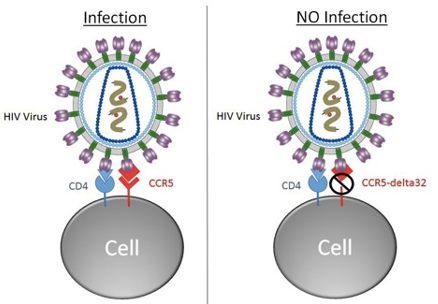
The procedure resulted in a surprising outcome. Timothy’s HIV infection disappeared after the transplant. The HIV virus could not be detected on his blood, not even with the most sensitive diagnostic techniques such as polymerase chain reaction (PCR) methods. Timothy Ray Brown was cured of his HIV infection. He became famous in the medical community. Timothy is now known as the Berlin patient. The story of the Berlin patient triggered significant interest in both academy and industry, setting off a gold rush to find a sterilizing cure for HIV infection. Timothy’s transplant treatment was done from a donor carrying a mutation in a gene known as CCR5, which happens to be the site of entry utilized by HIV virus to infect immune system cells (New England Journal of Medicine 2009, 360, 692-698). The CCR5 protein receptor is expressed on the surface of lymphocytes T, which are the primary cells targeted by HIV virus. Two cell receptors, CD4+ and CCR5, are utilized by HIV to enter the cell. The virus cannot enter and infect cells with a defective CCR5 receptor.

As a result of CCR5 mutation (no site of entry), HIV cannot find a home, the patient’s viral load gradually decreases, and eventually the virus fizzles out. This is probably what transpired during Mr. Brown’ treatment procedure. The virus became undetectable in Timothy’s body. He stopped taking any medication for HIV, although he continued to undergo treatment for his blood cancer. Timothy has remained HIV negative for 12 years now. He has been cured from his HIV infection.

New Era of Gene Therapy

New Era of Gene Therapy

(Note: companies that
could be impacted by the content of this article are listed at the base of the
story [desktop version]. This article uses third-party references to provide a
bullish, bearish, and balanced point of view; sources are listed after the
Balanced section.)

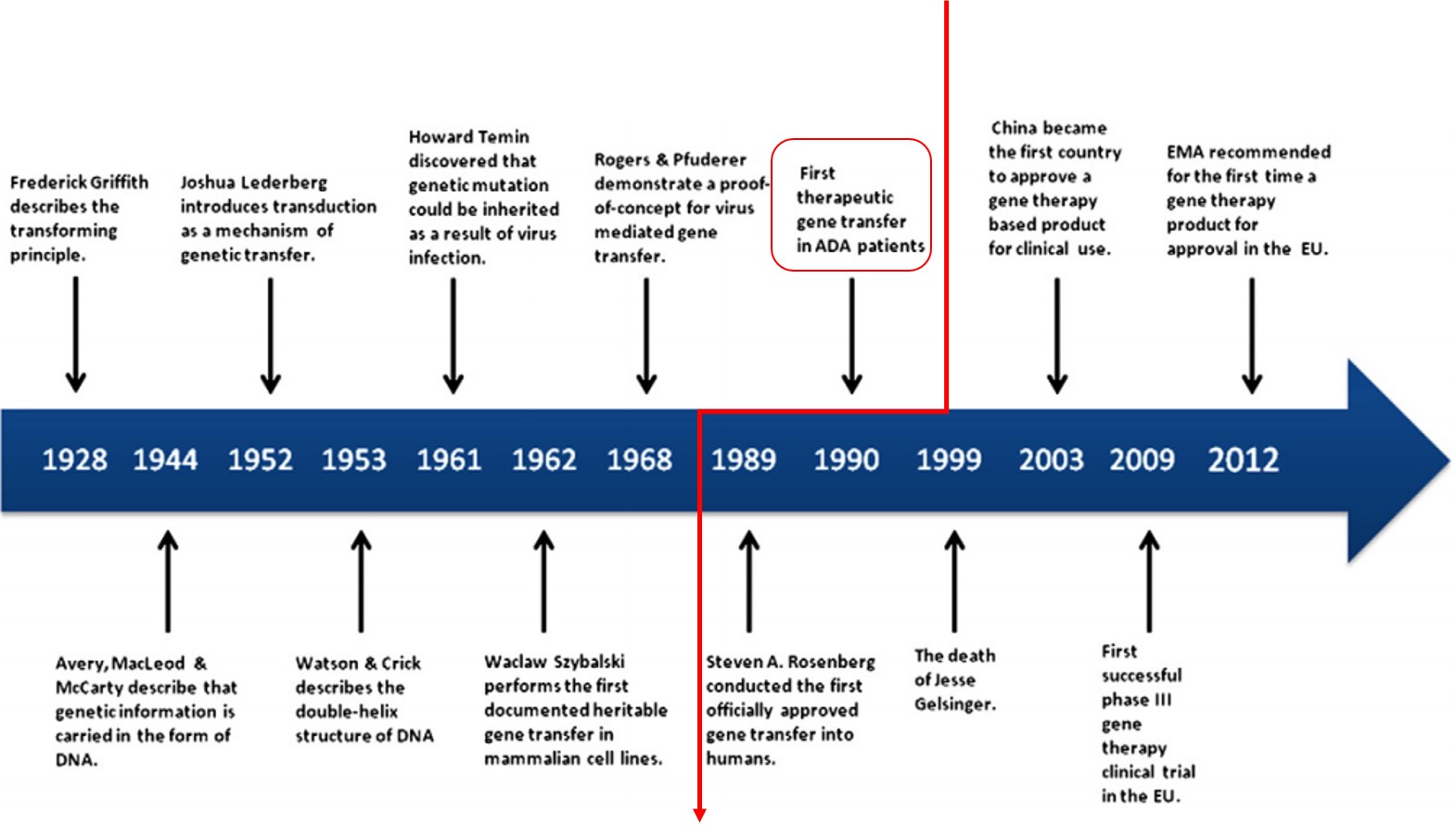
Gene therapy is a biological product that mediates its effect by transcription and/or translation of transferred genetic material by integrating into the host genome. It is administered as nucleic acids, viruses, or genetically engineered microorganisms. In gene therapy, a normal gene is inserted into the genome, often via a viral vector, to replace an abnormal gene responsible for causing a certain disease. The first clinical protocol introducing a foreign gene into humans was approved by the Recombinant DNA Advisory Committee (RAC) in December 1988. On September 14th, 1990, the U.S. Food and Drug Administration (FDA) approved for the first time treatment of a human patient with an experimental gene therapy. Two children were suffering from adenosine deaminase deficiency (ADA-SCID), a monogenetic disease leading to severe immunodeficiency. They were treated with white blood cells taken from their own blood (autologous therapy) and modified ex vivo to express the normal gene for making adenosine deaminase. After twelve years performing experimental protocols, Glybera (alipogene tiparvovec) became the first approved gene therapy, intended to treat lipoprotein lipase (LPL) deficiency, by European Medicines Agency in 2012 (Exhibit 1). However, Glybera was never approved by FDA in the U.S.

Exhibit 1. History of Gene Therapy

Source: T. Wirth et al., Gene 525 (2013)
162–169

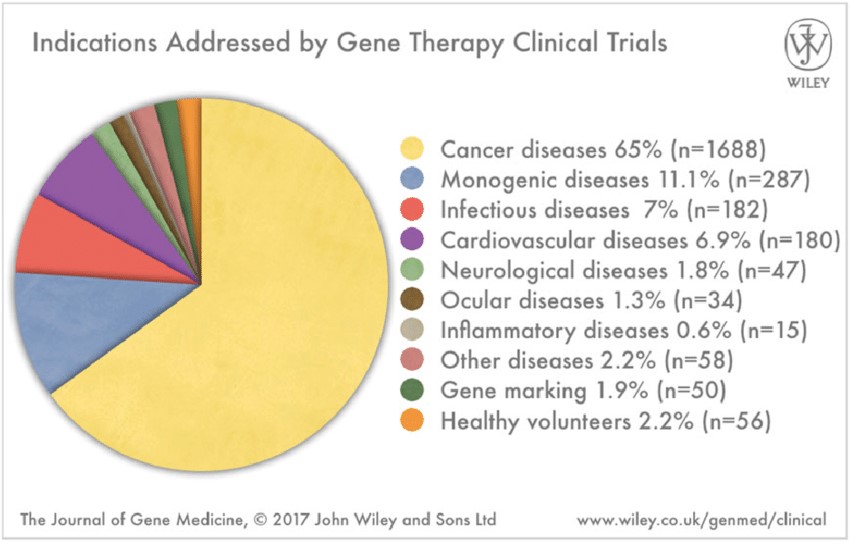
Over the three decades since the first clinical trial, there have been many attempts using gene therapy for treatment of various indications. Among over 2 thousand clinical trials, the majority focused on cancer indications (65%, Exhibit 2). Despite many early failures, there is an increasing number of therapeutic successes in human clinical trials being reported in recent years. As a result, investments in gene therapy technologies are increasing rapidly. The disease targets of gene therapy are currently center around rare, inherited genetic diseases.

Exhibit 2. Various Indications Addressed by Gene
Therapy in Clinical Trials

Source: The Journal of Gene Medicine,
2017, John Wiley and Sons Ltd.

Research – Dyadic (DYAI) – Step Closer to Generating Human-like Proteins with C1 Platform

Tuesday, November 26, 2019

Dyadic International Inc. (DYAI)

Step Closer to Generating Human-like Proteins with C1 Platform

Dyadic International, Inc. is a global biotechnology company which is developing what it believes will be a potentially significant biopharmaceutical gene expression platform based on the industrially proven hyper productive engineered fungus Thermothelomyces heterothallica (formerly Myceliophthora thermophila), named C1.
The C1 microorganism, which enables the development and large scale manufacture of low cost proteins, has the potential to be further developed into a safe and efficient expression system that may help speed up the development, lower production costs and improve the performance of biologic vaccines and drugs at flexible commercial scales. Dyadic is using the C1 technology and other technologies to conduct research, development and commercial activities for the development and manufacturing of human and animal vaccines and drugs, such as virus like particles (VLPs) and antigens, monoclonal antibodies, Fab antibody fragments, Fc-Fusion proteins, biosimilars and/or biobetters, and other therapeutic proteins. Dyadic pursues research and development collaborations, licensing arrangements and other commercial opportunities with its partners and collaborators to leverage the value and benefits of these technologies in development and manufacture of biopharmaceuticals. In particular, as the aging population grows in developed and undeveloped countries, Dyadic believes the C1 technology may help bring biologic vaccines, drugs and other biologic products to market faster, in greater volumes, at lower cost, and with new properties to drug developers and manufacturers, and improve access and cost to patients and the healthcare system, but most importantly save lives.

Ahu Demir, Ph.D., Biotechnology Research Analyst, Noble Capital Markets, Inc.

Refer to full report for the price target, fundamental analysis, and rating.

A building block for human glycan is produced by the C1 platform.  Dyadic’s research partner VTT Technical Research Centre of Finland (VTT) presented data showing expression of the building block (G0 glycan) of human-like glycoproteins (at 94% relative expression). We think this is a key milestone for the company to validate the C1 platform in bioproduction.

Expressing human-like proteins is insight. Glycoproteins, such as monoclonal antibodies, are proteins that have sugars (glycans) attached to them. The majority (over 50%) of the biologics, sales of which are expected to grow to 300 billion by 2022, are glycoproteins. Glycoengineering is crucial in drug development, as glycans have marked effects on stability, activity, antigenicity, and…


Get the full report on Channelchek desktop.

This Company Sponsored Research is provided by Noble Capital Markets, Inc., a FINRA and S.E.C. registered broker-dealer (B/D).

*Analyst
certification and important disclosures included in the full report. 
NOTE: investment decisions should not be based upon the content of
this research summary.  Proper due diligence is required before
making any investment decision.

 

Research – Onconova Therapeutics (ONTX) – What do recent deals mean for Onconova?

Friday, November 22, 2019

Onconova Therapeutics Inc. (ONTX)

What do recent deals mean for Onconova?

Onconova Therapeutics Inc is a clinical-stage biopharmaceutical company operating in the US. It focuses on discovering and developing novel small molecule product candidates primarily to treat cancer. The company has created a library of targeted agents designed to work against cellular pathways important to cancer cells. Its product candidates are Single-agent IV rigosertib, Oral rigosertib + azacitidine, IV Briciclib, Recilisib, and ON 123300. The key product candidate Rigosertib is a small molecule which blocks cellular signaling by targeting RAS effector pathways.

Ahu Demir, Ph.D., Biotechnology Research Analyst, Noble Capital Markets, Inc.

Refer to full report for price target, fundamental analysis and rating.

Licensing deal to commercialize lead drug in Canada.  Onconova inked a licensing agreement with Knight Therapeutics (TSX: GUD, Not covered) to commercialize rigosertib in Canada. Knight is a Canadian specialty pharma company that is focused on acquiring and inlicensing innovative products for the Canadian market. We think this deal provides potential future cash flows for Onconova contingent upon positive data readout from Phase 3 INSPIRE trial and obtaining Health Canada clearance to commercialize rigosertib.

Terms of the deal.  Based on the agreement, Knight gains the exclusive rights to commercialize rigosertib in Canada and has an option to expand its territory to Israel. Onconova may receive clinical, regulatory and…


Get full report on Channelchek desktop.

This Company Sponored Research is provided by Noble Capital Markets, Inc., a FINRA and S.E.C. registered broker-dealer (B/D).

*Analyst
certification and important disclosures included in full report. 
NOTE: investment decisions should not be based upon the content of
this research summary.  Proper due diligence is required before
making any investment decision.
 

Research – electroCore (ECOR) – Q3 2019: Revising Outlook After Slow Quarter

Friday, November 15, 2019

electroCore (ECOR)

Q3 2019: Revising Outlook After Slow Quarter

electrocore Inc is a commercial-stage bioelectronic medicine company with a platform for non-invasive vagus nerve stimulation therapy initially focused on neurology and rheumatology. Its product gammaCore is FDA-cleared for the acute treatment of pain associated with migraine and episodic cluster headache in adults.

Ahu Demir, Ph.D., Biotechnology Research Analyst, Noble Capital Markets, Inc.

Refer to full report for price target, fundamental analysis and rating.

  • Third quarter 2019 financial results. The company reported net sales of $683,000 compared to $623,000 and $410,000, respectively, in the two previous quarters of 2019. Forty and 25 percent of the total sales in the quarter were attributed to the federal supply schedule (FSS)and the United Kingdom (UK) channels,respectively. No additional payers or lives were added/disclosed to the current reimbursement coverage.
  • Did the results meet expectations?  We believe the recent numbers do not demonstrate the expected revenue ramp-up. In the quarter, we did not see the near-term positive trajectory in…


    Get full report on Channelchek desktop.


This Company Sponsored Research is provided by Noble Capital Markets, Inc., a FINRA and S.E.C. registered broker-dealer (B/D).

*Analyst
certification and important disclosures included in full report. 
NOTE: investment decisions should not be based upon the content of
this research summary.  Proper due diligence is required before
making any investment decision.