Haemonetics Expands Hospital Portfolio Through $253 Million Acquisition of OpSens

Medical technology firm Haemonetics Corporation recently announced a definitive agreement to acquire OpSens, Inc. in an all-cash deal valued at approximately $253 million. OpSens is a medical device company specializing in innovative fiber optic sensor technology for interventional cardiology applications. This strategic acquisition allows Haemonetics to expand its hospital business into the high-growth interventional cardiology market estimated at $1 billion.

Haemonetics, based in Boston, offers a suite of products for blood and plasma collection, the surgical suite, and hospital transfusion services. With the addition of OpSens’ sensor-guided guidewire and pressure guidewire products for transcatheter aortic valve replacement (TAVR) and percutaneous coronary intervention (PCI), Haemonetics bolsters its portfolio with clinically validated technology to improve patient outcomes.

OpSens’ core offerings include the SavvyWire, the first sensor-guided guidewire for TAVR procedures which enables shorter hospital stays, and the OptoWire, a pressure guidewire used to aid coronary artery disease diagnosis by measuring key parameters like fractional flow reserve (FFR). OpSens leverages proprietary optical technology across its sensor solutions for medical devices and critical industrial applications.

According to Stewart Strong, President of Global Hospital at Haemonetics, this acquisition expands Haemonetics’ leadership in interventional cardiology while providing a foundation for additional growth. By combining OpSens’ innovative technology with Haemonetics’ commercial infrastructure and hospital relationships, there is tremendous potential to increase adoption and improve patient care globally.

Strategically, Haemonetics gains several advantages from the purchase:

  • Access to a $1 billion total addressable market in interventional cardiology, a specialty area witnessing increasing procedure volume. OpSens’ competitive, clinically validated offerings are well-positioned for long-term growth.
  • The ability to accelerate OpSens product adoption leveraging Haemonetics’ existing commercial footprint and depth of penetration in U.S. hospitals for its VASCADE vascular closure portfolio.
  • Expanded product breadth and enhanced diversification into adjacent applications like industrial sensors. OpSens technology can be leveraged across Haemonetics’ hospital business and new markets.
  • Opportunities for continued R&D, clinical study efforts, and other business development activities to augment internal product development. Haemonetics aims to expand its hospital division via organic and inorganic investments.

Financially, Haemonetics expects the deal will be immediately accretive to revenue growth. On an adjusted basis, earnings per share is also expected to be accretive right away. Due to one-time integration costs, GAAP earnings per share may be slightly dilutive in the first full fiscal year before turning accretive.

Haemonetics will finance the transaction through existing cash balances and its revolving credit facility. This will result in a manageable rise in the company’s net debt to EBITDA ratio to around 2.1x. The purchase is anticipated to close by January 2024, subject to customary approvals.

In summary, the acquisition of OpSens for $253 million in cash strengthens Haemonetics’ position in the attractive interventional cardiology space while providing new technologies, commercial synergies, and earnings accretion over the long-term. It signals a bold move to supplement organic growth with value-enhancing strategic M&A, as Haemonetics looks to deliver innovation and drive better patient outcomes through continued expansion.


Take a look at more biotechnology companies by taking a look at Noble Capital Markets’ Senior Research Analyst Robert LeBoyer’s coverage list.

Bristol Myers Squibb to Acquire Mirati Therapeutics for $4.8 Billion

Pharma giant Bristol Myers Squibb (BMY) announced today that it will acquire clinical-stage biotech Mirati Therapeutics (MRTX) for $58 per share in an all-cash deal totaling $4.8 billion. Mirati stockholders will also receive a contingent value right worth up to $12 per share, bringing the total potential deal value to $5.8 billion.

The acquisition will expand Bristol Myers Squibb’s oncology portfolio and pipeline. Mirati’s lead asset is KRAZATI (adagrasib), the first and only FDA-approved drug targeting the KRAS G12C mutation. KRAS mutations occur in about 13% of non-small cell lung cancers (NSCLC) and are linked to poor prognosis.

KRAZATI was granted accelerated approval in October 2022 as a second-line treatment for KRAS G12C-mutated NSCLC. It is also being tested in combination with a PD-1 inhibitor as a potential first-line NSCLC therapy. Beyond lung cancer, KRAZATI has shown promise in colorectal and pancreatic cancers.

“With multiple targeted oncology assets including KRAZATI, Mirati is another important step forward in our efforts to grow our diversified oncology portfolio,” said Bristol Myers CEO Giovanni Caforio. The company aims to leverage its global commercial infrastructure to maximize KRAZATI’s reach.

Mirati’s earlier-stage pipeline includes MRTX1719, an innovative PRMT5 inhibitor, as well as several KRAS-targeted agents. MRTX1719 could be the first targeted therapy for MTAP-deleted tumors, which represent about 10% of cancers.

“Bristol Myers Squibb’s global scale, resources and commitment to innovation will enable Mirati’s therapeutics to benefit more patients, faster,” said Mirati CEO Charles Baum.

Strategic Fit

Lung cancer is the most common cancer and leading cause of cancer death globally. The addition of KRAZATI establishes Bristol Myers as a leader in developing targeted lung cancer therapies. Mirati also expands Bristol Myers’ presence in colorectal and pancreatic cancers.

The acquisition builds on Bristol Myers’ recent deals for Turning Point Therapeutics and Eisai’s oncology business. As patents expire for the pharma giant’s top-selling cancer immunotherapy Opdivo, it aims to refill its oncology pipeline.

“With a strong strategic fit, great science and clear value creation opportunities for our shareholders, the Mirati transaction is aligned with our business development goals,” said Caforio.

Broader Biopharma Implications

The blockbuster Mirati acquisition also has significant implications for the broader biotech and biopharma sector. As large pharmas look to replenish pipelines, M&A activity has intensified. The deal shows that promising clinical-stage biotechs with innovative oncology pipelines continue to be attractive buyout targets.

Analysts note the 52% buyout premium Bristol Myers paid as a sign of their urgency to tap into Mirati’s next-gen oncology science. For startup biotechs pursuing novel approaches in high-value areas like oncology, it underscores the possibility of commanding large premium buyouts from “big pharma” acquirers.

However, smaller players also face the risk of being squeezed out as consolidation accelerates. The Mirati deal exemplifies the scaling up required to compete in cutting-edge areas like targeted cancer therapies. Smaller biotechs could find it increasingly difficult to independently develop and commercialize new drugs in the future.

That said, smaller biotechs may also benefit from big pharma’s growing appetite for M&A. The premiums being offered for innovative science and pipelines create lucrative exit opportunities for startups. And the influx of capital from buyouts can fund the next generation of biotech innovation.

Take a look at some emerging growth biotechnology companies by taking a look at Noble Capital Market’s Senior Research Analyst Robert LeBoyer’s coverage list.

Deal Terms

Under the definitive agreement, Bristol Myers will pay $58 per share for Mirati’s outstanding common stock. This represents a 52% premium over Mirati’s 30-day volume-weighted average price. Including Mirati’s $1.1 billion cash balance, the total equity value comes to $4.8 billion.

Each Mirati shareholder will also receive a CVR worth up to $12 per share. This contingent value right payment is triggered if Mirati’s MRTX1719 is approved within 7 years as a NSCLC therapy after two or fewer systemic treatments. The CVR adds up to $1 billion in potential additional value.

The transaction is expected to close in the first half of 2024, pending approval from regulators and Mirati shareholders. Bristol Myers anticipates the deal will be dilutive to its non-GAAP earnings through 2025 as it integrates Mirati. It plans to finance the acquisition through cash and debt offerings.

Caforio stated: “With a strong strategic fit, great science and clear value creation opportunities for our shareholders, the Mirati transaction is aligned with our business development goals.” The deal furthers Bristol Myers Squibb’s transformation into a leading oncology-focused biopharma.

Middle East Tensions Move the Global Markets

The escalating conflict between Israel and Hamas has sent shockwaves around the world, with major implications for global financial markets. This past weekend, Hamas militants launched a deadly attack in Israel, killing over 700 people. Israel has retaliated with airstrikes in Gaza and a blockade, leading to rising casualties on both sides. As the violence continues, here is how the clashes could impact the stock market and oil prices.

Stocks Tumble Over 2%

Major US stock indexes fell sharply on Monday in early trading, with the Dow Jones Industrial Average dropping over 700 points, or 2.1%. The S&P 500 declined 2.2% while the Nasdaq Composite sank 2.5%. The declines came amid a broader sell-off as investors fled to safe haven assets like bonds, but stocks trimmed losses as the day progressed.

By early afternoon, the Dow Jones Industrial Average was down just 0.7% after falling over 700 points earlier. The S&P and Nasdaq posted similar reversals after opening sharply lower.

Energy and defense sector stocks bucked the downward trend, rising on expectations of higher oil prices and military spending. But the prospect of further violence dragged down shares of transportation, tourism, and other cyclical firms that benefit from economic growth. Stock markets in Europe and Asia also posted sizable losses.

Prolonged Instability Adds Downside Risks

While markets often rebound after initial geopolitical shocks, an extended conflict between Israel and Hamas could lead to a deeper, sustained selloff. Investors fear that rising tensions in the Middle East could upend the post-pandemic economic recovery. Supply chains already facing shortages and logistical bottlenecks could worsen if violence escalates. US fiscal spending could also spike higher if military involvement grows.

Surging oil prices feeding into already high inflation may spur the Federal Reserve to tighten policy faster. This risks hampering consumer spending and growth. Elevated uncertainty tends to erode business confidence and curb capital expenditures as well. From an earnings perspective, prolonged fighting dents bottom lines of various multinationals operating in the region. The potential economic fallout from persistent Middle East unrest weighs heavily on investors.

Oil Jumps Over 4%

Brent crude oil surged above $110 per barrel, gaining over 4% on Monday before paring some gains. West Texas Intermediate also vaulted over 4% to above $86 per barrel. The jump in oil prices came amid worries that supplies from the Middle East could be disrupted if violence spreads.

The Middle East accounts for about one-third of global oil output. While Israel is not a major producer, heightened regional tensions tend to lift crude prices. Oil markets fear that unrest could spill over into other parts of the region or lead oil producers to curb supply.

Prolonged Supply Issues

If the Israel-Hamas conflict draws in more countries or persists in disrupting regional stability, crude prices could head even higher. Any supply chain troubles that keep oil from reaching end markets will feed into rising inflation. High energy costs are already squeezing consumers and corporations worldwide.

Organizations like OPEC could decide to take advantage of conflict-driven oil spikes by reducing output further. Constraints on Middle East oil transit and infrastructure damage could also support higher prices. From an economic perspective, pricier crude weighs on growth by driving up business costs and crimping consumer purchasing power. Prolonged oil supply problems due to Middle East unrest would prove corrosive for the global economy.

Hope for Swift Resolution

With oil surging and equities declining, investors hope the clashes between Israel and Hamas wind down rapidly. Markets are likely to remain choppy and risks skewed to the downside in the interim. But a quick de-escalation and return to stability could spark a relief rally.

Energy and defense sectors may give back some gains while cyclical segments would likely rebound. Still, the massive human toll and damage already incurred will weigh on regional economic potential for years to come. The attacks also shattered a delicate effort to broker ties between Israel and Saudi Arabia. Hopes for a durable resolution between Israelis and Palestinians have once again been dashed. The economic impacts already felt across global markets are only a glimpse of the long-term consequences of deepening conflict.

Will Cathie Wood’s ARKK Fund Bounce or Break Down Further?

Cathie Wood’s leading ARK Innovation ETF is exhibiting increasing technical weakness that threatens to push shares lower. The fund, known for its disruptive growth stocks, is flashing multiple sell signals after a sharp slide from summer highs.

ARKK delivered incredible gains through much of the past two years as Wood’s pandemic picks like Zoom, Teladoc and Roku surged. But the ETF has stumbled hard since peaking in February 2021, giving back almost 75% of its value.

After showing some resiliency this year, ARKK is now facing its most ominous setup yet. The ETF hit a 52-week high in mid-July but has trended steadily lower since, carving out a series of lower highs and lower lows.

This price action forms a textbook downtrend, with each bounce failing at lower levels. ARKK just sank to its weakest point since May after rejecting its 200-day moving average as resistance.

Adding to the woes, the 50-day moving average has been bending lower in a negative slope. The ETF closed Tuesday a stark 11% below its 50-day line, a clear sell signal in technical analysis. ARKK is also nearing its 2021 low just above $35, presenting major support.

Bearish momentum is apparent across indicators. The relative strength line has plunged sharply since August, reflecting severe underperformance versus the S&P 500. The on-balance volume line is also heading decisively lower.

Plus, the Accumulation/Distribution Rating, which gauges institutional buying and selling activity, sits at a dismal D- for ARKK. The up/down volume ratio shows selling swamping buying to the tune of a 0.6 ratio over the past 50 days.

ARKK’s top components have crumbled in tandem. Major positions Tesla, Zoom, Roku, Coinbase and Block are all deeply in the red over the past month. The lone bright spot is Exact Sciences, maker of a colon cancer screening test, up over 30%.

But weak action in former stars like Tesla and Zoom is a big weight, compounding growing doubts over their long-term growth outlooks. ARKK’s 11% allocation to struggling Tesla looks increasingly problematic.

Of course, periods of underperformance are inevitable even among top growth managers. ARKK still shows a solid 21% gain in 2022 when many indexes remain negative. So this could prove just a dry spell for Wood’s strategy.

However, with the economy potentially rolling over, the prospects for unprofitable growth stocks look even more precarious. This environment may lead investors to shift focus towards more defensive small and micro caps as well as emerging growth names.

ARKK’s technically damaged chart highlights the perils of sticking with high-valuation names in a deteriorating macro climate. For now, it continues to exhibit a troubling technical breakdown as it retests the 2021 lows. Given the backdrop, its chart damage signals additional volatility is still ahead.

Cathie Wood forged a glowing reputation in 2020’s frenzied rebound but is undergoing a brutal reality check. With ARKK flashing multiple sell signals, the next leg lower could further test the resilience of Wood’s innovation approach.

The Emerging Biotech Sector: A Bright Spot for Investors

The biotechnology sector has seen a flurry of activity recently, with major drugmakers looking to acquire smaller biotech firms to boost their pipelines. According to a recent Bloomberg News report, French pharmaceutical giant Sanofi is in talks to acquire Mirati Therapeutics, a clinical-stage biotech focused on developing novel cancer treatments.

While negotiations are still ongoing, this potential deal highlights the enormous value being seen in emerging biotech firms like Mirati that are pioneering cutting-edge medicines. Mirati’s lead drug candidate is a treatment for non-small cell lung cancer, one of the most common and deadly forms of cancer.

Other pharma giants have also inked deals to tap into biotech innovation. Earlier this month, cancer drug developer Immunome merged with Morphimmune. And Eli Lilly recently completed its acquisition of POINT Biopharma for $1.4 billion.

These mergers and acquisitions underscore the biotech sector’s immense growth prospects. With novel approaches to treating cancer, genetic diseases, and other unmet medical needs, biotechs have become hotbeds for innovation. And major drugmakers are increasingly looking to tap into these scientific advancements through strategic deals.

For investors, the busy M&A environment highlights the potential windfalls in identifying and investing in promising biotech firms early on. While risky, buying shares in companies with disruptive technologies before they are on Big Pharma’s radar can result in exponential returns.

With science rapidly advancing, the coming decades are likely to see huge leaps in biomedical innovations. The recent wave of pharma-biotech mergers shows large drugmakers recognize the future potential of biotech. Savvy investors who spot these opportunities stand to profit as more biotech firms are snatched up or grow into full-fledged pharmaceutical leaders themselves.

Take look at other emerging biotechnology companies by taking a look at Noble Capital Market’s Senior Research Analyst Robert LeBoyer’s coverage list.

The Promise of Biotech

Biotechnology represents an exciting new frontier in drug development. Unlike traditional pharmaceuticals derived from chemical compounds, biotech drugs utilize living organisms and biological molecules to treat disease.

Some key innovations driving growth in biotech include:

  • Gene therapy – Altering genes to treat genetic conditions. Gene editing tools like CRISPR have made gene therapy more precise and scalable.
  • Cell therapy – Using modified human cells as treatments, such as CAR T-cell therapy for blood cancers.
  • RNA interference – Silencing specific genes by blocking mRNA translation through RNAi mechanisms.
  • Monoclonal antibodies – Targeted antibodies cloned from immune cells are blockbuster therapies for cancer, autoimmunity, and more.
  • Vaccines – Novel vaccine platforms like mRNA vaccines are enabling rapid development of new vaccines.

These advanced technologies promise to revolutionize medicine and usher in an era of personalized, precision medicine. The possibilities span from regenerative medicine to reversing aging. For investors, biotech represents enormous growth potential.

Biotech Deal Frenzy

Given the vast promise of biotech, it is no surprise that pharmaceutical giants have been scooping up biotech firms at a fierce clip. Small promising biotechs are prime targets for acquisition.

Big Pharma companies like Sanofi, Merck, and Bristol-Myers need to refill drying pipelines. Revenue-generating biotech drugs can also help offset losses from older medications losing patent protection.

For the acquiring company, buying a biotech with an innovative drug candidate eliminates the risks and costs of developing a new medicine from scratch. And the more established resources and expertise of a pharma giant can help push novel therapies through late-stage trials and regulatory approvals.

Meanwhile, being acquired provides biotech startups with an influx of funds and resources to continue advancing their pipeline. It also offers a lucrative exit for early investors.

As the healthcare needs of the global population increase, larger pharmaceutical companies will likely continue acquiring emerging biotechs to remain competitive. This M&A frenzy shows no signs of slowing down.

Investment Opportunities

For investors, the busy biotech M&A environment provides exciting opportunities to profit. Here are some tips:

  • Seek out early-stage biotechs with promising technologies before they become acquisition targets. The ideal scenario is investing pre-IPO.
  • Focus on firms with advanced clinical pipelines addressing urgent unmet needs like cancer, rare diseases, neurodegeneration, etc.
  • Evaluate the strength of a biotech’s intellectual property and licensing agreements for its core technology.
  • Assess the management team’s experience in drug development and commercialization.
  • Consider biotechs focused on next-gen platforms like gene editing, cell therapy, RNAi, etc which are garnering lots of interest.
  • Be prepared to hold for longer time horizons and have a higher risk tolerance. Clinical trials have high failure rates.

For investors comfortable with risk, the payoffs for spotting the next potential biotech star could be immense as entire new markets for cutting-edge medicines continue to emerge.

Jobs Report Rockets Past Wall Street Estimates

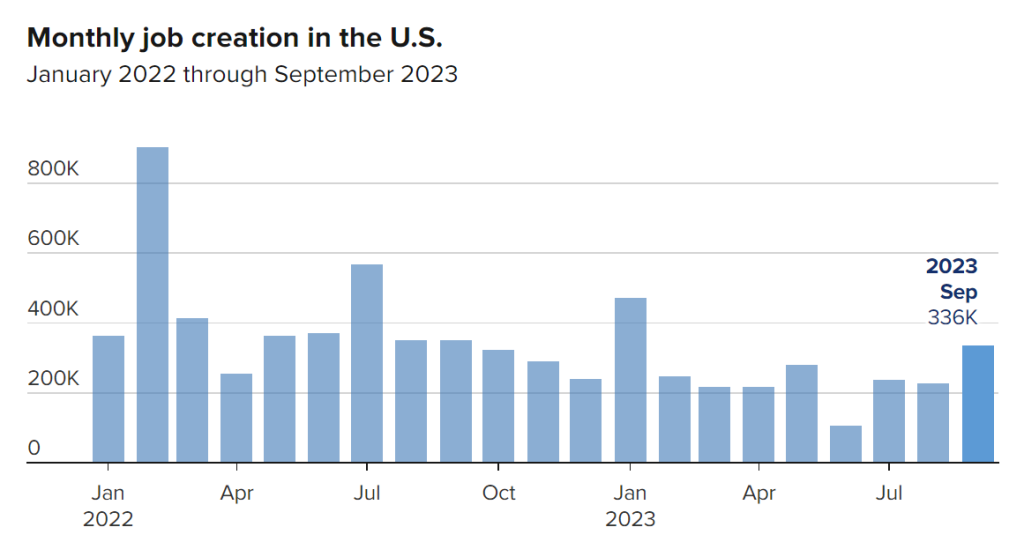
The September jobs report revealed the U.S. economy added 336,000 jobs last month, nearly double expectations. The data highlights the resilience of the labor market even as the Federal Reserve aggressively raises interest rates to cool demand.

Economists surveyed by Bloomberg had forecast 170,000 job additions for September. The actual gain of 336,000 jobs suggests the labor market remains strong despite broader economic headwinds.

The unemployment rate held steady at 3.8%, unchanged from August and still near historic lows. This shows employers continue hiring even amid rising recession concerns.

Wage growth moderated but still increased 0.3% month-over-month and 5.0% year-over-year. Slowing wage gains may reflect reduced leverage for workers as economic uncertainty increases.

The report reinforces the tight labor market conditions the Fed has been hoping to loosen with its restrictive policy. Rate hikes aim to reduce open jobs and slow wage growth to contain inflationary pressures.

Yet jobs growth keeps exceeding forecasts, defying expectations of a downshift. The Fed wants to see clear cooling before it eases up on rate hikes. This report suggests its work is far from done.

The September strength was broad-based across industries. Leisure and hospitality added 96,000 jobs, largely from bars and restaurants staffing back up. Government employment rose 73,000 while healthcare added 41,000 jobs.

Source: U.S. Bureau of Labor Statistics via CNBC

Upward revisions to July and August payrolls also paint a robust picture. An additional 119,000 jobs were created in those months combined versus initial estimates.

Markets are now pricing in a reduced chance of another major Fed rate hike in November following the jobs data. However, resilient labor demand will keep pressure on the central bank to maintain its aggressive tightening campaign.

While the Fed has raised rates five times this year, the benchmark rate likely needs to go higher to materially impact hiring and wage trajectories. The latest jobs figures support this view.

Ongoing job market tightness suggests inflation could become entrenched at elevated levels without further policy action. Businesses continue competing for limited workers, fueling wage and price increases.

The strength also hints at economic momentum still left despite bearish recession calls. Job security remains solid for many Americans even as growth slows.

Of course, the labor market is not immune to broader strains. If consumer and business activity keep moderating, job cuts could still materialize faster than expected.

For now, the September report shows employers shaking off gloomier outlooks and still urgently working to add staff and retain workers. This resiliency poses a dilemma for the Fed as it charts the course of rate hikes ahead.

The unexpectedly strong September jobs data highlights the difficult balancing act the Fed faces curbing inflation without sparking undue economic damage. For policymakers, the report likely solidifies additional rate hikes are still needed for a soft landing.

Tim Cook’s Apple Stock Sale: A Signal for Tech Investors?

Apple CEO Tim Cook raised eyebrows this week after disclosing the sale of over $88 million worth of company shares, his largest stock sale in over two years. While insider transactions are common, the considerable size and timing of Cook’s liquidation stokes fears amid a bearish environment for tech stocks.

Cook offloaded 511,000 Apple shares at prices between $171-173 per share according to regulatory filings. The sale equates to about 15% of his total vesting this year of over 3.4 million shares. However, it still reduces his exposure as he now holds around 3.28 million shares remaining.

The sale comes at a precarious time for Apple and the broader tech sector. After rallying strongly for most of 2022, the stock has declined nearly 20% from highs since peaking in late July. Concerns over slowing iPhone sales due to macro headwinds have plagued Apple lately.

With the economy potentially heading into recession and inflation hurting consumer budgets, investors have grown nervous over Apple’s prospects. The company also faces supply chain constraints impacting production capacity.

Cook choosing this period to materially reduce his Apple holdings could signal diminished confidence in near-term performance. Even scheduled sales through preset plans evoke questions on timing and motivation when executed amid market turbulence.

While Cook still maintains substantial skin in the game, the optics of a CEO offloading large share blocks matter. Apple also reports quarterly earnings at the end of this month, adding significance to the sale’s proximity.

Any hint of caution from Cook on the conference call risks further rattling shareholders. The considerable size of his stock sale suggests a more defensive posture than his typical modest liquidations.

Take a look at The ODP Corporation, a leading provider of products, services, and technology solutions though an integrated business-to-business (B2B) distribution.

The move follows similar trends of tech leaders diversifying holdings away from their own companies’ stocks. Meta’s Mark Zuckerberg sold off over $4 billion in shares in recent months. Amazon’s Jeff Bezos and Google’s founders have executed multi-billion dollar sales as well.

With valuations under pressure after a massive bull run, insiders seem intent on locking in gains. But it also betrays their lack of confidence in stock upside ahead. This compounds fears of slowing growth and execution challenges in the sector.

Cook’s sale in particular cuts deep given his influential leadership and long tenure at Apple. As a revered figure, actions speak loudly, and his uncharacteristic liquidation risks sending the wrong signal.

It may suggest that even entrenched tech stalwarts see limits to future gains amid rising macro uncertainty. The instinct to diversify out of FAANG names reinforces the sense that a pivot is underway.

For Apple specifically, Cook’s historic payday casts doubt ahead of the crucial holiday season. It may indicate softer demand for new iPhone models and other products as consumers tighten budgets.

With the stock down nearly 40% from highs, any wavering commitment from icons like Cook further spooks investors. For now, he retains substantial direct ownership, but the considerable cash-out still feels ill-timed given the challenges.

Cook’s sale exemplifies the broader pivot away from high-flying tech as economic conditions worsen. But his influential role means the signal cuts even deeper. Anxious Apple shareholders now await the next earnings results.

Kyowa Kirin Bets on Gene Therapy With $477M Orchard Therapeutics Acquisition

Japan-based pharma Kyowa Kirin has agreed to acquire gene therapy specialist Orchard Therapeutics in a deal worth up to $477.6 million. The buyout aims to strengthen Kyowa Kirin’s emerging presence in the high-potential genetic medicine field.

Under the terms, Kyowa Kirin will pay $16 per Orchard ADS in cash upfront, representing a 144% premium to Orchard’s recent share price. Orchard shareholders will also receive a contingent value right worth an additional $1 per ADS if certain regulatory milestones are met.

The total potential payout values the deal at $477.6 million. Kyowa Kirin expects the acquisition to close in Q1 2024 pending approvals.

Orchard focuses on developing therapies using genetically modified hematopoietic stem cells (HSCs) taken from patients themselves. Its treatments aim to correct the underlying genetic cause of diseases in a single administration.

The company’s lead asset is Libmeldy, approved in Europe for treating a rare metabolic disorder called MLD. It also has two other programs for pediatric neurological conditions in late-stage testing.

Beyond the commercial and near-term pipeline assets, Kyowa Kirin gains Orchard’s HSC gene therapy platform. This technology can be leveraged to develop new treatments for diseases in Kyowa Kirin’s wheelhouse like oncology, autoimmune disorders, and others.

Kyowa Kirin has made gene and cell therapy a priority as part of its vision to deliver transformative new medicines. Orchard’s proven development capabilities and leadership position in HSC gene therapy make it an ideal fit for this strategy.

The high premium paid reflects Orchard’s status as a pioneer in the burgeoning field of genetic medicine. The deal provides Kyowa Kirin immediate scale and expertise in leveraging gene therapy.

Kyowa Kirin also gains commercial infrastructure to support the global launch of Libmeldy. The FDA is currently reviewing Libmeldy for approval in the U.S. with a decision date in March 2024.

Orchard’s two other clinical programs in development also address rare pediatric neurological disorders with immense unmet need. Additional earlier stage preclinical assets add further upside to the pipeline.

The deal continues biotech industry consolidation as large players acquire innovators to reinforce their drug development pipelines. The competition among pharmas for gene therapy assets has intensified as the field matures.

For Orchard investors, the buyout represents a significant premium after a long stretch of the stock languishing. But with cash running low, the company faced challenges transitioning its pipeline programs to commercial status alone.

The deal provides ample resources to continue advancing Orchard’s mission of tackling rare genetic diseases. Kyowa Kirin expects to hit $1 billion in sales from the MLD treatment alone if approved in the U.S.

Gene therapy has disrupted drug development over the past decade with its potential to deliver curative, lifelong treatment through a single administration. As technology improves, dealmaking and R&D in the space continues gaining steam.

Kyowa Kirin is the latest pharma to bet big on gene therapy’s possibilities. If it can successfully harness Orchard’s specialized platform and assets, the deal may pave the way to developing life-changing genetic medicines while delivering solid returns to shareholders.

Standard BioTools and SomaLogic to Merge, Creating $1B Life Sciences Tools Leader

Standard BioTools and SomaLogic have announced plans to unite through an all-stock merger aimed at creating a diversified life sciences tools platform with over $1 billion in equity value. The deal brings together technologies, expertise and customer bases across genomics, proteomics and other omics fields.

Standard BioTools provides genomic analysis tools catering to academic and clinical research settings. SomaLogic specializes in proteomics technology that profiles proteins for biopharmaceutical drug discovery. Their complementary offerings provide scale, synergies, and cross-selling opportunities.

Under the merger agreement, SomaLogic shareholders will receive 1.11 shares of Standard BioTools stock for each SomaLogic share they own. This values SomaLogic at over $370 million based on recent Standard BioTools share prices.

The combined company expects to generate $80 million in cost synergies by 2026 through optimization of its integrated operations. It will also hold over $500 million in cash to fund growth initiatives and new product development.

Standard BioTools CEO Michael Egholm touted SomaLogic’s proteomics capabilities as an ideal fit to accelerate his company’s strategy in the over $100 billion life science tools industry. The deal diversifies Standard BioTools’ portfolio beyond genomics while leveraging its global commercial infrastructure.

SomaLogic provides proteomic analysis that reveals functional expressions of genes, filling a key gap left by genomics. Its SOMAscan platform uses aptamer-based technology to measure thousands of proteins in biological samples.

Take a moment to take a look other biotech companies by looking at Noble Capital Markets’ Senior Research Analyst Robert LeBoyer’s coverage list.

The technology has become an industry leader in enabling biopharma researchers to identify and validate new drug targets. SomaLogic has relationships with nine of the ten largest pharma companies along with partnerships like its recently launched proteogenomics offering with Illumina.

Standard BioTools plans to tap into these biopharma relationships to cross-sell its genomic analysis tools. Meanwhile, SomaLogic can leverage Standard BioTools’ strong presence selling to academic labs. The combined customer base spans nearly all major end markets.

SomaLogic interim CEO Adam Taich called the merger an opportunity to better serve translational and clinical research customers while creating shareholder value. The healthy $500 million cash position provides ample capital to fund the commercial ramp.

Standard BioTools increased its 2023 revenue outlook to $100-105 million following the merger news. SomaLogic maintained its full-year guidance of $80-84 million. Together, the combined entity expects to generate over $180 million this year.

The boards of both companies have unanimously approved the transaction. Major shareholders holding around 16% of Standard BioTools stock and 1% of SomaLogic have also committed support through voting agreements.

The deal is expected to close in the first quarter of 2024 after securing shareholder and antitrust regulatory approvals. The combined company will operate under the Standard BioTools name and stock ticker, with dual headquarters in South San Francisco and Boulder, Colorado.

Standard BioTools has undergone major changes after a period of underperformance, divesting its sequencing business earlier this year. The merger with SomaLogic continues its strategic shift toward life science research tools.

Together, the companies aim to accelerate development of new diagnostics and precision medicines through their multi-omics technology. Providing genomics, proteomics and other readouts on disease samples provides deeper insights to researchers.

With scale, synergies, ample resources, and multi-pronged revenue opportunities, the combined Standard BioTools and SomaLogic expects to occupy a strengthened position in the competitive life science tools space. Their integration marks the continued consolidation in the industry amid rising demand for omics-based research capabilities.

Cancer Drug Developer Immunome To Merge With Morphimmune in Quest For Targeted Therapies

Immunome, a clinical-stage biotech developing novel antibody drugs for cancer, plans to merge with private peer Morphimmune in an all-stock deal. The combined company will unite complementary technology platforms with the goal of creating best-in-class targeted oncology therapies.

Morphimmune brings its proprietary Targeted Effector platform designed to selectively deliver anti-cancer payloads directly to tumor cells. Immunome contributes its human memory B cell interrogation platform that can identify novel antibodies against disease-associated antigens.

The merged entity, which will operate under the Immunome name, intends to submit 3 IND applications within 18 months after the transaction closes. The deal is expected to be completed by the end of 2023.

Leading the charge as new Immunome CEO will be current Morphimmune chief Clay Siegall, an industry veteran who previously founded and led Seattle Genetics for over two decades. Siegall built Seagen into a multi-billion cancer drug company on the back of its antibody-drug conjugate (ADC) technology.

His experience commercializing ADCs, which similarly target treatments directly to tumors, is highly relevant. Siegall called the merger “the first step in establishing a preeminent oncology company.”

The transaction will also bring in $125 million via a concurrent private placement from healthcare institutional investors. Participants include Enavate Sciences, EcoR1 Capital, Redmile Group, and Janus Henderson.

The fresh funding will support advancement of Immunome’s lead asset, a novel IL-38 targeting antibody. It originates from the company’s memory B cell interrogation platform, which sorts through patient blood samples to uncover new therapeutic candidates.

From Morphimmune, a potent TLR7 agonist and radioligand therapy are currently in preclinical testing. The TLR7 program stimulates the immune system against cancer cells when targeted via Morphimmune’s effector platform. The radioligand directly delivers cell-killing radiation.

Siegall highlighted the productive synergy between Morphimmune’s delivery technology and Immunome’s antibody generation engine. The combined company will be able to pursue a wider array of novel targets across multiple therapeutic modalities.

For investors, the merger and additional capital provide Immunome with a deeper pipeline and strengthened financial footing. The $125 million infusion should fund operations well into 2024 even with increased R&D activity.

The more diversified targeted therapy portfolio also helps mitigate risk, with programs based on different mechanisms of action. This provides more shots on goal for achieving clinical success and advancing partnership opportunities.

However, Immunome stock initially fell on news of the deal, indicating some investors were unimpressed by the initial progress made since its August 2020 IPO. The cash position was also becoming strained, likely necessitating the additional financing.

But the opportunity to start fresh under industry ace Siegall may give the story new appeal. His track record of building shareholder value and delivering oncology drugs could reinvigorate Immunome.

The merger puts all the pieces in place to become a fully integrated cancer therapy player. Immunome now has platform technology, industry expertise, development capabilities and a strengthened balance sheet.

Execution will be key, but Siegall’s involvement is about as good as it gets in terms of leadership. For long-term investors, Immunome may offer an intriguing backdoor into the vision of one of biotech’s most accomplished CEOs.

Lilly Makes $1.4 Billion Bet on Radioactive Cancer Drugs with POINT Biopharma Acquisition

Pharmaceutical giant Eli Lilly is expanding its cancer treatment portfolio into a promising new area by acquiring POINT Biopharma, a company developing radioactive drugs that precisely target tumors, for $1.4 billion.

POINT specializes in radioligand therapies, an emerging approach to cancer treatment that uses radioactive particles linked to molecules that bind to receptors on cancer cells. This enables the radiation to selectively kill tumors while limiting damage to healthy tissue.

Lilly is paying $12.50 per share in cash for POINT, an 87% premium over the stock’s latest closing price. The deal will give Lilly control of POINT’s pipeline of radioligand therapy candidates, which includes two late-stage experimental drugs.

One drug, PNT20021, targets prostate cancer tumors by binding to a protein called PSMA. Study data expected later this year will show whether it extends the lives of men with metastatic castration-resistant prostate cancer.

The other late-stage drug, PNT20031, homes in on neuroendocrine tumor cells via their somatostatin receptors. It may provide a new option for patients with advanced gastroenteropancreatic neuroendocrine tumors.

Take a look at PDS Biotechnology, a clinical stage immunotherapy company developing a growing pipeline of targeted cancer and infectious disease immunotherapies.

Beyond these lead programs, POINT has several earlier stage radioligands in development for cancers of the breast, lung, and brain. Lilly gains full access to progress these toward human testing.

The deal also gives Lilly two specialized facilities Point has built to produce and research radioligands. Manufacturing the drugs involves linking medical radioisotopes like actinium-225 to the targeting molecules, which requires nuclear expertise.

Jacob Van Naarden, head of Lilly’s oncology division, touted the promise of radioligands to safely destroy cancer while avoiding the side effects of traditional chemo. “We are excited by the potential of this emerging modality,” he said.

Lilly has been growing its cancer treatment business in recent years through deals for other firms’ drug candidates and technologies. The POINT acquisition similarly expands Lilly’s footprint into an area well-suited for precision medicine.

The U.S. Food and Drug Administration has already approved over a half dozen radioligand therapies from Lilly competitors like Novartis. Their success is driving a surge of investment and deal-making in the radiopharmaceutical field.

But analyst Geoffrey Porges of SVB Securities thinks Lilly overpaid for POINT. “We believe the valuation fails to reflect the very high risks inherent in drug development,” he wrote in a note to investors.

Porges added that Lilly may need to invest over $2 billion more to fully develop POINT’s pipeline over the next 5-7 years, with no certainty the drugs will pan out.

Lilly expects the acquisition to close by the end of 2023 after gaining required antitrust and regulatory approvals. The majority of POINT shareholders also must tender their shares as part of the agreement.

The deal marks Lilly’s second major oncology purchase in 2022. It paid $1.1 billion earlier in the year access to cancer drug candidates from China’s Zymeworks. With POINT, Lilly is now positioned as a leader across multiple next-wave approaches in the high-stakes race to develop better cancer treatments.

Bruker Pays $108 Million to Acquire Single-Cell Biology Firm PhenomeX

Life science tools provider Bruker Corporation is expanding into the hot field of single-cell analysis through the acquisition of PhenomeX in an all-cash deal valued at around $108 million. Bruker aims to complement its existing microscopy and proteomics businesses by adding PhenomeX’s platforms for studying gene and protein expression in individual cells.

PhenomeX itself was formed just this year through the merger of two prior companies, Berkeley Lights and IsoPlexis. The combined entity offers instruments, software, and reagents to examine the genotype and phenotype of single cells in high throughput.

This enables researchers to link specific cellular traits to underlying genetics and molecular characteristics. It provides a valuable window into cell function relevant to disease as well as development of new therapies.

Bruker cited antibody discovery, cell line engineering, and cell and gene therapy as prime application areas that are fueling rapid growth in the single-cell analysis market. The company pointed to the over 400 systems PhenomeX already has installed at customers as evidence of strong demand.

PhenomeX’s key technology is its Beacon Optofluidic System, which can assess the behavior of tens of thousands of individual cells in parallel while keeping them alive for further genomic analysis. The IsoLight and IsoSpark systems complement this by measuring protein expression in each cell.

Bruker views the acquisition as a launching point into the single-cell biology space, which it called a natural adjacency to its existing fluorescence microscopy offerings. The company has begun expanding beyond its core analytical instrumentation business into faster-growth life science markets.

But some analysts questioned the hefty valuation Bruker paid, amounting to a 90% premium over PhenomeX’s stock price prior to the merger announcement of its predecessor companies. While the technology is cutting-edge, PhenomeX remains an early-stage business posting minimal revenue.

Bruker may need to invest significantly more over years to fully commercialize PhenomeX’s products and turn it into a growth contributor. But the opportunity to lead a new market niche ultimately justified the price.

Take a moment to take a look at other biotech companies by looking at Noble Capital Markets Senior Research Analyst Robert LeBoyer’s coverage list.

Single-cell analysis has become one of the hottest areas within the life sciences amid the precision medicine revolution. Researchers are realizing individual cells often differ genetically and behave differently even within the same tissue sample. Analyzing them as a group obscures key insights.

By examining each cell’s genotype and phenotypic traits individually, links can be drawn to implicate specific genes in cellular functions relevant to diseases like cancer. This enables more targeted drug discovery.

The market is still in its early days but is on a steep growth trajectory as biopharma companies incorporate single-cell capabilities into their R&D. Bruker already enjoys strong relationships through its existing product lines and now gains a foothold to capitalize.

Meanwhile, gaining Bruker’s global commercial infrastructure and resources provides a major boost to PhenomeX, which was formed through the merger of two startups. Having an established industry leader backing its technology and lowering R&D risks strengthens its prospects.

For Bruker investors, the purchase expands the company’s total addressable market by billions in the coming years. While not yet profitable, PhenomeX offers a bridge into a complementary fast-growing segment aligned with Bruker’s strengths.

The deal is the largest in Bruker’s recent spate of acquisitions to reshape itself beyond analytical tools into a more diversified life sciences player. It mirrors consolidation in the broader market as major instrumentation firms seek more exposure to biopharma and cell-based research markets.

If Bruker can successfully integrate and scale up PhenomeX’s platform, the $108 million price tag may prove to be a bargain entry point into the booming single-cell analysis space.

Investors Take Interest in MAIA Biotechnology as FDA Clears Path for Cancer Drug Trial

Shares of MAIA Biotechnology were trading higher Tuesday after the company announced that the FDA has cleared its application to test its experimental cancer therapy THIO in patients in the United States.

MAIA Biotech is developing THIO as a novel immunotherapy approach for advanced non-small cell lung cancer (NSCLC). With FDA clearance of its Investigational New Drug (IND) application, the company can now include U.S. cancer patients in its ongoing mid-stage trial evaluating THIO’s safety and efficacy.

This regulatory win is driving investor enthusiasm and higher trading volume for MAIA stock today.

About MAIA Biotech and THIO

MAIA Biotech is a clinical-stage immunotherapy company aiming to improve cancer treatment by targeting telomeres. Telomeres play an important role in cancer cell survival and resistance to standard therapies.

The company’s lead therapy THIO represents a first-in-class telomere-targeting agent for NSCLC. Early preclinical research indicates THIO can induce cancer cell death and stimulate anti-tumor immune responses.

MAIA is positioning THIO as a second or third line of treatment for NSCLC patients who have stopped responding to initial immunotherapy. The company sees THIO’s novel approach as a way to improve outcomes in this hard-to-treat population.

Phase 2 Trial Details

THIO is currently being tested in a Phase 2 clinical trial involving sites across Europe, Asia Pacific, and now with FDA clearance, the United States.

The trial is evaluating THIO in combination with the PD-1 checkpoint inhibitor Libtayo in advanced NSCLC patients. Researchers want to see if giving THIO first to “prime” the immune system, followed by Libtayo, can enhance and prolong the immune response against cancer cells.

The primary goal is assessing THIO’s safety and antitumor activity based on overall response rates. Secondary goals include evaluating biomarkers and overall survival. The trial expects to enroll approximately 90 patients total.

Next Steps for MAIA

While still early stage, the FDA clearance represents an important milestone for MAIA as it works to expand THIO’s potential reach. Being able to include U.S. sites should support faster enrollment and generate data from a larger, more diverse patient population.

Positive Phase 2 results would support advancing to a pivotal Phase 3 study, which the company hopes could lead to regulatory approval. MAIA sees a multi-billion dollar market opportunity in later-line NSCLC treatment.

The company is also exploring THIO’s potential in other cancer types like melanoma, prostate cancer, and multiple myeloma.

Why Investors are Excited

FDA clearance of THIO’s IND removes a key regulatory hurdle for MAIA. Being able to test the therapy in the major U.S. market is critical for the smaller biotech company.

Today’s stock move reflects investors’ increased confidence in THIO’s outlook and MAIA’s ability to execute on development plans. If the Phase 2 trial goes well, it would further validate THIO’s novel approach and cancer-fighting potential.

While still highly speculative given the early stage, MAIA represents an intriguing immunotherapy play for investors interested in emerging approaches for hard-to-treat cancers. The company’s focus on telomere biology and unique combination strategy with Libtayo differentiate it from other biotechs.

MAIA stock could continue to be volatile in the months ahead as Phase 2 data approaches. But the FDA clearance has put a spotlight on this previously lesser known name. For investors open to some risk, MAIA may be a cancer immunotherapy stock to have on the radar.

Take a look at more research on MAIA Biotechnology by Noble Capital Markets Senior Research Analyst Robert LeBoyer.