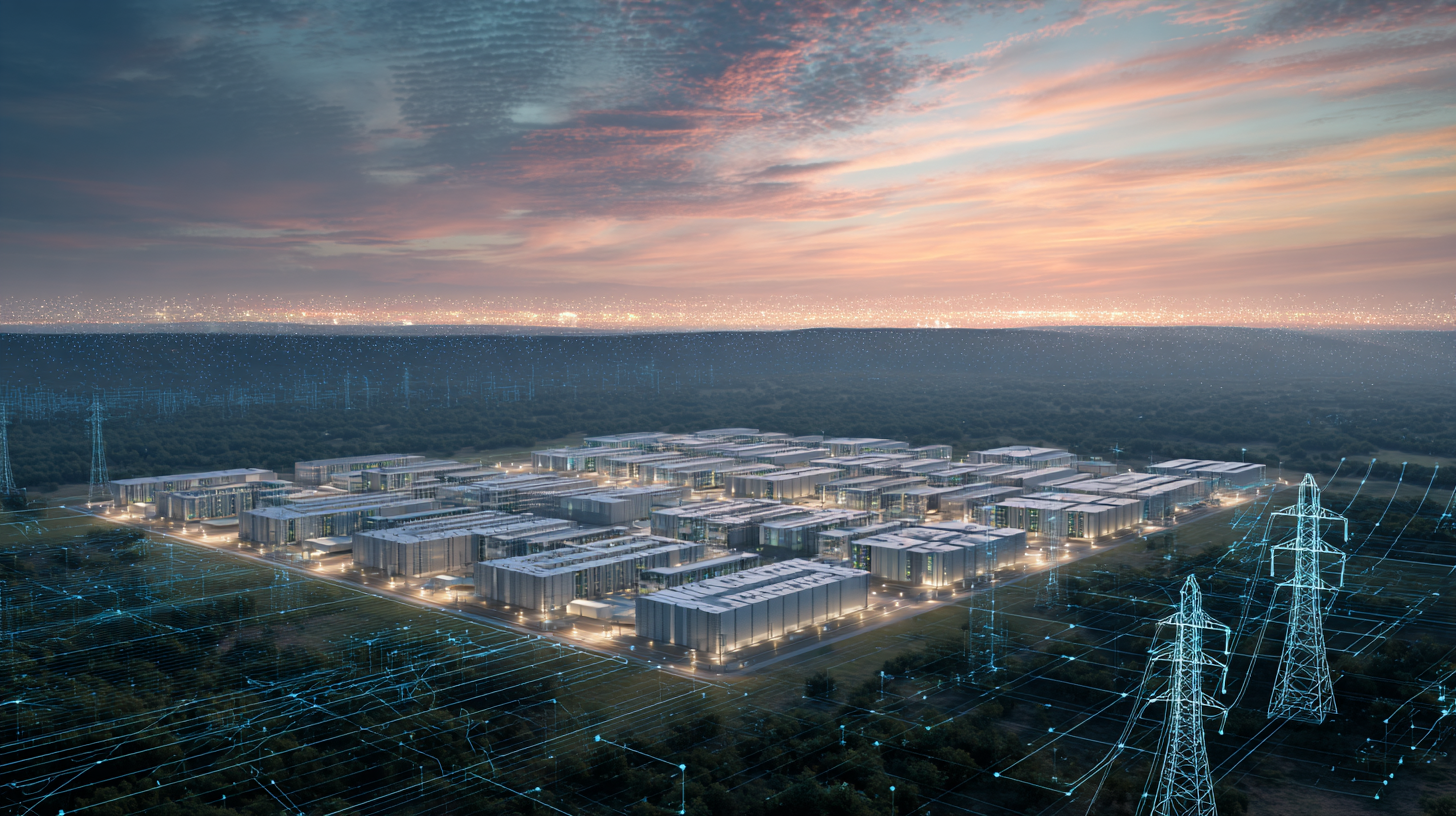
The artificial intelligence boom is no longer just about software models and chips—it’s increasingly about power, land, and infrastructure. That reality came into sharp focus this week as OpenAI and SoftBank jointly committed $1 billion to SB Energy, a fast-growing energy and data center infrastructure company positioned at the center of America’s AI buildout.
Under the deal, OpenAI and SoftBank will each invest $500 million to support SB Energy’s expansion as a large-scale developer and operator of data centers. As part of the partnership, SB Energy has been selected to build and operate OpenAI’s 1.2-gigawatt data center in Milam County, Texas, a facility large enough to power hundreds of thousands of homes. The investment highlights a critical shift: for AI leaders, securing reliable energy has become as strategic as securing advanced chips.
AI workloads are extraordinarily power-hungry. Training and running large language models requires enormous computing capacity, which in turn drives unprecedented electricity demand. As a result, hyperscalers and AI developers are now racing to lock down long-term energy sources and infrastructure partners to avoid future bottlenecks. In this environment, companies that can deliver power at scale are emerging as essential enablers of the AI economy.
SB Energy represents a hybrid model well-suited for this moment. Originally founded as a renewable energy and storage developer and long backed by SoftBank, the company has expanded aggressively into data center development, ownership, and operations. This dual exposure to both energy production and digital infrastructure positions SB Energy as a critical middle layer between power generation and AI compute demand.
The investment also ties directly into OpenAI’s Stargate initiative, a massive joint effort with partners including SoftBank and Oracle to invest up to $500 billion in U.S. AI infrastructure over the next four years. Stargate’s ambition underscores how central physical infrastructure has become to sustaining AI growth—and why capital is flowing into companies that can execute at scale.
From an investor’s perspective, this trend carries important implications. While mega-cap tech companies dominate AI headlines, much of the real opportunity may lie one layer below, in infrastructure providers, energy developers, and specialized operators that enable AI expansion. These businesses often generate long-term contracted revenue and may benefit from structural demand regardless of short-term swings in AI sentiment.
However, the rapid interconnection between AI firms, financiers, and infrastructure developers also introduces risk. Heavy capital commitments assume that AI demand will continue to rise at an aggressive pace. If adoption slows or efficiency gains reduce power needs, some projects could face pressure. Investors should therefore favor companies with diversified customers, strong balance sheets, and assets that retain value beyond AI-specific use cases.
Ultimately, the OpenAI–SoftBank investment in SB Energy signals a broader shift: AI is becoming an infrastructure-driven industry. For investors willing to look beyond the obvious names, the companies powering the AI revolution—literally—may offer some of the most compelling opportunities in the years ahead.