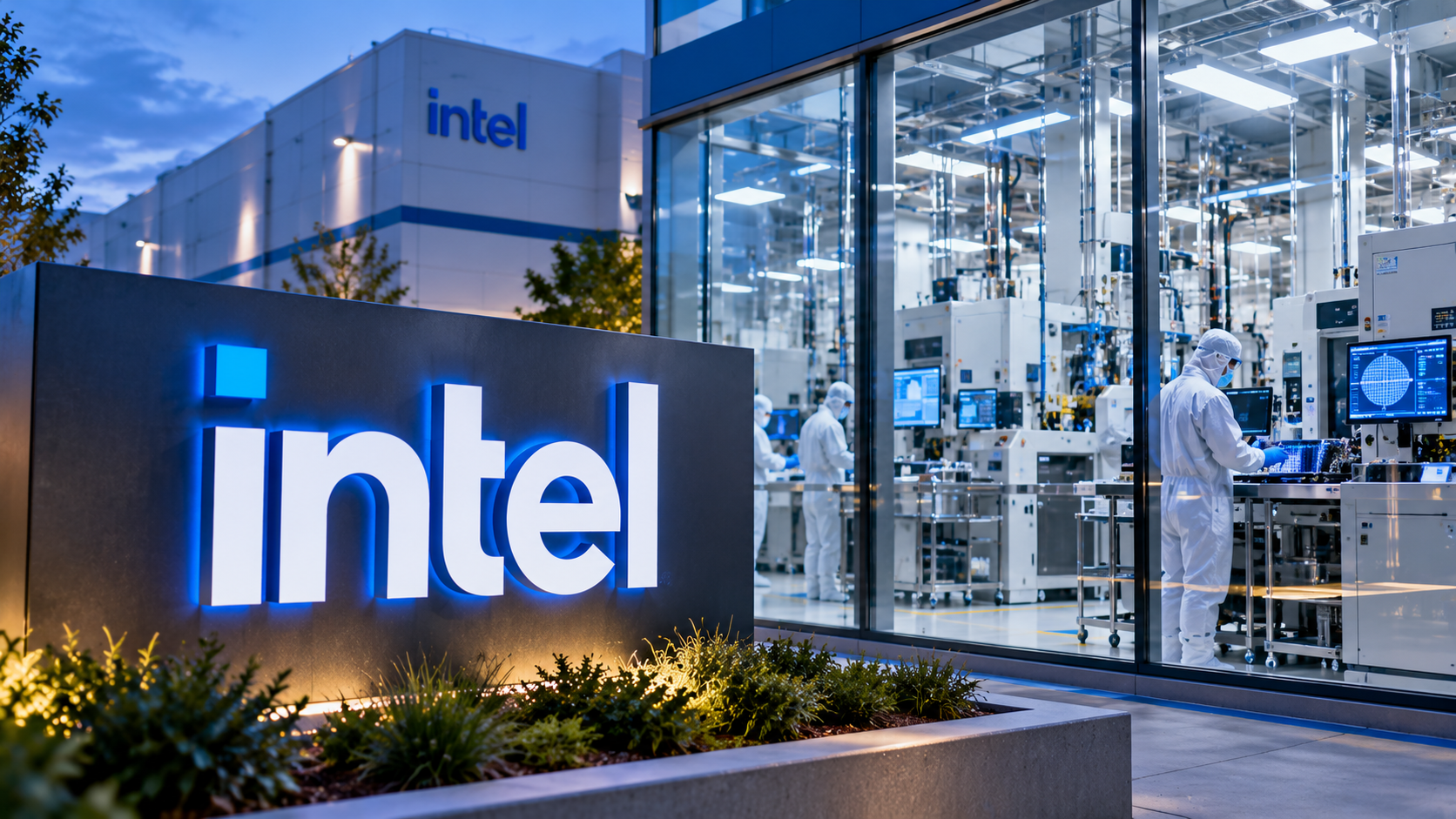
Intel (NASDAQ: INTC) shares plunged as much as 26% on Friday, October 30, putting the semiconductor giant on pace for one of its worst trading days in more than five decades after the company issued a disappointing fourth-quarter forecast and warned that weakness in the personal computer market could extend into 2027.
The sharp decline threatened to erase more than $100 billion in market capitalization, underscoring growing investor concerns about Intel’s turnaround strategy despite stronger-than-expected third-quarter earnings and rapid growth in its data center business.
Intel reported third-quarter revenue of $16.51 billion, up 21% from a year earlier and slightly above Wall Street expectations. Adjusted earnings reached $0.52 per share, exceeding analysts’ estimates of approximately $0.40.
However, the company’s outlook for the final quarter of 2026 disappointed investors. Intel projected revenue between $15 billion and $16 billion, below Wall Street’s expectations of approximately $17.1 billion. Adjusted earnings are expected to reach $0.25 per share, compared with forecasts of roughly $0.43.
The weaker guidance reflects mounting challenges in the global PC market, where rising memory chip prices are increasing production costs and reducing demand for new computers.
Intel now expects worldwide PC shipments to decline approximately 12% in 2026, followed by another 10% decrease in 2027. The company warned that market conditions could remain difficult through at least the first half of next year.
A major factor behind the slowdown is the rapid expansion of artificial intelligence infrastructure. Data center operators are consuming increasing amounts of memory capacity, contributing to higher component prices for consumer laptops and desktop computers.
The trend highlights an emerging divide within the semiconductor industry, as AI-related demand supports certain chipmakers while creating cost pressures across other technology markets.
Intel’s own results illustrate that contrast. Revenue from its data center and AI business jumped 78% year over year to $7.3 billion, supported by strong demand for server processors. Meanwhile, its client computing business generated approximately $8.1 billion in revenue, representing a 5% annual decline.
The company also faces manufacturing challenges following an accident at its semiconductor facility in Israel earlier this month. Intel expects the disruption to reduce fourth-quarter revenue by approximately $300 million.
Chief Executive Officer Lip-Bu Tan, who is leading Intel’s restructuring efforts, acknowledged that rebuilding the company will require several years.
Intel is investing heavily in advanced manufacturing capacity as it works to strengthen its competitive position against semiconductor rivals including Nvidia and Advanced Micro Devices.
The company maintained its 2026 capital expenditure outlook of approximately $20 billion but expects spending to increase substantially in 2027. Management also indicated that Intel does not expect to generate positive free cash flow next year.
For investors, the combination of rising capital expenditures and weaker near-term demand raises questions about how quickly Intel can translate its manufacturing investments into sustainable profitability.
The selloff also weighed on broader semiconductor sentiment, with PC manufacturers and other technology companies facing renewed scrutiny over demand expectations and capital spending.
Despite Friday’s decline, Intel shares remain substantially higher for the year following a powerful rally fueled by optimism surrounding its restructuring and domestic semiconductor manufacturing ambitions.
The latest earnings report demonstrates that strong AI demand alone may not be enough to offset weakness in traditional computing markets.
As Intel enters 2027, investors will be watching for signs of stabilization in PC demand, improvements in manufacturing execution, and evidence that the company’s ambitious turnaround can deliver sustainable financial returns.