Voyager Digital Ltd.’s (TSX: VOYG) (OTCQX: VYGVF) (FRA: UCD2) US subsidiary, Voyager Digital, LLC, is a fast-growing cryptocurrency platform in the United States founded in 2018 to bring choice, transparency, and cost-efficiency to the marketplace. Voyager offers a secure way to trade over 100 different crypto assets using its easy-to-use mobile application. Through its subsidiary Coinify ApS, Voyager provides crypto payment solutions for both consumers and merchants around the globe. To learn more about the company, please visit https://www.investvoyager.com.
Joe Gomes, Senior Research Analyst, Noble Capital Markets, Inc.
Joshua Zoepfel, Research Associate, Noble Capital Markets, Inc.
Refer to the full report for the price target, fundamental analysis, and rating.
The Collapse of FTX. As widely reported, on Friday cryptocurrency exchange FTX filed for Chapter 11 bankruptcy protection in the U.S. Included in the filing is subsidiary FTX US, the entity that had won the auction process for Voyager.
The Old Deal. Recall, back in October, the Bankruptcy Court approved Voyager’s entry into an asset purchase agreement between FTX US and Voyager. FTX US’s bid was valued at approximately $1.422 billion. Voyager’s claims against Three Arrows Capital would have remained with the bankruptcy estate and any recovery on account of the 3AC claims would have been available for additional distribution to Voyager creditors.
This Company Sponsored Research is provided by Noble Capital Markets, Inc., a FINRA and S.E.C. registered broker-dealer (B/D).
*Analyst certification and important disclosures included in the full report. NOTE: investment decisions should not be based upon the content of this research summary. Proper due diligence is required before making any investment decision.
TAAL Distributed Information Technologies Inc. delivers value-added blockchain services, providing professional-grade, highly scalable blockchain infrastructure and transactional platforms to support businesses building solutions and applications upon the BitcoinSV platform, and developing, operating, and managing distributed computing systems for enterprise users.
Joe Gomes, Senior Research Analyst, Noble Capital Markets, Inc.
Joshua Zoepfel, Research Associate, Noble Capital Markets, Inc.
Refer to the full report for the price target, fundamental analysis, and rating.
3Q 2022 Results. Revenue totaled CAD$4.4 million for the quarter (all figures in CAD), or a decrease from the prior year’s $12.3 million, and is down sequentially from $7.3 million the previous quarter. The decrease from the prior year and quarter is due to the continuation of the macro trend in cryptocurrency with decreasing prices. Net loss for TAAL was $4.9 million, or diluted EPS of ($0.14), compared to net income of $2.1 million last year, or $0.05. We would note TAAL still does not have an auditor so all statements were prepared solely by management.
Continued Challenging Environment. The Company noted the continued volatility of the cryptocurrency prices, including the Company’s main coins, Bitcoin Core (“BTC”), BitcoinSV (“BSV”) and Bitcoin Cash (“BCH”). For BSV, the price of the coin was approximately $67 on September 30, 2022, and is now $52 as of November 10, 2022.
This Company Sponsored Research is provided by Noble Capital Markets, Inc., a FINRA and S.E.C. registered broker-dealer (B/D).
*Analyst certification and important disclosures included in the full report. NOTE: investment decisions should not be based upon the content of this research summary. Proper due diligence is required before making any investment decision.
One Stop Systems, Inc. (OSS) designs and manufactures innovative AI Transportable edge computing modules and systems, including ruggedized servers, compute accelerators, expansion systems, flash storage arrays, and Ion Accelerator™ SAN, NAS, and data recording software for AI workflows. These products are used for AI data set capture, training, and large-scale inference in the defense, oil and gas, mining, autonomous vehicles, and rugged entertainment applications. OSS utilizes the power of PCI Express, the latest GPU accelerators and NVMe storage to build award-winning systems, including many industry firsts, for industrial OEMs and government customers. The company enables AI on the Fly® by bringing AI datacenter performance to ‘the edge,’ especially on mobile platforms, and by addressing the entire AI workflow, from high-speed data acquisition to deep learning, training, and inference. OSS products are available directly or through global distributors. For more information, go to www.onestopsystems.com.
Joe Gomes, Senior Research Analyst, Noble Capital Markets, Inc.
Joshua Zoepfel, Research Associate, Noble Capital Markets, Inc.
Refer to the full report for the price target, fundamental analysis, and rating.
3Q22 Results. Record quarterly revenue of $18.8 million, up 17.7% y-o-y. Consensus was $18.5 million and we also had forecast $18.5 million. OSS reported GAAP net income of $132,533, or $0.01 per share, compared to $980,696, or $0.05 per share last year. Adjusted EPS was $0.03 in 3Q22, compared to $0.08 per share in 3Q21. We were at $0.02 and $0.04, respectively. Consensus was at $0.04 per share.
AI Transportable Business a Contributor. The AI Transportable business posted solid growth in the quarter, with two AI Transportable clients now in the top 10 of OSS’s clients. The Company won six major programs during the quarter, five of which are in the AI Transportables space. At quarter’s end, OSS had 30 pending awards, 18 of which are in the AI Transportables space.
This Company Sponsored Research is provided by Noble Capital Markets, Inc., a FINRA and S.E.C. registered broker-dealer (B/D).
*Analyst certification and important disclosures included in the full report. NOTE: investment decisions should not be based upon the content of this research summary. Proper due diligence is required before making any investment decision.
Tourism Marketing Leader to Drive Growth for Orange142 & Its Brand Clients
HOUSTON, TX (November 7, 2022) – Direct Digital Holdings, a leading advertising and marketing technology platform, announced today that Scott Schult will be joining Orange142, a demand generation and digital advertising company, in the newly created role of Head of Strategy. Schult will help Orange142’s sales, account management, and marketing teams construct a more strategic approach to client outreach, retention, and production innovation. Schult comes to Orange142 from the Nashville Convention and Visitors Corporation, where he served as Chief Marketing Officer.
Before leading marketing at the Nashville Convention and Visitors Corporation, Schult worked as Executive Vice President and Chief Marketing Officer for the Myrtle Beach Area Chamber of Commerce. Earlier in his career, he held key roles at the St. Petersburg/Clearwater Area Convention and Visitors Bureau, Primco Capital Management, Sierra Health Services, and Marriott Hotels.
“Scott brings unparalleled experience and innovative thought leadership in the travel and tourism industry, along with years of insights and relationships that will serve us well in helping Orange142 grow marketshare and market our services to a broad reach of industries,” said Mark Walker, CEO, Direct Digital Holdings.
“Orange142 is a high-performance digital media company that successfully delivers unmatched value and transparency to its clients,” said Schult. “Their solutions are a big win for the travel and tourism brands I know well, as well as for a range of marketers looking for significant ROI from a team that understand the needs of mid-market businesses.”
Schult holds a B.S. in Hospitality & Tourism Management and an M.S. in Marketing, both from Purdue University.
About Direct Digital Holdings
Direct Digital Holdings (Nasdaq: DRCT), owner of operating companies Colossus SSP, Huddled Masses and Orange 142, brings state-of-the-art sell- and buy-side advertising platforms together under one umbrella company. Direct Digital Holdings’ sell-side platform, Colossus SSP, offers advertisers of all sizes extensive reach within general market and multicultural media properties. The company’s subsidiaries Huddled Masses and Orange142 deliver significant ROI for middle market advertisers by providing data-optimized programmatic solutions at scale for businesses in sectors that range from energy to healthcare to travel to financial services. Direct Digital Holdings’ sell- and buy-side solutions manage approximately 90,000 clients monthly, generating over 100 billion impressions per month across display, CTV, in-app and other media channels. The company has been named a top minority-owned business by The Houston Business Journal.
About Orange142
Part of Direct Digital Holdings, Inc. (Nasdaq: DRCT), Orange142, LLC combines demand-side technology with real-time intelligence and data-driven strategy to support omnichannel marketing. Based in Austin, Texas, Orange142, LLC specializes in driving strong results for mid-market clients in CPG, higher education, government, travel/tourism, and wellness/beauty. For more information, visit www.orange142.com.
Media Contact: Laura Goldberg LBG Public Relations for Direct Digital Holdings laura@lbgpr.com +1-347-683-1859
ISG (Information Services Group) (Nasdaq: III) is a leading global technology research and advisory firm. A trusted business partner to more than 700 clients, including more than 75 of the world’s top 100 enterprises, ISG is committed to helping corporations, public sector organizations, and service and technology providers achieve operational excellence and faster growth. The firm specializes in digital transformation services, including automation, cloud and data analytics; sourcing advisory; managed governance and risk services; network carrier services; strategy and operations design; change management; market intelligence and technology research and analysis. Founded in 2006, and based in Stamford, Conn., ISG employs more than 1,300 digital-ready professionals operating in more than 20 countries—a global team known for its innovative thinking, market influence, deep industry and technology expertise, and world-class research and analytical capabilities based on the industry’s most comprehensive marketplace data. For additional information, visit www.ISG-One.com
Joe Gomes, Senior Research Analyst, Noble Capital Markets, Inc.
Joshua Zoepfel, Research Associate, Noble Capital Markets, Inc.
Refer to the full report for the price target, fundamental analysis, and rating.
Business Remains on Track. Information Services Group remains on track to post record revenue and adjusted EBITDA. According to management, demand remains strong for digital services, driving a strong profitable mix of products and services, while ISG continues to see an uptick in demand for its cost takeout services given the uncertain economic environment.
Priming the Pump for Additional Growth. ISG added 56 professionals during the quarter, an increase of 3.8%. The new hires are expected to focus on the higher growth digital and recurring revenue opportunities. During the quarter, ISG serviced 625 clients, including 65 new to ISG, both up from the prior year and quarter-over-quarter.
This Company Sponsored Research is provided by Noble Capital Markets, Inc., a FINRA and S.E.C. registered broker-dealer (B/D).
*Analyst certification and important disclosures included in the full report. NOTE: investment decisions should not be based upon the content of this research summary. Proper due diligence is required before making any investment decision.
Acquisition creates a global powerhouse in change management
STAMFORD, Conn., November 3, 2022 ― Information Services Group (ISG) (Nasdaq: III), a leading global technology research and advisory firm, today announced it has acquired Change 4 Growth, an award-winning company specializing in transformational change for enterprises.
Founded in 2017, Change 4 Growth offers market-leading change solutions and expertise to support large-scale business transformations involving people, process and technology. Last year it was named a top 10 change management company in the U.S. by Manage HR magazine.
“The combination of Change 4 Growth and our existing ISG Enterprise Change business creates a global powerhouse in change management at a time when demand for such services is expected to grow significantly,” said Michael P. Connors, chairman and CEO of ISG. “Enterprises are in a state of continuous transformation, as they adjust to new technologies, new competitors, and ever-changing market forces. To be successful, they need a highly adaptable, change-ready workforce.”
The combined business will go to market as ISG Enterprise Change with capabilities in organizational change management (OCM), communications, training development and delivery, leadership development, mentoring, Diversity, Equity and Inclusion (DEI) programs, executive coaching and culture change.
“Transformational change is a complex journey best undertaken with a strong and knowledgeable partner,” said Beth Thomas, CEO and founder of Change 4 Growth, who has been named partner and co-leader of ISG Enterprise Change. “Together, we will offer unrivalled expertise, methodologies and tools to help our clients build and sustain change-capable organizations. We could not be more excited to be joining ISG and expanding the reach of both firms’ industry-leading solutions.”
Among those solutions is ATLAS™, a transformational change platform developed by Change 4 Growth that provides access to OCM templates and tools for greater efficiency and gives clients real-time visibility via dashboards into the progress and health of their business transformations. ISG Enterprise Change intends to offer this new solution to its clients immediately.
Change 4 Growth and ISG Enterprise Change together have successfully conducted more than 1,000 change management engagements involving more than 5 million employees. The two businesses have served more than 300 clients in industries including retail, automotive, manufacturing, banking and financial services, insurance, utilities and healthcare.
For more information about ISG’s OCM services, visit the ISG website.
About ISG
ISG (Information Services Group) (Nasdaq: III) is a leading global technology research and advisory firm. A trusted business partner to more than 800 clients, including more than 75 of the world’s top 100 enterprises, ISG is committed to helping corporations, public sector organizations, and service and technology providers achieve operational excellence and faster growth. The firm specializes in digital transformation services, including automation, cloud and data analytics; sourcing advisory; managed governance and risk services; network carrier services; strategy and operations design; change management; market intelligence and technology research and analysis. Founded in 2006, and based in Stamford, Conn., ISG employs more than 1,300 digital-ready professionals operating in more than 20 countries—a global team known for its innovative thinking, market influence, deep industry and technology expertise, and world-class research and analytical capabilities based on the industry’s most comprehensive marketplace data. For more information, visit www.isg-one.com.
Reports third-quarter GAAP revenues of $69 million, reflecting negative FX impact of $4 million
Reports net income of $6 million, GAAP EPS of $0.11 and adjusted EPS of $0.14
Reports adjusted EBITDA of $11 million
Achieves record year-to-date results: GAAP revenues of $212 million, up 6% in constant currency; net income of $15 million, up 29%; adjusted EBITDA of $32 million, up 12%; GAAP EPS of $0.30, up 30%; adjusted EPS of $0.40, up 18%
Returns $7 million to shareholders in the form of share repurchases and dividends in Q3
Declares fourth-quarter dividend of $0.04 per share, payable December 19 to record holders as of December 5
Sets fourth-quarter guidance for achieving record full-year revenue and EBITDA performance: revenues between $70 million and $72 million and adjusted EBITDA between $10 million and $11 million
STAMFORD, Conn.–(BUSINESS WIRE)– Information Services Group (ISG) (Nasdaq: III), a leading global technology research and advisory firm, today announced financial results for the third quarter ended September 30, 2022.
“ISG remains on track to deliver record full-year revenue and profitability after another solid operating performance in Q3,” said Michael P. Connors, chairman and CEO. “Despite macroeconomic headwinds, in the third quarter we delivered double-digit growth in recurring revenues, as well as in Europe, on an operating basis. Our product mix of higher-margin digital advisory, research and platform services drove the expansion of our adjusted EBITDA margin to 16 percent, our highest-ever quarterly margin.”
Change 4 Growth Acquisition
ISG said today it has acquired Change 4 Growth, a business specializing in transformational change for enterprises. Founded in 2017, Change 4 Growth offers market-leading change solutions and expertise to support large-scale business transformations involving people, process and technology.
“The combination of Change 4 Growth and our existing ISG Enterprise Change business creates a global powerhouse in change management at a time when demand for such services is expected to grow significantly,” said Connors.
ISG estimates demand for organizational change management (OCM) services will grow at a compound annual rate of more than 15 percent over the next five years, as companies continuously adjust to new technologies, new competitors, and ever-changing market forces.
With the acquisition, Connors noted that ISG adds a new platform solution, ATLAS™, that provides access to OCM templates and tools for greater engagement efficiency and gives clients real-time visibility via dashboards into the progress and health of their business transformations.
Third-Quarter 2022 Results
Reported revenues for the third quarter were $68.8 million, down 3 percent from $71.1 million in the prior year, and up 2 percent in constant currency. Currency translation negatively impacted reported revenues by $4.0 million versus the prior year. Reported revenues were $42.2 million in the Americas, down 2 percent versus the prior year, impacted by the completion of a large Automation engagement; $19.3 million in Europe, down 4 percent versus the prior year on a reported basis and up 13 percent in constant currency, and $7.3 million in Asia Pacific, down 10 percent versus the prior year on a reported basis and down 3 percent in constant currency.
ISG reported third-quarter operating income of $7.4 million, up 2 percent from $7.3 million in the third quarter of 2021. Reported third-quarter net income was $5.6 million, up 26 percent, compared with net income of $4.4 million in the prior year. Fully diluted earnings per share was $0.11, compared with $0.09 per fully diluted share in the prior year. Net income margin (calculated by dividing net income by reported revenues) increased to 8.1 percent, from 6.2 percent in the third quarter of 2021.
Adjusted net income (a non-GAAP measure defined below under “Non-GAAP Financial Measures”) for the third quarter was $7.2 million, or $0.14 per share on a fully diluted basis, compared with adjusted net income of $5.9 million, or $0.12 per share on a fully diluted basis, in the prior year’s third quarter.
Third-quarter adjusted EBITDA (a non-GAAP measure defined below under “Non-GAAP Financial Measures”) was $10.7 million, up 5 percent from the third quarter last year. Adjusted EBITDA margin (a non-GAAP measure calculated by dividing adjusted EBITDA by reported revenues) was 16 percent, up 120 basis points from the prior year.
Nine-Month Year-to-Date Results
Reported revenues for the first nine months were a record $212.1 million, up 2 percent versus the prior-year period, and up 6 percent in constant currency. Currency translation negatively impacted reported revenues for the nine-month period by $9.5 million versus the prior year. Reported revenues were $123.1 million in the Americas, up 1 percent versus the prior year; $66.0 million in Europe, down 1 percent versus the prior year on a reported basis and up 11 percent in constant currency, and $23.0 million in Asia Pacific, up 13 percent versus the prior year on a reported basis and up 20 percent in constant currency.
ISG reported year-to-date operating income of $22.3 million, up 23 percent from $18.1 million in the first nine months of 2021. The firm also reported record year-to-date net income and fully diluted earnings per share of $15.4 million and $0.30, respectively, versus net income of $12.0 million and earnings per share of $0.23 in the prior year. Net income margin (calculated by dividing net income by reported revenues) increased to 7.3 percent, from 5.7 percent in the same period last year.
Adjusted net income (a non-GAAP measure defined below under “Non-GAAP Financial Measures”) for the first nine months was $20.4 million, or $0.40 per share on a fully diluted basis, compared with adjusted net income of $17.7 million, or $0.34 per share on a fully diluted basis, in the prior-year period.
Year-to-date adjusted EBITDA (a non-GAAP measure defined below under “Non-GAAP Financial Measures”) reached a record $32.1 million, up 12 percent from same period last year. Adjusted EBITDA margin (a non-GAAP measure calculated by dividing adjusted EBITDA by reported revenues) was 15 percent, up more than 140 basis points from the prior year.
Other Financial and Operating Highlights
The firm’s cash balance totaled $19.7 million at September 30, 2022, down from $31.5 million at June 30, 2022. During the third quarter, ISG repurchased $4.8 million of shares, paid dividends of $2.0 million, paid $1.0 million in a final earnout associated with the 2020 Neuralify acquisition, and paid down $1.1 million of debt. As of September 30, 2022, ISG had $71.3 million in debt outstanding, compared with $75.6 million at the end of the third quarter last year. At 1.7 times, the firm’s gross-debt-to-adjusted-EBITDA ratio (a non-GAAP measure calculated by dividing outstanding debt by adjusted EBITDA) was at a record low as of September 30, 2022.
2022 Fourth-Quarter Revenue and Adjusted EBITDA Guidance
“Based on achieving our fourth-quarter guidance, ISG will deliver record revenues and profitability for the full year,” said Connors. “For the fourth quarter, ISG is targeting revenues of between $70 million and $72 million and adjusted EBITDA of between $10 million and $11 million. We will continue to monitor the macroeconomic environment, including the impact of FX, inflation and other factors, and adjust our business plans accordingly.”
Quarterly Dividend
The ISG Board of Directors declared a fourth-quarter dividend of $0.04 per share, payable on December 19, 2022, to shareholders of record on December 5, 2022.
Conference Call
ISG has scheduled a call for 9 a.m., U.S. Eastern Time, Friday, November 4, 2022, to discuss the company’s third-quarter results. The call can be accessed by dialing 1-833-927-1758; or, for international callers, by dialing +1 929-526-1599. The access code is 121223. A recording of the conference call will be accessible on ISG’s website (www.isg-one.com) for approximately four weeks following the call.
Forward-Looking Statements
This communication contains “forward-looking statements” which represent the current expectations and beliefs of management of ISG concerning future events and their potential effects. Statements contained herein including words such as “anticipate,” “believe,” “contemplate,” “plan,” “estimate,” “target,” “expect,” “intend,” “will,” “continue,” “should,” “may,” and other similar expressions, are “forward-looking statements” under the Private Securities Litigation Reform Act of 1995. These forward-looking statements are not guarantees of future results and are subject to certain risks and uncertainties that could cause actual results to differ materially from those anticipated. Those risks relate to inherent business, economic and competitive uncertainties and contingencies relating to the businesses of ISG and its subsidiaries including without limitation: (1) failure to secure new engagements or loss of important clients; (2) ability to hire and retain enough qualified employees to support operations; (3) ability to maintain or increase billing and utilization rates; (4) management of growth; (5) success of expansion internationally; (6) competition; (7) ability to move the product mix into higher margin businesses; (8) general political and social conditions such as war, political unrest and terrorism; (9) healthcare and benefit cost management; (10) ability to protect ISG and its subsidiaries’ intellectual property or data and the intellectual property or data of others; (11) currency fluctuations and exchange rate adjustments; (12) ability to successfully consummate or integrate strategic acquisitions; (13) outbreaks of diseases, including coronavirus, or similar public health threats or fear of such an event; and (14) engagements may be terminated, delayed or reduced in scope by clients. Certain of these and other applicable risks, cautionary statements and factors that could cause actual results to differ from ISG’s forward-looking statements are included in ISG’s filings with the U.S. Securities and Exchange Commission. ISG undertakes no obligation to update or revise any forward-looking statements to reflect subsequent events or circumstances.
Non-GAAP Financial Measures
ISG reports all financial information required in accordance with U.S. generally accepted accounting principles (GAAP). In this release, ISG has presented both GAAP financial results as well as non-GAAP information for the three and nine months ended September 30, 2022, and September 30, 2021. ISG believes that evaluating its ongoing operating results will be enhanced if it discloses certain non-GAAP information. These non-GAAP financial measures exclude non-cash and certain other special charges that many investors believe may obscure the user’s overall understanding of ISG’s current financial performance and the Company’s prospects for the future. ISG believes that these non-GAAP measures provide useful information to investors because they improve the comparability of the financial results between periods and provide for greater transparency of key measures used to evaluate the Company’s performance.
ISG provides adjusted EBITDA (defined as net income plus interest, taxes, depreciation and amortization, foreign currency transaction gains/losses, non-cash stock compensation, interest accretion associated with contingent consideration, acquisition-related costs, and severance, integration and other expense), adjusted net income (defined as net income plus amortization of intangible assets, non-cash stock compensation, foreign currency transaction gains/losses, interest accretion associated with contingent consideration, acquisition-related costs, and severance, integration and other expense, on a tax-adjusted basis), adjusted net income per diluted share, adjusted EBITDA margin, gross-debt-to-adjusted-EBITDA ratio and selected financial data on a constant currency basis which are non-GAAP measures that the Company believes provide useful information to both management and investors by excluding certain expenses and financial implications of foreign currency translations, which management believes are not indicative of ISG’s core operations. These non-GAAP measures are used by ISG to evaluate the Company’s business strategies and management’s performance.
We evaluate our results of operations on both an as reported and a constant currency basis. The constant currency presentation, which is a non-GAAP financial measure, excludes the impact of year-over-year fluctuations in foreign currency exchange rates. We believe providing constant currency information provides valuable supplemental information regarding our results of operations, thereby facilitating period-to-period comparisons of our business performance and is consistent with how management evaluates the Company’s performance. We calculate constant currency percentages by converting our current and prior-periods local currency financial results using the same point in time exchange rates and then compare the adjusted current and prior period results. This calculation may differ from similarly titled measures used by others and, accordingly, the constant currency presentation is not meant to be a substitution for recorded amounts presented in conformity with GAAP, nor should such amounts be considered in isolation.
Management believes this information facilitates comparison of underlying results over time. Non-GAAP financial measures, when presented, are reconciled to the most closely applicable GAAP measure. Non-GAAP measures are provided as additional information and should not be considered in isolation or as a substitute for results prepared in accordance with GAAP. A reconciliation of the forward-looking non-GAAP estimates contained herein to the corresponding GAAP measures is not being provided, due to the unreasonable efforts required to prepare it.
About ISG
ISG (Information Services Group) (Nasdaq: III) is a leading global technology research and advisory firm. A trusted business partner to more than 800 clients, including 75 of the world’s top 100 enterprises, ISG is committed to helping corporations, public sector organizations, and service and technology providers achieve operational excellence and faster growth. The firm specializes in digital transformation services, including automation, cloud and data analytics; sourcing advisory; managed governance and risk services; network carrier services; strategy and operations design; change management; market intelligence and technology research and analysis. Founded in 2006, and based in Stamford, Conn., ISG employs more than 1,300 digital-ready professionals operating in more than 20 countries—a global team known for its innovative thinking, market influence, deep industry and technology expertise, and world-class research and analytical capabilities based on the industry’s most comprehensive marketplace data. For more information, visit www.isg-one.com.
Information Services Group, Inc.
Condensed Consolidated Statement of Income and Comprehensive Income
(unaudited)
(in thousands, except per share amounts)
Three Months Ended September 30,
Nine Months Ended September 30,
2022
2021
2022
2021
Revenues
$
68,836
$
71,095
$
212,100
$
208,263
Operating expenses
Direct costs and expenses for advisors
39,786
43,249
125,111
127,412
Selling, general and administrative
20,334
19,236
60,806
58,768
Depreciation and amortization
1,286
1,347
3,872
3,962
Operating income
7,430
7,263
22,311
18,121
Interest income
37
65
126
196
Interest expense
(824
)
(538
)
(1,997
)
(1,794
)
Foreign currency transaction gain (loss)
131
1
248
(2
)
Income before taxes
6,774
6,791
20,688
16,521
Income tax provision
1,218
2,370
5,245
4,570
Net income
$
5,556
$
4,421
$
15,443
$
11,951
Weighted average shares outstanding:
Basic
47,888
48,751
48,191
48,521
Diluted
49,844
51,510
50,637
51,713
Earnings per share:
Basic
$
0.12
$
0.09
$
0.32
$
0.25
Diluted
$
0.11
$
0.09
$
0.30
$
0.23
Information Services Group, Inc.
Reconciliation from GAAP to Non-GAAP
(unaudited)
(in thousands, except per share amounts)
Three Months Ended September 30,
Nine Months Ended September 30,
2022
2021
2022
2021
Net income
$
5,556
$
4,421
$
15,443
$
11,951
Plus:
Interest expense (net of interest income)
787
473
1,871
1,598
Income taxes
1,218
2,370
5,245
4,570
Depreciation and amortization
1,286
1,347
3,872
3,962
Interest accretion associated with contingent consideration
–
47
8
113
Acquisition-related costs (1)
25
18
41
(14
)
Severance, integration and other expense
8
41
458
1,341
Foreign currency transaction (gain) loss
(131
)
(1
)
(248
)
2
Non-cash stock compensation
1,987
1,499
5,432
5,075
Adjusted EBITDA
$
10,736
$
10,215
$
32,122
$
28,598
Net income
$
5,556
$
4,421
$
15,443
$
11,951
Plus:
Non-cash stock compensation
1,987
1,499
5,432
5,075
Intangible amortization
525
643
1,580
2,001
Interest accretion associated with contingent consideration
–
47
8
113
Acquisition-related costs (1)
25
18
41
(14
)
Severance, integration and other expense
8
41
458
1,341
Foreign currency transaction (gain) loss
(131
)
(1
)
(248
)
2
Tax effect (2)
(772
)
(719
)
(2,327
)
(2,726
)
Adjusted net income
$
7,198
$
5,949
$
20,387
$
17,743
Weighted average shares outstanding:
Basic
47,888
48,751
48,191
48,521
Diluted
49,844
51,510
50,637
51,713
Adjusted earnings per share:
Basic
$
0.15
$
0.12
$
0.42
$
0.37
Diluted
$
0.14
$
0.12
$
0.40
$
0.34
(1)
Consists of expenses from acquisition-related costs and non-cash fair value adjustments on pre-acquisition contract liabilities.
(2)
Marginal tax rate of 32%, reflecting U.S. federal income tax rate of 21% plus 11% attributable to U.S. states and foreign jurisdictions.
ISG (Information Services Group) (Nasdaq: III) is a leading global technology research and advisory firm. A trusted business partner to more than 700 clients, including more than 75 of the world’s top 100 enterprises, ISG is committed to helping corporations, public sector organizations, and service and technology providers achieve operational excellence and faster growth. The firm specializes in digital transformation services, including automation, cloud and data analytics; sourcing advisory; managed governance and risk services; network carrier services; strategy and operations design; change management; market intelligence and technology research and analysis. Founded in 2006, and based in Stamford, Conn., ISG employs more than 1,300 digital-ready professionals operating in more than 20 countries—a global team known for its innovative thinking, market influence, deep industry and technology expertise, and world-class research and analytical capabilities based on the industry’s most comprehensive marketplace data. For additional information, visit www.ISG-One.com
Joe Gomes, Senior Research Analyst, Noble Capital Markets, Inc.
Joshua Zoepfel, Research Associate, Noble Capital Markets, Inc.
Refer to the full report for the price target, fundamental analysis, and rating.
3Q22 Results. ISG announced revenue of $68.8 million, down from $71.1 million in the year ago period, management’s $71-$73 million guide, and our $72 million estimate. The key culprit was a $4 million negative FX impact. Third quarter net income was $5.6 million, GAAP EPS was $0.11, and adjusted EPS was $0.14. Adjusted EBITDA was $10.7 million, a 5.1% increase year-over-year. We forecasted net income of $4.17 million, $0.11 fully diluted EPS, and adjusted EBITDA of $10.4 million.
Cap Structure and Returning Capital. Cash balance totaled $19.7 million at September 30, 2022, down from $31.5 million at June 30, 2022, while outstanding debt was $71.3 million at the end of the third quarter. During the third quarter, ISG repurchased $4.8 million of shares, paid dividends of $2.0 million, paid $1.0 million in a final earnout associated with the 2020 Neuralify acquisition, and paid down $1.1 million of debt.
This Company Sponsored Research is provided by Noble Capital Markets, Inc., a FINRA and S.E.C. registered broker-dealer (B/D).
*Analyst certification and important disclosures included in the full report. NOTE: investment decisions should not be based upon the content of this research summary. Proper due diligence is required before making any investment decision.
TAAL Distributed Information Technologies Inc. delivers value-added blockchain services, providing professional-grade, highly scalable blockchain infrastructure and transactional platforms to support businesses building solutions and applications upon the BitcoinSV platform, and developing, operating, and managing distributed computing systems for enterprise users.
Joe Gomes, Senior Research Analyst, Noble Capital Markets, Inc.
Joshua Zoepfel, Research Associate, Noble Capital Markets, Inc.
Refer to the full report for the price target, fundamental analysis, and rating.
Going Private. Yesterday, TAAL announced it had entered into an agreement with its largest shareholder, Calvin Ayre, for Mr. Ayre to take the Company private at a price of CAD$1.07/sh (about US$0.78/sh at the current exchange rate). The price represents about a 39.9% premium to the 10-day volume weighted average price. At first glance, the proposed price appears to be slightly below the average EV/S multiple of the crypto mining peer group, using our financial model, which has not been updated to include 3Q22 results as they have yet to be released.
Details. The transaction has unanimous approval by a Special Committee of independent directors and the full Board. A special shareholders meeting is scheduled for late December 2022. The transaction requires approval by two thirds of the votes cast by shareholders, excluding Mr. Ayre. Closing is expected shortly following the Special Meeting.
This Company Sponsored Research is provided by Noble Capital Markets, Inc., a FINRA and S.E.C. registered broker-dealer (B/D).
*Analyst certification and important disclosures included in the full report. NOTE: investment decisions should not be based upon the content of this research summary. Proper due diligence is required before making any investment decision.
Digerati Technologies, Inc. (OTCQB: DTGI) is a provider of cloud services specializing in UCaaS (Unified Communications as a Service) solutions for the business market. Through its operating subsidiaries, T3 Communications (T3com.com), Nexogy (Nexogy.com), SkyNet Telecom (Skynettelecom.net) and NextLevel Internet (nextlevelinternet.com), the Company is meeting the global needs of small businesses seeking simple, flexible, reliable, and cost effective communication and network solutions including cloud PBX, cloud telephony, cloud WAN, cloud call center, cloud mobile, and the delivery of digital oxygen on its broadband network.
Michael Kupinski, Director of Research, Noble Capital Markets, Inc.
Patrick McCann, Research Associate, Noble Capital Markets, Inc.
Refer to the full report for the price target, fundamental analysis, and rating.
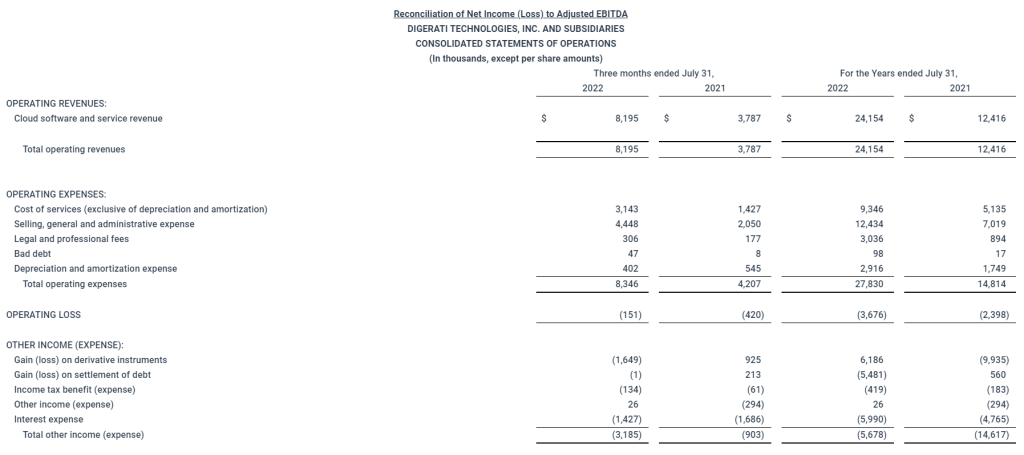
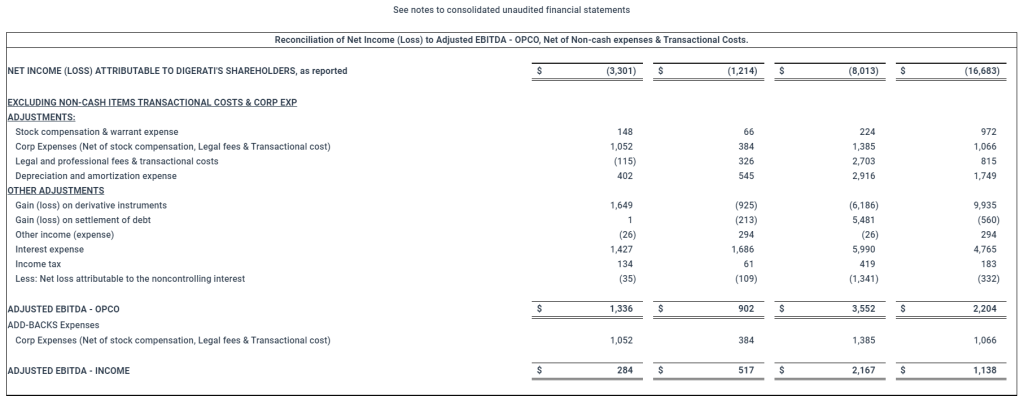
In line Q4 results. The company reported year-over-year revenue growth of 116% to $8.2 million, in line with our forecast. Adj. EBITDA of $284,000 was slightly below our estimate of $560,000, illustrated in Figure #1 Q4 Variance.
Acquisition integration continues. In our view, the company has not begun fully realizing the synergies of the recent Next Level acquisition, with SG&A expenses once again higher than our forecast. Some of the cost reductions did not happen until later in the quarter. As such, we believe that margins will improve in Q1 and beyond as the 2022 acquisitions become more fully integrated.
This Company Sponsored Research is provided by Noble Capital Markets, Inc., a FINRA and S.E.C. registered broker-dealer (B/D).
*Analyst certification and important disclosures included in the full report. NOTE: investment decisions should not be based upon the content of this research summary. Proper due diligence is required before making any investment decision.
– FY2022 Non-GAAP Operating EBITDA of $3.6 Million – – FY2022 Gross Profit of $14.8 Million – – FY2022 Gross Margin Improvement to 61.3% –
SAN ANTONIO, Nov. 01, 2022 (GLOBE NEWSWIRE) — Digerati Technologies, Inc. (OTCQB: DTGI) (“Digerati” or the “Company”), a provider of cloud services specializing in UCaaS (Unified Communications as a Service) solutions for the small to medium-sized business (“SMB”) market, announced today financial results for the three and twelve months ended July 31, 2022, the Company’s fourth quarter and annual year end for its Fiscal Year 2022.
Key Financial Highlights for the Fiscal Year 2022 (Ended July 31, 2022)
Revenue increased by 95% to $24.2 million compared to $12.4 million for FY2021.
Gross profit increased 103% to $14.8 million compared to $7.3 million for FY2021.
Gross margin improved 270 basis points to 61.3% compared to 58.6% for FY2021.
Non-GAAP Adjusted EBITDA income increased by 90% to $2.2 million for FY2022, excluding all non-cash items and one-time transactional expenses, compared to Adjusted EBITDA income of $1.1 million for FY2021.
Non-GAAP Operating EBITDA (OPCO EBITDA) income increased by 64% to $3.6 million, excluding corporate expenses, compared to a non-GAAP operating EBITDA of $2.2 million for FY2021.
Key Financial Highlights for the Fourth Quarter Fiscal Year 2022 (Ended July 31, 2022)
Revenue increased by 116% to $8.2 million compared to $3.8 million for Q4 FY2021.
Gross profit increased 114% to $5.1 million compared to $2.4 million for Q4 FY2021.
Gross margin remained strong at 61.6% compared to 62.3% for Q4 FY2021.
Non-GAAP Adjusted EBITDA income decreased by 40% to $0.3 million for Q4 FY2022, excluding all non-cash items and one-time transactional expenses, compared to Adjusted EBITDA income of $0.5 million for Q4 FY2021.
Non-GAAP Operating EBITDA (OPCO EBITDA) income increased by 44% to $1.3 million, excluding corporate expenses, compared to a non-GAAP operating EBITDA of $0.9 million for Q4 FY2021.
Arthur L. Smith, CEO of Digerati, commented, “Our fiscal year 2022 was highly successful as we closed two additional acquisitions, SkyNet Telecom and NextLevel Internet, and continued to execute on our acquisition playbook that improves operating efficiencies through integration while growing organically as demonstrated by our 4% increase in annualized revenue on a sequential quarterly basis. Our accomplishments over the past few years in building a significant UCaaS platform in Florida, Texas and California generating $32.8 million in annualized revenue and $5.3 million in annualized non-GAAP operating EBITDA has proven that our consolidation strategy works.”
Mr. Smith continued, “We are thrilled to have announced on September 6th our signing of a definitive business combination agreement with Minority Equality Opportunities Acquisition Inc. that will take us into the next chapter of our corporate development plan with a listing on NASDAQ. We believe that a NASDAQ listing is the final ingredient needed for the acceleration of our acquisition strategy in our highly fragmented industry. We will continue to work diligently on closing this key transaction and achieving a significant milestone for our Company.”
Antonio Estrada, CFO of Digerati, stated, “Due to our successful integration of acquisitions, we exited fiscal year end July 31, 2022 in a great financial position with annual run-rates of $32.8 million in revenue and $5.3 million in non-GAAP Operating EBITDA. Our team is successfully integrating the acquisitions of SkyNet Telecom and NextLevel Internet and we are now seeing the financial reward. We have proven that our operating and financial teams can execute on our acquisition strategy and believe our planned move to NASDAQ will greatly enhance our abilities to replicate this success with accretive acquisitions in the future.”
Accomplishments for the Fiscal Year ended July 31, 2022 include:
Closed acquisition of SkyNet Telecom, a leading provider of cloud communication and broadband solutions tailored for businesses. The acquisition of SkyNet expanded the Company’s footprint in Texas and increased its customer base by over 215% to 737 business customers in the Lone Star State.
Closed acquisition of NextLevel Internet, a leading provider of cloud communication and broadband solutions tailored for the SMB market. The acquisition of NextLevel expanded the Company’s growing nationwide footprint and added a strong West Coast presence with nearly 1,000 SMB clients in California.
As a combined business, Digerati’s operating subsidiaries serve over 4,000 business customers and 45,000 users. The business model of the combined entities is supported by strong and predictable recurring revenue with high gross margins under contracts with business customers in various industries including banking, healthcare, financial services, legal, insurance, hotel, real estate, staffing, restaurant, education and municipalities.
Three Months ended July 31, 2022, Compared to Three Months ended July 31, 2021
Revenue for the three months ended July 31, 2022 was $8.2 million, an increase of $4.4 million or 116% compared to $3.8 million for the three months ended July 31, 2021. The increase in revenue between periods is primarily attributed to the consolidation of the acquisitions of SkyNet Telecom and NextLevel Internet during the period. The total number of customers increased from 2,655 for the three months ended July 31, 2021, to 4,023 customers for the three months ended July 31, 2022.
Gross profit for the three months ended July 31, 2022 was $5.1 million, resulting in a gross margin of 61.6%, compared to $2.4 million and 62.3% for the three months ended July 31, 2021. The slight decrease in gross margin is primarily due to the addition of slightly lower-margin revenue associated with SkyNet Telecom’s and NextLevel Internet’s broadband services.
Selling, General and Administrative expenses (excluding legal and professional fees) for the three months ended July 31, 2022 increased by $2.4 million, or 114%, to $4.5 million compared to $2.1 million for the three months ended July 31, 2021. The increase in SG&A is attributed to the consolidation of the acquisitions of SkyNet Telecom and NextLevel Internet.
Operating loss for the three months ended July 31, 2022 was $0.15 million, a decrease of $0.27 million or 64%, compared to $0.42 million for the three months ended July 31, 2021.
Adjusted EBITDA income for the three months ended July 31, 2022 was $0.3 million, compared to an adjusted EBITDA income of $0.5 million for the three months ended July 31, 2021. In accordance with SEC Regulation G, the non-GAAP measurement of Adjusted EBITDA has been reconciled to the nearest GAAP measurement, which can be viewed under the heading “Reconciliation of Net Loss to Adjusted EBITDA” in the financial table included in this press release.
Of note were the following non-cash expenses associated with the three months ended July 31, 2022: Company recognition of stock-based compensation and warrant expense of $0.15 million and depreciation and amortization expense of $0.40 million. Gain on derivative instruments was $1.65 million for the three months ended July 31, 2022.
Non-GAAP operating EBITDA (OPCO EBITDA) for the three months ended July 31, 2022 improved to income of $1.3 million, excluding corporate expenses, compared to a non-GAAP operating income of $0.9 million for the three months ended July 31, 2021.
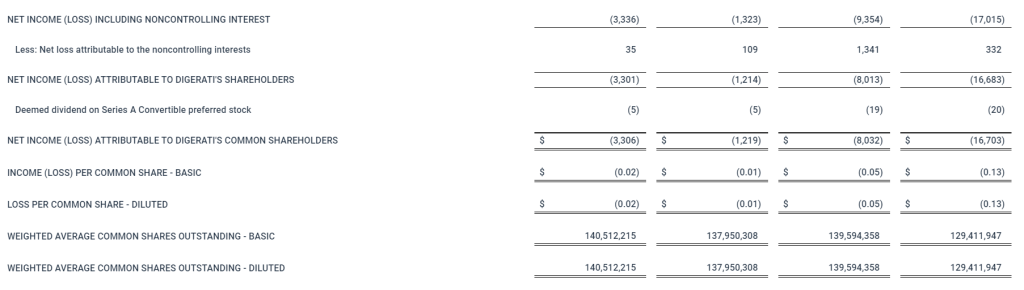
Net loss for the three months ended July 31, 2022 was $3.3 million, an increase of $2.1 million as compared to a net loss of $1.2 million for the three months ended July 31, 2021. The resulting EPS for the three months ended July 31, 2022 was a loss of ($0.02) as compared to a loss of ($0.01) for the three months ended July 31, 2021.
At July 31, 2022, Digerati had $1.5 million of cash.
Twelve Months ended July 31, 2022, Compared to Twelve Months ended July 31, 2021
Revenue for the twelve months ended July 31, 2022 was $24.2 million, an increase of $11.7 million or 95% compared to $12.4 million for the twelve months ended July 31, 2021. The increase in revenue between periods is primarily attributed to the consolidation of the acquisitions of SkyNet Telecom and NextLevel Internet during the period. The total number of customers increased from 2,655 for the twelve months ended July 31, 2021, to 4,023 customers for the twelve months ended July 31, 2022.
Gross profit for the twelve months ended July 31, 2022 was $14.8 million, resulting in a gross margin of 61.3%, compared to $7.3 million and 58.6% for the twelve months ended July 31, 2021. The increase in gross margin is primarily due to the addition of high-margin revenue associated with SkyNet Telecom’s and NextLevel Internet’s UCaaS product line.
Selling, General and Administrative expenses (excluding legal and professional fees) for the twelve months ended July 31, 2022 increased by $5.4 million, or 77%, to $12.4 million compared to $7.0 million for the twelve months ended July 31, 2021. The increase in SG&A is attributed to the consolidation of the acquisitions of SkyNet Telecom and NextLevel Internet.
Operating loss for the twelve months ended July 31, 2022 was $3.7 million, an increase of $1.3 million or 53%, compared to $2.4 million for the twelve months ended July 31, 2021.
Adjusted EBITDA income for the twelve months ended July 31, 2022 was $2.17 million, an improvement of $1.03 million, compared to adjusted EBITDA income of $1.14 million for the twelve months ended July 31, 2021. In accordance with SEC Regulation G, the non-GAAP measurement of Adjusted EBITDA has been reconciled to the nearest GAAP measurement, which can be viewed under the heading “Reconciliation of Net Loss to Adjusted EBITDA” in the financial table included in this press release.
Of note were the following non-cash expenses associated with the twelve months ended July 31, 2022: Company gain of $6.2 million on derivative instruments, loss of $5.5 million on settlement of debt and $6.0 million of interest expense.
Non-GAAP operating EBITDA (OPCO EBITDA) for the twelve months ended July 31, 2022 improved to income of $3.6 million, excluding corporate expenses, compared to a non-GAAP operating income of $2.2 million for the twelve months ended July 31, 2021.
Net loss for the twelve months ended July 31, 2022 was $8.0 million, a decrease of $8.7 million as compared to a net loss of $16.7 million for the twelve months ended July 31, 2021. The resulting EPS for the twelve months ended July 31, 2022 was a loss of ($0.05) as compared to a loss of ($0.13) for the twelve months ended July 31, 2021.
Use of Non-GAAP Financial Measurements
The Company believes that EBITDA (earnings before interest, taxes, depreciation and amortization) is useful to investors because it is commonly used in the cloud communications industry to evaluate companies on the basis of operating performance and leverage. Adjusted EBITDA provides an adjusted view of EBITDA that takes into account certain significant non-recurring transactions, if any, such as impairment losses and expenses associated with pending acquisitions, which vary significantly between periods and are not recurring in nature, as well as certain recurring non-cash charges such as changes in fair value of the Company’s derivative liabilities and stock-based compensation. The Company also believes that Adjusted EBITDA provides investors with a measure of the Company’s operational and financial progress that corresponds with the measurements used by management as a basis for allocating resources and making other operating decisions. Although the Company uses Adjusted EBITDA as one of several financial measures to assess its operating performance, its use is limited as it excludes certain significant operating expenses. Non-GAAP operating EBITDA (OPCO EBITDA) is useful to investors because it reflects EBITDA for the core operation of the business excluding corporate expenses, non-cash expenses and transactional expenses. EBITDA, Adjusted EBITDA, and Non-GAAP operating EBITDA are not intended to represent cash flows for the periods presented, nor have they been presented as an alternative to operating income or as an indicator of operating performance and should not be considered in isolation or as a substitute for measures of performance prepared in accordance with accounting principles generally accepted in the United States of America (“GAAP”). In accordance with SEC Regulation G, the non-GAAP measurements in this press release have been reconciled to the nearest GAAP measurement, which can be viewed under the heading “Reconciliation of Net Loss to Adjusted EBITDA” in the financial table included in this press release.
About Digerati Technologies, Inc.
Digerati Technologies, Inc. (OTCQB: DTGI) is a provider of cloud services specializing in UCaaS (Unified Communications as a Service) solutions for the business market. Through its operating subsidiaries NextLevel Internet (NextLevelinternet.com), T3 Communications (T3com.com), Nexogy (Nexogy.com), and SkyNet Telecom (Skynettelecom.net), the Company is meeting the global needs of businesses seeking simple, flexible, reliable, and cost-effective communication and network solutions including, cloud PBX, cloud telephony, cloud WAN, cloud call center, cloud mobile, and the delivery of digital oxygen on its broadband network. The Company has developed a robust integration platform to fuel mergers and acquisitions in a highly fragmented market as it delivers business solutions on its carrier-grade network and Only in the Cloud™. For more information, please visit www.digerati-inc.com and follow DTGI on LinkedIn, Twitter and Facebook.
Forward-Looking Statements
The information in this news release includes certain forward-looking statements that are based upon assumptions that in the future may prove not to have been accurate and are subject to significant risks and uncertainties, including statements related to the future financial performance of the Company. Although the Company believes that the expectations reflected in the forward-looking statements such as a Nasdaq listing being the final ingredient needed for the acceleration of our acquisition strategy, annualized revenues of $32.8 million, annualized non-GAAP Operating EBITDA of $5.3 million, our abilities to replicate success with accretive acquisitions in the future, and an up-list to Nasdaq are reasonable, it can give no assurance that such expectations or any of its forward-looking statements will prove to be correct. Factors that could cause results to differ include, but are not limited to, a national securities exchange not approving Minority Equality Opportunities Acquisition Inc.’s (MEOA’s) initial listing application, the amount of redemption requests made by MEOA’s public shareholders, our inability to source suitable acquisition targets, failure to execute growth strategies, lack of product development and related market acceptance, the impact of competitive services and pricing, general economic conditions, and other risks and uncertainties described in the Company’s periodic filings with the Securities and Exchange Commission.
Facebook: Digerati Technologies, Inc. Twitter: @DIGERATI_IR LinkedIn: Digerati Technologies, Inc.
Pregnancy in Space: Studying Stem Cells in Zero Gravity May Determine Whether it’s Safe
Space is a hostile, extreme environment. It’s only a matter of time before ordinary people are exposed to this environment, either by engaging in space tourism or by joining self-sustaining colonies far away from Earth.
To this end, there needs to be a much better understanding of how the environmental dangers of space will affect the biology of our cells, tissues, organs, and cognition. Crucially for future space colonies, we need to know whether we can easily reproduce in environments other than those found on Earth.
The effects of radiation on our cells, producing DNA damage, are well documented. What’s less clear is how lower levels of gravity, what scientists call microgravity, will affect the mechanisms and rhythms taking place within our cells.
Scientists are only just beginning to investigate how activity in our cells might be affected by exposure to microgravity. Crucially, experiments on embryonic stem cells, and models of how embryos develop in their first few weeks in space, will help us determine whether it’s possible for humans to produce offspring in the extraplanetary colonies of the future.
Cosmic Conception
The ability to reproduce in space has been assessed in a few animals, including insects, amphibians, fish, reptiles, birds, and rodents. They have found that it’s certainly possible for organisms such as fish, frogs and geckos to produce fertilised eggs during spaceflight that can live and reproduce on Earth.
But the picture is more complicated in mammals. A study of mice, for instance, found that their oestrous cycle, part of the reproductive cycle, was disrupted by exposure to microgravity. Another study found that exposure to microgravity caused negative neurological alterations in rats. Hypothetically, these effects could also be transmitted to subsequent generations.
This likely happens because our cells did not evolve to work in microgravity. They evolved over millions of years on Earth, in it’s unique gravitational field. Earth’s gravity is part of what anchors and exerts physical force on our tissues, our cells, and our intracellular contents, helping to control specific movements within cells. The study of this is called mechanobiology.
The division of cells and the movement of genes and chromosomes within them, which is crucial to the development of a foetus, also works with and against the force of gravity as we know it on Earth. It follows that systems evolved to work perfectly in Earth’s gravity may be affected when the force of gravity changes.
Fetal Position
When an embryo first starts to divide, in a process called cleavage, the rate of division can be faster at one end of the embryo than the other. Gravity plays a role here, determining the position of the very first building blocks in a human life.
gravity also helps to establish the correct body plan of a fetus, ensuring the right cells develop in the right places in the right numbers and in the right spatial orientation.
Researchers have investigated whether embryonic stem cells, which are “pluripotent” and can develop into all cells of the body, are affected by microgravity. At present, there is some evidence that when rodent embryonic stem cells are subjected to microgravity, their ability to become the desired cell types may be impacted.
It is also possible to produce pluripotent human stem cells from normal mature cells of our bodies, which are called induced pluripotent stem cells. These have also been studied under microgravity, with experiments on Earth finding that induced stem cells proliferate faster in simulated microgravity. Two batches of these stem cells are currently on the International Space Station to see whether these results can be replicated in space.
If adult stem cells do proliferate faster in space, it could open the door for commercial stem cell manufacturers to produce these cells in orbit, seeing as it’s difficult to culture enough stem cells on Earth to treat degenerative diseases with stem cell therapies.
Gravitational Field
Besides normal cellular processes, it’s also unclear how fertilization, hormone production, lactation, and even birth itself will be affected by exposure to microgravity.
It seems that short-term exposure to microgravity, of perhaps half an hour, will probably not have too much of an effect on our cells. But longer exposures of days or weeks are likely to have an effect. This is not taking into account the effect of radiation on our cells and DNA, but we already know how to protect against radiation.
Scientists are looking at two ways to protect against the adverse effects of microgravity on our biology: intervention at the cellular level, using drugs or nanotechnology, and intervention on the environmental level, by simulating Earth’s gravity in spacecraft or off-world colonies. Both fields of study are in their early stages.
Still, studying stem cells in space provides a valuable window into how pregnancy could work, or not work when we’re outside Earth’s gravitational field. For now, those fortunate enough to go to space might do well to avoid attempting to conceive before, during or directly after a space flight.
SANTA MONICA, Calif.–(BUSINESS WIRE)– Entravision (NYSE: EVC), a leading global advertising solutions, media and technology company, announced that it will release its third quarter 2022 financial results after market close on Thursday, November 3, 2022. The Company will host a conference call that day at 4:30 p.m. Eastern Time to discuss the third quarter 2022 results.
To access the conference call, please dial (844) 836-8739 (U.S.) or (412) 317-5440 (International) ten minutes prior to the start time. The call will also be available via live webcast on the investor relations portion of the Company’s website located at www.entravision.com.
If you cannot listen to the conference call at its scheduled time, there will be a replay available through Thursday, November 17, 2022 which can be accessed by dialing (844) 512-2921 (U.S.) or (412) 317-6671 (International) and entering the passcode 10171311. The webcast will also be archived on the Company’s website.
About Entravision
Entravision is a leading global advertising, media and ad-tech solutions company connecting brands to consumers by representing top platforms and publishers. Our dynamic portfolio includes digital, television and audio offerings. Digital, our largest revenue segment, is comprised of four business units: our digital sales representation business; Smadex, our programmatic ad purchasing platform; our branding and mobile performance solutions business; and our digital audio business. Through our digital sales representation business, we connect global media companies such as Meta, Twitter, TikTok and Spotify with advertisers in primarily emerging growth markets worldwide. Smadex is our mobile-first demand side platform, enabling advertisers to execute performance campaigns using machine learning. We also offer a branding and mobile performance solutions business, which provides managed services to advertisers looking to connect with global consumers, primarily on mobile devices, and our digital audio business provides digital audio advertising solutions for advertisers in the Americas. In addition to digital, Entravision has 49 television stations and is the largest affiliate group of the Univision and UniMás television networks. Entravision also manages 45 primarily Spanish-language radio stations that feature nationally recognized, Emmy award-winning talent. Shares of Entravision Class A Common Stock trade on the NYSE under ticker: EVC. Learn more about our offerings at entravision.com or connect with us on LinkedIn and Facebook.