Gold and Silver Shatter Records as Investors Flock to Hard Assets Amid Global Uncertainty

Precious metals are closing out the year with extraordinary momentum, underscoring a broader shift in global investment sentiment toward safety, scarcity, and real assets. Gold, silver, and platinum all surged to fresh all-time highs this week, extending one of the strongest rallies in modern market history and signaling growing unease beneath the surface of global financial markets.

Spot gold climbed above $4,530 an ounce, capping a year in which the metal has gained roughly 70%. Silver has been even more explosive, soaring more than 150% year-to-date and briefly crossing the $75 mark. Platinum, often overshadowed by its peers, has joined the rally with force, jumping more than 40% in December alone as supply deficits tighten and industrial demand rebounds.

At its core, the rally reflects a powerful shift in investor psychology. Heightened geopolitical tensions—from US actions in Venezuela to military operations in Africa—have revived gold’s traditional role as a safe-haven asset. At the same time, a weakening US dollar has amplified gains, making dollar-priced commodities more attractive to global investors. The Bloomberg Dollar Spot Index’s sharp weekly decline has provided fresh fuel for metals already in motion.

Monetary policy has played an equally important role. Three interest rate cuts by the US Federal Reserve this year have reduced the opportunity cost of holding non-yielding assets like gold and silver. With markets increasingly pricing in further easing in 2026, investors are positioning ahead of a prolonged low-rate environment. The result has been strong inflows into exchange-traded funds, particularly gold-backed vehicles, signaling institutional conviction rather than short-term speculation.

Beyond macro policy, deeper structural concerns are driving what many analysts describe as the “debasement trade.” Rising government debt levels, persistent fiscal deficits, and political pressure on central bank independence have eroded confidence in fiat currencies and sovereign bonds. In response, investors are reallocating toward tangible assets perceived as stores of value in an era of monetary experimentation.

Silver’s rally highlights another critical theme: supply constraints meeting financial leverage. Following a historic short squeeze earlier in the year, physical silver availability remains tight across key global hubs. While speculative positions continue to grow on paper, the limited supply of deliverable metal has intensified price pressures. Potential US trade restrictions on critical mineral imports have only added to the uncertainty, reinforcing silver’s dual appeal as both a monetary and industrial asset.

Platinum’s surge reflects similar dynamics. Persistent supply disruptions in South Africa, combined with strong demand from automotive and jewelry sectors, have pushed the market into its third consecutive annual deficit. As investors broaden their exposure beyond gold, platinum is increasingly viewed as an undervalued hedge with asymmetric upside.

Taken together, the record-breaking rally in precious metals is not an isolated phenomenon—it is a mirror of today’s investment landscape. While equity markets remain resilient, the surge in hard assets suggests investors are quietly hedging against volatility, policy risk, and currency erosion. As the year draws to a close, gold and silver’s ascent sends a clear message: confidence may be high on the surface, but caution is deeply embedded in global portfolios.

Kuya Silver (KUYAF) – Umm Hadid: Early-Stage Discovery


Tuesday, December 23, 2025

Mark Reichman, Managing Director, Equity Research Analyst, Natural Resources, Noble Capital Markets, Inc.

Hans Baldau, Associate Analyst, Noble Capital Markets, Inc.

Refer to the full report for the price target, fundamental analysis, and rating.

High-grade silver-gold system confirmed. Kuya Silver reported strong initial exploration results from the Umm Hadid Project in Saudi Arabia, confirming high-grade silver-gold mineralization over a large area measuring approximately 6.0 km by 2.5 km. In our view, the scale of the mineralized footprint and grade tenor materially de-risks the project at an early stage. Umm Hadid is operated by Silver Mining LLC, a joint venture between Sumou Holding and Kuya Silver.

Maiden drilling validates surface results. The first drill program comprised 29 diamond drill holes totaling roughly 5,000 meters across three target areas defined by surface sampling. Drilling returned high-grade intercepts of up to 1,483.9 g/t silver equivalent over two meters, with several additional intersections grading several hundred grams per tonne. Surface sampling of 460 grab samples averaged 86.1 g/t silver equivalent, with peak values reaching 1,359.8 g/t. We believe a strong gold-silver correlation supports the presence of a large hydrothermal system.


Get the Full Report

Equity Research is available at no cost to Registered users of Channelchek. Not a Member? Click ‘Join’ to join the Channelchek Community. There is no cost to register, and we never collect credit card information.

This Company Sponsored Research is provided by Noble Capital Markets, Inc., a FINRA and S.E.C. registered broker-dealer (B/D).

*Analyst certification and important disclosures included in the full report. NOTE: investment decisions should not be based upon the content of this research summary. Proper due diligence is required before making any investment decision. 
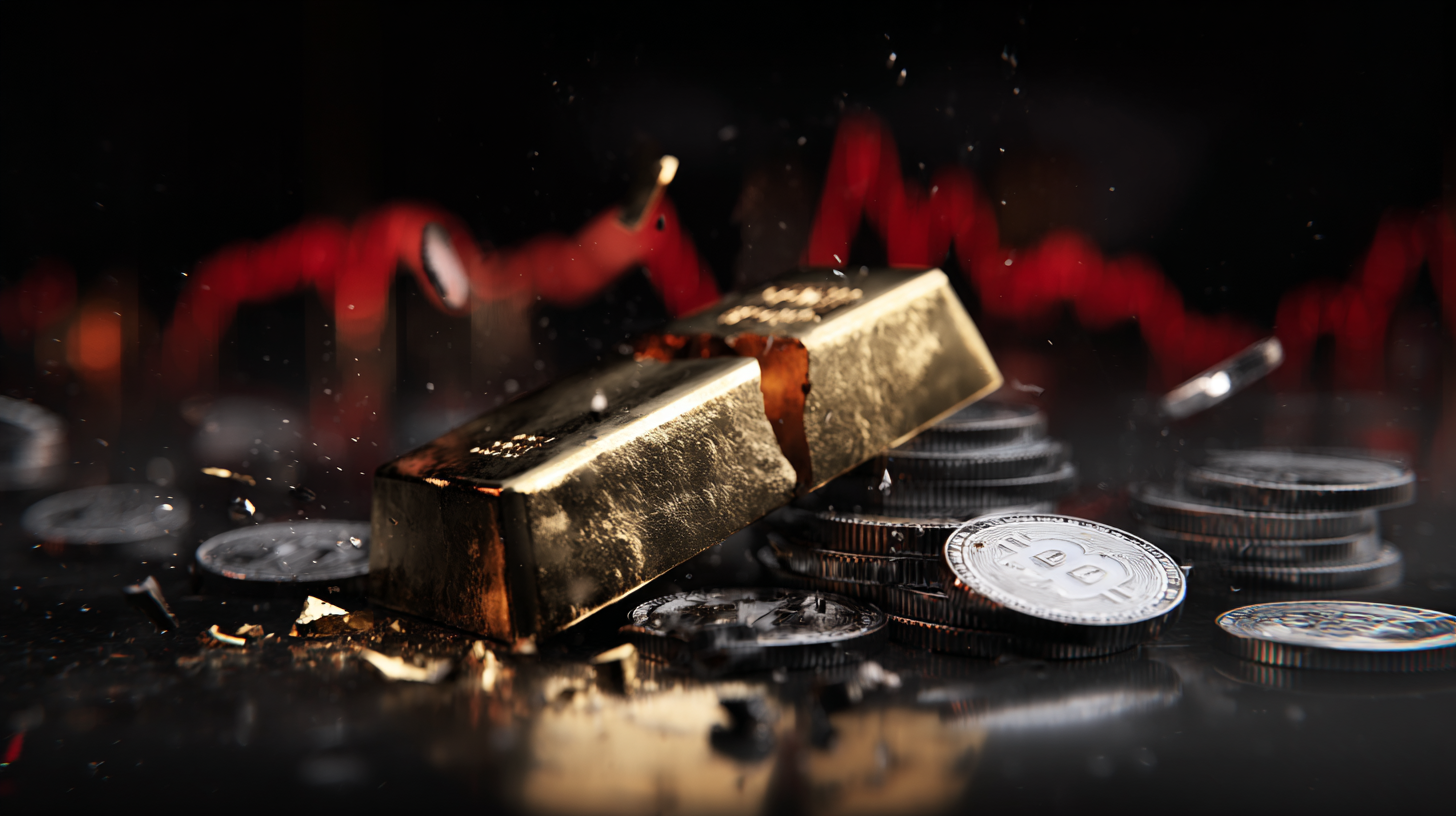
Gold and Silver Surge to All-Time Highs as Geopolitical Risks Reshape Global Markets

Gold and silver have surged to historic highs, underscoring a powerful shift in global investor sentiment as geopolitical tensions intensify and confidence in traditional financial systems continues to erode. The rally marks one of the strongest performances for precious metals in more than four decades, driven by a potent mix of political uncertainty, monetary policy expectations, and structural demand.

Gold briefly climbed above $4,400 per ounce, eclipsing its previous record set earlier this year, while silver pushed toward the $70 level, a price not seen in modern trading history. These moves are not isolated technical breakouts; they reflect a broader re-pricing of risk across global markets as investors seek safety amid escalating international conflicts and economic uncertainty.

Geopolitical flashpoints have multiplied in recent months. The United States has intensified economic and energy pressure on Venezuela, while the conflict between Russia and Ukraine has expanded beyond traditional battlefields into global shipping lanes. Meanwhile, rising tensions between major world powers — including strained U.S.–China relations and growing unease in parts of Asia — have added to a climate of persistent instability. Historically, such environments have favored hard assets, and this cycle is proving no different.

At the same time, expectations for looser monetary policy have reinforced the rally. Markets are increasingly pricing in multiple U.S. interest rate cuts in 2026 as economic data shows signs of cooling inflation and slower job growth. Lower interest rates tend to weaken the opportunity cost of holding non-yielding assets like gold and silver, making them more attractive relative to bonds and cash.

Central banks have played a critical role in underpinning gold’s rise. Official sector purchases remain elevated as nations diversify reserves away from the U.S. dollar and reduce exposure to sovereign debt. This trend has been amplified by political rhetoric that has raised concerns about the long-term independence of central banks and the sustainability of ballooning government deficits.

Investor demand has followed suit. Gold-backed exchange-traded funds have recorded steady inflows, while silver has benefited from speculative activity and lingering supply disruptions following a historic short squeeze earlier in the year. Industrial demand — particularly for silver and platinum in energy, technology, and manufacturing — has added another layer of support.

Beyond traditional investors, new participants are entering the precious metals market. Corporate treasuries, alternative asset managers, and even stablecoin issuers are increasingly using physical metals as balance-sheet hedges, broadening the capital base supporting prices and making demand more resilient.

Looking ahead, major financial institutions remain bullish. Several banks project gold prices continuing higher into 2026, citing constrained physical supply, sustained central-bank buying, and ongoing geopolitical risk. While short-term volatility is inevitable, the underlying drivers of the rally appear firmly intact.

In an era defined by geopolitical fragmentation, monetary uncertainty, and rising systemic risk, gold and silver are once again fulfilling their historical role: not just as commodities, but as financial insurance in an increasingly unpredictable world.

Gold and Silver Surge as Crypto Selloff Fuels Flight to Safety

Gold and silver prices climbed sharply on Monday as investors sought out safer assets amid growing expectations of a Federal Reserve rate cut in December and rising concern over currency volatility triggered by a surging Japanese yen. The combination of shifting monetary policy, weakening crypto markets, and broader uncertainty across global assets helped propel precious metals to new milestones.

Gold futures pushed above $4,270 per troy ounce, extending the metal’s winning streak to a fourth consecutive month. The latest rally puts gold less than 2% away from its October all-time high of $4,336. With more than a 60% gain year-to-date, gold has vastly outperformed major stock indices like the S&P 500 and has moved ahead of bitcoin, which is now down roughly 9% for the year after Monday’s steep drop.

Silver’s performance has been even more dramatic. The metal briefly surged above $58 per ounce, marking a fresh nominal all-time high. While inflation-adjusted levels remain below the historic 1980 peak near $150, silver’s 100% year-to-date rise reflects strong investor demand, tightening supply, and heightened interest in smaller, more volatile precious metals markets. Many analysts now believe the metal could soon test the $60 level.

A major catalyst behind the rally is increasing confidence that the Federal Reserve may cut interest rates by at least 25 basis points at its upcoming meeting. Softer commentary from Fed officials in recent weeks has strengthened expectations for easing monetary policy, putting downward pressure on the US dollar. A weaker dollar typically supports precious metals, making them more attractive to international investors.

Lower rates also reduce the competitive appeal of yield-bearing assets such as Treasury bonds, prompting investors to reallocate funds into gold and silver, which historically perform better in easing cycles.

Another factor lifting metals on Monday was turbulence in the foreign exchange market. A surge in the Japanese yen raised concerns that investors who previously borrowed cheaply in yen to buy higher-yielding US assets might unwind those positions. Such a shift can destabilize broader markets, driving traders into defensive holdings like bullion.

Meanwhile, cryptocurrency markets saw a sharp pullback, adding momentum to the metals rally. Bitcoin’s decline contributed to a broader move out of speculative digital assets and into traditional safe havens.

While gold attracts the most attention, other precious metals have also benefited from tightening market conditions. Platinum is up more than 85% this year, and palladium has gained over 65%, reflecting their smaller market sizes and heightened sensitivity to supply constraints.

Looking ahead, major banks are projecting further upside for bullion. Goldman Sachs expects gold to approach $4,900 by the end of next year, while UBS recently raised its mid-2026 target to $4,500 per ounce, citing strong demand for portfolio diversification and ongoing geopolitical uncertainty.

As investors continue to navigate a landscape marked by shifting monetary policy, currency disruptions, and volatile risk assets, gold and silver appear well positioned to remain key beneficiaries of the global flight to safety.

Kuya Silver (KUYAF) – Laying the Foundation for Growth


Monday, November 24, 2025

Mark Reichman, Managing Director, Equity Research Analyst, Natural Resources, Noble Capital Markets, Inc.

Hans Baldau, Associate Analyst, Noble Capital Markets, Inc.

Refer to the full report for the price target, fundamental analysis, and rating.

Third quarter operational and financial results. During the third quarter, Kuya Silver processed 1,841 tonnes at a toll milling facility, resulting in the sale of 16,983 ounces of silver. The company generated revenue of $771,084 from Bethania concentrate sales, compared to no revenue in the prior-year quarter. Production costs totaled $1,165,790 as the company continued to develop multiple mining faces while executing infrastructure upgrades. The company generated a net loss of $1,523,898, or $(0.01) per share compared to a loss of $1,550,267, or $(0.01) per share during the third quarter of 2024. We had projected a loss of $1,241,457, or $(0.01) per share. 

On track to achieve consistent production of 100 tonnes per day. In early November, Kuya achieved a single-day mining record of approximately 102.5 tonnes of mineralized material from the underground mine and is currently running at a consistent average throughput of approximately 90 tonnes per day. Recent underground development on the 640 level of the Espanola vein system advanced, with sufficient working faces completed to support output above 100 tonnes per day.


Get the Full Report

Equity Research is available at no cost to Registered users of Channelchek. Not a Member? Click ‘Join’ to join the Channelchek Community. There is no cost to register, and we never collect credit card information.

This Company Sponsored Research is provided by Noble Capital Markets, Inc., a FINRA and S.E.C. registered broker-dealer (B/D).

*Analyst certification and important disclosures included in the full report. NOTE: investment decisions should not be based upon the content of this research summary. Proper due diligence is required before making any investment decision. 

Kuya Silver (KUYAF) – An Emerging Growth Story with Strong Leverage to Silver


Wednesday, November 05, 2025

Mark Reichman, Managing Director, Equity Research Analyst, Natural Resources, Noble Capital Markets, Inc.

Hans Baldau, Associate Analyst, Noble Capital Markets, Inc.

Refer to the full report for the price target, fundamental analysis, and rating.

Initiating coverage with a per share price target of US$1.40 or C$2.00. Kuya Silver Corporation (CSE: KUYA; OTCQB: KUYAF) is an emerging silver producer focused on precious metals assets in mining-friendly jurisdictions. The company’s flagship Bethania Silver Project in central Peru anchors a portfolio that also includes the Silver Kings Project in Ontario and a joint venture interest in the Umm Hadid silver-gold project in Saudi Arabia.

Bethania flagship project. After successfully restarting operations in 2024 through toll milling, Kuya has demonstrated steady operational improvements, highlighted by record concentrate sales and recoveries exceeding 91% in the third quarter of 2025. Mining has advanced into multiple production stopes, while key infrastructure upgrades have reduced downtime and increased reliability. Development of a new 3.5-by-3.5-meter haulage ramp will enhance mine access and material handling, positioning the operation to achieve 100 tonnes per day (tpd) by year-end 2025 and 350 tpd by the third quarter of 2026.


Get the Full Report

Equity Research is available at no cost to Registered users of Channelchek. Not a Member? Click ‘Join’ to join the Channelchek Community. There is no cost to register, and we never collect credit card information.

This Company Sponsored Research is provided by Noble Capital Markets, Inc., a FINRA and S.E.C. registered broker-dealer (B/D).

*Analyst certification and important disclosures included in the full report. NOTE: investment decisions should not be based upon the content of this research summary. Proper due diligence is required before making any investment decision. 
Silver Breaks $50: Precious Metal Hits Four-Decade High as Investors Flock to Safe Havens

Silver has shattered a historic milestone, climbing past $50 per ounce for the first time since 1980 — marking one of the most significant rallies in the metals market in over forty years. The surge, up roughly 75% year-to-date, underscores a powerful combination of investor demand, industrial consumption, and persistent supply shortages.

While gold has dominated headlines with its record-breaking ascent above $4,000 per ounce, silver’s breakout is capturing equal attention. Often referred to as “gold’s more affordable cousin,” silver is benefiting from the same wave of safe-haven buying driven by global economic uncertainty, political instability, and weakening confidence in traditional fiat currencies.

This rally isn’t just about market sentiment. Silver’s unique dual identity — as both an investment asset and a critical industrial material — has amplified its momentum. The metal is an essential component in solar panels, electric vehicles, data centers, and smartphone manufacturing, making it a cornerstone of the modern green and tech economies.

“Silver’s industrial demand is skyrocketing, particularly with the ongoing boom in renewable energy and semiconductor expansion,” noted market strategists. “This growing utility, combined with investors seeking protection against inflation and currency risk, is creating a perfect storm for price growth.”

According to analysts, 2025 marks the fifth consecutive year of a structural supply deficit in the silver market. Sluggish mining output and limited new production are struggling to keep pace with global demand, further tightening supply. Many traders believe this imbalance could sustain elevated prices well into 2026.

Silver’s rally closely mirrors gold’s performance, but it’s also outpacing it in percentage terms. While gold has climbed around 51% this year, silver’s 75% surge and platinum’s 80% gain highlight the broad strength of the precious metals sector. The upward trend is being fueled by concerns about inflation, tariffs, central bank policy independence, and rising national debt levels.

At the institutional level, hedge funds and asset managers are rotating capital into tangible assets like precious metals and Bitcoin as a hedge against a weakening U.S. dollar. Exchange-traded funds (ETFs) tied to silver — particularly the iShares Silver Trust (SLV) — have seen record inflows not witnessed since 2020.

With demand surging and inventories thinning, analysts suggest silver may be entering a sustained breakout phase rather than a short-term spike. For retail and small-cap investors alike, the current rally presents both opportunity and volatility — hallmarks of a market on the move.

Gold Keeps Climbing — Is It Time to Look Closer at Precious Metals and Rare Earths?

Key Points:
– Gold prices remain strong as investors seek stability in volatile markets.
– Precious metals and rare earths are gaining renewed interest as geopolitical and economic uncertainty rises.
– Small-cap mining and metals companies may offer overlooked upside for risk-conscious investors.

With market volatility back in the headlines and rate cuts on hold, one asset class is quietly shining brighter than the rest: gold. The precious metal has extended its multi-month rally, continuing to hit near-record highs in 2025 as investors worldwide look for safer stores of value.

But this isn’t just about jewelry or bullion. What’s developing beneath the surface is a broader shift in capital flows — away from high-growth risk plays and into hard assets with intrinsic value. That includes not only gold and silver, but also rare earth metals, which are essential to everything from electric vehicles to semiconductors and military tech.

For middle market and small-cap investors, this could mark a key turning point.

Historically, gold performs well during periods of economic instability, inflationary pressure, and geopolitical stress — all conditions currently in play. With inflation proving sticky, central banks cautious on cuts, and conflict hotspots simmering, it’s no surprise institutional and retail investors alike are allocating more to precious metals.

Meanwhile, silver — often seen as gold’s more volatile cousin — has also begun to rally. With industrial use cases tied to clean energy, solar, and advanced tech manufacturing, silver offers a dual benefit: monetary safety and industrial upside.

But perhaps most interesting for middle-market investors is the renewed focus on rare earths — a segment often overlooked but increasingly critical in a tech-dependent world. These niche metals, such as neodymium, dysprosium, and praseodymium, are essential to magnets, batteries, and defense systems. With global supply chains still fragile and China dominating production, the U.S. and its allies are looking to diversify supply — and that puts smaller mining firms in the spotlight.

Companies in the junior mining and exploration space — many trading at micro- and small-cap valuations — could stand to benefit the most. While they carry exploration risk, the potential for outsized returns and strategic partnerships is drawing attention from institutional funds, especially those focused on ESG and supply chain security.

Gold’s continued rise isn’t just a price story — it’s a signal. A signal that investors are recalibrating their portfolios toward resilience, scarcity, and real-world utility.

For investors navigating uncertain terrain, exposure to precious and rare earth metals — whether through physical assets, ETFs, or small-cap equities — offers a compelling hedge. And with much of the sector still under the radar, now may be an ideal time to explore opportunities before the crowd catches on.

Take a moment to take a closer look at more emerging growth basic industries companies by taking a look at Noble Capital Markets Research Analyst Mark Reichman’s coverage list.

Silver’s Perfect Storm: Physical Squeeze Drives Prices to 13-Year Highs

Silver prices surged to their highest level since 2011 this week, fueled by rising premiums in the U.S., tight physical supply in London, and increasing industrial demand. The white metal climbed as high as $37.59 per ounce in the spot market, with U.S. futures contracts pushing toward $38.46—an unusually large gap that signals growing pressure in the global silver supply chain.

This recent rally underscores silver’s unique status as both a monetary asset and a critical industrial material, especially in sectors tied to clean energy. Up more than 27% year-to-date, silver has begun to outpace gold and other precious metals, attracting the attention of traders, long-term investors, and industrial buyers alike.

One of the more telling developments this week is the growing dislocation between the London spot price and U.S. futures contracts. Typically, such discrepancies are short-lived as traders use arbitrage to align prices. But this time, the gap is persisting—indicating logistical constraints and a tightening supply chain.

The root of this premium appears to stem from earlier in the year, when U.S. tariff threats on silver imports spurred a surge in futures prices. That sparked a rush to secure physical metal for delivery to New York’s COMEX warehouses. While the White House later confirmed that bullion would not be exempt from tariffs, the resulting outflow drained accessible inventories.

According to Daniel Ghali of TD Securities, the silver floating in the market is now at record lows. LBMA silver’s free-float has reached its lowest levels in recorded history, with analysts emphasizing that a physical squeeze may be necessary to rebalance the market.

Another warning sign: borrowing costs for silver in London have surged. The one-month implied lease rate jumped to an annualized 4.5% on Friday—well above its usual near-zero levels. This is a clear indicator that silver in London is becoming harder to access, particularly for short sellers and industrial users that rely on short-term lending of physical silver.

Much of London’s silver is held by exchange-traded funds (ETFs), which are not easily available for lending. Bloomberg data shows a 1.1 million ounce inflow into silver-backed ETFs on Thursday alone. While this is good news for long-term investors, it exacerbates near-term scarcity for traders seeking physical delivery.

Silver’s recent surge is also being driven by robust demand from both sides of its identity: as a safe-haven asset and as an industrial input. Its role in clean energy—especially in photovoltaic solar panels—has elevated silver’s strategic importance. According to the Silver Institute, the market is now in its fifth consecutive annual deficit.

As the world pushes further into renewable energy technologies, demand for silver in solar, EVs, and advanced electronics is expected to accelerate.

With inventory levels falling, premiums rising, and industrial demand growing, silver’s bullish outlook appears to be more than a short-term spike. If market dislocations persist and supply tightness continues, silver could enter a new phase of price discovery—driven as much by fundamentals as by financial flows.

Investors would be wise to watch the $40 level as the next psychological milestone. And if the physical squeeze intensifies, we may be entering a new era for this historically underappreciated metal.

Pan American Silver Acquires MAG Silver in $2.1B Deal to Solidify Position as Leading Silver Producer

Key Points:
– Pan American buys MAG Silver in a $2.1B deal, adding a major stake in the Juanicipio mine.
– Boosts silver exposure and solidifies Pan American as a leading producer in the Americas.
– Positive signal for small caps as sector consolidation could drive M&A interest in junior miners.

Pan American Silver Corp. (NYSE: PAAS) has announced a definitive agreement to acquire all outstanding shares of MAG Silver Corp. (NYSEAM: MAG) in a deal valued at approximately $2.1 billion. This acquisition will grant Pan American a 44% stake in the Juanicipio mine in Mexico, a high-grade, low-cost silver operation managed by Fresnillo plc. The transaction includes $500 million in cash and 0.755 Pan American shares per MAG share, subject to proration.

For MAG shareholders, the deal offers an immediate premium of about 21% over the closing price and 27% over the 20-day volume-weighted average price as of May 9, 2025. Post-acquisition, MAG shareholders will own approximately 14% of Pan American, providing exposure to a diversified portfolio of ten silver and gold mines across seven countries.

Pan American’s acquisition of MAG Silver enhances its position as a leading silver producer. Juanicipio is expected to produce between 14.7 million and 16.7 million ounces of silver in 2025, with Pan American’s share being 6.5 to 7.3 million ounces. The mine’s cash costs and all-in sustaining costs are forecasted to range between ($1.00) to $1.00 and $6.00 to $8.00 per silver ounce sold, respectively, for 2025. Additionally, the acquisition adds 58 million ounces of silver to Pan American’s proven and probable mineral reserves, 19 million ounces to measured and indicated resources, and 35 million ounces to inferred resources.

The deal also includes MAG’s exploration projects, Deer Trail in Utah and Larder in Ontario, offering further growth opportunities. Pan American plans to leverage its experience operating in the Americas for over 30 years to integrate these assets effectively.

For junior miners and small-cap investors, this acquisition underscores the trend of consolidation in the mining industry. As larger companies seek to acquire high-quality assets, junior miners with promising projects may become attractive targets. This dynamic can lead to increased valuations for small-cap mining stocks, offering potential opportunities for investors.

However, consolidation can also lead to reduced competition and fewer standalone investment options in the junior mining space. Investors should carefully assess the implications of such deals on their portfolios, considering both the potential for gains through acquisitions and the changing landscape of available investment opportunities.

The transaction is expected to close in the second half of 2025, pending customary closing conditions, including regulatory approvals. All directors and executive officers of MAG have agreed to vote in favor of the transaction.

Take a moment to take a look at Noble Capital Markets’ Research Analyst Mark Reichman’s coverage list for other emerging growth natural resource companies.

Endeavour Silver Expands into Peru with Strategic Acquisition

Key Points:
– Endeavour Silver enters Peru with a new silver-gold project, expanding beyond Mexico.
– Diversifies operations in a top silver-producing country for long-term growth.
– Strong exploration potential with high-grade mineralization and existing infrastructure.

Endeavour Silver, a mid-tier silver producer with operations primarily in Mexico, has signed an agreement to acquire a high-potential project in Peru. The acquisition aligns with the company’s long-term goal of diversifying its portfolio beyond Mexico while increasing its production pipeline.

The newly acquired project is located in a historically prolific mining district known for its high-grade silver and gold deposits. With existing infrastructure and promising exploration potential, the site offers Endeavour an opportunity to accelerate development while leveraging its operational expertise in underground silver mining.

For Endeavour Silver, expanding into Peru is a natural progression. The company has successfully built and operated several silver mines in Mexico, including its flagship Guanaceví and Bolañitos operations. By entering Peru, one of the world’s top silver-producing nations, Endeavour is positioning itself for sustainable growth amid rising global demand for silver and gold.

The deal also reduces the company’s reliance on a single jurisdiction, a move that could mitigate geopolitical risks associated with operating exclusively in Mexico. With silver prices showing strength due to increasing industrial and investment demand, Endeavour Silver’s expansion comes at an opportune time.

The newly acquired project boasts a combination of historical high-grade production and strong exploration upside. Preliminary geological assessments indicate the presence of high-quality silver and gold mineralization, suggesting strong resource expansion potential.

Endeavour Silver plans to commence a detailed exploration program, including drilling and metallurgical testing, to assess the project’s full potential. Depending on results, the company aims to advance toward development and production in the coming years.

For investors, Endeavour Silver’s move into Peru signals a commitment to long-term growth and value creation. Expanding into a new mining-friendly jurisdiction with a high-potential project could enhance the company’s production profile and profitability.

The announcement also underscores the broader trend of small and mid-cap miners looking beyond their traditional operating regions to capitalize on attractive, underdeveloped assets. As silver demand remains strong due to its industrial applications (such as in solar panels and electronics) and investment appeal, Endeavour’s strategic expansion could position it as a key player in the evolving market.

Endeavour Silver’s acquisition in Peru is a bold step that could redefine its future. By entering a world-class mining jurisdiction with a high-grade project, the company is strengthening its asset base while de-risking its geographic exposure. With exploration efforts set to begin, investors will be watching closely to see how the company unlocks value from this newly acquired asset.

Metalla and Nova Royalty Agree to $190 Million Merger

Metalla Royalty & Streaming Ltd. (TSXV: MTA) (NYSE American: MTA) and Nova Royalty Corp. (TSXV: NOVR) (OTCQB: NOVRF) have announced a definitive agreement to combine in an all-stock deal valued at approximately $190 million. The merger will create a larger royalty and streaming company focused on precious and base metals.

Under the agreement, Nova shareholders will receive 0.36 shares of Metalla for each Nova share they own. This represents a premium of 25% based on recent share prices.

The combined company will hold a portfolio of over 100 royalties and streams on mine projects operated by major miners like Barrick, Newmont, and Glencore. The deal is intended to boost scale, diversify assets, and enhance access to capital.

Nova recently conducted a strategic review process with the goal of maximizing shareholder value. After considering options, the Nova Board determined the merger with Metalla offered the best opportunity.

Both companies’ Boards have unanimously approved the transaction. It still requires shareholder and regulatory approvals before expected completion in late 2023. The merged entity will trade on the NYSE American exchange.

An investment firm called Beedie Capital is investing $15 million and expanding Metalla’s convertible loan facility by $35 million in conjunction with the deal. This will provide capital to fund further acquisitions and growth.

Brett Heath, CEO of Metalla, said the combination creates a clear path to becoming an intermediate royalty company. Nova interim CEO Hashim Ahmed noted the merger provides improved scale, cash flow, and trading liquidity.

The companies believe the increased diversification into copper along with gold and silver will give shareholders exposure to critical metals needed for the energy transition. According to management, the merged portfolio will have peer-leading growth potential.

Take a look at other companies in the materials and mining sector by exploring Mark Reichman’s coverage list.

Forget About Gold and Silver, the Junior Miners’ Performance is Startling

Why are Precious Metals Spiking?

The better-than-expected inflation numbers are having a positive impact on precious metals (PM) prices. And, depending on how one is invested to provide exposure to gold or silver, the performance varied by a wide margin.  Gold commodity prices jumped by 1.3% and silver by 4.5% after the CPI report on Wednesday July 12. With even better performance were mining stocks. What is causing the leap in prices, and is there a preferred category of investment taking preference over the others?

Why the Spike in Precious Metals?

A slowing inflation trend is reviving talk of the Federal Reserve pausing or completely halting rate hikes. The market had already built two rate hikes into prices. At about the same time the U.S. CPI report was released, The Bank of Canada raised its interest rates by 25bp. The EU raised its rates on June 15, meanwhile the U.S. central bank opted not to raise rates in June.

In reaction to a difference in rates available in the U.S. compared to outside in other currencies, the $U.S. dollar tumbled 1% to a low not seen in more than a year against major peers. This made PMs, including gold and silver, a more attractive asset to preserve wealth outside the U.S. And rates have dropped, the 10-year U.S. Treasury that had been trading at 3.94% before the print, and 4.08% as recently as last week, was yielding 3.86% by mid-afternoon.

Performance of PM Related Assets

Looking out since the beginning of July, we find that both gold and silver dipped to their lows last Friday. Additionally, gold mining stocks and silver mining stocks, using GDX and SIL ETFs as proxies, had the most dramatic dip, while gold and silver (expressed in $US dollars) barely went negative on the month.

What we also see is that when gold and silver rise, or fall, there has been an amplification of the move among the mining stocks. On the upside, the magnification of the trend was even more pronounced among junior mining stocks.

Source: Koyfin

While silver junior miners are the top performers MTD at 8.42%, they are closely followed by the gold junior mining stocks at 8.42%. Larger gold mining company stocks returned 5.96%, while gold itself, only returned 2%. Silver edged out the major mining stocks returning 5.92% compared to 5.35% over the 12 day period.

The patten of performance held during the one-day of trading that CPI was released with the gold majors swapping places with silver. And gold, the commodity, up significantly in one trading day but trailing the others by a wide margin.

Source: Koyfin

Choosing PM Investments

Investing in the commodities gold or silver is fairly straightforward and can be done with most brokerage accounts today. ETFs are also as easy to trade as a stock. However, the owner receives the weighted average of all the ETFs holdings, less fees.

While individual stock pickers run the risk of reduced diversification among miners, with some understanding of the differences in companies, they may also be able to perform above the average of a broad swath of companies within an ETF for gold, silver, or both.

There are places to look for information on mining companies, the more challenging information to acquire is of the smaller junior miners – the group that have been outperforming. Channelchek can help you discover these companies and provide data, research, and videos, to help build a better understanding before committing to an investment.

Or, to really jump-start your understanding of a host of mining companies, along with those in other exciting but more difficult-to-assess industries, consider coming to Florida in early December for NobleCon19, an investment conference where you can immerse yourself in the information provided directly from Sr. management of many junior miners and along with companies of other exciting industries.  

Learn more about NobleCon19 and presenters here.

Paul Hoffman

Managing Editor, Channelchek.com

Sources

https://www.channelchek.com/c-suite-interviews

https://app.koyfin.com/share/eecfbd6ad8

https://www.bankofcanada.ca/2023/07/fad-press-release-2023-07-12/

https://www.bankofcanada.ca/2023/07/fad-press-release-2023-07-12/

https://www.reuters.com/markets/commodities/gold-rises-softer-dollar-yields-ahead-us-inflation-data-2023-07-12/