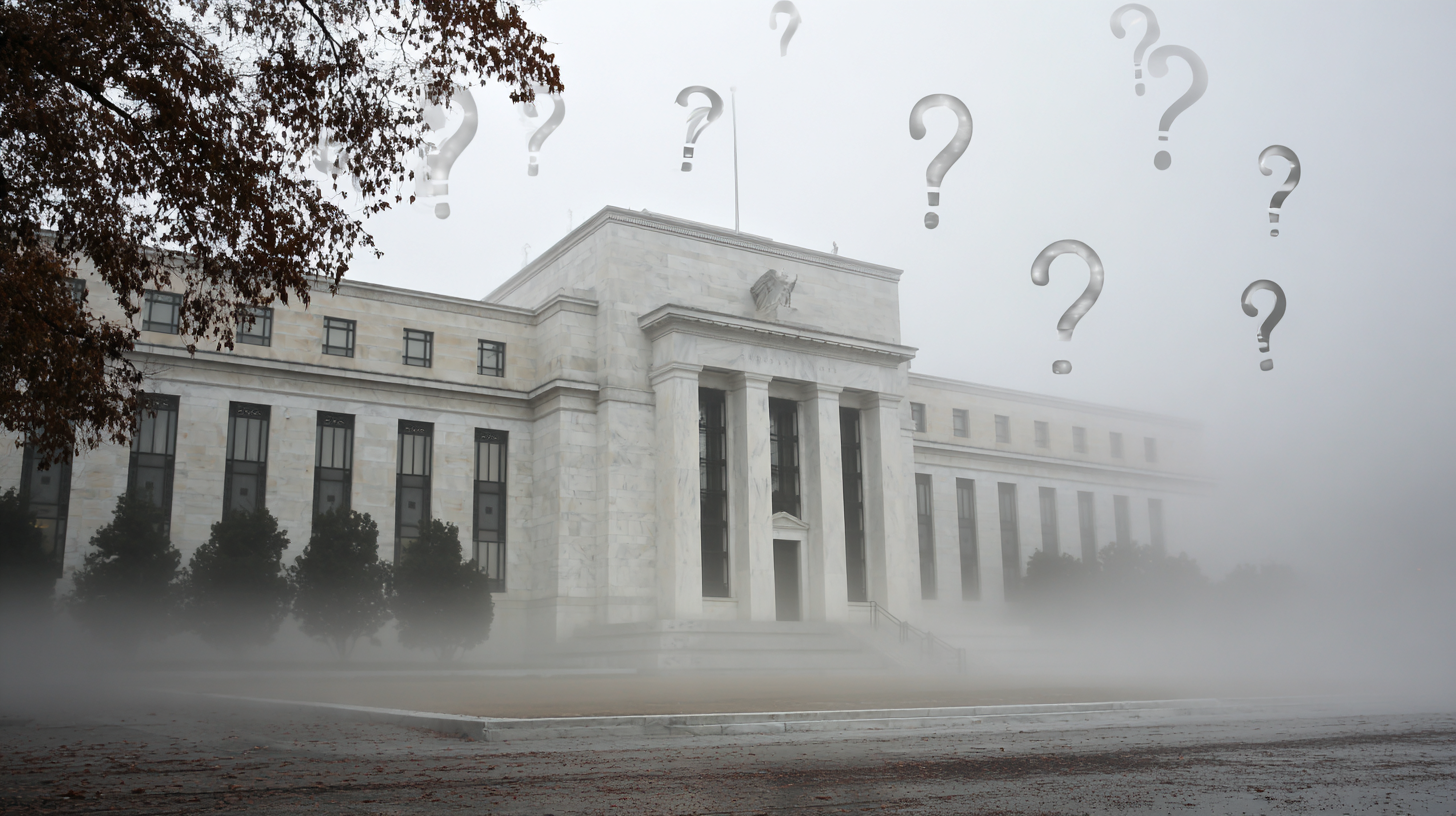
The Most Unhelpful Jobs Report of the Year Complicates the Fed’s Next Move

The Federal Reserve’s December policy decision has become significantly more complicated following the release of the long-delayed September jobs report. After weeks of uncertainty caused by the government shutdown, economists were hoping the data would offer at least some directional clarity. Instead, the report delivered a contradictory mix of signals that has left markets, analysts, and policymakers struggling to determine whether the Fed’s next move will be a rate cut — or simply holding steady.

On the surface, the headline numbers appeared encouraging. Employers added 119,000 jobs in September, more than double what forecasters had anticipated. In a typical environment, that level of job creation would be considered firm evidence that the labor market still retains momentum.

However, the rest of the report painted a more complicated — and in some ways troubling — picture. The unemployment rate nudged higher to 4.4%, and on an unrounded basis reached 4.44%, inching close to the 4.5% threshold that some Fed officials view as a sign that labor conditions may be softening. Layered on top of that is the fact that this data is nearly two months old. Because of the shutdown, the Labor Department will not release an October report at all, and the November report will not be available until after the Fed meets in mid-December. As a result, policymakers are attempting to make a major policy decision with limited, stale visibility.

Another challenge is the unusually choppy pattern of job creation over the last several months. Hiring dipped into negative territory in June, rebounded in July, contracted again in August after revisions, and then jumped higher in September. This volatility makes it difficult to determine whether the labor market is gradually slowing or simply experiencing temporary fluctuations after several years of rapid post-pandemic recovery.

A significant structural factor shaping recent trends is the slowdown in immigration. With fewer new workers entering the labor force, the “break-even” number of jobs needed to maintain a stable unemployment rate has decreased to an estimated 30,000 to 50,000 per month. Since September’s job gains far exceeded that range, it indicates that demand for labor remains healthier than the rising unemployment rate alone suggests.

Sector-level data also highlights a mixed landscape. Industries such as healthcare and hospitality continue to show notable strength, reflecting persistent consumer demand and structural labor shortages. Meanwhile, other sectors have begun to lose momentum, reinforcing the idea that the labor market is no longer uniformly strong but instead is becoming more uneven.

Overall, the economy has added an average of 76,000 jobs per month so far in 2025 — a pace that aligns with the lower growth environment of a cooling, but still functioning, labor market.

Inside the Fed, opinions remain divided. Some policymakers believe easing rates further is consistent with guiding monetary policy back toward a neutral setting. Others see the recent uptick in unemployment, combined with limited fresh data, as reasons to pause. Financial markets reflect this uncertainty as well, with traders now assigning roughly even odds to a December rate cut.

For now, the September report provides more ambiguity than clarity. Without current data and with mixed signals across key indicators, the Fed enters its next policy meeting navigating perhaps its murkiest environment of the year.

U.S. Labor Market Stays Resilient Despite Slight Rise in Jobless Claims

Key Points:
– Weekly jobless claims increased by 6,000 to 223,000, signaling continued labor market stability.
– Unadjusted claims dropped significantly, reflecting regional declines in layoffs.
– The Federal Reserve is unlikely to cut interest rates next week due to a strong labor market.

The U.S. labor market continues to display resilience as the year begins, with a slight increase in weekly jobless claims reflecting a stable environment for workers. According to the latest Labor Department report, initial claims for state unemployment benefits rose by 6,000 to a seasonally adjusted 223,000 for the week ending January 18, just above market expectations of 220,000. This small rise indicates that while the pace of hiring may have moderated, there are no signs of widespread layoffs.

Unadjusted claims saw a significant drop of 68,135, with the largest declines observed in states such as Texas, Ohio, Georgia, and New York. Meanwhile, California recorded a modest increase in filings, partly attributed to disruptions caused by recent wildfires. Weather-related factors, such as blizzards and freezing temperatures in parts of the country, could result in temporary fluctuations in claims over the coming weeks. Nonetheless, economists remain optimistic that the broader labor market will stay on course.

“The labor market is historically tight, but some sectors are slowing the pace of hirings,” said Jeffrey Roach, Chief Economist at LPL Financial. He added, “As long as wage growth outpaces the rate of inflation, the economy will chug along, and the Fed will not cut rates as much as expected a few months ago.”

The Federal Reserve, which has been cautious about its monetary policy, is expected to maintain interest rates at their current level during its upcoming meeting. Over the past year, the Fed reduced rates by 100 basis points, bringing them to a range of 4.25%-4.50%. While policymakers initially anticipated further cuts in 2025, strong labor market data, coupled with easing inflationary pressures, have prompted a more measured approach.

In December, nonfarm payrolls increased by 256,000, capping a year in which the economy added 2.2 million jobs. This marked an average monthly gain of 186,000 jobs, a slowdown compared to the 3.0 million jobs created in 2023. Although hiring has moderated, the overall labor market remains tight, with low unemployment levels and steady wage growth supporting economic activity.

However, challenges persist for workers who lose their jobs. The number of continuing claims, which represent individuals still receiving unemployment benefits after their initial claims, rose by 46,000 to 1.899 million in mid-January. This marks the highest level since November 2021 and highlights the difficulties some workers face in securing new employment opportunities, despite a low overall pace of layoffs.

Economists note that the labor market is likely to remain stable, even as external factors such as extreme weather and geopolitical developments pose risks. Looking ahead, data on continuing claims and hiring trends will be closely monitored to assess the labor market’s performance as 2025 progresses.

With a historically tight labor market and wage growth keeping pace with inflation, the U.S. economy appears poised to maintain its current momentum. While hiring may slow further in certain sectors, the broader labor market is expected to remain a pillar of economic stability in the months ahead.