
Trump’s $12 Billion Mineral Stockpile Could Reshape the Small-Cap Mining Sector

The U.S. government is making its most aggressive move yet to secure critical mineral supply chains—and small-cap mining stocks may be the biggest beneficiaries.

President Donald Trump is preparing to launch Project Vault, a first-of-its-kind $12 billion strategic stockpile of critical minerals designed to break America’s dependence on China. Modeled after the Strategic Petroleum Reserve, the initiative will target minerals essential to modern industry: rare earths, cobalt, gallium, nickel, and antimony—materials that power electric vehicles, semiconductors, defense systems, jet engines, and consumer electronics.

For investors focused on small-cap and emerging resource companies, this announcement represents more than a policy shift. It’s a potentially transformative multi-year demand catalyst.

Why Project Vault Changes the Game

Project Vault pools $10 billion in financing from the U.S. Export-Import Bank with $1.67 billion in private capital, creating a centralized procurement system that will buy and store minerals on behalf of major manufacturers including General Motors, Boeing, Stellantis, Google, and GE Vernova. Three global commodities trading firms—Hartree, Traxys, and Mercuria—will manage sourcing and logistics.

Unlike traditional defense-focused stockpiles, this program explicitly targets civilian supply chains. It offers participating manufacturers two critical advantages: price stability and guaranteed access during supply disruptions. Companies commit to purchasing materials at a predetermined price and can later buy them back at the same cost—a mechanism designed to eliminate volatility and enable long-term production planning.

The implications for upstream producers are significant. Government-backed demand provides the certainty mining companies need to justify capital investment, accelerate development timelines, and secure project financing.

The Small-Cap Advantage

Markets responded immediately. Shares of USA Rare Earth, Critical Metals Corp., United States Antimony, and NioCorp Developments all surged following the announcement, signaling investor recognition of a fundamental truth: supply security requires actual production, not just strategic intent.

This creates a disproportionate opportunity for small-cap miners.

Large diversified mining companies already generate stable cash flow from multiple commodities. Smaller miners, by contrast, often operate single-asset projects concentrated in exactly the minerals Project Vault prioritizes. For these companies, government-backed offtake agreements and improved access to financing could fundamentally alter project economics—transforming marginal assets into commercially viable operations.

Put simply: Project Vault de-risks production at the precise stage where small mining companies struggle most—the transition from exploration to commercial scale.

The timing reflects geopolitical reality. China’s export restrictions last year exposed the brittleness of Western supply chains, forcing some U.S. manufacturers to curtail production. Project Vault is Washington’s financial response—a clear signal that the federal government will actively intervene to reshape critical mineral markets.

The U.S. has also established cooperation agreements with key allies including Australia, Japan, and Malaysia, reinforcing a non-China supply network. This geopolitical alignment strengthens the long-term investment case for North American and allied-jurisdiction producers, who now benefit from both policy support and structural demand shifts.

Project Vault is more than a stockpile—it’s a demand guarantee underwritten by the U.S. government. For small-cap investors, this could mark the start of a sustained revaluation cycle for select critical mineral producers, particularly those nearing production or capable of supplying rare earths and strategic metals domestically.

The framework changes the risk-reward equation. Companies with credible projects in favorable jurisdictions now have a potential counterparty whose commitment extends beyond market cycles. That’s a fundamentally different investment environment than what existed even six months ago.

Bottom Line

Selectivity remains essential—not every critical mineral stock will benefit equally. But the broader narrative is unmistakable: critical minerals have moved from niche sector to national priority, and the market is already repricing accordingly.

For investors positioned in quality small-cap producers, Project Vault may prove to be the catalyst they’ve been waiting for.

Alliance Resource Partners (ARLP) – Upcoming FY 2025 Financial Results and 2026 Corporate Guidance


Thursday, January 29, 2026

ARLP is a diversified natural resource company that generates operating and royalty income from coal produced by its mining complexes and royalty income from mineral interests it owns in strategic oil & gas producing regions in the United States, primarily the Permian, Anadarko and Williston basins. ARLP currently produces coal from seven mining complexes its subsidiaries operate in Illinois, Indiana, Kentucky, Maryland and West Virginia. ARLP also operates a coal loading terminal on the Ohio River at Mount Vernon, Indiana. ARLP markets its coal production to major domestic and international utilities and industrial users and is currently the second largest coal producer in the eastern United States. In addition, ARLP is positioning itself as an energy provider for the future by leveraging its core technology and operating competencies to make strategic investments in the fast growing energy and infrastructure transition.

Mark Reichman, Managing Director, Equity Research Analyst, Natural Resources, Noble Capital Markets, Inc.

Hans Baldau, Associate Analyst, Noble Capital Markets, Inc.

Refer to the full report for the price target, fundamental analysis, and rating.

Fourth quarter and full year 2025 financial results. Alliance will report its fourth quarter and full year 2025 financial results before the market opens on Monday, February 2, 2026. Management will host an investor conference call and webcast the same day at 10:00 am ET. Along with the 2025 operational and financial results, we expect ARLP to release its 2026 corporate guidance and outlook.

Noble Estimates. We forecast fourth quarter 2025 revenue, EBITDA, and EPU of $560.1 million, $182.9 million, and $0.57, respectively. Our full year 2025 revenue, EBITDA, and EPU estimates are $2.2 billion, $690.5 million, and $2.33, respectively. Our fourth quarter EPU estimate reflects an expected unrealized and non-cash loss on the marked-to-market value of ARLP’s bitcoin holdings, which has no impact on our EBITDA estimate. We forecast 2026 revenue, EBITDA, and EPU of $2.3 billion, $700.5 million, and $2.65, respectively.


Get the Full Report

Equity Research is available at no cost to Registered users of Channelchek. Not a Member? Click ‘Join’ to join the Channelchek Community. There is no cost to register, and we never collect credit card information.

This Company Sponsored Research is provided by Noble Capital Markets, Inc., a FINRA and S.E.C. registered broker-dealer (B/D).

*Analyst certification and important disclosures included in the full report. NOTE: investment decisions should not be based upon the content of this research summary. Proper due diligence is required before making any investment decision. 
Silver Surges Past $100 an Ounce as Speculation, Tight Supply Fuel Historic Rally

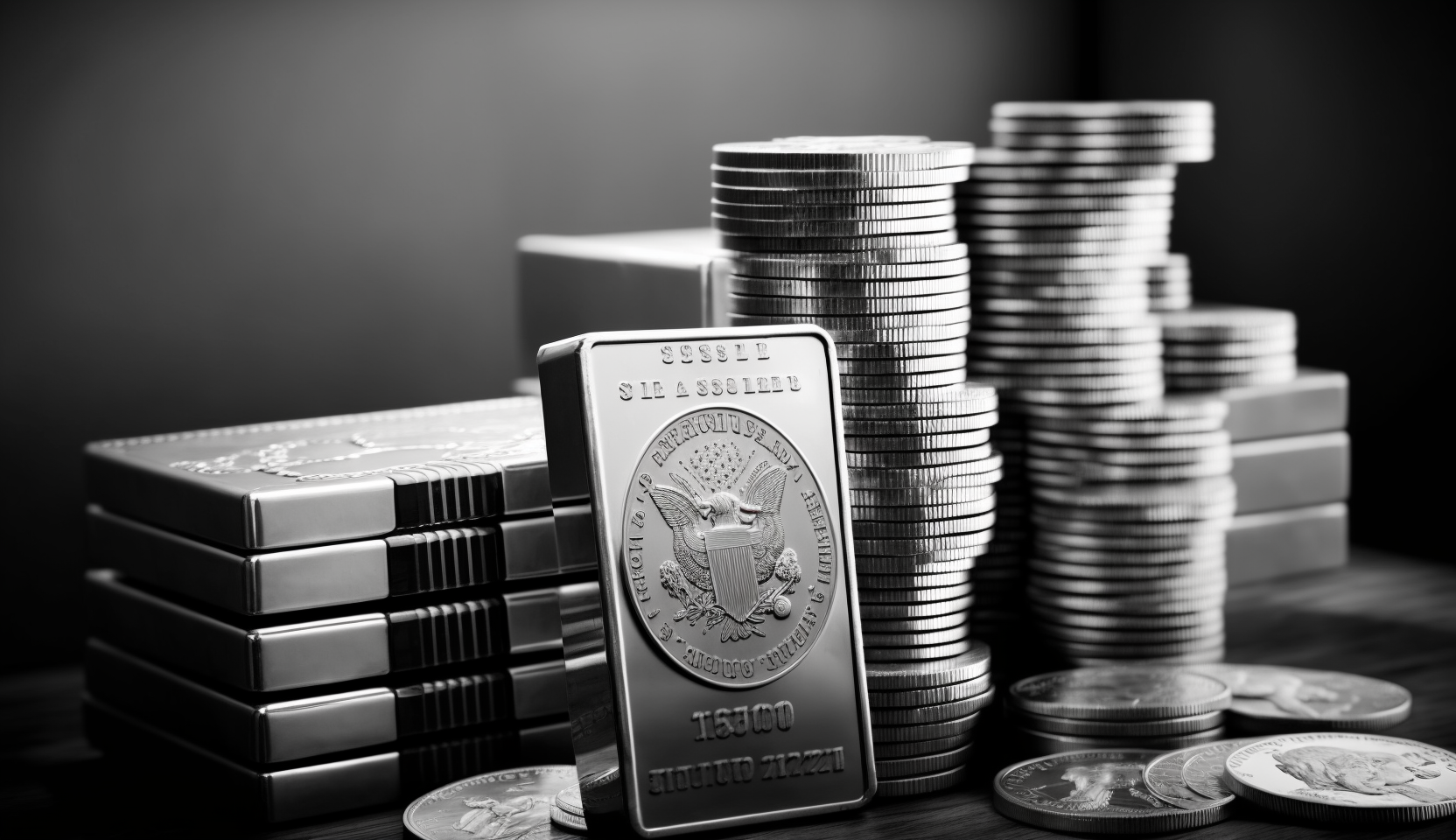
Silver prices surged past the $100-per-ounce mark on Friday, reaching a milestone few market participants believed possible just a year ago. The move caps an extraordinary rally driven by speculative enthusiasm, strong investment demand, and years of structural supply deficits, while raising growing concerns about overheating and the risk of a sharp correction.

Spot silver climbed more than 5% on the day to trade above $101 per troy ounce, extending a powerful advance that began in 2025. The metal has gained roughly 40% since the start of 2026, following a staggering 147% surge last year—its strongest annual performance in more than four decades. Silver’s rally has been amplified by gold’s parallel rise, with gold prices also hitting record highs as geopolitical uncertainty and inflation hedging continue to dominate investor psychology.

Market analysts say silver’s lower absolute price compared to gold has made it especially attractive to retail investors, fueling momentum-driven buying. Waves of demand for physical bars and coins, combined with strong inflows into physically backed exchange-traded funds, have tightened available supply and intensified price moves.

The gold-to-silver ratio, a closely watched metric, has dropped sharply. It now takes just 50 ounces of silver to buy one ounce of gold—the lowest level in 14 years. Historically, such extremes have often preceded periods of underperformance for silver, suggesting the metal’s outperformance relative to gold may be stretched.

Fundamentally, the picture is more mixed. While silver benefits from its dual role as both a precious and industrial metal—used extensively in electronics, solar panels, and manufacturing—some analysts argue prices have outrun underlying demand. Bank of America estimates a fundamentally justified silver price closer to $60 an ounce, pointing to signs that solar-related demand may have peaked and that elevated prices could begin to curb industrial consumption.

Supply constraints, however, remain a key pillar of support. The silver market has recorded five consecutive years of structural deficits, a trend expected to continue into 2026. Recycling accounts for nearly 20% of global supply, but limited high-grade refining capacity has slowed the return of scrap metal to the market, preventing inventories from rebuilding quickly.

Although stockpiles in London and U.S. futures markets have partially recovered from last year’s lows, they remain well below historical norms. This reduced buffer has left the market more vulnerable to sudden surges in demand.

Looking ahead, analysts expect volatility to remain elevated. With some easing in physical market tightness and the possibility of profit-taking after the explosive rally, a pullback appears increasingly likely. Still, silver’s dramatic move above $100 underscores a broader reality: in an environment of geopolitical risk, supply constraints, and speculative fervor, precious metals remain firmly in the spotlight—and silver is leading the charge.

Energy Fuels to Acquire Australian Strategic Materials, Creating Largest Ex-China Rare-Earth Producer

Energy Fuels Inc. (NYSE: UUUU) announced plans to acquire Australian Strategic Materials Limited (ASX: ASM) in a move that will create what the company touts as the largest fully integrated rare-earth element (REE) producer outside of China. The transaction, valued at approximately US$299 million (A$447 million), positions Energy Fuels as a vertically integrated “mine-to-metal & alloy” REE champion, addressing critical gaps in global supply chains for magnets used in automotive, robotics, energy, and defense applications.

The acquisition will combine ASM’s operating Korean Metals Plant (KMP) and its planned American Metals Plant (AMP) with Energy Fuels’ existing REE oxide production at the White Mesa Mill in Utah, the only U.S. facility capable of separating monazite concentrates into both light and heavy REE oxides. ASM’s KMP is one of the few facilities outside China producing REE metals and alloys, including neodymium-praseodymium (NdPr), dysprosium (Dy), and terbium (Tb), along with neodymium-iron (NdFeB) and dysprosium-iron (DyFe) alloys.

By combining low-cost REE separation with downstream metal and alloy conversion, Energy Fuels expects to enhance vertical integration, margin capture, and market share across the rare-earth value chain. The acquisition addresses one of the most persistent vulnerabilities in ex-China REE supply chains: limited downstream refining and alloy production capacity.

Energy Fuels will also gain access to ASM’s Dubbo REE Project in New South Wales, Australia, further expanding its pipeline of REE development projects. These include the Donald project in Victoria, Australia, the Vara Mada project in Madagascar, and the Bahia project in Brazil, all aimed at supplying feed materials for the White Mesa Mill expansion. Post-expansion, White Mesa is planned to produce 6,000 tonnes per annum (tpa) of NdPr oxides, 240 tpa of Dy, and 66 tpa of Tb oxides, while the planned AMP in the U.S. is expected to produce 2,000 tpa of REE alloys.

Mark S. Chalmers, CEO of Energy Fuels, emphasized the strategic rationale, stating, “The proposed acquisition of Australian Strategic Materials brings us much closer to our goal of creating the largest fully integrated producer of REE materials outside of China. This transaction expands our suite of REE products, strengthens our ex-China supply chain position, and provides increased margins, cashflows, and market share for our shareholders.”

ASM shareholders will receive 0.053 Energy Fuels shares or CHESS Depository Interests per ASM share, plus a special dividend of up to A$0.13, representing a total implied value of A$1.60 per share. Post-closing, ASM shareholders will own roughly 5.8% of Energy Fuels’ outstanding shares. The transaction remains subject to ASM shareholder approval, regulatory approvals in Australia, and customary closing conditions, with implementation expected by late June 2026.

For small-cap investors, this acquisition highlights the potential value of vertically integrated rare-earth companies in securing strategic market positions. By combining production of REE oxides, metals, and alloys, Energy Fuels not only reduces reliance on China but also enhances its long-term growth potential in a high-demand sector crucial to green energy, electronics, and defense applications.

Power Metallic Mines Inc. (PNPNF) – From Legacy Nickel to District-Scale Polymetallic System


Wednesday, January 21, 2026

Power Metallic is a Canadian exploration company focused on advancing the Nisk Project Area (Nisk–Lion–Tiger)—a high–grade Copper–PGE, Nickel, gold and silver system—toward Canada’s next polymetallic mine. On 1 February 2021, Power Metallic (then Chilean Metals) secured an option to earn up to 80% of the Nisk project from Critical Elements Lithium Corp. (TSX–V: CRE). Following the June 2025 purchase of 313 adjoining claims (~167 km²) from Li–FT Power, the Company now controls ~212.86 km² and roughly 50 km of prospective basin margins. Power Metallic is expanding mineralization at the Nisk and Lion discovery zones, evaluating the Tiger target, and exploring the enlarged land package through successive drill programs. Beyond the Nisk Project Area, Power Metallic indirectly has an interest in significant land packages in British Columbia and Chile, by its 50% share ownership position in Chilean Metals Inc., which were spun out from Power Metallic via a plan of arrangement on February 3, 2025. It also owns 100% of Power Metallic Arabia which owns 100% interest in the Jabul Baudan exploration license in The Kingdon of Saudi Arabia’s JabalSaid Belt. The property encompasses over 200 square kilometres in an area recognized for its high prospectivity for copper gold and zinc mineralization. The region is known for its massive volcanic sulfide (VMS) deposits, including the world-class Jabal Sayid mine and the promising Umm and Damad deposit.

Mark Reichman, Managing Director, Equity Research Analyst, Natural Resources, Noble Capital Markets, Inc.

Hans Baldau, Associate Analyst, Noble Capital Markets, Inc.

Refer to the full report for the price target, fundamental analysis, and rating.

Initiating Coverage with an Outperform rating. Power Metallic Mines Inc. (OTCQB: PNPNF, TSXV: PNPN) is a Québec-based mineral exploration company advancing a high-grade polymetallic discovery that has evolved into a district-scale opportunity. Recent discoveries at the Nisk Project have shifted the investment thesis from a legacy nickel-sulphide asset to a high-grade copper-platinum group elements (PGE), nickel, gold, and silver system with emerging scale and continuity. Target metals, including copper, nickel, cobalt, platinum, and palladium, are integral to electrification, industrial manufacturing, and critical mineral markets. Our price target is US$2.65 per share or C$3.65 per share.

Lion Zone Discovery. The investment case is anchored by the Lion Zone, a high-grade, copper-dominant orthomagmatic polymetallic discovery that represents the core value driver within the broader Nisk land package. Drilling at Lion has returned exceptional grades, including 11.6 meters grading 8.3% copper, 9.6 g/t palladium, and 2.6 g/t platinum, materially enhancing the project’s value profile beyond nickel alone. Follow-up drilling at the nearby Tiger Zone has confirmed the presence of similar mineralization along trend, supporting the interpretation that Lion-style mineralization is repeatable rather than isolated.


Get the Full Report

Equity Research is available at no cost to Registered users of Channelchek. Not a Member? Click ‘Join’ to join the Channelchek Community. There is no cost to register, and we never collect credit card information.

This Research is provided by Noble Capital Markets, Inc., a FINRA and S.E.C. registered broker-dealer (B/D).

*Analyst certification and important disclosures included in the full report. NOTE: investment decisions should not be based upon the content of this research summary. Proper due diligence is required before making any investment decision. 

First Phosphate Corp. (FRSPF) – Transitioning from Exploration to Feasibility


Wednesday, January 07, 2026

Mark Reichman, Managing Director, Equity Research Analyst, Natural Resources, Noble Capital Markets, Inc.

Hans Baldau, Associate Analyst, Noble Capital Markets, Inc.

Refer to the full report for the price target, fundamental analysis, and rating.

Offtake agreement. First Phosphate recently amended an offtake agreement that includes a US$0.53 million upfront pre-payment during the fourth quarter of FY 2026. The funds will be used to advance the Begin-Lamarche project towards a feasibility study and later, production. The prepayment is subject to refund should First Phosphate decide not to pursue a feasibility study or production, neither of which we anticipate. In our view, the prepayment validates downstream interest and reinforces the strategic relevance of the Company’s integrated phosphate platform.

Final tranches of private placement. The Company closed the third and fourth tranches of its oversubscribed non-brokered private placement in December, raising approximately $9.6 million in gross proceeds and bringing total capital raised since June 2022 to approximately $49.7 million. Following recent warrant exercises and the offtake pre-payment, management indicates cash on hand of approximately $24 million, which we believe is sufficient to fund planned activities through 2026 and into 2027.


Get the Full Report

Equity Research is available at no cost to Registered users of Channelchek. Not a Member? Click ‘Join’ to join the Channelchek Community. There is no cost to register, and we never collect credit card information.

This Research is provided by Noble Capital Markets, Inc., a FINRA and S.E.C. registered broker-dealer (B/D).

*Analyst certification and important disclosures included in the full report. NOTE: investment decisions should not be based upon the content of this research summary. Proper due diligence is required before making any investment decision. 
Anfield Energy Acquires BRS Engineering to Boost In-House Uranium and Vanadium Expertise

Anfield Energy Inc. (TSX.V: AEC; NASDAQ: AEC; FRANKFURT: 0AD) announced it has entered into a definitive agreement to acquire BRS Inc., a Wyoming-based engineering and consulting firm specializing in uranium and vanadium projects. The transaction represents a strategic step toward strengthening Anfield’s internal technical capabilities as the company advances its portfolio toward near-term production.

BRS has served as a long-standing technical partner to Anfield since 2014, providing engineering, geology, mine development, and construction management services across multiple assets. The firm has authored numerous technical reports, Preliminary Economic Assessments (PEAs), and resource updates for projects including Slick Rock, the West Slope Projects, and the Velvet-Wood Mine. By integrating BRS directly into its operations, Anfield aims to streamline project execution while reducing reliance on third-party consultants.

The acquisition brings decades of specialized expertise in uranium exploration, in-situ recovery (ISR), conventional mining, and mill reactivation directly under Anfield’s corporate umbrella. Douglas L. Beahm, founder of BRS and Anfield’s Chief Operating Officer, will continue in his executive role while serving as principal engineer. Beahm is a Qualified Person under NI 43-101 with more than 50 years of experience in uranium resource development, mine operations, and regulatory permitting seen as critical to Anfield’s growth strategy.

From an operational standpoint, the transaction is expected to improve cost efficiency and shorten development timelines across Anfield’s asset base. Internalizing engineering and technical functions allows the company to move more quickly on resource updates, economic studies, permitting applications, and mine planning activities. This is particularly relevant as Anfield continues efforts toward restarting the Shootaring Canyon mill, which anchors its hub-and-spoke development strategy in the U.S.

Beyond operational efficiencies, the acquisition also creates new growth avenues. BRS is expected to expand its external consulting services with the support of a publicly traded platform, potentially offering turnkey development solutions to third-party toll-mill partners. The expanded technical team may also help Anfield identify and evaluate acquisition opportunities more rapidly, supporting resource expansion and portfolio optimization.

The deal terms include total cash consideration of US$5 million paid to Beahm over a two-year period. An initial payment of US$1.5 million will be made at closing, followed by US$1.5 million after the first anniversary and a final US$2 million payment after the second anniversary. No securities will be issued as part of the transaction, and no finder’s fees are payable. Completion of the acquisition remains subject to customary closing conditions and regulatory approvals.

As a related-party transaction under Multilateral Instrument 61-101, the acquisition qualifies for exemptions from formal valuation and minority shareholder approval requirements, as the total consideration does not exceed 25% of Anfield’s market capitalization.

Anfield Energy is a uranium and vanadium development company focused on building a vertically integrated domestic energy fuels platform. The acquisition of BRS marks a meaningful step toward that goal, enhancing internal technical depth while positioning the company to advance its projects more efficiently amid rising demand for U.S.-based uranium supply.

Why Critical Minerals Could Be the Next Big Frontier for Small-Cap Investors

The global shift toward electrification is accelerating, and with it comes a renewed focus on the minerals that make modern energy and technology possible. Lithium, nickel, graphite, phosphate, rare earths, and other essential materials are the backbone of batteries, solar panels, electric vehicles, and grid-scale storage. As nations push to secure supply chains and reduce dependence on foreign imports, the critical minerals sector is becoming one of the most strategically important areas in global markets. For small-cap investors, this creates a compelling landscape of early-stage opportunities.

Large producers tend to dominate the headlines, but the real innovation and discovery often originate in the junior and small-cap space. These companies take on the high-risk, early exploration work that can eventually create meaningful supply for downstream industries. While these stocks can be volatile, they also offer leverage to rising demand and tightening supply conditions that can dramatically reprice assets once the market recognizes their potential.

One example of this emerging potential can be seen in the phosphate segment. Phosphate is best known for its role in agriculture, but it is increasingly valuable as a component in lithium iron phosphate (LFP) batteries. This chemistry has become a preferred option for EV manufacturers and grid-storage systems due to its safety profile, long cycle life, and lower cost. As LFP adoption expands, the need for battery-grade phosphate grows alongside it.

Emerging growth companies such as First Phosphate have positioned themselves within this shift. While still small-cap in size, the focus on high-purity phosphate projects in geopolitically stable regions aligns with what major battery and automotive manufacturers are now seeking: secure, traceable, and environmentally responsible supply. These are qualities that the North American market in particular is trying to build as part of a broader strategy to reduce reliance on overseas sources.

Click here to watch First Phosphate’s corporate presentation at NobleCon21.

Beyond phosphate, other critical minerals are facing similar supply-demand pressures. Graphite remains essential for battery anodes, yet most production is concentrated in a single country. Rare earth elements are required for EV motors and wind turbines, but refining capacity is limited and slow to build. Nickel and manganese face challenges tied to environmental impacts and inconsistent global supply. In each of these segments, small-cap exploration and development companies are working to advance projects that could eventually scale into meaningful contributors to the supply chain.

For investors willing to put in the research, the small-cap critical minerals sector offers exposure to themes that are likely to play out over decades. Governments are investing heavily in domestic mineral strategies, electrification continues to expand worldwide, and technology companies are demanding reliable inputs to meet their production goals. These forces create a long runway for companies that can deliver high-purity materials at competitive costs.

Small-cap investing in this space still requires discipline. Projects take time to develop, capital needs can be significant, and not every discovery becomes a mine. But for investors looking for early entry points into the minerals reshaping the global energy landscape, this sector provides a combination of macro tailwinds and company-specific catalysts that can create real opportunity when approached carefully.

Gold Royalty Corp. Expands Cash-Flowing Portfolio With $70 Million Pedra Branca Royalty Acquisition

Gold Royalty Corp. (NYSE American: GROY) has announced a transformative move in the royalty and streaming sector with its agreement to acquire a producing gold and copper royalty on Brazil’s Pedra Branca mine for $70 million in cash. Purchased from BlackRock World Mining Trust, the royalty provides immediate cash flow and deepens Gold Royalty’s exposure to two high-demand commodities—gold and copper.

For investors in the small- and micro-cap mining space, this acquisition highlights a broader trend: royalty companies are aggressively consolidating producing assets to secure predictable cash flows, diversify commodity exposure, and strengthen long-term valuations. While major mining companies dominate production, royalty firms offer smaller investors a unique, lower-risk gateway into commodity cycles—without the operational burdens of running mines.

A Material Boost to Revenue and Scale

The Pedra Branca royalty has already proven its value. In the 12 months ending June 30, 2025, the royalty generated approximately $7.9 million in payments, equivalent to roughly 2,800 gold equivalent ounces at average market prices. With gold trading near historic highs, Gold Royalty expects the asset to substantially increase its annual cash flow once the transaction closes.

Upon completion, Gold Royalty’s portfolio will expand to eight cash-flowing assets and more than 250 total royalties and streaming interests—a notable milestone for a company operating in the small-cap end of the market.

For investors, this means greater revenue stability and enhanced leverage to commodity prices, particularly as gold continues to maintain strength amid global geopolitical tensions and monetary policy uncertainty.

Strategic Exposure to Gold and Copper

The acquired royalty includes a 25% net smelter return (NSR) on gold and a 2% NSR on copper from both the Pedra Branca East and West deposits. This structure provides meaningful long-term upside, especially given copper’s accelerating role in electric vehicles, renewable power grids, and energy transition infrastructure.

This is particularly impactful for micro-cap investors looking for diversified commodity exposure without betting on early-stage exploration companies. Royalty companies like Gold Royalty provide balanced exposure to producing assets with potentially exponential upside tied to commodity cycles.

Pedra Branca: A High-Quality, Long-Life Asset

First brought into production in 2020 by OZ Minerals, Pedra Branca is an underground iron oxide copper gold deposit located in Pará, Brazil—a region known for world-class minerals, infrastructure, and established operators. BHP acquired the mine through its purchase of OZ Minerals in 2023, and later announced its sale to CoreX Holding BV, expected to close following standard regulatory approvals.

BHP’s June 2025 reporting outlined strong resource and reserve estimates, reinforcing Pedra Branca’s long-term production outlook. For Gold Royalty, this means stable, ongoing royalty income tied to a proven, expanding asset.

A Meaningful Signal for the Mining Royalty Space

For small- and micro-cap investors, this transaction reinforces a clear shift in the mining sector: royalty and streaming companies are becoming key players in securing low-risk exposure to commodity cycles.

As many smaller mining operators struggle with rising development and operational costs, royalty firms with strong balance sheets—like Gold Royalty—are in a prime position to acquire high-value producing royalties at attractive prices.

The Pedra Branca acquisition demonstrates Gold Royalty’s disciplined strategy, strengthening its cash flow base while delivering upside potential tied to gold and copper markets that continue to attract global investor interest.

Century Lithium Corp. (CYDVF) – A New Dimension to Angel Island


Friday, December 05, 2025

Mark Reichman, Managing Director, Equity Research Analyst, Natural Resources, Noble Capital Markets, Inc.

Hans Baldau, Associate Analyst, Noble Capital Markets, Inc.

Refer to the full report for the price target, fundamental analysis, and rating.

Recovery of rare earth elements (REE). Century recovered rare earth elements from leach solutions generated from its Angel Island Lithium Project. Initial testing indicated that high rare earth element recoveries may be achieved without impacting lithium recovery. Producing a secondary REE-rich product from the leach solution offers the potential to enhance Angel Island’s project economics, while fulfilling broader government and industry objectives of promoting a North American critical mineral supply chain to reduce dependence on China.

The process works. Leach solutions produced from Angel Island claystone contain dysprosium, gadolinium, neodymium, and praseodymium, along with higher concentrations of scandium, lanthanum, and cerium. Ion-exchange achieved greater than 97% recovery of the identified REEs and critical metals, without affecting the company’s core lithium recovery process and production of high-purity lithium carbonate.


Get the Full Report

Equity Research is available at no cost to Registered users of Channelchek. Not a Member? Click ‘Join’ to join the Channelchek Community. There is no cost to register, and we never collect credit card information.

This Company Sponsored Research is provided by Noble Capital Markets, Inc., a FINRA and S.E.C. registered broker-dealer (B/D).

*Analyst certification and important disclosures included in the full report. NOTE: investment decisions should not be based upon the content of this research summary. Proper due diligence is required before making any investment decision. 
Aurania Resources (AUIAF) – The Value of a Diversified Portfolio


Friday, November 28, 2025

Mark Reichman, Managing Director, Equity Research Analyst, Natural Resources, Noble Capital Markets, Inc.

Hans Baldau, Associate Analyst, Noble Capital Markets, Inc.

Refer to the full report for the price target, fundamental analysis, and rating.

Advancing parallel projects. In addition to its exploration project in Ecuador, the company is advancing two projects in France, a gold exploration project in Brittany, and a nickel recovery project in Corsica. In October, Aurania announced a third project near Turin, Italy, where it is evaluating the recovery of nickel and cobalt from the waste tailings of the former Balangero asbestos mine. The projects in Corsica and Italy offer significant environmental benefits for the nearby communities, along with the economic benefit of recovering valuable critical metals.

Private placement financing. On November 20, Aurania announced a non-brokered private placement financing of up to 12,500,000 units at a price of C$0.12 per unit to raise gross proceeds of up to C$1,500,000. Each unit will consist of one common share and one common share purchase warrant. A warrant will entitle the holder to purchase one common share at an exercise price of C$0.25 per warrant for a period of 24 months following the closing of the offering.


Get the Full Report

Equity Research is available at no cost to Registered users of Channelchek. Not a Member? Click ‘Join’ to join the Channelchek Community. There is no cost to register, and we never collect credit card information.

This Company Sponsored Research is provided by Noble Capital Markets, Inc., a FINRA and S.E.C. registered broker-dealer (B/D).

*Analyst certification and important disclosures included in the full report. NOTE: investment decisions should not be based upon the content of this research summary. Proper due diligence is required before making any investment decision. 
Alliance Resource Partners (ARLP) – Third Quarter Results Exceed Our Expectations


Wednesday, October 29, 2025

ARLP is a diversified natural resource company that generates operating and royalty income from coal produced by its mining complexes and royalty income from mineral interests it owns in strategic oil & gas producing regions in the United States, primarily the Permian, Anadarko and Williston basins. ARLP currently produces coal from seven mining complexes its subsidiaries operate in Illinois, Indiana, Kentucky, Maryland and West Virginia. ARLP also operates a coal loading terminal on the Ohio River at Mount Vernon, Indiana. ARLP markets its coal production to major domestic and international utilities and industrial users and is currently the second largest coal producer in the eastern United States. In addition, ARLP is positioning itself as an energy provider for the future by leveraging its core technology and operating competencies to make strategic investments in the fast growing energy and infrastructure transition.

Mark Reichman, Managing Director, Equity Research Analyst, Natural Resources, Noble Capital Markets, Inc.

Hans Baldau, Associate Analyst, Noble Capital Markets, Inc.

Refer to the full report for the price target, fundamental analysis, and rating.

Third quarter financial results. Alliance reported third quarter adjusted EBITDA and earnings per unit (EPU) of $185.8 million and $0.73, respectively, compared to $170.4 million and $0.66 during the prior year period. We had projected EBITDA and EPU of $176.2 million and $0.68. Total revenue amounted to $571.4 million compared to $613.6 million during the prior year period and our $577.9 million estimate. While revenue from coal sales exceeded our estimate, oil and gas royalties, transportation, and other revenues were below. Third quarter results benefited from expenses that were lower than our estimates and contributions from equity method investments and the change in value of ARLP’s digital assets.

Outlook for the remainder of 2025 and 2026. Management updated its 2025 guidance. Within ARLP’s coal operation, guidance ranges were narrowed. Total sales are expected to be between 32.50 million tons and 33.25 million tons compared to prior guidance of between 32.75 million tons and 34.0 million tons. Within the oil and gas royalty segment, volumes were lowered to reflect the timing of a multi-well pad in the Delaware Basin of the Permian, which is expected to come online in early 2026.


Get the Full Report

Equity Research is available at no cost to Registered users of Channelchek. Not a Member? Click ‘Join’ to join the Channelchek Community. There is no cost to register, and we never collect credit card information.

This Company Sponsored Research is provided by Noble Capital Markets, Inc., a FINRA and S.E.C. registered broker-dealer (B/D).

*Analyst certification and important disclosures included in the full report. NOTE: investment decisions should not be based upon the content of this research summary. Proper due diligence is required before making any investment decision. 

Critical Minerals Take Center Stage as U.S. Accelerates Domestic Mining Investments

Trilogy Metals’ stock has skyrocketed following news that the Trump administration has taken a 10% stake in the company and approved a long-debated access road to Alaska’s Ambler Mining District. The move marks a major step in the administration’s ongoing push to strengthen the U.S. supply chain for critical minerals and metals—resources essential to clean energy, defense, and technology production.

Shares of Trilogy Metals surged more than 200% after reports confirmed that the administration invested roughly $35.6 million for the initial stake, with options to expand its position further. The approval of the Ambler Access Project is equally significant, as it clears the way for road construction to one of Alaska’s most mineral-rich areas, known to contain large deposits of copper, cobalt, silver, and other valuable metals.

The Ambler project, previously blocked due to environmental and tribal concerns, now represents one of the most promising developments in North American mining infrastructure. The administration justified the decision on the basis of national interest, emphasizing the need for reliable access to domestic sources of critical materials. To address environmental worries, the plan reportedly includes measures to protect local wildlife and mitigate ecological disruption.

This latest investment is part of a broader strategy that has seen the administration take direct stakes in several companies tied to the U.S. mineral supply chain. Earlier this year, similar investments were made in Lithium Americas and MP Materials—both key players in lithium and rare earth mining. These moves, combined with support for projects like Arizona’s Resolution copper mine and semiconductor manufacturing expansion, highlight a coordinated effort to reduce U.S. dependence on foreign suppliers, particularly China.

The ripple effects of these initiatives extend beyond the headline companies. Smaller-cap mining and exploration firms, many of which struggle to secure funding or regulatory approval, could see renewed investor interest as confidence builds in the sector. The U.S. government’s involvement signals a stronger commitment to domestic resource development, which could make financing and partnerships easier to obtain for junior mining companies.

Moreover, rising demand for materials like copper, cobalt, and lithium—driven by the energy transition, electric vehicles, and AI data centers—continues to push commodity prices higher. Smaller players positioned near viable deposits may become acquisition targets or strategic partners for larger corporations aiming to secure supply lines. As institutional investors seek exposure to the metals space, many could turn to small- and mid-cap miners as leveraged opportunities for growth.

However, this surge in optimism also brings potential volatility. Commodity-dependent small caps are notoriously cyclical, and their valuations can swing sharply with policy shifts, environmental challenges, or fluctuations in global metal prices. Still, the overarching narrative remains favorable: a renewed national focus on critical mineral independence, supported by both public and private capital, may ignite a renaissance in the U.S. mining and metals sector.

In the wake of Trilogy Metals’ dramatic rally, market watchers are increasingly eyeing other under-the-radar resource companies that could benefit from this wave of strategic investment. If current trends persist, the metals sector—long overshadowed by tech and energy—could become one of the most dynamic areas for small-cap growth over the next several years.