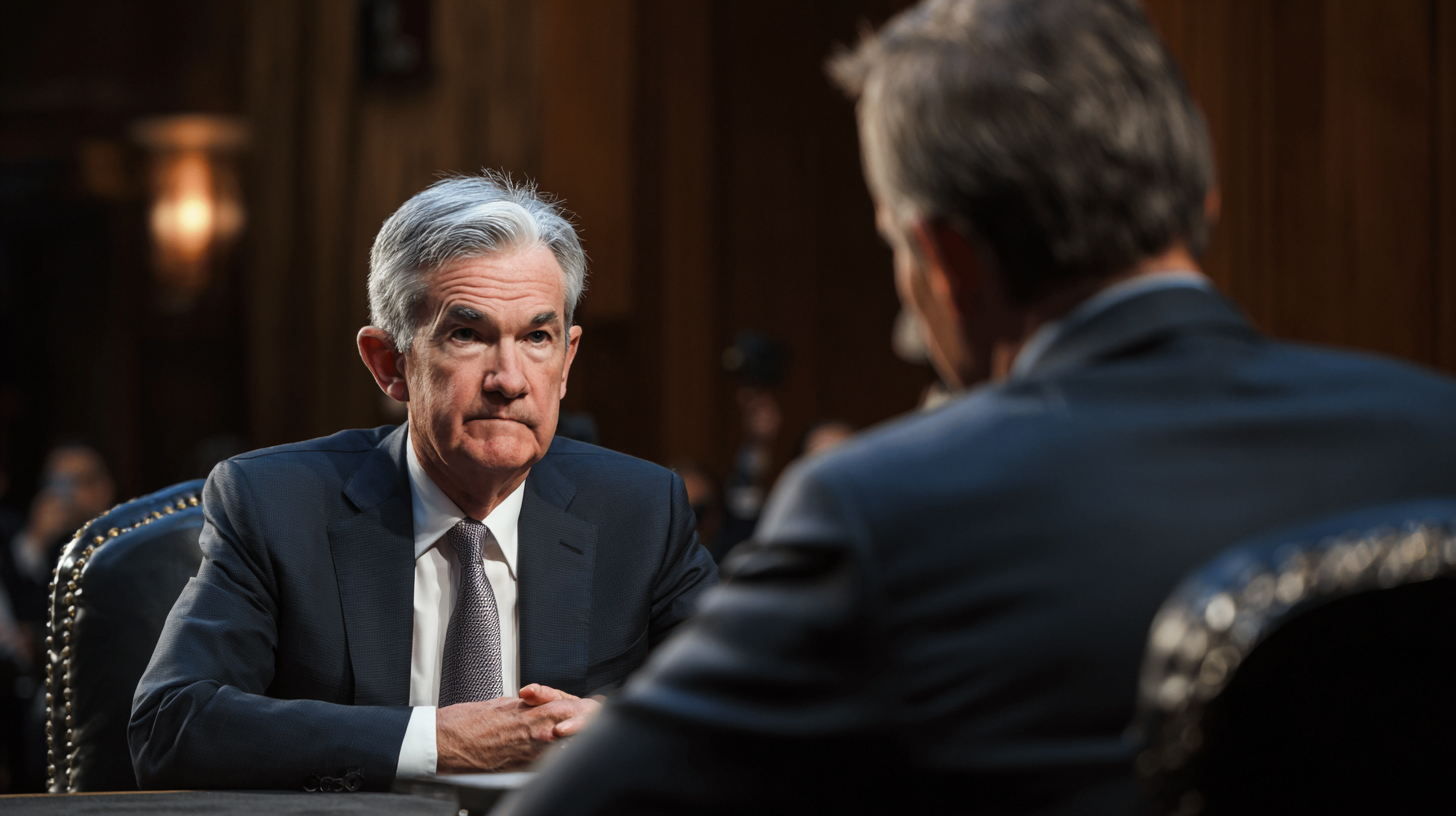
President Trump’s nomination of former Federal Reserve governor Kevin Warsh to lead the US central bank marks a pivotal moment for monetary policy, with markets immediately turning their focus to what his leadership could mean for interest rates in 2026 and beyond. While Warsh is viewed as a conventional and credible pick, his appointment could subtly — and eventually materially — shift the Federal Reserve’s policy direction.
If confirmed by the Senate, Warsh would step into a deeply divided Federal Open Market Committee (FOMC). The 19-member body has recently signaled openness to a prolonged pause after delivering three rate cuts last fall, with many policymakers believing those moves sufficiently addressed slowing job growth. Convincing the committee to resume cutting rates will be one of Warsh’s earliest and most consequential challenges.
Economists broadly agree that Warsh is inclined to argue for lower rates, but that persuasion — not authority — will determine outcomes. “Special deference to the chair only goes so far,” said JPMorgan chief economist Michael Feroli, noting that past chairs often succeeded by positioning themselves near the committee’s center rather than pushing an ideological edge. Deutsche Bank’s Matt Luzzetti echoed that view, arguing that further rate cuts are unlikely unless inflation eases materially or the labor market weakens again.
Warsh’s case for lower rates rests on a structural argument: that artificial intelligence will meaningfully boost productivity, suppress inflation, and allow the economy to grow faster without overheating. Like Trump, Warsh rejects the idea that inflation is primarily driven by strong wage growth. Instead, he has consistently blamed excessive government spending and monetary expansion. He also believes tariffs represent one-off price shocks rather than persistent inflationary forces — a view increasingly shared within the Fed.
Still, Warsh’s recent dovish tone contrasts with his long-standing hawkish reputation. Historically, he opposed extended bond-buying programs outside crisis conditions and warned that balance sheet expansion risked distorting markets and fueling inflation. Notably, he did not support a rate cut as recently as September 2024. In more recent remarks, however, Warsh has suggested that shrinking the Fed’s balance sheet could help bring inflation down, creating room for lower policy rates.
That reputation for independence may actually work in Warsh’s favor. Evercore ISI’s Krishna Guha argues that because Warsh is seen as hawkish and credible, he may be better positioned than other contenders to bring the FOMC along for at least two — and possibly three — rate cuts this year if conditions allow. In other words, Warsh may have more room to pivot without undermining the Fed’s inflation-fighting credibility.
President Trump has been careful to publicly respect the Fed’s independence, saying he did not seek a commitment from Warsh to cut rates, even though he believes Warsh favors doing so. That balance — political alignment without overt pressure — will be closely scrutinized by lawmakers during Warsh’s confirmation process, which could face hurdles amid broader tensions surrounding the Fed and ongoing investigations tied to Powell’s tenure.
Looking further ahead, questions remain about how Warsh would respond if productivity gains disappoint or inflation reaccelerates, particularly under loose fiscal policy. Some economists believe his current dovish posture could prove flexible — or temporary — especially after midterm elections and deeper into a second Trump term.
For now, Warsh’s nomination signals continuity with a twist: a Fed chair with crisis experience, institutional credibility, and a growing belief that the economy can sustain lower rates without reigniting inflation. Whether he can translate that belief into consensus may define both his chairmanship and the next phase of US monetary policy.