The Next Round of Stimulus and Industries Impacted

Is There Profit to Be Made Off Government Stimulus 2.0?

With all the conflicting chatter surrounding the next round of Covid related government stimulus, the only thing that’s certain is that there will be another round. Expectations differ as to what will be elevated to high priority and what may be different than the previous round. The amount of money involved, likely to be $1- $3 trillion or more, will impact the fortunes of both the industries targeted and ancillary businesses not directly touched.  This, of course, keeps investors listening for clues to where stimulus dollars will be spent, which industries are incentivized, and if infrastructure spending will be ramped up as it was during the economic weakness in 2008-2009.

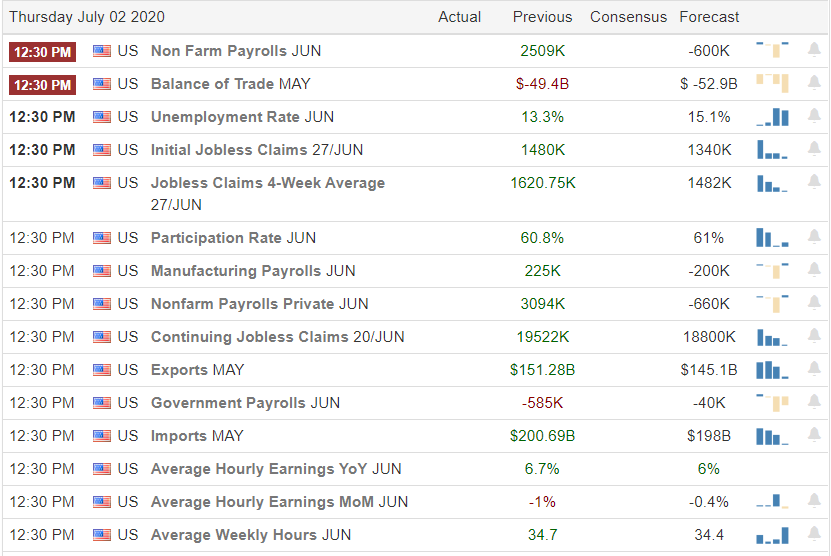
The direction the final package takes could depend on the soon to be released jobs report which will be out just before the long holiday weekend. The previous jobs report included many positive surprises. If the surge in Non-Farm Payrolls continued, it would weaken the argument for new stimulus checks and extended unemployment insurance.

U.S. Payroll, Actual and Forecast – May/June
Source: Trading Economics
(Calendar)


As with most things in Washington, the nature of the stimulus is a high stakes contest. Continued strength and employment gains could weaken the Democrats’ preferred plan of extending benefits to individuals. If Payrolls declined in June, that would pressure the White House and Republican-controlled Senate to support larger measures than they are now considering. The lawmakers are not expected to discuss any plans until they reconvene on July 17, after their Independence Day recess.

The Chatter

Most presume that the next mega-dose of stimulus out of  Washington will set aside a large portion dedicated to infrastructure improvement projects, and perhaps manufacturing support. Much uncertainty lies in how individuals and small businesses are best supported.

In anticipation of any package, materials prices have been rising as commodity traders anticipate all competing plans to include infrastructure projects. Within infrastructure, there are expectations of spending on “green” energy and digital technology. In a CNBC article published on June 24th titled, “Welcome to the age of copper: Why the coronavirus pandemic could spark a red metal rally,”  it’s shown that copper is seen as a bellwether for the general state of the economy. The demand turned sharply down during the height of the pandemic in March. In recent days, copper has been trading close to its pre-coronavirus high at $5,909 per metric ton. Both here and abroad, there are expectations that demand for copper will dramatically increase as investments in energy generation and distribution have more support from public funds. Any new demand would not create shortages, as copper mines that have been closed during the worst part of the pandemic are reopening throughout the globe.

Expectations from a White House stimulus plan are that it will be designed with an eye toward changing our economic landscape with more domestic manufacturing.  According to White House trade advisor Peter Navarro, the president wants the next stimulus bill to be “at least $2 trillion.” This is close to double the $1 trillion Senate Majority Leader McConnell said he plans to target. However, it’s smaller by a third to the House bill asking for $3 trillion, which was passed on May 15th. The House bill is not scheduled for a Senate vote.

Government Led Construction Spending in Recessions
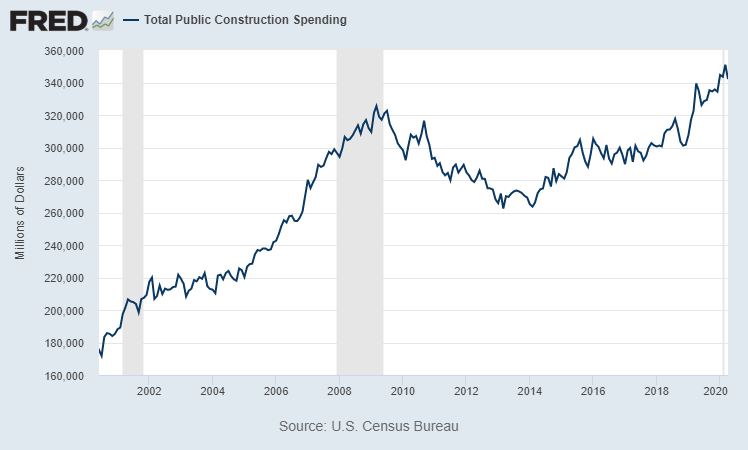
 

Spokesmen for the White House have been very public on what they believe should be the primary impetus of any stimulus spending. In an interview on Fox Business News trade advisor, Navarro said a “key thrust” to the stimulus bill should focus on manufacturing jobs. He followed this by highlighting an underlying theme of “Buy American” “Hire American” and “Make it in the USA.”  The strategy would be to remake and improve on what we had before the lockdown. Although the service sector could benefit from more direct attention, the plan more likely would support manufacturing jobs. These jobs would then be expected to have a ripple effect creating more service sector demand. When asked for specific incentives to be included, Navarro said, the bill will be designed to create demand for more investment in the U.S.  A payroll tax cut is also viewed as a “critical” part of the plan.  The White House views this as critical to create the appropriate incentives for employers to keep workers working.” It also serves as a take-home “pay raise” for workers.

The Beneficiaries

What could tax cuts, deregulation, cheap energy, and beneficial trade deals mean for business? As mentioned, it would help rebuild the country’s manufacturing base. There is a particular focus on domestic production of pharmaceuticals, medical supplies, and equipment. The demand-driven growth could positively impact new tech, including biotech and what Navarro called the “SpaceX economy.” Other beneficiaries could be raw material providers and producers of infrastructure development, including electricity providers. Some of the expectations may already be reflected in equity prices.

Companies with high payrolls doing business in the USA will immediately see reduced costs. Investors should not just look for where revenues will be increased, as cost reduction immediately adds to income statement bottom lines. Government contractors should be busier with projects as diverse as drinking water, roadway construction, border barriers, waterway maintenance such as dredging, bridges, etc.

If stimulus checks are part of an approved plan, this could have a positive impact on discount brokers. After the last round of government checks, there was an increase in the newer breed of app-based traders. Additional funds in their accounts add to the bottom line of no cost per trade brokers that make money off the spread between what they earn on the balances and their cost. Additionally, household name stocks with per-share price equal to or less than the cost of a large coffee at Starbucks may also rise as these securities get more attention from investors on these apps.

Take-Away

Change brings opportunity. Determining what that change will be and how it will impact industries and businesses is how uncommon returns are made. Within political bargaining, there’s universal support for infrastructure projects as a way to update the old and take a giant step forward with the new. This explains why metals such as copper have experienced a strong  rebound. The pandemic demonstrated the need to manufacture medicine and equipment within the U.S. Domestic pharmaceutical companies could continue to gain more investor attention. The attention from “app-traders” to low priced stocks, both those that were giants and have been beaten down, and small and micro-cap stocks that could be on their way to becoming giants, will continue to create runaway opportunities that can no longer be ignored by mainstream investors.


Suggested Reading:

The Limits of Government Tinkering

Are Individual Investors the “Smart Money?”

Will There be an Explosion of New Acquisitions?


Enjoy Premium Channelchek Content at No Cost


Sources:

Congress Days in Session 2020

Fitch Solutions maintains copper price forecast as economies start to reopen

Copper Demand
Could Soar Thanks to Coronavirus

TRANSPORTATION CONSTRUCTION WHAT IMPACTS
WILL COVID-19 HAVE ON PROJECT FUNDING?

A Wharton analysis predicts Trump’s infrastructure plan could create 1 million new jobs

 

Latest Updates On The Coronavirus
Pandemic

Next Stimulus
Bill Will Be The Last, Says McConnell

One Stop Systems (OSS) – Removes Interim CEO Tag from David Raun

Friday, June 26, 2020

One Stop Systems Inc. (OSS)

Removes Interim CEO Tag from David Raun

One Stop Systems Inc is US-based company which is principally engaged in designing, manufacturing, marketing high-end systems for high performance computing (HPC) applications. The company offers custom servers, compute accelerators, solid-state storage arrays and system expansion systems. The product line of the company includes GPU Appliances, GPU Expansion, GPUs and co-processors, Flash storage arrays, Flash storage expansion, Servers, Disk Arrays, Desktop computing appliances, accessories and parts. The company delivers high-end technology to customers through the sale of equipment and software for use on their premises or through remote cloud access to secure data centres housing technology.

Joe Gomes, Senior Research Analyst, Noble Capital Markets, Inc.

Refer to the full report for the price target, fundamental analysis, and rating.

    Its Official. Yesterday, One Stop Systems named David Raun as President and CEO. Mr. Raun had been serving as interim CEO since February. Mr. Raun originally joined OSS’s Board in 2016 and served as audit committee chair. As we mentioned upon his interim appointment, Mr. Raun is a seasoned leader with extensive experience in the technology space. He has a track record of driving increased revenue and profits and is intimately familiar with the PCIe switch technology. Mr. Raun is a good fit for OSS, in our view.

    New Directors. Earlier this month, OSS announced the appointment of three independent board members, Sita Lowman, Gioia Messinger, and Greg Matz, effective July 1. In addition to increasing the Board to seven members, the new directors bring a wide range of relevant experience to…


    Click to get the full report.

This Company Sponsored Research is provided by Noble Capital Markets, Inc., a FINRA and S.E.C. registered broker-dealer (B/D).

*Analyst
certification and important disclosures included in the full report. 
NOTE: investment decisions should not be based upon the content of
this research summary.  Proper due diligence is required before
making any investment decision.
 

Cumulus Media (CMLS) – A Nice Cash Boost

Thursday, June 25, 2020

Cumulus Media Inc. (CMLS)

A Nice Cash Boost

CUMULUS MEDIA, Inc. (NASDAQ: CMLS) is a leading audio-first media and entertainment company delivering premium content to over a quarter billion people every month — wherever and whenever they want it. CUMULUS MEDIA engages listeners with high-quality local programming through 428 owned-and-operated stations across 87 markets; delivers nationally-syndicated sports, news, talk, and entertainment programming from iconic brands including the NFL, the NCAA, the Masters, the Olympics, the GRAMMYS, the American Country Music Awards, and many other world-class partners across nearly 8,000 affiliated stations through Westwood One, the largest audio network in America; and inspires listeners through its rapidly growing network of original podcasts that are smart, entertaining and thought-provoking. CUMULUS MEDIA provides advertisers with local impact and national reach through on-air, digital, mobile, and voice-activated media solutions, as well as access to integrated digital marketing services, powerful influencers, and live event experiences. CUMULUS MEDIA is the only audio media company to provide marketers with local and national advertising performance guarantees.

Michael Kupinski, Director of Research, Noble Capital Markets, Inc.

Refer to the full report for the price target, fundamental analysis, and rating.

    Closes on the Maryland land sale! After a protracted period of regulatory hurdles, the company finalized the sale of its 75 acre Maryland land to the Toll Brothers for gross proceeds of $75.1 million.

    A nice chunk of cash. The company received $5 million in an advance payment in 2019, and, as such, the company received…


    Click to get the full report.

This research is provided by Noble Capital Markets, Inc., a FINRA and S.E.C. registered broker-dealer (B/D).

*Analyst certification and important disclosures included in the full report.  NOTE: investment decisions should not be based upon the content of this research summary.  Proper due diligence is required before making any investment decision. 

Great Panther Mining Limited (GPL) – Encouraging Initial Results from the 2020 Tucano Drilling Program

Wednesday, June 24, 2020

Great Panther Mining (GPL)(GPR:CA)

Encouraging Initial Results from the 2020 Tucano Drilling Program

As of April 24, 2020, Noble Capital Markets research on Great Panther Mining is published under ticker symbols (GPL and GPR:CA). The price target is in USD and based on ticker symbol GPL. Research reports dated prior to April 24, 2020 may not follow these guidelines and could account for a variance in the price target.
Great Panther Mining Limited, headquartered in Vancouver, Canada, is a precious metals mining and exploration company that operates three mines. These include: 1) the Tucano gold mine in Amapa State, Brazil, 2) the Guanajuato mine complex which includes the Guanajuato and San Ignacio mines in Mexico, and 3) the Topia mine in Mexico. Great Panther also owns the Coricancha Mine in Peru, which is expected to restart operations in 2020. The shares are traded under the ticker “GPR” on the Toronto Stock Exchange and under the ticker “GPL” on the NYSE American.

Mark Reichman, Senior Research Analyst, Noble Capital Markets, Inc.

Refer to the full report for the price target, fundamental analysis, and rating.

    Initial Tucano drilling results are encouraging. Initial drill results from the 2020 drill program at the Tucano mine included some high-grade gold intercepts. To date, 12,000 meters of drilling has been completed, including 6,000 meters of near-mine diamond and reverse circulation drilling at the Tapereba AB1 and AB3 open pits. The 2020 program at Tucano will entail 55,000 meters of drilling at near-mine and regional targets at a cost of $6.6 million. The company also plans to spend an additional $4 million this year on a 25,000-meter drilling program in Mexico to define new zones and develop high grade resources.

    Mr. Nick Winer appointed Vice President of Exploration. Prior to joining Great Panther, Mr. Winer was Vice President, Exploration for AngloGold and was responsible for activities in South America. He is a resident of Brazil and was involved in the initial resource/reserve definition program …


    Click to get the full report.

This research is provided by Noble Capital Markets, Inc., a FINRA and S.E.C. registered broker-dealer (B/D).

*Analyst
certification and important disclosures included in the full report. 
NOTE: investment decisions should not be based upon the content of
this research summary.  Proper due diligence is required before
making any investment decision.
 

Kratos Defense & Security (KTOS) – Announces $250 million Stock Offering

Wednesday, June 24, 2020

Kratos Defense & Security (KTOS)

Announces $250 million Stock Offering

Kratos Defense & Security Solutions is a National Security technology provider with proprietary expertise in the area of unmanned aerial vehicles, electronics for missile defense systems, electronic warfare systems, satellite control and management systems and support services for emerging naval weapon systems. Commercial and state and local government revenues are about 25% of the total and comprise primarily of critical infrastructure monitoring and protection systems.

Joe Gomes, Senior Research Analyst, Noble Capital Markets, Inc.

Refer to the full report for the price target, fundamental analysis, and rating.

    Stock Offering. Last week, Kratos announced a public offering of 13.5 million shares at $16.25/sh, raising $219.4 million, or $209 million, net to Kratos after underwriting costs and fees. Underwriters have the option to purchase up to an additional 2.025 million shares, which would increase the amount raised to Kratos to $240 million. Assuming the underwriter exercise in full, the additional 15.5 million shares equate to a 14% increase in the outstanding shares. All shares proposed to be sold are being sold by the Company.

    Uses. According to the prospectus, the proceeds will be used for “general corporate purposes, including for potential strategic ‘tuck-in’ acquisitions, to further position us for projected growth from new and anticipated increased production and to facilitate our long-term strategy.” The funds will easily cover the $35 million cost of the acquisition of ASC Signal announced…


    Click to get the full report.

This research is provided by Noble Capital Markets, Inc., a FINRA and S.E.C. registered broker-dealer (B/D).

*Analyst
certification and important disclosures included in the full report. 
NOTE: investment decisions should not be based upon the content of
this research summary.  Proper due diligence is required before
making any investment decision.
 

Onconova Therapeutics Announces Participation In Noble Capital Markets Investor Webinar

Onconova Therapeutics Announces Participation In Noble Capital Markets Investor Webinar

NEWTOWN, PA – June 23, 2020 – Onconova Therapeutics, Inc. (NASDAQ: ONTX), a Phase 3 stage biopharmaceutical company focused on discovering and developing novel products to treat cancer, with an initial focus on myelodysplastic syndromes (MDS), today announced its participation in the Noble Capital Markets c-suite webinar series.

The webinar was led by Noble Capital Markets Biotechnology Analyst Ahu Demir, Ph.D., with participation by Steven M. Fruchtman, M.D., President and Chief Executive Officer of Onconova, and Richard C. Woodman, M.D., Chief Medical Officer. The session included a comprehensive discussion of recent Company developments, upcoming milestones, and addressable markets.

The webinar, recorded June 16, is now available on-demand at channelchek and will be accessible for one year.

About Onconova Therapeutics, Inc.

Onconova Therapeutics, Inc. is a Phase 3-stage biopharmaceutical company focused on discovering and developing novel drugs to treat cancer, with an initial focus on myelodysplastic syndromes (MDS). Onconova has a pipeline of proprietary targeted agents designed to work against specific cellular pathways that are important in cancer cells. Advanced clinical trials with the Company’s lead compound, rigosertib, are aimed at what the Company believes are unmet medical needs of patients with MDS. Onconova has conducted trials with two other research compounds and has a pre-clinical program with a CDK4/6 and ARK5 inhibitor, ON 123300.

For more information, please visit https://www.onconova.com.

About Myelodysplastic Syndromes

Myelodysplastic syndromes (MDS) are conditions that can occur when the blood-forming cells in the bone marrow become dysfunctional and thus produce an inadequate number of circulating blood cells. It is frequently associated with the presence of blasts or leukemic cells in the marrow. This leads to low numbers of one or more types of circulating blood cells, and to the need for blood transfusions. In MDS, some of the cells in the bone marrow are abnormal (dysplastic) and may have genetic abnormalities associated with them. Different cell types can be affected, although the most common finding in MDS is a shortage of red blood cells (anemia). Patients with higher-risk MDS may progress to the development of acute leukemia.

About Rigosertib

Rigosertib, Onconova’s lead candidate, is a proprietary Phase 3 small molecule. A key publication in a preclinical model reported rigosertib’s ability to block cellular signaling by targeting RAS effector pathways (Divakar, S.K., et al., 2016: “A Small Molecule RAS-Mimetic Disrupts RAS Association with Effector Proteins to Block Signaling.” Cell 165, 643). Onconova is currently in the clinical development stage with oral and IV rigosertib, including clinical trials studying single agent IV rigosertib in second-line higher-risk MDS patients (pivotal Phase 3 INSPIRE trial) and oral rigosertib plus azacitidine in HMA naive and refractory higher-risk MDS patients (Phase 2). Patents covering oral and injectable rigosertib have been issued in the US and are expected to provide coverage until at least 2037.

About the INSPIRE Phase 3 Clinical Trial

The clinical trial INternational Study of Phase 3 IV RigosErtib, or INSPIRE, was finalized following guidance received from the U.S. Food and Drug Administration and European Medicines Agency. INSPIRE is a global, multi-center, randomized, controlled study to assess the efficacy and safety of IV rigosertib in higher-risk MDS (HR-MDS) patients who had progressed on, failed to respond to, or relapsed after previous treatment with a hypomethylating agent (HMA) within nine cycles over the course of one year after initiation of HMA treatment. This time frame optimizes the opportunity to respond to treatment with an HMA prior to declaring treatment failure, as per NCCN Guidelines. Patients are randomized at a 2:1 ratio into two study arms: IV rigosertib plus Best Supportive Care versus Physician’s Choice plus Best Supportive Care. The primary endpoint of INSPIRE is overall survival. The trial continued beyond the pre-specified interim analysis and is nearing its conclusion. Full details of the INSPIRE trial, such as inclusion and exclusion criteria, as well as secondary endpoints, can be found on clinicaltrials.gov (NCT02562443).

About IV Rigosertib

The intravenous form of rigosertib has been studied in Phase 1, 2, and 3 clinical trials involving more than 1000 patients, and is currently being evaluated in a randomized Phase 3 international INSPIRE trial for patients with HR-MDS after failure of HMA therapy.

About Oral Rigosertib

The oral form of rigosertib was developed to provide a potentially more convenient dosage form for use where the duration of treatment may extend to multiple years. This dosage form may also support combination therapy modalities.? To date, over 400 patients have been dosed with the oral formulation of rigosertib in clinical trials.? Combination therapy of oral rigosertib with azacitidine, the standard of care in HR-MDS, has also been studied. Currently, oral rigosertib is being developed as a combination therapy together with azacitidine for patients with higher-risk MDS who require HMA therapy. A Phase 1/2 trial of the combination therapy has been fully enrolled, and the updated efficacy and safety data was presented at the ASH 2019 Annual Meeting in December 2019.

Forward-Looking Statements

Some of the statements in this release are forward-looking statements within the meaning of Section 27A of the Securities Act of 1933, as amended, Section 21E of the Securities Exchange Act of 1934, as amended, and the Private Securities Litigation Reform Act of 1995, and involve risks and uncertainties. These statements relate to Onconova expectations regarding the INSPIRE Trial and Onconova’s other development plans. Onconova has attempted to identify forward-looking statements by terminology including “believes,” “estimates,” “anticipates,” “expects,” “plans,” “intends,” “may,” “could,” “might,” “will,” “should,” “approximately” or other words that convey uncertainty of future events or outcomes. Although Onconova believes that the expectations reflected in such forward-looking statements are reasonable as of the date made, expectations may prove to have been materially different from the results expressed or implied by such forward-looking statements. These statements are only predictions and involve known and unknown risks, uncertainties, and other factors, including Onconova’s ability to continue as a going concern, maintain its Nasdaq listing, the need for additional financing, the success and timing of Onconova’s clinical trials and regulatory approval of protocols, our collaborations including the effective termination of the HanX license and securities purchase agreements and plans for partnering certain territories, and those discussed under the heading “Risk Factors” in Onconova’s most recent Annual Report on Form 10-K and quarterly reports on Form 10-Q. Any forward-looking statements contained in this release speak only as of its date. Onconova undertakes no obligation to update any forward-looking statements contained in this release to reflect events or circumstances occurring after its date or to reflect the occurrence of unanticipated events.

Press release contact information

Company Contact:
Avi Oler
Onconova Therapeutics, Inc.
267-759-3680
[email protected]
https://www.onconova.com/contact/

Media
David Schull, Russo Partners LLC: (212) 845-4271
Nic Johnson, Russo Partners LLC: (212) 845-4242

Investors
Jan Medina, CFA, Russo Partners LLC: (646) 942-5632

Eagle Bulk Shipping (EGLE) – Expect 2H2020 Dry Bulk Market Recovery. Adjusting 2020 EBITDA Estimate.

Tuesday, June 23, 2020

Eagle Bulk Shipping (EGLE)

Expect 2H2020 Dry Bulk Market Recovery. Adjusting 2020 EBITDA Estimate.

Eagle Bulk Shipping Inc. is a US-based drybulk owner-operator focused on the Supramax/Ultramax mid-size asset class, which ranges from 50,000 and 65,000 deadweight tons in size; these vessels are equipped with onboard cranes allowing for the self-loading and unloading of cargoes, a feature which distinguishes them from the larger classes of drybulk vessels and provides for greatly enhanced flexibility and versatility- both with respect to cargo diversity and port accessibility. The Company transports a broad range of major and minor bulk cargoes around the world, including coal, grain, ore, pet coke, cement, and fertilizer. Eagle operates out of three offices, Stamford (headquarters), Singapore, and Hamburg, and performs all aspects of vessel management in-house including: commercial, operational, technical, and strategic.

Poe Fratt, Senior Research Analyst, Noble Capital Markets, Inc.

Refer to the full report for the price target, fundamental analysis, and rating.

    Dry bulk market volatility impacts 1H2020, but 2H2020 recovery appears likely. The year started off weaker than expected and operating results will be muted when 2Q2020 numbers are reported around August 5th. While the dry bulk market has staged a strong recovery and the Baltic Dry Index (BDI) was up 68% last week alone and is now ~25% above last year, the BDI averaged 592 in 1Q2020 and is likely to average ~750 in 2Q2020, down ~25% from 2Q2019.

    Updating 2020 EBITDA estimate to reflect current dry bulk market conditions. To reflect the expected rebound from 1H2020 weakness, we are increasing our EBITDA estimate to $65.5 million based on TCE rates of $10.1k, up from our previous estimate of $60.0 million based on…..


    Click to get the full report.

This research is provided by Noble Capital Markets, Inc., a FINRA and S.E.C. registered broker-dealer (B/D).

*Analyst
certification and important disclosures included in the full report. 
NOTE: investment decisions should not be based upon the content of
this research summary.  Proper due diligence is required before
making any investment decision.
 

Indonesia Energy Corp (INDO) – Estimates and PO raised on sharper-than-expected oil price rebound

Tuesday, June 23, 2020


Indonesia Energy Corp (INDO)

Estimates and PO raised on sharper-than-expected oil price rebound


Indonesia Energy Corp Ltd is an oil and gas exploration and production company focused on Indonesia. It holds two oil and gas assets through its subsidiaries in Indonesia: one producing block (the Kruh Block) and one exploration block (the Citarum Block). The Kruh Block is located to the northwest of Pendopo, Pali, South Sumatra. The Citarum Block is located to the south of Jakarta.

Michael Heim, Senior Research Analyst, Noble Capital Markets, Inc.

Refer to the full report for the price target, fundamental analysis, and rating.

    Oil prices have rebounded sharply from the level assumed when we launched coverage in April. Brent oil prices, which were down near $20 at the time of our initiation, have rebounded to a level in the mid forties. We had modeled a rebound of $5 per quarter, a much slower rebound than we are witnessing. We are maintaining our long-term oil price assumption of $50 but now believe pricing will reach that level several years earlier than previously modeled.

    Higher oil prices mean higher earnings and cash flow. We are significantly raising our earnings and cash flow projections for the upcoming quarters to reflect higher prices. In addition, we have increased confidence that the company will meet our estimates. Importantly, higher cash flow will mean less external financing will be…


Click to get the full report.

This Company Sponsored Research is provided by Noble Capital Markets, Inc., a FINRA and S.E.C. registered broker-dealer (B/D).

*Analyst
certification and important disclosures included in the full report. 
NOTE: investment decisions should not be based upon the content of
this research summary.  Proper due diligence is required before
making any investment decision.
 

Virtual Power Plants and Tesla Car Batteries

Tesla “Battery Day” Announcements Could Include Virtual Power Plants

A virtual power plant (VPP) is a cloud-based power plant that aggregates the capacities of independent energy resources at different locations into a power network.  The concept of a VPP is different from the traditional utility model that has a centralized generator, transmission lines, and a distribution network.  Under the traditional model, power flows in one direction.  The growth of renewable energy has changed the dynamics of power generation.  Once thought of as government-subsidized experiments, wind and solar power are now competitive with other energy sources.  The growth of renewable power has increased the need for a system that can efficiently store energy.  It has also spurred the growth of a market with dynamic pricing to reflect inconsistent supply and demand levels.

As renewable energy has grown, so too has distributed energy – small generation units that provide electricity on location, at times selling power back into the grid.  Owners value on-site generation now only for economic reasons but also reliability reasons as power outages have increased.  The result is an evolving system of hundreds of thousands of generation units in various locations and different cost structures.  In theory, computer models could coordinate all these generations units, dispatching units through a coordinated, dynamic, real-time pricing market.  In reality, VPP development is in the initial stages, although small experimental networks have been established in parts of Australia, Europe, California, and New York.

Where Does Tesla Come In?

In 2018, Tesla began installing Powerwalls in homes.  Powerwalls are large lithium-ion batteries that can provide up to seven days of continuous power in the event of an outage.  They often work in tandem with residential solar panels.  Powerwalls can be installed in parallel to increase capacity. Powerwalls can be controlled remotely by a mobile app to optimize the cost of energy for customers with electric rates that vary depending on the time of day or the season.  Typically, users will generate energy from solar panels during the day and store any excess power in the Powerwall.  At night, when power prices are typically lower, the user will take electricity from the grid or draw down on the Powerwall battery.  One use of the Powerwall would be to charge electric car batteries overnight.

Why are Electric Cars Important?

Tesla, as with other electric cars, requires enormous battery capacity, the company has hinted that it is making advances that could increase the capacity and storage life of the batteries.  Elon Musk has indicated that it will hold a “Battery Day” perhaps in July, which has ignited speculation regarding their latest battery developments.   Some believe Tesla will reveal a cheaper battery that will make electric cars as inexpensive as gas cars.  Others expect Tesla to announce that it can make a battery that lasts a million miles or one that doubles the mileage range of cars.  Others speculate that the next generation of car batteries will be powerful enough and last long enough that they can frequently cycle charges.  The car batteries, then, would act in tandem or perhaps even as a substitute for Powerwalls, perhaps taking the next step of selling excess capacity back into the grid.

So How Would this Work?

Tesla car batteries would be charged overnight using solar power stored in a homeowner’s Powerwall.  The owner then drives the car to work and plugs into an outlet that can either take electricity from the grid or give it back.  With power prices typically higher during the day during times of peak demand and the car sitting idle, charging and uncharging the car each day would be economical.  The owner can program base power requirements into a mobile app to make sure he has adequate power to drive home, run errands, etc.  Car batteries could also take the place of backup generators.  If there is a power outage, one could use the stored current in the battery to power up the Powerwall.  And, since car batteries are mobile, they can charge up in areas with power and then relocate to areas without power.  Imagine a rolling blackout that is accompanied by a rotating fleet of vehicles that power up at night and then transport to the next area where blackouts are planned.  Add the mobility of cars to the mix and the utility system as we know it will have completely changed.

What Does This Mean for Utilities?

Utilities have undergone a process of deregulation that separates power generation from power distribution.  Distribution will remain regulated as there will remain cost advantages to having one entity own and coordinate a distribution grid.  Generation is more open to competition, including the use of battery power as a source of power “generation.”  Electric utilities have long sought ways to reduce growing demand to forego building new, expensive power plants.  Most utilities promote conservation even though it means less demand for their product.  Existing power plants are typically low-cost producers that will continue to provide baseload demand.  The idea of VPPs should not be viewed as competition for electric utilities but rather partners to them.


Suggested Reading:

Will Tesla’s Big Reveal Slash Electric Vehicle Prices?

Has Robinhood, the Online Brokerage Disruptor, Been Disrupted?

Will There be an Explosion in New Acquisitions


Enjoy Premium Channelchek Content at No Cost


Sources:

https://cleantechnica.com/2020/02/09/everything-you-need-to-know-about-the-powerwall-2-2019-edition/, Kyle Field, CleanTechnica, February 9th, 2020

https://www.youtube.com/watch?v=pP971PYzQJs, Battery Day is Coming, In Depth, May 15, 2020

https://www.eenews.net/stories/1063234625, David Ferris, E&E News, May 26, 2020

https://www.greentechmedia.com/articles/read/what-will-it-take-to-build-the-market-for-virtual-power-plants, Justin Gerdes, gtm, June 25, 2020

https://www.energy.gov/sites/prod/files/oeprod/DocumentsandMedia/ABB_Attachment.pdf, Aaron Zurborg, worldpower 2010

https://www.infoq.com/presentations/tesla-vpp/

Will There be an Explosion of New Acquisitions?

Are we on the Verge of Acquisition-Mania?

While much of the world has been zoomed in on pandemic mitigation efforts, civil unrest, and an overreactive stock market, the change of fortunes in tech are worth paying attention to. Facebook, Amazon, Apple, Netflix, Google, and Microsoft have in hand the perfect ingredients of change along with the financial strength to scoop up companies with synergies that can lead to expanded services, higher profits, and fewer competitors. 

Based on the acquisition activity of these giants over the past couple of months, it seems management has adopted an aggressive pro-active posture similar to that of past recessions. Memorable examples of tech acquisitions from previous downturns include IBM in the 1990s that readjusted its business focus to software and service rather than mainframes and hardware. Some of the acquisitions they made during this period included Lotus, Tivoli, and Unison. During the dot-com bust after the turn of the millennium, two little known companies named Google and Facebook began to rise to the prominence they enjoy today. Another company that decided to get aggressive during the Y2K downturn was Apple. It doubled its research and development in 2001 and 2002. The outcome was the introduction of quickly adopted music storage technology, and later, smartphones. Big tech has been served well by aggressively planning to be even stronger when the economy recovers. 

What Big Tech has an Appetite For

The pandemic has pushed to the forefront new or expanded consumer needs that have provided clear demand and opportunity. Under the category of telecommunications alone, the requirements of companies to electronically meet with remote employees or even clients they’re building relationships with is worth billions. Couple that with entertainment technology and online retail needs, and the potential for massive leaps forward in business growth is possible, even for a current giant. But only for those companies positioning themselves to shape tomorrow’s standards.  Facebook’s CEO Mark Zuckerberg said in an investor call in May, “I’ve always believed that in times of economic downturn, the right thing to do is keep investing in building the future. When the world changes quickly, people have new needs, and that means there are more new things to build.” Facebook and the others clearly ramped up activity when the lockdown began.

Cash for transactions is not a problem for the largest tech companies. And their high stock valuations could provide additional “currency” for acquisitions. At the end of 2019, the combined six tech companies were sitting with $557 billion. This pile of cash allows each in the group to go shopping for the best fit for their projections of how the future will look. They can create strategies of how their business will provide for it, then build or buy the missing pieces. According to PricewaterhouseCoopers, these firms have been among the top spenders on research and development for most of the last decade.

Tech Activity

As Netflix, Amazon, and the other tech companies adapted to their own employees working remotely, they experienced a spike in their services from others in the country doing the same. The demand of messaging and other teleconferencing software and platforms had spiked.

The world is changing, and many of the new or expanded needs are already obvious. Since March, Microsoft has quickly acquired three cloud computing companies with a variety of capabilities to augment their current services of providing technology to business.

Amazon, which relies on its employees interacting with others, was at once overwhelmed with a surge of online orders. They dealt with the safety concerns of its workers first in part by investing in 175,000 new employees. Then they made their corporate shopping list. According to The Wall Street Journal, Amazon is now in advanced talks to buy an autonomous (driverless) vehicle startup named Zoox. The purchase price is estimated to be between $2.7 billion and $3.2 billion.  And, while air transportation dropped almost overnight in response to the pandemic, Amazon placed 12 Boeing 767s in its shopping cart and hit the “Buy Now” button. The online retailer is now equipped with substantially more capacity than ever — acquired at a discount.

Apple is sitting on $193 billion, they’ve scanned their business environment and found four attractive opportunities to swipe right on. In the past few months, they have acquired; DarkSky, a popular weather app for all make smartphones. They picked up Voysis, a digital assistant and speech recognition software company, and Xnor.ai, an artificial intelligence startup. Apple made an acquisition in NextVR that demonstrates their belief in the future. NextVR is a virtual reality (VR) provider that marries live sporting events with VR through various headsets.  An Apple virtual developer conference is in the works.  

Facebook’s activity skyrocketed in March as they were one of the first platforms people flocked to for voice and video chat to keep in touch with others. In April, Facebook said it was taking a $5.7 billion stake (10%) in India’s Reliance Jio, a streaming service where Facebook expects to set up a digital marketplace serving Asia. According to a June 17 Bloomberg article, the investment is being reviewed under India’s antitrust regulations. 

In May, Facebook bought Giphy for an estimated $400 million. Giphy will become part of its Instagram platform. Their expansion in Asia grew earlier this month as they made a large investment in digital payment app Gojek. Gojek now serves 170 million people in South East Asia.  

Also announced this month, Facebook has plans to create a new venture capital fund and is hiring seasoned tech investors. The plan seems to be to selectively fund startups and perhaps later have access or visibility of the firms that offer the most potential. Facebook recently posted this job opening:

Hiring: New Product Experimentation (NPE) team, ideally 10-years of tech experience.

“In this role, you will manage a multi-million dollar fund that invests in leading private companies alongside top venture capital firms and angel investors,”

“You will develop investment and impact theses, lead the execution of new investments, and support existing portfolio companies as needed.”

Facebook has confirmed they have hired someone to fill the role.

Google, too, updated products that people can use to work from home. In April, it said that its video chat service, Google Meet, would be available inside people’s Gmail window and free to anyone with a Google account. It also said it would bolster e-commerce searches by making listings in its shopping search results mostly free, rather than have merchants pay for all their products to appear in the results.

Non-Tech Activity

Tech isn’t the only industry strengthening or expanding their business offerings. Biotech, pharma, retail, and finance, are as well. In late May, Merck announced it would be acquiring Themis; a company focused on vaccines and immune-modulation therapies for infectious diseases.  Roche acquired Stratos Genomics to possess their one-hour DNA sequencing technology. Grubhub was picked up by Just Eat Takeaway.com, which creates new operations in the U.S. for the entry into online food delivery in the United States. Esports acquired the private company LHE Enterprises to capitalize on the surge in online gaming interest. As larger companies in different industries have more clarity of the future business environment, we may see even more non-tech acquisitions.

Take-Away

This period in history will likely be remembered for bringing an acceleration of change. Companies are looking to capitalize on clear trends that are expected to last well after the current challenges. Investors, for their part, can take their own steps to capitalize on new consumer demands. Research of smaller companies that may become acquisition targets could uncover investment opportunities.

Tech is the most notable group making acquisitions to reshape and benefit from a changing world, but there are others. Companies in any industry, which are aggressively seizing the opportunity and perhaps letting go of old ways, could find themselves more powerful when the pandemic resolves itself.  

Investors holding shares of firms targeted for acquisition may never see their company grow into the next behemoth like Apple. This is okay — finding the next “Apple” isn’t as easy as finding small innovative companies that Apple may become interested in owning.

Paul Hoffman

Managing Editor


Fin Tech is one of the Fastest Growing Tech Sectors

Emotions, Markets, and Mayhem (Faith in Cycles)

Are Dual Class Stocks a Mistake for
Investors?


Research Over 6000 Small and Microcap Companies on  Premium Channelchek Content at No Cost!


Sources:

Facebook establishing a venture arm to invest in startups

Facebook
Invests $5.7 Billion in Indian Internet Giant Jio

Building a transformative subsea cable to better connect Africa

Zoom’s Biggest
Rivals Are Coming for It

Top Innovators

Amazon in Advanced Talks to Buy Self-Driving-Car Tech Company Zoox

Facebook to
buy Giphy for $400 million

Microsoft acquires Softomotive to accelerate and expand its Robotic Process Automation capabilities

IBM Acquisitions 1990-1999

Zuckerberg Investor Call Tanscript

Facebook’s Deal With Jio Under Indian Antitrust Review

Sierra Metals (SMTS) – Growth Outlook at the Cusi Mine Gets a Boost

Friday, June 19, 2020

Sierra Metals (SMTS)(SMT:CA)

Growth Outlook at the Cusi Mine Gets a Boost

As of April 24, 2020, Noble Capital Markets research on Sierra Metals is published under ticker symbols (SMTS and SMT:CA). The price target is in USD and based on ticker symbol SMTS. Research reports dated prior to April 24, 2020 may not follow these guidelines and could account for a variance in the price target.
Sierra Metals Inc is a precious and base metals producer in Latin America. The company acquires, explores, extracts, and produces mineral concentrates consisting of silver, copper, lead, zinc and gold in Mexico and Peru. Its activity includes the operation of the Yauricocha Mine in Peru, and the Bolivar and Cusi mines in Mexico. Yauricocha is an underground polymetallic mine using the sublevel block caving and cut-and-fill mining methods. Bolivar is a copper-silver-zinc-gold underground mine using room-and-pillar mining method. The majority of the revenue is earned by selling of the mineral concentrates to its customers in Peru.

Mark Reichman, Senior Research Analyst, Noble Capital Markets, Inc.

Refer to the full report for the price target, fundamental analysis, and rating.

    High-grade silver discovery at Cusi. Sierra Metals announced the discovery of a new high-grade silver zone composed of multiple veins extending over 300 meters in length which are in proximity to the Cusi mine’s existing operations. The company plans to drill an additional 1,000 meters to better understand the extension of the zone at depth.

    New resources could support Cusi mine expansion. The discovery of a new high-grade silver zone should better position the Cusi mine for longer-term production expansion and greater profitability. Additionally, reinterpretation of the geological system from…


    Click to get the full report.

This Company Sponsored Research is provided by Noble Capital Markets, Inc., a FINRA and S.E.C. registered broker-dealer (B/D).

*Analyst
certification and important disclosures included in the full report. 
NOTE: investment decisions should not be based upon the content of
this research summary.  Proper due diligence is required before
making any investment decision.
 

1·800·Flowers.com (FLWS) – The Guidance Was Raised To What?

Friday, June 19, 2020

1-800-Flowers.com (FLWS)

The Guidance Was Raised To What?

1-800-FLOWERS.COM, Inc. is the leading provider of gourmet and floral gifts for all occasions. For nearly 40 years, 1-800-FLOWERS® has been helping deliver smiles for customers with gifts for every occasion, including fresh flowers, premium, gift-quality fruits, and other gourmet items from Harry & David®, popcorn and specialty treats from The Popcorn Factory®; cookies and baked gifts from Cheryl’s®; premium chocolates and confections from Fannie May®; gift baskets and towers from 1-800-Baskets.com®; premium English muffins and other breakfast treats from Wolferman’s; carved fresh fruit arrangements from FruitBouquets.com; and top quality steaks and chops from Stock Yards®. The Company’s BloomNet® international floral wire service provides a broad range of quality products and value-added services designed to help professional florists grow their businesses profitably.

Michael Kupinski, Director of Research, Noble Capital Markets, Inc.

Refer to the full report for the price target, fundamental analysis, and rating.

    Extraordinary upward revised full year 2020 guidance.Due to very strong ecommerce demand, the company raised fiscal full year 2020 revenue guidance to increase in a range of 16% to 18%, up from 8% to 9%. This implies Q4 revenue growth of an extraordinary 50%. Adjusted EBITDA guidance was raised from a range of 13% to 15% to a range of a 50% to 55%. This implies adjusted EBITDA of a positive roughly $27 million versus an historical seasonal loss. Earnings per share is expected to increase 75% to 85% and free cash flow was raised from a range of $45 million to $50 million to a range of $75 million to $85 million.

    Not just about Mom. The company was able to increase Mother’s Day sales by offering variable shipping days well in advance of Mother’s Day. This allowed support strapped florists the ability to fill orders that would otherwise be delivered….


    Click to get the full report.

This Company Sponsored Research is provided by Noble Capital Markets, Inc., a FINRA and S.E.C. registered broker-dealer (B/D).

*Analyst
certification and important disclosures included in the full report. 
NOTE: investment decisions should not be based upon the content of
this research summary.  Proper due diligence is required before
making any investment decision.
 

Sierra Metals Confirms New High-Grade Silver Zone At Its Cusi Mine, Mexico, Including 17 Meters True-Width Of 428 Grams Per Ton Silver, And Provides An Operational Update

Sierra Metals Confirms New High-Grade Silver Zone At Its Cusi Mine, Mexico, Including 17 Meters True-Width Of 428 Grams Per Ton Silver, And Provides An Operational Update

New zone opens a new exploration horizon and will allow for innovative and highly productive operational design at Cusi

TORONTO—June 18, 2020 – Sierra Metals Inc. (TSX: SMT) (BVL:SMT) (NYSE AMERICAN: SMTS) (“Sierra Metals” or “the Company”) announces the discovery of a new high-grade silver zone with significant widths in an area called Northeast – Southwest System of Epithermal Veins and is providing a corporate update for its Cusi Mine in Mexico.

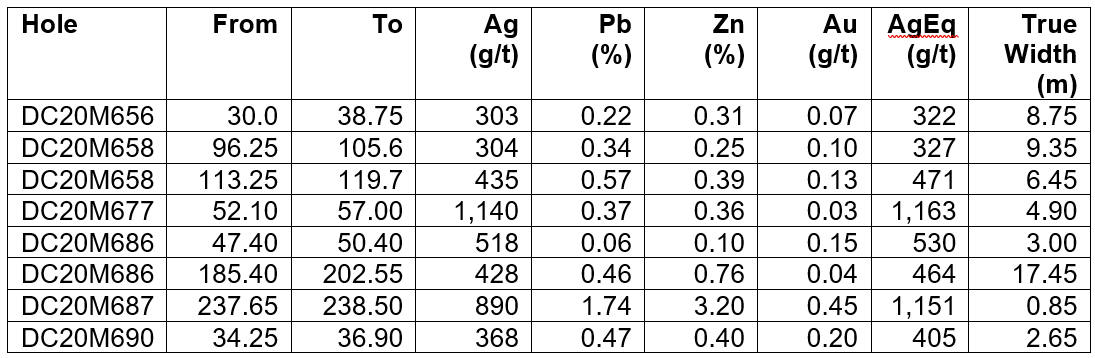
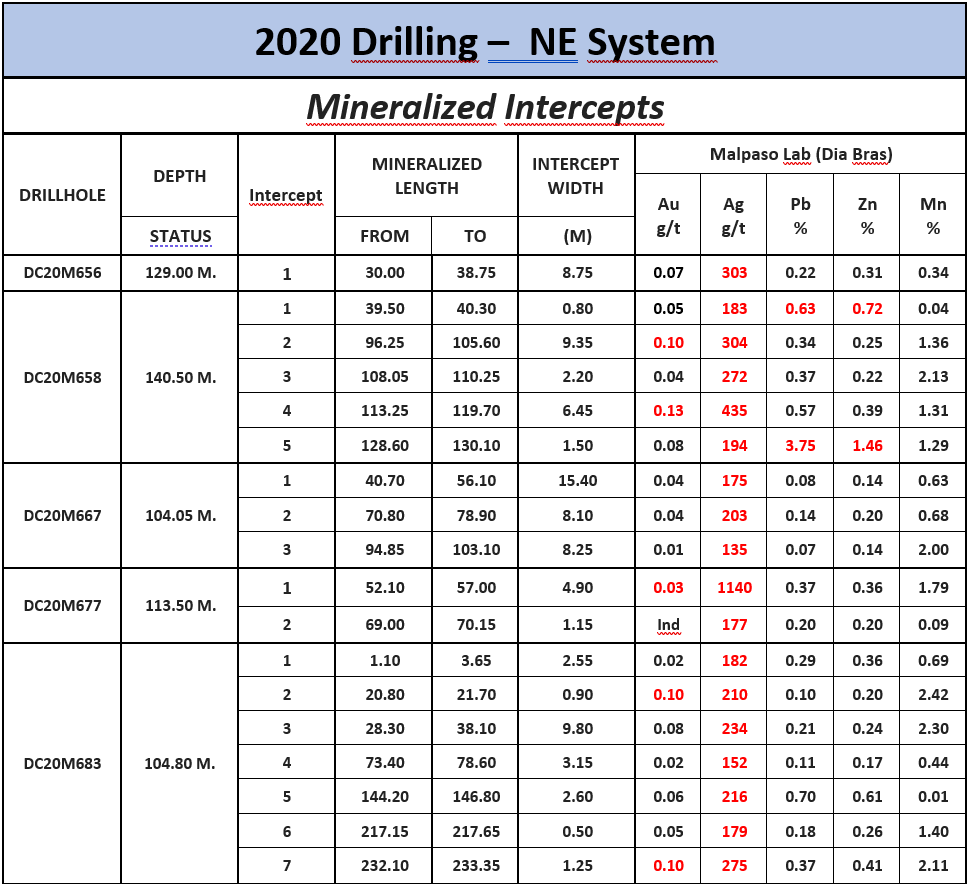
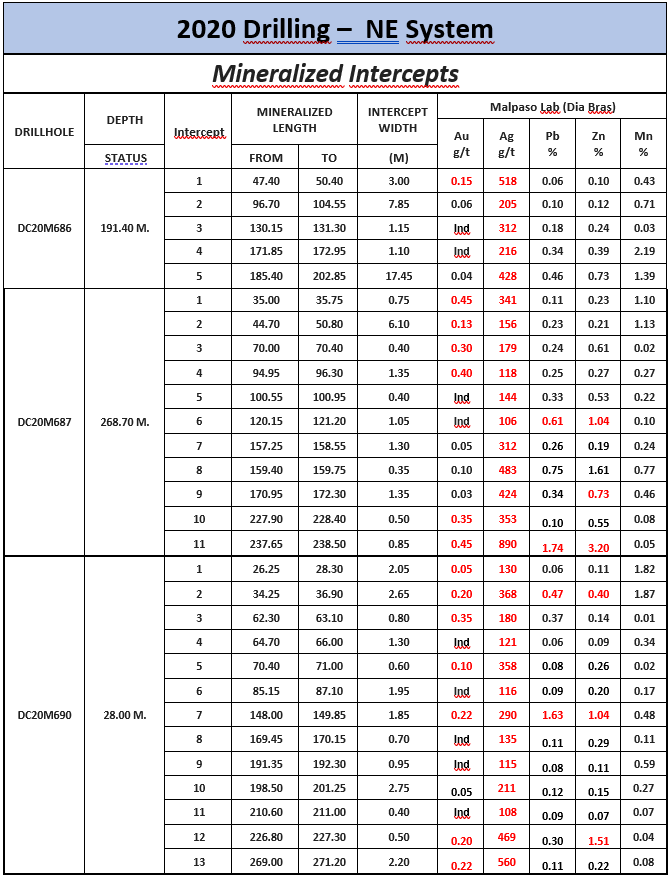
The new high-grade silver vein system was discovered as a consequence of a combination of mine development work in recent months and confirmatory drilling which is reported in this press release which includes true widths of 17.45 meters of 428 g/t silver (464 g/t silver equivalent), 9.35 meters of 304 g/t silver (327 g/t silver equivalent), 8.75 meters of 303 g/t silver (322 g/t silver equivalent) and 4.90 meters of 1,140 g/t silver (1,163 g/t silver equivalent).

Sierra Metals announced with a press release on June 29, 2018 the discovery of a 40-meter wide high-grade stockwork area within the Santa Rosa de Lima vein at Cusi.  As the area was developed for mining in the later part of 2019 and early 2020, our geologists re-interpreted the stockwork structure as a series of high-grade veins that had an orientation perpendicular to the Santa Rosa de Lima Structure.  The most important implication of this re-interpretation is that rather than a widening of the Santa Rosa de Lima zone, these veins extended further to the North East side of the Cusi fault, which was considered barren of silver mineralization before. Note that the Cusi fault coincides with The Santa Rosa de Lima structure. All the historic silver mineralization at the Cusi mine reported by Sierra Metals was in the South Western side of this regional fault.  The new discovery is an extension of the Cusi Vein systems in the North East of the fault and, rather than barren, the veins are reporting silver grades and widths above the average of the structures previously known at the mine in the South West to the Cusi fault.      

The Company has plans to drill an additional 1,000 meters to better understand the extension of the zone at depth and to Northeast. This mineralized zone is made up of multiple veins extending over 300 meters in length which are in proximity to the existing operations. The Cusi Mine is located within the municipality of Cusihuiriachi in the central portion of the State of Chihuahua, in Mexico. The Mine area encompasses 11,657 hectares at an elevation range of 1,950 to 2,460 meters above sea level in the Sierra Madre Occidental Mountain Range.

Drill Hole Highlights include:

*The metallurgical recoveries used were based on averages obtained from production data provided by Sierra Metals. The metallurgical recoveries used are: 87% Ag, 57% Au, 86% Pb, 51% Zn.

**Metal prices used were based on consensus are: $17.86/Oz Silver, $1,431/Oz Gold, $0.93/lb Lead, and $1.06/lb Zinc.

This exploration program confirms the existence of high-grade silver mineralization and demonstrates the
important potential of this new zone.  It will also allow the Company to use a mining method which results in high
productivity thus achieving the planned objectives for the Cusi Mine”
stated J. Alonso Lujan, Vice President Exploration of Sierra Metals. He continued, “Intercepts such as those shown especially in holes DC20M658, DC20M677, DC20M686 and DC20M687 are common in high-grade epithermal deposits, and demonstrate further potential.  As such, they give us a reason to continue exploration in the Cusi fault area at depth and along strike, as well as at other high-value zones such as the San Rafael, San Nicolas and the Bordo fault. We look forward to an exciting future as we explore the Cusi district”.

Luis Marchese, CEO of Sierra Metals commented, “Today’s drilling results demonstrate the potential for further development of high-grade zones at Cusi. We are excited for further drill results, as they along with today’s results will potentially increases the value of the asset and play an important role in our growth strategy for the Cusi Mine”.

A plan map is shown below of the Cusi area in Figure 1. Figure 2 shows the distribution of the NE – SW System veins.


Figure 1: Cusi Project:  NE – SW System Area


Figure 2:  NE- SW System Veins – Plan View


Cusi Mine Operation Update

The Cusi Mine remained in care and maintenance during the government-mandated shutdowns due to its proximity to urban centers with large populations.  During this period of care and maintenance, the management team has had the time to complete an optimised view of the entire mine operation.  Changes on the interpretation of the geological system have been made based on updated information from a stockwork tonnage system to a vein model system, which is expected to help better control and improve head grades, dilution, and make better use of Cusi’s silver mineral resources.  The Company plans to use a sublevel stoping method for extraction, which is better suited to the rock/mineral environment.  Additionally, the main access ramp has been extended to an opening of four meters by four meters, which will allow for the use of larger 30-ton capacity trucks into the mine and improve the efficiency of ore haulage coming from the mine.

Mine development is currently starting at Cusi in a zone that will bypass the previously announced area of subsidence (see press release dated May 13, 2020) and provide access to higher-grade economic ore to provide feed for the mill.  Cusi production is expected to recommence after the mine development work is completed and once a process can be implemented at the mine to mitigate risk to employees at the site through a testing and quarantine methodology similar to the Company’s other operations. Production will include ore from Santa Rosa de Lima zone, the Promontorio zone, as well as from a series of east-west vein systems including the new zone announced today that cross the Cusi fault near Santa Rosa de Lima zone. Management is targeting a ramp-up to 1,200 tonnes per day by the end of the year, at which point the Cusi mine is expected to become self-sustainable and cash flow positive.

Additionally, during the second half of the year, studies will commence on the potential expansion of Cusi.  Work will begin on a new tailing dam near the Mal Paso Mill, providing for tails deposition capacity for the foreseeable future.  Furthermore, infill drilling will take place at the Santa Rosa de Lima, Promontorio, and San Nicolas zones to improve and build on mineral resources at the mine.  Management also believes there is further brownfield potential in areas not previously explored but which are very close to the Santa Rosa de Lima zone such as those announced earlier in this press release.


Quality Control

The quality assurance-quality control (QA-QC) program employed by Sierra Metals has been described in detail in the NI-43-101 report for Cusi dated June, 2018, prepared by SRK Consulting in Denver, which is available for review on Sedar (Sections 10 and 11). The lithologies logged are used in combination with the assay data to identify mineralization for the geologic model. Both geochemistry and assays feature the analyses for the primary elements to be reported at Cusi (Au, Ag, Pb, Zn).


Qualified Persons

All technical data contained in this news release has been reviewed and approved by Americo Zuzunaga, FAusIMM (CP Mining Engineer) and Vice President of Corporate Planning is a Qualified Person and chartered professional qualifying as a Competent Person under the Joint Ore Reserves Committee (JORC) Australasian Code for Reporting of Exploration Results, Mineral Resources and Ore Reserves.

Augusto Chung, FAusIMM (CP Metallurgist) and Vice President Special Projects and Metallurgy and a chartered professional qualifying as a Competent Person on metallurgical processes.


About Sierra Metals

Sierra Metals is a Canadian based growing polymetallic mining company with production from its Yauricocha Mine in Peru, and it’s Bolivar and Cusi Mines in Mexico. The Company is focused on increasing production volume and growing mineral resources. Sierra Metals has recently had several new discoveries and still has additional brownfield exploration opportunities at all three mines in Peru and Mexico that are within or close proximity to the existing mines. Additionally, the Company has large land packages at all three mines with several prospective regional targets providing longer-term exploration upside and mineral resource growth potential.

The common shares of the Company are listed and posted for trading on the Bolsa de Valores de Lima and on the Toronto Stock Exchange under the symbol “SMT” and on the NYSE American Exchange under the symbol “SMTS”.

For further information regarding Sierra Metals, please visit www.sierrametals.com or contact:


Mike McAllister, CPIR

VP, Investor Relations

+1 (416) 366-7777

[email protected]
J. Alonso Lujan

Vice President, Exploration

+51 630-3100

+52 614-426-0211
Luis Marchese

CEO

+1 (416) 366-7777


Continue to Follow, Like and Watch our progress:

Web: www.sierrametals.com | Twitter: sierrametals | Facebook: SierraMetalsInc | LinkedIn: Sierra Metals
Inc
 | Instagram:sierrametals


Forward-Looking Statements

This press release contains “forward-looking information” and “forward-looking statements” within the meaning of Canadian and U.S. securities laws (collectively, “forward-looking information“). Forward-looking information includes, but is not limited to, statements with respect to the date of the 2020 Shareholders’ Meeting and the anticipated filing of the Compensation Disclosure. Any statements that express or involve discussions with respect to predictions, expectations, beliefs, plans, projections, objectives, assumptions or future events or performance (often, but not always, using words or phrases such as “expects”, “anticipates”, “plans”, “projects”, “estimates”, “assumes”, “intends”, “strategy”, “goals”, “objectives”, “potential” or variations thereof, or stating that certain actions, events or results “may”, “could”, “would”, “might” or “will” be taken, occur or be achieved, or the negative of any of these terms and similar expressions) are not statements of historical fact and may be forward-looking information.

Forward-looking information is subject to a variety of risks and uncertainties, which could cause actual events or results to differ from those reflected in the forward-looking information, including, without limitation, the risks described under the heading “Risk Factors” in the Company’s annual information form dated March 30, 2020 for its fiscal year ended December 31, 2019 and other risks identified in the Company’s filings with Canadian securities regulators and the United States Securities and Exchange Commission, which filings are available at www.sedar.com and www.sec.gov, respectively.

The risk factors referred to above are not an exhaustive list of the factors that may affect any of the Company’s forward-looking information. Forward-looking information includes statements about the future and is inherently uncertain, and the Company’s actual achievements or other future events or conditions may differ materially from those reflected in the forward-looking information due to a variety of risks, uncertainties and other factors. The Company’s statements containing forward-looking information are based on the beliefs, expectations and opinions of management on the date the statements are made, and the Company does not assume any obligation to update such forward-looking information if circumstances or management’s beliefs, expectations or opinions should change, other than as required by applicable law. For the reasons set forth above, one should not place undue reliance on forward-looking information.