Energy Sector in Rapidly Growing Indonesia

A Primer On The Indonesian Energy Industry

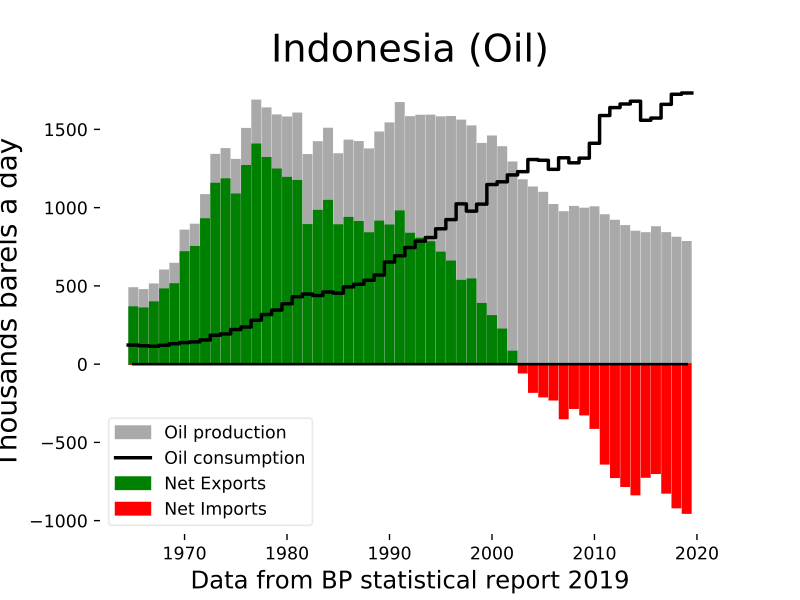
Indonesia has a long history of energy production, dating back to the first oil discovery in 1883.  Indonesia’s oil and gas output is contracting as aging fields, and project delays keep production levels below government targets.  The largest fields in Indonesia (Chevron’s Rokan PSC and Pertamina’s Mahakam block) are prime examples of the decline.  At the same time, demand is growing as the Indonesian economy continues to grow at a rate of twice the global average.  The result is a growing reliance on oil imports. A similar story can be told regarding Indonesian gas production and demand at a time when gas imports are being pressured by a more competitive LNG market.


The impact on the government is significant

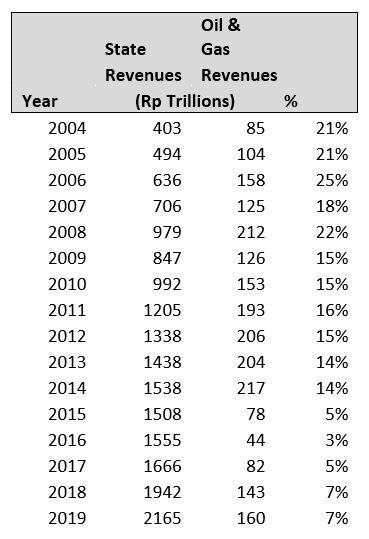
The Indonesian government is reliant on the energy industry to support its budget.  Traditionally, the energy industry has contributed around 20% of revenues, but that number has fallen into the single digits in recent years in response to decreased production and lower energy prices.  Government officials are well aware of the risks it faces from decreased energy investment and is very supportive of future investments.


The Government is Responding.

Price Waterhouse Coopers (PWC) says existing contractors are losing interest in further exploration in Indonesia due to regulatory instability and an uncertain investment climate. The state oil and gas company, PT Pertamina, is working to reduce the red tape.  In addition, it has introduced a “Gross Split Scheme” that improves the economics of investing in new energy fields.  The Gross Split Scheme replaces Law No. 22, which allowed for cost recoveries but allowed investors recovery of costs but mandated government control of upstream and downstream activities.  The Gross Split Scheme will enable producers to earn higher returns if production levels surpass mandated levels or if energy prices rise.

What Does the Future Hold for the Energy Industry in Indonesia?

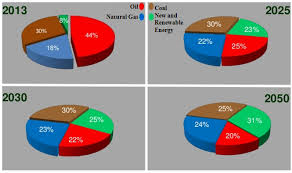
Forecasts call for the overall demand for energy to continue to grow at a rapid pace.  Indonesia’s population growth is 1.1%, and the GDP is growing at a 5.6% rate.  The government continues to pursue the expansion of the country’s electric grid, and that is resulting in strong energy demand.  Renewable energy will increase in importance as it will in most countries.  Projections show renewables largely eating into oil’s market share as coal and natural gas hold market share.


Source: www-pub.iaea.org


What does this mean for investors?

To support a diversified energy portfolio without becoming overly reliant on oil imports, Indonesia will need the oil industry to continue to expand.  It is supporting the industry but still somewhat wary of outside investors.  Local companies directly investing in Indonesian energy assets are in a good position to benefit from recent government changes.

Suggested:

Attend
Channelchek’s
Indonesia Energy Corp.(INDO)
Virtual Road Show on Wednesday July 8, 1:00PM EST


Sources:

https://www.reuters.com/article/indonesia-oil-gas-production/indonesias-new-law-to-take-years-to-reverse-oil-and-gas-output-slump-idUSL4N2AL0OF, Fathin Ungku, Reuters, February 24, 2020

https://www.pwc.com/id/en/energy-utilities-mining/assets/oil-and-gas/oil-gas-guide-2019.pdf, PWC, September 2019

https://www.indonesia-investments.com/business/commodities/crude-oil/item267, Indonesia-Investments,

https://theenergyyear.com/market/indonesia/, The Energy Year

https://www.trade.gov/energy-resource-guide-indonesia-oil-and-gas, International Trade Administration, 2020

https://www.iea.org/countries/Indonesia, iea, June 2020

https://www.esdm.go.id/assets/media/content/content-indonesia-energy-outlook-2019-english-version.pdf, Secretariat General National Energy Council, Indonesia Energy Outlook 2019.

Covid-19, Scary vs. Dangerous

Vacations, Viruses, and Vantage Points

My ex-wife would not get on a plane. She was certain, if we flew, she would die. Together we found other ways to make the planet our playground workarounds that might scare someone with alternative fears. We’d drive 1200 miles with no sleep, keeping pace with speeding 18-wheelers. Some weekends we’d bicycle the steep inclines in the Pennsylvania mountains. Summers we’d cruise for weeks at a time from as far north as Boston, to as far south as Cape May.  On these vacations, she was completely at-ease, paying no mind to the statistical risk, road conditions, sea conditions, or impossibility of stopping a speeding bike while descending down a mountain. She didn’t perceive any of these workarounds as potentially deadly. She would not, however, get on a commercial aircraft, “too dangerous” for her.

Distortion of risk in one’s mode of travel is not unusual.  As a person who models investment probabilities, I find this distortion of probabilities and others worth exploring.  We are now halfway through 2020, a year marked by fear and panic surrounding the dangers of Covid-19.  Measuring then categorizing the risk to health has been tricky; our increased understanding of the disease helps.

Covid-19 Concerns

The novel coronavirus that is the cause of this pandemic has been, for 130,000 Americans, deadly.  So, awareness and precautions for individual safety and the well-being of others are prudent. But, the risk of the average person dying compared with the perceived danger may not match. After all, we deal with much deadlier diseases every day without immersing ourselves in concern. We live with the idea that cancer, diabetes, and heart disease each kill far more people a day than coronavirus. Even snakes kill 137 people a day. We are not up in arms clamoring to stay inside until we eradicate snakes. So why is the Covid-19 reaction so extreme?  One answer is similar to fear of your plane crashing. When a plane does go down, the story is intensely reported by the media, traditional and social. This exposure causes the risks inherent in flight to feel very high and scary. We know by measuring actual cases that the danger of flight isn’t greater than being killed by, let’s say, the next mosquito we encounter. And yet, we don’t lock ourselves in our homes based on the death risk from mosquitos. Concern surrounding Covid-19  for some is that they will catch it and die. Others don’t want to be infected as they may spread it to someone else who may have a bad outcome. For others, the concern is that the danger or fear will dramatically alter their life, business, family, recreation, travel, etc. There are also people who fear that people they know are at great loss resulting from the reaction to perceived danger.

For now, the historically unprecedented lockdowns and economic sedation continue with very little argument. From discussions I have had, it seems that a significant portion of the population has come to believe that this coronavirus is one of the scariest things the human race has ever dealt with. It is definitely a little scary; it is, after all, it’s invisible, but is it dangerous? Could it be that a large portion of the population may be confusing “scary” with “dangerous.” They are not the same thing.

Covid-19 Dangers

There are four ways to categorize different realities. A situation can be:

  • Scary, but not dangerous
  • Scary and dangerous
  • Dangerous, but not scary
  • Not dangerous, not scary

COVID-19 continues to rank high in the scary category. I’m sure that the radio station I listen to is like many others throughout the country; it alerts me every 20 minutes of new cases. TV news, Facebook, and Twitter bombard us with relentless new case tallies without context. This magnified information, as with a single plane crash, impacts the population’s psyche. A Google search of the word “COVID-19” retrieves over 5.8 billion results. We’re surrounded by scary stories from those that are far too closer to home. To date, the virus has cut short the lives of a growing number of citizens. But is it very dangerous? On a scale of harmless to extremely dangerous, it would still fall into the category of slightly dangerous for by most definitions, (excluding the elderly and those with ill-health).


Google Trends
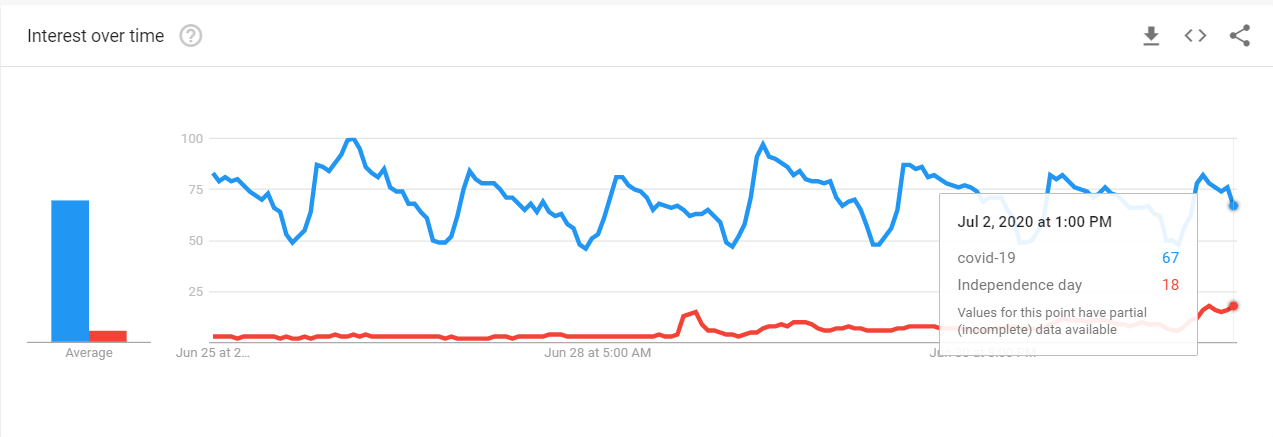
Approaching July 4th
weekend, Google Trends shows the term “Covid-19” being used 375% more than the
term “Independence Day.”

By comparison, there are more dangerous risks. Many give little thought to heart disease, which is the leading cause of death in the United States, killing around 650,000 people every year, 54,000 per month, and 324,000 people at the 2020 mid-year mark. This qualifies as extremely dangerous. Yet, most people are not very frightened at all.

Lives are improved for those that can distinguish between fear and danger. It doesn’t matter if it is fear of getting on a plane or boat or unwillingness to leave one’s house during this health situation. Fear is an emotion; it’s a perception of risk. As an emotion, the most important facts often don’t enter an individual’s calculation. Media hype blurs reality even more.

What if the top analysts at FICO adopted much stricter standards because they felt (emotionally) lending suddenly became much scarier, even if trends and other metrics they follow didn’t support the fear?  This would impact the ability of borrowers to get loans, rates on loans, and the overall freedom of innocent people would change because a few people are scared, without supporting data. Imagine if an insurance actuary with a personal fear then grading the risk of something 1,000 times riskier than the measured data indicates. This would unnecessarily have a negative impact on the business and those seeking insurance. This is exactly what people have done regarding COVID-19: decisions based on fear and perception of danger even though data is now available.

Covid-19 Data

According to CDC data, 81% of deaths from COVID-19 in the United States are people over 65 years old, most with preexisting conditions. If 55-64-year-olds are added in, that number jumps to 93%. For those below age 55, preexisting conditions play a significant role, but the death rate is currently around 0.0022% or one death per 45,000 people in this age range. Below 25 years old, the COVID-19 fatality rate is 0.00008%, or roughly one in 1.25 million. Fear, not data, is impacting all industries and every aspect of life. For instance, the perceived danger is keeping schools and daycare centers closed. This makes it harder for mothers and fathers to remain employed and daycare centers to not close forever.

All human death is tragic. But are we allowing feeling scared to dictate decisions when it leads to taking resources away from areas that are more dangerous, but not as scary, and allocate them to areas that are scary, but less dangerous? At times, this is what is being done. Hospitals and medical practices have had to be very selective in the patients they treat; this is done to allow for beds, if needed, for Covid-19 patients, this has severely reduced surgical procedures. In the weeks following the first stat-at-home guidance, cervical cancer screenings were down 68%, cholesterol panels were down 67%, and diabetes blood sugar tests were off 65% nationally.

The U.N. estimates that infant mortality rates could rise by hundreds of thousands in 2020 because of the global recession and diverted health care resources. Add in opioid addiction, alcoholism, domestic violence, and other detrimental reactions from job loss and despair and the price of attributing excessive danger to the Covid-19 response can be viewed as unfortunate and even tragic.

Any benefits gained through this fear-based shutdown have massively increased dangers in both the short term and the long term. Every day that businesses are shuttered while people remain unemployed or underemployed, the economic wounds grow more deadly, and the scars more permanent. The loss of wealth is immense, and this will undermine the ability of nations around the world to deal with true dangers for decades to come.

Shutting down the private sector (which is where all wealth is maintained and created) is truly dangerous even though many of our leaders suggest we shouldn’t be scared to do it. Even stimulus plans are like a Band-Aid on a massive laceration, it may stop a tiny bit of the bleeding, but the wound continues to worsen, as it worsens, another inadequate Band-Aid is applied until you one day run out. Moreover, we are putting huge financial burdens on future generations because we are scared about something that the data reveal as far less dangerous than many other things in life. Putting this monstrous bill on the yet-to-be-born is an ethical decision that a country that stands against taxing the unrepresented should not take lightly.

Take-Away

Although there may be workarounds to the overblown fear that does not correlate to the risks in a given situation, unnecessary decisions compared to rational decisions are at best inefficient. A shutdown may change the pace of the spread of a virus, but it won’t stop it. A vaccine may immune us, an effective one may never be created. What then? In the meantime, we have entered a odd era, one in which fear overrides danger, and near-term risk creates long-term problems. More people are starting to come to this realization as the data builds. Hopefully, lessons are learned, and in the future, reality becomes the chief guide in steering decisions of this magnitude.  

Paul Hoffman

Managing Editor

SuggestedReading:

Reconciling CoVID-19 with Statistics-101

Michael Burry Says Covid-19 Cure Worse than disease

Virtual Road Show Series – Channelchek

Enjoy Premium
Channelchek Content
 at No Cost

Sources:

Plane
Crash Fatalities

USCG
Boat Safety Statistics

How Safe is Commercial Flight

Cyclist Fatality Rate

Cancer Statistics

Coronavirus Death
Toll

How Many People Has Covid-19 Killed?

AHA Hospital Statistics

Amazon Prime Video’s Move To Go Linear

Traditional TV Stations Ready to Sign-off?

Amazon raised eyebrows in the broadcast and entertainment industry by posting job openings for a product manager and marketing personnel for linear broadcast TV content. What? Why does a subscription service that aggregates content, in some cases, original content, want to get into linear television? By the way, linear television is the traditional broadcast network model whereby viewers watch television programs, which air at specific times. Is this a shot across the bow of the broadcast television industry?

We think so. Amazon has signaled that it is interested in providing 24/7 streaming of sports, news, movies, award shows, special events, and TV shows, including live shows. Live content, including sports, news, and award shows, has been the domain of the traditional broadcast networks. While TV ratings have been on the decline for years, the traditional networks still aggregate very large audiences. But, Amazon has become such a powerful size that it may begin to compete for a slice of those viewers.

Take, for instance, the Academy Awards. Last year, 23.6 million viewers watched the Academy Awards show, but the number of viewers was half of the viewership in 2000. With the decline in ratings, Amazon could be in shouting distance to compete for rights to the show. To put this into perspective, Amazon Prime has 112 million subscribers, up nearly 18% from a year ago. According to Nielsen’s National Television Household Universe, there are 120.6 million TV homes in the U.S.

What does the move toward linear television say about the VOD (Video on Demand) subscription model? Could the next Academy Awards Show be on a streaming Amazon channel? Amazon appears to be moving toward a broader streaming model that goes beyond movies and episodic “TV” programming. In expanding content into live programming, news, awards shows, and sports, it broadens the appeal of its subscription service with robust and rich content.  Furthermore, it differentiates its service from the myriad of other subscription VOD services, which may have limited content offerings, mostly movies, for instance. Assuming that Amazon will be able to aggregate large audiences, it is possible that it will be successful in licensing sports contracts and award shows away from the traditional broadcast networks. As such, the strategy could be the means to keep its subscriber count growing. Is this a sign that free “over the air” programming is over? It is possible if Amazon is successful in obtaining licensing deals on marquee content, like the Academy Awards, or even the Olympics, away from the traditional networks.

Stay tuned…


Suggested Reading:

Weaning
America off Unemployment Insurance

Will There be an
Explosion of New Acquisitions?

The Limits of Government
Tinkering


Enjoy Premium Channelchek Content at No Cost


Sources:

Amazon Job Postings

Ely Gold Royalties (ELYGF)(ELY:CA) – Still Early Days in an Emerging Growth Story

Wednesday, July 1, 2020

Ely Gold Royalties (ELYGF)(ELY:CA)

Still Early Days in an Emerging Growth Story

As of April 24, 2020, Noble Capital Markets research on Ely Gold Royalties is published under ticker symbols (ELYGF and ELY:CA). The price target is in USD and based on ticker symbol ELYGF. Research reports dated prior to April 24, 2020 may not follow these guidelines and could account for a variance in the price target. Ely Gold Royalties Inc is an emerging royalty company with producing and development assets focused in Nevada and the Western US. It offers shareholders a low-risk leverage to the current price of gold and low-cost access to long-term gold royalties.

Mark Reichman, Senior Research Analyst of Natural Resources, Noble Capital Markets, Inc.

Refer to the full report for the price target, fundamental analysis, and rating.

    Gold prices continue to strengthen. Year-to-date, the gold futures price has increased 17.2% to close at $1,799.30 per ounce on June 30 and is up 12.7% since the end of the first quarter. In our view, the outlook for gold remains favorable based on U.S. and global monetary and fiscal policies that support gold as a store of value. Gold’s safe haven appeal has increased due to economic concerns caused by a resurgence of COVID-19 cases and geopolitical frictions, including China and Hong Kong. Ely Gold offers shareholders leverage to gold prices through its growing portfolio of long-term gold royalties.

    Early days in the Ely Gold Royalties growth story. Junior royalty companies generally offer greater growth and higher returns during their early years. Ely has announced 12 transactions in 2020 and has ample financial flexibility for additional …


    Click to get the full report.

This Company Sponsored Research is provided by Noble Capital Markets, Inc., a FINRA and S.E.C. registered broker-dealer (B/D).

*Analyst
certification and important disclosures included in the full report. 
NOTE: investment decisions should not be based upon the content of
this research summary.  Proper due diligence is required before
making any investment decision.
 

More Accurate than Polls to Gauge Election Outcomes

More Accurate than Polls to Gauge Election Outcomes

Many television pundits track polls to gauge which candidates are the front-runners in their race. However, as seen during the last Presidential election, the most commonly viewed polls are unreliable. This should not come as a surprise, if you think about it, in the months leading up to an election the pundits are using information that asks, “Who would win today?” Which is all polls accomplish. The answer they seek is, “Who would you vote for before being influenced by advertising?”  Advertising matters and the level of a campaign’s cash has highly predictive outcomes.

So, what do we know from past elections? How will this Presidential election play out? Will the House remain Democratic? Will the Senate remain Republican? Has the Trump train be derailed?  For higher predictive accuracy than polls, the first step in addressing these questions is determine who is ahead in fundraising.

 President Trump has a current total lead in cash on hand with $287 million versus Joe Biden’s campaign at $215 million. Here’s why these numbers are important.  Historically, the candidate with the most cash to spend on advertising comes out on top. Depending upon whether it is a House, Senate, or Presidential race, the candidate with the largest war chest wins between 83% and 97% of the time.  While current polling data suggests that Biden would win if the election were held today, this is not forward looking.  Future spending on advertising will dramatically increase for all candidates as we approach election day. It’s likely that the results from the polls will be altered in the upcoming weeks as candidates spend on advertising.

Critics of following the money may point to the anomaly with the 2016 contest between Hillary Clinton and Donald Trump. Clinton was a fundraising machine while Trump was late to the fundraising effort, leaving him bested by Clinton. So, how did he beat the probabilities?  In short, the media. Trump may have been outmatched in funding by the Clinton campaign, however he received an unprecedented high rate of “free advertising” due to his constant news coverage. Media viewers are attracted to controversy, which Trump consistently offered. This resulted in media companies featuring him far more than his opposition so they would reap the benefits increased audience numbers. The spending on advertising on Presidential elections has increased 17% per year since 2000. Clinton mis-stepped not in lack of money spent, but by not spending in the advertising markets she thought she would carry. This allowed the eventual victor to win on the grassroots level by hosting rallies that drew media attention. Ultimately, it was the rallies magnified by the media that carried Trump to the White House.

Recently, former Vice President Biden has been narrowing the fundraising gap. Although the President remains on top with cash available, the $287 million cash pile has been acquired over the past three years; of that only $97 million was raised this past year. Biden has raised all his $215 million in this past year alone. Biden closing in on Trump’s cash war chest could be a troubling sign for the President. For this reason, it is not surprising that Trump has gone back to the playbook from 2016 and stepped up the attention grabbing rallies. Biden’s demeanor is less attention grabbing, for this reason it’s not surprising that he is running a virtual campaign. This lower media attention, both from a smaller war chest and less interested media, places the probability of a Trump over Biden victory very high.  The on-air minutes that will impact voters most, even if they don’t know it yet.

What about the House and Senate races? Following the money in Congress has even higher predictive ability. Currently, Democrats have raised $346 million versus the Republican’s $248 million for reelection races. This is important since 35 of the 100 seats are up for election in the Senate race. In the House of Representatives Republicans have raised $178 million outfunding the $74 million raised by the Democrats. For these reasons, we believe that the Democrats will maintain majority of the House, and likewise with Republicans in the Senate.

Election season, both local and national can increase advertising profits for media companies. Money and media time have a much higher predictive ability than polls. Polls tell you what people are thinking when they are taken. Money to be spent before election day and media exposure determines who the contest will go to on election day.

Suggested Content:

Can
the Market Continue to Defy Gravity?

Bush
Gives Trump an “F” – Jeb Bush Fireside Chat at Noble Investor Conference

Crisis
Management from the Oval Office

Enjoy Premium Channelchek Content at No Cost

Virtual Roadshows Are the New Normal

Self-Directed Investors Get Unexpected Benefit from Lockdown

The advantages of virtual roadshows and other virtual investor relations events are greater than anyone would have guessed prior to Covid-19. These events offer a high degree of flexibility, lower costs for all involved, allows for increased frequency of meetings, and much broader inclusion. With all the benefits, these virtual events should remain a staple of the business world long after the virus risk has passed.

Broader Inclusion

Up until earlier this year, executives regularly made the rounds traveling to major financial centers telling their corporations’ stories to potential investors. In order to get the most from their valuable time and travel costs, the number of cities visited was necessarily limited.  The typical roadshow stops may have included New York and Boston on the East Coast, Chicago in the Midwest, and Los Angeles and San Francisco on the West Coast.  The stops would never include small towns inside or outside the U.S. Now they present everyplace there is an internet connection, including your living room or mine, regardless of where we live. They can be attended by investors of any level that are interested. This is clearly positive for the presenting executive, but it is also a big win for the out-of-the-way professional asset manager – and also the self-directed investors who never would have been able to listen and ask questions of management before.

Saves Resources

Management can now be far more productive under the new process, where they’re no longer balancing travel and logistical issues. They can focus more on virtual meetings and interacting with investors from around the world. And since time is conserved by reporting from their home or office rather than catching planes from one meeting to the next, far more interactions can be had in fewer days. What’s more, the Interactions are often with people they would never have benefitted from meeting with in the past. 

Lower cost

Two executives traveling from the East Coast to the West Coast for a week of meetings could cost $10,000 or more. This takes into account flights, hotels, car rides, and restaurants. For the management of firms who regularly meet with investors, the cost adds up over the year. Under the new virtual roadshow model, the dollars that were wasted can now be more productive by going toward company-sponsored research or other priorities in the IR budget.

The cost of time out of the office is less of an exact measure, but could even be higher than what is spent on travel. Additionally, the time an executive is not away from home and family is also an intangible benefit. Time in transit can now be used toward more productive purposes at the company, with customers, or simply to rest and recharge.

Increased Flexibility

The pandemic has proven the importance for public companies to have a disaster recovery plan-B for investor communications.  Companies that had existing virtual capabilities in place or those that pivoted to them quickly have benefited from maintaining “face-to-face” contact during a period of heightened investor uncertainty.

Virtual roadshows are likely to remain the dominant means of meeting investors in-person, while traditional meetings are likely to be left for special circumstances. Both investors and executives understand the benefits of engaging in this way.

Take-Away

The need for management to maintain uninterrupted communications with investors has never been stronger as we manage through unprecedented disruption of businesses. The advantages to open communication is obvious. Executives can meet with more investors while their resources, including time and money, can be redeployed for greater gain. Companies waiting for conditions to change rather than adopting this technology or partnering with a firm that offers it are falling behind.

Investors, particularly those outside of the normal roadshow or conference centers, and self-directed investors that never received attention from management are the big winners. Virtual financial events place them on a more level playing field. This creates a situation where investors, companies, and the overall market is benefitting.


Suggested Reading:

Virtual Road Show Series – Channelchek

Will there be an Explosion of New Acquisitions?


Enjoy Premium Channelchek Content at No Cost

Orion Group Holdings (ORN) – Additional Work Awarded. Outlook Remains Favorable.

Tuesday, June 30, 2020

Orion Group Holdings (ORN)

Additional Work Awarded. Outlook Remains Favorable.

Orion Group Holdings, based in Houston, Texas, is a specialty construction company within the Marine and Industrial Construction sectors, with operations focused in the continental United States and Caribbean. Revenue is split roughly 50/50 between a Marine Construction segment that provides marine facility, pipeline and structural construction services and a Commercial Concrete segment that provides turnkey concrete services in the light commercial and structural construction markets.

Poe Fratt, Senior Research Analyst, Noble Capital Markets, Inc.

Refer to the full report for the price target, fundamental analysis, and rating.

    Dredging award announced by US Army Corp of Engineers (USACE) late last week. ORN was awarded a $14.65 million contract for pipeline dredging in Port Mansfield, Texas. Bids were solicited via the internet with three received, and the contract was published on the Department of Defense web site. ORN has not yet issued a press release on the work, which has an estimated completion date of March 1, 2021.

    Risk to existing projects is moderating. Despite moves to curb the spread of COVID-19, work in Seattle continues on the Terminal 5 upgrade and the Fairview Avenue North bridge replacement. Also, the solid rebound in crude oil prices also dampens some risk on…


    Click to get the full report.

This Company Sponsored Research is provided by Noble Capital Markets, Inc., a FINRA and S.E.C. registered broker-dealer (B/D).

*Analyst
certification and important disclosures included in the full report. 
NOTE: investment decisions should not be based upon the content of
this research summary.  Proper due diligence is required before
making any investment decision.
 

Seanergy Maritime (SHIP) – Reverse Stock Split Effective. Adjusting Estimates and Price Target.

Tuesday, June 30, 2020

Seanergy Maritime (SHIP)

Reverse Stock Split Effective. Adjusting Estimates and Price Target.

Seanergy Maritime Holdings Corp., an international shipping company, provides marine dry bulk transportation services through the ownership and operation of dry bulk vessels. Seanergy Maritime Holdings Corp. is the only pure-play Capesize shipping company listed in the US capital markets. Seanergy provides marine dry bulk transportation services through a modern fleet of 10 Capesize vessels, with total capacity of approximately 1,748,581 dwt and an average fleet age of about 9.8 years. The Company is incorporated in the Marshall Islands with executive offices in Athens, Greece and an office in Hong Kong. The Company’s common shares trade on the Nasdaq Capital Market under the symbol “SHIP” and class A warrants under “SHIPW”.

Poe Fratt, Senior Research Analyst, Noble Capital Markets, Inc.

Refer to the full report for the price target, fundamental analysis, and rating.

  • Another reverse stock split is set for today, June 30th. While the deadline to cure the NASDAQ listing deficiency notice is not until late-September 2020, a 1 for 16 reverse stock split became effective today, June 30th, to meet listing requirements. As a result, the number of shares outstanding will drop to 30.0 million from 480.0 million. Based on yesterday’s closing price, the adjusted stock price is $2.52/share.
  • We Maintain our Outperform rating. Our new adjusted price target is $8.00/share. While the dry bulk market is recovering following severe weakness, dilution from recent equity offerings is significant and financial leverage remains high. Despite these challenges, we believe that dry bulk market recovery is likely to extend into….


    Click to get the full report.


This research is provided by Noble Capital Markets, Inc., a FINRA and S.E.C. registered broker-dealer (B/D).

*Analyst
certification and important disclosures included in the full report. 
NOTE: investment decisions should not be based upon the content of
this research summary.  Proper due diligence is required before
making any investment decision.
 

Raw Materials and the Scalability of Tesla’s Vision

BATTERIES INCLUDED – Tesla’s EV Revolution and Materials Suppliers

While Tesla is perhaps best known for its electric cars, its solar panel, solar roof, and Powerwall product offerings make it a leader in advancing and commercializing distributed energy technologies. The key to its products is raw materials. Because batteries are a central part of the electric car revolution, Tesla has been working to optimize the design of its batteries to achieve high energy density at decreasing costs while maintaining safety, reliability, and increasing longevity. At the company’s Gigafactory in Nevada, Tesla works with suppliers to integrate battery material, cell, module, and battery pack production in one location. The company may scale up its factories using automated manufacturing processes to reduce labor costs and increase scale.  While electric vehicles are in their infancy, improved battery technology could be key to increased customer adoption, much as improved battery technology helped expand the market for mobile communications.

What are the Components of an EV Battery?

Most electric vehicle batteries are lithium-based and include a mix of cobalt, manganese, nickel, graphite, and other components. Based on the growth potential, many companies are researching different battery chemistries to optimize battery technologies using components that are the most widely available at the lowest cost. For example, the Democratic Republic of Congo supplies roughly 60% of the global supply of cobalt. This is problematic for many companies, given that the DRC has a poor human rights track record. Many companies, including Tesla, are thinking hard about the importance of securing future supplies of raw materials and how their supply chains are configured. In the past, Tesla has committed to sourcing materials only from North America for its battery production facility. Battery supplier LG Chem claims to have stopped using conflict-sourced cobalt and seeks to produce cathodes with lower proportions of cobalt such as 80% nickel and 10% cobalt, known as NMC 811. Tesla now produces nickel-cobalt-aluminum (NCA) batteries with Panasonic in Nevada and purchases NMC batteries from LG Chemical. Tesla’s first Model S, launched in 2012, was built with an average of 11 kilograms of cobalt per vehicle. The Model 3, launched in 2018, used about 4.5 kilograms of cobalt. The reduction was achieved using nickel-cobalt-aluminum chemistry.  Earlier this year, Tesla executed an agreement with Contemporary Amperex Technology Co. Ltd. (CATL) to supply batteries for the Model 3 produced at the company’s Gigafactory in Shanghai where cars are produced for the local market. 

What Could Disrupt Tesla’s Vision?

The United States is increasingly dependent on imports to meet its raw materials. China now dominates the production of many critical minerals, including graphite and magnesium. China is the third-largest supplier of natural resources to the United States behind Canada and Mexico. While Australia accounts for over 40% of global lithium production, China has been increasing its influence in the global lithium market by making deals to secure future supplies. As mentioned earlier, the DRC is the largest source of cobalt supplies. As part of a strategy to ensure secure and reliable supplies of critical minerals, the U.S. Department of the Interior identified 35 critical minerals, including aluminum (bauxite), cobalt, graphite, and lithium. Tesla executives have expressed concerns about underinvestment in the mining sector and its impact on future supplies of nickel, copper, and other electric-vehicle battery components. Securing long-term supplies of critical raw materials will help protect both the United States and Tesla’s ability to lead in distributed energy advancements.  

What Will Be Tesla’s Big Reveal?

While we expect Tesla to showcase advancements in its battery and powertrain technologies, we think investors will also want the company to address its plans for sourcing key raw materials and designing its supply chain to avoid disruption. Tesla’s products use various raw materials, including aluminum, steel, cobalt, lithium, nickel, and copper. The prices for these materials fluctuate, and supplies may be unstable depending on market conditions and global demand for these materials.  Assuring reliable supplies of raw materials while meeting ethical considerations with respect to sourcing, meanwhile advancing a battery design that minimizes environmental impact, may be just as important as the battery’s commercial aspects. Recycling may also be a theme in addition to integrating the car battery with the electric grid and Tesla’s other products, including the Powerwall.  Tesla’s “Battery Day” (September 15), which should unveil new battery technologies,  could also be the catalyst for investors to begin paying more attention to long-term supply and demand trends for the materials that underpin its products.    


Suggested Reading: 

Virtual Power Plants and Tesla Car Batteries

Is
Elon Musk’s Battery Day Losing its Charge?

Cobalt and Rare Earth Metals from the Ocean Floor Eyed to Meet Growing Battery Demand


Enjoy Premium Channelchek Content at No Cost


Sources:

Annual
Report
, Form 10-K, Tesla, Inc., Fiscal Year Ended 2019.

Electric Vehicle Batteries:  Materials, Cost, Lifespan, Union of Concerned Scientists, March 9, 2018.

The
World’s Biggest Cobalt Producing Countries
, NS Energy Staff Writer, May 4, 2019.

A Million Mile Battery from China Could Power Your Electric Car, Bloomberg, John Liu, Chunying Zhang, Martin Ritchie and David Stringer, June 7, 2020.

A Federal Strategy to Ensure Secure and Reliable Supplies of Critical Minerals, Executive Office of the President, December 20, 2017.

Final List of Critical Minerals 2018, Office of the Secretary, Interior, May 18, 2018.

The New Energy Era:  The Impact of Critical Minerals on National Security, Markets Insider, Nicholas LePan, April 28, 2020.

Cutting Battery Industry’s Reliance on Cobalt will be an Uphill Task, The Guardian, Jasper Jolly. January 5, 2020.

Tesla Expects Global Shortage of Electric Vehicle Battery Minerals, Reuters, Ernest Scheyder, May 2, 2019.

Tesla’s
Secret Batteries Aim to Rework the Math for Electric Cars and the Grid
, Reuters, Norihiko Shirouzu and Paul Liebert, May 14, 2020.

Seanergy Maritime (SHIP) – 1Q2020 Numbers In Line. Positioned for 2H2020 Recovery

Monday, June 29, 2020

Seanergy (SHIP)

1Q2020 Numbers In Line. Positioned for 2H2020 Recovery

Seanergy Maritime Holdings Corp., an international shipping company, provides marine dry bulk transportation services through the ownership and operation of dry bulk vessels. Seanergy Maritime Holdings Corp. is the only pure-play Capesize shipping company listed in the US capital markets. Seanergy provides marine dry bulk transportation services through a modern fleet of 10 Capesize vessels, with total capacity of approximately 1,748,581 dwt and an average fleet age of about 9.8 years. The Company is incorporated in the Marshall Islands with executive offices in Athens, Greece and an office in Hong Kong. The Company’s common shares trade on the Nasdaq Capital Market under the symbol “SHIP” and class A warrants under “SHIPW”.

Poe Fratt, Senior Research Analyst, Noble Capital Markets, Inc.

Refer to the full report for the price target, fundamental analysis, and rating.

  • 1Q2020 operating results largely in line with recently revised estimates. Reported EBITDA was $1.0 million, TCE rates were $8.5k/day and the net loss was $0.31/share. TCE revenue of $7.6 million was about $0.4 million below expectations due to a $500/day shortfall in TCE rates of $8.5k/day versus our estimate of $8.9k/day. TCE rates were about $3,912/day above the Baltic Cape Index (BCI) average of $4,569/day in 1Q2020 due to the opportunistic fixing of a rate on one Cape and premiums on charters over the BCI index.
  • Equity issuance improved financial position. Refinancing activity will be high this year and news on capital allocation expected shortly. Close to $50 million of equity was issued this quarter in response to dry bulk market weakness and ahead of bank debt refinancings. Pro forma for….


    Click to get the full report.


This research is provided by Noble Capital Markets, Inc., a FINRA and S.E.C. registered broker-dealer (B/D).

*Analyst
certification and important disclosures included in the full report. 
NOTE: investment decisions should not be based upon the content of
this research summary.  Proper due diligence is required before
making any investment decision.
 

The GEO Group, Inc. (GEO) – Initiating Coverage of The GEO Group

Monday, June 29, 2020

The GEO Group, Inc. (GEO)

Initiating Coverage of The GEO Group

With over 94,000 beds owned, leased or managed across its business lines and serving over 260,000 people daily, GEO is a leading provider of mission critical real estate to its governmental partners. The Company is the first fully integrated equity REIT specializing in the design, financing, development, and operation of secure facilities, processing centers, and community reentry centers in the U.S., Australia, South Africa, and the U.K.

Joe Gomes, Senior Research Analyst, Noble Capital Markets, Inc.

Refer to the full report for the price target, fundamental analysis, and rating.

We are Initiating Coverage on this Company.

    Initiating Coverage. We are initiating research coverage of The GEO Group. GEO enjoys significant growth opportunities across its business segments, in our view. An aging and overcrowded public option needs GEO’s beds to perform its societal function, while GEO’s extensive, and growing, post-release options present another avenue of growth.

    Leading Provider of Mission Critical Real Estate. With over 94,000 beds owned, leased or managed across its business lines and serving over 260,000 people daily, GEO is a leading provider of mission critical real estate to its governmental partners. The Company is the first fully integrated equity REIT specializing in the design, financing, development, and operation of secure facilities, processing centers, and ….


    Click to get the full report.

This Company Sponsored Research is provided by Noble Capital Markets, Inc., a FINRA and S.E.C. registered broker-dealer (B/D).

*Analyst
certification and important disclosures included in the full report. 
NOTE: investment decisions should not be based upon the content of
this research summary.  Proper due diligence is required before
making any investment decision.
 

Dyadic International (DYAI) – Higher Visibility to Emerge after Joining Russell 3000 and 2000

Monday, June 29, 2020

Dyadic International Inc. (DYAI)

Higher Visibility to Emerge after Joining Russell 3000 and 2000

Dyadic International, Inc. is a global biotechnology company which is developing what it believes will be a potentially significant biopharmaceutical gene expression platform based on the industrially proven hyper productive engineered fungus Thermothelomyces heterothallica (formerly Myceliophthora thermophila), named C1.
The C1 microorganism, which enables the development and large scale manufacture of low cost proteins, has the potential to be further developed into a safe and efficient expression system that may help speed up the development, lower production costs and improve the performance of biologic vaccines and drugs at flexible commercial scales. Dyadic is using the C1 technology and other technologies to conduct research, development and commercial activities for the development and manufacturing of human and animal vaccines and drugs, such as virus like particles (VLPs) and antigens, monoclonal antibodies, Fab antibody fragments, Fc-Fusion proteins, biosimilars and/or biobetters, and other therapeutic proteins. Dyadic pursues research and development collaborations, licensing arrangements and other commercial opportunities with its partners and collaborators to leverage the value and benefits of these technologies in development and manufacture of biopharmaceuticals. In particular, as the aging population grows in developed and undeveloped countries, Dyadic believes the C1 technology may help bring biologic vaccines, drugs and other biologic products to market faster, in greater volumes, at lower cost, and with new properties to drug developers and manufacturers, and improve access and cost to patients and the healthcare system, but most importantly save lives.

Ahu Demir, Ph.D., Biotechnology Research Analyst, Noble Capital Markets, Inc.

Refer to the full report for the price target, fundamental analysis, and rating.

    Joined Russell 2000 and 3000 indices. Dyadic (DYAI) is scheduled to join the U.S. broad-market Russell 3000 and 2000 indices effective after the U.S. market opens on June 29, 2020, following the annual Russell index reconstitution.

    What does it mean?  The Russell 3000 index represents approximately 98% of the investable US equity market and captures the performance of the largest 3,000 companies in the US, while the Russell 2000 index is a small-cap stock market index that comprehends the smallest 2,000 stocks in the Russell 3000 Index. Russell indices are widely used as benchmarks for…


    Click to get the full report.

This Company Sponsored Research is provided by Noble Capital Markets, Inc., a FINRA and S.E.C. registered broker-dealer (B/D).

*Analyst
certification and important disclosures included in the full report. 
NOTE: investment decisions should not be based upon the content of
this research summary.  Proper due diligence is required before
making any investment decision.
 

Copying the Brightest Investment Ideas

Copycat Investing, Bright Idea or Dud?


“Risk comes from not knowing what you’re doing.” – Warren Buffett


There’s a scene in the 1992 movie “My Cousin Vinny,” which, unlike the rest of the classic, is not quotable. There are no spoken words, just actions that let the viewer know exactly what is going on. Many of us can relate.  The scene takes place the first day of an arraignment on murder charges. In the movie, Vinny is defending his nephew Bill and his friend Stan. The challenge is, Vinny just passed his bar exam and has never been a trial attorney. He figures out quickly, along with the audience, that he does not have enough experience to know even the basics to steer clear of the dangers of courtroom proceedings. He finds himself in a situation where the outcome is critical, yet he is very out of place.  To raise the stakes even more, he is surrounded by and competing with veterans of courtroom proceedings. Everyone else knows what they are supposed to do. In the scene I’m referring to, he tries to avoid trouble by mimicking the prosecutor — when the prosecutor sits, he sits, when the prosecutor places his briefcase by his chair, Vinny places his briefcase down, and so on. There are no words spoken to tell the viewer what’s going on. Still, it’s clear that Vince Gambini is determined to be successful, and the method he chooses is to become a copycat of the opposing attorney who is already a proven success.

If you’re familiar with the movie, you know that Vince Gambini does learn and eventually builds on his knowledge and then merges his own strengths and style with what he has copied. He is successful in the end, presenting his essential case. Many investors who are new and learning, or just more comfortable copying or riding the coattails of top money managers do something similar. It is called “copycat” investing, or “coattail” investing. The method and practice is done in many different ways. It certainly has its merits and its limits.

Copycat Investing:

The concept of copycat investing is simple: by mimicking investment picks of consistently successful large investors, smaller investors can possess a well-researched and thought out portfolio with little analysis and minimal knowledge of investing.

There’s no shame in mimicking investors who have a track record you’d like to enjoy. Copycat investing is a selection method, like many other popular methods such as index investing, Dogs-of-the-Dow, or long/short. These can be just as mechanical as replicating the investment moves of well-known professional investors or fund managers.

But is copycat investing a viable investment strategy? While the evidence of its success is somewhat mixed, there are certain techniques you can use to get you closer to being the perfect copycat investor.

SEC Filings

The Securities and Exchange Commission (SEC) requires investors who manage more than $100 million to disclose their holdings once every 90 days. This information is available on the SEC website as Form 13F; a link is included below for your convenience. When you determine the fund manager you’d like to mimic (Buffett, Ackman, Icahn, etc.), this is the first site to be updated. A secondary site worth looking at is holdingschannel.com.

A search here presents visitors with the most recent filings and the investment decisions of historically successful investors such as Berkshire Hathaway or Carl Icahn. The risk that individual investors and those who manage money for others should be aware of, is that with up to a 90-day delay in posting new information, coattail investors may be too late to participate in any early benefits the professionals enjoyed. 

Investors who wish to direct their decisions by copying others should understand the objectives of those they follow and make sure it fits with their own objectives.  For example, Warren Buffett is a long-term investor. He’s been quoted as saying: “If you aren’t willing to own a stock for ten years, don’t even think about owning it for ten minutes.” A long-term investor who doesn’t expect to always be transacting may be better suited to ride Warren Buffett’s coattails. Alternatively, Carl Icahn has an enviable investment record, but his intent is often to seek board seats or control and effect change within the company. This is not very straightforward, so it may not suit most smaller players.

Problems With Approach

The successful investors already have a portfolio. Their entry point in their current holdings may have been years ago and for a very different price. An investor purchasing shares in those companies now may be placing themselves in a holding that has already experienced its growth spurt. Therefore, future results may be limited. Yet, to ignore these holdings is to ignore the idea that any new positions (that you plan to mimic) may have been added as a compliment, hedge, or diversifier to what is already held. If your own portfolio only accumulates new additions, you may have lopsided risk. An identically weighted portfolio has you mis-timing transactions.

Sales are another consideration. Even long-term investors would have a hard time tolerating finding out about divestiture of a position 90 days later. Large successful investors do sell; when they do, they often help set a downward trend in the market.  Investors sitting tight in down-trending positions, only to find out months later the position is no longer in their copied portfolio, are doomed for occasional large disappointments.

Take-Away

If you are going to practice copycat investing, the filings on the SEC website will become an important source of information. The best investors to copy are those that hold much longer than the 90-days. This may limit you to successful buy-and-hold managers, but only if you desire a buy and hold portfolio. If you prefer to be more proactive and less patient, the copycat strategy may be impossible to fully realize.

One large benefit to copycatting is that by mimicking those that are successful, you can get started investing quicker while you learn your own way around the market following the experienced money with a track record. This gives you a starting point to develop your own strategies and investment style.  Success does not always come from blazing your own trail; sometimes it comes from directly copying the greats, often a mix of both creates the perfectly tailored portfolio for the individual. 


Paul Hoffman

Managing Editor


Suggested Reading:

Has Robinhood, the Online Brokerage
Disruptor, Been Disrupted?

Investment Barriers Once Seen as Insurmountable
are Falling Fast

Why Index funds Could be a Mistake in 2020


Enjoy Premium Channelchek Content at No Cost


Sources:

SEC Company Filings

Activist
Investors

Holdings Channel