Regenerative Medicine Takes Aim at Liver Disease

Image Credit: Tareq Salahuddin (Flickr)

Helping the Liver Regenerate Itself Could Give Patients with End-Stage Liver Disease a Treatment Option Besides Waiting for a Transplant

The liver is known for its ability to regenerate. It can completely regrow itself even after two-thirds of its mass has been surgically removed. But damage from medications, alcohol abuse or obesity can eventually cause the liver to fail. Currently, the only effective treatment for end-stage liver disease is transplantation.

However, there is a dearth of organs available for transplantation. Patients may have to wait from 30 days to over five years to receive a liver for transplant in the U.S. Of the over 11,600 patients on the waiting list to receive a liver transplant in 2021, only a little over 9,200 received one.

But what if, instead of liver transplantation, there were a drug that could help the liver regenerate itself?

This article was republished with permission from The Conversation, a news site dedicated to sharing ideas from academic experts. It represents the research-based findings and thoughts of Satdarshan (Paul) Singh Monga, MD, FAASLD, Professor of Pathology and Medicine, University of Pittsburgh Health Sciences.

I am the founding director of the Pittsburgh Liver Research Center and run a lab studying liver regeneration and cancer. In our recently published research, my team and I found that activating a particular protein with a new medication can help accelerate regeneration and repair after severe liver injury or partial surgical removal in mice.

Key Players in Liver Regeneration

The liver performs over 500 key functions in your body, including producing proteins that carry fat through the body, converting excess glucose into glycogen for storage and breaking down toxins like ammonia, among others.

Liver cells, or hepatocytes, take on these many tasks by a divide-and-conquer strategy, also called zonation. This separates the liver into three zones with different tasks, and cells are directed to perform specialized functions by turning on specific genes active in each zone. However, exactly what controls the expression of these genes has been poorly understood.

Over the past two decades, my team and other labs have identified one group of 19 proteins called Wnts that play an important role in controlling liver function and regeneration. While researchers know that Wnt proteins help activate the repair process in damaged liver cells, which ones actually control zonation and regeneration, as well as their exact location in the liver, have been a mystery.

To identify these proteins and where they came from, my team and I used a new technology called molecular cartography to identify how strongly and where 100 liver function genes are active. We found that only two of 19 Wnt genes, Wnt2 and Wnt9b, were functionally present in the liver. We also found that Wnt2 and Wnt9b were located in the endothelial cells lining the blood vessels in zone 3 of the liver, an area that plays a role in a number of metabolic functions.

To our surprise, eliminating these two Wnt genes resulted in all liver cells expressing only genes typically limited to zone 1, significantly limiting the liver’s overall function. This finding suggests that liver cells experience an ongoing push and pull in gene activation that can modify their functions, and Wnt is the master regulator of this process.

Eliminating the two Wnt genes from endothelial cells also completely stopped liver cell division, and thus regeneration, after partial surgical removal of the liver.

Liver Regeneration After Tylenol Overdose

We then decided to test whether a new drug could help recover liver zonation and regeneration. This drug, an antibody called FL6.13, shares similar functions with Wnt proteins, including activating liver regeneration.

Over the course of two days, we gave this drug to mice that were genetically engineered to lack Wnt2 and Wnt9b in their liver endothelial cells. We found that the drug was able to nearly completely recover liver cell division and repair functions.

Lastly, we wanted to test how well this drug worked to repair the liver after Tylenol overdose. Tylenol, or acetaminophen, is an over-the-counter medication commonly used to treat fever and pain. However, an overdose of Tylenol can cause severe liver damage. Without immediate medical attention, it can lead to liver failure and death. Tylenol poisoning is one of the most common causes of severe liver injury requiring liver transplantation in the U.S. Despite this, there is currently only one medication available to treat it, and it is only able to prevent liver damage if taken shortly after overdose.

We tested our new drug on mice with liver damage from toxic doses of Tylenol. We found that one dose was able to decrease liver injury biomarkers – proteins the liver releases when injured – in the blood and reduce liver tissue death. These findings indicate that liver cell repair and tissue regeneration are occurring.

Reducing the Need for Transplantation

One way to address liver transplantation shortages is to improve treatments for liver diseases. While current medications can effectively cure hepatitis C, a viral infection that causes liver inflammation, other liver diseases haven’t seen the same progress. Because very few effective treatments are available for illnesses like nonalcoholic fatty liver disease and alcoholic liver disease, many patients worsen and end up needing a liver transplant.

My team and I believe that improving the liver’s ability to repair itself could help circumvent the need for transplantation. Further study of drugs that promote liver regeneration may help curb the burden of liver disease worldwide.


The Week Ahead – Housing, Manufacturing, and Fed District Reporting

Could This Week’s Economic Data Impact November’s FOMC Meeting?

There are three economic releases investors will focus on this coming week. These will provide information on housing, manufacturing, and how the economy in each Federal Reserve District is doing (Fed’s Beige Book).

Moving out a little further on the calendar, expectations for another 75 basis point rate hike at the November 1-2 FOMC meeting are widely held. The confidence in the Fed move, even though two weeks away, can be attributed to higher-than-expected inflation reports last week and the constant pounding of the drum by Fed policymakers, saying that taming inflation will remain the FOMC’s priority.

What’s on Tap for investors:

Monday 10/17

  • 8:30 AM Empire State Manufacturing Index, will be reported. Expectations are for manufacturing to have shrank -2.5%. The Empire Manufacturing Survey gives a detailed look at how busy New York state’s manufacturing sector has been and where things are headed. Since manufacturing is a major sector of the economy, this report has a big influence on the markets. Some of the Empire State Survey sub-indexes also provide insight into commodity prices and inflation. The bond market can be sensitive to the inflation ramifications of this report. The stock market pays attention because it is the first clue on the U.S. manufacturing sector, ahead of the Philadelphia Fed’s business outlook survey.
  • 8:45 Noble Capital Markets’ Michael Kupinski, Director of Research, provides indepth report on current state and outlook of the Digital Media segment of the Media and Entertainment sector.

Tuesday 10/18

  • 10:00 AM Housing Market Index will be released. Expectations are for the number to be 44, down from 46 the prior month. The housing market index has consistently been lower than expectations, including September’s 46, which was an 8-year low. N.Y. Fed 5-year inflation expectations for one- and three-year-ahead inflation expectations had posted steep declines in August, from 6.2 percent and 3.2 percent in July to 5.7 percent and 2.8 percent, respectively. Investors will be watching to see if the declining expectations continue. The housing market index is a monthly composite that tracks home builder assessments of present and future sales as well as buyer traffic. The index is a weighted average of separate diffusion indexes: present sales of new homes, sales of new homes expected in the next six months, and traffic of prospective buyers of new homes.

  • 9:45 AM Industrial Production has three components that could impact thoughts on the economic trend. Industrial Production as a whole is expected to have risen 0.1% versus down -0.2% in the prior period. Manufacturing output is expected to have risen by 0.2%, and Capacity Utilization is expected to be unchanged at 80%.

Industrial production and capacity utilization indicate not only trends in the manufacturing sector but also whether resource utilization is strained enough to forebode inflation. Also, industrial production is an important measure of current output for the economy and helps to define turning points in the business cycle (start of recession and start of recovery).

  • Comtech Telecommunications (CMTL) with Noble Capital Markets in NYC in-person roadshow for investors. Interested parties can find out more at this link.

Wednesday 10/19

  • 7:00 AM Mortgage Applications. The composite index is expected to show a decline of -2.0% for the month. The purchase applications index measures applications at mortgage lenders. This is a leading indicator for single-family home sales and housing construction.
  • 8:30 AM Housing Starts and Permits. The consensus for starts is 1.475 million (annualized), and Permits are expected to come in at 1.550 million (annualized). Housing starts to measure the initial construction of single-family and multi-family units on a monthly basis. Data on permits provide indications of future construction. A housing start is registered at the start of the construction of a new building intended primarily as a residential building.
  • 2:00 PM, the Beige Book will be released. This report is produced roughly two weeks before the Federal Open Market Committee meeting. In it, each of the 12 Fed districts compiles anecdotal evidence on economic conditions from their districts. It is widely used in discussions at the FOMC monetary policy meetings where rate decisions are made.
  • EIA Petroleum Status Report. The Energy Information Administration (EIA) provides weekly information on petroleum inventories in the U.S., whether produced here or abroad. The level of inventories helps determine prices for petroleum products, this has been a big focus for investors because of its implications for prices.

Thursday 10/20

  • 8:30 AM Jobless Claims for the week ending 10/15. Claims are expected to be 235 thousand. Jobless claims allow a weekly look at the strength of the job market. The fewer people filing for unemployment benefits, the more they have jobs, and that sheds light for investors on the economy. Nearly every job comes with an income that gives a household spending power. Spending greases the wheels of the economy and keeps it growing.
  • 8:30 AM Philadelphia Fed Manufacturing Index. This index has been bouncing back and forth between contraction and expansion. It’s the former that’s expected for October, where the consensus is minus 5.0.
  • 10:00 AM Existing Home Sales. The consensus is for sales to have been 4.695 million (annualized). The previous number was 4.8 million. The pace has declined every month since January.
  • 10:00 AM Leading Indicators. The consensus is for a decline of -0.3%. The index of leading economic indicators is a composite of 10 forward-looking components, including building permits, new factory orders, and unemployment claims. It attempts to predict general economic conditions six months out.
  • Engine Gaming Media (GAME) with Noble Capital Markets in St. Louis in person roadshow for investors. Interested parties can find out more at this link.
  • 10:30 AM EIA Natural Gas Report. This is a weekly report and has gotten much more attention since the war in Ukraine and gas pipeline issues that impact much of Europe. The abundance or lack of energy impacts prices not just for the consumer, but also manufacturers. This report has the ability to move markets as a result.
  • 4:30 PM Fed Balance Sheet. The Fed’s balance sheet is a weekly report presenting a consolidated balance sheet for all 12 Reserve Banks that lists factors supplying reserves into the banking system and factors absorbing reserves from the system. This report will allow investors to see how far along the Federal Reserve has gotten on its quantitative tightening program.

Friday 10/21

  • 1:00 PM Baker Hughes Rig Count. The expectation is for 985 in North America and 769 in the U.S. It’s all about potential supply; the count tracks weekly changes in the number of active operating oil & gas rigs. Rigs that are not active are not counted.

What Else

This week the Biden administration has plans to take new steps to lower gasoline prices. This includes potentially releasing more oil from the Strategic Petroleum Reserve and imposing limits on exports of energy products. The initiative comes a week after the Organization of the Petroleum Exporting Countries (OPEC) and its allies agreed to cut oil production by up to 2 million barrels per day.

Corporate earnings season starts to heat up with widely watched names that can set the market tone. Those to watch out for include: Monday – Bank of America, Charles Schwab, Goldman Sachs, Barclays, Johnson & Johnson, Lockheed Martin, IBM, Netflix, United Airlines, American Airlines, Procter & Gamble, and Tesla. Investors can also expect a key GDP release from China and a vital inflation reading from the U.K.

Paul Hoffman

Managing Editor, Channelchek

Sources

https://www.investopedia.com/what-to-expect-for-the-markets-next-week-4584772

https://www.econoday.com/

Benefits Increasing With COLA

Image Credit:  401(k) 2012 (Flickr)

Soaring Inflation Prompts Biggest Social Security Cost-Of-Living Boost Since 1981 – 6 Questions Answered

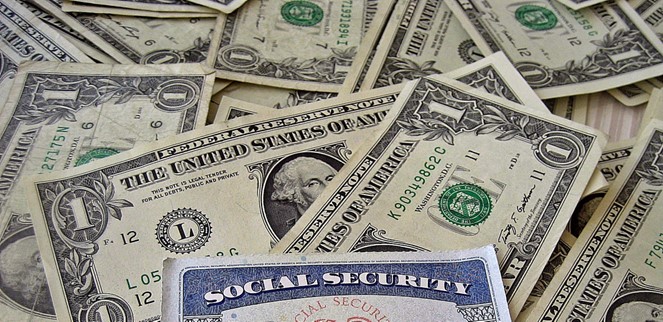
Social Security is set to boost the benefits it provides retirees by 8.7%, the biggest cost-of-living adjustment since 1981. It comes as sky-high inflation continues to eat into incomes and savings.

The changes are set to take effect in January 2023 and were announced following the release of the September 2022 consumer price index report, which showed inflation climbing more than expected during the month, by 0.4%.

The automatic adjustment will surely come as a relief to tens of millions of retirees and those who receive supplemental security income who may be struggling to afford basic necessities as inflation has accelerated throughout 2022. But an annual adjustment wasn’t always the case – and other government benefits and programs deal with inflation differently.

John Diamond, who directs the Center for Public Finance at Rice’s Baker Institute, explains the history of the Social Security cost-of-living, or COLA, increase, what other benefits are adjusted for inflation and why the government makes these changes.

1. How fast is the cost of living rising?

The latest data, for September, shows average consumer prices are up 8.2% from a year earlier. The monthly gain of 0.4% was double what economists surveyed by Reuters had expected.

More troubling, so-called core inflation – which excludes volatile food and energy prices – gained even more in September, ticking up by 0.6%. Core inflation is a measure that’s closely watched by the Federal Reserve, as it helps show how pervasive and persistent inflation has become in the economy.

2. How are Social Security benefits adjusted for inflation?

Automatic adjustments to Social Security benefits began in 1975 after President Richard Nixon signed the 1972 Social Security amendments into law.

Before 1975, Congress had to act each year to increase benefits to offset the effects of inflation. But this was an inefficient system, as politics would often be injected into a simple economic decision. Under this system, an increase in benefits could be too small or too large, or could fail to happen at all if one party blocked the change entirely.

Not to mention that with the baby boomers – those born from 1946 to 1964 – entering the labor force it was already clear that Social Security would face long-term funding issues in the future, and so putting the program on autopilot reduced the political risk faced by politicians.

Since then, benefits have climbed automatically by the average increase in consumer prices during the third quarter of a given year from the same period 12 months earlier. This is based on a version of the consumer price index meant to estimate price changes for working people and has been rising slightly faster than the overall pace of inflation.

While helpful, these inflation adjustments are backward-looking and imperfect. For example, 2022 Social Security benefits increased by 5.9% from the previous year, even though inflation throughout this year has been significantly higher – which means the higher benefits weren’t covering the higher cost of living. Thus, the 2023 increase in benefits primarily offsets what was lost over the previous year.

A white hand holds a card reading social security

Millions of retirees and other will soon see a big jump in their Social Security benefits. AP Photo/Jenny Kane

3. Are the benefits taxable?

A growing portion of Social Security benefits are taxed in the same way as ordinary income, except at different threshold with various caps and percentages. Only 8% of benefits were subject to taxation in 1984, but that’s climbed to almost 50% in recent years. That percentage will likely continue to increase as the taxable thresholds are not adjusted for inflation.

For example, if an individual filer’s income, including benefits, is below US$25,000, none of that is taxed. But up to 50% of a person’s benefits may be taxed at incomes of $25,000 to $34,000. After that, up to 85% of their benefits may be taxed.

Such a big increase in Social Security benefits likely means some people who paid no tax will now have to pay some, while others will see larger increases in their tax liability.

4. Why does the government adjust benefits for inflation?

Rapid gains of inflation, like the kind the U.S. and many other countries are currently experiencing, can have significant impacts on the finances of households and businesses.

For example, it might mean seniors cutting back on heating or food. Government policies generally try to account for this to reduce the negative impacts that rising prices can have on those with limited or fixed resources.

In addition, reducing the impacts of price changes creates a more efficient and fair allocation of resources and reduces the arbitrary outcomes that would otherwise occur.

5. What other government programs typically get a COLA?

Other government programs and benefits also increase to account for inflation.

The U.S. Department of Agriculture estimates the cost of its Thrifty Food Plan each June and adjusts Supplemental Nutrition Assistance Program or SNAP benefits – formerly known as food stamps – in October of each year. Beginning in October 2022, food stamp benefits rose by 12.5%, which helps make up for the largest increases in food prices since the 1970s.

In addition, the federal poverty level is adjusted for changes in the consumer price index annually by the Department of Health and Human Services, an adjustment that affects a number of government-provided benefits, such as housing benefits, health insurance and others, including SNAP benefits.

6. Does the tax system also adjust for inflation?

While some aspects of the tax code adjust for inflation, others do not.

For example, income tax bracket thresholds, the size of the standard deduction, alternative minimum tax parameters and estate tax provisions all increase annually for inflation. That means come tax filing season next year, U.S. tax filers will likely see big changes in all these items.

But examples of provisions that are not adjusted for inflation include the maximum value of the child tax credit and the $10,000 cap on the deduction of state and local taxes. In addition, the threshold that determines who is liable for the net investment income tax – the additional 3.8% tax on investment and passive income for taxpayers above a certain income level – doesn’t adjust, which means each year more individuals are subject to it.

 This article was republished with permission from The Conversation, a news site dedicated to sharing ideas from academic experts. It represents the research-based findings and thoughts of  John W. Diamond, Director of the Center for Public Finance at the Baker Institute, Rice University.

Medical Device Improves Muscle Rehab Accuracy by 15%

Image Credit: MIT CSAIL

MIT System “Sees” the Inner Structure of the Body During Physical Rehab

Rachel Gordon | MIT CSAIL

A growing number of people are living with conditions that could benefit from physical rehabilitation — but there aren’t enough physical therapists (PTs) to go around. The growing need for PTs is racing alongside population growth, and aging, as well as higher rates of severe ailments, are contributing to the problem.

An upsurge in sensor-based techniques, such as on-body motion sensors, has provided some autonomy and precision for patients who could benefit from robotic systems to supplement human therapists. Still, the minimalist watches and rings that are currently available largely rely on motion data, which lack more holistic data a physical therapist pieces together, including muscle engagement and tension, in addition to movement.

This muscle-motion language barrier recently prompted the creation of an unsupervised physical rehabilitation system, MuscleRehab, by researchers from MIT’s Computer Science and Artificial Intelligence Laboratory (CSAIL) and Massachusetts General Hospital. There are three ingredients: motion tracking that captures motion activity, an imaging technique called electrical impedance tomography (EIT) that measures what the muscles are up to, and a virtual reality (VR) headset and tracking suit that lets a patient watch themselves perform alongside a physical therapist.

Patients put on the sleek ninja-esque all-black tracking suit and then perform various exercises such as lunges, knee bends, dead lifts, leg raises, knee extensions, squats, fire hydrants, and bridges that measure activity of quadriceps, sartorius, hamstrings, and abductors. VR captures 3D movement data.

In the virtual environment, patients are given two conditions. In both cases, their avatar performs alongside a physical therapist. In the first situation, just the motion tracking data is overlaid onto their patient avatar. In the second situation, the patient puts on the EIT sensing straps, and then they have all the information of the motion and muscle engagement.

With these two conditions, the team compared the exercise accuracy and handed the results to a professional therapist, who explained which muscle groups were supposed to be engaged during each of the exercises. By visualizing both muscle engagement and motion data during these unsupervised exercises instead of just motion alone, the overall accuracy of exercises improved by 15 percent.

The team then did a cross-comparison of how much time during the exercises the correct muscle group got triggered between the two conditions. In the condition where they show the muscle engagement data in real-time, that’s the feedback. By monitoring and recording the most engagement data, the PTs reported a much better understanding of the quality of the patient’s exercise, and that it helped to better evaluate their current regime and exercise based on those stats.

“We wanted our sensing scenario to not be limited to a clinical setting, to better enable data-driven unsupervised rehabilitation for athletes in injury recovery, patients currently in physical therapy, or those with physical limiting ailments, to ultimately see if we can assist with not only recovery, but perhaps prevention,” says Junyi Zhu, MIT PhD student in electrical engineering and computer science, CSAIL affiliate, and lead author on a new paper about MuscleRehab. “By actively measuring deep muscle engagement, we can observe if the data is abnormal compared to a patient’s baseline, to provide insight into the potential muscle trajectory.”

Current sensing technologies focus mostly on tracking behaviors and heart rates, but Zhu was interested in finding a better way than electromyography (EMG) to sense the engagement (blood flow, stretching, contracting) of different layers of the muscles. EMG only captures muscle activity right beneath the skin, unless it’s done invasively.

Zhu has been digging into the realm of personal health-sensing devices for some time now. He’d been inspired by using EIT, which measures electrical conductivity of muscles, for his project in 2021 that used the noninvasive imaging technique to create a toolkit for designing and fabricating health and motion sensing devices. To his knowledge, EIT, which is usually used for monitoring lung function, detecting chest tumors, and diagnosing pulmonary embolism, hadn’t been done before.

With MuscleRehab, the EIT sensing board serves as the “brains” behind the system. It’s accompanied by two straps filled with electrodes that are slipped onto a user’s upper thigh to capture 3D volumetric data. The motion capturing process uses 39 markers and a number of cameras that sense very high frame rates per second. The EIT sensing data shows actively triggered muscles highlighted on the display, and a given muscle becomes darker with more engagement.

Currently, MuscleRehab focuses on the upper thigh and the major muscle groups inside, but down the line they’d like to expand to the glutes. The team is also exploring potential avenues in using EIT in radiotherapy in collaboration with Piotr Zygmanski, medical physicist at the Brigham and Women’s Hospital and Dana-Farber Cancer Institute and Associate Professor of Radiation at Harvard Medical School.

“We are exploring utilization of electrical fields and currents for detection of radiation as well as for imaging of the of dielectric properties of patient anatomy during radiotherapy treatment, or as a result of the treatment,” says Zygmanski. “Radiation induces currents inside tissues and cells and other media — for instance, detectors — in addition to making direct damage at the molecular level (DNA damage). We have found the EIT instrumentation developed by the MIT team to be particularly suitable for exploring such novel applications of EIT in radiotherapy. We are hoping that with the customization of the electronic parameters of the EIT system we can achieve these goals.”

MuscleRehab Video

“This work advances EIT, a sensing approach conventionally used in clinical settings, with an ingenious and unique combination with virtual reality,” says Yang Zhang, assistant professor in electrical and computer engineering at the UCLA Samueli School of Engineering, who was not involved in the paper. “The enabled application that facilitates rehabilitation potentially has a wide impact across society to help patients conduct physical rehabilitation safely and effectively at home. Such tools to eliminate the need for clinical resources and personnel have long been needed for the lack of workforce in healthcare.”

Reprinted with permission of MIT News” (http://news.mit.edu/)

Is Leisure the Overlooked Market Sector?

Image Credit: Asad Photo Maldives (Pexels)

Travelers Gonna Travel!– Travel & Leisure Sector May Ignore the Recession

Economic activity in the U.S. contracted during the first half of the year. At the same time, inflation is running at 40-year highs. Investors looking to keep their money productive with reduced risk have focused on consumer staples and companies providing necessary services where demand isn’t impacted much by price. This is what experienced investors do when the economy falters. But this economy seems a bit different than previous periods of shrinking economic activity and rising prices. Jobs are still plentiful, and one industry, with a lot of pent-up demand leftover from the pandemic, is gearing up to exceed all expectations. That sector is leisure. We take a look below at the potential strength in the industry, where opportunities may be found, and how you could reduce timing risk with stocks on your shopping list.

Current State

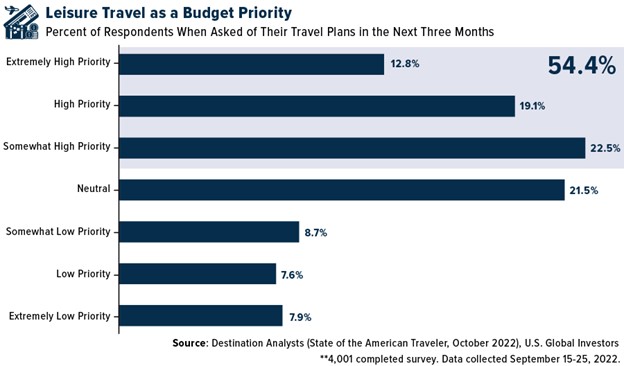
More than half of Americans see leisure travel as a budget priority right now; in fact, 62% of Americans took at least one overnight trip between mid-May and mid-August. This is according to the latest The State of the American Traveler report compiled by Destination Analysis. Consumers continue to prioritize experiences over alternatives in their budget. As the U.S. Moves out of Fall and into the colder months, it appears the trend will continue. Chuck Artillio is co-owner of SinglesSki.com, winter-oriented travel, and leisure company. He told Channelchek, “Last year at this time, business was robust, yet bookings, as we stand now for the coming season, are already up over 100%.” Artillio added, “I’ve never seen anything like this before.”

The Destination Analysis survey also expects industrywide strength in demand for travel and leisure services in the last quarter of the year. The results show Fall and early Winter trip expectations are high. Over a quarter of Americans expect to take a trip in either October (26.6%), November (24.8%) or December (28.4%). This is up from June when 20% said they expected to take a trip in the fourth quarter of 2022.

Source: US Global Investors

The survey indicates that typical holiday travel includes visiting friends & family as the top driver for late year. However, second on the list of purposes for travel is the desire to return to a destination, followed by general atmosphere, and food & cuisine.

Source: US Global Investors

The survey produced hard data that showed Americans continue to prioritize having fun and relaxation when traveling. This, of course, can mean different things to different people. The majority said being in a quiet/peaceful location (82.5%) followed by beach time (69.7%), chilling-out poolside (67.3%), enjoying culinary experiences (65.6%), and luxury hotel experiences (60.4%).

Do Expectations Provide Opportunities?

An industry research report published this week titled, Entertainment & Leisure Industry Report: Ideas For Your Investing Shopping List, contains some ideas for interested investors. The authors of the leisure industry report include Michael Kupinski, Director of Research at Noble Capital Markets. Overall, Kupinski and Noble’s research associates find the current state of the economy as one that provides a “discount rack” of stocks that can weather a further downturn and may be the first to rise as the recovery seems imminent. He provides information and careful analysis on some stocks that he believes have favorable attributes, go here for in-depth details of these companies.

The analysts suggest investors develop a shopping list and concede that recognizing a turning point in market direction is the “hard part.” But they have suggestions for that as well. These include nibbling at the targets on your list to scale in over a period of time. This averaging in to stocks on your shopping list will lower the risk of picking one day to pile in, which may turn out to be bad timing.

Take Away

Down markets bring opportunity. They always have, and there is no reason to believe this time will be different. Finding sectors with promise, as the travel and leisure sector is now showing, then diving into research to select those in the sector with the most promise, followed by a decision to average in to the market, is one recognized way to put yourself in a position to benefit from the current “discount rack” that many stocks now seem to be on.

Paul Hoffman

Managing Editor, Channelchek

Elon Musk’s Smoking New Product

Image Credit: DonkeyHotey (Flickr)

Elon Musk’s Hair-Brained Ideas are Very Marketable

If your last name was Musk and one of your companies created a perfume, what would you name it? Perhaps Eau de Elon, or S3XY, an outlandish guess would be Neurastink, or simply Elon’s Musk. Here’s a hint, Musk’s perfume is a product of The Boring Company, the company that builds tunnels to enable rapid point-to-point transportation. Before this fragrance thrower, the company’s only other product was a flame thrower. So naturally, the company decided to call their new perfume, Burnt Hair. And it has already sold $1,000,000 worth.

Image: The Boring Company

A bottle of what his company referred to as ‘the essence of repugnant desire,’ will set you back about Ð1,666 or $100 USD. That’s if you buy it online. There is now an Ebay aftermarket where resellers are looking to fetch up to Ð16,666 for the product that was only released this week – 10,000 bottles of Burnt Hair have already been sold as of Wednesday morning.

“Just like leaning over a candle at the dinner table, but without all the hard work” – Boring Company Website

Image: The Boring Company

When he’s not tunneling, launching rockets, reinventing things on four wheels, neuralinking, or tweeting, Musk does keep busy with other strokes of brilliance. Did you know that in 2020 Tesla (TSLA) launched its own brand of tequila? That year Tesla, the world’s most valuable automaker,  also offered limited edition satin short-shorts.

Image Credit: Tesla

It isn’t clear what the inspiration was for this new product entry; developing a perfume that has earned revenue of $1,000,000 within a couple of days of launch is quite a feat, although certainly easier than colonizing Mars, and buying a microblogging social media company. Two things on Musk’s To-Do list that he seems to have fallen behind on.  

The Boring Company product page doesn’t say whether the fragrance is a limited edition item – just in time for Halloween or a long-term offering from The Boring Company. Something more exciting than a company that usually just sells holes in the ground.

Paul Hofman

Managing Editor, Channechek

Sources

https://www.boringcompany.com/burnthair

https://www.reuters.com/lifestyle/oddly-enough/elon-musk-sells-1-million-worth-quirky-new-perfume-burnt-hair-2022-10-12/

https://twitter.com/elonmusk/status/ShortShorts

When PPI and CPI are Correlated, and When they are Not

Image Credit: Cottonbro (Flickr)

The Connection Between Producer Price (PPI) and Consumer Price (CPI) Inflation

Does a higher PPI mean a higher CPI? A newly released report shows U.S. suppliers raised prices by 0.4% in September from August, when the Producer Price Index report had shown a 0.2% drop. The inflation measure that has impacted the stock market most severely this year is the Consumer Price Index. The two Bureau of Labor Statistics (BLS) releases are related but not directly correlated and are often used to measure different things by economists and those in industry.

The PPI rose 8.5% in September from a year before, down from its 8.7% annual increase in August and 11.3% in June. – BLS

How CPI and PPI are Different

The PPI for personal consumption includes all marketable production sold by U.S.-domiciled businesses for personal consumption. The majority of the products sold by domestic producers come from non-governmental sectors. However, government produces some marketable output that is under the PPI umbrella. In contrast to the PPI’s components, CPI includes goods and services provided by businesses or governments when direct costs to the consumer are levied.

The most heavily weighted item in CPI is rent. It’s weighted at 24% of the index. What the BLS calls owners’ equivalent rent is the implied rent occupants would have to pay if they were renting their homes. This is how the Bureau of Labor Statistics captures the cost of housing for owner-occupied and rented housing. This heavily weighted component is not in PPI – obviously, owners’ equivalent rent is not a domestically produced output.

The PPI for personal consumption and the CPI also differ in their treatment of imports. The CPI includes, within its basket, goods and services purchased by domestic consumers and therefore includes imports. The PPI, in contrast, does not include imports because imports are, by definition, not produced by domestic firms.

How PPI Impacts CPI

The PPI trends often work their way into consumer price movements, but not at a one-to-one basis or even a standard delayed interval. The demand component of consumer’s impact, what the consumers are willing to consume at certain price levels, is at play with what is charged for goods at the retail level. So even if the cost to manufacture goods has risen, passing the cost on is not always possible without hurting sales. At some level of price increases, demand decreases. This is different for each type of product. For instance, food, medical care, and housing may not be impacted as much as recreation, clothing, and other items which are easier to put off or do without.

Companies are trying to manage higher costs without alienating consumers who are weary of price increases. So far in the 2022 U.S. economy, consumer spending has remained strong despite the rate of CPI, but economists worry that we’re approaching a tipping point.

The Fed has raised the benchmark federal funds rate at its last three meetings by 0.75 percentage points, it now sits in the range of 3% and 3.25%. Officials have indicated they are prepared to raise rates over the course of their final two gatherings this year to around 4.25%.

Today, with consumer inflation running at a four-decade high and savings measurements trending lower, consumers are expected to begin to change buying habits. This overall is bad for business and the economy, which is why the Federal Reserve is expected to continue its fight against price increases, despite their lack of popularity with the financial markets.

“Monetary policy will be restrictive for some time to ensure that inflation moves back” Fed Vice Chair Lael Brainard (October 10).

Prices have begun to fall for some goods and services, including commodities, freight shipping, and housing. Those declines have led some Fed watchers to warn that the central bank risks tightening financial conditions too much.

Take Away

Increases in producer prices are passed to consumers when they can be. However, there is only so much a consumer is willing to pay for a purchase they can put off or substitute for something cheaper. This has ramifications for investors.

Companies where demand will wain when prices rise, may find earnings weaken; these could include producers of discretionary goods. Stocks that are shares of consumer staple companies may not feel the brunt of consumer pushback; those that produce more cost-effective brands, including white label providers, may outshine their brand name competitors if consumers increase their substituting for lower priced alternatives. Health care is one area where demand changes little as prices change at the producer or consumer level.

Paul Hoffman

Managing Editor, Channelchek

Sources

https://www.bls.gov/ppi/methodology-reports/comparing-the-producer-price-index-for-personal-consumption-with-the-us-all-items-cpi

https://www.wsj.com/articles/producer-prices-inflation-september-2022-11665541647?mod=hp_lead_pos2

Uses for Blockchain Beyond Crypto are Growing

Christian Bucad (Flickr)

Why Blockchain Could Mean Fewer Hassles for Students and Workers Proving their Credentials

Microcredentials — attestations of proficiency in a specific skill or knowledge base that are certified by an authority — can provide evidence of a person’s skills to employers.

While microcredentials are becoming more popular, the concept is hardly new: A driver’s license or the St. John Ambulance certificate could be considered as microcredentials, attesting respectively to a person’s driving skill or their competency in administering first aid.

Blockchain technology is appropriate for microcredential implementation. Blockchain can best be described as a digital ledger that records information that can be shared among a community of users. Bitcoin and other crypto-currencies are the best-known examples of blockchain, but blockchain has uses beyond financial transactions.

Student records stored in blockchain for security limit access only to legitimate users, such as institutional administrators and potential employers selected by students or job seekers. Traditionally, institutions own and control certifications like degrees, but that could shift with “digital degrees” and microcredentials that rely on blockchain.

Verifying Accomplishments

Besides providing effective security and privacy for users, blockchain can also facilitate the maintenance and dissemination of the credentials, while ensuring that access is readily available for students under their control.

Because of its immutability, blockchain can be used to attest to and verify students’ accomplishments. This is important for students seeking to have their credits recognized, whether because they are studying to obtain new professional accreditation, studying in multiple institutions or because they are moving for study or employment.

Blockchain is distributed, meaning that multiple copies of the same information are stored on different computers. So, blockchain is not controlled by any central authority and the “blocks” in the “chain,” linked chronologically, are shared in a P2P (peer-to-peer) network, which can be accessed from any node or point on the network.

These blocks are immutable, as any change to the original leaves the first iteration intact and accessible.

When students or job seekers want to have credits transferred between institutions, gatekeepers — for example, post-secondary institutions or employers — typically insist on receiving copies of diplomas and degrees directly from each institution. As more students gain credentials from multiple institutions, this process becomes increasingly untenable.

Students need to control this process and blockchain can provide a solution.

Securely Validates Learning

In 2019, McMaster University announced it was awarding “digital degrees” using blockchain to Faculty of Engineering students after the university implemented microcredentials using blockchain to securely validate students’ learning.

Some post-secondary institutions are implementing pilot projects with eCampus Ontario and industry partners to award microcredentials using blockchain.

Microcredentials are now offered by post-secondary institutions, sometimes in partnership with corporations to target labor market needs. These may come in the form of “digital badges.” Digital badges are easily verifiable testaments to when, where and how skills have been mastered. Metadata in digital badges allows viewers to click on the badge to learn things like criteria for earning the badge, the date it was issued or when it expires.

Maintaining Privacy of Data

Certification by blockchain begins when a trusted institution issues the microcredential and creates a blockchain. The student then sends a public key password to the institution, requesting a transcript be sent to a potential employer.

The institution then adds a block onto the blockchain and sends the micro-credential, which is verified and forwarded to the potential employer. The learners can keep private keys to their credentials in an offline digital wallet.

Maintaining the privacy of the data is essential. With blockchain, the ownership of the microcredential rests with the individual, not the institution.

Blockchain supports more control for students and has the capability of further democratizing education. It empowers students to maintain control of their now-secure credentials and allows them to be confident their acquired skills and knowledge will be valued.

Potential Concerns

However, there are some ethical and logistical concerns. Right now, when a person seeks to transfer credits through traditional channels, they can choose which documents or certifications to share with employers: mistakes or aspects of one’s past credentials and experience deemed less salient or undesirable can be addressed or ignored.

But blockchain is immutable and this immutability can cause its own problems when mistakes cannot be erased.

Students cannot omit blocks from the chain that they do not feel are appropriate or that could damage their reputation. So, how can they create different narratives for diverse purposes or highlight and/or hide different experiences? What happens if someone wants or needs to start anew? Is there a right to forget?

What if a student loses their key? The New York Times reports that lost passwords have locked millionaires out of their bitcoin fortunes. Will students and workers fare any better when it comes to academic and professional records? Who will respond to these problems within institutions?

These are questions post-secondary institutions and our society at large will increasingly need to navigate.

This article was republished with permission from The Conversation, a news site dedicated to sharing ideas from academic experts. It represents the research-based findings and thoughts of Rory McGreal, Professor and UNESCO/ICDE Chair in Open Educational Resources, Athabasca University.

Does BNY Mellon’s Crypto Plans Have Hamilton Rolling Over in His Grave?

Image Credit: Todd Martin (Flickr)

The United States Oldest Bank Embraces Safekeeping Cryptocurrency Alongside Other Assets

The nation’s oldest bank, founded in 1784, began taking deposits of cryptocurrency today. BNY Mellon, with roots in the Bank of New York and Alexander Hamilton, is now the first large U.S. bank to custody client’s bitcoin and ether.

The bank will store the keys required to access and transfer crypto and provide the same bookkeeping services on digital currencies it offers for stocks, bonds, commodities, and other assets. BNY Mellon is one of the largest and most trusted in the business of traditional safekeeping; they now have made history by adding this additional service for investment managers to clear, service and safe keep digital assets.

As America’s oldest bank, BNY Mellon has a 238-year legacy on which to build. As a company it provided the first loan to the U.S. to fund the Revolutionary War and has weathered as many different financial eras as the country that it has helped build. Back in February 2021, BNY Mellon formed its enterprise Digital Assets Unit to develop services for digital asset technology. The goal was to launch the industry’s first multi-asset platform that provides safekeeping for digital and traditional assets.

“Touching more than 20% of the world’s investable assets, BNY Mellon has the scale to reimagine financial markets through blockchain technology and digital assets,” said Robin Vince, Chief Executive Officer and President at BNY Mellon. “We are excited to help drive the financial industry forward as we begin the next chapter in our innovation journey.”

Image Credit: Mark Holler (Flickr)

BNY Mellon recognizes the significant institutional demand for a resilient, scalable financial infrastructure designed to accommodate digital assets alongside traditional ones. The bank had previously surveyed money managers that use their safekeeping services and found almost all institutional investors (91%) are interested in investing in tokenized products. Additionally, 41% of institutional investors hold cryptocurrency in their portfolios today, with an additional 15% planning to hold digital assets in their portfolios within the next two to five years. Safekeeping them all under one system will benefit clients.

BNY Mellon has been working closely with market-leading fintech firms. The firm tapped digital asset technology specialists Fireblocks and Chainalysis to integrate their technology in order to meet the present and future security and compliance needs of clients across the digital asset space.

 BNY Mellon is a global investment company helping its clients manage and service their financial assets throughout the investment lifecycle. Clients include institutions, corporations, and individual investors. It delivers investment management, wealth management, and investment services in 35 countries. As of June 30, 2022, BNY Mellon had $43.0 trillion in assets under custody and/or administration and $1.9 trillion in assets under management. BNY BNY Mellon is the corporate brand of The Bank of New York Mellon Corporation (NYSE: BK).

“As the world’s largest custodian, BNY Mellon is the natural provider to create a safe and secure Digital Asset Custody Platform for institutional clients,” said Caroline Butler, CEO of Custody Services at BNY Mellon. “We will continue to innovate, embrace new technology and work closely with clients to address their evolving needs.”

“With Digital Asset Custody, we continue our journey of trust and innovation into the evolving digital assets space, while embracing leading technology and collaborating with fintechs,” said Roman Regelman, CEO of Securities Services & Digital at BNY Mellon.

Take Away

The world is changing, and even the oldest bank in the U.S. is getting on board with the changes. The addition of BNY Mellon as a holder of cryptocurrency keys is a big nod to the crypto management industry. Portfolio managers of all sizes are now able to provide statements with a wider variety of asset classes held. Does this mean the newcomers that now transact and hold cryptocurrency will either be bought or lose potential large customers? That remains to be seen.

 Paul Hoffman

Managing Editor, Channelchek

Sources

https://www.bnymellon.com/us/en/about-us/newsroom/press-release/bny-mellon-launches-new-digital-asset-custody-platform-130305.html

https://www.wsj.com/articles/crypto-could-threaten-financial-system-federal-risk-panel-warns-11664826496?mod=article_inline

https://www.wsj.com/articles/americas-oldest-bank-bny-mellon-will-hold-that-crypto-now-11665460354?mod=djemalertNEWS

The Week Ahead – FOMC Minutes and CPI Late Week

Potential for a Change in Sentiment if Suprised by this Week’s FOMC Minutes, Jobs, and Inflation

When the world’s trading partners move interest rates in concert with each other, their actions are much smoother, this is because currency flows, which influence exchange rates, are less inclined to reprice dramatically. The U.S. has been comparatively aggressive in raising rates. This is part of why the Bank of England (BOE) shoring up its bond market, and the Japanese hawkish hesitancy has created disruptions and a historically strong U.S. dollar.

This week begins with Columbus Day; the bond markets are closed, and so are the banks. Stock market participants shouldn’t expect guidance from interest rate moves related to bond trading. The futures market will be active; moves from Interest rate futures from tickers such as ZB=F can be helpful while bonds are silent.  

Monday 10/10

  • 1:30 PM ET Federal Reserve Vice Chair Lael Brainard discusses restoring price stability at the National Association of Business Economics (NABE). Attend via Zoom.
  • Columbus Day, the potential for thin trading and big price swings.

Tuesday 10/11

  • NY Fed 5-year inflation expectations for one- and three-year-ahead inflation expectations had posted steep declines in August, from 6.2 percent and 3.2 percent in July to 5.7 percent and 2.8 percent, respectively. Investors will be watching to see if the declining expectations continue.
  • NFIB Small Business Optimism Index (NFIB), is a monthly survey that asks small businesses if they have plans to increase employment, plans to expand capital spending, increase inventories, expect economic improvement, expect higher retail sales, is now a good time to expand, current job openings, and earnings trends in their business. Health in small businesses can be an indicator of overall economic health and stock market strength. This report is released at 6 am last month, the index was 91.8, and the consensus is 91.5.
  • The Labor Department’s JOLTS has, in recent years, been referred to as the “Quits” report. The report tracks monthly changes in job openings and contains rates of hiring and quitting. The word JOLTS stands for Job Openings and Labor Turnover Survey.

Wednesday 10/12

  • The Producer Price Index (PPI) from the Bureau of Labor Statistics (BLS) is an inflation gauge that measures the average change over time in the prices received by U.S. producers of goods and services. The prices are typically considered input costs for final products and can impact CPI, it may also impact company costs of production and, therefore, profits. The trend has been lower, YOY PPI has been running at 8,7%, the consensus is for 8.4%.
  • The Mortgage Bankers Association (MBA) creates a statistic from several mortgage loan indexes. The Mortgage Applications index measures applications at mortgage lenders. It’s considered a leading indicator and is especially important for single-family home sales and housing construction. Both are considered foundational in a strong economy. L
  • ast week, the Purchase Index was -12.6%.
  • 10 Year Treasury Note Auction is held in the middle of each month and settles on or around the 15th (depending on weekends). The yield is a benchmark for 30-year mortgages and has recently been noted by investment markets because it has been trading at a yield lower than shorter maturities; this inversion of the yield curve has some market players suggesting a recession is expected in the future. Any surprises at the auction will reverberate through the stock market.
  • FOMC minutes (September meeting) – We’d all love to be a fly on the wall at the Fed’s meetings. The minutes detail the issues debated and the consensus among policymakers. This, of course, has ramifications if the contents of the minutes demonstrate an above-average hawkish or dovish change in tone. The Federal Open Market Committee issues minutes of its latest meeting three weeks after the meeting.

Thursday 10/13

  • US Consumer Price Index (CPI) is the inflation indicator most widely broadcast. With inflation being a primary focus, this will be the big number coming out this week. The number represents a basket of goods considered typical for an urban consumer and is taken as the change in the cost of that basket of goods. A percentage is derived from the change. CPI is also reported with food and energy removed as it is considered that other non-economic factors influence these prices. The August report indicated CPI rose 0.6% for the month and 8.3% YOY. Expectations are for a slowing to 0.4% for September and a YOY rate of 8.1%.
  • U.S. Jobless Claims, which represent the prior weeks of employment are expected to have increased to 225,000 from 219,000. From jobless claims, investors can gain a sense of how tight or how loose the job market is. If wage inflation takes hold, interest rates will likely rise, and bond and stock prices will fall.  Remember, the lower the number of unemployment claims, the stronger the job market, and vice versa.

Friday 10/14

  • U.S. retail sales have been lackluster, neither rising nor falling. As we head toward Thanksgiving and Black Friday sales levels, the market will be taking more and more interest in how strong the consumer is. Expectations for September are a rise of 0.2 percent overall, down 0.1 percent when excluding vehicles and up 0.4 when also excluding gasoline. The number is released at 8:30 am.
  • Business inventories are expressed in dollar value held by manufacturers, wholesalers, and retailers. The level of inventories in relation to sales is an important indicator of the near-term direction of production activity. Rising inventories can be an indication of business optimism that sales will be growing in the coming months. However, if unintended inventory accumulation occurs, then production will probably have to slow while those inventories. The consensus is for a 0.9% increase after only increasing 0.6% for August.
  • U.S. Baker Hughes Rig Count tracks weekly changes in the number of active operating oil & gas rigs. Rigs that are not active are not counted. Components in the data are the United States and Canada, with a separate count for the Gulf of Mexico (which is a subset of the U.S. total). A significant increase or decrease could have ramifications on energy costs in North America. The rig count for the prior period in North America was 977, with 762 of those being from the U.S.

What Else

It is a light week for economic releases and Fed governor addresses, but late week could see a dramatic change in market sentiment as the Fed Minutes, CI, and even employment has the potential to impact thinking.

Paul Hoffman

Managing Editor, Channelchek

Sources

https://www.federalreserve.gov/newsevents/calendar.htm

http://global-premium.econoday.com/byweek.asp?cust=global-premium

https://www.channelchek.com/news-channel/noble_on_the_road___noble_capital_markets_in_person_roadshow_series

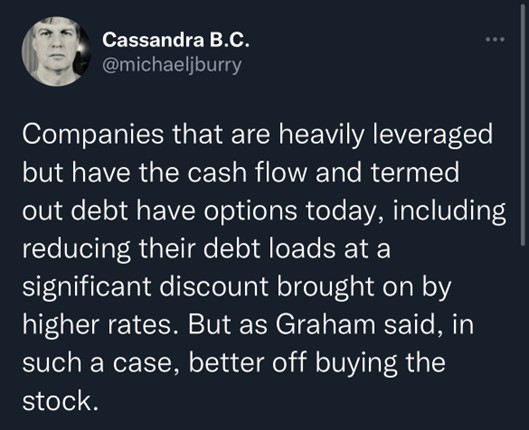
Reading Between Michael Burry’s Lines

Image Source: @michaeljburry (Twitter)

Michael Burry’s Advice for Companies to Become Better Values

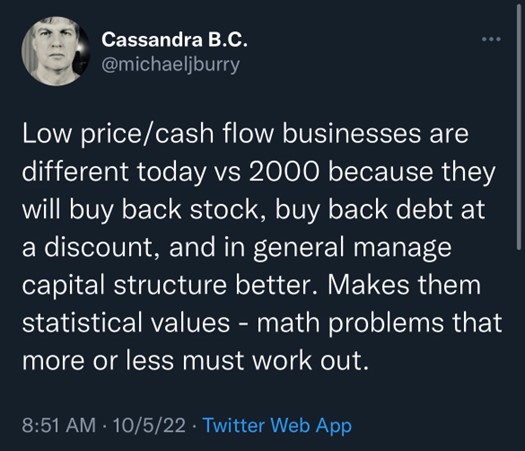
After my morning coffee and check on stock futures, I peruse Twitter. Coffee is necessary when you may need to translate cryptic messages from tweeters like Dr. Michael Burry. This week, the hedge fund manager, famous for his foresight and creativity in shorting subprime mortgages before the mortgage crisis in 2008, has been very active on the microblogging platform. Two tweets from October 5th are newsworthy, considering their source, their insight, and the concern they convey are described below.

The first reads: “Low price/cash flow businesses are different today vs. 2000 because they will buy back stock, buy back debt at a discount, and in general manage capital structure better. Makes them statistical value – math problems that more or less must work out.”

The second says, “Companies that are heavily leveraged but have the cash flow and termed out debt have options today, including reducing their debt loads at a significant discount brought on by higher rates. But as Graham said, in such a case, better off buying the stock.”

Taking these two tweets together, they make sense. Twenty years ago, interest rates were the lowest they had been since 1965; during the last week in December, plummeting 30-year mortgage rates had broken below 6%. Despite cheaper money, corporate treasurers and finance officers didn’t use the situation to shore up their capital structure and build a better base to grow on. The equity markets were weak from August 2000 until May 2009, after the financial crisis that in part came about because of how the cheap money was used.

Companies that are not stretched and are earning money today have the choice of strengthening their financial foundation by either buying their stock at today’s bearish prices. A stock buyback has the effect of reducing shares available in the market as they are now in the company’s treasury. Reduced float tends to increase the price and benefits shareholders. The company does have the option of selling these shares should an opportunity present itself where it would like to raise capital selling previously available shares.

Burry also mentions leveraged companies. Having just come off of 40-year lows in interest rates, it was, in many cases, prudent for companies to leverage themselves with cheap money. These loans, present-valued at today’s higher rates, can be negotiated and paid off at a discount. For companies with adequate cash flow, they may be able to substantially reduce debt for a fraction of the principal amount. Here is how to best get your head around this, if you are a lender and the borrower is paying you 2%, and rates are now 6%, how much less than the borrowed amount would the borrower have to give you in order for you to do better than breaking even? You can lend one-third of the money at 6% and earn the same cash amount. So the borrower is in a great negotiating position.

Michael Burry makes no secret of the fact that he is an avid reader. “Graham” refers to Benjamin Graham the “father of value investing.” Burry reminds us that, according to this historically significant, well-published value investor, investors and companies are generally better off buying back their own stock.

Take Away

There are showmen that are on TV and keep their jobs by keeping viewers glued to their TV sets, and there are others that comment on the market for less-commercial reasons. Those on TV and writing on well-read sites like Yahoo Finance are worth reading to understand what others are reading. Proven, outside the mainstream thinking is worth paying attention to in order to diversify the information your weighing as an investor.

You can even think of it this way; no one pays Burry for advertising on Twitter accounts used by Burry or some other well-followed investors. Whereas mainstream news only exists because of paid-for advertising from companies and industries that they cover. This doesn’t mean he will always be correct, but, who might be less biased?

Paul Hoffman

Managing Editor, Channelchek

Source

Twitter @michaeljburry

The Case for Hydrogen Fuel Cell Vehicles

Image Credit: TruckPR (Flickr)

Is Hydrogen, Not Lithium-ion, the Automotive World’s Real Future?

Lithium-ion (Li-ion) batteries provide incredibly functional and versatile storage of electric power for cell phones, laptops, leaf blowers, Bluetooth speakers, and a myriad of other portable electric tools and appliances. But is it the best way to store power to drive the big motors found in a car or tractor-trailer? Hydrogen could provide a lighter, more potent, less environmentally harmful way to store power. And with greater range. Are car companies being steered down an inferior or potentially impossible path?

China plans to have a million hydrogen-powered vehicles on roads by 2035, and Japan, which has a much smaller population, is shooting for 800,000 units by 2030. Perhaps the world’s most abundant element is worth a deeper look before billions are spent on infrastructure to support the Li-ion model.

What’s a Fuel Cell

According to ThoughtCo.com, the most abundant element in the universe is hydrogen, making up about three-quarters of all things. Helium, then oxygen, makes up most of the rest of all matter. By comparison, all of the other elements are rare.

There are combustion engines that run on hydrogen, but it’s fuel cell electric vehicles (FCEVs) that are driven by motors, similar to those now going into Fords, Teslas and Volvos. The FCEV uses a hydrogen fuel cell.

These electric power storing fuel cells consist of a positive (cathode) and a negative electrode (anode), separated by an electrolyte membrane to chemically release electricity. This happens when oxygen from the surrounding air is exposed to the cathode. As liquid hydrogen, which fills the fuel cell in similar quantities that may be required of gas or diesel in a fossil fuel-powered vehicle, accumulates on the anode, they break apart into protons and electrons from the reaction with the electrolyte.

As protons travel through the membrane to the cathode, electrons are forced through a circuit. The circuit includes the electric motor, which releases the power to drive the vehicle down the road,  powering an electric motor in the process. The electrons complete the path and reach the protons on the cathode; here, they react with oxygen to create H20 vapor.

Benefits to Cars and Trucks

The emissions of an FCEV, if you can call it that, is pure water. This is the very definition of clean and sustainable for the planet. In fact, the water vapor released is completely recyclable. But with it being composed of two of the most abundant elements, the need to recycle it as a way to store energy doesn’t exist.

Cars and large trucks have a far longer range than battery electric vehicles (BEVs). The fuel cells can convert far more stored hydrogen into electricity than current EV batteries, making their range more in line with what drivers of cars and trucks expect from their vehicles.

The speed of powering up the fuel cell is also similar to refueling a vehicle with petrol. Refilling the fuel cell takes minutes. The combination of longer range and speed to get back on the road makes it a functionally attractive option for drivers.

Downside

Similar to recharging a lithium-ion battery, a power source is needed. Currently, this power source isn’t often wind, solar, or tidal, it’s fossil fuels. Hydrogen produced by coal or oil is seen as having dirty electrons; hydrogen produced by natural gas is called blue hydrogen. Using wind or sun to turn water into its atomic components is possible and does not need to be done in a large refinery in some remote place, but the outlets for this still need to be built.

The main reason is the lack of infrastructure. In order for hydrogen cars to become a viable option, there needs to be a network of refueling stations in place. This is a chicken-and-egg situation as car manufacturers are reluctant to mass-produce FCEVs without the existing infrastructure, and investors are unwilling to build hydrogen refueling stations without strong demand for them. Sales of fuel cell-powered vehicles in the U.S. in 2021 totaled 3,341. There aren’t entrepreneurs or even energy companies racing out to build a hydrogen refilling station when they’re not likely to experience any business.

Take Away

Although hydrogen still isn’t becoming a mainstream option, it is an alternative fuel source that is certainly worth keeping an eye on. With the right infrastructure in place, hydrogen cars could become a viable option for those looking for a clean and sustainable way to power their vehicles — if not now, definitely in the future.

Paul Hoffman

Managing Editor, Channelchek

Sources

https://insideevs.com/news/565185/us-hydrogen-car-sales-2021/

https://www.thoughtco.com/most-abundant-element-in-the-universe-602186

https://www.marketwatch.com/story/battery-electric-cars-are-the-future-not-so-fast-hydrogen-powered-cars

Oil Prices, Politics, and Dollar Strength

Image Credit: SETShots (Flickr)

Did OPEC+ Undermine US Strategic Reserve Efforts?

The Organization of Petroleum Exporting Countries (OPEC) and the extended Russia-led allies )making it OPEC+) just agreed to slash two million barrels a day from the global petroleum markets. This is likely to nudge the cost of energy up around the globe. Oil and gas had been trending down in the U.S. in part the result of President Biden’s authorized release of one million barrels a day into the market from the U.S. Strategic Petroleum Reserve back in March.

The move by OPEC+, which counteracts efforts in the U.S. to bring prices down, should have the effect of pushing up global energy prices and benefiting oil-exporting countries such as Russia increase revenue per barrel.  

The Russian-Ukraine war has had an impact on crude prices since Russia is a major exporter of the commodity.  Prices in the futures market have been falling since June, and are currently near their pre-war levels. The softening in the market price may not be a function of supply, writes Michael Heim, CFA, Senior Research Analyst, at Noble Capital Markets, in his quarterly Energy Industry Report. Heim says they believe, “…recent weakness largely reflects demand concerns and foreign currency changes but is not a condition of oversupply.” Explaining the connection between dollar strength and oil, Heim added, “Historically, oil prices are lower when the dollar is stronger. This is because most oil suppliers, including international suppliers, demand payments in dollars.”

WTI prices peaked at $120 per barrel in the first week of June. According to Heim, since the peak, they have come down as a “response to signs of a global economic slowdown as governments raise interest rates to fight inflation.” Oil on the futures market is down nearly 50% from its 2022 peak.  

Oil Prices and Politics

OPEC+ has said they are seeking to prevent price swings rather than to target a particular oil price. Benchmark Brent crude is trading at $92 per barrel after the announcement. “The decision is technical, not political,” United Arab Emirates Energy Minister Suhail al-Mazroui told reporters ahead of the meeting.

The actions announced by OPEC+ may cause the NOPEC Bill (No Oil Producing and Exporting Cartels)    that passed the Senate Judiciary Committee back in May to resurface and gain traction. The bipartisan NOPEC bill would change U.S. antitrust law to revoke the sovereign immunity that has long protected OPEC and its national oil companies from lawsuits. Under the Bill, the U.S. attorney general would have the ability to sue the oil cartel or its members, in federal court.

The West has accused Russia of weaponizing energy and orchestrating a crisis in Europe that could trigger rationing power this winter with the potential for gas shortages. This has become a hot issue with humanitarian implications that may help the West paint cartel members in a less than flattering or even adversarial light. While the West is busy accusing Russia of using energy exports in inappropriate ways, Moscow has accused the U.S. and it allies of weaponizing the dollar and financial systems such as SWIFT in retaliation for Russia sending troops into Ukraine in February. SWIFT is a method the U.S. Treasury uses to sanction international suppliers of Russian companies.

While Saudi Arabia has not condemned Moscow’s actions in Ukraine, U.S. officials have said part of the reason Washington wants lower oil prices is to deprive Moscow of oil revenue.

Take Away

Oil will continue to be an interesting sector. The variables impacting price, which have an impact on the broader energy sector include a slowing global economy, ability, and willingness for countries such as the U.S. to tap oil reserves, length of time the Russia and Ukraine war is prolonged, rigs put online, OPEC’s ability to produce at levels targeted, and dollar strength which increases energy costs for those whose native currency is weaker than U.S. petrodollars.

Subscribe to Channelchek and receive emails each day on many industries, including oil and natural gas, as well as in-depth analysis of small-cap energy opportunities.

Paul Hoffman

Managing Editor, Channelchek

Sources

https://www.grassley.senate.gov/news/news-releases/judiciary-committee-advances-grassleys-bipartisan-nopec-act

https://www.channelchek.com/news-channel/energy-industry-report-oil-prices-have-fallen-but-its-not-because-of-supply

https://www.wsj.com/articles/opec-agrees-to-biggest-oil-production-cut-since-start-of-pandemic-11664978144?mod=djem_EnergyJournal

https://www.reuters.com/business/energy/opec-heads-deep-supply-cuts-clash-with-us-2022-10-04/

https://home.treasury.gov/news/press-releases/jy0981