The Next Few Months for Oil May be the Most Volatile Yet

Image Credit: JoeCabby2011 (Flickr)

How the U.S. and its Allies Plan to Put the Squeeze on Russian Oil Profits

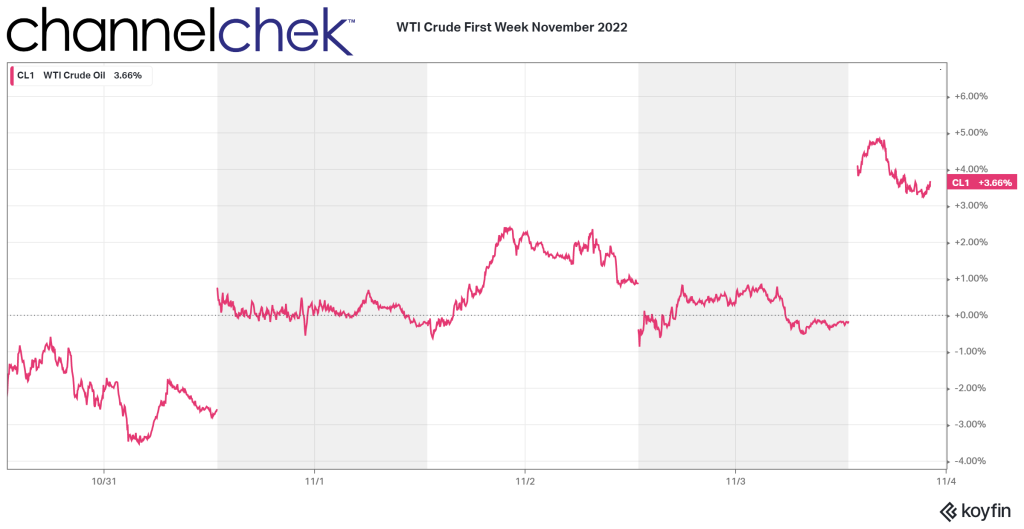
Volatility in oil prices this week has been extreme, even by the standards already set this decade. The price of WTI rose nearly 5% just today. The month ahead promises to create even more volatility as Saudi Arabia just cut prices to Asia; meanwhile, the US and its allies have agreed to put a cap on Russian oil. Details on many of these influences have not yet been worked out or announced. What is known is that the price cap and other sanctions against Russia begin in one month. The commodity trading days leading to the planned December 5 start date and the weeks that follow ought to create a great deal of speculation and price movement. Here is what we do know the allies have agreed upon.

The Cap Map

Sales of Russian oil to the participating countries will be subject to a price cap. The cap pertains to the initial purchase of a load of seaborne Russian oil. The agreement settled by the US and its allies doesn’t subject any subsequent sale of crude as falling under the same cap. The cost of transporting Russian oil is not included in the calculation of the cap. However, these rules only apply once the load of oil makes land. Out at sea, the rules are different.
Source: Koyfin

Trades of Russian oil that occur once the load is at sea are expected to still fall under the cap. However, if the Russia-originated oil has been refined into products such as diesel or gasoline, then it is not subject to the cap.

Restrictions and Jurisdictions

Under the expected price-cap plan, the Group of Seven and Australia are planning to restrict firms in their countries from providing insurance and other key maritime services for any Russian oil shipment unless the oil is sold below a set price. Because much of the world’s maritime services are based in G-7 countries and the European Union, the Western partners are aiming to effectively dictate the price at which Russia can sell some of its oil on global markets.

The Precise Price

The US and its allies have yet to set the price for the scheme, but they expect to define the level or range well before the December 5 implementation date. The slow pace of finalizing the plan have left some oil-market participants concerned that shipments of Russian oil at sea on December 5 could face the cap restrictions. The US Treasury Department, earlier this week, has clarified how this would be determined. The agreement rules that Russian oil shipped before December 5 would be exempt from the cap if it is unloaded at its destination by January 19.

It’s expected the price cap would not bring a crushing blow to banks, insurers, shippers, and traders that help make Russian oil available on global markets. The goal is to cut into the profits Russia earns from its oil sales, the hope by participants is to keep global markets supplied with Russian oil and keep energy prices steady.

The precise price is unknown, however a price range in the mid-60s has been discussed as the possible cap range, as it represents levels in line with where Russian oil had traded before the big run-up.

What Else?

Officials speaking for Russia have threatened to cut their oil production in retaliation for any price cap. It remains seen whether this game of each party partaking in ugly medicine for the survival of both will play out in unexpected ways.  

The plan for the price cap for Russian crude will go into effect on December 5, while two separate price limits for refined Russian petroleum products will kick in on February 5.

Expect volatility in oil prices, leading up to and after the caps go into effect. At the same time, expect the unexpected as it relates to energy.

Paul Hoffman

Managing Editor, Channelchek

https://oilprice.com/Latest-Energy-News/World-News/The-G7-Will-Set-A-Fixed-Price-On-Russian-Oil.html

https://oilprice.com/Latest-Energy-News/World-News/Saudi-Arabia-Cuts-Oil-Prices-For-Asia.html

https://www.wsj.com/articles/u-s-allies-set-parameters-for-price-cap-on-russian-oil-11667554203?mod=Searchresults_pos1&page=1

https://oilprice.com/Energy/Energy-General/Oil-Prices-Rise-As-Bullish-Sentiment-Builds.html

https://www.aa.com.tr/en/energy/oil/oil-prices-show-over-3-rise-in-week-ending-nov-4/36809

How the Fed’s Balance Sheet Trimming Impacts You

Image: Press conference following November 2022 FOMC meeting – Federal Reserve (Flickr)

Fed Faces Twin Threats of Recession and Financial Crisis as its Inflation Fight Raises Risks of Both

The Fed raising the overnight rate is only half the reason the economy may be driven into a recession and create a financial crisis according to a Mississippi Professor of Finance. He believes the Fed’s interest rate approach, which is most talked about, may create problems, but Professor Blank also points out and defines the Fed’s balance sheet changes and what they could mean for markets, the economy, and the world of finance.

There is wide agreement among economists and market observers that the Federal Reserve’s aggressive interest rate hikes will cause economic growth to grind to a halt, leading to a recession. Less talked about is the risk of a financial crisis as the U.S. central bank simultaneously tries to shrink its massive balance sheet.

As expected, the Fed on Nov. 2, 2022, lifted borrowing costs by 0.75 percentage point – its fourth straight hike of that size, which brings its benchmark rate to as high as 4%.

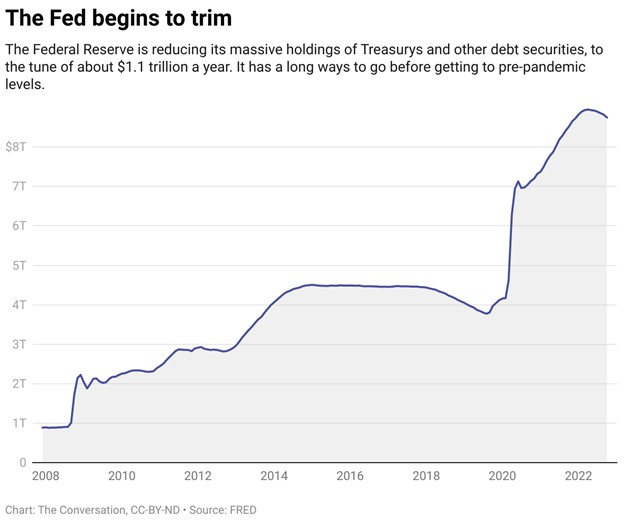
At the same time as it’s been raising rates, the Fed has been quietly trimming down its balance sheet, which swelled after the COVID-19 pandemic began in 2020. It reached a high of US$9 trillion in April 2022 and has since declined by about $240 billion as the Fed reduces its holdings of Treasury securities and other debt that it bought to avoid an economic meltdown early in the pandemic.

This article was republished with permission from The Conversation, a news site dedicated to sharing ideas from academic experts. It represents the research-based findings and thoughts of D. Brian Blank, Assistant Professor of Finance, Mississippi State University.

As a finance expert, I have been studying financial decisions and markets for over a decade. I’m already seeing signs of distress that could snowball into a financial crisis, compounding the Fed’s woes as it struggles to contain soaring inflation.

Fed Balance Sheet Basics

As part of its mandate, the Federal Reserve maintains a balance sheet, which includes securities, such as bonds, as well as other instruments it uses to pump money into the economy and support financial institutions.

The balance sheet has grown substantially over the last two decades as the Fed began experimenting in 2008 with a policy known as quantitative easing – in essence, printing money – to buy debt to help support financial markets that were in turmoil. The Fed again expanded its balance sheet drastically in 2020 to provide support, or liquidity, to banks and other financial institutions so the financial system didn’t run short on cash. Liquidity refers to the efficiency with which a security can be converted into cash without affecting the price.

But in March 2022, the Fed switched gears. It stopped purchasing new securities and began reducing its holdings of debt in a policy known as quantitative tightening. The current balance is $8.7 trillion, two-thirds of which are Treasury securities issued by the U.S. government.

The result is that there is one less buyer in the $24 trillion treasury market, one of the largest and most important markets in the world. And that means less liquidity.

Loss of Liquidity

Markets work best when there’s plenty of liquidity. But when it dries up, that’s when financial crises happen, with investors having trouble selling securities or other assets. This can lead to a fire sale of financial assets and plunging prices.

Treasury markets have been unusually volatile this year – resulting in the biggest losses in decades – as prices drop and yields shoot up. This is partly due to the Fed rate hikes, but another factor is the sharp loss of liquidity as the central bank pares its balance sheet. A drop in liquidity increases risks for investors, who then demand higher returns for financial assets. This leads to lower prices.

The loss of liquidity not only adds additional uncertainty into markets but could also destabilize financial markets. For example, the most recent quantitative tightening cycle, in 2019, led to a crisis in overnight lending markets, which are used by banks and other financial institutions to lend each other money for very short periods.

Given the sheer size of the Treasury market, problems there are likely to leak into virtually every other market in the world. This could start with money market funds, which are held as low-risk investments for individuals. Since these investments are considered risk-free, any possible risk has substantial consequences – as happened in 2008 and 2020.

Other markets are also directly affected since the Fed holds more than just Treasuries. It also holds mortgages, which means its balance sheet reduction could hurt liquidity in that market too. Quantitative tightening also decreases bank reserves in the financial system, which is another manner in which financial stability could be threatened and increase the risk of a crisis.

The last time the Fed tried to reduce its balance sheet, it caused what was known as a “taper tantrum” as debt investors reacted by selling bonds, causing bond yields to rise sharply, and forced the central bank to reverse course. The long and short of it is that if the Fed continues to reduce its holdings, it could stack a financial crisis on top of a recession, which could lead to unforeseen problems for the U.S. economy – and economies around the globe.

A Two-Front War

For the moment, Fed Chair Jerome Powell has said he believes markets are handling its balance sheet rundown effectively. And on Nov. 2, the Fed said it would continue reducing its balance sheet – to the tune of about $1.1 trillion a year.

Obviously, not everyone agrees, including the U.S. Treasury, which said that the lower liquidity is raising government borrowing costs.

The risks of a major crisis will only grow as the U.S. economy continues to slow as a result of the rate hikes. While the fight against inflation is hard enough, the Fed may soon have a two-front war on its hands.

Will Equity Investors Return Back to the Future?

Image: Statue of Liberty Torch, Circa 1882 – Ron Cogswell (Flickr)

Current Technology May Be Leading the Next Shift in Stock Market Investing

Investor exposure to the stock market has grown and evolved through different iterations over the years. There is no reason to believe that it isn’t evolving still. The main drivers of change have been the cost of ownership, technology, and convenience, which are related to the other two drivers. There seems to be a new transformation that has been happening over the past few years. And with each change, there will be those that benefit and those that fall short. So it’s important for an investor to be aware of changes that may be taking place around them.

Recent History

Your grandfather probably didn’t own stocks. If he did, he bought shares in companies his broker researched, and he then speculated they would out-earn alternative uses of his capital – this was expensive. Mutual funds later grew in popularity as computer power expanded, and an increased number of investors flocked to these managed funds – the price of entry was less than buying individual stocks. Charles Schwab and other discount brokers sprang up – they offered lower commissions than traditional brokers. Mutual funds were able to further reduce fees charged by offering easier to manage indexed funds or funds linked to a market index like the Dow 30 or S&P 500. Indexed exchange-traded funds (ETF) took the indexed fund idea one step further – they have a much lower cost of entry than either mutual funds or even discount brokerage accounts. An added benefit to indexed ETFs is they can be traded at intraday prices and provide tax benefits.

Just as Schwab ushered in an era of low-commission trades, Robinhood busted the doors open to no-commission trades, and most large online brokers followed. This change allows for almost imperceptible costs in most stock market transactions. It also changed the concept of a round-lot, or transacting in increments of 100 shares. In fact, the most popular brokers all offer fractional share ownership now.

Are Index ETFs Becoming Dinosaurs?

Funds made sense for those seeking diversification of holdings, it used to take a large sum of money to do that; investors with a $10,000 account or more can easily achieve acceptable diversification with odd-lots and fractional shares ability.

Today investors can create their own index-like “fund,” or as they called it in your grandparent’s day, “portfolio management.”

One big advantage to creating your own portfolio, even if you rely heavily on stocks from a specific index to choose from, is that you can adapt it more toward your sector or company expectations. Indexed funds are stuck with their index holdings, they have no ability to change. One may increase or decrease risk by leaving out stocks or even whole industry groups. Also, it can be managed with greater tax efficiency than an index fund tailored to your situation.

There is also the DIY thrill that one gets from creating anything themselves rather than to just buying one off the shelf. There have been a number of renowned investors like Peter Lynch and Michael Burry warning that indexed funds no longer provide expected diversification and that many of the stocks are valued higher because so many dollars are on “auto-invest” into indexes that the bad has been pushed up with the good.  

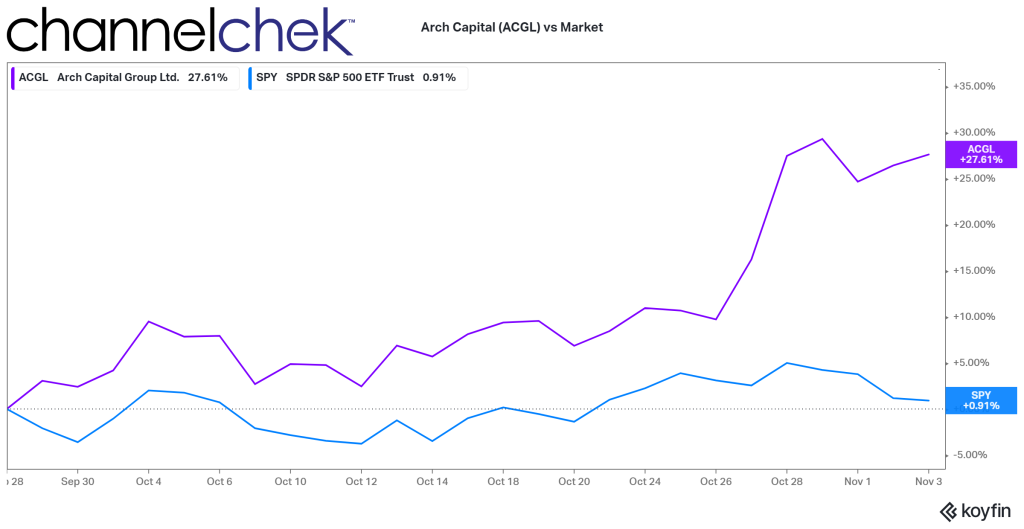
An example of what added demand does to the valuation of a company when being added to an index can be seen over the last month when it became clear that Twitter would be leaving an empty slot that would be filled by Arch Capital (ACGL). The added demand for ACGL pushed up the value by an estimated 25%. Was it undervalued before (when stand-alone), or is it over-valued now? Some stocks that are getting more attention because they are in an index could, as Michael Burry warned, be in bubble territory.

Source: Koyfin

Setting Up a Portfolio

The more you do to ensure your portfolio weightings mimic an index, the closer your performance is likely to be to that index. You may want to limit your holdings to names that are actually in the index and shift the weightings for return enhancement. Another concern often cited with indexes is the way that they weight holdings; you may choose to weight your portfolio using the market capitalization of each company to own the same percentage of the company’s value or use another method like pure cost measures or cost per P/E.

Picking Stocks

While studies suggest that market diversification can be achieved by owning as few as five stocks and doesn’t improve much after 30 holdings, the more you own, providing they aren’t overweighted in a sector, it stands to reason the more diversification protection you can achieve.

As a DIY, self-directed investor, it makes sense not to chase after whatever YouTube influencer, loud-mouthed-TV analyst, or Stocktwit tells you. This is your baby, and the results, good or bad, are yours. Do what you can to make informed decisions, even if some turn out unexpected. The benefit of this is you can lean away from stocks that are still in indexes that don’t have good future prospects and lean into more companies that do.

I’m hearing from more of my self-directed investor friends and investment advisors that more people are looking to own companies that have non-financial objectives they, as an investor, support. And for some of them, there is no standard ESG framework that they support. They have decided, because they do care, to do more portfolio management with individual stocks than before. This is so they can individually look under the hood at employee policies, or environmental stature, etc. While ESG funds exist, the investor or client of the investment advisor would prefer not to own anything they oppose if they can avoid it. What better way than being able to say no to $XYZ company because they do this, this, and this that is against my own fabric?

Channelchek is a great resource for any percentage of your personally managed fund that includes stocks in the small-cap or microcap categories. These stocks could add a bit more potential for return but could also change your risk characteristics. Sign-up to get research from FINRA-licensed analysts.

Take Away

Stock investing has evolved and become more inclusive. But the future may be more like the past, with individuals creating portfolios of stocks for themselves. You don’t have to be rich anymore to buy stocks, and you don’t have to own a fund to get affordable diversification on nearly any size account. There’s a trend toward building one’s own personalized, diversified, low-transaction portfolio. Channelchek is helping investors find possible fits with its free research platform.

Paul Hoffman

Managing Editor, Channelchek

November’s FOMC Meeting – Will December Be the Same?

Image Credit: Federal Reserve (Flickr)

The FOMC Votes to Raise Rates for Sixth Time (2022)

The Federal Open Market Committee (FOMC) voted to raise overnight interest rates from a target of 3.00%-3.25% to the new level of 3.75% – 4.00% at the conclusion of its November 2022 meeting. The monetary policy shift in bank lending rates was as expected by economists and the markets. The recent focus has been more on what the next move in December might look like. There were no clues given in the statement following the meeting. Many, including some members of Congress that recently wrote a letter to Chair Powell, have urged the Fed to be more dovish, while others suggest the central bank is still behind and hasn’t moved aggressively enough. A third contingent believes there may be more work to be done, but there should first be a pause to see what the impact has been of five aggressive moves.

The statement accompanying the policy shift also included a discussion on U.S. economic growth continuing to remain positive. There was little changed. Language from that statement can be found below:

Fed Release November 2, 2022

Recent indicators point to modest growth in spending and production. Job gains have been robust in recent months, and the unemployment rate has remained low. Inflation remains elevated, reflecting supply and demand imbalances related to the pandemic, higher food and energy prices, and broader price pressures.

Russia’s war against Ukraine is causing tremendous human and economic hardship. The war and related events are creating additional upward pressure on inflation and are weighing on global economic activity. The Committee is highly attentive to inflation risks.

The Committee seeks to achieve maximum employment and inflation at the rate of 2 percent over the longer run. In support of these goals, the Committee decided to raise the target range for the federal funds rate to 3-3/4 to 4 percent. The Committee anticipates that ongoing increases in the target range will be appropriate in order to attain a stance of monetary policy that is sufficiently restrictive to return inflation to 2 percent over time. In determining the pace of future increases in the target range, the Committee will take into account the cumulative tightening of monetary policy, the lags with which monetary policy affects economic activity and inflation, and economic and financial developments. In addition, the Committee will continue reducing its holdings of Treasury securities and agency debt and agency mortgage-backed securities, as described in the Plans for Reducing the Size of the Federal Reserve’s Balance Sheet that were issued in May. The Committee is strongly committed to returning inflation to its 2 percent objective.

In assessing the appropriate stance of monetary policy, the Committee will continue to monitor the implications of incoming information for the economic outlook. The Committee would be prepared to adjust the stance of monetary policy as appropriate if risks emerge that could impede the attainment of the Committee’s goals. The Committee’s assessments will take into account a wide range of information, including readings on public health, labor market conditions, inflation pressures and inflation expectations, and financial and international developments.

Take-Away

Higher interest rates can weigh on stocks as companies that rely on borrowing may find their cost of capital has increased. The risk of inflation also weighs on the markets. Additionally, investors find that alternative investments that pay a known yield may, at some point, be preferred to equities. For these reasons, higher interest rates are of concern to the stock market investor. However, an unhealthy, highly inflationary economy also comes at a cost to the economy, businesses, and households.

The next FOMC meeting is also a two-day meeting that takes place December 14-15. If the updates to GDP, the pace of employment, and overall economic activity is little changed, the Federal Reserve is expected to move again, perhaps not in as big of a step.

Paul Hoffman

Managing Editor, Channelchek

Sources

https://www.federalreserve.gov/newsevents/pressreleases.htm

https://www.warren.senate.gov/imo/media/doc/2022.10.31%20Letter%20to%20Fed%20re%20Monetary%20Policy.pdf

https://www.warren.senate.gov/imo/media/doc/2022.10.31%20Letter%20to%20Fed%20re%20Monetary%20Policy.pdf

Blockchain and Web 3 Communities Get More Visibility Into Their Networks

Image Credit: Dejan Krsmanovic (Flickr)

Helping Blockchain Communities Fix Bugs

Zach Winn | MIT News Office

If the crypto enthusiasts are right, the next decade will see billions of people begin using applications built off distributed, user-owned blockchains. The new paradigm has been dubbed Web 3. But Web 3 still has some significant challenges to overcome if it’s going to replace the digital world as we know it.

Blockchain networks, for instance, are going to need an efficient way of detecting and resolving performance problems. Current analytics tools are built for companies to monitor their websites and apps. Such services need only be designed for one user. In the decentralized world of the blockchains, however, the users are the owners, turning the traditional model of maintenance and bug fixes on its head.

The company Metrika, founded by an MIT alumnus, has developed a suite of tools to help the distributed communities of the blockchain world monitor and improve their networks. The company allows users to create alerts, access reports, and view real-time community dashboards that visualize network performance, problems, and trends over time.

“Metrika is a community-based monitoring and collaboration platform,” founder and CEO Nikos Andrikogiannopoulos SM ’06, MBA ’11 says. “We’re making [blockchain network] telemetry a public good for everyone. These applications are holding billions of dollars in assets, so it’s unimaginable that we wouldn’t have service assurance and deep visibility of what is happening in real-time.”

Metrika is currently providing services for popular blockchain protocols including Ethereum, Algorand, Flow, and Solana. The company plans to expand that list as other networks grow in popularity in hopes of enabling the much-hyped shift to Web 3.

“Our vision at Metrika is to become a critical layer of the Web 3 world,” Andrikogiannopoulos says. “Ten years from now, kids will be interacting with assets on their mobile phone. The idea of a bank account will be foreign to them. There will be no corner banks. The whole idea of finance will not go through physical stores and bank accounts — you’ll have assets on every application you use. In that world, where everything is happening on a blockchain, how can Metrika help provide the observability, reliability, and visibility of the blockchain network?”

Bouncing Ideas Off MIT

Andrikogiannopoulos first came to MIT as a graduate student in 2004 and he likes to say he never really left. To this day he lives in Cambridge with his wife, who works at MIT, and returns to campus often.

After earning his second MIT degree, an MBA from the Sloan School of Management, Andrikogiannopoulos began a telecommunications consulting job. During lunch breaks, he’d return to MIT to work with the Venture Mentoring Services (VMS), where entrepreneurs from the MIT community can connect with mentors and receive advice. While kicking around telecommunications startup ideas, a VMS mentor connected him to internet entrepreneur Rubin Gruber, who suggested he explore the blockchain space instead.

It was mid 2018 — what many remember as the “crypto winter” for the lull in blockchain hype and the corresponding crash of crypto prices. But Andrikogiannopoulos began researching the industry and networking with people in the blockchain space, including an MIT alumnus working at the blockchain company Algorand, which was founded by Silvio Micali, the Ford Foundation Professor of Engineering at MIT.

A few months after their initial talk, Andrikogiannopoulos returned to Gruber’s office and told him blockchains were lacking monitoring and operational intelligence.

The problem stems from the decentralized structure of blockchains. Each user operates as a node in the system by creating, receiving, and moving data through their server. When users encounter a problem, they need to figure out if the problem lies within their node or involves the network as a whole.

“They might go on Twitter and Discord and ask other users what they’re experiencing,” Andrikogiannopoulos says. “They’re trying to triangulate the problem, and it takes several hours for them to figure out the issue, coordinate a response, and resolve it.”

To build Metrika, Andrikogiannopoulos set up open-source nodes across the globe that pull data from the nodes and networks, then aggregate those data into easy-to-understand reports and other tools.

“We act as public infrastructure, so users get visibility through dashboards, alerting, and reports, and then we add collaboration tools on top of that,” Andrikogiannopoulos explains.

By 2019, Metrika had begun detecting problems with node performance, staking, network latency, and errors like blocks not being produced at the right rate. Andrikogiannopoulos showed his progress to employees at Algorand, who expressed interest, so he continued building out Metrika’s suite of tools.

“You can see the idea of Metrika bounced across the entire MIT ecosystem,” Andrikogiannopoulos says. “It’s crucial when you start companies that you have these kinds of insight and resource-rich environments like MIT, where you can iterate on your ideas and find team members to join you.”

Enabling Web 3

Blockchains are no longer a niche technology. Around the world, companies in finance and logistics, as well gamers and other creatives, are adopting the technology.

“The blockchain world up to today has been a large experiment,” Andrikogiannopoulos says. “A lot of this infrastructure just hasn’t been built. But Bitcoin proved this can work outside of the traditional finance world, and Ethereum is bringing it to another level with applications, smart contracts, and by creating essentially a decentralized, smart computer. We think about enabling that world we see coming.”

As Metrika continues building out solutions to monitor blockchains, it also wants to offer services for the many applications being built on top of that infrastructure.

“In the future, if a blockchain transaction doesn’t go through and you’re Goldman Sachs or JP Morgan, you need to know why that transaction didn’t go through and what happened,” Andrikogiannopoulos says. “Or if you’re an application playing a game or buying assets and the transactions are lagging, you need to understand why the user experience is being impacted. In Web 3 these things are every important because of the scale and the flow of value we’re talking about.”

For Nikos, improving blockchain performance is not just about optimizing networks. It’s also about helping to usher in the world of open finance and open applications that Web 3 promises.

“We’ve reached 17 hours of outage on blockchain networks in some cases, but what’s even more important to me is not the outages themselves, but the infrastructure needed to avoid them as the industry continues maturing,” Nikos says. “These problems can compromise trust as we’re onboarding users into the Web 3 world. Metrika’s mission is to enable a compelling Web 3 ecosystem.”

Here is what the FOMC is Looking At

Image Credit: Dan Perl (Flickr)

The Many Factors that Come Into a Fed Rate Decision are Mind Boggling

What do the FOMC members look at as they’re changing interest rates and whipping up new policy stances?

The Federal Open Market Committee, or FOMC, meets eight times a year. There are 12 members; seven are board members of the Federal Reserve System, and five are Reserve Bank presidents, including the president of the Federal Reserve Bank of New York, who serves as president of the committee. The group, as a whole, is arguably among the most powerful entities in the world. What is it that this group, that impacts all of us, focus on? And what specifically will they weigh into their decision at the current meeting?

Labor markets and prices are top on the Fed’s list and specifically part of their mandate. Also feeding into the mandate are contributing factors like housing, growth trends, and risks to monetary policy.

Prices (Inflation Rates)

Inflation remains elevated. In September, the Consumer Price Index (CPI) picked up to 0.4%. Energy prices declined in each month of the third quarter, dropping a cumulative 11.3% since June. The Fed will have to discern if this is sustainable or a function of oil reserve releases that will need replacing. Food prices continued high, although at a slower 0.8% increase during September.  

Core CPI inflation (which strips out energy and food) started the third quarter at a somewhat slow pace—increasing just 0.3% in July. The trend went against the Fed as it rose by 0.6% in both August and September. Price growth for services was the largest contributor to an increase in core CPI in the third quarter.

One of the two mandates of the Federal Reserve is to keep inflation at bay. Chairman Powell has said they are targeting a 2% annual inflation level. While nothing that has been reported in price increases since the last meeting has approached that low of a target, the Fed also has to consider their tightening moves do not work to lower demand (especially in food and energy) rapidly.

The Federal Reserve’s preferred measure of inflation is the PCE price index; this is the measure they use with their 2% target. The PCE price index typically shows lower price growth than CPI because it uses a different methodology in its calculation, but the drivers of both measures remain similar. Over the year ending September, the headline PCE price index rose 6.2 percent, while the core PCE price index was up 5.1 percent.

Jobs (Employment and Wages)

Labor markets are still tight. The economy has added an additional 3.8 million jobs this year through September. This includes 1.1 million during the most recent quarter. During the third quarter, the U.S. economy exceeded pre-pandemic employment levels. The unemployment rate hasn’t budged much, and as of September, the rate held at a comfortable 3.5 percent rate.

The broadest measure of unemployment—the U-6 rate is a measure of labor underutilization that includes underemployment and discouraged workers, in addition to the unemployed. The U-6 rate has also remained behaved all year. It stood at 6.7 percent in September, the lowest rate in the history of the series (starting in January 1994).

When the Fed pushes on a lever for one of its mandates, in this case it is tightening to reign in inflation, it has to watch the impact on its other mandate, in this case, the job market. So far, there is nothing that has occurred on the employment side that should tell the Fed they have gone too far too fast.

.In fact, the labor numbers may suggest they should discuss whether they have moved nearly fast enough. Competition for employees continued as the economy added an additional 3.8 million through September 2022 (1.1 million during the third quarter). Notably, during the third quarter, the economy surpassed pre-pandemic employment levels as of August 2022.

Image: FOMC participants meet in Washington, D.C., for a two-day meeting on September 20-21, 2022, Federal Reserve (Flickr).

Housing Markets

Housing demand decreased in the third quarter as affordability (lending rates + prices), with economic uncertainty weighed on homebuyers. During September, 90% of all home sales were of existing homes. This pace declined 1.5 percent over the month (down 23.8 percent on a twelve-month basis). New single-family home sales dropped a large 10.9% in September; this was the seventh monthly decline.

Homes available for sale have now risen from all-time lows; this includes new and existing.

Over the past few years, home prices have increased dramatically; this was fueled by Fed policy. Prices still remain above longer-term trendlines. The Case-Shiller national house price index measures sales prices of existing homes; this was up 13% over the year ending August 2022. For reference, for the 12 months ended August 2021, prices rose 20%. The prior year they had only increased 5.8%.

Housing plays a huge role in economic health. The Fed is well aware of all the housing-related inputs to the 2008 financial crisis and the part easy money plays in market crashes. Orchestrating an orderly slowdown to the boom in housing is certainly critical to the Fed’s success.

Other Risks to Economy

Eight times a year, information related to each of the 12 Federal Reserve districts is gathered and bound in a publication known as theBeige Book. This summary of economic activity throughout the U.S. is provided approximately two weeks before each FOMC meeting, so members have a chance to evaluate economic activity over the diverse businesses the U.S. engages in.

U.S. Inflation can arise from conditions outside of the control of the U.S. For example Russia’s invasion of Ukraine has added upward pressure to inflation this year. This impact may have to be determined and netted out of calculations and policy as the Fed can’t fight this inflation pressure with monetary policy.  An example would be the Fed can’t alter global food shortages brought on by war.

Dollar strength or weakness comes from many things. One of the most impactful is the difference in interest rates net of inflation between countries and their native currency. If the Fed raises rates when a competing currency has not, there is a chance there will be more demand for the alternative currency, which would weaken the dollar. Further complicating this for the Federal Resreve is a lower dollar is inflationary as it causes import prices to rise, a stronger dollar can reduce domestic economic activity as exports fall. The U.S. dollar has been rising and is now at its strongest in 20 years.

Commodity Prices were elevated in the first half of this year, mostly by energy.  Although there was some relief from gas prices over the summer, energy is expected to rise into the colder months. They may rise further as the U.S. Strategic Petroleum Reserves are used less to control prices, this may be curtailed.  The White House’s two goals of sharply reducing Russian revenue and avoiding further disruptions to global energy supplies while at the same time reducing oil use and production within the U.S. are a tanglement the Fed needs to consider. These can be very impactful to costs and economic activity, yet The Fed has no direct levers to impact these economic inputs.  

World economies play a part in our own economic pace. If the Fed were to tighen aggressively while the global business is slowing, the impact of the tightening might be more pronounced than if the world economies are booming. Demand for goods and services impacts prices; the U.S. doesn’t live in a vacuum, and demand for our production and our demand for foreign production all must weigh on the Feds outlook for global economic health.

According to the IMF’s latest World Economic Outlook, global growth is expected to slow to 3.2 percent in 2022 and just 2.7 percent in 2023.  At the same time, central banks around the world are tightening monetary policy to fight high global rates of inflation.  In addition, there has been financial instability in some major world economies. These rising risks to the global growth outlook may feed back into the U.S. outlook by weakening international demand for U.S. goods and service exports. On the positive economic side, China is considering easing its Zero-COVID policy, which could eventually ease the supply chain impact to inflation. 

Take Away

The original question was, “What do the FOMC members look at as they’re changing interest rates and whipping up new policy stances?” The answer is they have to look at everything. The recent mix of “everything” shows growth and employment in the U.S. have sustained at an even keel. Will previous rate hikes to calm inflation eventually take their toll? This is probably the big question the FOMC will be evaluating. Other domestic issues, including housing and the financial markets, are certainly to be weighed as well – a  market crash of any magnitude could quickly slow economic activity.

The Fed has little control over what goes on overseas but must be aware of and hedge its policy to allow for.

All told, the Federal Reserve has a very difficult job. The report of the new monetary policy stance should hit the wire at 2 pm ET today (November 2).

Paul Hoffman

Managing Editor, Channelchek

Sources

https://www.bls.gov/opub/ted/2021/consumer-prices-increase-6-2-percent-for-the-year-ended-october-2021.htm

www.bea.gov

Exploring an Interesting Opportunity in a Traditional Business

Image: Pamela Silva, Univision (Wikimedia Commons)

The Investment Road Less Travelled Has More Opportunity, But Less Available Information

An expanding customer base has always been a solid reason for further exploration of an investment opportunity. An investor’s expectations of growth potential have the power to create initial intrigue and prompt further exploration. This exploration should, at a minimum, include actual data (not hunches), and outside estimates from experts in the field – along with a review of management’s plans.

One also has to understand competition, direct and indirect, and how that is expected to grow. And, of course, current profit and earnings breakdown with an idea of plans for the future. You may even explore if there is a chance the company is a possible acquisition target and how that may impact stock performance. Then, depending on the company or industry, less cursory digging should be done. This is where self-directed investors or small or mid-sized investment advisors get tripped up. They may not have access to someone knowledgeable enough about the company.

Opportunity to Think About

A co-worker asked the other day what I thought of traditional media companies in the U.S. as an investment, including TV and radio. Without thinking too deeply, I said what most people might say, the industry is spread thin as competition for people’s time and attention keeps growing. While anything is good at the right price, if the audience (customer base) is declining, that “right price” is going to be low.

He asked another question, how many Spanish-speaking people are immigrating to the U.S. each year, and what one product will they likely be using that is generally not consumed by English-speaking residents? Although I didn’t know there was a company that has approximately 65% market share of the Spanish-speaking market, I understood where his line of questioning was going – and became intrigued.

A Few Things I Learned

I did some Googling.

The Census Bureau’s monthly Current Population Survey (CPS) shows that the total foreign-born or immigrant population in the U.S. hit 47.9 million in September 2022. This is an increase of 2.9 million since January 2021.

Immigrants from Latin American countries other than Mexico account for 60 percent of the increase in the foreign-born population since January 2021. The Mexican-born population in the U.S. actually decreased by 4%.

At 143,000, the average monthly growth in the foreign-born population, which is 60% Hispanic, is at an all-time high pace.  

There is a company, Entravision (EVC), which is a diversified Spanish-language media company. They own both television and radio stations to reach Hispanic consumers across the United States.

Entravision owns and/or operates 53 primary television stations and is the largest affiliate group of both the top-ranked Univision television network and Univision’s TeleFutura network. They have television stations in 20 of the nation’s top 50 Hispanic markets. As far as radio, the company also operates one of the largest groups of primarily Spanish-language radio stations in the U.S.

My thoughts are while the business itself is getting fragmented, the rapidly growing demographic that is likely to tune in to an Entravision station is growing at a rapid pace. And there is very little competition.


An Interesting Time to Explore Spanish Language Media

While I’m still doing some due diligence and reading thoughts from the multiple analysts that cover EVC, including one whose research of the company is available on Channelchek (see it here), I’m waiting for their earnings report this Thursday (November 3).

If my intrigue is still high after Thursday, Noble Capital Markets is holding two lunches and a breakfast where investors can attend one and meet with management, hear them discuss their company, and ask any questions to clear up unanswered questions.

These meetings are in Florida, one in Boca Raton on November 8 and two in Central Florida (Orlando and Winter Park), on November 9. If you will be in the area and also find Entravision worth exploring, register for a breakfast or lunch meeting here.

Take Away

The investment “road less traveled” is often lined with gold but also requires a lot more digging to find useful information that makes you comfortable making a decision. Discovering actionable ideas and then exploring them is what Channelchek is about.

The In-Person “Meet the Management” Series, put on by Noble Capital Markets and Channelchek, is a good way for investment professionals and individuals to supplement the data and research on Channelchek with an opportunity most investors never get, a discussion over breakfast or lunch with management.

Paul Hoffman

Managing Editor, Channelchek

October’s Stock Market Performance Has a Valuable Lesson

Image Credit: Jordan Doane (500px.com)

Looking Back at October and Forward to Year-End 2022

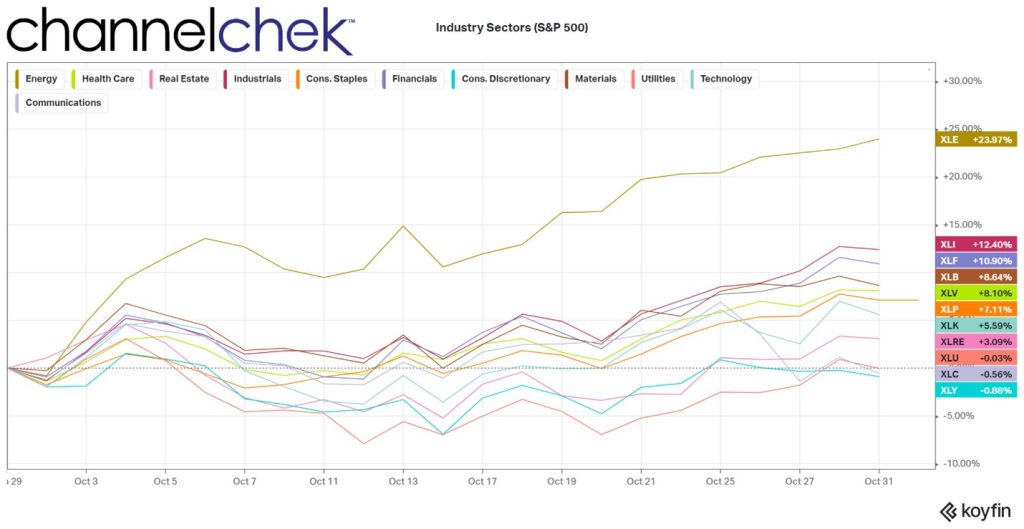
The stock market for October was a home run for many industries. In fact, only a few market sectors were negative, each by less than one percent. After a losing first three quarters in most categories, investors are now asking, are we out of the losing slump? Did I already miss the best plays? There are still two months left in 2022, and there are a number of expected events that could cause high volatility (up/down). If you’ve been a market spectator, you want to know, should I get on the field and maybe take advantage of this streak? If you’ve been involved and are now at a recent high, you may instead consider taking a seat for the last two months.

Let’s look back and then forward as we enter the final two months of the year. Below we look at the month behind us in stocks, gold, and crypto. There is something that may be unfolding is stocks that is worth steering around.

Major Market Indexes for October

Source: Koyfin

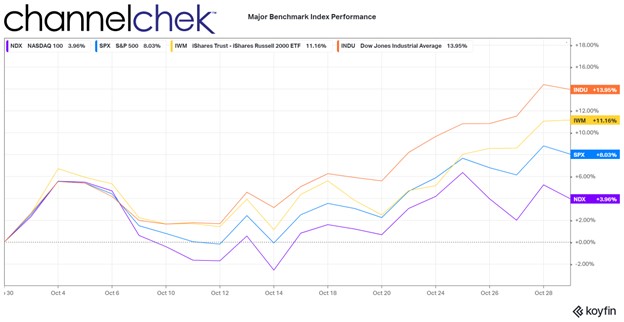
Large industrials, as measured by the Dow 30, had the best comparative performance in October. In fact, the Dow had its best month since 1976. Some investors have been rotating out of large high-tech and into more traditional businesses, like large industrial companies. Another reason it has gotten attention is of the 30 stocks in the Dow Industrials, at least 27 are expected to pay dividends; the lower stock prices from months of decline have raised the expected dividend yields to levels where investors are finding value and doing some reallocating. For example, Dow Chemicals (DOW)with a yield near 5% (plus any appreciations) or Verizon (VZ) at 7% can be appealing, especially for assets of retirees.

The small-cap stocks, as measured by the Russell 2000, weren’t far behind the Dow 30. This group has been lagging for some time and, by many measures, including price/earnings, offers value, while many larger stocks are still considered overpriced. Another thing working in favor of small U.S.-based companies is a likely customer universe that is not hurt by a strong dollar and international trade. In fact, there are small companies that can be shown to have benefitted from a strong native currency and have a competitive advantage with lower borrowing needs. Many analysts expect continued outperformance of the small-cap sector as it offers value and less global disruption.

The top 500 largest stocks, as measured by the S&P 500, had a very good month but are being dragged down by the large weighting of a few huge companies that the market feels have gotten way ahead of where they should be reasonably priced. The Nasdaq 100, shown above as returning only around 3.6%, has been hurt by this index weighting as well. These indexes had once benefitted from these few stocks flying high during the pandemic; the post-pandemic world, as well as global headwinds, are now working against them.

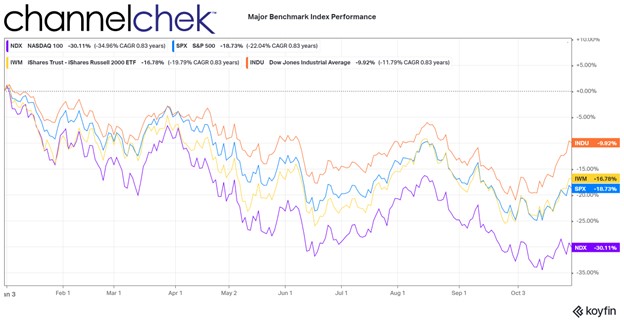
Major Market Indexes Through 10/2022

Source: Koyfin

Investors have been taught that index funds and ETFs provide diversification, but that has never been true of Dow-indexed funds (30 stocks). And the S&P and Nasdaq 100, with heavy weightings in a few companies, only give the illusion of broad exposure. The S&P 500 and Nasdaq 100 relative performance during October may cause more investors to consider hand-selecting companies with lower P/Es, lower global exposure, and higher growth potential.

Sectors Within S&P Index

Source: Koyfin

Oil companies regained their lead as they have been a sector detached from other stocks since late 2019. The industrial sector was second and followed by the only other industry above double digits, finance. Most (not all) financial companies benefit from higher interest rates, and those that take deposits (short-term) and lend money (long-term) do best with a steep yield curve.

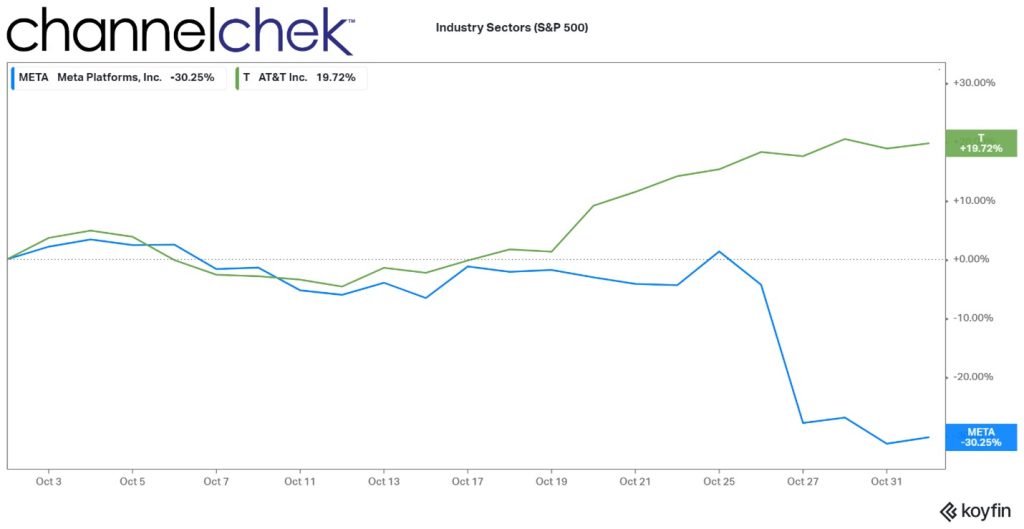
On the bottom of the list are consumer discretionary companies, which are hurt by the strong dollar and a weakening economy; this sector is followed by communication. Communication is worth a deeper dive as it exemplifies how the weighting of stocks in popular indexes can hurt index returns – some say high-flying, highly weighted stocks are even in a bubble.

Below the chart compares two names in the S&P 500 that are also represented in the communications index. Meta (META) is 17.70% of the index and is down 30% in October. AT&T (T) is 4.70% of the communications index; it returned nearly 20% for the month. The funds weighting methodology that worked to the advantage of index investors, until it didn’t, has worked against some index investors.

Source: Koyfin

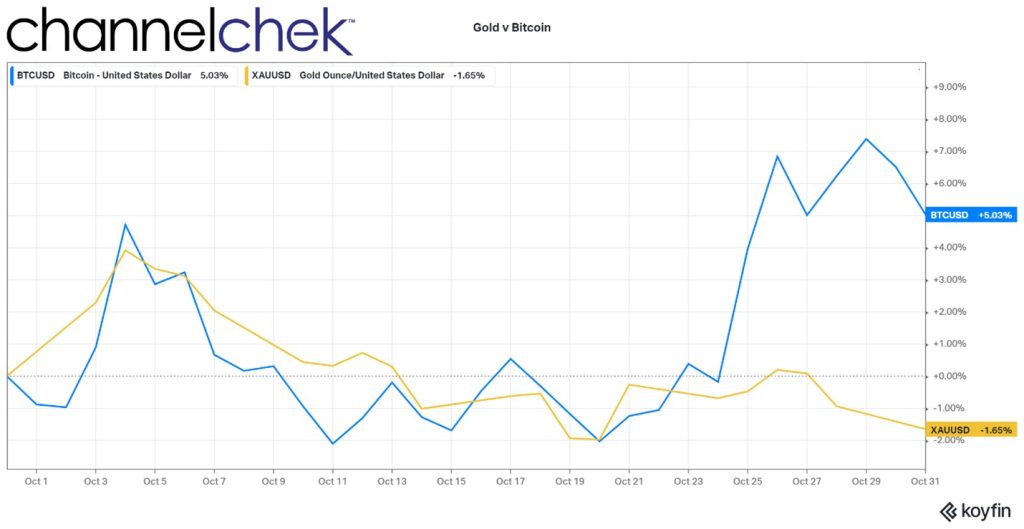
There is a rivalry of sorts between larger, more accepted cryptocurrencies and gold. Gold wants to regain its centuries-old place as the hard asset that best represents safety, even in the worst conditions, and Bitcoin or Ether, which is looking for respect, as the alternative asset that represents safety.

Crypto has been loosely moving in the same direction as stocks all year. October was no exception, as its price per dollar rose significantly during the month. Gold, despite much worry in the world, continued a slow downtrend.

Gold and Bitcoin Performance

Source: Koyfin

Take Away

Stock market participants that held on finally got a month where it was hard not to come out ahead. The question now is, do you take the gains and sit tight while the fed tightening, election, war, and global recession settle? Or do you look at the current dynamics and allocate where the highest probability of success lies? Maybe small-cap value stocks or oil and gas companies.

There is one thing investors have been warned about repeatedly over the years by well-respected investors, including Michael Burry. There is a risk inherent in indexes now that a few extremely “overpriced” stocks represent a large percentage of index funds.

Investors evaluating smaller, individual stocks have found the data and analysis on Channelchek to be indispensable. Be sure to sign-up for Channelchek at no cost to receive unbiased research on companies that are less talked about, but may have a place in your portfolio mix.

Paul Hoffman

Managing Editor, Channelchek

Sources

https://home.treasury.gov/news/press-releases/jy1062

https://indexarb.com/dividendYieldSorteddj.html

https://www.marketwatch.com/investing/fund/xlc/holdings

$1.8 Billion Cancer “Moonshot” includes MCED Development

Image Credit: Karolina Grawbowska (Pexels)

A Blood Test that Screens for Multiple Cancers at Once Promises to Boost Early Detection

Detecting cancer early before it spreads throughout the body can be lifesaving. This is why doctors recommend regular screening for several common cancer types, using a variety of methods. Colonoscopies, for example, screen for colon cancer, while mammograms screen for breast cancer.

While important, getting all these tests done can be logistically challenging, expensive and sometimes uncomfortable for patients. But what if a single blood test could screen for most common cancer types all at once?

This is the promise of multicancer early detection tests, or MCEDs. This year, President Joe Biden identified developing MCED tests as a priority for the Cancer Moonshot, a US$1.8 billion federal effort to reduce the cancer death rate and improve the quality of life of cancer survivors and those living with cancer.

This article was republished with permission from The Conversation, a news site dedicated to sharing ideas from academic experts. It represents the research-based findings and thoughts of Colin Pritchard, Professor of Laboratory Medicine and Pathology, University of Washington.

As a laboratory medicine physician and researcher who develops molecular tests for cancer, I believe MCED tests are likely to transform cancer screening in the near future, particularly if they receive strong federal support to enable rapid innovation.

How MCED Tests Work

All cells in the body, including tumor cells, shed DNA into the bloodstream when they die. MCED tests look for the trace amounts of tumor DNA in the bloodstream. This circulating “cell-free” DNA contains information about what type of tissue it came from and whether it is normal or cancerous.

Testing to look for circulating tumor DNA in the blood is not new. These liquid biopsies – a fancy way of saying blood tests – are already widely used for patients with advanced-stage cancer. Doctors use these blood tests to look for mutations in the tumor DNA that help guide treatment. Because patients with late-stage cancer tend to have a large amount of tumor DNA circulating in the blood, it’s relatively easy to detect the presence of these genetic changes.

MCED tests are different from existing liquid biopsies because they are trying to detect early-stage cancer, when there aren’t that many tumor cells yet. Detecting these cancer cells can be challenging early on because noncancer cells also shed DNA into the bloodstream. Since most of the circulating DNA in the bloodstream comes from noncancer cells, detecting the presence of a few molecules of cancer DNA is like finding a needle in a haystack.

Making things even more difficult, blood cells shed abnormal DNA naturally with aging, and these strands can be confused for circulating cancer DNA. This phenomenon, known as clonal hematopoiesis, confounded early attempts at developing MCED tests, with too many false positive results.

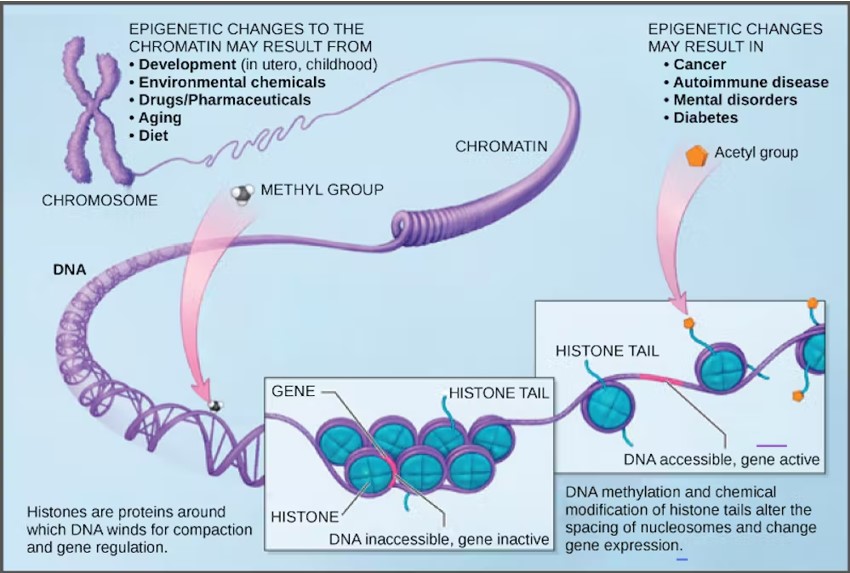
Fortunately, newer tests are able to avoid blood cell interference by focusing on a type of “molecular barcode” embedded in the cancer DNA that identifies the tissue it came from. These barcodes are a result of DNA methylation, naturally existing modifications to the surface of DNA that vary for each type of tissue in the body. For example, lung tissue has a different DNA methylation pattern than breast tissue. Furthermore, cancer cells have abnormal DNA methylation patterns that correlate with cancer type. By cataloging different DNA methylation patterns, MCED tests can focus on the sections of DNA that distinguish between cancerous and normal tissue and pinpoint the cancer’s origin site.

DNA contains molecular patterns that indicate where in the body it came from. (CNX OpenStax/Wikimedia Commons)

Testing Options

There are currently several MCED tests in development and in clinical trials. No MCED test is currently FDA-approved or recommended by medical societies.

In 2021, the biotech company GRAIL, LLC launched the first commercially available MCED test in the U.S. Its Galleri test claims to detect over 50 different types of cancers. At least two other U.S.-based companies, Exact Sciences and Freenome, and one Chinese company, Singlera Genomics, have tests in development. Some of these tests use different cancer detection methods in addition to circulating tumor DNA, such as looking for cancer-associated proteins in blood.

MCED tests are not yet typically covered by insurance. GRAIL’s Galleri test is currently priced at $949, and the company offers a payment plan for people who have to pay out of pocket. Legislators have introduced a bill in Congress to provide Medicare coverage for MCED tests that obtain FDA approval. It is unusual for Congress to consider legislation devoted to a single lab test, and this highlights both the scale of the medical market for MCED and concerns about disparities in access without coverage for these expensive tests.

How Should MCED Tests be Used?

Figuring out how MCED tests should be implemented in the clinic will take many years. Researchers and clinicians are just beginning to address questions on who should be tested, at what age, and how past medical and family history should be taken into account. Setting guidelines for how doctors will further evaluate positive MCED results is just as important.

There is also concern that MCED tests may result in overdiagnoses of low-risk, asymptomatic cancers better left undetected. This happened with prostate cancer screening. Previously, guidelines recommended that all men ages 55 to 69 regularly get blood tests to determine their levels of PSA, a protein produced by cancerous and noncancerous prostate tissue. But now the recommendation is more nuanced, with screening suggested on an individual basis that takes into account personal preferences.

Another concern is that further testing to confirm positive MCED results will be costly and a burden to the medical system, particularly if a full-body scan is required. The out-of-pocket cost for an MRI, for example, can run up to thousands of dollars. And patients who get a positive MCED result but are unable to confirm the presence of cancer after extensive imaging and other follow-up tests may develop lifelong anxiety about a potentially missed diagnosis and continue to take expensive tests in fruitless search for a tumor.

Despite these concerns, early clinical studies show promise. A 2020 study of over 10,000 previously undiagnosed women found 26 of 134 women with a positive MCED test were confirmed to have cancer. A 2021 study sponsored by GRAIL found that half of the over 2,800 patients with a known cancer diagnosis had a positive MCED test and only 0.5% of people confirmed to not have cancer had a false positive test. The test performed best for patients with more advanced cancers but did detect about 17% of the patients who had very-early-stage disease.

MCED tests may soon revolutionize the way clinicians approach cancer screening. The question is whether the healthcare system is ready for them.

The Week Ahead – Rate Hike, Unemployment, and Election Anxiety

What Other Than a Large Rate Hike Can Investors Expect this Week?

Another 75 basis point hike is expected on Wednesday after the November 1-2 FOMC meeting. The discussion that is expected to immediately follow is will the Federal Reserve slow or pause its tightening from there. Those answers can’t be certain as even the Fed hasn’t seen the economic numbers unfold that will lead to the next meeting and play a part in the decision.

Since March, the FOMC has raised rates a cumulative 300 basis points. If they move .75 percent this week, the fed funds target range will be 3.75%-4.00%. This range was last experienced after the January 2008 meeting.

In September’s  Summary of Economic Projections, the FOMC forecast for the fed funds rate was 1.25 percent above the current level or .50 percent above what most expect we will have by the end of the week. The statement and remarks following the next FOMC meeting by Chairman Powell may suggest that the FOMC is going to slow down the upward movement in rates while they see if previous rate hikes have begun to have a slowing impact on the economic pace.

The second scheduled event with the most potential to impact markets is the October Employment Situation on Thursday.  

From there, all attention and talk may be on the elections next week, as they can have a powerful impact on market moves.

Monday 10/31

  • 9:45 am US Chicago Purchasing Managers Report (PMI). The consensus is 47.3. For September, this survey of business conditions in the Chicago area showed a collapse to 45.7. A small improvement is expected from the October Survey
  • 10:30 am Dallas Fed Manufacturing Survey is expected to come in at -18.0. This would be the sixth straight negative reading. This survey tracks manufacturing in Texas; for September, the results were -17.2.
  • 3:00 pm US Farm Prices are expected to have come down during October by -1.8%, showing a year-over-year rate of 20% increase in farm prices. This is an important inflationary gauge as farm prices are a leading indicator of food price changes Consumer Price Index (CPI). There is a direct relationship between inflation and interest rates; markets can be influenced as interest rate expectations rise and fall.  

Tuesday 11/1

  • The Federal Open Market Committee meets eight times a year in order to determine the near-term direction of monetary policy. The November meeting extends through November 2. After the meeting, typically at 2 pm, any change in monetary policy is announced.
  • 10:00 am US Construction Spending is expected to have fallen by -.5%. Construction spending fell 0.7 percent in August, which was the seventh straight lower-than-expected result, showing lower activity in this important economic sector.
  • 10:00 am JOLTS report consensus is 9.875 million. These reported job openings have been falling over several months; the previous month’s (August) openings reported were 10.05 million. The acronym JOLTS stands for Job Openings and Labor Turnover Survey.

Wednesday 11/2

  • Motor Vehicle Sales (US) are expected to have increased to 14.2 million from 13.5 million in September. The pattern of consumption is a direct influencer on company earnings and stock prices. Strong economic growth translates to healthy corporate profits and higher stock prices.
  • 10:30 am EIA Petroleum Report shows crude inventory changes, as well as gasoline and other petroleum products. The Energy Information Administration provides this report weekly. During periods when inflation and fuel prices are a concern, the data in these reports can play a wider-than-normal role in influencing stock, bond, and of course, commodity price levels.
  • FOMC Announcement usually comes at 2:00 pm. The expectations had not changed since the last meeting when it became widely expected that the Federal Reserve would raise overnight lending rates at this meeting by 0.75%. A big focus will be on the policy statement following the meeting to sense at what pace removing accommodation will continue in the US.

Thursday 11/3

  • 8:30 am US Jobless Clams are expected to be 222,000 for the week ending October 29. The prior week they had been 217,000. Employment is one of the Feds’ primary concerns as it fights inflation which also tops the list.
  • 10:00 am US Factory orders are expected to have risen in September by 0.3%. The prior month this leading indicator of future economic activity was flat.
  • 10:30 am EIA Natural Gas weekly report will update the current stocks and storage as well as production information from five regions within the US.

Friday 11/4

  • 8:30 am, the Employment Situation report is released. It is expected to show an unemployment rate of 3.6%, or 210,000. The results of this survey have the potential to jar markets late in the week as one of the more important measures of a healthy economy (weak or overheated) is employment levels.

What Else

If the week brings more clarity from the Federal Reserve and likely next moves, investors may begin to focus on retail numbers as the calendar moves toward the shopping season.

Paul Hoffman

Managing Editor, Channelchek

Sources

https://www.federalreserve.gov/newsevents/calendar.htm

http://global-premium.econoday.com/byweek.asp?cust=global-premium

https://www.federalreserve.gov/monetarypolicy/fomccalendars.htm

Halloween Investment Strategy Recent Results

Image Credit: Pixabay (Pexels)

Is the Halloween Investment Strategy a Trick or a Treat?

What Is the Halloween Strategy? Is it statistically reliable? What have the results been?

The directive, “Always remember to buy in November,” has a few different names; the Halloween effect, the Halloween indicator, are among the more common. It answers the question, If I sell in May and walk away, when do I come back? This is because the “Halloween Strategy” and the “Sell in May” strategies are related — they are different ways of suggesting the same action. The results should be identical.

What Is It?

The Halloween strategy is over a century old. Buying when October ends is essentially a market-timing strategy based on the thought that the overall stock market performs better between Oct. 31st (Halloween) and May 1st than it performs from May through the end of October. The directive suggests first that market timing yields better results than buy and hold. Secondly, it says the probability of better results compared to buying and holding is increased, over this period. Those who subscribe to this approach recommend not investing at all during the summer months.

Evidence suggests this strategy does perform well over time, but despite many theories, there is no clear or agreed-upon reason. A famous study was done by Sven Bouman (AEGON Asset Mgmt.) and Ben Jacobsen (Erasmus University Rotterdam) and published in the American Economic Review December 2002. The study documents the existence of a strong seasonal effect in stock returns based on the Halloween indicator. They found the “inherited wisdom” to be true globally and useful in 36 of the 37 developed and emerging markets they studied. They reported the Sell in May effect tends to be particularly strong in European countries and is robust over time. Their sample evidence shows that in the UK the effect has been noticeable since 1694. They also reported, “While we have examined a number of possible explanations, none of these appears to explain the puzzle convincingly.”

Is it Reliable?

I didn’t go back as far as 1694 the way Sven and Ben did. And I didn’t collect data from emerging and developed markets around the globe. More pertinent to Channelchek readers is whether this strategy used on the U.S. markets has been worthwhile.

Data Source: Koyfin

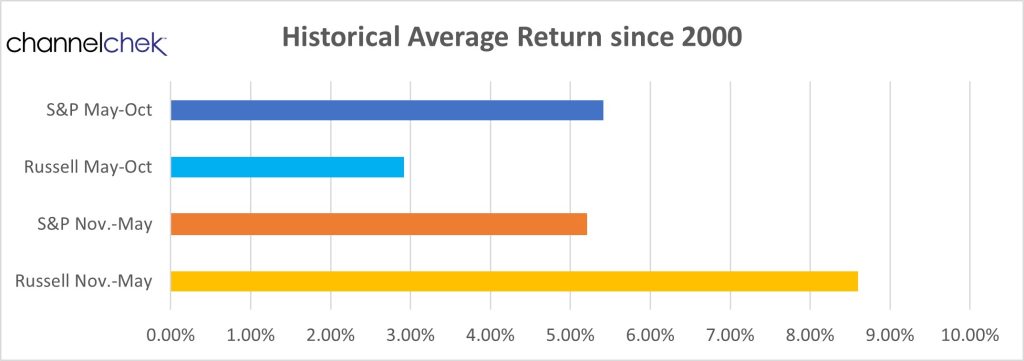
The above chart is a compilation of average results for two six-month periods, May through October and November through April. It also looks at two different indexes, the largest stocks in the S&P 500 (blue shades) index and small-cap stocks of the Russell 2000 (orange shades).

What was discovered is that during the period, investors in either of these indexes would have had positive earnings during either “season.” So it supports “buy and hold” wisdom or, at least, staying invested. During the Halloween through May period, the smallcap Russell returned 8.60%, while during the other six months, performance was a weaker 2.92%. The S&P 500 maintained consistent averages in the low 5% area for either period.

What Have the Results Been?

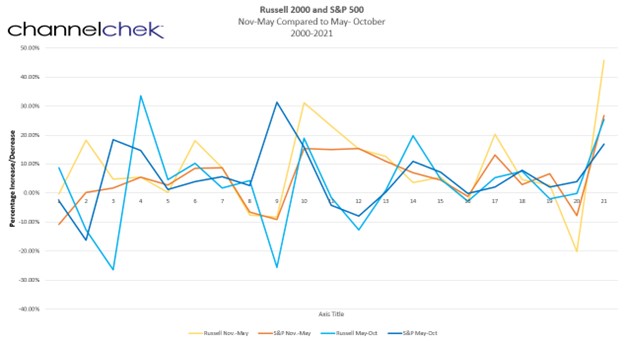
Since the turn of the century, investors would have fared better if they bought stocks represented in the small-cap average after Halloween, then moved to S&P 500 stocks in May. Below are the results of the 21 periods. The highest returns of either index occurred during the latest Halloween to May cycle. It was the small-cap index that measured a 45.76% gain. The index also measured the second-highest gain during the Sell in May 2004 measurement period. The Sell in May small-cap index also can claim the two lowest performance numbers.

Data Source: Koyfin

Take-Away

The Halloween strategy says that investors should be fully invested in stocks from November through April, and out of stocks from May through October. Variations of this strategy and its accompanying axioms have been around for over a century. Looking at the last 21 years, a deviation that would have paid off would have been moving to small-caps after Halloween.

Both “seasons,” for both measured indexes had positive average earnings. So the notion of staying fully invested is supported using recent data.

Paul Hoffman

Managing Editor, Channelchek

Stem Cell Research is Helping to Understand Reproductive Risks in Space

Image Credit: Karl Schultz

Pregnancy in Space: Studying Stem Cells in Zero Gravity May Determine Whether it’s Safe

Space is a hostile, extreme environment. It’s only a matter of time before ordinary people are exposed to this environment, either by engaging in space tourism or by joining self-sustaining colonies far away from Earth.

To this end, there needs to be a much better understanding of how the environmental dangers of space will affect the biology of our cells, tissues, organs, and cognition. Crucially for future space colonies, we need to know whether we can easily reproduce in environments other than those found on Earth.

The effects of radiation on our cells, producing DNA damage, are well documented. What’s less clear is how lower levels of gravity, what scientists call microgravity, will affect the mechanisms and rhythms taking place within our cells.

Scientists are only just beginning to investigate how activity in our cells might be affected by exposure to microgravity. Crucially, experiments on embryonic stem cells, and models of how embryos develop in their first few weeks in space, will help us determine whether it’s possible for humans to produce offspring in the extraplanetary colonies of the future.

Cosmic Conception

The ability to reproduce in space has been assessed in a few animals, including insects, amphibians, fish, reptiles, birds, and rodents. They have found that it’s certainly possible for organisms such as fish, frogs and geckos to produce fertilised eggs during spaceflight that can live and reproduce on Earth.

But the picture is more complicated in mammals. A study of mice, for instance, found that their oestrous cycle, part of the reproductive cycle, was disrupted by exposure to microgravity. Another study found that exposure to microgravity caused negative neurological alterations in rats. Hypothetically, these effects could also be transmitted to subsequent generations.

This likely happens because our cells did not evolve to work in microgravity. They evolved over millions of years on Earth, in it’s unique gravitational field. Earth’s gravity is part of what anchors and exerts physical force on our tissues, our cells, and our intracellular contents, helping to control specific movements within cells. The study of this is called mechanobiology.

The division of cells and the movement of genes and chromosomes within them, which is crucial to the development of a foetus, also works with and against the force of gravity as we know it on Earth. It follows that systems evolved to work perfectly in Earth’s gravity may be affected when the force of gravity changes.

Fetal Position

When an embryo first starts to divide, in a process called cleavage, the rate of division can be faster at one end of the embryo than the other. Gravity plays a role here, determining the position of the very first building blocks in a human life.

gravity also helps to establish the correct body plan of a fetus, ensuring the right cells develop in the right places in the right numbers and in the right spatial orientation.

Researchers have investigated whether embryonic stem cells, which are “pluripotent” and can develop into all cells of the body, are affected by microgravity. At present, there is some evidence that when rodent embryonic stem cells are subjected to microgravity, their ability to become the desired cell types may be impacted.

It is also possible to produce pluripotent human stem cells from normal mature cells of our bodies, which are called induced pluripotent stem cells. These have also been studied under microgravity, with experiments on Earth finding that induced stem cells proliferate faster in simulated microgravity. Two batches of these stem cells are currently on the International Space Station to see whether these results can be replicated in space.

If adult stem cells do proliferate faster in space, it could open the door for commercial stem cell manufacturers to produce these cells in orbit, seeing as it’s difficult to culture enough stem cells on Earth to treat degenerative diseases with stem cell therapies.

Gravitational Field

Besides normal cellular processes, it’s also unclear how fertilization, hormone production, lactation, and even birth itself will be affected by exposure to microgravity.

It seems that short-term exposure to microgravity, of perhaps half an hour, will probably not have too much of an effect on our cells. But longer exposures of days or weeks are likely to have an effect. This is not taking into account the effect of radiation on our cells and DNA, but we already know how to protect against radiation.

Scientists are looking at two ways to protect against the adverse effects of microgravity on our biology: intervention at the cellular level, using drugs or nanotechnology, and intervention on the environmental level, by simulating Earth’s gravity in spacecraft or off-world colonies. Both fields of study are in their early stages.

Still, studying stem cells in space provides a valuable window into how pregnancy could work, or not work when we’re outside Earth’s gravitational field. For now, those fortunate enough to go to space might do well to avoid attempting to conceive before, during or directly after a space flight.

How the Investment Playing Field Can Dramatically Change in November

Image Credit: The White House (Flickr)

The Mid-Term Elections are Just One of the SEC’s Concerns

The mid-term elections have the potential to alter the course of the markets. It’s easy to recognize how the possible outcomes can cause changes to the overall economy, including industry sectors, fuel prices, and perhaps even national debt levels. But, one area that is less obvious could also impact investors in a big way, regulation. As election day is now days away, many regulatory changes that have been in the works are quickly coming to a head, with the expectations there may be a change in priorities, power, and philosophy. The push to get things through in the coming days may still be undermined by the U.S. system. Here’s why.

The U.S. Government at Work

Federal regulators are in scramble-mode working to finalize proposed rules before what appears will be a change in the balance of power in the legislative branch. The possibility that there may be a Republican-controlled Congress or the expected idea that the democrats will lose control over one of the branches of Congress would soften their ability to institute their aggressive agendas. As the agencies refine their proposals, they also have to be mindful that it isn’t just the new Congress that will be evaluating new regulations. The Supreme Court has recently taken a heightened interest in agencies overstepping their charter, that interest is likely to continue.

It’s easy to see how Congress whose job it is to decide where money is spent, can dampen the agenda of the Department of Education (DOE), Internal Revenue Service (IRS), Food and Drug Administration (FDA), or Gary Gensler’s plans at the Securities and Exchange Commission (SEC). But, the Supreme Court is also more than a casual observer and has shown how willing it is to make sure everyone stays in their defined lanes. 

Recent SEC Initiatives

The SEC has a three-part mission that includes protecting investors, maintaining fair, orderly, and efficient markets, and facilitating capital formation. Under Gary Gensler, it has been working overtime to impact the changing marketplaces. The initiatives are considered by some to be beyond the scope of the SEC’s lawful mission.

Gensler, who was appointed by President Biden, has been extremely active. The former Chairman of the U.S. Commodities Futures Trading Commission (CFTC) and MIT economics professor is proposing or finalizing dozens of regulations. Some are minor alterations to existing rules, but many are complete redesigns of how they are handled now. This redesign may make it past an unenthusiastic Congress, as they have more pressing priorities, but they may experience an aggressive halt from the country’s Judicial branch.

Recent Supreme Court Actions

In June of 2022, the Supreme Court decided W. Virginia v. EPA. The decision struck down an EPA regulation fighting climate change. The decision was made based on the grounds that the rule violated the “major questions doctrine.” The Court had never used that term before, but it seemed evident that the court might use the term and intent of the phrase should it be called on to review other federal agencies and commissions.

The Court has the authority and now recent precedent to unwind regulation that goes beyond the original intent of Congress when an agency was created or any subsequent legal grants of authority. The 6-3 ruling against the EPA explained the Clean Air Act, designed for new power plant emissions, did not extend to existing plants requiring them to shift to wind or solar. It’s a nod by the Court to keep bureaucracies from growing beyond the express original legal reason for being. 

The ruling also is relevant in that it looked at Congress’s unwillingness to legislate and legitimize the way that the agency chose to regulate. One Justice in a concurring opinion wrote the decision was in part based on whether the agency was “intruding” in a traditional area of state law. 

How it Could Impact Investors

Under the major questions doctrine, several SEC efforts may become far more difficult.

One high-profile SEC goal involves environmental initiatives. Climate change activists have supported the SEC’s proposal to require companies to increase their disclosure of anticipated climate risks. But it would be difficult for the SEC to weigh its mission against this initiative and easily demonstrate that anyone has a great impact on the other (orderly markets, investor protection, capital formation). If environmental initiatives are to be carried out, they will need to be enacted by the representatives elected to legislate on behalf of citizens.

It is easy to see how priorities focusing more on fiscal restraint rather than environmental awareness could alter the investors playing field with a power change in the Capital building.

The so-called greening of Wall Street is just one example of how the elections will impact the coming year’s winners and losers in the stock market. Consider the SEC’s proposed rules for swaps, which are financial instruments that some investors use to speculate on securities. The SEC’s suggested rule would require public disclosure within a day of these transactions to the public. The proposed rule can be considered an unprecedented intervention in this multi-trillion-dollar market. The argument is strengthened by the reality that Congress could have authorized disclosure in the 2010 Dodd-Frank Act, but did not. The Supreme Court would be expected to rule on behalf of the laws as written.

Another SEC initiative also at risk is the proposed rule on “beneficial” ownership. Such a definition is important for a host of reporting obligations. The SEC is considering expanding what counts as ownership. But questions of ownership have long been a matter of state concern. Gorsuch may have something to say about the SEC’s effort to expand the definition. 

Another example is Kim Kardashian, who was ordered by the SEC to pay a fine for having touted a cryptocurrency on her Instagram account and the compensation she failed to disclose. The SEC has been in a battle with other financial overseers of the U.S. financial system to regulate and control digital currencies, which may or may not meet the definitions of a security or other language that legally created the commission.

Take Away

Regulatory agencies, including the SEC, are likely to have to contend with increased barriers with both the only branch of government that makes both laws and spends money and the branch that deciphers and enforces laws. Rather than argue if this is what should be, or if it slows down progress when wearing one’s investor hat,” investors may only want to consider what industries and what companies within those industries will be the winners and losers – then how does that fit into your overall portfolio strategy.

If you haven’t registered to receive equity research and thoughtful articles and videos from Channelchek, this is a good time to sign-up in preparation for the year-end and 2023. Click here for free registration.

Paul Hoffman

Managing Editor, Channelchek