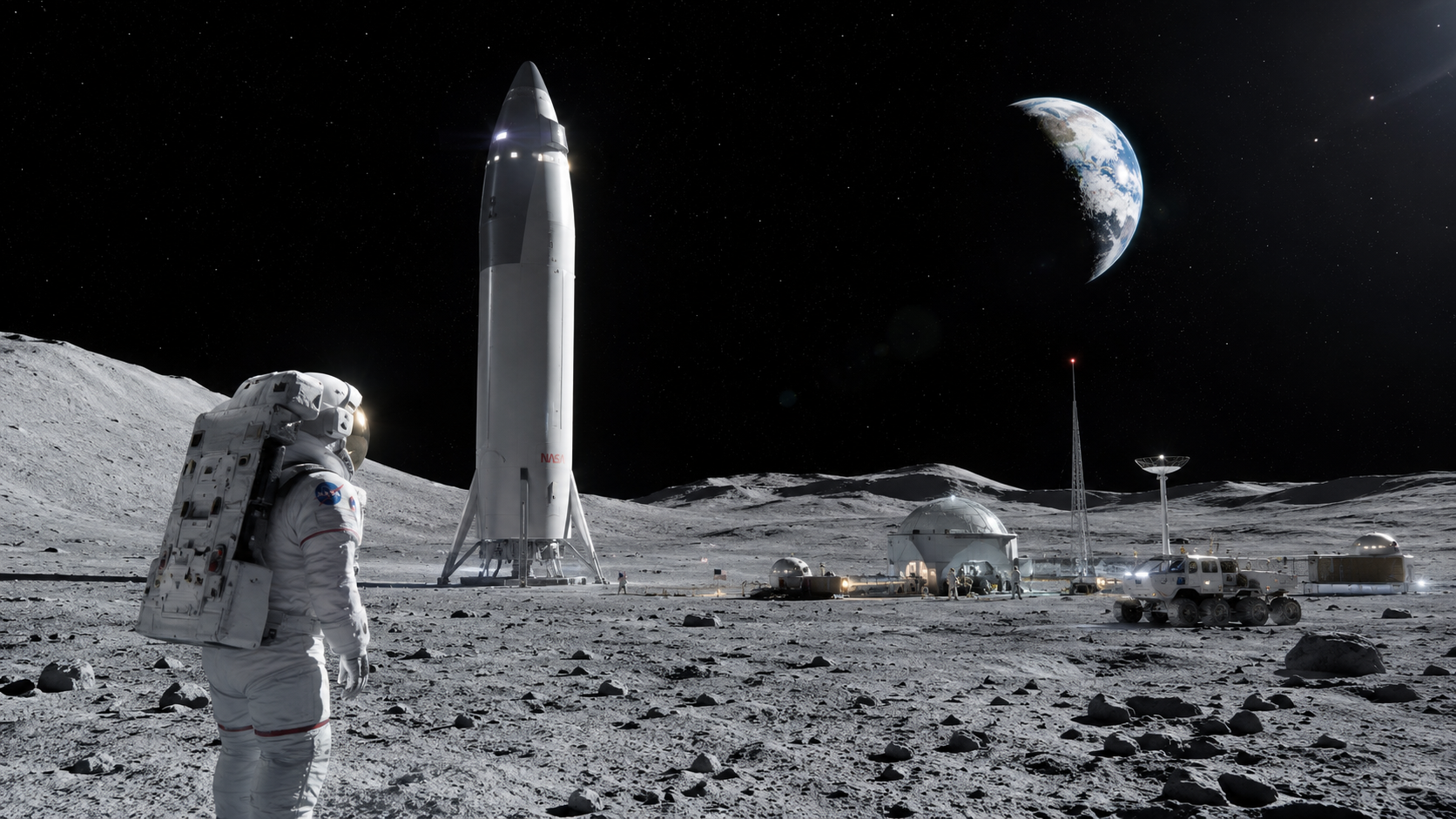
The race to build permanent infrastructure on the Moon has a new and more serious player. Voyager Technologies (NYSE: VOYG), a Denver-based defense technology and space solutions company, announced Tuesday it has signed a definitive agreement to acquire Astrobotic Technology, the Pittsburgh-based commercial lunar logistics and robotics company, for up to approximately $300 million in a combination of cash and stock. The deal is expected to close by early July 2026, subject to customary regulatory approvals.
For a company that has been quietly assembling a full-stack lunar infrastructure portfolio, the Astrobotic acquisition is the piece that makes the entire architecture operational.
What Astrobotic Brings to the Table
Founded in 2007 as a Carnegie Mellon University spinout, Astrobotic has spent nearly two decades building the hardware, software, and operational expertise required to deliver payloads to the lunar surface reliably and repeatably. The company has secured more than $600 million in NASA and Department of Defense contracts and holds the distinction of having launched America’s first commercial lunar lander. Its core product portfolio includes the Peregrine lander for smaller payload missions, the Griffin lander for larger surface delivery operations, and LunaGrid, a solar power distribution system designed to provide sustained electricity on the lunar surface.
That last element matters as much as the landers. A permanent human presence on the Moon requires more than transportation. It requires power infrastructure that can sustain life, operations, and scientific activity across lunar day-night cycles that last approximately two Earth weeks each. LunaGrid is purpose-built for exactly that requirement.
Astrobotic’s Moon Base headquarters in Pittsburgh will become the center of Voyager’s lunar program following close, with the company’s facility in Mojave also continuing operations.
The Full Stack Voyager Is Building
The Astrobotic acquisition does not stand alone. Voyager has been executing a deliberate vertical integration strategy across the lunar infrastructure stack, and this deal slots directly into that roadmap. The combined company will now span lunar mission management, communications and propulsion, surface delivery through Peregrine and Griffin, surface power through LunaGrid, long-duration habitation through its prior strategic investment in Max Space’s expandable habitat architecture, dust mitigation through Voyager’s proprietary clear-dust repellent coating technology, and in-situ resource production.
That is a comprehensive end-to-end lunar capability assembled through targeted acquisitions rather than organic development alone. The strategic efficiency of that approach is notable for a company operating in the small cap space.
The acquisition directly supports NASA’s Artemis program and Administrator Jared Isaacman’s stated commitment to establishing a permanent American presence on the Moon by 2028. Astrobotic’s Griffin Mission One, recently designated NASA’s Moon Base II mission, is proceeding on schedule and will transition fully under Voyager at close.
Why This Deal Matters for Small Cap Space Investors
The commercial lunar economy is not a distant concept. It is a funded, contracted, timeline-driven government priority with hundreds of millions of dollars already flowing to companies like Astrobotic. What has been missing is the kind of vertically integrated commercial operator capable of managing every layer of a sustained lunar presence. Voyager is systematically becoming that operator.
With SpaceX’s June 12 IPO approaching at a targeted $1.75 trillion valuation and the broader space infrastructure sector attracting record institutional attention, consolidation among smaller space technology companies is accelerating. Voyager’s acquisition of Astrobotic is precisely the kind of strategic move that positions a small cap defense and space company for the contracts, partnerships, and government relationships that will define the commercial lunar economy over the next decade.