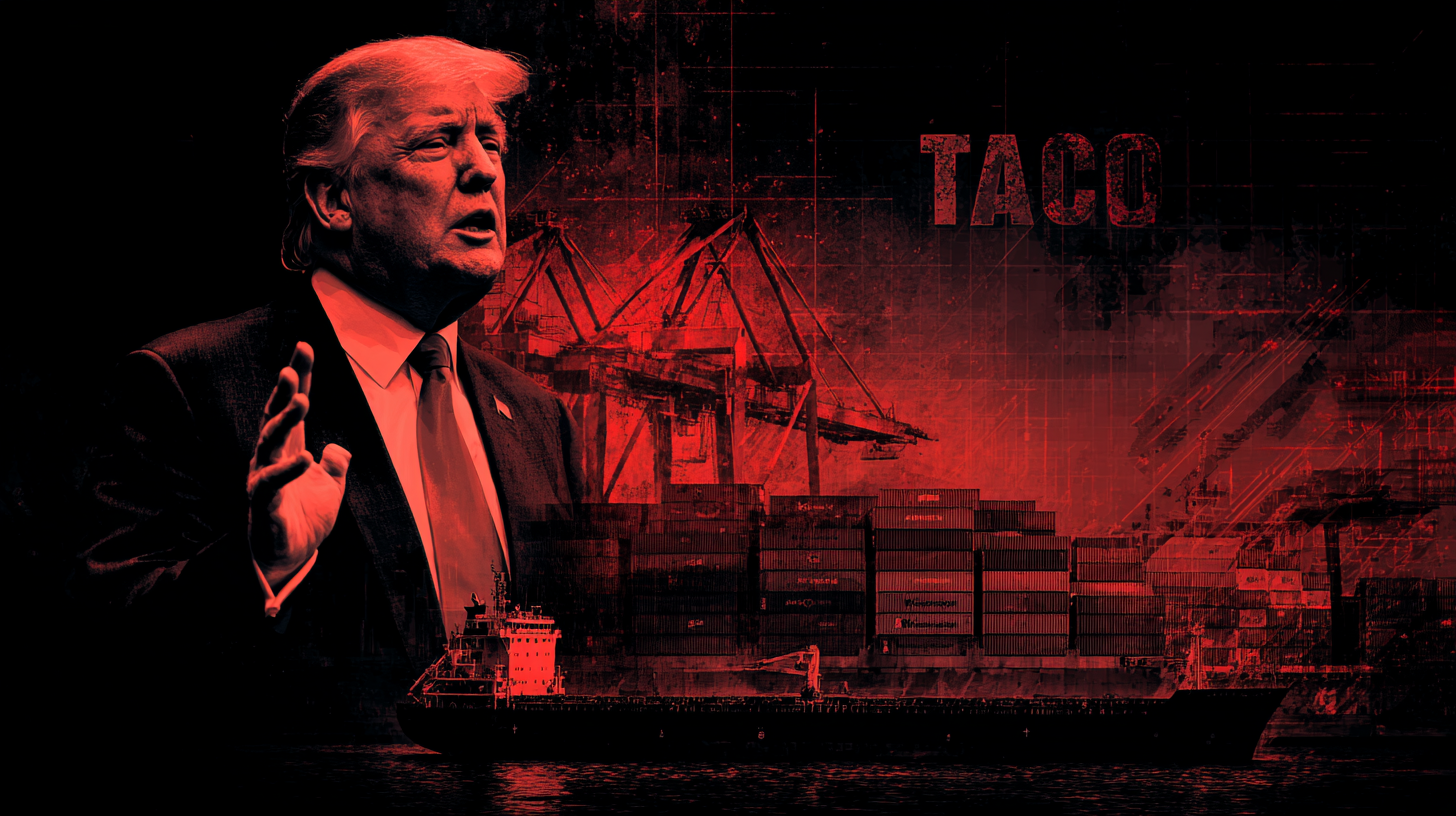
Markets have seen this movie before. President Trump draws a line, the rhetoric peaks, and then — nothing. Or at least, not the nothing anyone expected. But with an 8 p.m. Tuesday deadline for Iran to reopen the Strait of Hormuz or face the destruction of every bridge and power plant in the country, investors are asking the same uncomfortable question: is this another TACO moment — Trump Always Chickens Out — or is this time fundamentally different?
For those unfamiliar, TACO became market shorthand during the tariff wars, describing the pattern where Trump’s most extreme threats would eventually soften into a negotiated pause. Buy the dip, ignore the headline, collect the bounce. It worked repeatedly. But the Iran conflict is not a tariff dispute, and the Strait of Hormuz is not a trade negotiation table.
The stakes are materially different this time. The closure of the Strait has triggered sharp rises in global energy prices, with hikes as high as 20% to 30% at the pumps across the United States and Europe. U.S. benchmark West Texas Intermediate climbed to $115.48 per barrel on Monday, with Brent crude close behind at nearly $112. That is not rhetorical damage — that is real economic pain being absorbed by businesses and consumers right now.
Trump has issued similar ultimatums on several occasions in recent weeks, delaying the deadline each time. That track record feeds the TACO narrative. But there is a critical distinction: U.S. forces have already conducted new strikes on military targets on Iran’s Kharg Island — the country’s primary oil export hub — signaling this administration is not simply posturing.
For small and microcap investors, the practical implications are already being felt across the supply chain. Supplier delivery times hit a four-year high in March according to the ISM manufacturing survey. Companies like EuroDry (NASDAQ: EDRY) and Euroseas (NASDAQ: ESEA), which move bulk commodities through ocean routes increasingly disrupted by the conflict, are navigating a market where route uncertainty and elevated fuel costs are compressing margins and complicating charter rate forecasting. Both companies entered 2026 with momentum — but a prolonged Hormuz closure rewrites the calculus entirely.
On the rail side, FreightCar America (NASDAQ: RAIL) built its 2026 growth case on a stable industrial demand environment. If energy price spikes force manufacturers to pause capital equipment orders — which February data already hints at for March and beyond — railcar demand tied to that manufacturing activity faces real downside risk in the back half of the year.
Iran has responded with defiance, calling Trump’s threats baseless and warning that any retaliation will be far more forceful and on a much wider scale. Talks are ongoing through intermediaries including Pakistan, Egypt, and Turkey, and a negotiated off-ramp is still possible.
The TACO trade assumes that off-ramp always materializes. It may. But the window for dismissing this as noise is closed. Whether Trump blinks or follows through tonight, the Strait of Hormuz crisis is already doing damage — and for small-cap companies tied to global shipping and industrial demand, every hour of uncertainty has a price.