Is Hydrogen, Not Lithium-ion, the Automotive World’s Real Future?
Lithium-ion (Li-ion) batteries provide incredibly functional and versatile storage of electric power for cell phones, laptops, leaf blowers, Bluetooth speakers, and a myriad of other portable electric tools and appliances. But is it the best way to store power to drive the big motors found in a car or tractor-trailer? Hydrogen could provide a lighter, more potent, less environmentally harmful way to store power. And with greater range. Are car companies being steered down an inferior or potentially impossible path?
China plans to have a million hydrogen-powered vehicles on roads by 2035, and Japan, which has a much smaller population, is shooting for 800,000 units by 2030. Perhaps the world’s most abundant element is worth a deeper look before billions are spent on infrastructure to support the Li-ion model.
What’s a Fuel Cell
According to ThoughtCo.com, the most abundant element in the universe is hydrogen, making up about three-quarters of all things. Helium, then oxygen, makes up most of the rest of all matter. By comparison, all of the other elements are rare.
There are combustion engines that run on hydrogen, but it’s fuel cell electric vehicles (FCEVs) that are driven by motors, similar to those now going into Fords, Teslas and Volvos. The FCEV uses a hydrogen fuel cell.
These electric power storing fuel cells consist of a positive (cathode) and a negative electrode (anode), separated by an electrolyte membrane to chemically release electricity. This happens when oxygen from the surrounding air is exposed to the cathode. As liquid hydrogen, which fills the fuel cell in similar quantities that may be required of gas or diesel in a fossil fuel-powered vehicle, accumulates on the anode, they break apart into protons and electrons from the reaction with the electrolyte.
As protons travel through the membrane to the cathode, electrons are forced through a circuit. The circuit includes the electric motor, which releases the power to drive the vehicle down the road, powering an electric motor in the process. The electrons complete the path and reach the protons on the cathode; here, they react with oxygen to create H20 vapor.
Benefits to Cars and Trucks
The emissions of an FCEV, if you can call it that, is pure water. This is the very definition of clean and sustainable for the planet. In fact, the water vapor released is completely recyclable. But with it being composed of two of the most abundant elements, the need to recycle it as a way to store energy doesn’t exist.
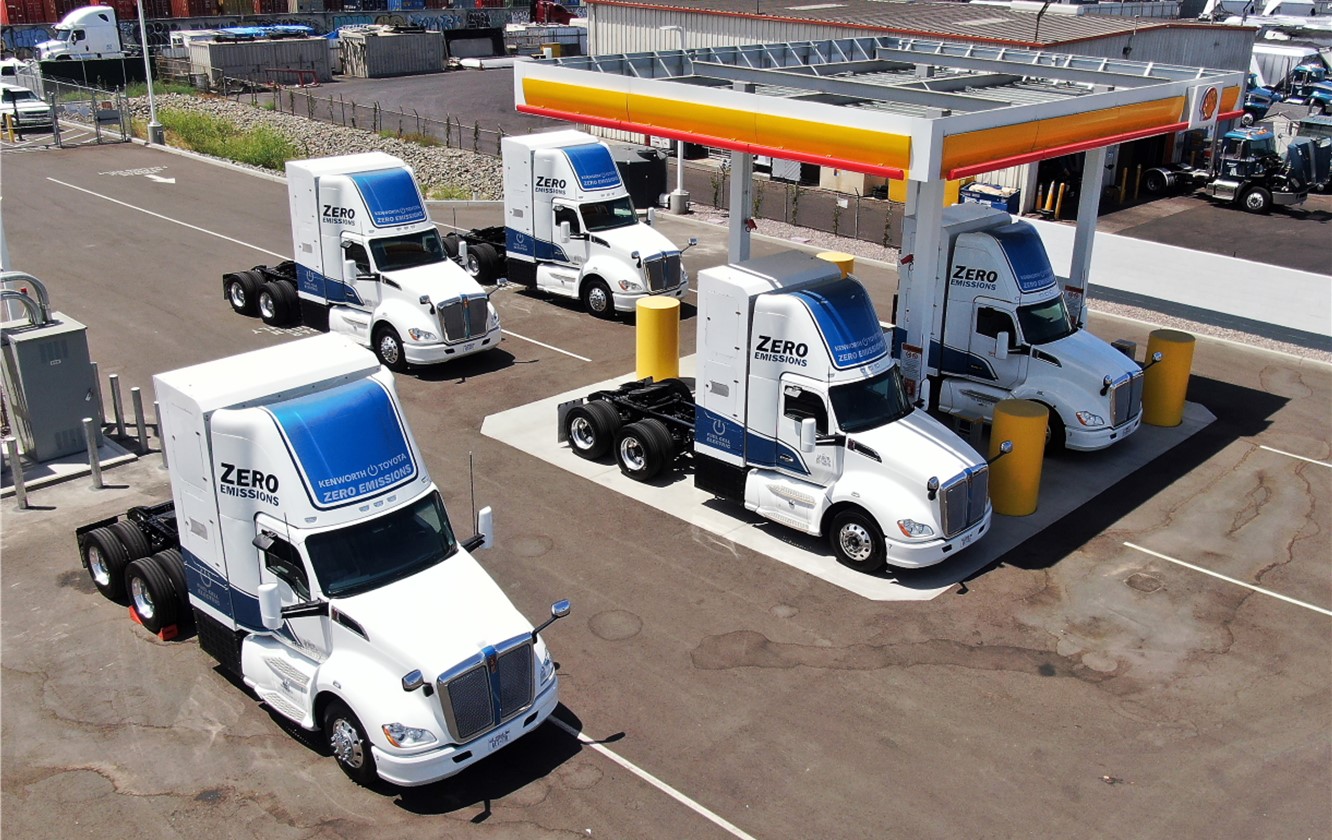
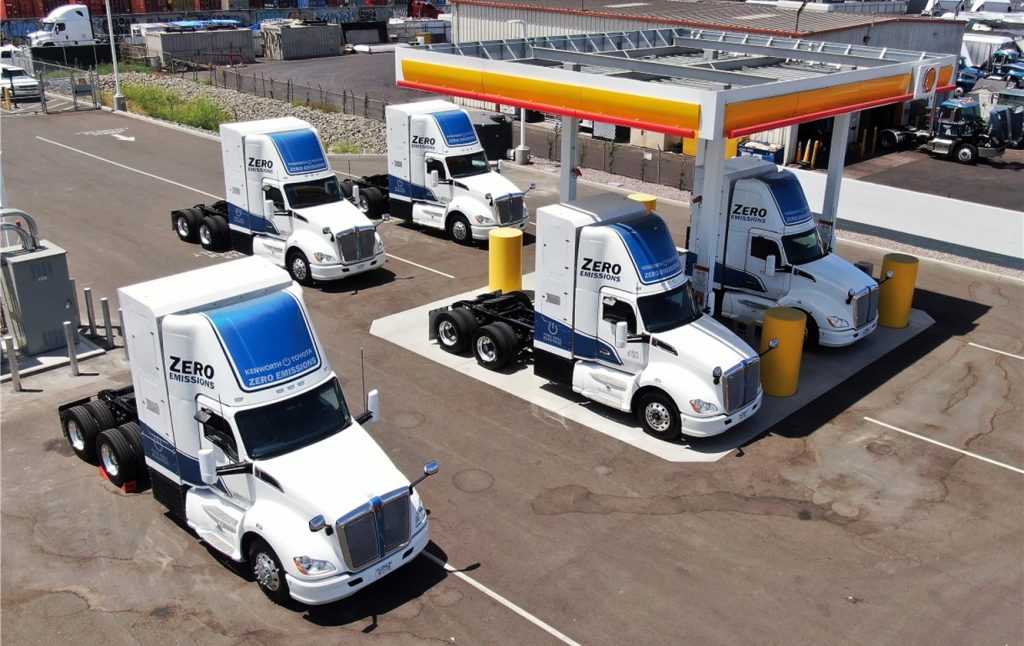
Cars and large trucks have a far longer range than battery electric vehicles (BEVs). The fuel cells can convert far more stored hydrogen into electricity than current EV batteries, making their range more in line with what drivers of cars and trucks expect from their vehicles.
The speed of powering up the fuel cell is also similar to refueling a vehicle with petrol. Refilling the fuel cell takes minutes. The combination of longer range and speed to get back on the road makes it a functionally attractive option for drivers.
Downside
Similar to recharging a lithium-ion battery, a power source is needed. Currently, this power source isn’t often wind, solar, or tidal, it’s fossil fuels. Hydrogen produced by coal or oil is seen as having dirty electrons; hydrogen produced by natural gas is called blue hydrogen. Using wind or sun to turn water into its atomic components is possible and does not need to be done in a large refinery in some remote place, but the outlets for this still need to be built.
The main reason is the lack of infrastructure. In order for hydrogen cars to become a viable option, there needs to be a network of refueling stations in place. This is a chicken-and-egg situation as car manufacturers are reluctant to mass-produce FCEVs without the existing infrastructure, and investors are unwilling to build hydrogen refueling stations without strong demand for them. Sales of fuel cell-powered vehicles in the U.S. in 2021 totaled 3,341. There aren’t entrepreneurs or even energy companies racing out to build a hydrogen refilling station when they’re not likely to experience any business.
Take Away
Although hydrogen still isn’t becoming a mainstream option, it is an alternative fuel source that is certainly worth keeping an eye on. With the right infrastructure in place, hydrogen cars could become a viable option for those looking for a clean and sustainable way to power their vehicles — if not now, definitely in the future.
Managing Editor, Channelchek
Sources
https://insideevs.com/news/565185/us-hydrogen-car-sales-2021/
https://www.thoughtco.com/most-abundant-element-in-the-universe-602186