Robert LeBoyer, Senior Vice President, Equity Research Analyst, Biotechnology, Noble Capital Markets, Inc.
Refer to the full report for the price target, fundamental analysis, and rating.
Cardiff Oncology Held A KOL Discussion. On March 25, Cardiff Oncology held a webcast with two world-renown oncologists with experience in drug development and patient treatment. The discussion began with a review of the Phase 2 data by Dr. Mani Mohindru, the Interim CEO. The discussion centered on aspects of the trial, including the outcome data, practical use, and competitive therapies.
The Discussion Included Significance Of Phase 2 Outcomes. The presentation began with a review of Phase 2 data announced in January 2026, with comments by the KOLs. They pointed to the response rate (RR) of 72.2% and the median progression-free survival (PFS) that has not yet been reached. Importantly, onvansertib did not cause additional toxicities to the combination chemotherapy regimen.
Equity Research is available at no cost to Registered users of Channelchek. Not a Member? Click ‘Join’ to join the Channelchek Community. There is no cost to register, and we never collect credit card information.
This Company Sponsored Research is provided by Noble Capital Markets, Inc., a FINRA and S.E.C. registered broker-dealer (B/D).
*Analyst certification and important disclosures included in the full report. NOTE: investment decisions should not be based upon the content of this research summary. Proper due diligence is required before making any investment decision.
SAN DIEGO, March 20, 2026 (GLOBE NEWSWIRE) — Cardiff Oncology, Inc. (Nasdaq: CRDF), a clinical-stage biotechnology company leveraging PLK1 inhibition to develop novel therapies across a range of cancers, today announced that the Company will host a key opinion leader (KOL) webinar to discuss the emergent treatment landscape in first-line RAS-mutated metastatic colorectal cancer (mCRC). The webinar will take place on Wednesday, March 25th, 2026, at 4:30 p.m. ET.
The webinar will feature KOLs Scott Kopetz, M.D., Ph.D., FACP and Heinz-Josef Lenz, M.D., who will join Mani Mohindru, PhD, interim Chief Executive Officer, to discuss onvansertib’s existing clinical data and its potential as a novel therapeutic approach in the management of mCRC.
About the KOLs
Scott Kopetz, M.D., Ph.D., FACP, is a Professor in the Department of Gastrointestinal Medical Oncology at The University of Texas MD Anderson Cancer Center and an internationally recognized leader in colorectal cancer research and translational oncology. Dr. Kopetz’s work has helped establish new treatment approaches for molecularly defined colorectal cancers, including therapies targeting BRAF-mutated metastatic disease. He serves in multiple national leadership roles supporting gastrointestinal cancer research and clinical trial development and has led numerous Phase I–III clinical studies focused on improving outcomes for patients with GI malignancies. His research integrates molecular profiling and translational science to advance precision medicine strategies and overcome treatment resistance in colorectal cancer.
Heinz Josef-Lenz, M.D., is a University Professor of Medicine, Population and Public Health Sciences and Cancer Biology; Professor of Medicine and Preventive Medicine of USC. He serves as Co-Leader of the Gastrointestinal Cancers Program and Co-Director of the USC Center for Cancer Drug Development. Dr. Lenz’s research focuses on molecular mechanisms of cancer development, drug resistance, and biomarker-driven treatment approaches in gastrointestinal cancers, including colorectal cancer. He has authored numerous peer-reviewed publications and holds leadership roles across national oncology research initiatives, including service on National Cancer Institute committees and cooperative clinical trial groups guiding translational and clinical research in GI oncology.
KOL Webinar Information
Interested parties can register for and access the live webcast by visiting the “Events” section of the Cardiff Oncology website. The webcast replay will be available after the conclusion of the discussion.
About Cardiff Oncology, Inc. Cardiff Oncology is a clinical-stage biotechnology company advancing innovative cancer treatments focused on PLK1 inhibition, a validated oncology target with practice-changing potential. Our lead asset, onvansertib, is a highly specific, oral PLK1 inhibitor currently being evaluated in a Phase 2 trial for first-line treatment of RAS-mutated metastatic colorectal cancer (“mCRC”), addressing a large, underserved patient population with high unmet need. Onvansertib is also under investigation in other PLK1-driven cancers through ongoing investigator-initiated trials and has shown robust single agent clinical activity in hard-to-treat tumors. By targeting tumor vulnerabilities, we aim to overcome treatment resistance and deliver improved clinical outcomes for patients.
Preclinical results in therapy-resistant HER2-low breast cancer models demonstrate enhanced antitumor activity and reversal of resistance with PLK1 inhibition
SAN DIEGO, March 19, 2026 (GLOBE NEWSWIRE) — Cardiff Oncology, Inc. (Nasdaq: CRDF), a clinical-stage biotechnology company leveraging PLK1 inhibition to develop novel therapies across a range of cancers, today announced that new preclinical data highlighting the potential of its highly specific oral PLK1 inhibitor, onvansertib, in combination with trastuzumab deruxtecan (T-DXd) will be presented at the American Association for Cancer Research Annual Meeting 2026, taking place April 17-22, 2026 in San Diego, California.
The poster presentation will showcase findings demonstrating that onvansertib enhanced the antitumor activity of T-DXd and reversed resistance in therapy-resistant HER2-low breast cancer models.
Poster Presentation Details:
Title:PLK1 inhibitor onvansertib potentiates the antitumor efficacy of trastuzumab deruxtecan (T-DXd) and reverses its resistance in therapy-resistant HER2-low breast cancer models
Date & Time: April 19, 2026 | 2:00 PM – 5:00 PM PT
Abstract Number: 329
The poster will be made available on the Scientific Publications page of the Company’s website following the presentation.
About Onvansertib Onvansertib is a highly specific, oral PLK1 inhibitor currently in mid-stage clinical development for RAS-mutated metastatic colorectal cancer. It is also being evaluated in multiple other cancers through investigator-initiated studies, including metastatic pancreatic ductal adenocarcinoma (mPDAC), small cell lung cancer (SCLC), triple-negative breast cancer (TNBC), and chronic myelomonocytic leukemia (CMML).
About Cardiff Oncology, Inc. Cardiff Oncology is a clinical-stage biotechnology company advancing innovative cancer treatments focused on PLK1 inhibition, a validated oncology target with practice-changing potential. Our lead asset, onvansertib, is a highly specific, oral PLK1 inhibitor currently being evaluated in a Phase 2 trial for first-line treatment of RAS-mutated metastatic colorectal cancer (“mCRC”), addressing a large, underserved patient population with high unmet need. Onvansertib is also under investigation in other PLK1-driven cancers through ongoing investigator-initiated trials and has shown robust single agent clinical activity in hard-to-treat tumors. By targeting tumor vulnerabilities, we aim to overcome treatment resistance and deliver improved clinical outcomes for patients.
Robert LeBoyer, Senior Vice President, Equity Research Analyst, Biotechnology, Noble Capital Markets, Inc.
Refer to the full report for the price target, fundamental analysis, and rating.
FY2026 Reported With Onvansertib Review. Cardiff reported a FY2025 loss of $45.8 million or $(0.69) per share and reviewed the clinical data for onvansertib, its drug for RAS-mutated metastatic colorectal cancer (mCRC). Updated plans for Phase 3 are expected after discussions with the FDA during 1H26. On December 31, 2025, Cardiff ended the year with $58.3 million in cash and equivalents, which it believes can fund operations through 1Q27.
Phase 2 CRDF-004 Trial Design. The CDRF-004 Phase 2 trial was designed to test two doses of onvansertib in combination with two standard-of-care (SOC) regimens against each standard of care regimen alone. It enrolled 110 patients with RAS-mutated mCRC. The primary endpoint was objective response rate (ORR).
Equity Research is available at no cost to Registered users of Channelchek. Not a Member? Click ‘Join’ to join the Channelchek Community. There is no cost to register, and we never collect credit card information.
This Company Sponsored Research is provided by Noble Capital Markets, Inc., a FINRA and S.E.C. registered broker-dealer (B/D).
*Analyst certification and important disclosures included in the full report. NOTE: investment decisions should not be based upon the content of this research summary. Proper due diligence is required before making any investment decision.
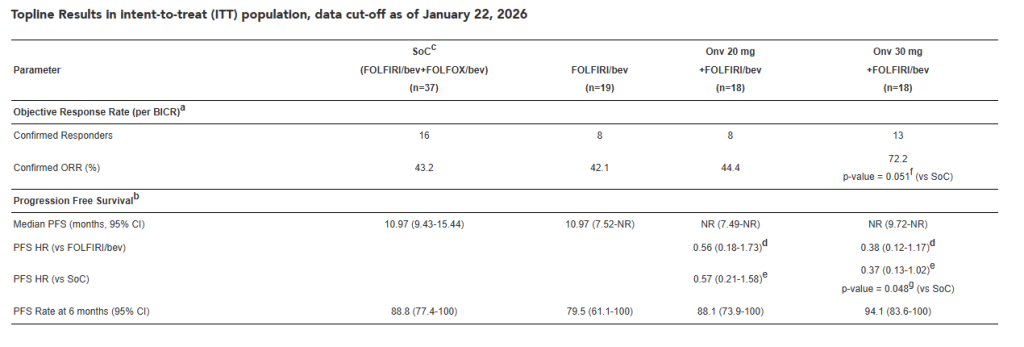
Reported positive update from Phase 2 CRDF-004 trial in first-line RAS-mutated mCRC, with the 30 mg onvansertib + FOLFIRI/bev arm demonstrating: • Robust ORR of 72.2% (vs 43.2% with combined SoC of FOLFOX/bev and FOLFIRI/bev) • Significant improvement in PFS over combined SoC (HR: 0.37, p<0.05)
Data support selection of 30 mg onvansertib dose in combination with FOLFIRI/bev for planned registrational program; detailed data and registrational plans expected in the first half of 2026
SAN DIEGO, Feb. 24, 2026 (GLOBE NEWSWIRE) — Cardiff Oncology, Inc. (Nasdaq: CRDF), a clinical-stage biotechnology company leveraging PLK1 inhibition to develop novel therapies across a range of cancers, today announced financial results for the full year ended December 31, 2025, and provided a business update.
“Cardiff Oncology has entered 2026 with strong clinical momentum and a clear path for advancing onvansertib, our lead program, in first-line RAS-mutated metastatic colorectal cancer,” said Mani Mohindru, PhD, interim Chief Executive Officer. “Our focus in 2025 was on rigorous clinical execution, which allowed us to generate increasingly compelling evidence supporting onvansertib’s potential to improve patient outcomes in RAS-mutated mCRC, culminating in the latest positive data cut announced earlier this year. The CRDF-004 trial demonstrated a consistent, dose-dependent treatment benefit when onvansertib was added to FOLFIRI/bev, including a near 30% improvement in response rate over the control arm and encouraging durability trends as measured by progression-free survival. These data are in line with what we had previously seen in our second-line trial in bev-naive patients treated with onvansertib + FOLFIRI/bev. Given that it has been over two decades since there has been meaningful innovation for this patient population, we believe these results represent a transformative step forward.”
Continued Dr. Mohindru, “Based on these results, we plan to advance the 30 mg dose of onvansertib with FOLFIRI/bev into our proposed registrational program and expect to provide detailed data and registrational plans after discussions with the FDA in the first half of 2026. As we transition into late-stage clinical development and continue to strengthen our leadership and operational teams, we remain focused on disciplined execution, progressing our lead program toward a potential new standard of care in first-line RAS-mutated mCRC.”
Company highlights for the quarter ended December 31, 2025, and subsequent weeks
Positive update from randomized Phase 2 CRDF-004 trial in first-line RAS-mutated metastatic colorectal cancer (“mCRC”) support advancement of the onvansertib program into registrational development
In January 2026, Cardiff reported a positive update from CRDF-004, a randomized Phase 2 trial evaluating onvansertib in combination with standard of care (“SoC”) regimens in patients with first-line RAS-mutated mCRC. As of the January 22, 2026 cutoff in the intent-to-treat population, the 30 mg onvansertib + FOLFIRI/bev arm achieved a confirmed objective response rate (“ORR”) of 72.2%, compared to 43.2% across the combined SoC arms. The 30 mg onvansertib dose in combination with FOLFIRI/bev also demonstrated marked improvement in progression-free survival (“PFS”) versus FOLFIRI/bev (HR: 0.38) and combined SoC of FOLFOX/bev and FOLFIRI/bev (HR: 0.37, p<0.05), with no significant added toxicity observed.
Based on these results, the Company expects to advance the 30 mg dose of onvansertib in combination with FOLFIRI/bev into planned registrational development. Cardiff expects to share detailed Phase 2 CRDF-004 data and, after discussions with the FDA, provide registrational plans for onvansertib in combination with FOLFIRI/bev in first-line RAS-mutated mCRC in the first half of 2026.
Executive leadership team transitioned to support late-stage development
In January 2026, Cardiff announced executive leadership changes to support the Company’s transition into late-stage clinical development and advancement toward key clinical and corporate milestones. Mani Mohindru, PhD, a member of Cardiff’s Board of Directors since 2021 and an experienced biotechnology executive, was appointed interim Chief Executive Officer. Brigitte Lindsay was promoted to Chief Accounting Officer, ensuring continuity within the Company’s finance function. The Company has initiated a search for a permanent Chief Executive Officer and Chief Financial Officer.
Presentation of investigator-sponsored clinical data in chronic myelomonocytic leukemia (“CMML”) at the American Society of Hematology (“ASH”) Annual Meeting
In December 2025, clinical data from an investigator-sponsored Phase 1 trial evaluating onvansertib monotherapy in CMML were presented at ASH 2025. In the dose-escalation trial (N=9), onvansertib was generally well-tolerated and demonstrated preliminary efficacy in approximately 40% of patients, including one patient achieving an optimal bone marrow response. These clinical findings further validate onvansertib’s potential activity across both hematologic and solid tumors.
Full Year 2025 Financial Results
Liquidity and Cash Runway
As of December 31, 2025, Cardiff Oncology had approximately $58.3 million in cash, cash equivalents, and short-term investments. Based on its current operating and clinical plans and projected expenditures, the Company believes that its existing cash resources are sufficient to fund operations into the first quarter of 2027.
Operating Results
Total operating expenses for the year ended December 31, 2025 were approximately $49.6 million, compared to $49.3 million for the year ended December 31, 2024. The $0.3 million increase was primarily attributable to an increase in SG&A expense, driven mainly by strategic advisory services and incremental employee separation costs recorded in the current period. This increase was partially offset by lower R&D expenses related to clinical trial activity and outside services. The reduction in R&D expenses was partially offset by an increase in stock-based compensation expense during the current period.
About Cardiff Oncology, Inc. Cardiff Oncology is a clinical-stage biotechnology company advancing innovative cancer treatments focused on PLK1 inhibition, a validated oncology target with practice-changing potential. Our lead asset, onvansertib, is a highly specific, oral PLK1 inhibitor currently being evaluated in a Phase 2 trial for first-line treatment of RAS-mutated metastatic colorectal cancer (“mCRC”), addressing a large, underserved patient population with high unmet need. Onvansertib is also under investigation in other PLK1-driven cancers through ongoing investigator-initiated trials and has shown robust single agent clinical activity in hard-to-treat tumors. By targeting tumor vulnerabilities, we aim to overcome treatment resistance and deliver improved clinical outcomes for patients.
Forward-Looking Statements Certain statements in this press release are forward-looking within the meaning of the Private Securities Litigation Reform Act of 1995. These statements may be identified using words such as “anticipate,” “believe,” “forecast,” “estimated” and “intend” or other similar terms or expressions that concern Cardiff Oncology’s expectations, strategy, plans or intentions. These forward-looking statements are based on Cardiff Oncology’s current expectations and actual results could differ materially. There are several factors that could cause actual events to differ materially from those indicated by such forward-looking statements. These factors include, but are not limited to, clinical trials involve a lengthy and expensive process with an uncertain outcome, and results of earlier studies and trials may not be predictive of future trial results; our clinical trials may be suspended or discontinued due to unexpected side effects or other safety risks that could preclude approval of our product candidate; results of preclinical studies or clinical trials for our product candidate could be unfavorable or delayed; our need for additional financing; risks related to business interruptions, including the outbreak of COVID-19 coronavirus and cyber-attacks on our information technology infrastructure, which could seriously harm our financial condition and increase our costs and expenses; uncertainties of government or third party payer reimbursement; dependence on key personnel; limited experience in marketing and sales; substantial competition; uncertainties of patent protection and litigation; dependence upon third parties; and risks related to failure to obtain FDA clearances or approvals and noncompliance with FDA regulations. There are no guarantees that our product candidate will be utilized or prove to be commercially successful. Additionally, there are no guarantees that future clinical trials will be completed or successful or that our product candidate will receive regulatory approval for any indication or prove to be commercially successful. Investors should read the risk factors set forth in Cardiff Oncology’s Form 10-K for the year ended December 31, 2025, and other periodic reports filed with the Securities and Exchange Commission. While the list of factors presented here is considered representative, no such list should be considered to be a complete statement of all potential risks and uncertainties. Unlisted factors may present significant additional obstacles to the realization of forward-looking statements. Forward-looking statements included herein are made as of the date hereof, and Cardiff Oncology does not undertake any obligation to update publicly such statements to reflect subsequent events or circumstances.
Robert LeBoyer, Senior Vice President, Equity Research Analyst, Biotechnology, Noble Capital Markets, Inc.
Refer to the full report for the price target, fundamental analysis, and rating.
Cardiff Made Two Significant Announcements. New data from the Phase 2 CRDF-004 trial testing onvansertib as a first line treatment for metastatic colorectal cancer was announced as expected. Patients in the high-dose onvansertib group showed a large benefit in overall response rates (ORR) and progression free survival (PFS). Separately, the CEO and CFO have left the company. Board Member Dr. Mani Mohindru was named Interim CEO.
Phase 2 Trial Design. As discussed in our January 5 report, CDRF-004 is a Phase 2 dose-finding trial testing two doses of onvansertib in combination with two standard-of-care (SOC) regimens against the standard of care regimens alone. It enrolled 110 patients with RAS-mutated metastatic colorectal cancer, mCRC. Its primary endpoint is objective response rate (ORR). Secondary endpoints include progression-free survival (PFS), duration of response (DOR) and safety. These endpoints were selected to guide the design of Phase 3.
Equity Research is available at no cost to Registered users of Channelchek. Not a Member? Click ‘Join’ to join the Channelchek Community. There is no cost to register, and we never collect credit card information.
This Company Sponsored Research is provided by Noble Capital Markets, Inc., a FINRA and S.E.C. registered broker-dealer (B/D).
*Analyst certification and important disclosures included in the full report. NOTE: investment decisions should not be based upon the content of this research summary. Proper due diligence is required before making any investment decision.
– Onvansertib added to FOLFIRI/bev first-line standard of care regimen showed dose-dependent improvement in overall response rates and durability trends as measured by progression-free survival in patients with RAS-mutated mCRC –
– Data support selection of 30 mg onvansertib dose for registrational program in first-line RAS-mutated mCRC –
– Data validate previously reported positive results from Phase 2 trial of onvansertib with FOLFIRI/bev in second-line mCRC bev-naïve patients, as published in the Journal of Clinical Oncology –
– Onvansertib continues to be safe and well-tolerated –
– Company expects to provide final data and registrational plans in first half of 2026 –
– Company to hold conference call today at 8:30 a.m. ET/5:30 a.m. PT –
SAN DIEGO, Jan. 27, 2026 (GLOBE NEWSWIRE) — Cardiff Oncology, Inc. (Nasdaq: CRDF), a clinical-stage biotechnology company leveraging PLK1 inhibition to develop novel therapies across a range of cancers, today announced a positive update from CRDF-004, a randomized dose-finding Phase 2 clinical trial evaluating onvansertib in combination with standard of care (SoC) regimens (FOLFIRI/bevacizumab (bev) or FOLFOX/bev) in patients with first-line (1L) RAS-mutated metastatic colorectal cancer (mCRC). In an intent-to-treat analysis, the clinical data show dose-dependent benefits across multiple efficacy measures in patients receiving onvansertib with FOLFIRI/bev compared to patients receiving either SoC regimen. In this trial, onvansertib with FOLFIRI/bev also performed better than onvansertib with FOLFOX/bev.
Based on these results, the Company has selected the 30 mg dose of onvansertib with FOLFIRI/bev to bring forward in a registrational trial in 1L patients with RAS-mutated mCRC. Cardiff Oncology plans to initiate a registrational program later this year pending finalization of the trial design in consultation with the FDA, in which the Company expects to compare onvansertib with FOLFIRI/bev to SoC regimens, FOLFIRI/bev or FOLFOX/bev.
“These data demonstrate promising enhanced benefits of onvansertib when combined with FOLFIRI/bev in RAS-mutated mCRC patients,” said Mani Mohindru, PhD, interim Chief Executive Officer. “We observed a consistent, dose-dependent treatment benefit across multiple measures of efficacy, including achieving statistical significance for PFS compared to SoC even with relatively small patient numbers. The 30 mg onvansertib–FOLFIRI/bev arm outperformed both SoC arms with no significant additive toxicity, supporting findings from our previous Phase 2 trial in second-line RAS-mutated mCRC. While we continue to review data from the ongoing trial, our plan is to rapidly move forward with the onvansertib 30 mg dose in combination with FOLFIRI/bev and we believe confirmatory data from a registrational trial has the potential to make this regimen a new SoC for 1L treatment of RAS-mutated mCRC.”
Bev=bevacizumab; BICR=Blinded Independent Central Review; CI=confidence interval; HR=hazard ratio; NR=not reached; Onv=onvansertib; ORR=objective response rate; PFS=progression-free survival; SoC=standard of care. aORR is confirmed responses bProgressive disease events were based on combined BICR and Investigator assessments due to very small number of events in BICR assessment. The earliest reported date was used for a conservative estimate. cSoC is the combination of the FOLFIRI/bev and FOLFOX/bev arms dPFS HR is the comparison of the onvansertib arm to FOLFIRI/bev ePFS HR is the comparison of the onvansertib arm to SoC fFisher’s exact test gLog-rank test
“There is a clear need for improved first-line treatment options for patients with mCRC, especially the half of those with RAS-mutated disease,” said Dr. J Randolph Hecht, MD, Professor of Clinical Medicine at the David Geffen School of Medicine at UCLA. “Unfortunately, first-line treatment for these patients hasn’t improved significantly for more than two decades. Onvansertib has a novel mechanism of action and these preliminary responses and PFS results in combination with FOLFIRI/bevacizumab are encouraging enough to test in a large Phase 3 trial. If such a trial were positive, it could become a new standard of care for these patients.”
Onvansertib in combination with both chemo/bev regimens was well-tolerated. There were no major or unexpected toxicities observed and no additive adverse events. Grade 3 or higher adverse events were infrequent, with neutropenia being the most common treatment-emergent adverse event across both the onvansertib combination and standard of care arms.
Conference Call and Webcast Cardiff Oncology will host a conference call and live webcast today, January 27, 2026 at 8:30 a.m. ET / 5:30 a.m. PT. Individuals interested in listening may do so by using the link in the “Events” section of the Company’s website. A replay will be available in the investor relations section on the Company’s website following the completion of the call.
CRDF-004 Trial Design The CRDF-004 Phase 2 trial was designed to evaluate two doses of onvansertib to identify the lowest maximally effective dose and to assess the safety, efficacy, and pharmacokinetics of onvansertib in combination with FOLFIRI/bevacizumab or FOLFOX/bevacizumab in first-line patients with KRAS- or NRAS-mutated metastatic colorectal cancer (mCRC). The trial’s endpoints include objective response rate (ORR), progression-free survival (PFS), duration of response, and safety.
For additional information about the trial, please visit www.clinicaltrials.gov (Trial ID: NCT06106308).
About Onvansertib Onvansertib is a highly specific, oral PLK1 inhibitor currently in mid-stage clinical development for RAS-mutated metastatic colorectal cancer. It is also being evaluated in multiple other cancers through investigator-initiated studies, including metastatic pancreatic ductal adenocarcinoma (mPDAC), small cell lung cancer (SCLC), triple-negative breast cancer (TNBC), and chronic myelomonocytic leukemia (CMML). Promising monotherapy clinical results from an ongoing CMML trial were recently presented at the American Society of Hematology annual meeting in December 2025. CMML represents a rare disease with significant unmet need.
About Cardiff Oncology, Inc. Cardiff Oncology is a clinical-stage biotechnology company advancing innovative cancer treatments focused on PLK1 inhibition, a validated oncology target with practice-changing potential. Our lead asset, onvansertib, is a highly specific, oral PLK1 inhibitor currently being evaluated in a Phase 2 trial for first-line treatment of RAS-mutated metastatic colorectal cancer (mCRC), addressing a large, underserved patient population with high unmet need. Onvansertib is also under investigation in other PLK1-driven cancers through ongoing investigator-initiated trials and has shown robust single agent clinical activity in hard-to-treat tumors. By targeting tumor vulnerabilities, we aim to overcome treatment resistance and deliver improved clinical outcomes for patients.
Forward-Looking Statements Certain statements in this press release are forward-looking within the meaning of the Private Securities Litigation Reform Act of 1995. These statements may be identified using words such as “anticipate,” “believe,” “forecast,” “estimated” and “intend” or other similar terms or expressions that concern Cardiff Oncology’s expectations, strategy, plans or intentions. These forward-looking statements are based on Cardiff Oncology’s current expectations and actual results could differ materially. There are several factors that could cause actual events to differ materially from those indicated by such forward-looking statements. These factors include, but are not limited to, clinical trials involve a lengthy and expensive process with an uncertain outcome, and results of earlier studies and trials may not be predictive of future trial results; our clinical trials may be suspended or discontinued due to unexpected side effects or other safety risks that could preclude approval of our product candidate; results of preclinical studies or clinical trials for our product candidate could be unfavorable or delayed; our need for additional financing; risks related to business interruptions, including the outbreak of COVID-19 coronavirus and cyber-attacks on our information technology infrastructure, which could seriously harm our financial condition and increase our costs and expenses; uncertainties of government or third party payer reimbursement; dependence on key personnel; limited experience in marketing and sales; substantial competition; uncertainties of patent protection and litigation; dependence upon third parties; and risks related to failure to obtain FDA clearances or approvals and noncompliance with FDA regulations. There are no guarantees that our product candidate will be utilized or prove to be commercially successful. Additionally, there are no guarantees that future clinical trials will be completed or successful or that our product candidate will receive regulatory approval for any indication or prove to be commercially successful. Investors should read the risk factors set forth in Cardiff Oncology’s Form 10-K for the year ended December 31, 2024, and other periodic reports filed with the Securities and Exchange Commission. While the list of factors presented here is considered representative, no such list should be considered to be a complete statement of all potential risks and uncertainties. Unlisted factors may present significant additional obstacles to the realization of forward-looking statements. Forward-looking statements included herein are made as of the date hereof, and Cardiff Oncology does not undertake any obligation to update publicly such statements to reflect subsequent events or circumstances.
SAN DIEGO, Jan. 27, 2026 (GLOBE NEWSWIRE) — Cardiff Oncology, Inc. (Nasdaq: CRDF), a clinical-stage biotechnology company leveraging PLK1 inhibition to develop novel therapies across a range of cancers, today announced a leadership transition designed to support the Company’s next phase of growth and advancement toward late-stage development and key clinical and corporate milestones.
Mani Mohindru, PhD, a member of Cardiff Oncology’s Board of Directors since 2021 and a seasoned biotech executive, has been appointed interim Chief Executive Officer, effective immediately. Mark Erlander, PhD, Chief Executive Officer, and James Levine, Chief Financial Officer, have stepped down from their respective roles.
As part of this transition, Ms. Brigitte Lindsay has been promoted to the role of Chief Accounting Officer, ensuring continuity within the finance function. She has been with the Company for more than 14 years and was most recently the Senior Vice President of Finance. The Company has initiated a search for a permanent Chief Executive Officer and Chief Financial Officer.
Cardiff Oncology’s lead product candidate, onvansertib, a highly specific, oral PLK1 inhibitor, is currently in mid-stage clinical development for RAS-mutated metastatic colorectal cancer (mCRC) and is also being evaluated as a single agent and in combinations across multiple additional cancers in investigator-initiated studies, including metastatic pancreatic ductal adenocarcinoma, small cell lung cancer, triple-negative breast cancer, and chronic myelomonocytic leukemia. The leadership transition reflects the Company’s focus on execution and clinical advancement as its programs mature.
“As Cardiff Oncology prepares for the next stage of clinical and corporate development, the Board concluded that this was the right moment to align executive and financial leadership with the Company’s evolving needs,” said Rodney S. Markin, MD, PhD, Chairman of the Board. “We want to express our sincere gratitude to Mark and Jamie for their significant contributions in guiding Cardiff to where it stands today—especially in the progress of our lead product candidate in first-line RAS-mutated mCRC, an area of high unmet need where there have not been any significant advancements in many years. Looking forward, we are confident in Dr. Mohindru’s ability to lead the Company at this key moment in onvansertib’s clinical development, as she brings a rare combination of deep scientific training, operational leadership, and capital markets expertise.”
“Cardiff Oncology has built a strong scientific and clinical foundation around PLK1 inhibition, with onvansertib demonstrating encouraging activity in a challenging to treat patient population,” said Mani Mohindru, PhD, interim Chief Executive Officer. “Given onvansertib’s activity in RAS-mutated mCRC as well as encouraging single agent data, there is potential to extend its benefit to other solid tumors and hematologic malignancies. I look forward to working closely with the Board and the team to sharpen our strategic priorities, advance our clinical programs, and thoughtfully position the Company for late-stage development while maintaining a disciplined approach to capital and execution.”
Dr. Mohindru is an experienced biotechnology executive with leadership experience spanning drug development, corporate strategy, and capital markets. She is the founder of Roshon Therapeutics, a private biotechnology company focused on developing novel therapies for cancer and inflammatory diseases, and currently serves on the Board of Directors of CytomX Therapeutics, Inc. (Nasdaq: CTMX). Previously, Dr. Mohindru served as Chief Executive Officer and Board Director of Novasenta and CereXis, and held senior leadership roles at public biotechnology companies including Cara Therapeutics, Inc. and Curis, Inc.
Earlier in her career, Dr. Mohindru was an equity research analyst covering the biotechnology sector at UBS, Credit Suisse, and ThinkEquity. She currently serves on the Executive Advisory Board of the CLP Institute at Northwestern University and the Scientific Investment Advisory Committee of the Gates Institute at the University of Colorado. Dr. Mohindru holds a PhD in Neurosciences from Northwestern University, as well as a BS in Human Biology and a Master’s degree in Biotechnology from the All India Institute of Medical Sciences in New Delhi, India.
About Cardiff Oncology, Inc. Cardiff Oncology is a clinical-stage biotechnology company advancing innovative cancer treatments focused on PLK1 inhibition, a validated oncology target with practice-changing potential. Our lead asset, onvansertib, is a highly specific, oral PLK1 inhibitor currently being evaluated in a Phase 2 trial for first-line treatment of RAS-mutated metastatic colorectal cancer (mCRC), addressing a large, underserved patient population with high unmet need. Onvansertib is also under investigation in other PLK1-driven cancers through ongoing investigator-initiated trials and has shown robust single agent clinical activity in hard-to-treat tumors. By targeting tumor vulnerabilities, we aim to overcome treatment resistance and deliver improved clinical outcomes for patients.
Certain statements in this press release are forward-looking within the meaning of the Private Securities Litigation Reform Act of 1995. These statements may be identified using words such as “anticipate,” “believe,” “forecast,” “estimated” and “intend” or other similar terms or expressions that concern Cardiff Oncology’s expectations, strategy, plans or intentions. These forward-looking statements are based on Cardiff Oncology’s current expectations and actual results could differ materially. There are several factors that could cause actual events to differ materially from those indicated by such forward-looking statements. These factors include, but are not limited to, our ability to conduct a successful search for and hire a permanent CEO and CFO, clinical trials involve a lengthy and expensive process with an uncertain outcome, and results of earlier studies and trials may not be predictive of future trial results; our clinical trials may be suspended or discontinued due to unexpected side effects or other safety risks that could preclude approval of our product candidate; results of preclinical studies or clinical trials for our product candidate could be unfavorable or delayed; our need for additional financing; risks related to business interruptions, including the outbreak of COVID-19 coronavirus and cyber-attacks on our information technology infrastructure, which could seriously harm our financial condition and increase our costs and expenses; uncertainties of government or third party payer reimbursement; dependence on key personnel; limited experience in marketing and sales; substantial competition; uncertainties of patent protection and litigation; dependence upon third parties; and risks related to failure to obtain FDA clearances or approvals and noncompliance with FDA regulations. There are no guarantees that our product candidate will be utilized or prove to be commercially successful. Additionally, there are no guarantees that future clinical trials will be completed or successful or that our product candidate will receive regulatory approval for any indication or prove to be commercially successful. Investors should read the risk factors set forth in Cardiff Oncology’s Form 10-K for the year ended December 31, 2024, and other periodic reports filed with the Securities and Exchange Commission. While the list of factors presented here is considered representative, no such list should be considered to be a complete statement of all potential risks and uncertainties. Unlisted factors may present significant additional obstacles to the realization of forward-looking statements. Forward-looking statements included herein are made as of the date hereof, and Cardiff Oncology does not undertake any obligation to update publicly such statements to reflect subsequent events or circumstances.
Robert LeBoyer, Senior Vice President, Equity Research Analyst, Biotechnology, Noble Capital Markets, Inc.
Refer to the full report for the price target, fundamental analysis, and rating.
Initiating Coverage With A $12 Price Target. Cardiff Oncology is developing onvansertib for the treatment of multiple cancer indications. Its lead program is in metastatic colorectal cancer for patients with a mutation that makes the cancer more aggressive and difficult to treat. This mutation, KRAS, is found in about 45% of the colorectal cancer patients. As a result of the mutation, several standard therapies are ineffective. We believe onvansertib’s unique mechanisms of action could be a breakthrough in cancer treatment.
Onvansertib Has Two Main Mechanisms of Action. Onvansertib inhibits PLK1, an intracellular protein needed for regulatory functions that control cell growth and division. This protein can be overexpressed in many cancers, including colorectal cancer, overriding the normal controls. A second mechanism stops a pathway that allows tumors to survive in low oxygen environments and resist treatment with bevacizumab (Avastin).
Equity Research is available at no cost to Registered users of Channelchek. Not a Member? Click ‘Join’ to join the Channelchek Community. There is no cost to register, and we never collect credit card information.
This Company Sponsored Research is provided by Noble Capital Markets, Inc., a FINRA and S.E.C. registered broker-dealer (B/D).
*Analyst certification and important disclosures included in the full report. NOTE: investment decisions should not be based upon the content of this research summary. Proper due diligence is required before making any investment decision.