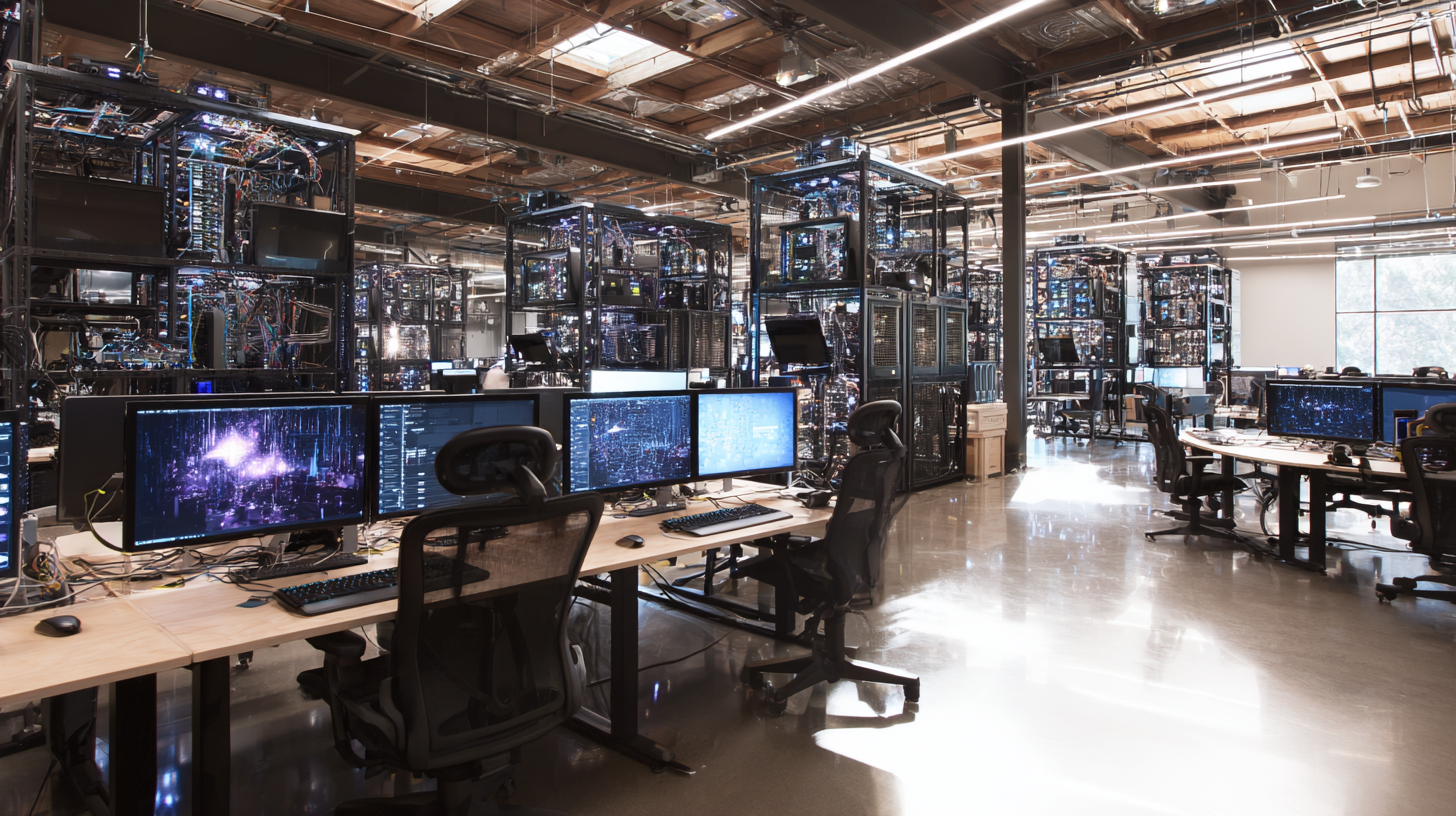
AI infrastructure is getting another massive upgrade. Nvidia and Meta have announced an expanded multiyear, multigenerational partnership that will deliver millions of Nvidia’s latest GPUs, CPUs, and networking products into Meta’s data centers. The move underscores just how aggressively the world’s largest tech platforms are investing in artificial intelligence — even as investors question the sustainability of that spending.
Under the agreement, Meta will deploy Nvidia’s Blackwell and next-generation Rubin GPUs to train and run AI models across its family of apps, including Facebook, Instagram, and WhatsApp. The chips will power everything from recommendation systems to advanced generative AI tools designed for billions of users worldwide.
Nvidia CEO Jensen Huang described the partnership as a deep integration across computing layers, from GPUs and CPUs to networking and software. The goal is to bring Nvidia’s full-stack AI platform into Meta’s infrastructure, allowing the company’s researchers and engineers to push the boundaries of large-scale AI deployment.
Importantly, Meta will use the chips both in its own data centers and through Nvidia’s Cloud Partner ecosystem, which includes providers like CoreWeave. That hybrid strategy gives Meta additional flexibility to scale workloads quickly without waiting for new facilities to come online.
Beyond GPUs, Meta is also rolling out Nvidia’s Grace CPU-only servers, with plans to adopt the next-generation Vera CPU systems in 2027. These CPU deployments are notable because they signal Nvidia’s growing ambition to compete more directly in the traditional server market long dominated by Intel and AMD. If Nvidia can establish a foothold in CPU-heavy environments alongside its GPU dominance, it could reshape the balance of power in enterprise data centers.
Meta also plans to integrate Nvidia’s Confidential Computing technology into WhatsApp, enhancing privacy protections by enabling secure data processing on GPUs. As AI systems increasingly rely on sensitive personal data, secure processing capabilities are becoming a competitive differentiator.
The announcement comes at a time when AI-related stocks have faced renewed scrutiny. Shares of Nvidia and Meta have cooled in early 2026 amid concerns that hyperscalers may be overspending on AI hardware. Companies such as Microsoft, Amazon, and Google have introduced their own custom AI chips, raising questions about whether Nvidia’s GPUs will remain indispensable.
There are also broader concerns about whether all AI workloads truly require high-performance GPUs, or whether specialized processors could handle certain tasks more efficiently. Yet analysts argue that Nvidia’s advantage lies in versatility. GPUs can support a wide range of AI applications, from training large language models to running inference at scale, while custom chips tend to be optimized for narrower use cases.
For Meta, the decision is clear: scale matters. Running AI at the level required to serve billions of users demands proven hardware, deep software integration, and reliable supply chains. By doubling down on Nvidia, Meta is signaling that it views AI not as an experimental feature, but as core infrastructure for its future.
The partnership reinforces Nvidia’s central role in the AI ecosystem — and shows that, despite market jitters, the largest tech companies are still betting big on next-generation computing power.