Patrick McCann, CFA, Research Analyst, Noble Capital Markets, Inc.
Michael Kupinski, Director of Research, Equity Research Analyst, Digital, Media & Technology , Noble Capital Markets, Inc.
Refer to the full report for the price target, fundamental analysis, and rating.
Q4 results. Sky Harbour reported Q4 revenue of $8.1 million and an adj. EBITDA loss of $1.0 million compared with our estimates of $8.6 million and a loss of $0.4 million, respectively. Notably, the company reached an adj. EBITDA breakeven on a run-rate exiting December.
Leasing trends. Management highlighted lease-up progress at Phoenix, Dallas, and Denver, with the former two ahead of expectations and Denver improving after a slower start. The company also emphasized growing use of pre-leasing, targeting roughly 50% of a campus leased by opening.
Equity Research is available at no cost to Registered users of Channelchek. Not a Member? Click ‘Join’ to join the Channelchek Community. There is no cost to register, and we never collect credit card information.
This Company Sponsored Research is provided by Noble Capital Markets, Inc., a FINRA and S.E.C. registered broker-dealer (B/D).
*Analyst certification and important disclosures included in the full report. NOTE: investment decisions should not be based upon the content of this research summary. Proper due diligence is required before making any investment decision.
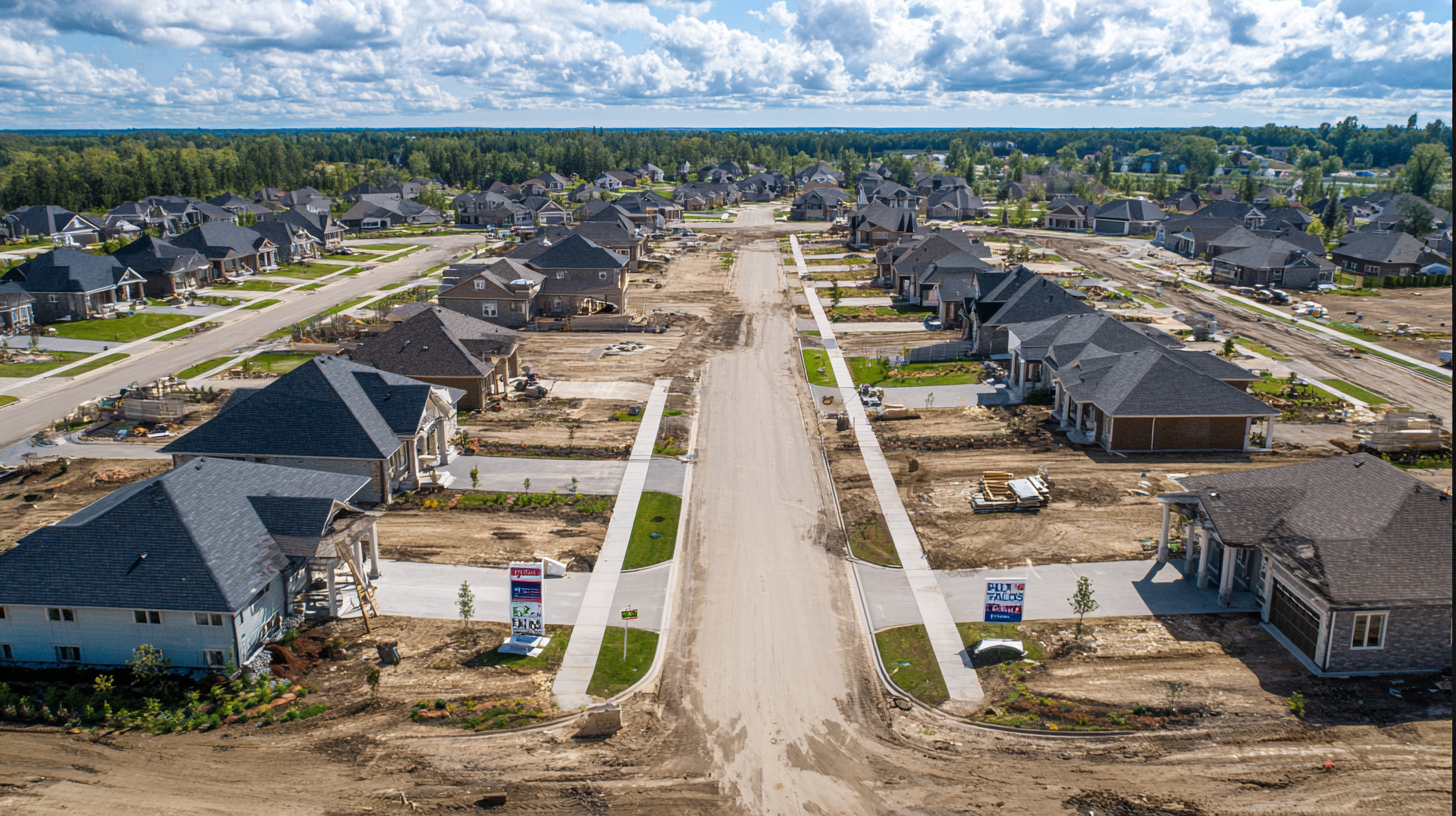
New home sales rang in 2026 with a troubling signal. January sales of newly built homes collapsed 17.6% month over month to a seasonally adjusted annualized rate of 587,000 units — the slowest pace since 2022 — according to data released Thursday by the U.S. Census Bureau. The drop was far steeper than analysts had projected, and it arrived against a backdrop that was supposed to be improving.
Year over year, sales were down 11.3%, with December’s already-soft numbers revised even lower. For homebuilders — many of them small and mid-cap companies already managing tight margins and bloated inventory — the report adds urgency to a housing sector that has yet to find solid footing.
The January data reflects signed contracts from a period when the average 30-year fixed mortgage rate was hovering between 6% and 6.2%, according to Mortgage News Daily. Rates have since climbed to 6.36%, meaning conditions in the months ahead are unlikely to produce a meaningful rebound without a catalyst. The Federal Reserve’s decision Wednesday to hold rates steady at 3.5%–3.75% — with the dot plot pointing to just one cut in 2026 — offers little relief for rate-sensitive buyers sitting on the sidelines.
To move inventory, builders have been reaching deeper into their toolkits. The median price of a new home sold in January fell to $400,500, a decline of 6.8% year over year. Yet the discounts aren’t clearing the market fast enough. Inventory climbed to a 9.7-month supply, up from eight months in December and 7.8% higher than a year ago. Completed homes sitting unsold are now near levels not seen since 2009.
The pain is spreading into March. An estimated 37% of builders cut prices in March, up from 36% in February, according to the National Association of Home Builders. Nearly two-thirds of builders are deploying additional incentives including mortgage rate buydowns to pull buyers across the finish line — a strategy that protects top-line revenue while quietly compressing margins.
Sales declined across every region, but the drops were not equal. The Northeast and Midwest could partially blame harsh winter weather. The West has no such excuse — sales there fell nearly 22% from December, suggesting demand destruction that runs deeper than seasonal disruption. Sun Belt markets, after years of speculative overbuilding, continue to be among the hardest hit.
For investors tracking small and mid-cap homebuilders, the January report is a reminder that volume recovery and margin recovery are not the same story. Companies relying heavily on incentive-driven sales risk deteriorating earnings quality even as unit counts look stable. With the Fed on hold, mortgage rates sticky above 6%, and consumer confidence still fragile, the setup for the spring selling season — typically the industry’s most critical window — looks challenged at best.
The pent-up demand is real. The question is whether affordability conditions improve fast enough to release it before builder balance sheets feel the weight.
The U.S. housing market showed renewed signs of life in November as pending home sales posted their strongest monthly increase in nearly two years. New data from the National Association of Realtors reveals that contract signings rose 3.3% compared with October, far exceeding expectations and signaling that buyer activity may be stabilizing after a prolonged slowdown.
Pending home sales are considered a leading indicator for the housing market because homes typically go under contract one to two months before a sale is finalized. The November increase pushed the Pending Home Sales Index up to 79.2, a notable improvement even though the reading remains below the long-term benchmark of 100, which reflects average activity levels in 2001. Compared with November of last year, pending sales increased 2.6%, suggesting demand is gradually recovering.
One of the most important drivers behind the uptick in housing activity has been improving affordability. Mortgage rates have eased from their recent highs, providing relief to buyers who had been priced out of the market. The average rate on a 30-year fixed mortgage has hovered near 6.2% in recent months, down from approximately 7% earlier in 2025 and well below levels seen during the summer. Even modest declines in interest rates can significantly reduce monthly mortgage payments, encouraging more buyers to re-enter the market.
Slower home price growth has also contributed to rising buyer confidence. After years of rapid appreciation, price gains have moderated across much of the country, helping incomes catch up with housing costs. At the same time, wage growth has remained relatively strong, further supporting affordability and boosting purchasing power.
Regionally, pending home sales rose across all parts of the United States in November. The West recorded the largest month-over-month increase at 9.2%, reflecting strong pent-up demand in markets that were previously among the most constrained by affordability challenges. Gains in the Midwest, South, and Northeast suggest the recovery is becoming more evenly distributed rather than concentrated in isolated markets.
Inventory levels, while still tight by historical standards, have improved compared with last year. More homes available for sale have given buyers greater flexibility and reduced competitive pressures that previously discouraged many from making offers. This gradual improvement in supply has helped support the rise in contract activity without reigniting runaway price growth.
Despite the positive momentum, the housing market remains in a fragile recovery phase. Overall home sales in 2025 are still expected to rank near three-decade lows, underscoring how deeply elevated interest rates disrupted activity over the past several years. Many homeowners remain reluctant to sell because doing so would mean giving up ultra-low mortgage rates secured before 2022.
Looking ahead, housing market forecasts suggest a slow and uneven normalization rather than a sharp rebound. Continued declines in mortgage rates, steady wage growth, and incremental improvements in inventory will be critical to sustaining buyer demand. November’s surge in pending home sales does not mark a full recovery, but it does indicate that homebuyer momentum is building and that the long housing slowdown may be starting to ease.
This combination of improving affordability, stabilizing prices, and renewed buyer interest positions the housing market for a potentially stronger 2026 if current trends continue.
For the first time in more than two years, U.S. home prices have dipped into negative territory, slipping 1.4% in just the last three months. High-frequency data from Parcl Labs shows a modest decline nationally, but the shift carries more weight than the numbers suggest. After a long stretch of rising prices fueled by pandemic demand, extremely low inventory, and a surge in relocation activity, the market is now feeling the effects of high mortgage rates, slower buyer activity, and a consumer who is becoming increasingly cautious. For small-cap investors, this change in the housing landscape serves as a valuable indicator of broader economic sentiment.
The housing market has been wrestling with affordability pressures since mortgage rates spiked in 2022 and 2023, with the 30-year fixed rate jumping from under 4% to more than 7%. That rapid climb priced out large segments of buyers and forced sellers to adjust their expectations. While inventory is still historically low, active listings have risen 13% year over year, and many sellers are pulling their homes off the market entirely due to low demand. That type of hesitation reflects real-time consumer behavior—people are slowing down major purchases, reevaluating budgets, and becoming more selective. Housing tends to reveal economic shifts early, and the current softness mirrors the same cautious tone we’ve been seeing in certain pockets of the small-cap market.
Regionally, the data is even more telling. Markets like Austin are down 10% year over year, with Denver, Tampa, Houston, Atlanta, and Phoenix also showing notable declines. Meanwhile, cities like Cleveland, Chicago, New York, Philadelphia, and Boston are still posting price gains. This split environment is a reminder that the national average rarely tells the full story—both in real estate and in equities. Small-cap stocks behave the same way: some regions and sectors weaken sharply while others show surprising strength. Investors who learn to spot these patterns early often outperform.
Another challenge is the lack of updated government housing reports due to the recent federal shutdown. Without fresh data on housing starts, permits, or new home sales, analysts are relying heavily on private data, builder sentiment, and earnings commentary. Homebuilders themselves describe a market with weak demand and ongoing incentives, and their sentiment remains deep in negative territory. That combination—soft demand, cautious consumers, and uneven regional performance—is exactly the kind of environment where small caps tend to lag temporarily before outperforming when conditions improve.
Mortgage rates have barely moved in the last three months, even after the Fed’s recent rate cut, suggesting that home prices may hover around zero growth for some time. But for small-cap investors, this stability isn’t a bad thing. When markets pause, opportunities emerge. Historically, when housing cools without collapsing, it often sets the stage for strong small-cap recoveries once rates drift lower and consumer confidence finds its footing.
Home prices turning slightly negative isn’t a crisis—it’s a signal. It tells us the economy is recalibrating after years of aggressive tightening, and that consumers are adapting. For disciplined small-cap investors, this environment is a chance to study balance sheets, identify undervalued companies, and prepare for the next move higher. Economic resets don’t punish prepared investors—they reward them.
Mortgage rates have risen slightly for the second consecutive week, with the average 30-year fixed mortgage rate increasing from 6.30% to 6.34% as of early October 2025, according to Freddie Mac data. Despite this uptick, rates remain near the lowest levels seen throughout the year. This rise has led to a noticeable decline in refinancing demand, with refinancing applications dropping by about 21% week over week. However, mortgage applications for home purchases have only declined slightly, showing resilience amid economic uncertainty.
The current mortgage environment is shaped by the Federal Reserve’s recent benchmark interest rate cuts in September 2025, which initially brought optimism for lower borrowing costs. However, investor uncertainty regarding the pace and extent of future rate cuts has kept mortgage rates relatively stable with small fluctuations. Compounded by a government shutdown that delayed key economic data releases, such as the monthly nonfarm payroll report, this has created uncertainty that influences market movements, including mortgage rates.
For small-cap investors, these movements in mortgage rates have important implications. Small-cap stocks are often more sensitive to changes in interest rates because smaller companies tend to carry more floating-rate debt than large-cap firms. Rising rates can increase borrowing costs and pressure profit margins for these companies. Conversely, when rates decline, small caps tend to benefit more significantly due to reduced interest expenses. The recent pause and slight increase in mortgage and borrowing rates may temper the short-term enthusiasm for small caps, but the underlying expectation remains that if the Federal Reserve follows through with further rate cuts later in 2025, small-cap stocks could see renewed gains.
The housing market itself remains challenged by affordability constraints driven by elevated mortgage rates, which have kept many potential buyers priced out. Homeowners with locked-in lower mortgage rates are less incentivized to sell, limiting inventory and putting upward pressure on home prices. This “rate-lock effect” contributes to a cautious but steady housing market with lower transaction volumes. For investors, this means companies involved in new home construction and renovation may represent areas of opportunity, as builders shift focus to new construction to meet demand.
Refinancing demand is a critical signal for the housing market and consumer financial health. The recent 21% drop in refinancing applications after a brief wave earlier in the fall reflects borrowers’ hesitation as rates climbed even slightly. For homeowners who locked in loans at rates above 7.5% in previous years, current rates near 6.3-6.5% may still present refinancing opportunities, though the window to act is becoming narrower. Careful evaluation of refinancing costs versus potential savings is recommended.
In summary, mortgage rates rising modestly for the second week in a row in October 2025 highlights a complex market environment. For small-cap investors, this signals temporary caution as borrowing costs rise slightly, but opportunities may arise if and when the Federal Reserve eases rates further. Housing market dynamics also suggest selective chances in homebuilders and related sectors, fueled by ongoing affordability issues and shifting buyer behavior. Monitoring economic data and Fed policy developments will be key to understanding how mortgage rates, refinancing activity, and small-cap stocks will evolve in the coming months
WEST HARRISON, N.Y.–(BUSINESS WIRE)–Sky Harbour Group Corporation (NYSE: SKYH, SKYH WS) (“SHG” or the “Company”), an aviation infrastructure company building the first nationwide network of Home Base Operator (HBO) campuses for business aircraft, announced the closing of a $200 million tax-exempt warehouse drawdown committed bank facility. The initial borrower is Sky Harbour Capital II, LLC (“SKYH Capital II”), a wholly owned subsidiary of SHG. The lender and administrative agent is JPMorgan Chase Bank (“J.P. Morgan”). The initial tax-exempt note underlying the committed facility (the “JPM Facility”) was issued through the Public Finance Authority (Wisconsin) (“PFA”).
The JPM Facility’s principal terms include: drawdowns for eligible new hangar projects, 65% leverage, a 5-year bullet maturity, 80% of (SOFR+0.10%) plus a 200bps applicable margin as the tax-exempt annual interest rate, capitalized monthly interest during the first three years, and no prepayment penalty at the time of refinancing. At present, the applicable floating interest rate is approximately 5.60%. Subject to credit approval, the JPM Facility may be expanded to $300 million. Additional information may be found in our related filing under Form 8-K with the SEC.
Tal Keinan, Sky Harbour’s CEO, commented: “We thank our new lending partners at J.P. Morgan for their trust and their creativity in designing a facility that elegantly meets Sky Harbour’s specific needs.”
Francisco Gonzalez, Sky Harbour’s CFO, commented further: “After a highly competitive process that included numerous banks and products, we determined that the tax-exempt warehouse drawdown committed bank facility that closed yesterday is the most favorable and cost-efficient borrowing mechanism for the funding of our next set of projects. The JPM Facility provides us with flexibility to draw when we need to and refinance into long term bonds at the optimal time.”
McGuireWoods LLP acted as administrative agent and lender’s counsel to J.P. Morgan. Attolles Law, S.C. acted as issuer counsel to PFA. Greenberg Traurig, LLP acted as tax and bond counsel and Morrison & Foerster LLP acted as corporate counsel to the initial borrower, SKYH Capital II. Lexton Infrastructure Solutions LLC acted as financial advisor to the Company.
About Sky Harbour
Sky Harbour Group Corporation is an aviation infrastructure company developing the first nationwide network of Home-Basing campuses for business aircraft. The company develops, leases, and manages general aviation hangar campuses across the United States. Sky Harbour’s Home-Basing offering aims to provide private and corporate residents with the best physical infrastructure in business aviation, coupled with dedicated service, tailored specifically to based aircraft, offering the shortest time to wheels-up in business aviation. To learn more, visit www.skyharbour.group.
Forward Looking Statements
Certain statements made in this release are “forward looking statements” within the meaning of the “safe harbor” provisions of the United States Private Securities Litigation Reform Act of 1995, including statements about the financial condition, results of operations, earnings outlook and prospects of SHG, including statements regarding our expectations for future results, our expectations for future ground leases, our expectations on future construction and development activities and lease renewals, and our plans for future financings. When used in this press release, the words “plan,” “believe,” “expect,” “anticipate,” “intend,” “outlook,” “estimate,” “forecast,” “project,” “continue,” “could,” “may,” “might,” “possible,” “potential,” “predict,” “should,” “would” and other similar words and expressions (or the negative versions of such words or expressions) are intended to identify forward-looking statements, but the absence of these words does not mean that a statement is not forward-looking. The forward-looking statements are based on the current expectations of the management of Sky Harbour Group Corporation (the “Company”) as applicable and are inherently subject to uncertainties and changes in circumstances. These forward-looking statements involve a number of risks, uncertainties or other assumptions that may cause actual results or performance to be materially different from those expressed or implied by these forward-looking statements. For more information about risks facing the Company, see the Company’s annual report on Form 10-K for the year ended December 31, 2024 and other filings the Company makes with the SEC from time to time. The Company’s statements herein speak only as of the date hereof, and the Company undertakes no obligation to update or revise any forward-looking statements, whether as a result of new information, future events or otherwise, except as required by law.
Mortgage rates have drifted lower once again, hitting a fresh low for 2025, but the relief has yet to thaw an otherwise sluggish housing market. According to Freddie Mac, the average 30-year fixed mortgage rate slipped to 6.5% this week, down slightly from 6.56% the prior week and the lowest level since October 2024. The 15-year fixed mortgage rate also moved lower to 5.6%. The decline extends a trend that has carried through much of the summer as bond yields fell alongside growing expectations that the Federal Reserve will soon cut interest rates.
Yet even as borrowing costs reach their most attractive levels in nearly a year, homebuyers remain cautious. Mortgage Bankers Association data showed purchase applications dropped 3% from the previous week, signaling that lower rates are not drawing many new entrants into the market. Refinancing activity, which tends to be more rate-sensitive, rose by just 1%, suggesting only a modest response among households looking to restructure existing debt. Brokerage Redfin described the current environment as one producing a “trickle, not a surge” of demand, with affordability challenges still weighing heavily on potential buyers.
The central issue remains housing affordability. Home prices, while cooling in some regions, are still elevated compared to pre-pandemic levels, and many prospective buyers remain priced out despite the recent dip in borrowing costs. Supply shortages also persist as homeowners who locked in ultra-low rates during 2020 and 2021 are reluctant to sell, limiting inventory and keeping prices from adjusting downward in a meaningful way. This lock-in effect continues to hold back mobility in the market, even as conditions grow more favorable on the financing side.
Attention now shifts to broader economic forces that could determine whether mortgage rates continue to ease. Treasury yields, which mortgage rates closely track, have been under pressure as investors reassess the path of monetary policy. The upcoming August jobs report will be critical in shaping those expectations. If employment data comes in weaker than forecast, markets are likely to bet more aggressively on Fed rate cuts, which could drive borrowing costs lower still. Conversely, a strong report could quickly reverse recent gains, sending yields and mortgage rates higher again.
Recent indicators suggest the labor market is losing momentum. Job openings in July fell to their lowest level in ten months, with fewer available positions relative to unemployed workers. Meanwhile, private payroll data from ADP showed the economy added just 54,000 jobs in August, underscoring the slowdown. Economists point out that while layoffs remain limited, the ability for unemployed workers to re-enter the job market has become more difficult, reflecting a gradual cooling rather than a sharp downturn.
For now, mortgage rates are at their most favorable point in nearly a year, but affordability barriers, limited supply, and broader economic uncertainty mean the housing market remains stuck in neutral. The next move may depend less on where rates are today and more on whether labor market weakness forces the Fed to deliver deeper cuts that could eventually bring real relief to buyers.
WEST HARRISON, N.Y.–(BUSINESS WIRE)– Sky Harbour Group Corporation (NYSE: SKYH, SKYH WS) (“SHG” or the “Company”), an aviation infrastructure company building the first nationwide Home Base Operator (HBO) network of campuses for business aircraft, announced the release of its unaudited financial results for the three months ended June 30, 2025 on Form 10-Q. The Company also announced the filing of its unaudited financial results for the three months ended June 30, 2025 for Sky Harbour Capital (Obligated Group) with MSRB/EMMA. Please see the following links to access the filings:
Financial Highlights on a Consolidated Basis include:
Constructed assets and construction in progress reached over $295 million at quarter end, an increase of $125 million year-over-year and $18 million as compared to the prior quarter.
Q2 2025 consolidated revenues increased 82% as compared to Q2 2024 and 18% as compared to the prior quarter.
Net cash used in operating activities was approximately $0.9 million for the quarter, a significant improvement from the $5 million used in prior quarter.
Strong liquidity and capital resources as of June 30th, 2025, with consolidated cash and US Treasuries totaling nearly $75 million.
Reiterating our guidance of reaching operating cash-flow breakeven on a consolidated run-rate basis by year-end 2025, supported by the commencement of revenues from campuses in Phoenix, Denver, Dallas and Seattle.
Financial Highlights at Sky Harbour Capital (Obligated Group) include:
Q2 2025 Obligated Group Revenues increased approximately 20% as compared to the prior quarter.
Net cash from operating activities (positive) reached approximately $2.2 million in Q2 2025, a 117% increase from the prior quarter.
Cash and US Treasuries at the Obligated Group totaled $37 million as of June 30th, 2025.
Update on Site Acquisition
Sky Harbour currently has campuses operating at Houston’s Sugar Land Regional Airport (SGR), Nashville International Airport (BNA), Miami Opa-Locka Executive Airport (OPF), San Jose Mineta International Airport (SJC), Camarillo Airport (CMA), Phoenix Deer Valley Airport (DVT), Dallas’s Addison Airport (ADS), Seattle’s King County International Airport – Boeing Field (BFI); one campus nearing construction completion at Denver’s Centennial Airport (APA); campuses in pre-development at Chicago Executive Airport (PWK), Sky Harbour’s first four New-York-metro area airports – Bradley International Airport (BDL), Hudson Valley Regional Airport (POU), Trenton-Mercer Airport (TTN), and Stewart International Airport (SWF); Orlando Executive Airport (ORL), Dulles International Airport (IAD), Salt Lake City International Airport (SLC), and Portland-Hillsboro Airport (HIO).
We reiterate our prior guidance of five additional airport ground leases to be announced by the end of 2025, for a total portfolio of 23 airports by year end.
Update on Construction and Development Activities, Change in Development Leadership
As reported on our monthly activity reports filed with MSRB/EMMA, and available on our website, Dallas Addison (ADS) achieved its first Certificates of Occupancy in Q2 and has commenced resident flight operations. Denver Centennial (APA) achieved its first Certificates of Occupancy last month and will commence resident flight operations in the coming weeks. Please see the following link for the last monthly construction report:
Miami Opa Locka (OPF) Phase 2 commenced construction in Q2 and is expected to be completed by Q2 2026.
Outgoing COO, Will Whitesell, who led the Company’s construction division, has entered an amicable separation agreement with the Company and has assisted in an orderly transfer of his responsibilities. The Company is grateful for Will’s commitment and his contributions and wishes him much success in his future endeavors.
Phil Amos, a 40-year veteran of the Pre-Engineered Metal Building (PEMB) industry, and co-founder of A&F Contractors, has joined Sky Harbour as Head of Construction and President of Sky Harbour’s newly-formed, wholly-owned development subsidiary, Ascend Aviation Services (“Ascend”). Ascend brings specialized airport construction-management and in-house General Contracting capabilities to Sky Harbour. Ascend is headquartered in Houston, TX, and staffed by veterans of the airport construction industry around the United States, including legacy members of the Sky Harbour development team. In addition to its construction management and general contracting functions, Ascend oversees the operations of Stratus Building Systems, Sky Harbour’s wholly-owned PEMB manufacturing subsidiary. Ascend and Stratus together constitute a vertically-integrated, specialized airport infrastructure developer. Mr. Amos, while at A&F, served as the general contractor for Sky Harbour’s first hangar campus at Sugar Land Regional Airport, which was delivered on time and under budget.
Update on Leasing Activities
Stabilized campuses: The Company continues to enjoy higher-than-forecast revenue per square foot at its stabilized campuses. Revenue per square foot continues to grow as legacy hangar leases turn or are renewed.
New campuses: The Company has executed the first six hangar leases at its new Denver, Dallas and Phoenix campuses, and is under LOI for additional leases. The Company expects to meet its revenue run-rate targets at the new campuses within six months.
Pre-leasing: The Company has initiated a pilot project at two airports – Bradley International Airport (BDL) and Dulles International Airport (IAD) to pre-lease hangar space prior to construction commencement. The objective is to take advantage of growing awareness of the Sky Harbour HBO value proposition within the US Business Aviation industry to a) reduce lease-up times, b) better curate resident communities, and c) integrate customized resident improvements during construction (as opposed to retrofitting). Hangar leases have been executed at both airports at revenue rates that present an introductory pricing advantage to pre-lease residents while still delivering above-target per-square-foot revenue to the Company. Additional pre-leases are under LOI.
Update on Airport Operations
As of Q3, the Company is conducting flight operations at nine airports.
Under the leadership of Marty Kretchman, Senior Vice President of Airports, the company has transitioned to a centralized operating model, featuring National Directors of Line Training; Facilities; and Ground Support Equipment (GSE).
Surveys of current residents indicate that Sky Harbour’s HBO service offering has become a key differentiating component of the Sky Harbour value proposition. The Company plans to continue to invest in constant improvement in airfield operations, through selective recruiting, rigorous training, detailed and thoughtful operating procedures, and constant innovation in collaboration with Sky Harbour residents.
Update on Capital Formation
After several quarters of “dual tracking” the review of various debt funding alternatives and proposals, the Company has decided to pursue a tax-exempt bank debt facility in lieu of a bond issue.
We are currently in advanced discussions with a major US financial institution for an expected five (5) year drawdown construction facility of $200 million, with an expected indicative interest rate of 80% of 3-month SOFR plus 200 basis points (~5.47% in the current market).
Our debt financing plan is to fund the next 5-6 airport projects using this facility and internal equity. The Company expects to replace this facility with permanent tax-exempt bonds in the next 3-4 years. We expect to close the facility on or about August 28th. However, we can provide no assurance on exact terms or the timing of this facility.
Tal Keinan commented: “As Sky Harbour navigates the transition from a tactical team, emphasizing agility, innovation and flexibility, to a high-growth organization, increasingly embracing process, discipline and specialization, five constants will continue to guide our leadership: 1) Obsessive focus on the Resident, 2) Commitment to building long-term shareholder value, 3) Uncompromising pursuit of professional excellence, 4) Cost-efficiency, and 5) Individual ownership of results. We value the reputation we are building in business aviation and intend to continue building it for years to come.”
About Sky Harbour
Sky Harbour Group Corporation is an aviation infrastructure company developing the first nationwide network of Home-Basing campuses for business aircraft. The company develops, leases, and manages general aviation hangar campuses across the United States. Sky Harbour’s Home-Basing offering aims to provide private and corporate residents with the best physical infrastructure in business aviation, coupled with dedicated service, tailored specifically to based aircraft, offering the shortest time to wheels-up in business aviation. To learn more, visit www.skyharbour.group.
Forward Looking Statements
Certain statements made in this release are “forward looking statements” within the meaning of the “safe harbor” provisions of the United States Private Securities Litigation Reform Act of 1995, including statements about the financial condition, results of operations, earnings outlook and prospects of SHG, including statements regarding our expectations for future results, our expectations for future ground leases, our expectations on future construction and development activities and lease renewals, and our plans for future financings. When used in this press release, the words “plan,” “believe,” “expect,” “anticipate,” “intend,” “outlook,” “estimate,” “forecast,” “project,” “continue,” “could,” “may,” “might,” “possible,” “potential,” “predict,” “should,” “would” and other similar words and expressions (or the negative versions of such words or expressions) are intended to identify forward-looking statements, but the absence of these words does not mean that a statement is not forward-looking. The forward-looking statements are based on the current expectations of the management of Sky Harbour Group Corporation (the “Company”) as applicable and are inherently subject to uncertainties and changes in circumstances. These forward-looking statements involve a number of risks, uncertainties or other assumptions that may cause actual results or performance to be materially different from those expressed or implied by these forward-looking statements. For more information about risks facing the Company, see the Company’s annual report on Form 10-K for the year ended December 31, 2024 and other filings the Company makes with the SEC from time to time. The Company’s statements herein speak only as of the date hereof, and the Company undertakes no obligation to update or revise any forward-looking statements, whether as a result of new information, future events or otherwise, except as required by law.
Key Performance Indicators
We use a number of metrics, including annualized revenue run rate per leased rentable square foot, to help us evaluate our business, measure our performance, identify trends affecting our business, formulate business plans, and make strategic decisions. Our key performance indicators may be calculated in a manner different than similar key performance indicators used by other issuers. These metrics are estimated operating metrics and not projections, nor actual financial results, and are not indicative of current or future performance.