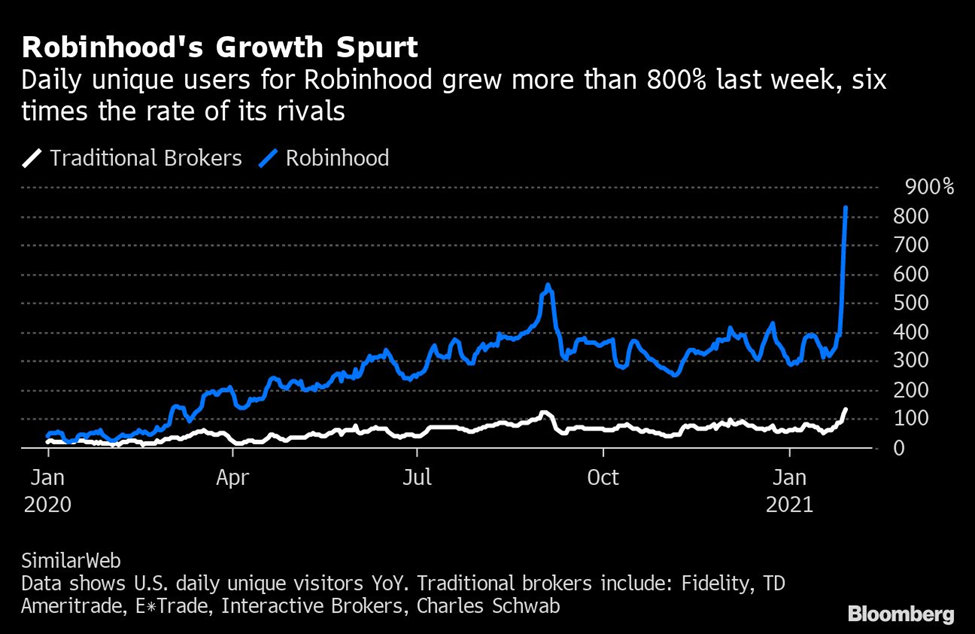
What Stocks do you Buy When the Dollar Goes Down?


If Dollar Weakness Persists – What Stocks May Benefit?


The U.S. dollar has been declining in value since late Spring 2020. Although other newsworthy trends may have taken exchange rates out of the spotlight; a new year is usually a time when investors readjust their focus. The change of economic priorities in Washington also signals investors to consider readjusting their radar to find investment opportunities with higher likelihood of success. Should the declining $US Dollar trend continue it may turn out to have a sizeable impact on asset prices in various sectors during 2021.

The last time equity investors paid much attention to currency valuation was 2011. For the benefit of readers in the market for less than 10 years, we’ll quickly recap some basics such as: What is a weak dollar? Why is the dollar weak? And then move to the important question, what industries may benefit from a weak dollar?

Weak Dollar

Supply and demand of a currency cause it to move higher and lower based on demand, assuming a stable money supply. If demand for either goods or financial assets priced in a currency rise, it exerts upward pressure on the currency’s value. For example, consider oil demand since the COVID slowdown. Most oil is purchased on global markets in $US Dollars. If worldwide economic activity slows and there are fewer barrels being purchased, there is a lower demand for dollars to exchange for crude oil. This lower demand helps depress the currency’s value. Another common example is interest rates. Currencies will be exchanged in order to buy notes of a country that has higher yields net of native inflation (after adjusting for sovereign risk). This is why rising real U.S. interest rates vs. other nations ordinarily coincide with a strengthening dollar — lower rates have the opposite effect.


Since the 1980s money supply has mostly had a gentle upslope that steepened some starting in 2008. As mentioned above, an increase of supply of something without an offsetting increase in demand places downward pressure on the value of it (in this case the $USD). There has been an abrupt increase in the supply of money in circulation in recent months. The graph below of money supply (M1) shows the dramatic increase in currency.


Money Supply (M1) Since January 2000

Source: St. Louis Federal Reserve Bank

 

Although there are many factors that come into play when the push and pull of markets determine the price for anything, the two key economic ingredients remain supply, which has measurably increased, and demand which is slack because of artificially low rates and a slow world economy.

Impact on Stocks

As the pandemic fears lift and the cabin-fever of individuals from all over the globe help them decide they need a change of scenery, there will be interest in traveling to where their local currency goes the farthest. This makes travel and tourism companies located in the U.S. interesting as an investment. There’s potential for them to have the double benefit of increased overall travel and a weaker dollar steering international travelers to the U.S. Another industry with multiple tailwinds is entertainment. An interesting subset of entertainment is esports which has been enjoying growth in popularity since even before the lockdowns. Esports games know few boundaries for attracting audiences. As a result, many companies are not U.S. based, some of those publicly traded esports related companies that are may get an additional boost if the declining dollar trend continues.

Natural resource stocks are worth watching as well. If it comes out of the ground in the U.S. or a country with a closely correlated currency and is sold abroad someplace with a strong rising currency, the producer could experience higher profits on the same amount of work. Examples include mining of commodities used for building materials such as copper, silver, steel, etc.  Any mine operations transacting in U.S. dollars or a correlated currency may get an added currency kicker.

When it comes to asking who benefits from a weaker dollar, one can’t ignore large multinationals. Whether the company does most of its manufacturing in the states and exports those products, or has production facilities across the globe, if sales in a strong currency and converted back to a weaker dollar the company benefits. Larger companies received a great deal of attention last year. Conversely, it would make sense for investors to exercise caution and spend extra time analyzing companies that import a lot of materials or offshore labor. As many of these companies’ stocks have experienced a strong 2020.  Investors may prefer instead to determine the smaller suppliers of these large companies that are not as visible, yet benefitting. 

While building a watch list for 2021, companies that import from nations experiencing strong currency gains versus the dollar may add have an added consideration as to upward potential.

Take-Away

There is no guarantee that the dollar will continue on its weaker trend. However, the ingredients that cause a weakening dollar seem to be heavily baked into the economic cake. The most recent stimulus may have even turned up the temperature higher by adding to the supply of cash in circulation.

It’s important to note that a strengthening or weakening dollar does not necessarily suggest a strong or weak stock market, it does however suggest sector rotation. The sectors with the higher probabilities of benefitting are those involved in exporting goods or in the case of entertainment, providing a service. The stocks that should be analyzed with the most caution are U.S. manufacturers that rely heavily on imports from countries with inflated currencies.

Paul Hoffman

Managing Editor, Channelchek


Suggested Reading:

Metals and Mining Industry Report, Jan. 4, 2021

US Debt as a Percentage of GDP Skyrocketing

How to Invest in Esports


Are you subscribed to Channelchek’s active YouTube channel?


Sources:

St. Louis Fed, Money Supply

Foreign Exchange/Koyfin

How
the Dollar Impacts Commodity Prices


How Will Remote Working Change After the Pandemic?


Zoomtowns: Your Vacation Getaway May Become Your New Home


Are home offices moving to even more remote locations? Everyone is aware that the pandemic has changed the way people work and live. Workers spend less time commuting to a central work place, and video meetings, often Zoom meetings, have replaced conference room meetings. People who didn’t know what Zoom was in 2019 have now become proficient in its operations. It would be easy to think that the shift is temporary, and things will go back to normal once the pandemic passes. This may not be the case. Management of companies has learned that employees can be just as effective (in many cases more effective) working from home.  While Zoom type meetings will never replace face-to-face meetings entirely, it’s very probable that many businesses will permanently become a combination of an in-office and work-from-home operation.

Adjusting

Employees have already begun adjusting to the change. If they are going to work from home, they want a high functioning home office setting. Working from the kitchen table may have been fine to finish up a late-night report, but it won’t work for an important teleconference meeting.  People want offices with doors they can close to assure some level of privacy. The result has been a run on home office furniture and equipment.  Forget paper towels. The new work-at-home employee wants a printer!

The new household are adding more entertainment options since restaurants, movies, theaters, and concerts are limited. It is easier to justify that extra cable or internet channel when less is being spent on other restorative activities. Games and puzzles have become popular again. The same can be said about exercise equipment. There are currently long wait times for trying to buy a treadmill to be delivered to their house. Bikes, roller skates and skateboards are in high demand. People are cooking more, shopping for specific pots and pans is uncovering shortages.

The pandemic is not only changing how people live within their home, it’s changing their home. People are adding additions, putting in swimming pools and spending money on landscaping. Existing and new home sales are soaring as people move to bigger, nicer homes. New homes are being built farther and farther away from urban centers as they commute less. Vacation homes are becoming more popular. People want to live in areas with nicer views. “Zoomtowns” near lakes and rivers or golf courses or mountains are exploding.

Zoomtowns

If you are not familiar with the term Zoomtown, be prepared to see it more often. NPR’s Planet Money defines Zoomtowns as housing markets that are booming as remote work takes off. Zoomtowns are spreading not only because of a decrease in commuting but also a decrease in entertainment venues associated with urban living. To quote Forbes, “your vacation getaway may be your next home.” People want more space because of the virus and that means getting away from crowded cities.

A paper published in the Journal of the American Planning Association shows that Zoomtown populations were already growing before COVID-19 hit. The study identified 1,522 small towns that were withing 10 miles of a national park, monument, forest, lake, or river, and at least 15 miles from a census-designated area. It then compared the growth rate of these towns versus the national average.  The popularity of Zoomtowns most likely reflects an increase in disposable income for the wealthy following the rise in the market, a tax decrease and sustained low interest rates.

The sudden boom in zoomtowns comes with the usual growing pains. Healthcare options are ill equipped to handle a larger, older population. Restaurants become overrun and stores providing necessities are rare. Staff is limited and often migratory. There is a lack of inexpensive housing for workers. Jonathan Thompson, a contributor to Writers on the Range, refers to the wave of urban workers moving to Zoomtowns as COVID migrants. Costs are rising quickly. As the exodus to Zoomtowns spreads, the towns are becoming denser, threatening the very reason people moved to these locations in the first place. That will only raise the value of undeveloped areas near natural beauty that could become the next Zoomtown.

Investment Play?

Investors can play the growing popularity of Zoomtowns in many ways. There will be increased need for cellular and internet services. Recreational equipment associated with water or golf courses will become more popular. General stores focused on rural areas should do well. Rural construction companies will see increased business. And of course, the Zoomtown could not exist without media companies like Zoom, Cisco Webex, GoToMeeting, Google Hangouts, etc.


Suggested Reading:

Which Stocks Do Well After a Presidential Election

Fintech Pirates are Looting Unsuspecting Trading Accounts

Many Investors are Keeping Their Powder Dry


Each event in our popular Virtual Road Shows Series has a maximum capacity of 100 investors online. To take part, listen to and perhaps get your questions answered, see which virtual investor meeting intrigues you here.


Sources:

https://www.msn.com/en-us/money/smallbusiness/zoom-towns-are-exploding-in-the-west/ar-BB1a7IHq, Lilly Smith, Fast Company, October 17, 2020

https://health.clevelandclinic.org/heres-how-the-coronavirus-pandemic-has-changed-our-lives/, Cleveland Clinic, September 25, 2020

https://sonomasun.com/2020/04/08/four-ways-the-current-pandemic-has-changed-everyday-life/, Sonoma Valley Sun, April 8, 2020

https://www.forbes.com/sites/irenelevine/2020/09/15/zoom-towns-why-your-last-vacation-getaway-may-be-your-next-home/#7387273b3ad3, Irene S. Levine, Forbes, September 15, 2020

https://phys.org/news/2020-10-towns-rural-west.html, Lisa Potter, University of Utah, October 15, 2020

https://lasvegassun.com/news/2020/oct/14/zoom-towns-covid-19-shaping-population-trends/, Jonathan Thompson, Las Vegas Sun, October 14, 2020

Financial Markets Lifted Household Wealth to Record Levels


Dire Financial Expectations May Have Gone Out the Window


Add this to the list of economic data defying dire expectations people held six months ago: The net worth of households in the U.S. hit the highest level ever during the second quarter. This followed a record drop in household wealth during the first quarter.

The details, released in the quarterly Federal Reserve Flow of Funds report that reviews American households, forms a clear “V”. This, of course, follows the novel coronavirus influenced financial activity on the markets, businesses, households, and applied government stimulus.

Note: The last three quarters of household net worth demonstrate a solid “V” as values tumbled at a record pace in the first quarter from a relatively high point in 2019 to new record highs at the end of Q2 2020.

Changes in net worth consist of transactions, revaluations, and other volume changes. Corporate equity and debt securities include directly and indirectly held securities. Real estate is the value of owner-occupied real estate. Other includes equity in noncorporate businesses, consumer durable goods, fixed assets of nonprofit organizations, and all other financial assets apart from corporate equities and debt securities, net of liabilities, as shown on table B.101 Balance Sheet of Households and Nonprofit Organizations.


Where Wealth Grew

The net worth of households in the U.S. and non-profits shot up 6.8% in the second to $118.96 trillion. This is approximately $380 billion higher than at the end of 2019 before the reaction to the pandemic eroded more than $7 trillion of household wealth.

The asset class that most severely caused the dip then later surged was equity values of securities owned by households. These fell 25% in the first quarter from the end of 2019. Then, most of those losses were recouped in the second quarter, when the value of U.S. equities rose to $19.52 trillion — 8.3% below their year-end valuation.


Last Update: September 21, 2020, Represents Households and Non-Profits

Household real estate and bank-account values have also continued to rise, with some credit given to stimulus checks and enhanced unemployment benefits through the second quarter. The personal saving rate grew to a record 26% in Q2 from 9.6% in Q1. Part of this growth can be attributed to a decline in discretionary spending on clothes and restaurants.

Most of the increase in debt during the first half of 2020 has been business and government entities, according to the Fed. Household debt rose just 0.5% in the second quarter from the first, business debt climbed 14%, and federal-government debt surged 59%.

Take-Away

This recovery is far quicker and of greater magnitude than economists expected. Other measurements and activity, such as the labor market, are also springing back at an unexpected pace from the downturn. Economists from both academia and business were polled by The Wall Street Journal; on average, they expect gross domestic product to increase at an annualized rate of 23.9% in the third quarter, following a decline of 31.7% in the second quarter. We’re still not through all the impacts of the abrupt changes to household and business activity started during Q1, but many of the surprises continue to be on the unexpectedly-positive side.


Suggested Reading:

Job Market Stats Suggest More Clarity

The Fed is Experimenting with Digital
Money

COVID, Sex, and the Business Cycle


Enjoy Premium Channelchek Content at No Cost


Each event in our popular Virtual Road Shows Series has maximum capacity of 100 investors online. To take part, listen to and perhaps get your questions answered, see which virtual investor meeting intrigues you here.


Sources:

Federal Reserve Board issues Report on the Economic Well-Being of U.S. Households

Survey of Household Economics and Decisionmaking

Changes in Net Worth: Households and Nonprofit Organizations, 1952 – 2020

U.S. Households’ Net Worth Had Record Fall in First Quarter

WSJ Survey: Overall Economy Is Recovering Faster Than Economists Expected

U.S. Debt as a Percentage of GDP Skyrocketing. Should We Be Concerned?


U.S. Debt as a Percentage of GDP Has Hit Levels Not Seen Since World War II


The federal budget deficit is projected to hit a record $3.3 trillion due, in part, to government expenditures to fight the coronavirus.  With the deficit, the U.S. national debt is now more than $26 trillion.  With the U.S. annual gross domestic product dropping to $19.5 billion in the second quarter, that means that debt as a percentage of GDP has skyrocketed to 133%, up from a level of 106% in 2019.  The table below shows that the debt/GDP number has grown steadily over the last forty years, with big jumps coming during periods when the government has stimulated the economy.  In 2009, for example, debt/GDP jumped from 68% to 83% when the government bailed out distressed financial institutions.  Increased government spending during times of economic weakness is an unfortunate necessity.  More alarming, however, is the fact that debt/GDP percentage is not reduced during times of prosperity.  


How much debt is too much debt?  Even before accounting for this year’s stimulus spending, the United States was responsible for 31% of the world’s debt.  Presumedly, that debt must be repaid at some point. At current levels, the U.S. debt represents approximately $80,000 for every man, woman, and child living in the United States. Is the current level of debt placing a burden on future generations? Or should debt be viewed as a cheap form of financing that should be used as long as it does not lead to higher inflation?  This article explores the pluses and minuses of higher government debt levels.


Rising debt is a big issue

  • The government is saddling future generations
    with debt
    .  If one assumes that debt must be repaid, GDP is one measure of a country’s ability to repay its debt.  Think of debt to GDP as a measurement akin to debt to sales for corporations.  When debt was only 30% of GDP as recently as thirty years ago, it was reasonable to believe that the country could repay its debt in the foreseeable future.  With debt levels at 130% of GDP and approaching 150%, such repayment is harder to imagine without future generations taking severe austerity measures.
  • High debt levels choke out savings needed to
    fund corporate borrowing.
      The government must borrow the debt from someone.  In theory, that means that there are fewer dollars to purchase corporate bonds, and corporations must offer higher interest rates to bond investors.  This could affect corporate profitability and the ability to fund investments needed to fuel growth.
  • Higher debt limits the government’s ability
    to stimulate the economy in the future
    .  No one questions whether governments should borrow to stimulate the economy during times of economic weakness.  However, it can not do so forever.  Debt cannot rise without limit.  Therefore, increasing debt levels means that the government will be less able to do so in the future should the need arise.
  • On-balance-sheet debt does not include many
    other government obligations.
      The national debt reflects the cumulation of annual federal budget deficits.  However, there are many other government obligations.  Social Security is an example of a government obligation not included in federal debt.  Economist Jim Hamilton estimates that off-balance-sheet liabilities could exceed $70 trillion, or roughly three times that of on-balance-sheet debt.
  • Our debt is held by foreign governments and
    carries the risk of being used against us for political reasons.
    Foreign entities own $6 trillion, or 29%, of the debt issued by the U.S. government, including $1 trillion held by China.  Should a country make a sudden decision to sell U.S. Treasuries, it could have negative implications for treasury market and the U.S. economy.  The large ownership by foreign entities is the result of the fact that the United States has run a trade deficit for many decades.  If a foreign entity were to suddenly decide that it no longer wanted to hold U.S. dollars in the form of treasuries, it could cause the dollar to drop suddenly and weaken the nation’s purchasing power.
  • A loss of confidence in the government’s
    ability to repay debt could be disastrous.
      Treasury rates are low because the bonds are backed by the full faith and credit of the U.S. government.  But what if investors begin to doubt the country’s ability or willingness to pay back their debts?  Such doubt could lead to a wave of selling in the treasury markets, pushing interest rates higher and thus putting additional pressures on the government.


Rising debt is not a big issue

  • Other countries have a higher debt to GDP
    rate
    .  The United States is not alone in reporting rising debt levels. Other countries such as Japan and Greece have spent their way towards economic growth and are doing well.  Japan’s debt, for example, is 235% of its GDP.
  • The nation has had debt levels larger than
    GDP before and survived.
    As mentioned earlier, the U.S. debt as percentage of GDP rose above 100% during World War II due to increased government spending. When that spending stopped, debt levels decreased.  Government stimulus to combat the effects of the pandemic can be viewed as a temporary increase in spending.  There is no reason to believe debt spending will resume to more normal levels once the impacts of the virus subside.
  • Not borrowing to stimulate the economy would
    mean lower GDP, so the rate would rise anyways
    . Federal deficits are the function of two things: government spending and the receipt of taxes.  Since taxes are directly correlated to GDP, government spending to stimulate GDP growth can be viewed as an investment that will result in higher tax collection.  Conversely, if the government were to not spend money to grow the economy, the debt-to-GDP ratio could rise anyway because of negative or limited GDP growth.
  • Interest rates are low. The United States is engaging in a strategy of increasing debt while at the same time lowering interest rates through moral suasion.  The strategy of increasing debt while pushing interest rates lower is a key component of Modern Monetary Theory. The Fed has set the discount rate (the rate at which eligible financial institutions may borrow funds) at the low rate of 0.25%.  This directly affects the rate at which financial institutions lend to customers.  To date, there is no sign that government borrowing is affecting corporate borrowing.


Conclusion

The debate about government debt levels will probably continue for centuries.  To date, rising debt levels have not had an adverse effect on interest rates, inflation, or corporate lending.  On the other hand, the U.S is approaching debt levels never seen before in history.  In April, the Congressional Budget Office projected the deficit for Fiscal Year 2020 will be $3.7 trillion.  If another stimulus package is passed, the deficit could read $5 trillion. The CBO also projects fiscal 2021 government spending of $4.8 trillion.  That means that the government will borrow more in 2020 than it typically will spend in a given year.  Repaying the debt cannot be done by cutting government spending for a few years. It will take decades of austerity. 


Suggested Reading:

JOLTS Report Suggests More Risk Taking

Small-cap Stocks are Looking Better for Investors

Can One Do Well and Do Good in Tandem


Each event in our popular Virtual Road Shows Series has a maximum capacity of 100 online investors. To take part, listen to and perhaps get your questions answered, see which virtual investor meeting intrigues you 
here.


Sources:

https://www.cnbc.com/2020/09/02/budget-deficit-to-hit-record-3point3-trillion-due-to-virus-recession.html, CNBC, September 9, 2020

https://theconversation.com/why-the-22-trillion-national-debt-doesnt-matter-heres-what-you-should-worry-about-instead-111805, The Conversation, February 14, 2019

https://www.investopedia.com/articles/investing/080615/china-owns-us-debt-how-much.asp, Investopedia, January 15, 2020


JOLTS Report Suggests More Risk-Taking


Job Market Stats Suggest More Clarity, More Clarity Suggests More Economic Activity


Earlier this year, after both individuals and companies in the U.S. began to grasp that North America is not immune to the lockdowns and distancing experienced overseas, and both groups took steps to protect and prolong their financial positions. Companies that had infrastructure plans to enhance operations or production put those orders on hold. Many withdrew from signing agreements for services such as marketing, investor relations, hiring, and hiring. Some went as far as suspending existing agreements. Individuals acted in a similar fashion. Plans that included financial commitments like buying a car, starting a small business, or changing jobs were paused while households waited for greater clarity.

Small signs have been emerging recently that companies in many industries are now cautiously open to investing in their future. Spending includes new hires, infrastructure, and marketing. The consumer has been slower to enter into commitments. New car sales are down 20%, retail sales seem contingent on stimulus pay, and overall frugality remains the trend. However, there is a recent indication that individuals are willing to play it less than safe. The indication isn’t in consumption or other retail sales; it’s in a section of the Bureau of Labor Statistics (BLS) report on unemployment. A table that usually gets little attention.


JOLTS

The job openings and labor turnover survey (JOLTS) is conducted monthly by the BLS to help measure job vacancies. The labor department’s definition of vacancies is positions that have become available, the companies are looking for candidates to fill the openings that could start within 30 days. A section of this monthly survey is at a five-month high as of July. This could indicate that U.S. workers feel renewed optimism and understanding to a large enough extent that they are willing to take risks with their financial stability.


The Numbers

The report released on September 9 shows that nearly 3 million people quit their job in July. This is a large increase of 344,000 over June.  What’s most impressive is the number of job leavers as a share of total U.S. employees rose to 2.1%; this is close, but still below, the 2.3% that was prevalent previously while the unemployment rate was near historic lows.

The improvement in confidence demonstrated by people’s willingness to resign is not the same across industries or regions. Those holding positions in mining, real estate, and business services were most likely to quit their jobs.  Workers in positions in the fields of hospitality and manufacturing were less likely to resign compared to the prior month.


SOURCE: Bureau of Labor Statistics, Job Openings, and Labor Turnover Survey, September 9, 2020.


Devil’s Advocate

As with any set of economic statistics, a lot is impacting the number of quits each month. Certainly, there are many factors. During this year, when workers are perhaps more concerned about health risks in their work environments, or unrest in their towns, one would presume this would motivate and add to resignations. Digging into the data and reviewing the nature of the positions where resignations are highest, it suggests that health, civil unrest, and even childcare are not significant factors. Although an argument can be made that these concerns are motivators in retail quits, it doesn’t explain office professionals who are not likely to have higher childcare issues than they have most summers. Moreover, utility workers, those in retail, real estate professionals, and mine workers are in positions less likely to be impacted than those showing reduced quits such as manufacturing, finance, and food services.

In the past, an increase in resignations overall or in the industry suggested an increase in bargaining power (demand for positions increase or supply of workers decreased). This has not been the case for the industries with the greatest pickup in quits.

Peter Morici, an economist and professor emeritus at the University of Maryland, believes the quits should be viewed as a sign of progress in the job market; his reasoning is any concerns workers may hold are not new for July, yet resignations materially rose. He believes Americans are learning to live with the virus, so the increase in the rate of quitting foretells more career and personal confidence than prior months.


Take-Away

As individual workers and companies learn better to assess the current environment and the options available, they become more likely to make decisions. As with many other areas of life and business, postponing a decision or standing still should also be viewed as a decision.  That decision should be given as much review as making a move. Doing nothing is often riskier than continuing to move in ways that will help your future. Individuals and or corporate management should always remain mindful that they’re continually in competition. Those they are in competition with are moving in ways that they believe will give them an advantage. There will be costs to those focusing too closely on those things already under better control and not opportunities that they have put on hold.

The next BLS report that will include JOLTS for the month of August will be released on October 6.

Paul Hoffman

Managing Editor, Channelchek


Suggested Reading:

The Risk of Economic Confidence Waning

Will There be an Explosion in New Acquisitions

Equity Markets Give a Lesson in Behavioral Psychology


View our full schedule of Virtual Road Shows and sign up for one here.


Sources:

JOLTS Definitions

Consumer Sentiment Dropped as Stimulus Checks Ran Out

Amazon Update, How We’re Responding to the Crisis

March 21, 2020 email from Jeff Bezos

BLS JOLTS

Is it Safe to Shop

Car Sales Down 20%


Picture:  Wolf of Wall Street (quitting scene)

Tech Companies are Soaring While Retail Stumbles


Economic Disparity Issues May Lead to a “K” Shaped Recovery


The economic retreat associated with the COVID pandemic was sharp.  The U.S. GDP declined by 32% in the second quarter.  Indications are that the economy is beginning to improve, although the pace of improvement is uncertain.  This uncertainty opens the questions:

    Will it bounce back quickly, creating a V-shaped recovery? 

    Will the economy slowly accelerate upward in a U-shaped recovery? 

    Could we experience a slight rebound and then fall back before rising again in a W-shaped recovery? 

    What if the economy stagnates at current low levels, this would create an L-shaped growth trend? 

A fifth option is a “K” shaped recovery. The concept of a K-shaped recovery has become a rallying point for the Joe Biden presidential campaign.  Biden referred to the concept in a speech on September 4th describing how high earners are fairing better than low-wage workers during the recession.  Symone Sanders, a senior campaign adviser to Biden, reiterated the claim on Fox News Sunday.  Tim Murtaugh, the communications director for the Trump campaign, fought back, claiming that working-class and middle-class Americans are both benefiting from the rebounding economy, even if not equally.  The extent of the division between the haves and the have nots has implications that affect more than just the upcoming presidential election.  If true, it can help identify the industries and companies that will do well as the economy rebounds and those that will do poorly.


 Source: U.S. Chamber of Commerce

recently, a new letter is being used to describe the economic recovery: a K-shaped recovery.  In a K-shaped recovery, some industries do very well, such as office and tech companies.  Other industries do poorly, such as entertainment and food services companies. The recovery would affect workers differently. White-collar workers with adequate technology can adjust their jobs to work from home.  Blue-collar workers, who work at manufacturing plants and restaurants, can not.  Single paycheck families are less affected by homeschooling and reduced daycare options.  Dual income families are not as flexible.  Households fortunate enough to own stocks and homes are thriving while those straddled with debt are not. Such a recovery would increase the wealth disparity that has been growing in recent decades.


Evidence of a K-shaped recovery

There is an indication in the unemployment numbers.  The financial services sector has already recovered 94% of its pre-pandemic employment, while the leisure and entertainment sector has only brought back 74%.  Neiman Marcus, JC Penney, Pier 1, and J. Crew have all filed for bankruptcy this year.  The U.S. Bureau of Labor Statistics report for July shows that teenagers were the largest group to return to work while unemployment measured among African Americans remained flat.  These employment reports seem to bear out the trend that white-collar workers are doing better than blue-collar workers during this summer’s recovery.

Stock market strength generally favors the rich.  There’s a joke that the best way to become a millionaire is to start with a million dollars.  Similarly, the best way to increase wealth is to be wealthy.  The stock market has been strong this summer, shrugging off weak economic news.  The strength has benefited the wealthy disproportionately at a rate that has never before experienced.  The wealthiest 1% of the population now owns 52% of the stock market, up from a level of 40% just twelve years ago.  The chart below shows that the percent owned by the top 1% has grown steadily in recent years. 


A similar story can be told when looking at housing.  Housing Starts surged 22.6% in July while interest in renting stalled. The chart below shows that both housing listings and rental listings have risen during the economic recovery.  However, it also shows that house listings are far outpacing rental listings.   If homeownership is a reflection of wealth, the growth in housing relative to rental activity may be a sign of an increased disparity between the economic classes.


Counter Argument to the K-shaped Recovery

The start of a recovery may not affect all industries at
the same time but should eventually.
  It is easy to understand why white-collar jobs are better positioned to benefit from a new “stay at home” economy.  However, these advantages may prove temporary if the pandemic eases and people return to restaurants and other entertainment venues.  It certainly could be the case that there is pent up demand that may be unleashed if a vaccine is implemented.

Let the free market be.  The success or failure of individual industries is largely a function of supply and demand.  If blue-collar jobs are not coming back, it may be a sign that there is less demand for those jobs.  Such a transition may require workers to retrain to new jobs.  A restaurant cook becomes a package delivery person, for example.  Such a transition is natural, and interfering with the transition only creates problems further down the road.


Suggested Reading:

Actively Managed Funds are No Guarantee for Beating the Market

Esports Betting is on a 4,000% Winning Streak

The Limits of Government Economic Tinkering


Enjoy Premium Channelchek Content at No Cost


Each event in our popular Virtual Road Shows Series has maximum capacity of 100 investors online. To take part, listen to and perhaps get your questions answered, see which virtual investor meeting intrigues you here.


Sources:

https://www.cnbc.com/2020/09/04/worries-grow-over-a-k-shaped-economic-recovery-that-favors-the-wealthy.html, Jeff Cox, CNBC, September 4, 2020

https://thehill.com/homenews/sunday-talk-shows/515303-symone-sanders-warns-of-k-shaped-economic-recovery, Zack Budryk, The Hill, September 6, 2020

https://www.foxnews.com/politics/trump-campaign-biden-k-shaped-economic-recovery, Andrew O’Reilly, Fox News, September 7, 2020

https://www.washingtonpost.com/politics/2020/08/19/finance-202-economists-talking-up-k-shaped-recovery-stocks-surge-inequality-widens/, Brent D. Griffiths, The Washington Post, August 19, 2020

https://www.uschamber.com/series/above-the-fold/the-k-shaped-recovery-and-the-cost-of-inaction, Suzanne Clark, U.S. Chamber of Commerce, September 3, 2020

https://www.forbes.com/sites/lisettevoytko/2020/08/07/18-million-jobs-added-in-july-as-us-economys-pandemic-recovery-falters/#39a7c53b13db, Lisette Voytko, Forbes, August 7, 2020

It Appears Interest Rates Will Be Lower for Longer


The Fed Updated Its Approach Toward Influencing Inflation and Employment


The policy goals of the Federal Reserve are to support economic conditions that achieve both stable prices and maximum sustainable employment. On August 27, the Federal Reserve’s Federal Open Market Committee (FOMC) announced updates to its Statement on Longer-Run Goals and Monetary Policy Strategy. With respect to maximum employment, the FOMC stated that its policy decisions would be informed by its assessments of shortfalls of employment from its maximum level instead of deviations from its maximum level. With respect to price stability, the FOMC adjusted its strategy for achieving its longer-run inflation goal of 2%. It now will seek to achieve inflation that averages 2% over time, meaning those following periods when inflation has been running persistently below 2%, monetary policy will likely aim to achieve inflation moderately above 2% for some time. The updates were intended to address the challenges of implementing monetary policy in a persistently low-interest-rate environment. What are the implications of the new policies?


Stable Prices and Inflation Goals

The FOMC believes that an inflation rate of 2% per year, as measured by the annual change in the price index for personal consumption expenditures, is congruent with achieving its dual mandate. The chart below, sourced from the Wall Street Journal, illustrates core inflation relative to the Fed’s target since 1994. 

Source: Wall Street Journal, August 27, 2020.

According to Federal Reserve Board Of Governors Chairman Jerome Powell speaking at an August economic symposium sponsored by The Federal Reserve Bank of Kansas City, inflation that runs below its desired level can lead to lower long-term inflation expectations, which can pull actual inflation even lower, resulting in an adverse cycle of ever-lower inflation and inflation expectations. This is perceived as problematic, given that expected inflation influences interest rates. Chairman Powell stated that if inflation expectations fall below its 2% target, interest rates would also decline, which would leave the Fed with less ability to cut interest rates to boost employment during an economic downturn. The chart below, sourced from The New York Times, illustrates the effective federal funds rate over time. Despite decreases in the fed funds rate, inflation has remained below the Fed’s 2% inflation target in recent years.

Source: The New York Times, August 27, 2020.

While some worry about the potential for Fed policy to result in asset bubbles that could destabilize the economy, Chairman Powell indicated that if excessive inflationary pressures were to build or inflation expectations were to ratchet above levels consistent with our goal, the Fed would not hesitate to act.


Maximum Employment

To assess the sustainable maximum-employment level, the FOMC considers a broad range of labor market indicators. Because the structure of the labor market is strongly influenced by nonmonetary factors that can change over time, the FOMC does not set a fixed goal for maximum employment. The policy update appears to indicate that the Fed will be less apt to increase rates to stave off fears of inflation at times when unemployment is low. Chairman Powell stated that the new policy reflects the view that a robust job market can be sustained without causing break-away inflation.


The Take-Away

While critics of the updated policies believe it will inflate asset prices without enhancing economic growth, others believe the inflation target should be raised to avoid deflation. Based on Chairman Powell’s remarks, it appears the Federal Reserve is more concerned with the prospect of inflation running below its 2% target than above it. Importantly, the new policy framework seems to suggest that interest rates will remain lower for longer. However, it will be important for the Fed to strike a balance between interest rates and inflation. Low-interest rates have penalized savers, who are finding it difficult to earn an adequate return on cash. Other financial assets, including equities, have benefited, along with housing due to low mortgage rates. Precious metals are often prized as a store of value and hedge against inflation. Since the end of the first quarter through September 2, gold and silver futures prices have risen 21.7% and 93.0%, respectively. Time will tell whether the Federal Reserve will get it right this time.


Suggesed Reading:

Backed by the Full Faith and Credit of Blockchain

The Role of Confidence in Today’s Fed Policy

This Is What Could Slam the Brakes on EV Growth


Enjoy Premium Channelchek Content at No Cost


Each event in our popular Virtual Road Shows Series has maximum capacity of 100 investors online. To take part, listen to and perhaps get your questions answered, see which virtual investor meeting intrigues you here.


Sources:

Monetary Policy: What Are Its Goals? How Does It Work?, Monetary Policy Principles and Practice, Board of Governors of the Federal Reserve System.

Federal Open Market Committee Announces Approval of Updates to its Statement on
Longer-Run Goals and Monetary Policy Strategy
, Press Release, Board of Governors of the Federal Reserve System, August 27, 2020.

New Economic Challenges and the Fed’s Monetary Policy Review, “Navigating the Decade Ahead: Implications for Monetary Policy,” an economic policy symposium sponsored by the Federal Reserve Bank of Kansas City, Jerome H. Powell, Chair, Board of Governors of the Federal Reserve System, August 27, 2020.

Fed Chair Sets Stage for Longer Periods of Lower Rates, The New York Times, Jeanna Smialek, August 27, 2020.

Fed Changes Its Approach to Inflation, as Leaders Aim to Navigate Future Crises and Reach Full Employment, The Washington Post, Rachael Siegel, August 27, 2020.

Fed Approves Shift on Inflation Goal, Ushering in Longer Era of Low Rates, Wall Street Journal, Nick Timiraos, August 27, 2020.


Will the COVID Crisis Permanently Change the Way We Work?


How Plausible is a Massive Permanent Switch to Work from Home?


The COVID-19 crisis has already caused significant changes in the way we live, from face mask regulations to social distancing, to restrictions on capacity. Many predictions have been made by the chattering class about how COVID-19 will change the way we live and work. But how plausible are some of these predictions?

One of the most common forecasts is a permanent move to “work from home” setups. Such a move enforces social distancing on employees, making wholesale disruption from another crisis less likely. From a company’s standpoint, employees working from home could reduce the amount of real estate needed, enabling firms to reduce a whole host of costs associated with owning or leasing real estate. According to the Bureau of Labor Statistics, pre-pandemic some 15% of U.S. employees had regularly scheduled work at home days, with about 25% of U.S. employees working from home at least occasionally.

Those Least Likely 

But how plausible is a massive switch to work from home? According to the Bureau of Labor Statistics, as of July 2020, there were approximately 118 million private-sector non-farm payroll jobs. Of these, some 20 million worked in the manufacturing, construction, and mining industries. Trades unlikely to see any meaningful move to “work from home.” Another 26 million jobs were in the Trade, Transportation, and Utilities segment. It wouldn’t appear many of the 5.3 million transportation jobs can be done at home. How many of the 14.8 million retail jobs can be done remotely is up to debate. How many of the 19.5 million health care jobs or the 12.6 million Leisure jobs can be performed from home? Now, some 21 million jobs are in the Professional & Business Services and Finance classifications, and its possible some portion of these jobs could be accomplished from home.

Other Challenges

But apart from the deciphering, whether a job can be performed adequately remotely, there remains a whole host of other questions. Working at your kitchen table temporarily is one thing. To do so on a full-time basis is untenable. Who pays to create office space in existing housing? Who pays to furnish such an office? What about utilities? Office supplies? Will employee collaboration be better or worse under a Zoom environment versus a face-to-face environment? How much flexibility is built into work schedules when an employee has their office in the home and can access it 24/7/365? Does a company need to alter the way productivity and performance are measured?

While a work from home reaction to a serious crisis sounds reasonable at face value, many more questions need to be answered before such a switch becomes plausible.

Suggested Reading:

Will Digital Media and Technology Stocks Take a Breather?

Can One “Do Good” and “Do Well” in Tandem?

Warren Buffett vs. Elon Musk, Who’s Right?


Enjoy Premium Channelchek Content at No Cost


Each event in our popular Virtual Road Shows Series has maximum capacity of 100 investors online. To take part, listen to and perhaps get your questions answered, see which virtual investor meeting intrigues you 
here.


Sources:

  1. https://www.politico.com/news/magazine/2020/03/19/coronavirus-effect-economy-life-society-analysis-covid-135579
  2. https://www.shrm.org/hr-today/news/hr-magazine/summer2020/pages/how-the-coronavirus-pandemic-will-change-the-way-we-work.aspx
  3. https://www.forbes.com/sites/williamarruda/2020/05/07/6-ways-covid-19-will-change-the-workplace-forever/#442ea46c323e
  4. http://www.ila-net.org/Reflections/rriggio.html?gclid=Cj0KCQjwvvj5BRDkARIsAGD9vlJMwG5tZcYVsCtBbSAN-hH-HUX_uv8ES8-mNOMe49i5ZKg7FRqUvDIaAseiEALw_wcB
  5. https://www.thedrum.com/opinion/2020/06/10/six-ways-covid-19-changing-business-the-better
  6. https://www.mckinsey.com/business-functions/risk/our-insights/covid-19-implications-for-business
  7. https://review.chicagobooth.edu/behavioral-science/2020/article/covid-19-will-change-way-we-think-risk

The Federal Reserve and MIT are Experimenting with Digital Money


Backed by the Full Faith and Credit of Blockchain
Is the U.S. Ready for a Federal Reserve Digital Currency?


Cash may carry viruses, but computer code doesn’t.  Oh, wait a minute…

Last week The Federal Reserve discussed the research they’re undertaking to better understand the risks and benefits of central bank cryptocurrencies. I suspect risk of infection, both digital and microbic, are also being reviewed. The main considerations include speed, security, privacy, and resiliency. The task they’re undertaking in conjunction with MIT over the next several years will involve intense experimentation, modeling, and creative exploration.


Background:

According to a news release from the Federal Reserve Board of Governors, The Federal Reserve Board’s Technology Lab (TechLab) has been experimenting with crypto-currency technologies. TechLab conducts research that now includes the exchange or use of existing cryptocurrencies. Their activities are designed to further the Fed’s understanding of payment technologies so they may better develop views and policies. TechLab is composed of people with varied experience in the field of exchange mediums,  economics, law, information technology, and computer science.

It is the position of the Fed’s Board of Governors that it is essential, “given the (U.S.) dollars important role” that the Federal Reserve remains on the forefront of research and policy development regarding central bank digital currencies(CBDC). “Like other central banks, we are continuing to assess the opportunities and challenges of, as well as the use for, a digital currency, as a complement to cash and other payment options,” said Federal Reserve Board Governor Lael Brainard.

In addition, the Federal Reserve Bank of Boston is collaborating with researchers at the Massachusetts Institute of Technology (MIT) on a multiyear effort to build a hypothetical digital currency for central bank use. This project is intended to support the Fed Board’s broader efforts in assessing safety and efficiency of digital currency systems overseen by central banks. The project with MIT is said to focus on developing an understanding of the capacities and limitations of the technologies. It is not supposed to
serve as a prototype
for a Fed issued digital currency.


Federal Reserve Boston:

The Federal Reserve Bank of Boston’s multiyear collaboration with the Digital Currency Initiative at MIT will explore the use of existing and new technologies to build and test a hypothetical digital currency platform.

“We are thrilled to be working with the Digital Currency Initiative at MIT and our colleagues in the Federal Reserve System to learn the intricacies of building a CBDC platform,” said Boston Fed President and CEO Eric Rosengren. “Jim Cunha is leading our team here in Boston, and I know they are committed to researching and testing the leading technologies available to determine if they can meet the design requirements of a U.S. based central bank digital currency.”

The Boston Fed and MIT have mapped out their collaboration into work phases that extend over two to three years. The first phase involves jointly building and testing a hypothetical central bank digital currency (CBDC). The first phase objective is to determine how to develop the architecture for a scalable, accessible cryptographic platform able to meet the needs of a U.S. dollar CBDC.  Design considerations include stringent requirements for speed, security, privacy, and flexibility.

In later phases, researchers will assess technology trade-offs by coding and testing various architectures, to see how they impact the CBDC’s design goals. The research results will be published jointly with MIT, and the code would be licensed as open-source software, so anyone can use or continue experimenting.

Separately the Boston Fed will evaluate other systems to better comprehend the pros and cons in supporting a CBDC.


MIT Digital Currency Initiative:

The MIT Digital Currency Initiative’s (DCI) collaboration with the Federal Reserve Bank of Boston to build a hypothetical digital currency brings additional expertise and a “laboratory” to the project.

The DCI has a lab which, according to their website, includes as their goals:

  1. Conduct research on blockchain and digital currency, broadly defined within two categories:
      1. Core software and infrastructure development that addresses questions about security, stability, scalability, privacy, and the internal economics of these systems
      2. Pilot projects and other research initiatives aimed at exploring and testing applications and use cases for the technology within business, government and society at large.
  2. Be a neutral convener for governments, nonprofits, and the private sector to research and test concepts with high social impact.
  3. Foster diversity and inclusion in the development and adoption of this technology by promoting access to educational resources among a wider body of students inside and outside MIT.
  4. Equip students with skills to drive innovation in blockchain technology


They are at the forefront offering classes and labs in blockchain, cryptocurrencies, and markets. A short (six week) class is available online.


Take-Away

Technological innovations inspire new ways to think about money. Consistent with its role in promoting a safe, accessible, and efficient U.S. payment system, the Federal Reserve is engaging in research and experimentation with the latest payment technologies. As with most things in a rapidly changing world, methods of exchange are also in flux.  Payment systems overseen by the U.S. Federal Reserve system need to be attuned to what tomorrow may bring. Researching the strengths and weaknesses in a potential digital currency in advance can help avoid any ill-informed decisions down the road.

The Federal Reserve also continues its collaboration with other central banks and international organizations as it advances their understanding of CBDCs. The acceptance of cryptocurrencies is now so widespread that top schools like MIT offer educational programs in the technology, economics, and law associated with the non-cash currency.

 After reviewing the brochure for the six-week online DCI class at MIT, I learned that the online course is $2,600. It lists various payment methods. You can pay via credit card, debit card, bank deposit, or EFT. At the moment, cryptocurrency payers need not apply.

Paul Hoffman

Managing Editor


Suggested Reading:

How Well Do You Know
Fintech?

Investment Barriers
Once Thought Insurmountable are Falling Fast

Cryptocurrency and the Howey Test: Are They Securities?


Enjoy the Benefits of Premium Channelchek
Content
 at No Cost


The Federal Reserve Bank of Boston announces collaboration with MIT to research digital currency

MIT Media Lab CRYPTOCURRENCY

MIT Lab Online Short Course Cryptocurrency

Does Money Carry Germs

https://dci.mit.edu/

Expect 500,000 Fewer U.S. Births Next Year

COVID, Sex, and the Business Cycle


There will be far fewer newborns named Karen in 2021. Overall, in the U.S., there will be far fewer newborns period. This is not because young adults of childbearing age are meme-o-phobic like the Karen-avoiders. More simply, it seems humans just don’t breed well in captivity, or when their finances are challenged.

This runs completely counter to the prognosticators that only a couple of months ago had wryly told us that there would be a baby boom in the coming year.  Do you remember reading the articles pushing the notion that sharing space, with little else to do, would lead to babies? At that time, my email inbox was full of “stocks to buy” to take advantage of the coming baby boom. This all made for very interesting conjecture, but it was not real world. To write this column, I went back and reread some of what was projected a few months ago. I focused on the advice — the stocks presented as outperformers next year because of the overabundance of babies. Like everything else in 2020, betting on the opposite of “conventional wisdom” has had the greatest payoff. Here is what’s actually happening to family size and what it means to investors.


Postponing Propagation

The Guttmacher Institute is a respected research organization committed to advancing sexual and reproductive health and rights in the United States.  The researchers at Guttmacher surveyed 2,000 American women in late April and early May and discovered that 34% planned to delay pregnancy or reduce their expectations of the number of future children. The reduction was directly related to the coronavirus pandemic. This was twice the number of the 17% who said they now preferred more children or to increase household size sooner.

In June, the Brookings Institution, the think-tank research provider specializing in social science and economics, 
released a study predicting the U.S. will have “a large, lasting baby bust.”

The Brookings researchers forecast that there will be 300,000 to 500,000 fewer children born in the U.S. in 2021 compared to if the pandemic had not occurred. This equates to a decrease of 10% from 2019. Based on their research, it is likely that the number of children never born is likely to be several times larger than Americans whose lives are ended by the novel coronavirus (current estimate is near 160,000). The impact of this population growth derailment will be long-lasting – Many of the curtailed births represent people who would have easily lived into the 22nd century.

This raises the question of whether postponing births will have an impact on total births for the decade. Evidence suggests that each time a child is postponed, the chances of that specific mother having a “catch-up” birth is reduced. According to Pew Research, “The expanding literature on the effects of unemployment on childbearing suggests that experiencing unemployment leads to different childbearing propensity for men and women.” They found that for men, being out of the labor force has a very negative impact on their propensity to father children. The results were a bit more contingent for women. Globally, their various studies have concluded: “Because a vast majority of women interrupt work after giving birth to a child and the maternity and parental leave allowances usually do not fully compensate for their lost wage, males’ ‘breadwinning capacity’ remains of paramount importance for couples’ childbearing decisions.” In July, the unemployment rate for men between 25-34 years-of-age was 11.7% up from 3.9% in January, for women of the same age group unemployment in July measured 11.1%, which was more than three times the January level of 3.5%.  The higher unemployment rate among men suggests that the Guttmacher survey of women may actually understate the couples’ propensity to grow their family.


Repercussions

Recessions mean fewer children and fewer children lead to more recessions. One year can impact decades of business activity with this vicious circle. The spike in unemployment and a decline in GDP has already had an impact on reducing the number of expectant mothers (relative to 2019). Further, with guidelines prohibiting large groups from gathering, engaged couples (as many as 75%) are postponing their big wedding until next year. For most, this will push any plans for children farther down the road.

Surveys such as the National Survey of Family Growth show that the average American woman wants two children or possibly three. Depending on how long the economic pace remains challenging, the pandemic may leave that desire unfulfilled.

For the economy, the companies that are likely to take the first hit are those that had been touted earlier this year by newsletters telling us we could profit from the coming births. On May 22nd, I received one of these emails that listed baby clothes manufacturers, toymakers, formula, a manufacturer of birth center equipment, and a daycare company, as worthwhile investments. The second group most impacted are companies that make more durable goods (think washer/dryers, soccer mobiles, furniture, carpeting, etc.).  Young adults will have a reduced need and reduced means to nest (fix up their homes). This will lower sales of all the related purchases they would have otherwise considered.


Down the road, a lower birthrate leads to fewer future workers. The Social Security system is at risk as it collects funds from today’s workers to make payments to today’s retirees. As of the last evaluation, the system becomes insolvent in 2034. A slower rate of births will compound their difficulties. Every two-tenths decline in the total fertility rate (that is, two fewer children per 10 women) requires an increase in the Social Security payroll tax of about 0.4 percentage points, according to the 2020 Annual Report of the Trustees of the Social Security Trust funds.


Outlook Past 2020

Business growth and wealth creation depend on consumption, productivity gains, and a low level of burdens on companies and income earners. Service industry employment now accounts for 71% of all nonfarm employment. Prior to what I’ll call the 2020 surprise(s), manufacturing in the U.S. began to increase.  The percentage may still increase further, but any higher rate may be on a lower overall number of employed. This higher percentage may be the result of reduced reliance on Chinese manufacturing.

Baby boomers are now in or within ten years of retirement age. The increasing cost of maintaining a substantial elderly population falls on those still in the labor force. The labor force is shrinking, and the pandemic lead decrease in births will in 20 years place further strains on government programs like Social Security.

Over the next ten years, there will be the largest wealth transfer in history. Baby boomers who have dominated the focus of marketers on everything from music to investment products will begin to leave their legacies to their children, mostly millennials. This younger age group has already become the largest demographic block; they will soon become the greater consumers. How they allocate mom and dad’s savings remains to be seen. But the new wealth handed to a generation with fewer kids will provide a great deal of discretionary buying power and possibly stimulus which can provide for economic growth.

Americans have always been quick to adapt when money is at stake. One thing that the “lockdown” provided was a push for companies to adopt technology that makes being physically together less important. This impetus to move faster to the inevitable office-optional future will help clear the path advancement and world needing fewer workers. Think about it; the largest problem with the lower birthrate is there are fewer people to provide goods and services (GDP). If many jobs require less as a result of changes in work environments, then productivity increases are established (more done in the same amount of time), and efficiencies are created (more done with less). This will either provide more profitable companies (economic stimulation), or the ability to get more for your dollar, which provides for a higher standard of living.

The problem with the scenario presented above is that it looks forward several years. In the interim, there will, no doubt, be hardship. People will have to reinvent themselves; some won’t do it successfully, those that do will have to first take a step backward.


Take-Away

Back in the 1970s, scientists talked about the population explosion the way some discuss global warming today. It was going to mean a horrible challenge for civilization. Slower population growth has to occur at some point. As a presidential hopeful in 2012,, Newt Gingrich promised a permanent human colony on the Moon and a shuttle to Mars. Discussions of outgrowing the planet have a long history. Increased longevity has been a good thing, but it has its drawbacks. Resources are limited.

The economic system we rely on has depended on constant growth in our population to provide for funding to the many liabilities and obligations of our government. Repaying the national debt would naturally be more difficult with a smaller tax-base, and an increase in longevity further stresses many government programs. We live on a finite planet with finite resources. Continual growth is mathematically unsustainable. The pivot that we have made as a result of the pandemic to do the same or more with increased efficiency than having someone else prepare our meals, having to commute to an office, consulting a retail sales clerk at a department store, etc., has been a forced awakening to unnecessary waste. The drawbacks of a reduced birthrate, on a planet that is currently housing 7 billion people, may continue to steer us toward solutions to problems that we have not been addressing.

Workers who have computer and technology skills should continue to excel in the next stage. Businesses that adapt and adopt early will thrive. Stock market investors looking for outperformers will need to assess who the winners and losers will be based on who is moving quicker to adapt. Change always creates losers. Losers always help create larger winners. As investors, this is what we need to sort out.

The most reliable thing change always creates is opportunity. Pay attention, watch what is going on, get analyst insight as to the inner workings of growth industries you are considering. Find the companies that can do more with less.

Paul Hoffman

Managing Editor


Suggested Reading:

Why Robinhood Traders May Never Find the Next Apple

Warren Buffett Vs. Elon Musk, Who’s Right?

COVID-19, Scary vs Dangerous


Enjoy Premium Channelchek Content at No Cost


Sources:

Yes, People Really Aren’t Naming Their Babies “Karen” Anymore

Blackout Baby
Myth

Projected SARS-CoV-2 US Deaths as of Aug. 6 2020

Life Expectancy

Unemployment and Birthrates (Pew Research)

Bureau of Labor Statistics (Labor Force, July 2020)

The Effects of Aggregate and Gender-Specific Labor Demand Shocks on Child Health

Natality Trends in U.S. (CDC)

Survey of Reproductive Health Experiences

Brookings Institute, Covid Baby Bust

Will Coronavirus Spike Births?

Pandemic Impact on Social Security

10 facts About American Workers (Pew)

Utility Allowed ROE and Premium Lag

Utilities Currently Provide Attractive Return For The Risks Investors Incur

Electric, gas, and water utilities are called natural monopolies.  Since it is more cost-efficient to have only one utility providing service to a neighborhood, regulators give a utility monopoly rights in exchange for regulating the price they charge customers.  Rate setting is a complicated process, but the basic concept is to set prices so that utilities get the chance to recover all their costs and be left with a residual amount to compensate investors for the risks taken.  The residual amount is referred to as the allowed return on equity, and it is one of the most contested components of any rate case.  Typically, the allowed ROE is set at a level above the risk-free interest rate.  Long-term government bond yields are a good proxy for risk-free interest rates.  The figure below shows that there is a strong correlation between 30-year Treasury Yields and the allowed returns granted one year later.

Source Valuescope

The graph shows that the allowed ROE premium over long-term government bond yields has traditionally been 500-700 basis points.  However, allowed returns do not automatically change when interest rates change.  There is some stickiness that prevents returns from rising when bond yields rise or fall when bond yields fall.  Note in the graph below that as yields have fallen in recent years, the spread between allowed returns and bond yields has grown.


If we plot the allowed return premium against the 30-year US Treasury yield, we see a negative regression line.  The figure below shows that when bond yields are near 6%, the allowed return premium has only been 500 basis points but when rates fall to 2%, the premium rises to 700 basis points.


This is an important fact to consider now that 30-year US Treasury bond yields have fallen to 1.2%.  Allowed returns can be expected to fall from their current level of 9-10%, but will they go as low as 8% (700 basis point premium)?  Or, will they stick at a level near 9% (800 basis point premium) as the regression formula in the chart above would seem to indicate.

The implications of rapidly declining bond yields and authorized returns are many.  First, many utilities may attempt to stay out of rate cases.  Remember that actual return and allowed returns are not the same thing.  Once a utility’s rates are set, it may earn above or below its allowed return depending on customer usage, operating costs.  Typically, earned returns will slip as operating costs rise with inflation until earned returns get so low that the utility files for a rate increase.  Occasionally, earned returns are above the earned returns and regulators call the utility in for a rate decrease.  However, rate decreases are rare.  In the case of falling allowed returns, a utility may accept earning below its allowed return because it knows it would not get a rate increase anyways when its rates are set based on a lower allowed return.

A second implication of a sudden drop in interest rates is that utilities may be earning higher returns than needed for several years.  As mentioned earlier, regulators are slow to request utility rate decreases.  Utility investors may reap the benefits of higher return if they are able to hold the line on operating costs.  This could make utility stocks an attractive investment until regulators catch up with the drop in interest rates.


Suggested Reading:

Nuclear Energy Expectations Through 2050

COVID-19 May Be Killing  the US LNG Market

Virtual Investment Conference, August 2020


Each event in our popular Virtual Road Shows Series has maximum capacity of 100 investors online. To take part, listen to and perhaps get your questions answered, see which virtual investor meeting intrigues you  here.


Source:

https://www.valuescopeinc.com/energy-roe/, Valuescope, August 26, 2019

https://marketrealist.com/2016/11/look-us-utilities-return-equity/, Vineet Kulkarni, Market Realist, 11/1/2016

https://www.spglobal.com/marketintelligence/en/news-insights/research/average-u-s-electric-gas-roe-authorizations-in-h1-18-down-from-2017, S&P Global Market Intelligence, 8/2/2018

What’s Corporate America’s “Fair Share” of Taxes?

Corporate Taxes: Who Pays? What’s the Rate? How Much is Raised?

Corporate income taxes are levied by federal and state governments on business profits. The taxes, and more specifically, the tax rate, have become another contention point. Under President Trump, the Tax Cuts and Jobs Act of 2017 (TCJA) lowered the corporate tax rate from 35% to 21%, while some related business deductions and credits were reduced or eliminated. Prior to the 2017 legislation, the headline corporate tax rate had been at 35% since 1993 and had been on a downward trajectory since hitting 52% in 1952. Democratic Presidential nominee Joe Biden has stated that his administration “will ensure that corporate America finally pays their fair share in taxes.”

The Rate

Although the Federal headline rate is 21% today, when including the average state and local taxes, the statutory corporate income tax rate in the United States is 25.7%. This rate puts the United States in line with the average amongst the Organisation for Economic Co-operation and Development (OECD) member nations, according to the Tax Foundation. Notably, the Tax Foundation notes that before the TCJA passed, the United States had the highest combined statutory corporate income tax rate among the OECD nations at 38.9%, approximately 15 percentage points higher than the OECD average, which could have put U.S. corporations at a significant competitive disadvantage to their international peers.

Finding a true effective tax rate for business is elusive, however, since many U.S. businesses are not subject to the corporate income tax but are taxed as “pass-through” entities. Pass-through businesses do not face an entity-level tax. But their owners must include their allocated share of the businesses’ profits in their taxable income under the individual income tax. Pass-through entities include sole proprietorships, partnerships, limited liability companies (LLCs), and S-corporations.

The Amount

So how much revenue does the corporate income tax actually raise? The corporate income tax is the third-largest source of federal revenue, although substantially smaller than the individual income tax and payroll taxes. It raised $230.2 billion in the fiscal year 2019, 6.6% of all federal revenue, and 1.1% of gross domestic product (GDP). The relative importance of the corporate tax as a source of revenue declined sharply from the 1940s when the corporate tax raised 7% of federal revenues to the mid-1980s when it raised 1% of revenue. Since that time, it has averaged less than 2% of GDP, according to the Tax Policy Center. On a dollar basis, in 1952, corporate taxes raised $21.2 billion in 1993, $117.5 billion, hit a high of $370 billion in 2007 and $299.6 billion in 2016 before the TCJA was enacted.

The Burdened

So who really pays corporate taxes? On the face, the corporation that writes the check pays the tax. But if corporations seek to hit specific profitability levels, if taxes are raised, what actions do the corporation take to protect its profitability level? Some economists, such as Gregory Mankiw, suggest when the government levies a tax on a corporation, the corporation is more like a tax collector than a taxpayer. The burden of the tax ultimately falls on people—the owners, customers, or workers of the corporation. The corporate income tax reduces shareholders’ after-tax returns, causing them to shift some of their investments out of the corporate sector. Shareholders will shift some investments to non-corporate (“pass-through”) businesses and some to foreign businesses not subject to the U.S. corporate income tax. The shift to these other sectors lowers the after-tax return on investments in these sectors. The shifting of investment out of the corporate sector continues until after-tax returns—adjusted for risk—are equalized in the corporate and non-corporate sectors. Thus, the corporate income tax reduces investment returns in all sectors, according to The Tax Policy Center.

While the overall tax rate grabs the headlines, the subject of corporate taxation is significantly more multifaceted than a single number.


Suggested Reading:

Can one “Do Good” and “Do Well” in
Tandem

The Risk of Economic Confidence
Waning

Trading vs Investing vs Tomorrow


Each event in our popular Virtual Road Shows Series has maximum capacity of 100 investors online. To take part, listen to and perhaps get your questions answered, see which virtual investor meeting intrigues you here.


Sources:

Tax Policy Center

The Risk of Economic Confidence Waning

The Role of Confidence in Today’s Fed Policy

In recent years, the government and the Federal Reserve have been employing a policy closely aligned to Modern Monetary Theory (MMT).  Under MMT, the government pushes the economy up to a point near full employment by stimulating the economy through fiscal spending and a loose monetary policy.  Government is less concerned with running up the federal debt than expanding the economy.  At the same time, the Federal Reserve declares its intent to keep interest rates low by buying bonds.  By stating interest rate targets, it may not even need to actively buy bonds in the open market as investors will be reluctant to sell bonds at interest rates above targeted levels.  Lower interest rates, of course, serve the government well as its debt grows.  MMT argues that federal debt should not be a concern because the government can always print money.  Given the political attraction of being able to spend without worrying about debt levels, politicians on both sides of the aisle have been embracing MMT.


Such a policy has served the United States, Japan, and Germany well in recent years.  But the policy relies on two key assumptions.  First, the government will only stimulate the economy up to the point that it begins to cause inflation.  Once there are signs of inflation, the government will reduce its spending or raise taxes to lower private-sector spending.  If consumers do not believe the government will cut back on spending, they will continue to consume ahead of price increases.  Second, investors must believe that the Federal Reserve will step in to support its price targets.  If investors believe interest rates are about to rise, they will sell bonds and offset any efforts by the Fed to buy bonds.  At the heart of MMT is the belief that federal debt is different from private debt and that rising federal debt will not crowd out the ability of the private sector to issue debt.  To date, foreign investors have actively purchased U.S. debt. 

When the economy shut down this spring, the government stepped in with a heavy dose of both fiscal and monetary stimuli just as it did after the Great Recession when it bailed out troubled banks.  That stimulus helped offset reduced private sector spending.  The action did not lead to inflation because unemployment levels were high.  But what will happen when the pandemic ends?  The economy entered the pandemic in a position of near full employment.  In fact, some would say that it was operating at a rate below the transitional unemployment rate.  When unemployment gets too low, workers are not available to find their way towards fast-growing industries.  This can reduce future economic growth.


Source: U.S. Bureau of Labor Statistics


So, what happens if furloughed workers return to work at the same time the economy is exploding with pent-up demand.  Under MMT, the government should react by raising taxes and increasing targeted interest rates.  However, raising taxes and increasing interest rates may be difficult to do in a politically charged environment.


And, what happens if bond market participants lose confidence in the United States?  Interest rates could rise in defiance to the Federal Reserve’s attempts to target low rates.  In such a scenario, the Fed would be forced to print more money to buy bonds, essentially doubling down its bet.  In essence, MMT is comparable to the gambler who keeps doubling his bet, thinking that eventually, he will win and eliminate his losses.  Like the gambler, MMT supporters are not concerned with debt, and the gambit works as long as the holders of debt remain confident that it will be repaid.


Suggested Reading:

The Limits of Government Tinkering

Will There be an Explosion in New Acquisitions?

Gold May Become Investors’ Favorite for Several Years


Enjoy Premium Channelchek Content at No Cost


Sources:

https://www.vox.com/future-perfect/2019/4/16/18251646/modern-monetary-theory-new-moment-explained, Dylan Matthews, Vox, April 16, 2019

https://www.businessinsider.com/modern-monetary-theory-mmt-explained-aoc-2019-3, Jim Edwards and Theron Mohamed, Business Insider, March 2, 2020

https://www.marketwatch.com/story/heres-who-owns-a-record-2121-trillion-of-us-debt-2018-08-21#:~:text=Some%2070%25%20of%20the%20national,information%20from%20the%20U.S.%20Treasury., Jeffry Bartash, MarkeWatch, August 23, 2018