Sierra Metals (SMTS)(SMT:CA) – Getting Back to Normal

Wednesday, June 10, 2020

Sierra Metals (SMTS)(SMT:CA)

Getting Back to Normal

As of April 24, 2020, Noble Capital Markets research on Sierra Metals is published under ticker symbols (SMTS and SMT:CA). The price target is in USD and based on ticker symbol SMTS. Research reports dated prior to April 24, 2020 may not follow these guidelines and could account for a variance in the price target.
Sierra Metals Inc is a precious and base metals producer in Latin America. The company acquires, explores, extracts, and produces mineral concentrates consisting of silver, copper, lead, zinc and gold in Mexico and Peru. Its activity includes the operation of the Yauricocha Mine in Peru, and the Bolivar and Cusi mines in Mexico. Yauricocha is an underground polymetallic mine using the sublevel block caving and cut-and-fill mining methods. Bolivar is a copper-silver-zinc-gold underground mine using room-and-pillar mining method. The majority of the revenue is earned by selling of the mineral concentrates to its customers in Peru.

Mark Reichman, Senior Research Analyst, Noble Capital Markets, Inc.

Refer to the full report for the price target, fundamental analysis, and rating.

    Dialing up activity at Yauricocha and Bolivar.  Effective June 5, the Peruvian government activated Phase II of its economic recovery plan which includes mining activities. Sierra Metals expects to progressively ramp Yauricocha mine operations to full capacity. In Mexico, mining operations could resume on June 1 and the company recalled employees associated with the Bolivar mine. The company has established protocols to prevent the risk of COVID-19 infection at the mines. We expect that it could take several weeks for the mines to ramp up to full production. However, operational decisions will be influenced by concerns for the safety of employees and the work environment. Due to its operating flexibility, Yauricocha could recover a portion of production lost due to COVID-19 work restrictions.

    Base metals prices exhibit some strength. Copper, lead, and zinc prices have exhibited some strength in recent weeks as economies have re-opened and the outlook for demand has improved. Quarter to date through June 9, copper futures prices…


    Click to get the full report.

This Company Sponsored Research is provided by Noble Capital Markets, Inc., a FINRA and S.E.C. registered broker-dealer (B/D).

*Analyst
certification and important disclosures included in the full report. 
NOTE: investment decisions should not be based upon the content of
this research summary.  Proper due diligence is required before
making any investment decision.
 

Townsquare Media (TSQ) – What Does Getting Current On Its Financial Reporting Mean For The Stock?

Wednesday, June 10, 2020

Townsquare Media Inc (TSQ)

What Does Getting Current On Its Financial Reporting Mean For The Stock?

Townsquare Media Inc is an entertainment and media company offering digital marketing solutions in the United States and Canada. It owns and operates radio stations, social media properties focusing the small and mid-cap companies. Services offered to the clients include live events, local advertising, digital advertising, e-commerce offerings, few others. The segments through which the company operates its businesses are classified into Local marketing solutions and Entertainment segments. Revenues are generated from commercials through broadcasts and sale of internet based advertisements.

Michael Kupinski, DOR, Senior Research Analyst, Noble Capital Markets, Inc.

Refer to the full report for the price target, fundamental analysis, and rating.

    Files 10K. The company recently filed its 10K and provided some color on its $108.4 million non cash impairment charges and some measures it took to offset the Covid impact. The impairment charges are nothing new post Covid, as most Broadcasters have reported impairment on broadcast licenses. This impairment reflects a change in the valuation approach to those licenses, which we believe conservatively reflects the value of its licenses.

    Why we view the filing favorably.   With the 10K filing, the company is back on track toward regular financial reporting. It is expected to…


    Click to get the full report.

This Company Sponsored Research is provided by Noble Capital Markets, Inc., a FINRA and S.E.C. registered broker-dealer (B/D).

*Analyst
certification and important disclosures included in the full report. 
NOTE: investment decisions should not be based upon the content of
this research summary.  Proper due diligence is required before
making any investment decision.
 

Are Individual Investors The “Smart Money”

Would Anyone be Shocked if the Market Suddenly Capsized?

Is the market’s pricing mechanism temporarily broken, or is it now forever changed? Could it be that retail traders and investors are now the “smart money,” or will they be shown to be suckers? These are the debates taking place among veteran traders at their virtual “water-coolers” and among less-seasoned retail investors in online chat rooms and Facebook groups.

We’re approaching mid-year 2020, it’s a presidential election year that began with the stock-market breaking record highs while corporations were guiding earnings expectations lower. These were expected to be headlines that set the tone in the first half. These expectations have all but been overshadowed.  Since the new year opening bell on Thursday, January 2, 2020, we’ve experienced a rollercoaster record high in the S&P followed a rapid 30% drop, which rebounded in a “V-shaped” bottom to close even on the year.

Some of the most followed and admired investors, such as Warren Buffett, Stanley Druckenmiller, Jim Cramer, and others, famously missed the strongest rally in 90 years. At the same time, self-directed investors, mom and pop, and younger, less-seasoned newbies have been participating in some of Wall Street’s biggest and most unexpected moves. 

Hundreds of thousands of individual investors trading small positions online and from phone apps are pushing up prices of companies that have recently filed for bankruptcy protection or teetering on the edge of default.

In a market as different as the 2020 environment, it’s not surprising that the average daily trading volumes for some of the financially unsound names have been up as much as 30 times their 2019 average. The soaring companies are, in many cases, the same firms that have seen skyrocketing interest at brokerages popular with individual investors. 

The website Robintrack, which is not affiliated with the Robinhood trading application, downloads Robinhood’s trading data, then provides users with tools for analysis and allows downloads at no cost. Although Robintrack doesn’t capture data from other retail broker activity, the information can be used as a gauge of trends and popularity of the do-it-yourself investor.

Robinhood Favorites

Below are the top ten stocks (out of top 3000 by market cap) that have seen the largest increase in interest on Robinhood over the last month:
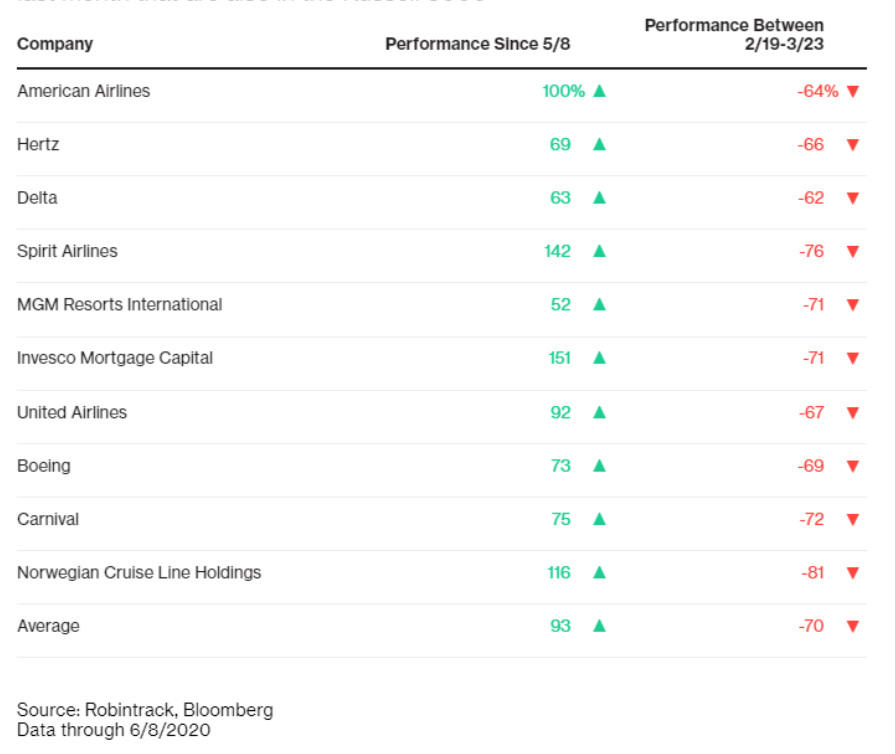
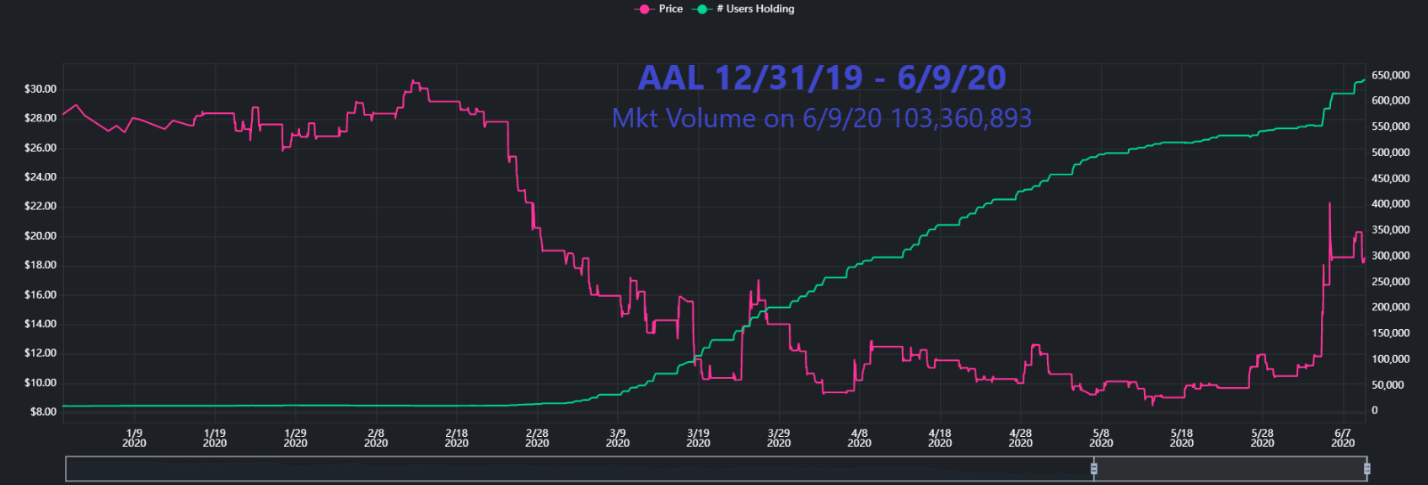
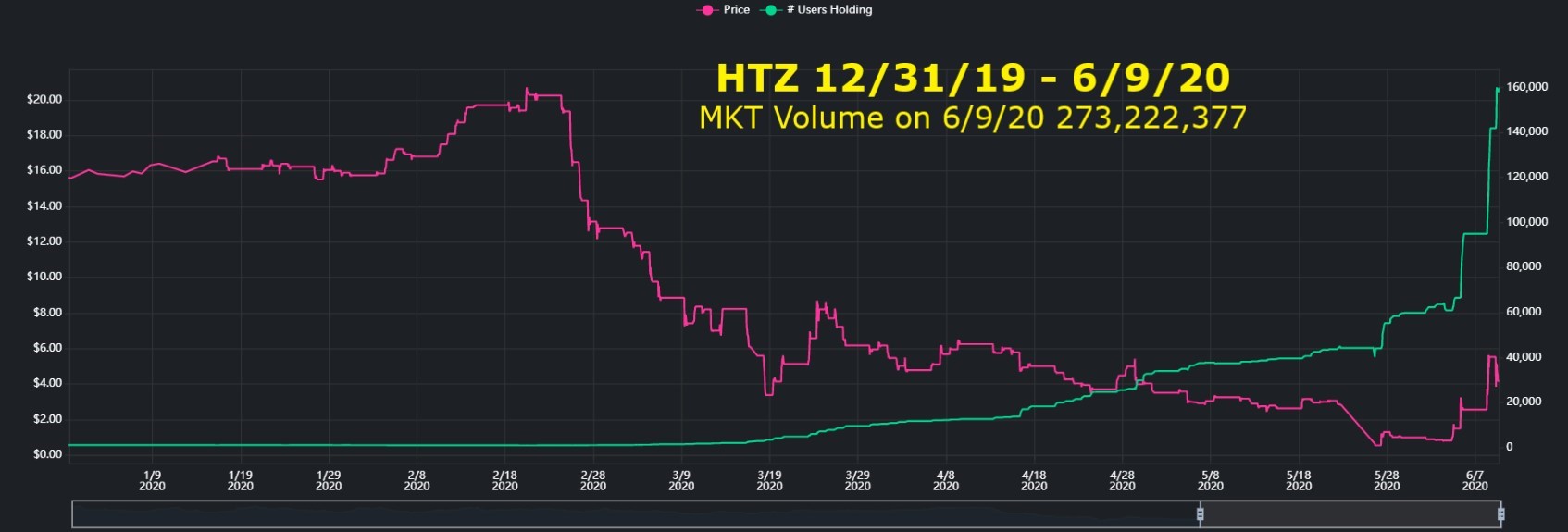
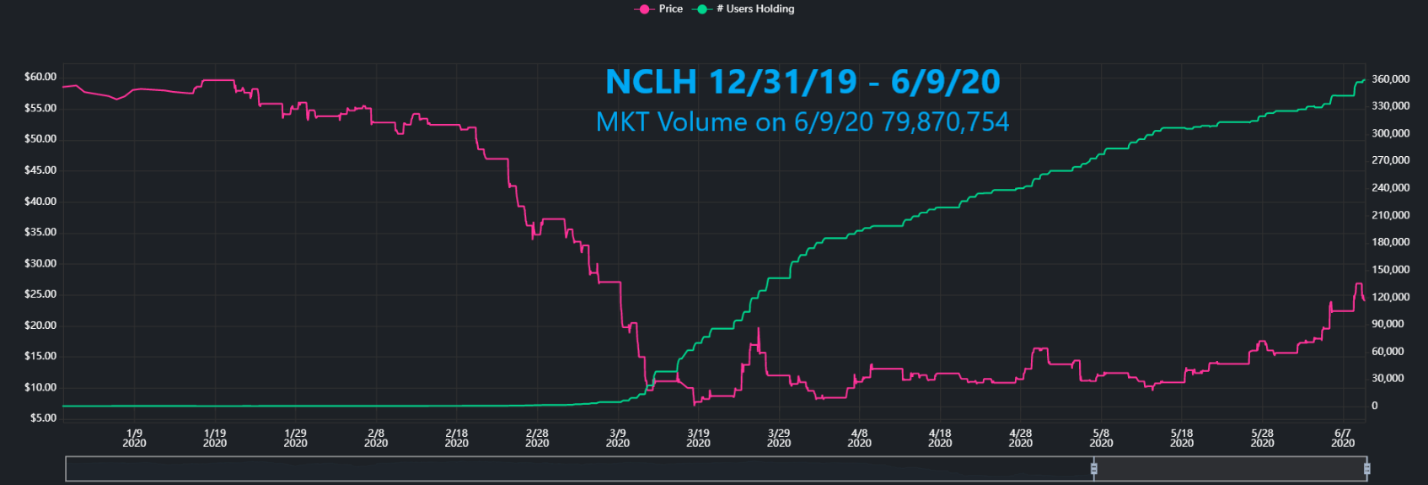
Out of the “Robinhood favorites,” all are household names that most people would recognize. With the exception of Invesco, all are experiencing severe financial challenges. The first on the list, American Airlines, lost $2.2 billion in the first quarter. The second most popular, Hertz, filed for bankruptcy protection on May 22.  The tenth on the list, Norwegian Cruise Lines, warned of a possible bankruptcy in late May. These three provide solid examples of retail popularity along with price movement that is helping to drive prices unpredictably.


American Airlines
Source: Robintrack, CNBC Data
Through 6/9/20

Despite the uncertainty in the airline sector, Robinhood users have gone from roughly zero holdings in American Airlines to almost 650,000 shares.  Shares are up 57.35% over the past five trading days, along with the increased volume.  Changes in data, activity, and increases in popularity on Robinhood may become additional indicators of short-term price movements for traders looking for trading plays.

Hertz
Source: Robintrack, CNBC Data Through 6/9/20

Robintrack’s data indicate that 159,000 of their users currently hold Hertz stock. That’s a record high and an increase of over 430% from 37,000 users a month ago. Over the past five trading days, the dramatic increase in volume has been accompanied by a 416% increase in stock price. Did the experts get this one wrong, or are smaller owners ignoring the risk of holding HTZ? Either way, there has been a large amount of money to be made by any standard.


Norwegian Cruise Lines
Source: Robintrack, CNBC Data Through 6/9/20

Norwegian Cruise Line’s growth in popularity from approximately zero to now close to 360,000 holders among Robinhood users ignores many of the challenges in the hospitality industry. However, the 39.61% increase in the stock price over the past five trading days has certainly been cause for many self-directed investors to feel their purchase is justified.

Taking from the Poor and Giving to
the Rich?

Are online self-directed investors ushering in a new era of profitable contrarian investing, or will the days ahead prove to be disappointing and costly? Despite the increase in activity, the average holding per user is small, even if Individually, their positions represent significant positions.  As far as Wall Street is concerned, retail is looked at as a block, despite the idea that the activity is hundreds of thousands of small investors rather than one or two institutions with billions taking a position.

The extraordinary movement in both stocks that are popular on Robinhood and in the market as a whole is still in the midst of a powerful move. Expectations among professionals are that historic unemployment and mounting corporate losses, along with a deep recession, will remove the giddiness among all market players. If the experts have it right, the upward movement across the major indexes cannot continue to attract new retail investors, and institutional investors are apt to stick with conventional valuations. These valuations suggest the market is overpriced. If these attitudes hold, it is a recipe for losses for those in the market. This may leave many retail investors battered.


Suggested
Reading:

Trading
Technology Continues to Level the Playing Field

Emotions,
Markets, and Mayhem (Faith in Cycles)

Should
the Market Be Up Double Digits?


Enjoy Premium Channelchek Content at No Cost


Source: Hundreds of Thousands of Tiny Buyers Swarm to
Insolvency Stocks

Robintrack

Robinhood
traders cash in on the market comeback that billionaire investors missed

Invesco Ltd. Announces May 31, 2020 Assets Under
Management

Elective Move to Bolster Liquidity. Positive Outlook Intact.

Tuesday, June 9, 2020

Orion Group Holdings (ORN)

Elective Move to Bolster Liquidity. Positive Outlook Intact.

Orion Group Holdings, based in Houston, Texas, is a specialty construction company within the Marine and Industrial Construction sectors, with operations focused in the continental United States and Caribbean. Revenue is split roughly 50/50 between a Marine Construction segment that provides marine facility, pipeline and structural construction services and a Commercial Concrete segment that provides turnkey concrete services in the light commercial and structural construction markets.

Poe Fratt, Senior Research Analyst, Noble Capital Markets, Inc.

Refer to the full report for the price target, fundamental analysis, and rating.

    Elective move to boost current revolver of $50 million by $20 million is positive. The move was elective and it adds to previous liquidity of $25.6 million. Free cash flow was strong in 1Q2020, but cash management is important in the current environment, and capex and other spending, including the development of an ERP system, has been deferred. Monetizing idle/non-core assets, including real estate, is also probable over the next year.

    New award in Houston is a positive sign. The $30 million of concrete work on a multi-use tower structure is under way and will continue into 2H2021. Combined with a large Marine award, we are encouraged that…


    Click to get the full report.

This Company Sponsored Research is provided by Noble Capital Markets, Inc., a FINRA and S.E.C. registered broker-dealer (B/D).

*Analyst
certification and important disclosures included in the full report. 
NOTE: investment decisions should not be based upon the content of
this research summary.  Proper due diligence is required before
making any investment decision.
 

Orion Group Holdings (ORN) – Elective Move to Bolster Liquidity. Positive Outlook Intact.

Tuesday, June 9, 2020

Orion Group Holdings (ORN)

Elective Move to Bolster Liquidity. Positive Outlook Intact.

Orion Group Holdings, based in Houston, Texas, is a specialty construction company within the Marine and Industrial Construction sectors, with operations focused in the continental United States and Caribbean. Revenue is split roughly 50/50 between a Marine Construction segment that provides marine facility, pipeline and structural construction services and a Commercial Concrete segment that provides turnkey concrete services in the light commercial and structural construction markets.

Poe Fratt, Senior Research Analyst, Noble Capital Markets, Inc.

Refer to the full report for the price target, fundamental analysis, and rating.

    Elective move to boost current revolver of $50 million by $20 million is positive. The move was elective and it adds to previous liquidity of $25.6 million. Free cash flow was strong in 1Q2020, but cash management is important in the current environment, and capex and other spending, including the development of an ERP system, has been deferred. Monetizing idle/non-core assets, including real estate, is also probable over the next year.

    New award in Houston is a positive sign. The $30 million of concrete work on a multi-use tower structure is under way and will continue into 2H2021. Combined with a large Marine award, we are encouraged that…


    Click to get the full report.

This Company Sponsored Research is provided by Noble Capital Markets, Inc., a FINRA and S.E.C. registered broker-dealer (B/D).

*Analyst
certification and important disclosures included in the full report. 
NOTE: investment decisions should not be based upon the content of
this research summary.  Proper due diligence is required before
making any investment decision.
 

Restaurants Post-Lockdown Look Good!

As Lockdowns Come to an End, Are Customers Dining Out?

Industries hardest hit by the lockdown have the most potential for recovery.  Some still face significant unknowns about their future. Investors looking for signs of life in foodservice have been getting clear positive indications. Demand for dining out is returning, and there has been renewed activity showing up at their tables, in their earnings, and in their stock prices. The easing of pandemic restrictions on dining out has been regional, so recoveries are on different timelines. But the speed at which restaurants reached the allowed 25-50% capacity peak is very encouraging.  There doesn’t seem to be a high level of fear among patrons of leaving the house and being out among strangers. Ironically, pictures of the unrest during the past week and people throughout the world out and among crowds may be helping a mindset that it’s okay to be around others once more. All of this could quickly change if the Covid-19 cases surprise with a resurgence, or violence toward public places escalates. But, for now, the trend is very much in favor of customer traffic climbing above where it is now.

A Clear Trend

Recent sales data from restaurant chains such as Red Robin, Cheesecake Factory, and Dine Brands (Applebee’s, IHOP) have created renewed interest in the restaurant sector; it’s being reflected in price movement.

Monday June 1, through Monday June 8, the S&P 500 has risen 6.48% while these food and beverage stocks had much better results:

DENN 32.84%

FAT 19.03%

RUTH 26.21%

RRGB 62.74%

SHAK 15.56%

Visibility Looking Forward

One thing 2020 has reminded us of is that everything can change in a heartbeat. Last week, updates from a few well-known restaurants were a refreshing reminder that change swings both ways. An announcement from management at Cheesecake Factory said they had generated roughly 75% of the prior-year sales levels, driven by an increase in off-premise sales and rebounding dine-in business while operating under local capacity restrictions. Management hopes that 65% of dining rooms will be reopened by mid-June. Last week Red Robin released business updates expressing dine-in crowds were rebounding. Management at Red Robin expects to have 65% of its dining rooms open by June 7.

One bonus that may have come from this is curbside or take-out sales continue to generate meaningful revenue. As restaurants attain capacity levels in their dining rooms, they may incrementally do better than in the past if they can retain take-out customers. This suggests that its customer capacity per location may have permanently increased.

Now What?

Although the sales data and trends previously mentioned were positive, investors also have to remember that many restaurants will still be announcing financial pain experienced during the entire second quarter. Cheesecake Factory, for instance, recorded a 63% decline in same-store sales during the second quarter through May 31. Ultimately, restaurant stocks took a big hit, and now data has indicated the worst could be over. It’s no surprise to see relief buying of so many food and beverage companies.

New Normal in Dining

Some competitors of the restaurant industry will emerge from the pandemic in better shape than before. Grocery store chains and meal-kit companies grew their businesses during the pandemic. It’s likely that a percentage of these new customers will continue providing business. Privately owned restaurants may see traffic that may have otherwise gone to larger corporate-owned chains as people may want to support their neighborhood owners first.

Shares of restaurants are still trading farther below off their pre-pandemic high than the broader market indexes. If the trend toward filling dining rooms continues, the potential for greater interest in this sector could continue as well.


Suggested Reading:

Climbing a “Wall of Worry”

What Now? Post-Pandemic Stock Market Investing

Rearview Mirror Measurements in Economics

Enjoy Premium
Channelchek Content
 at No
Cost

Cheesecake Factory Aims to Reopen Most of its Restaurants by
Mid-June

Here’s Why You Should
Hold on to Red Robin Stock for Now

Genprex Scheduled to Join Russell 3000 Index

Genprex Scheduled to Join Russell 3000® Index

AUSTIN, Texas— (June 9, 2020) — Genprex, Inc. (“Genprex” or the “Company”) (Nasdaq: GNPX), a clinical-stage gene therapy company developing potentially life-changing technologies for patients with cancer and diabetes, today announced that it is scheduled to join the U.S. broad-market Russell 3000 Index when FTSE Russell, a leading global index provider, reconstitutes its 2020 indices after the markets close on Friday, June 26, according to a preliminary list of additions posted on their website on June 5.

The Russell 3000 Index includes the 3,000 publicly traded companies on the Nasdaq and NYSE exchanges with the largest market capitalizations. FTSE Russell determines membership for its Russell indexes primarily by objective market-capitalization rankings and style attributes (i.e. growth or value). Each June, the Russell 3000 index is reconstituted to reflect market capitalization changes over the prior year. This closely watched market event impacts more than $9 trillion in investor assets benchmarked to or invested in products based on the Russell U.S. indices.

“The selection of Genprex for the Russell 3000® Index will add to the awareness of our company among institutional investors, money managers and index funds, as well as highlight to them our suitability as an investment,” said Rodney Varner, Genprex’s Chairman and Chief Executive Officer. “This inclusion indicates that our leadership in developing gene therapies is resonating with investors. It comes at a time when we are preparing to initiate our Phase I/II clinical trial to evaluate our lead drug candidate, Oncoprex, in combination with AstraZeneca’s Tagrisso® for the treatment of non-small cell lung cancer (NSCLC) and preparing to file our IND to initiate a clinical trial of Oncoprex in combination with Merck’s Keytruda® in NSCLC. We believe our inclusion in the Russell 3000 Index is yet another significant milestone for us, as it will further increase our exposure with a broader group of institutional investors.”

In January 2020, Genprex was awarded U.S. FDA Fast Track designation for use of Oncoprex combined with Tagrisso for the treatment of NSCLC patients with EGFR mutations whose tumors progressed after treatment with Tagrisso alone. Genprex also signed an exclusive license agreement earlier in 2020 with the University of Pittsburgh for a preclinical diabetes gene therapy candidate that has the potential to cure Type 1 and Type 2 diabetes. Additionally, the Company has significantly strengthened its balance sheet in 2020 and had more than $23 million in cash on its balance sheet at the end of the first quarter of 2020, providing a substantial runway for it to execute on its clinical plans, conduct additional research and development, and cover general corporate expenses.

About Genprex, Inc.

Genprex, Inc. is a clinical-stage gene therapy company developing potentially life-changing technologies for patients with cancer and diabetes. Genprex’s technologies are designed to administer disease-fighting genes to provide new treatment options for large patient populations with cancer and diabetes who currently have limited treatment options. Genprex works with world-class institutions and collaborators to in-license and develop drug candidates to further its pipeline of gene therapies in order to provide novel treatment approaches. The Company’s lead product candidate, Oncoprex™, is being evaluated as a treatment for non-small cell lung cancer (NSCLC). Oncoprex has a multimodal mechanism of action that has been shown to interrupt cell signaling pathways that cause replication and proliferation of cancer cells; re-establish pathways for apoptosis, or programmed cell death, in cancer cells; and modulate the immune response against cancer cells. Oncoprex has also been shown to block mechanisms that create drug resistance. In January 2020, the U.S. Food and Drug Administration granted Fast Track Designation for Oncoprex immunogene therapy for NSCLC in combination therapy with osimertinib (AstraZeneca’s Tagrisso®). For more information, please visit the Company’s web site at www.genprex.com or follow Genprex on TwitterFacebook and LinkedIn.

Forward-Looking Statements

Statements contained in this press release regarding matters that are not historical facts are “forward-looking statements” within the meaning of the Private Securities Litigation Reform Act of 1995. Because such statements are subject to risks and uncertainties, actual results may differ materially from those expressed or implied by such forward-looking statements. Such statements include, but are not limited to, statements regarding the effect of Genprex’s product candidates, alone and in combination with other therapies, on cancer and diabetes, regarding potential, current and planned clinical trials, regarding the Company’s future growth and financial status and regarding our commercial partnerships and intellectual property licenses. Risks that contribute to the uncertain nature of the forward-looking statements include the presence and level of the effect of our product candidates, alone and in combination with other therapies, on cancer; the timing and success of our clinical trials and planned clinical trials of Oncoprex™, alone and in combination with targeted therapies and/or immunotherapies, and whether our other potential product candidates, including our gene therapy in diabetes, advance into clinical trials; the success of our strategic partnerships; the timing and success of obtaining FDA approval of Oncoprex™ and our other potential product candidates including whether we receive fast track or similar regulatory designations; costs associated with developing our product candidates and whether patents will ever be issued under patent applications that are the subject of our license agreements. These and other risks and uncertainties are described more fully under the caption “Risk Factors” and elsewhere in our filings and reports with the United States Securities and Exchange Commission. All forward-looking statements contained in this press release speak only as of the date on which they were made. We undertake no obligation to update such statements to reflect events that occur or circumstances that exist after the date on which they were made.

Genprex, Inc.
(877) 774-GNPX (4679)

Investor Relations
GNPX Investor Relations
(877) 774-GNPX (4679) ext. #2
[email protected]

Media Contact
Genprex Media Relations
(877) 774-GNPX (4679) ext. #3
[email protected]

Why We Are Our Raising Price Target

Monday, June 8, 2020

Tribune Publishing Company (TPCO)

Why We Are Raising Our Price Target

Tribune Publishing Co is a print and online media company that publishes various newspapers and websites. It creates and distribute content across its media portfolio, offering integrated marketing, media, and business services to consumers and advertisers, including digital solutions and advertising opportunities. The company manages its business as two distinct segments, M and X. Segment M is comprised of the company’s media groups excluding their digital revenues and related digital expenses, except digital subscription revenues when bundled with a print subscription. Segment X includes the company’s digital revenues and related digital expenses from local Tribune websites, third party websites, mobile applications, digital only subscriptions, Tribune Content Agency and BestReviews.

Michael Kupinski, DOR, Senior Research Analyst, Noble Capital Markets, Inc.

Refer to the full report for the price target, fundamental analysis, and rating.

    Overachieves Q1 results.  Revenues were $216.5 million, which was better than our $208.8 million estimate. Cash flow, as measured by adj. EBITDA, was better than expected at $13.3 million versus our $11.3 million estimate. Company took a large non cash charge, $42.9 million, on goodwill and to terminate or restructure leases. Digital subscribers grew 36,000 in Q1 and the company indicated Q2 will surpass that.

    Provides Q2 guidance, backs off of full year guidance. Management provides Q2 revenue guidance of $172 million to $175 million and cash flow (adj. EBITDA) of $10.5 million to $12 million. While the revenue guidance is below our thoughts on the quarter…


    Click to get the full report

This Company Sponsored Research is provided by Noble Capital Markets, Inc., a FINRA and S.E.C. registered broker-dealer (B/D).

*Analyst
certification and important disclosures included in the full report. 
NOTE: investment decisions should not be based upon the content of
this research summary.  Proper due diligence is required before
making any investment decision.
 

Tribune Publishing (TPCO) – Why We Are Raising Our Price Target

Monday, June 8, 2020

Tribune Publishing Company (TPCO)

Why We Are Raising Our Price Target

Tribune Publishing Co is a print and online media company that publishes various newspapers and websites. It creates and distribute content across its media portfolio, offering integrated marketing, media, and business services to consumers and advertisers, including digital solutions and advertising opportunities. The company manages its business as two distinct segments, M and X. Segment M is comprised of the company’s media groups excluding their digital revenues and related digital expenses, except digital subscription revenues when bundled with a print subscription. Segment X includes the company’s digital revenues and related digital expenses from local Tribune websites, third party websites, mobile applications, digital only subscriptions, Tribune Content Agency and BestReviews.

Michael Kupinski, DOR, Senior Research Analyst, Noble Capital Markets, Inc.

Refer to the full report for the price target, fundamental analysis, and rating.

    Overachieves Q1 results.  Revenues were $216.5 million, which was better than our $208.8 million estimate. Cash flow, as measured by adj. EBITDA, was better than expected at $13.3 million versus our $11.3 million estimate. Company took a large non cash charge, $42.9 million, on goodwill and to terminate or restructure leases. Digital subscribers grew 36,000 in Q1 and the company indicated Q2 will surpass that.

    Provides Q2 guidance, backs off of full year guidance. Management provides Q2 revenue guidance of $172 million to $175 million and cash flow (adj. EBITDA) of $10.5 million to $12 million. While the revenue guidance is below our thoughts on the quarter…


    Click to get the full report

This Company Sponsored Research is provided by Noble Capital Markets, Inc., a FINRA and S.E.C. registered broker-dealer (B/D).

*Analyst
certification and important disclosures included in the full report. 
NOTE: investment decisions should not be based upon the content of
this research summary.  Proper due diligence is required before
making any investment decision.
 

Alternative Investments and 401(k) Plans

Alternative Investments Will be Allowed in Defined Contribution Retirement Portfolios

Will retirement planners be comfortable with investments that are not regulated by the SEC? The participants of defined benefit pension funds have long enjoyed the potential for higher returns in alternative investments. So why haven’t these investment options been included in defined contribution (DC) plans? After all, private equity deals and hedge funds further diversify asset mix, increase potential return, and help provide capital for small businesses. These are just some of the reasons this unregulated asset class, once reserved for the very wealthy, will now be permitted by the Department of Labor (DOL) under ERISA protections.

Impact
on Retirement Plans

The guidance came about after a review by the DOL, which then issued a letter dated June 3, 2020. The letter specifically offers legal protection to target-date-funds (TDF) that include allocations in private equity investments.  The main purpose of the guidance is to assure companies that offer investments in funds that include private equity, that they are permitted, thereby reducing their liability. The formal letter was prompted by lawsuits from employees, against Intel, Verizon, and others. Their cases caused other companies to steer away from these investments. The uncertainty of suitability effectively limited the options of employees seeking to diversify or maximize the potential for their retirement savings. Employees may still choose options that don’t include non-registered investments, but for those that want the potential benefit, their employers may now comfortably offer them.  

According to the Employee Benefits Security Administration, Acting Assistant Secretary Jeanne Wilson, “This [DOL information] letter should assure defined contribution plan fiduciaries that private equity may be part of a prudent investment mix and a way to enhance retirement savings and investment security for American workers.

The DOL letter highlights that private equity should not be available as a stand-alone option when creating a plan that has protection under the guidance, as well as other considerations, including:

  • The impact of the private equity allocation on diversification, expected return, and fees on a long term basis.
  • The ability of plan fiduciaries to oversee private equity investments vs. hiring an expert consultant.
  • The percent invested in private equity, noting that the limits illiquid assets to 15% for registered open-end investment companies.
  • Whether plan participants will be permitted to take benefit distributions and move into other investment options.
  • Agreement by plan fiduciaries to value private equity investments according to accounting standards and subject those investments to an annual audit.
  • Whether the long-term nature and liquidity restrictions of any private equity investments align with the ability of plan participants to take distributions or change investment options as they wish.
  • The adequacy of disclosures provided to participants regarding the character and risks of the plan investment option that includes a private equity component, so as to allow participants to make an informed assessment before investing.

Take
Away

Investment options that include private-equity may now legitimately be offered in 401(k), 403(b) and 401(A) plans to participants without the employee first qualifying as an accredited investor. Target-date-funds with longer investment horizons can include unregistered equity-based options that may enhance retirement growth when compared to investment choices containing only publicly traded securities. The option of asset allocation TDR funds with a private equity component gives individuals access to options used by professionally managed defined-benefit pension plans. Private equity investments within TDFs would provide further diversification, perhaps reducing investment risk and could lead to enhanced returns for participants above returns achieved solely in the public market.

Suggested Reading:

How do Negative Interest Rates Impact Households

Trading
Technology Continues to Level the Playing Field

Millennials Could Use Help With Investing

Enjoy Premium
Channelchek Content
 at No Cost

Sources:

Department
of Labor Information Letter

US DEPARTMENT OF LABOR ISSUES INFORMATION LETTER ON PRIVATE EQUITY
INVESTMENTS

History
of Target Date Funds

Private Equity Could Boost DC Plan Participant Returns

Sierra Metals Restarting Operations in Peru and Prepares to Ramp Up to Full Capacity

Sierra Metals Restarting Operations in Peru and Prepares to Ramp Up to Full Capacity

(Note: companies that
could be impacted by the content of this article are listed at the base of the
story [desktop version]. This article uses third-party references to provide a
bullish, bearish, and balanced point of view; sources are listed after the
Balanced section.)

TORONTO—June 5, 2020–Sierra Metals Inc. (TSX: SMT) (BVL:
SMT) (NYSE AMERICAN: SMTS)
(“Sierra Metals” or “the Company”) announces that the Peruvian Government has activated phase two of its economic recovery plan effective June 5, 2020.  Phase two includes mining and mining-related activities in Peru. The Company will begin to recall required furloughed employees and contractors and will start to progressively ramp the mine operations back up to full capacity.

In Mexico, the Government deemed mining an essential service effective June 1, 2020, as previously discussed in the May 25, 2020 press release. The Company has recalled employees from the Bolivar Mines to enter a COVID-19 screening process, allowing the Company to control the risk of new infections and contamination at the mine. The Cusi Mine remains in care and maintenance for the time being, and management continues to evaluate the best path forward to complete needed development and to reach throughput targets.

The Company continues to focus on the health, safety, and well-being of its workforce. All employees recalled and reporting for duty will complete a testing and screening process, including a quarantine period before they can join the active workforce at both the Yauricocha and Bolivar Mines. Daily monitoring also continues for all employees while working at the mines. The Company is doing everything it can to protect its employees and take care of their families while protecting our active workforces to prevent any labour disruptions at the mines.

Luis Marchese, CEO of Sierra Metals, stated: “I am very pleased that we are now in a position to ramp-up
our Yauricocha Mine to normal levels with the prescribed health protocols and
guidelines from the Government. It is important to highlight that our Yauricocha
Mine has the operational flexibility to recover some of the lost production
during the COVID-19 state of emergency. 
We will continue emphasizing the health and well-being of our employees
and of the communities in which we operate as we normalize operations.”


About Sierra Metals


Sierra Metals is a Canadian based growing polymetallic mining company with production from its Yauricocha Mine in Peru, and it’s Bolivar and Cusi Mines in Mexico. The Company is focused on increasing production volume and growing mineral resources. Sierra Metals has recently had several new discoveries and still has additional brownfield exploration opportunities at all three mines in Peru and Mexico that are within or close proximity to the existing mines. Additionally, the Company has large land packages at all three mines with several prospective regional targets providing longer-term exploration upside and mineral resource growth potential.

The common shares of the Company are listed and posted for trading on the Bolsa de Valores de Lima and on the Toronto Stock Exchange under the symbol “SMT” and on the NYSE American Exchange under the symbol “SMTS”.

For further information regarding Sierra Metals, please visit www.sierrametals.com or contact:


Mike McAllister, CPIR

VP, Investor Relations

+1 (416) 366-7777

[email protected]


Continue to Follow, Like and Watch our
progress:

Web: www.sierrametals.com | Twitter: sierrametals | Facebook: SierraMetalsInc | LinkedIn: Sierra Metals
Inc
 | Instagram:
sierrametals


Forward-Looking Statements

This press release contains “forward-looking information” and “forward-looking statements” within the meaning of Canadian and U.S. securities laws (collectively, “forward-looking
information
“). Forward-looking information includes, but is not limited to, statements with respect to the date of the 2020 Shareholders’ Meeting and the anticipated filing of the Compensation Disclosure. Any statements that express or involve discussions with respect to predictions, expectations, beliefs, plans, projections, objectives, assumptions or future events or performance (often, but not always, using words or phrases such as “expects”, “anticipates”, “plans”, “projects”, “estimates”, “assumes”, “intends”, “strategy”, “goals”, “objectives”, “potential” or variations thereof, or stating that certain actions, events or results “may”, “could”, “would”, “might” or “will” be taken, occur or be achieved, or the negative of any of these terms and similar expressions) are not statements of historical fact and may be forward-looking information.

Forward-looking information is subject to a variety of risks and uncertainties, which could cause actual events or results to differ from those reflected in the forward-looking information, including, without limitation, the risks described under the heading “Risk Factors” in the Company’s annual information form dated March 30, 2020 for its fiscal year ended December 31, 2019 and other risks identified in the Company’s filings with Canadian securities regulators and the United States Securities and Exchange Commission, which filings are available at www.sedar.com and www.sec.gov, respectively.

The risk factors referred to above are not an exhaustive list of the factors that may affect any of the Company’s forward-looking information. Forward-looking information includes statements about the future and is inherently uncertain, and the Company’s actual achievements or other future events or conditions may differ materially from those reflected in the forward-looking information due to a variety of risks, uncertainties and other factors. The Company’s statements containing forward-looking information are based on the beliefs, expectations and opinions of management on the date the statements are made, and the Company does not assume any obligation to update such forward-looking information if circumstances or management’s beliefs, expectations or opinions should change, other than as required by applicable law. For the reasons set forth above, one should not place undue reliance on forward-looking information.

The Supply of Cash and Stock Prices

What’s Moving the Market: Explained in Three Graphs – Part 1 

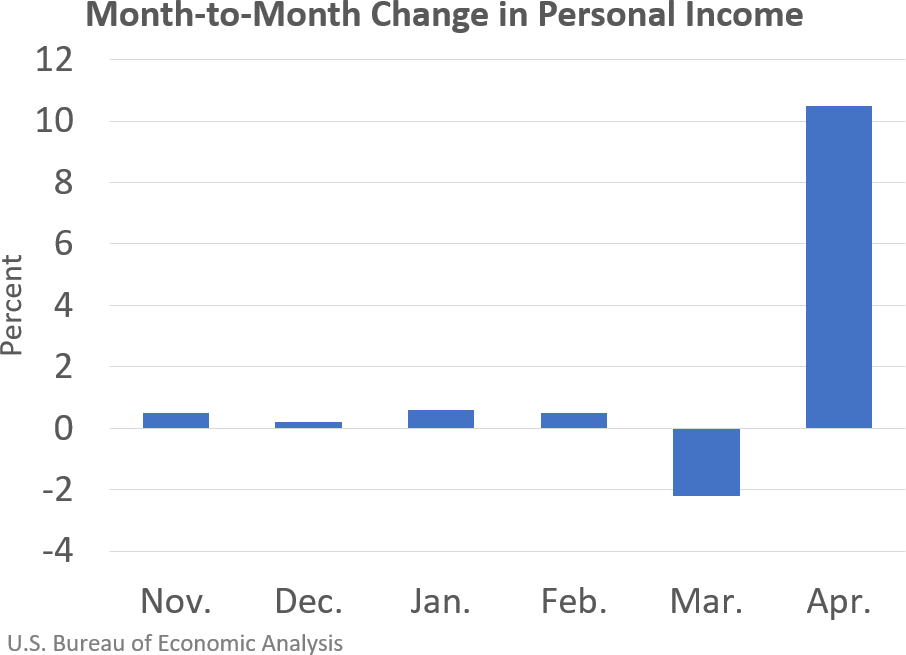
The pandemic shuts down the economy … and the stock market goes up.  People are rioting in the streets to protest racial injustice … and the stock market goes up.  The United States threatens to strip Hong Kong from special trade status, potentially reigniting trade wars with China … and the stock market goes up.  The rise in the general stock market seems at odds with the economic data being reported.  Granted, the market is supposedly a measure of future results, not current results.  But then how does one explain the market’s strength at the same time that management teams and analysts are racing to lower earnings and cash flow projections? The following three charts perhaps offer some explanation.


Personal income is up.    Personal income in the US surged 10.5% in April, the biggest jump since the US Bureau of Economic Analysis started compiling data in 1959.  Disposable income rose by 12.9%.  The increase is largely due to an increase in government spending.  Government social benefits accounted for $6.3 billion, or 30% of the personal income in April, almost twice the normal percentage.  One can debate the merits of the government bailout, but the impact is clear.  Government spending has put additional dollars into the hands of consumers.  However, consumers are not spending the increase in income, instead choosing to save it.


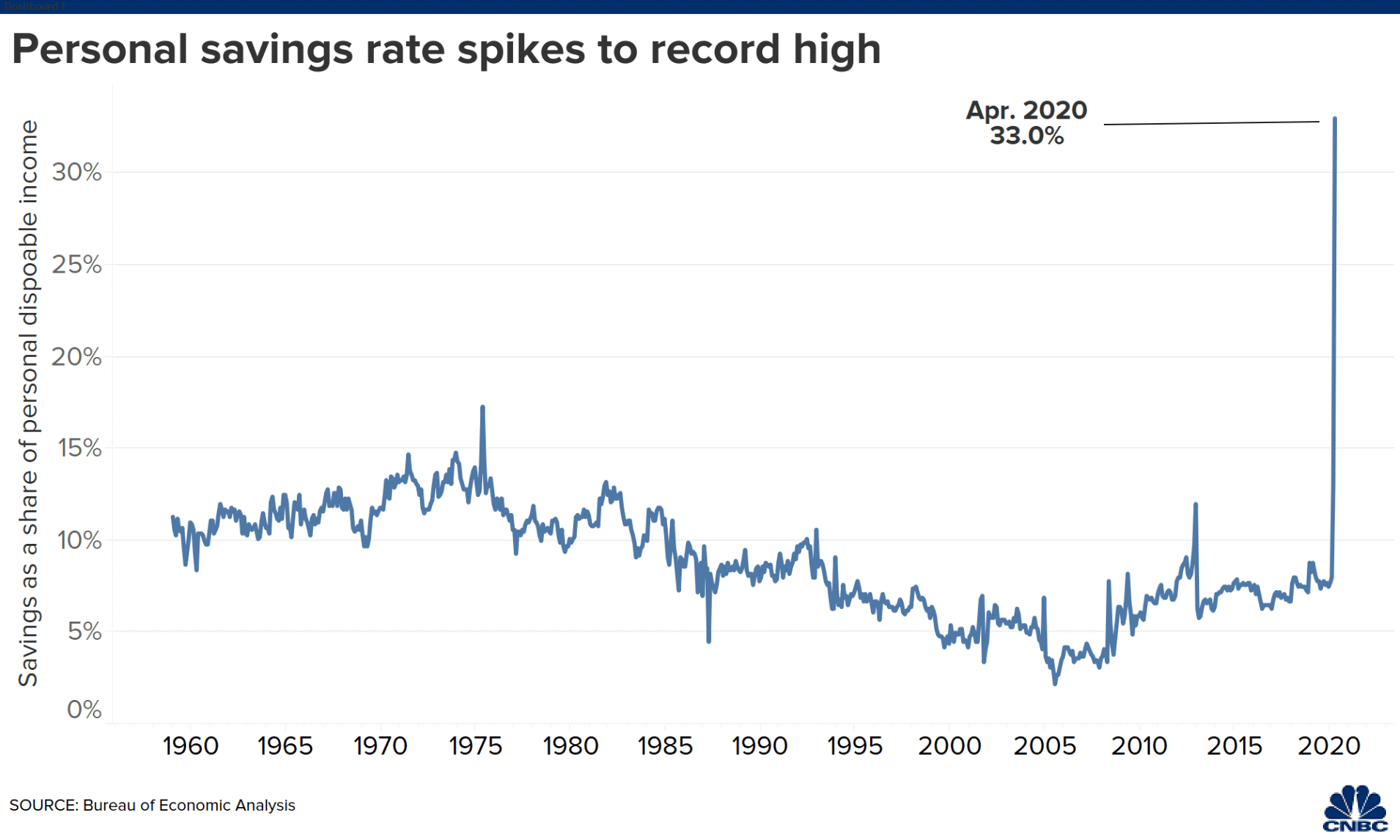
The personal savings rate has spiked since the coronavirus pandemic began in March.

People are saving, and there is nowhere else to put
money.
  People have responded to COVID-19 concerns by staying at home, which has reduced the money they spend on entertainment.  They are also foregoing other discretionary spending due to employment and economic concerns.  The personal savings rate has skyrocketed to historic levels.  The personal savings rate is a measure of savings as a percent of disposable income.  Brian Moynihan, CEO of Bank of America, tells CNBC that checking accounts have 30% to 40% more money in them than 12 weeks ago.  This comes despite historically low-interest rates.  Put plainly; the money must go somewhere, so why not the stock market?  And why not put those dollars in stock that are well known?


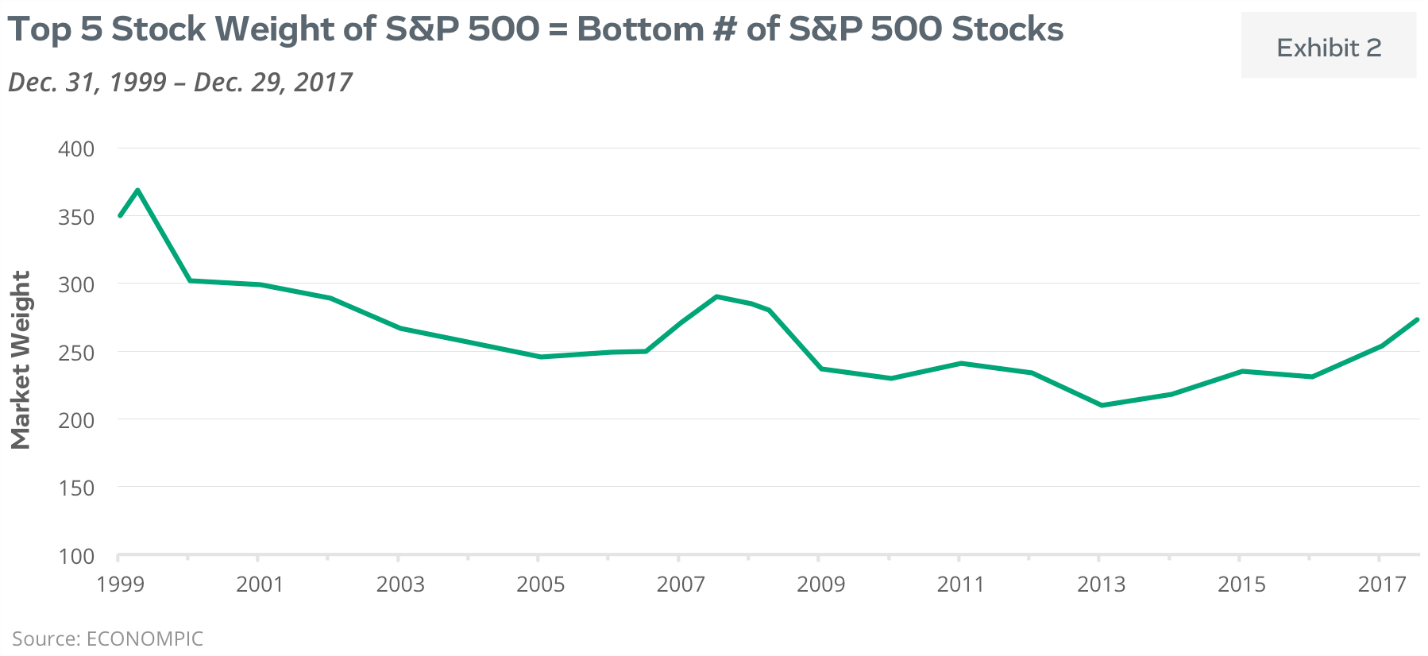
Top 5 Stock Weight of S&P 500 = Bottom # of S&P 500 Stocks


The stock market has become dominated by a handful of tech stocks.  Since bottoming out on March 17, most major indices are up approximately 20%.  Information Technology stocks have led the push with the FAANG stocks (Facebook, Apple, Amazon, Netflix, and Google) up more than 30%.  Technology stocks are less affected by a reduction in consumer spending due to COVID-19 or racial tension.  In fact, Apple and Google could become major players in the fight against the virus through contact tracing apps, while Facebook and Netflix are seeing increased usage, and Amazon is benefiting from increased home deliveries.  Major stock indices such as the S&P 500 or the Russell 200 are meant to measure the performance of a broad group of stocks comprising all aspects of the economy.  In actuality, the performance of the indices is heavily influenced by a small handful of large companies.  Amazingly, five stocks (Apple, Microsoft, Amazon, Google, and Facebook) now comprise 18% of the S&P 500’s market capitalization, roughly equal to the market weight of the bottom 300 companies.  This percentage has grown steadily in the last ten years.  The strong performance by the stock market, then, does not necessarily reflect improving economic conditions but rather that of just one sector or maybe even only a handful of companies. 

Suggested Reading:

Small-Cap vs. Large-Cap Investing

Should Economic Aid Target Business or Individuals and Families?

Should the Stock Market be up Double-Digits on the Year


Enjoy Premium Channelchek Content at No Cost

Sources:

https://www.cnbc.com/2020/05/29/us-savings-rate-hits-record-33percent-as-coronavirus-causes-americans-to-stockpile-cash-curb-spending.html, Maggie Fitzgerald, CNBC, May 29, 2020.

https://finance.yahoo.com/news/looting-protests-and-covid-19-havent-pounded-the-stock-market-160426990.html, Brian Sozzi, Yahoo Finance, June 2, 2020

https://finance.yahoo.com/news/5-powerful-tech-companies-now-make-up-18-of-the-stock-market-heres-why-this-could-be-a-bad-thing-145710881.html, Brian Sozzi, Yahoo Finance, February 3, 2020

https://qz.com/1862614/personal-income-in-the-us-shot-up-a-record-10-5-percent-in-april/, Karen Ho, Quartz, May 29, 2020

http://arnerichmassena.com/blog/faang-phenomenon-sustainable/, Jillian Perkins, Arnerich Massena, June 29, 2018

https://www.yahoo.com/news/faang-stocks-defying-coronavirus-bloodbath-115111875.html, Ritujay Ghosh, Zacks, May 26, 2020


Pyxis Tankers Inc. (PXS) – Solid Quarter, But High 2H2020 Uncertainty

Thursday, June 4, 2020

Pyxis Tankers Inc. (PXS)

Solid Quarter, But High 2H2020 Uncertainty

Pyxis Tankers Inc is a United States-based international maritime transportation company which focuses on the product tanker sector. It owns a fleet which comprises of double hull product tankers employed under a mix of short- and medium-term time charters and spot charters. The fleet owned by the company includes Pyxis Epsilon, Pyxis Theta, Pyxis Malou, Pyxis Delta, Northsea Alpha, and Northsea Beta. Each of the vessels in the fleet is capable of transporting refined petroleum products, such as naphtha, gasoline, jet fuel, kerosene, diesel, fuel oil, and other liquid bulk items, such as vegetable oils and organic chemicals.

Poe Fratt, Senior Research Analyst, Noble Capital Markets, Inc.

Refer to the full report for the price target, fundamental analysis, and rating.

    Solid quarter, but 1Q2020 EBITDA slightly below expectations. Adjusted 1Q2020 EBITDA of $1.2 million was slightly below our estimate of $1.4 million due to a combination of lower TCE revenue ($0.1 million) and higher opex ($0.1 million).

    Fine-tuning 2020 EBITDA estimate. We are moving our 2020 EBITDA estimate to $6.2 million (from $6.9 million), based on TCE rates of $13,064/day (down from $13,532/day) and 1,596 operating days, to reflect 1Q2020 operating results, the Malou fixture, and…


    Click to get the full report.

This research is provided by Noble Capital Markets, Inc., a FINRA and S.E.C. registered broker-dealer (B/D).

*Analyst
certification and important disclosures included in the full report. 
NOTE: investment decisions should not be based upon the content of
this research summary.  Proper due diligence is required before
making any investment decision.