Release – Avivagen (VIVXF) – Announces Results for Fiscal Year Ending October 31 2020


Avivagen Inc. Announces Results for Fiscal Year Ending October 31, 2020


Ottawa, ON /Business Wire/ December 16, 2020 / — Avivagen Inc. (TSXV:VIV, OTCQB:VIVXF) (“Avivagen” or the “Company”) today reported its audited financial results for the fiscal year ended October 31, 2020. Unless otherwise noted, all figures are in Canadian currency.

“By all measures, Avivagen achieved considerable regulatory, customer, corporate and financial success in 2020,” said Kym Anthony, President and Chief Executive Officer, Avivagen Inc. “We’ve secured record breaking orders for OxC-beta from customers in established markets and received regulatory approval in key markets in Asia and South America. The successes achieved this year position Avivagen very strongly for continued growth worldwide, as we grow recurring order sizes and add new customers and partners in important feed production markets around the globe.”

Highlights from Avivagen’s fiscal 2020 include:

Regulatory Milestones

  • Secured approval for OxC-betaTM Livestock in Malaysia on December 5, 2019. Malaysia had an estimated total annual feed production of 4.8 million metric tonnes in 2019.
  • Signed agreement with COFCO Biotech on December 19, 2019 to support approval process efforts in China. COFCO is a leading supplier of agri-products to the Chinese market, with more than $17.5 billion in annual sales in 2018.
  • Secured approval in Brazil on June 24, 2020. Brazil is the world’s third largest feed production market, and a key exporter to regions such as Europe and China that have implemented bans against the use of antibiotics in livestock feed.
  • Secured first order in Malaysia on December 12, 2019, only a week after receiving regulatory approval in the country.
  • Secured first order in Mexico, by Industrias Melder, on March 25, 2020.
  • Secured new sales of OxC-betaTM Livestock in Taiwan and Thailand on April 2, 2020. Avivagen followed those sales with the Company’s largest sales order to date – a three tonne order by UNAHCO in the Philippines – less than a week later.
  • Mexico-based customer, Industrias Melder placed orders totaling two tonnes by May 20, 2020, following the positive results of two tests conducted by a key dairy farm client.
  • Secured first order for 125kg from Look Chemicals, Avivagen’s distribution partner in Brazil, on August 12, 2020.
  • Finalized record ten tonne order of OxC-beta from Industrias Melder on September 28, 2020, commencing early 2021, as well as new orders from Tesistan and Prolea in Mexico on October 6, 2020. Avivagen also joined Mexico-based industry associations, ANFACA and AMEPA at the same time, further connecting with the feed production communities across key regions in Mexico.
  • Secured record four tonne order from UNAHCO on October 13, 2020, marking the largest order to date from the Philippines. As a result of a typhoon which occurred in the region following the order, two tonnes of the order were shipped during Fiscal 2020, with the other two tonnes shipped in November 2020.
  • Received repeat and growing orders from Fwusow, one of Taiwan’s leading feed producers and integrators, for the use of OxC-beta in their pet food.
  • Completed the first sale of OxC-beta for use in layer hens, resulting in increased egg production and accolades from the producer.
  • Completed preparations for the launch of a human dietary health supplement in the US. The dietary supplement is set to launch via e-commerce within the next few weeks.

Financial and Corporate Milestones

  • Secured private placements of $1.25mm and $1.75mm on January 3 and January 27, 2020 respectively.
  • Listed on the OTCQB® Venture Market on January 8, 2020, helping to expand Avivagen’s investor presence in the United States.
  • Launched Dr. Tobias Dog Chews with Mimi’s Rock Corp. on Amazon.com and DrTobias.com on January 23, 2020.
  • Received positive results from New Zealand livestock dairy trail for sub-clinical mastitis on February 24, 2020, which extends the further use cases of OxC-betaTM Livestock.
  • Published a scientific paper “The effects of maternal supplementation with fully oxidised ?-carotene on the reproductive performance and immune response of sows, as well as the growth performance of nursing piglets” in the British Journal of Nutrition on August 18, 2020.

Fiscal 2020 Financial Results

The Company’s Audited Financial Statements for the year ended October 31, 2020 and the accompanying Management’s Discussion and Analysis have been filed on the System for Electronic Document Analysis and Retrieval and are available via its website (www.sedar.com). The financial information for the year ended October 31, 2020 should be read in conjunction with the Company’s Audited Financial Statements as well as its Management’s Discussion and Analysis for the year ended October 31, 2020.

The Company reported revenues of $1,177,857 ($977,451 in the year ending October 31, 2019) and a comprehensive loss of $(4,751,287) for the year ended October 31, 2020. This compares to a comprehensive loss in the year ending October 31, 2019 of $(4,836,420). As at October 31, 2020, the Company reported total assets of $2,176,142 (current assets of $1,781,800), total liabilities of $6,943,752, and shareholders’ deficit of ($4,767,610).

Significant financing inflows in the fiscal year totalled $3,750,000. This consisted of a private placement equity financing of $3,000,000 and a debt financing of $750,000 all raised within the confines of a volatile and challenging market.

About Avivagen

Avivagen is a life sciences corporation focused on developing and commercializing products for livestock, companion animal and human applications. By unlocking an overlooked facet of ?- carotene activity, a path has been opened to safely and economically support immune function, thereby promoting general health and performance in animals. Avivagen is a public corporation traded on the TSX Venture Exchange under the symbol VIV and on the OTCQB Exchange in the U.S. under the symbol VIVXF, and is headquartered in Ottawa, Canada, based in partnership facilities of the National Research Council of Canada and Charlottetown, Prince Edward Island. For more information, visit www.avivagen.com. The contents of the website are expressly not incorporated by reference in this press release.

About OxC-beta™ Technology and OxC-beta™ Livestock

Avivagen’s OxC-beta™ technology is derived from Avivagen discoveries about ?-carotene and other carotenoids, compounds that give certain fruits and vegetables their bright colours. Through support of immune function the technology provides a non-antibiotic means of promoting health and growth. OxC-beta™ Livestock is a proprietary product shown to be an effective and economic alternative to the antibiotics commonly added to livestock feeds. The product is currently available for sale in the United States, Philippines, Taiwan, New Zealand, Thailand, Mexico, Brazil, Australia and Malaysia.

Avivagen’s OxC-beta™ Livestock product is safe, effective and could fulfill the global mandate to remove all in-feed antibiotics as growth promoters. Numerous international livestock trials with poultry and swine using OxC-beta™ Livestock have proven that the product performs as well as, and, sometimes, in some aspects, better than in-feed antibiotics.

Forward Looking Statements

This news release includes certain forward-looking statements that are based upon the current
expectations of management. Forward-looking statements involve risks and uncertainties
associated with the business of Avivagen Inc. and the environment in which the business
operates. Any statements contained herein that are not statements of historical facts may be
deemed to be forward-looking, including those identified by the expressions “aim”, “anticipate”,
“appear”, “believe”, “consider”, “could”, “estimate”, “expect”, “if”, “intend”, “goal”, “hope”,
“likely”, “may”, “plan”, “possibly”, “potentially”, “pursue”, “seem”, “should”, “whether”, “will”,
“would” and similar expressions. Statements set out in this news release relating to the future
plans of Avivagen’s customers and the potential for additional and/or increased orders from such
customers, Avivagen’s expectations as to growth of its branding in certain jurisdictions,
continued distribution and acceptance of Avivagen’s technology, anticipated growth in demand
for Avivagen’s products, the potential for Avivgen’s products to be commercialized in human
applications, the anticipated date of fulfillment for the order described, the possibility for OxCbeta
™ Livestock to replace antibiotics in livestock feeds as well as fill a critical need for health
support in certain livestock applications where antibiotics are precluded and the size of market
opportunities are all forward-looking statements. These forward-looking statements are subject
to a number of risks and uncertainties that could cause actual results or events to differ
materially from current expectations. For instance, the order described may not result in new
orders for Avivagen’s products, the customer plans may change due to many reasons, demand
for Avivagen’s products may not continue to grow and could decline, Avivagen’s brand
recognition may not increase as anticipated or could be impacted by negative events, Avivagen’s
products may not gain market acceptance or regulatory approval in new jurisdictions or for new
applications, including human applications, and may not be widely accepted as a replacement
for antibiotics in livestock feeds, new market access may not occur in the timeline or manner
expected by Avivagen, timing of fulfillment of the order may be delayed beyond current
expectation for a number of reasons which would push fulfillment and recognition of revenues
for this order into a future quarter and the market opportunities may not be as large as Avivagen
anticipates, in each case due to many factors, many of which are outside of Avivagen’s control.
Readers are referred to the risk factors associated with the business of Avivagen set out in
Avivagen’s most recent management’s discussion and analysis of financial condition available at
www.SEDAR.com. Except as required by law, Avivagen assumes no obligation to update the forward-looking statements, or to update the reasons why actual results could differ from those reflected in the forward-looking statements.

Neither TSX Venture Exchange nor its Regulation Services Provider (as that term is defined in the
policies of the TSX Venture Exchange) accepts responsibility for the adequacy or accuracy of this
release.

For more information:
Avivagen Inc.
Drew Basek
Director of Investor Relations
100 Sussex Drive, Ottawa, Ontario, Canada K1A 0R6
Phone: 416-540-0733
E-mail: [email protected]

Kym Anthony
Chief Executive Officer
100 Sussex Drive, Ottawa, Ontario, Canada K1A 0R6
Head Office Phone: 613-949-8164
Website: www.avivagen.com

SOURCE: Avivagen

Release – Chakana (CHKKF)(PERU:CA) – Releases new drill results from four holes at its Paloma West discovery 20201216


Chakana Copper Intersects 101.5m of 0.61 g/t Au, 0.91% Cu, and 19.8 g/t Ag (2.26 g/t Au-Eq) from 32m at Paloma West, Soledad Project, Peru


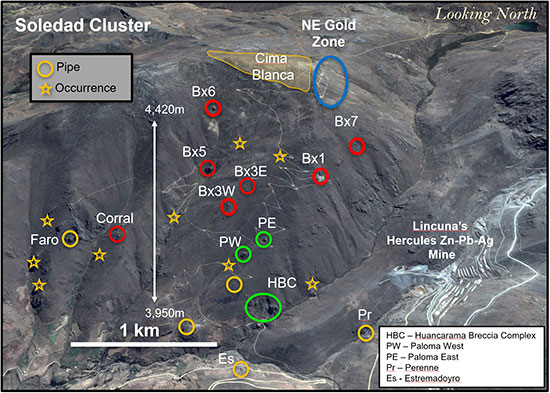
Vancouver, B.C., December 16, 2020 – Chakana Copper Corp. (TSX-V: PERU; OTCQB: CHKKF; FRA: 1ZX) (the “Company” or “Chakana”), is pleased to release new drill results from four holes at its high-grade copper-gold-silver Paloma West discovery at the expanded Soledad Project in Ancash, Peru. These results are part of the ongoing Phase 3 drill program, a fully funded 15,000 metre drill program that started August 15, 2020. Phase 3 is testing a cluster of high-grade, gold-enriched tourmaline breccia pipe targets within the Paloma and Huancarama breccia complexes (Fig. 1). Twenty holes have now been reported from the two Paloma targets for a total of 3,630 metres. Drilling is currently underway at Huancarama where thirteen holes have been completed thus far.

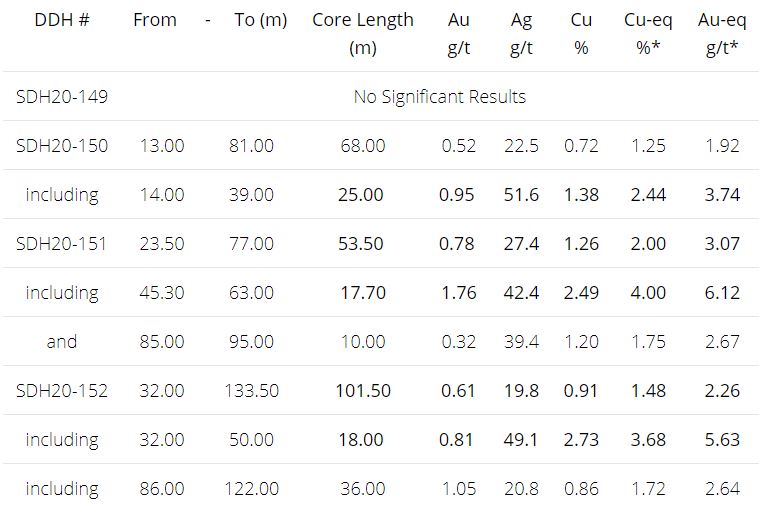
Mineralized intervals from these four holes at Paloma West include:


* Cu_eq and Au_eq values were calculated using copper, gold, and silver. Metal prices utilized for the calculations are Cu – US$2.90/lb, Au – US$1,300/oz, and Ag – US$17/oz. No adjustments were made for recovery as the project is an early stage exploration project and metallurgical data to allow for estimation of recoveries are not yet available. The formulas utilized to calculate equivalent values are Cu_eq (%) = Cu% + (Au g/t * 0.6556) + (Ag g/t * 0.00857) and Au_eq (g/t) = Au g/t + (Cu% * 1.5296) + (Ag g/t * 0.01307).

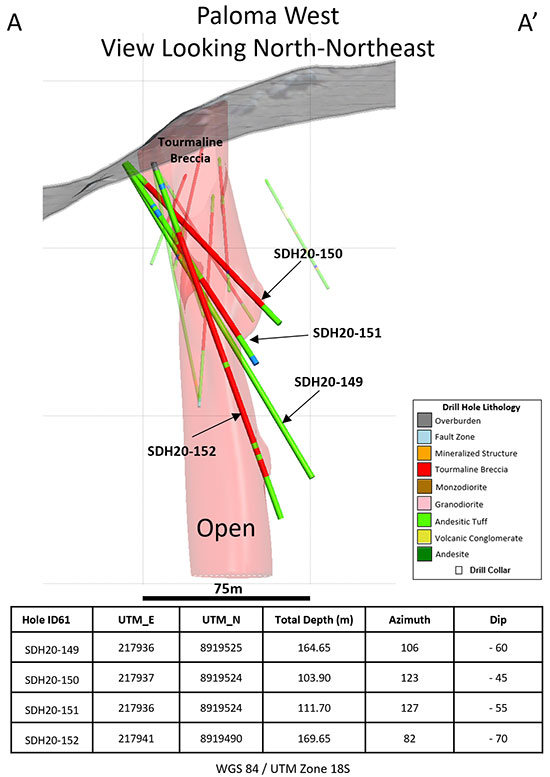
Summary information for results reported in this release; holes SDH20-149 to SDH20-151 were drilled from the northwest side of the exposed breccia pipe, and SDH20-152 was drilling from the southwest side of the breccia pipe (Figs. 2-3):

  • SDH20-149 was drilled to the east-southeast and failed to intersect breccia, which is plunging southwest in the uppermost 70 metres of the breccia body.
  • SDH20-150 and SDH20-151 were drilled towards the southeast from the same platform at -45 and -55 inclinations, respectively. Both holes intersected strongly mineralized breccia including 25m of 0.95 g/t Au, 1.38% Cu, and 51.6 g/t Ag starting at 14m in SDH20-150; and 17.7m with 1.76 g/t Au, 2.49% Cu, and 42.4 g/t Ag starting at 45.3m. Both intercepts occur within longer intervals of mineralized breccia.
  • SDH20-152 was drilled towards the east at -70 inclination and intersected 101.5m of mineralized breccia with 0.61 g/t Au, 0.91% Cu, and 19.8 g/t Ag starting at 32m. A higher-grade margin zone within this occurs over 18m with 0.81 g/t Au, 2.73% Cu, and 49.1 g/t Ag starting at 32m.

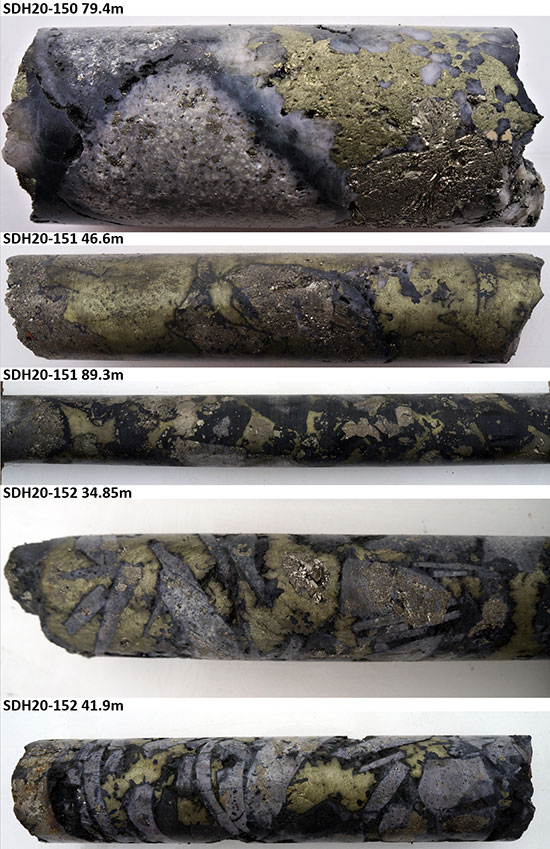
Examples of mineralized drill core from these holes are shown in Figure 4.

David Kelley, President and CEO commented, “these results are a successful conclusion to the scout drilling program at Paloma East and Paloma West, defining a breccia system much larger than anticipated with some of the highest grades ever seen on the project. The three holes that intersect breccia have high grade sections within longer intervals of mineralization. Hole SDH20-152 significantly extends mineralization to approximately 165m below surface and is open at depth. Additional in-fill drilling will be conducted at Paloma East and Paloma West to be included in an initial resource estimate. We look forward to reporting drill results from the Huancarama Breccia Complex early in the new year.”

Paloma Target Area

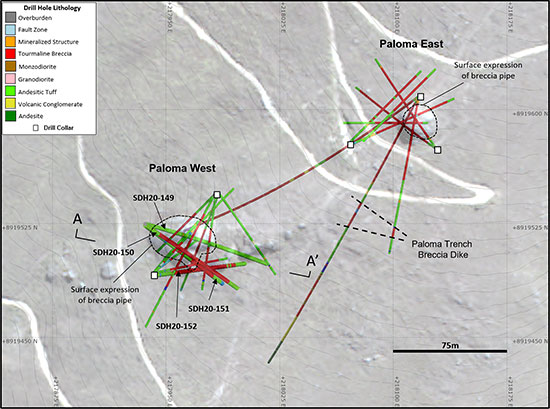
The Paloma target area consists of two mapped outcropping breccia pipes, Paloma East and Paloma West (Fig. 2) and at least one breccia dike. First-pass surface sampling encountered strongly anomalous gold at both Paloma breccia pipes as well as within several scattered small exposures of breccia and vein-like structures in the Paloma area. A strong time-domain electromagnetic geophysical anomaly is also coincident with Paloma.

Huancarama Target Area

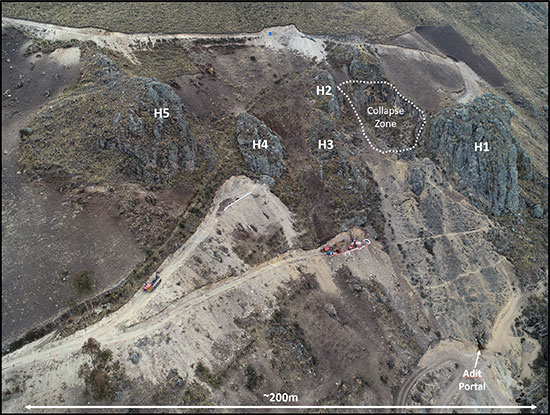
The Huancarama Breccia Complex is located 300 metres south of and 400 metres lower than the deepest breccia intercept at Paloma. Within the complex there are five principal breccia bodies exposed at surface over approximately 200 metres (Fig. 5). There is a distinctive feature believed to be a collapse zone with dimensions of 50 metres by 30 metres. Unverified reports suggest that this may be a mine collapse, but it may also be a natural feature. The largest breccia body in the complex is H1 (approximately 60 metres in diameter). Two historic adits are in the complex, one trending north-northeast for 170 metres along the western side of H1, and a second shorter adit of 21 metres at H2. Surface sampling from the breccia bodies and channel sampling of the adits yield strongly anomalous gold results (see news release dated November 19, 2019). In addition to several targets within the complex, numerous targets exist between Huancarama and Paloma.

About Chakana Copper

Chakana Copper Corp is a Canadian-based minerals exploration company that is currently advancing the high-grade gold-copper-silver Soledad Project located in the Ancash region of Peru, a highly favorable mining jurisdiction with supportive communities. The Soledad Project consists of high-grade gold-copper-silver mineralization hosted in tourmaline breccia pipes. A total of 33,353 metres of drilling has been completed to-date, testing nine (9) of twenty-three (23) confirmed breccia pipes with more than 92 total targets. Chakana’s investors are uniquely positioned as the Soledad Project provides exposure to several metals including copper, gold, and silver. For more information on the Soledad project, please visit the website a www.chakanacopper.com.

Sampling and Analytical Procedures

Chakana follows rigorous sampling and analytical protocols that meet or exceed industry standards. Core samples are stored in a secured area until transport in batches to the ALS facility in Callao, Lima, Peru. Sample batches include certified reference materials, blank, and duplicate samples that are then processed under the control of ALS. All samples are analyzed using the ME-MS41 (ICP technique that provides a comprehensive multi-element overview of the rock geochemistry), while gold is analyzed by AA24 and GRA22 when values exceed 10 g/t by AA24. Over limit silver, copper, lead and zinc are analyzed using the OG-46 procedure. Soil samples are analyzed by 4-acid (ME-MS61) and for gold by Fire Assay on a 30g sample (Au-ICP21).

Results of previous drilling and additional information concerning the Project, including a technical report prepared in accordance with National Instrument 43-101, are made available on Chakana’s SEDAR profile at www.sedar.com.

Qualified Person

David Kelley, an officer and a director of Chakana, and a Qualified Person as defined by NI 43-101, reviewed and approved the technical information in this news release.

ON BEHALF OF THE BOARD
(signed) “David Kelley”
David Kelley
President and CEO

For further information contact:
Joanne Jobin, Investor Relations Officer
Phone: 647 964 0292
Email: [email protected]

Neither TSX Venture Exchange nor its Regulation Services Provider (as that term is defined in the policies of the Exchange) accepts responsibility for the adequacy or accuracy of this release.

Forward-looking Statement Advisory: This release may contain forward-looking statements. Forward-looking statements involve known and unknown risks, uncertainties, and other factors which may cause the actual results, performance, or achievements of Chakana to be materially different from any future results, performance, or achievements expressed or implied by the forward looking statements. Forward looking statements or information relates to, among other things, the interpretation of the nature of the mineralization at the Soledad copper-gold-silver project (the “Project”), the potential to expand the mineralization, and to develop and grow a resource within the Project, the planning for further exploration work, the ability to de-risk the potential exploration targets, and our belief in the potential for mineralization within unexplored parts of the Project. These forward-looking statements are based on management’s current expectations and beliefs but given the uncertainties, assumptions and risks, readers are cautioned not to place undue reliance on such forward- looking statements or information. The Company disclaims any obligation to update, or to publicly announce, any such statements, events or developments except as required by law.

Figure 1 – View looking north showing breccia pipes and occurrences within the northern Soledad cluster. Pipes that have been drilled in previous campaigns are shown in red. Targets shown in green are the focus on this 15,000m drill campaign. Other pipes and occurrences remain to be tested by drilling. Additional breccia pipes occur on the south half of the property and are not shown here.

Figure 2 – Map showing location of outcropping Paloma East and Paloma West breccia pipes and drill hole lithology in holes completed to date. Red represents tourmaline breccia. Location of section line for Figure 3 indicated.

Figure 3 – Section looking north-northeast highlighting the drill holes at Paloma West reported in this release. Light red 3D shape shows approximate shape of breccia based on the first thirteen holes.

Figure 4 – Detailed core photos from Paloma West: SDH20-150 (79.4m) quartz-chalcopyrite-pyrite-tourmaline cemented breccia; SDH20-151 (46.6m) mosaic breccia replaced by chalcopyrite-pyrite; SDH20-151 (89.3m) mosaic breccia with chalcopyrite-pyrite cement and late euhedral pyrite replacement; SDH20-152 (34.85m) chaotic shingle breccia with chalcopyrite-pyrite cement; F) SDH20-152 (41.9m) shingle breccia with chalcopyrite-pyrite cement.

Figure 5 – Drone image looking northeast at the Huancarama Breccia Complex showing the five principal tourmaline breccia bodies exposed at surface (H1-H5), historic adit portal, and drill platforms. Note drill rig in center of image.

SOURCE: Chakana Copper

Release – Newrange Gold (NRGOF) – Arranges Winter Exploration Program for North Birch Project in Red Lake District


Newrange Arranges Winter Exploration Program for North Birch Project in Red Lake District and Hires NAI Interactive for Marketing


VANCOUVER, BRITISH COLUMBIA, December 16, 2020 (TSXV: NRG, US: NRGOF, Frankfurt: X6C) – Newrange Gold Corp. (“Newrange” or the “Company”) is pleased to announce that it is finalizing plans for a winter exploration program to begin in January on its North Birch Project east of Red Lake, Ontario. The Company is planning on conducting approximately 90 line kilometres of Induced Polarization (IP) geophysics and the results will be used to generate targets for follow up diamond drilling.

The primary target at North Birch is the sheared limb of a folded iron formation sequence, modeled after the Musselwhite Gold Mine, approximately 190 kilometres to the north and operated by Newmont-Goldcorp. The 8 kilometre long target horizon at North Birch is recessive and not exposed at surface but is interpreted from a prominent fold pattern in the airborne magnetics (see map here). The target horizon projects 2 kilometres along strike into the Argosy Gold Mine, which closed in 1952 after producing 101,875 oz Au at 12.7 g/t Au (Ontario government archives). There are also multiple gold showings in the rocks to the south of the main target horizon and in iron formation elsewhere on the North Birch property, yet the main target horizon has never been drilled.

“We are looking forward to initiating exploration at North Birch,” stated Robert Archer, Newrange’s CEO. “As we didn’t receive our permits until September due to COVID-related delays, we missed the summer field season but, during that time, we merged and reprocessed the three airborne magnetic surveys that have been flown over the property in past years. This has clearly delineated the main target horizon and the IP will be used to detect areas of sulphide enrichment that may be related to gold mineralization.”

It is anticipated that field crews will mobilize to the property in early January, although the exact timing will be weather dependent. Once the IP has been completed and interpreted (approximately 4-6 weeks), an application for a drill permit will be filed as soon as possible.

In other news, Newrange has signed a one-year agreement with NAI Interactive Ltd. (“NAI”) of Vancouver, BC to provide marketing services to the growing Chinese investment community. Total payable under the terms of the contract is $60,000 and NAI will be granted 150,000 stock options in Newrange at a price of $0.14. The stock options will vest as to 25% every three months with a term of two years from the date of grant.

NAI has been bridging the gap between the mining industry and Chinese investors for more than 20 years and is a leading market intelligence and investor relations service provider for fast growing public companies trading on the North American stock exchanges.

Qualified Person

The technical content disclosed in this press release was reviewed and approved by David Hladky, P.Geo., Senior Geologist for Newrange and a Qualified Person as defined under National Instrument 43-101.

About Newrange Gold Corp.

Newrange is a precious metals exploration and development company focused on near to intermediate term production opportunities in favorable jurisdictions including Nevada, Ontario and Colorado. With numerous drill intercepts of near surface oxide gold mineralization to 340 grams gold per metric tonne, the Company’s flagship Pamlico Project is poised to become a significant new Nevada discovery. Focused on developing shareholder value through exploration and development of key projects, the Company is committed to building sustainable value for all stakeholders. Further information can be found on our website at www.newrangegold.com.

Signed: “Robert Archer”
CEO & Director

For further information contact:
Sharon Fleming
Corporate Communications
Phone: 760-898-9129
Email: [email protected]

Dave Cross
Chief Financial Officer and Corporate Secretary
Phone: 604-669-0868
Email: [email protected]

Website: www.newrangegold.com

Neither the TSX Venture Exchange nor the Investment Industry Regulatory Organization of Canada accepts responsibility for the adequacy or accuracy of this release.

Forward-Looking Statement: Some of the statements in this news release contain forward-looking information that involves inherent risk and uncertainty affecting the business of Newrange Gold Corp. Actual results may differ materially from those currently anticipated in such statements.

SOURCE: Newrange Gold

Allegiant Gold Ltd (AUXXF) – Fashioning Nevada’s Eastside Project Into A Multi-Million Ounce Gold Resource

Tuesday, December 15, 2020

Allegiant Gold Ltd (AUXXF)
Fashioning Nevada’s Eastside Project Into A Multi-Million Ounce Gold Resource

Allegiant Gold Ltd is a gold exploration company. Its project profile consists of Bolo, Browns Canyon, Clara Moro, Four Metals, Monitor Hills, Red Hills, Silver Dome, West Goldfield, White Horse Flats, Mogollon, Eastside, Dutch Flat, and others.

Mark Reichman, Senior Research Analyst of Natural Resources, Noble Capital Markets, Inc.

Refer to the full report for the price target, fundamental analysis, and rating.

    Initiating coverage.  We are initiating coverage of Allegiant Gold Ltd. Allegiant is a mid-stage gold exploration company with projects in Nevada and the Southwest United States and controls 10 projects, 7 of which are in Nevada. Management has focused its attention and resources toward advancing its flagship Eastside gold project in Nevada, while optioning other projects in its portfolio to third-party exploration companies in exchange for cash and/or share payments, work program requirements, and a retained interest in each project.

    The Eastside project represents significant upside for investors.  The Eastside project provides a unique opportunity to explore and develop an emerging district-scale gold opportunity in multiple target areas. Eastside has inferred mineral resources of 996 thousand gold ounces and 7.8 million silver ounces with significant expansion potential. In September 2020, the company commenced a 15-thousand …


This Company Sponsored Research is provided by Noble Capital Markets, Inc., a FINRA and S.E.C. registered broker-dealer (B/D).

*Analyst certification and important disclosures included in the full report. NOTE: investment decisions should not be based upon the content of this research summary.  Proper due diligence is required before making any investment decision. 

Ely Gold Royalties (ELYGF)(ELY:CA) – Executes Option Agreement to Sell Weepah Closes Acquisition of Watershed Royalty

Tuesday, December 15, 2020

Ely Gold Royalties (ELYGF)(ELY:CA)
Executes Option Agreement to Sell Weepah; Closes Acquisition of Watershed Royalty

As of April 24, 2020, Noble Capital Markets research on Ely Gold Royalties is published under ticker symbols (ELYGF and ELY:CA). The price target is in USD and based on ticker symbol ELYGF. Research reports dated prior to April 24, 2020 may not follow these guidelines and could account for a variance in the price target. Ely Gold Royalties Inc is an emerging royalty company with producing and development assets focused in Nevada and the Western US. It offers shareholders a low-risk leverage to the current price of gold and low-cost access to long-term gold royalties.

Mark Reichman, Senior Research Analyst of Natural Resources, Noble Capital Markets, Inc.

Refer to the full report for the price target, fundamental analysis, and rating.

    Option agreement to sell Weepah. Ely Gold Royalties, through its Nevada Select subsidiary, executed an option agreement for Navy Resources Corp. (TSXV, NVY, Not Rated) to acquire the Weepah Property located in Esmeralda County, Nevada. Ely will retain royalty interests. Weepah is in the Walker Lane Trend roughly 32 kilometers southwest of Tonopah, Nevada and includes 66 unpatented claims known as the Cordex Claims, 10 unpatented claims known as the Nevada Select Claims, and 1 patented claim known as the Electric Claim. The agreement is subject to approval by the Toronto Venture Exchange.

    Terms of the transaction.  Navy will have the option to purchase 100% of the property in exchange for US$1 million and 500 thousand Navy shares, including the following payments: 1) US$50 thousand in cash to Nevada Select upon entering the agreement; 2) 50 thousand Navy shares within 5 business days of TSXV approval, 3) US$100 thousand in cash and 100 thousand Navy shares on or before the first …


This Company Sponsored Research is provided by Noble Capital Markets, Inc., a FINRA and S.E.C. registered broker-dealer (B/D).

*Analyst certification and important disclosures included in the full report. NOTE: investment decisions should not be based upon the content of this research summary.  Proper due diligence is required before making any investment decision. 

Energy Fuels (UUUU)(EFR:CA) – Line of Sight Toward Commercial Mixed REE Production Investor Webcast on December 15

Tuesday, December 15, 2020

Energy Fuels (UUUU)(EFR:CA)
Line of Sight Toward Commercial Mixed REE Production; Investor Webcast on December 15

As of April 24, 2020, Noble Capital Markets research on Energy Fuels is published under ticker symbols (UUUU and EFR:CA). The price target is in USD and based on ticker symbol UUUU. Research reports dated prior to April 24, 2020 may not follow these guidelines and could account for a variance in the price target.

Energy Fuels is the largest uranium producer in the U.S. and holds more production capacity and uranium resources than any other U.S. producer. The Company also produces vanadium. Headquartered in Colorado, Energy Fuels holds three of America’s key uranium production centers: the White Mesa Mill in Utah, the Nichols Ranch ISR Facility in Wyoming, and the Alta Mesa ISR Facility in Texas. The producing White Mesa Mill is the only conventional uranium mill in the U.S. and has a licensed capacity of 8 million pounds of U3O8 per year. Nichols Ranch is in production and has a licensed capacity of 2 million pounds of U3O8 per year. Alta Mesa is currently on standby. Energy Fuels also owns several licensed and developed uranium and vanadium mines on standby and other projects in development.

Mark Reichman, Senior Research Analyst of Natural Resources, Noble Capital Markets, Inc.

Refer to the full report for the price target, fundamental analysis, and rating.

    Commercial production of mixed rare earth element (REE) carbonate. Energy Fuels executed a three-year agreement with The Chemours Company (NYSE, CC, Not rated) to purchase 2,500 tons of monazite sands per year. Beginning in the first quarter 2021, Energy Fuels will begin processing the monazite at its White Mesa Mill to recover uranium and produce a marketable mixed rare earth carbonate containing ~71% total rare earth oxides (TREO) ready for sale to third-party REE separation facilities. The goal is to process at least 15,000 tons of monazite per year for the recovery of REEs and uranium which would represent about 2% of White Mesa’s throughput capacity.

    Moving downstream?  While the company could execute sales agreements with third party separation facilities shortly, Energy Fuels is also evaluating the potential to perform REE separation at White Mesa, along with other downstream REE activities …


This Company Sponsored Research is provided by Noble Capital Markets, Inc., a FINRA and S.E.C. registered broker-dealer (B/D).

*Analyst certification and important disclosures included in the full report. NOTE: investment decisions should not be based upon the content of this research summary.  Proper due diligence is required before making any investment decision. 

Energy Services of America (ESOA) – PPP tax payment masks strong quarter and profitable year

Monday, December 14, 2020

Energy Services of America (ESOA)
PPP Tax Payment Masks Strong Quarter and Profitable Year

Energy Services of America Corporation is engaged in providing contracting services for energy-related companies. The company is primarily engaged in the construction, replacement, and repair of natural gas pipelines and storage facilities for utility companies and private natural gas companies. It services the gas, petroleum, power, chemical and automotive industries, and does incidental work such as water and sewer projects. Energy Service’s other services include liquid pipeline construction, pump station construction, production facility construction, water and sewer pipeline installations, various maintenance and repair services and other services related to pipeline construction.

Poe Fratt, Senior Research Analyst, Noble Capital Markets, Inc.

Refer to the full report for the price target, fundamental analysis, and rating.

    Fiscal 4Q2020 (September) operating results above expectations. 4Q2020 revenues increased $6.2 million (16%) to $44.5 million from $38.3 million in 4Q2019, and EBITDA increased by $4.0 million (114%) to $7.0 million from $3.0 million in 4Q2019. While we don’t have the segment details yet, quarterly revenue was the highest in the past six quarters. A net loss of $0.039/share was reported in FY2020 due to a tax payment related to the PPP loan, adjusted net income of $0.126/diluted share was 31% higher than FY2019.

    Introducing FY2021 EBITDA estimate of $10.8 million to reflect the strong end to FY2020 and sustained higher profitability due to the shift in the business model.  Forecasted revenue of $122.5 million is a slight 3% improvement from $119.2 million and EBITDA of $10.8 million is about $2.7 million higher than $8.1 million in FY2020. Profitability should continue to improve and we forecast higher …


This Company Sponsored Research is provided by Noble Capital Markets, Inc., a FINRA and S.E.C. registered broker-dealer (B/D).

*Analyst certification and important disclosures included in the full report. NOTE: investment decisions should not be based upon the content of this research summary.  Proper due diligence is required before making any investment decision. 

FAT Brands Inc. (FAT) – FAT Brands, Fog Cutter Merger Announced Increasing PT

Monday, December 14, 2020

FAT Brands Inc. (FAT)
FAT Brands, Fog Cutter Merger Announced; Increasing PT

FAT Brands Inc is a multi-brand restaurant franchising company. It develops, markets, and acquires predominantly fast casual restaurant concepts. The company provides turkey burgers, chicken Sandwiches, chicken tenders, burgers, ribs, wrap sandwiches, and others. Its brand portfolio comprises Fatburger, Buffalo’s Cafe and Express, and Ponderosa and Bonanza. The company’s overall footprint covers nearly 32 countries. Fatburger generates maximum revenue for the company.

Joe Gomes, Senior Research Analyst, Noble Capital Markets, Inc.

Refer to the full report for the price target, fundamental analysis, and rating.

    Fog Cutter Merger. On Friday, FAT Brands announced the long-waited merger with its controlling shareholder Fog Cutter Capital Group (FCCG). FCCG owns 81.16% of FAT’s common shares. FAT shares closed at $7.89, or 28% higher on the news. At the onset, the merger will simplify FAT’s corporate structure and eliminate limitations that have restricted FAT’s ability to use common stock for acquisitions and capital raising. FCCG also holds over $100 million of NOLs that FAT will now be able to use to offset future taxable income. Management estimates FAT’s public float will increase to approximately 46% on a fully-diluted basis.

    Terms.  The 9,679,288 FAT shares held by FCCG will, in essence, be distributed to the current FCCG stockholders in proportion to their FCCG ownership. We would note that FAT CEO and President Andy Wiederhorn owns approximately 80% of FCCG. Current, non-FCCG, FAT common holders will receive $5.80 liquidation preference per common share in FAT’s 8.25% Series B Preferred (FATBP) …


This Company Sponsored Research is provided by Noble Capital Markets, Inc., a FINRA and S.E.C. registered broker-dealer (B/D).

*Analyst certification and important disclosures included in the full report. NOTE: investment decisions should not be based upon the content of this research summary.  Proper due diligence is required before making any investment decision. 

Release – Energy Fuels (UUUU) – Set to Enter Commercial Rare Earth Business in Q1 2021


Energy Fuels Set to Enter Commercial Rare Earth Business in Q1-2021, Producing Materials That Make Many Clean Energy and Advanced Technologies Possible; Webcast on Dec. 15


New Monazite Supply Agreement with The Chemours Company
Supports Energy Fuels’ Efforts to Help Reestablish Key U.S. Supply Chain


LAKEWOOD, Colo., Dec. 14, 2020 /CNW/ – Energy Fuels Inc. (NYSE American: UUUU) (TSX: EFR) (“Energy Fuels” or the “Company”) is pleased to announce that it has entered into a three-year supply agreement with The Chemours Company (NYSE: CC) (“Chemours”) to acquire a minimum of 2,500 tons per year of natural monazite sands, one of the highest-grade rare earth element (“REE”) minerals in the world. Energy Fuels expects to process this monazite at its 100%-owned White Mesa Mill starting in Q1-2021, recover the contained uranium, and produce a marketable mixed REE carbonate, representing an extremely important step toward re-establishing a fully-integrated U.S. REE supply chain.

Upon a successful ramp-up of this program, Energy Fuels will be the first U.S. company in several years to produce a marketable mixed REE concentrate ready for separation on a commercial scale. We estimate that the amount of REEs contained in the monazite sands to be supplied by Chemours will equal close to 10% of total current U.S. REE demand, as contained in end-use products.

REEs are the building-blocks of a wide array of clean energy and advanced technologies, including wind turbines, electric vehicles, cell phones, computers, flat panel displays, advanced optics, catalysts, medicine, and national defense applications. Monazite also contains significant recoverable quantities of uranium, which fuels the production of carbon-free electricity using nuclear technology.

“With our announcement today, southeast Utah is fast becoming America’s clean energy and critical minerals hub,” stated Mark S. Chalmers, President and CEO of Energy Fuels. “Our goal is to domestically produce the raw materials needed for clean energy and advanced technologies, while creating green jobs in an economically challenged part of the country. Currently, the U.S. imports nearly all of our rare earth, uranium and vanadium requirements, despite having ample supplies here in the U.S. Importantly, in the United States we are highly regulated and operate to the highest standards, which means we produce these minerals more responsibly than many of the countries from which we currently import. Our agreement with Chemours may be the beginning of a real success story, not only for Energy Fuels, but also for local communities, Native Americans, conservation groups, the State of Utah, and the U.S. as a whole.”

“Our partnership with Energy Fuels to help support the rare earth supply chain in the U.S. came from a deliberate process of customer engagement and developing sustainable solutions for our critical minerals. This is consistent with Chemours’ goals of supporting advanced technologies and clean energy, and we will continue efforts to grow and diversify the domestic supply chain,” stated Bryan Snell, President of Titanium Technologies at Chemours.

Typical monazite sand ores from the southeast U.S. average about 55% total rare earth oxides (“TREO”) and 0.20% uranium, which is the typical grade of uranium found in uranium mines that have historically fed the White Mesa Mill. Of the 55% TREO typically found in the monazite sands, the neodymium and praseodymium oxides (“NdPr”) comprise approximately 22% of the TREO. Nd and Pr are among the most valuable of the REEs, as they are the key ingredient in the manufacture of high-strength permanent magnets which are essential to the lightweight and powerful motors required in electric vehicles (“EVs”) and permanent magnet wind turbines used for renewable energy generation, as well as to an array of other modern technologies, including, mobile devices and defense applications.

The monazite sands will be from Chemours’ Offerman Mineral Sand Plant in Georgia. Shipments of monazite sands from Georgia to the White Mesa Mill in Utah are expected to commence in the first quarter of 2021. The Company expects to recover uranium from the monazite and produce a commercially salable mixed REE carbonate containing ~71% TREO (dry basis). This REE product will be ready for REE separation, which is the next step in producing usable REE products.

The Company is also in discussions with other entities to acquire additional supplies of monazite and is working with the U.S. Department of Energy (“DOE”) to evaluate the potential to process other types of REE and uranium bearing ores at the White Mesa Mill produced from coal-based resources. The Company has a goal to process 15,000+ tons of monazite and other sources of ore per year for the recovery of REEs and uranium.

The Company also believes this project may, in time, result in among the lowest-cost REE production in the western world, since the Company is obtaining monazite from existing mining facilities in Georgia (and potentially elsewhere) and utilizing its existing White Mesa Mill processing facility in Utah. Utilizing existing facilities avoids the significant time and cost required to license and develop new facilities. In addition, since monazite sands are currently being separated from other mineral sands in Georgia and elsewhere, the Company will only incur the cost to acquire the monazite, thereby avoiding mining costs and associated risks.

The Company expects to sell some or all of its mixed REE carbonate to buyers in Europe and/or Asia until a REE separation facility is established in the United States. The Company is also evaluating the potential to perform REE separation, and potentially other downstream REE activities, including metal-making and alloying, in the future at the White Mesa Mill or elsewhere in the United States.

Further, Energy Fuels’ mixed REE carbonate production from monazite sand ores is expected to utilize only a very small amount of the White Mesa Mill’s ore production capacity and very little waste. The Company expects to acquire a minimum 2,500 tons of monazite sands in 2021 from Chemours alone and is looking to increase production in the future to up to approximately 15,000 tons of monazite sands per year. For comparison, the White Mesa Mill is licensed and designed to process 2,000 tons of ore per day on average, or 720,000 tons of ore per year. Therefore, 2,500 tons of monazite per year represents less than 0.4% of the Mill’s ore throughput capacity, and 15,000 tons would represent only about 2% of its throughput capacity. If the Company is successful in securing 15,000 tons of ore similar to the Chemours monazite, the Company believes it would produce approximately 50% of U.S. REE demand in a mixed REE carbonate. Furthermore, since monazite is typically comprised of approximately 55% recoverable uranium and REEs, the total volume of resulting waste is significantly lower than for most other mill feeds. The Company currently has 1.5 million tons of existing capacity in its fully-constructed, state-of-the-art, 1,000-year design tailings impoundments. Therefore, the annual waste streams from monazite ore processing will represent less than 1% of existing tailings capacity. Even at higher levels of monazite processing, very little waste will be generated.

Mr. Chalmers continued: “We are extremely excited about working with Chemours to help reestablish U.S. rare earth production. Chemours is a leader in the U.S. heavy mineral sands industry, and, together we are now taking an important first step in returning the REE supply chain back to the United States. We look forward to working with Chemours in the future to expand our mutual contributions to this important initiative.

“This is a proud moment for Energy Fuels, as we deploy our unique capabilities to benefit both the environment and our shareholders. Energy Fuels already produces uranium, which is the fuel for clean, carbon-free nuclear energy. And we periodically produce vanadium, which is used in the production of steel, aerospace alloys, and advanced grid-scale batteries used to store renewable energy. The responsible production of rare earths and uranium from natural monazite sand ores is an important clean-technology addition to those programs. We are also seeking to help the U.S. Environmental Protection Agency and Navajo Nation address historic, government-sponsored uranium mines, a project to which I am personally deeply committed.”

Webcast on Tuesday, December 15, 2020 at 11:00 am ET (9:00 am MT)

Energy Fuels will be hosting a video webcast on Tuesday, December 15, 2020 at 11:00 am ET (9:00 am MT) to discuss the Company’s entry into the commercial rare earth space. To join the webcast, please click on the link below to access the presentation and the viewer-controlled webcast slides:

Energy Fuels Set to Enter Commercial Rare Earth Production in Q1-2021

If you would like to participate in the webcast and ask questions, please dial (888) 664-6392 (toll free in the U.S. and Canada).

A link to a recorded version of the proceedings will be available on the Company’s website shortly after the webcast by calling (888) 390-0541 (toll free in the U.S. and Canada) and entering the code 875131#. The recording will be available until December 29, 2020.

About Energy Fuels: Energy Fuels is a leading U.S.-based uranium mining company, supplying U3O8 to major nuclear utilities. The Company also produces vanadium from certain of its projects, as market conditions warrant, and anticipates commencing commercial production of rare earth element (“REE”) carbonate in 2021. Its corporate offices are in Lakewood, Colorado, near Denver, and all of its assets and employees are in the United States. Energy Fuels holds three of America’s key uranium production centers: the White Mesa Mill in Utah, the Nichols Ranch in-situ recovery (“ISR”) Project in Wyoming, and the Alta Mesa ISR Project in Texas. The White Mesa Mill is the only conventional uranium mill operating in the U.S. today, has a licensed capacity of over 8 million pounds of U3O8 per year, has the ability to produce vanadium when market conditions warrant, and is completing final test-work for the production of REE carbonate from various uranium-bearing ores. The Nichols Ranch ISR Project is on standby and has a licensed capacity of 2 million pounds of U3O8 per year. The Alta Mesa ISR Project is also on standby and has a licensed capacity of 1.5 million pounds of U3O8 per year. In addition to the above production facilities, Energy Fuels also has one of the largest NI 43-101 compliant uranium resource portfolios in the U.S. and several uranium and uranium/vanadium mining projects on standby and in various stages of permitting and development. The primary trading market for Energy Fuels’ common shares is the NYSE American under the trading symbol “UUUU,” and the Company’s common shares are also listed on the Toronto Stock Exchange under the trading symbol “EFR.” Energy Fuels’ website is www.energyfuels.com.

Cautionary Note Regarding Forward-Looking Statements:

This news release contains certain “Forward Looking Information” and “Forward Looking Statements” within the meaning of applicable securities legislation, which may include, but is not limited to, statements with respect to: the Company being a leading producer of uranium in the U.S.; any expectation that the Company is able to produce REE carbonate from uranium-bearing ores or that the Company will commence commercial production of REE carbonate in 2021 or at all; any expectation that the Company’s REE project may, in time, result in among the lowest cost REE production in the western world; any expectation that the Company will be successful in acquiring additional supplies of monazite, or will be successful in processing other types of REE- and uranium bearing ores at the White Mesa Mill; any expectation that the Company will be successful in achieving its goal of processing 15,000+ tons of monazite and other sources of ore per year; any expectation that the Company will be able to sell some or all of its REE carbonate to buyers in Europe and/or Asia until a REE separation facility is established in the United States; any expectation that the Company may potentially perform separation, and other downstream REE activities including metal-making and alloying, in the future at the White Mesa Mill or elsewhere in the United States; any expectation that the Company will be successful in helping the EPA and Navajo Nation address historic abandoned uranium mines; any expectation that the Company will significantly increase the number of green jobs it is providing at the White Mesa Mill; and any other statements regarding Energy Fuels’ future expectations, beliefs, goals or prospects; constitute forward-looking information within the meaning of applicable securities legislation (collectively, “forward-looking statements”). All statements in this news release that are not statements of historical fact (including statements containing the words “expects,” “does not expect,” “plans,” “anticipates,” “does not anticipate,” “believes,” “intends,” “estimates,” “projects,” “potential,” “scheduled,” “forecast,” “budget” and similar expressions) should be considered forward-looking statements. All such forward-looking statements are subject to important risk factors and uncertainties, many of which are beyond Energy Fuels’ ability to control or predict. A number of important factors could cause actual results or events to differ materially from those indicated or implied by such forward-looking statements, including without limitation factors relating to: the Company being a leading producer of uranium in the U.S.; any expectation that the Company is able to produce REE carbonate from uranium-bearing ores or that the Company will commence commercial production of REE carbonate in 2021 or at all; any expectation that the Company’s REE project may, in time, result in among the lowest cost REE production in the western world; any expectation that the Company will be successful in acquiring additional supplies of monazite, or will be successful in processing other types of REE- and uranium bearing ores at the White Mesa Mill; any expectation that the Company will be successful in achieving its goal of processing 15,000+ tons of monazite and other sources of ore per year; any expectation that the Company will be able to sell some or all of its REE carbonate to buyers in Europe and/or Asia until a REE separation facility is established in the United States; any expectation that the Company may potentially perform separation, and other downstream REE activities including metal-making and alloying, in the future at the White Mesa Mill or elsewhere in the United States; any expectation that the Company will be successful in helping the EPA and Navajo Nation address historic abandoned uranium mines; any expectation that the Company will significantly increase the number of green jobs it is providing at the White Mesa Mill; and the other risk factors as described in Energy Fuels’ most recent annual report on Form 10-K and quarterly financial reports. Energy Fuels assumes no obligation to update the information in this communication, except as otherwise required by law. Additional information identifying risks and uncertainties is contained in Energy Fuels’ filings with the various securities commissions, which are available online at www.sec.gov and www.sedar.com. Forward-looking statements are provided for the purpose of providing information about the current expectations, beliefs and plans of the management of Energy Fuels relating to the future. Readers are cautioned that such statements may not be appropriate for other purposes. Readers are also cautioned not to place undue reliance on these forward-looking statements, that speak only as of the date hereof.

SOURCE Energy Fuels Inc.

Rising Oil Prices and Small-Cap Energy Stocks


Small-Cap Energy Underperformance During the Drop in Oil is Unwinding


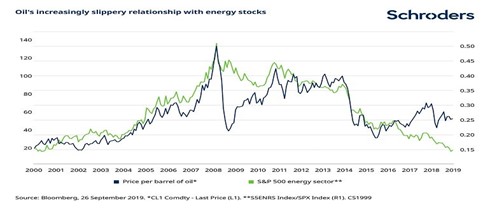
It is no surprise that energy stocks are highly correlated to energy prices, mainly oil prices. The chart below shows the correlation between oil prices and the relative performance of energy stocks (XLE Index) as compared to the S&P 500 Index. This relationship has been true through up markets and down markets. That is, until recent quarters. Note how energy stocks continued to fall relative to the overall market in 2018-2019 even as oil prices stabilized.


Price per barrel vs. S&P 500 energy sector

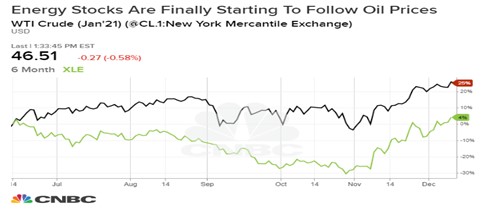
A similar story can be told by looking at the performance of energy stocks over the last six months. Energy stocks were flat even as the WTI oil prices (using near month future contract as a proxy) began to stabilize and rise.


There are many reasons for this. Energy stocks are a function of investors’ viewpoints about the long-term performance of a company, while oil future contracts reflect a shorter time span. Or perhaps the high yield of energy stocks help to smooth out stock price performance during energy price cycles. The energy stock underperformance may reflect a growing understanding that renewable energy and electric vehicles may mean less demand for oil in the long term. Or it may reflect concerns that the pandemic-induced global slowdown has negatively impacted demand. Such a theory would explain why energy stocks have rebounded in recent weeks with the development of vaccines.

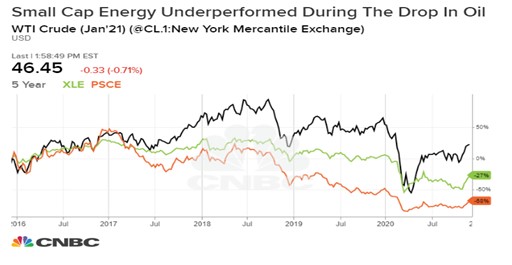
Either way, it would appear that energy stocks are gaining favor after several years of being in the doghouse. So, if you are an investor and ready to get your feet wet by adding to energy stock positions, what is the best way to do it? We believe a strong argument can be made for focusing on small-cap energy companies. As the chart below shows, small-cap energy stocks (PSCE index) have underperformed the broader energy stocks market (XLE) through the down cycle. This is not surprising as larger cap stocks are more likely to be the first to react to changes in industry fundamentals given their liquidity.


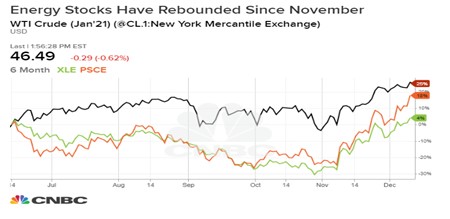
Of course, this trend works the opposite way as well. When energy prices rise, we would expect larger energy stocks to react first, but smaller energy stocks to eventually follow. We may have hit that inflection point in early November when oil price started rising. WTI and Brent oil prices have both risen about $10/bbls since the beginning of November and energy stocks are starting to rebound.


Note the strength in the PSCE small cap energy index since stocks have started to rise. Small cap energy stocks still have a long way to go to recover several years of underperformance, but the performance of the last few weeks may be a sign that the gap is starting to close.


Suggested Reading:

Are
we headed to Another Oil Collapse?

Contango
and the Known Risk to ETFs

Will
Oil Prices Rise in 2021?


Do You Know a Student  Who Could Use $7,500 for College?

Tell them about the College Challenge!


Why Small Cap Mutual Funds May be the Worst Way to Invest in the Sector


Small-Cap Stocks Have Been Performing at a Multiple of the Large-Cap Sector


In October, Channelchek published an article titled, “Which Stocks do Better After a Presidential Election?” The article looked back over 40 years and demonstrated that there has been a consistent outperformance of small cap stocks and explained some of the reasons smaller stocks could outperform large caps again.

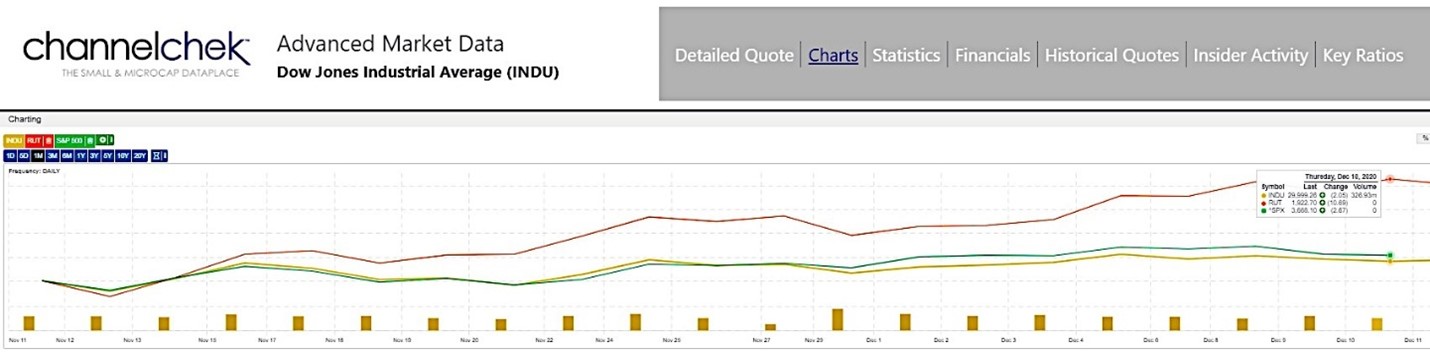
It has been two months and we see that small cap stocks had a great month over the past 30 days. During the 30-day period ending December 10, the small cap Russell 2000 (RUT) index had gained 10.69%, compared to the S&P 500 (^SPX) increase of only 2.67%, and Dow Industrials (INDU) with a 2.05% increase.

This chart shows the Russell Small Cap Index(red) had a fivefold increase relative to the Dow 30 (yellow), and more than threefold compared with the S&P 500 Index (green).

Source: Channelchek Advanced Market Data

Performance Drag:

Based on these performance numbers, someone who invested for 30 days in a fund mimicking the RUT would have earned an additional 8% over the same investment in an ^SPX fund. If the same investor had placed money in an actively managed mutual fund designed to beat the small cap index, they likely would have been much more disappointed.

The small cap fund sector has been experiencing a lot of inflows during the last quarter of 2020. This is why it’s rising; this is how momentum builds. For the portfolio manager in an actively managed fund, this creates a few problems. The first is that the new money coming into the fund has to be invested or left in cash. During a fast upward moving market, cash detracts from performance. Alternatively, suppose the portfolio manager instead decides to invest the inflows. In that case, they will be investing at a time when stocks have already run-up, purchasing them at less than optimal times. They may be forced into decisions they would not have made with a more level and predictable account size. This sector had already had a good run up into November; an active fund manager putting money to work after the run-up is at a disadvantage versus the stocks represented in the index.

There’s another disadvantage a mutual fund portfolio manager, compared to an indexed ETF or even an individual investor may have as a rising market meets fund inflows. During the month of November, $5 billion in net new money was put to work in index-tracking, broad-based small-cap exchange-traded funds (ETF). This represented about 4% of the ETF’s total assets. Active managers usually don’t have as broad of a base of holdings instead as an index fund. More common is they take a higher percentage of their positions in the larger, more liquid names in the sector. When inflows to broad-based index funds accelerate, the smaller companies in the small cap universe often get lifted disproportionately, active funds participate less in these gains. On average, small cap actively managed funds returned about two percentage points less than the benchmarks during November.

Looking Forward

Market participants have been expecting a strengthening in small and micro cap stocks for a couple of years. They had been underperforming and expected to revert to their mean average relative performance. The events of 2020 surrounding the pandemic drove a lot of investible cash to large tech companies leaving small cap stocks to have to wait a bit longer for their move.

The recent move in small stocks across the board remains strong. Profit-taking among the large cap sectors are fueling a rotation into the small sector as many still perceive it as undervalued.  Investors also recognize that continued low materials prices should help many companies keep costs of operating below their pre-2020 levels while expectations of a post-COVID world should bolster profitability.


Suggested Reading:

Which Stocks do Well After a Presidential Election

Small-cap Stocks are Looking Better for Investors

The Advantage of Micro Cap Equities for Investors


Sources:

Why the Small-Cap Rally is Just Getting Started

Small-Cap Stocks Soared Last Month


Upcoming Events


Aurania Resources (AUIAF)(ARU:CA) – Solid Progress

Friday, December 11, 2020

Aurania Resources (AUIAF)(ARU:CA)
Solid Progress

As of April 24, 2020, Noble Capital Markets research on Aurania Resources is published under ticker symbols (AUIAF and ARU:CA). The price target is in USD and based on ticker symbol AUIAF. Research reports dated prior to April 24, 2020 may not follow these guidelines and could account for a variance in the price target.

Aurania Resources Ltd. is a Canada-based junior mining exploration company engaged in the identification, evaluation, acquisition, and exploration of mineral property interests, with a focus on precious metals and copper. Its flagship asset, The Lost Cities-Cutucu Project, is in southeastern Ecuador in the Province of Morona-Santiago. The company also has several minor projects in Switzerland.

Mark Reichman, Senior Research Analyst of Natural Resources, Noble Capital Markets, Inc.

Refer to the full report for the price target, fundamental analysis, and rating.

    Initial results. Scout drilling commenced in mid-September and through the end of the third quarter, three bore holes had been completed on the Tsenken N2 target for a total of 645 meters drilled and two holes were completed on the Tsenken N3 target representing 724 meters of drilling. Aurania reported that no significant copper-gold mineralization was intersected in the first three holes drilled on the edge of the Tsenken iron oxide copper-gold (IOCG) system.

    Finding the core of the system.  Management is awaiting assay results from Holes TS-004 and TS-005 which are thought to have been drilled closer to the core of the system and more likely to yield more significant results. Hole TS-006 is being drilled and has reached a depth of 250 meters and will be drilled to a depth of 500 meters. A heliborne geophysical survey will commence this week and continue …


This Company Sponsored Research is provided by Noble Capital Markets, Inc., a FINRA and S.E.C. registered broker-dealer (B/D).

*Analyst certification and important disclosures included in the full report. NOTE: investment decisions should not be based upon the content of this research summary.  Proper due diligence is required before making any investment decision. 

Indonesia Energy Corp (INDO) – Delay to Drilling Start May Be a Good Thing With Rising Oil Prices

Friday, December 11, 2020

Indonesia Energy Corp (INDO)
Delay to Drilling Start May Be a Good Thing With Rising Oil Prices

Indonesia Energy Corp Ltd is an oil and gas exploration and production company focused on Indonesia. It holds two oil and gas assets through its subsidiaries in Indonesia: one producing block (the Kruh Block) and one exploration block (the Citarum Block). The Kruh Block is located to the northwest of Pendopo, Pali, South Sumatra. The Citarum Block is located to the south of Jakarta.

Michael Heim, Senior Research Analyst, Noble Capital Markets, Inc.

Refer to the full report for the price target, fundamental analysis, and rating.

    INDO management held a conference call to update investors on its drilling program. The President, CIO and Chief Development Officer were on the call. The call was largely a rehash of the company’s underlying story, but did have a few tidbits of new information. Chief among these was that management now expects the company to begin drilling its first well in the Kruh Block next month. As recently as October, it had been saying drilling would start at the end of 2020. Earlier in the year, it had been targeting an end of summer date but COVID-19 issues delayed drilling. Management continues to target 4 wells in 2021, 6 in 2022 and 7 in 2023.

    Management indicates it has completed most of the steps to start drilling.  The company has identified the locations for the first three wells it will drill. It has held a bidding process and awarded a contract to a driller. It is currently waiting on forestry permitting, the last hurdle. Each Kruh well costs around $1.5 million and will generate $1.3 million in cash flow at current oil prices. Cash …


This Company Sponsored Research is provided by Noble Capital Markets, Inc., a FINRA and S.E.C. registered broker-dealer (B/D).

*Analyst certification and important disclosures included in the full report. NOTE: investment decisions should not be based upon the content of this research summary.  Proper due diligence is required before making any investment decision.