Genco Shipping and Trading Limited (GNK) – Second Bite At the Dividend Apple Following New Capital Allocation Strategy

Tuesday, April 20, 2021

Genco Shipping & Trading Limited (GNK)
Second Bite At the Dividend Apple Following New Capital Allocation Strategy

Genco Shipping & Trading Limited, incorporated on September 27, 2004, transports iron ore, coal, grain, steel products and other drybulk cargoes along shipping routes through the ownership and operation of drybulk carrier vessels. The Company is engaged in the ocean transportation of drybulk cargoes around the world through the ownership and operation of drybulk carrier vessels. As of December 31, 2016, its fleet consisted of 61 drybulk carriers, including 13 Capesize, six Panamax, four Ultramax, 21 Supramax, two Handymax and 15 Handysize drybulk carriers, with an aggregate carrying capacity of approximately 4,735,000 deadweight tons (dwt). Of the vessels in its fleet, 15 are on spot market-related time charters, and 27 are on fixed-rate time charter contracts. As of December 31, 2016, additionally, 19 of the vessels in its fleet were operating in vessel pools.

Poe Fratt, Senior Research Analyst, Noble Capital Markets, Inc.

Refer to the full report for the price target, fundamental analysis, and rating.

    Call today at 8:30am EST will discuss the new approach to capital allocation that shifts the focus to deleveraging the balance sheet and maximizing dividends. Number is 800-353-6461 and code is 7623966.

    Taking a second bite at the dividend apple and implementing variable dividend policy beginning in 1Q2022.  Instead of a fixed quarterly dividend, the dividend will be declared every quarter and fluctuate based on operating results. Cash flow available for dividends will equal operating cash flow minus debt amortization, capex for drydocks and a reserve. The reserve target will be based on future …


This research is provided by Noble Capital Markets, Inc., a FINRA and S.E.C. registered broker-dealer (B/D).

*Analyst certification and important disclosures included in the full report. NOTE: investment decisions should not be based upon the content of this research summary.  Proper due diligence is required before making any investment decision. 

New Waitlist for Reddit Talk – Have you Added Yourself?


New Waitlist for Reddit Talk – Have you Added Yourself?


Reddit has decided to broaden its services to include audio conversations – à la Clubhouse. Today, the social media platform announced that they are in the testing phase of what is starting to be a trend in social media.

You can get in on the early tests (we are).  So if you aren’t following u/channelchek, get that done now!

https://www.reddit.com/user/channelchek/

To be on the waitlist Reddit asks you to answer a few questions; they’ll let you know when Reddit Talk will be available. Only moderators can start talks during early tests, but any Redditor on iOS and Android can listen in.  They’ll then roll out the full version from there.


Clubhouse is an invitation-only social media app for iOS that facilitates auditory communication through rooms that can accommodate groups of up to 5,000 people. The audio-only app hosts virtual rooms for live discussions, with opportunities for individuals to participate through speaking and listening.


Functionality

You’ll be able to listen and can interact with discussions by reacting with emojis. If you have something you want to contribute to the conversation, you raise a virtual hand, and a host could invite you to talk.

How’s Your Karma?

Hosts will be able to see how much karma each user who raises a hand has. So that may be something to work on. They say they plan to give the feature “the best moderation experience possible.”  And as another differentiator to the popular Clubhouse, which has people using their real identities and photos, Reddit Talk users will be able to use pseudonyms and avatars.

See you online!


Stay up to date. Follow us:


Stay up to date. Follow us:

QuickChek – April 20, 2021


Bunker Hill Mining Announces Robust Restart PEA

Bunker Hill Mining reported the results of its Preliminary Economic Assessment (“PEA”) for the Bunker Hill Mine in Idaho’s Silver Valley, USA

Research, News & Market Data on Bunker Hill Mining


Capstone Turbine Saved End-Use Customers Over $217 Million In Energy Costs And Approximately 397,000 Tons Of Carbon

Capstone Turbine announced that in Fiscal 2021 the Company estimates it saved its end-use customers over $217 million in annual energy costs and helped them reduce carbon emissions by approximately 397,000 tons

Research, News & Market Data on Capstone Turbine

Watch recent presentation from Capstone Turbine


Genprex to Receive Inaugural “License of the Year” Award from University of Pittsburgh Innovation Institute

Genprex, Inc. announced that the Company has been selected to receive the inaugural “License of the Year” award from the University of Pittsburgh Innovation Institute (UPII) in recognition of the advances made toward progressing the development of its gene therapy for diabetes

Research, News & Market Data on Genprex

Watch recent presentation from NobleCon17


electroCore, Inc. Announces Exclusive Distribution Agreement with East Agency For Qatar

electroCore announced that it has entered into an agreement with East Agency to serve as the exclusive distributor of the gammaCore Sapphire™ non-invasive vagus nerve stimulator in Qatar

Research, News & Market Data on electroCore


Lineage Announces Worldwide License Agreement With Immunomic Therapeutics For An Allogeneic Cell-Based Cancer Immunotherapy

Lineage Cell Therapeutics announced a worldwide license and development collaboration agreement with Immunomic Therapeutics, Inc.

Research, News & Market Data on Lineage Cell Therapeutics

Watch recent presentation from NobleCon17


New Waitlist for Reddit Talk – Have you Added Yourself?

Reddit announced that they are in the testing phase of what is starting to be a trend in social media

Stay up to date. Follow us:

What is the Approval Process for Medical Devices?


Understanding the FDA Medical Device Approval Pathways Helps Investors


In order to be marketed in the US, medical devices must submit an application to the FDA (Food and Drug Administration) for marketing clearance or approval.   The FDA has developed different regulatory pathways for device manufacturers, depending on the type and classification of the device, the use of the device, and the risk associated with the device. These different pathways must be understood for the approval process to be navigated correctly and expeditiously.

Defining Medical Device

First, it must be determined whether a company indeed has a medical device that it wishes to market. So, what exactly is a medical device? According to Section 201(h) of the Food, Drug, and
Cosmetic Act (FD&C)
, enacted in 1938, a device is:  An instrument, apparatus, implement, machine, contrivance, implant, in vitro reagent, or other similar or related article, including a component part, or accessory which is:

  1. Recognized in the official National Formulary, or the United States Pharmacopoeia, or any supplement to them,
  2. Intended for use in the diagnosis of disease or other conditions, or in the cure, mitigation, treatment, or prevention of disease, in man or other animals, or
  3. Intended to affect the structure or any function of the body of man or animals, and does not achieve its primary intended purposes through chemical action within or on the body of man or other animals and which is not dependent upon being metabolized for the achievement of its primary intended purposes.

Excluded from the definition of “device” is software functions pursuant to section 520(o) of the FD&C where software is intended for administrative support, serving as patient records, or transferring and storing data.

Essentially, a device can be any product that is not a service or a pharmaceutical and can be as simplistic as a bedpan, as complex as an ICD (defibrillator) and everything in between, including in vitro diagnostic next-generation sequencing tests and X-Rays.  The FDA also considers certain software, mobile applications, artificial intelligence (AI), and machine learning (ML) technologies as devices.  There will be more on this later.

Pathway Selection

Determining that the product is a device is fairly straightforward, but what regulatory approval pathway should be taken?  Medical devices are categorized into three classes of risk.  Class I devices present minimal, low potential for harm, while Class II moderate risk is higher than Class I and includes devices like catheters and syringes. Class III devices represent the highest risk with the greatest potential for harm.  Typically, these Class III devices are implanted (pacemakers, defibrillators) or support and sustain life, will require investigational trials, and many times require outside panel review and post-marketing studies.

There are five FDA device marketing classification pathways addressing risk levels and currently marketed product similarities.

  1. The most strenuous, stringent, and difficult pathway is the Premarket
    Approval (PMA)
    classification.  Once a PMA filing is made, the average time to approval is 243 days. As previously indicated, the FDA considers Class III devices high risk requiring a PMA classification. If it’s unclear whether the device requires a PMA, the FDA provides the ability to search its database for substantially equivalent previously approved devices. Once approved, any substantial changes to a PMA must have a PMA supplement reviewed and approved by the FDA
  2. For Class II moderate-risk devices and where most have a predicate device cleared, the FDA often requires a Premarket Notification 510(k) clearance before marketing.  Despite the 510(k) process being less onerous, it still takes an average of 177 days to receive marketing clearance. Like the PMA, if it’s unclear whether the device requires a 510(k), searching the FDA database for already marketed products with substantial equivalence will help.   Similar to a PMA supplement, a new 510(k) application must be submitted if substantial product changes affect the safety and effectiveness of the cleared device.  
    1. Most low-risk Class I devices like
      tongue depressors, and some Class II devices like hearing aids and catheter
      guide wires are exempt from a 510(k) requirement
      .
  3. Novel and low to moderate risk (Class I or II) devices would follow a De Novo classification pathway.  This pathway addresses devices that do not have a valid marketed equivalent. Upon benefit/risk review, the FDA may determine a classification for future similar products.
  4. In limited use for rare disease conditions, the Humanitarian Device
    Exemption (HDE)
    might be used as a pathway. Congress included a provision in the Safe Medical Devices Act of 1990 to create this pathway for treatments in small populations if the product/device will not expose a patient to significant risk of illness or injury, and the device would not be available without the HDE. A Humanitarian Use
    Device (HUD)
    with an HDE intends to treat fewer than 8000 individuals annually. Importantly, there are HDE profit restrictions unless the product is labeled for pediatric patients or adult patients where pediatric applications are impossible or unsafe.
  5. Emerging from the Investigational Device (IDE) program was the Pre-Submission
    pathway. The Pre-Submission is where the applicant seeks feedback from the FDA about a planned marketing application. Keep in mind an IDE should not be confused with the clearance or approval pathways above.  IDEs are required to allow a device to be used in clinical studies to support future marketing applications.

Now that the basic pathways have been covered, do non-traditional AI and machine-learning software and mobile applications fit in as medical devices? If so, what pathways do they use?


Medical Software

In 1993, the International Medical Device Regulators Forum (IMDRF) developed definitions for Software as a Medical Device (SaMD) given the advances using healthcare technology platforms.  Among other things, the IMDRF created two definitions.

  1. software in a medical device
  2. software as a medical device (SaMD)

The second SaMD category is defined as the medical device. SaMD had to be capable of running on non-medical platforms and was not part of or embedded in a hardware medical device to make the hardware device work. If the software was embedded, then it would fall into the first category and not be considered a medical device.

The FDA piggybacked off these definitions and in September 2019 the FDA produced non-binding recommendations in its Policy for Device Software Functions and Mobile Medical Applications. In this Policy, the FDA did not expect to regulate software or mobile apps that do not meet the IMDRF or the FD&C definitions of a device. For instance, mobile apps that promote a healthy lifestyle, or meal planners, or daily activity trackers would not meet the device definition.  But if meeting the device definition, the high-, moderate- and low-risk factor classifications outlined earlier would determine the type of marketing application.

The regulatory pathway is still evolving as the FDA adapts to new AI and ML technologies. AI/ML-based SaMD capabilities come from the ability to continuously learn, where the adaptation or change to the algorithm is realized after the SaMD is distributed for use and has gained real-world experience. The FDA first produced a proposed regulatory framework for AI and ML software as a medical device in April 2019. In February 2020, the FDA announced the first marketing authorization, through the De Novo pathway, of the first AI cardiac ultrasound software built by Caption Health (private) using the principle of Predetermined Change Control Plan. This plan reflected the anticipated modifications for the SaMD. Most recently, advancing the process to utilize adaptive technologies, the FDA produced an Action Plan in January 2021 that would include the types of anticipated algorithm modifications (SaMD Pre-Specifications) and methodologies used. 


Suggested Channelchek Content:

ElectroCore (ECOR) C-Suite Interview

Neovasc (NVCN) C-Suite Interview


Helius Medical Technologies (HDST) NobleCon17 Replay

NobleCon 17 Healthcare Panel Replay


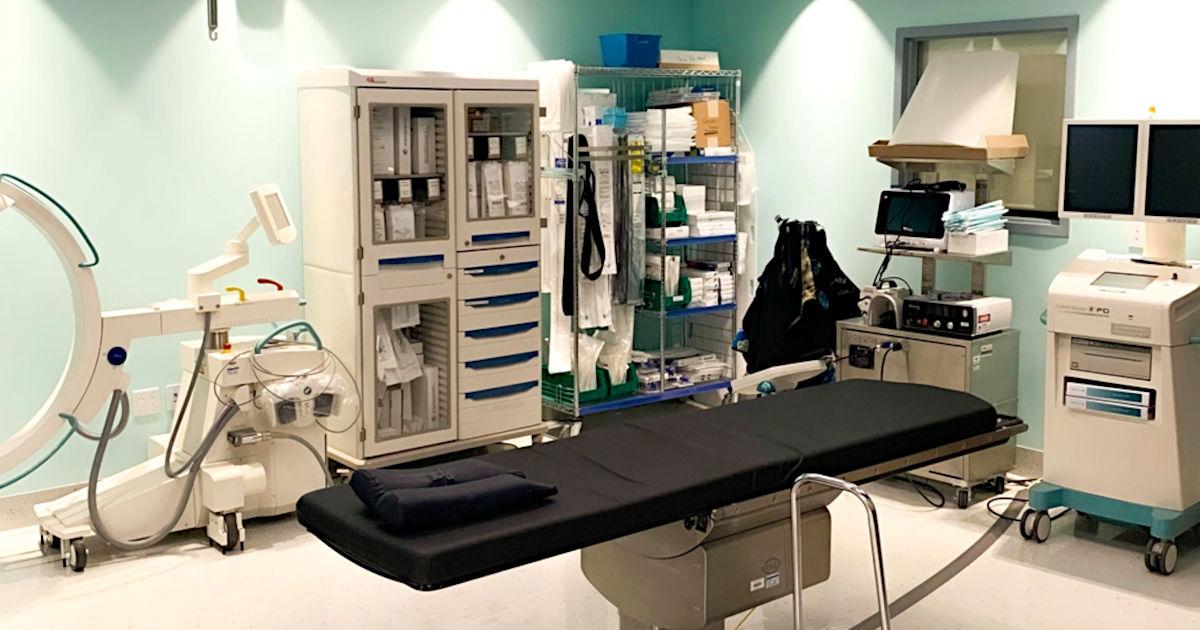
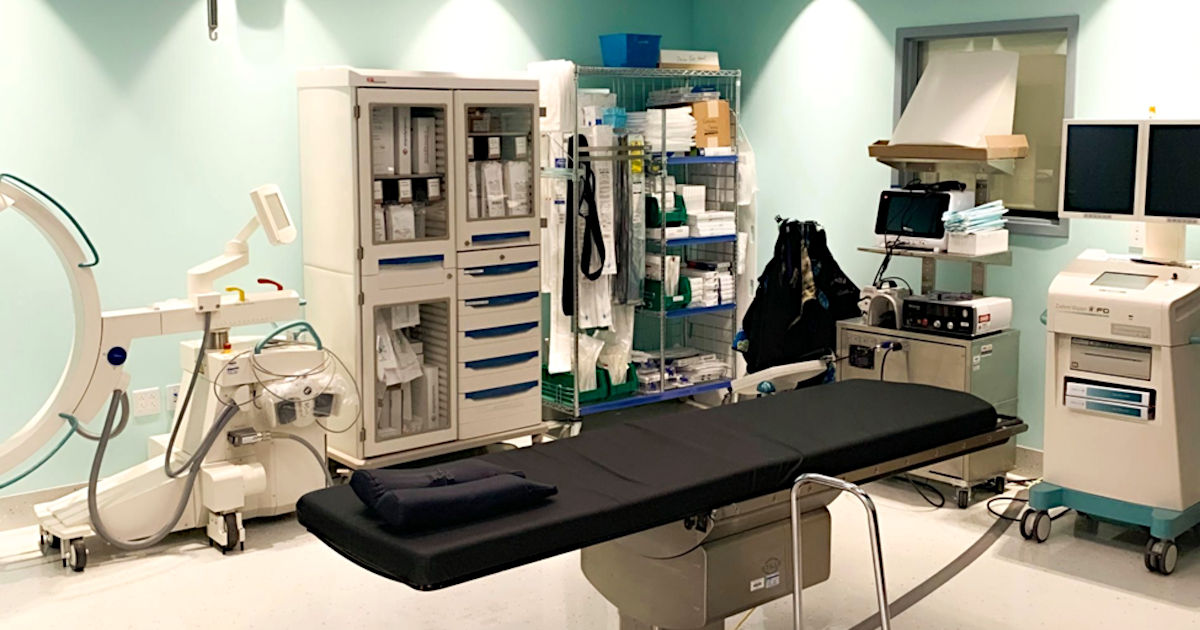
Photo:  Medical Imaging and Therapeutics, surgical suite for minimally invasive procedures


Virtual Road Show Series – Wednesday April 21 @ 1:00pm EST

Join PDS Biotechnology CEO Frank Bedu-Addo, CMO Lauren Wood, and CFO Seth Van Voorhees for this exclusive corporate presentation, followed by a Q & A session moderated by Robert LeBoyer, Noble’s senior research analyst, featuring questions taken from the audience. Registration is free and open to all investors, at any level.

Register Now  |  View All Upcoming Road Shows


Stay up to date. Follow us:


Stay up to date. Follow us:

Lineage Cell Therapeutics (LCTX) – Announces Worldwide License Agreement With Immunomic Therapeutics


Lineage Announces Worldwide License Agreement With Immunomic Therapeutics For An Allogeneic Cell-Based Cancer Immunotherapy Based On Its Vac Platform


  • Lineage to Receive $2 Million Upfront and up to $67 Million in Development and Commercial Milestones Plus Royalties
  • Partnership Leverages the VAC Allogeneic Cancer Immunotherapy Vaccine Platform and Immunomic’s Proprietary Tumor Associated Antigen to Generate a Novel Oncology Product Candidate
  • Immunomic Will be Responsible for Future Clinical Development and Commercialization Costs

CARLSBAD, Calif.–(BUSINESS WIRE)–Apr. 20, 2021– 

Lineage Cell Therapeutics, Inc.
 (NYSE American and TASE: LCTX), a clinical-stage biotechnology company developing novel cell transplants for serious medical conditions, today announced a worldwide license and development collaboration agreement with 

Immunomic Therapeutics, Inc.
, (“ITI”), a privately-held clinical-stage biotechnology company pioneering the study of nucleic acid immunotherapy platforms. The collaboration will generate a novel product candidate derived from Lineage’s VAC allogeneic cancer immunotherapy platform and targeting a proprietary Tumor Associated Antigen (TAA) construct provided by ITI, for the treatment of glioblastoma multiforme (GBM). Lineage and ITI will collaborate in the manufacturing and clinical development of a novel VAC product candidate. Following the full development and delivery of Current Good Manufacturing Practice (cGMP) VAC product material, ITI will assume full and independent clinical and commercial responsibility and further advancement of the program. Under the terms of the agreement, Lineage will be entitled to upfront payments totaling 
$2 million anticipated in the first year and up to 
$67 million in development and commercial milestones across multiple indications and territories. Lineage also will be eligible to receive royalties up to 10% on net sales of future products.

“The VAC platform provides us with the opportunity to generate a broad pipeline of product candidates, each targeting a different type of cancer,” stated  Brian Culley, Lineage CEO. “This collaboration represents the first of many partnerships we hope to enter into with our platform and we believe it helps further validate VAC as a promising new therapeutic vaccine platform. Our objective is to leverage our technology to generate additional VAC-derived cell therapies for our pipeline, as well as in collaboration with partners, capitalizing on the strength of Lineage’s recent manufacturing and cell transplant success. These alliances also will diversify our oncology pipeline across more programs, providing new opportunities for success without the financial burden of independent development. We appreciate ITI selecting our antigen delivery platform for this collaboration and look forward to a productive partnership on this new VAC-derived product candidate. We also are eager to collaborate with additional partners on future versions of VAC.”

“We’re very pleased to collaborate with Lineage, a well-recognized cell therapy company, to expand our pipeline with the development of a novel product candidate to treat GBM,” commented Dr.  William Hearl, CEO of ITI. “Over the last several years, ITI has invested significant capital and development resources to identifying multiple novel paths forward in GBM. By teaming up with Lineage, we are hoping to expand our efforts in this difficult to treat indication and look forward to the benefit that the VAC immunotherapy platform can bring to our antigen constructs.”

About Glioblastoma multiforme (GBM)

Glioblastoma multiforme (GBM) (also called glioblastoma) is a fast-growing glioma that develops from star-shaped glial cells (astrocytes and oligodendrocytes) that support the health of the nerve cells within the brain. GBM is often referred to as a grade IV astrocytoma. These are the most invasive type of glial tumors, rapidly growing and commonly spreading into nearby brain tissue. GBMs can arise in the brain “de novo” or evolve from lower-grade astrocytomas or oligodendrogliomas. In adults, GBM occurs most often in the cerebral hemispheres, especially in the frontal and temporal lobes of the brain. GBM is a devastating brain cancer that typically results in death in the first 15 months after diagnosis, with only 25% of glioblastoma patients surviving more than one year, and only 5% of patients surviving more than five years.

About VAC2

VAC2 is an allogeneic, or non-patient specific “off-the-shelf,” cancer vaccine product candidate designed to stimulate patient immune responses to an antigen commonly expressed in cancerous cells but not in normal adult cells. VAC2, which is produced from a pluripotent cell technology using a directed differentiation method, is comprised of a population of nonproliferating mature dendritic cells. As the most potent type of antigen presenting cell in the body, dendritic cells instruct the body’s immune system to attack and eliminate harmful pathogens and unwanted cells. Because the tumor antigen is loaded exogenously into the dendritic cells prior to administration, VAC2 is a platform technology that can be modified to carry selected antigens, including patient-specific tumor neo-antigens or viral antigens. VAC2 is currently being tested in a Phase 1 study in adult patients with non-small cell lung cancer (NSCLC) in the advanced and adjuvant settings (NCT03371485), conducted by 
Cancer Research UK.

About Immunomic Therapeutics, Inc.

Immunomic Therapeutics, Inc. (ITI) is a privately-held, clinical stage biotechnology company pioneering the development of vaccines through its investigational proprietary technology platform, UNiversal Intracellular Targeted Expression (UNITE), which is designed to utilize the body’s natural biochemistry to develop vaccines that have the potential to generate broad immune responses. The UNITE platform has a robust history of applications in various therapeutic areas, including infectious diseases, oncology, allergy and autoimmune diseases. ITI is primarily focused on applying the UNITE platform to oncology, where it could potentially have broad applications, including targeting viral antigens, cancer antigens, neoantigens and producing antigen-derived antibodies as biologics. In 2020, an investment of over 
$77M by 
HLB Co., LTD, a global pharmaceutical company, enabled ITI to accelerate application of its immuno-oncology platform, in particular to glioblastoma multiforme, and rapidly advance other key candidates in the pipeline, including the most recent initiative into infectious diseases with development of its vaccine candidate for COVID-19. The Company has built a large pipeline from UNITE with eight oncology programs, multiple animal health programs and a SARS-CoV-2 program to prevent and treat COVID-19. ITI has entered into a significant allergy partnership with Astellas Pharma and has formed several academic collaborations with leading 
Immuno-oncology researchers at 
Duke University and the 
University of Florida. ITI maintains its headquarters in 
Rockville, Maryland. For more information, please visit www.immunomix.com.

About Lineage Cell Therapeutics, Inc. 

Lineage Cell Therapeutics is a clinical-stage biotechnology company developing novel cell therapies for unmet medical needs. Lineage’s programs are based on its robust proprietary cell-based therapy platform and associated in-house development and manufacturing capabilities. With this platform Lineage develops and manufactures specialized, terminally differentiated human cells from its pluripotent and progenitor cell starting materials. These differentiated cells are developed to either replace or support cells that are dysfunctional or absent due to degenerative disease or traumatic injury or administered as a means of helping the body mount an effective immune response to cancer. Lineage’s clinical programs are in markets with billion dollar opportunities and include three allogeneic (“off-the-shelf”) product candidates: (i) OpRegen®, a retinal pigment epithelium transplant therapy in Phase 1/2a development for the treatment of dry age-related macular degeneration, a leading cause of blindness in the developed world; (ii) OPC1, an oligodendrocyte progenitor cell therapy in Phase 1/2a development for the treatment of acute spinal cord injuries; and (iii) VAC, an allogeneic dendritic cell therapy platform for immuno-oncology and infectious disease, currently in clinical development for the treatment of non-small cell lung cancer. For more information, please visit www.lineagecell.com or follow the Company on Twitter @LineageCell.

Forward-Looking Statements

Lineage cautions you that all statements, other than statements of historical facts, contained in this press release, are forward-looking statements. Forward-looking statements, in some cases, can be identified by terms such as “believe,” “may,” “will,” “estimate,” “continue,” “anticipate,” “design,” “intend,” “expect,” “could,” “plan,” “potential,” “predict,” “seek,” “should,” “would,” “contemplate,” project,” “target,” “tend to,” or the negative version of these words and similar expressions. Such statements include, but are not limited to, statements relating to compensation to Lineage under its license agreement with ITI, the potential of the VAC platform and product candidates derived from the platform, Lineage’s plans to advance the VAC platform and expand its application, including through partnerships. Forward-looking statements involve known and unknown risks, uncertainties and other factors that may cause Lineage’s actual results, performance or achievements to be materially different from future results, performance or achievements expressed or implied by the forward-looking statements in this press release, including risks and uncertainties inherent in Lineage’s business and other risks in Lineage’s filings with the 
Securities and Exchange Commission (SEC). Lineage’s forward-looking statements are based upon its current expectations and involve assumptions that may never materialize or may prove to be incorrect. All forward-looking statements are expressly qualified in their entirety by these cautionary statements. Further information regarding these and other risks is included under the heading “Risk Factors” in Lineage’s periodic reports with the 
SEC, including Lineage’s most recent Annual Report on Form 10-K filed with the 
SEC and its other reports, which are available from the SEC’s website. You are cautioned not to place undue reliance on forward-looking statements, which speak only as of the date on which they were made. Lineage undertakes no obligation to update such statements to reflect events that occur or circumstances that exist after the date on which they were made, except as required by law.

Lineage Cell Therapeutics, Inc. IR
Ioana C. Hone
([email protected])
(442) 287-8963

Solebury Trout IR
Gitanjali Jain Ogawa
([email protected])
(646) 378-2949

Russo Partners – Media Relations
Nic Johnson or  David Schull
[email protected]
[email protected]
(212) 845-4242

Source: 
Lineage Cell Therapeutics, Inc.

electroCore Inc. (ECOR) – Announces Exclusive Distribution Agreement with East Agency For Qatar


electroCore, Inc. Announces Exclusive Distribution Agreement with East Agency For Qatar


ROCKAWAY, NJ
April 20, 2021 (GLOBE NEWSWIRE) —  electroCore, Inc. (Nasdaq: ECOR), a commercial-stage bioelectronic medicine company, today announced it has entered into an agreement with East Agency to serve as the exclusive distributor of the gammaCore Sapphire™ non-invasive vagus nerve stimulator (nVNS) to patients suffering from primary headache disorders in 
Qatar.

“East Agency is a dedicated healthcare company focusing on high-end technologies and innovations targeting the Qatari market, and the addition of such an innovative technology in electroCore’s nVNS therapy is a matter of pride for us” said Mohammed Abdul Moqeeth, Head of the 
Medical Division of East Agency. “nVNS therapy can save patients from traumatic situations with no present solutions and it is always exciting to offer solutions rather than just products. 
East Agency is determined to honor its commitment to establish gammaCore in the region.”

“We are excited to be working with 
East Agency as we bring our nVNS therapy to the 
Middle East region initially in the State of Qatar” said Iain Strickland, electroCore’s Vice President of European Operations. “East Agency is experienced in introducing innovative medical technologies within 
Qatar and we look forward to supporting them in introducing our nVNS therapy, gammaCore Sapphire, in the region.”

The initial term of the agreement is three years, and it contains customary terms and conditions, including minimum purchase commitments.

        
About East Agency

East Agency was founded in 1997 as a sister concern of 
AlAli Holdings. The company is privately owned and has diversified business activities marking its presence in almost every sector of the medical industry.

East Agency has been providing quality healthcare services to 
Qatar in government, Public and Private sectors dealing in Dental, Medical Devices, Hospital consumables, Pharma, Derma, Lab Chemicals and Diagnostic Equipment & Reagents.

For more information, visit http://medical.eastagency.com/about-us.html

About electroCore, Inc.

electroCore, Inc. is a commercial stage bioelectronic medicine company dedicated to improving patient outcomes through its platform non-invasive vagus nerve stimulation therapy initially focused on the treatment of multiple conditions in neurology. The company’s current indications are for the preventative treatment of cluster headache and migraine and acute treatment of migraine and episodic cluster headache.

For more information, visit www.electrocore.com.

About gammaCoreTM

gammaCoreTM (nVNS) is the first non-invasive, hand-held medical therapy applied at the neck as an adjunctive therapy to treat migraine and cluster headache through the utilization of a mild electrical stimulation to the vagus nerve that passes through the skin. Designed as a portable, easy-to-use technology, gammaCore can be self-administered by patients, as needed, without the potential side effects associated with commonly prescribed drugs. When placed on a patient’s neck over the vagus nerve, gammaCore stimulates the nerve’s afferent fibers, which may lead to a reduction of pain in patients.

gammaCore is FDA cleared in the United States for adjunctive use for the preventive treatment of cluster headache in adult patients, the acute treatment of pain associated with episodic cluster headache in adult patients, and the acute and preventive treatment of migraine in adolescent (ages 12 and older) and adult patients. gammaCore is CE-marked in the European Union for the acute and/or prophylactic treatment of primary headache (Migraine, Cluster Headache, Trigeminal Autonomic Cephalalgias and Hemicrania Continua) and Medication Overuse Headache in adults.

  • gammaCore is contraindicated for patients with:
    • An active implantable medical device, such as a pacemaker, hearing aid implant, or any implanted electronic device
    • A metallic device, such as a stent, bone plate, or bone screw, implanted at or near the neck
    • An open wound, rash, infection, swelling, cut, sore, drug patch, or surgical scar(s) on the neck at the treatment location
  • Safety and efficacy of gammaCore have not been evaluated in the following patients:
    • Patients diagnosed with narrowing of the arteries (carotid atherosclerosis)
    • Patients who have had surgery to cut the vagus nerve in the neck (cervical vagotomy)
    • Pediatric
    • Patients (younger than 12 years)
    • Pregnant women
    • Patients with clinically significant hypertension, hypotension, bradycardia, or tachycardia

Please refer to the gammaCore Instructions for Use for all of the important warnings and precautions before using or prescribing this product.

Forward-Looking Statements

This press release and other written and oral statements made by representatives of electroCore may contain forward-looking statements within the meaning of the Private Securities Litigation Reform Act of 1995. Such forward-looking statements include, but are not limited to, statements about electroCore’s business prospects and clinical and product development plans; its pipeline or potential markets for its technologies; the timing, outcome and impact of regulatory, clinical and commercial developments; the Company’s business prospects in 
Qatar and other new markets and other statements that are not historical in nature, particularly those that utilize terminology such as “anticipates,” “will,” “expects,” “believes,” “intends,” other words of similar meaning, derivations of such words and the use of future dates. Actual results could differ from those projected in any forward-looking statements due to numerous factors. Such factors include, among others, the ability to raise the additional funding needed to continue to pursue electroCore’s business and product development plans, the inherent uncertainties associated with developing new products or technologies, the ability to commercialize gammaCore™, the potential impact and effects of COVID-19 on the business of electroCore, electroCore’s results of operations and financial performance, and any measures electroCore has and may take in response to COVID-19 and any expectations electroCore may have with respect thereto, competition in the industry in which electroCore operates and overall market conditions. Any forward-looking statements are made as of the date of this press release, and electroCore assumes no obligation to update the forward-looking statements or to update the reasons why actual results could differ from those projected in the forward-looking statements, except as required by law. Investors should consult all of the information set forth herein and should also refer to the risk factor disclosure set forth in the reports and other documents electroCore files with the 
SEC available at www.sec.gov.


Investors:
Rich CockrellCG Capital
404-736-3838
[email protected]

or

Media Contact:
Summer Diaz
electroCore
816-401-6333
[email protected]

Genprex (GNPX) – Genprex to Receive Inaugural License of the Year Award from University of Pittsburgh Innovation Institute


Genprex to Receive Inaugural “License of the Year” Award from University of Pittsburgh Innovation Institute in Recognition of Advances Made with Gene Therapy Program in Diabetes


Groundbreaking, potentially curative gene therapy shown to transform alpha cells in the pancreas into functional beta-like cells is potentially applicable to both Type 1 and Type 2 diabetes 

AUSTIN, Texas — (April 20, 2021) — Genprex, Inc. (“Genprex” or the “Company”) (NASDAQ: GNPX), a clinical-stage gene therapy company focused on developing life-changing therapies for patients with cancer and diabetes, announces today that the Company has been selected to receive the inaugural “License of the Year” award from the University of Pittsburgh Innovation Institute (UPII) in recognition of the advances made with its license from University of Pittsburgh toward progressing the development of its gene therapy for diabetes.  

In February 2020, Genprex signed an exclusive license agreement with the University of Pittsburgh for an innovative gene therapy technology developed by lead researcher, George Gittes, M.D. at the Rangos Research Center at the University of Pittsbugh Medical Center (“UPMC”) Children’s Hospital. The diabetes gene therapy candidate, GPX-002, which is being evaluated in preclinical studies, reprograms alpha cells in the pancreas into functional beta-like cells, thereby replenishing levels of insulin and providing the potential to cure the disease. The novel infusion is by means of an endoscopic procedure that delivers Pdx1 and MafA genes to the pancreas. The genes express proteins that transform alpha cells in the pancreas into functional beta-like cells, which can produce insulin but are distinct enough from beta cells to evade the body’s immune system.  

“We thank the UPII for acknowledging the breakthrough work of Dr. George Gittes and his team at the Rangos Research Center at UPMC Children’s Hospital of Pittsburgh, whose efforts have produced this highly innovative therapeutic approach to treating diabetes that could replace the need for insulin replacement therapy and ultimately lead to a cure of this devastating illness afflicting tens of millions of people around the world,” said Rodney Varner, President and Chief Executive Officer of Genprex. “We are honored to receive this recognition, considering the great number of cutting-edge technologies coming out of this distinguished university and research center. We thank UPII for bestowing this honor on our gene therapy license with Dr. Gittes and the Rangos Research Center and applaud them for the groundbreaking gene therapy research being conducted at this esteemed institution.” 

The “Celebration of Innovation” awards ceremony will be held virtually on April 22, 2021 on the Pitt Innovation Institute YouTube channel at 4:30 p.m ET. 

GPX-002 has been tested in vivo in mice and nonhuman primates. In studies in non-obese diabetic mice, a model of Type 1 autoimmune diabetes, the gene therapy approach restored normal blood glucose levels for an extended period of time, typically around four months. According to the researchers, the duration of restored blood glucose levels in mice could potentially translate to decades in humans. If successful, this gene therapy could eliminate the need for insulin replacement therapy for diabetic patients. According to the U.S. Center for Disease Control, 34.2 million Americans, or approximately 10.5% of the population, have diabetes.

About Genprex, Inc.

Genprex, Inc. is a clinical-stage gene therapy company focused on developing life-changing therapies for patients with cancer and diabetes. Genprex’s technologies are designed to administer disease-fighting genes to provide new therapies for large patient populations with cancer and diabetes who currently have limited treatment options. Genprex works with world-class institutions and collaborators to develop drug candidates to further its pipeline of gene therapies in order to provide novel treatment approaches. The Company’s lead product candidate, REQORSA™ (quaratusugene ozeplasmid), is being evaluated as a treatment for non-small cell lung cancer (NSCLC). REQORSA has a multimodal mechanism of action that has been shown to interrupt cell signaling pathways that cause replication and proliferation of cancer cells; re-establish pathways for apoptosis, or programmed cell death, in cancer cells; and modulate the immune response against cancer cells. REQORSA has also been shown to block mechanisms that create drug resistance. In January 2020, the U.S. Food and Drug Administration granted Fast Track Designation for REQORSA for NSCLC in combination therapy with AstraZeneca’s Tagrisso® (osimertinib) for patients with EFGR mutations whose tumors progressed after treatment with TagrissoFor more information, please visit the Company’s web site at www.genprex.com or follow Genprex on TwitterFacebook and LinkedIn.

Cautionary Language Concerning Forward-Looking Statements 

Statements contained in this press release regarding matters that are not historical facts are “forward-looking statements” within the meaning of the Private Securities Litigation Reform Act of 1995. These forward-looking statements are made on the basis of the current beliefs, expectations and assumptions of management, are not guarantees of performance and are subject to significant risks and uncertainty. These forward-looking statements should, therefore, be considered in light of various important factors, including those set forth in Genprex’s reports that it files from time to time with the Securities and Exchange Commission and which you should review, including those statements under “Item 1A – Risk Factors” in Genprex’s Annual Report on Form 10-K.

Because forward-looking statements are subject to risks and uncertainties, actual results may differ materially from those expressed or implied by such forward-looking statements. Such statements include, but are not limited to, statements regarding: the timing and success of Genprex’s clinical trials and regulatory approvals; the effect of Genprex’s product candidates, alone and in combination with other therapies, on cancer and diabetes;  Genprex’s future growth and financial status; Genprex’s commercial and strategic partnerships including the scale up of the manufacture of its product candidates; and Genprex’s intellectual property and licenses. 

These forward-looking statements should not be relied upon as predictions of future events and Genprex cannot assure you that the events or circumstances discussed or reflected in these statements will be achieved or will occur. If such forward-looking statements prove to be inaccurate, the inaccuracy may be material. You should not regard these statements as a representation or warranty by Genprex or any other person that Genprex will achieve its objectives and plans in any specified timeframe, or at all. You are cautioned not to place undue reliance on these forward-looking statements, which speak only as of the date of this press release. Genprex disclaims any obligation to publicly update or release any revisions to these forward-looking statements, whether as a result of new information, future events or otherwise, after the date of this press release or to reflect the occurrence of unanticipated events, except as required by law.

Genprex, Inc.
(877) 774-GNPX (4679)

Investor Relations
GNPX Investor Relations
(877) 774-GNPX (4679) ext. #2
[email protected]

Media Contact
Genprex Media Relations
(877) 774-GNPX (4679) ext. #3
[email protected]

Capstone Turbine (CPST) – Saved End-Use Customers Over $217 Million In Energy Costs And Approximately 397000 Tons Of Carbon


Capstone Turbine Announces That In Fiscal Year 2021, It Estimates It Saved End-Use Customers Over $217 Million In Energy Costs And Approximately 397,000 Tons Of Carbon


Special Company Announcement Is Planned in Celebration of Earth Day, April 22, 2021

VAN NUYS, CA / ACCESSWIRE / April 20, 2021 / Capstone Turbine Corporation (www.capstoneturbine.com) (NASDAQ:CPST) (“Capstone” or the “Company”), the world’s leading manufacturer of clean technology, microturbine energy systems, announced today that in Fiscal 2021, which was the 12 months ending March 31, 2021, the Company estimates it saved its end-use customers over $217 million in annual energy costs and helped them reduce carbon emissions by approximately 397,000 tons.

Over its 20-year history, Capstone has shipped over 10,000 units to 83 countries. A single Capstone-powered combined heat and power (CHP) system can provide customers with an estimated 40% in annual energy savings while simultaneously, meaningfully lowering their carbon footprint. In the last three years alone, the Company has provided customers with an estimated total savings of $698 million in annual energy costs and carbon reductions of approximately 1,115,100 tons.

Not only is Capstone committed to saving customers money and helping them achieve their carbon reduction goals through dramatically improved energy efficiency, the microturbine technology provides much needed energy resiliency. As the world faces the effects of climate change, this will be an important benefit for companies and communities moving forward.

“The need to shift to greener energy solutions has never been more evident than it is today. In fact, there is a strong argument to be made for a global green recovery from the COVID-19 pandemic,” said Darren Jamison, President and Chief Executive Officer of Capstone Turbine. “In the true spirit of Earth Day 2021, we are proud to do our part by providing energy saving products and services that not only help customers save money, they help to save the planet.”

Mr. Jamison continued, “We have only scratched the surface of meeting the efficient energy needs of customers worldwide. In fact, we will soon be announcing Company changes on Earth Day, April 22, 2021, that reflect our continued business evolution, including development efforts that we are undertaking to become a highly trusted energy partner to our valued end-use customers.”

“I believe businesses will increasingly look at improving their operations from an environmental, social and governance (ESG) perspective so that they become more socially conscious, especially as investors and customers are beginning to screen companies for their stance on these issues before potentially investing or making product buying decisions,” added Mr. Jamison.

Kirk Petty, Capstone’s Vice President of Manufacturing, said, “At Capstone, the products and services we produce enable our end-use customers to reduce their carbon footprint via lower air emissions, all while lowering their overall operational costs. In our product design, sourcing, manufacturing and aftermarket processes, we apply the same guiding principles. We focus on reducing our own environmental footprint through waste reduction efforts, recycling and refurbishment (remanufacturing) efforts, lean manufacturing techniques, and reducing energy consumption in our key production processes. We are continually monitoring and looking at ways to innovate and improve our overall carbon footprint.”

About Capstone Turbine Corporation
Capstone Turbine Corporation (www.capstoneturbine.com) (NASDAQ:CPST) is the world’s leading producer of highly efficient, low-emission, resilient microturbine energy systems. Capstone microturbines serve multiple vertical markets worldwide, including natural resources, energy efficiency, renewable energy, critical power supply, transportation and microgrids. Capstone offers a comprehensive product lineup via our direct sales team, as well as our global distribution network. Capstone provides scalable solutions from 30 kWs to 10 MWs that operate on a variety of fuels and are the ideal solution for today’s multi-technology distributed power generation projects.

For customers with limited capital or short-term needs, Capstone offers rental systems; for more information, contact: [email protected]. To date, Capstone has shipped over 10,000 units to 83 countries and in FY20, saved customers an estimated $219 million in annual energy costs and approximately 368,000 tons of carbon.

For more information about the Company, please visit www.capstoneturbine.com. Follow Capstone Turbine on TwitterLinkedInInstagram, Facebook and YouTube.

Cautionary Note Regarding Forward-Looking Statements
This release and the Company’s presentation contains forward-looking statements as defined in the Private Securities Litigation Reform Act of 1995, including statements regarding expectations for green initiatives and execution on the Company’s growth strategy and other statements regarding the Company’s expectations, beliefs, plans, intentions, and strategies of the Company. The Company has tried to identify these forward-looking statements by using words such as “expect,” “anticipate,” “believe,” “could,” “should,” “estimate,” “intend,” “may,” “will,” “plan,” “goal” and similar terms and phrases, but such words, terms and phrases are not the exclusive means of identifying such statements. Actual results, performance and achievements could differ materially from those expressed in, or implied by, these forward-looking statements due to a variety of risks, uncertainties and other factors, including, but not limited to, the following: the ongoing effects of the COVID-19 pandemic; the availability of credit and compliance with the agreements governing the Company’s indebtedness; the Company’s ability to develop new products and enhance existing products; product quality issues, including the adequacy of reserves therefor and warranty cost exposure; intense competition; financial performance of the oil and natural gas industry and other general business, industry and economic conditions; the Company’s ability to adequately protect its intellectual property rights; and the impact of pending or threatened litigation. For a detailed discussion of factors that could affect the Company’s future operating results, please see the Company’s filings with the Securities and Exchange Commission, including the disclosures under “Risk Factors” in those filings. Except as expressly required by the federal securities laws, the Company undertakes no obligation to update or revise any forward-looking statements, whether as a result of new information, changed circumstances or future events or for any other reason.

“Capstone” and “Capstone Microturbine” are registered trademarks of Capstone Turbine Corporation. All other trademarks mentioned are the property of their respective owners.

CONTACT:
Capstone Turbine Corporation
Investor and investment media inquiries:
818-407-3628
[email protected]

SOURCE: Capstone Turbine Corporation

Bunker Hill Mining (BHLL)(BNKR:CA) – Announces Robust Restart PEA


Bunker Hill Announces Robust Restart PEA: $101m Npv, 46% Irr, 2.5 Year Payback, $42m Initial Capex, $20m Average Annual Fcf Over 10 Years


HIGHLIGHTS:

  • Attractive returns: $101 million NPV, 46% IRR, and 2.5 year payback at $1.15/lb Zn, $0.90/lb Pb, $20.00/oz Ag
  • Low-cost, rapid restart based on $42 million initial capital expenditures over a 15-month period
  • Robust annual average free cash flow of $20 million and EBITDA of $30 million over a 10-year mine life
  • Competitive cost position with all-in sustaining costs of $0.65 per payable pound of zinc, net of by-products
  • Low environmental footprint with minimal surface disturbance and long-term water management solution
  • Significant positive economic impact for the Shoshone County, Idaho community
  • Life of mine zinc equivalent production of 912 million pounds at a zinc equivalent grade of 9.3%, including over 550 million pounds of zinc, 290 million pounds of lead, and 7 million ounces of silver
  • Key upsides include ongoing exploration focused on high-grade silver and resource expansion
  • Executive Chairman Richard Williams, CEO Sam Ash, and CFO David Wiens to host live interactive 6ix virtual investor event on Wednesday, April 21 st at 11:00AM ET / 8:00AM PT to discuss the PEA results and next steps. Investors are invited to register for this event at: LINK

TORONTO, April 20, 2021 (GLOBE NEWSWIRE) — Bunker Hill Mining Corp. (CSE: BNKR) (“Bunker Hill” or the “Company) is pleased to report the results of its Preliminary Economic Assessment (“PEA”) for the Bunker Hill Mine in Idaho’s Silver Valley, USA.

The PEA contemplates a $42 million initial capital cost (including 20% contingency) to rapidly restart the mine, generating approximately $20 million of annual average free cash flow over a 10-year mine life, and producing over 550 million pounds of zinc, 290 million pounds of lead, and 7 million ounces of silver at all-in sustaining costs (“AISC”) of $0.65 per payable pound of zinc (net of by-products).

Sam Ash, CEO of Bunker Hill, stated: “Our PEA confirms that by maximizing the use of existing resources, partnerships and infrastructure, the Bunker Hill Mine has the potential to be re-started rapidly as a low-cost, long life, sustainable operation. Pleasingly for our investors, the robust financial returns in the PEA, including a $101 million NPV, 46% IRR, and 2.5 year payback, do not include the significant upside to come from the on-going high-grade silver exploration which we expect to further increase cash flow margins. Based an annual average free cash flow of $20 million at metal prices below spot levels, we can self-fund these exploration efforts while continuing to grow the company. We look forward to progressing further technical studies and project finance discussions over the coming months.”

The early and robust cash-flow generated by this restart plan is designed to deliver optimal returns to all stakeholders, creating 150-200 new mining and administrative jobs within the local community, ensuring long-term environmental-management partnerships with the U.S. EPA and IDEQ, and driving the long-term development of the mine’s resources for many years to come.

The PEA was prepared in accordance with National Instrument 43-101 – Standards of Disclosure for Mineral Projects (“NI 43-101”). MineTech USA, LLC (“MineTech”) developed the mine infrastructure, capital expenditures and operating expenditures related portions of the PEA as well as portions of the mine plan and operating schedules in coordination with Resource Development Associates Inc. (“RDA”) and Pro Solv Consulting, LLC. The Company plans to file the completed PEA technical report on SEDAR within 45 days of this press release and make it available on the Company’s website. All “t” references in this press release are to short tons and “$” references are in U.S. dollars.

Table 1 summarizes the key findings of the PEA.

Table 1: PEA Summary

  YEARS

1 – 5
  YEARS

6 – 10
  LIFE OF

MINE
 
       
Metal prices      
Zinc ($/lb) 1.15   1.15   1.15  
Lead ($/lb) 0.90   0.90   0.90  
Silver ($/oz) 20.00   20.00   20.00  
       
Mine plan      
Total mineralized material mined (kt) 2,708   2,651   5,460  
Average annual mineralized material mined (kt) 542   530   536  
Average zinc grade (%) 6.5 % 4.5 % 5.5 %
Average lead grade (%) 2.2 % 3.7 % 2.9 %
Average silver grade (oz/t) 1.0   2.1   1.5  
Average zinc equivalent grade (%) (1) 9.3 % 9.4 % 9.3 %
       
Total Production over LOM (2)      
Zinc produced (klbs) 326,273   218,138   555,977  
Lead produced (klbs) 109,701   176,130   290,157  
Silver produced (koz) 2,439   4,849   7,401  
Zinc equivalent produced (klbs) (1) 454,538   440,315   911,773  
       
Average Annual Production (2)      
Zinc produced (klbs) 65,255   43,628   54,441  
Lead produced (klbs) 21,940   35,226   28,583  
Silver produced (koz) 488   970   729  
Zinc equivalent produced (klbs) (1) 90,908   88,063   89,485  
       
Average Unit Costs over LOM      
Opex – total ($/t) 83   74   78  
Sustaining capex ($/t) 12   16   14  
Cash costs ($/lb Zn payable) (3) 0.67   0.10   0.49  
AISC: ($/lb Zn payable) (3) 0.78   0.33   0.65  
       
Total Cash Flow over LOM ($’000)      
EBITDA (3) 135,071   162,947   298,018  
Pre-tax free cash flow (3), ) 101,435   131,544   232,978  
Free cash flow (3), ) 86,107   110,391   196,498  
       
Average Annual Cash Flow ($’000)      
EBITDA (3) 27,014   32,589   29,802  
Pre-tax free cash flow (3) 20,287   26,309   23,298  
Free cash flow (3) 17,221   22,078   19,650  
       
Financial Returns      
After-tax NPV (5%) 100,737      
After-tax NPV (8%) 78,355      
After-tax IRR (%) 46.2 %    
Payback (years) 2.5      


(1)   Zinc equivalency calculated using metal prices shown above and based on recovery rates of 91% for Pb and 89% for Ag and 92% for Zn.
(2)   Includes zinc produced in zinc concentrate, lead and silver produced in lead concentrate.
(3)   Cash costs and AISC per payable pound of zinc sold, earnings before interest, taxes, depreciation and amortization (“EBITDA”), pre-tax free cash flow and free cash flow are non-GAAP financial measures. Please see “Cautionary Note Regarding Non-GAAP Measures”.
(4)   Life of mine (“LOM”) includes initial capital expenditures.

The PEA is preliminary in nature and includes Inferred mineral resources that are considered too speculative geologically to have the economic considerations applied to them that would enable them to be categorized as mineral reserves. There is no certainty that the project described in the PEA will be realized. Mineral resources that are not mineral reserves do not have demonstrated economic viability.

Sustainability Impacts

The mine’s development and operations will generate between 150-200 new jobs in Shoshone County that will pay twice the county’s median household income, on average. This has the potential to reduce unemployment in the county by more than ten percent. Procurement by the mine is projected to inject an additional $15 million into the local economy annually.

The mine will achieve carbon neutrality in year one of operations while depositing all waste and tailings underground to maintain a minimal environmental footprint. The production of low porosity paste from tailings will be an integral part of long-term water management. By sealing sulfide and pyrite-rich mineralization with paste, production of acid rock drainage will be reduced substantially and permanently. This will reduce the challenge and cost of water management from year one onward.

Mineral Resource Inventory

The Bunker Hill Mine is located in the historic Coeur d’Alene Mining District in Kellogg, Idaho at the base of Silver Mountain. It was operated from 1885 until 1981 when it was closed due to low metal prices, an extended labor strike, and capital short-falls required to meet new environmental standards. Although attempts were made to modernize and operate the mine until 1991, the mill and smelter facilities were removed and reclaimed along with the tailings impoundment. The underground workings, surface portal and shaft access points remain intact along with the mine office and maintenance complex. Given the historic reserves and existing infrastructure, Bunker Hill management has assessed the mine’s rapid restart potential, which is the subject of today’s published PEA.

The PEA is based on the Bunker Hill Mineral Resource, which was published on March 22, 2021, following the drilling program conducted in 2020 and early 2021 to validate the historical reserves. The PEA includes a mining inventory of 5.5Mt, which represents a portion of the 4.4Mt Indicated mineral resource and 5.6Mt Inferred mineral resource. Given the 10-year mine life, the mine plan has been based on prioritizing higher grade material. The mine production schedule is based on a 5.0% zinc operating cut-off grade and the 3.3% zinc cut-off grade which includes Indicated and Inferred mineral resources.

Table 2: Mineral Resources

Zinc Resources K Tons Pb% Ag opt Zn%
Indicated 4,410 2.00 0.69 5.52
Inferred 4,569 1.67 0.83 5.66
         
Lead-Silver Resources K Tons Pb% Ag opt Zn%
Indicated
Inferred 1,050 7.56 4.28 1.50
         
Total Resources K Tons Pb% Ag opt Zn%
Indicated 4,410 2.00 0.69 5.52
Inferred 5,618 2.77 1.48 4.88

Notes: Mineral resources are reported at a zinc cutoff grade of 3.3%. Mineral resources are not mineral reserves and do not have demonstrated economic viability. There is no certainty that all or any part of the mineral resource will be converted into mineral reserves. Mineral resources are reported in situ and undiluted. Mineral resources meet the reasonable prospects of eventual economic extraction due to the fact that the entire vertical extents of the mineralization have been developed on mining levels every two-hundred feet. Newgard and Quill were being actively exploited and developed prior to the shutdown of mining operations in 1991. High grade capping was applied to the assays prior to grade estimation. Grades are estimated using Inverse Distance Cubed (ID3) interpolation techniques. Grades were estimated into a regularized 5 ft x 5 ft x 5 ft block model. A bulk density of 11.3 cubic feet per ton was applied to the entire mineral resource based upon historic density values from production records at the Bunker Hill Mine. Two-hundred sixty-one (261) drillholes, totaling 29,380-feet, containing 5,720 Pb, Zn and Ag assays were used in the determination of mineralization. Drill hole data was collected on 5-foot composite intervals which resulted in 4,483 composite assays. Additionally, 4,545 actual production car samples and 394 recent channel sample verification samples were used for the resource estimate. Historic mining voids, stopes and development drifting have been accounted for in the mineral resource estimate. For additional information regarding the mineral resources estimate, please refer to the Company’s news release dated March 22, 2021.


Infrastructure Overview and Initial Capital Costs

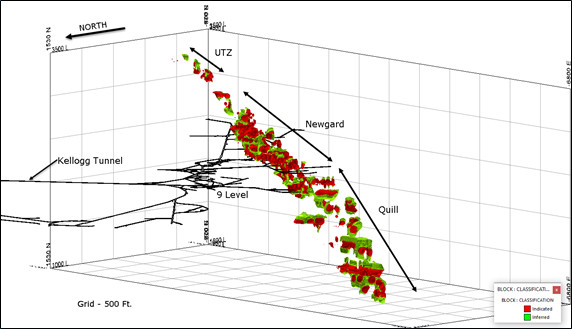
The vast underground workings, surface portals, mine office, maintenance complex, and 9-level shaft access points for the Bunker Hill Mine remain intact. The Kellogg Tunnel (“KT”) portal adjacent to the surface infrastructure connects horizontally by rail to the underground hoisting facilities on 9-level, approximately 9,500 feet to the south. Water seepage above the 9-level drains naturally out of the KT, and laterals below the 9-level must be dewatered prior to production commencement. All water is collected at the portal and sent for treatment. The underground workings are extensive, and only the infrastructure germane to the opening of the mine is being described in the PEA. Several shafts and raises connect to the 9-level and its underground infrastructure is central to the mine and home to the #1 and #2 hoistrooms, material bins, substations and shops. Shafts at the mine are inclined rail; the #1 being the production shaft and #2 materials and personnel.

The mine is currently accessed by the KT and 5-level portals located just above the Town of Wardner.

The utilization of this pre-existing infrastructure allows for a restart of the mine with an initial capital investment of approximately $42 million, net of pre-commercial production revenue, as detailed in the Table below.   Each of the initial capital items listed (excluding pre-production revenue) include a 20% contingency.

Table 3: Initial Capital

(in $‘000) Initial Capital  
Process plant 25,440  
Shaft and tunnel rehabilitation 7,380  
Development 6,446  
Other 4,931  
Pre-production revenue (net) (2,162 )
Total 42,034  

Mill capacity and power consumption are based on 1,500 tons per day at 90% availability, a Bond Work Index of 14.5 kW-hrs/t and a 150-mesh grind, which is supported by the preliminary metallurgical work. Capital costs include equipment and installation labor. Metallurgical work is ongoing at Resource Development, Inc. (“RDI”) and the Company is evaluating multiple sourcing alternatives for processing and equipment.

Other life of mine capital improvements include the following, as set forth in the PEA:

  • Connect the 5-level and 9-level with an access ramp
  • Remove and replace Shaft#1 hoist and hoist works
  • Recondition Shaft #2 hoist and hoist works
  • Recondition Shafts #1 and #2; replace the existing rail with a modular track system and associated conveyances
  • Install new mine wide power distribution
  • Install fiber optic and Sentinel communications from the surface to the main underground facilities
  • Install a backfill paste plant on the 5-level; allows efficient access to cement, fly ash and reagents
  • Install a primarily gravity backfill distribution system to active and historical mining areas
  • Recondition the KT and remove existing rail to convert to rubber tire access
  • Introduce rubber tire development to the stopes as required
  • Vertical development for muck passes, escapeways and ventilation
  • Excavations for milling, flotation and backfilling equipment
  • Fan and air control installations
  • Tailings water treatment plant

Mining

The Newgard/Quill resource was designed and scheduled utilizing a traditional overhead cut and fill mining method. The cut and fill stopes are accessed via an incline ramp developed between levels. The ramp provides ventilation, utilities, and secondary escapeway, as well as connecting the entire mine with rubber tire access. Long-hole open stoping (“LHOS”) is also employed similar to the previous mining extraction methods. The LHOS areas are accessed through existing excavations rehabilitated to modern mining standards. Backfill requirements are provided via an underground paste plant and distribution system.

Production commences six months following the start of construction, targeting 200 tons/day (“tpd”) ramping up to 1,500 tpd over a 14-month period. The slow ramp up allows for infrastructure components to be completed and commissioned and to ensure the mine is adequately developed to maintain consistent production. Initially, production will be targeted above the 9-level as the hoists and first 200-foot section of shaft rehabilitation are completed. The mine plan is developed to allow sequential water draw down and shaft rehabilitation between levels as new production horizons are required. This sequencing is continued to the 26-level.

As the mine matures and progresses deeper, the resource transitions from primarily zinc to primarily lead mineralization in Year 9. In Year 8, the mine plan also transitions away from cut and fill production to LHOS for the remainder of the mine life.

Exploration potential is significant throughout the mine. Due to the substantial existing workings, Bunker Hill has the opportunity to delineate specific mineralized zones (zinc or lead) that maximizes cash flow potential depending on commodity pricing.

The mining schedule is presented in the Table below.

Table 4: Mine Schedule

Year Pre-

Prod
 
Year 1 Year 2 Year 3 Year 4 Year 5 Year 6 Year 7 Year 8 Year 9 Year 10   LOM

Total
                           
Mineralized material mined (kt) 101   485   559   556   556   553   555   548   548   548   453     5,460  
                           
Zinc grade (%) 6.2 % 7.0 % 6.2 % 6.9 % 6.3 % 6.4 % 5.8 % 4.6 % 4.2 % 3.5 % 4.3 %   5.5 %
Lead grade (%) 2.4 % 2.7 % 2.3 % 2.0 % 2.1 % 2.2 % 2.3 % 1.8 % 3.8 % 4.2 % 6.7 %   2.9 %
Silver grade (oz/t) 1.3   0.9   0.7   1.1   1.3   1.2   1.1   1.1   2.2   2.8   3.2     1.5  
                           
Zinc eq grade (%) (1) 9.3 % 9.9 % 8.7 % 9.5 % 9.3 % 9.2 % 8.6 % 7.1 % 9.4 % 9.6 % 12.8 %   9.3 %


(1)   Zinc equivalency calculated using metal prices shown above and based on recovery rates of 91% for Pb and 89% for Ag and 92% for Zn.
(2)   Mineral resources are not mineral reserves and do not have demonstrated economic viability.

Processing
 

The PEA envisages a crushing and milling plant to be centrally located on the 9-level. Milled material will then be pumped in slurry to the flotation and paste plant on the 5-level. The flotation plant will generate concentrates which will be transported to surface for shipment. The paste plant will generate paste for geotechnical fill and tailings disposal in open drifts and stopes in the mine. This approach optimizes material transport costs while eliminating the need for surface tailings disposal.

The local utility substation is located next to the mine main offices and supplies power to the mine and other local consumers. The existing power feeds to the mine are scheduled to be replaced prior to full production and the substation will require upgrades by Year 3 to allow for the additional dewatering loads as the mine advances to depth.

A traditional mill grinding circuit followed by zinc and lead flotation circuits is envisioned in the PEA. Payable silver follows the lead and reports to the lead concentrate.

Metallurgical test work with the recent drilling samples is being conducted at RDI. Preliminary results indicate that a conventional polymetallic process flowsheet will be able to produce the marketable grade concentrates. Historical metallurgical results have been used for concentrate recoveries and grade. The results were averaged for the last five years of operation. The lead concentrate, assaying an average 67% Pb and 34 oz/t Ag, is estimated to recover 91% Pb and 89% Ag. The zinc concentrate, assaying 58% Zn, will recover 92% Zn.

The production schedule is presented in the Table below.

Table 5: Production Schedule

Year Pre-

Prod
Year 1 Year 2 Year 3 Year 4 Year 5 Year 6 Year 7 Year 8 Year 9 Year 10   LOM

Total
                           
Zinc concentrate (t) 9,971 53,677 55,214 60,510 55,891 55,978 50,683 39,850 36,297 30,167 31,054   479,290
Lead concentrate (t) 3,229 17,578 17,119 15,049 15,725 16,395 17,079 13,519 28,332 31,133 41,377   216,535
                           
Zinc produced (Zn concentrate) (klbs) 11,566 62,265 64,048 70,191 64,833 64,935 58,792 46,226 42,104 34,993 36,022   555,977
Lead produced (Pb concentrate) (klbs) 4,327 23,554 22,940 20,165 21,071 21,970 22,886 18,115 37,965 41,719 55,445   290,157
Silver produced (Pb concentrate) (koz) 113 379 334 522 636 568 526 549 1,080 1,384 1,311   7,401
                           
Zinc equivalent production (klbs) (1) 16,921 87,290 87,808 95,049 92,378 92,013 85,843 69,946 90,595 91,710 102,221   911,773


(1)   Zinc equivalency calculated using metal prices shown above and based on recovery rates of 91% for Pb and 89% for Ag and 92% for Zn.

Operating Costs
 

Cash costs and AISC per payable pound of zinc sold are non-GAAP financial measures. Please see “Cautionary Note Regarding Non-GAAP Measures”.

Mine operating costs are based on experienced local contract labor and equipment for mining operations. A zero-based efficiency and cost estimate was completed based on current underground contractors’ rates and guidance benchmarked against other like operations. Electrical power costs are based on scheduled projected loads applying an estimated power factor correction and applicable Avista Utilities rates for all projected mine, milling and site operations. Mining costs are based on cut and fill techniques in the Newgard, Quill and UTZ mineral zones, and LHOS in the remaining deposits.

Mill operating costs are within guidance resulting from bench marking similar mill operations in north Idaho. Mine site general and administrative (G&A) costs are determined based on anticipated staffing levels and similar compensation compatible with area salaries.

Annual and LOM cost metrics are presented in the Table below.

Table 6: Operating Costs

Year Year 1 Year 2 Year 3 Year 4 Year 5 Year 6 Year 7 Year 8 Year 9 Year 10   LOM

Total
                         
Mining ($/t) 70 64 62 61 57 61 52 51 50   51     58
Processing ($/t) 15 15 15 15 15 15 15 15 15   15     15
G&A ($/t) 6 6 6 6 6 6 6 6 6   7     6
Opex – total ($/t) 91 84 83 82 78 81 72 72 71   73     78
                         
Sustaining capex ($/t) 14 8 10 9 18 19 15 17 19   9     14
                         
Cash costs ($/lb Zn payable) 0.68 0.75 0.67 0.64 0.61 0.69 0.73 0.14 (0.18 ) (0.60 )   0.49
AISC ($/lb Zn payable) 0.81 0.83 0.76 0.73 0.79 0.90 0.93 0.40 0.17   (0.47 )   0.65

Cash Flow & Valuation

EBITDA, pre-tax cash flow and cash flow are non-GAAP financial measures. Please see “Cautionary Note Regarding Non-GAAP Measures”.

The project is expected to generate pre-tax free cash flow of $191 million over its 10-year mine life and $154 million on an after-tax basis. The Company expects to reinvest a portion of its pre-tax cash flows on its high-grade silver program, which may reduce the tax assumptions accounted for in the project economics. Annual free cash flow increases in later years of the mine plan due to higher silver grades at deeper elevations. The Company’s goal is to significantly increase the free cash flow in earlier years based on its ongoing high-grade silver exploration program.

The financial summary is presented in the Table below.

Table 7: Cash Flow & Valuation

Year (1) (in $‘000) Initial

Capex
Year 1 Year 2 Year 3 Year 4 Year 5 Year 6 Year 7 Year 8 Year 9 Year 10   LOM

Total
                           
Zinc revenue   50,286   62,607   68,612   63,374   63,474   57,469   45,186   41,157   34,206   35,212     521,583  
Lead revenue   17,065   19,614   17,241   18,016   18,784   19,567   15,489   32,460   35,669   47,406     241,311  
Silver revenue   6,014   6,344   9,916   12,076   10,799   9,986   10,426   20,516   26,293   24,917     137,286  
Gross revenue   73,365   88,564   95,769   93,467   93,057   87,022   71,100   94,133   96,168   107,534     900,181  
Smelter charges and freight   (16,360 ) (19,914 ) (21,014 ) (20,082 ) (20,205 ) (18,906 ) (15,050 ) (18,692 ) (18,147 ) (21,048 )   (189,419 )
Net smelter return   57,006   68,650   74,755   73,385   72,851   68,116   56,050   75,440   78,021   86,486     710,762  
Mining costs   (28,048 ) (35,546 ) (34,674 ) (34,057 ) (31,709 ) (33,979 ) (28,424 ) (28,011 ) (27,457 ) (22,981 )   (304,887 )
Processing costs   (5,831 ) (8,132 ) (8,100 ) (8,095 ) (8,052 ) (8,089 ) (7,985 ) (7,985 ) (7,985 ) (6,757 )   (77,011 )
G&A costs   (2,369 ) (3,172 ) (3,171 ) (3,171 ) (3,169 ) (3,171 ) (3,167 ) (3,167 ) (3,167 ) (3,121 )   (30,845 )
EBITDA   20,757   21,800   28,810   28,063   29,922   22,877   16,474   36,277   39,411   53,627     298,018  
Sustaining capex   (5,690 ) (4,480 ) (5,736 ) (5,185 ) (9,888 ) (10,631 ) (7,978 ) (9,501 ) (10,252 ) (4,161 )   (73,503 )
Initial capex (42,034 )                       (42,034 )
Land & salvage value                     8,463     8,463  
Pre-tax free cash flow (42,034 ) 15,067   17,321   23,074   22,878   20,034   12,246   8,495   26,775   29,159   57,929     190,944  
Taxes (319 ) (1,351 ) (2,366 ) (4,129 ) (3,818 ) (3,344 ) (1,283 ) (312 ) (5,896 ) (6,074 ) (7,909 )   (36,800 )
Free cash flow (42,354 ) 13,716   14,954   18,945   19,060   16,690   10,964   8,184   20,879   23,085   50,021     154,144  
                           
Annual metrics –

post initial capex (2)
                         
Gross revenue   98,675   87,973   91,042   96,740   91,548   83,042   76,858   94,642   99,010   80,651     900,181  
EBITDA   28,548   21,397   26,116   30,849   28,161   21,276   21,424   37,060   42,965   40,220     298,018  
Pre-tax free cash flow   22,649   16,017   21,324   23,357   18,087   11,308   13,065   27,371   36,352   43,447     232,978  
Free cash flow   20,707   13,210   17,273   19,658   15,258   10,269   11,358   21,431   29,819   37,516     196,498  
                           
NPV (5%) 100,737                          
NPV (8%) 78,355                          
                           
IRR (%) 46.2 %                        
Payback (years) 2.5                          


(1)   Initial capex period is expressed on a 15 month basis; “Year 1” is expressed on a 9 month basis; all other years expressed on a 12 month basis.
(2)   All metrics expressed on a 12 month basis, beginning after the 15 month initial capex period.

Note: all figures expressed in USD 000’s unless otherwise stated
 

Sensitivities

The tables below summarize the after-tax sensitivities of NPV and IRR, with respect to metal prices and costs.

Table 8: Sensitivities

  Metal Prices Operating & Capital Costs
 
                               
NPV (5%)

($M)
 
    Zinc Price ($/lb)
 
    Operating Costs (+/- %)
    0.95 1.05 1.15 1.25 1.35       -20% -10% 0% 10% 20%  
Lead

Price

($/lb)
 
0.70 10 43 71 98 125   Total Capital Costs

(+/- %)
-20% 183 151 120 89 58  
0.80 29 58 86 113 141   -10% 173 142 110 79 48  
0.90 45 73 101 128 156   0 163 132 101 69 38  
1.00 61 88 116 144 172   10%
 
154 122 91 60 28  
1.10 76 104 131 155 187   20%
 
144 113 81 50 19  
                             
                             
IRR (%)
 
    Zinc Price ($/lb)     Operating Costs (+/- %)
    0.95 1.05 1.15 1.25 1.35       -20% -10% 0% 10% 20%  
Lead

Price

($/lb)
 
0.70 9% 22% 35% 48% 62%   Total Capital Costs

(+/- %)
-20% 94% 79% 63% 47% 32%  
0.80 15% 28% 41% 54% 68%   -10% 82% 68% 54% 40% 25%  
0.90 21% 33% 46 % 60% 73%   0 72% 59% 46 % 33% 20%  
1.00 27% 39% 52% 65% 79%   10% 64% 52% 40% 28% 16%  
1.10 32% 44% 57% 71% 85%   20% 56% 45% 34% 23% 12%  


UPCOMING EVENTS
 

HC Wainwright Mining Conference

Bunker Hill presentation: April 20, 2021 at 1:30PM ET / 10:30AM PT

Join Us: REGISTER NOW

121 Mining Investment Americas

April 27-29, 2021

https://www.weare121.com/121mininginvestment-new-york/

QUALIFIED PERSON

MineTech developed the mine infrastructure, capital expenditures and operating expenditures related portions of the PEA, as well as portions of the mine plan and operating schedules in coordination with RDA and Pro Solv Consulting, LLC. Robert Todd, P.E. is a Principal of MineTech, a registered engineer in Idaho, consultant to the Company and an independent “qualified person” as defined by NI 43-101.

Mr. Scott E. Wilson, CPG, President of RDA and a consultant to the Company, is an independent “qualified person” as defined by NI 43-101 and is acting as the qualified person for the Company. He has reviewed and approved the technical information summarized in this news release.

The qualified persons have verified the information disclosed herein, including the sampling, preparation, security and analytical procedures underlying such information, and are not aware of any significant risks and uncertainties that could be expected to affect the reliability or confidence in the information discussed herein.

ABOUT BUNKER HILL MINING CORP.

Under new Idaho-based leadership, Bunker Hill Mining Corp. intends to sustainably restart and develop the Bunker Hill Mine as the first step in consolidating a portfolio of North American precious-metal assets with a focus on silver. Information about the Company is available on its website, www.bunkerhillmining.com , or under the Company’s profile on SEDAR at www.sedar.com and on EDGAR at www.sec.gov .

For additional information contact: [email protected]

CAUTIONARY STATEMENTS

Certain statements in this news release are forward-looking and involve a number of risks and uncertainties. Such forward-looking statements are within the meaning of that term in Section 27A of the Securities Act of 1933, as amended, and Section 21E of the Securities Exchange Act of 1934, as amended, as well as within the meaning of the phrase ‘forward-looking information’ in the Canadian Securities Administrators’ National Instrument 51-102 – Continuous Disclosure Obligations. Forward-looking statements are not comprised of historical facts. Forward-looking statements include estimates and statements that describe the Company’s future plans, objectives or goals, including words to the effect that the Company or management expects a stated condition or result to occur. Forward-looking statements may be identified by terminology such as “may”, “will”, “could”, “should”, “expect”, “plan”, “anticipate”, “believe”, “intend”, “estimate”, “projects”, “predict”, “potential”, “continue” or other similar expressions concerning matters that are not historical facts.

Since forward-looking statements are based on assumptions and address future events and conditions, by their very nature they involve inherent risks and uncertainties. Although these statements are based on information currently available to the Company, the Company provides no assurance that actual results will meet management’s expectations. Risks, uncertainties and other factors involved with forward-looking information could cause actual events, results, performance, prospects and opportunities to differ materially from those expressed or implied by such forward-looking information. The key risks and uncertainties include, but are not limited to: local and global political and economic conditions; governmental and regulatory requirements and actions by governmental authorities, including changes in government policy, government ownership requirements, changes in environmental, tax and other laws or regulations and the interpretation thereof; developments with respect to the coronavirus disease 2019 (“COVID-19”) pandemic, including the duration, severity and scope of the pandemic and potential impacts on mining operations; and other risk factors detailed from time to time in the Company’s reports filed on SEDAR and EDGAR.

Forward-looking information and statements in this news release include statements concerning, among other things: the potential of the Bunker Hill Mine to be re-started rapidly as a low-cost, long life, sustainable operation based on the results of the PEA; the PEA representing robust financial returns; the potential of the restart plan to create jobs, ensure long-term environmental-management partnerships, and drive the long-term development of the Bunker Hill Mine’s resources; the timing for filing the PEA technical report; the timing, amount and duration of future production; future cash costs and AISC; commodity prices; the estimated capital and operating costs; the Company’s ability to discover new mineralization; the Company’s ability to self-fund high-grade silver exploration efforts to further increase cash flow margins; the timing for the Company’s progression of further technical studies and project finance discussions; potential sustainability impacts based on the results of the PEA, including the Bunker Hill Mine’s development and operations generating new jobs in Shoshone County, with such job creation having the potential to reduce unemployment in the county, procurement by the Bunker Hill Mine injecting additional funds into the local economy annually, and the Bunker Hill Mine achieving carbon neutrality in year one of operations and maintaining a minimal environmental footprint for the LOM; the potential for a reduction in the production of acid rock drainage; the potential for a reduction in the challenge and cost of water management; LOM capital improvements; metal recoveries; the Company’s plans to reinvest a portion of its pre-tax cash flows on its high-grade silver program; the Company’s goal to significantly increase free cash flow in the earlier years of the PEA based on its ongoing high-grade silver exploration program; the estimates of free cash flow, net present value and economic returns from the Bunker Hill Mine based on the results of the PEA; opportunities to increase the economics of the Bunker Hill Mine; our plans and expectations for the Bunker Hill Mine; and the Company’s intentions regarding its objectives, goals or future plans and statements. Factors that could cause actual results to differ materially from such forward-looking information include, but are not limited to: the ability to predict and counteract the effects of COVID-19 on the business of the Company, including but not limited to the effects of COVID-19 on the price of commodities, capital market conditions, restriction on labor and international travel and supply chains; failure to identify mineral resources; failure to convert estimated mineral resources to reserves; the inability to complete a feasibility study which recommends a production decision; the preliminary nature of metallurgical test results; delays in obtaining or failures to obtain required governmental, environmental or other project approvals; political risks; changes in equity markets; uncertainties relating to the availability and costs of financing needed in the future; the inability of the Company to budget and manage its liquidity in light of the failure to obtain additional financing, including the ability of the Company to complete the payments pursuant to the terms of the agreement to acquire the Bunker Hill Mine Complex; inflation; changes in exchange rates; fluctuations in commodity prices; delays in the development of projects; capital, operating and reclamation costs varying significantly from estimates and the other risks involved in the mineral exploration and development industry; and those risks set out in the Company’s public documents filed on SEDAR and EDGAR. Although the Company believes that the assumptions and factors used in preparing the forward-looking information in this news release are reasonable, undue reliance should not be placed on such information, which only applies as of the date of this news release, and no assurance can be given that such events will occur in the disclosed time frames or at all. The Company disclaims any intention or obligation to update or revise any forward-looking information, whether as a result of new information, future events or otherwise, other than as required by law. No stock exchange, securities commission or other regulatory authority has approved or disapproved the information contained herein.

Cautionary Note to United States Investors

This press release has been prepared in accordance with the requirements of the securities laws in effect in Canada, which differ from the requirements of U.S. securities laws. Unless otherwise indicated, all resource and reserve estimates included in this press release have been disclosed in accordance with NI 43-101 and the Canadian Institute of Mining, Metallurgy, and Petroleum Definition Standards on Mineral Resources and Mineral Reserves. NI 43-101 is a rule developed by the Canadian Securities Administrators which establishes standards for all public disclosure an issuer makes of scientific and technical information concerning mineral projects. Canadian disclosure standards, including NI 43-101, differ significantly from the requirements of the United States Securities and Exchange Commission (“SEC”), and resource and reserve information contained in this press release may not be comparable to similar information disclosed by U.S. companies. In particular, and without limiting the generality of the foregoing, the term “resource” does not equate to the term “reserves”. Under U.S. standards, mineralization may not be classified as a “reserve” unless the determination has been made that the mineralization could be economically and legally produced or extracted at the time the reserve determination is made. The SEC’s disclosure standards normally do not permit the inclusion of information concerning “measured mineral resources”, “indicated mineral resources” or “inferred mineral resources” or other descriptions of the amount of mineralization in mineral deposits that do not constitute “reserves” by U.S. standards in documents filed with the SEC. Investors are cautioned not to assume that any part or all of mineral deposits in these categories will ever be converted into reserves. U.S. investors should also understand that “inferred mineral resources” have a great amount of uncertainty as to their existence and great uncertainty as to their economic and legal feasibility. It cannot be assumed that all or any part of an “inferred mineral resource” will ever be upgraded to a higher category. Investors are cautioned not to assume that all or any part of an “inferred mineral resource” exists or is economically or legally mineable. Disclosure of “contained ounces” in a resource is permitted disclosure under Canadian regulations; however, the SEC normally only permits issuers to report mineralization that does not constitute “reserves” by SEC standards as in-place tonnage and grade without reference to unit measures. The requirements of NI 43-101 for disclosure of “reserves” are also not the same as those of the SEC, and reserves disclosed by the Company in accordance with NI 43-101 may not qualify as “reserves” under SEC standards. Accordingly, information concerning mineral deposits may not be comparable with information made public by companies that report in accordance with U.S. standards.

Cautionary Note Regarding Non-GAAP Measures

This news release includes certain terms or performance measures commonly used in the mining industry that are not defined under International Financial Reporting Standards (“IFRS”) or U.S. GAAP, including cash costs and AISC per payable pound of zinc sold,EBITDA, pre-tax cash flow and free cash flow. Non-GAAP measures do not have any standardized meaning prescribed under IFRS or U.S. GAAP and, therefore, they may not be comparable to similar measures employed by other companies. The Company believes that, in addition to conventional measures prepared in accordance with IFRS and U.S. GAAP, certain investors use this information to evaluate its performance. The data presented is intended to provide additional information and should not be considered in isolation or as a substitute for measures of performance prepared in accordance with IFRS or U.S. GAAP.

Release – Bunker Hill Mining (BHLL)(BNKR:CA) – Announces Robust Restart PEA


Bunker Hill Announces Robust Restart PEA: $101m Npv, 46% Irr, 2.5 Year Payback, $42m Initial Capex, $20m Average Annual Fcf Over 10 Years


HIGHLIGHTS:

  • Attractive returns: $101 million NPV, 46% IRR, and 2.5 year payback at $1.15/lb Zn, $0.90/lb Pb, $20.00/oz Ag
  • Low-cost, rapid restart based on $42 million initial capital expenditures over a 15-month period
  • Robust annual average free cash flow of $20 million and EBITDA of $30 million over a 10-year mine life
  • Competitive cost position with all-in sustaining costs of $0.65 per payable pound of zinc, net of by-products
  • Low environmental footprint with minimal surface disturbance and long-term water management solution
  • Significant positive economic impact for the Shoshone County, Idaho community
  • Life of mine zinc equivalent production of 912 million pounds at a zinc equivalent grade of 9.3%, including over 550 million pounds of zinc, 290 million pounds of lead, and 7 million ounces of silver
  • Key upsides include ongoing exploration focused on high-grade silver and resource expansion
  • Executive Chairman Richard Williams, CEO Sam Ash, and CFO David Wiens to host live interactive 6ix virtual investor event on Wednesday, April 21 st at 11:00AM ET / 8:00AM PT to discuss the PEA results and next steps. Investors are invited to register for this event at: LINK

TORONTO, April 20, 2021 (GLOBE NEWSWIRE) — Bunker Hill Mining Corp. (CSE: BNKR) (“Bunker Hill” or the “Company) is pleased to report the results of its Preliminary Economic Assessment (“PEA”) for the Bunker Hill Mine in Idaho’s Silver Valley, USA.

The PEA contemplates a $42 million initial capital cost (including 20% contingency) to rapidly restart the mine, generating approximately $20 million of annual average free cash flow over a 10-year mine life, and producing over 550 million pounds of zinc, 290 million pounds of lead, and 7 million ounces of silver at all-in sustaining costs (“AISC”) of $0.65 per payable pound of zinc (net of by-products).

Sam Ash, CEO of Bunker Hill, stated: “Our PEA confirms that by maximizing the use of existing resources, partnerships and infrastructure, the Bunker Hill Mine has the potential to be re-started rapidly as a low-cost, long life, sustainable operation. Pleasingly for our investors, the robust financial returns in the PEA, including a $101 million NPV, 46% IRR, and 2.5 year payback, do not include the significant upside to come from the on-going high-grade silver exploration which we expect to further increase cash flow margins. Based an annual average free cash flow of $20 million at metal prices below spot levels, we can self-fund these exploration efforts while continuing to grow the company. We look forward to progressing further technical studies and project finance discussions over the coming months.”

The early and robust cash-flow generated by this restart plan is designed to deliver optimal returns to all stakeholders, creating 150-200 new mining and administrative jobs within the local community, ensuring long-term environmental-management partnerships with the U.S. EPA and IDEQ, and driving the long-term development of the mine’s resources for many years to come.

The PEA was prepared in accordance with National Instrument 43-101 – Standards of Disclosure for Mineral Projects (“NI 43-101”). MineTech USA, LLC (“MineTech”) developed the mine infrastructure, capital expenditures and operating expenditures related portions of the PEA as well as portions of the mine plan and operating schedules in coordination with Resource Development Associates Inc. (“RDA”) and Pro Solv Consulting, LLC. The Company plans to file the completed PEA technical report on SEDAR within 45 days of this press release and make it available on the Company’s website. All “t” references in this press release are to short tons and “$” references are in U.S. dollars.

Table 1 summarizes the key findings of the PEA.

Table 1: PEA Summary

  YEARS

1 – 5
  YEARS

6 – 10
  LIFE OF

MINE
 
       
Metal prices      
Zinc ($/lb) 1.15   1.15   1.15  
Lead ($/lb) 0.90   0.90   0.90  
Silver ($/oz) 20.00   20.00   20.00  
       
Mine plan      
Total mineralized material mined (kt) 2,708   2,651   5,460  
Average annual mineralized material mined (kt) 542   530   536  
Average zinc grade (%) 6.5 % 4.5 % 5.5 %
Average lead grade (%) 2.2 % 3.7 % 2.9 %
Average silver grade (oz/t) 1.0   2.1   1.5  
Average zinc equivalent grade (%) (1) 9.3 % 9.4 % 9.3 %
       
Total Production over LOM (2)      
Zinc produced (klbs) 326,273   218,138   555,977  
Lead produced (klbs) 109,701   176,130   290,157  
Silver produced (koz) 2,439   4,849   7,401  
Zinc equivalent produced (klbs) (1) 454,538   440,315   911,773  
       
Average Annual Production (2)      
Zinc produced (klbs) 65,255   43,628   54,441  
Lead produced (klbs) 21,940   35,226   28,583  
Silver produced (koz) 488   970   729  
Zinc equivalent produced (klbs) (1) 90,908   88,063   89,485  
       
Average Unit Costs over LOM      
Opex – total ($/t) 83   74   78  
Sustaining capex ($/t) 12   16   14  
Cash costs ($/lb Zn payable) (3) 0.67   0.10   0.49  
AISC: ($/lb Zn payable) (3) 0.78   0.33   0.65  
       
Total Cash Flow over LOM ($’000)      
EBITDA (3) 135,071   162,947   298,018  
Pre-tax free cash flow (3), ) 101,435   131,544   232,978  
Free cash flow (3), ) 86,107   110,391   196,498  
       
Average Annual Cash Flow ($’000)      
EBITDA (3) 27,014   32,589   29,802  
Pre-tax free cash flow (3) 20,287   26,309   23,298  
Free cash flow (3) 17,221   22,078   19,650  
       
Financial Returns      
After-tax NPV (5%) 100,737      
After-tax NPV (8%) 78,355      
After-tax IRR (%) 46.2 %    
Payback (years) 2.5      


(1)   Zinc equivalency calculated using metal prices shown above and based on recovery rates of 91% for Pb and 89% for Ag and 92% for Zn.
(2)   Includes zinc produced in zinc concentrate, lead and silver produced in lead concentrate.
(3)   Cash costs and AISC per payable pound of zinc sold, earnings before interest, taxes, depreciation and amortization (“EBITDA”), pre-tax free cash flow and free cash flow are non-GAAP financial measures. Please see “Cautionary Note Regarding Non-GAAP Measures”.
(4)   Life of mine (“LOM”) includes initial capital expenditures.

The PEA is preliminary in nature and includes Inferred mineral resources that are considered too speculative geologically to have the economic considerations applied to them that would enable them to be categorized as mineral reserves. There is no certainty that the project described in the PEA will be realized. Mineral resources that are not mineral reserves do not have demonstrated economic viability.

Sustainability Impacts

The mine’s development and operations will generate between 150-200 new jobs in Shoshone County that will pay twice the county’s median household income, on average. This has the potential to reduce unemployment in the county by more than ten percent. Procurement by the mine is projected to inject an additional $15 million into the local economy annually.

The mine will achieve carbon neutrality in year one of operations while depositing all waste and tailings underground to maintain a minimal environmental footprint. The production of low porosity paste from tailings will be an integral part of long-term water management. By sealing sulfide and pyrite-rich mineralization with paste, production of acid rock drainage will be reduced substantially and permanently. This will reduce the challenge and cost of water management from year one onward.

Mineral Resource Inventory

The Bunker Hill Mine is located in the historic Coeur d’Alene Mining District in Kellogg, Idaho at the base of Silver Mountain. It was operated from 1885 until 1981 when it was closed due to low metal prices, an extended labor strike, and capital short-falls required to meet new environmental standards. Although attempts were made to modernize and operate the mine until 1991, the mill and smelter facilities were removed and reclaimed along with the tailings impoundment. The underground workings, surface portal and shaft access points remain intact along with the mine office and maintenance complex. Given the historic reserves and existing infrastructure, Bunker Hill management has assessed the mine’s rapid restart potential, which is the subject of today’s published PEA.

The PEA is based on the Bunker Hill Mineral Resource, which was published on March 22, 2021, following the drilling program conducted in 2020 and early 2021 to validate the historical reserves. The PEA includes a mining inventory of 5.5Mt, which represents a portion of the 4.4Mt Indicated mineral resource and 5.6Mt Inferred mineral resource. Given the 10-year mine life, the mine plan has been based on prioritizing higher grade material. The mine production schedule is based on a 5.0% zinc operating cut-off grade and the 3.3% zinc cut-off grade which includes Indicated and Inferred mineral resources.

Table 2: Mineral Resources

Zinc Resources K Tons Pb% Ag opt Zn%
Indicated 4,410 2.00 0.69 5.52
Inferred 4,569 1.67 0.83 5.66
         
Lead-Silver Resources K Tons Pb% Ag opt Zn%
Indicated
Inferred 1,050 7.56 4.28 1.50
         
Total Resources K Tons Pb% Ag opt Zn%
Indicated 4,410 2.00 0.69 5.52
Inferred 5,618 2.77 1.48 4.88

Notes: Mineral resources are reported at a zinc cutoff grade of 3.3%. Mineral resources are not mineral reserves and do not have demonstrated economic viability. There is no certainty that all or any part of the mineral resource will be converted into mineral reserves. Mineral resources are reported in situ and undiluted. Mineral resources meet the reasonable prospects of eventual economic extraction due to the fact that the entire vertical extents of the mineralization have been developed on mining levels every two-hundred feet. Newgard and Quill were being actively exploited and developed prior to the shutdown of mining operations in 1991. High grade capping was applied to the assays prior to grade estimation. Grades are estimated using Inverse Distance Cubed (ID3) interpolation techniques. Grades were estimated into a regularized 5 ft x 5 ft x 5 ft block model. A bulk density of 11.3 cubic feet per ton was applied to the entire mineral resource based upon historic density values from production records at the Bunker Hill Mine. Two-hundred sixty-one (261) drillholes, totaling 29,380-feet, containing 5,720 Pb, Zn and Ag assays were used in the determination of mineralization. Drill hole data was collected on 5-foot composite intervals which resulted in 4,483 composite assays. Additionally, 4,545 actual production car samples and 394 recent channel sample verification samples were used for the resource estimate. Historic mining voids, stopes and development drifting have been accounted for in the mineral resource estimate. For additional information regarding the mineral resources estimate, please refer to the Company’s news release dated March 22, 2021.


Infrastructure Overview and Initial Capital Costs

The vast underground workings, surface portals, mine office, maintenance complex, and 9-level shaft access points for the Bunker Hill Mine remain intact. The Kellogg Tunnel (“KT”) portal adjacent to the surface infrastructure connects horizontally by rail to the underground hoisting facilities on 9-level, approximately 9,500 feet to the south. Water seepage above the 9-level drains naturally out of the KT, and laterals below the 9-level must be dewatered prior to production commencement. All water is collected at the portal and sent for treatment. The underground workings are extensive, and only the infrastructure germane to the opening of the mine is being described in the PEA. Several shafts and raises connect to the 9-level and its underground infrastructure is central to the mine and home to the #1 and #2 hoistrooms, material bins, substations and shops. Shafts at the mine are inclined rail; the #1 being the production shaft and #2 materials and personnel.

The mine is currently accessed by the KT and 5-level portals located just above the Town of Wardner.

The utilization of this pre-existing infrastructure allows for a restart of the mine with an initial capital investment of approximately $42 million, net of pre-commercial production revenue, as detailed in the Table below.   Each of the initial capital items listed (excluding pre-production revenue) include a 20% contingency.

Table 3: Initial Capital

(in $‘000) Initial Capital  
Process plant 25,440  
Shaft and tunnel rehabilitation 7,380  
Development 6,446  
Other 4,931  
Pre-production revenue (net) (2,162 )
Total 42,034  

Mill capacity and power consumption are based on 1,500 tons per day at 90% availability, a Bond Work Index of 14.5 kW-hrs/t and a 150-mesh grind, which is supported by the preliminary metallurgical work. Capital costs include equipment and installation labor. Metallurgical work is ongoing at Resource Development, Inc. (“RDI”) and the Company is evaluating multiple sourcing alternatives for processing and equipment.

Other life of mine capital improvements include the following, as set forth in the PEA:

  • Connect the 5-level and 9-level with an access ramp
  • Remove and replace Shaft#1 hoist and hoist works
  • Recondition Shaft #2 hoist and hoist works
  • Recondition Shafts #1 and #2; replace the existing rail with a modular track system and associated conveyances
  • Install new mine wide power distribution
  • Install fiber optic and Sentinel communications from the surface to the main underground facilities
  • Install a backfill paste plant on the 5-level; allows efficient access to cement, fly ash and reagents
  • Install a primarily gravity backfill distribution system to active and historical mining areas
  • Recondition the KT and remove existing rail to convert to rubber tire access
  • Introduce rubber tire development to the stopes as required
  • Vertical development for muck passes, escapeways and ventilation
  • Excavations for milling, flotation and backfilling equipment
  • Fan and air control installations
  • Tailings water treatment plant

Mining

The Newgard/Quill resource was designed and scheduled utilizing a traditional overhead cut and fill mining method. The cut and fill stopes are accessed via an incline ramp developed between levels. The ramp provides ventilation, utilities, and secondary escapeway, as well as connecting the entire mine with rubber tire access. Long-hole open stoping (“LHOS”) is also employed similar to the previous mining extraction methods. The LHOS areas are accessed through existing excavations rehabilitated to modern mining standards. Backfill requirements are provided via an underground paste plant and distribution system.

Production commences six months following the start of construction, targeting 200 tons/day (“tpd”) ramping up to 1,500 tpd over a 14-month period. The slow ramp up allows for infrastructure components to be completed and commissioned and to ensure the mine is adequately developed to maintain consistent production. Initially, production will be targeted above the 9-level as the hoists and first 200-foot section of shaft rehabilitation are completed. The mine plan is developed to allow sequential water draw down and shaft rehabilitation between levels as new production horizons are required. This sequencing is continued to the 26-level.

As the mine matures and progresses deeper, the resource transitions from primarily zinc to primarily lead mineralization in Year 9. In Year 8, the mine plan also transitions away from cut and fill production to LHOS for the remainder of the mine life.

Exploration potential is significant throughout the mine. Due to the substantial existing workings, Bunker Hill has the opportunity to delineate specific mineralized zones (zinc or lead) that maximizes cash flow potential depending on commodity pricing.

The mining schedule is presented in the Table below.

Table 4: Mine Schedule

Year Pre-

Prod
 
Year 1 Year 2 Year 3 Year 4 Year 5 Year 6 Year 7 Year 8 Year 9 Year 10   LOM

Total
                           
Mineralized material mined (kt) 101   485   559   556   556   553   555   548   548   548   453     5,460  
                           
Zinc grade (%) 6.2 % 7.0 % 6.2 % 6.9 % 6.3 % 6.4 % 5.8 % 4.6 % 4.2 % 3.5 % 4.3 %   5.5 %
Lead grade (%) 2.4 % 2.7 % 2.3 % 2.0 % 2.1 % 2.2 % 2.3 % 1.8 % 3.8 % 4.2 % 6.7 %   2.9 %
Silver grade (oz/t) 1.3   0.9   0.7   1.1   1.3   1.2   1.1   1.1   2.2   2.8   3.2     1.5  
                           
Zinc eq grade (%) (1) 9.3 % 9.9 % 8.7 % 9.5 % 9.3 % 9.2 % 8.6 % 7.1 % 9.4 % 9.6 % 12.8 %   9.3 %


(1)   Zinc equivalency calculated using metal prices shown above and based on recovery rates of 91% for Pb and 89% for Ag and 92% for Zn.
(2)   Mineral resources are not mineral reserves and do not have demonstrated economic viability.

Processing
 

The PEA envisages a crushing and milling plant to be centrally located on the 9-level. Milled material will then be pumped in slurry to the flotation and paste plant on the 5-level. The flotation plant will generate concentrates which will be transported to surface for shipment. The paste plant will generate paste for geotechnical fill and tailings disposal in open drifts and stopes in the mine. This approach optimizes material transport costs while eliminating the need for surface tailings disposal.

The local utility substation is located next to the mine main offices and supplies power to the mine and other local consumers. The existing power feeds to the mine are scheduled to be replaced prior to full production and the substation will require upgrades by Year 3 to allow for the additional dewatering loads as the mine advances to depth.

A traditional mill grinding circuit followed by zinc and lead flotation circuits is envisioned in the PEA. Payable silver follows the lead and reports to the lead concentrate.

Metallurgical test work with the recent drilling samples is being conducted at RDI. Preliminary results indicate that a conventional polymetallic process flowsheet will be able to produce the marketable grade concentrates. Historical metallurgical results have been used for concentrate recoveries and grade. The results were averaged for the last five years of operation. The lead concentrate, assaying an average 67% Pb and 34 oz/t Ag, is estimated to recover 91% Pb and 89% Ag. The zinc concentrate, assaying 58% Zn, will recover 92% Zn.

The production schedule is presented in the Table below.

Table 5: Production Schedule

Year Pre-

Prod
Year 1 Year 2 Year 3 Year 4 Year 5 Year 6 Year 7 Year 8 Year 9 Year 10   LOM

Total
                           
Zinc concentrate (t) 9,971 53,677 55,214 60,510 55,891 55,978 50,683 39,850 36,297 30,167 31,054   479,290
Lead concentrate (t) 3,229 17,578 17,119 15,049 15,725 16,395 17,079 13,519 28,332 31,133 41,377   216,535
                           
Zinc produced (Zn concentrate) (klbs) 11,566 62,265 64,048 70,191 64,833 64,935 58,792 46,226 42,104 34,993 36,022   555,977
Lead produced (Pb concentrate) (klbs) 4,327 23,554 22,940 20,165 21,071 21,970 22,886 18,115 37,965 41,719 55,445   290,157
Silver produced (Pb concentrate) (koz) 113 379 334 522 636 568 526 549 1,080 1,384 1,311   7,401
                           
Zinc equivalent production (klbs) (1) 16,921 87,290 87,808 95,049 92,378 92,013 85,843 69,946 90,595 91,710 102,221   911,773


(1)   Zinc equivalency calculated using metal prices shown above and based on recovery rates of 91% for Pb and 89% for Ag and 92% for Zn.

Operating Costs
 

Cash costs and AISC per payable pound of zinc sold are non-GAAP financial measures. Please see “Cautionary Note Regarding Non-GAAP Measures”.

Mine operating costs are based on experienced local contract labor and equipment for mining operations. A zero-based efficiency and cost estimate was completed based on current underground contractors’ rates and guidance benchmarked against other like operations. Electrical power costs are based on scheduled projected loads applying an estimated power factor correction and applicable Avista Utilities rates for all projected mine, milling and site operations. Mining costs are based on cut and fill techniques in the Newgard, Quill and UTZ mineral zones, and LHOS in the remaining deposits.

Mill operating costs are within guidance resulting from bench marking similar mill operations in north Idaho. Mine site general and administrative (G&A) costs are determined based on anticipated staffing levels and similar compensation compatible with area salaries.

Annual and LOM cost metrics are presented in the Table below.

Table 6: Operating Costs

Year Year 1 Year 2 Year 3 Year 4 Year 5 Year 6 Year 7 Year 8 Year 9 Year 10   LOM

Total
                         
Mining ($/t) 70 64 62 61 57 61 52 51 50   51     58
Processing ($/t) 15 15 15 15 15 15 15 15 15   15     15
G&A ($/t) 6 6 6 6 6 6 6 6 6   7     6
Opex – total ($/t) 91 84 83 82 78 81 72 72 71   73     78
                         
Sustaining capex ($/t) 14 8 10 9 18 19 15 17 19   9     14
                         
Cash costs ($/lb Zn payable) 0.68 0.75 0.67 0.64 0.61 0.69 0.73 0.14 (0.18 ) (0.60 )   0.49
AISC ($/lb Zn payable) 0.81 0.83 0.76 0.73 0.79 0.90 0.93 0.40 0.17   (0.47 )   0.65

Cash Flow & Valuation

EBITDA, pre-tax cash flow and cash flow are non-GAAP financial measures. Please see “Cautionary Note Regarding Non-GAAP Measures”.

The project is expected to generate pre-tax free cash flow of $191 million over its 10-year mine life and $154 million on an after-tax basis. The Company expects to reinvest a portion of its pre-tax cash flows on its high-grade silver program, which may reduce the tax assumptions accounted for in the project economics. Annual free cash flow increases in later years of the mine plan due to higher silver grades at deeper elevations. The Company’s goal is to significantly increase the free cash flow in earlier years based on its ongoing high-grade silver exploration program.

The financial summary is presented in the Table below.

Table 7: Cash Flow & Valuation

Year (1) (in $‘000) Initial

Capex
Year 1 Year 2 Year 3 Year 4 Year 5 Year 6 Year 7 Year 8 Year 9 Year 10   LOM

Total
                           
Zinc revenue   50,286   62,607   68,612   63,374   63,474   57,469   45,186   41,157   34,206   35,212     521,583  
Lead revenue   17,065   19,614   17,241   18,016   18,784   19,567   15,489   32,460   35,669   47,406     241,311  
Silver revenue   6,014   6,344   9,916   12,076   10,799   9,986   10,426   20,516   26,293   24,917     137,286  
Gross revenue   73,365   88,564   95,769   93,467   93,057   87,022   71,100   94,133   96,168   107,534     900,181  
Smelter charges and freight   (16,360 ) (19,914 ) (21,014 ) (20,082 ) (20,205 ) (18,906 ) (15,050 ) (18,692 ) (18,147 ) (21,048 )   (189,419 )
Net smelter return   57,006   68,650   74,755   73,385   72,851   68,116   56,050   75,440   78,021   86,486     710,762  
Mining costs   (28,048 ) (35,546 ) (34,674 ) (34,057 ) (31,709 ) (33,979 ) (28,424 ) (28,011 ) (27,457 ) (22,981 )   (304,887 )
Processing costs   (5,831 ) (8,132 ) (8,100 ) (8,095 ) (8,052 ) (8,089 ) (7,985 ) (7,985 ) (7,985 ) (6,757 )   (77,011 )
G&A costs   (2,369 ) (3,172 ) (3,171 ) (3,171 ) (3,169 ) (3,171 ) (3,167 ) (3,167 ) (3,167 ) (3,121 )   (30,845 )
EBITDA   20,757   21,800   28,810   28,063   29,922   22,877   16,474   36,277   39,411   53,627     298,018  
Sustaining capex   (5,690 ) (4,480 ) (5,736 ) (5,185 ) (9,888 ) (10,631 ) (7,978 ) (9,501 ) (10,252 ) (4,161 )   (73,503 )
Initial capex (42,034 )                       (42,034 )
Land & salvage value                     8,463     8,463  
Pre-tax free cash flow (42,034 ) 15,067   17,321   23,074   22,878   20,034   12,246   8,495   26,775   29,159   57,929     190,944  
Taxes (319 ) (1,351 ) (2,366 ) (4,129 ) (3,818 ) (3,344 ) (1,283 ) (312 ) (5,896 ) (6,074 ) (7,909 )   (36,800 )
Free cash flow (42,354 ) 13,716   14,954   18,945   19,060   16,690   10,964   8,184   20,879   23,085   50,021     154,144  
                           
Annual metrics –

post initial capex (2)
                         
Gross revenue   98,675   87,973   91,042   96,740   91,548   83,042   76,858   94,642   99,010   80,651     900,181  
EBITDA   28,548   21,397   26,116   30,849   28,161   21,276   21,424   37,060   42,965   40,220     298,018  
Pre-tax free cash flow   22,649   16,017   21,324   23,357   18,087   11,308   13,065   27,371   36,352   43,447     232,978  
Free cash flow   20,707   13,210   17,273   19,658   15,258   10,269   11,358   21,431   29,819   37,516     196,498  
                           
NPV (5%) 100,737                          
NPV (8%) 78,355                          
                           
IRR (%) 46.2 %                        
Payback (years) 2.5                          


(1)   Initial capex period is expressed on a 15 month basis; “Year 1” is expressed on a 9 month basis; all other years expressed on a 12 month basis.
(2)   All metrics expressed on a 12 month basis, beginning after the 15 month initial capex period.

Note: all figures expressed in USD 000’s unless otherwise stated
 

Sensitivities

The tables below summarize the after-tax sensitivities of NPV and IRR, with respect to metal prices and costs.

Table 8: Sensitivities

  Metal Prices Operating & Capital Costs
 
                               
NPV (5%)

($M)
 
    Zinc Price ($/lb)
 
    Operating Costs (+/- %)
    0.95 1.05 1.15 1.25 1.35       -20% -10% 0% 10% 20%  
Lead

Price

($/lb)
 
0.70 10 43 71 98 125   Total Capital Costs

(+/- %)
-20% 183 151 120 89 58  
0.80 29 58 86 113 141   -10% 173 142 110 79 48  
0.90 45 73 101 128 156   0 163 132 101 69 38  
1.00 61 88 116 144 172   10%
 
154 122 91 60 28  
1.10 76 104 131 155 187   20%
 
144 113 81 50 19  
                             
                             
IRR (%)
 
    Zinc Price ($/lb)     Operating Costs (+/- %)
    0.95 1.05 1.15 1.25 1.35       -20% -10% 0% 10% 20%  
Lead

Price

($/lb)
 
0.70 9% 22% 35% 48% 62%   Total Capital Costs

(+/- %)
-20% 94% 79% 63% 47% 32%  
0.80 15% 28% 41% 54% 68%   -10% 82% 68% 54% 40% 25%  
0.90 21% 33% 46 % 60% 73%   0 72% 59% 46 % 33% 20%  
1.00 27% 39% 52% 65% 79%   10% 64% 52% 40% 28% 16%  
1.10 32% 44% 57% 71% 85%   20% 56% 45% 34% 23% 12%  


UPCOMING EVENTS
 

HC Wainwright Mining Conference

Bunker Hill presentation: April 20, 2021 at 1:30PM ET / 10:30AM PT

Join Us: REGISTER NOW

121 Mining Investment Americas

April 27-29, 2021

https://www.weare121.com/121mininginvestment-new-york/

QUALIFIED PERSON

MineTech developed the mine infrastructure, capital expenditures and operating expenditures related portions of the PEA, as well as portions of the mine plan and operating schedules in coordination with RDA and Pro Solv Consulting, LLC. Robert Todd, P.E. is a Principal of MineTech, a registered engineer in Idaho, consultant to the Company and an independent “qualified person” as defined by NI 43-101.

Mr. Scott E. Wilson, CPG, President of RDA and a consultant to the Company, is an independent “qualified person” as defined by NI 43-101 and is acting as the qualified person for the Company. He has reviewed and approved the technical information summarized in this news release.

The qualified persons have verified the information disclosed herein, including the sampling, preparation, security and analytical procedures underlying such information, and are not aware of any significant risks and uncertainties that could be expected to affect the reliability or confidence in the information discussed herein.

ABOUT BUNKER HILL MINING CORP.

Under new Idaho-based leadership, Bunker Hill Mining Corp. intends to sustainably restart and develop the Bunker Hill Mine as the first step in consolidating a portfolio of North American precious-metal assets with a focus on silver. Information about the Company is available on its website, www.bunkerhillmining.com , or under the Company’s profile on SEDAR at www.sedar.com and on EDGAR at www.sec.gov .

For additional information contact: [email protected]

CAUTIONARY STATEMENTS

Certain statements in this news release are forward-looking and involve a number of risks and uncertainties. Such forward-looking statements are within the meaning of that term in Section 27A of the Securities Act of 1933, as amended, and Section 21E of the Securities Exchange Act of 1934, as amended, as well as within the meaning of the phrase ‘forward-looking information’ in the Canadian Securities Administrators’ National Instrument 51-102 – Continuous Disclosure Obligations. Forward-looking statements are not comprised of historical facts. Forward-looking statements include estimates and statements that describe the Company’s future plans, objectives or goals, including words to the effect that the Company or management expects a stated condition or result to occur. Forward-looking statements may be identified by terminology such as “may”, “will”, “could”, “should”, “expect”, “plan”, “anticipate”, “believe”, “intend”, “estimate”, “projects”, “predict”, “potential”, “continue” or other similar expressions concerning matters that are not historical facts.

Since forward-looking statements are based on assumptions and address future events and conditions, by their very nature they involve inherent risks and uncertainties. Although these statements are based on information currently available to the Company, the Company provides no assurance that actual results will meet management’s expectations. Risks, uncertainties and other factors involved with forward-looking information could cause actual events, results, performance, prospects and opportunities to differ materially from those expressed or implied by such forward-looking information. The key risks and uncertainties include, but are not limited to: local and global political and economic conditions; governmental and regulatory requirements and actions by governmental authorities, including changes in government policy, government ownership requirements, changes in environmental, tax and other laws or regulations and the interpretation thereof; developments with respect to the coronavirus disease 2019 (“COVID-19”) pandemic, including the duration, severity and scope of the pandemic and potential impacts on mining operations; and other risk factors detailed from time to time in the Company’s reports filed on SEDAR and EDGAR.

Forward-looking information and statements in this news release include statements concerning, among other things: the potential of the Bunker Hill Mine to be re-started rapidly as a low-cost, long life, sustainable operation based on the results of the PEA; the PEA representing robust financial returns; the potential of the restart plan to create jobs, ensure long-term environmental-management partnerships, and drive the long-term development of the Bunker Hill Mine’s resources; the timing for filing the PEA technical report; the timing, amount and duration of future production; future cash costs and AISC; commodity prices; the estimated capital and operating costs; the Company’s ability to discover new mineralization; the Company’s ability to self-fund high-grade silver exploration efforts to further increase cash flow margins; the timing for the Company’s progression of further technical studies and project finance discussions; potential sustainability impacts based on the results of the PEA, including the Bunker Hill Mine’s development and operations generating new jobs in Shoshone County, with such job creation having the potential to reduce unemployment in the county, procurement by the Bunker Hill Mine injecting additional funds into the local economy annually, and the Bunker Hill Mine achieving carbon neutrality in year one of operations and maintaining a minimal environmental footprint for the LOM; the potential for a reduction in the production of acid rock drainage; the potential for a reduction in the challenge and cost of water management; LOM capital improvements; metal recoveries; the Company’s plans to reinvest a portion of its pre-tax cash flows on its high-grade silver program; the Company’s goal to significantly increase free cash flow in the earlier years of the PEA based on its ongoing high-grade silver exploration program; the estimates of free cash flow, net present value and economic returns from the Bunker Hill Mine based on the results of the PEA; opportunities to increase the economics of the Bunker Hill Mine; our plans and expectations for the Bunker Hill Mine; and the Company’s intentions regarding its objectives, goals or future plans and statements. Factors that could cause actual results to differ materially from such forward-looking information include, but are not limited to: the ability to predict and counteract the effects of COVID-19 on the business of the Company, including but not limited to the effects of COVID-19 on the price of commodities, capital market conditions, restriction on labor and international travel and supply chains; failure to identify mineral resources; failure to convert estimated mineral resources to reserves; the inability to complete a feasibility study which recommends a production decision; the preliminary nature of metallurgical test results; delays in obtaining or failures to obtain required governmental, environmental or other project approvals; political risks; changes in equity markets; uncertainties relating to the availability and costs of financing needed in the future; the inability of the Company to budget and manage its liquidity in light of the failure to obtain additional financing, including the ability of the Company to complete the payments pursuant to the terms of the agreement to acquire the Bunker Hill Mine Complex; inflation; changes in exchange rates; fluctuations in commodity prices; delays in the development of projects; capital, operating and reclamation costs varying significantly from estimates and the other risks involved in the mineral exploration and development industry; and those risks set out in the Company’s public documents filed on SEDAR and EDGAR. Although the Company believes that the assumptions and factors used in preparing the forward-looking information in this news release are reasonable, undue reliance should not be placed on such information, which only applies as of the date of this news release, and no assurance can be given that such events will occur in the disclosed time frames or at all. The Company disclaims any intention or obligation to update or revise any forward-looking information, whether as a result of new information, future events or otherwise, other than as required by law. No stock exchange, securities commission or other regulatory authority has approved or disapproved the information contained herein.

Cautionary Note to United States Investors

This press release has been prepared in accordance with the requirements of the securities laws in effect in Canada, which differ from the requirements of U.S. securities laws. Unless otherwise indicated, all resource and reserve estimates included in this press release have been disclosed in accordance with NI 43-101 and the Canadian Institute of Mining, Metallurgy, and Petroleum Definition Standards on Mineral Resources and Mineral Reserves. NI 43-101 is a rule developed by the Canadian Securities Administrators which establishes standards for all public disclosure an issuer makes of scientific and technical information concerning mineral projects. Canadian disclosure standards, including NI 43-101, differ significantly from the requirements of the United States Securities and Exchange Commission (“SEC”), and resource and reserve information contained in this press release may not be comparable to similar information disclosed by U.S. companies. In particular, and without limiting the generality of the foregoing, the term “resource” does not equate to the term “reserves”. Under U.S. standards, mineralization may not be classified as a “reserve” unless the determination has been made that the mineralization could be economically and legally produced or extracted at the time the reserve determination is made. The SEC’s disclosure standards normally do not permit the inclusion of information concerning “measured mineral resources”, “indicated mineral resources” or “inferred mineral resources” or other descriptions of the amount of mineralization in mineral deposits that do not constitute “reserves” by U.S. standards in documents filed with the SEC. Investors are cautioned not to assume that any part or all of mineral deposits in these categories will ever be converted into reserves. U.S. investors should also understand that “inferred mineral resources” have a great amount of uncertainty as to their existence and great uncertainty as to their economic and legal feasibility. It cannot be assumed that all or any part of an “inferred mineral resource” will ever be upgraded to a higher category. Investors are cautioned not to assume that all or any part of an “inferred mineral resource” exists or is economically or legally mineable. Disclosure of “contained ounces” in a resource is permitted disclosure under Canadian regulations; however, the SEC normally only permits issuers to report mineralization that does not constitute “reserves” by SEC standards as in-place tonnage and grade without reference to unit measures. The requirements of NI 43-101 for disclosure of “reserves” are also not the same as those of the SEC, and reserves disclosed by the Company in accordance with NI 43-101 may not qualify as “reserves” under SEC standards. Accordingly, information concerning mineral deposits may not be comparable with information made public by companies that report in accordance with U.S. standards.

Cautionary Note Regarding Non-GAAP Measures

This news release includes certain terms or performance measures commonly used in the mining industry that are not defined under International Financial Reporting Standards (“IFRS”) or U.S. GAAP, including cash costs and AISC per payable pound of zinc sold,EBITDA, pre-tax cash flow and free cash flow. Non-GAAP measures do not have any standardized meaning prescribed under IFRS or U.S. GAAP and, therefore, they may not be comparable to similar measures employed by other companies. The Company believes that, in addition to conventional measures prepared in accordance with IFRS and U.S. GAAP, certain investors use this information to evaluate its performance. The data presented is intended to provide additional information and should not be considered in isolation or as a substitute for measures of performance prepared in accordance with IFRS or U.S. GAAP.

Release – Capstone Turbine (CPST) – Saved End-Use Customers Over $217 Million In Energy Costs And Approximately 397000 Tons Of Carbon


Capstone Turbine Announces That In Fiscal Year 2021, It Estimates It Saved End-Use Customers Over $217 Million In Energy Costs And Approximately 397,000 Tons Of Carbon


Special Company Announcement Is Planned in Celebration of Earth Day, April 22, 2021

VAN NUYS, CA / ACCESSWIRE / April 20, 2021 / Capstone Turbine Corporation (www.capstoneturbine.com) (NASDAQ:CPST) (“Capstone” or the “Company”), the world’s leading manufacturer of clean technology, microturbine energy systems, announced today that in Fiscal 2021, which was the 12 months ending March 31, 2021, the Company estimates it saved its end-use customers over $217 million in annual energy costs and helped them reduce carbon emissions by approximately 397,000 tons.

Over its 20-year history, Capstone has shipped over 10,000 units to 83 countries. A single Capstone-powered combined heat and power (CHP) system can provide customers with an estimated 40% in annual energy savings while simultaneously, meaningfully lowering their carbon footprint. In the last three years alone, the Company has provided customers with an estimated total savings of $698 million in annual energy costs and carbon reductions of approximately 1,115,100 tons.

Not only is Capstone committed to saving customers money and helping them achieve their carbon reduction goals through dramatically improved energy efficiency, the microturbine technology provides much needed energy resiliency. As the world faces the effects of climate change, this will be an important benefit for companies and communities moving forward.

“The need to shift to greener energy solutions has never been more evident than it is today. In fact, there is a strong argument to be made for a global green recovery from the COVID-19 pandemic,” said Darren Jamison, President and Chief Executive Officer of Capstone Turbine. “In the true spirit of Earth Day 2021, we are proud to do our part by providing energy saving products and services that not only help customers save money, they help to save the planet.”

Mr. Jamison continued, “We have only scratched the surface of meeting the efficient energy needs of customers worldwide. In fact, we will soon be announcing Company changes on Earth Day, April 22, 2021, that reflect our continued business evolution, including development efforts that we are undertaking to become a highly trusted energy partner to our valued end-use customers.”

“I believe businesses will increasingly look at improving their operations from an environmental, social and governance (ESG) perspective so that they become more socially conscious, especially as investors and customers are beginning to screen companies for their stance on these issues before potentially investing or making product buying decisions,” added Mr. Jamison.

Kirk Petty, Capstone’s Vice President of Manufacturing, said, “At Capstone, the products and services we produce enable our end-use customers to reduce their carbon footprint via lower air emissions, all while lowering their overall operational costs. In our product design, sourcing, manufacturing and aftermarket processes, we apply the same guiding principles. We focus on reducing our own environmental footprint through waste reduction efforts, recycling and refurbishment (remanufacturing) efforts, lean manufacturing techniques, and reducing energy consumption in our key production processes. We are continually monitoring and looking at ways to innovate and improve our overall carbon footprint.”

About Capstone Turbine Corporation
Capstone Turbine Corporation (www.capstoneturbine.com) (NASDAQ:CPST) is the world’s leading producer of highly efficient, low-emission, resilient microturbine energy systems. Capstone microturbines serve multiple vertical markets worldwide, including natural resources, energy efficiency, renewable energy, critical power supply, transportation and microgrids. Capstone offers a comprehensive product lineup via our direct sales team, as well as our global distribution network. Capstone provides scalable solutions from 30 kWs to 10 MWs that operate on a variety of fuels and are the ideal solution for today’s multi-technology distributed power generation projects.

For customers with limited capital or short-term needs, Capstone offers rental systems; for more information, contact: [email protected]. To date, Capstone has shipped over 10,000 units to 83 countries and in FY20, saved customers an estimated $219 million in annual energy costs and approximately 368,000 tons of carbon.

For more information about the Company, please visit www.capstoneturbine.com. Follow Capstone Turbine on TwitterLinkedInInstagram, Facebook and YouTube.

Cautionary Note Regarding Forward-Looking Statements
This release and the Company’s presentation contains forward-looking statements as defined in the Private Securities Litigation Reform Act of 1995, including statements regarding expectations for green initiatives and execution on the Company’s growth strategy and other statements regarding the Company’s expectations, beliefs, plans, intentions, and strategies of the Company. The Company has tried to identify these forward-looking statements by using words such as “expect,” “anticipate,” “believe,” “could,” “should,” “estimate,” “intend,” “may,” “will,” “plan,” “goal” and similar terms and phrases, but such words, terms and phrases are not the exclusive means of identifying such statements. Actual results, performance and achievements could differ materially from those expressed in, or implied by, these forward-looking statements due to a variety of risks, uncertainties and other factors, including, but not limited to, the following: the ongoing effects of the COVID-19 pandemic; the availability of credit and compliance with the agreements governing the Company’s indebtedness; the Company’s ability to develop new products and enhance existing products; product quality issues, including the adequacy of reserves therefor and warranty cost exposure; intense competition; financial performance of the oil and natural gas industry and other general business, industry and economic conditions; the Company’s ability to adequately protect its intellectual property rights; and the impact of pending or threatened litigation. For a detailed discussion of factors that could affect the Company’s future operating results, please see the Company’s filings with the Securities and Exchange Commission, including the disclosures under “Risk Factors” in those filings. Except as expressly required by the federal securities laws, the Company undertakes no obligation to update or revise any forward-looking statements, whether as a result of new information, changed circumstances or future events or for any other reason.

“Capstone” and “Capstone Microturbine” are registered trademarks of Capstone Turbine Corporation. All other trademarks mentioned are the property of their respective owners.

CONTACT:
Capstone Turbine Corporation
Investor and investment media inquiries:
818-407-3628
[email protected]

SOURCE: Capstone Turbine Corporation

Release – Genprex (GNPX) – Genprex to Receive Inaugural License of the Year Award from University of Pittsburgh Innovation Institute


Genprex to Receive Inaugural “License of the Year” Award from University of Pittsburgh Innovation Institute in Recognition of Advances Made with Gene Therapy Program in Diabetes


Groundbreaking, potentially curative gene therapy shown to transform alpha cells in the pancreas into functional beta-like cells is potentially applicable to both Type 1 and Type 2 diabetes 

AUSTIN, Texas — (April 20, 2021) — Genprex, Inc. (“Genprex” or the “Company”) (NASDAQ: GNPX), a clinical-stage gene therapy company focused on developing life-changing therapies for patients with cancer and diabetes, announces today that the Company has been selected to receive the inaugural “License of the Year” award from the University of Pittsburgh Innovation Institute (UPII) in recognition of the advances made with its license from University of Pittsburgh toward progressing the development of its gene therapy for diabetes.  

In February 2020, Genprex signed an exclusive license agreement with the University of Pittsburgh for an innovative gene therapy technology developed by lead researcher, George Gittes, M.D. at the Rangos Research Center at the University of Pittsbugh Medical Center (“UPMC”) Children’s Hospital. The diabetes gene therapy candidate, GPX-002, which is being evaluated in preclinical studies, reprograms alpha cells in the pancreas into functional beta-like cells, thereby replenishing levels of insulin and providing the potential to cure the disease. The novel infusion is by means of an endoscopic procedure that delivers Pdx1 and MafA genes to the pancreas. The genes express proteins that transform alpha cells in the pancreas into functional beta-like cells, which can produce insulin but are distinct enough from beta cells to evade the body’s immune system.  

“We thank the UPII for acknowledging the breakthrough work of Dr. George Gittes and his team at the Rangos Research Center at UPMC Children’s Hospital of Pittsburgh, whose efforts have produced this highly innovative therapeutic approach to treating diabetes that could replace the need for insulin replacement therapy and ultimately lead to a cure of this devastating illness afflicting tens of millions of people around the world,” said Rodney Varner, President and Chief Executive Officer of Genprex. “We are honored to receive this recognition, considering the great number of cutting-edge technologies coming out of this distinguished university and research center. We thank UPII for bestowing this honor on our gene therapy license with Dr. Gittes and the Rangos Research Center and applaud them for the groundbreaking gene therapy research being conducted at this esteemed institution.” 

The “Celebration of Innovation” awards ceremony will be held virtually on April 22, 2021 on the Pitt Innovation Institute YouTube channel at 4:30 p.m ET. 

GPX-002 has been tested in vivo in mice and nonhuman primates. In studies in non-obese diabetic mice, a model of Type 1 autoimmune diabetes, the gene therapy approach restored normal blood glucose levels for an extended period of time, typically around four months. According to the researchers, the duration of restored blood glucose levels in mice could potentially translate to decades in humans. If successful, this gene therapy could eliminate the need for insulin replacement therapy for diabetic patients. According to the U.S. Center for Disease Control, 34.2 million Americans, or approximately 10.5% of the population, have diabetes.

About Genprex, Inc.

Genprex, Inc. is a clinical-stage gene therapy company focused on developing life-changing therapies for patients with cancer and diabetes. Genprex’s technologies are designed to administer disease-fighting genes to provide new therapies for large patient populations with cancer and diabetes who currently have limited treatment options. Genprex works with world-class institutions and collaborators to develop drug candidates to further its pipeline of gene therapies in order to provide novel treatment approaches. The Company’s lead product candidate, REQORSA™ (quaratusugene ozeplasmid), is being evaluated as a treatment for non-small cell lung cancer (NSCLC). REQORSA has a multimodal mechanism of action that has been shown to interrupt cell signaling pathways that cause replication and proliferation of cancer cells; re-establish pathways for apoptosis, or programmed cell death, in cancer cells; and modulate the immune response against cancer cells. REQORSA has also been shown to block mechanisms that create drug resistance. In January 2020, the U.S. Food and Drug Administration granted Fast Track Designation for REQORSA for NSCLC in combination therapy with AstraZeneca’s Tagrisso® (osimertinib) for patients with EFGR mutations whose tumors progressed after treatment with TagrissoFor more information, please visit the Company’s web site at www.genprex.com or follow Genprex on TwitterFacebook and LinkedIn.

Cautionary Language Concerning Forward-Looking Statements 

Statements contained in this press release regarding matters that are not historical facts are “forward-looking statements” within the meaning of the Private Securities Litigation Reform Act of 1995. These forward-looking statements are made on the basis of the current beliefs, expectations and assumptions of management, are not guarantees of performance and are subject to significant risks and uncertainty. These forward-looking statements should, therefore, be considered in light of various important factors, including those set forth in Genprex’s reports that it files from time to time with the Securities and Exchange Commission and which you should review, including those statements under “Item 1A – Risk Factors” in Genprex’s Annual Report on Form 10-K.

Because forward-looking statements are subject to risks and uncertainties, actual results may differ materially from those expressed or implied by such forward-looking statements. Such statements include, but are not limited to, statements regarding: the timing and success of Genprex’s clinical trials and regulatory approvals; the effect of Genprex’s product candidates, alone and in combination with other therapies, on cancer and diabetes;  Genprex’s future growth and financial status; Genprex’s commercial and strategic partnerships including the scale up of the manufacture of its product candidates; and Genprex’s intellectual property and licenses. 

These forward-looking statements should not be relied upon as predictions of future events and Genprex cannot assure you that the events or circumstances discussed or reflected in these statements will be achieved or will occur. If such forward-looking statements prove to be inaccurate, the inaccuracy may be material. You should not regard these statements as a representation or warranty by Genprex or any other person that Genprex will achieve its objectives and plans in any specified timeframe, or at all. You are cautioned not to place undue reliance on these forward-looking statements, which speak only as of the date of this press release. Genprex disclaims any obligation to publicly update or release any revisions to these forward-looking statements, whether as a result of new information, future events or otherwise, after the date of this press release or to reflect the occurrence of unanticipated events, except as required by law.

Genprex, Inc.
(877) 774-GNPX (4679)

Investor Relations
GNPX Investor Relations
(877) 774-GNPX (4679) ext. #2
[email protected]

Media Contact
Genprex Media Relations
(877) 774-GNPX (4679) ext. #3
[email protected]

Release – electroCore Inc. (ECOR) – Announces Exclusive Distribution Agreement with East Agency For Qatar


electroCore, Inc. Announces Exclusive Distribution Agreement with East Agency For Qatar


ROCKAWAY, NJ
April 20, 2021 (GLOBE NEWSWIRE) —  electroCore, Inc. (Nasdaq: ECOR), a commercial-stage bioelectronic medicine company, today announced it has entered into an agreement with East Agency to serve as the exclusive distributor of the gammaCore Sapphire™ non-invasive vagus nerve stimulator (nVNS) to patients suffering from primary headache disorders in 
Qatar.

“East Agency is a dedicated healthcare company focusing on high-end technologies and innovations targeting the Qatari market, and the addition of such an innovative technology in electroCore’s nVNS therapy is a matter of pride for us” said Mohammed Abdul Moqeeth, Head of the 
Medical Division of East Agency. “nVNS therapy can save patients from traumatic situations with no present solutions and it is always exciting to offer solutions rather than just products. 
East Agency is determined to honor its commitment to establish gammaCore in the region.”

“We are excited to be working with 
East Agency as we bring our nVNS therapy to the 
Middle East region initially in the State of Qatar” said Iain Strickland, electroCore’s Vice President of European Operations. “East Agency is experienced in introducing innovative medical technologies within 
Qatar and we look forward to supporting them in introducing our nVNS therapy, gammaCore Sapphire, in the region.”

The initial term of the agreement is three years, and it contains customary terms and conditions, including minimum purchase commitments.

        
About East Agency

East Agency was founded in 1997 as a sister concern of 
AlAli Holdings. The company is privately owned and has diversified business activities marking its presence in almost every sector of the medical industry.

East Agency has been providing quality healthcare services to 
Qatar in government, Public and Private sectors dealing in Dental, Medical Devices, Hospital consumables, Pharma, Derma, Lab Chemicals and Diagnostic Equipment & Reagents.

For more information, visit http://medical.eastagency.com/about-us.html

About electroCore, Inc.

electroCore, Inc. is a commercial stage bioelectronic medicine company dedicated to improving patient outcomes through its platform non-invasive vagus nerve stimulation therapy initially focused on the treatment of multiple conditions in neurology. The company’s current indications are for the preventative treatment of cluster headache and migraine and acute treatment of migraine and episodic cluster headache.

For more information, visit www.electrocore.com.

About gammaCoreTM

gammaCoreTM (nVNS) is the first non-invasive, hand-held medical therapy applied at the neck as an adjunctive therapy to treat migraine and cluster headache through the utilization of a mild electrical stimulation to the vagus nerve that passes through the skin. Designed as a portable, easy-to-use technology, gammaCore can be self-administered by patients, as needed, without the potential side effects associated with commonly prescribed drugs. When placed on a patient’s neck over the vagus nerve, gammaCore stimulates the nerve’s afferent fibers, which may lead to a reduction of pain in patients.

gammaCore is FDA cleared in the United States for adjunctive use for the preventive treatment of cluster headache in adult patients, the acute treatment of pain associated with episodic cluster headache in adult patients, and the acute and preventive treatment of migraine in adolescent (ages 12 and older) and adult patients. gammaCore is CE-marked in the European Union for the acute and/or prophylactic treatment of primary headache (Migraine, Cluster Headache, Trigeminal Autonomic Cephalalgias and Hemicrania Continua) and Medication Overuse Headache in adults.

  • gammaCore is contraindicated for patients with:
    • An active implantable medical device, such as a pacemaker, hearing aid implant, or any implanted electronic device
    • A metallic device, such as a stent, bone plate, or bone screw, implanted at or near the neck
    • An open wound, rash, infection, swelling, cut, sore, drug patch, or surgical scar(s) on the neck at the treatment location
  • Safety and efficacy of gammaCore have not been evaluated in the following patients:
    • Patients diagnosed with narrowing of the arteries (carotid atherosclerosis)
    • Patients who have had surgery to cut the vagus nerve in the neck (cervical vagotomy)
    • Pediatric
    • Patients (younger than 12 years)
    • Pregnant women
    • Patients with clinically significant hypertension, hypotension, bradycardia, or tachycardia

Please refer to the gammaCore Instructions for Use for all of the important warnings and precautions before using or prescribing this product.

Forward-Looking Statements

This press release and other written and oral statements made by representatives of electroCore may contain forward-looking statements within the meaning of the Private Securities Litigation Reform Act of 1995. Such forward-looking statements include, but are not limited to, statements about electroCore’s business prospects and clinical and product development plans; its pipeline or potential markets for its technologies; the timing, outcome and impact of regulatory, clinical and commercial developments; the Company’s business prospects in 
Qatar and other new markets and other statements that are not historical in nature, particularly those that utilize terminology such as “anticipates,” “will,” “expects,” “believes,” “intends,” other words of similar meaning, derivations of such words and the use of future dates. Actual results could differ from those projected in any forward-looking statements due to numerous factors. Such factors include, among others, the ability to raise the additional funding needed to continue to pursue electroCore’s business and product development plans, the inherent uncertainties associated with developing new products or technologies, the ability to commercialize gammaCore™, the potential impact and effects of COVID-19 on the business of electroCore, electroCore’s results of operations and financial performance, and any measures electroCore has and may take in response to COVID-19 and any expectations electroCore may have with respect thereto, competition in the industry in which electroCore operates and overall market conditions. Any forward-looking statements are made as of the date of this press release, and electroCore assumes no obligation to update the forward-looking statements or to update the reasons why actual results could differ from those projected in the forward-looking statements, except as required by law. Investors should consult all of the information set forth herein and should also refer to the risk factor disclosure set forth in the reports and other documents electroCore files with the 
SEC available at www.sec.gov.


Investors:
Rich CockrellCG Capital
404-736-3838
[email protected]

or

Media Contact:
Summer Diaz
electroCore
816-401-6333
[email protected]