
Release – Seanergy Maritime Holdings Corp. Announces Agreement to Acquire its 16th Capesize Vessel and New Time Charter


Seanergy Maritime Holdings Corp. Announces Agreement to Acquire its 16th Capesize Vessel and New Time Charter


GLYFADA, Greece, May 24, 2021 (GLOBE NEWSWIRE) — Seanergy Maritime Holdings Corp. (the “Company”) (NASDAQ: SHIP) announced today that it has entered into a definitive agreement with an unaffiliated third party to purchase a Capesize vessel (the “Vessel”).

The Vessel was built in 2012 at a reputable shipyard in Japan, has a cargo-carrying capacity of approximately 181,000 deadweight tons (“dwt”) and will be renamed M/V Worldship. The Worldship is expected to be delivered within the third quarter of 2021, subject to the satisfaction of certain customary closing conditions. Following her delivery, Seanergy’s fleet will increase to 16 Capesize vessels with an aggregate cargo capacity of approximately 2,800,000 dwt.

The Vessel is fitted with a scrubber and a ballast water treatment system, while the special survey will be completed by the current owner prior to the delivery and, therefore, the Company does not anticipate incurring any off-hire or capital expenditure for this Vessel at least for the next two years.

The purchase price of $33.7 million is expected to be funded with cash on hand and debt financing.

In addition, taking advantage of the current strong market conditions, Seanergy has fixed one of its Capesize vessels, the M/V Patriotship, at $31,000 per day for a period employment of 12-18 months with a major European cargo operator. The contract is expected to commence upon the Patriotship’s upcoming delivery to the Company, which is anticipated in the beginning of June 2021.

Stamatis Tsantanis, the Company’s Chairman & Chief Executive Officer, stated:

“I am very pleased to announce another timely acquisition of a high-quality Capesize vessel built by a renowned shipyard in Japan. The addition of the M/V Worldship to our fleet will further enhance our operating leverage as a leading pure-play Capesize company.

This should be a highly accretive transaction for our shareholders as it will be funded by Seanergy’s strong liquidity, consisting of cash on hand and loan facilities at competitive terms.

Our fleet is currently operating in a decade-high freight environment, where the Capesize forward freight contracts (“FFA”) for the second half of 2021 exceed $30,000 per day. Based on the anticipated delivery of the Vessel in the mid of the third quarter of 2021, the incremental gross revenue from this acquisition may exceed $4 million for the remainder of the year.”

Company fleet upon vessels’ delivery:

Vessel Name Vessel Class Capacity (DWT) Year Built Yard Employment
Partnership Capesize 179,213 2012 Hyundai T/C Index Linked
Championship Capesize 179,238 2011 Sungdong T/C Index Linked
Lordship Capesize 178,838 2010 Hyundai T/C Index Linked
Premiership Capesize 170,024 2010 Sungdong T/C Index Linked
Squireship Capesize 170,018 2010 Sungdong T/C Index Linked
Knightship Capesize 178,978 2010 Hyundai T/C Index Linked
Gloriuship Capesize 171,314 2004 Hyundai T/C Index Linked
Fellowship Capesize 179,701 2010 Daewoo T/C Index Linked
Geniuship Capesize 170,058 2010 Sungdong T/C Index Linked
Hellasship Capesize 181,325 2012 Imabari T/C Index Linked
Flagship Capesize 176,387 2013 Mitsui Engineering T/C Index Linked
Goodship Capesize 177,536 2005 Mitsui Engineering Voyage/Spot
Leadership Capesize 171,199 2001 Koyo – Imabari Voyage/Spot
Tradership* Capesize 176,925 2006 Japanese Shipyard N/A
Patriotship* Capesize 181,709 2010 Japanese Shipyard T/C – $31,000 / day
Worldship** Capesize 181,000 2012 Japanese Shipyard N/A
Total / Average age   2,800,000 11.8    
deliveries expected by mid-June 2021
** delivery expected in Q3 2021
 

About Seanergy Maritime Holdings Corp.

Seanergy Maritime Holdings Corp. is the only pure-play Capesize ship-owner publicly listed in the US. Seanergy provides marine dry bulk transportation services through a modern fleet of Capesize vessels. On a ‘fully-delivered’ basis, the Company’s fleet will consist of 16 Capesize vessels with average age of 11.8 years and aggregate cargo carrying capacity of above 2,800,000 dwt.

The Company is incorporated in the Marshall Islands and has executive offices in Glyfada, Greece. The Company’s common shares trade on the Nasdaq Capital Market under the symbol “SHIP”, its Class A warrants under “SHIPW” and its Class B warrants under “SHIPZ”.

Please visit our company website at: www.seanergymaritime.com.

Forward-Looking Statements

This press release contains forward-looking statements (as defined in Section 27A of the Securities Act of 1933, as amended, and Section 21E of the Securities Exchange Act of 1934, as amended) concerning future events. Words such as “may”, “should”, “expects”, “intends”, “plans”, “believes”, “anticipates”, “hopes”, “estimates” and variations of such words and similar expressions are intended to identify forward-looking statements. These statements involve known and unknown risks and are based upon a number of assumptions and estimates, which are inherently subject to significant uncertainties and contingencies, many of which are beyond the control of the Company. Actual results may differ materially from those expressed or implied by such forward-looking statements. Factors that could cause actual results to differ materially include, but are not limited to, the Company’s operating or financial results; the Company’s liquidity, including its ability to service its indebtedness; competitive factors in the market in which the Company operates; shipping industry trends, including charter rates, vessel values and factors affecting vessel supply and demand; future, pending or recent acquisitions and dispositions, business strategy, areas of possible expansion or contraction, and expected capital spending or operating expenses; risks associated with operations outside the United States; risks associated with the length and severity of the ongoing novel coronavirus (COVID-19) outbreak, including its effects on demand for dry bulk products and the transportation thereof; and other factors listed from time to time in the Company’s filings with the SEC, including its most recent annual report on Form 20-F. The Company’s filings can be obtained free of charge on the SEC’s website at www.sec.gov. Except to the extent required by law, the Company expressly disclaims any obligations or undertaking to release publicly any updates or revisions to any forward-looking statements contained herein to reflect any change in the Company’s expectations with respect thereto or any change in events, conditions or circumstances on which any statement is based.

For further information please contact:

Seanergy Investor Relations
Tel: +30 213 0181 522
E-mail: [email protected]

Capital Link, Inc.
Daniela Guerrero
230 Park Avenue Suite 1536
New York, NY 10169
Tel: (212) 661-7566
E-mail: [email protected]

Release – The Sun Sentinel Names TherapeuticsMD Inc a Winner of the South Florida Top Workplaces 2021 Award


The Sun Sentinel Names TherapeuticsMD, Inc. a Winner of the South Florida Top Workplaces 2021 Award


BOCA RATON, Fla.–(BUSINESS WIRE)–May 24, 2021– 
TherapeuticsMD, Inc. (NASDAQ: TXMD), has been awarded a Top Workplaces 2021 honor by 
The Sun Sentinel. The list is based solely on employee feedback gathered through a third-party survey administered by employee engagement technology partner Energage, LLC. The anonymous survey uniquely measures 15 culture drivers that are critical to the success of any organization including alignment, execution, and connection.

“During this very challenging time, Top Workplaces has proven to be a beacon of light for organizations, as well as a sign of resiliency and strong business performance,” said  Eric Rubino, Energage CEO. “When you give your employees a voice, you come together to navigate challenges and shape your path forward. Top Workplaces draw on real-time insights into what works best for their organization, so they can make informed decisions that have a positive impact on their people and their business.”

“I’m incredibly proud of the employees in the 
TherapeuticsMD family. Winning this amazing award is a testament to the culture we have built and maintain– entrepreneurial, respectful, focused on success, and dedicated to our mission of advancing women’s health and improving therapeutic options for women,” said  Robert G. Finizio, Chief Executive Officer of 
TherapeuticsMD. “Getting through these difficult pandemic months has made us all appreciate the value of working with purpose and working together to create a great future for our organization.”

About TherapeuticsMD, Inc.

TherapeuticsMD, Inc. is an innovative, leading healthcare company, focused on developing and commercializing novel products exclusively for women. Our products are designed to address the unique changes and challenges women experience through the various stages of their lives with a therapeutic focus in family planning, reproductive health, and menopause management. The company is committed to advancing the health of women and championing awareness of their healthcare issues. To learn more about 
TherapeuticsMD, please visit therapeuticsmd.com or follow us on Twitter: @TherapeuticsMD and on Facebook: 
TherapeuticsMD.

About Energage

Making the world a better place to work together.™

Energage is a purpose-driven company that helps organizations turn employee feedback into useful business intelligence and credible employer recognition through Top Workplaces. Built on 14 years of culture research and the results from 23 million employees surveyed across more than 70,000 organizations, Energage delivers the most accurate competitive benchmark available. With access to a unique combination of patented analytic tools and expert guidance, Energage customers lead the competition with an engaged workforce and an opportunity to gain recognition for their people-first approach to culture. For more information or to nominate your organization, visit energage.com or topworkplaces.com.

Forward-Looking Statements

This press release by 
TherapeuticsMD, Inc. may contain forward-looking statements. Forward-looking statements may include, but are not limited to, statements relating to TherapeuticsMD’s objectives, plans and strategies as well as statements, other than historical facts, that address activities, events or developments that the company intends, expects, projects, believes or anticipates will or may occur in the future. These statements are often characterized by terminology such as “believes,” “hopes,” “may,” “anticipates,” “should,” “intends,” “plans,” “will,” “expects,” “estimates,” “projects,” “positioned,” “strategy” and similar expressions and are based on assumptions and assessments made in light of management’s experience and perception of historical trends, current conditions, expected future developments and other factors believed to be appropriate. Forward-looking statements in this press release are made as of the date of this press release, and the company undertakes no duty to update or revise any such statements, whether as a result of new information, future events or otherwise. Forward-looking statements are not guarantees of future performance and are subject to risks and uncertainties, many of which are outside of the company’s control. Important factors that could cause actual results, developments and business decisions to differ materially from forward-looking statements are described in the sections titled “Risk Factors” in the company’s filings with the 
Securities and Exchange Commission, including its most recent Annual Report on Form 10-K and Quarterly Reports on Form 10-Q, as well as reports on Form 8-K, and include the following: the effects of the COVID-19 pandemic; the company’s ability to maintain or increase sales of its products; the company’s ability to develop and commercialize IMVEXXY®, ANNOVERA®, and BIJUVA® and obtain additional financing necessary therefor; whether the company will be able to comply with the covenants and conditions under its term loan facility; whether the company will be able to successfully divest its vitaCare business and how the proceeds that may be generated by any such divestiture will be utilized; the potential of adverse side effects or other safety risks that could adversely affect the commercialization of the company’s current or future approved products or preclude the approval of the company’s future drug candidates; whether the FDA will approve the lower dose of BIJUVA; the company’s ability to protect its intellectual property, including with respect to the Paragraph IV notice letters the company received regarding IMVEXXY and BIJUVA; the length, cost and uncertain results of future clinical trials; the company’s reliance on third parties to conduct its manufacturing, research and development and clinical trials; the ability of the company’s licensees to commercialize and distribute the company’s products; the ability of the company’s marketing contractors to market ANNOVERA; the availability of reimbursement from government authorities and health insurance companies for the company’s products; the impact of product liability lawsuits; the influence of extensive and costly government regulation; the volatility of the trading price of the company’s common stock and the concentration of power in its stock ownership.

Investor Contacts
Nichol Ochsner
Vice President, Investor Relations
561-961-1900, ext. 2088
[email protected]
In-Site Communications, Inc.
Lisa M. Wilson
212-452-2793
[email protected]

Media Contact
Kristen Landon
Vice President, 
Marketing and Corporate Communications
561-961-1900
[email protected]

Source: 
TherapeuticsMD, Inc.

Release – Esports Entertainment Groups New Jersey Gaming License Application Accepted by the NJ DGE


Esports Entertainment Group’s New Jersey Gaming License Application Accepted by the NJ DGE


Newark, New Jersey–(Newsfile Corp. – May 24, 2021) – Esports Entertainment Group, Inc. (NASDAQ: GMBL) (NASDAQ: GMBLW) (or the “Company”) is proud to announce that its subsidiary GMBL has been notified by the New Jersey Division of Gaming Enforcement (DGE) that its application has been formally accepted by the DGE. This acceptance allows the company to submit its software to the DGE testing lab and apply for a Transactional Waiver. The company expects to complete this process and be live taking bets in the state by the end of its Fiscal 1Q.

“This is a major step for us in our growth strategy in the US,” commented Grant Johnson, CEO of Esports Entertainment Group. “According to a study from data firm Interpret, over 50% of U.S. esports fans said they are likely to engage in esports betting so we are confident that demand will be strong”, continued Johnson. “Securing access to what is currently the largest market for sports betting in the US is very exciting. We are also in discussions with partners and regulators in additional jurisdictions to continue our expansion plans.”

New Jersey won a U.S. Supreme Court case in 2018 allowing all 50 states to offer legal sports betting should they so choose. It quickly dominated the East Coast market and challenged Nevada for the national lead. With a solid regulatory framework based on player protection, business stability, and growth, the New Jersey gaming industry has enjoyed exceptional growth in recent years.

About Esports Entertainment Group

Esports Entertainment Group, Inc. is an esports and iGaming company. The Company maintains offices in New Jersey, the UK and Malta. For more information visit www.esportsentertainmentgroup.com.

FORWARD-LOOKING STATEMENTS

The information contained herein includes forward-looking statements. These statements relate to future events or to our future financial performance, and involve known and unknown risks, uncertainties and other factors that may cause our actual results, levels of activity, performance, or achievements to be materially different from any future results, levels of activity, performance or achievements expressed or implied by these forward-looking statements. You should not place undue reliance on forward-looking statements since they involve known and unknown risks, uncertainties and other factors which are, in some cases, beyond our control and which could, and likely will, materially affect actual results, levels of activity, performance or achievements. Any forward-looking statement reflects our current views with respect to future events and is subject to these and other risks, uncertainties and assumptions relating to our operations, results of operations, growth strategy and liquidity. We assume no obligation to publicly update or revise these forward-looking statements for any reason, or to update the reasons actual results could differ materially from those anticipated in these forward-looking statements, even if new information becomes available in the future. The safe harbor for forward-looking statements contained in the Securities Litigation Reform Act of 1995 protects companies from liability for their forward-looking statements if they comply with the requirements of the Act.

Contact:

U.S. Investor Relations
RedChip Companies, Inc.
Dave Gentry
407-491-4498
[email protected]

Media & Investor Relations Inquiries
[email protected]

Orion Group Holdings (ORN) – Awards Building – New Concrete Awards of 17 million

Monday, May 24, 2021

Orion Group Holdings (ORN)
Awards Building – New Concrete Awards of $17 million

Orion Group Holdings, based in Houston, Texas, is a specialty construction company within the Marine and Industrial Construction sectors, with operations focused in the continental United States and Caribbean. Revenue is split roughly 50/50 between a Marine Construction segment that provides marine facility, pipeline and structural construction services and a Commercial Concrete segment that provides turnkey concrete services in the light commercial and structural construction markets.

Poe Fratt, Senior Research Analyst, Noble Capital Markets, Inc.

Refer to the full report for the price target, fundamental analysis, and rating.

    New awards for $17 million in Concrete announced late last week. The Galveston work highlights the collaboration potential of the Concrete and Marine divisions working together. First award is $5.5 million from Hensel Phelps for concrete services for the new Royal Caribbean Cruise Terminal in the Port of Galveston. Paving and tilt-wall construction work should start shortly with completion this year. Second award is $6.5 million for construction of four tilt-wall buildings and associated paving in San Antonio that will begin in 3Q2021 with completion this year. Third award is $5.1 million for construction of multiple tilt-wall buildings and site paving for a new business park NW of the DFW area. The work should begin in 3Q2021 and run into 2Q2022.

    Maintain 2021E EBITDA of $47.0 million, including asset sales of $1.6 million.  Tough comps are ahead, but Marine results should pick up and Concrete has upside potential. 1Q2021 backlog of $365 million dropped for both Marine and Concrete, but low bids pending award of $134 million increased $38 million so potential backlog remains high at $499 million. Recent awards appear to be incremental to …


This Company Sponsored Research is provided by Noble Capital Markets, Inc., a FINRA and S.E.C. registered broker-dealer (B/D).

*Analyst certification and important disclosures included in the full report. NOTE: investment decisions should not be based upon the content of this research summary.  Proper due diligence is required before making any investment decision. 

Aurania Resources (AUIAF)(ARU:CA) – Making Progress

Monday, May 24, 2021

Aurania Resources (AUIAF)(ARU:CA)
Making Progress

As of April 24, 2020, Noble Capital Markets research on Aurania Resources is published under ticker symbols (AUIAF and ARU:CA). The price target is in USD and based on ticker symbol AUIAF. Research reports dated prior to April 24, 2020 may not follow these guidelines and could account for a variance in the price target.

Aurania Resources Ltd. is a Canada-based junior mining exploration company engaged in the identification, evaluation, acquisition, and exploration of mineral property interests, with a focus on precious metals and copper. Its flagship asset, The Lost Cities-Cutucu Project, is in southeastern Ecuador in the Province of Morona-Santiago. The company also has several minor projects in Switzerland.

Mark Reichman, Senior Research Analyst of Natural Resources, Noble Capital Markets, Inc.

Refer to the full report for the price target, fundamental analysis, and rating.

    Drilling progressing at Kuri-Yawi and Tsenken N1. Aurania has completed two holes at the Tsenken N1 copper-silver target, representing 722 meters and 433 meters of drilling, respectively, and is currently drilling a third hole. One hole has been drilled at the Kuri-Yawi 1 epithermal gold-porphyry copper target representing 1,212 meters, with a second hole being drilled. Recall that Aurania’s Mobile MT geophysical survey clearly defined a feature thought to be the sulphide-bearing core of a porphyry at the Kuri-Yawi target. Upcoming drill targets include the Tsenken West copper-silver and Tiria-Shimpia silver-zinc targets.

    Narrowing in on high-grade zones at Tiria-Shimpia.  Exploration and channel sampling is yielding information about the distribution of grade on surface within the 15-kilometer trend along which silver-zinc is located at Tiria-Shimpia. This trend was recently extended to a total of 22 kilometers after the discovery of a 7-kilometer-long mineralized zone at Shimpia North. Within a 2.7-kilometer-long …


This Company Sponsored Research is provided by Noble Capital Markets, Inc., a FINRA and S.E.C. registered broker-dealer (B/D).

*Analyst certification and important disclosures included in the full report. NOTE: investment decisions should not be based upon the content of this research summary.  Proper due diligence is required before making any investment decision. 

Inflation’s Impact on Stocks, Four Scenarios


image credit: Paul Boudreau (Flickr) - Inverted from Original


Four Inflation Growth Possibilities and their Impact on Stocks


One data point does not make a trend. Yet, after the Bureau of Labor Statistics (BLS) posted a 0.08% increase of the most-watched inflation measure (CPI-U), debates exploded over whether we’re in a dangerous upward trend. If you listen close, they’re not two-sided debates. In my own discussions and observations, I count four positions on the important state-of-inflation question.


Implications of Each Position

Each position has a different implication. There are some that expect the Fed will backtrack significantly on their “low rates for years” language and quickly take the proverbial punch bowl away. These are the voices saying the Fed will notch up rates soon. Another contingent that also argues rates are going up suggests the Fed now has little control. They agree that rates are rising, but they think it will be market-driven and completely outside of intended monetary policy. Then there are those who believe rates will stay down in much the same way we have experienced low rates for the past 12 months – no change.  A fourth voice in the debate believes inflation levels will not stay too high, but the Fed would quickly change course if they do.  

 All four of these have different ramifications for the stock market. Should rates rise or be pushed up, money would be pulled out of the equity markets and reallocated to the more predictable returns of fixed income securities. The next inflation data release is scheduled for June 13; this will either begin to confirm or disprove a trend. Equity market investors should keep an eye on which of the four scenarios are unfolding.  Here’s why: In two of the four different scenarios rates rise, however, each is nuanced and could have different effects on stocks. Another two distinct scenarios are where rates stay near current levels, they could also lead to different paths for equity markets.  


Low Inflation Contained – Scenario #1

Let’s start with the scenario, of low inflation. Those supporting this forecast see modest price growth as deeply ingrained in economic activity, they believe sharper increases simply won’t happen. They don’t foresee overheating even with the promised 0.00-0.25%  interest rates for the next three years. Those embracing this scenario take reassurance that the CPI release that prompted the debate, was clouded by base effects and supply bottlenecks, both of which could be a short-term occurrence.


Base Effect:

The impact of an increase in the price level (i.e. previous year’s inflation) over the corresponding rise in price levels in the current year.  If the inflation rate was low in the same period last year, then even a small increase in the price index will produce a high rate of inflation in the current year.


The supporters of this idea expect “business as usual.” And as we have learned, “usual” means we’ve had cheap money and low rates with no problem – inflation isn’t a concern, the results will continue to be a strong stock market that will march upward. This is the most bullish scenario for stocks (and bond prices).


Fed Will Fall Behind – Scenario #2

 Let’s look at the other extreme inserted here as scenario two. These folks view the Fed as having an overly dovish bias that will ignore the warning signs until it’s too late. Reeling inflation in, after it takes hold, is more difficult than maintaining stability by staying ahead of it. They are very concerned the Fed is already behind. Under this scenario the Fed loses control, long-term bond yields soar as bond investors require compensation (yields) above the expected level of purchasing-power erosion.  The Fed has been able to keep control over short-term rates, but they can lose the ability to impact the longer maturities out on the yield curve. In fact, keeping the short end anchored near zero could spook bond buyers even more.


Dovish:

The Fed’s tone of Fed monetary policy and position toward inflation is dovish if it leans more toward inflation is not a problem so economic growth is a higher priority. When the Fed is dovish, they are likely to keep rates low.

The opposite is when the Fed is looking to subdue growth to maintain an inflation target, it is called hawkish.


Under this second scenario, stocks react by selling off in many sectors. This is because borrowing costs of businesses rise, importers will have to pay more for their goods, costs they may not be able to fully pass on to customers, dividend-paying stocks will take a hit as competition intensifies with coupon levels paid on bonds. Any poor performance from equities could drive even more money out and into bonds and insured deposits. 


Fed too Slow on the Draw – Scenario #3

 In a third scenario, there are those who expect the Fed to respond to a climb in inflation pressures, but not in time. These Fed-watchers, pundits, and everyday investors see the central bank as more committed to their forward guidance on rates than to their other pledge to act if core prices stay above their 2% target. My former colleague, ex-Federal Reserve Bank of New York President, Bill Dudley, put himself firmly in that group. In a recent Bloomberg interview, he suggested that the Fed would start chasing inflation’s tail after it ran away and that we would then need much higher nominal rates to get real rates to the levels that would cool growth and inflation pressures. His experienced projection is that policy rates could top 4%.


BLS CPI Data Release Dates

June 2021 Jul. 13, 2021 08:30 AM
July 2021 Aug. 11, 2021 08:30 AM
August 2021 Sep. 14, 2021 08:30 AM
September 2021 Oct. 13, 2021 08:30 AM
October 2021 Nov. 10, 2021 08:30 AM
November 2021 Dec. 10, 2021 08:30 AM


This scenario would likely cause an erratic stock market. Some days traders and other participants may take solace over the Fed’s occasional calming words and then markets could spike up on other days as it gets spooked by numbers suggesting economic overheating was ignored. This push and pull create opportunities for traders that do better with volatility, most investors prefer clearly trending markets.


The Fed’s Got This – Scenario #4

Janet Yellen, who also has some insight into what goes on behind closed doors at FOMC meetings, hasn’t gone against the official stance, which says that the mega-stimulus meant to encourage full employment won’t push inflation past 2% for any sustained period.  She has however noted that if the stimulus is overdone, the Fed can simply start the ball rolling on a gradual climb in rates to preempt a serious overshoot.

This may sound like the first scenario, but in that scenario, the policy action was too late. This last scenario suggests the Fed can and will change if it needs to and everything will turn out fine.

Confidence and trust are important for investors. Should this trust be established and maintained, even in the face of rising inflation and rates, markets will be orderly as investors won’t expect a return to the inflation of the ’70s. Perhaps investors would experience equity indices growing along the more historical trend line.


Take-Away

Anyone who says they know the market is going to have an inevitable outcome may not be worth listening to. Professional money managers form scenario analysis and try to handicap the certainty of each outcome when allocating risk positions. Investors at all levels should view what the possibilities are and observe to see which are unfolding, shifting allocations in response.

We have had a very transparent Fed under Bernanke, Yellen, and the current Chair Powell. It has, in my observation, done everything that has been promised as it relates to conducting policy.  One tool the Fed has used consistently since 2009 is the incredible power of their telling the market exactly what their plans are. Promising the markets, they will keep rates very low through next year has acted to keep bond investors from betting against the Fed’s word. Those who have bet against the Fed over the past ten-plus years have probably had bad outcomes. One question that may never be answered is: if the Fed does need to act to raise short-term rates in advance of next year, and they do act, will they lose the power of their promise?

I enjoy hearing from readers; feel free to comment directly to my email by clicking on my name below.


Paul Hoffman

Managing Editor, Channelchek


Suggested Reading

The Sustainability of Growing Margin Debt

Is Inflation Going to Hurt Stocks?


Should Stock Market Investors Worry About Inflation?

Money Supply is Like Caffeine for Stocks


Sources:

https://www.bls.gov/news.release/pdf/cpi.pdf

https://www.fincash.com/l/basics/base-effect

https://www.bloomberg.com/news/videos/2021-04-12/dudley-says-fed-will-be-much-slower-to-tighten-video

https://www.wsj.com/articles/yellen-says-interest-rates-may-have-to-rise-to-keep-economy-from-overheating-11620151101#:~:text=Yellen%20told%20The%20Wall%20Street,the%20coming%20months%20will%20subside


Stay up to date. Follow us:


Stay up to date. Follow us:

Inflations Impact on Stocks Four Scenarios


image credit: Paul Boudreau (Flickr) - Inverted from Original


Four Inflation Growth Possibilities and their Impact on Stocks


One data point does not make a trend. Yet, after the Bureau of Labor Statistics (BLS) posted a 0.08% increase of the most-watched inflation measure (CPI-U), debates exploded over whether we’re in a dangerous upward trend. If you listen close, they’re not two-sided debates. In my own discussions and observations, I count four positions on the important state-of-inflation question.


Implications of Each Position

Each position has a different implication. There are some that expect the Fed will backtrack significantly on their “low rates for years” language and quickly take the proverbial punch bowl away. These are the voices saying the Fed will notch up rates soon. Another contingent that also argues rates are going up suggests the Fed now has little control. They agree that rates are rising, but they think it will be market-driven and completely outside of intended monetary policy. Then there are those who believe rates will stay down in much the same way we have experienced low rates for the past 12 months – no change.  A fourth voice in the debate believes inflation levels will not stay too high, but the Fed would quickly change course if they do.  

 All four of these have different ramifications for the stock market. Should rates rise or be pushed up, money would be pulled out of the equity markets and reallocated to the more predictable returns of fixed income securities. The next inflation data release is scheduled for June 13; this will either begin to confirm or disprove a trend. Equity market investors should keep an eye on which of the four scenarios are unfolding.  Here’s why: In two of the four different scenarios rates rise, however, each is nuanced and could have different effects on stocks. Another two distinct scenarios are where rates stay near current levels, they could also lead to different paths for equity markets.  


Low Inflation Contained – Scenario #1

Let’s start with the scenario, of low inflation. Those supporting this forecast see modest price growth as deeply ingrained in economic activity, they believe sharper increases simply won’t happen. They don’t foresee overheating even with the promised 0.00-0.25%  interest rates for the next three years. Those embracing this scenario take reassurance that the CPI release that prompted the debate, was clouded by base effects and supply bottlenecks, both of which could be a short-term occurrence.


Base Effect:

The impact of an increase in the price level (i.e. previous year’s inflation) over the corresponding rise in price levels in the current year.  If the inflation rate was low in the same period last year, then even a small increase in the price index will produce a high rate of inflation in the current year.


The supporters of this idea expect “business as usual.” And as we have learned, “usual” means we’ve had cheap money and low rates with no problem – inflation isn’t a concern, the results will continue to be a strong stock market that will march upward. This is the most bullish scenario for stocks (and bond prices).


Fed Will Fall Behind – Scenario #2

 Let’s look at the other extreme inserted here as scenario two. These folks view the Fed as having an overly dovish bias that will ignore the warning signs until it’s too late. Reeling inflation in, after it takes hold, is more difficult than maintaining stability by staying ahead of it. They are very concerned the Fed is already behind. Under this scenario the Fed loses control, long-term bond yields soar as bond investors require compensation (yields) above the expected level of purchasing-power erosion.  The Fed has been able to keep control over short-term rates, but they can lose the ability to impact the longer maturities out on the yield curve. In fact, keeping the short end anchored near zero could spook bond buyers even more.


Dovish:

The Fed’s tone of Fed monetary policy and position toward inflation is dovish if it leans more toward inflation is not a problem so economic growth is a higher priority. When the Fed is dovish, they are likely to keep rates low.

The opposite is when the Fed is looking to subdue growth to maintain an inflation target, it is called hawkish.


Under this second scenario, stocks react by selling off in many sectors. This is because borrowing costs of businesses rise, importers will have to pay more for their goods, costs they may not be able to fully pass on to customers, dividend-paying stocks will take a hit as competition intensifies with coupon levels paid on bonds. Any poor performance from equities could drive even more money out and into bonds and insured deposits. 


Fed too Slow on the Draw – Scenario #3

 In a third scenario, there are those who expect the Fed to respond to a climb in inflation pressures, but not in time. These Fed-watchers, pundits, and everyday investors see the central bank as more committed to their forward guidance on rates than to their other pledge to act if core prices stay above their 2% target. My former colleague, ex-Federal Reserve Bank of New York President, Bill Dudley, put himself firmly in that group. In a recent Bloomberg interview, he suggested that the Fed would start chasing inflation’s tail after it ran away and that we would then need much higher nominal rates to get real rates to the levels that would cool growth and inflation pressures. His experienced projection is that policy rates could top 4%.


BLS CPI Data Release Dates

June 2021 Jul. 13, 2021 08:30 AM
July 2021 Aug. 11, 2021 08:30 AM
August 2021 Sep. 14, 2021 08:30 AM
September 2021 Oct. 13, 2021 08:30 AM
October 2021 Nov. 10, 2021 08:30 AM
November 2021 Dec. 10, 2021 08:30 AM


This scenario would likely cause an erratic stock market. Some days traders and other participants may take solace over the Fed’s occasional calming words and then markets could spike up on other days as it gets spooked by numbers suggesting economic overheating was ignored. This push and pull create opportunities for traders that do better with volatility, most investors prefer clearly trending markets.


The Fed’s Got This – Scenario #4

Janet Yellen, who also has some insight into what goes on behind closed doors at FOMC meetings, hasn’t gone against the official stance, which says that the mega-stimulus meant to encourage full employment won’t push inflation past 2% for any sustained period.  She has however noted that if the stimulus is overdone, the Fed can simply start the ball rolling on a gradual climb in rates to preempt a serious overshoot.

This may sound like the first scenario, but in that scenario, the policy action was too late. This last scenario suggests the Fed can and will change if it needs to and everything will turn out fine.

Confidence and trust are important for investors. Should this trust be established and maintained, even in the face of rising inflation and rates, markets will be orderly as investors won’t expect a return to the inflation of the ’70s. Perhaps investors would experience equity indices growing along the more historical trend line.


Take-Away

Anyone who says they know the market is going to have an inevitable outcome may not be worth listening to. Professional money managers form scenario analysis and try to handicap the certainty of each outcome when allocating risk positions. Investors at all levels should view what the possibilities are and observe to see which are unfolding, shifting allocations in response.

We have had a very transparent Fed under Bernanke, Yellen, and the current Chair Powell. It has, in my observation, done everything that has been promised as it relates to conducting policy.  One tool the Fed has used consistently since 2009 is the incredible power of their telling the market exactly what their plans are. Promising the markets, they will keep rates very low through next year has acted to keep bond investors from betting against the Fed’s word. Those who have bet against the Fed over the past ten-plus years have probably had bad outcomes. One question that may never be answered is: if the Fed does need to act to raise short-term rates in advance of next year, and they do act, will they lose the power of their promise?

I enjoy hearing from readers; feel free to comment directly to my email by clicking on my name below.


Paul Hoffman

Managing Editor, Channelchek


Suggested Reading

The Sustainability of Growing Margin Debt

Is Inflation Going to Hurt Stocks?


Should Stock Market Investors Worry About Inflation?

Money Supply is Like Caffeine for Stocks


Sources:

https://www.bls.gov/news.release/pdf/cpi.pdf

https://www.fincash.com/l/basics/base-effect

https://www.bloomberg.com/news/videos/2021-04-12/dudley-says-fed-will-be-much-slower-to-tighten-video

https://www.wsj.com/articles/yellen-says-interest-rates-may-have-to-rise-to-keep-economy-from-overheating-11620151101#:~:text=Yellen%20told%20The%20Wall%20Street,the%20coming%20months%20will%20subside


Stay up to date. Follow us:


Stay up to date. Follow us:

Repurposing Power Plants for Crypto Mining


image credit: ep_Jhu (Flickr)


Crypto Mining Gives Mothballed Fossil Fuel Plants New Life


As renewable energy has been replacing the fossil-fuel generated electricity powering communities, bitcoin miners and investors are stepping in to repurpose the older plants. The demand for electricity required to mine bitcoin and other cryptocurrencies and the high return at current prices makes it attractive for miners to restart mothballed plants.


Where?

The heat given off by the computers used in mining currencies like Bitcoin makes it logical to set up shop in the higher latitudes where it is naturally cooler. In upstate New York, two idled coal-fired plants are now been converted to natural gas generation and restarted to supply power to Bitcoin mining. Another coal plant in Montana is revamping, now fueled by natural gas, to mine cryptocurrency. 


Why?

Cryptocurrency profitability is driving the move.  Bitcoin mining relies on powerful computers solving puzzles; when the puzzle is solved, the reward is a newly minted Bitcoin; as the price of Bitcoin has escalated, the attractiveness of mining has grown. Mining, however, consumes massive amounts of electricity. As mining competition increases, the puzzles get harder.  The higher the bitcoin price, the more competition; the more competition, the more power that is needed.

The University of Cambridge Centre for Alternative Finance hosts a website that indexes power consumption for mining Bitcoin. It estimates that the annual power consumption used for mining  is 130 terawatt-hours. This is three times higher than their estimates in early 2019. To put it easier to visualize terms, it is a little more power than consumed by Argentina. 


How?

In Montana, the coal-fired plant, Hardin Generating Station, had been operating well below capacity for a while. Late last year, a miner called 
Marathon Digital Holdings Inc. (MARA) partnered with Hardin’s owner to transform the power plant into a hub for mining bitcoin. Marathon Digital’s CEO said, “We were able to get access to a large amount of power at a very attractive price.”

Marathon has plans to scale up to more than 100 megawatts of electricity. The company said that its break-even costs to produce a bitcoin would fall to $4,600, 38% less than current costs by tapping the Montana coal plant. The company aims to produce at least 55 bitcoins daily by the first quarter of next year, up from an average of two a day in 2020. MARA  holds nearly $300 million worth of Bitcoin on its balance sheet (subject to price fluctuations), making it interesting to investors looking for crypto exposure but unable to invest directly.

One  New York project involves the Greenidge coal-fired power station in the town of Dresden. The inactive plant was purchased in 2014 by a Greenwich, Connecticut private equity company Atlas Holdings. Atlas has since converted the plant to natural gas. Last year, it launched a data center for mining bitcoin using power generated by the plant. The company said it currently has 19 megawatts of mining capacity and plans to raise it to 85 megawatts by the end of 2022.

In March, plans were announced to merge Greenidge with Support.com (SPRT).   The deal allows Support.com shareholders to get 8% of the combined company’s shares. Greenidge said it would use the cash on Support.com’s balance sheet to fund its expansion.

Digihost Technology Inc. (HSSHF) began mining in upstate N.Y. in 2015 to take advantage of hydro-generated power from Niagara Falls. The company produces more than 30 bitcoins each month and gets more than 90% of its electricity from hydropower. The price surge in 2021 has prompted Digihost to buy a 60-megawatt natural-gas plant north of Buffalo, N.Y. The initial plans are to direct 35 megawatts toward bitcoin mining while also sending power to the grid when able. Michel Amar, CEO of the company, said they would partly fuel the plant with natural gas derived from animal manure and other sources.


Take-Away

Electricity is critical in solving puzzles to mine Bitcoins. Several companies are finding the solution to their expanding appetite for electricity is to operate their own powerplant. Older plants are being converted to gas-powered and are able to supply the needed power and, at the same time, reduce their costs.

Public companies engaged in Bitcoin mining provide investors with a “back door” way of gaining exposure to price changes of the currency without actually converting dollars to Bitcoin. One creative company has plans to use manure when they can as part of their “greener” method of mining.


Suggested Reading:

Small-cap Names in a Big Crypto Market

Making Sense of Non-Fungible Tokens


What’s the Timeline for a U.S. Digital Currency?

Cryptocurrency Gaining Bank’s Acceptance


Sources:

https://www.wsj.com/articles/the-rise-of-bitcoin-factories-mining-for-the-masses-1519209000?mod=article_inline

https://cbeci.org/

https://digihost.ca/what-we-do/

https://ir.marathondh.com/news-events/press-releases/detail/1238/marathon-digital-holdings-announces-bitcoin-production-and

https://cbeci.org/mining_map


Stay up to date. Follow us:


Stay up to date. Follow us:

Is a Zero Trust Architecture Enough?


image credit: Chapstickaddict (Flickr)


Zero-Trust Security: Assume Everyone and Everything on the Internet is Out to Get You


President Joe Biden’s cybersecurity executive order, signed May 12, 2021, calls for the federal government to adopt a “Zero Trust architecture.”

This raises a couple of questions. What is zero-trust security? And, if trust is bad for cybersecurity, why do most organizations in government and the private sector do it?

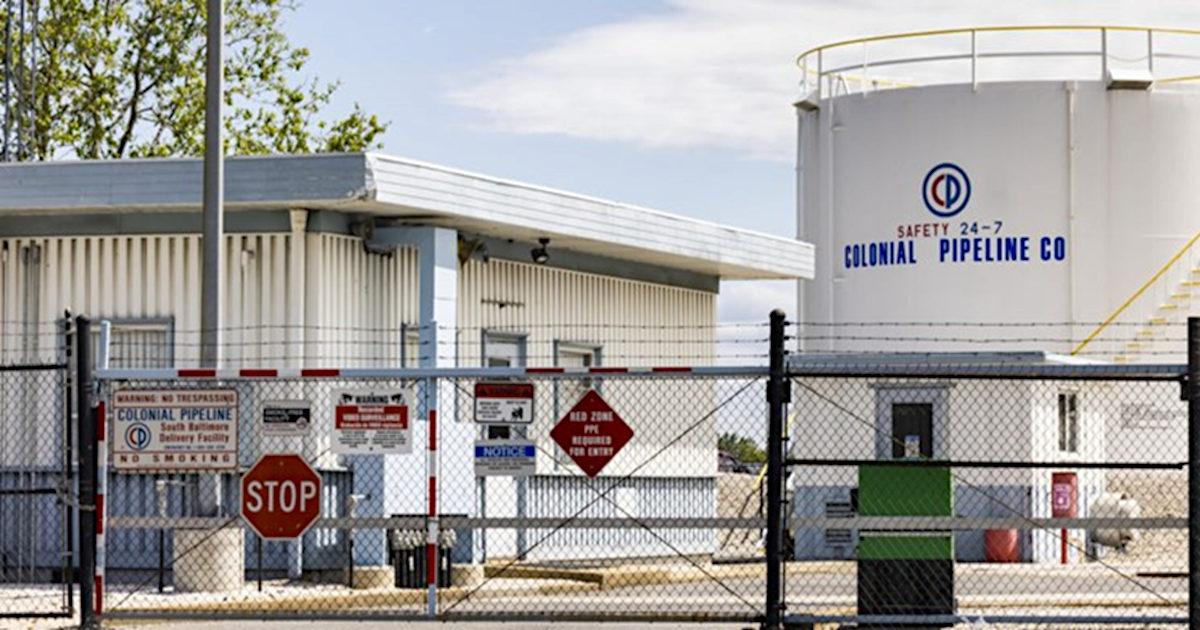
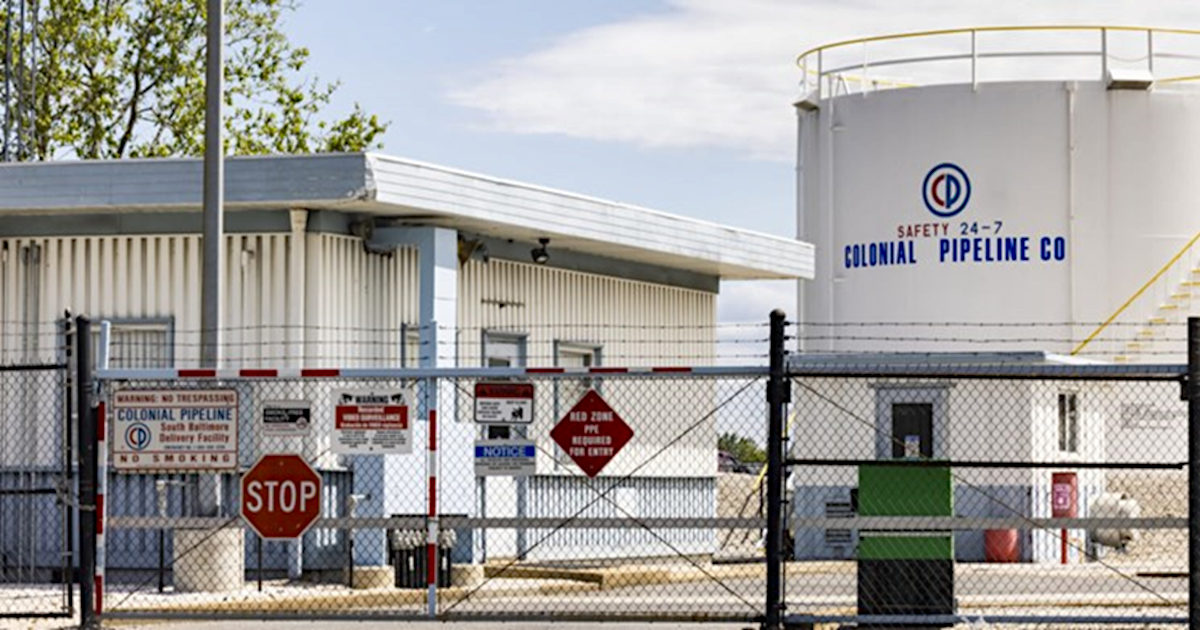
One consequence of too much trust online is the ransomware epidemic, a growing global problem that affects organizations large and small. High-profile breaches such as the one experienced by the Colonial Pipeline are merely the tip of the iceberg.

There were at least 2,354 ransomware attacks on local governments, health care facilities, and schools in the U.S. last year. Although estimates vary, losses to ransomware seem to have tripled in 2020 to more than $300,000 per incident. And ransomware attacks are growing more sophisticated. A recurring theme in many of these breaches is misplaced trust – in vendors, employees, software, and hardware. As a scholar of cybersecurity policy with a recent report on this topic, I have been interested in questions of trust. I’m also the executive director of the Ostrom Workshop. The Workshop’s Program on Cybersecurity and Internet Governance focuses on many of the tenets of zero-trust security by looking to analogies – including public health and sustainable development – to build resilience in distributed systems.


Security Without Trust

Trust in the context of computer networks refers to systems that allow people or other computers access with little or no verification of who they are and whether they are authorized to have access. Zero Trust is a security model that takes for granted that threats are omnipresent inside and outside networks. Zero Trust instead relies on continuous verification via information from multiple sources. In doing so, this approach assumes the inevitability of a data breach. Instead of focusing exclusively on preventing breaches, zero-trust security ensures that damage is limited and that the system is resilient and can quickly recover.

Using the public health analogy, a Zero-Trust approach to cybersecurity assumes that an infection is only a cough – or, in this case, a click – away, and focuses on building an immune system capable of dealing with whatever novel virus may come along. Put another way, instead of defending a castle, this model assumes that the invaders are already inside the walls.

It’s not hard to see the benefits of the Zero Trust model. If the Colonial Pipeline company had adopted it, for example, the ransomware attack would likely have failed, and people wouldn’t have been panic-buying gasoline in recent days. And if zero-trust security were widespread, the ransomware epidemic would be a lot less biting.


Four Obstacles
to Shedding Trust

But there are at least four main barriers to achieving Zero Trust in government and private computer systems.

First, legacy systems and infrastructure are often impossible to upgrade to become Zero Trust. Achieving Zero Trust security requires a layered defense, which involves building multiple layers of security, not unlike a stack of Swiss cheese. But this is challenging in systems that were not built with this goal in mind because it requires independent verification at every layer.

Second, even if it’s possible to upgrade, it’s going to cost you. It is costly, time-consuming and potentially disruptive to redesign and redeploy systems, especially if they are custom-made. The U.S. Department of Defense alone operates more than 15,000 networks in 4,000 installations spread across 88 countries.

Third, peer-to-peer technologies, like computers running Windows 10 on a local network, run counter to Zero Trust because they rely mostly on passwords, not real-time, multifactor authentication. Passwords can be cracked by computers rapidly checking many possible passwords – brute-force attacks – whereas real-time, multifactor authentication requires passwords and one or more additional forms of verification, typically a code sent by email or text. Google recently announced its decision to mandate multifactor authentication for all its users.

Fourth, migrating an organization’s information systems from in-house computers to cloud services can boost Zero Trust, but only if it’s done right. This calls for creating new applications in the cloud rather than simply moving existing applications into the cloud. But organizations have to know to plan for Zero Trust security when moving to the cloud. The 2018 DoD Cloud Strategy, for example, does not even reference “Zero Trust.”


Enter the
Biden Administration

The Biden administration’s executive order attempts to foster a layered defense to address the nation’s cybersecurity woes. The executive order followed several recommendations from the 2020 Cyberspace Solarium Commission, a commission formed by Congress to develop a strategic approach to defending the U.S. in cyberspace.

Among other things, it builds from Zero Trust frameworks propounded by the National Institute for Standards and Technology. It also taps the Department of Homeland Security to take the lead on implementing these Zero Trust techniques, including its cloud-based programs.

I believe that when coupled with other initiatives spelled out in the executive order – such as creating a Cybersecurity Safety Board and imposing new requirements for software supply chain security for federal vendors – zero-trust security takes the U.S. in the right direction.

However, the executive order applies only to government systems. It wouldn’t have stopped the Colonial Pipeline ransomware attack, for instance. Getting the country as a whole on a more secure footing requires helping the private sector adopt these security practices, and that will require action from Congress.


This article
was republished with permission from 
The Conversation, a news site dedicated to sharing ideas from academic
experts.  Written by 
Scott Shackelford, Associate Professor of Business Law and Ethics; Executive
Director, Ostrom Workshop; Cybersecurity Program Chair, IU-Bloomington, Indiana
University


Suggested Reading

Trading Accounts for Children

Is Inflation Going to Hurt Stocks


How Much is a Trillion?

The Case for Investing in Regenerative Medicine


Stay up to date. Follow us:


Stay up to date. Follow us:

QuickChek – May 21, 2021


Onconova Therapeutics Announces The Initial Dosing Of The First Patient In The U.S. Phase 1 Clinical Trial Of ON 123300

Onconova announced that the first patient has been dosed in the U.S. Phase 1 clinical trial of ON 123300, the Company’s proprietary, novel multi-kinase inhibitor

Research, News & Market Data on Onconova

Watch recent presentation from NobleCon17


Aurania Reports Elevated Silver-Zinc Has Been Discovered In Outcrop Over 2.7 Kilometres At Tiria-Shimpia

Aurania Resources announced that follow-up of a high-grade boulder found in a stream has led to the discovery of silver-zinc mineralization

Research, News & Market Data on Aurania Resources

Watch recent presentation from NobleCon17


ProMIS Neurosciences re-initiates path to IND for PMN310 with producer cell line development

ProMIS Neurosciences announced PMN310 potential best in class antibody candidate for treatment of Alzheimer’s disease

Research, News & Market Data on ProMIS Neurosciences

Stay up to date. Follow us:

Release – ProMIS Neurosciences re-initiates path to IND for PMN310 with producer cell line development


ProMIS Neurosciences re-initiates path to IND for PMN310 with producer cell line development


PMN310 potential best in class antibody candidate for treatment of Alzheimer’s disease

TORONTO, Ontario and CAMBRIDGE, Massachusetts – May 21, 2021– ProMIS Neurosciences, Inc. (TSX: PMN); (OTCQB: ARFXF), a biotechnology company focused on the discovery and development of antibody therapeutics selectively targeting toxic oligomers implicated in the development of neurodegenerative diseases, today announced the initiation of producer cell line development for PMN310. This key first step in the manufacturing of antibody therapeutics will be carried out by Selexis, SA, using Selexis’ proprietary SUREtechnology Platform™. 

“ProMIS’ lead antibody program PMN310 offers potential “best in class” antibody therapy for Alzheimer’s disease”, stated ProMIS Executive Chairman Eugene Williams. “With initiation of producer cell line development, we are re-focusing our efforts on advancing PMN310 into clinical development with the support of a distinguished Boston-based group of investors.” 

After two years of setbacks in the Alzheimer’s disease (AD) field, 2021 has seen tremendous progress and reason for optimism.  Positive data from Lilly and Cassava, in addition to Biogen’s  June 7 PDUFA date for aducanumab, portend potential positive momentum for AD patients.  

ProMIS is poised to contribute to the field.  As stated by Gene Williams, “Using our proprietary discovery platform we were able to create the PMN310 antibody so that it selectively targets only the toxic oligomers of amyloid-beta (A?) and avoids undesirable binding to non-toxic forms of amyloid. We believe this high degree of selectivity of PMN310 may offer significant differentiation in terms of efficacy and safety compared to less selective antibody products from Biogen, Eisai, and Lilly.” 

PMN310, is a humanized monoclonal antibody that binds with high affinity and selectivity to toxic oligomers of A?, a recognized root cause of AD. Importantly, PMN310 does not appreciably bind to A? plaque or vascular deposits of A? thereby reducing the likelihood of brain swelling (edema), a dose-limiting side effect observed with non-selective therapeutic antibodies that interact with A? plaque. The current cell line development is based on an IgG1 isotype format (rather than the originally envisaged IgG4 format) as data from the scientific literature indicate that an IgG1 isotype may achieve greater efficacy via engagement of the immune system to clear damaging A? oligomers from the brain. 

About ProMIS Neurosciences, Inc.

ProMIS Neurosciences, Inc. is a development stage biotechnology company focused on discovering and developing antibody therapeutics selectively targeting toxic oligomers implicated in the development and progression of neurodegenerative diseases, in particular Alzheimer’s disease (AD), amyotrophic lateral sclerosis (ALS) and Parkinson’s disease (PD). The Company’s proprietary target discovery engine is based on the use of two complementary techniques. The Company applies its thermodynamic, computational discovery platform -ProMIS and Collective Coordinates – to predict novel targets known as Disease Specific Epitopes on the molecular surface of misfolded proteins. Using this unique approach, the Company is developing novel antibody therapeutics for AD, ALS and PD.  ProMIS is headquartered in Toronto, Ontario, with offices in Cambridge, Massachusetts. ProMIS is listed on the Toronto Stock Exchange under the symbol PMN, and on the OTCQB Venture Market under the symbol ARFXF.

For further information about ProMIS Neurosciences, please consult the Company’s website at:  www.promisneurosciences.com

Follow us on Twitter

Like us on LinkedIn


For Investor Relations please contact:

Alpine Equity Advisors
Nicholas Rigopulos, President
[email protected]

Tel. 617 901-0785


The TSX has not reviewed and does not accept responsibility for the adequacy or accuracy of this release. This information release contains certain forward-looking information. Such information involves known and unknown risks, uncertainties and other factors that may cause actual results, performance or achievements to be materially different from those implied by statements herein, and therefore these statements should not be read as guarantees of future performance or results. All forward-looking statements are based on the Company’s current beliefs as well as assumptions made by and information currently available to it as well as other factors. Readers are cautioned not to place undue reliance on these forward-looking statements, which speak only as of the date of this press release. Due to risks and uncertainties, including the risks and uncertainties identified by the Company in its public securities filings, actual events may differ materially from current expectations. The Company disclaims any intention or obligation to update or revise any forward-looking statements, whether as a result of new information, future events or otherwise.

Release – Aurania Resources Reports Elevated Silver-Zinc Has Been Discovered In Outcrop Over 2.7 Kilometres At Tiria-Shimpia


Aurania Reports Elevated Silver-Zinc Has Been Discovered In Outcrop Over 2.7 Kilometres At Tiria-Shimpia


Toronto, Ontario, May 21, 2021 – Aurania Resources Ltd. (TSXV: ARU) (OTCQB: AUIAF) (Frankfurt: 20Q) (“Aurania” or the “Company”) reports that follow-up of a high-grade boulder found in a stream has led to the discovery of silver-zinc mineralization in outcrop over 2.7 kilometres (“km”) in the Tiria-Shimpia target area in the Company’s Lost Cities – Cutucu Project (“Project”) in southeastern Ecuador.

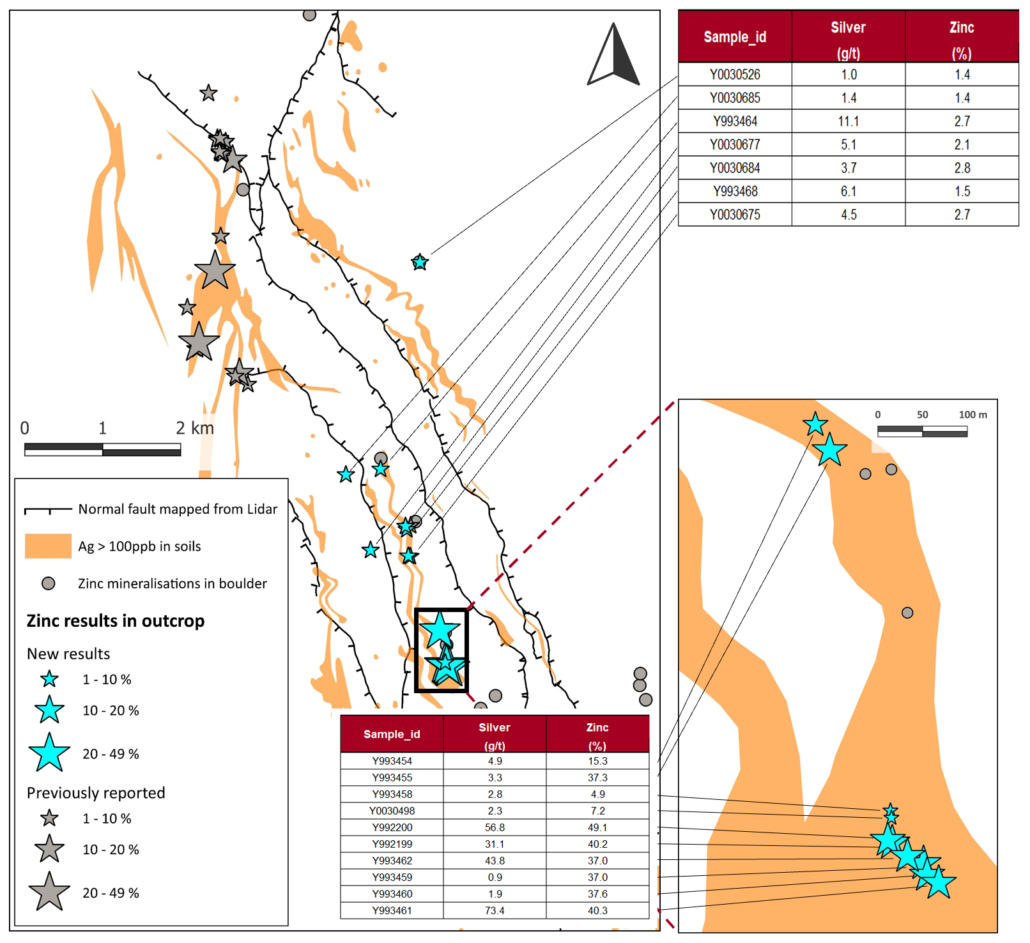
Follow-up exploration, together with the on-going channel sampling of the mineralized layers where they are exposed at surface, is providing key information on the distribution of grade on surface within the 15km trend along which silver-zinc is located at Tiria-Shimpia. This trend was recently extended to a total of 22km after the discovery of a 7km long mineralized zone at Shimpia North (see press release dated April 30, 2021).  Within the 2.7km mineralized zone, there is a 500 metre (“m”) segment of high-grade material with silver up to 73 grams per tonne (“g/t”) and zinc up to 49% (Figure 1).  The high-grade mineralization is open to the north where there is a gap in outcrop of about 1km.

The mineralized sedimentary layer corresponds closely with silver enrichment in soil (Figure 1) and remains open to the south.  In fact, there is a second band of elevated silver in soil that suggests that there is a second mineralized layer in the sedimentary strata, but no outcrop has yet been found of the suspected second layer. A third level of mineralization has been found to the west with the discovery of low-grade outcrop that returned up to 2% zinc.  Zinc and silver enrichment continues to the southern limit of ridge and spur soil sampling, and there is therefore potential for the silver-zinc zone to extend further south.

Figure 1.  Plan view of the distribution of elevated silver in soil (orange shapes) and geological faults (black ticked lines) in the Tiria-Shimpia area showing the location of rock samples from outcrop over a 2.7km trend within the 15km-long Tiria-Shimpia target.

Geological Details of the Area Sampled

Silver-zinc mineralization is concentrated in the sedimentary layering in crackle-brecciated dolomitic limestone.  Sphalerite and barite occur in veinlets and as fill between rock fragments in the breccia.  The mineralization occurs in sedimentary layering that is folded across north-northwest – trending hinge lines.

Sample Analysis & Quality Assurance / Quality Control (“QAQC”) 

Laboratories: The soil samples were prepared for analysis at MS Analytical (“MSA”) in Cuenca, Ecuador, and the analyses were done in Vancouver, Canada.

Sample preparation: The rock samples were jaw-crushed to 10 mesh (crushed material passes through a mesh with apertures of 2 millimetres (“mm”)), from which a one-kilogram sub-sample was taken.  The sub-sample was crushed to a grain size of 0.075mm and a 200 gram (“g”) split was set aside for analysis.

Analytical procedure:  Approximately 0.25g of rock pulp underwent four-acid digestion and analysis for 48 elements by ICP-MS.  For the over-limit samples, those that had a grade of greater than 1% zinc and lead, and 100g/t silver, 0.4g of pulp underwent digestion in four acids and the resulting liquid was diluted and analyzed by ICP-MS.

QAQC: Aurania personnel inserted a certified standard pulp sample, alternating with a field blank, at approximate 20 sample intervals in all sample batches. Aurania’s analysis of results from its independent QAQC samples showed the batches reported on above, lie within acceptable limits.  In addition, the labs reported that the analyses had passed their internal QAQC tests.

Qualified Person

The geological information contained in this news release has been verified and approved by Jean-Paul Pallier, MSc.  Mr. Pallier is a designated EurGeol by the European Federation of Geologists and a Qualified Person as defined by National Instrument 43-101, Standards of Disclosure for Mineral Projects of the Canadian Securities Administrators.

About Aurania

Aurania is a mineral exploration company engaged in the identification, evaluation, acquisition and exploration of mineral property interests, with a focus on precious metals and copper in South America.  Its flagship asset, The Lost Cities – Cutucu Project, is located in the Jurassic Metallogenic Belt in the eastern foothills of the Andes mountain range of southeastern Ecuador.

Information on Aurania and technical reports are available at www.aurania.com and www.sedar.com, as well as on Facebook at https://www.facebook.com/auranialtd/, Twitter at  https://twitter.com/auranialtd, and LinkedIn at https://www.linkedin.com/company/aurania-resources-ltd-.

For further information, please contact:

Carolyn Muir

VP Investor Relations

Aurania Resources Ltd.

(416) 367-3200

[email protected]
Dr. Richard Spencer

President

Aurania Resources Ltd.

(416) 367-3200

[email protected]
Neither the TSX Venture Exchange nor its Regulation Services Provider (as that term is defined in the policies of the TSX Venture Exchange) accepts responsibility for the adequacy or accuracy of this release.

Forward-Looking Statements

This news release may contain forward-looking information that involves substantial known and unknown risks and uncertainties, most of which are beyond the control of Aurania. Forward-looking statements include estimates and statements that describe Aurania’s future plans, objectives or goals, including words to the effect that Aurania or its management expects a stated condition or result to occur. Forward-looking statements may be identified by such terms as “believes”, “anticipates”, “expects”, “estimates”, “may”, “could”, “would”, “will”, or “plan”. Since forward-looking statements are based on assumptions and address future events and conditions, by their very nature they involve inherent risks and uncertainties. Although these statements are based on information currently available to Aurania, Aurania provides no assurance that actual results will meet management’s expectations. Risks, uncertainties and other factors involved with forward-looking information could cause actual events, results, performance, prospects and opportunities to differ materially from those expressed or implied by such forward-looking information. Forward looking information in this news release includes, but is not limited to Aurania’s objectives, goals or future plans, statements, exploration results, potential mineralization, the corporation’s portfolio, treasury, management team and enhanced capital markets profile, the estimation of mineral resources, exploration, timing of the commencement of operations and estimates of market conditions. Factors that could cause actual results to differ materially from such forward-looking information include, but are not limited to, failure to identify mineral resources, failure to convert estimated mineral resources to reserves, the inability to complete a feasibility study which recommends a production decision, the preliminary nature of metallurgical test results, delays in obtaining or failures to obtain required governmental, regulatory, environmental or other project approvals, political risks, inability to fulfill the duty to accommodate indigenous peoples, uncertainties relating to the availability and costs of financing needed in the future, changes in equity markets, inflation, changes in exchange rates, fluctuations in commodity prices, delays in the development of projects, capital and operating costs varying significantly from estimates and the other risks involved in the mineral exploration and development industry, the effects of COVID-19 on the business of the Company including but not limited to the effects of COVID-19 on the price of commodities, capital market conditions, restrictions on labour and international travel and supply chains, and those risks set out in Aurania’s public documents filed on SEDAR. Although Aurania believes that the assumptions and factors used in preparing the forward-looking information in this news release are reasonable, undue reliance should not be placed on such information, which only applies as of the date of this news release, and no assurance can be given that such events will occur in the disclosed time frames or at all. Aurania disclaims any intention or obligation to update or revise any forward-looking information, whether as a result of new information, future events or otherwise, other than as required by law.

EuroDry Ltd. (EDRY) – Good News of Solid Results New Charter and Fleet Expansion Drives Price Target Higher

Friday, May 21, 2021

EuroDry Ltd. (EDRY)
Good News of Solid Results, New Charter and Fleet Expansion Drives Price Target Higher

EuroDry Ltd. was formed on January 8, 2018 under the laws of the Republic of the Marshall Islands and trades on the NASDAQ Capital Market under the ticker EDRY. EDRY is the product of a spin-off of the dry bulk fleet by Euroseas (ESEA) completed in May 2018. For every five ESEA shares, ESEA shareholders received one EDRY share. There are currently ~2.2 million EDRY shares outstanding. EuroDry operates in the dry bulk shipping markets. EuroDry’s operations are managed by Eurobulk Ltd., an affiliated ship management company, and Eurobulk FE (Far East) Ltd, which are responsible for the day-to-day commercial and technical management and operation of the fleet. EuroDry employs the fleet on spot and period charters and through pool arrangements.

Poe Fratt, Senior Research Analyst, Noble Capital Markets, Inc.

Refer to the full report for the price target, fundamental analysis, and rating.

    Adjusted 1Q2021 EBITDA stronger than expected due to higher TCE rates. 1Q2021 EBITDA of $4.0 million (adjusted for dry dock expenses) was slightly higher than expected due to higher-than-expected TCE rates of $14,924/day. TCE revenue of $9.4 million was above expectations due to the positive impact of TCE rates tied to indices. The fleet of 7.0 vessels did not change and ownership days were 630 with 0 idle days.

    Fleet expanding.  The Blessed Luck, a 2004-built Panamax, will be acquired shortly for $12.1 million. The acquisition will be financed with 8% debt, including a seller note of $5 million and a bridge loan of $6 million from a related party. Discussions on more permanent financing are under way and the new loan should financing about 65% of the acquisition, or ~$8 million. The Blessed Luck will be …


This research is provided by Noble Capital Markets, Inc., a FINRA and S.E.C. registered broker-dealer (B/D).

*Analyst certification and important disclosures included in the full report. NOTE: investment decisions should not be based upon the content of this research summary.  Proper due diligence is required before making any investment decision.