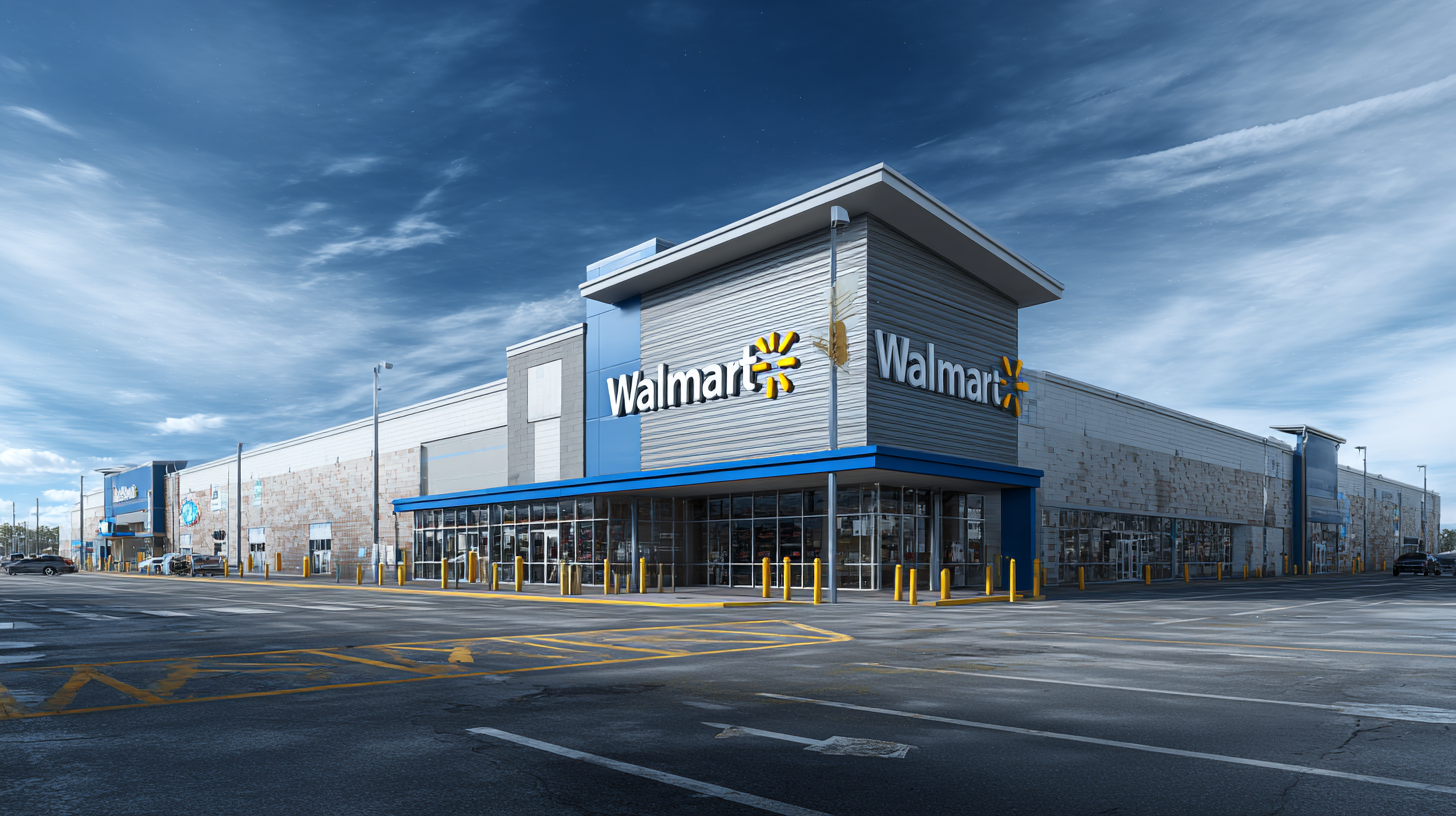
Walmart has officially joined the $1 trillion market-cap club, a milestone once reserved almost exclusively for Big Tech giants. Shares of the world’s largest retailer surged to record highs this week, pushing its valuation past the trillion-dollar mark for the first time in its 60-plus-year history. The move underscores a profound shift in how investors view Walmart—not merely as a defensive, low-margin retailer, but as a technology-enabled consumer platform built for the modern economy.
At the core of Walmart’s rise is its ability to thrive across economic cycles. While inflation and tighter budgets have driven value-conscious consumers toward lower prices, Walmart has simultaneously attracted higher-income shoppers through faster delivery, broader online assortments, and improved digital experiences. That rare ability to gain market share both up and down the income ladder has become one of its most powerful competitive advantages.
The transformation did not happen overnight. After lagging peers in e-commerce during the early 2000s, Walmart spent years rebuilding its digital foundation. Today, its online marketplace spans everything from groceries and household staples to luxury resale items and collectibles. More importantly, Walmart has built a fast-growing ecosystem around its core retail business, including advertising, membership programs, fulfillment services, and data-driven logistics—higher-margin segments that investors increasingly reward with premium valuations.
Technology is now central to Walmart’s strategy. The company has been aggressively deploying artificial intelligence across its operations to improve scheduling, inventory management, pricing, and supply-chain efficiency. Recent partnerships with Alphabet and OpenAI signal an ambition to embed Walmart directly into emerging AI-driven shopping workflows, allowing consumers to browse and purchase products through conversational platforms like ChatGPT and Google’s Gemini. These initiatives have helped reframe Walmart as a serious tech contender rather than a legacy retailer playing catch-up.
Investor confidence has followed. Walmart’s stock is up double digits this year, outperforming the broader market and earning a spot in the Nasdaq 100 Index—an unusual distinction for a consumer staples company. Analysts point to consistent execution, disciplined cost control, and management’s willingness to reinvest savings into price leadership as key drivers of continued momentum.
Still, the trillion-dollar valuation raises questions about how much upside remains. Walmart now trades at more than 40 times forward earnings, near all-time highs, leaving less room for error. Competition is intensifying as Amazon doubles down on speed and logistics, Aldi expands its U.S. footprint, and Target works to revive growth through design-focused merchandising. Execution missteps or slowing consumer demand could test investor patience.
Yet Walmart’s recent decision to raise full-year sales and profit guidance has helped quiet some concerns. Management continues to signal a conservative outlook, a strategy that has historically set the stage for earnings beats. With fourth-quarter results approaching, the market will be watching closely for confirmation that Walmart can sustain growth while justifying its premium multiple.
Ultimately, Walmart’s ascent into the trillion-dollar club reflects a broader reality: scale, data, logistics, and technology now matter as much in retail as they do in software. By combining everyday value with digital innovation, Walmart has rewritten its investment narrative—and in the process, secured its place among the most valuable companies on the planet.