Supreme Court Strikes Down Trump’s Tariffs, Markets Rally as Trade Policy Shifts Again

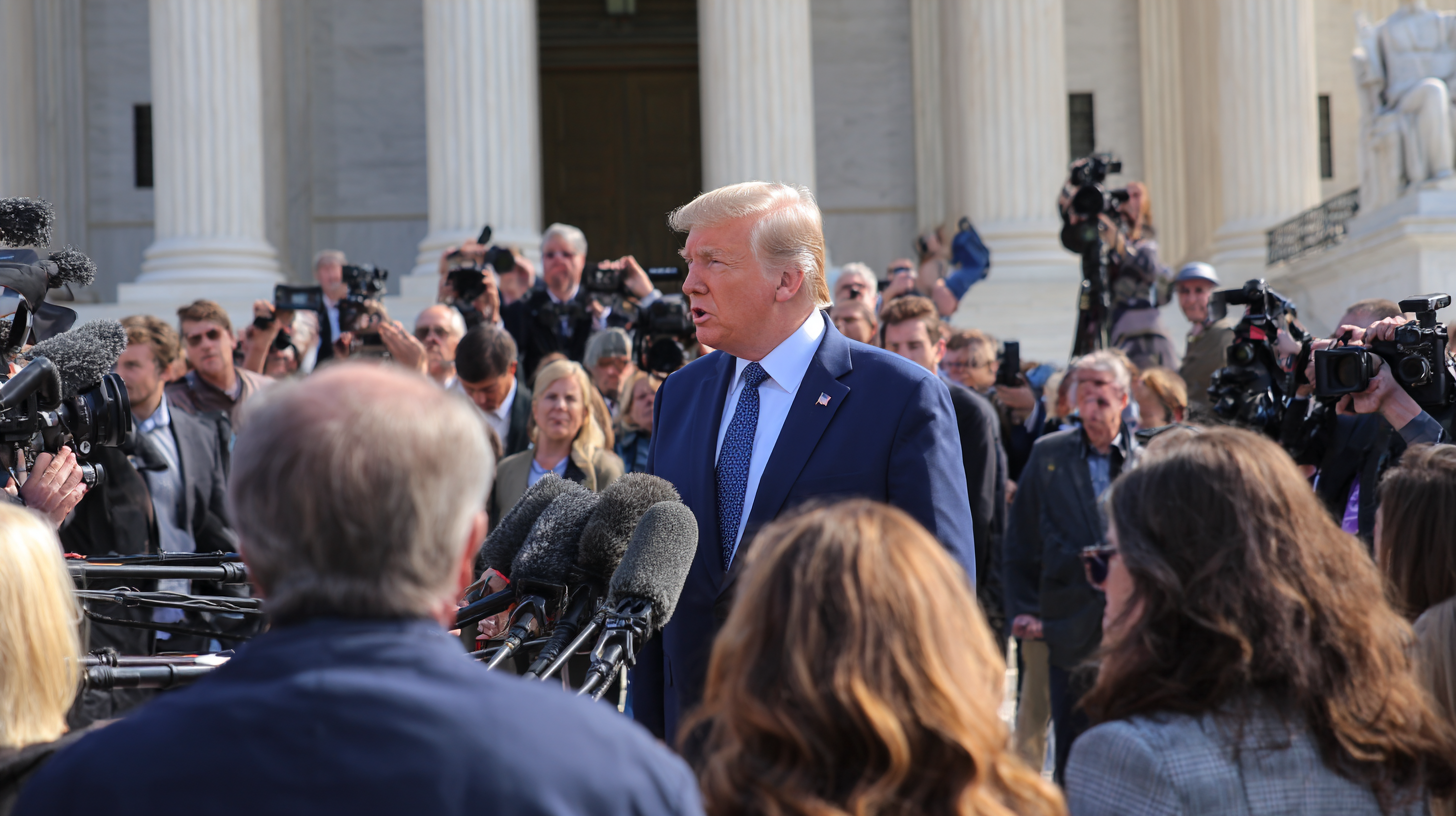
The US trade landscape shifted abruptly Friday after the Supreme Court struck down the centerpiece of President Trump’s second-term tariff program, ruling 6–3 that the International Emergency Economic Powers Act (IEEPA) does not authorize the president to impose sweeping blanket tariffs. The decision immediately halts a massive portion of the tariffs announced last year on “Liberation Day,” dealing a significant blow to the administration’s trade strategy and sending stocks higher as investors recalibrated expectations for costs, inflation, and corporate margins.

“IEEPA does not authorize the President to impose tariffs,” Chief Justice John Roberts wrote in the majority opinion, rejecting the administration’s claim that the 1977 law granted broad authority to impose tariffs under a declared economic emergency. Roberts added that had Congress intended to grant such extraordinary tariff powers, it would have done so explicitly. The ruling upholds prior lower court decisions, including from the US Court of International Trade, that found the tariffs unlawful under that statute.

Markets responded swiftly. According to analysis from the Yale Budget Lab, the effective US tariff rate could now fall to 9.1%, down from 16.9% before the ruling. Investors interpreted the decision as reducing near-term cost pressures for companies that rely on imported goods and components. President Trump, however, quickly pushed back, calling the ruling “deeply disappointing” and criticizing members of the Court. Within hours, he announced plans to impose a 10% “global tariff” under Section 122 of the Trade Act of 1974, a provision that allows temporary tariffs of up to 15% for 150 days to address trade deficits. That authority has never previously been used to implement tariffs of this scale, and the administration signaled additional trade investigations under Section 301 may follow.

Notably, tariffs enacted under other legal authorities remain in place. Section 232 national security tariffs on steel, aluminum, semiconductors, and automobiles are unaffected, meaning a range of sector-specific import duties will continue. This layered approach underscores that while the Court invalidated one mechanism, trade tensions and tariff policy remain firmly in play.

An unresolved issue now looms over potential refunds. More than $100 billion — and possibly as much as $175 billion — in tariff revenue has been collected under IEEPA. The Court did not directly address refund eligibility, opening the door to further litigation and administrative action. Business groups, including the US Chamber of Commerce, are calling for swift refunds, arguing that repayment would meaningfully support small businesses and importers. Others caution that returning such sums could carry serious fiscal implications.

For small- and micro-cap investors, the ruling introduces both relief and renewed uncertainty. Smaller companies often operate with thinner margins and less pricing power than large multinational peers, making them particularly sensitive to import costs. A lower effective tariff rate could ease pressure on retailers, specialty manufacturers, and niche industrial firms that rely heavily on overseas inputs. At the same time, policy volatility remains elevated as the administration pivots to alternative tariff authorities, suggesting the trade environment may remain fluid.

The broader macro implications are equally significant. Reduced tariff pressure could temper inflation expectations, potentially influencing Federal Reserve policy — a key driver for small-cap performance given their sensitivity to financing conditions and domestic economic momentum.

Friday’s decision marks a major legal setback for the administration’s trade framework, but it does not signal an end to tariff-driven policy shifts. For small-cap investors, the near-term narrative may improve on cost relief, yet the longer-term trade outlook remains unsettled as Washington prepares its next move.
How the Investment Playing Field Can Dramatically Change in November

Image Credit: The White House (Flickr)

The Mid-Term Elections are Just One of the SEC’s Concerns

The mid-term elections have the potential to alter the course of the markets. It’s easy to recognize how the possible outcomes can cause changes to the overall economy, including industry sectors, fuel prices, and perhaps even national debt levels. But, one area that is less obvious could also impact investors in a big way, regulation. As election day is now days away, many regulatory changes that have been in the works are quickly coming to a head, with the expectations there may be a change in priorities, power, and philosophy. The push to get things through in the coming days may still be undermined by the U.S. system. Here’s why.

The U.S. Government at Work

Federal regulators are in scramble-mode working to finalize proposed rules before what appears will be a change in the balance of power in the legislative branch. The possibility that there may be a Republican-controlled Congress or the expected idea that the democrats will lose control over one of the branches of Congress would soften their ability to institute their aggressive agendas. As the agencies refine their proposals, they also have to be mindful that it isn’t just the new Congress that will be evaluating new regulations. The Supreme Court has recently taken a heightened interest in agencies overstepping their charter, that interest is likely to continue.

It’s easy to see how Congress whose job it is to decide where money is spent, can dampen the agenda of the Department of Education (DOE), Internal Revenue Service (IRS), Food and Drug Administration (FDA), or Gary Gensler’s plans at the Securities and Exchange Commission (SEC). But, the Supreme Court is also more than a casual observer and has shown how willing it is to make sure everyone stays in their defined lanes. 

Recent SEC Initiatives

The SEC has a three-part mission that includes protecting investors, maintaining fair, orderly, and efficient markets, and facilitating capital formation. Under Gary Gensler, it has been working overtime to impact the changing marketplaces. The initiatives are considered by some to be beyond the scope of the SEC’s lawful mission.

Gensler, who was appointed by President Biden, has been extremely active. The former Chairman of the U.S. Commodities Futures Trading Commission (CFTC) and MIT economics professor is proposing or finalizing dozens of regulations. Some are minor alterations to existing rules, but many are complete redesigns of how they are handled now. This redesign may make it past an unenthusiastic Congress, as they have more pressing priorities, but they may experience an aggressive halt from the country’s Judicial branch.

Recent Supreme Court Actions

In June of 2022, the Supreme Court decided W. Virginia v. EPA. The decision struck down an EPA regulation fighting climate change. The decision was made based on the grounds that the rule violated the “major questions doctrine.” The Court had never used that term before, but it seemed evident that the court might use the term and intent of the phrase should it be called on to review other federal agencies and commissions.

The Court has the authority and now recent precedent to unwind regulation that goes beyond the original intent of Congress when an agency was created or any subsequent legal grants of authority. The 6-3 ruling against the EPA explained the Clean Air Act, designed for new power plant emissions, did not extend to existing plants requiring them to shift to wind or solar. It’s a nod by the Court to keep bureaucracies from growing beyond the express original legal reason for being. 

The ruling also is relevant in that it looked at Congress’s unwillingness to legislate and legitimize the way that the agency chose to regulate. One Justice in a concurring opinion wrote the decision was in part based on whether the agency was “intruding” in a traditional area of state law. 

How it Could Impact Investors

Under the major questions doctrine, several SEC efforts may become far more difficult.

One high-profile SEC goal involves environmental initiatives. Climate change activists have supported the SEC’s proposal to require companies to increase their disclosure of anticipated climate risks. But it would be difficult for the SEC to weigh its mission against this initiative and easily demonstrate that anyone has a great impact on the other (orderly markets, investor protection, capital formation). If environmental initiatives are to be carried out, they will need to be enacted by the representatives elected to legislate on behalf of citizens.

It is easy to see how priorities focusing more on fiscal restraint rather than environmental awareness could alter the investors playing field with a power change in the Capital building.

The so-called greening of Wall Street is just one example of how the elections will impact the coming year’s winners and losers in the stock market. Consider the SEC’s proposed rules for swaps, which are financial instruments that some investors use to speculate on securities. The SEC’s suggested rule would require public disclosure within a day of these transactions to the public. The proposed rule can be considered an unprecedented intervention in this multi-trillion-dollar market. The argument is strengthened by the reality that Congress could have authorized disclosure in the 2010 Dodd-Frank Act, but did not. The Supreme Court would be expected to rule on behalf of the laws as written.

Another SEC initiative also at risk is the proposed rule on “beneficial” ownership. Such a definition is important for a host of reporting obligations. The SEC is considering expanding what counts as ownership. But questions of ownership have long been a matter of state concern. Gorsuch may have something to say about the SEC’s effort to expand the definition. 

Another example is Kim Kardashian, who was ordered by the SEC to pay a fine for having touted a cryptocurrency on her Instagram account and the compensation she failed to disclose. The SEC has been in a battle with other financial overseers of the U.S. financial system to regulate and control digital currencies, which may or may not meet the definitions of a security or other language that legally created the commission.

Take Away

Regulatory agencies, including the SEC, are likely to have to contend with increased barriers with both the only branch of government that makes both laws and spends money and the branch that deciphers and enforces laws. Rather than argue if this is what should be, or if it slows down progress when wearing one’s investor hat,” investors may only want to consider what industries and what companies within those industries will be the winners and losers – then how does that fit into your overall portfolio strategy.

If you haven’t registered to receive equity research and thoughtful articles and videos from Channelchek, this is a good time to sign-up in preparation for the year-end and 2023. Click here for free registration.

Paul Hoffman

Managing Editor, Channelchek