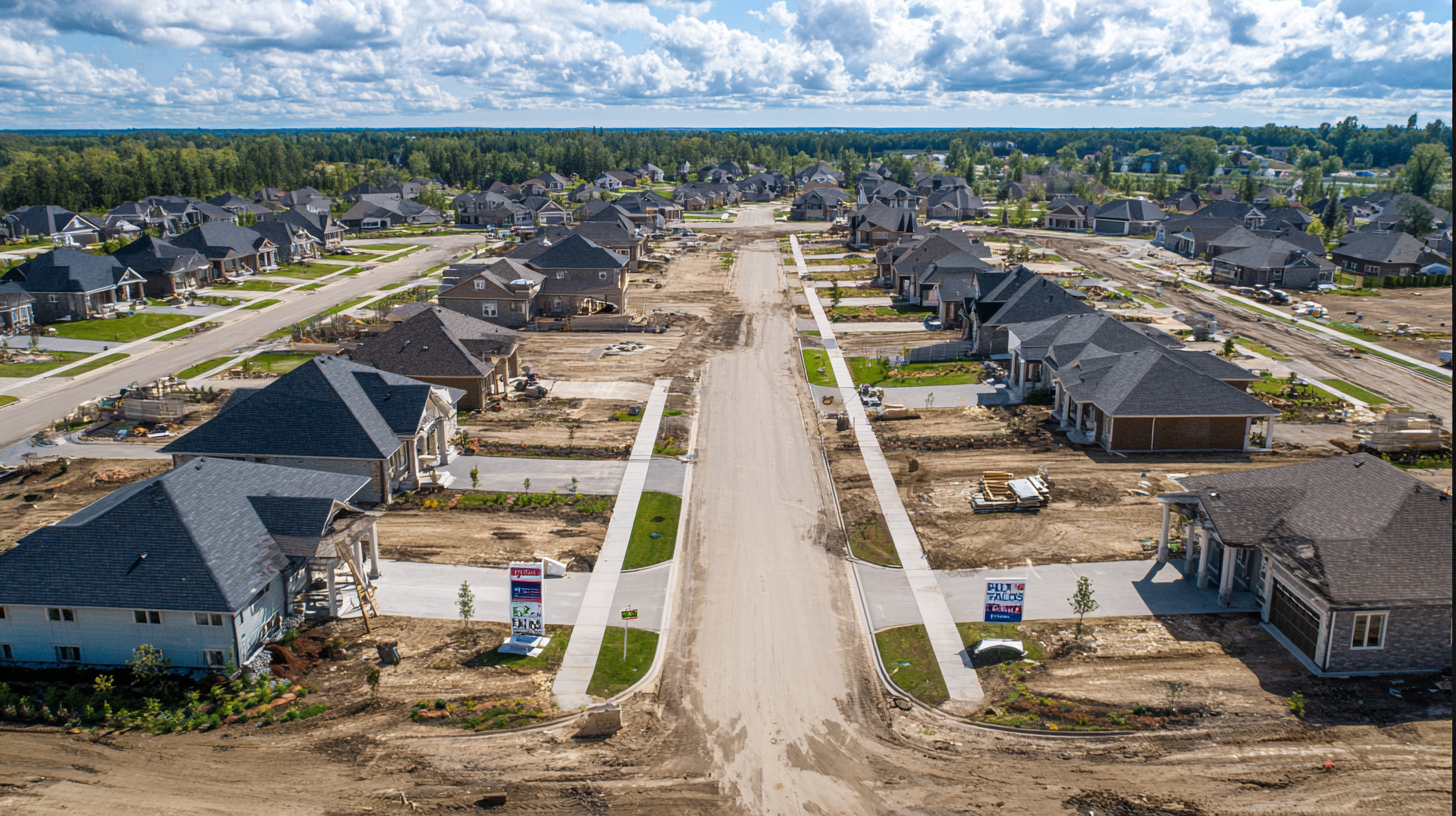
New Home Sales Hit Four-Year Low

New home sales rang in 2026 with a troubling signal. January sales of newly built homes collapsed 17.6% month over month to a seasonally adjusted annualized rate of 587,000 units — the slowest pace since 2022 — according to data released Thursday by the U.S. Census Bureau. The drop was far steeper than analysts had projected, and it arrived against a backdrop that was supposed to be improving.

Year over year, sales were down 11.3%, with December’s already-soft numbers revised even lower. For homebuilders — many of them small and mid-cap companies already managing tight margins and bloated inventory — the report adds urgency to a housing sector that has yet to find solid footing.

The January data reflects signed contracts from a period when the average 30-year fixed mortgage rate was hovering between 6% and 6.2%, according to Mortgage News Daily. Rates have since climbed to 6.36%, meaning conditions in the months ahead are unlikely to produce a meaningful rebound without a catalyst. The Federal Reserve’s decision Wednesday to hold rates steady at 3.5%–3.75% — with the dot plot pointing to just one cut in 2026 — offers little relief for rate-sensitive buyers sitting on the sidelines.

To move inventory, builders have been reaching deeper into their toolkits. The median price of a new home sold in January fell to $400,500, a decline of 6.8% year over year. Yet the discounts aren’t clearing the market fast enough. Inventory climbed to a 9.7-month supply, up from eight months in December and 7.8% higher than a year ago. Completed homes sitting unsold are now near levels not seen since 2009.

The pain is spreading into March. An estimated 37% of builders cut prices in March, up from 36% in February, according to the National Association of Home Builders. Nearly two-thirds of builders are deploying additional incentives including mortgage rate buydowns to pull buyers across the finish line — a strategy that protects top-line revenue while quietly compressing margins.

Sales declined across every region, but the drops were not equal. The Northeast and Midwest could partially blame harsh winter weather. The West has no such excuse — sales there fell nearly 22% from December, suggesting demand destruction that runs deeper than seasonal disruption. Sun Belt markets, after years of speculative overbuilding, continue to be among the hardest hit.

For investors tracking small and mid-cap homebuilders, the January report is a reminder that volume recovery and margin recovery are not the same story. Companies relying heavily on incentive-driven sales risk deteriorating earnings quality even as unit counts look stable. With the Fed on hold, mortgage rates sticky above 6%, and consumer confidence still fragile, the setup for the spring selling season — typically the industry’s most critical window — looks challenged at best.

The pent-up demand is real. The question is whether affordability conditions improve fast enough to release it before builder balance sheets feel the weight.

Housing Stocks Slide as Policy Hopes Fade and Outlooks Darken

Housing-linked equities took a sharp hit Wednesday, pressured by cautious corporate outlooks and the absence of new housing initiatives in President Donald Trump’s State of the Union address.

The S&P Composite Homebuilders Index dropped as much as 5.2%, marking its steepest decline since last April’s tariff-driven selloff. The retreat swept across builders, suppliers, and mortgage-related names, underscoring just how sensitive the group remains to policy signals and macro sentiment.

Among the hardest hit were Green Brick Partners, Lennar, Champion Homes, Dream Finders Homes, Installed Building Products, D.R. Horton, and TopBuild. Mortgage-exposed firms such as Rocket Cos. also traded lower as investors reassessed the near-term demand outlook.

The pullback followed a subdued forecast from Lowe’s Cos., which projected full-year sales below Wall Street expectations. Shares of the home improvement retailer fell more than 5% intraday. The guidance came on the heels of cautious commentary from Home Depot, reinforcing concerns that housing-related spending may remain muted in 2026.

For investors, the message was clear: the housing market is still searching for a catalyst.

Executives pointed to persistent affordability challenges, elevated mortgage rates, and broader economic uncertainty. Lowe’s Chief Executive Marvin Ellison cited inflationary pressures and subdued consumer confidence. He also highlighted the ongoing “lock-in effect,” where homeowners are reluctant to sell because they would need to refinance at significantly higher mortgage rates.

Home Depot’s finance chief echoed similar themes earlier in the week, noting that while homeowners remain relatively healthy financially, uncertainty around affordability and employment is weighing on decision-making.

Expectations had been building that the administration might unveil fresh housing initiatives. Instead, the president largely reiterated previous comments about potentially restricting institutional investors from purchasing single-family homes and suggested that lower interest rates would ultimately address affordability concerns. Broader housing policy proposals were absent.

That lack of clarity appeared to disappoint investors who had hoped for targeted measures to stimulate supply or ease affordability pressures.

The selloff extended beyond homebuilders. The S&P Composite 1500 Building Products Index fell as much as 2.5%, with companies such as Hayward Holdings, UFP Industries, and Builders FirstSource among the largest percentage decliners.

For small- and mid-cap investors, the volatility highlights how exposed housing-related equities remain to macro swings. Many regional builders and specialty suppliers operate with narrower margins and less diversified revenue streams than large-cap peers. That makes them particularly sensitive to changes in mortgage rates, input costs, and consumer confidence.

At the same time, prolonged weakness in transaction volumes can ripple across the ecosystem — from building products manufacturers to installation services and mortgage originators. When turnover slows, renovation activity, new construction starts, and related spending often follow.

The broader question for 2026 is whether easing financial conditions materialize quickly enough to offset affordability headwinds. While policymakers and corporate executives continue to point to the potential for rate relief, timing remains uncertain.

Until clearer signals emerge — either from monetary policy, fiscal initiatives, or a sustained improvement in housing demand — the sector may continue to trade on headlines rather than fundamentals.

For investors in small- and middle-market housing names, that likely means heightened volatility, selective capital flows, and a continued premium on balance sheet strength.