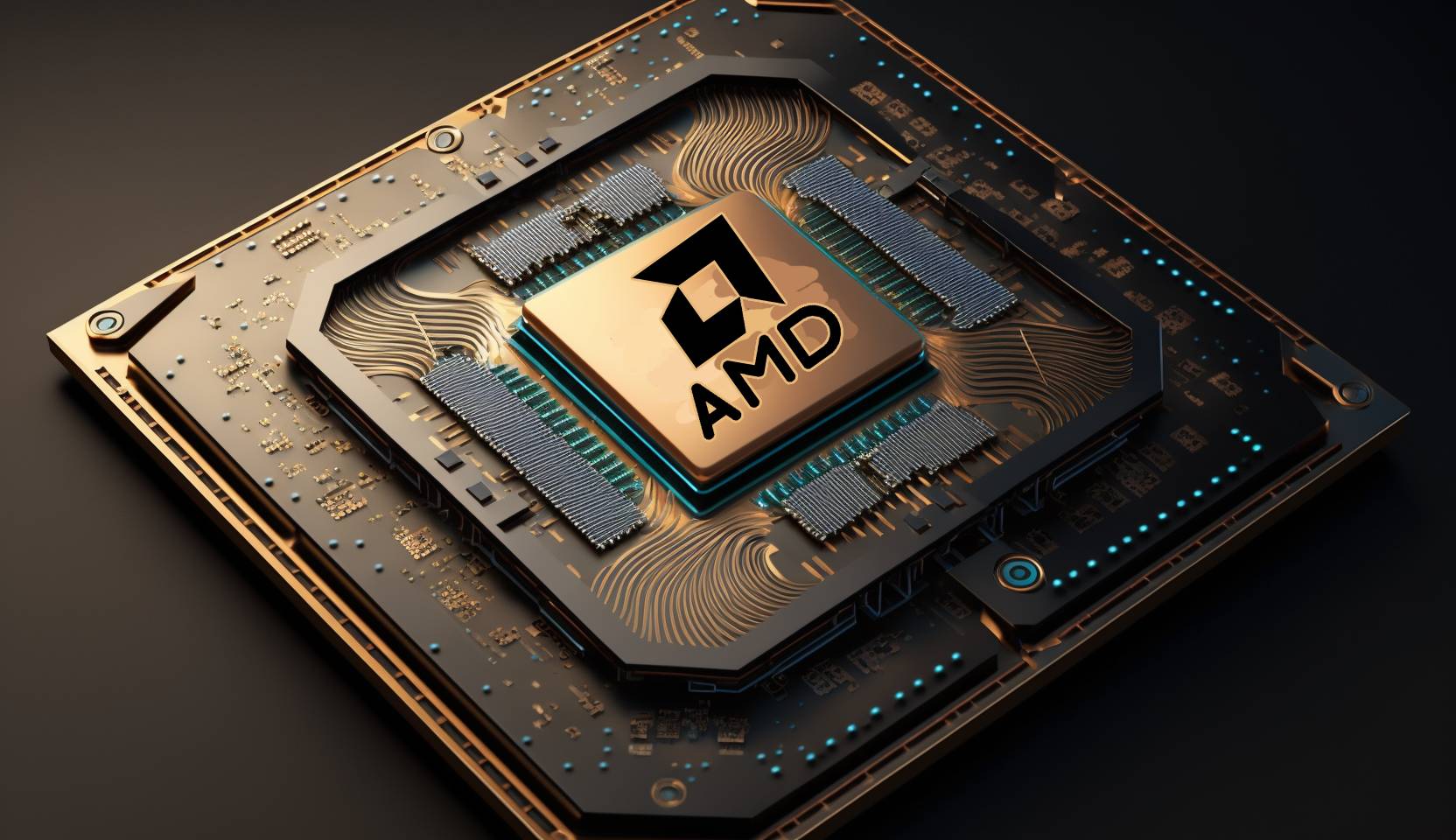
AMD’s Future Hinges on AI Chip Success

Chipmaker Advanced Micro Devices (AMD) offered an optimistic forecast this week for its new data center AI accelerator chip, predicting $2 billion in sales for the product in 2024. This ambitious target represents a crucial test for AMD as it seeks to challenge rival Nvidia’s dominance in the artificial intelligence (AI) chip market.

AMD’s forthcoming MI300X processor combines the functionality of a CPU and GPU onto a single chip optimized for AI workloads. The chipmaker claims the MI300X will deliver leadership performance and energy efficiency. AMD has inked deals with major hyperscale cloud customers to use the new AI chip, including Amazon Web Services, Google Cloud, Microsoft Azure and Oracle Cloud.

The $2 billion revenue projection for 2024 would represent massive growth considering AMD expects a modest $400 million from the MI300X this quarter. However, industry analysts caution that winning significant market share from Nvidia will prove challenging despite AMD’s technological advancements. Nvidia currently controls over 80% of the data center AI accelerator market, fueled by its popular A100 and H100 chips.

“The AI chip market is still in its early phases, but it’s clear Nvidia has built formidable customer loyalty over the past decade,” said Patrick Moorhead, President of Moor Insights & Strategy. “AMD will need to aggressively discount and wow customers with performance to take share.”

AMD’s fortunes sank earlier this year as the PC market slumped and excess inventory weighed on sales. Revenue from the company’s PC chips dropped 42% in the third quarter. However, AMD sees data center and AI products driving its future growth. The company aims to increase data center revenue by over 60% next year, assuming the MI300X gains traction.

But AMD faces headwinds in China due to new U.S. export rules limiting the sale of advanced AI chips there. “AMD’s ambitious sales target could prove difficult to achieve given the geopolitical climate,” said Maribel Lopez, Principal Analyst at Lopez Research. China is investing heavily in AI and domestic chipmakers like Baidu will be courting the same hyperscale customers.

Meanwhile, Intel aims to re-enter the data center GPU market next year with its new Ponte Vecchio chip. Though still behind Nvidia and AMD, Intel boasts financial resources and manufacturing scale that shouldn’t be underestimated. The AI chip market could get very crowded very quickly.

AMD CEO Lisa Su expressed confidence in meeting customer demand and hitting sales goals for the MI300X. She expects AMD’s total data center revenue mix to shift from approximately 20% today to over 40% by 2024. “The AI market presents a tremendous opportunity for AMD to grow and diversify,” commented Su.

With PC sales stabilizing, AMD raising its AI chip forecast provided a sigh of relief for investors. The company’s stock rebounded from earlier losses after management quantified the 2024 sales target. All eyes will now turn to AMD’s execution ramping production and adoption of the MI300X over the coming year. AMD finally has a shot at becoming a major player in the AI chip wars—as long as the MI300X lives up to the hype.


President Biden’s Sweeping AI Executive Order: What Investors Need to Know

On October 30th, President Biden signed a landmark executive order to increase oversight and regulation of artificial intelligence (AI) systems and technologies. This sweeping regulatory action has major implications for tech companies and investors in the AI space.

The order establishes new security and accountability standards for AI that companies must meet before releasing new systems. Powerful AI models from leading developers like Microsoft, Amazon, and Google will need to undergo government safety reviews first.

It also aims to curb harmful AI impacts on consumers by mandating privacy protections and anti-bias guardrails when algorithms are used in areas like housing, government benefits programs, and criminal justice.

For investors, this secures a leadership role for the U.S. in guiding AI development. It follows $1.6 billion in federal AI investments this fiscal year and supports American competitiveness versus China in critical tech sectors.

Here are the key takeaways for investors and industries affected:

Tech Giants – For AI leaders like Alphabet, Meta, and Microsoft, compliance costs may increase to meet new standards. But early buy-in by these companies helped shape the order to be achievable. The upfront reviews could also reduce downstream AI risks.

ChipmakersCompanies like Nvidia and Intel providing AI hardware should see continued demand with U.S. positioning as an AI hub. But if smaller competitors struggle with new rules, consolidation may occur.

Defense – AI has become vital for advanced weapons systems and national security. The order may add procurement delays but boosts accountability in this sensitive area. Northrop Grumman, Lockheed Martin and other defense contractors will adapt.

Automotive – Self-driving capabilities rely on AI. Mandating safety reviews for AI systems helps build public trust. Automakers investing heavily in autonomy like GM, Ford and Waymo will benefit.

Healthcare – AI holds promise for improving patient care and outcomes. But bias concerns have arisen, making regulation welcome. Medical AI developers and adopters such as IBM Watson Health now have clearer guidelines.

Startups – Early-stage AI innovators may face added hurdles competing as regulations rise. But they can tout adherence to government standards as a competitive advantage to enterprises adopting AI.

China Competition – China aims to lead in AI by 2030. This order counters with U.S. investment, tech sector support, and global cooperation on AI ethics. Investors can have confidence America won’t cede this key industry.

While adaptation will be required, investors can find opportunities within the AI landscape as it evolves. Companies leaning into the new rules and transparency demands can realize strategic gains.

But those lagging in ethics and accountability may see valuations suffer. disciplines like algorithmic bias auditing will now become critical enterprise functions.

Overall the AI executive order puts guardrails in place against unchecked AI harms. Done right, it can increases trust and spur responsible innovation. That’s a bullish signal for tech investors looking to deploy capital into this transformative sector.

AMD Will Acquire AI Software Specialist Nod.ai Amid Mixed Tech IPO Environment

AMD announced Monday that it will acquire Nod.ai, an expert in optimized artificial intelligence (AI) software solutions. The deal aims to boost AMD’s capabilities in open-source AI development tools, compilers, and models tuned for AMD data center, PC, gaming and graphics chips.

The acquisition comes during a rocky period for initial public offerings in the technology sector. Chip designer Arm Holdings, which recently went public, has seen its shares drop below its IPO price as investors grow concerned over tech valuations and growth prospects in a turbulent market.

Nod.ai: Boosting AMD’s AI Software Expertise

San Jose-based Nod.ai has developed industry-leading software that speeds the deployment of AI workloads optimized for AMD hardware, including Epyc server CPUs, Radeon gaming graphics, and Instinct data center GPUs.

Nod.ai maintains and contributes to vital open-source AI repositories used by developers and engineers globally. It also works closely with hyperscale cloud providers, enterprises and startups to deploy robust AI solutions.

AMD gains both strategic technology and rare AI software expertise through Nod.ai’s highly experienced engineering team. Nod.ai’s compiler and automation capabilities reduce the complexity of optimizing and deploying high-performance AI models across AMD’s product stack.

Market Tailwinds for AI Innovation

The pickup in AI workload optimization comes at a time when machine learning and deep learning are being rapidly adopted across industries. AI-optimized hardware and software will be critical to support resource-intensive models and deliver speed, accuracy and scalability.

AMD is looking to capitalize on this demand through its unified data center GPU architecture for AI acceleration. Meanwhile, rival Nvidia dominates the data center GPU space crucial for AI computing power.

Arm IPO Capitulates Amid Market Jitters

UK-based Arm Holdings, which supplies intellectual property for chips used in devices like smartphones, recently conducted a $40 billion IPO, one of the largest listings of 2023. However, Arm’s share price plunged below its IPO level soon after debuting in September.

The weak stock performance highlights investor skittishness around loss-making tech firms amid economic headwinds. ARM’s licensing model also faces risks as major customers like Apple and Qualcomm develop their own proprietary chip technologies and architectures.

Unlike Arm, AMD is on solid financial footing, with its data center and gaming chips seeing strong uptake. However, AMD must still convince Wall Street that its growth trajectory warrants robust valuations, especially as Intel mounts a comeback.

Betting on Open Software Innovation

AMD’s Nod.ai purchase aligns with its strategic focus on open software ecosystems that promote accessibility and standardization for AI developers. Open software and hardware foster collaborative innovation within the AI community.

With Nod.ai’s talents added to the mix, AMD is betting it can democratize and optimize AI workload deployment across the full range of AMD-powered devices – from data center CPUs and GPUs to client PCs, gaming consoles and mobile chipsets.

If successful, AMD could carve out an advantage as the preferred AI acceleration platform based on open software standards. This contrasts with Nvidia’s proprietary approaches and closed ecosystems tailored exclusively for its GPUs.

As AI permeates across industries and applications, AMD is making the right long-term bet on open software innovation to unlock the next phase of computing.

Amazon Bets Big on AI Startup to Advance Generative Tech

E-commerce titan Amazon is making a huge investment into artificial intelligence startup Anthropic, injecting up to $4 billion into the budding firm. The massive funding underscores Amazon’s ambitions to be a leader in next-generation AI capabilities.

Anthropic is a two-year old startup launched by former executives from AI lab OpenAI. The company recently introduced its new chatbot called Claude, designed to converse naturally with humans on a range of topics.

While Claude has similarities to OpenAI’s popular ChatGPT, Anthropic aims to take natural language AI to the next level. Amazon’s investment signals its belief in Anthropic’s potential to pioneer groundbreaking generative AI.

Generative AI refers to AI systems that can generate new content like text, images, or video based on data they are trained on. The technology has exploded in popularity thanks to ChatGPT and image generator DALL-E 2, sparking immense interest from Big Tech.

Amazon is positioning itself to capitalize on this surging interest in generative AI. As part of the deal, Amazon Web Services will become Anthropic’s primary cloud platform for developing and delivering its AI services.

The startup will also let AWS customers access exclusive features to customize and fine-tune its AI models. This tight integration gives Amazon a competitive edge by baking Anthropic’s leading AI into its cloud offerings.

Additionally, Amazon will provide custom semiconductors to turbocharge training for Anthropic’s foundational AI models. These chips aim to challenged Nvidia’s dominance in supplying GPUs for AI workloads.

With its end-to-end AI capabilities across hardware, cloud services and applications, Amazon aims to be the go-to AI provider. The Anthropic investment caps off a flurry of activity from Amazon to own the AI future.

Recently, Amazon unveiled Alexa Voice, AI-generated voice assistant. The company also launched Amazon Bedrock, a service enabling companies to easily build custom AI tools using Amazon’s machine learning models.

And Amazon Web Services already offers robust AI services like image recognition, language processing, and data analytics to business clients. Anthropic’s generative smarts will augment these solutions.

The race to lead in AI accelerated after Microsoft’s multi-billion investment into ChatGPT creator OpenAI in January. Google, Meta and others have since poured billions into AI startups to not get left behind.

Anthropic has already raised funding from top tier backers like Google’s VC arm and Salesforce Ventures. But Amazon’s monster investment catapults the startup into an elite group of AI startups tapping into Big Tech’s cash reserves.

The deal grants Amazon a minority stake in the startup, suggesting further collaborations ahead. With Claude 2 generating buzz, Anthropic’s next-gen AI technology and Amazon’s vast resources could be a potent combination.

For Amazon, owning a piece of a promising AI startup hedges its bets should generative AI disrupt major industries. And if advanced chatbots like Claude reshape how customers interact with businesses, Amazon is making sure it has skin in the game.

The e-commerce behemoth’s latest Silicon Valley splash cements its position as an aggressive AI player not content following others. If Amazon’s bet on Anthropic pays off, it may pay dividends in making Amazon a go-to enterprise AI powerhouse.