QuickChek – April 27, 2021


How Mining Has Impacted Lives – 7 Fascinating Facts

The power of the elements, minerals, and even organic matter that lie within the earth


Energy Fuels Engages Leading Consultant to Support Development of Rare Earth Separation at White Mesa Mill in Utah

Energy Fuels announced that it has engaged Carester SAS to prepare a scoping study for the development of a solvent extraction rare earth element separation circuit at the Company’s White Mesa Mill in Utah

Research, News & Market Data on Energy Fuels

Watch recent presentation from NobleCon17


Bunker Hill Mining Engages Cutfield Freeman &; Co. As Re-Start Financing Advisor

Bunker Hill Mining announced that it has engaged Cutfield Freeman & Co. to provide independent advice on all aspects of restart mining finance related to the Bunker Hill Mine in Idaho

News & Market Data on Bunker Hill Mining


Aurania Provides Quarterly Update And Hosts Conference Call

Aurania Resources will host a Conference Call & Webcast today at 12:30pm EDT, providing highlights from the Financial Statements and Management’s Discussion and Analysis for the year ended December 31, 2020

Research, News & Market Data on Aurania Resources

Watch recent presentation from NobleCon17

Stay up to date. Follow us:

Is ESG and B Corp. Investing Smart?


ESG, B Corps, and Investors


ESG investing and its accelerated rise show that people see purpose in putting their money where their values are or by following a growing investment trend – in many cases both. Companies are certainly aware of the movement and are working to establish themselves as fitting ESG investment criteria. Increasingly companies are altering the impact of their daily operations, and investors are noticing and reacting. According to the most recent biennial report from the United States Forum for Sustainable and Responsible Investment (US SIF), total US-domiciled assets under management employing ESG investing strategies increased 42 percent over the past two years, to $17 trillion in 2020, up from $12 trillion at the start of 2018.

The increased levels of adoption of ESG standards reporting have taken their cue from consumer demand, as customers and investors direct their dollars towards organizations that support this popular trend and away from others. Social governance and environmental standards are becoming the new norm as new companies develop in the mold and older companies innovate to capitalize on the movement of business towards these standards.

 Environmental, Social, Governance

MSCI has the tag line “Powering better investment for a better world,” their framework has currently taken the lead to shape understanding of the specific aspects of the operations that fall under “ESG”. The environmental (E) factors include measurements like carbon emissions in a company’s transport and logistics, the efficiency of their energy sources, and, particularly in the case of F&B companies, water usage. Social (S) factors relate to how the company treats its employees and diversity in leadership. Governance (G) indicators take a look at issues like share class structure, data security, and government structure.


In the past, it may have seemed that standards of accountability inhibited performance. However, as consumers and businesses alike adopt such standards, ESG rankings may actually point to the long-term viability of a company. According to research from MSCI, companies in the bottom ESG quintile have been twice as likely to suffer a catastrophic loss (over 95% cumulative loss) within three years.


B Corps

Many companies have also gone beyond the ESG standards and have now established themselves as B Corps. This certifies them as “benefit corporations” compliant with the standards of B Lab, a Pennsylvania-based business research organization that has set standards around corporate impact. According to B Lab, B Corp members in the U.K. have experienced an average YoY 14% growth rate, about 28x higher than the national average. For example, Leading B Corps rise are fast-moving consumer goods (FMCG or CPG) brands that grew 21% on average in 2017 compared to a national average of 3% across their respective sectors.

In 2016, MSCI downgraded Equifax’s ESG rating due to concerns about data privacy and cybersecurity. Almost exactly a year later, Equifax announced the data breach that compromised the personal information of 147 million people.


Take-Away

Beyond “greenwashing” and hollow corporate social responsibility, ESG frameworks have become increasingly integrated into business operations. Undoubtedly, a high ESG ranking also gives way to higher brand equity today and marketing campaigns can be designed around to appeal to the trend.  

In 2021, carrying a high ESG rating benefits a company in more ways than one. For investors, the trend is an added category worth reviewing; from an investment standpoint, this is where the attention is currently.


About the Author:

Laila Jiwani is a freelance writer specializing in topics related to social finance and international economic trends. Currently based in Dallas, Texas, she is an Erasmus Mundus Joint Master’s Graduate and has worked for economic development organizations in the U.S., Morocco, Kenya, Pakistan and Kyrgyzstan.


Suggested Reading:

Five Reasons Investors Increasingly Use ESG Standards

Expect 500,000 Fewer U.S. Births in 2021


Can Mining be Green and Sustainable?

Can Small Investors Compete With Wall Street?


Sources:

https://www.msci.com/who-we-are/about-us

https://bcorporation.net/

https://hbr.org/2016/06/why-companies-are-becoming-b-corporations

https://www.forbes.com/sites/jasonbisnoff/2020/12/14/esg-investing-a-sizzling-sector-that-will-get-even–hotter-under-president-biden/?sh=69ad80c23302

https://netimpactboston.wordpress.com/2015/03/12/b-corp-interview-anne-sherman-staach

Stay up to date. Follow us:


Stay up to date. Follow us:

QuickChek – April 26, 2021


Ocugen up over 20% in midday trading

Ocugen shares rise on Friday’s announcement of a $100M Direct Offering

Research, News & Market Data on Ocugen

Watch recent presentation from NobleCon17


Kratos Demonstrates SATCOM Situational Awareness to an Operationally Secure Environment Using Commercial Resources

Kratos Defense & Security Solutions announced that they were the first to successfully exhibit an integrated SATCOM capability providing real-time Situational Awareness to an operationally secure environment

Research, News & Market Data on Kratos


Noble Capital Markets initiates coverage on Stem Holdings

Noble initiates research coverage on Stem Holdings, cannabis cultivator and technology omnichannel retailer with e-commerce ordering and express and next-day delivery

Research, News & Market Data on Driven By Stem


electroCore, Inc. Announces Johns Hopkins University School of Medicine Study of Non-Invasive Vagus Nerve Stimulation

electroCore, Inc. announced that Johns Hopkins University School of Medicine is starting an investigator-initiated trial of non-invasive vagus nerve stimulation (nVNS) using the Company’s proprietary gammaCore device to treat symptomatic exacerbation of nausea in patients with gastroparesis and related disorders

Research, News & Market Data on electroCore


Avivagen Announces First Purchase Order from Large Integrated Producer in Asia

Avivagen Inc. announced that it has received its first purchase order from a large, integrated livestock producer in Thailand

Noble Capital Markets Senior Research Analyst Joe Gomes’ report

Research, News & Market Data on Avivagen

Watch recent presentation from NobleCon17

Stay up to date. Follow us:

Do Microcap Stocks Provide Better Diversification?


The Asset Allocation Role of Microcap Stocks

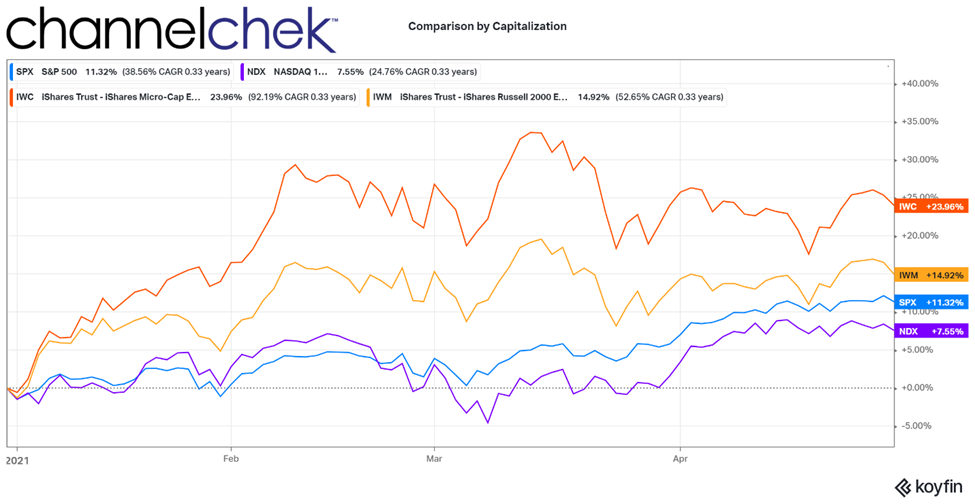
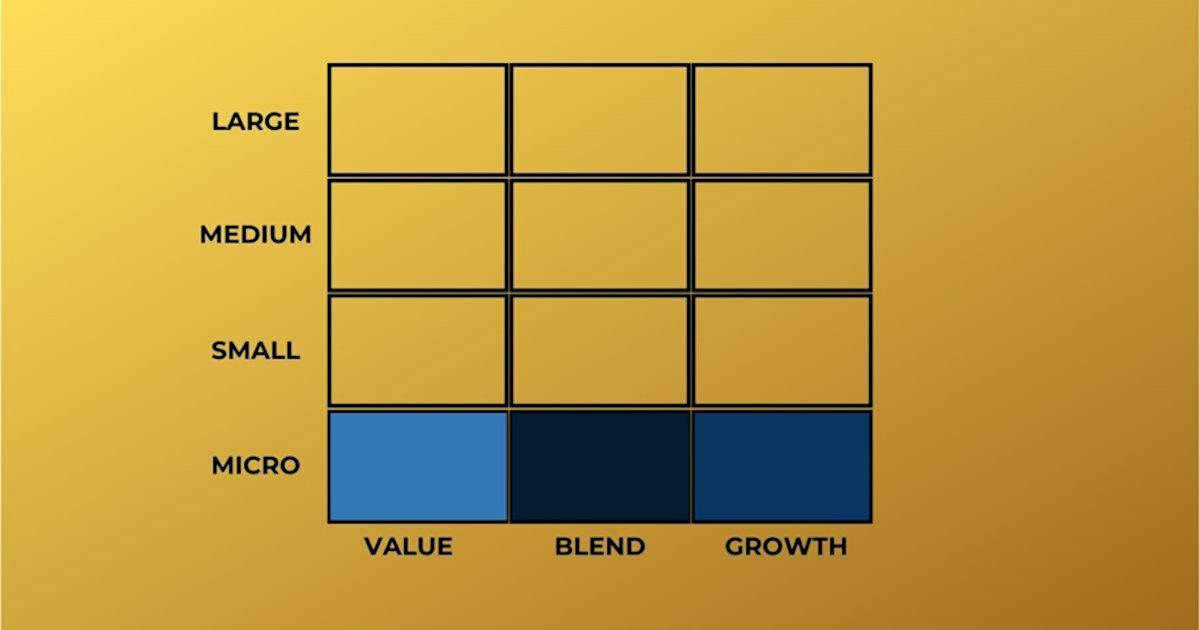
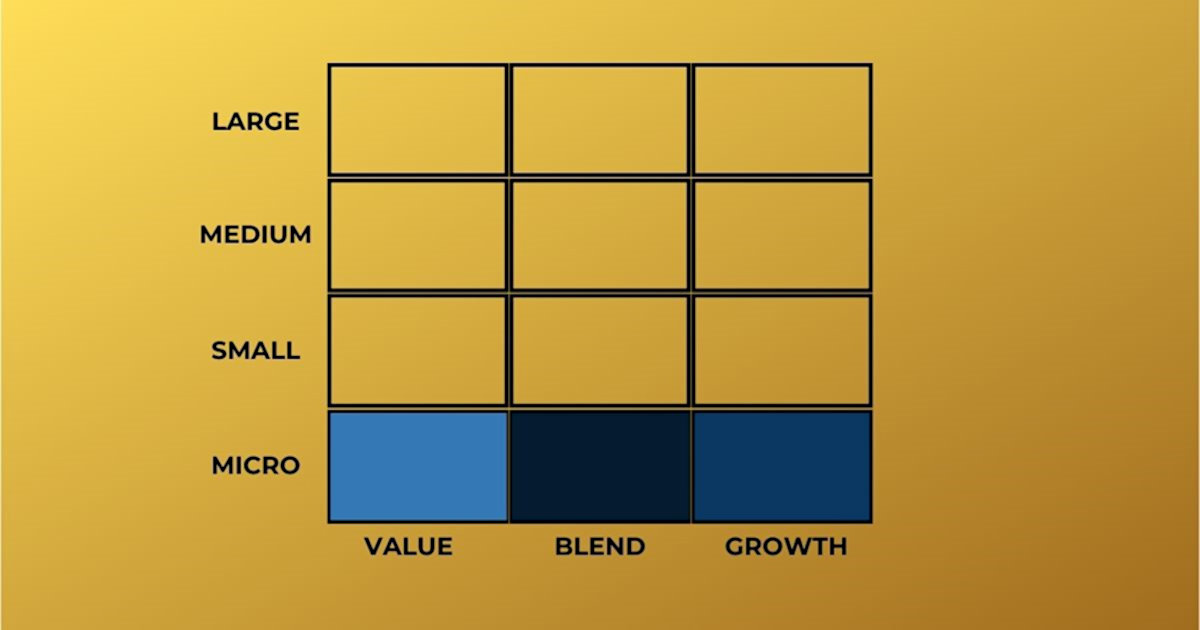
Investments in microcaps and even the smaller end of small-cap stocks have historically received less attention than mid-cap and large-cap companies. Noteworthy reasons for this include less scalability for large fund managers; also, microcaps often have less coverage on the research side. Another impactful oddity is that many worthwhile small companies lack a position in the “investment style box.”

Scalability, research and analysis, and not fitting neatly into the recognized style box all depress interest, awareness, and understanding of companies. Astute, individual investors can take advantage of the less talked about microcap sector and at the same time add diversification that could help key measures of performance.


Scalability

Imagine you’re an equity portfolio manager and have found the “secret sauce” to stock picking. You’ve backtested to 5 years with a $100,000 portfolio and the results have averaged 60% winners with a 42% average gain, and the losers and breakeven trades average just a 6% loss. With these results, your firm seeds an account with $10,000. and you now begin to test your methodology with live “ammo.” The methods driving your results include a mix of using trusted third-party fundamental analysis on small company stocks, then a common chart setup to find an entry point. After six months, your results aren’t quite as favorable relative to benchmarks as they had been, but still well ahead of the major market indexes.

The money management firm you work for has been reviewing your results and has now decided to create a fund around your investment style. They market the microcap fund heavily and over time, with very good performance, it attracts a few hundred million in assets.

With each large inflow to the fund, you find fewer opportunities because your original tested methods had a smaller universe, basically being nimble with large dollar amounts is more difficult. Even worse, whereas scaling into a position over the course of a few days with $2,000-$5,000 allowed decent price execution, doing the same with $75,000 – $250,000 or more tends to lift the stock price to the point where the trade may no longer be feasible if the size is available at all.

Unlike markets where having more to spend gives you price preference or negotiation power, with smaller, less liquid companies, small investors have an advantage. Your $10,000 “test” account with a 5% limit per name was able to outperform consistently. The exact same methods but with 100x the assets or more have watered down the success rate dramatically.

This is why there aren’t hundreds of funds run by large companies in this sector. The supply and demand issue would be too challenging. And since the big firms are the ones that push to get on TV to discuss their performance while they bombard you with paid ads, it is their products and stock picks that get far more coverage. This doesn’t mean there aren’t very successful small and microcap money managers, they don’t often get invited on to a major financial TV show as they aren’t big advertisers or even in need of adding hundreds of millions to any one of their portfolios.



Available Equity Research

The firms that do manage funds and portfolios that specialize in smaller companies rely on their understanding of the company fundamentals. This is another reason individuals may not be taking full advantage of smaller companies – the average investor simply doesn’t find much information written on them, and most investors aren’t capable of digging into the firm’s business model, their financials, or inviting themselves to meetings with management.

So, an asset management firm with in-house analysis can find stocks that are necessarily overlooked by large funds because of scalability, yet the stocks that represent great value can achieve outsized performance.  They are the players with “better” information and opportunity.

Fortunately for those transacting for smaller pools of money or even themselves, if they understand the value of investing in less correlated (vs. S&P 500) assets, they can now find well-presented research from veteran analysts with bulge-bracket firm pedigree. This top-tier analysis, coupled with low or no-cost brokerage trades, makes small company stocks well worth considering for a prudent portion of an overall asset mix.


Style Box

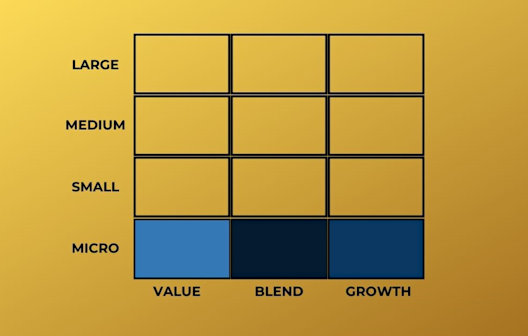
Since 1992 Morningstar and others that adopted the style box grid have taught investors to think of nine different categories of stock market investing. At the time Morningstar served those evaluating mutual funds, so the simplicity of boiling it down to a few columns made investor choices easy. However, the reduced complexity is oversimplified and ignores important sectors that can’t easily be scaled up into large mutual funds. There is a reason people are always encouraged to “think outside the box,” for many, it isn’t natural to look beyond what is put in front of them. If we round the style box up to a dozen options we could allow investors to visually see how they could improve diversification.

Fortunately, much of this is changing as self-directed investors become more sophisticated and begin to recognize that unless they’re allocating tens of millions of their own money, the case for microcap investments, both as a standalone asset class and for the role it can play as a less correlated allocation is compelling and worth considering as research becomes more widely available.


Take-Away

Individuals and small money managers aren’t being exposed to an option that may well suit them. The reasons are that media coverage is far less, the effort to uncover opportunities may be a bit higher, and they may be mentally stuck inside of a style box that was designed to serve the mutual fund industry. Resources available for people to manage their own portfolios have grown alongside technological advances.  Not all resources are of the same quality, but top-tier equity research and execution of trades now can be found without a cost to individuals.

Channelchek is a resource for exploring opportunities in the small and microcap space. With a growing list of companies covered by top-tier analysts, it is worth regular visits to the website to help find ideas to enhance and diversify your portfolio outside of the very dated box.


Paul Hoffman

Managing Editor, Channelchek


Suggested Reading:

Money Supply is Like Caffeine for Stocks

IRA Investments and Small-Small Cap Stocks


Small-Cap Names in a Big Crypto Market

Managing Investment Portfolio Risk


Source:

https://en.wikipedia.org/wiki/Morningstar_Style_Box

Stay up to date. Follow us:


Stay up to date. Follow us:
Analysis of a SPAC


Analysis of a Special Purpose Acquisition Company
(Part of a Channelchek Series on SPACs)


Special purpose acquisition companies (SPACs) are an increasingly popular vehicle for various transactions, including transitioning a business from a private company to a publicly traded corporation.  Some market participants believe that, through a SPAC transaction, a private company can become a publicly-traded company with a higher level of certainty as to pricing and control over deal terms when compared to a traditional initial public offerings (IPOs).

Analysis of a SPAC is part of a series of ongoing educational pieces published by Channelchek on the subject. From this edition, you should expect to gain a better understanding of:

  • Investor rights when a SPAC is in its shell company stage
  • Financial interests and motivations of SPAC sponsors
  • Evaluating investor options as it begins to de-SPAC
  • Warrants and possible impact on stockholders

Common Acquisition/Merger

Typically, a SPAC acquires or merges with a private company after a period of fewer than two years after the SPACs own introduction to the market as an IPO. Unlike a fully functioning business going public, a SPAC is non-operating and yet to be further defined aside from objective. Its primary asset is the cash which was proceeds from the IPO and perhaps contributions of founding members and sponsors.

Investing in a SPAC offering should involve a review of the potential success of the management team that formed the SPAC and the expectation that they will be able to acquire or combine with an operating business.  That acquisition or combination is known as the initial business combination; it is when the SPAC de-SPACs and is trading as other functioning public corporations do.  One consideration that must be understood is a SPAC may identify in its IPO prospectus a specific industry or business that it will target. However, it is not obligated to pursue a target in that suggested industry.

The Initial Business Combination

As the SPAC identifies the opportunity of an initial business combination, its founders and sponsors negotiate with the target before presenting for approval to SPAC shareholders. If approved by a majority vote, they execute on the takeover.  The transaction is commonly structured as a reverse merger where the operating company merges with and into the publicly traded SPAC.  The initial business may be structured in various ways; however, the combined company, once the transaction is executed, is a publicly-traded company and carries on the business it had been engaged in, while the SPAC designation ceases to exist (de-SPAC).

Evaluating an Investment in a SPAC  

Before the initial business combination, retain a copy of the prospectus and other reports (periodic and current field).  If there is third-party research available (quality research by credentialed providers), read and develop an understanding of the analyst’s evaluation. It’s important to comprehend the terms of any investment and the expectations of management.  While SPACs are generally uniform in structure and may be subject to certain minimum exchange listing requirements, it’s important to understand the specific features of any SPAC that you may commit money to. Part of this understanding includes the equity interests held by the sponsor and how they were derived (purchased versus nominal consideration).  Since the SPAC doesn’t have an operating history to evaluate, it’s important to evaluate the background of SPAC management, you should read and understand a SPAC’s IPO prospectus and periodic and current reports in the SEC’s EDGAR database.
 

SPACs generally invest the proceeds from the IPO in relatively safe, interest-bearing instruments. You’ll find the acceptable deposits or investments listed in the IPO prospectus, there are no regulatory guidelines for cash investments, so this section is important to visit.  Also, understand what anyb investment earnings are to be used for. SPACs often use the interest on the trust or escrow account assets to pay taxes.


Investor Redemption Option

A SPAC provides its investors with the option to redeem their shares rather than become a shareholder of the combined company.  Should the SPAC not be able to move forward and complete a business combination, shareholders are beneficiaries of the trust and are entitled to their pro-rata share of the amount left on deposit in the trust account. This is another area to focus on when reviewing the SPAC prospectus before committing to an investment. Review the IPO prospectus to understand the terms of the trust account, including your redemption rights and the circumstances in which cash may be released from the account.

If you purchased your shares on the open market at a cost different from the SPAC price (usually $10), your shares are redeemed at the same valuation as those that invested at the IPO price. If you own shares at a discount to the IPO price, you may profit (and have a tax situation). If you paid a premium, you will have your shares redeemed at a loss.

Consummation Period

Most
SPACs provide a two-year period for the management to identify and complete an initial business combination transaction.  The time frame is spelled out in the prospectus and should be verified. Some SPACs have opted for shorter periods.  The SPAC’s governing instruments may permit it to extend that time period – understand what you’re investing in.  In some governing documents, if a SPAC wants to extend the search period, it may be required to get shareholder approval.  There is a regulatory maximum if a SPAC lists its securities on an exchange; then it is required to complete an initial business combination within three years of its IPO. 

The current use of SPACs to acquire companies has the effect of increasing competition among SPACs and reducing the potential ideal targets. This should be weighed into your decision when tying up investment capital.

Secondary Trading

Be certain of the class of security that you’re putting in your portfolio. The initial public offering of a SPAC is often structured with securities that include common shares and warrants.  The warrants are contractual arrangements that provide registered holders the right to purchase from the company a specified number of additional shares of common stock in the future at a certain price, often a premium (out of the money) to the stock price when issued.

The initial SPAC unit will trade for some time after the IPO.  Over time, the SPAC common stock and warrants may begin trading on exchanges separately under unique trading symbols.  The SPAC generally files an 8K (Form 8-K ) and issues a press release to make interested parties aware when separate trading is to begin.  Investors who purchase SPAC securities after the IPO on the open market should be aware of whether they are purchasing units, common stock, or warrants.

The terms and stipulations of warrants are unique arrangements individual to each SPAC. It’s important to understand the contractual agreements as either an investor in common stock or in secondary warrants. The Terms will include how many shares warrant holders have the right to purchase (possible dilution of common shareholders) and as an investor how many shares a warrant would allow, the price at and period during which shares may be purchased, any circumstances under which the SPAC may be permitted to redeem the warrants, and the warrant expiration date. These terms and quantity can be found in the IPO prospectus for the SPAC.


Initial Business Combination Action Items

As the SPAC is successful in identifying a target for an initial business combination, shareholders of the SPAC can expect to receive a proxy statement to solicit shareholder approval. Shareholders will have the opportunity to vote on the transaction and as is standard in most SPAC documents, either remain a shareholder after the initial business combination or redeem their shares at its pro-rata amount as outlined earlier. In some cases, SPAC sponsors and affiliates may have enough votes to approve the transaction without a full shareholder vote.

This is a critical step, the successful (in terms of finding a target and transacting) SPAC now transitions from having assets that are a trust account to owning an operating company.  Depending on how you as an investor view the business being transacted on and whether it represents value to you, you have a window to be in or out at a pro-rata amount.

If the SPAC seeks shareholder approval of an initial business combination, it will provide shareholders with a proxy in advance of the shareholder vote.  In cases where the SPAC does not solicit the approval of public shareholders, because certain shareholders, such as the sponsor and its affiliates, hold enough votes to approve the transaction, it will provide shareholders with an Information Statement in advance of the completion of the initial business combination. 

The Proxy or Information Statement will contain information about the business of the company to be acquired, their financial statements, parties to the transaction, and the terms of the initial business combination transaction, including the capital structure of the combined entity. 

What Else?

In addition, the SPAC may require additional financings to fund the initial business combination, and those financings often involve the sponsors.  As a result, the interests of the sponsors may further diverge from your interests.  For example, additional funding from the sponsors may dilute your interest in the combined company or may be provided in the form of a loan or security that has different rights from your investments.

To learn more about a sponsor’s interests in a SPAC, review the Principal Stockholders and Certain
Relationships
and Related Party Transactions sections of a SPAC’s IPO prospectus.  You can learn more about an initial business combination and the sponsor’s interest from the Proxy Statement, Information Statement, or Tender Offer Statement.


You May Also Be Interested In:

The Lifecycle of a SPAC

Special Purpose Acquisition Corporations (SPAC) Attracting Investors


How PPI Impacts CPI Numbers

IRA Investments and Small-Cap Stocks


Stay up to date. Follow us:


Stay up to date. Follow us:

QuickChek – April 23, 2021


Ocugen Inc. Announces $100 Million Registered Direct Offering of Common Stock Priced at a Premium to Market

Ocugen announced that it has entered into definitive agreements with healthcare-focused institutional investors for the sale of an aggregate of 10 million shares of its common stock at a purchase price of $10 per share in a registered direct offering

Research, News & Market Data on Ocugen

Watch recent presentation from NobleCon17


Ocugen up 35% in Midday Trading

Ocugen shares up 35% on optimism after positive results of interim analysis of its Phase 3 study of COVAXIN, a COVID-19 vaccine candidate

Research, News & Market Data on Ocugen

Watch recent presentation from NobleCon17


Energy Fuels and Team from Penn State University Awarded Additional $1.75 Million by U.S. Department of Energy

Energy Fuels announced that the U.S. Department of Energy has exercised their option to award Energy Fuels, working with a team from Penn State University, an additional $1.75 million to complete a feasibility study on the production of rare earth element products

Research, News & Market Data on Energy Fuels

Watch recent presentation from Energy Fuels


CoreCivic Announces 2021 First Quarter Earnings Release and Conference Call Dates

CoreCivic announced that it will release its 2021 first quarter financial results after the market closes on Wednesday, May 5, 2021

Research, News & Market Data on CoreCivic

Watch recent presentation from NobleCon17


Avivagen Announces Largest Single Customer Purchase Order

Avivagen announced that it has received a purchase order for a single shipment of 4.4 metric tonnes of OxC-beta™ Livestock from UNAHCO

Research, News & Market Data on Avivagen

Watch recent presentation from NobleCon17

Stay up to date. Follow us:

QuickChek – April 22, 2021


Capstone Turbine Corporation Celebrates Earth Day 2021 With Its Transformation Into Capstone Green Energy Corporation (Nasdaq: CGRN)

Capstone Turbine announced that effective immediately it will become Capstone Green Energy Corporation (www.CapstoneGreenEnergy.com) (NASDAQ:CGRN), a global partner in carbon reduction and on-site resilient green energy solutions

Research, News & Market Data on Capstone Green Energy
Watch recent presentation from Capstone


Travelzoo Reports First Quarter 2021 Results

Travelzoo announced financial results for the first quarter ended March 31, 2021

Research, News & Market Data on Travelzoo


Lineage Announces Appointment Of Dr. Dipti Amin To Its Board Of Directors

Lineage Cell Therapeutics announced the appointment of Dr. Dipti Amin, MBBS, FFPM, MRCGP, DCPSA, DCH, DRCOG, DGM, to the Company’s Board of Directors, effective as of April 20, 2021

Research, News & Market Data on Lineage Cell Therapeutics

Watch recent presentation from NobleCon17


Ceapro Inc. Reports Fourth Quarter and Full Year 2020 Financial Results and Operational Highlights

Ceapro Inc. announced operational highlights and financial results for the fourth quarter and full year ended December 31, 2020.

Research, News & Market Data on Ceapro

Watch recent presentation from NobleCon17


Happy Earth Day! The International Energy Agency has compiled some data for you

CO2 Emissions by Country


Sierra Metals To Invest US$28 Million For An Iron Ore Processing Plant

Sierra Metals announced that its Board of Directors has approved the investment by the Company of US$28 million for the construction of a magnetite processing plant

Research, News & Market Data on Sierra Metals

Watch recent presentation from NobleCon17

Stay up to date. Follow us:

Earth Day Stocks to Review


Earth Friendly Stocks for Earth Day (and beyond)


The first Earth Day, back in 1970, was the idea of Senator Gaylord Nelson as a way to force environmental issues into the national discussion. At the time, there was no EPA, no Clean Air Act, no Clean Water Act, and no smog or efficiency standards – the average car averaged 11.9 mpg on leaded gasoline.

Since that first Earth Day on April 22, 1970, each that has followed has been an occasion to celebrate past successes and recognize how much more can be done. From the perspective of an inhabitant of this planet, the progress benefits us now and preserves sustainability for the future; from purely an investor’s standpoint, cleaner environmental initiatives lead to the kind of change in spending that provides opportunity. The year 2021 is ushering in these opportunities with a number of objectives that will force transition in many businesses. High on the list in the U.S. is the re-signing of the Paris Agreement earlier this year. Additionally, President Biden has pledged that the country will work to slash America’s greenhouse gas emissions at least in half by 2030, with longer-term efforts to achieve a 100% clean energy economy and reach net-zero emissions no later than 2050. The U.S. president is hosting a virtual summit of 40 world leaders to discuss climate initiatives this week. During the summit, Biden is expected to ask for new commitments from the world’s biggest carbon emitters.

Earlier this year, Biden had proposed an infrastructure initiative, in which he expects to spend $2 trillion over eight years for infrastructure projects to curb the country’s greenhouse gas emissions. Portions of this corporate tax-funded spending will be used for clean-energy measures, including electric vehicle funding, research, and development, the addition of charging stations and retrofitting buildings and residences.


Five Earth-Friendly Stocks to Read Up On

An even greener red, white, and blue will make winners out of companies that were barely getting noticed a few of years ago. Environmental regulation and changing business attitudes focusing more on ESG will impact sectors such as manufacturing, fuel generation, metals and mining, utilities, and others. Below are five Earth-friendly stocks that could be worth checking in on.


GEVO Inc. (GEVO) is a renewable chemicals and biofuels company that develops and brings to market alternatives to petroleum-based products based on isobutanol produced from renewable feedstocks.

The “low carbon” fuel company has developed a breakthrough process that converts a high-octane fuel called isobutanol into clean, renewable diesel. The green diesel can also be made from fusel oils, a mixture of several alcohols produced as a by-product of fermentation.


Capstone
Turbine Corp.
(CPST,
CS:CA
) is a leading global producer of highly efficient, low emission, microturbine energy systems. Their microturbines serve multiple vertical markets throughout the world; they include natural resources, energy efficiency, renewable energy, critical power supply, transportation, and microgrids.


Comstock
Mining
Inc. (LODE)  is an emerging leader in the sustainable extraction, valorization, and production of innovation-based, clean, renewable natural resources. Their focus is on high-value, cash-generating, strategic materials that are essential to meeting the rapidly increasing global demand for clean energy, carbon neutrality, and natural products.


Energy
Fuels
(UUUU,
EFR:CA
) is a leading U.S.-based uranium mining company supplying U308 to major utilities operating in the nuclear realm. The company also produces vanadium from certain projects as called for by market demand. Energy fuels expects to begin commercial production of rare earth element (REE) carbonate in 2021.


enCore
Energy
(ENCUF,
TSX:V
) is a uranium explorer and developer focused on growing its portfolio of ISR (in situ recovery) and conventional assets in the U.S. The experienced team of uranium experts have advanced large domestic growth
projects and successful sale of those projects.


Take-Away

As we recognize our 51st Earth Day it’s good to remember that at that time there was very little regard for the impact of industry on the planet. While some countries now have a better record than others, and more service-related industries are naturally more green, the strides we’ve made over five decades have yielded measurable results. As the global push toward a “greener” environment accelerates, there will be winners; whether an investor considers themselves to be an “impact investor” or an investor that is following trends, Earth-friendly investments offer tremendous potential.


Suggested Videos:


enCore Energy C-Suite Interview

Capstone Turbine Virtual Road Show Replay


Comstock Mining Virtual Road Show Replay

Energy Fuels C-Suite Interview


Stay up to date. Follow us:


Stay up to date. Follow us:

QuickChek – April 21, 2021


Energy Fuels and Hyperion Sign MOU for the Supply of Monazite to Produce Rare Earth Products

Energy Fuels announced the execution of a non-binding memorandum of understanding for the supply of natural monazite sands from Hyperion’s Titan Project in Tennessee

Research, News & Market Data on Energy Fuels

Watch recent presentation from NobleCon17


CanAlaska Completes Initial Drilling at Waterbury

CanAlaska Uranium announced that it has curtailed winter drilling on its 100%-owned Waterbury uranium project

News & Market Data on CanAlaska Uranium


Ocugen Shares Positive Results of the Second Interim Analysis of Phase 3 Study of COVAXIN

Ocugen announced that its co-development partner, Bharat Biotech, shared positive results of the second interim analysis of its Phase 3 study of COVAXIN, a whole virion inactivated COVID-19 vaccine candidate

Research, News & Market Data on Ocugen

Watch recent presentation from NobleCon17


ISG Adds Real-Time Data Feeds To Its Vendor Compliance And Risk Management Platform

Information Services Group announced that it is adding real-time data feeds to its market-leading ISG GovernX® vendor compliance and risk management platform

Research, News & Market Data on ISG

Watch recent presentation from NobleCon17


Gevo to Report First Quarter 2021 Financial Results on May 13, 2021

Gevo, Inc. announced that it will host a conference call on Thursday, May 13, 2021 at 4:30 p.m. EDT to report its financial results for the first quarter ended March 31, 2021

Research, News & Market Data on Gevo

Watch recent presentation from NobleCon17


Ayala Pharmaceuticals Announces First Patient Dosed in Phase 1 Clinical Trial of AL102

Ayala Pharmaceuticals announced the dosing of the first patient in the ongoing Phase 1 clinical trial evaluating its potent investigational gamma secretase inhibitor (GSI), AL102, in combination with Novartis’ investigational anti-B-cell maturation antigen (BCMA) agent, WVT078

Research, News & Market Data on Ayala Pharmaceuticals

Watch recent presentation with Ayala CEO Roni Mamluk, PhD


Kratos Awarded Approximately $30 Million to Support Space-Related National Security Efforts

Kratos Defense & Security announced that it had received more than $30 million to support space-related U.S. national security efforts

Research, News & Market Data on Kratos Defense & Security

Stay up to date. Follow us:

QuickChek – April 20, 2021


Bunker Hill Mining Announces Robust Restart PEA

Bunker Hill Mining reported the results of its Preliminary Economic Assessment (“PEA”) for the Bunker Hill Mine in Idaho’s Silver Valley, USA

Research, News & Market Data on Bunker Hill Mining


Capstone Turbine Saved End-Use Customers Over $217 Million In Energy Costs And Approximately 397,000 Tons Of Carbon

Capstone Turbine announced that in Fiscal 2021 the Company estimates it saved its end-use customers over $217 million in annual energy costs and helped them reduce carbon emissions by approximately 397,000 tons

Research, News & Market Data on Capstone Turbine

Watch recent presentation from Capstone Turbine


Genprex to Receive Inaugural “License of the Year” Award from University of Pittsburgh Innovation Institute

Genprex, Inc. announced that the Company has been selected to receive the inaugural “License of the Year” award from the University of Pittsburgh Innovation Institute (UPII) in recognition of the advances made toward progressing the development of its gene therapy for diabetes

Research, News & Market Data on Genprex

Watch recent presentation from NobleCon17


electroCore, Inc. Announces Exclusive Distribution Agreement with East Agency For Qatar

electroCore announced that it has entered into an agreement with East Agency to serve as the exclusive distributor of the gammaCore Sapphire™ non-invasive vagus nerve stimulator in Qatar

Research, News & Market Data on electroCore


Lineage Announces Worldwide License Agreement With Immunomic Therapeutics For An Allogeneic Cell-Based Cancer Immunotherapy

Lineage Cell Therapeutics announced a worldwide license and development collaboration agreement with Immunomic Therapeutics, Inc.

Research, News & Market Data on Lineage Cell Therapeutics

Watch recent presentation from NobleCon17


New Waitlist for Reddit Talk – Have you Added Yourself?

Reddit announced that they are in the testing phase of what is starting to be a trend in social media

Stay up to date. Follow us:

NFTs Explained, What They Are, Why the Excitement


Making Sense of Non-Fungible Tokens – Living in a Digital World


Investing is becoming increasingly digital and, along with that trend, so are assets. Recent news of Twitter founder Jack Dorsey’s first tweet selling as an NFT (non-fungible token) spread across the internet by storm. Lindsay Lohan dropped her first single in years, titled “Lullaby,” as an NFT. But what is an NFT, why is it so valuable, and how does it relate to cryptocurrencies and digital asset trading?


A Beginners Guide to NFTs

An NFT, or non-fungible token, is a unique digital asset that cannot be exchanged or broken down. Essentially, it is the opposite of a currency, where one coin or bill is the same as another of equal value. It consists of unique lines of code that are used to create anything from digital art, digital fashion items, collectible sports cards, virtual real estate, video game skins and characters, music albums, and even ownership licenses.

NFTs have been around since 2017 when Canadian developers at Dapper Labs experimented with an Ethereum-based blockchain game. The game allowed players to adopt, raise and trade virtual cats in exchange for a breed fee paid in Ethereum. It eventually evolved into a marketplace for the CryptoKitties, which have become digital assets that rise and fall in value the same way as any other asset.

Essentially, the value of an NFT comes from its uniqueness. Each NFT is differentiated from the other to create its value, and its value comes from its scarcity.

For a buyer, NFTs provide a secure certificate of ownership over the asset, much like a certificate of authenticity for designer and luxury goods, jewelry, or vintage items.

For a seller, NFTs make it possible to sell something today that keeps earning value in the future. NFTs can be coded to allow the original creator to collect money each time the token moves hands. Because of this, artists, in particular, have an incentive to create NFTs to avoid exploitation of their creations and keep ownership and control over their pieces.

In the realm of gaming, popular video games such as Fortnite and Roblox have assets like digital weapons and character skins that cannot be traded within the game. The use of these assets is also limited to the game in which the asset is bought. With NFTs, coveted items can be easily transferable, solving one of the biggest complaints by avid gamers.


The Pros and Cons of NFTs

Most NFTs are created using one of the two Ethereum token standards, meaning that, for now, they can only be bought and sold using Ethereum. NFTs could introduce millions of people to cryptocurrencies for the very first time. However, enabling people to continue using cryptocurrencies easily requires a much more simplified version of NFTs and, perhaps, NFTs built using a variety of cryptocurrencies.

Non-fungible tokens have not been embraced as speedily as some advocates had hoped, partly because the Ethereum-based protocols around them are so new. Developing applications for the proper use of NFTs can also be tricky and time-consuming.


Take-Away

NFTs are redefining digital asset trading. They can make it possible to own everything from a digital asset to a real-world asset thousands of miles away. However, NFTs can also have a ”hot potato” effect where individuals might buy an asset in the hope of flipping it for a profit but may get caught as the scarcity of buyers when enthusiasm settles may cause large market swings.


About the Author:

Laila Jiwani is a freelance writer specializing in topics related to social finance
and international economic trends. Currently based in Dallas, Texas, she is an
Erasmus Mundus Joint Master’s Graduate and has worked for economic development
organizations in the U.S., Morocco, Kenya, Pakistan and Kyrgyzstan.


Suggested Reading:

Small-Cap Names in a Big Crypto Market

What’s the Timeline for a U.S. Digital Currency?


ESG Indicators and How Investors Use Them

Cord-Cutters, Advertisers, and Market Disruption


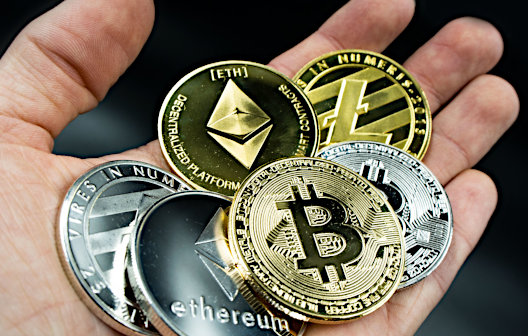
Graphic/Photo by Marco Verch

Stay up to date. Follow us:


Stay up to date. Follow us:
QuickChek – April 19, 2021


PDS Biotech Announces Participation in Noble Capital Markets Virtual Road Show Series

PDS Biotechnology announced their participation in Noble Capital Markets’ Virtual Road Show Series, presented by Channelchek, scheduled for April 21, 2021

Research, News & Market Data on PDS Biotechnology


Bunker Hill Mining to Announce PEA Results on Tuesday, April 20

Bunker Hill Mining announced that it will be releasing its Preliminary Economic Assessment (“PEA”) results on Tuesday, April 20, 2021 prior to markets opening

News & Market Data on Bunker Hill Mining

Stay up to date. Follow us:

The Lifecycle of a SPAC


Lifecycle of a Special Purpose Acquisition Company
(Part of a Channelchek Series on SPACs)


Special purpose acquisition companies (SPACs) are essentially shell companies. That is to say; they have no business activities, just a legal structure. On the path to becoming a SPAC, the shell company applies for a listing on a stock exchange to raise money with the intent to use the capital to acquire a business.  While there is a lot of information available to consume surrounding the magnitude of 2020s SPAC activity (up 400%), or the more accelerated level of deals in 2021, our readers have told us they would like more information regarding the structure of these opportunities, how they might become involved, where research might be found on acquisition targets, common terms used, and risks.

Lifecycle
of a SPAC
is the first of what will be ongoing educational pieces published by Channelchek on the subject. From it, you should gain a better understanding of:

  • How the initial SPAC comes into being and the risk and rewards of the SPAC founders
  • Expectations, contractual and otherwise of all parties
  • The fate of the minority SPAC shareholders that reject a target for acquisition of an upvoted company
  • How SPACs differ from traditional IPOs

At its
Most Basic

All SPACs originate with an initial formation, which is then followed by its IPO. After there is a search for a target acquisition. Once found, there is a shareholder merger vote, with approval by shareholders, the acquisition is close upon. Should no identified target be acceptable to shareholders, after an agreed-upon time frame spelled out during the SPAC formation, proceeds are returned to the initial investors. 

Five Main Steps from SPAC to De-SPAC


Life Cycle

FORMATION
– Step One

 At the outset, when a SPAC is created, the sponsor and often its management team contribute a relatively small amount for a cash stake in the investment offering; this “skin-in-the-game” is referred to as “founders’ stock.”  The stock of these founding investors is generally 20 percent of the stock after the SPACs initial public offering.  This is their compensation for creating the shell company, identifying a suitable target, and closing the merger. The sponsor that is managing parts of the structure may lend use of the founder’s contribution to fund ongoing expenses. In addition, the SPAC selects legal counsel and underwriters and establishes its governing documents.


INITIAL
PUBLIC OFFERING (IPO) – Step Two

After the SPAC is created and all of the defining documents, including legal existence are in place, the shell corp begins the public offering process with the intent to find a suitable target.  This includes the SPAC filing with the SEC, an initial registration statement. The SPAC then typically raises capital by issuing units (these often consist of common shares and warrants); the proceeds raised are held in a trust and not released until a target is acquired or funds returned to investors.

After the offering, the units are separated into shares of common stock and tradable warrants. The warrants are designed to minimize dilution yet provide added compensation for the initial investors. They are often exercisable within a short time frame after a merger is completed.


TARGET
SEARCH
– Step
Three

The search for a suitable acquisition includes the sponsors vetting potential businesses through a ramped-up financial and legal due diligence process. Historically, SPACs had been focused on companies with a positive EBITDA. More common targets since 2020 have been a pre-revenue “story-stock.” These are at times referred to as a “unicorn,” ie, it is so special that its apparent value creates enthusiasm.

There is a timeline defined prior to the SPAC IPO to close an acquisition, it depends on multiple factors. One factor is that dissenting SPAC shareholders have the right to redeem shares; this could create uncertainty regarding the amount of funding available to pay target shareholders and to cover months of operating expenses after closing. This often leads to SPACs, and the acquired to negotiate “minimum cash” on closing. For this reason, SPAC acquisitions often include a simultaneous Private Investment in Public Equity (PIPE) upon merging.


SHAREHOLDER
VOTE – Step Four

SEC proxy rules and approval of corporate bylaws typically require shareholder acceptance before the completion of the de-SPAC process. With this, the completion of a merger typically requires the entities to file a proxy with the SEC, obtain and respond to the SEC’s comments, mail the proxy to the SPAC’s shareholders, and hold a shareholder meeting. The sponsor and other founding shareholders committed as they founded the entity to vote their interest which is typically 20% in favor of a transaction, this decreases the number of additional common shares needed to vote in favor of the merger.


ACQUISITION
CLOSE – Step Five

If an affirmative majority vote is obtained from the proxy process, the target acquisition can close by merging into the SPAC, then the target company becomes a reorganized publicly traded entity. A Super 8-K must be filed within four days of the acquisition. It contains substantially the same information that would be required in a registration statement for companies that go through a traditional IPO. Further, the sponsor’s founders’ shares and warrants are locked up for a specified period (the “lock-up period”) starting from the date of the Super 8-K filing. The lock-up period is typically one year and was decided at the early stages of the SPAC.

Other
Information

The public offering steps of a SPAC differ from that of a traditional IPO in at least one very important way.  The target company, if it is eventually acquired, was not involved in the formation of the SPAC or the IPO. Instead, the terms of the offering in a SPAC IPO and the agreements the SPAC has with their management team, and sponsor, takes the lead role. They decide the value that the acquired company investors extract from any SPAC merger.


Related Channelchek
Articles:

Will 2020 go Down as the Year of the SPAC (July 27, 2020)

SPAC Activity Accelerating in 2020 (August 21, 2020)


Stay up to date. Follow us:



Stay up to date. Follow us: