The High Growth of ESG Investing can Reduce Adherence to Principles


Image Credit: Pixabay (Pexels)


ESG Investors Who are Concerned About Environmental and Social Impact Should Closely Watch Their Investments


ESG funds received double the amount of money in 2020 than they did in 2021. Funds that say they use ESG principles or Environmental, Social, and Governance to dictate their investment universe captured $51.1 billion in net new money from investors in 2020. This is the fifth year in a row this subset of funds has set a record on higher net increases.

Since the start of 2019, stock mutual funds and stock ETFs with ESG as part of their selection process have received a net $473 billion from investors. To illustrate how big this is, only $103 billion has gone into all other stock funds. With all this new money entering ESG funds, some companies are inclined to “paint themselves as green” in order to get investor attention. Some fund managers flush with new cash may be inclined to stretch their definition in order to keep fully invested.

Two Types of ESG Investors

There are two primary types of ESG investors, those that are very concerned for the environment and hold certain social beliefs dear, and there are those that want to ride the wave of a trend that has a great deal of money chasing it. For those trying to capture a trend, ETFs and mutual funds geared toward this label may make sense. For investors truly concerned about the environment, and would like to be more sure companies they own behave in ways they deem important, they may wish to create their own portfolio. In this way, they can be more intimate with each company they decide to own.

Funds “Cheat”

 In 1990 the mutual fund company I worked for opened one of the first social choice accounts. The idea was that it would support investments that “did good” and shun those that caused harm. Many of the environmental guidelines are similar to todays’ ESG funds; back then, we also eliminated any investments related to apartheid South Africa and required adherence to the MacBride Principles in Northern Ireland. As I recall, we screened to make sure there were no tobacco, alcohol, or firearms related companies. As a new fund, it was seeded with a $200 million investment from an existing large fund we managed. When a new fund is seeded, before investors arrive, the investments are kept somewhat liquid and low risk as the money needs to be returned to the sister fund.  My role was to invest this money, initially, it was expected to be placed in U.S. Treasury Notes. The problem I had with this is I read the prospectus, and within it was language that suggested that issuers that produced or were in the business of funding firearms were to be excluded. Certainly, the U.S. Treasury as an issuer fell into this category.  Long story short, we made an exception—one of many exceptions we made for that fund over the years.  With little competition for suitable companies, we broke our own social guidance on day one.

Companies “Cheat”

 A story in this past Friday’s Wall
Street Journal
highlighted an entrepreneur whose company, which mined the sea floor, went broke as the local government cracked down on his mining of the sensitive seabed.  The same entrepreneur has recently gotten back into the business of seabed mining, but this time positioning his new seabed mining venture, The Metals Company (TMS), as green, to attract capital during this surge of environmentally steered funds.

TMC is likely to receive approximately $600 million in investor cash in a deal to take the company public in July. If successful, that would value TMC at $2.9 billion—more than any mining company ever to go public in the U.S. with no revenue.

This is one example where a company that produces something for one green industry may not produce it in a way that would make environmentally-minded people comfortable. But fitting an ESG definition at times is all that is needed to attract capital from large managers.

Alternative to Funds

Investors that are drawn to this category, particularly with the demands placed on fund managers inundated with cash and searching for value in trading-lot sizes of $1 million or more, may want to rely on their own evaluations. Technology has changed and makes this easier and more cost-efficient than ever before. We are lucky to have a trading environment where transactions are essentially free, fractional shares are available at many brokers, and access to company information is at your computer screen.

Individual investors have a true advantage over a large fund manager in that most funds will have withdrawals when the market is down and investors are frightened,  and they will get untimely deposits when the market is up. They are often forced to buy high and sell low. Individuals are not forced to but or sell, nor are they held to maximum percentage cash restrictions.  They are also more nimble. With all the money flowing into the sector, investing in a retail size block compared to an institutional size block gives you more pricing power than the big guys.


Take-Away

Let the buyer beware especially applies to ESG funds today. There are companies that are reinventing themselves as green that may not fit other definitions, and there are fund managers that are being inundated with cash looking for value in with large trades.

Investors can use their free online trading, and free top-tier research and data from Channelchek and other sources to evaluate companies themselves and weigh them against their own heart.

Paul Hoffman

Managing Editor, Channelchek


Capstone Green Energy Corporation (CGRN) Monday June 28 @ 1:00pm EDT

Join Capstone Green Energy Corporation CEO Darren Jamison for this exclusive corporate presentation, followed by a Q & A session moderated by Michael Heim, Noble’s senior research analyst, featuring questions taken from the audience. Registration is free and open to all investors, at any level.

Register Now  |  View All Upcoming Road Shows

 

Suggested Reading:

Who Benefits from the American Jobs Plan?

Big Tech Doing Whatever it Takes to Demonstrate Commitment to Green Solutions


Copper Facing an Onslaught of Demand

Is ESG and B-Corp Investing Smart?


Sources:

https://www.cnbc.com/2021/02/11/sustainable-investment-funds-more-than-doubled-in-2020-.html

https:/www.morningstar.com/lp/sustainable-funds-landscape-report

https://www.tiaa.org/public/about-tiaa/news-press/press-releases/pressrelease604.html#:~:text=TIAA%2DCREF%20was%20one%20of,Social%20Choice%20Account%20in%201990


Stay up to date. Follow us:


Stay up to date. Follow us:

Cocrystal Joins Russell Microcap® Index


Cocrystal Joins Russell Microcap® Index


BOTHELL, Wash., June 28, 2021 (GLOBE NEWSWIRE) — Cocrystal Pharma, Inc. (Nasdaq: COCP) (“Cocrystal” or the “Company”), a clinical-stage biotechnology company discovering and developing novel antiviral therapeutics that target the replication machinery of influenza viruses, coronaviruses, hepatitis C viruses and noroviruses, announces that it will be added to the Russell Microcap® Index after the U.S. market opens today, June 28, 2021.

“We are delighted that Cocrystal will now be included in the Russell Microcap® Index, which is a broadly used performance benchmark for smaller growth stocks in the U.S.,” said James Martin, Cocrystal’s interim co-CEO and CFO. “This is a notable milestone for Cocrystal that will further raise awareness of our company within the global investment community as we advance development of our antiviral programs including the planned initiation of an influenza A Phase 1 trial in the third quarter.”

Membership in the Russell Microcap® Index, which remains in place for one year, means automatic inclusion in the appropriate growth and value style indexes. FTSE Russell a leading global index provider determines membership for its Russell indexes primarily by objective, market-capitalization rankings and style attributes.

Russell indexes are widely used by investment managers and institutional investors for index funds and as benchmarks for active investment strategies. Approximately $10.6 trillion in assets are benchmarked against Russell’s U.S. indexes. For more information on the Russell Microcap Index and the Russell indexes reconstitution, go to the “Russell Reconstitution” section on the FTSE Russell website. The information on the FTSE Russell website is not part of this press release.

About Cocrystal Pharma, Inc.
Cocrystal Pharma, Inc. is a clinical-stage biotechnology company discovering and developing novel antiviral therapeutics that target the replication process of coronaviruses (including SARS-CoV-2), influenza viruses, hepatitis C viruses and noroviruses. Cocrystal employs unique structure-based technologies and Nobel Prize-winning expertise to create first- and best-in-class antiviral drugs. For further information about Cocrystal, please visit www.cocrystalpharma.com.

Cautionary Note Regarding Forward-Looking Statements
This press release contains forward-looking statements within the meaning of the Private Securities Litigation Reform Act of 1995, including statements regarding the advancement of our programs such as the planned initiation of influenza A Phase 1 trial in the third quarter of 2021. The words “believe,” “may,” “estimate,” “continue,” “anticipate,” “intend,” “should,” “plan,” “could,” “target,” “potential,” “is likely,” “will,” “expect” and similar expressions, as they relate to us, are intended to identify forward-looking statements. We have based these forward-looking statements largely on our current expectations and projections about future events. Some or all of the events anticipated by these forward-looking statements may not occur. Important factors that could cause actual results to differ from those in the forward-looking statements include, but are not limited to, the risks and uncertainties arising from the impact of the COVID-19 pandemic on the national and global economy and on our Company, including supply chain disruptions and our continued ability to proceed with our programs, including our influenza A program, our ability to complete the preclinical and clinical trials, the ability of the contract research organization to recruit subjects, the results of such future preclinical and clinical studies, and general risks arising from clinical trials and more generally, the development of investigational drugs. Further information on our risk factors is contained in our filings with the SEC, including our Annual Report on Form 10-K for the year ended December 31, 2020. Any forward-looking statement made by us herein speaks only as of the date on which it is made. Factors or events that could cause our actual results to differ may emerge from time to time, and it is not possible for us to predict all of them. We undertake no obligation to publicly update any forward-looking statement, whether as a result of new information, future developments or otherwise, except as may be required by law.

Investor Contact:
LHA Investor Relations
Jody Cain
310-691-7100
jcain@lhai.com

Source: Cocrystal Pharma, Inc.

Russell 2021 Reconstitution Indicates Significant Change


Important Russell Reset 2021 Data


The seismic shifts in the markets, as highlighted by the Russell Index reset, will impact individuals, money managers, investment advisors, and funds. Below are Five FTSE Russell facts that demonstrate how different the markets became in a year.


  1. The U.S. Stock Market is Worth Much More – According to FTSE Russell, the total U.S. equity market capitalization increased by 52%, leaving it at $48 trillion as of May 2021. This is up from $31 trillion in 2020.
  2.  

  3. Sectors Have Shifted – The Russell 2000 Index saw a large increase in health care, while there was a decrease in consumer discretionary. About half of the 43 IPOs added to the Russell 3000 are health care companies. Within the large-cap Russell 1000, the sector shifts are relatively minor. The technology and consumer discretionary weighting slightly increased.
  4.  

  5. Large-Cap and Small-Cap Stocks are Much Larger – As of now, the market cap dividing line from where the small-cap Russell 2000 Index ends and the large-cap Russell 1000 Index begins is $5.2 billion in market capitalization. This number was only $3.0 billion last year. This 73% jump is massive. Entry into the small-cap index last year took $95 million (Limestone Bancorp). This year the smallest company in the Russell 2000 has a market cap of $257 million (Velocity Capital).
  6.  

  7. Mega cap Stocks are Mega-mega – There are four companies with more than $1 trillion in market cap. Alphabet (Google) surpassed this level last year and now joins Microsoft, Apple, and Amazon with this distinction.
  8.  

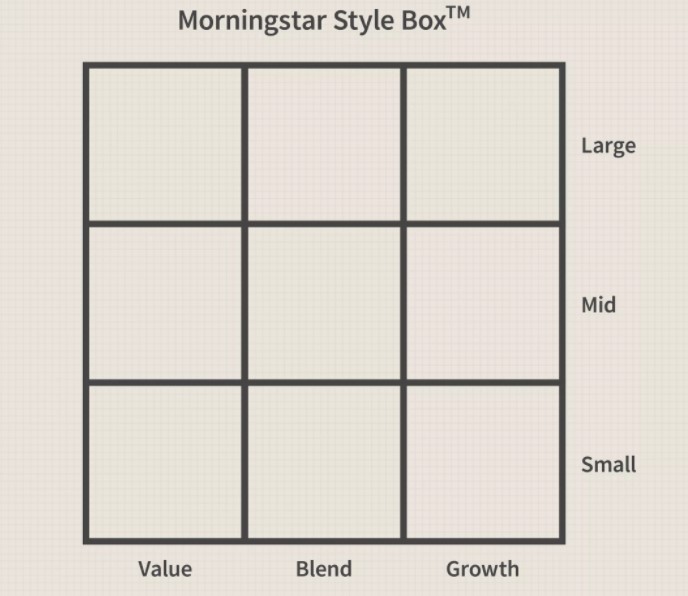
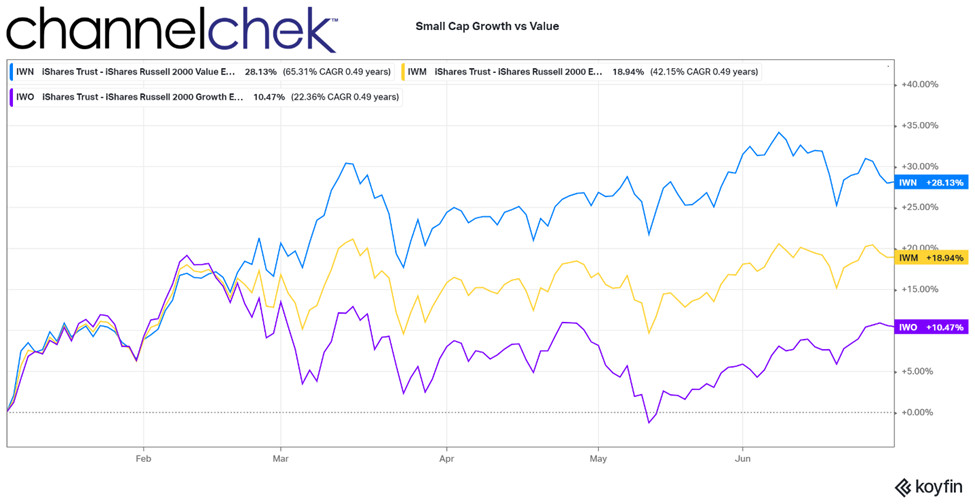
  9. Value Has Undeniably Outperformed Growth – The Russell 2000 Value Index returned 79% compared to 50% for the Russell 2000 Growth stocks through May. Comparing large caps, the Russell 1000 Value had a total return of 44% versus the Russell 1000 Growth at 40%.


If you’re investing in an index, it’s important to make sure the index truly represents the space and sector you are forecasting. The changes since last year have small stocks in the Russell small-cap index much larger than they had been. Also, changes in the size of health care companies and discretionary goods are likely to be pandemic related and could act differently going forward.


Suggested Reading:

How Covid and 2020 Investors Monkeyed with the Russell Reconstitution

Why the Smart Money is on the Individual Investor in 2021


Sources:

FTSE Russell website.

https://www.barrons.com/articles/changes-in-this-years-russell-index-rebalancing-are-too-big-to-ignore-51624310730?mod=hp_DAY_Theme_1_3


Stay up to date. Follow us:


Stay up to date. Follow us:

QuickChek – June 28, 2021


Important Russell Reset 2021 Data

Lineage Cell Therapeutics (LCTX) Joins Russell 3000® And Russell Microcap® Indexes

Cocrystal Pharma (COCP) Joins Russell Microcap® Index
See today’s research report from Robert LeBoyer, Senior Research Analyst at Noble Capital Markets


Kratos Successfully Completes Engine Testing for an Affordable and High Performance Turbine Engine

Kratos Defense & Security Solutions announced that Kratos Turbine Technologies Division has successfully completed a core engine test campaign under KTT’s Advanced Turbine Technologies for Affordable Mission (ATTAM) contract

Research, News & Market Data on Kratos


Onconova Therapeutics Provides An Update On The Phase 1/2a Trial Of Rigosertib-Nivolumab Combination In KRAS+ Non-Small Cell Lung Cancer

Onconova Therapeutics announced an update on the investigator-initiated Phase 1/2a trial of oral rigosertib plus nivolumab in advanced metastatic KRAS mutated (KRAS+) non-small cell lung cancer (NSCLC)

Research, News & Market Data on Onconova

Watch recent presentation from Onconova

Stay up to date. Follow us:

SPAC Investors Benefit from the Ability to Exercise Different Options


Optionality – The Different Ownership Paths Before the De-SPAC Period


The journey for an investor in a SPAC IPO, or even those who purchased the SPAC in the secondary market, is filled with several potential avenues. One possibility is the SPAC itself may trade higher to the point where liquidating before a De-SPAC, or pro-rata distribution occurs, makes sense to the holder. Another scenario is the shareholder may sit with the position and find the SPAC sponsor discovered and successfully negotiated with a great target. They may then hold through the De-SPAC period and become an owner in the company. This is if they feel the merging company has a place in their portfolio. If the sponsor instead finds nothing after two years, holders get to collect their pro-rata share of the trust account, (which has been earning interest and paying expenses). They can then decide what other opportunity is best for their investible funds. SPAC investors also have the ability to opt-out of their shares if the target to be acquired is not to their liking; here again, they collect their pro-rata share of the escrowed cash, plus interest, less expenses.

Stock investors in publicly traded companies can buy or sell shares or purchase or sell puts or calls on their investments. Stock market investors that hold a SPAC possess optionality beyond this built into their original purchase. Optionality- The Different Ownership Paths
Before the De-SPAC Period
is part of a series of ongoing educational pieces published by Channelchek on the subject. From this edition, you should expect to gain a better understanding of:

  • How the trust account pro-rata share is split for a post-IPO public market investor
  • Earnings on the trust account while investor money is tied up.
  • Why SPAC risk is reduced by contractual shareholder options
  • How the period of up to two years could act as a market hedge to your portfolio


Trust Account Disbursement

A SPAC is created by the sponsor who raises capital through an initial public offering (IPO) with the expectation of later merging with a private company, thus taking it public.  Most agreements allow sponsors two years to execute. During this period, investors’ funds are held in an interest-bearing trust account similar to an escrow arrangement when buying a house. This third party holds the funds until the transaction is consummated (in the case of an initial business combination). In the case where the SPAC is liquidated for not having completed an initial business combination in time, the funds are returned to the investors plus interest net of expenses. 


Trust Earnings

SPAC trusts generally invest the proceeds of the IPO in relatively safe, interest-bearing instruments, but this is something that should be reviewed in each offer before getting involved. There are no hard-fast rules, so each should be investigated carefully – review the specific terms of an offering as it relates to investing proceeds.

Should there be a business combination, a SPAC provides its investors with the opportunity to redeem their shares rather than become a shareholder of the combined company.  If the SPAC does not complete a business combination, shareholders are beneficiaries of the trust and entitled to their pro-rata share of the aggregate amount then on deposit in the trust account.

This feature is why some view SPACs as a “Heads, I win – Tails
I don’t lose”
investment. For investors that purchased their shares on the open market after the IPO, they are entitled to their share of the trust account using the same formula as those that got in at the initial price. If they purchased their shares at a discount to the IPO price, they may gain upon the liquidation or even opt-out of being in on the business combination, De-SPAC phase.


Undersized Risk

For everyone involved, the ideal scenario is that the SPAC merges with the perfect target, allowing the holders to prosper from having trusted the sponsor to steer this deal to a perfect fit. This could then cause investors to exceed market returns on their $10 per share SPAC investment. Under a less rosy scenario, the downside is minimal in that the investor can opt-out before any merger, or receive their disbursement if nothing was found. For investors that purchased their SPAC on the open market at a discount, they may receive over-sized returns from any disbursement.


Possible Hedge

During periods of market uncertainty or low SPAC popularity, there could be value for investors who are cautious and do not want a long-duration interest rate investment nor a big equity position. We never know where equities may be in one to two years. Investing in a SPAC could allow yields at or in excess to what they would receive for a similar term, while at the same time provide an investment that could pay off big if equity fears for the future turn out to be inaccurate.


The Lifecycle of a SPAC

Analysis of a SPAC


Regulation of a SPAC

Merger of a SPAC


Sources:

https://www.sec.gov/oiea/investor-alerts-and-bulletins/what-you-need-know-about-spacs-investor-bulletin

https://www.barrons.com/articles/the-spac-bubble-has-popped-where-to-find-bargains-now-51621040743?mod=article_inline


Stay up to date. Follow us:


Stay up to date. Follow us:

QuickChek – June 25, 2021


PLBY Group to Join Russell 2000 Index and Russell 3000 Index

PLBY Group announced that it is expected to join the small cap Russell 2000® Index and the broad-market Russell 3000® Index at the conclusion of the 2021 Russell indexes annual reconstitution

Research, News & Market Data on PLBY Group

Watch recent presentation from PLBY Group


Capstone Green Energy Announces Participation In Noble Capital Markets Virtual Road Show Series

Capstone Green Energy announced their participation in Noble Capital Markets’ Virtual Road Show Series, presented by Channelchek, scheduled for June 28, 2021

Research, News & Market Data on Capstone Green Energy

Stay up to date. Follow us:

Index Funds Still May Fall Apart over Time


Image Credit: dfirecop (Flickr)


In Nine Years, Nearly All Boomers Will Have Retired, Is This Good for Stock Pickers?


Individual investors have it better than ever. Better in terms of available investment types. Better in terms of charting software. Better in terms of trading on the go. Better access to information. And, far lower costs.   But, with all of this, some people are still investing like it’s 1971.


Are Index Funds More Prudent Individual Stocks?

In 1971, William Fouse and John McQuown of Wells Fargo started the first indexed fund. John Bogle used this as a foundation to build The Vanguard Group, the mutual fund provider. Mutual funds based on an index made a good deal of sense. The original idea behind indexing is that the larger group of active traders and professional investors would dictate how the market behaves, and that a small number of passive investors (index funds) would simply go along for the ride. Back then, it was a more diversified ride with professionals generating direction.

The idea was a good one; investors could avoid paying a $200 or more commission to a broker to buy a stock and could get market exposure along with diversification in ways a $200 commission had been preventing.

The mutual fund industry expanded, and from it grew many active funds. In the late 70’s the Revenue act of 1978 included a section 401(k), this allowed for deferred compensation. From it grew the entire institution of 401(k)s and brought the concept of mutual funds into many more homes than would have ever considered them.

While all types of funds quickly were developed, index funds were and remain the popular option for mutual fund investors, whether pre-tax retirement or part of an after-tax savings portfolio. 

In 1990 Exchange Traded Funds or ETFs were brought to market as a way to provide individuals access to passive, indexed funds at a much lower cost than mutual funds. The assets of these funds swelled. As they swelled, the underlying stocks did better; as they did better, more investors, particularly those that are in or near retirement, got on board.


Does this Create a Problem?

Not all concerns become problems, but this concern is easy to understand. At present, the largest pool of investments sits with baby boomers who have a large portion of their money in the indexed funds that have served them well. They are in or approaching retirement which is when they move from accumulation of assets to distribution for living costs. They do this by selling off their portfolios slowly, portfolios including the indexed funds. As these funds are sold off, the stocks being held are in less demand.


The simple theses and the models that get people into sectors, factors, indexes, or ETFs and mutual funds mimicking those strategies – these do not require the security-level analysis that is required for true price discovery,” Michael Burry, Bloomberg Interview, September
2019


The second largest group of investors in terms of bodies, not wealth, are their children and grandchildren. This group began to become aware of the stock market during the boom years from 2008. They invest in index funds, but they are also more likely to also make self-directed investments than their parents or grandparents. Since 2008 the market has rewarded their participation. They aren’t expected to be investing like the generations before them. The new online tools and apps and zero commission structure, plus a wealth of information from online sources including Channelchek and others give them more confidence to make their own decisions.


The original idea behind indexing is that professional traders and actively managed funds will dictate how the market behaves, and take a small number of passive investors (e.g. index funds) along for the ride. But, here is where concern for what may happen on that ride comes into play. If you’re visual, think of it like this: Actively managed funds are a 60’ yacht. You’re an individual investor on a raft and decide to attach a line to the 60-footer to have it take you where it’s going. A free ride from someone who must know more based on the comparative power of your boats. The yacht is completely unchanged, course and speed are not impacted. This huge and small relationship was the original assumption behind passive investing. Market behavior is dictated by the active majority, and the passive minority gets a free ride.

What has happened since is more and more people have hooked their rafts to the back of the yacht to catch a ride, at some point there will be an impact to the maneuverability and economies of the yacht. As the passive riders outnumber the active managers, the free ride may fall apart.

We are now at the point where valuations in stocks are higher because they are in an index, and all the money in index funds has to compete for the same securities. We also see where stocks that are not in major indexes are not as highly valued because they get less attention. This two-class system isn’t healthy either.


Take-Away

The past 30-40 years have seen index funds grow to a height that has distorted valuations. One would think nothing can continue on indefinitely. The retirement or even death of baby boomers will put money that has been tied up in index funds in the hands of shopkeepers, grasscutters, and others they pay out of retirement funds. Upon death, some of this money will wind up in the hands of the next of kin and, in many cases, an entirely different account with different investment criteria. I picture an ACAT from the Vanguard 500 Index fund (VFIAX) into a more self-directed environment of a Robinhood account where the liquidated fund is reworked into Dogecoin (DOGE) and Gamestop (GME).

No one has an accurate crystal ball. This unintended consequence to index funds is worth paying attention to because it is a concern of professionals who have been very good at spotting trends – well in advance. If it does unfold, the younger generations may cause the unwinding of index funds as the go-to and replace it with directing their own stock picks.


Paul Hoffman

Channelchek, Managing Editor


Suggested Reading:

Should Investors Listen to Influencers?

Norton Crypto Debuts for Home Mining


Trading Accounts for Children

Do Microcap Stocks Provide Better Diversification?


Sources:

https://www.investopedia.com/articles/exchangetradedfunds/12/brief-history-exchange-traded-funds.asp

https://www.investopedia.com/articles/exchangetradedfunds/12/brief-history-exchange-traded-funds.asp#:~:text=The%20ETF%20Is%20Born,-According%20to%20Gary&text=The%20next%20attempt%20at%20the,Participation%20Units%20(TIPs%2035).

https://www.northwesternmutual.com/life-and-money/your-401k-when-it-was-invented-and-why/#:~:text=Despite%20their%20popularity%20today%2C%20401,being%20taxed%20on%20deferred%20compensation.

https://money.usnews.com/investing/funds/articles/do-index-funds-etfs-quietly-pose-a-systemic-risk-michael-burry-thinks-so


Stay up to date. Follow us:


Stay up to date. Follow us:

QuickChek – June 24, 2021


enCore Energy Announces Positive Preliminary Economic Assessment (PEA) Results and combined, N.I. 43-101 Technical Report for its Juan Tafoya-Marquez Project, New Mexico

enCore Energy announced the results of a Preliminary Economic Assessment (“PEA”) for the company’s recently consolidated Juan Tafoya and Marquez projects

Research, News & Market Data on enCore Energy

Watch recent presentation from enCore Energy


Longeveron Announces Abstract Highlighting Data from Phase 1 Alzheimer’s Disease Trial Accepted for Developing Topics Presentation at the 2021 Annual Alzheimer’s Association International Conference

Longeveron Inc. announced that an abstract has been accepted for the 2021 Annual Alzheimer’s Association International Conference

News & Market Data on Longeveron

Watch recent presentations from Longeveron and others at The Investor Forum at the World Stem Cell Summit. Registration is free and open to all investors, at any level.


Tony Wells Joins Gevo as General Manager for Net-Zero 1

Gevo, Inc. announced that Tony Wells has joined Gevo as its General Manager/Site Leader for its future Net-Zero 1 facility expected to be located in Lake Preston, South Dakota

Research, News & Market Data on Gevo

Noble Capital Markets Senior Research Analyst Poe Fratt recently had an opportunity to chat with Gevo CEO Patrick Gruber. Watch that interview and others next week here on Channelchek


Esports Entertainment Group Partners with Indian Gaming Esports Association and Spectrum Gaming Capital to Bring Esports to Tribal Nations and Casinos

Esports Entertainment Group has signed a partnership agreement with the Indian Gaming Esports Association

Research, News & Market Data on Esports Entertainment Group

Watch recent presentation from Esports Entertainment Group


Comstock Invests $15,000,000 in Initial Seed Round for Quantum Computing to Accelerate Material Science Discovery and Development

Comstock Mining announced its execution of agreements to purchase an additional 5% of its 45%-owned technology development partner, Quantum Generative Materials LLC, in exchange for $50 million

See today’s research report on Comstock Mining from Mark Reichman, Senior Research Analyst of Natural Resources at Noble Capital Markets

Research, News & Market Data on Comstock Mining

Watch recent presentation from Comstock Mining


ACCO Brands Corporation Announces Participation in Noble Capital Markets’ Virtual Road Show Series

ACCO Brands announced that its management will participate in Noble Capital Markets’ Virtual Road Show Series, presented by Channelchek

Research, News & Market Data on ACCO Brands

Watch recent presentation from ACCO Brands


Kratos Awarded $8.6 Million Task Order to Complete 50shp Class Recuperated Turbine Engine for Future Group 3 UAVs

Kratos Defense & Security Solutions announced that Kratos Turbine Technologies Division has been awarded an $8.6 million task order under its Advanced Turbine Technologies for Affordable Mission (ATTAM) ID/IQ contract

Research, News & Market Data on Kratos

Stay up to date. Follow us:

QuickChek – June 23, 2021


Esports Entertainment Group Named Official Esports Tournament Provider of the New York Rangers

The New York Rangers announced a marketing partnership with Esports Entertainment Group Inc. (EEG), naming the esports company their Official esports tournament provider, beginning on July 1

Research, News & Market Data on Esports Entertainment Group

Watch recent presentation from EEG


Harte Hanks Promotes Brian Linscott to Chief Executive Officer

Harte Hanks, Inc. announced that its Board of Directors has promoted Chief Operating Officer Brian Linscott to the position of CEO, succeeding Andrew Benett, effective immediately

Research, News & Market Data on Harte Hanks


Genprex Announces Initiation of its Phase 1/2 Acclaim-1 Clinical Trial for REQORSA™ Immunogene Therapy in Combination with Tagrisso® to Treat Non-Small Cell Lung Cancer Following FDA Review

Genprex announced that the U.S. Food and Drug Administration (FDA) has reviewed and confirmed all comments have been addressed regarding the Company’s clinical trial protocol for the Acclaim-1 clinical trial

Research, News & Market Data on Genprex

Watch recent presentation from Genprex


Capstone Green Energy Secures Three New Rentals And Announces Expansion Of Its Rental Fleet, From 10.6 MW To 12.1 MW

Capstone Green Energy announced that it continues to expand its long-term microturbine rental business as part of its growing Energy as a Service (EaaS) business model

Research, News & Market Data on Capstone Green Energy

Watch recent presentation from Capstone Green Energy


Cocrystal Pharma Completes IND-enabling Studies with CC-42344 for the Treatment of Seasonal and Pandemic Influenza A, Plans to initiate a Phase 1 Trial in the Third Quarter

Cocrystal Pharma announced the completion of IND-enabling studies with its potent, broad-spectrum PB2 inhibitor CC-42344 for the treatment of seasonal and pandemic influenza A

Research, News & Market Data on Cocrystal Pharma

Watch recent presentation from Cocrystal Pharma


electroCore, Inc. Announces Exclusive Distribution Agreement with Kromax For Taiwan and China

electroCore, Inc. announced it has entered into an agreement with Kromax International Corporation to serve as the exclusive distributor of the gammaCore Sapphire™ non-invasive vagus nerve stimulator in Taiwan and China

Research, News & Market Data on electroCore

Stay up to date. Follow us:

QuickChek – June 22, 2021


FAT Brands Inc. Announces Closing of Public Offering of Series B Cumulative Preferred Stock and Full Exercise of Underwriter’s Overallotment Option

FAT Brands Inc. announced the closing of its previously announced underwritten public offering of 460,000 shares of 8.25% Series B Cumulative Preferred Stock

Research, News & Market Data on FAT Brands

Watch recent presentation from FAT Brands


Capstone Announces Closing Of $11.5 Million Bought Deal Offering Of Common Stock

Capstone Green Energy announced the closing of its previously announced public offering of 2,190,477 shares of its common stock

Research, News & Market Data on Capstone

Watch recent presentation from Capstone Green Energy


Gold Royalty Corp. to acquire Ely Gold Royalties

See today’s research report on Ely Gold Royalties from Mark Reichman, Senior Research Analyst of Natural Resources at Noble Capital Markets

Research, News & Market Data on Ely Gold Royalties

Watch recent presentation from NobleCon17


Comstock Acquires Renewable Process Solutions

Comstock Mining announced the acquisition of 100% of the equity of Renewable Process Solutions, Inc., an advanced process engineering and renewable technology development company

Join today’s Virtual Road Show with Comstock CEO Corrado DeGasperis live at 1pm EDT. Registration is free and open to all investors, at any level.

Research, News & Market Data on Comstock Mining

Watch recent presentation from Comstock Mining


Onconova Therapeutics Regains Compliance With Nasdaq Continued Listing Requirement

Onconova Therapeutics announced that the Company has regained compliance with the minimum bid price requirement of Nasdaq Listing Rule 5550(a)(2)

Research, News & Market Data on Onconova

Watch recent presentation from NobleCon17


Lineage’s OPC1 Cell Therapy for the Treatment of Spinal Cord Injury to Return to Clinical Testing

Lineage Cell Therapeutics provided an update on the clinical advancement of OPC1, its investigational allogeneic oligodendrocyte progenitor cell (OPC) transplant therapy

Research, News & Market Data on Lineage Cell Therapeutics

Watch recent presentation from NobleCon17

Stay up to date. Follow us:

Michael Burry Again Closes his Twitter Account


Michael Burry Tweets Advice on Cryptocurrencies, Stocks, Inflation, and Government Bailouts – Then Bails Out


Following Michael Burry on Twitter as well as other market movers like Elon Musk and The White House has allowed for turns in investment trends to be caught early, or at least at the source. Some of the volatile and quick shifts in thinking on stocks, cryptocurrencies, and even US Treasuries can at times be traced back to a Tweet by well-followed individuals, or government entity.

Michael Burry, made famous by his big short of real estate debt before the mortgage crisis is among the favorites at Channelchek. He’s usually understated, often shares his thoughts by retweeting someone elses, and he’s also favored because for most of 2020 one of our most read articles was written about Dr. Michael J. Burry’s tweets.

Yesterday, (June 21) Michael Burry deleted his Twitter account. I’ve followed him long enough to know that he will be back, but that may take months. Leading up to his cutting himself off he discussed inflation risks by tweeting excerpts from Dying of Money: Lessons of the Great German and American Inflations. It’s a book released in February about the circumstances leading to inflationary eras.

Below are a few of the excerpts tweeted just a day before Burry cut himself off.

“Speculation alone, while adding nothing to Germany’s wealth, became one of its largest activities. The fever to join in turning a quick mark infected nearly all classes. Everyone from the elevator operator up was playing the market.”

“The volumes of turnover in securities on the Berlin Bourse became so high that the financial industry could not keep up with the paperwork…and the Bourse was obliged to close several days a week to work off the backlog” #robinhooddown

“all the marks that existed in the world in the summer of 1922 were not worth enough, by November of 1923, to buy a single newspaper or a tram ticket. That was the spectacular part of the collapse, but most of the real loss in money wealth had been suffered much earlier.”


Last-Minute Investment Advice from Burry

As part of what his followers are calling a tweet-storm where he warned of a colossal bubble in asset prices and predicted the worst crash in history, he also gave less alarmist advice on cryptocurrencies, stocks, inflation, and government bailouts.

Burry, who is the head of Scion Asset Management, cautioned that bitcoin was overpriced and that a dangerous borrowing binge had fueled the crypto boom. He described the Federal Reserve as a “misguided monster” relaying its job is not to prop up markets. And he showed news reports of supply shortages and hoarding as evidence of a mounting inflation threat.

Among his investment tip tweets he wrote:

“Analyze, think independently, be informed, find the data, and you’ll know a lot that no one else does,”


Monday’s last tweet before closing his account, under the blue check-marked name Cassandra, was his loudest warning.

“People always ask me what is going on in the markets. It is simple. Greatest Speculative Bubble of All Time in All Things. By two orders of magnitude. #FlyingPigs360”

We look forward to him returning when he’s ready.


Paul Hoffman

Channelchek, Managing Editor


Suggested Reading:

Michael Burry says Covid-19 Worse Than the Cure

Investing in Businesses in and Around Crypto


Bill Ackman’s Most Unusual SPAC

Who Gets to Participate in Private Offerings?


Sources:

https://markets.businessinsider.com/currencies/news/big-short-michael-burry-deletes-twitter-predicts-epic-market-crash-2021-6-1030542360

https://www.amazon.com/Books-Jens-O-Parsson/s?rh=n%3A283155%2Cp_27%3AJens+O.+Parsson

twitter.com


Stay up to date. Follow us:


Stay up to date. Follow us:

QuickChek – June 21, 2021


Comstock Mining Announces Participation in Noble Capital Markets Virtual Road Show Series

Comstock Mining announced its participation in Noble Capital Markets’ Virtual Road Show Series, presented by Channelchek, scheduled for this Tuesday, June 22, 2021, at 10 AM PDT / 1 PM EDT

Research, News & Market Data on Comstock Mining

Watch recent presentation from Comstock Mining


Great Bear Provides Two New Detailed High-Grade Long Sections

Great Bear Resources announced results from its ongoing fully funded $45 million 2021 exploration program at its 100% owned flagship Dixie Project in the Red Lake district of Ontario

Research, News & Market Data on Great Bear

Watch recent presentation from Great Bear


Ocugen, Inc. Announces Ken Inchausti as Head, Investor Relations & Communications

Ocugen, Inc. announced that Ken Inchausti has joined the company as Head, Investor Relations & Communications

Research, News & Market Data on Ocugen

Watch recent presentation from NobleCon17

Stay up to date. Follow us:

Why the Smart Money is the Individual Investor in 2021


For How Long Will the Individual Investor Have Market Control?


Game over, the smart money is now the self-directed investor.

Individual Investors are continuing to stymie investment markets and make even more headway in their newfound leadership role. During the first half of this year, new investment accounts opened by self-directed investors have already equaled the large amount opened through all of 2020. That is more than 10 million new individual trading accounts.

The new money and focus that is different than professional money managers has positively impacted many companies’ stocks like GameStop (GME), AMC Entertainment (AMC), and more recently, GEO Corp (GEO). The new market participants have taken control and have sent the cryptocurrency Dogecoin, which was brought to life as a goof, soaring. The self-directed traders have also formed alliances on social media to powerfully take the other side of trades of hedge funds and portfolio managers who were previously thought of as the “smart money,” and succeed in inflicting losses on them.


What is “Smart Money?”

If you are within a group that is more often correct than incorrect, if your sources which impact your decisions have more power than others in the market, and other market players are watching to see what you are doing to follow, then you are the “smart money.” But the road to becoming the group that is the “smart money” is a different question. The Wall Street Journal recently wrote an article on a similar subject and defined four characteristics. They are if your peers have increasing Trading Volume, quickness to spot or create Trends, they are quick to know a Trends End, they cause Changed Behavior of other market participants.

Trading Volume – In the past, individual investors’ trading activity rarely impacted price movements in the markets. Being impactful began to occur in 2019, when online brokerages moved to commission-free trading. This helped grow activity. The lockdowns that were enacted in response to the pandemic had the effect of bringing new investors online to interact with the markets. This all helped drive self-directed participants’ trading volume numbers to 20% in 2020. This is roughly double the percentage from the previous decade.

Trends

Individual investors have been entering some trades in unison – GameStop is the easiest example. GME surged as high as $483 on Jan. 28 to complete a four-day run of 643% .  With the help of a few social media groups, individual investors will, en masse, jump into trades and quickly drive the price – surprising others active in the stocks. They can depart just as unsuspectingly.

Trends End – Technology has shortened the lifespan of many trends. Zero-priced commissions and the ability to communicate with other individual investors has allowed for groups to begin and end trends. First-hand early knowledge has now tipped into the hands of the self-directed money that is still befuddling institutions.

Changed Behavior – Institutional short sellers of stocks like GameStop earlier in 2021 endured a good deal of pain and anxiety. The outcome is a new respect for the power of individuals to take control over market pricing mechanisms and have the size behind them to cause the other to react against their original plan.

In the GameStop example, short interest has fallen dramatically. GameStop’s short interest currently hovers around 21%, compared with more than 100% last year.  Several other popular individual investor stocks have seen short interest decline substantially.


Take-Away

It is never actually “game-over” in the stock market. The capitalist mindset of most investors just sees new challenges to determine how they could profit. Long considered not-so-smart money by Wall Street, the impact of individual investors has captured the attention of everyone ranging from hedge-fund managers to regulators to executives of companies they are trading. The reason, of course, there is “size” behind them.

Individual investors have poured a net $140.57 billion into the U.S. stock market this year. That is up roughly 33% from the same period a year ago and more than six times the amount during the same stretch in 2019.


Paul Hoffman

Managing Editor, Channelchek


Suggested Reading:

The Sustainability of Growing Margin Debt

Do Robinhood Investors Make Money?


Will Robinhood be Sued for Gamification?

How Good are Experts at Predicting the Market?


Sources:

https://www.wsj.com/articles/it-isnt-just-amc-retail-traders-increase-pull-on-the-stock-market-11624008602?mod=hp_lead_pos4


Stay up to date. Follow us:


Stay up to date. Follow us: