QuickChek – September 1, 2021


Entravision Continues Digital and International Expansion with Full Acquisition of the Remaining Interest in Cisneros Interactive

Entravision Communications announced that the Company has acquired the remaining 49% interest in Cisneros Interactive

See today’s research report from Michael Kupinski, Director of Research at Noble Capital Markets

Research, News & Market Data on Entravision

Watch recent presentation from Entravision


Endeavour Silver Completes Acquisition Of Bruner Gold Project In Nye County, Nevada

Endeavour Silver announced that it has completed the acquisition of the Bruner Property, located in Nye County, Nevada

Research, News & Market Data on Endeavour Silver

Watch recent presentation from Endeavour Silver


Lineage Announces Appointment of General Counsel

Lineage Cell Therapeutics announced that it has appointed George A. Samuel III as Lineage’s General Counsel and Corporate Secretary

Research, News & Market Data on Lineage Cell Therapeutics

Watch recent presentation from Lineage Cell Therapeutics


Capstone Green Energy Announces the Appointment of Ping Fu, Former CEO of Geomagic, to the Board of Directors

Capstone Green Energy announced that Ping Fu was elected to its Board of Directors at the Annual Meeting of Stockholders on August 27, 2021

Research, News & Market Data on Capstone Green Energy

Watch recent presentation from Capstone Green Energy


ProMIS Neurosciences appoints accomplished biotechnology executive, Josh Mandel-Brehm, to its Board of Directors

ProMIS Neurosciences announced the appointment of Josh Mandel-Brehm to its Board of Directors with immediate effect

Research, News & Market Data on ProMIS Neurosciences

Watch recent presentation from ProMIS Neurosciences


Stay up to date. Follow us:


Will Free Trades Disappear?


Could $Hood Survive if PFOF Goes POOF?


Payment for order flow (PFOF) for stock transactions is again coming under fire. This time by the SEC Chairman. PFOF is the act of a broker taking orders from a customer and directing them to a specific market maker in the security. After the order is filled, the market maker returns a “tip,” usually fractions of a penny per share, as compensation for giving them an opportunity to fill the trade.

In an article yesterday (Aug 31), SEC Chairman Gary Gensler was interviewed by Barron’s. In response to questions, he discussed thoughts on PFOF and said that a full ban of payment for order flow is “on the table.” Part of his reasoning is, in Gensler’s words, the practice has “an inherent conflict of interest.” Market makers make a small spread on each trade, but that’s not all they get. “They get the data, they get the first look, they get to match off buyers and sellers out of that order flow,” according to Gensler. “That may not be the most efficient markets for the 2020s.”

The SEC Chief didn’t say whether the agency has found instances where the practice resulted in harm to investors. It was made known, however, that the Securities and Exchange Commission is reviewing PFOF and could come out with a proposal in the coming months.


Gensler has mentioned several times that the U.K., Australia, and Canada forbid payment for order flow. Asked if he raises those examples because a ban could also happen in the U.S., he replied: “I’m raising this because it’s on the table. This is very clear.”  –  Barron’s, August 30, 2021


What Could This Mean for
Commission Free Trades?

The average online broker earns a low percentage of their revenue from PFOF, often as low as 10%.  For Robinhood Markets, and a few other trading apps, these payments could add upwards of 80% to revenue.

The SEC says all the fractions of a penny add up to a lot of money at the expense of customers. Last year the Commission and Robinhood settled a dispute over how the company negotiated order flow and customer disclosures. The SEC alleged that Robinhood made deals during the period 2015 to 2018 with market makers that gave the company a much higher percentage of the spread – traditional brokers tend to share a higher percentage with customers. This would make each share on average a bit higher in cost than if the client had transacted with a traditional discount broker. Robinhood agreed to pay $65 million but neither admitted nor denied the allegations. The company has also said it has changed its payment for order flow practices.

Proponents of payment for order flow take a different view. Robinhood’s CFO holds the position that PFOF is a way for brokers to make money that doesn’t really hurt consumers and allows apps to charge zero commissions. He says it is a major reason that more people than ever have started investing.

PFOF can constitute up to 80% of the revenue Robinhood makes per transaction per relationship. With this math, the stock trading business model could very well be in jeopardy.

In defense of the practice, Warnick has noted that other brokers had historically accepted payment for order flow on top of commissions, Robinhood has never charged commissions for equities.


Alternatives

There has been a boom in retail trading in the past two years, with millions of new investors introduced to brokerage apps to invest in stocks, options, and cryptocurrencies for the first time. The popularity has been driven in part by a change in the way that brokers make money. Would a change in PFOF rules for stockbrokers cause this to fall apart?

If Robinhood or other high transaction brokers cannot accept PFOF from those that it “outsources” to, then it can do much of the trade matching in-house. Using its own balance sheet and systems it can execute trades at presumably better prices than available where another party is involved and achieve “best execution” while retaining the full bid/ask spread.

What Else?

On July 21 Robinhood reported their earnings for the first time as a public company. Although Robinhood is best known as a retail stock brokerage app, regulated by the SEC, among others, about 41% of their earnings came from payment for order flow from cryptocurrency transactions. At this point in time, the SEC has little say in that market.


Take-Away

The head of the SEC said yesterday that the practice of payment for order flow is on the table as something they may not allow in the near future. The adoption of commission-free trades by most brokers relies on some revenue to come from PFOF; they also benefit from unused account balances, and in some cases selling customer data.

This could cut into profits and challenge the larger, high-volume brokers initially. The smaller start-up brokers will have to continue to work with third-party “wholesalers” and earn reduced revenue from that source. Brokers that are still engaged in the practice of reducing the cost of a transaction for customers using the PFOF, may now have to pass along the full cost to their account holders. 


Suggested Reading:


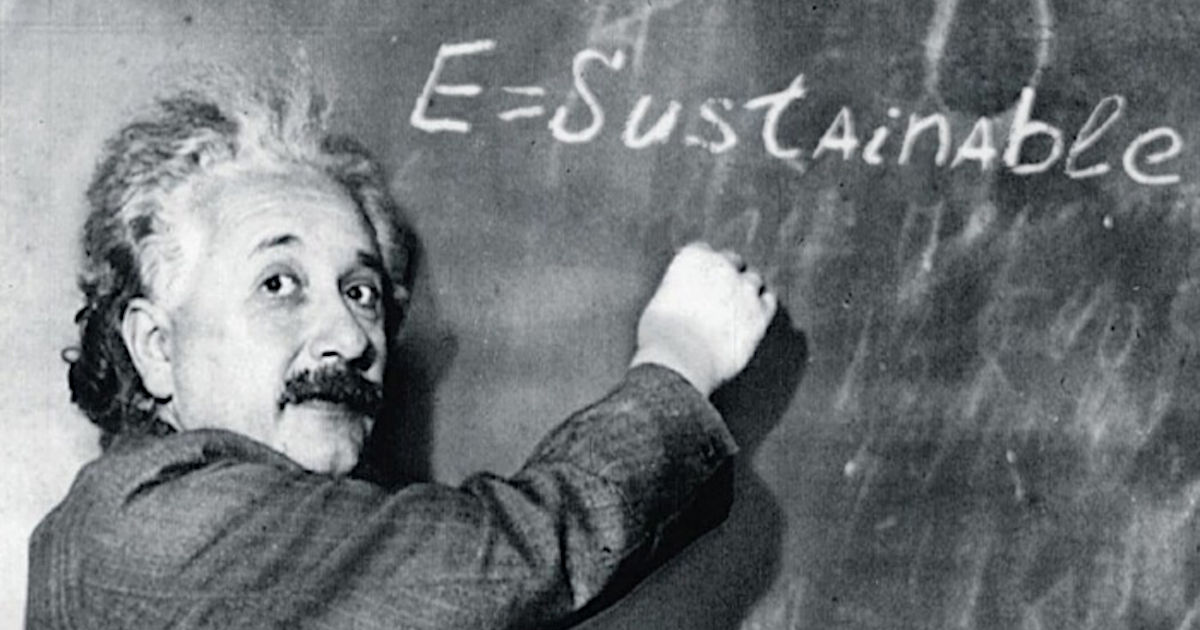
Are there Enough ESG Stocks to Go Around?


High Points of the Jackson Hole Presentation


Your Data is Used to Generate Big Returns


Seeking Alpha Paywall Causes Frustration


Sources:

https://www.barrons.com/articles/sec-chairman-says-banning-payment-for-order-is-on-the-table-51630350595?mod=hp_LEAD_1

https://www.investopedia.com/terms/p/paymentoforderflow.asp

https://www.bloomberg.com/opinion/articles/2021-08-31/what-happens-to-robinhood-if-the-sec-bans-payment-for-order-flow

https://www.barrons.com/articles/payment-for-order-flow-robinhood-51623412441?mod=article_inline


Stay up to date. Follow us:


QuickChek – August 30, 2021


Esports Entertainment Group’s VIE.bet Esports Betting Brand Named Primary Sponsor of Brazil’s SG esports

Esports Entertainment Group announced that their VIE.bet esports betting brand has become official partners of SG esports, a Brazilian professional gaming organization

Research, News & Market Data on EEG

Watch recent presentation from EEG


ACCO Brands Strengthens Leadership to Fuel Growth

ACCO Brands announced that Tom Tedford, currently Executive Vice President and President, ACCO Brands North America, has been named President and COO, effective September 1, 2021

Research, News & Market Data on ACCO Brands

Watch recent presentation from ACCO Brands


Comtech Telecommunications Corp. Awarded $3.7 Million in Orders from the U.S. Army for Mobile Satellite Equipment

Comtech Telecommunications announced that during its fourth quarter of fiscal 2021, it was awarded $3.7 million of additional funding on the U.S. Army’s previously announced task order award

Research, News & Market Data on Comtech

Watch recent presentation from Comtech


Kratos’ OpenSpace™ Satellite Ground System Platform Now Supports Deployments on Red Hat® OpenStack® Cloud

Kratos Defense & Security Solutions announced that its OpenSpace Platform designed for dynamic ground operations now supports deployments on the Red Hat OpenStack cloud environment

Research, News & Market Data on Kratos


CanAlaska Presenting at Uranium Power Players Summit

CanAlaska Uranium announced that it will be presenting the company at the Uranium Power Players Summit Tuesday, August 31 at 10:30 AM EST

Research, News & Market Data on CanAlaska


Stay up to date. Follow us:


Are There Enough ESG Stocks to Go Around?


SEC Prioritizing ESG Investment Products May Uncover a Supply Problem


Earlier this year, the Securities and Exchange Commission (SEC) announced its exam priorities for 2021. The first priority mentioned in a press release was ESG related. Specifically, it stated, “This year, the Division is enhancing its focus on climate and ESG-related risks by examining proxy voting policies and practices to insure voting aligns with investors’ best interests and expectations, as well as firms’ business continuity plans in light of intensifying physical risks associated with climate change,” The acting SEC Chair said, “Through these and other efforts, we are integrating climate and ESG considerations into the agency’s broader regulatory framework.

The Division of Examinations at the SEC is responsible for initiating the reviews of products purported to follow the ESG guidelines outlined in offering documents of mutual funds, ETFs, and securities, (both public and private). The intention is to make sure investors have a clear idea of what they’re buying, also the nature of the instrument should not change without proper notification. In the case of actively managed funds, the underlying holdings must match investor expectations.

In practice, this is necessary for those that are either self-directed investors or manage money for others. If an investor believes that ESG investments are growing in demand and thus decides to allocate 20% to an ESG fund, meanwhile that fund is only 40% allocated to ESG investments, the investor is not allocated based on their portfolio design. Especially if the investor expects the investment vehicle to be 95% or more exposed to the category. In this case, the investor surely is not getting the product they bought nor are they achieving the allocation they deemed prudent.

The SEC in Action

In an August 1st article by The Wall Street Journal titled: “Fired Executive Says Deutsche Bank’s DWS Overstated Sustainable-Investing Efforts” the WSJ reported the Sustainability Chief of the DWS Group told investors that environmental, social and governance concerns are at the heart of everything it does and that their ESG standards are above the industry average. The now-former Sustainability Chief at DWS has recently said that, behind closed doors, it has struggled to define and implement an ESG strategy and that at times they presented a more positive front than reality.

Yesterday (August 25), the Journal wrote a follow-up story that the SEC and federal prosecutors are investigating whether DWS overstated its sustainable investing efforts. DWS is not a small player in the asset management arena with $1 trillion under management. Certainly, the impact of this investigation, still in the early stages, will have ramifications on the sector. How the sector behaves, remains to be seen. But the impact could be in the form of added upward price pressure on stocks that most solidly fit within widely accepted definitions of sustainability or ESG. It may even cause stocks and other securities that are borderline to be sold out of funds for fear of failing a regulator’s examination.

The Growing
Sustainability Sector

At the end of 2020, CNBC reported that sustainable investing is surging and accounted for 33% of assets under management, driven mainly by institutional buyers.  In July, Morningstar reported that global sustainable fund assets hit a record $2.3 trillion during Q2 2021. While many companies are “greening” their operations and making policy changes in their Human Capital divisions, the demand for securities within managed funds may be outpacing what is available in “size.”

For investors that don’t trade in large lot sizes, this may present an opportunity to benefit from the difficulties large funds may be having fulfilling the requirements of their prospectuses. If this is true, small accounts buying individual stocks may have an advantage over funds.


Take-Away

The growth of investing in sustainability or ESG companies has led to a huge shift in portfolio allocations. From the point of view of an investment advisor or individual, an allocation change often is as easy as selling out of one fund and buying into another — one that sincerely works to invest in companies that meet this category and simultaneously target value, growth, or income. With the large trades some funds must make to stay invested, even the best-intentioned fund manager may run out of good opportunities within the category. This is not necessarily the case for the individual self-directed investor or advisor that is adept at analyzing and reading the research on individual companies. For the average individual, there are more opportunities to fulfill their smaller size requirements than there are for the $2.3 trillion in managed by funds.

Channelchek provides information for investors to explore small and microcap stocks in many categories; within the Company Data section, investors can review stocks to decide what meets requirements important to their allocation decisions.

Paul Hoffman

Managing Editor, Channelchek


Noble Capital Markets Uranium Power Players Investor Forum – August 31, 2021 Starting at 9am EDT

The Noble Uranium Power Players Investor Forum is a virtual conference bringing together leading companies involved in the exploration and production of uranium.

Registration is fast and free.


Source:

https://www.sec.gov/news/press-release/2021-39

https://www.cnbc.com/2020/12/21/sustainable-investing-accounts-for-33percent-of-total-us-assets-under-management.html

https://www.wsj.com/articles/fired-executive-says-deutsche-banks-dws-overstated-sustainable-investing-efforts-11627810380?mod=article_inline

https://www.wsj.com/articles/u-s-authorities-probing-deutsche-banks-dws-over-sustainability-claims-11629923018?mod=searchresults_pos5&page=1

https://www.reuters.com/business/sustainable-business/global-sustainable-fund-assets-hit-record-23-tln-q2-says-morningstar-2021-07-27/


Stay up to date. Follow us:


QuickChek – August 26, 2021


Ceapro Inc. Reports 2021 Second Quarter and Six-Month Financial Results and Operational Highlights

Ceapro announced financial results and operational highlights for the second quarter and six months ended June 30, 2021

Research, News & Market Data on Ceapro

Watch recent presentation from Ceapro


Comtech Telecommunications Corp. Awarded $2.1 Million of Funding for EEE Parts Management, Procurement and Engineering Services

Comtech Telecommunications announced that during its fourth quarter of fiscal year 2021, it was awarded $2.1 million of additional funding from a major U.S. prime contractor in support of NASA’s Space Launch System Control System Electronics

Research, News & Market Data on Comtech

Watch recent presentation from Comtech


Arizona Gold and Golden Predator Shareholders Approve Business Combination

Golden Predator Mining announced that shareholders of both Arizona and Golden Predator have overwhelmingly approved all matters voted on at Arizona’s special meeting as well as at Golden Predator’s special meeting

See today’s research report from Mark Reichman, Senior Research Analyst of Natural Resources at Noble Capital Markets

Research, News & Market Data on Golden Predator

Watch recent presentation from Golden Predator


1-800-FLOWERS.COM, Inc. Reports Record Revenues for its Fiscal 2021 Fourth Quarter and Full Year

1-800-FLOWERS.COM reported results for its Fiscal 2021 fourth quarter and full year ended June 27, 2021

Research, News & Market Data on 1-800-FLOWERS.COM


Gevo Files for Environmental Permits in South Dakota for the Net-Zero 1 Project

Gevo announced that the air quality and wastewater permit applications for the company’s Net-Zero 1 project have been filed with the South Dakota Department of Agriculture & Natural Resources

Research, News & Market Data on Gevo

Watch recent presentation from Gevo


Stay up to date. Follow us:


QuickChek – August 24, 2021


electroCore Announces New Reseller Agreement with Red One Medical Devices, LLC.

electroCore announced a reseller agreement with Red One Medical Devices, LLC

Research, News & Market Data on electroCore


Comtech Telecommunications Corp. Awarded $6.3 Million in Contracts for High-Power Ka-Band TWTAs

Comtech Telecommunications announced that during its fourth quarter of fiscal 2021, it was awarded multiple contracts aggregating $6.3 million for 500W Ka-band traveling wave tube amplifiers

Research, News & Market Data on Comtech

Watch recent presentation from Comtech


Schwazze Signs Definitive Agreement to Acquire Colorado Cultivation Grower Brow 2, LLC

Schwazze announced that it has entered into an to agreement to acquire the assets of Brow 2, LLC, located in Denver, Colorado

Research, News & Market Data on Schwazze


Stay up to date. Follow us:


Blockchain Smart Contract Applications


Blockchain Smart Contracts Aim to Cut Out Intermediaries, Create High Efficiency


The Fundamentals of Smart Contracts

Smart contracts are fundamentally automated agreements stored on a blockchain between the contract creator and the recipient.  They run when predetermined conditions are met.  They function to automate the execution of an agreement so that all participants can be immediately certain of the outcome without intermediaries’ involvement or time loss.

Written in code, this agreement is baked into the blockchain, making it immutable as well as irreversible. Popularized by the world’s second most popular blockchain, Ethereum, now adapted by others.   Smart contracts have led to the network’s array of decentralized applications (DApps) and other use cases.  They can also automate a workflow, triggering the next action when conditions are met.


“For example, instead of needing a bank to approve a fund transfer from client to freelancer, the process can happen automatically, thanks to a smart contract. All that’s required is for two parties to agree on one concept.”


The key benefit of blockchain networks is the automation of tasks that traditionally require a third-party intermediary. For example, instead of needing a bank to approve a fund transfer from client to freelancer, the process can happen automatically, thanks to a smart contract. All that’s required is for two parties to agree on one concept.

Another example could be a regulatory group and the citizens it represents debating a law. If these two parties come to an agreement in a blockchain-based system, the law would be put into place via a smart contract. Maybe users could read about the new law via a legal DApp or interact with it in another blockchain-based way.

History of Smart Contracts

Believe it or not, smart contracts long predate blockchain technology. While Ethereum, introduced in 2014, is the most popular implementation of the protocol, cryptographer Nick Szabo established the idea in the 1990s.

Back then, Szabo conceptualized a digital currency called Bit Gold. While the asset was never actually launched, this Bitcoin predecessor highlighted the smart contract use case — trustless transactions on the internet.  If Web 1.0 was the internet itself and Web 2.0 the presence of centralized platforms, then Web 3.0 is the trustless, automated, user-powered version of the digital space. 

Many, including the Ethereum website itself, compare smart contracts to a vending machine. Vending machines serve the purpose of a vendor providing the user with a product without the need for an actual person to take the money and hand over the item. Smart contracts serve that same purpose but are much more versatile.

Smart contracts have advanced quite a bit over time. They started as simple if-then statements that a programmer creates and implements. However, those with programming knowledge are limited, centralizing these “trustless” contracts.  Fortunately, those same developers are working to solve accessibility problems.

Since its inception, developers have made it so smart contracts can be made without coding knowledge. They’re increasing security with different programming languages, creating alternatives like secret contracts, and designing ways to automatically store smart contract history in a human-readable format — much easier than using the blockchain to read.


How Do Smart Contracts Work?

Think of these contracts as digital “if-then” statements between two (or more) parties. If one group’s needs are met, then the agreement can be honored, and the contract is considered complete. Let’s say a market asks a manufacturer for 100 units of cups.  The former will lock funds into a smart contract that can then be approved when the latter delivers. When the manufacturer delivers its product, the funds will immediately be released. However, the contract is canceled, and funds are reversed to the client if the manufacturer misses their delivery date.

Of course, the above is a small use case. Smart contracts can be programmed to work for the masses, replacing governmental mandates and retail systems, among other benefits. Moreover, smart contracts would potentially remove the need for bringing certain disagreements into court, saving parties both time and money.

This security is largely due to the underlying smart contract code. On Ethereum, for instance, contracts are written in its Solidity programming language, which is Turing-complete. This means that the rules and limitations of smart contracts are built into the network’s code, and no bad actor can manipulate such rules. Ideally, these limitations would mitigate scams or hidden contract alterations. A smart contract can only fall into place if all participants agree and sign on the matter. Then, it’s set for life.

In more technical terms, the idea of a smart contract can be broken down into a few steps. First, a smart contract needs an agreement between two or more parties. Once established, the two can agree on conditions in which the smart contract will be considered complete. The decision would be written into the smart contract, which is then encrypted and stored in the blockchain network.

Once the contract is complete, the transaction is recorded on the blockchain just as any other would. Then, all nodes will update their copy of the blockchain with this transaction, updating the new “state” of the network.

Now, you may be wondering if Bitcoin and other networks can utilize smart contracts. To a point, yes. Every Bitcoin (BTC) transaction is technically a simplified version of a smart contract, and layer-two solutions are in development to expand the network’s functionality. That said, Ethereum’s use of smart contracts is a special case.

Unlike most blockchain networks which are described as a distributed ledger, Ethereum is what’s considered a distributed state machine, containing what’s known as the Ethereum Virtual Machine (EVM). This machine state, which all Ethereum nodes agree to keep a copy of, stores smart contract code and the rules by which these contracts must abide. Since every node has the rules baked in via code, all Ethereum smart contracts have the same limitations.

Where
do smart contracts apply?

Aside from the payments example mentioned above, there are various, potential implementations of smart contracts that can automate the world and make it an easier place to live. Here are some prominent examples of smart contract use cases.

Digital Identity

Information is currency on the internet.  Businesses profit from knowing everyone’s interests, and needs.  That said people are usually not in control of how that data is collected, nor do they profit from it. With smart contracts, people are in control.

In a blockchain-based future, identities will be tokenized. Ideally, this would mean each person’s identity exists on a decentralized blockchain, safe and secure from any bad actors. Now, if a user wants to participate on social media or submit documents to a bank for loan purposes, they can profit from the harvesting of their data and control the transaction process.

For social media, no intermediary controls a network. Instead, users choose which information to make public and which to keep private. Should they want to participate in information exchange, like an endorsement, they can create a smart contract and choose which data is transacted, rather than simply collecting everything about the user.  A third party isn’t there to take some of the funds or secretly store and sell that data — only the user profits.

The same applies when it comes to dealing with banks and other financial institutions. Communication only involves sending required documents and vital information to a desired party. There’s no risk of a loan group storing your email address and selling it to other credit companies. That info is entirely under the user’s control.

Real Estate

In the current world, real estate brokers are a necessary evil. Considering the act of selling a house is nothing convoluted process.  Owners hire a broker to manage the tedious and time-consuming components for them, such as the sifting through buyers, delivering only those qualified, showing the house and preliminary negotiations. While that sounds like a great deal for the seller, keep in mind brokers take what many consider a significant fee of the house’s sell price.

A smart contract can take the place of a broker, streamlining the house-transfer process while ensuring it’s just as secure as with an intermediary. This is where the “trustless” moniker comes into play.

Imagine the deed to your house is tokenized on the Ethereum blockchain. If you’re ready to sell it, you’d create a smart contract with the buyer. That contract would hold the deed in escrow until the buyer’s funds are properly submitted. Then, and only then, will it be released.

Everyone wins. The seller saves money as they don’t have to pay an intermediary and the buyer gets the house much sooner than they would have otherwise.

Insurance

Insurance policies could easily benefit from smart contracts. Essentially, signing up for a policy would enter the user into a smart contract with a provider. All policy requirements would be written into the smart contract which the user would read and sign if they agree.

That contract would sit open until the liable party needs it. Then, they’d simply upload the required forms that prove their need for insurance payment and the funds would be released. This type of contract removes the need for communicating with insurance companies and brokers. While the user would still need paperwork to prove their requirements, the subsequent submission and funding process will be close to instant.

In the identity aspect of things, it’s worth keeping in mind that all drivers will have a record of their accident reports and other important insurance information as well. This accessibility could factor into lower rates for good drivers with no dings on their driving history.

Supply Chain

Arguably, one of the most popular implementations of blockchain technology and smart contracts is within a supply chain.

Grocery stores, office buildings, farmers and more all have their specific place in the supply chain. But, with the increasing complexity of these networks, companies are finding it increasingly harder to track product custody and follow payments, among other things. Smart contracts can automate and incentivize all parts of the supply chain to increase their accountability.

For example, say a grocery store is waiting on an apple delivery from another continent. It paid for a specific number of cartons of apples and expects that exact number or volume upon delivery. However, human error can come into effect. Somewhere along the way, workers could have misplaced some apples, they maybe stolen off the line, or simply lied about them all making it to the desired destination. One broken link in the chain messes up the rest of the chain, and by the time a grocery store receives their shipment, who knows where it went wrong.

With smart contracts, the grocery store could set up an automated check-in at each step of the process. While those check-ins already exist in a normal supply chain, they must be fulfilled manually. A person may have to count the cartons and submit what has arrived. They could lie and take some of the product, claiming some were lost along the way. Supply chain theft is a huge problem, costing Americans $35 billion a year. 

What’s different with smart contracts is the trustless aspect. The store could set control of payment isn’t released until all apple cartons are accounted for. There’s no way to mislead this system, so parties will be much more attentive when it comes to supply. Plus, payment will be released instantly to the receiving party which is a great incentive.

Also, the store could trace which smart contracts aren’t being fulfilled and choose not to deal with those parties in the future. Eventually, there could be a whole rating network of clients best to work with and those who aren’t, saving everyone time and money in the long run.

Benefits
of Smart Contracts


Speed, Efficiency
and Accuracy

Once a condition is met, the contract is executed immediately. Because smart contracts are digital and automated, there’s no paperwork to process and no time spent reconciling errors that often result from manually filling in documents.

Trust and
transparency

Because there’s no third party involved, and because encrypted records of transactions are shared across participants, there’s no need to question whether information has been altered for personal benefit.

Security

Blockchain transaction records are encrypted, which makes them very hard to hack. Moreover, because each record is connected to the previous and subsequent records on a distributed ledger, hackers would have to alter the entire chain to change a single record.

Savings

Smart contracts remove the need for intermediaries to handle transactions and, by extension, their associated time delays and fees.

Downsides of Smart Contracts

While smart contracts are great in concept, they’re certainly not perfect. For one, it’s worth remembering that smart contracts and blockchain networks are programmed by hand. Human error is always possible, and that error could lead to exploits. This is exactly what happened with the attack on Ethereum’s Decentralized Autonomous Organization (DAO) in 2016. Hackers exploited a vulnerability in the DAO’s fundraising smart contract and used it to secrete funds from the project.

Plus, one must always question the lack of regulatory clarity when it comes to these autonomous agreements.  While the idea of a secure, streamlined money transfer process sounds great on paper, there’s still taxation and other government involvement to consider. Users may want to have full control over their data, but how do governmental parties get what they need?

Also, smart contracts can’t pull information outside of the network in which they exist. At least not in their current state. In other words, you can’t upload data from an existing website to a smart contract on Ethereum. That said, there is a workaround in oracles — off-chain nodes that pull information from the internet and make it compatible with blockchain networks. Eventually, as databases move to the blockchain, oracles could potentially step in to play a role in making that happen.

Additionally, there is a long-standing scalability issue. Since inception, blockchain networks tend to struggle at scale, meaning transactions could take minutes — if not hours — based on activity. While this could be a problem at first, it’s something that projects such as Ethereum 2.0 are looking to solve. Plus, a transaction taking a few hours is still much faster than the days it takes to move traditional funds.


About the Author:

Peter Spoleti is CEO of  Vertex Markets. Vertex uses AI to make B2B introductions providing a
business networking site free from guesswork as to where the most valuable
business interactions are found.

Contact Vertex Markets here.

Suggested Reading:


Are Robots Coming After the law Profession?


Decentralized Apps, Using Blockchain to Change the Internet


Why Walmart Embracing Cryptocurrency is Important


What’s in the Surprise Cryptocurrency Bill?


Stay up to date. Follow us:


QuickChek – August 20, 2021


Aurania Receives Approval On Amendment Of Warrant Terms

Aurania Resources announced that the TSX Venture Exchange has consented to the proposed amendment of warrant terms as announced on August 6, 2021

See today’s research report from Mark Reichman, Senior Research Analyst of Natural Resources at Noble Capital Markets

Research, News & Market Data on Aurania

Watch recent presentation from Aurania


Comtech Telecommunications Corp. to Participate in Midwest IDEAS Investor Conference

Comtech Telecommunications announced that it will participate in the virtual Midwest IDEAS Investor Conference on Wednesday, August 25, 2021

Research, News & Market Data on Comtech

Watch recent presentation from Comtech


Stay up to date. Follow us:


What Happens if Your SPAC Doesnt Find its Ideal Acquisition?

/>


One Great Protection Inherent in SPACs for Investors


There are many features in SPAC deals that attract investors to them. Some of these are related to owning an interesting company as it goes public. But another feature, dictated by the SEC, limits downside risk during the pre-SPAC stage if the SPAC manager fails to consummate a merger.

Limited Downside

We all buy stocks with the idea that we want them to go up. But, we certainly know they may go down. Our stock may even go down all in one large price move, or gap lower at the open. Special Purpose Acquisition Companies, during the target search phase (usually 24 months), have a de facto floor that helps prevent steep drops in price. The very structure helps protect from great losses pre-deal and allows for a final decision to opt-out if and when a target is found.

The protection is in the disbursement from the trust account. If the purchase price was $10 per share, the proceeds from everyone’s $10 were initially placed in a trust account while the managers shopped and negotiated. From the trust account they paid bills, they also earned incremental interest. If a deal isn’t made, the original investment, less expenses, plus interest accrued, is returned. Very often, this would be incrementally lower than the purchase price. However, something would have had to have gone terribly wrong for the loss to be large.

Recipients of the pro-rata disbursement of the trust account may even make money. It’s like you buy a pair of sunglasses online because you want them for the weekend, they get delivered on Friday, you open the package, and find you don’t like them. You may or may not have to pay the shipping to return the glasses, but you don’t lose much of your money.  If you’re upset it’s because of lost opportunity, you wanted to have a new pair of sunglasses on Saturday.


Take-Away

For everyone involved, the ideal scenario is that their SPAC merges with the perfect target and that this perfect target does well after the merger. This could then cause investors to exceed market returns on their $10 per share SPAC investment. Under a less rosy scenario, the downside is minimal in that the investor can opt-out before any merger, or receive their disbursement if nothing was found. For investors that purchased their SPAC on the open market at a discount, they may receive oversized returns from any disbursement.

Paul Hoffman

Managing Editor, Channelchek


Suggested Content:

Optionality of a Special Purpose Acquisition Company


Regulation of a Special Purpose Acquisition Company


Analysis of a Special Purpose Acquisition Company


Lifecycle of a Special Purpose Acquisition Company


Sources:

Channelchek.com

https://www.sec.gov/oiea/investor-alerts-and-bulletins/what-you-need-know-about-spacs-investor-bulletin


Stay up to date. Follow us:


What Happens if Your SPAC Doesn’t Find its Ideal Acquisition?

/>


One Great Protection Inherent in SPACs for Investors


There are many features in SPAC deals that attract investors to them. Some of these are related to owning an interesting company as it goes public. But another feature, dictated by the SEC, limits downside risk during the pre-SPAC stage if the SPAC manager fails to consummate a merger.

Limited Downside

We all buy stocks with the idea that we want them to go up. But, we certainly know they may go down. Our stock may even go down all in one large price move, or gap lower at the open. Special Purpose Acquisition Companies, during the target search phase (usually 24 months), have a de facto floor that helps prevent steep drops in price. The very structure helps protect from great losses pre-deal and allows for a final decision to opt-out if and when a target is found.

The protection is in the disbursement from the trust account. If the purchase price was $10 per share, the proceeds from everyone’s $10 were initially placed in a trust account while the managers shopped and negotiated. From the trust account they paid bills, they also earned incremental interest. If a deal isn’t made, the original investment, less expenses, plus interest accrued, is returned. Very often, this would be incrementally lower than the purchase price. However, something would have had to have gone terribly wrong for the loss to be large.

Recipients of the pro-rata disbursement of the trust account may even make money. It’s like you buy a pair of sunglasses online because you want them for the weekend, they get delivered on Friday, you open the package, and find you don’t like them. You may or may not have to pay the shipping to return the glasses, but you don’t lose much of your money.  If you’re upset it’s because of lost opportunity, you wanted to have a new pair of sunglasses on Saturday.


Take-Away

For everyone involved, the ideal scenario is that their SPAC merges with the perfect target and that this perfect target does well after the merger. This could then cause investors to exceed market returns on their $10 per share SPAC investment. Under a less rosy scenario, the downside is minimal in that the investor can opt-out before any merger, or receive their disbursement if nothing was found. For investors that purchased their SPAC on the open market at a discount, they may receive oversized returns from any disbursement.

Paul Hoffman

Managing Editor, Channelchek


Suggested Content:

Optionality of a Special Purpose Acquisition Company


Regulation of a Special Purpose Acquisition Company


Analysis of a Special Purpose Acquisition Company


Lifecycle of a Special Purpose Acquisition Company


Sources:

Channelchek.com

https://www.sec.gov/oiea/investor-alerts-and-bulletins/what-you-need-know-about-spacs-investor-bulletin


Stay up to date. Follow us:


Dogecoin Group Works to Give Currency Greater Purpose


“Do Only Good Every Day” – Guiding Purpose of Doge Manifesto


Does your crypto have ambassadors? New leadership decided not to let the long-sleeping Dogecoin Foundation lie. It just announced a new team of leaders, including some big names in the space that have signed a manifesto designed to give the digital coin greater purpose.

What is the Dogecoin
Foundation?

The original Dogecoin Foundation (DF), was a nonprofit founded in 2014 with the goal of supporting the cryptocurrency by providing advocacy and trademark protections. It was dissolved years ago — A new incarnation was announced this week (8/17), and it has very lofty objectives for the brand and Doge movement. In the announcement, it was stated DF would be reestablishing itself to support the Dogecoin community and promote the future of blockchain. It mentioned new projects in the coming weeks to encourage the adoption and usefulness of DOGE “that increase Dogecoin uptake at a grassroots level.”

In order to allay fears, DF also made this clear: “The Foundation holds the Dogecoin mark and the Dogecoin Logo and will maintain them for the community,”  “…this will mean the foundation can continue to protect the Dogecoin Brand and allow (under a very liberal license) the ability to use it for Dogecoin-related memes, projects, and fun. — We’ve got your back on this one.”

The foundation members, have all signed a Dogecoin Manifesto and welcome others to add their “signature” of acceptance as well. The manifesto relays four objectives against which to make decisions, they are:


Source: The Dogecoin Manifesto


Dogecoin Ecosystem Growth

The DF says it is also looking to the future of the broader Dogecoin ecosystem. In the coming weeks, it expects to be announcing new projects designed to complement the current Core Wallet and enable faster integration and easier APIs for Financial, Social and Charitable projects wishing to use Dogecoin. The announcement reads, “We believe that the success of Dogecoin is through broad global adoption and utility, and intend to focus on projects that increase Dogecoin uptake at a grassroots level.”


Participating in the foundation at various levels is the sometimes Doge-loving Elon Musk, also co-creator of the currency Billy Markus, Vitalik Buterin from Ethereum, and the financial advisor to Elon Musk, Jare Bitchall. The new Foundation trustees consist of five current Dogecoin developers and digital-community veterans, Jens Wiechers, Gary Lachance, Michi Lumin, Ross Nicoll, and Timothy Stebbing.


Take-Away

The cryptocurrency that began the year below a penny, usually grabbing most of its attention through memes and even some Elon Musk tweets, has a foundation driving a more solid purpose for the currency. Currently exchanged at $0.305 many speculators have watched their gamble transform from an awkward little puppy to having much greater teeth. It would seem with the support and direction provided by this new foundation, that Dogecoin may become one of the stronger survivors over time.


Suggested Reading:


Elon Musk, Jack Dorsey, and Cathie Wood Drop Bombshells at Bitcoin Conference


Decentralized Finance, is it the Future?


The Value of FinTock “Finfluencers


Blockchain Beverages and Baloney


Sources:

https://foundation.dogecoin.com/posts/2021/08/announcement-re-establishing-the-dogecoin-foundation/

https://foundation.dogecoin.com/manifesto/


Stay up to date. Follow us:


QuickChek – August 19, 2021


Schwazze Announces Star Buds Colorado Home Delivery Services

Schwazze announced the launch of its cannabis product home delivery service to residences in the city of Aurora beginning today

Research, News & Market Data on Schwazze

Watch recent presentation from Schwazze


Great Bear Begins Phase 2 Drilling at Dixie Project

Great Bear Resources provided an update regarding its ongoing fully funded $45 million 2021 exploration program

Research, News & Market Data on Great Bear

Watch recent presentation from Great Bear


Comtech Telecommunications Corp. Awarded 5G Contract with Canadian Wireless Network Operator

Comtech Telecommunications announced that during its fourth quarter of fiscal 2021, it was awarded a contract with a Canadian tier-one mobile network operator to supply 5G location services

Research, News & Market Data on Comtech

Watch recent presentation from Comtech


Energy Services of America Corporation Appoints Brian Pratt to the Company’s Board

Energy Services of America Corporation announced that the Board of Directors appointed Brian Pratt to the Company’s Board effective immediately

Research, News & Market Data on Energy Services of America


Aurania Provides Update on Drilling at Tsenken and Tiria-Shimpia Targets

Aurania Resources reports that drilling at the Tsenken N1 target has intersected sediment-hosted copper mineralization visible over approximately 2 metres

Research, News & Market Data on Aurania

Watch recent presentation from Aurania Resources


Stay up to date. Follow us:


Will Investors Keep Reducing Leverage?


Image Credit: Nenad Stojkovic (Flickr)


After Screaming Higher, Leverage Suddenly Came Down $38 Billion


Margin debt fell by $38 billion from its historic high in June. This is the first dip since March 2020, and this move may have implications for the market. The data, which is released monthly by FINRA, is the only official measure of leverage available to investors. So, these are the only stats available from which to draw any conclusion. There are, of course, other non-broker forms of leverage. These include borrowing against an asset (i.e.: home equity) or personal credit (i.e.: opening an account with a Visa card) to security purchases.

The FINRA statistics are collected as per FINRA Rule 4521(d). They are numbers provided by the member firms that offer margin accounts for customers. The report includes the total of all debit balances in securities margin accounts, and the total of all free credit balances in cash accounts and all securities margin accounts.

The Numbers

From an all-time high in June, margin debt fell $38 billion. This took it back down to a level it had attained after March 2021, but before the end of April. For 15 months through the month of June, leverage in securities portfolios overall was climbing at an excessive pace (84%). The rise in market prices is likely to have been largely fueled during this period by the growth in debt-financed purchases.


Data Source: FINRA


Increasing leverage has turned out to have not been a bad move for account holders, the markets are up significantly since March 2020. During the period, the Fed’s policies of interest rate suppression and yield curve control helped to reduce the cost of money and held it low. Investors, some for the first time, waved in as much stock as they could, enjoyed the results, and then added even more to their holdings. The nature of additional margin buying is that it helps drives up prices. Higher prices give account holders more collateral that can then be leveraged further. It’s a known accelerator of price movement. It also drives up risks — long periods of dropping margin debt can be associated with sell-offs as accounts unwind stocks held with borrowed money.

Should Investors be Cautious?

One might suggest investors always exercise prudence and caution; however, one data point is not a trend. Investors should check back on margin debt when the August numbers are released in mid-September. If a trend is developing, it may alter the strength of the market. The decline may very well be a summer pause in trading activity and a one-off number to ignore. 

Take-Away

Easy money and available leverage help to finance higher asset prices. This includes everything from stocks, to real estate, and to some extent even used cars.

Should money become much tighter, or the market falter, the same forces that assisted higher market prices, could reverse themselves. This is just one input into what drives the overall equity markets, investors would be wise to follow any larger trend. 

Registering for daily emails from Channelchek is one way investors follow news and research not found on other sites — Register free now.

Paul Hoffman

Managing Editor, Channelchek


Suggested Reading:


Margin Debt Increases are Eye-Popping


The Beginning of the Road for Gold?


COLA Increases for Seniors in 2022 Will Likely Top $68 Billion


Why the Smart Money is the Individual Investor in 2021


Sources:

https://www.finra.org/investors/learn-to-invest/advanced-investing/margin-statistics


Stay up to date. Follow us: