Energy Services of America (ESOA) – PPP tax payment masks strong quarter and profitable year

Monday, December 14, 2020

Energy Services of America (ESOA)
PPP Tax Payment Masks Strong Quarter and Profitable Year

Energy Services of America Corporation is engaged in providing contracting services for energy-related companies. The company is primarily engaged in the construction, replacement, and repair of natural gas pipelines and storage facilities for utility companies and private natural gas companies. It services the gas, petroleum, power, chemical and automotive industries, and does incidental work such as water and sewer projects. Energy Service’s other services include liquid pipeline construction, pump station construction, production facility construction, water and sewer pipeline installations, various maintenance and repair services and other services related to pipeline construction.

Poe Fratt, Senior Research Analyst, Noble Capital Markets, Inc.

Refer to the full report for the price target, fundamental analysis, and rating.

    Fiscal 4Q2020 (September) operating results above expectations. 4Q2020 revenues increased $6.2 million (16%) to $44.5 million from $38.3 million in 4Q2019, and EBITDA increased by $4.0 million (114%) to $7.0 million from $3.0 million in 4Q2019. While we don’t have the segment details yet, quarterly revenue was the highest in the past six quarters. A net loss of $0.039/share was reported in FY2020 due to a tax payment related to the PPP loan, adjusted net income of $0.126/diluted share was 31% higher than FY2019.

    Introducing FY2021 EBITDA estimate of $10.8 million to reflect the strong end to FY2020 and sustained higher profitability due to the shift in the business model.  Forecasted revenue of $122.5 million is a slight 3% improvement from $119.2 million and EBITDA of $10.8 million is about $2.7 million higher than $8.1 million in FY2020. Profitability should continue to improve and we forecast higher …


This Company Sponsored Research is provided by Noble Capital Markets, Inc., a FINRA and S.E.C. registered broker-dealer (B/D).

*Analyst certification and important disclosures included in the full report. NOTE: investment decisions should not be based upon the content of this research summary.  Proper due diligence is required before making any investment decision. 

Indonesia Energy Corp (INDO) – Delay to Drilling Start May Be a Good Thing With Rising Oil Prices

Friday, December 11, 2020

Indonesia Energy Corp (INDO)
Delay to Drilling Start May Be a Good Thing With Rising Oil Prices

Indonesia Energy Corp Ltd is an oil and gas exploration and production company focused on Indonesia. It holds two oil and gas assets through its subsidiaries in Indonesia: one producing block (the Kruh Block) and one exploration block (the Citarum Block). The Kruh Block is located to the northwest of Pendopo, Pali, South Sumatra. The Citarum Block is located to the south of Jakarta.

Michael Heim, Senior Research Analyst, Noble Capital Markets, Inc.

Refer to the full report for the price target, fundamental analysis, and rating.

    INDO management held a conference call to update investors on its drilling program. The President, CIO and Chief Development Officer were on the call. The call was largely a rehash of the company’s underlying story, but did have a few tidbits of new information. Chief among these was that management now expects the company to begin drilling its first well in the Kruh Block next month. As recently as October, it had been saying drilling would start at the end of 2020. Earlier in the year, it had been targeting an end of summer date but COVID-19 issues delayed drilling. Management continues to target 4 wells in 2021, 6 in 2022 and 7 in 2023.

    Management indicates it has completed most of the steps to start drilling.  The company has identified the locations for the first three wells it will drill. It has held a bidding process and awarded a contract to a driller. It is currently waiting on forestry permitting, the last hurdle. Each Kruh well costs around $1.5 million and will generate $1.3 million in cash flow at current oil prices. Cash …


This Company Sponsored Research is provided by Noble Capital Markets, Inc., a FINRA and S.E.C. registered broker-dealer (B/D).

*Analyst certification and important disclosures included in the full report. NOTE: investment decisions should not be based upon the content of this research summary.  Proper due diligence is required before making any investment decision. 

Release – Gevo, Inc. (GEVO) – Dr. Patrick Gruber to Participate in Water Tower Research Fireside Chat Series


Dr. Patrick Gruber to Participate in Water Tower Research Fireside Chat Series on Tuesday, December 15, 2020, at 3:00 pm EST


ENGLEWOOD, Colorado – December 10, 2020 – Gevo, Inc. (NASDAQ: GEVO), announced today that Dr. Patrick Gruber, Chief Executive Officer, will participate in Water Tower Research Fireside Chat Series to discuss Storing Renewable Energy Through the Creation of Liquid Hydrocarbons on Tuesday, December 15, 2020 at 3:00 pm EST.

Investors and other persons interested in participating in the event must register using the link below. Please note that registration for the live event is limited but may be accessed at any time for replay after the presentation ends on December 15, 2020, utilizing the same registration link.

Registration Link:

https://globalmeet.webcasts.com/starthere.jsp?ei=1412691&tp_key=5b7e03f74e


About Gevo

Gevo is commercializing the next generation of jet fuel, gasoline and diesel fuel with the potential to achieve zero carbon emissions and address the market need of reducing greenhouse gas emissions with sustainable alternatives. Gevo uses low-carbon renewable resource-based carbohydrates as raw materials, and is in an advanced state of developing renewable electricity and renewable natural gas for use in production processes. As a result, Gevo is able to produce low-carbon fuels with substantially reduced carbon intensity (as measured by the level of greenhouse gas emissions compared to standard petroleum fossil-based fuels across their lifecycle). Gevo’s products perform as well or better than traditional fossil-based fuels in infrastructure and engines, but with substantially reduced greenhouse gas emissions. In addition to addressing the environmental problems of fossil-based carbon fuels, Gevo’s technology also enables certain plastics, such as polyester, to be made with more sustainable ingredients. Gevo’s ability to penetrate the growing low-carbon fuels market depends on the price of oil and the value of abating carbon emissions that would otherwise increase greenhouse gas emissions. Gevo believes that its proven, patented, technology that enables the use of a variety of low-carbon sustainable feedstocks to produce price-competitive, low carbon products, such as jet fuel, gasoline components like isooctane and isobutanol and diesel fuel, yields the potential to generate project and corporate returns that justify the build-out of a multi-billion dollar business. Learn more at our website: www.gevo.com

Investor & Media Contact
[email protected]
+1 720-647-9605

SOURCE: Gevo
Release – Gevo, Inc. (GEVO) – Supplies Avfuel with Sustainable Aviation Fuel for Pacific Northwest Region


Gevo Supplies Avfuel with Sustainable Aviation Fuel for Pacific Northwest Region


ENGLEWOOD, Colorado – December 10, 2020 – Gevo, Inc. (NASDAQ: GEVO), announced today it has supplied SAF to further support carbon neutrality goals in the aviation industry.

Gevo’s customer and global fuel supplier, Avfuel Corporation, delivered SAF to Leading Edge Jet Center, a provider of business aviation services throughout the Pacific Northwest, to deliver a demonstrative load of sustainable aviation fuel (SAF) to the fixed-base operator’s (FBO) Seattle facility.

The delivery marks the first load of sustainable aviation fuel for an FBO at the King County International Airport – Boeing Field (BFI) for resale to its customers, as well as Avfuel’s entry to SAF deliveries in Washington state.

“I want to congratulate Avfuel and Leading Edge Jet Center for making progress towards a cleaner future,” stated Patrick Gruber, Chief Executive Officer of Gevo. “We look forward to growing our business relationship and helping to educate aircraft operators and owners that products exist that burn cleaner and reduce carbon emission.”

To learn more about Gevo’s SAF please visit: https://gevo.com/products/sustainable-aviation-fuel/

About Gevo

Gevo is commercializing the next generation of jet fuel, gasoline and diesel fuel with the potential to achieve zero carbon emissions and address the market need of reducing greenhouse gas emissions with sustainable alternatives. Gevo uses low-carbon renewable resource-based carbohydrates as raw materials, and is in an advanced state of developing renewable electricity and renewable natural gas for use in production processes. As a result, Gevo is able to produce low-carbon fuels with substantially reduced carbon intensity (as measured by the level of greenhouse gas emissions compared to standard petroleum fossil-based fuels across their lifecycle). Gevo’s products perform as well or better than traditional fossil-based fuels in infrastructure and engines, but with substantially reduced greenhouse gas emissions. In addition to addressing the environmental problems of fossil-based carbon fuels, Gevo’s technology also enables certain plastics, such as polyester, to be made with more sustainable ingredients. Gevo’s ability to penetrate the growing low-carbon fuels market depends on the price of oil and the value of abating carbon emissions that would otherwise increase greenhouse gas emissions. Gevo believes that its proven, patented, technology that enables the use of a variety of low-carbon sustainable feedstocks to produce price-competitive, low carbon products, such as jet fuel, gasoline components like isooctane and isobutanol and diesel fuel, yields the potential to generate project and corporate returns that justify the build-out of a multi-billion dollar business. Learn more at our website: www.gevo.com

Forward-Looking Statements

Certain statements in this press release may constitute “forward-looking statements” within the meaning of the Private Securities Litigation Reform Act of 1995. These forward-looking statements relate to a variety of matters, including, without limitation, statements related to Gevo’s supply of sustainable aviation fuel to Avfuel and their customer and other statements that are not purely statements of historical fact. These forward-looking statements are made on the basis of the current beliefs, expectations and assumptions of the management of Gevo and are subject to significant risks and uncertainty. Investors are cautioned not to place undue reliance on any such forward-looking statements. All such forward-looking statements speak only as of the date they are made, and Gevo undertakes no obligation to update or revise these statements, whether as a result of new information, future events or otherwise. Although Gevo believes that the expectations reflected in these forward-looking statements are reasonable, these statements involve many risks and uncertainties that may cause actual results to differ materially from what may be expressed or implied in these forward-looking statements. For a further discussion of risks and uncertainties that could cause actual results to differ from those expressed in these forward-looking statements, as well as risks relating to the business of Gevo in general, see the risk disclosures in the Annual Report on Form 10-K of Gevo for the year ended December 31, 2019 and in subsequent reports on Forms 10-Q and 8-K and other filings made with the U.S. Securities and Exchange Commission by Gevo.

Investor & Media Contact
[email protected]
+1 720-647-9605

SOURCE: Gevo

How Will the RCEP Impact U.S. Oil and Natural Gas?


The RCEP Agreement Aligns Large Consumers and Producers of Energy While Excluding the U.S.


The Regional Comprehensive Economic Partnership agreement (RCEP) includes the world’s largest crude oil importer (China) and the largest liquified natural gas importers (Japan, China and South Korea). It also includes some of the largest oil and LNG exporters (Australia, Indonesia, and Malaysia). Increased energy trade activity among members leaves out the largest energy exporters; the United States, Saudi Arabia, and Russia.

On November 15, 2020, representatives of Australia, China, Japan, the Republic of Korea, New Zealand, and other countries signed the Regional Comprehensive Economic Partnership (RCEP) Agreement. RCEP will eliminate tariffs and quotas on over 65% of goods traded among the signing countries. It’s viewed as a significant step in stimulating the world’s economy which will counter a slowdown from the steps each country has taken related to COVID-19. The RCEP agreement covers a market of 2.2 billion people and 30% of the world’s GDP. India, an original participant in the deal negotiations, withdrew from the pact but is considering rejoining. The United States, representing the world’s largest economy, was not a participant in the agreement.

The agreement is viewed as negative news for U.S. oil producers. The U.S. has become the largest exporter of oil within the last few years. Most of U.S. domestic oil goes to Canada, with South Korea a close second. China was poised to become the largest importer of U.S. oil, that changed when tariff wars decreased trading activity with them. If Indonesia and Malaysia increase exports to China, South Korea, and Japan in response to the minimal tariffs, then U.S. oil exports may suffer.


Source: EIA

The U.S. natural gas market could be hurt even more than the oil market. In the last few years, companies have been building terminals to export domestic liquid natural gas (LNG). These terminals cost billions of dollars to construct and require decades of trade to reach breakeven.  Much of the LNG exported from the United States is routed to Asian countries. As the graph below shows, the country’s ability to export LNG has increased 1000% over the last five years but is running below full capacity because of the pandemic. If Australian LNG exports to China, South Korea, and Japan increase in response to lower tariffs, U.S. LNG exporters could be hurt by even more idle capacity.


Domestic energy producers are already feeling a strain due to decreased demand resulting from the pandemic and the resulting economic slowdown. Companies are working hard to reduce costs to remain competitive. Several have merged to reduce overhead. Others have cut drilling budgets. A further reduction in demand for oil and LNG from Asian countries would further exacerbate the problem.


Suggested Reading:

Are we headed to Another Oil Collapse?

Contango and the Known Risk to ETFs

Will Oil Prices Rise in 2021?


Do You Know a Student  Who Could Use $7,500 for College?

Tell them about the College Challenge!


Source:

https://finance.yahoo.com/news/world-largest-trade-pact-could-150000944.html, OilPrice, November 30, 2020

https://asean.org/asean-hits-historic-milestone-signing-rcep/, ASEASN.org, November 15, 2020

https://compressortech2.com/u-s-lng-exports-down-by-half-in-2020/, CompressorTech, June 23, 2020


Gevo, Inc. (GEVO) – Upcoming Milestones – Increasing Price Target

Monday, November 30, 2020

Gevo, Inc. (GEVO)
Upcoming Milestones – Increasing Price Target

Gevo Inc is a renewable chemicals and biofuels company engaged in the development and commercialization of alternatives to petroleum-based products based on isobutanol produced from renewable feedstocks. Its operating segments are the Gevo segment and the Gevo Development/Agri-Energy segment. By its segments, it is involved in research and development activities related to the future production of isobutanol, including the development of its biocatalysts, the production and sale of biojet fuel, its Retrofit process and the next generation of chemicals and biofuels that will be based on its isobutanol technology. Gevo Development/Agri-Energy is the key revenue generating segment which involves the operation of the Luverne Facility and production of ethanol, isobutanol and related products.

Poe Fratt, Senior Research Analyst, Noble Capital Markets, Inc.

Refer to the full report for the price target, fundamental analysis, and rating.

    Strong stock price performance is likely driven by hopes that some of the upcoming potential milestones will be announced shortly. While the stock price dropped sharply in 3Q2020 after capital raises to fund ongoing operations and the project financing process, stock price performance since 3Q2020 results were announced has been very strong and the stock is up 122% so far in November.

    Potential milestones over the next year:  Full or partial retirement of convert debt of ~$13 million due in December 2020; Finalizing and acquiring rights to additional plant locations; Identifying engineering firm performing FEED work; Expanding supply contract portfolio with new industry/financial partners; Identifying project financing partners, including equity investors and debt financing; Timing of process to …


This Company Sponsored Research is provided by Noble Capital Markets, Inc., a FINRA and S.E.C. registered broker-dealer (B/D).

*Analyst certification and important disclosures included in the full report. NOTE: investment decisions should not be based upon the content of this research summary.  Proper due diligence is required before making any investment decision. 

Are We Headed to Another Oil Collapse?


Oil Storage Numbers are Worth Watching


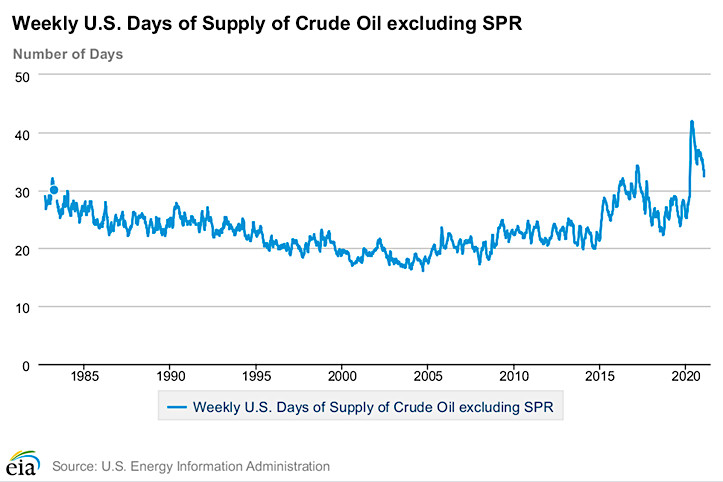
Cushing, Oklahoma is a major trading hub for crude oil and a price settlement point for West Texas Intermediate (WTI) oil prices. It is located at the intersection of many pipelines and has 91 million barrels (MMbbls) of oil storage capacity. As such, most of the oil that is produced in the Permian Basin flows through Cushing, with 6.5 MMbbls of oil flowing in and out of Cushing each day. An estimated ten MMbbls of new storage and 1.6 MMbbls of exit capacity is being considered to address current bottlenecks.  Those bottlenecks became clear at the end of April when traders were caught with long oil positions at Cushing and no place to store or transport the positions. WTI oil prices turned negative briefly as traders scrambled out of positions. In hindsight, the issues seen in April seem obvious if one was tracking the rise in storage levels that occurred in March and April as the pandemic sapped demand, but producers kept on producing. With COVID-19 cases growing again, we see a similar story unfold as Cushing oil inventories approach levels seen last April. Are we headed to another oil price meltdown? Or, has the market learned its lesson?


The Reasons Why Oil Prices May Be Headed for A Crash

The current situation is looking eerily like last spring. COVID-19 cases are rising, and government officials are putting new restrictions in place. People are driving less as they work out of their homes and stop going out to restaurants and theaters. Gasoline represents 44% of the output of a crude oil barrel. Distillate fuel oil (28% of crude oil) is turned into diesel fuel and heating oil, which are also affected by pandemic mitigation. Jet fuel (10%) has also been negatively affected as recreation and business travel has decreased. The result is that refineries are running at low capacity with decreased demand for its products, which means it has less demand for crude oil.


With the number of COVID-19 cases growing, there is little indication that crude oil demand will return in the foreseeable future. On the demand side, producers have not shown signs of reducing production. With wells taking several months to drill, a supply response generally does not come in response to one month’s rise in storage. Shutting in existing production is a possibility, but shutting in and restarting production is expensive, and companies are unlikely to take such drastic steps if the drop in price is viewed as a temporary event.


The reason why oil prices are not headed to a crash

The crash of last spring was due to traders being caught in long oil contracts with no place to store the product. As recently as January, money managers had large open oil positions. They began exiting these positions in February and March, but it wasn’t until April that they were forced to exit positions at a loss. Turning to the current situation, we do not see the same involvement in the market by money managers. Long positions have held steady. There is less speculation in the oil market today than there was last spring, and speculation leads to price volatility.  It is reasonable to assume, then, that the traders currently taking long positions in the market are doing so to meet demand and not because they are betting on oil prices.


It is also important to remember that WTI prices do not represent the entire oil market. When WTI prices crashed last spring, it’s worth noting that Brent oil price did not. That may come as little comfort for energy companies operating in the Permian Basin, but it should provide some comfort for energy companies in other operating areas.


It is too early to say whether we are headed to a repeat of last spring. Higher storage levels are a concern but not a condemnation of current price levels. With the expiration of the December future’s contract less than two weeks away, the number bears watching.


Suggested Reading:

Contango and the Known Risk to ETFs

Will Oil Prices Rise in 2021?

Tesla Car Batteries and Virtual Power Plants


Do You Know a College Student?

Tell them about the College Challenge!


Source:

https://finance.yahoo.com/news/america-biggest-oil-storage-hub-005607002.html, Lucia Kassai and Andrew Guerra Luz, Bloomberg, November 20, 2020

https://en.wikipedia.org/wiki/Cushing,_Oklahoma, Wikipedia

http://www.okenergytoday.com/2020/10/cushing-oil-hub-isnt-following-national-trend-of-crude-oil-storage/, OK Energy Today, October 3, 2020

https://www.cmegroup.com/education/lessons/the-importance-of-cushing-oklahoma.html#:~:text=Cushing’s%20inbound%20and%20outbound%20pipeline,of%20barrels%20of%20oil%20daily., CME Group

https://rbnenergy.com/that-was-then-this-is-now-part-2-new-crude-pipeline-capacity-out-of-the-cushing-hub, Housley Carr, RBN Energy LLC


Release – Energy Fuels (UUUU) – To Present at the H.C. Wainwright Virtual Mining Conference on Monday, November 30 at 3:00 pm ET

Energy Fuels to Present at the H.C. Wainwright Virtual Mining Conference on Monday, November 30 at 3:00 pm ET


LAKEWOOD, Colo., Nov. 24, 2020 /CNW/ – Energy Fuels Inc. (NYSE American: UUUU) (TSX: EFR) (“Energy Fuels” or the “Company”) is pleased to announce that the Company’s President and CEO, Mark S. Chalmers, will present at the H.C. Wainwright Mining Conference on Monday, November 30, 2020 at 3:00 pm ET. The conference will be held on November 30 and December 1, 2020.

During his live webcast, Mr. Chalmers will provide an update on the Company, including progress on its uranium and rare earth element (REE) initiatives.

To join the webcast, please click on the following link:

Energy Fuels’ H.C. Wainwright Presentation

Mr. Chalmers will also be available to participate in one-on-one meetings with investors who are registered to attend the conference via Zoom. If you are an institutional investor, and would like to schedule a meeting with Mr. Chalmers, please click on this link to register for the conference and request a meeting.

About Energy Fuels: Energy Fuels is a leading U.S.-based uranium mining company, supplying U3O8 to major nuclear utilities. The Company also produces vanadium from certain of its projects, as market conditions warrant, and is evaluating the potential to recover rare earth elements at its White Mesa Mill. Its corporate offices are in Lakewood, Colorado near Denver, and all of its assets and employees are in the United States. Energy Fuels holds three of America’s key uranium production centers: the White Mesa Mill in Utah, the Nichols Ranch in-situ recovery (“ISR”) Project in Wyoming, and the Alta Mesa ISR Project in Texas. The White Mesa Mill is the only conventional uranium mill operating in the U.S. today, has a licensed capacity of over 8 million pounds of U3O8 per year, and has the ability to produce vanadium when market conditions warrant. The Nichols Ranch ISR Project is on standby and has a licensed capacity of 2 million pounds of U3O8 per year. The Alta Mesa ISR Project is also on standby and has a licensed capacity of 1.5 million pounds of U3O8 per year. In addition to the above production facilities, Energy Fuels also has one of the largest NI 43-101 compliant uranium resource portfolios in the U.S. and several uranium and uranium/vanadium mining projects on standby and in various stages of permitting and development. The primary trading market for Energy Fuels’ common shares is the NYSE American under the trading symbol “UUUU,” and the Company’s common shares are also listed on the Toronto Stock Exchange under the trading symbol “EFR.” Energy Fuels’ website is www.energyfuels.com.

SOURCE Energy Fuels Inc.

For further information: Investor Inquiries: Energy Fuels Inc., Curtis Moore, VP – Marketing and Corporate Development, (303) 974-2140 or Toll free: (888) 864-2125, [email protected]; www.energyfuels.com

When Will Western Canadian Oil Producers Improve Cash Flow?


Improved Efficiencies and Rising Oil Prices May Help West Canada Producers to Soon Generate Strong Cash Flow


Canada is the fourth-largest producer of oil and the third-largest exporter of oil.  Most of their production comes from Western Canada, which has a long history of oil production. About 80% of the oil produced in Canada is from the Alberta Providence, with Saskatchewan producing another 10%. About half of Canadian oil production is from oil sands deposits in northern Alberta and Saskatchewan. Oil sands (tar sands, crude bitumen, or bituminous sands) are sandstone deposits containing a mix of sand, clay, and water. Within the deposits is a dense, viscous form of petroleum that may require heating or dilution to allow the oil to flow to the surface. While oil sand production garners significant attention due to large deposits, it is worth noting that western Canada also has large deposits of more traditional oil deposits in shale formations. These formations are fracked to produce quick payouts and low decline curves, similar to the Permian Basin deposits in the United States. And like the Permian Basin wells, drilling, and operating costs are declining as companies perfect the process.


Lower Production Costs

Oil sand production has grown in recent years as the cost of an oil sand project has decreased 25-33%. The breakeven oil price for oil sand projects has fallen from around $65 per barrel to $45 per barrel. Oil sand production has larger upfront fixed costs due to the construction of steaming facilities. That makes them less likely to shut in or cut back drilling due to temporary decreases in prices. Shale production, on the other hand, is more flexible to changes in oil prices. Shale production also tends to be less expensive to produce than oil sand, with companies reporting production costs closer to $20 per barrel and all-in breakeven pricing closer to $30 per barrel.


Oil Sands bpd production has increased as conventional bpd production has remained stable


Western Canada Shale Plays

There are many shale plays in western Canada. The Cardium Formation is one of the largest shale formations and includes several profitable plays including the Pembina Field, the largest oil field in Alberta. Other producing areas in Western Canada include the Muskiki Formation, the Wapiabi Formation, the Blackstone Formation and the Kaskapau Formation.

As western Canadian oil production grows, new infrastructure needs to be built to transport and store oil. Delays in the construction of new pipelines has meant that the Western Canadian Select oil price trades at a discount of approximately $10 per barrel to West Texas Intermediary prices. That discount roughly offset the gains associated with converting prices from the U.S. dollar to the Canadian dollar. There is a good chance the basin discount will decrease as new pipelines are built. Mark Salkeld, president of the Petroleum Services Association of Canada explains, “The only thing holding us back is access to market and the cost.”


Shale oil production in western Canada went dormant when oil prices sunk last spring


Take-Away

With oil price rebounding during the summer, production is returning. With low production costs and improving prices, western Canadian oil producers may soon be generating strong cash flow once again.


Register Now for Today’s Virtual Road Show Featuring InPlayOil (IPO:CA, IPOOF):


Virtual Attendance of the InPlay Oil (IPOOF)(IPO:CA) Virtual Road Show – has limited free registration.

TODAY, November 23 1pm EST

Join Douglas Bartole – CEO & President as he discusses his company and answers questions from attendees. REGISTER


Sources:

https://en.wikipedia.org/wiki/Oil_sands

https://www.businesswire.com/news/home/20190501005040/en/Costs-of-Canadian-Oil-Sands-Projects-Fell-Dramatically-in-Recent-Years-But-Pipeline-Constraints-and-other-Factors-Will-Moderate-Future-Production-Growth-IHS-Markit-Analysis-Says, Businesswire, May 01, 2019

https://www.reuters.com/article/us-canada-oil-shale-insight/why-canada-is-the-next-frontier-for-shale-oil-idUSKBN1FI0G7, Nia Williams, Reuters, January 29, 2018

https://static.aer.ca/prd/documents/reports/DuvernayReserves_2016.pdf, Alberta Energy Regulator, December 2016

http://oilshalegas.com/cardiumshale.html, Oilshalegas.com

Release – InPlay Oil Corp. (TSX: IPO) (OTCQX: IPOOF) – Announces Participation in Noble Capital Markets Virtual Road Show Series

InPlay Oil Announces Participation in Noble Capital Markets Virtual Road Show Series


November 19, 2020 – Calgary Alberta – InPlay Oil Corp. (TSX: IPO) (OTCQX: IPOOF) a junior oil and gas exploration and production company with operations in Alberta focused on light oil production, today announced their participation in Noble Capital Markets’ Virtual Road Show Series, presented by Channelchek, scheduled for November 23, 2020

The virtual road show will feature a corporate presentation from InPlay Oil CEO, Doug Bartole, followed by a Q & A session proctored by Noble Senior Research Analyst Michael Heim, featuring questions submitted by the audience.

The live broadcast of the virtual road show is scheduled for November 23, 2020, at 1 PM EDT. Registration is free, but limited to 100. Register Here.

About InPlay Oil:

InPlay Oil is a junior oil and gas exploration and production company with operations in Alberta focused on light oil production. The company operates long-lived, low-decline properties with drilling development and enhanced oil recovery potential as well as undeveloped lands with exploration possibilities. The common shares of InPlay trade on the Toronto Stock Exchange under the symbol IPO and the OTCQX under the symbol IPOOF.

About Noble Capital Markets

Noble Capital Markets, Inc. was incorporated in 1984 as a full-service SEC / FINRA registered broker-dealer, dedicated exclusively to serving underfollowed small / microcap companies through investment banking, wealth management, trading & execution, and equity research activities. Over the past 36 years, Noble has raised billions of dollars for these companies and published more than 45,000 equity research reports. www.noblecapitalmarkets.com email: [email protected]

About Channelchek

Channelchek (.com) is a comprehensive investor-centric portal – featuring more than 6,000 emerging growth companies – that provides advanced market data, independent research, balanced news, video webcasts, exclusive c-suite interviews, and access to virtual road shows. The site is available to the public at every level without cost or obligation. Research on Channelchek is provided by Noble Capital Markets, Inc., an SEC / FINRA registered broker-dealer since 1984. channelchek.vercel.app email: [email protected]

For further information please contact:

Doug Bartole
President and Chief Executive Officer
InPlay Oil Corp.
Telephone: (587) 955-0632

Darren Dittmer
Chief Financial Officer
InPlay Oil Corp.
Telephone: (587) 955-0634


Source: InPlay Oil

Will Oil Prices Rise in 2021?


Variables That Will Affect Energy Production Growth Through 2021


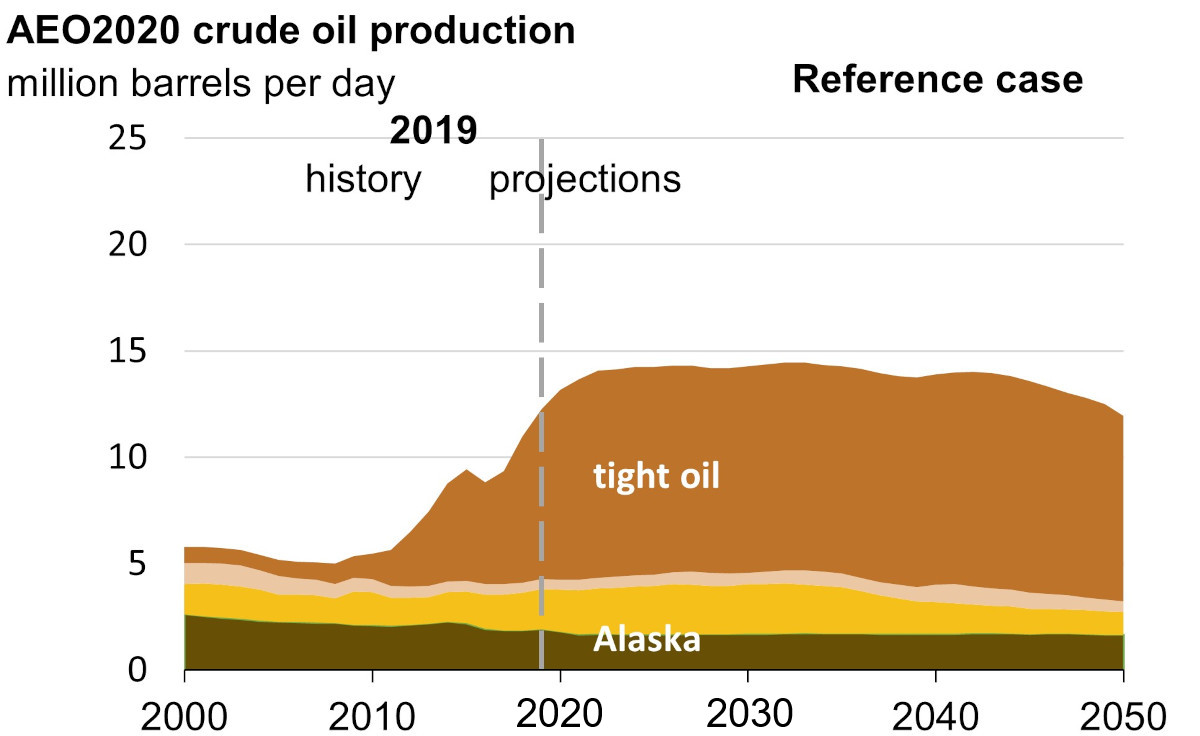
Energy prices may be less volatile than in the past, based upon the U.S. Energy Information Administration (EIA) Short-Term Energy Outlook (November release).  The report calls for domestic oil production to remain at current levels through 2021. Current levels are near 11.0 million barrels per day (mmbd) and significantly below the peak levels of 12.9 mmbd of November 2019 and pre-COVID levels of 12.7 mmbd.


At the same time, the EIA is projecting flat production; it expects West Texas Intermediate (WTI) oil prices to increase from a 2020 average of $41 per barrel to a 2021 average of $47 per barrel. Expectations are for domestic energy companies to have shortened their time frame for making drilling decisions and production levels to react to price changes quicker. Of course, making long-term predictions is difficult and depends on several “best-guess” variables. Here are some of the variables that will have an impact on 2021 oil prices and production levels.

COVID-19. The pandemic has a significant impact on both the demand and supply of oil. Analytical firms such as Rystad Energy AS and Trafigura Group estimate that global economic weakness associated with COVID-19 has reduced world oil demand by 27-33 mmbd (27-33%). The reasons are clear. People are not driving cars as much to commute to work or shop. Vacation and business travel have been put on hold, so there is less demand for jet fuel. The figure below shows that the largest demand declines are being seen in the United States and Europe. The pandemic also affects oil supply. Restrictions on gatherings and curfews can delay drilling and the ability to build the infrastructure (roads, electricity, water transportation) needed to drill.

OPEC Plus. When oil demand vanished last spring, OPEC Plus reduced production to offset the drop in demand. The latest pronouncements by OPEC call for supply cuts to begin to ease, although there is talk that they will be extended at the November 17 meeting in response to growing global COVID concerns. That said, OPEC Plus is tired of restricting production and could release supply in response to the rise in demand that occurred in the September quarter.


Domestic Producers. U.S. and Canadian producers have also cut back production in response to lower prices. Historically, management set their drilling budgets at year-end and had the budgets approved by their board of directors. In recent years, boards have become more flexible and granted management the ability to ramp up or ramp down drilling depending on prevailing energy prices. Most energy management has a long list of wells they would like to drill and are chomping at the bit to drill if energy prices justify the drilling costs. Consequently, domestic energy companies have become more reactive to energy prices. In addition, the use of horizontal drilling and fracking have accelerated the rate of extracting energy. This has moved production to the earlier years of a well’s life, making the supply response to energy price changes more pronounced.

Conclusion. There are many variables coming into play that will affect production levels. We believe those variables have become more sensitive to changes in energy prices and any significant change in energy prices will be quickly met with a supply response. The result will be that energy prices, especially oil prices, will be less volatile than in the past. That stability will translate into flatter production levels, both domestically and globally.

Suggested Reading:

Energy Industry Report 3Q 2020

Will There be Mergers in the Utility Industry

Interest
Rates Impact on Investment Sectors


Virtual Attendance of the InPlay Oil (IPOOF)(IPO:CA) Virtual Road Show – has limited free registration.

It takes place Monday November 23 1:00PM EST

Join Douglas Bartole – CEO & President as he discusses his company and answers questions from attendees.

Register Now


Sources:

https://www.eia.gov/todayinenergy/detail.php?id=45916#, U.S. Energy Information Administration, November 17, 2020

https://www.eia.gov/outlooks/steo/report/global_oil.php, U.S. Energy Information Administration, November 10, 2020

https://economictimes.indiatimes.com/markets/stocks/news/how-the-pandemic-wiped-out-oil-demand-around-the-world/massive-impact/slideshow/75091835.cms, Bloomberg, April 11, 2020

https://blogs.worldbank.org/opendata/oil-market-outlook-lasting-scars-pandemic, Peter Nagle, World Bank Blogs, October 27, 2020

InPlay Oil (IPOOF)(IPO:CA) – The road to normal

Monday, November 16, 2020

InPlay Oil (IPOOF)(IPO:CA)

The road to normal

As of April 24, 2020, Noble Capital Markets research on InPlay Oil is published under ticker symbols (IPOOF and IPO:CA). The price target is in USD and based on ticker symbol IPOOF. Research reports dated prior to April 24, 2020 may not follow these guidelines and could account for a variance in the price target. InPlay Oil is a junior oil and gas exploration and production company with operations in Alberta focused on light oil production. The company operates long-lived, low-decline properties with drilling development and enhanced oil recovery potential as well as undeveloped lands with exploration possibilities. The common shares of InPlay trade on the Toronto Stock Exchange under the symbol IPO and the OTCQZ Exchange under the symbol IPOOF.

Michael Heim, Senior Research Analyst, Noble Capital Markets, Inc.

Refer to the full report for the price target, fundamental analysis, and rating.

    IPO reported operating and financial results in line with expectations. Production of 3,742 boe/d vs. our 3,871 est. Oil prices were slightly below model ($39.51 vs $43.00) but gas prices were above ($2.32 vs $1.52). Sales of $10.8 mm vs. $10.9 mm. LOE of $14.42 vs. $14.18. Earnings of ($2.7 mm)/($0.04) vs. ($3.2 mm)/($0.05). All in all, a very straightforward quarter.

    Other developments were preannounced November 2.  InPlay’s $25 million bank loan is moving forward, a small $1.9 mm tuck-in acquisition closed, 4Q budget includes drilling 3 wells that will move production levels to pre-Covid rates of 5,000 boe/d. Only new development was that a ban on road construction will push drilling and the 5,000 target into the first quarter instead of year end …


This Company Sponsored Research is provided by Noble Capital Markets, Inc., a FINRA and S.E.C. registered broker-dealer (B/D).

*Analyst certification and important disclosures included in the full report. NOTE: investment decisions should not be based upon the content of this research summary.  Proper due diligence is required before making any investment decision. 

Will There be Mergers in the Utility Industry?


Utility Mergers May Be Reheating After Pausing for the Pandemic


NextEra Energy (NEE) made an all-stock acquisition offer for Evergy (EVRG) earlier this week. It has been reported that Evergy quickly dismissed the $60 per share offer as inadequate. The offer comes after NextEra, the world’s largest wind and solar power producer, was rebuffed in its attempt to acquire Evergy last spring and Duke Energy (DUK) in September. Evergy is under pressure from one of its shareholders, Elliot Management, to consider consolidation.

Merger activity was picking up before the pandemic – Utility merger activity had been increasing steadily between 2012-2016.  Activity remained at a fervid pace in recent years. In 2017 Sempra Energy (SRE) acquired Oncor, the regulated utility unit of TXU. In 2018, Great Plains Energy and Westar Energy merged to form Evergy, Inc. In 2019 Dominion Energy (D) closed its acquisition of SCANA, and Centerpoint Energy (CNP) absorbed Vectren. This year, however, has largely been characterized by merger offers but no agreements.


Merger agreements among regulated assets are difficult to justify – Under cost-of-service rate-making, utility rates are set to recover costs and leave a little leftover to compensate investors. Cost reductions through a merger or other means often face a reduction in rates. Consequently, it is difficult to pay a market premium without it being highly dilutive to earnings without cost savings. Combining noncontiguous service areas limits cost reductions beyond headquarter reductions. Merger savings must come from unregulated operations. Hostile takeovers among utilities are extremely rare because they require regulatory approval. NextEra CEO James Robo said on September 30, 2020, that he would not pursue hostile acquisitions because major deals could only clear regulatory hurdles if companies worked co-operatively.

History of utility mergers – In the nineties, there was a wave of merger activity among utilities. Mergers typically took the form of a large electric utility taking over its neighboring smaller gas utility. The thought process was that the company that owned the meter rights owned the customer. At the time, there was a belief that utilities could use that connection to sell customers unregulated products. Products such as appliance repair service agreements had become popular. In addition, natural gas service was becoming unbundled, allowing customers the ability to buy gas from a third party and then pay the utility solely for the distribution service. Utilities began forming their own unregulated marketing subsidiaries, often with names similar to the regulated utility name. Utilities needed to acquire, merge, or sell out to control enough metered customers to compete. Over time, regulators tightened the rules regarding the sale of unregulated services to utility customers.

Why has merger activity increased? Around the turn of the century, electric utility service also started to become unbundled. Large customers could purchase power from marketers or even self-generate via cogenerations. The shift away from traditional utility operations has continued with the spread of renewable power generation. Utilities like NextEra that have focused on wind generation have seen their stock price soar while utilities stuck with stranded coal generation assets have seen their stock underperform. That has given currency to the winners in the form of a high stock price.

Will merger activity reignite? COVID-19 and the resulting shutdown of the economy have made acquisitions difficult in all industries. Having a good sense of the true cash flow of an asset to acquire is difficult during normal situations and close to impossible under current situations. The fact that companies are even considering making an acquisition is a clear sign that the appetite for acquiring is there. As pandemic concerns began to wane with signs of a possible vaccine, it is reasonable to think that merger activity will pick up again. We look for 2021 to be a busy year for utilities.


Suggested Reading:

Will Solar Panels Continue to be Subsidized?

Will M&A Activity Spread to Canada?

Mergers Within the energy Industry are Heating Up


Each event in our popular Virtual Road Shows Series has a maximum capacity of 100 investors online. To take part, listen to and perhaps get your questions answered, see which virtual investor meeting intrigues you here.


Sources:

https://www.forbes.com/sites/greatspeculations/2020/06/21/evergy-inc-the-latest-phase-of-utility-ma/?sh=2c34d7374671, Roger Conrad, Forbes, June 21, 2020

https://www.utilitydive.com/news/nextera-mulls-bid-for-evergy-amid-market-volatility-may-face-competing-off/575675/, Iulia Gheorghiu, Utility Dive, April 8, 2020

https://www.reuters.com/article/us-evergy-m-a-nextera-energy-exclusive/exclusive-nextera-energy-in-15-billion-bid-for-evergy-sources-idUSKBN27P2S8, David French, Reuters, November 9, 2020

Photo: Skyspecs