U.S. business investment showed unexpected resilience in February, but the window may be closing fast.
New orders for core capital goods — the government’s closely watched proxy for business spending — rose 0.6% in February, topping economist forecasts of a 0.4% gain and reversing a revised 0.4% decline in January. Shipments of those same goods climbed 0.9%, adding further evidence that equipment spending was gaining traction heading into the first quarter. The Commerce Department’s Census Bureau released the data Tuesday.
The numbers paint a picture of solid momentum — but one that was captured before the full weight of the U.S.-Israel war with Iran began reshaping the investment landscape. Oil prices have climbed, supply chains are tightening, and businesses that were leaning forward in February are now likely pulling back to reassess.
Orders Show Broad Strength — With One Glaring Exception
February’s gains were driven by solid increases across primary metals, fabricated metal products, and machinery, which jumped 1.5%. Motor vehicles and parts surged 3.1%. The broad picture was encouraging for domestic manufacturers.
The one glaring exception: commercial aircraft. Boeing reported just 21 civilian aircraft orders in February, down sharply from 107 in January — a 28.6% collapse in commercial aircraft orders that dragged overall durable goods orders down 1.4% for the month. Defense aircraft orders also fell 3.8%.
Durable goods as a category declined for the second consecutive month, though stripping out the volatile transportation segment, orders actually rose a healthy 0.8%.
Supply Chains Are Already Feeling the Pressure
Perhaps the most forward-looking signal in Tuesday’s data wasn’t in the orders figures at all — it was in what’s happening to delivery times. An Institute for Supply Management manufacturing survey released last week showed supplier delivery times stretching to a four-year high in March, a direct consequence of the geopolitical disruption rippling through global logistics networks.
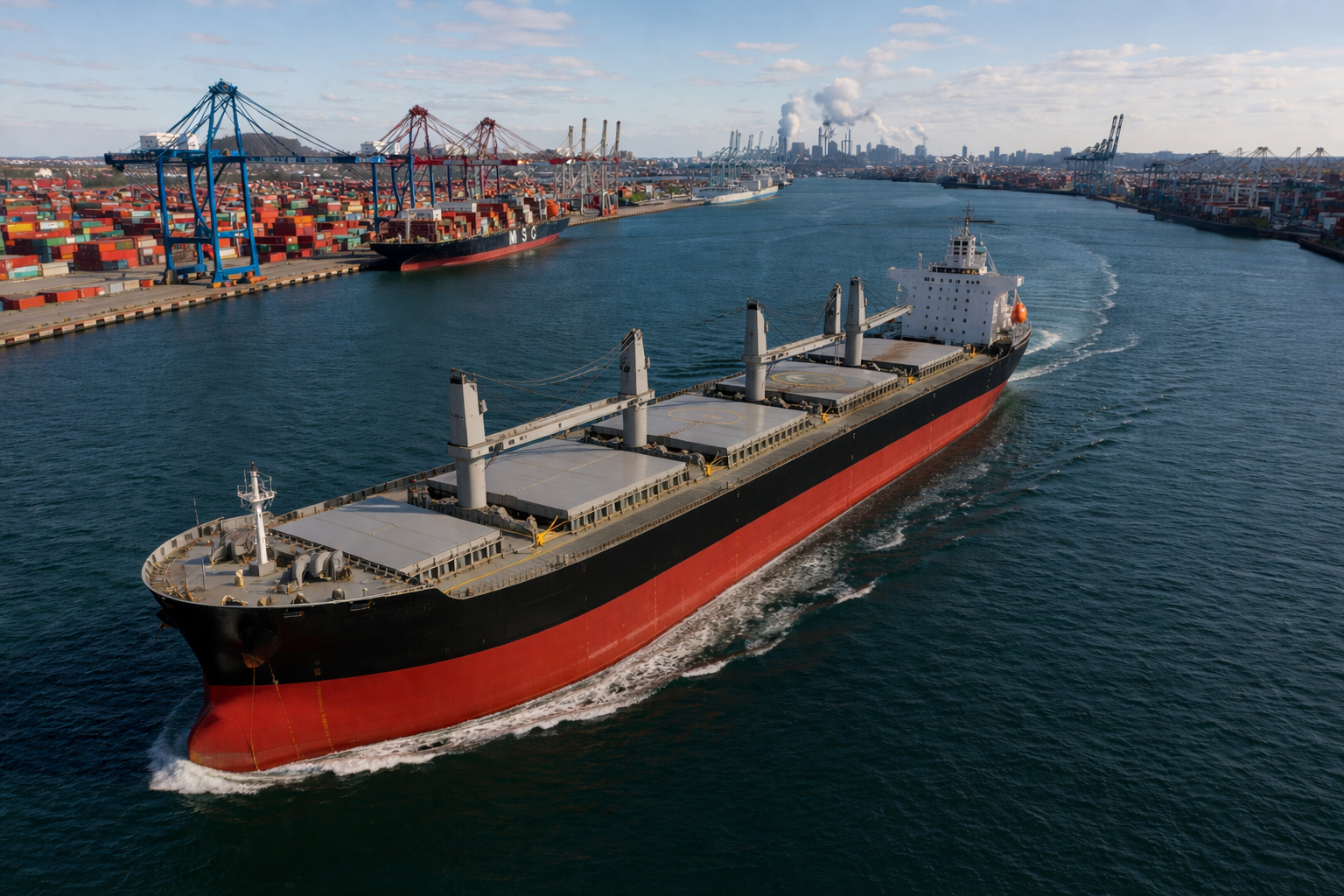
That’s a number that matters deeply to companies like EuroDry (NASDAQ: EDRY) and Euroseas (NASDAQ: ESEA), both dry bulk operators that move iron ore, coal, grains, and other bulk commodities across ocean routes. Longer delivery windows mean more time at sea per cargo cycle, which can translate to tighter effective vessel supply and, in some market conditions, upward pressure on charter rates. EuroDry posted a strong Q4 2025 earnings beat in February and has expanded its forward charter book heading into 2026 — but the Iran conflict introduces a new variable around route disruption and fuel costs that management will need to navigate carefully.
For FreightCar America (NASDAQ: RAIL), the February machinery and motor vehicle data is directionally constructive. The company entered 2026 projecting growth, backed by a strong backlog and expanding margins. But if industrial order momentum stalls in March and April as businesses hit pause on capex decisions — as many economists now expect — railcar demand tied to manufacturing output could soften in the back half of the year.
The AI Wildcard
One consistent bright spot cutting through the uncertainty: artificial intelligence. Data center construction and the infrastructure buildout supporting AI workloads continue to drive demand for raw materials, electricity, and the bulk commodities that companies like EuroDry and Euroseas specialize in moving. That structural tailwind isn’t going away regardless of where energy prices settle.
February’s capital goods data was a genuine beat. The question now is whether it’s the last clean read for a while — or a foundation that holds even as the macro backdrop gets more complicated.